UPSC Daily Quiz 17 July 2025

UPSC Daily Quiz

The Daily UPSC Quiz by Vajiram & Ravi is a thoughtfully curated initiative designed to support UPSC aspirants in strengthening their current affairs knowledge and core conceptual understanding. Aligned with the UPSC Syllabus 2025, this daily quiz serves as a revision resource, helping candidates assess their preparation, revise key topics, and stay updated with relevant issues. Whether you are preparing for Prelims or sharpening your revision for Mains, consistent practice with these Daily UPSC Quiz can significantly enhance accuracy, speed, and confidence in solving exam-level questions.

[WpProQuiz 22]  


UPSC Daily Quiz FAQs

Q1: What is the Daily UPSC Quiz?

Ans: The Daily UPSC Quiz is a set of practice questions based on current affairs, static subjects, and PYQs that help aspirants enhance retention and test conceptual clarity regularly.

Q2: How is the Daily Quiz useful for UPSC preparation?

Ans: Daily quizzes support learning, help in revision, improve time management, and boost accuracy for both UPSC Prelims and Mains through consistent practice.

Q3: Are the quiz questions based on the UPSC syllabus?

Ans: Yes, all questions are aligned with the UPSC Syllabus 2025, covering key areas like Polity, Economy, Environment, History, Geography, and Current Affairs.

Q4: Are solutions and explanations provided with the quiz?

Ans: Yes, each quiz includes detailed explanations and source references to enhance conceptual understanding and enable self-assessment.

Q5: Is the Daily UPSC Quiz suitable for both Prelims and Mains?

Ans: Primarily focused on Prelims (MCQ format), but it also indirectly helps in Mains by strengthening subject knowledge and factual clarity.

Golden Revolution in India, Importance, Objectives, Advantages

Golden Revolution

The Golden Revolution in India was the rapid growth period for the horticulture sector in India during 1991 and 2003, particularly in the production of fruits, vegetables, honey, and other non-food cash crops. Unlike the Green or White Revolutions, the Golden Revolution focused more on value addition, nutrition, and export potential.

Some of the major initiatives include, enhanced government investment in agricultural research and development, expanded access to credit and quality inputs for farmers, better infrastructure for marketing and distribution, and rising domestic demand for fruits, vegetables, and honey. The Golden Revolution is a key contributor to agricultural GDP.

Golden Revolution in India

Between 1991 and 2003, the Golden Revolution has significantly contributed to the horticulture and honey production sectors of India. Horticulture includes the cultivation of fruits, vegetables, flowers, and honey. It also involves apiculture (bee-keeping), focusing on bee habitats, honeycomb cultivation, and sustainable honey production under human-managed conditions.

The initiative aimed to enhance crop productivity, improve nutritional diversity, and promote self-reliance in the agricultural economy. The Golden Revolution ultimately laid the foundation for a more prosperous and technologically advanced horticulture sector in India.

Golden Revolution in India Father

The Golden Revolution in India Father was Mr. Nirpakh Tutej. He introduced key initiatives aimed at transforming the horticulture sector and strengthening India’s agricultural economy. During this period, the government implemented alternative techniques for crop production, particularly in rural areas, to increase efficiency and yield. 

His primary goal was to empower farmers and producers by increasing their income and promoting sustainable agricultural practices. The revolution also generated numerous employment opportunities in rural regions and contributed to the production of organic crops. The initiative helped in raising awareness about the benefits of organic farming by encouraging the reduction of chemical usage and promoting eco-friendly agricultural methods.

Golden Revolution in India Objectives

During the Golden Revolution in India, the Farming and the horticulture sector was focused, which resulted in India becoming the global leader for the production of nuts including the cashew nuts, coconuts and mangoes and the second largest producer of fruits and vegetables. The Golden Revolution in India Objectives includes:

  1. To make farmers and producers self-sufficient and economically empowered.
  2. To significantly increase the overall income of farmers through sustainable practices.
  3. To generate extensive rural employment opportunities by expanding horticultural activities.
  4. To develop a market for organic products and promote their consumption.
  5. To raise awareness about the benefits of organic farming by reducing dependence on chemical inputs.
  6. To establish cold chain infrastructure along the horticultural value chain for better storage and distribution.
  7. To encourage value addition in horticultural products in line with international standards.
  8. To position India as a leading exporter of high-quality horticultural goods.
  9. To ensure access for small and marginal farmers to both domestic and international markets.

Golden Revolution in India Components

Golden Revolution in India Components includes the two major components which are mentioned below:

  1. Agricultural Practices which are alternatively related with the organic farming, bio fertilizers, manures, biopesticides and many more.
  2. The export of organic goods was streamlined by establishing horticultural infrastructure, including modern packaging facilities and cold storage units, thereby ensuring quality maintenance and efficient logistics.

Golden Revolution Advantages

The Golden Revolution marked as a significant initiative to support the horticultural sector of India. While the initial focus remained on grain production, the period after 1990 saw a strategic shift toward horticulture. The government began prioritizing this sector, leading to changes in cropping patterns that emphasized high-yield crops. Below we have mentioned the Golden Revolution Advantage to know how the initiative benefitted various sectors in India:

  1. Increased productivity of fruits and vegetables
  2. Higher farmer income due to marketable and high-value crops
  3. Employment generation in rural and semi-urban areas
  4. Promoted the export earnings from processed and fresh horticulture produce
  5. Improved nutrition and food diversity in Indian diets

Golden Revolution Impacts

The Golden Revolution in India is related to the growth of the horticulture sector which promoted the cultivation of fruits, vegetables, flowers, and honey using modern technologies.The Golden Revolution marked a significant success after the Green Revolution in Indian agricultural development, enhancing productivity, promoting value addition, and contributing to rural income generation and employment.

  1. New technologies were introduced in the Agricultural Industry of India which resulted in the increase of production.
  2. With the utilization of the advanced technologies introduces, the government of India could supply the growing crops and honey to the people in India
  3. The prices of the food items were reduced by implementing horticulture practices between the demand and supply, resulting in reduced inflation.
  4. The Government of India decided to not import the essential food items which helped in managing the expenses. 
  5. With the adoption of modern technologies such as greenhouse cultivation and controlled irrigation, dependence on natural soil conditions, climate, and traditional water sources was substantially reduced. 
  6. One of the major achievements of the Golden Revolution was the expansion of beekeeping and honey production. Beekeeping emerged as a viable livelihood, making raw honey more accessible to the general population rather than being limited to the upper class. 

National Horticulture Mission

National Horticulture Mission was a flagship initiative launched after the Golden Revolution in 2005-2006 aiming to develop horticulture clusters, Build post-harvest infrastructure. It provided technical and financial support to the farmer by introducing the modern irrigation and planting practices which also encouraged the public-private partnerships in horticulture. The National Horticulture Mission became a game changer in promoting scientific horticulture in India.

Difference Between Green Revolution and Golden Revolution

Below in the table we have discussed the Difference Between Green Revolution and Golden Revolution:

Difference Between Green Revolution and Golden Revolution
Feature Green Revolution Golden Revolution

Focus

Cereals like wheat and rice

Horticultural crops (fruits, veggies)

Time Period

1960s–1970s

1990s–2000s

Key Crops

Wheat, Rice

Fruits, Vegetables, Honey, Spices

Primary Objective

Food security

Nutritional security and income growth

Technology Used

HYV seeds, chemical fertilizers

Tissue culture, drip irrigation, cold storage

Father

M.S. Swaminathan

Mr. Nirpakh Tutej

Major Outcome

Self-sufficiency in grains

Export growth, income diversification

Golden Revolution FAQs

Q1: What is the Golden Revolution in India?

Ans: It refers to the rapid growth in horticulture production, including fruits, vegetables, honey, and flowers, during the late 1990s to early 2000s.

Q2: Who is the father of the Golden Revolution?

Ans: Mr. Nirpakh Tutej is known as the Father of the Golden Revolution in India.

Q3: What was the main goal of the Golden Revolution?

Ans: To enhance nutrition, increase income from high-value crops, and promote exports through horticultural development.

Q4: Which crops are included in the Golden Revolution?

Ans: Fruits, vegetables, flowers, spices, mushrooms, and honey are key crops.

Q5: When was the National Horticulture Mission launched?

Ans: In 2005-06, under the Ministry of Agriculture and Farmers’ Welfare.

Difference Between FERA and FEMA, Significance, Key Points

Difference Between FERA and FEMA

Foreign exchange regulations are responsible for managing a country's foreign transactions and maintaining economic stability. India, recognizing the need to regulate the inflow and outflow of foreign currency, implemented two major laws which includes FERA (Foreign Exchange Regulation Act) and FEMA (Foreign Exchange Management Act). Both laws serve a varied purpose of regulating foreign exchange but they differ in objectives, provisions, and approach.

What is FERA?

The Foreign Exchange Regulation Act (FERA) was introduced in 1973 when foreign exchange reserves of India were critically low. FERA was designed to regulate and conserve foreign exchange resources. It granted the Reserve Bank of India and the central government powers to control and restrict foreign exchange transactions, capital flows, and dealings involving foreign companies in India.

Under FERA, all foreign exchange transactions required prior approval from the Reserve Bank of India. The law expects every foreign exchange violation as a criminal offense, which often leads to prosecution and imprisonment.

Key Features of FERA

  • FERA was enacted in 1973, and came into force in 1974.
  • Violation of FERA presumed guilt until proven innocent.
  • Criminal liability for violations.
  • Strict control over foreign companies.
  • Required RBI approval for almost every foreign transaction.

What is FEMA?

The Foreign Exchange Management Act (FEMA) replaced FERA in the year 2000. It marked a significant shift in India’s approach towards foreign exchange regulation. FEMA was enacted in response to the liberalization policies of the 1990s and aimed to facilitate external trade and payments rather than control them. Unlike FERA, FEMA focuses on management rather than regulation. It deals with foreign exchange transactions in a more market-friendly and simplified manner. The act encourages transparency, ease of doing business, and flexibility in foreign investments.

Key Features of FEMA

  • FEMA was enacted in 1999, implemented from June 1, 2000.
  • Under FEMA (Foreign Exchange Management Act), any violation of its provisions is considered a civil offence, not a criminal one.
  • Encourages foreign investment and trade.
  • Focuses on current account convertibility.
  • The Reserve Bank of India regulates foreign exchange under FEMA with delegated authority.

Difference Between FERA and FEMA

Below we have shared a table outlining the main Difference Between FERA and FEMA:

Difference Between FERA and FEMA
Feature FERA FEMA

Full Form

Foreign Exchange Regulation Act

Foreign Exchange Management Act

Year Enacted

1973

1999 (implemented in 2000)

Nature of Law

Criminal law

Civil law

Presumption

Presumed guilty

Presumed innocent

Objective

Strict control over foreign exchange

Facilitate foreign trade and payments

Applicability

Applied to Indian citizens even outside India

Applies to all residents in India

Control vs Management

Focused on regulation and restrictions

Focused on management and liberalization

Penalty

Imprisonment for violations

Monetary penalties, adjudication process

Foreign Company Operations

Highly restricted

Encouraged under liberalized framework

Role of RBI

Central in granting prior approvals

Regulates under delegated powers

FEMA Significance

FEMA plays an important role in India’s economic growth. It enables Indian businesses to participate in the global economy, facilitates remittances, and eases cross-border investment flows. FEMA is also crucial in ensuring that foreign exchange transactions with the legal framework while promoting transparency.

Also Check Related Articles
Difference between NITI Aayog and Inter-State Council Difference Between Economic Survey and Union Budget
Difference Between Tropical Evergreen and Tropical Deciduous Forests Difference Between Ordinary Bill and Money Bill
Difference Between Legislative and Executive Difference between Himalayan and Peninsular Plateau
Difference Between Vedas and Upanishads Difference Between Scheduled and Non-Scheduled Banks
Difference Between Written and Unwritten Constitution Difference between NITI Aayog and Planning Commission
Difference between Colonialism and Imperialism Difference between Fundamental Rights and Directive Principles of State Policy
Difference between Procedure Established by Law and Due Process of Law Difference Between Democracy and Republic
Difference between Creamy Layer and Non-Creamy Layer of OBC Difference between Rajya Sabha and Vidhan Sabha
Difference Between Western Ghats and Eastern Ghats

Difference Between FERA and FEMA FAQs

Q1: When was FERA replaced by FEMA?

Ans: FERA was replaced by FEMA in 1999 and came into force on June 1, 2000.

Q2: What was the main objective of FERA?

Ans: FERA aimed to conserve India’s foreign exchange and tightly regulate foreign exchange dealings.

Q3: What is the key focus of FEMA?

Ans: FEMA focuses on managing foreign exchange to promote trade, payments, and investment in a liberalized economy.

Q4: Is FEMA a criminal or civil law?

Ans: FEMA is a civil law, and violations under FEMA result in monetary penalties, not imprisonment.

Q5: Who regulates FEMA?

Ans: The Reserve Bank of India and the central government regulate FEMA.

Differences Between Censure and No-Confidence Motion

Differences Between Censure and No-Confidence Motion

In a democracy like India, the government is accountable to the legislature, especially the Lok Sabha. To enforce this accountability, members of Parliament have several tools among them, two of the most important among these are the Censure Motion and the No-Confidence Motion.

Censure Motion

A Censure Motion is a formal statement of disapproval to the policies of the government or the individual member of Parliament or the state assembly. It allows Members of Parliament (MPs) to criticize the policies or actions of the government or a particular minister. However, it does not demand the resignation of the Council of Ministers but the cabinet will not be dissolved.

Key Features

  • Can be moved against an individual minister or the entire council.
  • Focuses on a specific policy, action, or failure.
  • Passed by a simple majority of MPs present and voting.
  • Does not lead to resignation, even if passed.
  • Used more as a tool for moral pressure or political messaging.

Example: If the opposition feels that the Home Minister mishandled a law-and-order situation, they can move a censure motion criticizing that decision.

No-Confidence Motion

A No-Confidence Motion is much stronger in its implications. It is a motion moved in the Lok Sabha that explicitly states that the House no longer has confidence in the Council of Ministers. The procedures to introduce the No Confidence Motion in Lok Sabha is discussed in Rule 198 of the Lok Sabha Rules of Procedure and Conduct.

Key Features

  • Can only be moved against the entire Council of Ministers, not an individual minister.
  • If passed, the government must resign immediately.
  • Requires support of at least 50 members to be accepted for discussion.
  • Decided by a simple majority of the House.
  • A direct challenge to the legitimacy of the government.

Example: In 1999, the Vajpayee government lost a No-Confidence Motion in Lok Sabha by one vote, leading to its fall.

Differences Between Censure and No-Confidence Motion

The table includes the Differences between Censure and No-Confidence Motion in a side by side comparison manner for the convenience of the reader.

Differences Between Censure and No-Confidence Motion
Feature Censure Motion No-Confidence Motion

Definition

Usually introduces to disapproval for any individual or policy introduced

Declaration that the House has no confidence towards the government

Target

Individual minister or the whole council

Entire Council of Ministers

Reason Required

Must state the reason

No reason needs to be stated

Effect if Passed

No resignation required

Government must resign

Purpose

Criticize specific policies/actions

Question government’s majority in Lok Sabha

Constitutional Mention

Not mentioned in the Constitution

Also not in Constitution, but well established in practice

Initiation Procedure

No minimum support required to introduce

Needs support of 50 members to be admitted

Voting

Simple majority of members present and voting

Simple majority of total members present and voting

Frequency

Can be moved frequently

Usually rare and strategic

Why the Difference Matters

The Differences Between Censure and No-Confidence Motion is more than just procedure. It reflects two levels of parliamentary control:

  • A Censure Motion is like a warning, a sharp message, often meant to highlight issues.
  • A No-Confidence Motion is a verdict, a decisive move to remove the government when the parliament is not having the confidence towards the government.
Also Check
Difference Between Cabinet and Council of Ministers Difference between National Anthem and National Song
Difference Between GMT and IST Difference Between Citizenship and Nationality
Difference Between District Collector and District Magistrate Difference Between Kumbh and Mahakumbh
Difference Between Fundamental Rights and Fundamental Duties Differences Between Censure and No-Confidence Motion
Differences Between Absolute Poverty and Relative Poverty Difference Between Wildlife Sanctuary and National Park

Differences Between Censure and No-Confidence Motion FAQs

Q1: What is the main difference between a Censure and No-Confidence Motion?

Ans: A Censure Motion criticizes policy without demanding resignation; a No-Confidence Motion challenges the government’s survival and leads to resignation if passed.

Q2: Can a Censure Motion remove a minister?

Ans: No. Even if passed, a Censure Motion does not lead to resignation. It serves as a warning or criticism.

Q3: Is a reason required to move a No-Confidence Motion?

Ans: No. MPs can move it without giving a specific reason.

Q4: Who can move these motions?

Ans: Any member of the Lok Sabha can move them, subject to procedural requirements.

Q5: How many members are needed to admit a No-Confidence Motion?

Ans: At least 50 members must support its introduction in the House.

Adani Hindenburg Issue, Allegations and other Details

Adani Hindenburg Issue

As per the report released by the Institute named Hindenburg, the net worth of one of the richest persons has fallen. The shares of Adani Enterprises and other Adani Group stocks fell after the New York-based investor research form Hindenburg Research highlighted the conglomerate of stock manipulation as well as accounting fraud scheme over years. In this article, we are going to cover the Adani Hindenburg Research centre and its report and the looming issues. 

What is Hindenburg?

  • Hindenburg is a research institute that works on “forensic financial research”. The research based institute works on problems like corruption, fraud in the business world, loopholes in management and accounting irregularities. 
  • Based in the US, Hindenburg is an investment research firm that focuses on activist short selling. 
  • The firm was established in 2017 by Nate Anderson, a chartered financial analyst and a chartered alternative investment analyst. 

Short Selling 

Short selling is a trading strategy where an investor sells shares they do not own, typically borrowed from a broker, with the aim of buying them back later at a lower price. As defined by SEBI, it involves selling a security one does not currently possess, anticipating that its value will decline. Unlike traditional investing where profit is made from rising prices, short sellers bet on a stock’s fall to make a gain.

Hindenburg Adani Issue and Allegations

  • Hindenburg Research firm claimed that Adani Group indulged in stock manipulation as well as accounting fraud. The Adani Group works in many sectors like the ports and logistics, agribusiness, defense, solar energy, power generation, financial services, media and natural resources. 
  • Hindenburg Research states that the Adani Group engages in stock manipulation and accounting fraud schemes worth 17.8 trillion (US $ 218 billion) over years. 
  • The family is alleged to control many offshore shell entities in tax havens across Caribbean and Mauritius. These shell companies have been created to participate in corruption, money laundering and taxpayer theft, by moving money from the listed companies. 

Hindenburg Report Concerns

The primary concern highlighted in the report revolves around the significant amount of debt that the Adani Group has borrowed from Indian banks. This raises a serious question about whether the business conglomerate will be able to repay its debt obligations on time. A major risk in this situation lies in the fact that many banks have lent large sums of money against shares. When a company fails to meet its debt obligations, its share prices tend to fall, thereby increasing the vulnerability of the banks’ investments.

Adding to the worry is the fact that Life Insurance Corporation (LIC), a major public sector insurer, has also invested a substantial amount in Adani Group companies. Following the report, the value of this investment dropped significantly, sparking concern among investors about potential financial losses. If these financial strains continue, it may lead to a surge in non-performing assets (NPAs) for banks. This would not only hurt their balance sheets but also negatively affect their capacity to lend in the future, potentially impacting the broader economy.

Adani Hindenburg Issue FAQs

Q1: What is the issue between Adani and Hindenburg?

Ans: The Hindenburg report accused the Adani Group of stock manipulation and accounting fraud, leading to a sharp decline in Adani companies’ share prices.

Q2: What was the issue with the Hindenburg?

Ans: The issue was that Hindenburg Research published a report alleging serious financial irregularities and corporate misconduct within the Adani Group.

Q3: Why did the Hindenburg report fail in India?

Ans: The report did not lead to long-term damage as the Adani Group denied the allegations, retained investor confidence, and bounced back in market valuation.

Q4: What are NPA assets?

Ans: Non-Performing Assets (NPAs) are loans or advances where the borrower has stopped making interest or principal repayments for 90 days or more.

Q5: What is the meaning of short selling?

Ans: Short selling is a trading strategy where investors borrow and sell a stock expecting its price to fall, so they can buy it back at a lower price for profit.

Yuge Yugeen Bharat National Museum, Objective, Key Highlights

Yuge Yugeen Bharat National Museum

India and France have collaborated to create the Yuga Yugeen Bharat National Museum, an ambitious project under the Central Vista Redevelopment Plan. This museum is set to be the Largest Museum in World, covering 1.55 lakh sq.m. It will be representing India's rich historical, cultural, and civilizational legacy. This Indo-French collaboration brings together India’s vast cultural heritage with France’s expertise in world-class museum design and management.

India-France World’s Largest Museum in Delhi

Yuge Yugeen Bharat National Museum will be spanning in 1.55 lakh sq.m. across Delhi’s historic North and South Blocks, this museum will be larger than The Louvre to become the Largest Museum in World.

Announced by Prime Minister Narendra Modi in May 2023, the Yuge Yugeen Bharat National Museum will follow an adaptive reuse approach, preserving the architectural heritage of these iconic structures. The North Block is set to be reutilised by June 2026, followed by the transformation of the South Block. France’s renowned expertise in cultural landmark design and museum management will play a crucial role in shaping this project.

Yuge Yugeen Bharat National Museum

The Yuga Yugeen Bharat National Museum will feature eight thematic sections, offering an in-depth exploration of over 5,000 years of Indian history, covering the nation's rich cultural, political, and artistic heritage.

The project was first introduced during the International Museum Expo at Pragati Maidan in Delhi, where Prime Minister Narendra Modi released a virtual tour of the proposed museum. As part of India's commitment to preserving and promoting its historical legacy, PM Modi also inaugurated the Bharat Mandapam complex, formerly known as the International Exhibition-cum-Convention Centre (IECC). The museum will be constructed on a 123-acre campus at a cost of nearly ₹2,700 crore. The Yuga Yugeen Bharat National Museum aims to redefine the global museum landscape, combining cutting-edge technology with historical narratives to offer a unique, immersive experience for visitors worldwide.

Yuge Yugeen Bharat National Museum Objectives

The Yuga Yugeen Bharat National Museum is designed to safeguard and exhibit India's extensive and diverse cultural heritage. Its key objectives include:

  • Established as a cultural icon that reflects India's deep-rooted history and traditions.
  • Integrating contemporary museum methodologies with the conservation of traditional architectural elements.
  • Enhancing India's global position in the cultural landscape.

Yuge Yugeen Bharat National Museum Highlights

  • Upon completion, the Yuga Yugeen Bharat National Museum will exceed The Louvre in Paris, making it the Largest Museum in World.
  • Situated across the North and South Blocks of the Parliament, the museum will serve India's rich cultural heritage.
  • The project will preserve the historic architecture of these iconic structures while transforming them into a modern museum space.
  • Phased Development
    • Phase 1: The North Block will be reconstructed into a museum by June 2026.
    • Phase 2: The South Block will be converted after relocating existing ministries to the Common Central Secretariat (CCS).

Yuge Yugeen Bharat National Museum Segments

The Yuge Yugeen Bharat National Museum will be divided into 8 thematic sections, each showcasing India's history from prehistoric times to the present. Below is a structured overview of the phases:

Yuge Yugeen Bharat National Museum Segments
Phase Section Name Key Highlights

Phase 1

Ancient Indian Knowledge

Showcases India's traditional knowledge systems, including astronomy, medicine, town planning, the Vedas, and the Upanishads, along with historic artefacts.

Phase 2

Ancient to Medieval

Covers the Mauryan and Gupta Empires, the Chola and Vijayanagara Empires, and the Mughal era, highlighting art, architecture, literature, and religion.

Phase 3

Medieval

Focuses on the Maratha Empire, Delhi Sultanate, and Bahmani Sultanate, emphasizing cultural and religious interactions, including Islam, Sikhism, and Christianity.

Phase 4

Medieval to Transition Phase

Explores India's transition from the Middle Ages to the modern era, featuring the Sikh Empire, Bengal Subah, and Mysore Kingdom, along with societal and economic changes.

Phase 5

Modern India

Chronicles India’s modern history, starting from the 18th century, British rule, and the challenges and achievements of independent India.

Phase 6

Colonial Rule

Details the colonial impact of the British, Dutch, Portuguese, and French, along with revolts and resistance movements against foreign rule.

Phase 7

Freedom Struggle

Highlights the leaders, movements, and events that played a crucial role in India's fight for independence.

Phase 8

100 Years from 1947 Onwards

Showcases India’s growth in democracy, economy, science, technology, culture, and sports post-independence.

Yuge Yugeen Bharat National Museum FAQs

Q1: What is Yuge Yuge in Bharat National Museum?

Ans: The Yuge Yugeen Bharat Museum (YYBM) in North and South Blocks will showcase 25,000 artefacts, depicting 5,000 years of India’s history across eight thematic galleries

Q2: Which is the largest museum in the world Delhi?

Ans: Yuge Yugeen Bharat is the largest museum in the world Delhi.

Q3: Which is the upcoming largest museum in the world?

Ans: Yuge Yugeen Bharat, an upcoming museum in New Delhi, India, is set to become the largest museum in the world.

Q4: What is the new name of National Museum?

Ans: Prime Ministers' Museum and Library Society.

Q5: Which is the smallest museum in India?

Ans: Stok Palace Museum, Leh is the smallest museum in India.

Daily Editorial Analysis 17 July 2025

Daily Editorial Analysis

A Tectonic Shift in Thinking to Build Seismic Resilience

Context:

  • A 4.4 magnitude earthquake struck Delhi recently, with its epicentre 20 km southwest of the city at a shallow depth of 5 km.
  • While it caused no major damage, it exposed the vulnerability of Delhi’s infrastructure — over 80% of buildings, especially pre-2000 constructions, do not comply with seismic safety codes.
  • This incident adds to a series of earthquakes across Asia since March 2025, including a severe 7.7 magnitude quake in Myanmar and Thailand, tremors in Tibet and Greece, and ongoing activity along the India-Myanmar border.
  • Given India’s location on a highly active tectonic plate, this article highlights the urgent need to strengthen seismic resilience.

India’s Seismic Vulnerability and the Danger of Being Unprepared

  • India faces a serious earthquake risk because its tectonic plate keeps moving northwards, colliding with the Eurasian Plate at a rate of 4–5 cm per year.
  • This movement forms the Himalayas and makes the region prone to a major earthquake of magnitude 8 or more, which could affect over 300 million people across northern India, Nepal, and Bhutan.
  • Delhi’s Vulnerabilities
    • Delhi, located in Seismic Zone IV (high risk), is especially vulnerable.
    • The city’s ground acceleration factor is 0.24g, making it prone to strong tremors.
    • Many of Delhi’s buildings, including more than 5,000 high-rises, do not meet safety standards under the IS 1893:2016 Code, which requires earthquake-resistant features like ductile detailing and shear walls.
    • The July 2025 tremors in Delhi, though moderate, showed how unprepared the city’s 33.5 million residents are for a major earthquake.
  • Risk Not Limited to Delhi
    • Seismic risk is not limited to Delhi. India’s seismic zones cover large areas, from Zone II to Zone V.
    • The northeast states — Manipur, Nagaland, and Mizoram — fall in Zone V, the highest-risk category with a peak ground acceleration of 0.36g or more.
    • These areas have recently felt the impact of earthquakes in nearby Myanmar, such as the 7.7 magnitude quake in March 2025 and a 5.2 magnitude quake in May 2025.
    • The Andaman and Nicobar Islands, also in Zone V, face both earthquake and tsunami threats, as seen during the 2004 tsunami.
    • Even Sikkim felt tremors from a 5.7 magnitude quake in Tibet on May 12, 2025.

Urban Growth Increases Earthquake Risks: Why India Must Act Now

  • Delhi’s fast-paced urbanisation is making its earthquake risk even worse. Many older buildings in areas like East Delhi stand on weak, liquefaction-prone soil.
  • Poorly designed high-rise buildings add to the danger during strong tremors.
  • While the IndiaQuake app by the National Center for Seismology (NCS) can provide early warnings, public awareness and strict enforcement of building safety rules are still lacking.
  • The Himalayan region, especially the gap between past major earthquakes like the Kangra quake in 1905 and the Nepal quake in 2015, is overdue for a big event.
  • If it strikes, cities like Delhi could suffer massive damage.

Ways to Increase India’s Preparedness

  • To prepare, India must strictly enforce seismic safety standards, especially in high-risk zones.
  • In Delhi, retrofitting older buildings with steel jacketing and using deep pile foundations can help reduce collapse risk. In Guwahati, located in Zone V, strict following of the IS 1893:2016 code is necessary.
  • Builders must avoid constructing on floodplains to prevent soil liquefaction, and critical buildings should use base isolation techniques. In Bhuj, more retrofitting and community disaster response teams are needed.
  • The Delhi Development Authority should speed up safety checks on buildings.
  • At the same time, the NCS should expand its early warning systems to cover villages in Zone V areas.
  • Strong rules and community readiness can make India’s growing cities safer from future earthquakes.

Building Earthquake Resilience: Global lessons

  • Global experiences highlight valuable lessons for India. Bangkok’s use of high-strength concrete and ductile detailing shows how strict building codes reduce earthquake damage.
  • In contrast, Myanmar’s 2025 quake losses due to unreinforced masonry stress the danger of neglect.
  • India faces higher seismic risks, especially in Zone V areas like the Northeast and Kutch, where local soil conditions require tailored solutions. Experts estimate India needs ₹50,000 crore annually for retrofitting vulnerable structures.

Conclusion

  • With increasing seismic activity both regionally and globally, India must not delay action.
  • The government should enforce building codes more strictly, invest in resilient infrastructure, and promote public education on earthquake safety.
  • People need to know how to prepare emergency kits, follow safe building norms, and plan evacuations.
  • A national dialogue is essential to push for urgent action before the next major quake.

Bihar’s Higher Education Crisis - Flawed Fixes and the Need for Structural Reform

Context

  • The article critiques the use of a lottery system for appointing college principals in Patna University, arguing that it is an arbitrary solution to a deep-rooted crisis in Bihar’s higher education sector.
  • It highlights the consequences of nepotism, caste-based favoritism, political patronage, and administrative apathy.

The Crisis in Bihar’s Higher Education

  • Arbitrary appointments and the lottery system:
    • The lottery-based selection of college principals in Patna University is a superficial and flawed remedy, akin to “fixing a broken bone with a band-aid.”
    • Examples cited include mismatched appointments:
      • Chemistry professor heading an arts college.
      • History professor leading a science college.
      • Male professor appointed as principal of a women’s college.
  • Quality and capacity crisis:
    • Irregularities and recruitment delays have eroded trust in the system.
    • The student-teacher ratio is alarmingly high (around 1:50 [one teacher for 50 students], and in some postgraduate departments in state-run colleges, it is 1:200-350).
    • Infrastructure collapse: For example, the state-run institutes like the BN Mandal University in Madhepura, where several departments from the social sciences and natural sciences streams reportedly share the same room.

Broader Impact on Society and Youth:

  • Education as a ‘Ladder Out of Poverty’:
    • In a state like Bihar, education and migration are vital tools to escape poverty.
    • The collapse of higher education institutions affects human capital formation and state development.
  • Rise of coaching centres and parallel ecosystem:
    • Youth from across Bihar flock to coaching hubs in Patna due to institutional failure.
    • There is over-reliance on informal education providersdeepening inequalities.
  • Politicisation of appointments:
    • Prominent political parties of Bihar use recruitments as patronage tools.
    • The labharthi (beneficiary) mindset dominates governance, diluting citizens’ rights-based expectations from public institutions.

Way Forward - Structural Reforms and Transparent Systems:

  • Learnings from other states:
    • Tamil Nadu: Has a Teacher Recruitment Board for higher education appointments.
    • Maharashtra: Framing a policy that gives 80% weightage to academic quality, research and teaching and 20% weightage to on-camera interviews to bring more transparency to the recruitment process.
  • Institutional reforms needed in Bihar:
    • Specialised selection panels.
    • Independent oversight bodies.
    • Public appointment records.
    • Rotational leadership.
    • A merit-based, transparent, and accountable system — not randomisation.

Bihar’s Higher Education Crisis - Flawed Fixes and the Need for Structural Reform FAQs

Q1. How does the lottery system for appointing college principals reflect the administrative crisis in Bihar’s higher education?

Ans. The lottery system exposes the lack of institutional mechanisms, transparency, and meritocracy, reflecting deeper governance failures in Bihar’s higher education sector.

Q2. What are the implications of politicisation and patronage in public sector recruitment on the quality of higher education in Bihar?

Ans. Political interference and favoritism compromise merit-based selection, leading to mismatched appointments and further deterioration in educational standards and student outcomes.

Q3. How the failure of state-run educational institutions in Bihar has contributed to the rise of coaching centres and educational migration?

Ans. The poor quality of infrastructure, high student-teacher ratios, and recruitment delays have pushed students towards private coaching hubs, exacerbating regional disparities and out-migration.

Q4. What is the approach to teacher recruitment in higher education undertaken by states like Tamil Nadu and Maharashtra?

Ans. While Bihar relies on ad-hoc or randomised methods, Tamil Nadu and Maharashtra focus on structured recruitment boards, academic merit, and transparency to ensure quality and fairness.

Q5. What structural reforms can restore credibility in the recruitment and functioning of higher education institutions in Bihar? 

Ans. Reforms must include independent recruitment boards, performance-linked selection criteria, oversight mechanisms, public accountability, and merit-based leadership appointments.

Source: IE


Fencing Out the Voter in Bihar’s Poll Roll Preparation

Context

  • What does it mean to live in a democracy if one’s name disappears from the electoral roll? In Bihar today, this question carries urgent significance.
  • Millions of citizens face an imminent threat of disenfranchisement due to the onerous and arbitrary burdens imposed by the Election Commission of India (ECI) through its ongoing Special Intensive Revision (SIR).
  • Announced in June 2025, ahead of the State elections, this exercise has created deep uncertainty regarding the right to vote, a cornerstone of democratic participation. 

The Purpose and Process of Revision and Its Troubling Classifications and Arbitrary Rules

  • The Purpose and Process of Revision
    • Periodic updates of electoral rolls are essential to maintaining the integrity of democratic elections.
    • Such revisions ensure that only eligible voters are included, while ineligible names are removed.
    • However, the current SIR in Bihar is being carried out in a manner that is opaque, hurried, and potentially unconstitutional.
    • With the draft electoral roll scheduled for release on August 1, the compressed timeline raises doubts about whether this sweeping revision can adhere to constitutional standards of fairness and legality.
  • Troubling Classifications and Arbitrary Rules
    • major concern lies in the classifications introduced by the ECI.
    • The June 24 notification lists 11 acceptable forms of documentary proof, such as passports and caste certificates, while excluding widely held documents like Aadhaar, ration cards, driving licences, and even the ECI’s own Electors Photo Identity Card (EPIC).
    • This omission defies logic and introduces arbitrariness into the process.
    • Furthermore, the SIR differentiates between voters included during the 2003 intensive revision and those added later, requiring the latter to re-establish eligibility with fresh documentation.
    • The ECI has not explained why past inclusions, verified through official processes, now require re-verification.
    • If previous entries were flawed, the responsibility lies with the state, not the voter.

Constitutional and Legal Framework

  • The ECI’s authority flows from Article 324 of the Constitution, which grants it control over electoral roll preparation, and Article 326, which guarantees adult suffrage for all citizens above 18 years.
  • The Representation of the People Act, 1950, allows for special revisions when necessary.
  • However, these powers are not unlimited, they must operate within constitutional boundaries of legality, proportionality, and rights protection.
  • The Supreme Court has consistently held that free and fair elections form the bedrock of India’s constitutional order.
  • While the right to vote is statutory, it is integral to equality and political participation.
  • Therefore, any revision process must adhere to standards of fairness, transparency, and non-discrimination.
  • A system that imposes unreasonable burdens on voters or excludes them based on vague and inconsistent criteria violates these constitutional guarantees.

Tests of Equality and Fairness

  • Under Article 14, any state classification must meet two conditions: an intelligible differentia distinguishing one group from another and a rational nexus with the objective sought.
  • The SIR fails this test on two counts:
    • The division between pre-2003 and post-2003 voters, lacks a clear connection to electoral integrity.
    • The arbitrary exclusion of EPIC cards while accepting school certificates defies reason and fairness.
  • If names are omitted from the August 1 draft roll, affected voters will have only 30 days to submit additional documents, a burden that will fall hardest on the poor and marginalised, many of whom may not even be aware of their deletion.

Judicial Scrutiny and Urgent Action

  • On July 10, the Supreme Court expressed concern over the exclusion of commonly held identity documents and urged the ECI to consider Aadhaar, EPIC, and ration cards.
  • However, ambiguity in the Court’s language leaves uncertainty about whether these documents must be accepted or merely reviewed.
  • This lack of clarity risks creating a fait accompli, with voters scrambling after the damage is done.
  • The Court must act swiftly to preserve the status quo and ensure the revision does not become irreversible.
  • Given that the issues are primarily legal and documentary, an expedited final hearing is essential. 

Conclusion

  • The SIR in Bihar exemplifies how technical exercises can have profound democratic consequences.
  • The ECI’s approach, marked by opacity, arbitrary classifications, and disproportionate burdens, risks disenfranchising the very citizens democracy exists to empower.
  • The Supreme Court must act decisively to reaffirm that in India’s constitutional order, the right to vote is not a privilege hedged by bureaucratic hurdles but a fundamental democratic guarantee rooted in equality and fairness.

Fencing Out the Voter in Bihar’s Poll Roll Preparation FAQs

Q1. What is the main issue highlighted in Bihar?

Ans. The main issue in Bihar is the risk of large-scale disenfranchisement due to the ongoing voter roll revisions.

Q2. Who is conducting the Special Intensive Revision?

Ans. The Special Intensive Revision is being conducted by the Election Commission of India (ECI).

Q3. Why are citizens at risk of losing voting rights?

Ans. Citizens are at risk of losing their voting rights because they may fail to meet the shifting and arbitrary verification requirements set by the ECI.

Q4. When was the revision announced?

Ans. The voter roll revision was announced in June 2025.

Q5. Why is this significant for democracy?

Ans. This situation is significant for democracy because it threatens the fundamental right to vote, which is essential for democratic participation.

Source : The Hindu

Daily Editorial Analysis 17 July 2025 FAQs

Q1: What is editorial analysis?

Ans: Editorial analysis is the critical examination and interpretation of newspaper editorials to extract key insights, arguments, and perspectives relevant to UPSC preparation.

Q2: What is an editorial analyst?

Ans: An editorial analyst is someone who studies and breaks down editorials to highlight their relevance, structure, and usefulness for competitive exams like the UPSC.

Q3: What is an editorial for UPSC?

Ans: For UPSC, an editorial refers to opinion-based articles in reputed newspapers that provide analysis on current affairs, governance, policy, and socio-economic issues.

Q4: What are the sources of UPSC Editorial Analysis?

Ans: Key sources include editorials from The Hindu and Indian Express.

Q5: Can Editorial Analysis help in Mains Answer Writing?

Ans: Yes, editorial analysis enhances content quality, analytical depth, and structure in Mains answer writing.

Grandala

Grandala

Grandala Latest News

A Rare 'Grandala' electric-blue bird was recently spotted in Sainj Valley, Himachal Pradesh.

About Grandala

  • It is a species of bird in the thrush family Turdidae. 
  • Scientific Name: Grandala coelicolor
  • It is the only species placed in the genus Grandala
  • It is an arboreal insectivore. 

Grandala Distribution

  • It ranges across the northeastern Indian Subcontinent and some adjoining regions, existing primarily in the low-to-mid altitudes of the Himalayas. 
  • It is found in Bhutan, India, Myanmar, and Nepal, as well as Tibet and other areas of China.
  • Habitat: Alpine and subalpine regions, typically found at elevations between 3,000 to 5,000 meters.

Grandala Features 

  • Body length - 20.5-23 cm, weight from 38 to 52 g.
  • The plumage of the male is blue-gray, only the tail and wings are black. 
  • The plumage of the female is brownish with white stripes; rump gray-blue; the tip and underside of the wing feathers are white.
  • They are known for their unique flock-forming behavior during non-breeding seasons. These spectacular flocks can sometimes be composed of up to 200 individuals.

Grandala Conservation Status

It is classified as 'Least Concern' under the IUCN Red List.

Source: TIMESN

Grandala FAQs

Q1: Grandala belongs to which bird family?

Ans: Turdidae

Q2: In which habitat is the Grandala typically found?

Ans: Alpine and subalpine regions

Q3: What is the conservation status of the Grandala according to the IUCN Red List?

Ans: Least Concern

YD One

YD One

YD One Latest News

In a major mobility breakthrough, IIT Madras recently launched YD One, India's lightest wheelchair.

About YD One

  • It is India’s lightest active wheelchair and the country’s first indigenously developed precision-built mono-tube rigid-frame wheelchair.
  • It was developed by IIT Madras’ TTK Center for Rehabilitation Research and Device Development (R2D2) in collaboration with the startup Thryv Mobility.
  • It is fully customised for each user's body, posture, and daily mobility needs. 
  • It is built with aerospace-grade materials weighing just nine kilograms, its ultra-lightweight and precision-engineered design delivers maximum strength and energy efficiency.
  • It can support up to 120 kg.
  • The compact frame allows the wheelchair to be easily lifted and accommodated in vehicles such as cars, auto-rickshaws, and public transport, addressing longstanding concerns around portability and access.
  • YD One aims to provide high-performance mobility at a fraction of the cost of expensive imports, enabling greater independence and dignity for users.

Source: IT

YD One FAQs

Q1: What is YD One?

Ans: It is India’s lightest active wheelchair and the country’s first indigenously developed precision-built mono-tube rigid-frame wheelchair.

Q2: Which institution developed the YD One wheelchair?

Ans: It was developed by IIT Madras’ TTK Center for Rehabilitation Research and Device Development (R2D2) in collaboration with the startup Thryv Mobility.

Q3: What is the approximate weight of the YD One wheelchair?

Ans: 9 kg

Pavana River

Pavana River

Pavana River Latest News

Citizens, including local youth and residents, recently gathered at Akurdi to express their disapproval of the Pavana River rejuvenation project.

About Pavana River

  • It is situated in the west of Maharashtra state, in the Pune District. 
  • The river is a notable river crossing Pune city and divides Pune City and the Pimpri-Chinchwad area.
  • Course
    • Origin: It originates from the Western Ghats, about 6 km south of Lonavala.
    • The river originates south of Lonavala from the Western Ghats and flows a total of nearly 60 km to meet the Mula River in Pune. 
    • The Mula River, which later merges with the Mutha River, forming the Mula-Mutha River, ultimately drains into the Bhima River (the largest tributary of the Krishna River).
  • A dam is built on this river at Pavana Nagar, called the “Pavana Nagar Dam”.
    • It is an earth-fill gravity dam.
    • It is 1,329 m (4,360 ft) long and 42.37 m (139.0 ft) high, with a gross storage capacity of 30,500.00 km3.
    • It is built with the purpose of providing sufficient water to the nearby localities.
    • It provides drinking water to Pune and Pimpri-Chinchwad.

Source: HT

Pavana River FAQs

Q1: In which Indian state is the Pavana River located?

Ans: Maharashtra

Q2: What is the origin point of the Pavana River?

Ans: It originates from the Western Ghats, about 6 km south of Lonavala.

Q3: The Pavana River flows into which river in Pune?

Ans: Mula River

Q4: What is the approximate total length of the Pavana River?

Ans: 60 km

Tanimbar Islands

Tanimbar Islands

Tanimbar Islands Latest News

Recently, an earthquake of magnitude 6.7 struck off the coast of Indonesia’s Tanimbar Islands region.

About Tanimbar Islands

  • Location: The Tanimbar Islands are in the Indonesian province of Maluku, at the end of the long arc of islands that stretches from Sumatra through Java, Bali, Lombok and down through Timor.
  • These Islands are a group of around 30 islands lie between the Banda and Arafura seas.
  • It is part of Kei Archipelago and it belongs to Southeast Maluku Regency
  • The largest island in the group is Yamdena, some seventy miles long and forty miles wide at its widest.
  • Vegetation: This island has thickly wooded hills along its eastern coast, while its western coast is lower and often swampy. 
  • Seismic activity in Indonesia: Indonesia straddles the so-called Pacific Ring of Fire, a highly seismically active zone, where different plates on the Earth’s crust meet and create a large number of earthquakes and volcanic activity.

Source: TH

Tanimbar Islands FAQs

Q1: Where is Tanimbar island?

Ans: Eastern Indonesia

Q2: What is known as an archipelago?

Ans: An archipelago is an area that contains a chain or group of islands scattered in lakes, rivers, or the ocean.

Aspergillosis

Aspergillosis

Aspergillosis Latest News

In recent times, the blue rock pigeon — also known as Columba livia — has found itself at the center of a growing controversy due to presumed aspergillosis disease carriers.

About Aspergillosis

  • It is an infection caused by Aspergillus — a genus of mold that includes hundreds of species.

Transmission of Aspergillosis

  • The most common culprit in infections is Aspergillus fumigatus, a fungus that produces tiny airborne spores.
  • These spores, when inhaled in large quantities, can cause respiratory illness, especially in individuals with weakened immune systems, preexisting lung conditions, or prolonged exposure to dusty, moldy environments.
  • Aspergillus is ubiquitous and found in soil, decaying vegetation, compost, dust, old building materials, air-conditioning systems, bird droppings, and even in grain and spices.
  • It thrives in damp and poorly ventilated areas.
  • It is not contagious i.e it will not spread from person to person.

Symptoms of Aspergillosis

  • It causes different types of infections with some differences in symptoms.
  • Cough and shortness of breath are common symptoms among all types of aspergillosis. Some types of infections cause nasal congestion, headache, fatigue, and coughing up blood.
  • Treatment: Treatment depends on the type of infection and includes antifungal medications like voriconazole or itraconazole.

Source: NIE

Aspergillosis FAQs

Q1: What is the main cause of aspergillosis?

Ans: Aspergillosis is an infection caused by a type of mold (fungus).

Q2: What are four diseases caused by aspergillus?

Ans: Aspergillosis is a group of illnesses caused by Aspergillus fungi. Some types include allergic bronchopulmonary aspergillosis (ABPA), aspergilloma, chronic pulmonary aspergillosis and invasive aspergillosis.

Tadoba-Andhari Tiger Reserve

Tadoba-Andhari Tiger Reserve

Tadoba-Andhari Tiger Reserve Latest News

An artificial intelligence-based system which warns people about the movement of tigers through loudspeakers has been installed in 20 villages in the Tadoba-Andhari Tiger Reserve (TATR).   

About Tadoba-Andhari Tiger Reserve

  • Location: It is located in the Chandrapur district in Maharashtra.
  • It is the largest and oldest Tiger Reserve of Maharashtra. 
  • The word 'Tadoba' is derived from the name of God "Tadoba" or "Taru," which is praised by local tribal people of this region and "Andhari" is derived from the name of Andhari river that flows in this area.
  • The reserves are includes Tadoba National Park and Andhari Wildlife Sanctuary.
  • The reserve has corridor linkages with Nagzira-Navegaon and Pench Tiger Reserves within the State.
  • Habitat: Biogeographically, the reserve falls in the Central Plateau province of the Deccan Peninsula. The habitat has undulating topography in the north and is rich in biodiversity.
  • Vegetation: It consists of Southern Tropical Dry Deciduous type of vegetation.
  • Lakes and River: There are two lakes and one waterway in the reserve, Tadoba Lake, Kolsa Lake, and the Tadoba River.
  • Flora: It is blessed with thick forests covered with teak trees and other vegetation such as crocodile bark, salai, tendu, karaya gum, and mahua madhuca.
  • Fauna: The notable faunal species include the tiger, leopard, sloth bear, wild dog, gaur, chital, and sambar.

Source: The print 

Tadoba-Andhari Tiger Reserve FAQs

Q1: In which district Tadoba Andhari Tiger Reserve is located?

Ans: Chandrapur District

Q2: Which river flows through Tadoba andhari Tiger Reserve?

Ans: Andhari river

Coronal Mass Ejections (CMEs)

Coronal Mass Ejections

Coronal Mass Ejections Latest News

Astronomers have unveiled the intricate tale behind a series of powerful solar eruptions called Coronal Mass Ejections (CMEs), that resulted in rare northern lights dancing across Ladakh's night skies in May 2024.

About Coronal Mass Ejections

  • These are massive ejections of magnetized plasma from the Sun’s corona.

How are Coronal Mass Ejections formed?

  • They form similarly to solar flares—a result of the twisting and realignment of the sun’s magnetic field, known as magnetic reconnection.
  • When magnetic field lines “tangle” they produce strong localized magnetic fields which can break through the surface of the sun at active regions, subsequently generating CMEs. 
  • CMEs usually take place around sunspot groups and are often accompanied by a solar flare, though the two don’t always occur in tandem. 
  • CMEs travel outward from the sun at speeds ranging from slower than 250 kilometers per second (km/s) to as fast as 3000 km/s. 
  • The fastest Earth-directed CMEs can reach our planet in as little as 15-18 hours. 
  • They expand in size as they propagate away from the Sun, and larger CMEs can reach a size comprising nearly a quarter of the space between Earth and the Sun by the time they reach our planet.
  • CMEs, like solar flares, are most common during the solar maximum, a period in the sun’s 11-year cycle of activity when the star is at its most active.
  • Impact on Earth: When such solar blasts are directed toward the Earth, they can cause geomagnetic storms capable of disrupting satellite operations, communication systems and power grids.

Source: PIB

Coronal Mass Ejections FAQs

Q1: What is the danger of a solar storm in space?

Ans: Very high-energy particles, such as those carried by CMEs, can cause radiation poisoning to humans and other mammals.

Q2: Which ISRO mission aims to study solar flares, coronal mass ejections, and their effect on Earth's magnetic field?

Ans: Aditya L1 Mission

Antimatter

Antimatter

Antimatter Latest News

Recently, an international collaboration of scientists based in Europe reported that they had, for the first time, observed that the matter and antimatter versions of a type of subatomic particle called a baryon decay at different rates.

About Antimatter

  • Antimatter is the same as ordinary matter except that it has the opposite electric charge.
  • The antimatter particles corresponding to electrons, protons, and neutrons are called positrons (e+), antiprotons (p), and antineutrons (n); collectively they are referred to as antiparticles
  • The electrical properties of antimatter being opposite to those of ordinary matter, the positron has a positive charge and the antiproton a negative charge; the antineutron, though electrically neutral, has a magnetic moment opposite in sign to that of the neutron. 
  • Matter and antimatter cannot coexist at close range for more than a small fraction of a second because they collide with and annihilate each other, releasing large quantities of energy in the form of gamma rays or elementary particles.
  • Antimatter was created along with matter after the Big Bang. But antimatter is rare in today's universe.
  • Humans have created antimatter particles using ultra-high-speed collisions at huge particle accelerators such as the Large Hadron Collider, which is located outside Geneva and operated by CERN (the European Organization for Nuclear Research).

Source: TH

Antimatter FAQs

Q1: What is the main difference between matter and antimatter?

Ans: Antimatter has the opposite electric charge compared to matter.

Q2: What is the antimatter equivalent of an electron called?

Ans: Positron

Q3: What happens when matter and antimatter come into close contact?

Ans: They annihilate each other and release energy.

India Hits 50% Non-Fossil Fuel Power Capacity 5 Years Early

India Clean Energy Target

India Clean Energy Target Latest News

  • India has reached 50% of its installed electricity capacity from non-fossil fuel sources, five years before its Paris Agreement target. This milestone highlights India’s strong commitment to climate action and sustainable development.

India Reaches 50% Non-Fossil Fuel Power Capacity

  • As of June 30, 2025, India has achieved a major climate milestone: 50.1% of its installed electricity capacity now comes from non-fossil fuel sources
    • Back in 2015, non-fossil sources made up only 30% of India’s capacity, which grew to 38% by 2020. 
  • This achievement comes five years ahead of its 2030 target under the Paris Agreement.
  • The sharp increase over the last five years is largely due to solar and wind energy growth.
  • India’s total installed power capacity now stands at 485 gigawatts (GW). Out of this:
    • 185 GW comes from renewables like solar, wind, small hydro, and biogas.
    • 49 GW comes from large hydro projects.
    • 9 GW comes from nuclear energy.
  • Thermal power, mostly from coal and gas, now accounts for 242 GW or 49.9%. This is a significant drop from 70% in 2015. 
  • India’s clean energy transition is progressing faster than expected.

Renewable Energy Grows, But Thermal Power Still Dominates in India

  • India has made strong progress in expanding renewable energy, mainly through solar and wind power. 
  • By 2024, India became the fourth-largest country in renewable installed capacity, after China, the US, and Brazil.
  • However, even though thermal power capacity now accounts for less than 50% of total installed capacity, it still produces over 70% of India’s actual electricity
  • This is because renewable sources like solar and wind are not available all the time, while thermal plants provide steady, round-the-clock power.
  • To reduce thermal power’s share and meet the goal of 500 GW non-fossil fuel capacity by 2030, India will need major efforts to stabilise and strengthen its electricity grid.

India’s Power Grid Faces Challenges Due to Low Storage Capacity

  • From April 2020 to June 2025, India added 95 GW of solar and wind power, making up 35% of the country’s total installed capacity. 
  • However, this fast growth in renewable energy has created grid stability issues because India lacks enough power storage systems like batteries and pumped hydro.
  • When renewable generation is high and demand is low, the extra power cannot be stored. 
  • For example, on May 30, 2024, India faced its peak electricity demand of 250 GW, but grid managers struggled as renewable supply was low and thermal plants couldn’t fully cover the gap. 
    • Similarly, in May 2025, erratic rains caused weak demand, making solar power prices drop to zero on some afternoons.
  • These situations show how important storage is for absorbing extra renewable power and releasing it during peak demand. Without enough storage, grid instability increases and investors hesitate to fund new renewable projects.
    • By the end of 2024, India had less than 5 GW of storage capacity: 4.75 GW from pumped storage and just 110 MW from battery storage. 
  • Strengthening storage systems is crucial for managing India’s growing renewable energy share.

India Focuses on Energy Storage, But Progress Remains Slow

  • In February 2025, the Central Electricity Authority (CEA) advised co-locating energy storage systems with new solar projects. 
  • The Ministry of Power also expanded its viability gap funding (VGF) scheme, now supporting 43 GWh of battery storage with ₹5,400 crore in funding.
  • On the pumped hydro front, India plans to add 51 GW of capacity by 2032. To encourage investment, the government has extended the waiver on inter-state transmission system (ISTS) charges for storage projects until June 2028.
  • Despite these policy moves, actual progress has been slow. Very few battery storage projects have been commissioned so far, even though bid prices have fallen. 
  • Challenges include high upfront costs, import duties, and strict domestic content rules. Approvals for pumped hydro projects are also delayed.
  • China’s dominance in the global battery supply chain adds another layer of risk for India, especially with China’s restrictions on exporting key materials like rare earths.

Challenges Slowing India’s Renewable Energy Growth

  • India’s renewable energy sector is shifting towards hybrid tenders combining solar, wind, and storage for better grid stability. 
  • However, around 30 GW of older projects still lack power purchase agreements (PPAs), creating cash flow issues for developers.
  • Another major constraint is the limited supply of high-voltage direct current (HVDC) transformers, essential for long-distance power transmission. 
  • With rising global demand and few manufacturers, delays in transformer supply are affecting grid access and could slow down new capacity addition. 
  • Underinvestment in transmission infrastructure further adds to these challenges.

Source: IETH

India Clean Energy Target FAQs

Q1: When did India achieve its clean energy milestone?

Ans: By June 30, 2025, with 50.1% installed capacity from non-fossil fuel sources, surpassing Paris Agreement targets.

Q2: What contributes most to India’s clean energy capacity?

Ans: Solar and wind energy, supported by large hydro and nuclear, now form over half of India’s installed capacity.

Q3: Does thermal power still dominate in India?

Ans: Yes, despite capacity share falling below 50%, thermal power produces over 70% of India’s actual electricity output.

Q4: Why is grid stability a challenge for India?

Ans: Due to low power storage capacity, grid faces instability during peak demand or low renewable generation periods.

Q5: What is slowing India’s storage capacity growth?

Ans: High costs, delayed approvals, reliance on imports, and transformer shortages hinder faster development of energy storage infrastructure.

Spousal Privilege – Supreme Court Allows Secretly Recorded Spousal Conversations as Evidence

Spousal Privilege

Spousal Privilege Latest News

  • The Supreme Court of India has recently ruled that secretly recorded conversations between spouses are admissible as evidence in matrimonial disputes, including divorce proceedings.

Understanding Spousal Privilege under Indian Law

  • Spousal privilege, codified under Section 122 of the Indian Evidence Act, protects private communications between spouses during their marriage. 
  • This provision states that one spouse cannot be compelled, or permitted, to disclose any communication made by the other during the marriage, unless the communicating party consents or the case is between the married individuals themselves.
  • Historically, this privilege has been upheld to preserve the sanctity of marriage and shield spouses from being forced to testify against each other, particularly in criminal cases.

Scope and Limitations in Divorce Cases

  • Unlike criminal proceedings, divorce cases present unique legal challenges. When one spouse levels allegations such as cruelty, adultery, or mental harassment, they are permitted to present corroborative evidence, including letters, testimonies, and photographs.
  • In recent years, evidence in matrimonial cases has expanded to include electronic forms, like text messages, emails, and recorded conversations
  • However, many High Courts have hesitated to admit secret recordings due to concerns over privacy and coercion, as well as the legality of how such material is obtained.

The Supreme Court’s Landmark Ruling

  • Setting aside a 2021 Punjab and Haryana High Court verdict, the apex court ruled that secret recordings between spouses are legally admissible in matrimonial disputes. 
  • The Court justified this by relying on an earlier 1973 case involving police-recorded evidence in a bribery case. 
  • It noted that as long as evidence is relevant, verifiable, and falls under statutory exceptions, it can be admitted even if it was secretly obtained.
  • The Court interpreted that a recording device merely functions as a “digital eavesdropper”, akin to a third-party witness who overhears and testifies to a private conversation.

Balancing Privacy with Fair Trial Rights

  • This ruling raises fundamental questions about the right to privacy, which the Supreme Court recognised as a fundamental right in 2017. 
  • While critics argue that secret recordings infringe on individual privacy, the Court held that this right must be balanced against the right to a fair trial, particularly in cases of matrimonial disputes where truth and justice are paramount.
  • The judges observed that if a marriage has reached a stage where spouses are snooping on each other, it indicates an already eroded trust and a fractured relationship.

Gendered Concerns and Digital Access

  • A significant concern arising from this ruling is the digital gender divide. According to the 2025 Mobile Gender Gap Report, women in India are 39% less likely than men to own smartphones
  • In a scenario where evidence is increasingly collected through digital means, such disparity could disadvantage women litigants who may lack the tools or technical means to present their case effectively.
  • This uneven access to surveillance technologies may tilt the balance of fairness in matrimonial litigation, unintentionally reinforcing societal and technological inequalities.

Legal and Social Implications

  • The ruling redefines how courts can interpret Section 122 of the Indian Evidence Act, clarifying that the provision is rooted in protecting marital sanctity, not privacy within marriage. 
  • With evolving societal norms and the emergence of digital evidence, the judgment reflects the judiciary’s effort to adapt outdated laws to modern realities.
  • While this decision promotes judicial truth-seeking, it also calls for future legislative clarity to define permissible boundaries of surveillance within domestic relationships, ensuring that justice does not come at the cost of consent and dignity.

Conclusion

  • The Supreme Court's ruling on the admissibility of secretly recorded spousal conversations marks a turning point in Indian matrimonial jurisprudence
  • It reorients the principle of spousal privilege in light of technological realities and competing constitutional rights. 
  • While it strengthens the evidentiary tools available in divorce cases, it also underscores the need to address privacy concerns, gender disparities, and digital ethics in the courtroom.

Source: IE

Spousal Privilege FAQs

Q1: What is spousal privilege under Indian law?

Ans: Spousal privilege prohibits compelled disclosure of private communications between spouses, as per Section 122 of the Indian Evidence Act.

Q2: Is secretly recorded audio between spouses admissible in court?

Ans: Yes, the Supreme Court has ruled that such recordings can be used as evidence in matrimonial disputes if they are relevant and verifiable.

Q3: Does this ruling violate the right to privacy?

Ans: The Court held that the right to privacy must be balanced with the right to a fair trial, especially in divorce cases.

Q4: Why were High Courts earlier hesitant to allow such evidence?

Ans: High Courts often cited concerns over coercion, legality of the recording method, and the sanctity of marital privacy.

Q5: What concerns have been raised regarding this ruling?

Ans: Critics point to a gender gap in digital access, which could disadvantage women in presenting or countering such evidence.

PM Dhan-Dhaanya Krishi Yojana: Developing 100 Agricultural Districts in India

PM Dhan-Dhaanya Krishi Yojana

Dhan-Dhaanya Krishi Yojana Latest News

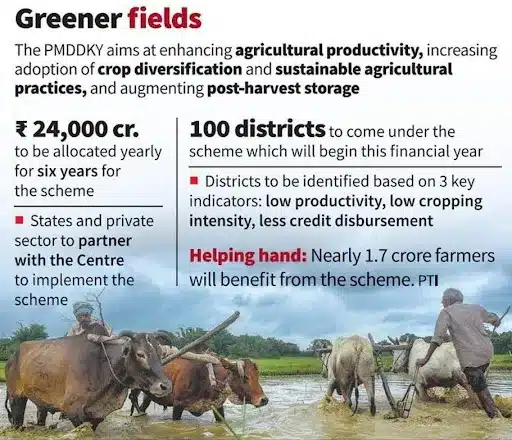
  • The Union Cabinet has approved the Prime Minister Dhan-Dhaanya Krishi Yojana (PMDDKY) to develop 100 agricultural districts by integrating 36 schemes across 11 ministries. 
  • The scheme has a yearly budget of ₹24,000 crore and will run for six years starting from 2025–26. It draws inspiration from NITI Aayog’s Aspirational District Programme and is first of its kind focusing exclusively on agriculture and allied sectors.

Main Goals of PM Dhan-Dhaanya Krishi Yojana

  • PMDDKY was announced in the Union Budget 2025. It focuses on improving farming in 100 districts that currently have low agricultural productivity, moderate crop intensity, and below-average credit access.
  • The scheme has five main goals:
    • Increase agricultural productivity.
    • Promote crop diversification and sustainable farming practices.
    • Expand post-harvest storage facilities at panchayat and block levels.
    • Improve irrigation systems.
    • Ensure easy access to both long-term and short-term credit for farmers.
  • By focusing on these areas, the government aims to boost productivity, support local livelihoods, and make the country more self-reliant in agriculture. 
  • As these 100 districts show improvement, India’s overall farming performance is expected to rise as well.

How PM Dhan-Dhaanya Krishi Yojana Districts Will Be Selected

  • Under PMDDKY, 100 districts will be chosen based on three main factors:
    • Low agricultural productivity
    • Moderate crop intensity
    • Below-average credit availability for farmers
  • Cropping intensity measures how many crops are grown on the same land in a year. At the national level, it was 155% in 2021–22, but this varies from state to state.
  • The number of districts selected from each state or Union Territory will depend on its share of net cropped area and the number of farming households. 
  • However, every state will have at least one district included in the scheme.

Implementation of the PM Dhan-Dhaanya Krishi Yojana 

  • For the PMDDKY scheme, each of the 100 selected districts will get a master plan covering agriculture and related activities. 
  • This District Agriculture and Allied Activities Plan will be prepared by a District Dhan Dhaanya Samiti, led by the Collector and including progressive farmers as members.
  • The district plans will focus on key national goals like crop diversification, saving water, protecting soil health, becoming self-sufficient in farming, and promoting natural and organic agriculture. 
  • Plans will be based on local farming patterns and climate conditions, created after wide consultations.
  • Committees will work at district, state, and national levels to ensure smooth implementation. 
  • Central Nodal Officers (CNOs) will be appointed to visit the districts, monitor progress, and conduct reviews. 
  • Agriculture universities from both central and state levels will help each district as knowledge partners, providing expert guidance.

Performance Ranking System for PM Dhan-Dhaanya Krishi Yojana Districts

  • PMDDKY will follow a model similar to the Aspirational Districts Programme (ADP) launched in 2018. 
  • It focuses on convergence of government schemes, collaboration between officers and districts, and healthy competition through performance rankings.
  • Under PMDDKY, all selected districts will be ranked monthly based on progress across 117 Key Performance Indicators (KPIs)
  • These indicators will cover areas such as agriculture, water resources, financial inclusion, infrastructure, and skill development.
  • NITI Aayog will guide and support the programme by offering expertise and helping build capacity at different levels. 
  • A dedicated portal or dashboard will be created to track and display the progress of each district regularly.

Source: IETHPIB

Dhan-Dhaanya Krishi Yojana FAQs

Q1: What is PMDDKY’s main aim?

Ans: To improve farming productivity, credit access, and infrastructure across 100 selected agricultural districts through integrated planning.

Q2: How are PMDDKY districts chosen?

Ans: Based on low productivity, moderate crop intensity, and below-average credit access, with at least one district per state.

Q3: How is PMDDKY implemented?

Ans: Through District Agriculture Plans prepared by district-level committees including officials and farmers, aligned with national agricultural goals.

Q4: How will PMDDKY’s progress be tracked?

Ans: Districts will be ranked monthly on 117 key indicators using a dedicated portal, following Aspirational Districts model.

Q5: What is the budget and duration of PMDDKY?

Ans: ₹24,000 crore annually for six years, starting 2025–26, to boost self-reliance in agriculture and allied sectors.

Enquire Now