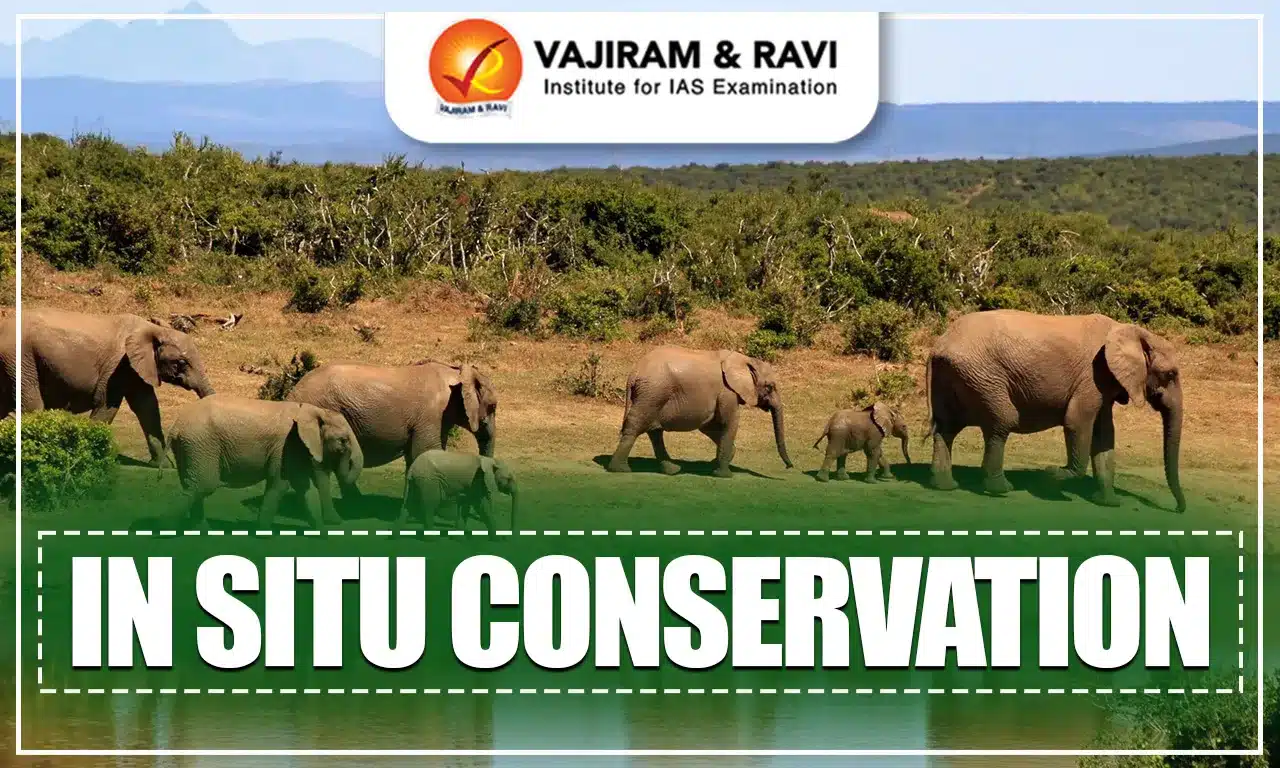
In- situ conversation helps protect biodiversity by safeguarding species in their natural habitats. In this process, instead of relocating plants and animals, ecosystems continue to function in their original settings, thereby supporting the survival of species along with their complex ecological interactions. By maintaining ecosystem integrity, preserving genetic diversity and promoting sustainable resource use, in-situ conservation contributes not only to the health of nature but also to human beings well-being. In this article, we are going to cover all about in-situ conservation, its advantages, types as well as challenges.
In-Situ Conservation
- In-situ Conservation is the process of protection and maintenance of ecosystems and natural habitats so that species survive and thrive in their native environment.
- It focuses on preserving entire ecosystems instead of isolated species.
- Focus is on maintaining the natural processes and interactions important for ecosystem resilience.
- It can be species- centered like protecting specific endangered species or ecosystem based like conserving whole habitats.
- In-situ Conservation Methods
- The in-situ conservation method works by establishing the protected areas and providing a safe habitat for wildlife as well as help balance human requirements with conservation goals.
In-Situ Conservation Methods
The main approach to in-situ conservation is the establishment of protected areas, which provide safe habitats for wildlife and help balance human needs with conservation goals.
1. National Parks
- Legal Basis: Established under the Wildlife (Protection) Act, 1972.
- Objective: To conserve biodiversity, ecosystems, and landscapes in their entirety and natural state. Unlike wildlife sanctuaries, no grazing, hunting, forestry, or private land ownership is permitted within their boundaries.
- Features:
- Strictly regulated zones where human activities are highly restricted.
- Used for research, education, and eco-tourism with strict management.
- Serve as hotspots for flagship species such as tigers, elephants, rhinos, and lions.
- Example: Jim Corbett National Park in Uttarakhand, the first National Park in India (1936), known for tiger conservation.
2. Wildlife Sanctuaries
- Legal Basis: Also created under the Wildlife (Protection) Act, 1972.
- Objective: To conserve specific wildlife species and their habitats, while permitting limited human activity.
- Features:
- More flexible than national parks. Certain activities like grazing, firewood collection, or minor forest produce collection may be permitted by state authorities if they do not disturb wildlife.
- Focus on protecting species under threat, e.g., bird nesting grounds, tiger habitats, or elephant corridors.
- Example: Bharatpur Bird Sanctuary (Keoladeo National Park), Rajasthan, famous for migratory birds such as Siberian cranes.
3. Biosphere Reserves
- Biosphere reserves are large areas of land or coastal ecosystems recognized under UNESCO’s Man and Biosphere (MAB) Programme (1971).
- Objective: To promote both conservation and sustainable development by balancing ecological needs with human use.
- Structure:
- Core Zone: Strictly protected, no human activity allowed.
- Buffer Zone: Limited research, tourism, and education activities.
- Transition Zone: Sustainable human activities like agriculture, settlements, and resource use.
- Example: Nilgiri Biosphere Reserve, spread across Tamil Nadu, Kerala, and Karnataka, known for rich biodiversity including elephants and tigers.
4. Conservation Reserves
- Legal Basis: Established under the Wildlife (Protection) Amendment Act, 2002.
- Objective: To protect landscapes, seascapes, and habitats situated adjacent to national parks and sanctuaries, acting as a buffer and ecological corridor.
- Features:
- Owned and managed by state governments.
- Protects transitional areas that connect major protected habitats, ensuring species migration and gene flow.
- Example: Trikuta Hills Conservation Reserve in Jammu & Kashmir.
5. Community Reserves
- Legal Basis: Also created under the 2002 amendment to the Wildlife Protection Act.
- Objective: To encourage local community participation in biodiversity conservation while improving socio-economic conditions.
- Features:
- Managed jointly by local communities and governments.
- Serve as models of co-existence, where conservation and human needs are balanced.
- Empower local communities with rights and responsibilities in conservation.
- Example: Kadalundi-Vallikkunnu Community Reserve in Kerala, known for migratory birds.
6. Sacred Groves
- These are ancient patches of forests or natural vegetation conserved by local communities due to religious and cultural beliefs.
- Objective: To preserve biodiversity through traditional practices without formal government enforcement.
- Features:
- Believed to be the abode of deities or ancestral spirits.
- Hunting, tree cutting, or destructive activities are strictly prohibited by cultural taboos.
- Often act as mini gene banks, conserving rare and endemic species.
- Example: Khasi Sacred Groves in Meghalaya, protected for centuries due to tribal beliefs.
7. Coastal and Marine Protected Areas
- Coastal and Marine Protected areas are special zones covering intertidal, subtidal, and offshore areas with associated ecosystems such as coral reefs, mangroves, lagoons, and seagrass beds.
- Objective: To conserve and protect fragile marine biodiversity from overfishing, industrial pollution, and habitat destruction.
- Features:
- Often part of global initiatives like IUCN’s protected area framework.
- Provide breeding and nursery grounds for marine species, essential for fisheries.
- Help mitigate coastal erosion and act as carbon sinks.
- Example: Gulf of Mannar Marine National Park, Tamil Nadu, home to coral reefs, sea turtles, dugongs, and diverse marine life.
In Situ Conservation Advantages
In- Situ conservation has the following advantages:
- Preservation of Ecosystems: In-situ conservation protects entire ecosystems, not just individual species. By conserving species in their natural habitats, it makes sure that the delicate balance of biodiversity that are plants, animals, soil, water, and microorganisms remains intact.
- Maintenance of Genetic Diversity: Since species continue to survive and reproduce in their natural surroundings, their natural genetic variation is preserved. This genetic diversity helps species adapt to environmental changes, diseases, or natural calamities, thereby ensuring long-term survival.
- Ecosystem Integrity: By protecting species within their habitats, the natural processes such as pollination, seed dispersal, predator-prey relationships, nutrient cycling, and soil formation remain undisturbed. This maintains the overall integrity and resilience of ecosystems.
- Balanced Approach to Conservation: In-situ conservation does not exclude humans entirely but often allows sustainable use of resources by local communities. For example, controlled collection of forest produce or community-managed reserves enables people to benefit while also participating in conservation efforts.
- Cultural and Heritage Value: Many in-situ practices are deeply connected with cultural traditions, such as sacred groves, which communities protect due to religious beliefs. These practices preserve not only biodiversity but also the cultural and spiritual heritage of local populations.
- Cost-Effectiveness: Compared to ex-situ methods like zoos, botanical gardens, or seed banks, in-situ conservation is more cost-effective in the long run. It does not require artificial habitats or extensive maintenance, as species are conserved within their natural ecosystems.
- Opportunities for Education and Research: Protected areas serve as natural laboratories for scientists, conservationists, and students. They provide valuable opportunities for ecological studies, biodiversity monitoring, and environmental education, while also spreading awareness among the general public about the importance of conservation.
In-Situ Conservation Challenges
- Human-Wildlife Conflicts: The close proximity of human settlements to protected areas often leads to conflicts, such as wild animals raiding crops, attacking livestock, or threatening human lives.
- Habitat Loss and Fragmentation: Expanding urbanization, deforestation, agricultural expansion, and infrastructure development reduce the size of natural habitats. This fragmentation isolates wildlife populations, disrupts migration routes, and weakens species’ chances of survival.
- Resource Constraints: Effective conservation requires adequate funding, trained personnel, and proper infrastructure. However, many protected areas face shortages of financial resources, lack of scientific monitoring, and insufficient staff, making conservation efforts less effective.
- Illegal Activities: Poaching of animals for trade, illegal logging, encroachment on forest lands, and smuggling of forest produce remain major threats. Weak law enforcement and corruption further aggravate these challenges, making it difficult to safeguard biodiversity.
- Impact of Climate Change: Rising temperatures, altered rainfall patterns, and extreme weather events affect habitats and food availability. Species may be forced to migrate to new regions, but protected areas may not always provide suitable conditions for them, making conservation efforts less effective.
- Invasive Alien Species: Non-native species, introduced either accidentally or deliberately, can disrupt ecosystems by competing with native species, spreading diseases, or preying on indigenous fauna and flora. For example, invasive plants like Lantana camara often outcompete native vegetation in forests.
In Situ Conservation FAQs
Q1: What is In-situ conservation?
Ans: In-situ conservation is the protection of species within their natural habitats to maintain ecosystems and biodiversity.
Q2: What is an example of in situ conservation?
Ans: National Parks, such as Jim Corbett National Park, are examples of in-situ conservation.
Q3: Is zoo In-situ conservation?
Ans: No, a zoo is an example of ex-situ conservation, not in-situ.
Q4: What is ex-situ conservation?
Ans: Ex-situ conservation involves protecting species outside their natural habitats, such as in zoos, botanical gardens, or seed banks.
Q5: What are biosphere reserves?
Ans: Biosphere Reserves are protected areas that conserve biodiversity while promoting sustainable use under UNESCO’s Man and Biosphere Programme.