Weather and Climate, Characteristics, Significance, Challenges

Weather and Climate

Weather and Climate are closely related but distinct concepts. Weather describes short-term atmospheric conditions in a specific location, while Climate refers to long-term patterns and averages of weather over extended periods. Understanding both is essential for analyzing environmental changes and preparing for phenomena like climate change.

Weather and Climate

Weather and Climate are two fundamental aspects of Earth’s atmospheric system that influence life on our planet in different ways. Weather refers to the short-term, day-to-day variations in atmospheric conditions, including temperature, humidity, precipitation, wind speed, and air pressure, observed at a specific location. It is highly dynamic, capable of changing within hours or days, and is influenced by local and global factors such as pressure systems, ocean currents, topography, and seasonal shifts.

Climate, on the other hand, represents the long-term average of weather patterns in a particular region, typically calculated over a period of 30 years or more. It provides insights into broader trends and patterns, such as seasonal variations, rainfall distribution, and long-term changes in temperature. Unlike weather, which affects daily human activities like commuting or planning events, climate shapes ecosystems, agricultural practices, urban planning, and human settlements over decades.

Weather and Climate Characteristics

Understanding the Weather and Climate Characteristics is essential to grasp how Earth's atmospheric system functions. While weather refers to short-term atmospheric conditions at a specific location, climate describes long-term patterns and averages over large regions. Both play a crucial role in shaping ecosystems, agriculture, and human activities, but they operate on different timescales and scales of influence.

Weather and Climate Characteristics
Feature Weather Climate

Definition

Day-to-day variations in atmospheric conditions like temperature, humidity, wind, and precipitation.

Long-term average of weather conditions in a region, typically over 30 years or more.

Time Scale

Short-term; hours, days, or weeks.

Long-term; decades to centuries.

Spatial Scope

Local or specific to a small area.

Regional, national, or global.

Predictability

Limited to short durations; forecasts are less reliable beyond a week or so.

Relatively stable; trends and patterns can be predicted over long periods.

Influencing Factors

Immediate atmospheric conditions, local topography, water bodies, and seasonal shifts.

Latitude, altitude, ocean currents, long-term circulation patterns, and human-induced changes.

Impact

Directly affects daily activities, travel, and short-term planning.

Influences agriculture, ecosystems, biodiversity, and human settlements over the long term.

Elements Measured

Temperature, humidity, wind speed, cloud cover, precipitation, and atmospheric pressure.

Long-term averages of temperature, precipitation, wind, and sunshine.

Weather and Climate Significance

Weather and Climate shape almost every aspect of life on Earth. While weather refers to short-term atmospheric conditions, climate represents long-term patterns. Both have significant effects on society, economy, and the natural world. Their impact can be seen across the following areas:

  • Agriculture and Food Production: Weather determines daily crop growth, harvesting schedules, and irrigation needs, while climate sets the broader conditions that decide which crops can thrive in a particular region.
  • Human Health and Safety: Extreme weather events such as heatwaves, storms, or cold spells can threaten health and damage infrastructure. Climate, on the other hand, shapes long-term health risks, including the spread of diseases or heat-related illnesses.
  • Economic Activities: Weather influences day-to-day operations in aviation, construction, shipping, and tourism. Climate plays a role in long-term economic planning, investment decisions, and resource management.
  • Ecosystems and Biodiversity: Climate regulates the overall stability of ecosystems, while short-term weather fluctuations affect migration patterns, breeding cycles, and plant growth.
  • Energy Resources: Renewable energy sources such as solar, wind, and hydropower are directly dependent on weather conditions and long-term climate trends.
  • Disaster Preparedness: Weather forecasting supports immediate disaster management, while climate studies guide long-term resilience planning and infrastructure design.
  • Global Sustainability: Climate change drives global issues like sea-level rise and changing rainfall patterns, shaping sustainability initiatives and international policy responses.

Weather and Climate Challenges

Weather and Climate are deeply interconnected with human society and the environment. However, rapid global changes and human activities have intensified their challenges, creating risks that cut across ecological, social, and economic systems. Major challenges include:

  • Climate Change: Global warming, driven by greenhouse gas emissions, is shifting long-term climate patterns and increasing the frequency of extreme weather events.
  • Extreme Weather Events: Hurricanes, droughts, floods, and heatwaves are becoming more intense and unpredictable, making disaster preparedness and response increasingly difficult.
  • Urbanization: Expanding cities create heat islands, disrupt local weather systems, and heighten vulnerabilities to climate-related risks.
  • Deforestation and Land Use Changes: Human-driven activities such as deforestation and unsustainable agriculture disturb ecosystems, weakening natural climate regulation.
  • Resource Scarcity: Changing weather and climate patterns affect water supply, food production, and energy security, often sparking conflicts and economic stress.
  • Data Collection and Forecasting Limitations: Despite technological advances, gaps in data and the complexity of atmospheric systems limit accurate forecasting and climate modeling.
  • Rising Sea Levels: Melting polar ice and thermal expansion of oceans threaten coastal regions, displacing populations and disrupting ecosystems.
  • Public Awareness and Policy Gaps: Limited public understanding and weak policy implementation slow down effective climate action and adaptation strategies.
  • Economic Impacts: Extreme weather and climate variability cause heavy financial losses in agriculture, infrastructure, and insurance, burdening national economies.

Global Inequities: Developing nations bear disproportionate risks, lacking adequate resources and resilience to face climate challenges, deepening global inequality.

Also Check Other Posts
Coastal Regulation Zone Global Plastic Treaty
Nitrogen Cycle Carbon Cycle

Weather and Climate FAQs

Q1: What is different between weather and climate?

Ans: Weather is the short-term atmospheric condition of a place, while climate is the long-term average pattern of weather, usually over 30 years.

Q2: What are the 4 types of weather?

Ans: The four main types of weather are sunny, rainy, windy, and snowy, though variations like cloudy or stormy also exist.

Q3: What is weather and climate class 7?

Ans: Weather is the daily state of the atmosphere, and climate refers to the average weather condition of a region over many years.

Q4: What are the 4 examples of climate?

Ans: Examples of climate include tropical, desert (arid), temperate, and polar regions.

Q5: What are the 5 points of weather and climate?

Ans: Weather is short-term, climate is long-term, Both affect human life, Determined by temperature, rainfall, humidity, Climate varies regionally, Weather changes quickly.

UPSC Daily Quiz 17 September 2025

UPSC Daily Quiz

The Daily UPSC Quiz by Vajiram & Ravi is a thoughtfully curated initiative designed to support UPSC aspirants in strengthening their current affairs knowledge and core conceptual understanding. Aligned with the UPSC Syllabus 2025, this daily quiz serves as a revision resource, helping candidates assess their preparation, revise key topics, and stay updated with relevant issues. Whether you are preparing for Prelims or sharpening your revision for Mains, consistent practice with these Daily UPSC Quiz can significantly enhance accuracy, speed, and confidence in solving exam-level questions.

[WpProQuiz 72]

UPSC Daily Quiz FAQs

Q1: What is the Daily UPSC Quiz?

Ans: The Daily UPSC Quiz is a set of practice questions based on current affairs, static subjects, and PYQs that help aspirants enhance retention and test conceptual clarity regularly.

Q2: How is the Daily Quiz useful for UPSC preparation?

Ans: Daily quizzes support learning, help in revision, improve time management, and boost accuracy for both UPSC Prelims and Mains through consistent practice.

Q3: Are the quiz questions based on the UPSC syllabus?

Ans: Yes, all questions are aligned with the UPSC Syllabus 2025, covering key areas like Polity, Economy, Environment, History, Geography, and Current Affairs.

Q4: Are solutions and explanations provided with the quiz?

Ans: Yes, each quiz includes detailed explanations and source references to enhance conceptual understanding and enable self-assessment.

Q5: Is the Daily UPSC Quiz suitable for both Prelims and Mains?

Ans: Primarily focused on Prelims (MCQ format), but it also indirectly helps in Mains by strengthening subject knowledge and factual clarity.

Frontier 50 Initiative

Frontier 50 Initiative

Frontier 50 Initiative Latest News

Recently, the NITI Aayog launched the Frontier 50 Initiative to amplify grassroots adoption of technology and scale impact creation.

About Frontier 50 Initiative

  • It will support 50 Aspirational Districts / Blocks to pick use cases from the Repository and deploy those frontier technologies that have potential to accelerate saturation of services across ADP/ABP themes.
  • Launched by: NITI Aayog under its Frontier Tech Hub.
  • The Frontier Tech Repository showcases 200+ impact stories from across India in four sectors – Agriculture, Healthcare, Education, and National Security. 
  • It brings to life how states and startups are deploying technology with the purpose to transform livelihoods.

What is NITI Frontier Tech Hub?

  • It has been established to anticipate mega technology shifts and chart India’s readiness to unlock their potential for inclusive growth, supply chain resilience, and national security.
  • It convenes leading experts across government, industry, and academia to assess frontier technologies—such as AI, quantum, and biotechnology.
  • It evaluates AI, quantum, and biotechnology opportunities and risks for India, and designs strategies to harness them for Viksit Bharat@2047.

Source: PIB

Frontier 50 Initiative FAQs

Q1: What does NITI Aayog stand for?

Ans: National Institution for Transforming India

Q2: What is the aspirational district program?

Ans: The Aspirational Districts Programme (ADP) was launched in 2018 to uplift 112 underdeveloped districts through data-driven, inclusive governance.

Geo-Engineering, Working, Techniques, Advantages, Challenges

Geo-Engineering

Geo-Engineering, also known as Climate Engineering, refers to the deliberate large-scale manipulation of Earth’s natural systems with the aim of counteracting climate change. As rising greenhouse gas emissions continue to drive global warming, scientists and policymakers are exploring Geo-Engineering as a potential backup strategy to complement mitigation and adaptation efforts. 

It involves a wide range of techniques, some focused on reducing the amount of solar radiation absorbed by the Earth, while others aim to remove carbon dioxide from the atmosphere. Although still in experimental and conceptual stages, Geo-Engineering raises important questions about feasibility, ethics, governance, and unintended consequences, making it a crucial topic in the discourse on climate solutions.

Geo-Engineering

Geo-Engineering, also called climate engineering, refers to a broad set of largely theoretical technologies and methods designed to deliberately manipulate the Earth’s climate system. The primary aim is to reduce the adverse impacts of climate change by either removing excess carbon dioxide from the atmosphere or reducing the amount of solar radiation absorbed at the Earth’s surface. While many of these approaches remain hypothetical or experimental, they highlight the growing search for large-scale solutions to counter global warming.

Geo-Engineering Working

Geo-Engineering approaches are generally divided into two broad categories:

  • Removal of Greenhouse Gases (Carbon Dioxide Removal - CDR): These techniques aim to directly capture and remove greenhouse gases, especially carbon dioxide, from the atmosphere to reduce long-term warming.
  • Solar Radiation Management (SRM): These methods focus on reflecting or blocking a portion of incoming solar radiation to temporarily cool the Earth’s surface and offset the effects of climate change.

The following sections will explore both these aspects in detail, highlighting their techniques, potential benefits, and associated risks.

Green House Gas Removal

The Green House Gas Removal approach focuses on extracting carbon dioxide and other greenhouse gases from the atmosphere. By reducing the overall concentration of these gases, it aims to slow down global warming while restoring balance to the Earth’s climate system. Some key techniques include:

  • Bio-energy with Carbon Capture and Storage (BECCS): Produces energy from biomass while capturing and storing the released carbon underground, ensuring negative emissions.
  • Direct Air Capture: Uses chemical processes to filter carbon dioxide directly from the atmosphere for storage or reuse.
  • Afforestation, Reforestation, and Forest Restoration: Expands forest cover to absorb atmospheric carbon naturally through photosynthesis.
  • Ocean Fertilization: Involves adding nutrients like iron to ocean waters to stimulate plankton growth, which captures carbon dioxide and stores it in deep ocean layers.

Solar Radiation Management

Solar Radiation Management techniques aim to reduce the amount of sunlight absorbed by the Earth and instead reflect more of it back into space. These methods do not reduce greenhouse gases directly but seek to cool the planet by managing incoming solar energy. Some of the key approaches include:

  • Surface-based Methods: Using pale or reflective roofing materials, cultivating high-albedo crops, or even altering the brightness of oceans to reflect more sunlight.
  • Troposphere-based Methods: Marine cloud brightening, which sprays fine seawater into the air to whiten clouds and enhance their reflectivity.
  • Upper Atmosphere-based Methods: Releasing reflective aerosols such as stratospheric sulfate particles, or deploying specially designed self-levitating aerosols to scatter sunlight.
  • Space-based Methods: Placing space sunshades, mirrors, or dust in orbit to block or deflect a portion of solar radiation before it reaches Earth.

Geo-Engineering Techniques

Geo-Engineering employs a range of methods to either remove greenhouse gases from the atmosphere or manage incoming solar radiation. Some of the most notable techniques include:

  • Bio-energy with Carbon Capture and Storage (BECCS): BECCS extracts bio-energy from biomass while capturing and storing the carbon released, thereby removing CO₂ from the atmosphere. Biomass absorbs CO₂ during growth, and when processed through combustion, fermentation, pyrolysis, or other methods, energy is generated in the form of electricity, heat, or biofuels. The captured carbon is then stored to prevent re-entry into the atmosphere.
  • Ocean Fertilization (Ocean Nourishment): This method involves deliberately adding nutrients such as iron, urea, or phosphorus to the upper ocean layers. The added nutrients boost the growth of phytoplankton, which absorb CO₂ and create a natural carbon sink while also increasing marine food production.
  • Soil Carbon Sequestration (SCS): Soils can act as significant carbon sinks, potentially offsetting up to 15% of annual fossil fuel emissions. Soil organic carbon (SOC), derived from plants, animals, microbes, leaves, and wood, is concentrated mainly in the top metre of soil. Factors such as rainfall, temperature, vegetation cover, land use, and soil management practices influence SOC storage and retention.
  • Stratospheric Aerosol Injection (SAI): A key solar radiation management (SRM) technique, SAI involves releasing reflective particles like sulphur dioxide or finely powdered calcium carbonate into the stratosphere. These aerosols scatter sunlight and cool the planet, mimicking the cooling effect of large volcanic eruptions. However, governance and global impacts are major challenges since altering weather in one region may have cross-border effects.
  • Marine Cloud Brightening (MCB): MCB enhances the reflectivity of marine clouds by spraying sea salt or other particles into them, making the clouds thicker and brighter. This increases the reflection of sunlight back into space, reducing heat absorption by Earth.
  • Cirrus Cloud Thinning (CCT): Unlike MCB, CCT targets high-altitude cirrus clouds, which trap heat rather than reflect sunlight. By seeding these clouds to thin them further, more long-wave radiation can escape into space, reducing the greenhouse effect and cooling the atmosphere.

Geo-Engineering Advantages

Geo-Engineering, or Climate Engineering, is often viewed as a controversial but potentially useful tool in the fight against climate change. Some of its key benefits include:

  • Climate Stabilization: Helps stabilize global temperatures and offset the impacts of climate change, particularly if traditional mitigation measures alone are insufficient.
  • Cost-effectiveness: Certain Geo-Engineering methods may prove less expensive compared to large-scale emission reduction or adaptation strategies.
  • Complement to Mitigation: Serves as an additional approach that can work alongside emission reduction and adaptation measures, making climate goals more achievable.
  • Emergency Response: Provides a rapid-response option to cool the planet temporarily during climate emergencies, such as extreme warming scenarios.

Commercial Use of Sequestrated Carbon Dioxide

Carbon dioxide is widely used across industries due to its chemical properties and applications. Some of the major uses include:

  • Chemical Industry: Used in making hydrochloric acid, dry ice, and other chemical products.
  • Fertiliser Industry: Essential in the production of urea.
  • Preservation & Refrigeration: Applied in refrigeration systems and as an inert agent for food packaging.
  • Food & Beverage Industry: Used in producing baking soda, alcoholic beverages, and carbonated drinks.
  • Horticulture: Enriches greenhouse environments to boost plant growth.
  • Paper Industry: Plays a role in pulp and paper processing.
  • Industrial Applications: Used in welding systems, fire extinguishers, and related processes.
  • Water Treatment: Helps in pH control and purification processes.
  • Fuel Production: Acts as a raw material for producing carbon-based fuels with additional energy inputs.
  • Packaging Industry: Supports the development of plastics and polymers.
  • Construction: Used in making concrete and coal tar for roads.

Geo-Engineering Challenges

Despite its potential, Geo-Engineering faces several obstacles that limit its large-scale adoption:

  • Uncertain Effectiveness: Many techniques may not work as expected when scaled up. For example, marine cloud brightening could trigger unforeseen climatic changes.
  • Moral Hazard: Heavy reliance on these technologies may reduce the urgency to cut greenhouse gas emissions at the source, weakening political and social will.
  • Weak Legal Frameworks: Current international laws are inadequate to regulate or oversee the unique challenges of Geo-Engineering projects.
  • Unpredictable Consequences: If a project fails, it is difficult to assess how the climate system will react, creating risks of unintended disruptions.
  • High Costs: Most Geo-Engineering techniques require significant financial investment, making implementation a major barrier.
  • Regional Climate Disruptions: Interventions like aerosol injections or altering ocean chemistry could lead to shifts in rainfall patterns, storms, or droughts.

Ozone Layer Risks: Aerosols may contribute to ozone depletion by providing surfaces for chemical reactions that destroy ozone molecules.

Also Check Other Posts
Coastal Regulation Zone Global Plastic Treaty
Nitrogen Cycle Carbon Cycle

Geo-Engineering FAQs

Q1: What is an example of geoengineering?

Ans: Injecting aerosols into the stratosphere to reflect sunlight (solar radiation management) is a common example of geoengineering to combat global warming.

Q2: What do geoengineers do?

Ans: Geoengineers design and study large-scale interventions like carbon capture, solar radiation control, or ocean fertilization to deliberately alter Earth’s climate system.

Q3: What is the scope of geoengineering?

Ans: Geoengineering explores technologies to reduce global warming, mitigate climate risks, and manage carbon levels, but faces ethical, environmental, and governance challenges.

Q4: Is geoengineering legal?

Ans: Currently, no comprehensive international law governs geoengineering. Some treaties (like London Protocol, ENMOD Convention) regulate specific practices, but legality remains debated.

Q5: What are the three types of geoengineering?

Ans: Solar Radiation Management (SRM) - Reflect sunlight, Carbon Dioxide Removal (CDR) - Capture and store CO₂, Weather Modification - Techniques like cloud seeding.

Almatti Dam

Almatti Dam

Almatti Dam Latest News

To set the stage for the implementation of the languishing Upper Krishna Project (UKP) phase III, the Karnataka Cabinet recently gave clearance for the acquisition of 1,33,867 lakh acres of land to facilitate the increase of Almatti dam’s height from the present 519.16 metres to 524.256 metres.

About Almatti Dam

  • It is a hydroelectric project on the Krishna River in North Karnataka. 
  • The dam was completed in July 2005
  • It was built with the primary objectives of supplying irrigation and potable water to adjacent regions, generating hydroelectric energy, and managing flood risks in the area. 
  • The annual electric output of the dam is 713,000,000 kilowatts (KW). 
  • The dam holds a gross water storage capacity of 123.08 TMC at 519 meters MSL.
  • Standing at a height of 52.5 meters and extending 3.5 kilometers in length, Almatti Dam serves as the principal reservoir of the Upper Krishna Irrigation Project; the 290 MW power station is located on the right side of the Almatti Dam.
    • The facility uses vertical Kaplan turbines: five 55 MW generators and one 15 MW generator.
    • Two separate facilities, namely, Almatti 1 Powerhouse and Almatti II Powerhouse, each separated by distance, do provide power generation capabilities.
    • After generating power, water is released into the Narayanpur reservoir to meet the irrigation requirements downstream.
  • 77 acres surrounding Almatti Dam have been developed into meticulously maintained gardens, including the Japanese Garden, Rock Garden, Mughal Garden, Gopal Krishna Garden, and Lavakush Garden.

Source: TH

Almatti Dam FAQ's

Q1: Where is Almatti Dam situated?

Ans: It is located on the Krishna River in North Karnataka.

Q2: Which type of turbines are used in the Almatti Hydroelectric Project?

Ans: Kaplan turbines

Q3: The Almatti Dam is a key component of which major irrigation project?

Ans: Almatti Dam serves as the principal reservoir of the Upper Krishna Irrigation Project.

WTO Agreement on Fisheries Subsidies

WTO Agreement on Fisheries Subsidies

WTO Agreement on Fisheries Subsidies Latest News

Recently, the World Trade Organisation’s agreement on Fisheries Subsidies came into force.

About WTO Agreement on Fisheries Subsidies

  • The Agreement on Fisheries Subsidies is the WTO's first multilateral agreement with environmental sustainability at its core.
  • It prohibits government support to illegal fishing activities and overexploitation of stocks, contributing to the protection of marine life.
  • It was adopted at the 12th Ministerial Conference (MC12) in 2022, in Geneva.
  • The agreement establishes
    • The first global trade rules designed to curb harmful fisheries subsidies.
    • Prohibits subsidies that support illegal, unreported and unregulated (IUU) fishing, fishing activities targeting overfished stocks
    • It also covers fishing in areas of the high seas that are not covered by a regional fisheries management organisation.

Implementation of the WTO Agreement on Fisheries Subsidies

  • WTO Fish Fund: Ministers have established this fund to provide developing economies and least-developed countries (LDCs) with technical assistance and capacity-building needed to implement the new obligations and manage their own fisheries more sustainably.
  • Seventeen members have pledged the equivalent of more than USD 18 million to the WTO Fish Fund.
  • Following its entry into force this month, a Committee on Fisheries Subsidies will be created to monitor compliance, review members’ notifications on their subsidy programmes.
  • WTO members will be required to report details of their fishing subsidies, as well as data such as fish stock levels and conservation measures in place.

Source: WTO

WTO Agreement on Fisheries Subsidies FAQs

Q1: WTO Headquarter is located in which city?

Ans: Geneva, Switzerland

Q2: When World Trade Organisatio was established?

Ans: 1 January 1995

Penna River

Penna River

Penna River Latest News

Eighteen youngsters stranded in the floodwaters of the Penna River in the Nellore district of Andhra Pradesh recently were rescued after a seven-hour operation.

About Penna River

  • The Penna River, also known as Pennar, Pinakini, or Penneru, is a river in southern India that flows through the states of Karnataka and Andhra Pradesh. 
  • Course:
    • Origin: It rises in the Nandi Hills, an upland region on the Deccan plateau, in Karnataka’s Chikkaballapur district.
    • It flows north into Andhra Pradesh state and turns east and then southeast. 
    • After passage through a gap in the Eastern Ghats range, it again bends east toward the Coromandel Coast, emptying into the Bay of Bengal near the Nellore district. 
  • It has a total length of about 597 km.
  • The river basin lies in the rain shadow region of the Eastern Ghats.
  • The river is seasonal, becoming a torrent after the rains and a thin stream during dry periods.
  • Tributaries
    • The Penna River has several tributaries, most of which are seasonal
    • Major ones include the Chitravati, Papagni, Cheyyeru, and Kunderu rivers. 
  • The Penna River is crucial to agriculture in parts of Andhra Pradesh, particularly the drought-stricken Rayalaseema region.
  • Several irrigation projects, such as the Somasila, Mylavaram, and Gandikota projects, have been constructed to use the river’s waters for farming and drinking purposes.

Source: TH

Penna River FAQs

Q1: The Penna River originates from which region?

Ans: It rises in the Nandi Hills, an upland region on the Deccan plateau, in Karnataka.

Q2: The Penna River flows through which Indian states?

Ans: It flows through the states of Karnataka and Andhra Pradesh.

Q3: The Penna River empties into which water body?

Ans: Bay of Bengal

Q4: Which are the major tributaries of the Penna River?

Ans: Chitravati, Papagni, Cheyyeru, and Kunderu rivers.

Hand, Foot, and Mouth Disease

Hand, Foot, and Mouth Disease

Hand, Foot, and Mouth Disease Latest News

A viral infection known as Hand, Foot, and Mouth Disease (HFMD) is spreading rapidly among children across Delhi and neighbouring Haryana, prompting health experts and schools to issue advisories.

About Hand, Foot, and Mouth Disease 

  • It is a very contagious illness caused by a virus. 
  • The disease gets its name from the blister-like rash that forms on your child’s hands and feet and painful sores that develop in their mouth. 
  • The rash can actually appear anywhere on their body, including their chest, back, arms, legs, genitals, and buttocks.
  • Infants and children younger than 5 are most likely to get HFMD. It is extremely uncommon in adults; however, it is still a possibility. 
  • It tends to spread quickly among children in daycare and schools. 
  • Because several viruses can cause the disease, it’s possible to get HFMD multiple times.
  • It is often confused with foot-and-mouth (also called hoof-and-mouth) disease, a disease of cattle, sheep, and swine; however, the two diseases are not related—they are caused by different viruses. 
    • Humans do not get the animal disease, and animals do not get the human disease.
  • Transmission: It easily spreads through contact with unwashed hands, feces, saliva , mucus from the nose, or fluid from the blisters

Hand, Foot, and Mouth Disease Symptoms

  • Fever
  • Sore throat
  • Painful mouth sores that blister
  • Rash commonly found on the hands and feet
  • Complications from HFMD are rare.

Hand, Foot, and Mouth Disease Treatment

  • There's no cure for HFM and no vaccine to prevent it.
  • Most people get better on their own in 7 to 10 days with minimal or no medical treatment. 
  • However, it can take children younger than 2 years old a little longer for their bodies to clear the virus.

Source: N18

Hand, Foot, and Mouth Disease FAQs

Q1: What is the causative agent of Hand, Foot, and Mouth Disease (HFMD)?

Ans: Hand, Foot, and Mouth Disease is caused by a virus.

Q2: Which age group is most vulnerable to Hand, Foot, and Mouth Disease (HFMD)?

Ans: Infants and children younger than 5 are most likely to get HFMD.

Q3: Is there any specific cure or vaccine available for Hand, Foot, and Mouth Disease (HFMD)?

Ans: There's no cure for HFMD and no vaccine to prevent it.

Saunders’s Tern

Saunders’s Tern

Saunders’s Tern Latest News

Recently, Saunders’s Tern was sighted at Adyar Estuary in Chennai.

About Saunders’s Tern

  • Saunders’s terns (Sternula saundersi) are a small, ground-nesting marine bird species.
  • It is a species of bird in the family Laridae.
  •  It is sparsely resident along the shores of the north-western Indian Ocean.
  • Geographical Range of Saunders’s terns : Saunders’s terns  breeds in Red Sea and Persian Gulf to islands between India and Sri Lanka; apparently winters mainly Seychelles to Maldives and Cocos (Keeling) Island.
  • Habitat: This species occupies a variety of coastal areas: estuaries, shallow tropical and subtropical inshore waters, tidal lagoons, and harbors.
  • Food: Its diet comprises many kinds of marine animals, such as small fish, crustaceans, and mollusks.
  • It nests on the ground up to 2 km inland on uncovered sandy sites, shingles, or dried mud.
  • Breeding Season: The breeding season for the Saunders’s tern is between March and June.
  • Conservation Status of Saunders’s terns : Least Concern ( IUCN Red List).

Key Facts about the Adyar Estuary

  • It is formed by the Adyar River at the point at which the river meets the Bay of Bengal.
  • It lies between Santhome beach in the north and Elliots Beach in the south.

Source: TH

Saunders’s Tern FAQs

Q1: What is the largest tern species in the world?

Ans: The regal Caspian Tern

Q2: Which country borders the Red Sea?

Ans: Egypt, Saudi Arabia, Yemen, Sudan, Eritrea and Djibouti

Bureau of Indian Standards

Bureau of Indian Standards

Bureau of Indian Standards Latest News

In recent years, the Bureau of Indian Standards (BIS) has issued as many as 84 Quality Control Orders (QCOs) based on the recommendations of various ministries and departments.

About Bureau of Indian Standards

  • It is the National Standard Body of India established under the BIS Act 2016.
  • Objective: It was established for the harmonious development of the activities of standardization, marking, and quality certification of goods and for matters connected therewith or incidental thereto.
  • It is the successor of the Indian Standards Institution (ISI), which was created in 1947 to ensure quality control and competitive efficiency in the rapid industrialization era.
  • BIS represents India in International Organization for Standardization (ISO) and International Electrotechnical Commission (IEC).
  • Nodal Ministry: It is functioning under the administrative control of the Ministry of Consumer Affairs, Food and Public Distribution.
  • Headquarter: It is headquartered in New Delhi and maintains regional and branch offices throughout the country.

Functions of Bureau of Indian Standards

  • BIS has been providing traceability and tangibility benefits to the national economy in a number of ways by
    • Providing safe, reliable quality goods; 
    • Minimizing health hazards to consumers; 
    • Promoting exports and imports substitute; control over proliferation of varieties etc. through standardization, certification, and testing.
  • It operates product certification schemes through which it grants licenses to manufacturers covering practically every industrial discipline, from agriculture and textiles to electronics.

Bureau of Indian Standards FAQs

Q1: What is the International Organization for Standardization?

Ans: ISO is an independent, non-governmental international organization. It brings global experts together to agree on the best ways of doing things.

Q2: What does the International Electrotechnical Commission do?

Ans: It prepares and publishes international standards for all electrical, electronic and related technologies.

Ion Chromatography

Ion Chromatography

Ion Chromatography Latest News

Scientists recently devised a way to perform ion chromatography in the field.

About Ion Chromatography

  • Ion chromatography (IC), or ion exchange chromatography, is a powerful analytical technique used to separate and quantify ions in a sample. 
  • It separates charged molecules based on their affinity to the ion-exchange resin. 
  • Ion chromatography techniques of various types enable scientists to target specific ions or classes of ions, providing precise and sensitive analysis.
  • It is of two types: cation exchange and anion exchange.
    • Ion chromatographs are able to measure concentrations of major anions, such as fluoride, chloride, nitrate, nitrite, and sulfate, as well as major cations, such as lithium, sodium, ammonium, potassium, calcium, and magnesium, in the parts-per-billion (ppb) range. 
  • Concentrations of organic acids can also be measured through ion chromatography.

How Does Ion Chromatography Work?

  • Ion chromatography, a form of liquid chromatography, measures concentrations of ionic species by separating them based on their interaction with a resin. 
  • Ionic species separate differently depending on species type and size. 
  • Sample solutions pass through a pressurized chromatographic column where ions are absorbed by column constituents. 
  • As an ion extraction liquid, known as eluent, runs through the column, the absorbed ions begin separating from the column. 
  • The retention time of different species determines the ionic concentrations in the sample.

Ion Chromatography Applications

  • Drinking water analysis for pollution and other constituents.
  • Determination of water chemistries in aquatic ecosystems.
  • Determination of sugar and salt content in foods.
  • Isolation of select proteins.

Source: TH

Ion Chromatography FAQs

Q1: What does ion chromatography (IC) measure?

Ans: Ion chromatography (IC) measures the concentration of ions (both anions and cations) in a sample.

Q2: On what principle does ion chromatography separate ions?

Ans: Ion chromatography separates ions on the principle of ion-exchange, where charged molecules are separated based on their affinity to the ion-exchange resin in the chromatographic column.

Q3: Which major anions can be detected using ion chromatography?

Ans: Fluoride, chloride, nitrate, nitrite, and sulfate.

Q4: Which major cations can be detected using ion chromatography?

Ans: Lithium, sodium, ammonium, potassium, calcium, and magnesium.

Q5: Can ion chromatography be used to measure organic acids?

Ans: Concentrations of organic acids can also be measured through ion chromatography.

International Labour Organisation

International Labour Organisation

International Labour Organisation Latest News

Recently, the Union Minister for Labour & Employment signed the Memorandum of Understanding between Government of India and International Labour Organisation (ILO) for collaboration to develop ‘International Reference Classification of Occupations’. 

About International Labour Organisation

  • It is a specialized agency of the United Nations (UN) dedicated to improving labour conditions and living standards throughout the world.
  • It is the only tripartite U.N. agency that brings together governments, employers and workers’ representatives of 187-member States.
  • Member countries: It has 187 member states: 186 out of 193 UN member states plus the Cook Islands.
  • In recognition of its activities, the ILO was awarded the Nobel Prize for Peace in 1969.
  • Headquarter: Geneva, Switzerland.

History of International Labour Organisation

  • It was created in 1919, as part of the Treaty of Versailles that ended World War I
  • In 1946, the ILO became a specialized agency of the newly formed UN.
  • It is also a member of the United Nations Development Group (UNDP), a coalition of UN organization aimed at helping meet the Sustainable Development Goals.

Functions of International Labour Organisation

  • Policy Formulation: It forms international policies and programmes to promote basic human rights, improve working and living conditions, and enhance employment opportunities
  • Creation of international labour standards backed by a unique system to supervise their application
  • An extensive programme of international technical cooperation formulated and implemented in an active partnership with constituents, to help countries put these policies into practice in an effective manner
  • Training, education, and research activities to help advance all of these efforts.

Source: PIB

International Labour Organisation FAQs

Q1: What is the purpose of the ILO?

Ans: The International Labour Organization (ILO) is devoted to promoting social justice and internationally recognized human and labour rights.

Q2: Which organisation publishes World Employment and Social Outlook report?

Ans: International Labour Organization

Birhor Tribe

Birhor Tribe

Birhor Tribe Latest News

Around 550 residents, mostly belonging to the Birhor tribe, of Fulwariya hamlet in Koderma district would soon receive electricity supply, ending nearly eight decades of darkness.

About Birhor Tribe

  • The Birhor are a forest-dependent semi-nomadic tribal community concentrated in the eastern central Indian state of Jharkhand.
  • Some of them are also found in Chhattisgarh, Odisha, and West Bengal.
  • The Birhor community is one of eight Particularly Vulnerable Tribal Groups (PVTGs) identified in Jharkhand.
  • The term "Birhor" is derived from the words “Bi”, meaning “Jungle”, and “hor”, meaning “man”; thus, it means “the man living in Jungle” or “people of Jungle”.
  • They belong to the Porto-Australoid stock.
  • Religion: The Birhor follow a mixture of animism and Hinduism.

Birhor Tribe Language 

  • The Birhor tribes have their own language, known as Birhor, which belongs to the Munda group of languages of the Austroasiatic language family.  
  • Their language has similarities with the Santali, Mundari, and Ho languages. 
  • However, due to increased contact with other communities and the influence of mainstream languages, many Birhor people are bilingual or trilingual, with proficiency in Hindi, Bengali, or other regional languages. 

Birhor Tribe Ethnology

  • The Birhors are of short stature, with long heads, wavy hair, and broad nose.
  • They claim they have descended from the Sun and believe that the Kharwars, who also trace their descent from the Sun, are their brothers. 
  • Ethnologically, they are akin to the Santals, Mundas, and Hos.

Birhor Tribe Society

  • They typically live in small, close-knit communities, and their social organization is primarily based on kinship ties. 
  • The tribe is divided into several clans, and each clan has its own leader who plays a crucial role in resolving disputes and maintaining social harmony within the community.
  • They live in small settlements in the forest or on the outskirts of villages.
  • The temporary Birhor settlements are known as tandas or bands. 
  • These consist of at least half a dozen huts of conical shape, erected with leaves and branches.
  • Birhor society is characterized by a strong sense of community, cooperation, and mutual support. 

Birhor Tribe Economy

  • The “primitive subsistence economy” of the Birhors has been based on nomadic gathering and hunting, particularly for monkeys.
  • They make ropes out of the fibres of a particular species of vine, which they sell in the markets of the nearby agricultural people.
  • Some of them have settled into stable agriculture.
  • According to socio-economic standing, the Birhors are classified into two groups. While the wandering Birhors are called Uthlus, the settled Birhors are called Janghis.
  • The Birhor tribe has a rich knowledge of traditional medicine and uses various medicinal plants found in the forest for treating common ailments.

Source: TOI

Birhor Tribe FAQs

Q1: The Birhor tribe is primarily concentrated in which Indian state?

Ans: Jharkhand

Q2: What are the temporary Birhor settlements called?

Ans: The temporary Birhor settlements are known as tandas or bands.

Q3: The Birhor tribe belongs to which racial/ethnic stock?

Ans: Birhor tribe belong to the Porto-Australoid stock.

Q4: What is the religious belief of Birhor tribe?

Ans: The Birhor follow a mixture of animism and Hinduism.

NPS to UPS: Govt Extends One-Time Switch Option

Unified Pension Scheme

Unified Pension Scheme Latest News

  • Central government employees have until September 30 to opt for the Unified Pension Scheme (UPS) under NPS (National Pension System), introduced in April 2025. 
  • Despite 23.94 lakh employees being eligible, only around 40,000 have opted so far. 
  • To regulate service matters for those choosing UPS, the Department of Pension and Pensioners’ Welfare notified the Central Civil Services (Implementation of the Unified Pension Scheme under the National Pension System) Rules, 2025, on September 2.

Govt Extends UPS Option to New Employees

  • The government has allowed central employees who joined between April 1 and August 31, 2025, under NPS to migrate to the Unified Pension Scheme (UPS). 
  • This one-time option, available until September 30, 2025, aligns with the existing cut-off for other eligible categories. 
  • Employees opting for UPS will also retain the right to later switch back to NPS, ensuring flexibility in planning post-retirement financial security.

Switch Option from UPS to NPS

  • UPS subscribers have a one-time option to switch to NPS, but cannot return to UPS.
  • The switch must be exercised at least one year before retirement or three months before VRS, and is barred in cases of dismissal, removal, compulsory retirement, or pending disciplinary proceedings. 
  • Those not opting will remain under UPS. 
  • Employees switching to NPS will receive its benefits along with the differential 4% contribution, giving greater flexibility and informed choice for retirement planning.

Unified Pension Scheme (UPS)

  • Before UPS, central government employees hired before January 1, 2004, were covered under the Old Pension Scheme (OPS), which guaranteed fixed pensions, while those joining after were under the market-linked National Pension System (NPS)
  • Amid persistent demands to restore OPS, the Union Cabinet approved the Unified Pension Scheme (UPS) in August 2024 as an optional scheme. 

About UPS

  • From April 1, 2025, the government introduced the UPS as an option under NPS for central government employees hired after January 1, 2004. 
    • Around 23 lakh employees can choose between NPS and UPS.
  • Unlike NPS, UPS guarantees an assured pension: 50% of the average basic pay of the last 12 months before retirement, provided the employee has served a minimum of 25 years. 
  • In case of the pensioner’s death, the spouse will receive up to 60% of the pension being drawn.
  • Unlike the Old Pension Scheme, which guaranteed 50% of last drawn basic pay without employee contribution, UPS combines assured benefits with mandatory contributions.

Key Differences Between UPS and NPS

  • The NPS is mandatory, while the UPS is optional, with employees given a one-time chance to switch back to NPS before retirement or VRS. 
  • Under the NPS, through the Permanent Retirement Account Number (PRAN), employees contribute 10% and the employer 14% of basic pay plus dearness allowance (DA), with pension benefits entirely dependent on the accumulated corpus
  • In contrast, the UPS requires 10% contributions each from employee and employer, with an additional 8.5% contribution by the government to create a pool corpus. 
  • This pool funds an assured pension of 50% of the employee’s average basic pay over the last 12 months, provided a minimum of 25 years of service is completed. 
  • Unlike NPS, UPS guarantees a minimum monthly payout of ₹10,000 after 10 years of service, ensuring greater financial security.
  • UPS also offers a lump sum equal to one-tenth of the last basic pay plus DA for every six months of service, whereas NPS has no such provision. 
  • Employees dismissed from service are ineligible for the assured UPS payout.

Why the Unified Pension Scheme Is Slow to Take Off

  • Although the government extended the deadline to September 30 for employees to opt into the Unified Pension Scheme (UPS), uptake remains low. 
  • The Department of Pension is holding awareness drives, but many employees still prefer the Old Pension Scheme (OPS), which required no employee contribution and guaranteed 50% of the last drawn basic pay plus DA as pension. 
  • In contrast, UPS involves contributions and is seen as less beneficial. 
  • The Central Secretariat Service Forum has also criticised both NPS and UPS, reiterating its demand for a complete return to OPS.

Source: IE | LM | PIB

Unified Pension Scheme FAQs

Q1: What deadline has the govt set for NPS to UPS switch?

Ans: Central govt employees can opt for UPS until September 30, 2025, after which those not switching will continue under NPS.

Q2: What is the main difference between UPS and NPS?

Ans: NPS is market-linked with no assured payout, while UPS guarantees 50% of last 12 months’ average basic pay after 25 years of service.

Q3: Can employees switch back to NPS after choosing UPS?

Ans: Yes, but only once, at least one year before retirement or three months before VRS. After switching, they cannot return to UPS.

Q4: Why is UPS slow to take off?

Ans: Many employees prefer the Old Pension Scheme (OPS) and find UPS less beneficial due to contributions, unlike OPS which required none.

Q5: What additional provision does UPS have compared to NPS?

Ans: UPS ensures a minimum monthly pension of ₹10,000 after 10 years and offers a lump sum payout, unlike NPS.

Himalayan Rains: Topography and Climate Change Explained

Himalayan Rainfall and Climate Change

Himalayan Rainfall and Climate Change Latest News

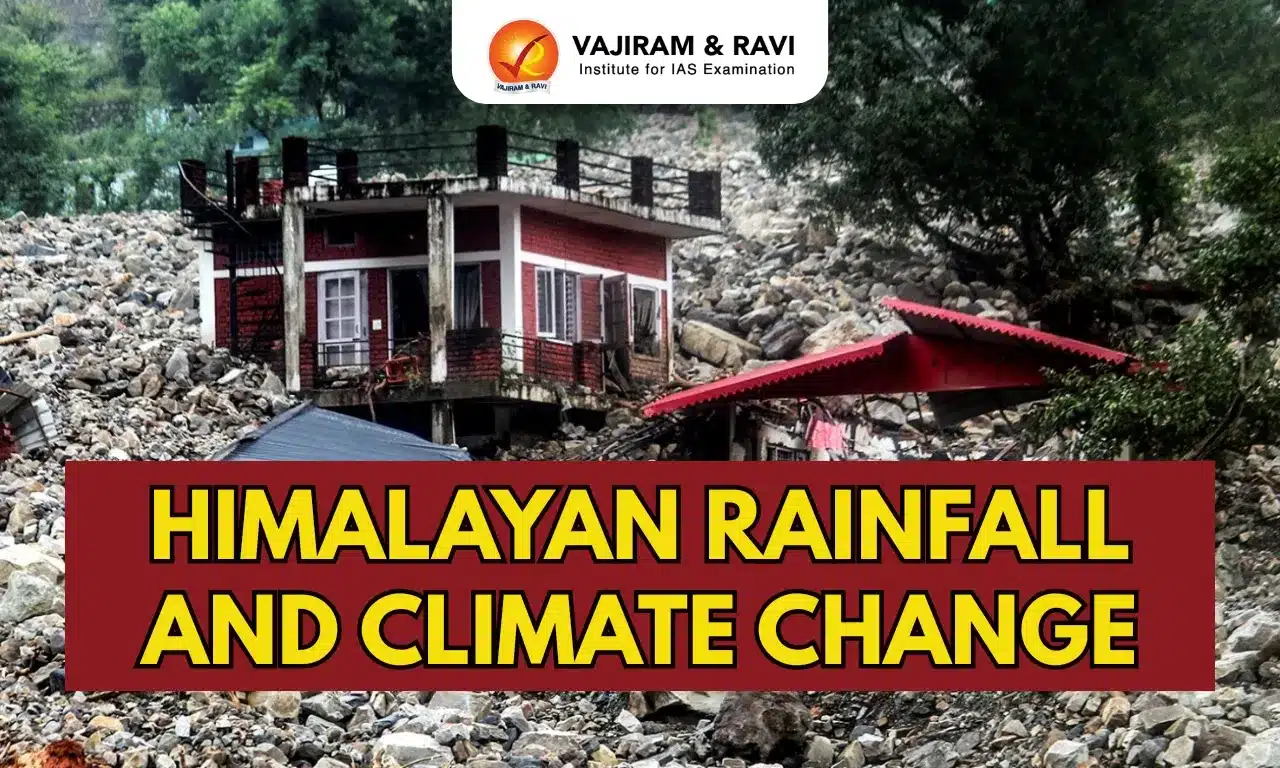
  • Dehradun and several districts of Uttarakhand have seen very heavy rainfall in recent days, triggering landslides, swollen rivers, and at least 15 deaths. 
  • Over the past month, both Uttarakhand and Himachal Pradesh have witnessed repeated incidents of cloudbursts, flash floods, mudslides, and damaged communication networks. 
  • While such events are typical of the monsoon, their growing frequency and intensity in recent years have raised serious concerns about safety and resilience in the Himalayan region.

Why Hilly Regions Receive More Rainfall

  • This monsoon, the northwestern region has seen unusually high rainfall, with 34% surplus in August and over 67% above normal in early September.
  • Consecutive low-pressure systems from the Bay of Bengal moved farther north, intensifying rains. 
  • In hilly areas like the western Himalayas, geography amplifies the impact: rising air forms massive, steep clouds that release heavy local precipitation
  • Such rainfall levels, manageable in coastal states like Goa or Kerala, trigger disasters in mountains. 
  • For example, Udhampur in J&K recorded 630 mm in 24 hours — equal to Rajkot’s annual rainfall — while Leh received 59 mm in two days, a record since 1973.

Why Hilly Regions Face Greater Disaster Risks

  • In plains, heavy rainfall usually drains into rivers or local water bodies, but in mountains it often triggers landslides, mudslides, and flash floods as water rushes downhill carrying mud, soil, and debris
  • This has recently occurred in Mandi, Kullu, Dharali, Tharali, and Jammu. 
  • When major rivers get choked, overflowing water and debris can inundate settlements, destroying roads and bridges. 
  • However, not every cloudburst results in disaster — the impact depends on local factors, such as slope stability and whether debris falls into river channels.

Climate Change and Himalayan Rainfall Extremes

  • Recent years show a southward shift of western disturbances — wind systems from the Mediterranean that bring rain and snow to northern India. 
  • Their increasing interaction with southwest monsoon currents, driven by global warming, has complicated rainfall patterns over the Himalayas. 
  • This shift is linked to more frequent extreme rainfall events and longer dry spells. 
  • Additionally, Arctic Sea ice melting may further influence these changing monsoon dynamics, raising concerns about heightened climate risks in hilly regions.

Why the Himalayas Are Prone to Cloudbursts

  • The Himalayas, positioned where moist tropical monsoon winds meet mid-latitude westerlies, experience strong uplift and instability that often trigger cloudbursts
  • Warm, moisture-rich air forced up the slopes cools quickly, condenses, and produces intense, localised downpours. 
  • Climate change is worsening this vulnerability: rapid Arctic warming weakens the jet stream, causing westerly troughs to interact more with monsoon currents, while warmer air carries more moisture, intensifying rainfall. 
  • A slower, wavering jet stream makes storms linger, leading to prolonged heavy rain and devastating floods — trends already seen globally, including in Germany (2021), Pakistan (2010), and West Asia (2024).

Observational Tools and Their Limitations in Forecasting Cloudbursts

  • Cloudburst forecasting relies on Doppler Weather Radars (DWRs), satellites, rain gauges, GPS-based moisture monitoring, and high-resolution numerical weather prediction (NWP) models. 
  • While DWRs provide detailed cloud and rainfall structures, their coverage is limited in Himalayan terrain
  • Rain gauges and automatic weather stations offer accurate point data but lack spatial density. 
  • Satellites like INSAT-3D/3DR, GPM, and Himawari capture convective growth and rainfall but struggle with coarse resolution and biases in rugged topography. 
  • NWP models simulate convection and storm dynamics but require very fine resolution (<1 km), precise initial conditions, and explicit process representation, making sudden bursts hard to predict. 
  • To improve accuracy, denser observation networks, advanced models with better cloudburst representation, and AI/ML integration for data assimilation are essential.

Source: IE | FE

Himalayan Rainfall and Climate Change FAQs

Q1: Why do hilly regions like the Himalayas receive more rainfall?

Ans: Geography forces moist air upward, forming massive clouds that release intense local rain, unlike plains or coastal areas where drainage reduces impact.

Q2: Why are hilly regions more disaster-prone during heavy rains?

Ans: Extreme rainfall triggers landslides, mudslides, and flash floods as water carries debris downhill, often overwhelming rivers and settlements.

Q3: What role does climate change play in Himalayan rains?

Ans: Global warming shifts western disturbances southward, increasing interaction with monsoon systems, leading to more extreme rainfall events and prolonged dry spells.

Q4: Why are the Himalayas prone to cloudbursts?

Ans: Their location at the intersection of monsoon winds and westerlies causes strong uplift, while warmer, moisture-rich air under climate change fuels intense downpours.

Q5: What are the limitations of current forecasting tools for cloudbursts?

Ans: DWRs, satellites, and NWP models face terrain coverage, resolution, and data accuracy issues, making sudden convective bursts hard to predict reliably.

ASI to Revise Sarnath Plaque, Credits Benares Ruler’s Family

Sarnath Plaque

Sarnath Plaque Latest News

  • The Archaeological Survey of India (ASI) is revising the Sarnath plaque to credit the Benares ruler’s family, instead of the British, for preserving the heritage site ahead of a UNESCO team’s visit.

About Sarnath

  • Sarnath, located about 10 km from Varanasi in Uttar Pradesh, is one of the most revered sites in the Buddhist world. 
  • It holds immense historical, cultural, and religious significance as the place where Gautama Buddha delivered his first sermon after attaining enlightenment at Bodh Gaya. 
  • Known as the Dharmachakra Pravartana or Turning of the Wheel of Dharma, this event marked the formal beginning of the Buddhist Sangha (community).

Historical Significance

  • Buddha’s First Sermon: Around 528 BCE, Buddha preached the Four Noble Truths and the Eightfold Path here to his five ascetic disciples. This sermon became the foundational philosophy of Buddhism.
  • Mauryan Patronage: Emperor Ashoka (3rd century BCE), after embracing Buddhism, visited Sarnath and commissioned several stupas, monasteries, and pillars. The famous Ashokan Lion Capital, India’s national emblem, was erected here.
  • Medieval Flourishing: Over centuries, Sarnath grew into a vibrant monastic and educational hub. Numerous monasteries, stupas, and sculptures were added, especially under the Gupta dynasty (4th-6th century CE), which produced exquisite Buddhist art.
  • Decline: With the decline of Buddhism in India (around the 12th century CE) and repeated invasions, Sarnath fell into ruin and was largely forgotten until rediscovery in the colonial era.

Key Monuments and Structures

  • Dhamek Stupa:
    • Built initially by Ashoka and later enlarged, this massive cylindrical stupa (43.6 meters high, 28 meters in diameter) marks the exact spot of Buddha’s first sermon.
    • The lower portion is decorated with intricate floral and geometric patterns, characteristic of Gupta art.
  • Chaukhandi Stupa:
    • An early stupa commemorating the meeting between Buddha and his first disciples.
    • Later, a Mughal-era pavilion was added to the top.
  • Ashokan Pillar:
    • The pillar, erected by Ashoka, bore the famous Lion Capital of Ashoka, now preserved in the Sarnath Archaeological Museum.
    • The capital, with four lions back-to-back, is India’s National Emblem and also featured on Indian currency.
  • Mulagandha Kuti Vihar:
    • A modern monastery built by the Mahabodhi Society in 1931, it contains impressive frescoes depicting scenes from Buddha’s life.
  • Monastic Ruins:
    • The site contains remains of monasteries that once hosted thousands of monks, serving as a leading centre of Buddhist learning.


Debate Over Historical Attribution

  • For decades, the mainstream narrative credited British officials such as Duncan and Mackenzie in 1798 and later archaeologists like Alexander Cunningham for discovering and preserving Sarnath. 
  • However, recent scholarship and archival records challenge this view, pointing to Jagat Singh’s excavation in 1787-88 as the actual turning point
  • His digging at the ancient mound unearthed Buddhist relics, shifting the perception of who deserves credit for uncovering Sarnath’s legacy.
  • This change is not merely a matter of rewriting history; it reflects a broader attempt to decolonise India’s historical narratives and recognise indigenous agency in heritage preservation.

Background of the Case

  • Jagat Singh, a descendant of Benares ruler Chait Singh, ordered excavation at Sarnath for construction purposes, which unexpectedly revealed Buddhist relics. Parts of these relics remain housed in the Asiatic Society in Kolkata.
  • The existing plaque at Sarnath emphasises British-led excavations from 1798 onwards, overshadowing Singh’s contribution. 
  • Earlier this year, following a petition by Singh’s descendants, the ASI revised a separate plaque at the Dharmarajika Stupa, removing language that labelled him a “destroyer” of monuments
  • The new version acknowledged that the stupa came to light through his actions, highlighting the contested nature of colonial-era historical narratives.

Summary of Recent Developments

  • The upcoming plaque revision at Sarnath comes as UNESCO evaluates India’s proposal to include the site in its World Heritage List.
  • ASI’s New Decision: The corrected plaque will formally acknowledge Jagat Singh’s role in exposing Sarnath’s importance in 1787-88, predating British accounts by a decade.
  • Research Support: Former National Museum Director B.R. Mani’s excavations have revealed evidence of Buddhist activity at Sarnath even before Emperor Ashoka, strengthening the case for recognising local contributions.
  • Cultural Impact: Singh’s family has also requested the ASI to revise accompanying cultural notice boards to reflect the corrected history.
  • Broader Context: India’s cultural diplomacy emphasises its Buddhist heritage globally. The revision of plaques aligns with this strategy, especially as South Asian tourists form a large segment of visitors to Sarnath.
  • UNESCO Candidacy: Sarnath, long on UNESCO’s tentative list, is now a strong contender for inclusion, with the government keen to assert its cultural and historical primacy.

Source: IE

Sarnath Plaque FAQs

Q1: Why is the ASI revising the Sarnath plaque?

Ans: To credit Babu Jagat Singh’s family for preserving the site instead of British officers.

Q2: What role did Jagat Singh play in Sarnath’s discovery?

Ans: He ordered excavations in 1787–88 that exposed Buddhist relics and highlighted the site’s importance.

Q3: How does the existing plaque describe Sarnath’s preservation?

Ans: It credits British officials from 1798 onwards for the site’s discovery and preservation.

Q4: Why is this revision significant now?

Ans: The correction coincides with Sarnath’s nomination for the UNESCO World Heritage List.

Q5: What broader objective does this move reflect?

Ans: It aligns with India’s efforts to decolonize historical narratives and emphasize indigenous contributions.

Daily Editorial Analysis 17 September 2025

Daily Editorial Analysis

GST 2.0 — Short-Term Pain, Possible Long-Term Gain

Context

  • The Goods and Services Tax (GST), introduced with the objective of creating a destination-based tax system, sought to improve efficiency by ensuring that the incidence of taxation fell on final consumers while input taxes were rebated.
  • Despite its transformative intent, the GST system initially suffered from multiple rates, inverted duty structures, and high compliance costs.
  • The new rate structure, effective from September 22, 2025, represents a significant overhaul, with implications for consumption, production, government revenue, and macroeconomic stability.

Evolution of the New GST Structure and Its Revenue Implications

  • Evolution of the New GST Structure

    • The 2025 reform eliminated the 12% and 28% slabs, consolidating most goods and services under 0%, 5%, and 18%, while introducing a 40% demerit rate for luxury and sin goods.
    • Special concessional rates below 5% were retained for certain essential commodities.
    • These changes particularly benefit employment-intensive sectors such as textiles, automobiles, consumer electronics, healthcare, and food products.
    • On the production side, agriculture-related industries, fertilisers, machinery, and renewable energy, stand to gain from lower input costs.
    • Out of 546 goods subjected to revision, 80% experienced rate reductions, reflecting a pro-consumer and pro-growth stance.
    • However, the economic consequences extend beyond lower prices and higher demand; they also challenge fiscal stability.
  • Revenue Implications

    • GST revenue (R) is determined as the product of the tax rate (r) and the tax base (E), which itself depends on pre-tax prices and quantities consumed.
    • Rate reductions lower post-tax prices, encouraging higher demand, but the increase in quantity demanded is not proportionate to the fall in tax rates. As a result, overall revenue tends to decline.
    • Calibrations suggest that across realistic demand elasticities, revenues will fall. For zero-rated goods, revenues vanish altogether.
    • Even for goods shifted to the 40% bracket, the apparent increase largely reflects the integration of the compensation cess, rather than a genuine hike.
    • Estimates of revenue loss vary, with the Ministry of Finance projecting ₹48,000 crore annually, while other assessments suggest higher figures.

Shortcomings of of GST Reform

  • Income and Consumption Effects

    • A key implication of the reform is the redistribution of benefits to consumers.
    • Lower GST translates into higher disposable incomes, especially for those consuming necessities in the 5% bracket.
    • Since demand elasticity for such goods is low, households may divert additional income toward higher-rated categories (18% and 40%), such as comforts and luxuries.
    • Over time, this could augment revenues, but in the short run, the government faces a pronounced revenue shortfall.
  • Efficiency and Cascading Effects

    • While GST was designed to eliminate cascading, the revised structure does not fully achieve this aim.
    • Exempt goods, by disallowing input tax credits (ITC), embed input taxes into final prices.
    • Even in the 5% category, inputs taxed at 18% create administrative bottlenecks in claiming ITC.
    • Such inefficiencies undermine the reform’s ability to fully rationalise resource allocation and improve competitiveness.

Macroeconomic and Fiscal Challenges

  • The reforms also intersect with India’s broader fiscal position.
  • Nominal GDP growth in the first quarter of 2025-26 stood at 8.8%, below the budgeted 10.1%. With inflation subdued, achieving revenue targets becomes harder.
  • Direct taxes contracted by 4.3% in the early months of the year, contrasting sharply with robust growth in the previous period.
  • The Union Budget had already anticipated a revenue forgone figure of ₹1 lakh crore, largely due to personal income tax reforms.
  • Additional GST revenue losses could push gross tax receipts significantly below projections.
  • While higher Reserve Bank of India dividends may provide partial relief, the government faces the difficult choice between curbing expenditure and widening the fiscal deficit.
  • States, too, will encounter similar dilemmas, with potential recourse to borrowing or expenditure cuts, both of which could stifle growth.
  • Monetary interventions, through repo rate cuts or liquidity injections, risk fuelling inflation and forcing monetisation of deficits, a path fraught with limitations.

Growth Prospects and Structural Limits

  • Although tax rate reductions may temporarily stimulate demand, this strategy cannot sustainably drive long-term growth.
  • India’s potential growth rate ultimately depends on investment and savings, alongside the efficiency of capital use (incremental capital-output ratio).
  • Thus, while GST reforms may provide short-term relief to consumers and production sectors, enduring growth requires structural improvements in investment capacity and productivity.

Conclusion

  • The 2025 GST reforms represent a bold attempt to simplify the tax structure and stimulate economic activity.
  • They promise lower prices, higher disposable incomes, and sectoral gains, particularly in employment-intensive industries, however, the fiscal cost is substantial, with immediate revenue shortfalls threatening both central and state budgets.
  • Moreover, unresolved inefficiencies such as cascading and ITC bottlenecks continue to limit the system’s effectiveness.
  • Ultimately, GST reforms can complement but not substitute for broader strategies centred on savings, investments, and productivity growth.

GST 2.0 — Short-Term Pain, Possible Long-Term Gain FAQs

 Q1. What was the main objective of introducing GST in India?
Ans. The main objective of introducing GST was to create a destination-based tax system that reduced cascading, ensured taxes fell on final consumers, and promoted efficiency in consumption and production.

Q2. Which sectors are expected to benefit most from the 2025 GST reforms?
Ans. Employment-intensive sectors such as textiles, automobiles, consumer electronics, healthcare, and food products are expected to benefit most.

Q3. Why are GST revenues expected to decline after the rate reductions?
Ans. GST revenues are expected to decline because the fall in tax rates reduces post-tax prices, but the resulting increase in demand is not large enough to compensate for the revenue loss.

Q4. How might lower GST rates affect consumers’ disposable incomes?
Ans. Lower GST rates increase consumers’ disposable incomes, allowing them to spend more, especially on higher-taxed goods such as comforts and luxuries.

Q5. What long-term factor is more important for India’s growth than tax rate reductions?
Ans. In the long term, India’s growth depends more on investment and savings rates, along with the efficient use of capital, than on tax rate reductions.

Source: The Hindu


‘Judicial Experimentalism’ Versus the Right to Justice

Context:

  • In July 2025, in Shivangi Bansal vs Sahib Bansal, the Supreme Court upheld Allahabad High Court’s 2022 guidelines in Mukesh Bansal vs State of U.P. to curb misuse of Section 498A IPC (now Section 85 of the Bharatiya Nyaya Sanhita).
  • The guidelines mandate a two-month ‘cooling period’ after an FIR or complaint, during which cases are referred to a Family Welfare Committee.
  • However, critics argue this delays victims’ access to justice and undermines the autonomy of criminal justice agencies.
  • This article highlights the Supreme Court’s 2025 ruling in Shivangi Bansal vs Sahib Bansal, its endorsement of a ‘cooling period’ for Section 498A cases, the statutory and judicial safeguards already in place, and why critics argue the ruling undermines victims’ timely access to justice.

The Basis of Safeguards under Section 498A

  • Section 498A was enacted to punish cruelty against women in matrimonial settings, but courts have noted its misuse through frivolous FIRs and indiscriminate arrests.
  • To address this, safeguards were introduced. In Lalita Kumari, the Supreme Court placed matrimonial disputes under ‘preliminary inquiry’ before FIR registration, a principle later reinforced in recent criminal law reforms.
  • Further, to curb arbitrary arrests, two measures were established:
    • the 2008 CrPC amendment, which mandated the ‘principle of necessity’ in arrests; and
      • The principle of necessity in arrests dictates that an arrest should only be made when it is absolutely necessary to do so.
    • the Supreme Court’s ruling in Arnesh Kumar (2014), which required police to follow a checklist and issue a ‘notice for appearance’ instead of immediate arrests.
  • Later, in Satender Kumar Antil (2022), the Court directed that arrests made in violation of these safeguards must lead to bail.
  • Together, these measures aim to balance protection for women with safeguards against misuse.

Section 498A as an ‘Arrest Offence’

  • The NCRB report Crimes in India shows Section 498A was among the top five “highest arrest” offences until 2016, later moving to the top 10.
  • While cases rose from 1,13,403 in 2015 to 1,40,019 in 2022, arrests declined from 1,87,067 to 1,45,095.
  • This reflected the effect of statutory and judicial safeguards, which balanced protecting the accused’s liberty without undermining victims’ access to justice.

Concerns Over the ‘Cooling Period’

  • The recent introduction of a two-month “cooling period” with referral to a Family Welfare Committee (FWC) may appear ambitious but lacks statutory authority and jurisdictional clarity.
  • It delays action even after FIRs are filed, worsening the victim’s plight and undermining prompt justice.
  • This approach mirrors the Supreme Court’s Rajesh Sharma (2017) ruling, which mandated FWCs and delayed proceedings for a month.
  • These directions were criticised as regressive and beyond judicial competence, leading to their reversal in Social Action Forum for Manav Adhikar (2018).
  • That three-judge Bench restored victims’ immediate access to justice and reaffirmed the role of criminal justice agencies in handling matrimonial cruelty cases.

Need to Revisit the Ruling

  • The Supreme Court must reconsider its ruling, as concerns over misuse of Section 498A and police excesses have already been addressed through statutory amendments and judicial safeguards.
  • Forwarding complaints to Family Welfare Committees goes beyond legislative intent, undermines the autonomy of criminal justice agencies, and most importantly, delays and weakens the victim’s access to timely justice.

‘Judicial Experimentalism’ Versus the Right to Justice FAQs

Q1. What was the Supreme Court’s ruling in Shivangi Bansal vs Sahib Bansal (2025)?

Ans. The Court upheld Allahabad High Court’s guidelines mandating a two-month “cooling period” in Section 498A cases, with referral to a Family Welfare Committee.

Q2. Why was Section 498A enacted originally?

Ans. Section 498A was introduced to punish cruelty against women in marriages, but its misuse through false FIRs and indiscriminate arrests prompted judicial and statutory safeguards.

Q3. What safeguards were introduced against misuse of Section 498A?

Ans. Key safeguards include preliminary inquiry before FIR registration (Lalita Kumari), the 2008 CrPC amendment requiring necessity in arrests, and Arnesh Kumar (2014) guidelines.

Q4. How did arrests under Section 498A change between 2015 and 2022?

Ans. While cases increased from 1,13,403 to 1,40,019, arrests fell from 1,87,067 to 1,45,095, reflecting the impact of judicial and statutory safeguards.

Q5. Why do critics oppose the ‘cooling period’?

Ans. Critics argue it lacks statutory authority, delays justice, mirrors the regressive Rajesh Sharma ruling of 2017, and undermines victims’ right to immediate remedies.

 Source: TH

Daily Editorial Analysis 17 September 2025 FAQs

Q1: What is editorial analysis?

Ans: Editorial analysis is the critical examination and interpretation of newspaper editorials to extract key insights, arguments, and perspectives relevant to UPSC preparation.

Q2: What is an editorial analyst?

Ans: An editorial analyst is someone who studies and breaks down editorials to highlight their relevance, structure, and usefulness for competitive exams like the UPSC.

Q3: What is an editorial for UPSC?

Ans: For UPSC, an editorial refers to opinion-based articles in reputed newspapers that provide analysis on current affairs, governance, policy, and socio-economic issues.

Q4: What are the sources of UPSC Editorial Analysis?

Ans: Key sources include editorials from The Hindu and Indian Express.

Q5: Can Editorial Analysis help in Mains Answer Writing?

Ans: Yes, editorial analysis enhances content quality, analytical depth, and structure in Mains answer writing.


Enquire Now