International Renewable Energy Agency

International Renewable Energy Agency

International Renewable Energy Agency Latest News

Recently, the Union Minister for New and Renewable Energy delivered India’s national statement at the 16th Assembly of the International Renewable Energy Agency (IRENA) in Abu Dhabi, United Arab Emirates.

About International Renewable Energy Agency

  • It is an intergovernmental organisation that was founded in 2009 to support countries in their transition to a sustainable energy future.
  • It serves as the principal platform for international cooperation, a centre of excellence, and a repository of policy, technology, resource and financial knowledge on renewable energy
  • Member countries: It has 170 Members (169 States and the European Union). India is also one of the founder members of IRENA.

Governance of International Renewable Energy Agency

  • Assembly: It is IRENA’s ultimate decision-making authority, made up of one representative from each Member. 
  • Council: It is composed of 21 Member States elected for a two-year term and is accountable to the Assembly.
  • Council members serve on a rotating basis to ensure the effective participation of both developing and developed countries and a fair and equitable geographical distribution.
  • Secretariat: It comprises the Director-General and his staff, provides administrative and technical support to the Assembly, the Council and their subsidiary bodies.
  • Its headquarter is in Abu Dhabi, United Arab Emirates.
  • It is an official United Nations observer.

Source: PIB

International Renewable Energy Agency FAQs

Q1: Where is IRENA headquartered?

Ans: Abu Dhabi

Q2: What is IRENA's primary objective?

Ans: Promote adoption of renewable energy

Bhairav Battalions

Bhairav Battalions

Bhairav Battalions Latest News

For the first time, the Indian Army’s newly raised Bhairav Battalion will march down Kartavya Path and salute the Supreme Commander during the Republic Day parade.

About Bhairav Battalions

  • They are a new class of compact, high-tech combat units of the Indian Army.
  • Each battalion comprises approximately 250 soldiers, drawing personnel from infantry, artillery, air defence, signals, and other combat support arms.
  • They are specially equipped for swift, surprise, and high-impact operations in diverse combat environments.
  • Unlike Para Special Forces, which handle strategic missions deep inside enemy territory, Bhairav Battalions are positioned closer to the border.
  • Their job is to handle tactical, fast-breaking situations, the kind that require immediate response rather than detailed planning.
  • In the Army’s own words, Bhairav units are built to “fight tonight”, meaning they must be ready to move at short notice, often without waiting for larger formations.
  • The Bhairav units will act as a bridge between Special Forces and regular infantry, aimed at freeing up Special Forces for more critical assignments.
  • The battalions are being placed under corps and division-level formations, especially in sectors considered sensitive, Rajasthan, Jammu, Ladakh, and the Northeast.
  • Their structure allows them to be deployed for multi-domain tasks, a mix of ground action, drone operations, and electronic support.
  • With nearly 15 battalions already raised and plans for up to 25, the Bhairav formation is becoming a permanent part of India’s defence structure.

Source: IS

Bhairav Battalions FAQs

Q1: What are Bhairav Battalions?

Ans: They are a new class of compact, high-tech combat units of the Indian Army.

Q2: How many soldiers are there in a Bhairav Battalion?

Ans: Each battalion comprises approximately 250 soldiers, drawing personnel from infantry, artillery, air defence, signals, and other combat support arms.

Q3: What type of operations are Bhairav Battalions designed for?

Ans: Swift, surprise, and high-impact operations.

Q4: How are Bhairav Battalions different from Para Special Forces?

Ans: They handle tactical, immediate-response situations rather than deep strategic missions.

Q5: In which regions are Bhairav Battalions primarily deployed?

Ans: Rajasthan, Jammu, Ladakh, and the Northeast.

Nelapattu Bird Sanctuary

Nelapattu Bird Sanctuary

Nelapattu Bird Sanctuary Latest News

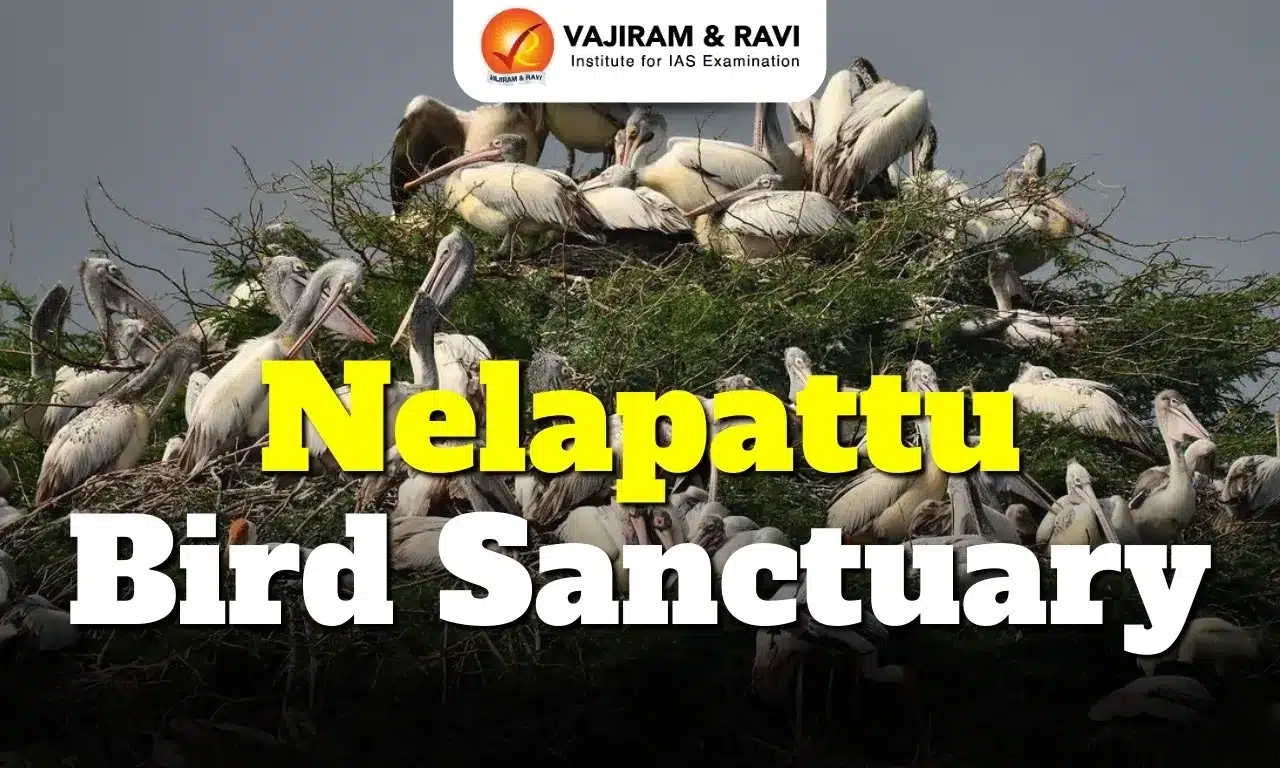
Recently, the Flamingo Festival attracted many families to Nelapattu Bird Sanctuary near Sullurpeta in Andhra Pradesh.

About Nelapattu Bird Sanctuary

  • Location: It is located in the state of Andhra Pradesh.
  • It is situated just near the Pulicat Lake, which is the second-largest salt lake in all of India.
  • It is an important breeding site for spot-billed pelicans.
  • Vegetation: The sanctuary is filled with significant plant communities like the Barringtonia swamp forests and the southern dry evergreen scrub.
  • Flora: Plants like Buchnania angustifolia, barringtonia actutangula, Acacia arabica, Albizzia amara, Borassus flabellifer, Euphorbia antiquorum, etc are found here.
  • Fauna:  In addition to the spot-billed pelican, it is an important breeding site for black-headed ibis, Asian openbill, black-crowned night heron, and little cormorant.

Source: TH

Nelapattu Bird Sanctuary FAQs

Q1: Where is the Nelapattu Bird Sanctuary located?

Ans: Andhra Pradesh

Q2: When was the Nelapattu Bird Sanctuary established?

Ans: 1976

Pradhan Mantri-Rashtriya Krishi Vikas Yojana

Pradhan Mantri-Rashtriya Krishi Vikas Yojana

Pradhan Mantri-Rashtriya Krishi Vikas Yojana Latest News

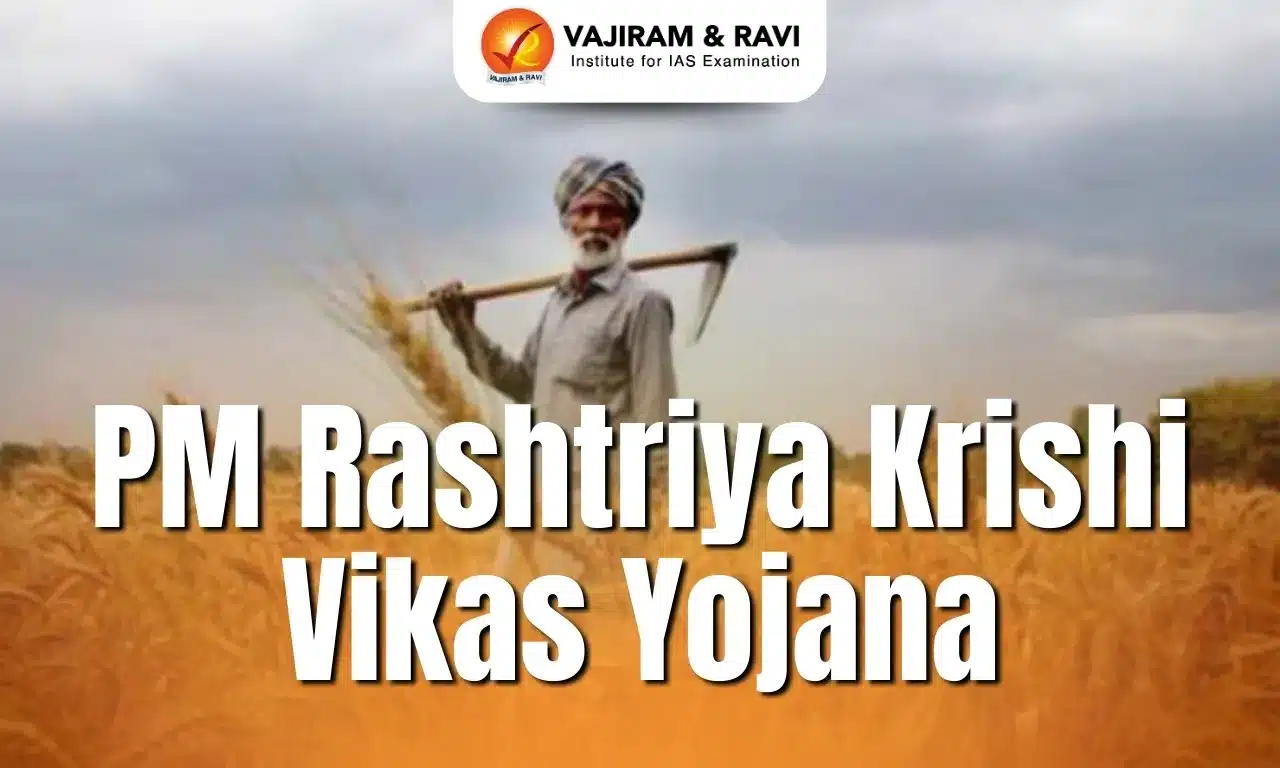
The Union Ministry of Agriculture has proposed to merge three separate ongoing schemes with its flagship Pradhan Mantri-Rashtriya Krishi Vikas Yojana.

About Pradhan Mantri-Rashtriya Krishi Vikas Yojana

  • It is a Centrally Sponsored Schemes (CSS) operating under the Ministry of Agriculture and Farmers Welfare.
  • It is aimed at accelerating agricultural growth and improving farmers’ income.

Objectives of Pradhan Mantri Rashtriya Krishi Vikas Yojana

  • To encourage states to increase public investment in agriculture and allied sectors.
  • To enhance agricultural productivity and overall farm growth.
  • To strengthen agricultural and post-harvest infrastructure and reduce losses.
  • To promote diversification into high-value crops, horticulture, livestock, and fisheries.
  • To encourage adoption of modern, innovative, and climate-resilient farming practices.
  • To reduce regional disparities in agricultural development.

Features  of Pradhan Mantri Rashtriya Krishi Vikas Yojana

  • State-Led and Decentralized Approach: States have the flexibility to plan and implement agricultural projects according to local priorities.
  • Growth-Oriented Scheme: The scheme aims to achieve a sustained annual growth rate of around 4 percent in agriculture and allied sectors.
  • Wide Sectoral Coverage: It supports crop production, horticulture, livestock, fisheries, organic farming, agricultural research, and marketing infrastructure.
  • Incentive-Based Funding: States receive financial assistance based on their commitment to increasing public investment in agriculture.

Funding Pattern of Pradhan Mantri Rashtriya Krishi Vikas Yojana

  • General States: 60 percent Centre and 40 percent State
  • North-Eastern and Hilly States: 90 percent Centre and 10 percent State
  • Union Territories: 100 percent central funding.

Source: IE

Pradhan Mantri-Rashtriya Krishi Vikas Yojana FAQs

Q1: What is the primary objective of PM-RKVY?

Ans: To enhance agricultural productivity and farmers' income

Q2: Which ministry implements PM-RKVY?

Ans: Ministry of Agriculture

Osteoarthritis

Osteoarthritis

Osteoarthritis Latest News

In a promising breakthrough, scientists at Stanford University recently identified a key protein called 15-PGDH linked to cartilage loss during aging, offering hope for new treatments for osteoarthritis.

About Osteoarthritis

  • Arthritis is a general term that means inflammation of the joints.
  • Osteoarthritis (OA), commonly known as wear-and-tear arthritis, is the most common type of arthritis.
  • What Causes OA?
    • It is associated with a breakdown of cartilage in joints.
    • Cartilage is a firm, rubbery material that covers the ends of bones in normal joints. 
    • Its main function is to reduce friction in the joints and serve as a "shock absorber.
    • The shock-absorbing quality of normal cartilage comes from its ability to change shape when compressed (flattened or pressed together).
    • Osteoarthritis causes the cartilage in a joint to become stiff and lose its elasticity, making it more susceptible to damage. 
    • Over time, the cartilage may wear away in some areas, greatly decreasing its ability to act as a shock absorber. 
    • As the cartilage deteriorates, tendons and ligaments stretch, causing pain. 
    • If the condition worsens, the bones could rub against each other.
  • It commonly occurs in the weight-bearing joints of the hips, knees, and spine. 
  • It also affects the fingers, thumbs, neck, and large toe.
  • It usually does not affect other joints unless previous injury, excessive stress, or an underlying disorder of cartilage is involved.
  • It is more likely to develop as people age. But it can affect much younger people, too, especially those who have had a prior joint injury.
  • Symptoms: Symptoms of osteoarthritis most often develop gradually and include:
    • Joint aching and soreness, especially with movement
    • Pain after overuse or after long periods of inactivity
    • Stiffness after periods of rest
    • Bony enlargements in the middle and end joints of the fingers (which may or may not be painful)
    • Joint swelling
  • Treatment
    • Although there is no cure for osteoarthritis, there are many treatment options available to help manage pain and keep people active.
    • As a last resort, a damaged joint may be surgically fused or replaced with one made of a combination of metal, plastic, and/or ceramic.

Source: NDTV

Osteoarthritis FAQs

Q1: What does the term arthritis mean?

Ans: It means inflammation of the joints.

Q2: What is osteoarthritis (OA)?

Ans: Osteoarthritis is the most common type of arthritis, often called wear-and-tear arthritis.

Q3: What is the main cause of osteoarthritis?

Ans: It is caused by the breakdown of cartilage in the joints.

Q4: What is cartilage?

Ans: Cartilage is a firm, rubbery material that covers the ends of bones in normal joints.

Q5: Which joints are most commonly affected by osteoarthritis?

Ans: Weight-bearing joints like the hips, knees, and spine.

PSLV-C62 Mission

PSLV-C62 Mission

PSLV-C62 Mission Latest News

ISRO’s PSLV-C62 mission experienced an anomaly at the end of the PS3 stage, and a detailed investigation has been launched to analyze the issue.

About PSLV-C62 Mission

  • It is a multi-payload mission of the Indian Space Research Organisation (ISRO) that carries one primary satellite and 18 secondary payloads into space.
  • It is ISRO’s first space launch of 2026.
  • It is scheduled to lift off from Sriharikota.
  • The mission's primary payload is the earth observation satellite EOS-N1 (codenamed ‘Anvesha’), an hyperspectral imaging satellite developed primarily for the Defence Research and Development Organisation (DRDO) for strategic purposes.
    • Unlike conventional imaging satellites, hyperspectral satellites can “see” the Earth in hundreds of wavelengths, allowing them to identify materials and objects with far greater precision.
    • This capability makes EOS-N1 a high-value asset for national security, border surveillance and strategic monitoring. 
    • At the same time, the satellite will also be used for civilian applications such as agriculture planning, urban mapping, mineral detection, and environmental monitoring.

Also Read: ISRO Missions List

  • PSLV-C62 also carries Europe's Kestrel Initial Demonstrator (KID), an experimental mission involving a small re-entry capsule developed in collaboration with a Spanish startup. 
    • The capsule is expected to re-enter Earth’s atmosphere and splash down in the South Pacific Ocean.
  • Additionally, 17 commercial payloads from startups and research institutions across India, Mauritius, Luxembourg, the UAE, Singapore, Europe, and the United States are manifested for the PSLV-C62 Mission.
  • Several Indian startups and academic institutions are also flying their satellites. 
    • These include OrbitAID Aerospace’s AayulSAT, CV Raman Global University’s CGUSAT-1, Dhruva Space’s DA-1, Space Kidz India’s SR-2, Assam Don Bosco University’s Lachit-1, Akshath Aerospace’s Solaras-S4, and Dayanand Sagar University’s DSAT-1.
  • Bengaluru-based OrbitAID Aerospace’s AayulSAT stands out as a historic first. 
    • It is India’s maiden on-orbit satellite refuelling payload. 
    • The mission aims to demonstrate technologies that could extend the operational life of satellites by enabling in-orbit servicing and refuelling.
    • Such capabilities are seen as crucial for tackling space debris and improving sustainability in Earth’s increasingly crowded orbital environment.

Source: MC

PSLV-C62 Mission FAQs

Q1: What is the PSLV-C62 Mission?

Ans: It is a multi-payload mission of ISRO carrying one primary satellite and 18 secondary payloads.

Q2: What is the primary payload of the PSLV-C62 Mission?

Ans: The Earth observation satellite EOS-N1 (codenamed Anvesha).

Q3: For which organisation was EOS-N1 primarily developed?

Ans: The Defence Research and Development Organisation (DRDO).

Q4: Which European experimental payload is carried onboard PSLV-C62?

Ans: Kestrel Initial Demonstrator (KID).

Charophytes

Charophytes

Charophytes Latest News

Research conducted at 27 test lakes in northeastern Germany revealed that the abundance of charophytes increased. 

About Charophytes

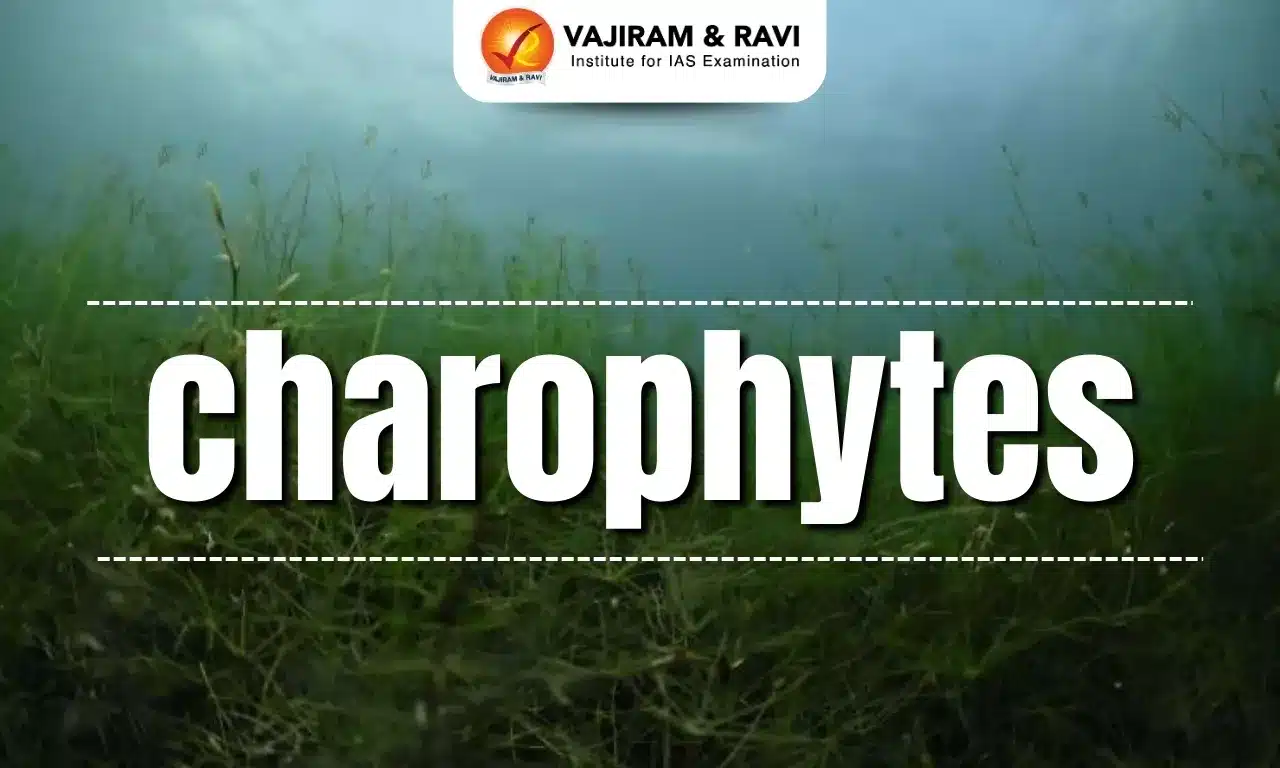
  • Charophytes are a type of green algae.
  • Fossils of Charophytes have been found going back to the Silurian Period (443 million years ago).
    • This was the period when plants moved from water to land—and Charophytes are considered the closest living relatives to land plants.
  • Habitat: Charophytes grow in silt, mud, peat or sand, often as the first plants to colonize newly-cleared areas.
  • Distribution: These “plants” are found on all continents except Antarctica.

Features of Charophyte

  • They have no true leaves, stems nor fruits.
  • These are generally submergent and are loosely attached to the sediment by thin rhizome- like structures called ‘holdfasts’.
  • Seeds can remain dormant for years.
  • Charophytes have been found in water as deep as 213 feet.
  • They are unable to grow or are restricted in growth in turbid or murky waters.

Benefits of Charophyte

  • Charophytes are underwater plants that play a crucial role in the water quality and biodiversity of lakes;
  • They stabilize the lake bed, produce oxygen, promote water clarity, and provide habitat for numerous aquatic organisms.

Source: PHYS

Charophytes FAQs

Q1: Charophytes are considered the closest relatives of?

Ans: Land plants

Q2: What are Charophytes?

Ans: A group of freshwater green algae

Hatti Tribe

Hatti Tribe

Hatti Tribe Latest News

"Boda Tyohar", the biggest annual festival of the Hati tribe in Himachal Pradesh's Sirmour and celebrated by over three lakh community members, recently commenced with traditional fervour.

About Hatti Tribe

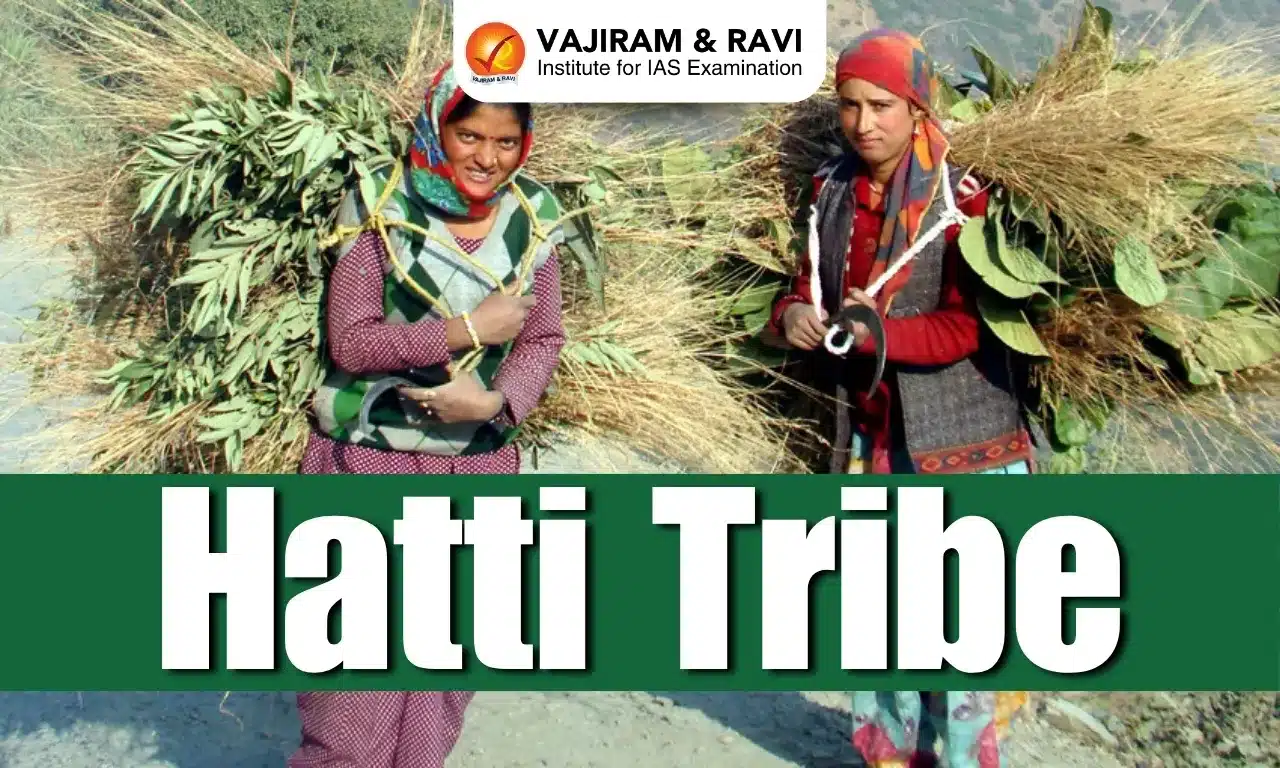
  • The Hattis are a close-knit community who take their name from their age-old professional practice of selling their homegrown crops at small markets called ‘Haat’ in nearby cities.
  • Hatti men traditionally don distinctive white headgear on ceremonial occasions.
  • These tribal people reside in the Himachal-Uttarakhand border in the basin of the Giri and Tons rivers, both tributaries of the Yamuna.
  • There are two main Hatti clans: one in the Trans-Giri area of the Sirmaur district in Himachal Pradesh and the other in Jaunsar Bawar of Uttarakhand.
  • The two Hatti clans have similar traditions, and intermarriages are common.
  • Jodidara is a traditional form of polyandrous marriage practised among the Hatti tribe in Himachal Pradesh, where a woman marries two or more brothers.
    • Polyandry is legally recognised in Himachal Pradesh under revenue laws.
  • Harris is governed by a traditional council called ‘khumbli’ which decides community matters.
  • Economy: The Hatti population relies on agriculture for livelihood and bare subsistence since their climate is ideal for growing “Cash Crops.”
  • Population: According to the 2011 census, members of the community numbered 2.5 lakh, but at present the population of the Hattis is estimated at around 3 lakhs.
  • In 2023, the Indian government granted Scheduled Tribe (ST) status to the Hatti community in Himachal Pradesh.
  • The Jaunsar-Bawar region of Uttarakhand was granted tribal status in 1967.
  • Boda Tyohar, also called Magho ko Tyohar, is the biggest annual festival of the Hatti tribe.

Source: HT

Hatti Tribe FAQs

Q1: Who are the Hattis?

Ans: The Hattis are a close-knit tribal community named after their traditional practice of selling homegrown crops at small markets called Haat.

Q2: Where do the Hatti tribal people mainly reside?

Ans: They live along the Himachal–Uttarakhand border in the basin of the Giri and Tons rivers.

Q3: Which traditional council governs the Hatti community?

Ans: The community is governed by a traditional council called khumbli.

Q4: What is the main livelihood of the Hatti tribe?

Ans: Agriculture is the primary source of livelihood.

Q5: What is the biggest annual festival of the Hatti tribe?

Ans: Boda Tyohar.

Context Window in AI

Context Window in AI

Context Window in AI Latest News

In the context of artificial intelligence (AI), specifically large language models (LLMs) like GPT-5 and Claude, the context window is the maximum amount of text the model can consider at any one time while generating a response.

About Context Window in AI

  • The context window of an artificial intelligence (AI) model measures how much information the AI model can remember, working similarly to humans’ short-term memory.
  • AI models don’t read words; instead, they read chunks of characters called tokens.
  • Context Window is the amount of text, in tokens, that the model can consider or “remember” at any one time. 
  • A larger context window enables an AI model to process longer inputs and incorporate a greater amount of information into each output.
  • large language model’s (LLM’s) context window can be thought of as the equivalent of its working memory. 
  • It determines how long of a conversation it can carry out without forgetting details from earlier in the exchange. 
  • It also determines the maximum size of documents or code samples that it can process at once. 
  • When a prompt, conversation, document, or code base exceeds an AI model’s context window, it must be truncated or summarized for the model to proceed. 
  • Generally speaking, increasing an LLM’s context window size translates to increased accuracy, fewer hallucinations, more coherent model responses, longer conversations and an improved ability to analyze longer sequences of data.
  • However, increasing context length is not without tradeoffs: it often entails increased computational power requirements—and therefore increased costs—and a potential increase in vulnerability to adversarial attacks.

Source: TH

Context Window in AI FAQs

Q1: What does the context window of an AI model measure?

Ans: It measures how much information the AI model can remember, similar to short-term memory.

Q2: How is an AI model’s context window comparable to human memory?

Ans: It works like human short-term or working memory.

Q3: What are tokens in AI models?

Ans: They are chunks of characters that AI models process instead of full words.

Q4: What is a context window in AI?

Ans: It is the amount of text, measured in tokens, that a model can consider at one time.

Q5: How does a larger context window benefit an AI model?

Ans: It allows the model to process longer inputs and use more information in each output.

Central Groundwater Board (CGWB)

Central Ground Water Board

Central Ground Water Board Latest News

The Central Ground Water Board (CGWB) recently stated in its Annual Ground Water Quality Report-2025 that Andhra Pradesh is one of the States facing widespread contamination of groundwater as per the BIS standards.

About Central Ground Water Board

  • It is a multidisciplinary scientific organization of the Department of Water Resources, River Development and Ganga Rejuvenation, Ministry of Jal Shakti, Government of India.
  • It is the National Apex Agency entrusted with the responsibilities of providing scientific inputs for management, exploration, monitoring, assessment, augmentation, and regulation of groundwater resources of the country.
  • It was established in 1970 by renaming the Exploratory Tube wells Organization under the Ministry of Agriculture, Government of India. 
  • It was merged with the Ground Water Wing of the Geological Survey of India during 1972.
  • Mandate: Develop and disseminate technologies and monitor and implement national policies for the scientific and sustainable development and management of India’s groundwater resources.
  • Organization Setup:
    • It is headed by the Chairman and has five members.
    • CGWB is a multidisciplinary scientific organization consisting of Hydrogeologists, Geophysicists, Chemists, Hydrologists, Hydrometeorologists, and Engineers.
    • It has four main wings, namely 
      • Sustainable Management & Liaison (SML)
      • Survey, Assessment & Monitoring (SAM)
      • Exploratory Drilling & Materials Management (ED&MM)
      • Water Quality & Training and Technology Transfer (WQ&TT). 
    • Headquarters: Bhujal Bhawan, Faridabad, Haryana.

Major Activities of the Central Ground Water Board

  • National Aquifer Mapping and Management (NAQUIM) involving the preparation of Aquifer Maps and Management Plans.
  • Groundwater explorations to delineate groundwater-worthy areas and potential aquifers.
  • Geophysical surveys to delineate groundwater bearing zones, etc.
  • Periodic assessment of the country’s groundwater resources.
  • Monitoring of groundwater levels and quality through groundwater observation wells.
  • Dissemination of Ground Water Data and knowledge.
  • Groundwater modelling.
  • GIS and Remote sensing.
  • Regulation and control of groundwater development and management by Central Ground Water Authority (CGWA) in coordination with State Government Organizations.
  • Coordination with the State Government with a view to establish benchmark methodologies for groundwater studies.
  • R&D studies in the ground water sector and application and operationalization of new technologies/techniques for groundwater investigation, development, and management.
  • Water conservation and artificial recharge to groundwater.
  • Capacity building and knowledge transfer.

Source: TH

Central Ground Water Board FAQs

Q1: What is the Central Ground Water Board (CGWB)?

Ans: It is a multidisciplinary scientific organization under the Ministry of Jal Shakti, Government of India.

Q2: What responsibilities are entrusted to Central Ground Water Board (CGWB)?

Ans: Management, exploration, monitoring, assessment, augmentation, and regulation of groundwater resources.

Q3: Where is the headquarters of Central Ground Water Board (CGWB) located?

Ans: Bhujal Bhawan, Faridabad, Haryana.

Q4: What kind of professionals work in Central Ground Water Board (CGWB)?

Ans: Hydrogeologists, Geophysicists, Chemists, Hydrologists, Hydrometeorologists, and Engineers.

Orobanche Threat to Mustard: How a Parasitic Weed Is Undermining India’s Edible Oil Crop

Orobanche Threat to Mustard

Orobanche Threat to Mustard Latest News

  • Mustard is India’s largest indigenous source of edible oil, cultivated across nearly nine million hectares, mainly in Rajasthan, Uttar Pradesh, Madhya Pradesh, Haryana and West Bengal.
  • However, the crop is increasingly threatened by Orobanche aegyptiaca, a parasitic weed that attaches to mustard roots and siphons off water and nutrients, leading to poor plant growth and reduced seed yields.

How Orobanche Damages the Crop

  • Orobanche attaches itself to mustard roots underground and siphons off water, nutrients and carbon. 
  • This leads to wilting, yellowing, stunted plant growth and ultimately sharp declines in seed yields. 
  • Because the parasite remains hidden below the soil initially, damage is already extensive by the time it becomes visible.

Farmers See Sharp Yield Losses

  • Farmers report steep yield declines despite following recommended control measures. 
  • In Haryana’s Sirsa district, yields have fallen from 9–12 quintals per acre earlier to nearly 6 quintals per acre in recent seasons. 
  • Even herbicide sprays have shown little effect, pushing farmers to reduce mustard acreage in favour of wheat, chickpea and barley.

Why Infestation Is Spreading Fast

  • Each Orobanche plant produces thousands of tiny seeds that can remain viable in soil for up to 20 years and spread through wind and water. 
  • Fields repeatedly planted with mustard are especially vulnerable, as irrigation creates ideal conditions for seed germination and rapid underground attachment to crop roots.
  • The rising infestation has shaken farmer confidence in mustard, traditionally valued for its low irrigation needs. 
  • As Orobanche spreads, many farmers are cutting back on mustard cultivation, raising concerns over future domestic edible oil production.

Why Mustard Matters for India

  • Mustard is India’s most important edible oilseed crop, contributing over 4 million tonnes out of the country’s 10.5–10.6 million tonnes of annual indigenous edible oil production. 
  • It is central to efforts to cut India’s heavy dependence on edible oil imports.
  • Reducing Import Dependence - India imports nearly 16 million tonnes of edible oils every year — mainly palm, soybean and sunflower oil — costing $15.9 billion in 2023–24 and $18.3 billion in 2024–25. 
    • Improving mustard yields is therefore a key national priority to reduce this import bill.
  • Rising Disease and Pest Pressure - Mustard’s increasing vulnerability to Orobanche (margoja), along with pests like aphids and fungal diseases such as white rust, leaf blight, stem rot and powdery mildew, has emerged as a serious concern for productivity and farmer confidence.

Farmers Flag Changing Threat Patterns

  • Farmers report that Orobanche infestation is now appearing earlier in the crop cycle and in fertile soils, unlike earlier when it emerged later and mostly in sandy fields. 
  • This shift signals a growing and more aggressive threat.
  • The buildup of long-lasting Orobanche seed banks in soil has increased the weed’s damage potential, enabling early emergence and greater yield losses. 
  • This has left farmers increasingly uncertain, sowing mustard largely on hope rather than confidence.

Herbicides as a Possible Control Tool

  • Chemical control using herbicides such as glyphosate is one possible way to tackle Orobanche. 
  • However, this approach has major limitations with conventional mustard varieties.

Why Conventional Herbicides Don’t Work

  • Glyphosate and similar broad-spectrum, non-selective herbicides kill all plants by blocking the EPSPS (5-enolpyruvylshikimate-3-phosphate synthase) enzyme essential for protein formation. 
  • Applied to normal mustard, they destroy the crop along with the weed. 
  • At currently recommended low doses, they are also ineffective against Orobanche.

Role of Herbicide-Resistant Mustard

  • A new approach lies in breeding mustard varieties that can tolerate specific herbicides. 
  • Farmers are testing a hybrid mustard that is resistant to imidazolinone herbicides, allowing selective control of Orobanche without harming the crop.
  • The hybrid ‘Pioneer-45S42CL’ can tolerate imazapyr and imazapic herbicides.
  • Sold with a compatible herbicide formulation, it requires a single spray after 25 days of sowing and has shown encouraging early results in farmers’ fields.

GM Mustard as a Future Option

  • Researchers have also developed GM mustard lines resistant to glyphosate and other herbicides, offering multiple chemical options and reducing the risk of resistance buildup.
  • Given mustard’s strategic importance and the rising weed threat, policymakers face a critical decision on permitting GM crops. 
  • Any decision, experts argue, should be guided by science and farm economics rather than ideology.

Source: IE

Orobanche Threat to Mustard FAQs

Q1: What is the Orobanche threat to mustard crops?

Ans: The Orobanche threat to mustard comes from a parasitic weed that attaches to roots, stealing water and nutrients, causing stunted growth and heavy yield losses.

Q2: Why is the Orobanche threat to mustard hard to detect early?

Ans: The Orobanche threat to mustard remains underground initially, and by the time shoots appear above soil, irreversible crop damage has already occurred.

Q3: Why is the Orobanche threat to mustard spreading rapidly?

Ans: The Orobanche threat to mustard spreads due to long-lived soil seed banks, repeated mustard cultivation, irrigation-triggered germination, and wind- and water-based seed dispersal.

Q4: Why does the Orobanche threat to mustard matter for India’s economy?

Ans: The Orobanche threat to mustard endangers India’s biggest edible oil crop, risking higher import dependence and undermining efforts to reduce the edible oil import bill.

Q5: How are farmers tackling the Orobanche threat to mustard?

Ans: Farmers are testing herbicide-resistant mustard hybrids and selective herbicides, while scientists explore GM mustard lines to manage the Orobanche threat to mustard sustainably.

Indian Telecom Security Assurance Requirements (ITSAR) – India’s Proposed Smartphone Security Regime

ITSAR

ITSAR Latest News

  • The Union Government is considering legally enforcing Indian Telecom Security Assurance Requirements (ITSAR) for smartphones, involving 83 security standards, including source code disclosure, software controls, and user-permission restrictions.
  • This has triggered strong resistance from global smartphone makers like Apple (5% market share in India), Samsung (15%), Google, and Xiaomi (19%), who argue that many provisions lack global precedent and threaten proprietary technologies.

Background

  • India is the world’s second-largest smartphone market with nearly 750 million users.
  • Rising online fraud, cybercrime, and data breaches have prompted the government to strengthen device-level security.
  • The proposals align with the Indian PM’s broader push for digital security and data sovereignty.
  • Similar tensions have emerged earlier over mandatory cyber safety apps (later revoked), and stringent testing norms for security cameras due to national security concerns.

Key Features of the Proposed Security Standards

  • Source code disclosure:
    • Manufacturers must submit proprietary source code for review and vulnerability analysis by government-designated labs.
    • Objective: Detect backdoors and systemic vulnerabilities.
    • Industry response:
      • The Manufacturers’ Association for Information Technology (MAIT) calls it “not possible” due to corporate secrecy and privacy norms.
      • No such requirement exists in the EU, North America, Australia, or Africa.
  • Background permission restrictions:
    • Apps cannot access camera, microphone, or location in the background. Mandatory continuous status-bar alerts when permissions are active.
    • Concern: No global precedent or standardized testing method.
  • Permission review alerts: Devices must periodically prompt users to review app permissions. Industry wants alerts limited to “highly critical” permissions to avoid user fatigue.
  • One-year log retention:
    • Phones must store security audit logs (logins, app installs) for 12 months.
    • Industry concern: Consumer devices lack sufficient storage capacity.
  • Periodic malware scanning: Mandatory automatic malware scans. Concerns: Battery drain, slower device performance, etc.
  • Removal of pre-installed apps: All non-essential pre-installed apps must be removable. Companies argue many apps are integral system components.
  • Mandatory notification of software updates:
    • Manufacturers must inform the National Centre for Communication Security before releasing major updates or patches.
    • Industry view: This will be impractical during zero-day vulnerabilities. Delays may increase user exposure to active cyber threats.
  • Tamper detection (Rooting/Jailbreaking): Devices must detect tampering and show persistent warnings. Industry response: No reliable universal detection mechanism exists.
  • Anti-rollback protection: Blocking installation of older software versions, even if manufacturer-signed.
  • Concern: No global standard; may restrict legitimate use cases.

Key Challenges and Way Ahead

  • Data Security vs proprietary rights: Risk of exposing trade secrets. Risk-based regulation focusing on critical vulnerabilities rather than blanket controls.
  • Lack of global precedent: Potential regulatory overreach. Adopt global best practices aligned with OECD and EU cybersecurity norms.
  • Ease of doing business: Compliance costs may deter investment. Ensure time-bound clearance mechanisms for security updates. Strengthen user-level security awareness alongside device-level controls.
  • Operational practicality: Update delays, battery drain, storage constraints. Explore independent third-party audits instead of direct source code disclosure.
  • Innovation chill: Excessive regulation may impact R&D. Maintain a balance between national security, privacy, and innovation.

Conclusion

  • India’s proposed smartphone security framework (ITSAR) reflects legitimate concerns over cybersecurity, data protection, and national security in a rapidly digitising economy. 
  • However, enforcing intrusive measures like source code disclosure without global precedent risks undermining innovation, trust, and market competitiveness. 
  • A consultative, proportionate, and globally harmonised approach is essential to safeguard users while preserving India’s attractiveness as a major digital and manufacturing hub.

Source: TH | ET

ITSAR FAQs

Q1: What is the rationale behind India’s proposal to mandate source code disclosure by smartphone manufacturers?

Ans: To enhance national cybersecurity and data sovereignty by identifying vulnerabilities and preventing exploitation.

Q2: Why have global smartphone manufacturers opposed India’s proposed ITSAR?

Ans: They argue that measures like source code review, malware scanning are operationally impractical.

Q3: How do India’s proposed smartphone security norms raise concerns related to Ease of Doing Business?

Ans: Mandatory disclosures, compliance costs, may discourage investment and innovation in India’s digital ecosystem.

Q4: What is the significance of background permission restrictions in the proposed smartphone security framework?

Ans: They aim to protect user privacy by preventing unauthorised background access to location services, thereby reducing cyber misuse.

Q5: How can India address cybersecurity concerns without hampering technological innovation?

Ans: India should adopt a risk-based, consultative, and globally aligned cybersecurity framework.

Graphene

Graphene

Graphene Latest News

Recently, researchers developed a flexible graphene-based capacitive sensor fabricated on a paper substrate using pencil-drawn interdigitated electrodes (IDEs).

About Graphene

  • It is an allotrope of carbon, along with diamond and graphite. 
  • It is a two-dimensional material consisting of a single layer of carbon atoms arranged in a honeycomb structure. 
  • The stacked form of graphene is graphite.
  • Graphene was first isolated in 2004. Since then, graphene has found hundreds of innovative applications, from sensors and electronics to energy storage and healthcare.

Properties of Graphene

  • Thickness: Graphene is the world’s thinnest material – it is only one atom thick, one million times thinner than a human hair.
  • Strength: It is 200 times stronger than steel but six times lighter. 
  • Flexibility: It is extremely flexible and stretchable.
  • Conductivity: It is an excellent electrical and thermal conductor.
  • Transparency: It is almost perfectly transparent since it only absorbs 2% of light.
  • It is impermeable to gases, even those as light as hydrogen or helium.

Source: PIB

Graphene FAQs

Q1: What is Graphene composed of?

Ans: Carbon atoms in a hexagonal lattice

Q2: What is a notable property of Graphene?

Ans: High strength and flexibility

Age of Consent in India – Law, Adolescent Autonomy, and Child Protection

Age of Consent

Age of Consent Latest News

  • The Supreme Court has flagged the misuse of the POCSO Act in consensual adolescent relationships, reopening the debate on India’s age of consent. 

Legal Framework Governing the Age of Consent in India

  • The age of consent refers to the legally defined age at which an individual is considered capable of giving valid consent for sexual activity. 
  • In India, this age is 18 years, as stipulated under the Protection of Children from Sexual Offences (POCSO) Act, 2012, which classifies anyone below 18 as a “child.” 
  • Consequently, any sexual activity involving a minor is treated as statutory rape, irrespective of consent.
  • This position was reinforced by the Criminal Law (Amendment) Act, 2013, which aligned Section 375 of the Indian Penal Code with the POCSO threshold. 
  • The Bharatiya Nyaya Sanhita (BNS), 2023, has retained this framework, reaffirming that consent is legally irrelevant if the individual is below 18.
  • Historically, India’s age of consent has evolved from 10 years (IPC, 1860) to 12 years (1891), then 14 and 16 years, before being raised to 18 years in 2012
  • It is distinct from the minimum age of marriage, which is 18 years for women and 21 years for men under the Prohibition of Child Marriage Act, 2006.

Arguments Supporting a Review of the Age of Consent

  • A key driver of the current debate is the sharp rise in POCSO cases involving adolescents aged 16-18 years, often arising from consensual romantic relationships. 
  • In many such cases, the minor involved testifies that the relationship was voluntary, yet the law mandates criminal prosecution.
  • Empirical data strengthen this concern. The NFHS-4 (2015-16) indicates that 39% of girls reported sexual debut before the age of 18. 
  • Further, studies by civil society organisations analysing thousands of POCSO judgments show that nearly one-fourth of cases involve consensual adolescent relationships, with a large majority of victims refusing to testify against the accused.
  • Supporters of reform argue that the current law fails to acknowledge adolescent sexuality and autonomy, leading to the criminalisation of normal teenage relationships. 
  • They point out that the original intent of POCSO was to combat sexual abuse and exploitation, not to penalise peer relationships. 
  • Many also cite international practices, where several countries fix the age of consent at 16 years, often coupled with “close-in-age” or “Romeo-Juliet” exemptions to prevent misuse.

Concerns Against Lowering the Age of Consent

  • Opponents of lowering the age of consent emphasise that the existing bright-line rule provides an unambiguous and uniform standard for child protection. 
  • Any dilution, they argue, risks creating loopholes that could be exploited by traffickers, abusers, and those in positions of trust.
  • Evidence suggests that child sexual abuse is frequently perpetrated by known persons, family members, neighbours, teachers, or caregivers. 
  • A Ministry of Women and Child Development study (2007) found that over 50% of abusers were known to the child, raising concerns that claims of consent in such contexts may mask coercion or manipulation.
  • Parliament has consistently upheld this protective approach. 
  • Multiple parliamentary committees and the Law Commission of India (283rd Report, 2023) have warned that reducing the age of consent could weaken POCSO and undermine efforts against child marriage, trafficking, and exploitation.

Judicial Responses and Emerging Nuances

  • Courts have increasingly struggled to balance the letter of the law with the real-life consequences of its application. 
  • While several High Courts have acknowledged the need to view consensual adolescent relationships differently, they have also reiterated that, under POCSO, consent of a minor has no legal validity.
  • The Supreme Court has reaffirmed this position, even while exercising extraordinary powers in select cases to mitigate harsh outcomes. 
  • Recent judicial observations suggest growing recognition of the trauma caused when consensual relationships are prosecuted, but without altering the statutory framework.

Way Forward

  • The debate underscores the need for a calibrated legal response, rather than a binary choice between protection and autonomy. 
  • Many experts advocate limited close-in-age exemptions for adolescents aged 16-18, combined with judicial oversight to detect coercion or abuse.
  • Beyond legal reform, long-term solutions lie in comprehensive sex education, accessible adolescent health services, and gender-sensitive policing. 
  • Strengthening social support systems can reduce misuse of the law while ensuring that genuine cases of abuse are addressed effectively.

Source: TH

[youtube url="https://www.youtube.com/watch?v=U3-iN2NjNeQ" width="560" height="315"]

Age of Consent FAQs

Q1: What is the current age of consent in India?

Ans: It is 18 years under the POCSO Act and the Bharatiya Nyaya Sanhita.

Q2: Why has the age of consent debate resurfaced?

Ans: Due to rising POCSO cases involving consensual adolescent relationships.

Q3: Does Indian law recognise consent of minors?

Ans: No, consent of anyone below 18 is legally invalid.

Q4: What are ‘close-in-age’ exemptions?

Ans: Legal provisions that protect consensual relationships between adolescents close in age.

Q5: Who has the authority to change the age of consent?

Ans: Parliament has exclusive legislative authority to amend the law.

Fog-Induced Disruptions in India: How Railways and Airlines Manage Winter Delays

Fog-Induced Disruptions

Fog-Induced Disruptions Latest News

  • Every winter, dense fog—especially in northern India—disrupts travel plans, causing delays and cancellations across rail and air networks. 
  • Low visibility affects safety and scheduling, forcing operators to slow down or halt services.
  • Indian Railways faces severe congestion during foggy periods, with cascading delays and cancellations. 
  • To mitigate risks, it equips loco pilots with fog safety devices and is investing in improved fog-related technologies, while prioritising safety over speed.
  • Airlines have managed fog better through advanced navigation technology and specialised operating procedures. 
  • However, surging passenger volumes mean that even brief disruptions can trigger widespread knock-on delays across airports and flight schedules nationwide.

Why Fog Lingers Over North India

  • Northern India is mainly affected by radiation fog, which forms on clear winter nights when the ground cools rapidly, moisture condenses, and calm winds trap the fog near the surface. 
  • This leads to frequent episodes of extremely low visibility that disrupt train and flight operations.
  • Air pollution worsens the problem. Smog mixes with fog, making it denser, lowering it closer to ground level, and prolonging poor visibility even after sunrise. 
  • High pollution levels, especially around Delhi, have increasingly intensified and extended fog-related disruptions over the years.

How Flights Operate in Low-Visibility Conditions

  • Low Visibility Procedures (LVP) - When dense fog sharply reduces visibility, airports activate Low Visibility Procedures. These include Low Visibility Take-Offs and precision landings using advanced navigation aids.
  • Instrument Landing System (ILS) CAT IIIB – ILS, a ground based radio navigation system, provides pilots with accurate horizontal and vertical guidance during landing. CAT IIIB, one of the highest precision categories, allows landings with visibility as low as 50 metres.
  • Limited Airport and Aircraft Capability - Only select Indian airports, most notably Delhi, are equipped for CAT IIIB operations. 
    • Airports without such systems must resort to delays or cancellations during heavy fog. 
    • Aircraft and flight crew also require specific certification to operate under CAT IIIB conditions.
  • Airline Preparedness - Airlines plan rosters to ensure enough CAT IIIB-trained pilots and crew are available at fog-prone airports. They also position CAT IIIB-certified aircraft at these hubs to reduce disruption.
  • Forecasting and Regulation - The aviation regulator has designated December 10 to February 10 as the official fog season. Airlines and airports rely on real-time weather data, predictive analytics, and AI-based tools to anticipate fog and manage operations more efficiently.

Why Fog-Related Flight Disruptions Cannot Be Fully Avoided

  • Safety Limits Under Low Visibility Procedures - Even with Low Visibility Procedures in place, operations slow down significantly. Aircraft need greater spacing during take-offs and landings, which reduces overall airport capacity.
  • Reduced Airport Throughput - In dense fog, major hubs like Delhi see hourly aircraft movements drop sharply. Recovery from even one hour of fog can take two to three hours, creating cascading delays.
  • Ground Movement Constraints - Taxiing between runways and terminals becomes much slower in poor visibility, adding to congestion and delaying both arriving and departing flights.
  • Mismatch Between Landing and Take-Off Visibility - CAT IIIB landings can occur at lower visibility than take-offs. This can cause arriving aircraft to pile up while departures remain grounded, leading to parking congestion and diversions.
  • Visibility Below Operational Thresholds - If visibility falls below 50 metres, even CAT IIIB operations may be suspended, forcing a halt to landings until conditions improve.
  • Flight Diversions and Alternate Airports - Airlines plan fair-weather alternate airports for diversions during fog. Final diversion decisions depend on real-time weather and the availability of engineering support at alternate locations.

How Indian Railways Manages Train Operations During Fog

  • Dense winter fog in northern India causes severe train delays, sometimes exceeding 12 hours. 
  • Safety concerns make fog management a critical operational priority for Indian Railways.

Fog Safety Devices for Loco Pilots

  • Indian Railways uses Fog Safety Devices (FSDs)—GPS-based handheld tools that give audio-visual alerts to drivers about signals, stations, crossings, and obstacles in geo-fenced areas.
  • In December 2025, 25,939 FSDs were deployed, with around 23% allocated to Northern Railway, the most fog-prone zone.

Modified Signalling to Reduce Risk

  • To prevent congestion and accidents during fog, Northern and North Central Railways use modified automatic signalling, limiting train movement to two trains between stations. Luminous strips on signals improve visibility.

Kavach: Automatic Train Protection System

  • Indian Railways is rolling out Kavach, its Automatic Train Protection (ATP) system, which displays signal information inside the locomotive cabin and automatically applies brakes if needed. 
  • This allows safer operations even in dense fog.
  • The advanced Kavach 4.0 has been commissioned on 738 route km, covering key sections of the Delhi–Mumbai and Delhi–Howrah high-density corridors. 

Source: IE | ToI

Fog-Induced Disruptions FAQs

Q1: What causes fog-induced disruptions in India every winter?

Ans: Fog-induced disruptions in India are caused by radiation fog, stagnant winds, and high pollution, especially in northern regions, leading to extremely low visibility conditions.

Q2: How do airlines handle fog-induced disruptions in India?

Ans: Airlines manage fog-induced disruptions in India through Low Visibility Procedures, CAT IIIB landings, trained pilots, certified aircraft, and predictive weather technologies.

Q3: Why are fog-induced disruptions in India unavoidable for flights?

Ans: Fog-induced disruptions in India slow aircraft movements, reduce runway capacity, and limit ground visibility, causing cascading delays even at technologically advanced airports.

Q4: How does Indian Railways manage fog-induced disruptions in India?

Ans: Indian Railways tackles fog-induced disruptions in India using fog safety devices, modified signalling systems, luminous markers, and the Kavach automatic train protection system.

Q5: Why do fog-induced disruptions in India cause network-wide delays?

Ans: Fog-induced disruptions in India create cascading effects because trains and aircraft operate in interconnected networks, where one delay quickly impacts multiple routes and schedules.

Enquire Now