
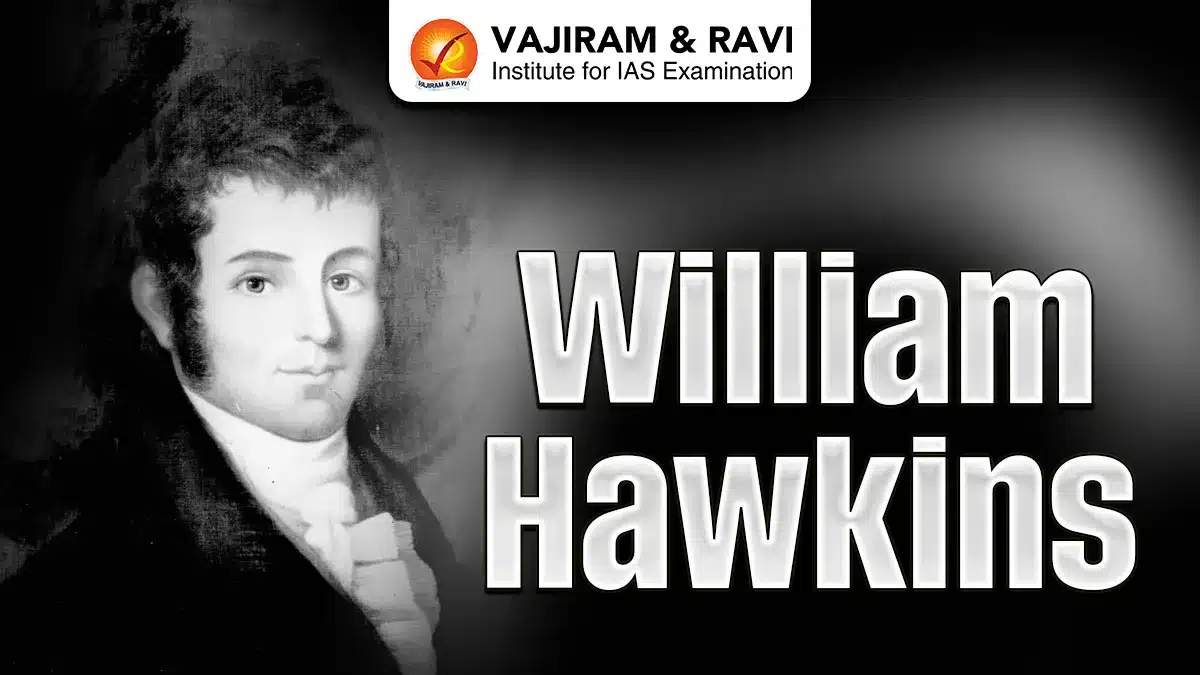
William Hawkins was a prominent 17th century English diplomat and sea captain of the British East India Company (EIC). He was tasked to command the Hector, the first company ship to anchor at Surat in 1608, by King James I to secure trading rights in India. He became the first Englishman to establish a direct diplomatic connection with the Mughal Empire. His journey marked the beginning of official English commercial interests in the East, navigating a complex landscape dominated by Portuguese rivals and the grand Mughal court.
William Hawkins Biography
William Hawkins came from a distinguished line of English maritime explorers and merchants.
- Family: He was the eldest son of William Hawkins (a Merchant and Sea Captain) and the nephew of the famous Admiral Sir John Hawkins.
- Early Expeditions: In 1577, he participated in Sir Francis Drake’s voyage to the South Sea and later fought against the Spanish Armada in 1588 aboard the ship Griffin.
- Command of the Hector: In 1607, he was appointed to lead the British East India Company (EIC) third voyage to India due to his extensive experience and proficiency in the Turkish language.
- Mughal Title: During his stay in India, Emperor Jahangir bestowed upon him the title of 'English Khan' and appointed him as a Mansabdar with the command of 400 horses.
- Marriage: To solidify his presence at court, he married Mariam Khan, the daughter of an influential Armenian Christian merchant from Emperor Akbar's court.
- Death: After leaving India in 1611, Hawkins died in late 1613 on his return voyage to England and was buried in Ireland.
William Hawkins Visit to India
The visit of William Hawkins to the Mughal court was a journey filled with political intrigue and cultural exchange.
- Arrival at Surat: On August 24, 1608, Hawkins anchored the Hector at Surat, where he was immediately confronted by Portuguese hostility claiming exclusive rights to Indian ports.
- Journey to Agra: Despite Portuguese capture of his goods, he managed to reach Agra on April 16 1609, to present King James I's letters and gifts to Emperor Jahangir.
- Court Diplomacy: Hawkins gained Jahangir's favor by communicating directly in Turkish, a language the Emperor and his ministers understood well.
- The Surat Factory: While Jahangir initially granted permission to establish an English factory at Surat, he later withdrew the grant due to immense pressure from Portuguese Jesuits and the Viceroy.
- Political Downfall: Involvement in trade disputes, specifically an incident involving high-quality indigo and the Empress Dowager Mariam-uz-Zamani, eventually led to his disfavor at court.
- Departure: Realizing the Portuguese influence was "impregnable," Hawkins left Agra in November 1611, paving the way for future ambassadors like Sir Thomas Roe.
William Hawkins FAQs
Q1: Who was William Hawkins?
Ans: He was an English East India Company representative and commander of the first English ship, the Hector, to reach Surat.
Q2: Why did William Hawkins visit Emperor Jahangir?
Ans: He visited to deliver a letter from King James I seeking formal permission to establish an English trade factory at Surat.
Q3: What title did Jahangir give William Hawkins?
Ans: Jahangir called him the "English Khan" and appointed him as a Mansabdar (military official) in the Mughal administration.
Q4: What language did William Hawkins use at court?
Ans: He spoke in Turkish, which allowed him to communicate directly with Jahangir without the need for a Portuguese interpreter.
Q5: Did William Hawkins succeed in his mission?
Ans: Initially yes, but Portuguese pressure eventually forced Jahangir to revoke the license for the English factory at that time.
