
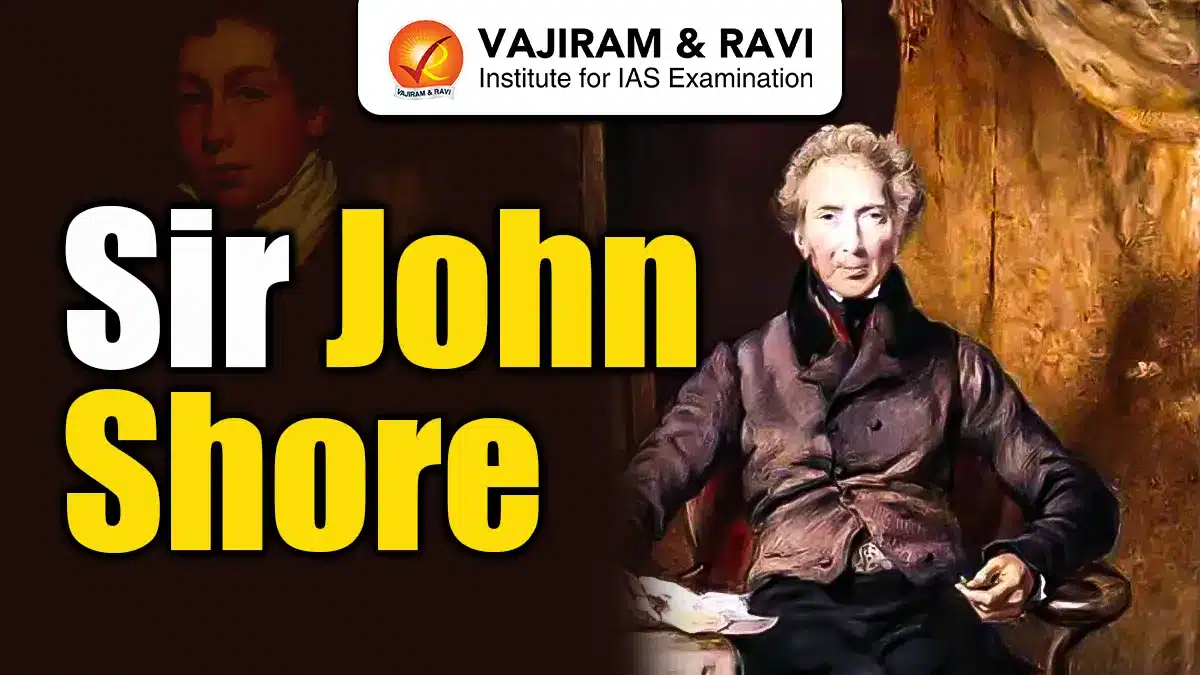
Sir John Shore, the 1st Baron Teignmouth, was a distinguished British administrator who served as the Governor General of Bengal from 1793 to 1798. Shore rose through the ranks of the East India Company starting as a humble writer in 1768. Unlike many of his contemporaries, he was celebrated for his unwavering honesty and deep intellectual engagement with Indian culture, mastering both Persian and Bangla. His career was defined by his expertise in revenue systems, where he advocated for stable land taxes as the bedrock of British political control. Beyond politics, he was a man of letters and faith, serving as the first president of the British and Foreign Bible Society.
Sir John Shore Biography
Sir John Shore's journey from an apprentice clerk to a peer of the realm is a testament to his administrative brilliance and integrity.
- Early Life and Education: Born in Piccadilly in 1751, he was educated at Harrow School before attending a commercial school to learn bookkeeping, preparing him for a career in the East India Company.
- Linguistic Prowess: Upon arriving in Calcutta in 1769, he dedicated himself to studying local languages, gaining a mastery over Persian and Bangla that informed his deep understanding of Bengali customs.
- Revenue Expertise: Shore served as the principal revenue advisor to Warren Hastings from 1772 to 1785, eventually becoming the President of the Board of Revenue.
- Permanent Settlement: He played a pivotal role in the Permanent Settlement of 1793, where he favored the proprietary rights of zamindars but urged caution regarding fixed revenue rates.
- Abolitionist and Scholar: A close friend of orientalist Sir William Jones, Shore succeeded him as President of the Asiatic Society and was a vocal advocate for the abolition of slavery.
Sir John Shore Governor General of Bengal
Sir John Shore succeeded Lord Cornwallis in 1793, pursuing a tenure characterized by peace, non-intervention and the consolidation of British colonial administration.
- Non-Interventionist Policy: Shore faithfully followed a policy of neutrality, refusing to interfere in the conflicts of native powers unless British interests were directly threatened.
- The Cornwallis Code: Despite personal disagreements with some of Cornwallis's legal views, Shore strictly adhered to the Cornwallis Code to maintain administrative continuity.
- Honesty in Governance: In an era marked by company corruption, Shore’s administration was an "outlier," known for its financial integrity and lack of "private profiteering."
- Oudh Succession: He showed significant firmness in the Oudh succession crisis, replacing Wazir Ali with Saadat Ali Khan II to ensure regional stability.
- Military Mutiny: He faced and navigated a delicate mutiny of the officers of the Bengal Army, maintaining the authority of the company without resorting to extreme hostilities.
Events During Sir John Shore
The five years of Sir John Shore's rule were relatively calm but included significant diplomatic tests and major revenue milestones.
- Battle of Kharda (1795): The Maratha Empire defeated the Nizam of Hyderabad; Shore’s refusal to intervene on behalf of the Nizam led to a temporary loss of British prestige.
- Permanent Settlement Implementation: The definitive 1793 settlement of Bengal, Bihar and Odisha was solidified during his term, establishing the zamindari land holding system.
- French Influence: Shore observed the growth of French trained subsidiary forces in native Indian courts but avoided direct military confrontation to follow his home instructions.
- The Charter Act of 1793: He effectively managed the administrative transitions required by the renewal of the Company’s charter, focusing on internal efficiency rather than territorial expansion.
- Massacre of Benares 1799: This tragic event occurred as a fallout of the Oudh succession dispute, yet Shore was praised by the Court of Directors for his temperate and firm handling of the aftermath.
Sir John Shore Reforms
Sir John Shore was a revenue specialist who prioritized administrative stability and financial integrity over territorial expansion through several key reforms:
- Permanent Settlement: He provided the intellectual framework for the 1793 settlement, establishing the proprietary rights of zamindars in Bengal.
- Revenue Administration: Shore initiated the tax reforms of 1786 and 1790, focusing on a fair and stable land tax system.
- Judicial Improvements: In his 1785 "Remarks," he proposed plans for reorganizing exchequer cases and administering justice more effectively to natives.
- Anti-Slavery Advocacy: He was a prominent advocate for the abolition of slavery, supporting the campaign to end the slave trade.
- Civil Service Integrity: Shore enforced strict honesty within the company, curbing the rampant corruption and private profiteering of British officials.
Sir John Shore FAQs
Q1: What was Sir John Shore’s policy toward Indian states?
Ans: He followed a non-interventionist policy, refusing to interfere in the internal conflicts of native powers like the Marathas and Nizam.
Q2: What was Sir John Shore’s major contribution to the land revenue system?
Ans: Shore was the primary architect of the Permanent Settlement, though he initially advocated for more caution and further inquiry.
Q3: Why was Sir John Shore known as an "outlier" among British officials?
Ans: Unlike many corrupt company officials, Shore was famous for his unflinching honesty and high standards of financial integrity.
Q4: How did Sir John Shore handle the Battle of Kharda?
Ans: He remained neutral when the Marathas attacked the Nizam, adhering strictly to the policy of non-interference despite British-Nizam ties.
Q5: What were Sir John Shore’s contributions other than politics?
Ans: He was a scholar who mastered Persian and Bangla and served as the first president of the Bible Society
