Parbati Giri

Parbati Giri

Parbati Giri Latest News

The Prime Minister recently paid homage to freedom fighter Parbati Giri on the occasion of her birth centenary, saying that she played a commendable role in India’s freedom struggle against colonial rule.

About Parbati Giri

  • Also known as the Mother Teresa of Western Odisha, and epithet as ‘Banhi-kanya’ (daughter of fire) Giri was a prominent freedom fighter from Odisha. 
  • While she fought for the Independence of India, after independence she dedicated her life as a social worker.
  • Born on 19 January 1926 to mother Srimati and father Dhananjay Giri of Samleipadar village near Bijepur of the present Bargarh district and undivided Sambalpur district of Odisha, she was filled with patriotism since childhood. 
  • In 1942, she was just 16 when she was in the forefront of agitation following Mahatma Gandhi’s ‘Quit India’ movement
  • She had also staged an agitation at Bargarh Court to persuade the lawyers to boycott the erstwhile court in defiance of the British.
  • Parbati Giri initiated her journey as a freedom fighter from her village only. 
  • She was inspired by Gandhian philosophy. She had even come in contact with Mahatma Gandhi. 
  • She had taken tutelage at the famous Ashrams in Bari, Wardha, and Delhi Gandhi Sebashram. 
  • Giri was also associated with freedom fighter and social reformer Rama Devi.
  • Dearly known as Badamaa (Big mother) to the inmates of her Ashrams, the legendary woman from the Western Odishan district Bargarh worked for the poor and downtrodden till her death.

Source: DDN

Parbati Giri FAQs

Q1: Who was Parbati Giri?

Ans: She was a prominent freedom fighter from Odisha and a dedicated social worker after Independence.

Q2: By which popular title is Parbati Giri known in Western Odisha?

Ans: She is known as the Mother Teresa of Western Odisha.

Q3: When was Parbati Giri born?

Ans: She was born on 19 January 1926.

Q4: Which national movement did Parbati Giri actively participate in during 1942?

Ans: She participated in the Quit India Movement.

World Economic Forum (WEF)

World Economic Forum (WEF)

World Economic Forum (WEF) Latest News

Union minister Ashwini Vaishnaw recently clarified that while India remains engaged with major global powers, the World Economic Forum (WEF) at Davos is largely a platform for the exchange of ideas rather than a venue for formal group-to-group trade negotiations.

About World Economic Forum (WEF)

  • It is an international non-profit organisation that brings together business, political, and social leaders to discuss global challenges.
  • Established in 1971, the WEF promotes stakeholder theory for broader societal impact.
  • This body has a concise mission: ‘To improve the state of the world through public-private cooperation’.
  • The WEF is best known for its annual WEF Meeting at Davos, the Swiss ski resort. 
  • The WEF Annual Meeting brings together top decision-makers from government, business, and civil society to address major global issues and priorities for the year ahead.
  • WEF addresses major global concerns such as climate change, economic challenges, and global security.
  • The organization is funded by its diverse membership, which includes prominent global figures.

Source: TOI

World Economic Forum (WEF) FAQs

Q1: What is the World Economic Forum (WEF)?

Ans: It is an international non-profit organisation that brings together business, political, and social leaders to discuss global challenges.

Q2: When was the World Economic Forum established?

Ans: It was established in 1971.

Q3: Where is the annual World Economic Forum (WEF) Meeting held?

Ans: At Davos, the Swiss ski resort.

Mount Aso

Mount Aso

Mount Aso Latest News

Authorities recently initiated an extensive search operation after a helicopter vanished while flying near a 'highly active' Mount Aso volcano in Japan.

About Mount Aso

  • It is located in Kumamoto-ken (prefecture), Kyushu, Japan, rising to an elevation of 1,592 meters.
  • It is the largest active volcano in Japan.
  • It has the largest active crater in the world, measuring 114 km in circumference, 27 km from north to south, and 16 km from east to west. 
  • Its Caldera (bowl-shaped volcanic depression) marks the original crater and contains the active volcano of Naka-dake and numerous hot springs. 
  • The crater is inhabited and is crossed by roads and railways. 
  • Its mountain pastures are used for cattle raising and dairy farming. 
  • The volcano is the central feature of Aso-Kuju National Park.
  • The volcano has been erupting sporadically for decades, most recently in 2021.

Source: MSN

Mount Aso FAQs

Q1: Where is Mount Aso located?

Ans: It is located in Kumamoto-ken (prefecture), Kyushu, Japan.

Q2: What is the elevation of Mount Aso?

Ans: It rises to an elevation of about 1,592 metres.

Q3: Why is Mount Aso considered significant among volcanoes in Japan?

Ans: It is the largest active volcano in Japan.

Q4: Which active volcano is located within the caldera of Mount Aso?

Ans: Naka-dake.

Responsible Nations Index

Responsible Nations Index

Responsible Nations Index Latest News

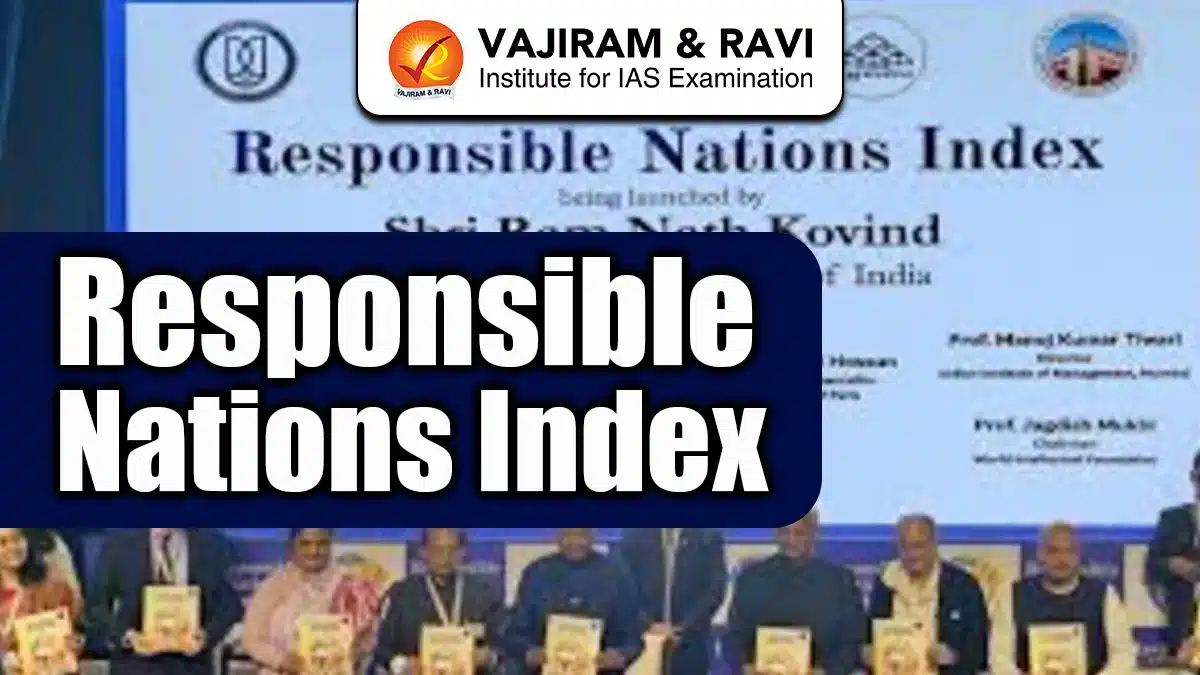
Recently, India launched the Responsible Nations Index (RNI) at the Dr. Ambedkar International Centre, New Delhi.

About Responsible Nations Index

  • It is India’s first globally anchored index.
  • It is developed by the World Intellectual Foundation (WIF) in collaboration with Jawaharlal Nehru University (JNU), IIM Mumbai, and the Dr. Ambedkar International Centre.
  • The Index covers 154 countries and is built on transparent, globally sourced data to ensure credibility and comparability.
  • It is designed to assess countries on the basis of responsible governance, social well-being, environmental stewardship, and global responsibility, moving beyond conventional power- and GDP-based measures.
  • It is structured around three core dimensions, namely
    • Internal responsibility: It focuses on dignity, justice, and the well-being of citizens;
    • Environmental responsibility: It is covering stewardship of natural resources and climate action.
    • External responsibility: It measures a country's contribution to peace, cooperation, and global stability.
  • Significance: It seeks to promote a global dialogue on ethics, responsibility, global food security, and sustainable leadership in international affairs.
    • It is expected to contribute to a more balanced and value-based understanding of national performance on the global stage.

Source: PIB

Responsible Nations Index FAQs

Q1: What is the primary focus of the Responsible Nations Index?

Ans: Ethical governance and responsibility

Q2: How many countries are covered in the Responsible Nations Index?

Ans: 154

Darwin’s Bark Spider

Darwin’s Bark Spider

Darwin’s Bark Spider Latest News

Recently, scientists from institutions in China, Madagascar, Slovenia, and the US studied bark spiders (Caerostris darwini and Caerostris kuntneri) to understand the conditions in which they produce the tough silk. 

About Darwin’s Bark Spider

  • The Darwin’s Bark Spider (Caerostris darwini) is a remarkable arachnid famed for producing the largest and toughest known webs in the animal kingdom.
  • It belongs to the family Araneidae, or orb-weaver spiders.
  • It was discovered in 2001 and formally described in 2009.
  • Habitat: It inhabits riverine forests and wetlands.
  • Distribution: It is found in the forests of Madagascar.

Appearance of Darwin’s Bark Spiders

  • These are medium-sized, with females reaching about 0.8–1 inch (2–2.5 cm) in body length, while males are significantly smaller.
  • They are typically dark brown with mottled patterns, which helps them blend into tree bark.

Characteristics of Darwin’s Bark Spiders

  • It weaves silk that outperforms steel and most human-made fibres in both strength and toughness.
  • Their silk is more than twice as tough as any other spider silk studied.
  • Web-Building Ability: Darwin’s bark spiders construct orb webs that can span rivers and streams, with diameters up to 82 ft (25 m). 
  • Lifespan: They have relatively short lifespans, typical of orb-weaving spiders, with females living longer than males.
  • Unique Habitat: Unlike most orb-weavers, it builds webs over open water rather than in vegetation.
  • Ecological Role of Darwin’s Bark Spiders: They play an important role in controlling insect populations.

Source: TH

Darwin’s Bark Spider FAQs

Q1: What is unique about Darwin's Bark Spider?

Ans: It produces the strongest silk known

Q2: Where is Darwin's Bark Spider primarily found?

Ans: Madagascar

Souparnika River

Sowparnika River

Souparnika River Latest News

The National Green Tribunal (NGT) recently directed the Udupi DC and the Chairman of the Karnataka Urban Water Supply and Drainage Board (KUWSDB) to file a detailed report outlining proposed action along with approximate estimates and timelines to stop the flow of wastewater into the Sauparnika River in Kollur.

About Souparnika River

  • The Souparnika River, also known as Sowparnika, is a west-flowing river in Karnataka.
  • It is surrounded by lush green forests of the Western Ghats.
  • Course: Originating from the Kodachadri Hills in the Western Ghats, it flows through the Byndoor taluk, passing near the renowned Mookambika Temple in Kollur, before merging with the Arabian Sea.
  • It is deeply associated with Hindu mythology.
  • Legend has it that Garuda (the divine bird and vehicle of Lord Vishnu) performed penance on the riverbanks, which is how it got its name “Souparnika” (named after “Suparna,” another name for Garuda). 
  • A unique feature of the Souparnika River is observed near Maravanthe Beach, where the river runs parallel to the Arabian Sea, separated by a narrow stretch of land. 
  • This rare geographical phenomenon offers a picturesque landscape, making it a popular spot for tourists and photographers.

Source: NIE

Souparnika River FAQs

Q1: In which Indian state does the Souparnika River flow?

Ans: It flows in Karnataka.

Q2: Which major mountain range surrounds the Souparnika River?

Ans: The Western Ghats.

Q3: From where does the Souparnika River originate?

Ans: It originates from the Kodachadri Hills in the Western Ghats.

Q4: Near which famous temple does the Souparnika River pass?

Ans: It passes near the Mookambika Temple at Kollur.

Kamchatka Peninsula

Kamchatka Peninsula

Kamchatka Peninsula Latest News

Russia’s Far Eastern Kamchatka Peninsula is reeling under extreme and record-breaking snowfall, with powerful winter storms dumping several metres of snow.

About Kamchatka Peninsula

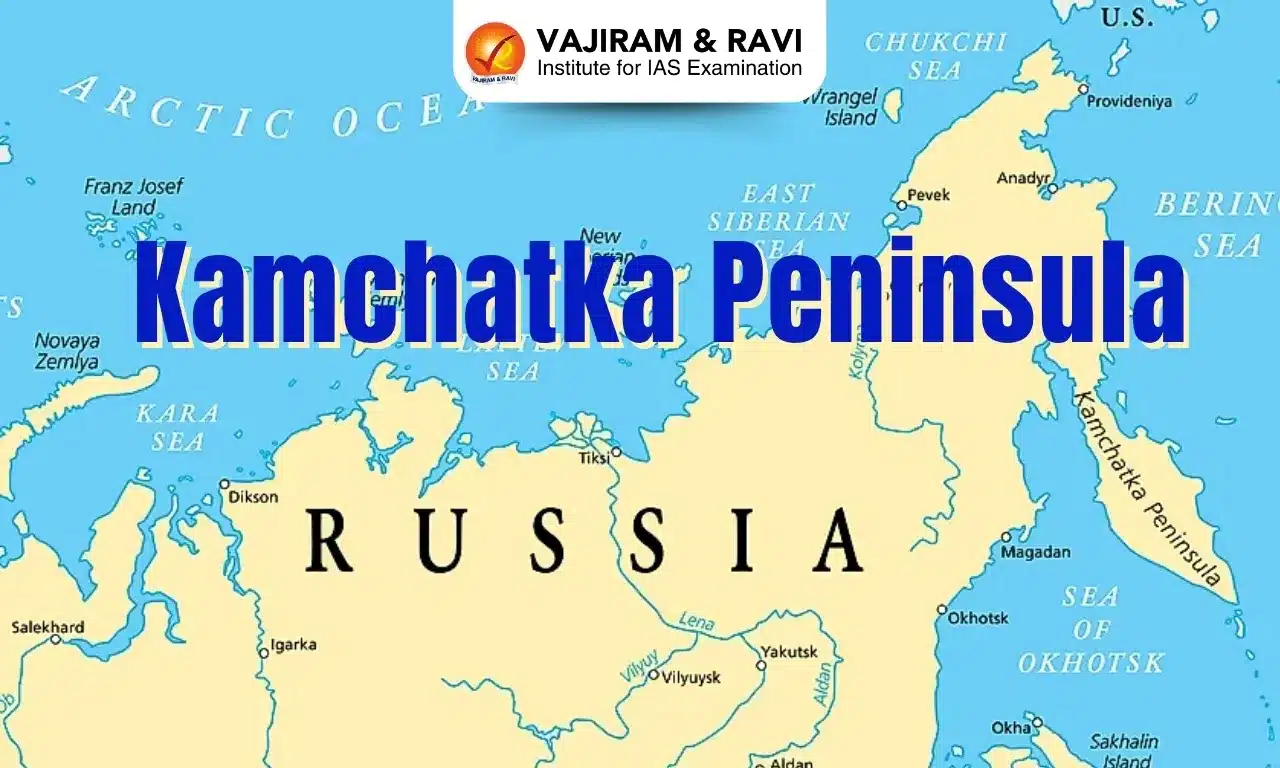
  • Location: It lies in far eastern Russia, between the Sea of Okhotsk on the west and the Pacific Ocean and Bering Sea on the east.
  • It is one of the world’s most concentrated areas of geothermal activity.
  • It contains the “volcanoes of Kamchatka”, a UNESCO World Heritage Site.
  • It is part of the Kamchatka Krai. Kamchatka, also known as a land of fire and ice, sits on the Pacific Ring of Fire and is home to over 150 volcanoes, including 29 active volcanoes.
  • It is one of the largest peninsulas in the world.
  • Climate: It experiences severe, with prolonged, cold, and snowy winters and wet, cool summers.
  • Highest Point: The Klyuchevskaya Sopka in the Eastern Range is the highest point on the Kamchatka Peninsula. 
    • The Kuril island chain runs from the southern tip of the peninsula to a short distance from Japan’s northern Hokkaido Island.

Source: TOI

Kamchatka Peninsula FAQs

Q1: Which ocean is the Kamchatka Peninsula bordered by?

Ans: Pacific Ocean

Q2: What is Kamchatka Peninsula known for?

Ans: Volcanic activity

Kumbhalgarh Wildlife Sanctuary

Kumbhalgarh Wildlife Sanctuary

Kumbhalgarh Wildlife Sanctuary Latest News 

The Centre recently declared the biodiversity-rich area, ranging from zero to one kilometre around Kumbhalgarh Wildlife Sanctuary, located in one of the most fragile ecosystems of the Aravali Range in Rajasthan, as an eco-sensitive zone (ESZ).

About Kumbhalgarh Wildlife Sanctuary

  • It is situated in the Rajsamand district of Rajasthan.
  • It spreads in an area of 610.5 sq.km. stretching across the Aravalli ranges.
    • It covers four hill and mountain ranges of the Aravallis – the Kumbhalgarh Range, the Sadri Range, the Desuri Range, and the Bokhada Range.
  • Once the hunting grounds of royals, this area was declared a wildlife sanctuary in 1971.
  • It encompasses the historic Kumbhalgarh Fort and is also named after the fort.
  • The sanctuary’s landscape is varied. The eastern part has hills ranging from 500 to 1300 meters high, while the western part borders the Marwar plains. 
  • Drainage: 
    • The eastern section is the starting point for the Banas River, which flows into the Bay of Bengal. 
    • Meanwhile, rainwater from the western slopes forms small rivers like Sukdi, Sumer, Mithdi, and Kot, all of which are tributaries of the Luni River that eventually flow into the Arabian Sea.
  • Flora: The flora of the sanctuary is mainly herbs. The species of Churel, Dhok, Khair, and Salar grow abundantly. among others.
  • Fauna: The sanctuary provides a natural abode to many creatures like Wolf, Leopards, Sloth bear, Hyena, jackal, Jungle cat, Sambhar, Nilgai, Chausingha (the four horned antelope), Chinkara and Hare.

Source: TOI

Kumbhalgarh Wildlife Sanctuary FAQs

Q1: Where is the Kumbhalgarh Wildlife Sanctuary located?

Ans: It is located in the Rajsamand district of Rajasthan.

Q2: Across which mountain range does the Kumbhalgarh Wildlife Sanctuary extend?

Ans: It stretches across the Aravalli mountain ranges.

Q3: Which river originates from the eastern section of the sanctuary?

Ans: The Banas River originates from the eastern section.

Indian Skimmer

Indian Skimmer

Indian Skimmer Latest News

Recently, the Bombay Natural History Society (BNHS) has launched a new conservation project under the National Mission for Clean Ganga (NMCG) at Dehradun to protect Indian Skimmer in the Ganga Basin.

About Indian Skimmer

  • It is one of the three species that belong to the skimmer genus Rynchops in the family Laridae. 
  • It gets its name from the way it feeds, flying low over the water surface and ‘skimming’for fish.
  • Habitat: It occurs primarily on larger, sandy, lowland rivers, around lakes and adjacent marshes, and, in the non-breeding season, in estuaries and coasts.
  • Distribution: It is native to South Asia and mainly found in India, Bangladesh, and Pakistan, with some populations extending to Nepal and Myanmar.
    • In India, one of the key areas for spotting Indian Skimmers is the Chambal River.
  • Conservation status: IUCN: Endangered.
  • Threats:  Loss of river habitats, unplanned water release from dams, sand mining, threats from predators.

Features of Indian Skimmer

  • It has a striking appearance. Its upper body is black, while its underbelly is white.
  • The most eye-catching feature is its beak, which is orange with a lower mandible that is much longer than the upper one.
  • This special beak helps the bird skim across the surface of the water to catch small fish and aquatic creatures.
  • The bird’s wings are long and angular, designed for fast, precise flight.

Source: DTE

Indian Skimmer FAQs

Q1: What is the scientific name of the Indian Skimmer?

Ans: Rynchops albicollis

Q2: What is the conservation status of the Indian Skimmer?

Ans: Endangered

Himachal Apple Import Duty: Why Farmers Want 100% Protection

Himachal Apple Import Duty

Himachal Apple Import Duty Latest News

  • Himachal Pradesh Chief Minister has urged the Centre to raise import duty on foreign apples from 50% to 100% and impose a seasonal ban on imports from July to November to protect about 2.5 lakh apple farmers. Apples account for nearly 80% of the state’s fruit output. 
  • The demand follows the Centre’s decision to cut import duty on New Zealand apples to 25% for April–August under the India–New Zealand FTA. 
  • Jammu and Kashmir has echoed similar concerns, warning that rising imports add to existing challenges faced by domestic apple growers.

India Cuts Import Duty on New Zealand Apples Under FTA

  • Under the India–New Zealand Free Trade Agreement, India has reduced import duty on New Zealand apples from 50% to 25% under a quota system. 
  • The quota starts at 32,500 tonnes in the first year and rises to 45,000 MT by the sixth year. 
  • Imports must meet a minimum import price of $1.25 (₹113.6) per kg, while shipments beyond the quota will continue to attract the higher 50% duty.

Apple Production in India: J&K and Himachal at the Core

  • India produces around 28 lakh metric tonnes (LMT) of apples annually. 
  • Jammu & Kashmir dominates output with about 20 LMT, followed by Himachal Pradesh at 5–6 LMT. 
  • The remaining production comes from Uttarakhand and a few north-eastern states, where cultivation is still nascent.
  • The apple economy is valued at roughly ₹12,000 crore in J&K and ₹4,500 crore in Himachal Pradesh, making growers in these two states the most vulnerable to increased imports and tariff concessions.

Farmers’ Concerns Over Cheaper Imports

  • Apple growers are worried about the overlap between New Zealand’s export window and India’s off-season market. 
  • In India, apples are harvested between July and November, while off-season sales depend on cold storage and Controlled Atmosphere (CA) facilities. 
  • New Zealand, however, harvests apples between January/February and May, allowing it to supply fresh apples when Indian farmers sell stored produce.

Impact on Domestic Prices and Sales

  • Farmers warn that lower import duties will make foreign apples cheaper than domestic produce, directly affecting sales. 
  • In Jammu & Kashmir, high-density varieties like Gala arrive in June, while Royal Delicious reaches markets by September. 
  • Since the duty cut applies from April to August, growers fear significant losses during peak marketing periods.

Threat to Market Share

  • Orchardists from Himachal Pradesh and Jammu & Kashmir argue that cheaper imports will depress domestic prices, reduce market share.
  • It will hit farmers hardest during the off-season, undermining incomes in India’s key apple-producing regions.

Challenges Beyond Import Competition

  • Climate Stress and Falling Yields - Apple production in HP and J&K has been hit hard by climate change, erratic weather, reduced snowfall, prolonged dry spells, floods, cloudbursts and landslides. 
    • These factors have weakened orchards and lowered productivity.
  • Rising Disease Burden - Changing climatic conditions have led to a surge in plant diseases such as fire blight, apple scab, powdery mildew, sooty blotch and bitter rot. 
    • Reduced snowfall and higher temperatures have worsened water scarcity, increasing disease vulnerability during dry seasons.
  • Production Losses and Quality Decline - In 2023, Himachal’s apple output fell to 4.84 LMT, nearly 28% lower than 2022, following devastating floods. 
    • Although production recovered to 6.87 LMT in 2025, excessive rainfall and disasters caused quality deterioration, with nearly 1 LMT rejected for poor size and quality.
  • Infrastructure and Transport Bottlenecks - Logistical disruptions have compounded farmers’ problems. 
    • The prolonged closure of the Jammu–Srinagar National Highway (NH-44) due to landslides last year stranded hundreds of trucks during peak harvest, delaying market access and causing losses.

Farmers’ Demands for Protection

  • Given these cumulative pressures, farmers’ groups have demanded 100% import duty on foreign apples, a July–November import ban, special category protection, and higher subsidies. 
  • They argue that unlike countries such as New Zealand, where apple farming is heavily subsidised and insured, Indian growers receive limited direct support.
  • Farmer leaders stress that instead of increasing exposure to foreign competition, the government should focus on targeted support, productivity enhancement, and resilience-building for domestic apple growers.

Source: IE

Himachal Apple Import Duty FAQs

Q1: Why is the Himachal apple import duty in news?

Ans: The Himachal apple import duty is debated after the state sought a hike to 100% and a seasonal ban to protect farmers from cheaper New Zealand imports.

Q2: What triggered concerns over the Himachal apple import duty?

Ans: Concerns rose after India cut duty on New Zealand apples to 25% under an FTA, increasing competition during India’s apple marketing season.

Q3: How many farmers depend on the Himachal apple economy?

Ans: Around 2.5 lakh farmers depend on apples in Himachal Pradesh, making the Himachal apple import duty crucial for rural incomes.

Q4: Why are New Zealand apples a threat to Indian growers?

Ans: They enter India when domestic apples rely on storage, undercutting prices if the Himachal apple import duty remains low.

Q5: What additional challenges do apple farmers face besides imports?

Ans: Climate change, diseases, transport disruptions, and falling yields compound risks, intensifying demands for higher Himachal apple import duty.

Pax Silica and India – Securing Critical Technology Supply Chains

Pax Silica

Pax Silica Latest News

  • India is likely to be invited to join the U.S.-led Pax Silica initiative aimed at securing global semiconductor, AI, and critical mineral supply chains.

Understanding Pax Silica

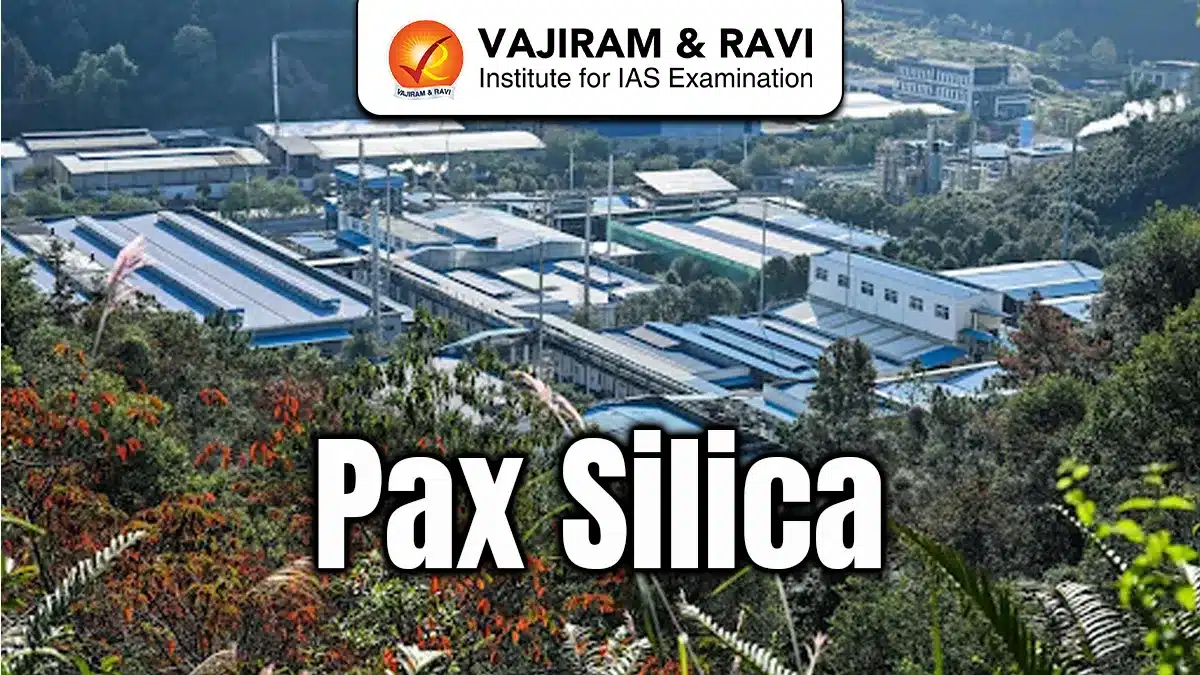
  • Pax Silica is a multilateral initiative launched by the United States in December 2025 to secure supply chains of critical technologies such as semiconductors, artificial intelligence (AI), and rare earth elements (REEs). 
  • The term “Pax” denotes peace, while “Silica” refers to silicon-based semiconductor technologies, symbolising a stable and cooperative global technology order.
  • The Pax Silica Declaration emphasises three core objectives: 
    • Reducing coercive economic dependencies, 
    • Ensuring secure global technology and AI supply chains, and 
    • Building trusted digital infrastructure. 
  • The initiative reflects growing concerns that over-dependence on a single country for critical inputs can expose economies to geopolitical coercion.

Global Context Behind Pax Silica

  • The global economy is witnessing a shift where advanced technologies such as AI, semiconductors, and digital infrastructure are becoming central to economic and strategic power. 
  • At the same time, supply chains for rare earths and critical minerals remain highly concentrated.
  • China currently dominates the global supply of rare earth elements and processing capabilities. 
  • In recent years, it has used export restrictions as a strategic tool, including suspending REE exports following tariff disputes with the U.S. India too faced disruptions in rare-earth magnet supplies, affecting its automobile and electronics industries.
  • The COVID-19 pandemic further exposed vulnerabilities of globally fragmented and concentrated supply chains, prompting countries to pursue diversification and resilience strategies.

Key Members of Pax Silica

  • The Pax Silica grouping brings together technologically advanced and resource-rich countries. 
  • Key participants include the United States and Japan as technology leaders; Australia as a major lithium and rare-earth exporter; the Netherlands for advanced lithography technologies; South Korea for memory chip manufacturing; and Singapore for semiconductor fabrication.
  • Israel contributes expertise in AI software, defence technologies, and cybersecurity, while the United Kingdom hosts one of the world’s largest AI markets. 
  • Gulf countries such as Qatar and the UAE add financial strength through sovereign investment funds. 
  • Canada, the European Union, OECD, and Taiwan currently participate as observers.

India’s Strategic Relevance

  • India is not yet a formal member but is expected to be invited soon. India brings several strengths to Pax Silica. 
  • It has one of the world’s most robust digital public infrastructures, a rapidly growing AI market, and a large pool of skilled technology professionals.
  • The Government of India has also launched the India Semiconductor Mission and national AI initiatives with significant financial support. 
  • Investments by Indian firms such as the Tata Group and foreign companies like Micron indicate growing confidence in India’s semiconductor ecosystem. 
  • Additionally, a steady return of skilled Indian professionals trained abroad could strengthen domestic capabilities.

Existing Supply Chain Initiatives Involving India

  • India has already taken steps to enhance supply chain resilience. In 2021, it joined Australia and Japan in launching the Supply Chain Resilience Initiative
  • India is also part of the Quad’s Critical Minerals Initiative, aimed at securing emerging technology supply chains.
  • Collaborations with Japan, Singapore, and Israel in semiconductor manufacturing further position India as a credible partner in Pax Silica-aligned ecosystems.

Challenges for India in Joining Pax Silica

  • Despite the opportunities, India faces challenges. Pax Silica members are largely high-income U.S. allies, whereas India would be the first developing country and non-ally strategic partner in the grouping. 
  • This may create expectation gaps on policy alignment and strategic responses.
  • India also prioritises strategic autonomy and may resist frameworks that constrain independent foreign or economic policy choices. 
  • Moreover, India may seek to protect its nascent semiconductor and AI industries through subsidies, procurement preferences, and calibrated import controls, policies that may not fully align with the current U.S. policy environment.

Strategic Implications and the Road Ahead

  • The emergence of Pax Silica signals the likelihood of two parallel global technology supply chains, one centred around China and the other around Pax Silica countries. 
  • Given India’s long-standing technological collaboration with Western economies and recent supply disruptions from China, aligning with Pax Silica appears strategically advantageous.
  • However, India is expected to proceed cautiously, engaging in dialogue to ensure that participation strengthens domestic capabilities without compromising strategic autonomy or development priorities.

Source : TH

Pax Silica FAQs

Q1: What is Pax Silica?

Ans: Pax Silica is a U.S.-led initiative aimed at securing global semiconductor, AI, and critical mineral supply chains.

Q2: Why is Pax Silica important for India?

Ans: It can help India reduce dependence on China and strengthen its semiconductor and AI ecosystems.

Q3: Which countries are part of Pax Silica?

Ans: Members include the U.S., Japan, Australia, South Korea, the Netherlands, Singapore, and others.

Q4: What challenges could India face in joining Pax Silica?

Ans: Balancing strategic autonomy, policy flexibility, and expectations of high-income member countries.

Q5: How does Pax Silica impact global geopolitics?

Ans: It signals the emergence of competing technology supply chains led by China and Pax Silica countries.

Trump Trade Wars: How U.S. Protectionism Is Strengthening China

Trump Trade Wars

Trump Trade Wars Latest News

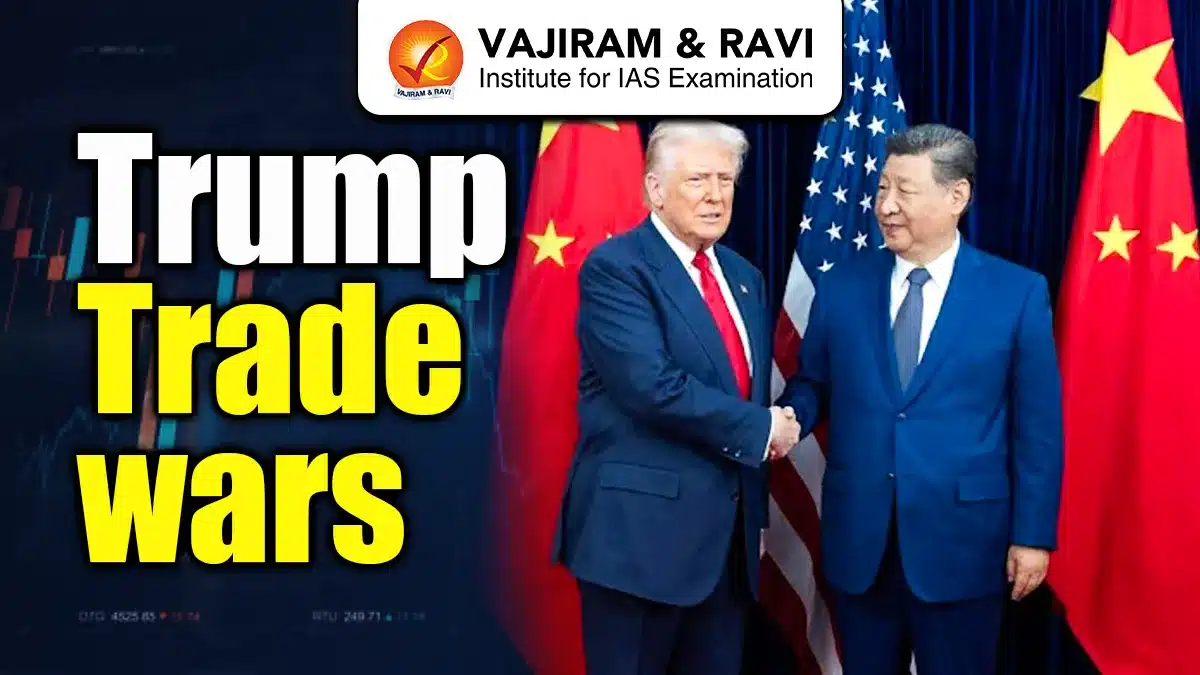
  • US President Donald Trump’s second term has triggered sweeping geopolitical and economic disruptions, with his aggressive trade and foreign policies paradoxically strengthening China’s global economic position.
  • In his first year back in office, President Trump signed hundreds of executive orders, launched a renewed trade war, withdrew the US from key international institutions, ordered mass deportations, and undertook military actions in Yemen, Iran, and Nigeria, reshaping global stability.

Trump’s Upheaval and its Unintended Impact

  • From Ally to Threat: Europe’s Shock - Where Russia once dominated Europe’s threat perception, the US has now emerged as a major source of uncertainty, unsettling transatlantic relations and altering Europe’s strategic calculations.
  • Markets Signal Global Anxiety - Rising geopolitical and economic instability under Trump has driven investors toward safe-haven assets, pushing gold and silver prices to record highs amid fears linked to US policy unpredictability.
  • The China Paradox - Despite Trump’s intent to isolate China through trade curbs and technology restrictions, China has emerged economically stronger, benefiting from a record trade surplus that surged to historic highs by December 2025.
    • China achieved 5% economic growth in 2025, meeting official targets. A booming trade surplus offset domestic challenges such as weak consumption and a prolonged property crisis, even amid tariff pressures.
    • Rather than retreating, China responded to US pressure by deepening integration with global markets, reinforcing its position in international trade and reshaping global trade relationships.

Canada–China Reset After Years of Strain

  • Canadian Prime Minister Mark Carney’s visit to Beijing marked a pivotal reset in bilateral ties after nearly a decade of diplomatic chill
  • Canada and China agreed on tariff reductions for Canadian canola and seafood, and limited access for Chinese EVs to the Canadian market.
  • During the visit, Carney and Chinese President Xi Jinping signalled the start of a “new strategic partnership”, reflecting a pragmatic turn driven by shifting global trade dynamics and shared economic interests.

Beijing Draws Global Leaders

  • Carney’s trip fits into a broader pattern of world leaders re-engaging with China. 
  • South Korean President Lee Jae Myung visited Beijing earlier this month, the first such visit since 2019. 
  • UK Prime Minister Keir Starmer and German Chancellor Friedrich Merz are also expected to visit soon.
  • As the US retreats from its traditional role as the anchor of global trade under President Trump, countries are increasingly bypassing Washington to deepen partnerships with China and among themselves, reshaping the global economic order.

Global Supply Chains Are Stretching, Not Shrinking

  • Recent analysis by the analysts shows that global trade is reconfiguring rather than retreating. 
  • Average trade distances are at record highs, with expanding flows across Asia, West Asia and Africa more than offsetting reduced US trade.
  • As per their analysis, trade surged in early 2025 as firms front-loaded shipments ahead of expected tariff changes.

China’s Rising Influence in Global Perceptions

  • A January 2026 paper by Timothy Garton Ash and colleagues highlights a growing global expectation that China’s influence will expand over the next decade. 
  • More countries now view Beijing as an ally or necessary partner, even as confidence in US leadership declines.
  • Another study points out that the expectations of US leadership under Donald Trump have fallen sharply over the past year, including in countries like India and South Africa. 
  • Many now believe Trump’s actions have inadvertently strengthened China’s global standing.
  • Many Europeans no longer see the US as a reliable ally and are keen to rearm. Russians now view the EU as a greater adversary than the US, while Ukrainians increasingly look to Brussels rather than Washington for support.

India’s Cautious Rebalancing Toward China

  • New Delhi has begun a calibrated opening in its engagement with China, reflecting a pragmatic reassessment of foreign policy options amid a sharply deteriorating economic relationship with the United States under the Trump administration.
  • Even as border disputes and strategic differences persist, India and China have addressed some “low-hanging fruit” in bilateral ties. 
  • However, New Delhi now expects reciprocity from Beijing, particularly in easing curbs on Indian businesses and sensitive sectors such as rare earth magnets, before further liberalisation on its part.
  • India’s trade data signals this pivot. In December, exports to China surged nearly 70% to $2 billion, while shipments to the United States fell by almost 2% to $6.8 billion, as steep US tariffs reshaped export priorities.
  • The US has imposed tariffs of up to 50% on Indian goods — among the highest levied on any country, even exceeding those on China. 
  • These measures have disrupted trade flows and strained diplomatic ties, pushing India to diversify markets and recalibrate external economic partnerships.

Source: IE

Trump Trade Wars FAQs

Q1: What are Trump trade wars?

Ans: Trump trade wars refer to aggressive tariffs, trade curbs, and protectionist policies aimed at rivals, especially China, during Trump’s second term.

Q2: How have Trump trade wars affected China?

Ans: Trump trade wars paradoxically strengthened China, boosting its trade surplus and global integration despite attempts to isolate it.

Q3: Why has Europe been unsettled by Trump trade wars?

Ans: Europe increasingly sees the U.S. as unpredictable, with Trump trade wars undermining trust and transatlantic economic stability.

Q4: How have global supply chains responded to Trump trade wars?

Ans: Supply chains have stretched further, with increased trade across Asia, West Asia, and Africa offsetting reduced U.S. trade links.

Q5: How has India reacted to Trump trade wars?

Ans: India has diversified exports and cautiously rebalanced toward China after facing steep U.S. tariffs under Trump trade wars.


Enquire Now