UPSC Result 2026 Declared at upsc.gov.in, Download PDF Link

UPSC Result 2026 Declared

UPSC Result 2026 has been officially released by the Union Public Service Commission on its official website at upsc.gov.in. Candidates who appeared for the Civil Services Examination (CSE) 2025 can now check their results online in PDF format. The result includes the roll numbers and names of candidates selected in the final list.

UPSC Result 2026 Out

The UPSC Result 2026 has been officially released on 6th March 2026 by the Union Public Service Commission on its official website, upsc.gov.in. Candidates who appeared for the Civil Services Examination 2026 can now check their qualifying status in the result PDF available online. 

UPSC CSE Result 2026 Overview

The UPSC CSE Result 2026 is officially declared by the Union Public Service Commission on the official portal. It determines the selection of candidates for prestigious services like IAS, IPS, IFS, and other Group A & B central services.

UPSC CSE Result 2026 Overview
Particulars Details

Exam Name

Civil Services Examination (CSE) 2026

Conducting Authority

Union Public Service Commission (UPSC)

Exam Level

National

Exam Stages

Prelims, Mains, Interview (Personality Test)

Mode of Result

Online (PDF Format)

Services Offered

IAS, IPS, IFS, IRS, and other Central Services

UPSC Result 2026 Date

March 6, 2026

Final Merit Basis

Mains Written Marks + Interview Marks

Total Marks (Final Merit)

2025 Marks (1750 Mains + 275 Interview)

Selection Process

Written Examination + Personality Test

Training Academies

LBSNAA (IAS), SVPNPA (IPS), and other service academies

Result Availability

Official website – upsc.gov.in

UPSC Result 2026 Download PDF

The UPSC Result 2026 PDF is released on March 6, 2026, on the official UPSC website and contains the list of qualified candidates for various stages of the Civil Services Examination. This downloadable PDF includes roll numbers of candidates who have cleared interview, which is the final stage of the selection process.

UPSC Result 2026 Download PDF

Steps to Download UPSC Result 2026 PDF

The UPSC Result 2026 PDF can be easily downloaded from the official website of the Union Public Service Commission. Candidates must carefully follow the official steps to access the result and verify their roll number or name in the list.

  1. Visit the Official Website: Open your browser and go to upsc.gov.in.
  2. Go to the Examination Section: On the homepage, click on the “Examination” tab available in the top menu.
  3. Click on Active Examinations: From the dropdown menu, select “Active Examinations” to view the latest updates.
  4. Find the Result Link: Look for the link titled “Civil Services Examination, 2026 – Result” (Prelims/Mains/Final).
  5. Open the PDF File: Click on the result link; the PDF will open in a new tab.
  6. Search Your Roll Number: Press Ctrl + F (or use the search option on mobile) and enter your Roll Number.
  7. Verify Your Details: If your roll number appears in the list, you have qualified for the next stage or final selection.
  8. Download the PDF: Click on the download icon to save the result file to your device.
  9. Take a Printout: Keep a printed copy for future reference, especially for DAF submission and interview rounds.
  10. Check Official Notices: Also review any additional instructions mentioned along with the result notification.

UPSC Toppers List 2025

The UPSC Toppers List 2025 has been published along with the final result by the Union Public Service Commission. Candidates who appeared in the Civil Services Examination 2025 will be able to check the toppers’ names, All India Rank (AIR), roll numbers, and marks.

Rank Roll Number Name
1 1131589 Anuj Agnihotri
2 4000040 Rajeshwari Suve M
3 3512521 Akansh Dhull
4 0834732 Raghav Jhunjhunwala
5 0409847 Ishan Bhatnagar
6 6410067 Zinnia Aurora
7 0818306 A R Rajah Mohaideen
8 0843487 Pakshal Secretry
9 0831647 Astha Jain
10 1523945 Ujjwal Priyank
11 1512091 Yashaswi Raj Vardhan
12 0840280 Akshit Bhardwaj
13 7813999 Ananya Sharma
14 5402316 Surabhi Yadav
15 3507500 Simrandeep Kaur
16 0867445 Monika Srivastava
17 0829589 Chitwan Jain
18 5604518 Sruthi R B
19 0105602 Nisar Dishant Amrutlal
20 6630448 Ravi Raaz

UPSC Cut Off 2025

The UPSC Cut Off 2025 has been released by the Union Public Service Commission as the final result has already been declared. The cut-off marks are published category-wise and stage-wise on the official website after the completion of the entire selection process. Candidates will be able to check the Prelims, Mains, and Final cut-off marks in PDF format. Below is a previous year cut off.

Category 2024 2023 2022 2021 2020
General 947 953 960 953 944
EWS 917 923 926 916 894
OBC 910 919 923 910 907
SC 880 890 893 886 875
ST 884 891 900 883 876
PwBD-1 876 894 879 892 867
PwBD-2 913 930 913 932 910
PwBD-3 701 756 632 689 675
PwBD-5 461 589 590 701 465


[youtube url="https://www.youtube.com/watch?v=uSgHZWfcfvQ" width="560" height="315"]

What is After UPSC Final Result 2026?

After the declaration of the UPSC Final Result 2026 by the Union Public Service Commission, selected candidates officially enter the final phase of the Civil Services selection process. The final merit list is prepared based on marks obtained in the Mains Examination and the Personality Test. This stage marks the transition from aspirant to future civil servant, followed by service allocation and training.

Publication of Final Merit List

  • UPSC releases a merit list containing names, roll numbers, and All India Ranks (AIR).
  • Marks of recommended and non-recommended candidates are also published later.
  • The merit list determines service allocation priority.

Service Allocation Process

  • Services such as IAS, IPS, IFS, IRS, and other Group A & B services are allotted.
  • Allocation depends on rank, category, medical status, and service preference filled in DAF.
  • Higher rank generally increases the chances of getting top preferred services.

Cadre Allocation (For IAS/IPS/IFS)

  • Selected candidates are allotted state cadres or joint cadres.
  • Cadre allocation follows the official cadre policy and reservation norms.
  • Once allotted, officers usually serve most of their career in that cadre.

Medical Examination

  • Candidates must undergo a detailed medical test at designated government hospitals.
  • Medical fitness is essential, especially for services like IPS and IFS.
  • Unfit candidates may be considered for alternative services if eligible.

Document Verification

  • Original certificates (educational, category, age, etc.) are verified.
  • Any discrepancy can lead to cancellation of candidature.
  • Candidates must ensure all documents match the details submitted earlier.

Foundation Course Training

  • Selected candidates join the Foundation Course before service-specific training.
  • IAS officers train at Lal Bahadur Shastri National Academy of Administration.
  • IPS officers undergo training at Sardar Vallabhbhai Patel National Police Academy.

Probation Period

  • Officers remain on probation for a specified period.
  • They receive practical field training and departmental exposure.
  • Performance during probation impacts confirmation in service.

First Posting

  • After training completion, officers receive their first official posting.
  • IAS officers are usually appointed as Sub-Divisional Magistrates (SDM) or equivalent roles.
  • IPS officers begin as Assistant Superintendent of Police (ASP).

UPSC Result 2026 FAQs

Q1: When will the UPSC Result 2026 be declared?

Ans: The UPSC Result 2026 has been declared on 6th March 2026, as per the official notification.

Q2: How can I check my UPSC Result 2026?

Ans: You can visit upsc.gov.in, download the result PDF, and search your Roll Number or Name using the Ctrl + F option.

Q3: Is the UPSC Result released name-wise?

Ans: Yes, the final result is released name-wise along with the All India Rank (AIR) of recommended candidates.

Q4: What details are mentioned in the UPSC Result 2026 PDF?

Ans: The result PDF includes Roll Numbers, Candidate Names (final list), and Rank details for selected candidates.

Q5: What happens after the UPSC Final Result 2026?

Ans: After the final result, candidates undergo service allocation, medical examination, document verification, and training at their respective academies.

UPSC Daily Quiz 6 March 2026

[WpProQuiz 107]

UPSC Daily Quiz FAQs

Q1: What is the Daily UPSC Quiz?

Ans: The Daily UPSC Quiz is a set of practice questions based on current affairs, static subjects, and PYQs that help aspirants enhance retention and test conceptual clarity regularly.

Q2: How is the Daily Quiz useful for UPSC preparation?

Ans: Daily quizzes support learning, help in revision, improve time management, and boost accuracy for both UPSC Prelims and Mains through consistent practice.

Q3: Are the quiz questions based on the UPSC syllabus?

Ans: Yes, all questions are aligned with the UPSC Syllabus 2025, covering key areas like Polity, Economy, Environment, History, Geography, and Current Affairs.

Q4: Are solutions and explanations provided with the quiz?

Ans: Yes, each quiz includes detailed explanations and source references to enhance conceptual understanding and enable self-assessment.

Q5: Is the Daily UPSC Quiz suitable for both Prelims and Mains?

Ans: Primarily focused on Prelims (MCQ format), but it also indirectly helps in Mains by strengthening subject knowledge and factual clarity.

Dusky Eagle Owl

Dusky Eagle Owl

Dusky Eagle Owl Latest News

Recently, a pair of rare dusky eagle owls has been sighted in the Phato tourism zone of the Terai West forest division, adjacent to the Corbett Tiger Reserve in Uttarakhand after 15 years.

About Dusky Eagle Owl

  • It is an owl species in the family Strigidae.
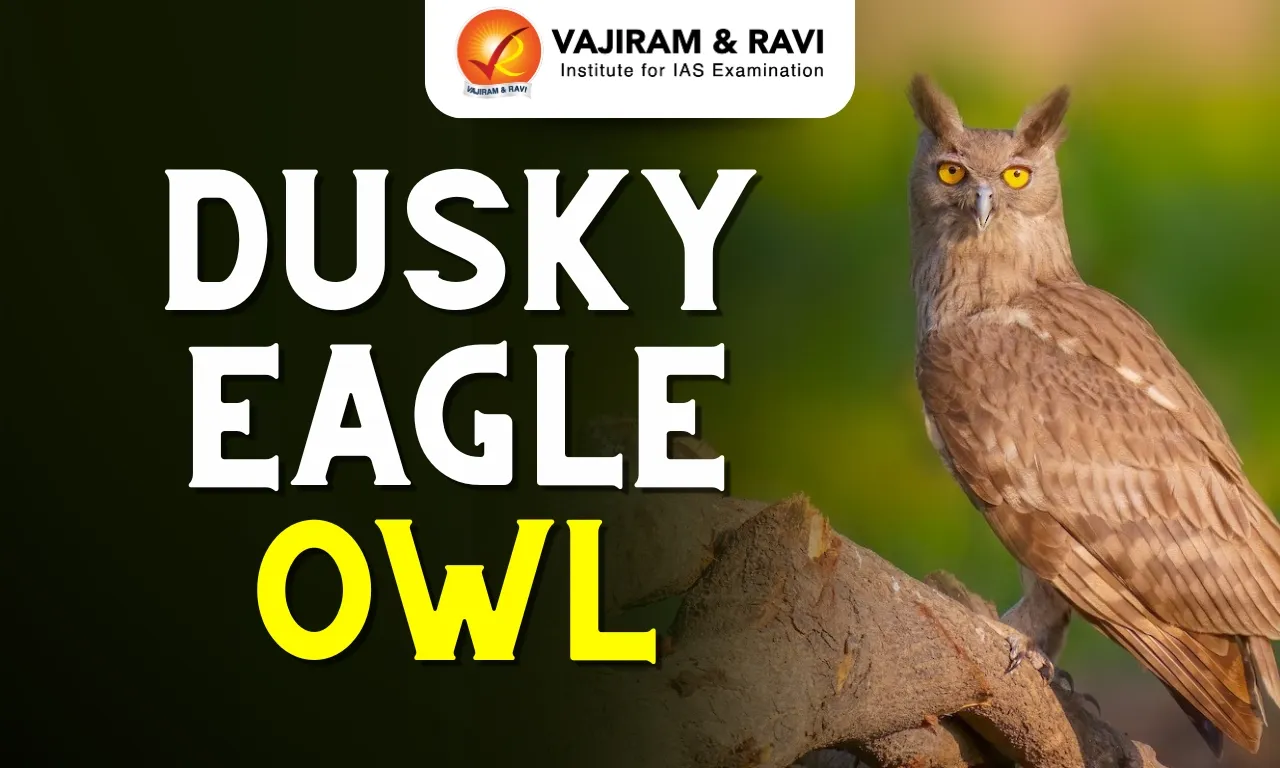
  • Appearance: It is a large greyish-brown owl with prominent ear tufts. Its underparts are greyish white with some dark brown streaks, and its dark brown wings have some whitish streaks.
  • Habitat: The dusky eagle owl typically inhabits thick riverside forests and old-growth trees, preying on small mammals and birds.
  • Distribution: It is mainly found in Pakistan, India, Nepal and Bangladesh to Myanmar, Thailand, Malaysia into China.
  • Features of Dusky Eagle Owl
    • Size: About 48-53 cms. The females are larger than males.
    • It usually spends the daytime in the seclusion of a shady bough or foliage, becoming active about an hour before sunset.
    • The dusky eagle owl is a powerful bird, often active by day in cloudy weather.
    • It has powerful feet and strong flight making them effective hunters. 
    • It tends to use old stick nests built by other birds in which to lay its eggs. It might use nests built by other raptors, such as kites, vultures or eagles.
  • Conservation Status: IUCN Red List: Least Concern

Source: NIE

Dusky Eagle Owl FAQs

Q1: Where is the Dusky Eagle Owl primarily found?

Ans: Himalayan foothills and parts of India

Q2: What is the conservation status of the Dusky Eagle Owl?

Ans: Least Concern

Moonshot Project

Moonshot Project

Moonshot Project Latest News

Recently, the Indian Institute of Science (IISc) launched a moonshot project.

About Moonshot Project

  • It is to develop brain co-processors that combine neuromorphic hardware and AI algorithms to enhance or restore brain function.
    • Brain co-processors are an emerging technology aimed at enhancing the human brain’s natural abilities in ways relevant to real-life situations. 
  • The project aims to build an AI-powered, closed-loop device that connects to different parts of the brain in order to help restore smooth, coordinated movement.
  • It is a multidisciplinary endeavour that evolved from a pilot project seeded by IISc’s Brain, Computation and Data Science initiative. 
  • It is funded by the Pratiksha Trust.
  • Objective: To develop both implantable and non-invasive brain co-processors that can decode brain activity from neural recordings, process it with an AI algorithm, and re-encode signals back into the brain via neural stimulation or neurofeedback.
    • It will lay the foundation for a first-of-its-kind brain co-processor that restores complex sensorimotor function after stroke.
  • Significance: The co-processors will be deployed towards cognitive rehabilitation of stroke survivors, to restore critical functions such as goal-directed reach and grasp abilities.

Source: TH

Moonshot Project FAQs

Q1: What is the primary goal of the Moonshot Project?

Ans: Develop brain co-processors to restore brain function

Q2: What is the expected outcome of the Moonshot Project?

Ans: Cognitive rehabilitation for stroke survivors

New Fish Species

New Fish Species

New Fish Species Latest News

In a significant scientific breakthrough from Northeast India, researchers recently described two new species of freshwater fish named Glyptothorax sentimereni and Oreichthys elianae from Nagaland.

About Glyptothorax sentimereni and Oreichthys elianae

  • They are two new species of freshwater fish.
  • They were discovered during ichthyological surveys in tributaries of the Brahmaputra River in the Mokokchung district, Nagaland.

Glyptothorax sentimereni

  • It was discovered in the rocky stretches of the Dikhu River.
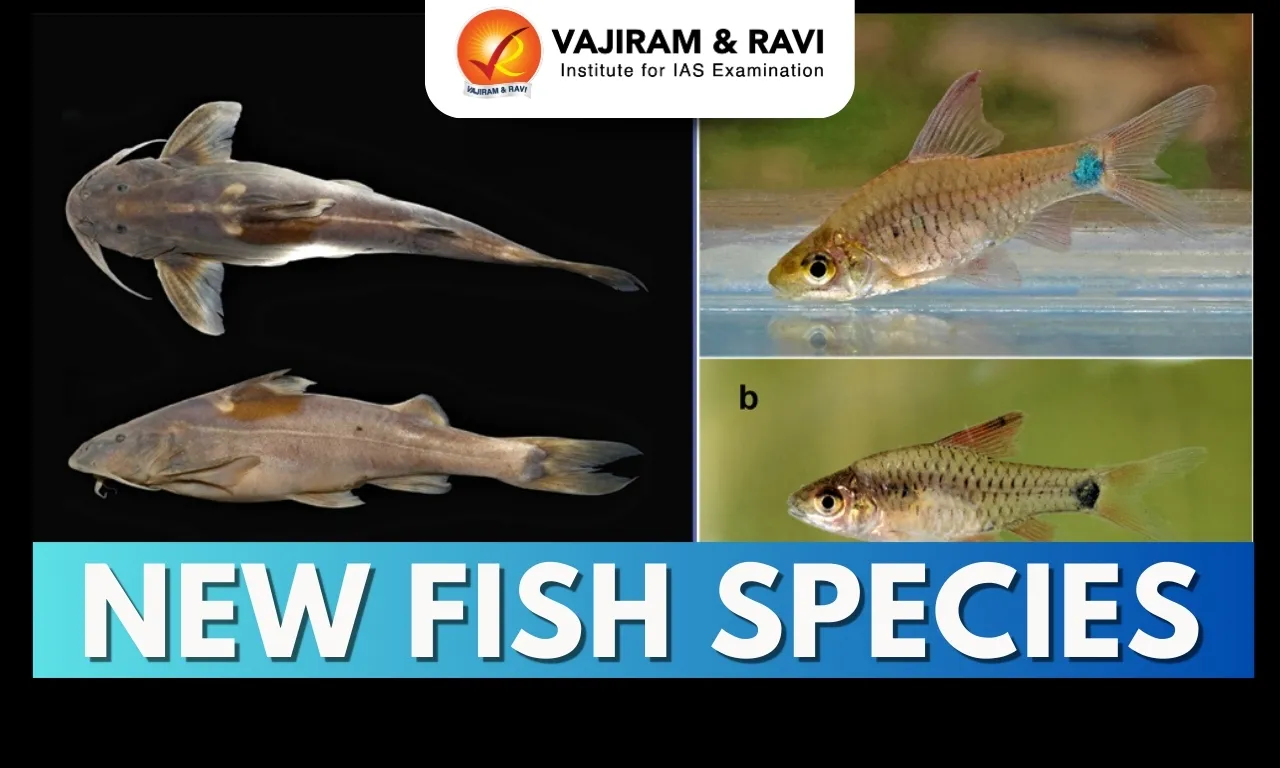
  • It belongs to a group of torrent-dwelling catfishes known for their ability to cling to fast-flowing streams.
  • It possesses a specialised adhesive structure on its underside that helps it cling to rocks in strong currents.
  • It also possesses serrations on its dorsal-fin spine and a plicate (folded) ventral surface on its pectoral and pelvic fins — features that separate it from closely related species across the Ganges–Brahmaputra–Meghna basin.

Oreichthys elianae

  • It was found in a tributary of the Tsurang River.
  • Measuring just over 2.5 cm in length, the tiny fish is distinguished by its bright red fins and a prominent black blotch at the base of its tail.
  • It has an incomplete lateral line with only five pored scales and 14–15 pores on the cheek.

Source: NEN

New Fish Species FAQs

Q1: What are Glyptothorax sentimereni and Oreichthys elianae?

Ans: They are two newly discovered species of freshwater fish.

Q2: Where were Glyptothorax sentimereni and Oreichthys elianae discovered?

Ans: In tributaries of the Brahmaputra River in Mokokchung district, Nagaland.

Q3: In which river was Glyptothorax sentimereni discovered?

Ans: In the Dikhu River.

Q4: What type of fish group does Glyptothorax sentimereni belong to?

Ans: Torrent-dwelling catfishes adapted to fast-flowing streams.

Q5: What are the distinguishing physical features of Oreichthys elianae?

Ans: Bright red fins and a prominent black blotch at the base of its tail.

Golestan Palace

Golestan Palace

Golestan Palace Latest News

Amid escalating tensions in the Middle East, Iran’s capital Tehran was recently reported to have suffered significant structural damage, including to the historic Golestan Palace, a UNESCO World Heritage Site.

About Golestan Palace

  • It is a historically significant site located at the heart of Iran’s capital, Tehran.
  • Stemming from the Persian word "Golestan" which means "rose garden" or "flower garden", the palace is otherwise known as the "Rose Garden Palace".
  • Dating back to the 16th century, it is a crucial part of the Persian royal heritage, representing the long and influential reign of the Qajar dynasty, followed by the Pahlavi dynasty. 
  • Originally built as a citadel for Safavid rulers, it was transformed over centuries into a sprawling royal complex with gardens, palatial buildings, and collections of Persian and European artefacts.
  • It became the seat of government of the Qajar family, which came into power in 1779 and made Teheran the capital of the country. 
  • It is a UNESCO World Heritage Site.

Golestan Palace Features

  • It is especially known for its bright and vibrant tile work. 
  • As is typical in Persian art, use of rich colors like yellow, turquoise, cobalt blue, pink, and white features in intricate floral patterns, geometric designs, and calligraphy
  • The palace's tiles highlight the importance of detail, symmetry, and balance in Persian tiles which also serve as a vessel for storytelling.
  • It is also renowned for its breathtaking ceremonial halls such as the Mirror Hall, Brilliant Hall, Ivory Hall, Salam Hall, Reception Hall, and more. 
  • These rooms combine Persian and European aesthetics in reflection of the Qajar and Pahlavi dynasties.

Source: ET

Golestan Palace FAQs

Q1: Where is Golestan Palace located?

Ans: Golestan Palace is located in Tehran, the capital city of Iran.

Q2: From which century does Golestan Palace date back?

Ans: Golestan Palace dates back to the 16th century.

Q3: Which dynasty primarily used Golestan Palace as the seat of government?

Ans: The Qajar dynasty used Golestan Palace as its seat of government.

Q4: For what artistic feature is Golestan Palace especially famous?

Ans: It is especially famous for its bright and vibrant tile work.

Metabolic Diseases Burden in India – Explained

Metabolic Diseases

Metabolic Diseases Latest News

  • A recent analysis of the Global Burden of Disease (GBD) Study 1990-2023 has revealed that India and China have the highest metabolic disease burdens in the Asia-Pacific region. 

Understanding Metabolic Diseases

  • Metabolic diseases refer to a group of disorders that disrupt the body’s normal metabolic processes, particularly the way energy from food is broken down, stored, and utilised. 
  • Common metabolic diseases include Type 2 diabetes mellitus, High blood pressure (hypertension), Obesity or high body mass index (BMI), High LDL cholesterol and Metabolically-dysfunction-associated steatotic liver disease (MASLD) 
  • These conditions are closely linked to lifestyle factors such as unhealthy diets, sedentary behaviour, and increasing urbanisation. 
  • They are also major contributors to non-communicable diseases (NCDs), which account for a significant proportion of deaths globally.

Findings of the Global Burden of Disease Study

  • The study analysed data for the period 1990-2023, with projections up to 2030 for the Asia-Pacific region. 
  • Researchers assessed the burden of metabolic diseases using two key indicators:
    • Disability-Adjusted Life Years (DALYs) - a measure of overall disease burden combining years lost due to premature death and years lived with disability.
    • Mortality rates - the number of deaths caused by specific diseases.
  • The study identified five major metabolic risk factors contributing to disease burden:
    • Type 2 diabetes mellitus
    • High systolic blood pressure
    • High BMI
    • High LDL cholesterol
    • Metabolically-dysfunction-associated steatotic liver disease (MASLD) 
  • The findings indicate that metabolic disorders have become one of the most serious health challenges in the Asia-Pacific region.

India’s Metabolic Disease Burden

  • According to the study, India has one of the highest absolute metabolic disease burdens in the Asia-Pacific region. In 2023, India recorded:
    • Approximately 21 million DALYs linked to type 2 diabetes
    • Around 5.8 lakh deaths due to diabetes 
  • High systolic blood pressure was another major contributor to disease burden, accounting for nearly 3.8 crore DALYs and around 15.7 lakh deaths in the country. 
  • These numbers indicate that hypertension and diabetes remain among the leading health challenges facing India.
  • In terms of DALYs, India overtook China in 2023 to become the country with the highest metabolic disease burden in the Asia-Pacific region
  • However, under other parameters such as high BMI, LDL cholesterol, and MASLD, India still ranks second after China.

Rising Risk Factors in India

  • The study highlights several metabolic risk factors that are increasing steadily in India.
  • One of the most significant trends is the rising prevalence of obesity and high BMI, which is growing at an annual rate of about 2.7-2.9%
  • High LDL cholesterol levels and fatty liver disease (MASLD) are also becoming increasingly common.
  • These trends are largely driven by:
    • Rapid urbanisation
    • Sedentary lifestyles
    • Increasing consumption of ultra-processed foods
    • High intake of sugar, salt, and unhealthy fats
  • Together, these factors are contributing to the growing burden of metabolic diseases in India.

Implications for Public Health

  • Metabolic diseases have far-reaching consequences for public health and economic productivity.
  • If current trends continue, these diseases could place enormous pressure on healthcare systems due to Increased hospitalisation, Long-term treatment costs and Reduced workforce productivity
  • The study also warns that most metabolic risk factors are expected to continue rising until 2030, unless strong preventive measures are adopted. 
  • Thus, tackling metabolic diseases has become a major priority for health policymakers.

Prevention and Policy Measures

  • Experts emphasise that an integrated public health approach is needed to address the rising metabolic disease burden in India.
  • Key recommended strategies include:
    • Promoting healthier diets: Governments should regulate ultra-processed foods and reduce excessive sugar, salt, and unhealthy fats in commonly consumed foods. 
    • Nutrition labelling: Clear front-of-pack nutrition labels can help consumers make informed dietary choices.
    • Urban design and physical activity: Cities should be redesigned to encourage active lifestyles through safe walking spaces, cycling tracks, and public exercise facilities. 
    • Screening and early detection: Large-scale screening for diabetes, hypertension, obesity, and fatty liver disease should be integrated into primary healthcare systems.
  • India has already initiated programmes through the Union Health Ministry and State governments, but experts emphasise the need for stronger and more uniform implementation across the country.

Source: TH

Metabolic Diseases FAQs

Q1: What are metabolic diseases?

Ans: Metabolic diseases are disorders that disrupt the body’s normal metabolism, including conditions such as diabetes, hypertension, and obesity.

Q2: Which study highlighted India’s metabolic disease burden?

Ans: The Global Burden of Disease (GBD) Study 1990–2023 analysed metabolic disease trends in the Asia-Pacific region.

Q3: How many deaths were caused by diabetes in India in 2023?

Ans: Around 5.8 lakh deaths in India were attributed to type 2 diabetes in 2023.

Q4: Which metabolic risk factor contributes significantly to disease burden in India?

Ans: High systolic blood pressure is a major contributor to DALYs and deaths in India.

Q5: What strategies can help reduce metabolic diseases?

Ans: Healthy diets, increased physical activity, early screening, and regulation of processed foods can help reduce metabolic diseases.

Sharavathi Pumped Storage Hydroelectric Project

Sharavathi Pumped Storage Hydroelectric Project

Sharavathi Pumped Storage Hydroelectric Project Latest News

The High Court of Karnataka recently ordered an issue of notice to the Centre and State government on a PIL petition, which had questioned the legality of the approval granted by the State Wildlife Board and the in-principle approval granted by the Standing Committee of the National Board for Wildlife for the Sharavathi PSHP.

About Sharavathi Pumped Storage Hydroelectric Project

  • It is a PSHP proposed on the Sharavathi River in the Shivamogga district, Karnataka.
  • This project, with its aim to generate 2,000 MW of power, will be the biggest of its kind in the country.
  • It is being developed by Karnataka Power Corporation Limited (KPCL).
  • The project involves building a pumped storage power plant between two existing reservoirs. 
  • The Talakalale dam, which stands at 62.48 meters tall, will be the upper reservoir.  This dam currently helps balance water for the existing Sharavathy hydroelectric project.  
  • The Gerusoppa dam will be the lower reservoir, and it is about 64 meters tall. 
  • Water will be pumped uphill during off-peak hours and released downhill to generate electricity during peak demand.
  • The project aims to utilise renewable energy sources and reduce carbon emissions. 
  • Modelled on the lines of Telangana’s Kaleshwaram project, it also aims to supply drinking water to Bengaluru. 
  • Five tunnels and eight pumping stations are critical parts of the plan.
  • The project falls within the Eco-Sensitive Zone (ESZ) of the Sharavathi Wildlife Sanctuary, which is home to the endangered lion-tailed macaque, hornbills, king cobras, and numerous endemic plant species of the Western Ghats.

Key Facts about Sharavathi River

  • It is a river in the western Karnataka state.
  • It is one of the few rivers in India, which flows in the west direction. 
  • A large part of the river basin lies in the Western Ghats.
  • Course: Rising in the Western Ghats, it flows in a northwesterly direction and empties into the Arabian Sea at Honnavar, near the Uttara Kannada district.
  • Total Length: 128 km
  • On its way, the Sharavathi forms the Jog Falls, one of the highest waterfalls in India, where the river falls from a height of 253 m. 
  • Diverse geological features mark the river’s course, including rocky outcrops, fertile plains, and deep gorges.
  • Major Tributaries: Nandihole, Haridravathi, Mavinahole, Hilkunji, Yennehole, Hurlihole, and Nagodihole.

Source: TH

Sharavathi Pumped Storage Hydroelectric Project FAQs

Q1: What is the Sharavathi Pumped Storage Hydroelectric Project (PSHP)?

Ans: It is a proposed pumped storage hydroelectric power project on the Sharavathi River in Karnataka.

Q2: What is the planned power generation capacity of the Sharavathi PSHP?

Ans: The project aims to generate 2,000 MW of electricity.

Q3: Which dam will act as the upper reservoir for the Sharavathi Pumped Storage Hydroelectric Project (PSHP)?

Ans: The Talakalale Dam will act as the upper reservoir.

Q4: Which dam will serve as the lower reservoir in the Sharavathi Pumped Storage Hydroelectric Project (PSHP)?

Ans: The Gerusoppa Dam will serve as the lower reservoir.

Raisina Dialogue 2026

Raisina Dialogue

Raisina Dialogue Latest News

Prime Minister recently inaugurated the 11th edition of the Raisina Dialogue in New Delhi.

About Raisina Dialogue

  • It is India’s flagship conference on geopolitics and geo-economics, committed to addressing the most challenging issues facing the international community.
  • It is modeled on the lines of the Munich Security Conference and Singapore’s Shangri-La Dialogue.
  • It is held annually since 2016 in New Delhi.
  • It is structured as a multi-stakeholder, cross-sectoral discussion, involving heads of state, cabinet ministers, and local government officials, who are joined by thought leaders from the private sector, media, and academia.
  • The conference is hosted by the Observer Research Foundation (ORF) in partnership with the Ministry of External Affairs, Government of India. 
  • This effort is supported by a number of institutions, organisations, and individuals who are committed to the mission of the conference.

Raisina Dialogue 2026

  • It is the 11th edition of the dialogue.
  • Theme: "Saṁskāra – Assertion, Accommodation, Advancement”.
  • Around 2700 participants from 110 countries will be joining the dialogue in person.
  • Over the course of three days, decision makers and thought leaders of the world will engage each other across conversations in various formats over six thematic pillars: 
    • Contested Frontiers: Power, Polarity, and Periphery; 
    • Repairing the Commons: New Groups, New Guardians, New Avenues; 
    • White Whale: The Pursuit of Agenda 2030; 
    • The Eleventh Hour: Climate, Conflict, and the Cost of Delay; 
    • Tomorrowland: Towards a Tech-topia; 
    • Trade in the Time of Tariffs: Recovery, Resilience, Reinvention

Source: NOA

Raisina Dialogue FAQs

Q1: What is the Raisina Dialogue?

Ans: It is India’s flagship conference on geopolitics and geo-economics addressing major global issues.

Q2: Since when has the Raisina Dialogue been held annually?

Ans: Since 2016.

Q3: Where is the Raisina Dialogue held every year?

Ans: In New Delhi, India.

Q4: Who hosts the Raisina Dialogue?

Ans: The Observer Research Foundation (ORF) in partnership with the Ministry of External Affairs, Government of India.

Q5: What is the theme of the Raisina Dialogue 2026?

Ans: “Saṁskāra – Assertion, Accommodation, Advancement.”

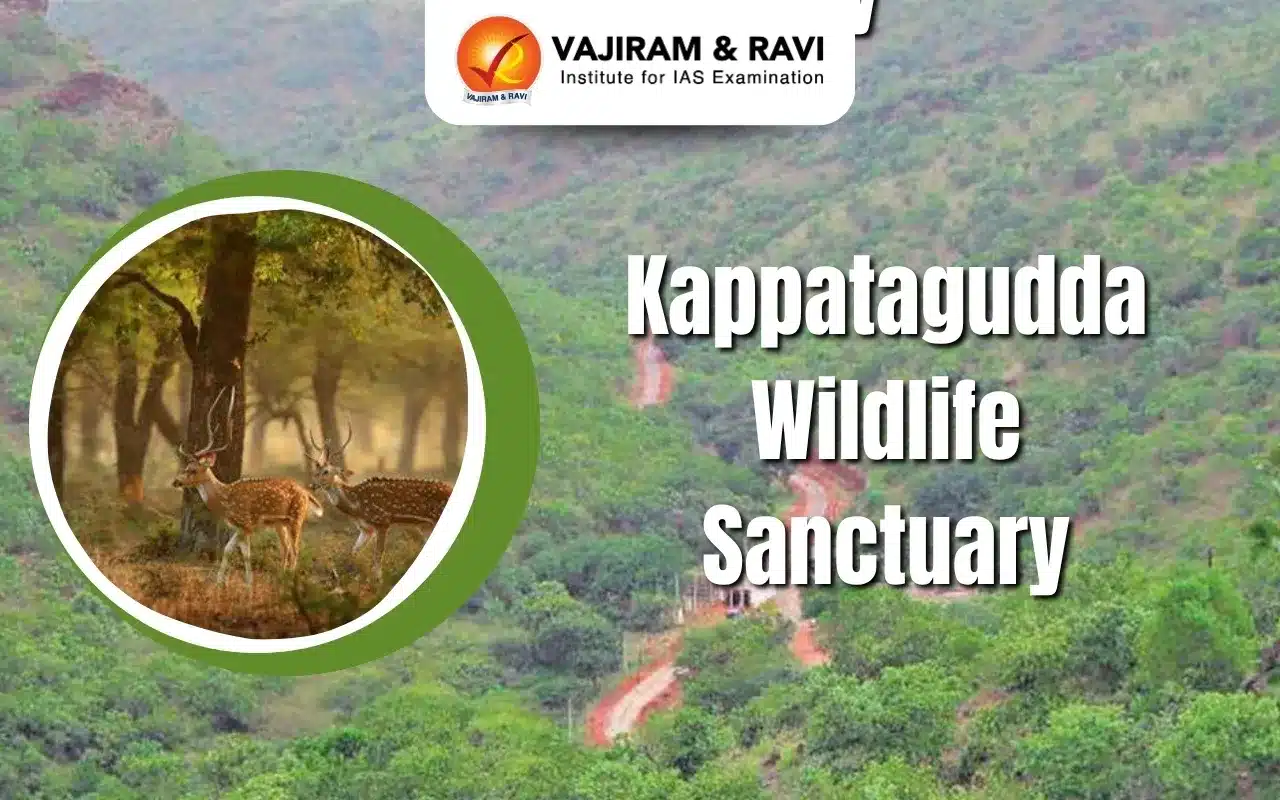
Kappatagudda Wildlife Sanctuary

Kappatagudda Wildlife Sanctuary

Kappatagudda Wildlife Sanctuary Latest News

Recently, the High Court of Karnataka has directed the State government to issue a further notification to include the left-out areas of the Kappatagudda reserve forest as part of the Kappatagudda Wildlife Sanctuary.

About Kappatagudda Wildlife Sanctuary

  • Location: It is located in the state of Karnataka.
  • The sanctuary features diverse habitats—dry deciduous forests, grasslands, scrublands, and riverine zones—earning it the nickname “Western Ghats of North Karnataka”.
  • The sanctuary’s historical significance traces back centuries, evident in the remnants of ancient temples and ruins that dot the hillsides.
  • These structures are adorned with intricate carvings and tell tales of dynasties that once ruled the land, such as the Chalukyas and Rashtrakutas.
    • It mainly consists of architectural marvels strewn across Kappatagudda, such as the Kappatagudda Jain Basadi, Brahma Jinalaya, Trikuteshwara Temple, and the Dambala Temple, stand testament to the craftsmanship and religious diversity of the region. 
  • The Sanctuary forms the major catchment for the River Tungabhadra in the district.
  • Vegetation: The sanctuary supports diverse vegetation typical of dry-scrub and deciduous ecosystems.
  • Flora:  The forest has about 400 medicinal plant species.
  • Fauna:  Leopards, Hyenas, Wolves, Foxes, Jackals, Four Horned Antelopes, Blackbucks, Monitor Lizards, Jungle Cats and various reptiles and birds. 

Source: TH

Kappatagudda Wildlife Sanctuary FAQs

Q1: What is Kappatagudda Wildlife Sanctuary known for?

Ans: Dry deciduous forests and medicinal plants

Q2: Where is Kappatagudda Wildlife Sanctuary located?

Ans: Gadag district, Karnataka

Shahed Drones

Shahed Drones

Shahed Drones Latest News

The United States recently raised serious concerns about the capabilities of Iran's Shahed attack drones.

About Shahed Drones

  • Shahed (meaning witness in Farsi) drones are low-cost, one-way-attack unmanned aerial vehicles (UAVs) developed by Iran
  • Often referred to as "kamikaze" or "suicide" drones, they function essentially as guided missiles that fly towards a pre-designated target and explode on impact. 
  • Most widely used variants: Shahed-131 and Shahed-136 
  • Russia refers to the Shahed-131 and Shahed-136 as “Geran-1” and “Geran-2,” respectively.
  • Each Shahed is reported to have an estimated cost between $20,000 and $50,000, making them cheaper than most other long-range, OWA UAVs. 
  • Ballistic and cruise missiles, by contrast, can cost millions of dollars each.
  • This low cost, along with a low-altitude flight profile and self-sacrificial nature, has seen Shaheds labelled “the poor man’s cruise missile”.
  • Produced in large numbers, swarms of Shahed drones can overwhelm air defences by saturating them from multiple directions at once. 

Shahed Drones Features

  • The Shahed-131 has a range of 700–900 km, while the Shahed-136 has the longer range, i.e., between 2,000 and 2,500 kilometres.
  • They are between 2.5 and three metres long and weigh around 200 kg at launch, most of which is the fuel and payload.
  • They are launched using a disposable rocket booster fitted to their underside. Shortly after launch, the booster is jettisoned, and a piston-driven engine takes over to provide propulsion.
  • They can be launched from both static rail mounts as well as vehicles.
  • For navigation, it uses a combination of civilian GPS/GLONASS and an inertial navigation system (INS) often pre-programmed with coordinates before launch.
  • They can be equipped with various warheads, including high-explosive fragmentation, thermobaric, and shrapnel-filled munitions, maximising damage to both personnel and equipment.

Source: TOI

Shahed Drones FAQs

Q1: What are Shahed drones?

Ans: They are low-cost, one-way-attack unmanned aerial vehicles developed by Iran.

Q2: Why are Shahed drones often called “kamikaze” or “suicide” drones?

Ans: Because they fly toward a target and explode on impact.

Q3: What is the estimated cost of a typical Shahed drone?

Ans: Around $20,000 to $50,000.

Q4: What is the approximate range of the Shahed-136 drone?

Ans: Around 2,000–2,500 km.

Q5: What navigation systems are used by Shahed drones?

Ans: It uses a combination of civilian GPS/GLONASS and an inertial navigation system (INS) often pre-programmed with coordinates before launch.

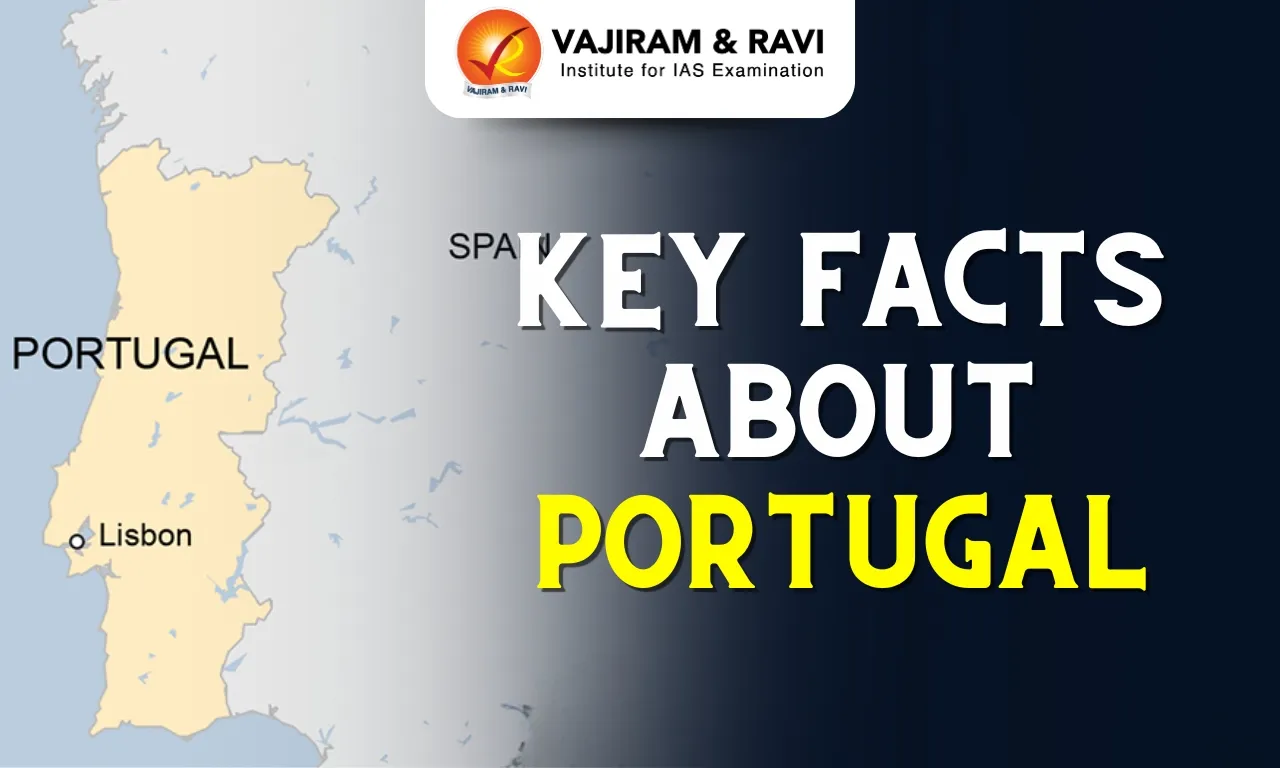
Key Facts about Portugal

Key Facts about Portugal

Portugal Latest News

Recently, a Parliamentary Delegation led by the Vice President of the Portuguese Parliament, called on the Hon’ble Deputy Chairman, Rajya Sabha in Parliament.

About Portugal

  • Location: It is the westernmost country of mainland Europe, located on the Iberian Peninsula.
  • Bordering Countries: It shares land border with Spain (north and east),
  • Maritime border: It is bounded by the North Atlantic Ocean to the south and west.
  • It also administers two autonomous regions: the Madeira and Azores archipelagos, located in the Atlantic Ocean.
  • Capital city: Lisbon.

Geographical Features of Portugal

  • Climate: Its climate is very much like that of most Mediterranean countries. This means it’s hot in the summer and temperate in the winter.
  • Rivers: The Tagus River, flowing west into the Atlantic ocean, divides Portugal into mountainous northern regions and rolling plains in the south.
  • Highest Point: Ponta do Pico (Pico Alto), located in the Azores.
  • Natural Resources: It mainly consists of iron ore, copper, zinc, tin, tungsten, silver, gold, uranium, marble, clay, gypsum.

Source: PIB

Portugal FAQs

Q1: What is the capital of Portugal?

Ans: Lisbon

Q2: What is the official language of Portugal?

Ans: Portuguese

India-Finland Relations – Strategic Partnership in Digitalisation and Sustainability

India-Finland Relations

India-Finland Relations Latest News

  • India and Finland have elevated their bilateral ties to a “Strategic Partnership in Digitalisation and Sustainability” following talks between the Indian Prime Minister and Finnish President (Alexander Stubb) in New Delhi. 
  • The visit resulted in multiple agreements covering mobility, environment, statistics, and emerging technologies, reflecting a growing convergence in technology, sustainability, and global governance.
  • The partnership comes amid the recent conclusion of the India–European Union Free Trade Agreement (2026) and aims to deepen cooperation between India and the Nordic region.

Key Outcomes of the India-Finland Talks

  • Institutional and economic initiatives:
    • Goal to double bilateral trade by 2030.
    • Establishment of a Joint Working Group on Digitalisation.
    • Formation of a Joint Task Force on 6G telecommunications.
    • Enhanced startup ecosystem connectivity between the two countries.
    • Initiation of a consular dialogue mechanism to improve people-to-people engagement.
  • Agreements signed: 
    • Three key agreements were signed in the areas of -
      • Migration and Mobility (comprehensive agreement facilitating movement of talent and students).
      • Environment cooperation.
      • Statistical collaboration.
    • These agreements aim to strengthen economic exchanges, knowledge transfer, and sustainable development initiatives.

Areas of Strategic Cooperation

  • Digital technology and emerging technologies:
    • The partnership focuses on high-technology sectors, including Artificial Intelligence (AI), 6G telecommunications, Quantum computing, and Digital infrastructure.
    • India and Finland aim to promote trustworthy technologies and resilient digital ecosystems.
  • Sustainability and circular economy:
    • India and Finland will co-host the World Circular Economy Forum in India.
    • Cooperation in clean energy, environmental protection, and sustainable technologies will be expanded.
    • Finland’s expertise in circular economy models aligns with India’s sustainable development goals and climate commitments.
  • Defence, space and critical technologies:
    • Both nations agreed to deepen cooperation in defence and security technologies, space cooperation, semiconductors and critical minerals supply chains.
    • This is important for supply chain resilience and technological self-reliance.

Examples of India-Finland Cooperation

  • Synergy: Between Finnish technological expertise and India’s scale of implementation -
    • Telecommunications: Finnish company Nokia’s networks and mobile technology have connected millions in India.
    • Infrastructure: Finnish architects contributed to the construction of the Chenab Rail Bridge, the world’s highest railway bridge.
    • Bioenergy: Collaboration helped establish the world’s largest bamboo-to-bioethanol refinery in Numaligarh (Assam).
  • Education and mobility:
    • Finland is emerging as a preferred destination for Indian students and skilled professionals.
    • The Migration and Mobility Agreement aims to facilitate legal migration and talent exchange.
    • Expanded cooperation in teacher training, school-to-school partnerships, and research on the future of education.
    • Finland’s globally reputed education system offers valuable learning opportunities for India’s education reforms.
  • Arctic and Polar cooperation:
    • Finland is an important partner for India in the Nordic and Arctic region.
    • Key areas of collaboration include Arctic and polar research, climate change monitoring, and sustainable resource management.
    • This aligns with India’s Arctic Policy (2022) and its growing role in polar scientific research.

India-Finland Relations

  • Background: Finland established diplomatic relations with India in 1949. In recent years, there has been an increase in joint initiatives and the active exchange of delegations between the two.
  • Bilateral trade: In the range of EUR 1.5–2 billion annually. Finland has a slight trade surplus with India, especially in the goods trade.
  • Investment: Over 100 Finnish companies have operations in India. Large Finnish companies like Nokia, Wartsila, UPM, Lindstrom, Fortum, Ahlstrom, Elcoteq, etc., have manufacturing facilities in India.

Challenges and Way Forward

  • Limited bilateral trade volume: Trade between India and Finland remains modest compared to potential. Use the India–EU FTA to expand trade and investment opportunities.
  • Geographical and market distance: Limited direct connectivity and awareness between businesses. Expand startup and innovation ecosystem collaboration.
  • Technological competition: Collaboration must navigate global competition in advanced technologies. Promote joint research and development in emerging technologies.
  • Geopolitical uncertainties: Ongoing global conflicts (in the Middle East, Sudan and Ukraine) and shifting alliances may affect economic and security cooperation.
    • Convergence on global governance and geopolitics: Both countries emphasised -
      • Urgent reform of global institutions to address emerging global challenges.
      • Commitment to multilateralism and global cooperation.
      • Joint commitment to eliminate terrorism in all its forms.
      • On the need to restore a rules-based international order.

Conclusion

  • The elevation of India–Finland relations reflects the growing importance of technology, innovation, and sustainability in modern diplomacy. 
  • By combining Finland’s technological expertise and education excellence with India’s scale and economic growth, the partnership has the potential to - 
    • Strengthen India–EU relations, 
    • Promote resilient supply chains, and 
    • Contribute to a rules-based international order.

Source: IE

India-Finland Relations FAQs

Q1: Why is the India–Finland Strategic Partnership in Digitalisation and Sustainability significant?

Ans: It strengthens cooperation in emerging technologies, sustainability, and resilient supply chains while deepening India–EU engagement.

Q2: How does Finland contribute to India’s technological and infrastructure development?

Ans: Through collaborations in telecom networks, infrastructure design (Chenab Bridge), and bioenergy projects like the Numaligarh bioethanol refinery.

Q3: What role does the Migration and Mobility Agreement play in India–Finland relations?

Ans: It facilitates legal migration, talent mobility, and deeper educational and innovation cooperation.

Q4: How does India–Finland cooperation support global sustainability efforts?

Ans: Through initiatives such as the World Circular Economy Forum and collaboration in clean energy and environmental technologies.

Q5: Why is Arctic cooperation important in India–Finland relations?

Ans: It supports climate research, sustainable resource management, and India’s growing engagement in polar scientific studies.

Maritime Law and Warfare: Rules Governing Naval Conflict

Maritime Law and Warfare

Maritime Law and Warfare Latest News

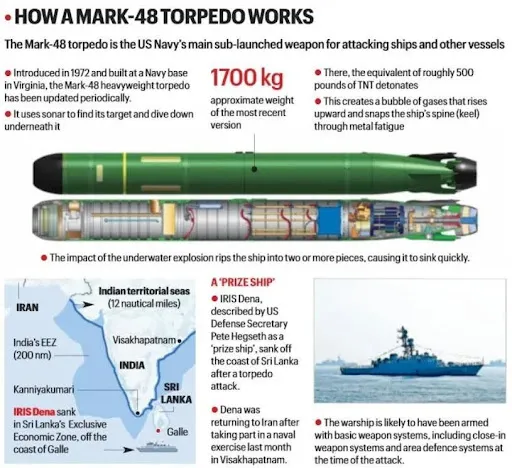
  • A US submarine torpedoed the Iranian warship IRIS Dena off the coast of Sri Lanka, outside its territorial waters. The ship was returning after participating in the International Fleet Review and MILAN-2026 naval exercise hosted by India near Visakhapatnam.
  • The attack resulted in the death of at least 80 sailors and expanded the US-Israel–Iran conflict beyond West Asia into the Indian Ocean region.
  • The incident has also sparked a debate in India over maritime security, especially given India’s strong naval presence in the Indian Ocean. 
  • Experts noted that ships sailing in international waters cannot be protected by another country from hostile action. Once outside a nation’s territorial boundaries, ships are subject mainly to international maritime law and conventions, which govern conduct during naval conflicts.

Legal Framework Governing Maritime Conflict

  • International maritime law is mainly governed by the United Nations Convention on the Law of the Sea (UNCLOS), although the United States is not a signatory. 
  • UNCLOS primarily deals with peacetime maritime governance and does not clearly regulate the conduct of parties during armed conflicts.

Law of Naval Warfare

  • During conflicts, the law of naval warfare operates alongside UNCLOS
  • Under these rules, warships belonging to a belligerent state can be considered legitimate military targets, regardless of whether they are directly engaged in combat.

Provisions Under the UN Charter

  • The UN Charter regulates the use of force in international waters. 
  • Article 2(4) generally prohibits the use of force, but Article 51 allows states to act in self-defence if they face an armed attack.
  • Military action may also be authorised by the UN Security Council under Chapter VII of the UN Charter. 
  • However, such approval requires a majority vote and no veto from any permanent member, making it difficult to obtain in many situations.

US Sanctions on the Iranian Warship

  • The Iranian warship IRIS Dena was sanctioned by the US Treasury in February 2023, along with executives of the Iranian drone company Paravar Pars. 
    • The sanctions were linked to Iran’s alleged supply of UAVs to Russia for attacks on infrastructure in Ukraine.
  • However, these sanctions did not prevent the ship from participating in peacetime multilateral naval exercises, though they restricted its commercial or transactional activities.
  • At the time of the attack, the warship was likely equipped with basic defensive weapon systems, including close-in weapon systems and area defence systems.

Expert Views on the Incident

  • No Fixed War Zones at Sea - Experts stated that there are no defined war zones in the maritime domain. The attack occurred after the Iranian ship left India, making it part of the wider conflict environment.
  • Incident Near Sri Lanka’s EEZ - The attack happened in Sri Lanka’s Exclusive Economic Zone (EEZ). This proximity allowed authorities to begin search and rescue operations quickly. The location also suggests the ship may have been aware of potential threats.
  • Legal Concerns Over Use of Force – Critics, however, argued that attacking a foreign warship on the high seas is generally unlawful unless justified as self-defence or within an ongoing armed conflict, as recognised under Article 51 of the UN Charter.

Escalation of the Conflict

  • Analysts described the attack as a major escalation in the US-Israel-Iran conflict. 
  • The ship was reportedly on a peaceful passage outside the conflict zone, which may have led to the crew being caught off guard despite defensive capabilities.

Source: IE

Maritime Law and Warfare FAQs

Q1: What does Maritime Law and Warfare refer to?

Ans: Maritime Law and Warfare refers to international legal rules governing naval conflicts at sea, including UNCLOS provisions, naval warfare principles, and UN Charter rules on the use of force.

Q2: How does UNCLOS relate to Maritime Law and Warfare?

Ans: UNCLOS governs maritime activities mainly in peacetime, but during conflicts the law of naval warfare works alongside it to regulate military actions at sea.

Q3: Are warships legitimate targets under Maritime Law and Warfare?

Ans: Yes. Under the law of naval warfare, warships belonging to a belligerent state may be considered legitimate military targets during armed conflict.

Q4: How does the UN Charter regulate naval conflict?

Ans: The UN Charter generally prohibits the use of force under Article 2(4), but Article 51 allows states to use force in self-defence if they face an armed attack.

Q5: Can the UN Security Council authorise naval strikes?

Ans: Yes. Under Chapter VII of the UN Charter, the UN Security Council can authorise military action, though approval requires majority support and no veto from permanent members.

Rethinking India’s Rice Production and Export Strategy

India’s Rice Production and Export Strategy

India’s Rice Production and Export Strategy Latest News

  • India has been the world’s largest rice exporter since 2011–12. In 2024–25, India exported about 21.69 million tonnes, far higher than Thailand (7.86 million tonnes) and Vietnam (8.06 million tonnes).
  • India also became the largest rice producer in the world in 2024–25, with an estimated 150 million tonnes of output, surpassing China’s 145.28 million tonnes.
  • However, the key challenge ahead is maintaining this leadership while ensuring environmental sustainability and financial viability.

Environmental Costs of Paddy Cultivation

  • Paddy is an extremely water-intensive crop. A single irrigation covering one acre to a depth of 2.5 cm requires about 1,01,171 litres of water. 
  • To control weeds, paddy fields are usually kept submerged under about 5 cm of water for long periods.
  • Depending on crop duration and planting time, paddy requires 20 to more than 30 irrigations. 
  • Under the conventional system of transplanting with continuous flooding, about 25 irrigations at 5 cm depth can consume roughly 5 million litres of water per acre.

Water Footprint of Rice Production

  • With an average yield of 2.5 tonnes of paddy per acre, producing one kilogram of paddy requires about 2,000 litres of water. 
  • After milling (which gives about two-thirds recovery), one kilogram of rice requires nearly 3,000 litres of water.
  • This means that every kilogram of rice exported by India effectively represents the export of about 3,000 litres of water, raising concerns about the environmental sustainability of large-scale rice exports.

Financial Sustainability of Rice Exports

  • India exports both basmati and non-basmati rice, but their export values differ significantly. 
  • In 2023–24 and 2024–25, basmati exports were about 5–6 million tonnes, less than half of non-basmati exports (11–14 million tonnes).
  • However, the export value of both categories was almost similar. Basmati exports earned about $5.8–5.9 billion, while non-basmati exports generated $4.5–6.5 billion.
  • The average unit value of basmati rice was ₹82.9–92.3 per kg, compared with ₹34–39.2 per kg for non-basmati rice, showing that basmati brings higher revenue per kilogram.

Water Efficiency in Basmati Cultivation

  • Basmati rice also requires less irrigation water compared with many non-basmati varieties. 
  • Non-basmati paddy is usually transplanted in June, during peak summer, which requires frequent irrigation.
  • In contrast, basmati varieties are transplanted in July with the onset of monsoon, reducing the need for irrigation.

Climatic Advantage for Aroma

  • Basmati crops flower and develop grains in October, when temperatures fall to 30–31°C. 
  • These cooler conditions help the formation of 2-acetyl-1-pyrroline, the compound responsible for basmati’s distinctive aroma.
  • If transplanted earlier in June, grain filling happens in September when temperatures remain high, which reduces aroma quality.

Shift Towards High-Value Rice Exports

  • Because basmati generates higher export earnings and uses less water, it offers better economic and environmental returns. 
  • Experts suggest increasing exports of basmati and other high-value aromatic rice varieties.
  • These include GI-protected varieties such as Kalanamak and Adamchini (Uttar Pradesh), Katarni (Bihar), Gobindobhog (West Bengal), Badshah Bhog (Chhattisgarh), Koraput Kalajeera (Odisha), Wayanad Jeerakasala and Gandhakasala (Kerala), and Seeraga Samba (Tamil Nadu).
  • The broader goal is to shift from exporting bulk commodity rice to exporting high-value, less water-intensive rice varieties.

Towards a Non-Basmati Phaseout Strategy

  • India’s basmati exports have increased sharply from 0.6–0.7 million tonnes in the early 2000s to 5–6 million tonnes in recent years. 
  • Export earnings have also risen from $400–450 million to about $5.8–5.9 billion. 
  • This growth is largely due to high-yielding basmati varieties developed by scientists at the Indian Agricultural Research Institute (IARI).

High-Yield Modern Basmati Varieties

  • Pusa Basmati-1509 yields about 2.5 tonnes of paddy per acre and matures in 115–120 days, compared with 1 tonne yield and 155–160 days maturity for traditional basmati varieties.
  • India’s basmati GI region covers about 6.2 million hectares across Punjab, Haryana, western Uttar Pradesh, Uttarakhand, Jammu and Himachal Pradesh.
  • However, actual basmati cultivation is only about 2.1 million hectares. Expanding basmati to the entire GI area could increase production, exports, and sustainability in rice farming.

Policy Measures for Transition

  • Experts suggest gradually reducing non-basmati rice cultivation in water-stressed regions like Punjab and Haryana.
  • The government could instead procure non-basmati paddy from eastern states such as Uttar Pradesh, Bihar, West Bengal and Assam, where groundwater stress is lower.
  • The government can set a floor price for basmati paddy in mandis to protect farmers from price crashes.

Advances in Rice Breeding Strategies

  • IARI scientists introduced genes from wild rice and landraces into popular varieties such as Pusa Basmati-1509, 1121 and 1401 using marker-assisted selection.
  • This led to disease-resistant varieties Pusa Basmati-1847, 1885 and 1886, which resist bacterial leaf blight and rice blast.
  • Genetic resistance reduces the need for antibiotics and fungicides. Lower chemical use helps maintain basmati’s premium quality in global markets.

Tackling Other Crop Threats

  • Researchers are now identifying genes for resistance against diseases (bakanae, false smut, brown spot) and pests (stem borer, leaf folder, plant hoppers).
  • The focus is also on traits like drought, heat and salinity tolerance.

Source: IE

India’s Rice Production and Export Strategy FAQs

Q1: Why is India’s Rice Production and Export Strategy under debate?

Ans: India’s Rice Production and Export Strategy faces environmental concerns because rice cultivation is highly water-intensive and large exports indirectly mean exporting significant quantities of water.

Q2: How much water is required for rice production in India?

Ans: Producing one kilogram of rice can require nearly 3,000 litres of water, making rice cultivation particularly demanding on water resources

Q3: Why is basmati rice economically advantageous for exports?

Ans: Basmati rice earns significantly higher export value per kilogram compared with non-basmati varieties, making it more profitable and resource-efficient for India’s rice export strategy.

Q4: What policy shift is suggested in India’s Rice Production and Export Strategy?

Ans: Experts recommend expanding basmati cultivation, reducing non-basmati rice in water-stressed regions, and promoting high-value GI-protected aromatic rice varieties.

Q5: How can new breeding technologies improve India’s rice sector?

Ans: Modern breeding methods such as marker-assisted selection and predictive breeding can develop disease-resistant and climate-resilient rice varieties while reducing chemical inputs and improving productivity.

GPS Spoofing

GPS Spoofing

GPS Spoofing Latest News

Recently, it was observed that GPS spoofing is creating a digital fog of war for aircraft flying near the UAE and Iran. 

About GPS Spoofing

  • GPS spoofing, also known as GPS simulation, refers to the practice of manipulating or tricking a GPS receiver by broadcasting false GPS signals.
  • It involves manipulating navigation data with malicious intent.
  • Unlike jamming, which blocks GPS signals, spoofing involves transmitting fake satellite signals to override genuine ones.
  • The aircraft’s navigation systems pick up these counterfeit signals and calculate wrong data for position, altitude, time, and speed.
  • The aim is for the target to act on false navigation information. The fake signals over-ride the genuine satellite signals using specialised hardware or software. 
  • Since GPS satellite signals are weaker, the receiver considers the amplified spoofed signals as authentic.
  • It involves sending a fake signal to an aircraft that the onboard computers believe is real. Instead of the navigation system failing, it shows the pilot a completely false location.
  • Spoofing is often reported in
    • Conflict zones like the Black Sea region
    • West Asia and the Middle East
    • Military action areas or electronic warfare zones

Source: IT

GPS Spoofing FAQs

Q1: What is GPS Spoofing?

Ans: A type of cyberattack that manipulates GPS signals

Q2: How does GPS Spoofing work?

Ans: By transmitting fake GPS signals to override real ones

Daily Editorial Analysis 6 March 2026

Daily-Editorial-Analysis

Transforming Representation into Real Change By 2029

Context

  • India is approaching a historic milestone in its democratic journey with the implementation of the Women’s Reservation Act, which will reserve one-third of Lok Sabha seats for women beginning in 2029.
  • This reform is expected to create the most gender-representative Parliament in India’s history and marks the largest expansion of political representation ever legislated.
  • One of the most urgent yet overlooked concerns is the absence of a comprehensive elder care policy, particularly one that recognizes the realities of ageing women.

Representation Without a Policy Agenda

  • Expanding women’s representation has the potential to reshape policy priorities and broaden the scope of national debates.
  • Yet representation without agenda risks remaining symbolic rather than transformative.
  • If newly elected representatives enter Parliament without a clear mandate to address gender-specific issues, the historic opportunity created by reservation may fail to produce structural reform.
  • The groundwork must therefore begin before the 2029 elections.
  • Political parties, civil society, and policymakers must identify and advocate issues affecting women across their entire life cycle.
  • These priorities should appear in party manifestos, public debates, and electoral campaigns.

The Personal Reality of Elder Care

  • Many elderly parents live alone while daughters and daughters-in-law balance caregiving responsibilities with their own professional and personal commitments.
  • This creates emotional stress, logistical challenges, and long-term uncertainty about the future.
  • For many families, elder care is treated as a private burden rather than a matter of public infrastructure.
  • Women frequently shoulder the responsibility of caring for ageing relatives while simultaneously worrying about their own future security.
  • The absence of reliable support systems raises concerns about dignified ageing, financial independence, and access to essential services.

India’s Rapidly Ageing Population

  • More than 100 million Indians above 60 currently live in the country, and this number is projected to exceed 250 million by 2040.
  • As life expectancy increases, ageing will become one of the defining social and economic challenges of the coming decades.
  • Women face distinctive disadvantages within this demographic shift.
  • They tend to live four to five years longer than men, yet their later years are often marked by financial insecurity, limited savings, and reduced access to property or assets.
  • Many women experience broken employment histories due to caregiving responsibilities, leaving them dependent on family members during old age.

Policy Gaps and Institutional Invisibility

  • The National Policy for Older Persons (1999) and the Indira Gandhi National Old Age Pension Scheme primarily focus on poverty relief and healthcare without incorporating a gender perspective.
  • As a result, ageing women are not treated as a distinct policy category within the national welfare system.
  • This institutional oversight results in policy invisibility, where the specific needs of elderly women remain largely unrecognized.
  • Parliamentary discussions rarely address the issue, and there is limited legislative attention toward developing comprehensive elder-care strategies.
  • Without gender-sensitive frameworks, problems such as social isolation, lack of caregivers, and economic vulnerability continue to persist.

Evidence of the Growing Crisis

  • According to a 2023 study published in Alzheimer’s & Dementia, around 8 million elderly Indians currently live with dementia, and the number is expected to nearly double by 2036.
  • Women are disproportionately affected due to their longer life expectancy and higher likelihood of living alone in old age.
  • Without structured support systems, cognitive decline and other age-related conditions can expose elderly women to neglect, poor healthcare access, and emotional isolation.

Preparing for the 2029 Parliament

  • As political parties prepare candidate pipelines for reserved seats, it is essential to ensure that future representatives understand the full arc of women’s lives.
  • Effective representation must include issues beyond employment and childcare, extending to ageing, healthcare access, and economic security.
  • Several steps can strengthen policymaking. Future census data should include age- and gender-disaggregated statistics to improve policy design.
  • Governments should also ensure transparent budgeting for elder-care programs. Most importantly, dignified ageing must become a visible political commitment before the election rather than an afterthought.

Conclusion

  • The Women’s Reservation Act offers India a historic opportunity to reshape both representation and policy priorities.
  • However, the true measure of this reform will lie in whether it addresses issues affecting women across all stages of life.
  • If policymakers act now to recognise the realities of ageing women and build supportive institutions, the most gender-representative Parliament in India’s history could also become one of its most transformative.

Transforming Representation into Real Change By 2029 FAQs

Q1. What change will the Women’s Reservation Act bring in 2029?
Ans. The Women’s Reservation Act will reserve one-third of the seats in the Lok Sabha for women, creating the most gender-representative Parliament in India’s history.

Q2. Why is representation alone not enough for meaningful change?
Ans. Representation alone is insufficient because women representatives must also bring policy agendas that address gender-specific issues such as elder care and social security.

Q3. Why is elder care an urgent issue in India?
Ans. Elder care is urgent because India’s ageing population is rapidly increasing, and many elderly women face financial insecurity and lack of support systems.

Q4. How are ageing women particularly vulnerable?
Ans. Ageing women often live longer than men but experience lower savings, broken employment histories, and limited asset ownership, making them more vulnerable in old age.

Q5. What should political parties do before the 2029 elections?
Ans. Political parties should include dignified ageing, elder-care policies, and gender-sensitive welfare measures in their manifestos and political agendas.

Source: The Hindu


Protecting Women’s Rights Amid Conflict and Instability

Context

  • International Women’s Day, observed globally on March 8, is a significant occasion for reflecting on the status of women’s rights and the progress of gender equality.
  • Originating from early twentieth-century labour movements, it has grown into a global platform for recognising women’s achievements while advocating social justice, political equality, and economic empowerment.
  • Since its recognition by the United Nations in 1977, the day has symbolised both celebration and a call for meaningful change.
  • The 2026 theme, Rights, Justice, Action: For All Women and Girls, stresses the urgent need to transform commitments into practical outcomes.
  • However, global realities marked by armed conflicts, political instability, and economic uncertainty make the pursuit of these ideals increasingly challenging.

The Global Context: Conflict and Instability

  • The contemporary international landscape is marked by rising geopolitical tensions and persistent wars across several regions.
  • These conflicts have led to massive humanitarian crises, widespread destruction, and large-scale displacement of civilian populations.
  • Women and children remain the most vulnerable groups in such circumstances.
  • Continuous military confrontations destroy critical infrastructure, disrupt livelihoods, and create conditions of extreme insecurity.
  • The absence of effective diplomatic de-escalation in many conflicts further intensifies human suffering and undermines efforts to protect human rights.

Disproportionate Impact of War on Women

  • Armed conflicts impose severe and unequal burdens on women and girls. Increased gender-based violence, food insecurity, forced displacement, and restricted mobility become common realities in war-affected regions.
  • Women often face the collapse of families and communities as social support systems
  • Access to essential services such as healthcare, education, and economic opportunities declines sharply during conflicts.
  • Sexual violence, including rape and sexual exploitation, has historically been used as a deliberate weapon of war to humiliate communities and weaken opponents.
  • These experiences produce long-term psychological consequences. Many survivors suffer from depression, anxiety, and post-traumatic stress disorder, making recovery even more difficult in unstable environments.

The Problem of Women’s Exclusion from Peace Processes

  • Despite their direct experiences of conflict, women remain largely excluded from peace negotiations and reconstruction efforts.
  • This exclusion limits the ability of peace agreements to address the specific needs of women and communities.
  • The absence of women in decision-making also reinforces broader structural inequalities.
  • Policies designed without women’s participation often overlook issues such as community rehabilitation, family welfare, and social recovery.
  • Ensuring women’s inclusion in political and diplomatic processes is therefore essential for achieving sustainable peace.

International Efforts and Policy Commitments

  • Recognising the disproportionate impact of conflict on women, the United Nations Security Council adopted UN Security Council Resolution 1325 on Women, Peace and Security in 2000.
  • This landmark resolution emphasised protection, participation, and the integration of gender perspectives in conflict prevention and peacebuilding.
  • Although many countries have introduced national action plans to implement these commitments, progress on the ground has been limited.
  • Recent international reports indicate that the world is currently experiencing the highest number of conflicts since the mid-twentieth century.
  • Millions of women live close to active conflict zones, facing increased risks of violence and displacement.
  • At the same time, women remain significantly underrepresented in peace processes, despite evidence that their participation strengthens the durability of peace agreements.

The Importance of Women’s Participation in Peacebuilding

  • Inclusive peacebuilding requires the active involvement of women as negotiators, mediators, and leaders in post-conflict recovery.
  • Women frequently bring perspectives focused on community welfare, reconciliation, and long-term social stability.
  • Research demonstrates that peace agreements involving women are more likely to result in durable peace and effective conflict resolution.
  • Their participation strengthens democratic institutions and promotes inclusive governance, ensuring that the needs of affected communities are properly addressed.

The Way Forward: Moving from Promises to Action

  • Governments, international organisations, and civil society must prioritise the protection and empowerment of women in conflict zones.
  • Essential measures include access to humanitarian aid, education, health services, and financial assistance.
  • Women must also be recognised as key stakeholders in negotiations and post-conflict reconstruction.
  • Strengthening women’s organisations and supporting grassroots initiatives can significantly improve resilience within war-affected communities.

Conclusion

  • International Women’s Day highlights the continuing struggle for gender equality, justice, and universal human rights.
  • In a world shaped by conflict and instability, women and girls face profound challenges that threaten their safety, dignity, and opportunities.
  • Ensuring the protection of women in conflict zones and promoting their participation in peacebuilding are essential steps toward a more equitable, inclusive, and peaceful societies.
  • The commitment to rights, justice, and action must therefore extend beyond symbolic observance, becoming a shared responsibility for governments, institutions, and global communities.

Protecting Women’s Rights Amid Conflict and Instability FAQs

Q1. What is the significance of International Women’s Day?
Ans. International Women’s Day is significant because it promotes gender equality, celebrates women’s achievements, and calls for action to protect women’s rights globally.

Q2. Why do women suffer more during armed conflicts?
Ans. Women suffer more during conflicts because they face higher risks of gender-based violence, displacement, loss of livelihoods, and limited access to healthcare and education.

Q3. What is UN Security Council Resolution 1325 about?
Ans. UN Security Council Resolution 1325 focuses on protecting women during conflicts and ensuring their participation in peacebuilding and decision-making processes.

Q4. Why is women’s participation in peace processes important?
Ans. Women’s participation is important because it contributes to sustainable peace, strengthens community welfare, and helps address the needs of affected populations.

Q5. What actions are needed to improve the condition of women in conflict zones?
Ans. Improving conditions requires humanitarian aid, access to education and healthcare, financial support, and greater inclusion of women in peace negotiations and reconstruction efforts.

Source: The Hindu

Daily Editorial Analysis 6 March 2026 FAQs

Q1: What is editorial analysis?

Ans: Editorial analysis is the critical examination and interpretation of newspaper editorials to extract key insights, arguments, and perspectives relevant to UPSC preparation.

Q2: What is an editorial analyst?

Ans: An editorial analyst is someone who studies and breaks down editorials to highlight their relevance, structure, and usefulness for competitive exams like the UPSC.

Q3: What is an editorial for UPSC?

Ans: For UPSC, an editorial refers to opinion-based articles in reputed newspapers that provide analysis on current affairs, governance, policy, and socio-economic issues.

Q4: What are the sources of UPSC Editorial Analysis?

Ans: Key sources include editorials from The Hindu and Indian Express.

Q5: Can Editorial Analysis help in Mains Answer Writing?

Ans: Yes, editorial analysis enhances content quality, analytical depth, and structure in Mains answer writing.

Enquire Now