El Ashmunein

Key Facts about El Ashmunein

El Ashmunein Latest News

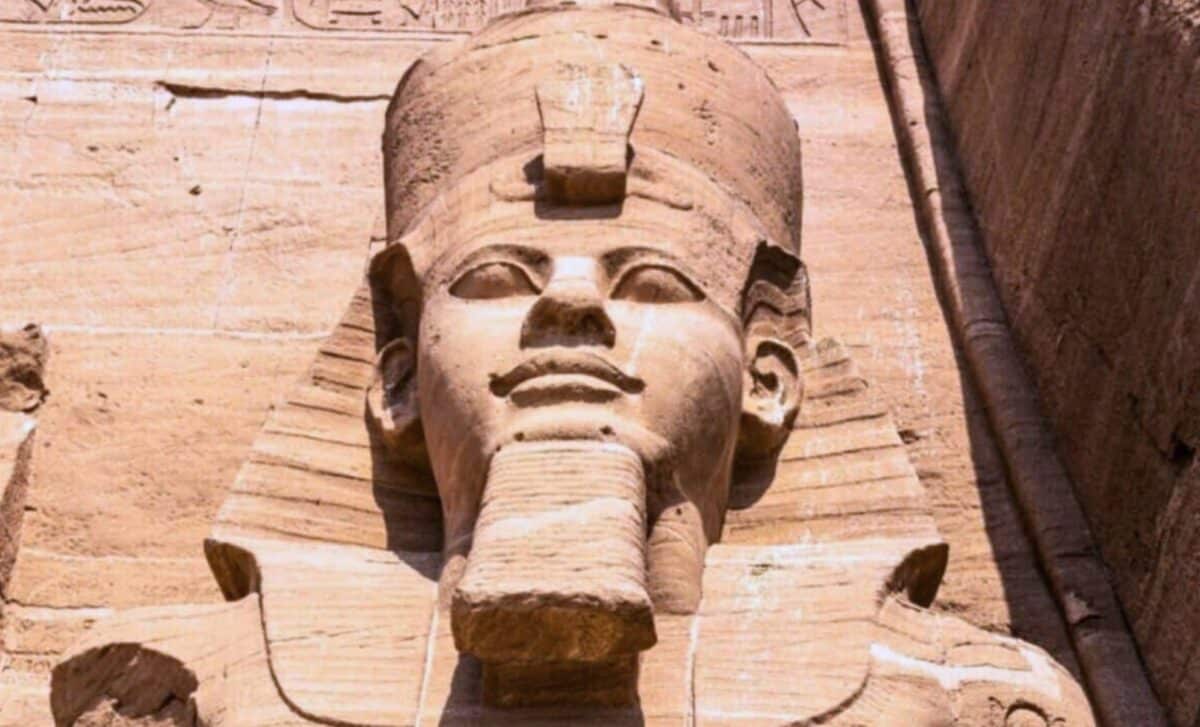
Archaeologists working in El Ashmunein recently uncovered a massive limestone fragment that completes a royal statue first discovered nearly a century ago, revealing new details about Ramesses II, the pharaoh who ruled Egypt from 1279 to 1213 BCE.

About El Ashmunein

  • Hermopolis Magna, present-day el-Ashmunein, is an ancient town of Upper Egypt, located on the west bank of the Nile River.
  • It has religious, cultural, and administrative importance from the Old Kingdom to the Greco-Roman era.
  • The city was devoted to Thoth, the ibis-headed god associated with wisdom and writing.
  • The ancient Egyptian name for the town was Khmun ('City of the Eight'), a reference to the Ogdoad of Hermopolis, a collective of eight "primordial" deities whose worship was centered there.
  • It used to be distinguished as the capital of the Hare nome, the fifteenth nome of Upper Egypt.
  • The city featured monumental structures like the Temple of Thoth, decorated with statues, inscriptions, and stelae. 
  • In the Christian era, it became an early Coptic center, marked by a 5th-century basilica. 
  • Archaeological excavations have unearthed mudbrick houses, cemeteries, altars, and reused royal cartouches from rulers like Akhenaten and Nectanebo II, illustrating the city's rich multi-era legacy.
  • Nearby there are also extensive underground galleries, constructed mainly between the Late Period and Roman times.

Source: IDR

El Ashmunein FAQs

Q1: What is El Ashmunein historically known as?

Ans: It was known as Hermopolis Magna.

Q2: Where is El Ashmunein located?

Ans: It is located in Upper Egypt on the west bank of the Nile River.

Q3: Which Egyptian deity was primarily worshipped at El Ashmunein?

Ans: The city was devoted to Thoth, the ibis-headed god associated with wisdom and writing.

Q4: What was the ancient Egyptian name of El Ashmunein?

Ans: Khmun.

Q5: Which major temple was located in the city of El Ashmunein?

Ans: The Temple of Thoth.

Iraq

Key Facts about Iraq

Iraq Latest News

Recently, six crew members aboard a US KC-135 refuelling aircraft that crashed in western Iraq have been confirmed dead.

About Iraq

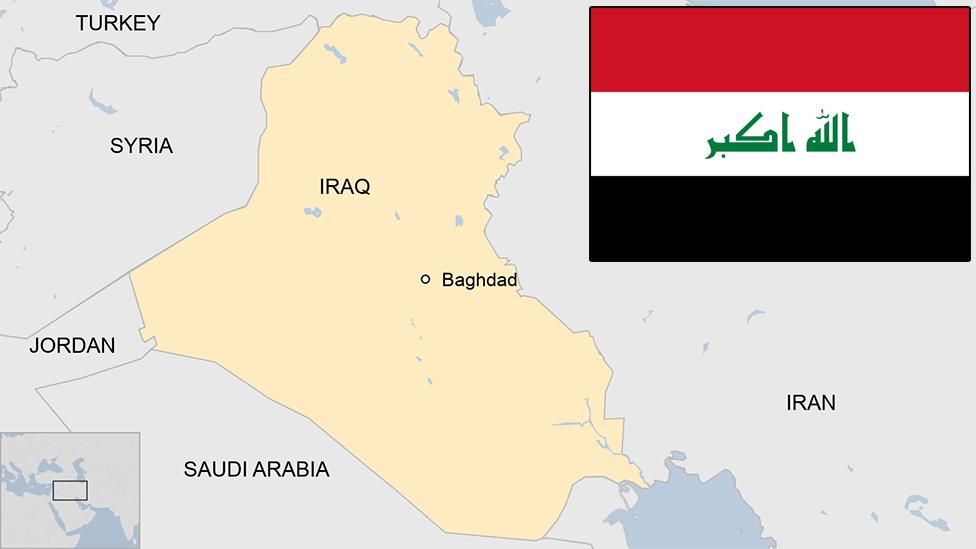
  • Location: It is a Western Asian country.
  • Bordering Countries: It is bordered by six nations: Iran to the East; Kuwait to the southeast; Turkey to the north; Syria to the west; Jordan to the southwest and Saudi Arabia to the south.
  • Maritime Border: The country has a coastline along the northern end of the Persian Gulf.
  • Capital City: Baghdad

Geographical Features of Iraq

  • Climate: The climate in Iraq is mainly of the continental, subtropical semi-arid type, with the north and north-eastern mountainous regions having a Mediterranean climate.
  • Major Mountains: Its most prominent hill range is the Sinjār Mountains, whose highest peak reaches an elevation of 4,448 feet (1,356 metres).
  • Major Rivers: Two of the most significant rivers in all of Asia, the Euphrates and Tigris Rivers, drain the land.
  • Lakes:  Habbaniya and Razzaza 
  • Desert: Western and southern Iraq is a vast desert region. 
  • Natural resources:  It mainly consists of Oil, natural gas, phosphates, and sulfur.

Source: TOI

Iraq FAQs

Q1: What is the capital of Iraq?

Ans: Baghdad

Q2: Which rivers flows through Iraq?

Ans: Tigris and Euphrates

Acrylonitrile

Acrylonitrile

Acrylonitrile Latest News

Recent computer models have suggested that acrylonitrile, an organic compound present on Saturn’s moon Titan, can self-assemble into cell-like structures.

About Acrylonitrile

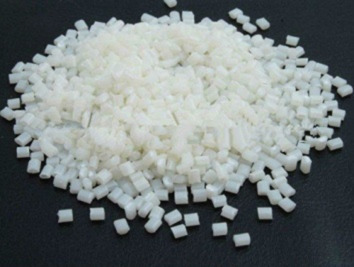
  • It is an organic compound produced by catalytic reaction of propylene with ammonia. 
  • Properties
    • It is a colorless, liquid, man-made chemical with a sharp, onion- or garlic-like odor.
    • It can be dissolved in water and evaporates quickly.
    • Acrylonitrile vapor is heavier than air.
    • It is very volatile, producing flammable and toxic air concentrations at room temperature and may explode.
    • Its combustion produces toxic oxides of nitrogen.
    • It requires storage and handling in closed systems.
  • Applications 
    • Acrylonitrile is used to make other chemicals such as plastics, synthetic rubber, and acrylic fibers.
    • A mixture of acrylonitrile and carbon tetrachloride was used as a pesticide in the past.
  • Impact on Human Health
    • Acrylonitrile is irritating to the skin, eyes, and respiratory tract.
    • Toxic effects range from headache, fatigue, dyspnea, nausea and vomiting to asphyxiation, lactic acidosis and cardiovascular collapse.

Source: TH

Acrylonitrile FAQs

Q1: What is Acrylonitrile primarily used for?

Ans: Production of acrylic fibers and resins

Q2: Acrylonitrile is a monomer for which polymers?

Ans: Polyacrylonitrile

Amblyceps vayavy

Amblyceps vayavy

Amblyceps vayavy Latest News

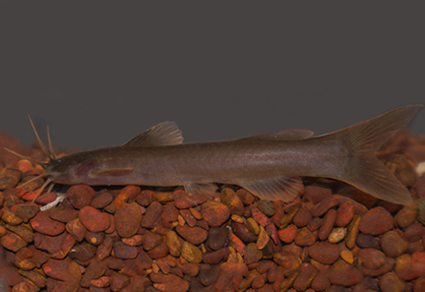
Researchers recently discovered a rare new catfish species, Amblyceps vayavy, in hill streams of the Western Ghats spanning Goa and Maharashtra.

About Amblyceps vayavy

  • It is a new species of catfish.
  • It was discovered in the biodiverse northern Western Ghats spanning the states of Goa and Maharashtra.
  • The fish inhabits shallow hill streams where the streambed is made up of sand, pebbles, and stones, creating microhabitats that help it hide and forage for food.
  • The name ‘vayavy’ means 'northwest' in Marathi and Konkani, referring to the species' habitat in the northwestern part of the Western Ghats. 
  • It is the northernmost confirmed record of the genus in the Western Ghats so far.
  • The species can be distinguished by features such as a bifurcated caudal fin, an incomplete lateral line, an absence of centrally projecting hooks in the veins in the middle of the tail, and a distinct adipose fin structure.
  • The species has so far been recorded only from a few scattered locations in Goa and Maharashtra, underscoring its rarity and the ecological importance of the fragile habitats it occupies.

Source: MD

Amblyceps vayavy FAQs

Q1: What is Amblyceps vayavy?

Ans: It is a newly discovered species of catfish.

Q2: Where was Amblyceps vayavy discovered?

Ans: It was discovered in the northern Western Ghats spanning Goa and Maharashtra.

Q3: In what type of habitat does Amblyceps vayavy live?

Ans: It inhabits shallow hill streams with sand, pebbles, and stones on the streambed.

Gajapati Empire

Key Fact about Gajapathi Empire

Gajapati Empire Latest News

A Telugu medieval inscription associated with the Gajapathi rulers of Odisha has been recently discovered on a stone pillar of the historic Lakshmi Narasimha Swamy Temple at Ramachandrapura Agraharam in Guntur city.

About Gajapati Empire

  • It was a medieval Hindu dynasty in the Indian subcontinent, originally from the region of Odisha, that reigned from c. 1434 to 1541. 
  • It succeeded the Eastern Gangas as the Gajapati monarchs and was founded by Kapilendra Deva of the Suryavamsa lineage after the death of the last ruler of the Eastern Ganga, king Bhanu Deva IV. 
  • Initially, the capital of the Gajapati Empire was located in Cuttack. However, during the reign of Prataparudra Deva (1497 to 1540), the capital was shifted to Kataka, now known as Konark.
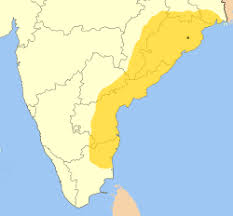
  • The Gajapatis, at the height of their power in the 15th century, ruled over an empire extending from the Ganges in the north near Hoogly to the Kaveri in the south.
  • Gajapatis were great patrons of art, architecture, and literature.
    • The empire's architectural prowess is exemplified by the iconic Sun Temple at Konark, a UNESCO World Heritage Site.
    • Gajapatis' patronage of the Odia language, literature, and performing arts contributed to the cultural renaissance of Odisha.
  • Decline:
    • They ruled over a vast stretch of land and had continuous rivalry with the Vijayanagara empire. 
    • By the early 16th century, the Gajapatis lost great portions of their southern dominion to the Vijayanagara Empire and the Golconda Sultanate.
    • The empire's decline, marked by internal conflicts and invasions by regional powers, eventually led to the fall of the Gajapati dynasty, and the region later came under the control of the Mughal Empire in the late 16th century.

Source: DC

Gajapati Empire FAQs

Q1: What was the Gajapati Empire?

Ans: It was a medieval Hindu empire that originated in Odisha and ruled from around 1434 to 1541 CE.

Q2: Which dynasty did the Gajapati Empire succeed?

Ans: It succeeded the Eastern Ganga dynasty.

Q3: Who founded the Gajapati Empire?

Ans: The empire was founded by Kapilendra Deva.

Q4: Which famous temple reflects the architectural achievements associated with the Gajapati period?

Ans: The Konark Sun Temple.

Valles Marineris

Valles Marineris

Valles Marineris Latest News

By combining laboratory experiments with orbital data, researchers recently identified an unusual iron sulfate—ferric hydroxysulfate—forming in layered deposits near the massive Valles Marineris canyon system.

About Valles Marineris

  • Valles Marineris, or Mariner Valley, is a vast system of interconnected canyons on the planet Mars.
  • The system was discovered during, and named for, the Mariner 9 mission in 1971.
  • The canyons extend in an east-west direction for roughly 4,000 km just south of the equator
    • By comparison, Earth's natural wonder, the Grand Canyon, is only 446 km long.
  • It is one of the larger canyons in the solar system.
  • It spans about 20 percent of the entire circumference of Mars. 
  • Individual canyons are typically 200 km across and have walls 2–5 km high.
  • At the centre of the system, several canyons merge to form a depression 600 km across and 9 km deep.
  • The canyon system contains a number of different features that give clues to its formation. 
    • Some of the canyon walls appear to be fault scarps that formed as a result of crustal movement along faults radiating from the Tharsis rise, an enormous volcanic bulge to the northwest. 
    • Erosion, however, has also played a significant role in canyon formation, as indicated by deep gullies cut in the walls.
    • In places, the canyons contain thick sedimentary sequences that may have been deposited in lakes that formerly occupied the canyons. 
    • These lakes later may have drained catastrophically to the east, where there is evidence of large floods.

Source: SD

Valles Marineris FAQs

Q1: What is Valles Marineris?

Ans: It is a vast system of interconnected canyons on the planet Mars.

Q2: Approximately how long is Valles Marineris?

Ans: It is roughly 4,000 kilometres long.

Q3: During which mission was Valles Marineris discovered?

Ans: It was discovered during the Mariner 9 mission.

Q4: Which volcanic region on Mars is associated with the formation of Valles Marineris?

Ans: The Tharsis Rise.

Sujal Gaon ID

Sujal Gaon ID

Sujal Gaon ID Latest News

Recently, the Union Minister of Jal Shakti released the Sujal Gaon ID.

About Sujal Gaon ID

  • It is a scheme‑based unique digital identifier that enables complete digital mapping of rural piped water supply assets.
  • The Sujal Gaon IDs across 31 States/ UTs have been created, linked to 67,000 Sujalam Bharat IDs. 
  • Each Sujalam Bharat ID integrates the scheme’s infrastructure ID and service area ID, creating a comprehensive digital footprint of rural water service delivery. 
  • It is linked with the “Sujalam Bharat” national digital architecture which will provide source to tap mapping of the entire rural water supply chain through unique Sujal Gaon IDs/ Service Area ID for every village.
  • It was launched by the Ministry of Jal Shakti under the Jal Jeevan Mission.

Key Facts about Jal Jeevan Mission

  • It was launched on August 15, 2019.
  • JJM is envisioned to provide safe and adequate drinking water through individual Functional Household Tap Connections (FHTCs) by 2024 to all households in rural India. 
  • It is based on a community approach to water and will include extensive Information, Education and communication as key components of the mission.
  • Nodal Ministry: Ministry of Jal Shakti.
  • Funding Pattern for Jal Jeevan Mission
    • 50:50 between Centre and States
    • 90:10 for Himalayan and North-Eastern States
    • In case of UTs, 100% of the funding is provided by the Central government.

Source: PIB

Sujal Gaon ID FAQs

Q1: How will Sujal Gaon ID be used in Jal Jeevan Mission?

Ans: To assign unique IDs to rural piped water supply schemes

Q2: What is Sujal Gaon ID?

Ans: A digital ID for villages under Jal Jeevan Mission

National Chambal Sanctuary

National Chambal Sanctuary

National Chambal Sanctuary Latest News

Recently, the Supreme Court took suo motu cognisance of media reports about the constant threat caused by sand mining to the ecology and aquatic life of the eco-sensitive zone of the National Chambal Sanctuary.

About National Chambal Sanctuary

  • Location: It lies at the tri-junction of three states Madhya Pradesh, Uttar Pradesh and Rajasthan.
  • It is also called the National Chambal Gharial Wildlife Sanctuary.
  • It is a tri-state protected riverine sanctuary along 425 km length of the Chambal River and ravines.
  • The main focus of the sanctuary is to protect the critically endangered Gharial, Red-crowned roof turtle & endangered Ganges dolphin.
  • It supports the largest population of Gharials in the wild.
  • It is listed as an important bird area (IBA).
  • Topography: The topography is full of ravines, hills & sandy beaches.
  • Vegetation: It is part of the Kathiar-Gir dry deciduous forest ecoregion.
  • Fauna: It is home to mugger crocodile, smooth-coated otters, Striped Hyena & Indian wolves are also found here.
    • It also supports Indian narrow-headed soft shell turtles, three- striped roof turtles & crowned river turtles. 

Source: TH

National Chambal Sanctuary FAQs

Q1: What is the National Chambal Sanctuary primarily known for?

Ans: Ghariyal conservation

Q2: Which river flows through the National Chambal Sanctuary?

Ans: Chambal

Samriddh Gram Phygital Services Pilot Project

Samriddh Gram Phygital Services Pilot Project

Samriddh Gram Phygital Services Pilot Project Latest News

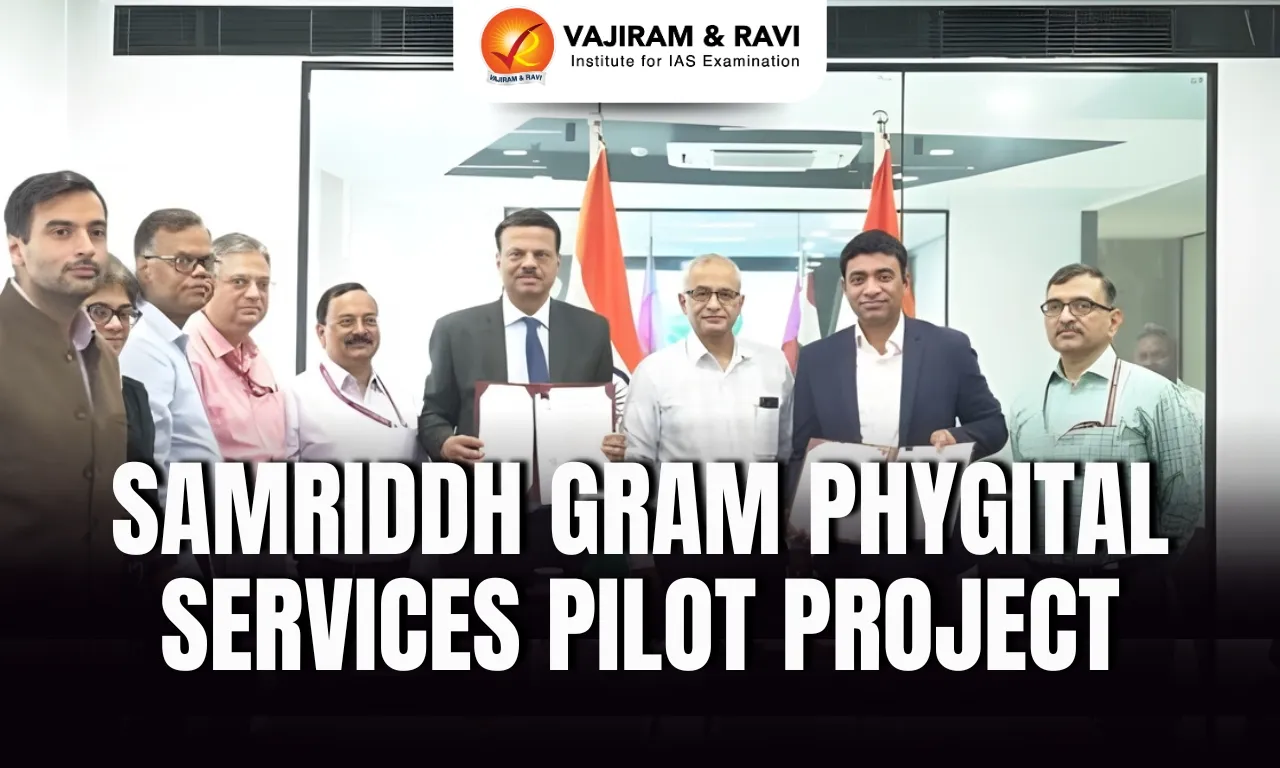
Recently, the Union Minister of Communications inaugurated the Samriddhi Kendra at Umri village in Guna district, Madhya Pradesh  under the Samriddh Gram Phygital Services Pilot Initiative.

About Samriddh Gram Phygital Services Pilot Project

  • It is envisaged as a pioneering phygital (physical + digital) Services model integrating on-ground presence with robust digital infrastructure to empower rural citizens.
  • It is aimed at transforming rural India through a seamless integration of physical and digital services.
  • It leverages BharatNet connectivity to deliver essential services seamlessly and sustainably.

Features of Samriddh Gram Phygital Services Pilot Project

  • Under this initiative three villages have been identified namely, Ari & Umri in Madhya Pradesh, Narakoduru in Andhra Pradesh, and Chaurawala in Uttar Pradesh.
  • Each village will host a Samriddhi Kendra which will serve as an integrated digital service hub.
  • The Samriddhi Kendras will deliver a comprehensive suite of services
    • Education & Skilling: Smart classrooms, AR/VR-based learning, and digital skilling aligned with government schemes/initiatives.
    • Agriculture: IoT-based soil testing, drone support, and smart irrigation systems.
    • Healthcare:  Teleconsultations, Health ATMs, and emergency care.
    • e-Governance: Assisted access to citizen services, documentation, and grievance redressal.
    • E-Commerce: Integration with ONDC and digital marketplaces for local entrepreneurship.
    • Financial Inclusion: Digital banking and payments
    • Connectivity Backbone: Strengthened BharatNet FTTH with a Village Area Network and public Wi-Fi hotspots.
  • Implemented by: The Department of Telecommunications (DoT)

Source: PIB

Samriddh Gram Phygital Services Pilot Project FAQs

Q1: What is the primary objective of the Samriddh Gram Phygital Services Pilot Initiative?

Ans: To integrate physical and digital services in rural areas

Q2: How many villages are part of the Samriddh Gram Phygital Services Pilot Initiative?

Ans: 3

Two New Moth Species

Two New Moth Species

Two New Moth Species Latest News

Scientists have discovered two brand-new species of moths named Eudemopsis hunliensis and Eudemopsis gobuka in the lush, remote forests of Northeast India.

About Eudemopsis hunliensis and Eudemopsis gobuka

  • They are two new species of moths.
  • They were discovered in the remote forests of the Upper Siang and Lower Dibang Valley districts of Arunachal Pradesh.
  • The findings expand the known range of the genus Eudemopsis, a group of micromoths previously thought to live only in East Asian countries such as China, Japan, and Vietnam.
  • E. hunliensis is distinguished by its distinct brownish-purple scales on its head and a unique pitcher-shaped structure in the male anatomy. 
  • E. gobuka features dark grey hindwings and a distinctive subrectangular patch on its forewings, which separates it from its closest relatives in Vietnam.
  • The names of the new moths pay direct tribute to the land where they were first found. 
    • The name hunliensis is derived from the town of Hunli in the Lower Dibang Valley. 
    • Similarly, gobuka is named after the village of Gobuk in the Upper Siang district.

Source: RM

Two New Moth Species FAQs

Q1: What are Eudemopsis hunliensis and Eudemopsis gobuka?

Ans: They are two newly discovered species of moths.

Q2: In which Indian state were Eudemopsis hunliensis and Eudemopsis gobuka discovered?

Ans: They were discovered in Arunachal Pradesh.

Q3: What distinctive feature characterizes Eudemopsis hunliensis?

Ans: It has brownish-purple scales on its head and a unique pitcher-shaped structure in the male anatomy.

Q4: What distinguishing feature is seen in Eudemopsis gobuka?

Ans: It has dark grey hindwings and a distinctive subrectangular patch on its forewings.

Passive Euthanasia and the Right to Die with Dignity

SC Allows Passive Euthanasia for Harish Rana

Passive Euthanasia Latest News

  • Recently, the Supreme Court of India permitted the withdrawal of life support for Harish Rana, a 32-year-old patient who had remained in a persistent vegetative state for nearly 13 years after an accident. 
  • The Bench comprising Justice J.B. Pardiwala and Justice K.V. Viswanathan ruled that continuing treatment was futile and not in the patient’s best interest.
  • The judgment reaffirmed that the right to life under Article 21 of the Constitution includes the right to die with dignity, marking India’s first judicial approval of passive euthanasia in such a case.

What is Passive Euthanasia?

  • Euthanasia is the intentional, painless termination of a patient’s life—often called "mercy killing"—to end severe, incurable suffering. Traditionally, it has been classified into two forms -
    • Active [Illegal in India, it involves direct intervention to cause death (e.g., administering a lethal injection].
    • Passive (Involves withdrawing or withholding life-sustaining treatment, such as ventilators or artificial nutrition).
  • SC’s clarification:
    • The Court clarified that the earlier “act vs omission” distinction is simplistic and misleading.
    • Active euthanasia introduces a new external agent of harm, while withdrawal of life support merely removes an artificial barrier to death, allowing the natural course of life to conclude.
    • Thus, withdrawing life-sustaining treatment does not create a new risk of death but allows the inevitable to occur.
    • The Court also observed that the term “passive euthanasia” is outdated and should instead be referred to as “withdrawing or withholding medical treatment.”

Right to Die with Dignity under Article 21

  • The Court reaffirmed that Article 21 (Right to Life) encompasses the right to die with dignity, especially in cases involving irreversible medical conditions.
  • Key observations:
    • Preserving life cannot justify prolonged suffering through artificial medical intervention.
    • For patients who are brain-dead or in a persistent vegetative state, continued life support may violate dignity.
    • Technological advancements in medicine should not compel patients to endure prolonged suffering.
  • The Court emphasised that human dignity extends beyond mere biological survival.

The ‘Best Interests’ Test

  • The judgment relied on the common law principle that medical treatment requires justification, since it involves bodily intrusion.
  • Meaning of the test: The ‘best interests’ inquiry evaluates whether continuing medical treatment benefits the patient, not whether it is better for the patient to die.
  • Key features:
    • Strong presumption in favour of preserving life.
    • However, this presumption is not absolute.
    • It may be overridden if treatment is medically futile, artificially prolongs suffering, and provides no prospect of recovery.
  • Factors considered:
    • Medical considerations (prognosis, reversibility of condition).
    • Non-medical considerations (dignity, quality of life, family views).

Evolution of the ‘Right to Die’ Jurisprudence in India

  • Gian Kaur v. State of Punjab Case (1996):
    • The Court held that the right to live with dignity includes the right to die with dignity when death is imminent.
    • It distinguished between an attempt to suicide and abetment of suicide from “acceleration of the process of natural death”.
  • Law Commission of India’s recommendations:
    • Recommended that withdrawal of treatment for terminally ill patients should not attract criminal liability. [196th Report (2006)]
    • Reiterated the need for a legal framework. [241st Report (2012)]
  • Aruna Shanbaug Case (2011):
    • The SC permitted passive euthanasia under strict guidelines due to the absence of legislation.
    • The case highlighted the ethical dilemma of life-support continuation in irreversible conditions.
  • Common Cause v. Union of India Case (2018): The Constitution Bench -
    • Recognised Advance Medical Directives (Living Wills).
    • Laid down procedures for withdrawal of life support.
    • Required medical boards and judicial oversight.
  • Recent developments:
    • 2023: Supreme Court simplified procedures for Advance Medical Directives (AMDs).
    • 2024: Government released guidelines on withdrawal of life support for consultation.

Challenges and Concerns

  • Absence of a comprehensive law: Despite judicial guidelines, India still lacks a statutory framework governing end-of-life decisions.
  • Ethical and moral dilemmas: Balancing sanctity of life vs dignity of death remains controversial.
  • Risk of misuse: Concerns exist about coercion by families or medical negligence.
  • Procedural complexity: Implementation of medical boards and legal safeguards may delay decisions.
  • Limited awareness: Low public awareness about living wills and AMDs.

Way Forward

  • Enact a comprehensive end-of-life care law: Parliament should legislate on withdrawal of medical treatment and living wills.
  • Strengthen safeguards: Mandatory multi-disciplinary medical boards, transparent documentation.
  • Promote AMDs: Encourage citizens to prepare living wills to guide medical decisions.
  • Improve palliative care: Expand palliative and hospice care services to ensure dignified end-of-life care.
  • Ethical guidelines for hospitals: Clear medical ethics protocols should guide doctors in terminal care decisions.

Conclusion

  • The SC’s ruling marks an important step in aligning medical ethics with constitutional values of dignity and autonomy. 
  • By recognising that the right to life includes the right to die with dignity, the Court has clarified the legal status of withdrawing life support in cases of irreversible medical conditions.
  • However, there is the urgent need for Parliament to enact a law governing end-of-life care, living wills, and withdrawal of treatment, ensuring both human dignity and protection against misuse.

Source: TH

Passive Euthanasia FAQs

Q1: What is the constitutional basis of the “right to die with dignity” in India?

Ans: The SC has interpreted Article 21 to include the right to die with dignity for patients with irreversible medical conditions.

Q2: What is the difference between active and passive euthanasia?

Ans: Active euthanasia involves a deliberate act such as administering a lethal injection, whereas withdrawal of life-sustaining treatment allows the natural course of death.

Q3: What is the ‘best interests’ test in end-of-life medical decisions?

Ans: It assesses whether continuing life-sustaining treatment truly benefits the patient or merely artificially prolongs suffering in irreversible conditions.

Q4: What is the significance of the judgment in Common Cause v. Union of India (2018)?

Ans: The judgment recognised AMDs (living wills) and established procedures for withdrawal of life support for terminally ill patients.

Q5: What is the contribution of the Law Commission of India in shaping India’s policy debate on euthanasia?

Ans: It recommended legal protection for withdrawal of medical treatment for terminally ill patients when done in their best interests.

Kharg Island Strike: US Attack on Kharg Island Raises Global Oil Supply Risks

US Strike on Kharg Island Escalates War, Threatens Oil Supply

Kharg Island Latest News

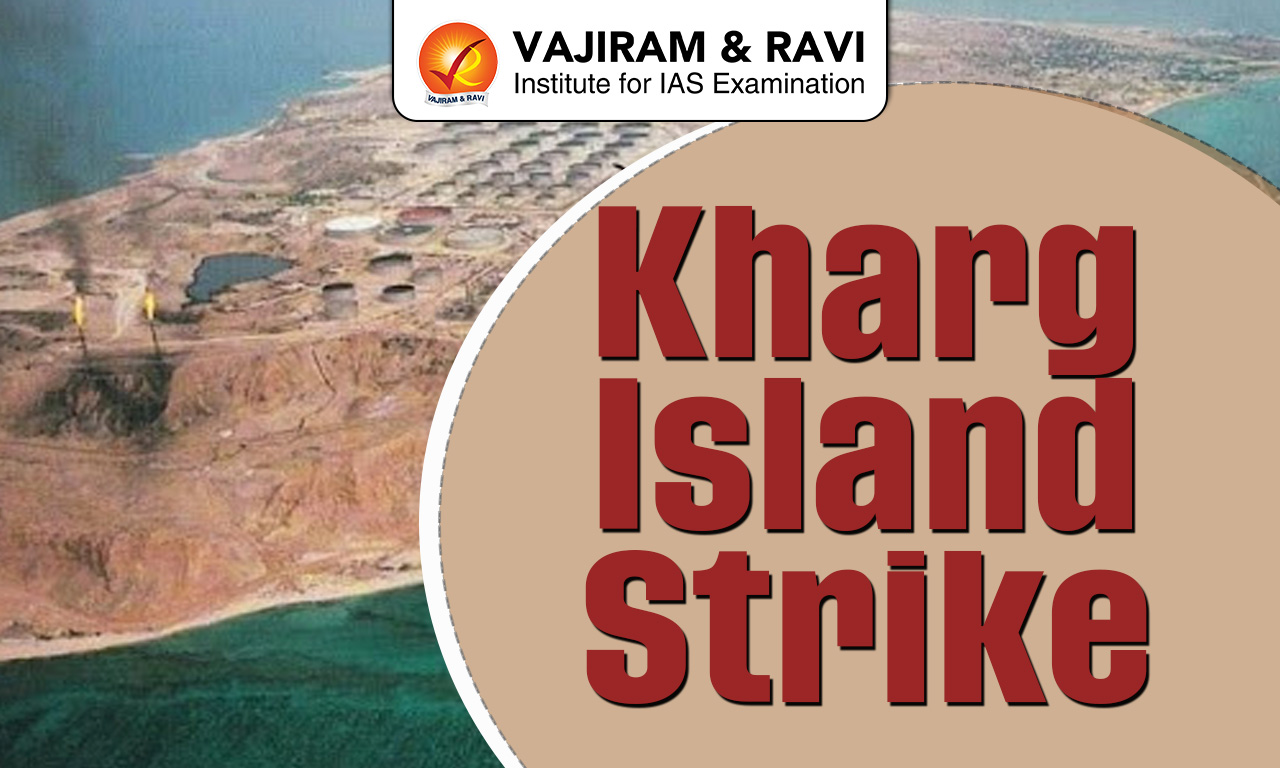
  • The United States launched a major bombing raid on Iran’s Kharg Island, a critical hub for Iran’s oil exports in the Persian Gulf, marking a significant escalation in the ongoing West Asia conflict.
  • According to US President Donald Trump, the bombing raid targeted military installations on Kharg Island. Despite the attack, oil infrastructure was deliberately not targeted.
  • Kharg Island handles almost all of Iran’s oil exports, making it one of the most strategically important energy infrastructure sites in the region.

Geographical Location of Kharg Island

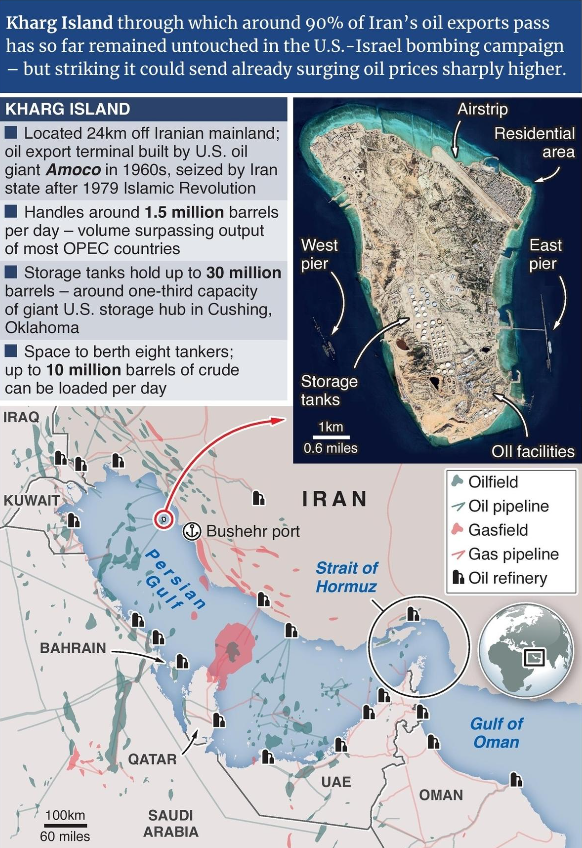
[caption id="attachment_92855" align="alignnone" width="582"]Geographical location of Kharg Island Geographical location of Kharg Island[/caption]
  • Kharg Island is a small coral island in the northern Persian Gulf, about 8 km long and covering roughly 20 sq. km, located around 25–30 km off Iran’s mainland coast
  • Its landscape is dominated by industrial infrastructure such as massive oil storage tanks, jetties, and an airstrip, reflecting its role as a major oil export hub.
  • Often called the “orphan pearl” of the Persian Gulf, Kharg Island has long been part of regional trade routes. 
  • Over centuries, it saw control by Dutch and British forces before becoming a key Iranian energy hub.
  • Kharg Island became Iran’s main oil export terminal because it connects to major oil fields such as Ahvaz, Marun, and Gachsaran through pipelines and has deep-water jetties that allow supertankers to dock.

Strategic Importance of Kharg Island for Iran

  • Economic and Energy Significance - Kharg Island is one of Iran’s most critical economic assets, serving as the main hub for the country’s oil storage and export infrastructure. Pipelines from the island connect to several major Iranian oil and gas fields.
  • Impact on Iran’s Oil Exports - The island handles around 90% of Iran’s crude oil exports. Any attack on its oil infrastructure could severely disrupt Iran’s export capacity and cause a sharp rise in global oil prices.
  • Global Oil Market Implications - Although recent strikes targeted only military facilities, analysts warn that tensions around Kharg Island could still push global crude prices toward $150 per barrel, given its central role in Iran’s energy exports.

Key Energy Infrastructure on the Island 

  • Kharg Island hosts major energy facilities operated by the Iranian oil ministry, including Falat Iran Oil Company, which produces about 500,000 barrels of crude oil per day, as well as Kharg Petrochemical Company and large oil and LNG storage and export terminals.
  • Until recently, US-Israel strikes avoided targeting oil export facilities to prevent destabilising global oil markets and allow Iran to retain economic recovery options after the conflict.

Why Kharg Island’s location makes it crucial

  • Key Hub for Iran’s Oil Pipelines - Kharg Island serves as the terminal point for pipelines from Iran’s major oil fields located in the central and western parts of the country, making it a crucial export hub for Iranian crude.
  • Historical Background of the Facility - The infrastructure on Kharg Island was originally developed by the American Oil Company (Amoco) but was seized by Iran following the 1979 Iranian Revolution.
  • Geographic Advantage for Large Oil Tankers - Most of Iran’s coastline is too shallow for very large crude carriers, but Kharg Island lies near deep waters with specialised jetties, allowing large oil tankers to dock and load crude efficiently.
  • Volume of Oil Passing Through Kharg Island - On average, about 1.5 million barrels of oil per day are exported through Kharg Island. In anticipation of potential conflict, Iran reportedly increased exports to around 3 million barrels per day in early 2026.
  • Strategic Oil Storage Capacity - Kharg Island also serves as a major storage hub, holding approximately 18 million barrels of crude oil as reserve capacity to ensure continuity of exports during disruptions.

Source: IE | TH

Kharg Island FAQs

Q1: What is the Kharg Island strike?

Ans: The Kharg Island strike refers to a US bombing raid targeting military installations on Iran’s Kharg Island, a strategic oil export hub in the Persian Gulf.

Q2: Why is Kharg Island important for Iran’s economy?

Ans: Kharg Island handles nearly 90% of Iran’s crude oil exports and connects pipelines from major oil fields to tankers transporting crude through the Strait of Hormuz.

Q3: How could the Kharg Island strike affect global oil markets?

Ans: A disruption to Kharg Island could severely reduce Iranian oil exports, tightening global supply and potentially pushing crude oil prices significantly higher.

Q4: Why is Kharg Island strategically located for oil exports?

Ans: Kharg Island’s deep-water jetties allow large supertankers to dock easily, unlike much of Iran’s shallow coastline, making it the country’s most efficient oil export terminal.

Q5: What infrastructure exists on Kharg Island?

Ans: Kharg Island hosts major oil storage tanks, pipelines from Iran’s key oil fields, petrochemical facilities, and export terminals capable of handling millions of barrels of crude daily.

Essential Commodities Act: How the Essential Commodities Act Controls Supply in Emergencies

Essential Commodities Act Explained

Essential Commodities Act Latest News

  • The blockade of the Strait of Hormuz exposed India’s dependence on imported cooking gas, prompting the government to invoke the Essential Commodities Act, 1955
  • The Act serves as an emergency measure, allowing the Centre to increase domestic LPG production, prioritise household supply, and regulate natural gas allocation while longer-term energy diversification strategies are pursued.

Key Provisions of the Essential Commodities Act

  • The Essential Commodities Act, 1955 empowers the Union government to regulate the production, supply, and distribution of essential goods such as foodstuffs, edible oils, fertilizers, drugs, fuels, and seeds.
  • Under Section 3 of the Act, the government can take measures to ensure adequate supply and fair prices of essential commodities. 
  • These include setting price controls and stock limits, regulating storage, transport, and distribution, prioritising production, and preventing hoarding and black marketing.
  • The Act has been used in the past to address shortages of commodities such as wheat, sugar, and pulses, and was also invoked during the COVID-19 lockdown to curb hoarding, black marketing, and profiteering of essential goods.

Why the Essential Commodities Act Was Invoked

  • Impact of West Asia Conflict on Energy Supplies - The ongoing conflict in West Asia, including attacks near the Strait of Hormuz, has disrupted maritime trade routes. This chokepoint handles a significant share of global energy shipments, affecting India’s energy imports.
  • Panic Over LPG Supply - While a large portion of global oil passes through the Strait of Hormuz, the immediate concern for India has been the disruption of Liquefied Petroleum Gas (LPG) supplies, leading to fears of shortages among consumers.
  • Rising Domestic Demand for LPG - Government schemes such as the Pradhan Mantri Ujjwala Yojana expanded LPG coverage from about 62% of households in 2016 to nearly universal coverage today, significantly increasing national demand.
  • Dependence on LPG Imports - India’s domestic LPG production has not matched consumption. In 2024–25, refineries produced 12.8 million tonnes, covering only 41% of the total demand of 31.3 million tonnes, with around 90% of imports passing through the Strait of Hormuz.
  • LNG Supply Dependence - India also relies on Liquefied Natural Gas (LNG) for cooking, transportation, and commercial use. While 52% of LNG demand is met domestically, about 25% of consumption is imported from the Persian Gulf, highlighting India’s dependence on the region.

Government Measures to Increase Domestic LPG Production

  • Directive to Refineries - The government ordered oil refineries to divert propane and butane streams to LPG production, instead of using them for petrochemical manufacturing, to boost domestic cooking gas supply.
  • Expansion of the Order - A revised directive extended the order to SEZ refineries and petrochemical complexes, requiring additional hydrocarbon streams such as propylene and butene (C3 and C4 streams) to be used solely for LPG production.
  • Refineries Covered Under the Order - The directive applies to state-owned refiners such as IOCL, BPCL, HPCL, ONGC, Chennai Petroleum, and Numaligarh Refinery, as well as private companies like Reliance and Nayara Energy.
  • Increase in Domestic LPG Output - According to the government, the measure has raised domestic LPG production by about 25%, although a significant portion of demand still needs to be met through imports.
  • Prioritisation of Household LPG Supply - All LPG produced under the order must be supplied to IOCL, BPCL, and HPCL, which have been instructed to prioritise domestic household consumption. As a result, reduced supply to commercial users has affected restaurants, hotels, and hostels, forcing some to limit operations.

Regulation of Natural Gas Supply Under the Government Order

  • The government’s order introduces a priority-based allocation system for natural gas, overriding existing supply contracts to ensure essential sectors receive adequate gas during supply disruptions.
  • Top Priority Sectors - Highest priority is given to piped natural gas for households, compressed natural gas for transport, LPG production, and pipeline compressor fuel. 
    • These sectors will receive 100% of their average consumption over the past six months, subject to availability.
  • Supply Allocation for Fertiliser Sector - Fertiliser manufacturers will receive around 70% of their normal gas requirement, though allocations may be adjusted if disruptions continue and agricultural demand increases during the kharif sowing season.
  • Reduced Supply for Other Industries - Gas supplies to tea, manufacturing, and other industrial sectors have been limited to 80% of their usual demand, while oil refineries will receive only about 65% of their regular gas allocation.
  • Curtailment for Petrochemical Facilities - Some petrochemical plants operated by ONGC, GAIL, and Reliance may face partial or complete LNG supply cuts under the revised allocation framework.

Source: TH

Essential Commodities Act FAQs

Q1: What is the Essential Commodities Act?

Ans: The Essential Commodities Act empowers the government to regulate production, supply, storage, pricing, and distribution of essential goods to prevent hoarding, ensure fair prices, and maintain adequate availability

Q2: Why was the Essential Commodities Act invoked recently?

Ans: The Essential Commodities Act was invoked after disruptions near the Strait of Hormuz threatened LPG imports, allowing the government to manage domestic supply and prioritise household cooking gas demand.

Q3: What powers does the Essential Commodities Act give the government?

Ans: Under the Essential Commodities Act, the government can impose stock limits, regulate transport and distribution, control prices, prevent black marketing, and prioritise production of essential commodities.

Q4: How does the Essential Commodities Act affect LPG production?

Ans: The Essential Commodities Act enabled the government to direct refineries to divert propane and butane streams to LPG production, boosting domestic cooking gas output during supply disruptions.

Q5: How does the Essential Commodities Act regulate natural gas supply?

Ans: Using the Essential Commodities Act, the government introduced priority-based gas allocation, ensuring households, transport, and LPG production receive priority while reducing supply to certain industries.

Atomic Clock and India’s NavIC System – Explained

Atomic Clock and India’s NavIC System - Explained

Atomic Clock Latest News

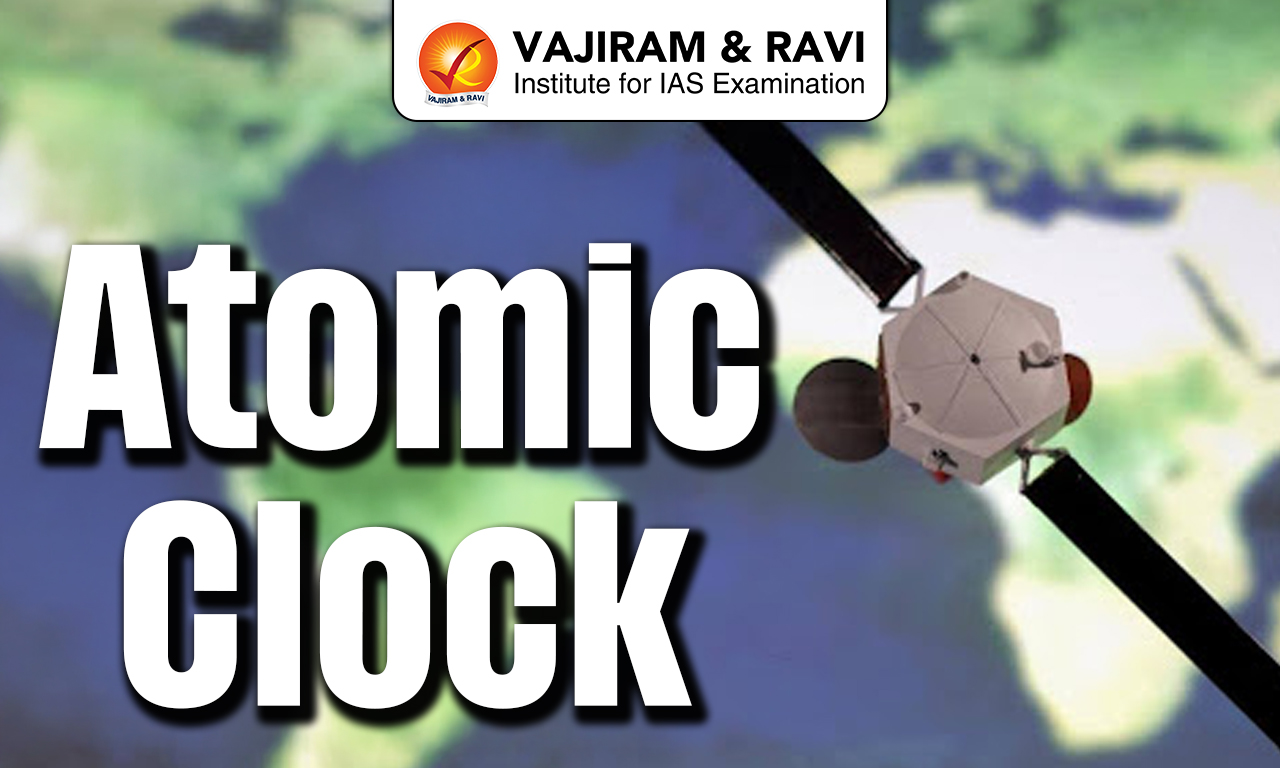
  • The atomic clock onboard the IRNSS-1F satellite of India’s NavIC Navigation System recently failed, weakening the operational capacity of India’s indigenous satellite navigation network. 

About Atomic Clock

  • An atomic clock is a highly precise timekeeping device that measures time using the natural oscillations of atoms, typically caesium or rubidium atoms. 
  • Unlike traditional clocks that rely on mechanical or electronic oscillators, atomic clocks operate based on the consistent frequency of atomic transitions.
  • In an atomic clock, atoms are exposed to microwave radiation. The radiation causes the atoms to transition between energy states at a precise frequency. This frequency is used to measure time with extraordinary accuracy.
  • Atomic clocks are the most accurate clocks ever developed. Modern atomic clocks can measure time so precisely that they would lose or gain less than a second over millions of years.

Importance of Atomic Clocks

  • Atomic clocks play a critical role in several modern technologies and scientific applications.
  • Satellite Navigation Systems: Global navigation systems such as GPS (United States), GLONASS (Russia), Galileo (European Union), and BeiDou (China) rely on atomic clocks to determine accurate positioning.
  • Precise Timekeeping: Atomic clocks define the international standard of time known as Coordinated Universal Time (UTC).
  • Telecommunication Networks: Accurate time synchronisation is essential for mobile networks, internet communication, and financial transactions.
  • Scientific Research: Atomic clocks are used in space science, physics experiments, and deep-space navigation.
  • Because satellite navigation depends on measuring the time taken for signals to travel from satellites to receivers, even a tiny error in time can translate into large positional errors. Therefore, atomic clocks are essential for maintaining accurate navigation services.

Role of Atomic Clocks in Satellite Navigation

  • Satellite navigation systems work by transmitting signals from satellites to receivers on Earth. These signals contain the precise time at which the signal was sent.
  • The receiver calculates its position by measuring the time difference between signal transmission and reception. Since signals travel at the speed of light, extremely accurate timing is required.
  • Even a time error of one nanosecond (one billionth of a second) can lead to positional errors of several centimetres. Therefore, atomic clocks installed on navigation satellites ensure that time measurements remain extremely precise.
  • Each satellite typically carries multiple atomic clocks as backup systems to ensure uninterrupted functioning.

News Summary

  • According to ISRO, the atomic clock onboard the IRNSS-1F satellite stopped functioning in March 2026. This development has significant implications for India’s NavIC system.
  • Impact on Navigation Capability
    • Atomic clocks are critical components of navigation satellites because they ensure precise timing for navigation signals.
    • With the failure of the IRNSS-1F clock, the number of satellites with functioning clocks has fallen further. At least four operational satellites are required to provide reliable navigation services, but the number has now been reduced to three. 
    • This situation weakens the reliability of India’s indigenous navigation system.
  • Status of NavIC Satellite Constellation
    • Since 2013, nine IRNSS satellites have been launched, out of which eight reached their intended orbit. 
    • However, several satellites in the constellation have experienced failures in their onboard atomic clocks. Earlier reports indicated that multiple satellites had lost all three of their atomic clocks.
    • The IRNSS-1F satellite, launched in March 2016, had already completed its designed mission life of ten years in March 2026 when the clock failure occurred. 
  • Although the satellite will continue operating in orbit, it can now provide only limited services such as one-way broadcast messaging.

Efforts to Strengthen NavIC

  • To address the challenges posed by ageing satellites and clock failures, ISRO has begun deploying improved navigation satellites.
  • For future missions, ISRO plans to use indigenously developed rubidium atomic clocks instead of imported ones.
  • Previously, the atomic clocks used in NavIC satellites were imported from a Swiss manufacturer, SpectraTime. 
  • Recent developments include:
    • NVS-01 satellite (launched in 2023) carrying an indigenous rubidium atomic clock.
    • NVS-02 satellite (launched in 2025), which unfortunately failed to reach its intended orbit.
  • ISRO has also announced plans to launch three new replacement satellites by the end of 2026 to replace ageing and malfunctioning satellites in the NavIC constellation. 

Source : TH

Atomic Clock FAQs

Q1: What is an atomic clock?

Ans: An atomic clock is a highly precise timekeeping device that measures time using the natural oscillations of atoms such as cesium or rubidium.

Q2: Why are atomic clocks important for satellites?

Ans: Atomic clocks provide extremely precise timing needed for accurate satellite navigation and positioning services.

Q3: What is NavIC?

Ans: NavIC is India’s regional satellite navigation system developed by ISRO to provide positioning and timing services within India and up to 1,500 km beyond.

Q4: What happened to the IRNSS-1F satellite?

Ans: The atomic clock onboard the IRNSS-1F satellite stopped functioning in March 2026, weakening the NavIC navigation network.

Q5: How is India addressing the issue of clock failures in NavIC satellites?

Ans: ISRO is developing indigenous rubidium atomic clocks and plans to launch new replacement satellites for the NavIC system.

Enquire Now