Lord Lansdowne, Viceroy of India 1888-1894, Contributions, Events

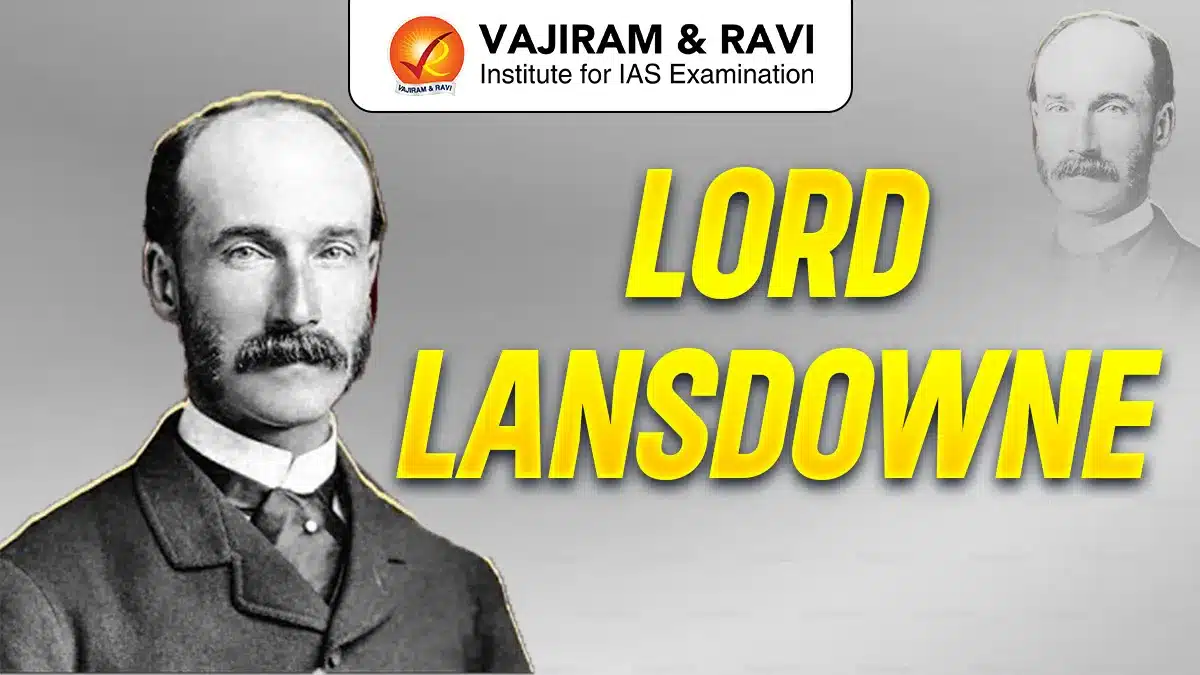
Lord Lansdowne

Lord Lansdowne, formally Henry Charles Keith Petty-Fitzmaurice, 5th Marquess of Lansdowne, was a prominent British statesman who served the British Empire at its administrative peak. He held some of the highest offices including Governor General of Canada, Viceroy of India, Secretary of State for War and Secretary of State for Foreign Affairs. Lansdowne was the 9th Viceroy of India from December 1888 to October 1894 under Queen Victoria.

Lord Lansdowne Biography

Lord Lansdowne was born on 14 January 1845 into a wealthy aristocratic family and inherited immense political influence and financial resources. Before arrival in India, he served as Governor General of Canada and later became a senior leader of the Conservative Party in Britain. His appointment as Viceroy of India in 1888 by Prime Minister Robert Gascoyne-Cecil placed him at the center of British India’s governance during a relatively stable but politically sensitive phase. Lansdowne left India in October 1894 and later served as Secretary of State for War from 1895 to 1900.During World War I, he authored the Lansdowne Letter advocating a negotiated peace, though it was politically rejected.

Lord Lansdowne Contributions

Lord Lansdowne inherited financial stress from his predecessor which limited the scale of political and economic reforms. The major works during his tenure were:

  • Indian Factory Act 1891: The act raised the minimum working age of children from 7 to 9 years and reduced daily working hours for children to 7 hours, marking early labor regulation. 
    • The Act limited women’s work to 11 hours per day with mandatory rest intervals, introducing gender based labor safeguards in Indian industries. 
    • British owned tea and coffee plantations were excluded from labor protections, allowing continued exploitation through penal contract laws enforced by colonial authorities.
  • Categorization of Civil Services: On Aitchison Commission Recommendations, civil services were divided into Imperial, Provincial and Subordinate services, restructuring colonial administration in 1891. 
    • Provincial and Subordinate Services were recruited within India, increasing Indian entry into lower administrative ranks despite higher services remaining England based. 
    • He faced opposition from the Indian Civil Service, which he criticized for lacking empathy toward Indians under its administration.
  • Indian Councils Act 1892: The act expanded central and provincial legislative councils and allowed members to ask questions, introducing indirect elections via institutions like municipalities and universities. 
    • Although limited, the 1892 Act laid the structural base for future parliamentary development and gradual Indian political participation.
  • Recognition of Indian National Congress: In an official circular, Lansdowne accepted Congress activities as a natural outcome of British rule, legitimizing early Indian nationalism.
  • Military Infrastructure Expansion: Strategic military infrastructure was strengthened to secure British interests, especially along vulnerable frontier regions. 
    • Strong cantonments were developed at Rawalpindi, Peshawar and Attock to secure the Indus and Khyber regions.
  • Age of Consent Act 1891: The law raised the age of consent for girls from 10 to 12 years, amending IPC Section 375 and criminalizing violations as rape across British India.
  • Opium Commission 1893: A royal commission examined opium use in India and concluded against prohibition, leading to the continuation of opium trade policies.
  • Administrative Reforms: Lansdowne worked to reform the army, police, mint and local government systems, strengthening fiscal and institutional efficiency.
  • Economic Reforms: During his tenure the value of silver was decreasing, to overcome the challenges he increased the taxes which adversely affected India.

Events during Lord Lansdowne Tenure

The tenure of Lord Lansdowne was marked by frontier conflicts, legislative experiments and administrative challenges. The significant events occurred during him were:

  • Anglo-Manipur War 1891: A short conflict from March to April 1891 ended in British victory and execution of Tikendrajit. Despite conquest, Manipur was not annexed but governed as a princely state until 1947, reflecting indirect rule strategy.
  • Frontier Security Policy: Lansdowne adopted an active north-west frontier strategy to counter Russian influence, reinforcing British military preparedness.
  • Durand Commission 1893: A mission led by Sir Mortimer Durand fixed the Durand Line with Afghanistan, defining India’s north-west boundary for strategic defense.
  • Jury Reforms 1893: Lansdowne sought to limit trial by jury in India, but the proposal was overruled by the British home government.
  • Communal Tensions: Some policies indirectly intensified Hindu-Muslim tensions, reflecting limits of colonial governance in managing social diversity.

Lansdowne Town: The hill station of Lansdowne in present day Uttarakhand was established in 1887 and named in his honor.

Lord Lansdowne FAQs

Q1: Who was Lord Lansdowne?

Ans: Lord Lansdowne was a British statesman who served as the Viceroy of India from 1888 to 1894 under Queen Victoria.

Q2: Which major laws were passed during Lord Lansdowne’s tenure?

Ans: Important laws passed during the tenure of Lord Lansdowne included the Indian Factory Act 1891, the Age of Consent Act 1891, and the Indian Councils Act 1892.

Q3: What was the Anglo-Manipur War of 1891?

Ans: It was a short conflict between British forces led by Viceroy Lord Lansdowne and Manipur rulers that ended in British victory and Manipur becoming a princely state.

Q4: What was the Durand Commission of 1893 established during Lord Lansdowne?

Ans: The Durand Commission fixed the Durand Line between British India and Afghanistan to secure the north-west frontier.

Q5: What role did Lord Lansdowne play in Civil Service reforms in India?

Ans: He implemented the Aitchison Commission recommendations, dividing civil services into Imperial, Provincial and Subordinate categories.

Lord Northbrook, Viceroy of India 1872-1876, Contributions, Events

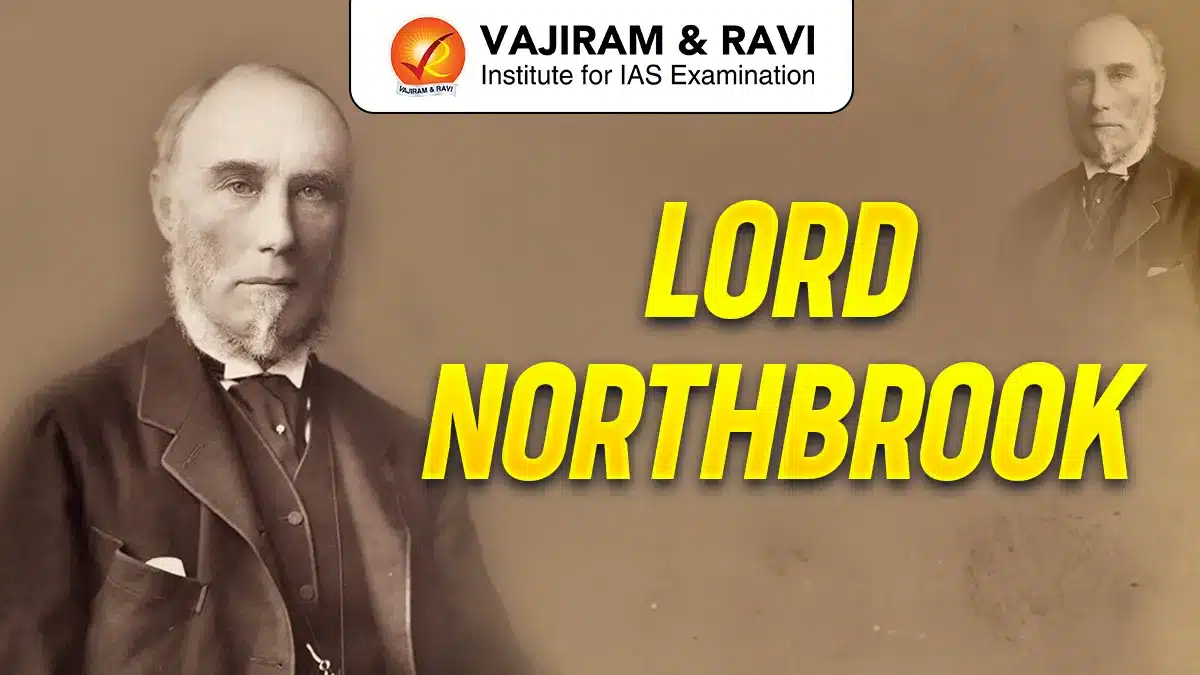
Lord Northbrook

Lord Northbrook, formally known as Thomas George Baring, 1st Earl of Northbrook, was a prominent British Liberal statesman who served as the Viceroy of India from 1872 to 1876 during the British Raj. Appointed by Prime Minister William Ewart Gladstone after the assassination of Lord Mayo, his tenure focused on administrative efficiency, tax reduction, famine relief and social stability. He is remembered for handling major political, social and economic challenges in India with a reform oriented and pragmatic approach rooted in liberal governance principles.

Lord Northbrook Biography

Thomas George Baring was born on 22 January 1826 in London to Francis Baring, 1st Baron Northbrook and Jane Grey, daughter of Sir George Grey, 1st Baronet. He was educated at Twyford School and later at Christ Church, Oxford, graduating with honours in 1846. Before becoming Viceroy, he held several key administrative posts in Britain, including Under-Secretary of State for India and War. Northbrook served as Viceroy of India from 1872 to 1876 and eventually became First Lord of the Admiralty from 1880 to 1885. Later in November 1904 he died at his home in Hampshire.

Lord Northbrook Contributions

Lord Northbrook’s work as Viceroy reflected his belief in fiscal prudence, administrative reform and social moderation as highlighted below:

  • Tax Reduction Policy: Lord Northbrook reduced land revenue demands and lightened taxation to ease peasant distress, reflecting his belief that excessive revenue extraction intensified rural poverty and social unrest.
  • Abolition of Income Tax: He repealed the unpopular income tax introduced during Lord Canning’s period, responding to widespread opposition from Indian society and reducing administrative friction between the government and taxpayers.
  • Famine Relief Administration: During the Bihar famine of 1873-74, he sanctioned large scale relief operations coordinated by the Bengal government, ensuring food supply and employment, resulting in almost zero recorded famine deaths.
  • Infrastructure Development: He approved relief-related infrastructure projects such as the Sone Canal and North Bengal Railway, combining famine mitigation with long-term agricultural and transport development.
  • Free Trade Measures: A strong supporter of free trade, Northbrook abolished most export duties and reduced import duties to promote commercial activity and stabilize prices in Indian markets.
  • Administrative Simplification: He reduced bureaucratic hurdles within the colonial administration, speeding up decision-making and improving coordination between provincial and central governments.
  • Legal Recognition of Marriages: His tenure supported progressive social measures such as permitting inter-caste marriages, recognition of Civil and Arya Samaj Marriages and the Native Marriage Act of 1872.
  • Administrative Stability: Despite disagreements with the Secretary of State for India, Lord Salisbury, Northbrook maintained administrative balance until resigning in 1876 over Afghan policy differences.

Events during Lord Northbrook

Lord Northbrook’s tenure witnessed several major political, social and ceremonial events that significantly influenced British imperial policy and Indian society.

  • Deposition of Gaikwad of Baroda (1875): Malhar Rao Gaekwad was deposed after allegations of misrule and the mysterious death of the British Resident, demonstrating British use of paramount power to punish princely misconduct. Following deposition, Malhar Rao was exiled to Madras under orders from Lord Salisbury, later dying in obscurity in 1882, marking firm imperial control over princely states.
  • Visit of the Prince of Wales (1876): Queen Victoria’s eldest son Albert Edward toured India to reinforce loyalty among Indian Princes, visiting Bombay, Madras, Ceylon and Calcutta with a large royal entourage. Indian Princes presented jewels, artworks, weapons, animals and textiles, filling an entire ship, while the Prince gifted translated copies of the Rig Veda by Max Müller.
  • Kuka Movement: The Namdhari or Kuka movement, founded by Balak Singh and later led by Baba Ram Singh, emphasized chanting God’s name and rejecting ritualism, blending religious reform with social protest. 
    • Under Baba Ram Singh, the movement adopted a militant stance against cow slaughter, opposing both Muslims and British policies permitting slaughter. 
    • Kukas attacked Muslim communities after the Maghi festival, leading to harsh reprisals where 50 followers were executed without trial and 17 more the following day. 
    • Accused of instigating violence, Baba Ram Singh was transported to Rangoon, where he died in 1885, effectively ending the organized Kuka resistance. 
    • Mainstream Sikh communities largely distanced themselves from the Kukas and remained loyal to British authority during the unrest.
  • Bihar Famine (1873-74): A severe drought caused food shortages, but unprecedented relief measures prevented mass mortality, making it a rare famine without large-scale deaths. The success of Bihar famine relief contrasted sharply with the Great Famine of 1876-78 under Lord Lytton, which killed approximately ten million people across southern India.
  • Indian Meteorological Department: On 15 January 1875, the Indian Meteorological Department was established in Kolkata, strengthening scientific weather observation crucial for agriculture and famine preparedness.
  • Resignation: After resigning, he was elevated as Earl of Northbrook in 1876, marking recognition of his service despite political disagreements.

Lord Northbrook FAQs

Q1: What is Lord Northbrook best known for?

Ans: Lord Northbrook is best known for effective famine relief, tax reduction, administrative reforms, and handling major political events during his viceroyalty.

Q2: What were the acts implemented by Lord Northbrook?

Ans: The major acts implemented during the tenure of Lord Northbrook were: Dramatic Performances Act of 1876 and Native Marriage Act of 1872.

Q3: Which canal was started by Lord Northbrook?

Ans: The Sone Canal project was sanctioned during Lord Northbrook’s tenure as a famine relief and irrigation measure in Bihar.

Q4: When did Lord Northbrook serve as Viceroy of India?

Ans: He served as Viceroy of India from 1872 to 1876, appointed by Prime Minister William Ewart Gladstone after Lord Mayo’s assassination.

Q5: Which major events occurred during Lord Northbrook’s tenure?

Ans: Key events included the deposition of the Gaikwad of Baroda, the Kuka Movement, the Bihar Famine of 1873-74 and the visit of the Prince of Wales.

British Conquest of Sindh, History, Talpur Rule, British Trade

British Conquest of Sindh

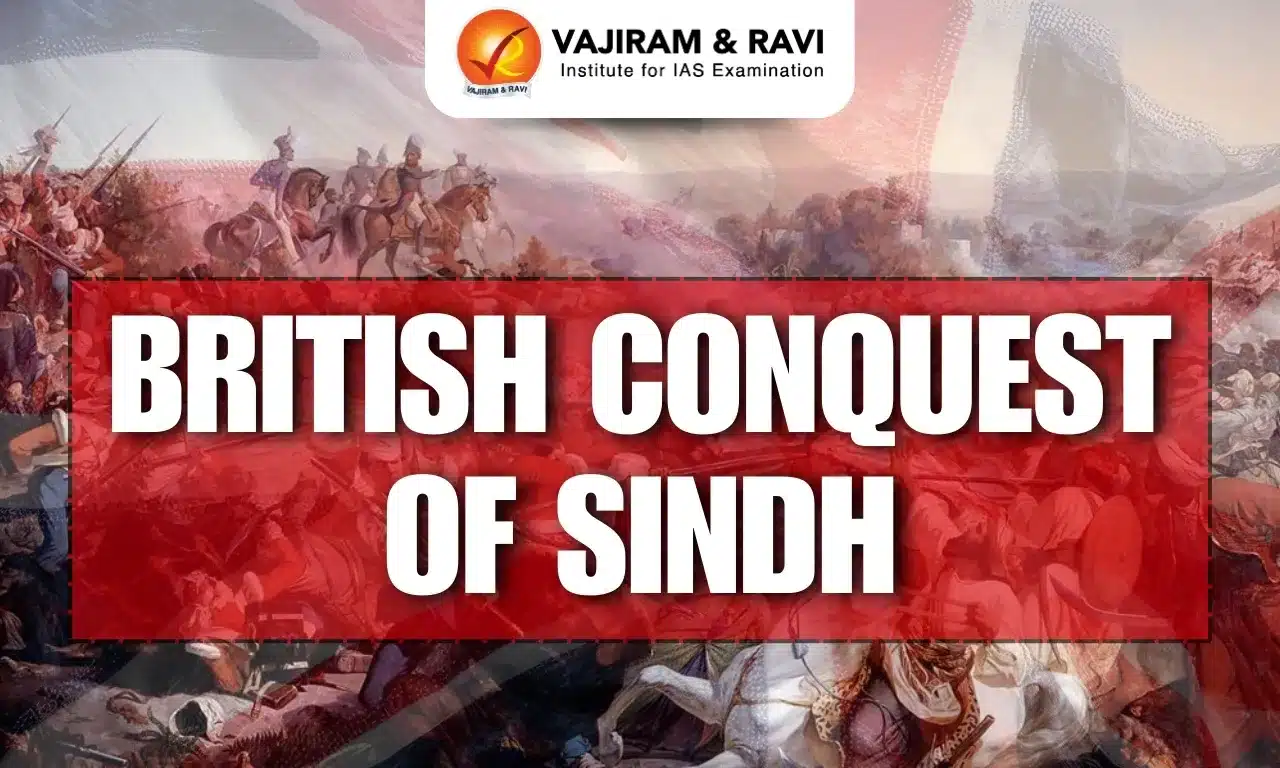
The British Conquest of Sindh stands as one of the most controversial and strategically significant chapters in the history of British colonial expansion in India. What began as initial trade interests and diplomatic negotiations gradually turned into military conflict and political domination, ending with the annexation of Sindh into British India in 1843. This event shaped the political landscape of the north‑west frontier of the British Empire and left a lasting impact on Sindh’s people and governance.

Sindh Before the British Historical Background

Situated at the lower reaches of the Indus River, Sindh was historically a crossroads of Central Asian and South Asian interactions. After centuries of local and regional rule, by the late 18ᵗʰ century, the Talpura dynasty, a Baluch tribal federation, established control over the region.

Rise of the Talpur Amirs

  • Talpura dominance: In the 1770s, the Talpuras, a Baluch clan, moved into Sindh and, by 1783, under Mir Fath Ali Khan, wrested power from the Kalhora rulers.
  • Fragmented rule: After Mir Fath’s death in 1800, his brothers, known as the Char Yar, divided Sindh into separate territories, weakening collective authority.
  • Expansion and autonomy: The Amirs expanded Sindh’s control over neighboring regions like Amarkot, Karachi, Shaikarpur, and Bukkar, strengthening their rule and establishing independent governance.

This internal division among the Talpur chiefs later made Sindh vulnerable to external diplomatic pressure and military intervention.

British Interests in Sindh

The British saw Sindh as a strategically vital region for trade and defense, especially during the geopolitical rivalry with Russia known as the Great Game. Sindh’s location along the Indus River made it crucial for controlling access to Afghanistan and Central Asia.

  • Trade and Economic Interests
    • Sindh’s Indus River offered a natural inland waterway, providing access to northern India and Afghanistan for commercial purposes.
    • The British sought unrestricted trade rights, including navigation privileges for commercial vessels while initially prohibiting warships.
    • Ports such as Karachi and Thatta were important for facilitating export-import trade and supplying British troops in the region.
    • Treaties like those in 1832 ensured tariff adjustments in favor of British commerce and reduced local trade barriers.
  1. Strategic Military Importance
    • Sindh was situated at the north-west frontier of British India, acting as a buffer zone against potential invasions from Persia or Central Asia.
    • The British used Sindh as a base for staging military operations, particularly during the First Anglo-Afghan War (1839–42).
    • By establishing subsidiary alliances and stationing troops at Shikarpur and Bukkar, the British ensured control over key military routes.
  2. Geopolitical Considerations and the Great Game
    • The British were concerned about the Russian expansion in Central Asia, fearing a direct threat to India.
    • Sindh’s location allowed Britain to monitor and counteract any Russian influence or alliances with local powers, including Sindhi rulers and Afghanistan.
    • Diplomatic efforts, such as treaties with the Talpur Amirs, aimed to prevent French or Russian access to Sindh and secure British supremacy in the region.
  3. Political Leverage and Influence over Local Rulers
    • Sindh was ruled by the Talpur Amirs, who were relatively weaker than neighboring powers, making them susceptible to British pressure and treaties.
    • Agreements were signed to limit the Amirs’ foreign policy autonomy, prevent secret negotiations, and extract financial tribute for stationing British troops.
    • This influence allowed the British to indirectly control Sindh without full annexation initially, paving the way for future conquest.
  4. Preparation for Annexation and Expansion
    • The combination of trade, strategic location, and political leverage allowed the British to prepare the ground for eventual annexation.
    • Sindh became a critical link for connecting British India with Afghanistan and countering any military threats from the northwest.
    • The treaties, subsidies, and military presence ensured that Sindh could be incorporated into the empire with minimal resistance when the time came.

Diplomatic Engagements and Early Treaties

Before direct military action, the British relied heavily on diplomacy and treaties to establish influence over Sindh. These agreements allowed them to secure strategic advantages without immediate annexation.

Treaty of 1807 (“Eternal Friendship”): After the Treaty of Tilsit between Napoleon and Russia, Britain feared a joint invasion of India. British envoy Nicholas Smith negotiated with the Talpur Amirs to prevent French or other foreign access to Sindh. The treaty established:

  • Mutual friendship between Sindh and Britain.
  • Reciprocal representation at each other’s courts.
  • Prohibition of French presence in the region.

Treaty Renewal in 1820: Addressed border disputes and confirmed British trading rights. It specifically excluded Americans from treaty provisions and resolved issues near Kachch, especially after the defeat of the Maratha Confederacy in 1818.

Accord of 1832: Under Governor-General William Bentinck, Colonel Pottinger ratified a treaty that allowed:

  • British merchants unhindered trade and navigation on the Indus River, while warships were restricted.Amirs to adjust tariffs if deemed excessive.
  • Cooperation with neighboring rulers to suppress banditry.
  • Validation of previous treaties, ensuring no jealousy or conflicts arose between the two parties.

Tripartite Treaty of 1838: To prepare for involvement in Afghanistan, the British secured a treaty between Ranjit Singh, Shah Shuja, and Sindh, which allowed them to mediate conflicts and secure funding for the Afghan campaign.

The First Anglo-Afghan War and Sindh’s Subsidiary Alliance

During the First Anglo-Afghan War (1839–42), Sindh’s strategic importance increased. The British were concerned about supply lines, troop movement, and local alliances. To ensure compliance:

The Subsidiary Alliance of 1839 forced the Talpur Amirs to:

  • Station British troops at Shikarpur and Bukkar.
  • Pay an annual tribute of Rs 3 lakh for troop maintenance.
  • Store military provisions in Karachi.
  • Avoid independent foreign diplomacy.
  • Contribute auxiliary forces if required for British campaigns.

Although reluctant, the Amirs complied due to pressure from superior British forces, marking Sindh’s effective transformation into a British protectorate.

The Military Campaign and Annexation of Sindh (1843)

The annexation of Sindh marked the transition from diplomacy to direct military conquest. After years of treaties and political pressure, the British decided to use force to secure Sindh, citing alleged disloyalty and internal disputes among the Talpur Amirs as a pretext. The campaign was led by General Sir Charles James Napier, who was appointed with full civil and military authority to enforce British control.

Battle of Miani (17 February 1843)

  • British forces: Approximately 2,800 soldiers, well-trained and well-equipped.
  • Talpur forces: Estimated at 20,000 troops, including cavalry and local militias.
  • Despite being heavily outnumbered, the British used superior artillery, disciplined infantry, and tactical maneuvers to decisively defeat the Talpurs.
  • The Talpur army suffered massive casualties, while British losses were minimal.
  • This victory broke the Talpurs’ main defensive force, paving the way for the capture of Hyderabad.

Battle of Hyderabad (24 March 1843)

  • A follow-up battle aimed at defeating remaining Talpur resistance.
  • The British forces again leveraged tactical superiority and artillery, ensuring a swift victory.
  • The fall of Hyderabad, Sindh’s political and administrative capital, effectively ended organized resistance.

Annexation of Sindh

  • Following the two battles, Sindh was formally annexed into the Bombay Presidency of British India.
  • Charles Napier was appointed as the first British governor of Sindh.
  • Napier, despite leading the conquest, acknowledged the moral ambiguity, reportedly stating, “I have sinned”, recognizing the lack of a fully justifiable cause.

Administration and Changes Under British Rule

1. Governance and Administration:

  • Appointment of British Officials: Charles Napier became the first British Governor of Sindh, with full authority over civil and military affairs.
  • District Organization: Sindh was divided into districts and subdivisions, each managed by British officers to streamline administration.
  • Revenue Administration: Traditional Talpur tax systems were replaced with modern revenue collection, ensuring regular income for the colonial government.
  • Judiciary and Law: British laws were gradually introduced, and courts were established to ensure uniform legal administration.

2. Economic Reforms:

  • Development of Karachi Port: The British transformed Karachi into a major commercial and naval hub, boosting trade and strategic military access.
  • Indus River Navigation: The Indus River was opened for trade and transportation under British supervision, increasing connectivity with northern India and Afghanistan.
  • Land Revenue System: Introduced structured land assessment and taxation, replacing the inconsistent Talpur revenue collection.
  • Trade Facilitation: Local trade barriers were removed, tariffs adjusted, and ports modernized to favor British commerce.

3. Military Reforms and Strategic Importance:

  • Stationing of Troops: Key towns like Shikarpur and Bukkar housed British forces to maintain control and respond quickly to uprisings.
  • Defense Infrastructure: Forts, garrisons, and storage facilities were established to secure Sindh as a military base for Afghanistan and Central Asia operations.
  • Support for Campaigns: Sindh became a logistical base for British military campaigns, particularly during the First Anglo-Afghan War.
  • Integration into British Strategy: The territory allowed Britain to monitor regional powers, prevent foreign influence, and secure northwestern frontiers.

British Conquest of Sindh FAQs

Q1: What was the British Conquest of Sindh?

Ans: It was the annexation of Sindh into British India in 1843 following military campaigns led by Sir Charles Napier.

Q2: Who were the Talpur Amirs?

Ans: The Talpur Amirs were a Baluch dynasty that ruled Sindh from the late 18th century until the British annexation.

Q3: Why did the British want to control Sindh?

Ans: The British sought Sindh for trade, strategic location, and to counter Russian and French influence during the Great Game.

Q4: What were the key treaties before the conquest?

Ans: Key treaties included the 1807 Treaty of Friendship, the 1820 renewal, the 1832 Accord, and the 1839 Subsidiary Alliance.

Q5: Who led the British military campaign in Sindh?

Ans: General Sir Charles James Napier led the British campaign that resulted in Sindh’s annexation.

Union Budget 2026-27, Constitutional Provisions, Stages

Union Budget 2026-27

The Union Budget 2026-27 is India’s annual financial statement presented by the Central Government that lays down plans for revenue and expenditure for the next financial year from 1 April 2026 to 31 March 2027. It is the most important financial instrument of the government, reflecting priority sectors, economic strategy, taxation policy, social welfare, and fiscal discipline.

The budget determines how India mobilises resources, spends on defence, health, education, infrastructure, and social sectors, and balances growth with fiscal prudence.

What is Union Budget of India?

The Union Budget of India is the annual financial statement of the Government of India, which presents a detailed account of the estimated revenues and expenditures of the Central Government for a particular financial year, running from 1st April to 31st March.

The Union Budget is presented every year by the Union Finance Minister in the Lok Sabha, usually on 1st February, and it requires approval from Parliament before implementation.

Union Budget Constitutional Provisions

The Union Budget of India is prepared, presented, and implemented strictly according to the constitutional framework laid down in the Indian Constitution. These provisions ensure financial accountability, legislative control, and transparency in the use of public money.

Note: The term ‘budget’ is nowhere mentioned in the Constitution of India.

Union Budget Constitutional Provisions
Article Provision Explanation

Article 112

Annual Financial Statement

Mandates the presentation of the Union Budget showing estimated receipts and expenditures of the Government of India for the financial year.

Article 113

Voting on Demands for Grants

Requires Lok Sabha approval for all expenditure demands of ministries; Rajya Sabha has no voting power.

Article 114

Appropriation Bill

Authorizes withdrawal of money from the Consolidated Fund of India after demands are passed.

Article 110

Finance Bill (Money Bill)

Contains tax proposals; can be introduced only in Lok Sabha and cannot be rejected by Rajya Sabha.

Article 117

Financial Bills

Deals with bills involving expenditure from the Consolidated Fund other than Money Bills.

Article 266

Consolidated Fund of India

All revenues, loans, and repayments go into this fund; money can be withdrawn only with parliamentary approval.

Article 267

Contingency Fund of India

Used to meet unforeseen expenditure, placed at the disposal of the President.

Article 109

Role of Rajya Sabha

Rajya Sabha can only discuss the Budget and must return Money Bills within 14 days.

Article 111

Presidential Assent

Budget becomes law only after President gives assent to Appropriation and Finance Bills.

Article 116

Vote on Account

Allows government to meet expenses temporarily if Budget is not passed in time.

Stages of Budget Session in Indian Parliament

The Budget Session of the Indian Parliament is a special session conducted to discuss, scrutinize, and approve the Union Budget for the upcoming financial year. The stages of Budget Session 2026-27 have been discussed below.

  1. Presentation of the Budget: The Union Budget is presented in the Lok Sabha on 1st February every year by the Finance Minister of India. During the presentation, the Finance Minister delivers the budget speech. After the speech, the budget is formally laid before both Houses of Parliament.
  2. General Discussion: Members of the Lok Sabha discuss the budget as a whole or on any principle involved in it. However, no cut motions can be moved, and the budget is not submitted to a vote at this stage. The Finance Minister has the right to reply at the end of the discussion, clarifying policies and addressing members’ concerns.
  3. Scrutiny by Departmental Committees: Each departmental standing committee conducts an in-depth examination of the Demands for Grants of its respective ministry. This process lasts three to four weeks, during which the House remains in recess. At the end of this period, the committees submit their reports to Parliament, suggesting reductions, modifications, or reallocations if necessary.
  4. Voting on Demands for Grants: The Lok Sabha votes on the individual demands for grants of each ministry. Only Lok Sabha members can vote on these demands. Expenditure charged on the Consolidated Fund of India is excluded and does not require voting.
  5. Passing of Appropriation Bill: No money can be withdrawn from the Consolidated Fund of India except through an Appropriation Bill. This bill authorises the government to withdraw funds and meet its approved expenditures for the financial year.
  6. Passing of Finance Bill: The Finance Bill is introduced to give legal effect to the financial proposals of the government, including taxation and revenue measures, for the upcoming year. It is presented as a Money Bill under Article 110 and requires Lok Sabha approval followed by Presidential assent to become the Finance Act.

Documents Presented in Parliament Along with the Union Budget

When the Union Budget is presented in Parliament, it is accompanied by several mandatory documents that provide detailed information on government finances, allocations, and fiscal policies. These documents ensure transparency, accountability, and detailed scrutiny of government expenditure and revenue.

Budget Documents:

  • Annual Financial Statement (AFS): The primary budget document detailing the estimated receipts and expenditures of the Government of India, prepared under Article 112 of the Constitution.
  • Demands for Grants (DGs): Ministry-wise requests for funds for specific services and schemes, which must be voted upon by the Lok Sabha.
  • Finance Bill: Introduces new taxes or amendments to existing tax laws to implement the government’s revenue proposals.
  • Appropriation Bill: Authorizes the withdrawal of funds from the Consolidated Fund of India to meet expenditure approved through the budget.

FRBM Act Mandated Statements (Fiscal Responsibility and Budget Management)

  • Macro-Economic Framework Statement (MEFS): Evaluates economic growth prospects, fiscal balance, and external sector position for the upcoming year.
  • Fiscal Policy Strategy Statement (FPSS): Outlines the government’s fiscal policies and priorities for the financial year.
  • Medium-Term Fiscal Policy Statement (MTFPS): Presents medium-term fiscal targets and strategies to ensure sustainable public finances over the next 3 years.

Union Budget 2026-27 FAQs

Q1: What is the Union Budget 2026-27?

Ans: The Union Budget 2026-27 is the annual financial statement of the Government of India for the fiscal year 1st April 2026 to 31st March 2027.

Q2: Who presents the Union Budget 2026-27?

Ans: The Finance Minister of India, currently Nirmala Sitharaman, presents the budget in the Lok Sabha.

Q3: When is the Union Budget 2026-27 presented?

Ans: It is scheduled to be presented on 1st February 2026, keeping the tradition of presenting the budget before the start of the new financial year.

Q4: Under which Article of the Constitution is the Union Budget presented?

Ans: The budget is presented under Article 112 (Annual Financial Statement) of the Indian Constitution.

Q5: What are Demands for Grants?

Ans: Demands for Grants (DGs) are ministry-wise requests for funds for specific services or schemes. The Lok Sabha votes on them to authorise spending; the Rajya Sabha can only discuss them.

Economic Survey 2026, History, Features, PDF Download

Economic Survey 2026

The Economic Survey 2026 is one of the most important official documents released by the Government of India every year. It acts as a comprehensive report card of the Indian economy and provides a clear picture of economic performance, challenges, opportunities, and future policy directions. It is released just before the Union Budget, the Economic Survey plays a crucial role in shaping fiscal decisions and long-term economic planning.

What is the Economic Survey?

The Economic Survey is an annual document prepared by the Department of Economic Affairs, Ministry of Finance, under the supervision of the Chief Economic Adviser (CEA) of India. It presents a detailed analysis of the Indian economy’s performance during the previous financial year.

Features of the Economic Survey

  • Economic Survey 2026 provides a comprehensive analysis of India’s economic performance, including growth, inflation, employment, and fiscal trends.
  • It evaluates sector-wise performance such as agriculture, industry, services, and infrastructure.
  • It is released every year before the Union Budget to provide an economic background for policy formulation.
  • The document is data-driven and analytical in nature, based on official statistics and economic indicators.
  • It reviews government policies and reforms while suggesting future economic strategies.
  • The Economic Survey serves as an important reference for policymakers and researchers.

Economic Survey 2026 History

The Economic Survey was first presented in 1950–51 as a part of the Union Budget documents to provide an overview of India’s economic performance. However, in 1964, it was separated from the Budget and began to be presented as an independent document. This change was introduced to ensure a more detailed and objective review of economic developments before the presentation of the Union Budget. The separation allowed policymakers and Parliament to analyze economic trends, challenges, and opportunities in advance, thereby enabling better-informed fiscal decisions. 

In line with this tradition, the Economic Survey 2026 will be released on 29th January 2026, before the Union Budget 2026-27, which will be presented on 1st February 2026.

Economic Survey 2026 PDF Download

The Economic Survey 2026 PDF is officially released by the Government of India for public access. It provides a detailed review of the country’s economic performance, sector-wise analysis, and policy recommendations. This year, the Economic Survey 2026 will be released on 29th January 2026, ahead of the Union Budget. The PDF can be downloaded from the official government portals for reference by students, researchers, and policymakers.

Download Economic Survey 2026 PDF [Available Soon]

Why is the Economic Survey 2026 Released Before the Union Budget?

The Economic Survey 2026 is released before the Union Budget to provide a detailed review of India’s economic performance and trends. It helps policymakers and Parliament understand the current economic situation and challenges. The Survey acts as a guide for budget formulation and prioritizing government spending. Releasing it beforehand ensures informed decision-making and transparency in fiscal planning.

Difference Between Union Budget and Economic Survey

The Economic Survey is an analytical document that reviews India’s economic performance and provides policy insights, while the Union Budget is a financial statement outlining government revenue, expenditure, and fiscal priorities. The Survey is presented before the Budget to guide policy decisions. Together, they provide a complete picture of India’s economic strategy and planning

Difference Between Union Budget and Economic Survey
Aspect Economic Survey Union Budget

Nature

Analytical document assessing the economy

Financial and legal statement of government’s revenue and expenditure

Purpose

Review past economic performance and provide policy recommendations

Allocate resources, announce taxes, and set fiscal priorities

Content

GDP trends, inflation, employment, sector-wise performance, and policy suggestions

Tax proposals, government spending, fiscal deficit, and schemes

Timing

Released before the Budget

Released after the Economic Survey

Binding Nature

Non-binding, advisory in nature

Legally binding financial plan for the fiscal year

Prepared by

Chief Economic Adviser and Ministry of Finance

Finance Minister with Ministry of Finance support

Focus

Economic trends, challenges, and future outlook

Financial planning, allocation of resources, and fiscal management

Usefulness

Helps policymakers, researchers, and analysts understand economic conditions

Directly affects citizens, businesses, and government programs

Political Nature

Objective and neutral

Policy-oriented and may include government priorities

Frequency

Annually

Annually

Economic Survey 2026 FAQs

Q1: What is the Economic Survey 2026?

Ans: The Economic Survey 2026 is an annual report that reviews India’s economic performance over the past year, highlights trends and challenges, and offers analytical insights before the Union Budget.

Q2: Who prepares the Economic Survey?

Ans: It is prepared by the Ministry of Finance under the guidance of the Chief Economic Adviser (CEA).

Q3: When is the Economic Survey 2026 released?

Ans: The Economic Survey 2026 is scheduled to be released on 29th January 2026, ahead of the Union Budget.

Q4: Why is the Economic Survey released before the Union Budget?

Ans: It is released because it provides a detailed economic review and context that helps policymakers and Parliament make informed budgetary decisions.

Q5: What does the Economic Survey include?

Ans: It includes economic data, macroeconomic trends, sector‑wise analysis, policy insights, projections, and recommendations for future growth.

Republic Day 2026, Chief Guest, Theme, History, Significance

Republic Day 2026

India celebrates Republic Day every year on 26 January to mark the historic day when the Constitution of India came into force in 1950, transforming the nation into a sovereign democratic republic. Republic Day 2026 will mark the 77th anniversary of the Republic of India and holds immense constitutional, political, and cultural importance for citizens

Republic Day 2026

Republic Day 2026 will be celebrated across the country with patriotism, discipline, and national pride. The main celebration takes place at Kartavya Path, New Delhi, featuring a grand parade that showcases India’s military strength, cultural diversity, technological achievements, and federal unity.

Schools, colleges, government institutions, and Indian missions abroad also observe the day by hoisting the national flag, singing the national anthem, and organizing cultural programs.

Why is Republic Day 2026 celebrated?

Republic Day 2026 is celebrated to commemorate the adoption and implementation of the Indian Constitution on 26 January 1950. Although India attained independence on 15 August 1947, it did not have a permanent constitution until 1950.

The date 26 January was deliberately chosen to honor the Purna Swaraj Declaration of 1929 at Lahore Session on December 19, 1929, when the Indian National Congress proclaimed complete independence from British rule. Republic Day symbolizes:

  • Supremacy of the Constitution
  • Rule of law
  • Democratic governance
  • Equality, liberty, and justice for all citizens

Republic Day 2026 Chief Guests

The Chief Guests for India’s 77th Republic Day celebrations on 26 January 2026 will be the top leadership of the European Union, namely Ursula von der Leyen, President of the European Commission, and António Costa, President of the European Council. Their presence reflects a significant deepening of India–EU strategic and diplomatic relations. The EU leaders will be on an official visit to India from 25 to 27 January 2026, during which they will also co-chair the 16th India–EU Summit, underscoring growing cooperation in areas such as trade, technology, security, and global governance.

Other leaders across various countries will also be invited to participate in India’s Republic  Day 2026 celebration.

Republic Day 2026 Theme

The Republic Day 2026 theme continues to echo India’s long-term national vision of “Viksit Bharat” (Developed India) and “Bharat – Loktantra ki Matruka” (India – The Mother of Democracy). These themes underscore India’s commitment to achieving comprehensive development by 2047 while reaffirming its deep-rooted democratic traditions that date back to ancient times.

The spirit of these themes is vividly showcased through tableaux presented by States, Union Territories, and central Ministries, highlighting governance reforms, cultural heritage, technological progress, and inclusive growth.

Republic Day History

  • Lahore Session of the INC (1929): The Indian National Congress, at its historic Lahore Session on 19 December 1929 under the leadership of Jawaharlal Nehru, formally adopted the resolution of Purna Swaraj (Complete Independence), rejecting dominion status under British rule.
  • Proclamation of Complete Independence: The Purna Swaraj resolution declared that British rule in India was illegitimate and affirmed the Indian people’s inalienable right to self-governance and sovereignty.
  • Observance of Independence Day Before 1947: Between 1930 and 1947, 26 January was observed as Independence Day by freedom fighters across India, with public meetings, oath-taking ceremonies, and hoisting of the tricolour.
  • Formation of the Constituent Assembly (1946): The Constituent Assembly of India was constituted in December 1946 to draft a permanent constitution for independent India, representing diverse regions, communities, and political ideologies.
  • Adoption of the Constitution (1949): After nearly 2 years, 11 months, and 18 days of deliberations, the Constitution of India was adopted on 26 November 1949, establishing the :framework of governance and fundamental values.
  • Choice of 26 January as Republic Day: The date 26 January 1950 was chosen for the enforcement of the Constitution to honor the historic Purna Swaraj resolution of 1930, linking constitutional governance with the freedom struggle.
  • India Becomes a Republic (1950): On 26 January 1950, the Constitution came into force, India officially became a Sovereign Democratic Republic, and Dr. Rajendra Prasad was sworn in as the first President of India.
  • First Republic Day Celebration: The first Republic Day parade was held at Rajpath (now Kartavya Path), New Delhi, symbolizing the transfer of power from colonial rule to the people of India through constitutional democracy.
  • Evolution of Republic Day Celebrations: Over the decades, Republic Day celebrations have evolved to showcase India’s military strength, cultural diversity, technological progress, and federal unity, making it a powerful symbol of national integration.
  • Constitutional and Democratic Legacy: Republic Day serves as an annual reminder of the supremacy of the Constitution, the rule of law, and the commitment to justice, liberty, equality, and fraternity enshrined in the Preamble.

Role of the Constitution in Strengthening Indian Democracy

  • The Constitution of India establishes India as a Sovereign, Socialist, Secular, Democratic Republic, ensuring that ultimate authority rests with the people, which is the foundation of democratic governance.
  • It provides Universal Adult Franchise, granting voting rights to all citizens above 18 years of age, enabling political equality and mass participation regardless of caste, gender, religion, or economic status.
  • The Constitution guarantees Fundamental Rights (Articles 12–35), including equality before law, freedom of speech and expression, and protection against discrimination, empowering citizens to actively participate in democracy.
  • It enshrines the Rule of Law, ensuring that all individuals and institutions, including the government, are subject to the Constitution, thereby preventing arbitrary exercise of power.
  • An independent judiciary with powers of judicial review safeguards the Constitution, protects citizens’ rights, and acts as a check on the legislature and executive.
  • The principle of separation of powers among the Legislature, Executive, and Judiciary creates a system of checks and balances, strengthening accountability and preventing concentration of power.
  • The federal structure divides powers between the Union and the States through the Seventh Schedule, allowing democratic governance at multiple levels while maintaining national unity.
  • The Directive Principles of State Policy (Part IV) guide the state to achieve social and economic justice, helping transform political democracy into a welfare-oriented democracy.
  • Constitutional bodies such as the Election Commission, Comptroller and Auditor General (CAG), Finance Commission, and UPSC ensure free elections, financial transparency, and administrative neutrality.
  • The 73rd and 74th Constitutional Amendments (1992) strengthened grassroots democracy by empowering Panchayats and Municipalities, bringing governance closer to the people.
  • Provisions for reservation and affirmative action for SCs, STs, OBCs, women, and minorities promote inclusive representation and social justice in democratic institutions.

Republic Day Awards and Civil Honours

Republic Day Awards and Civil Honours recognize individuals for exceptional service and achievements in fields such as public service, arts, science, social work, sports, and national security, reflecting the nation’s gratitude and constitutional values.

Civilian Awards (Highest Honours):

  • Bharat Ratna – India’s highest civilian award for exceptional service in art, literature, science, or public service; a maximum of three awards per year
  • Padma Vibhushan – Conferred for exceptional and distinguished service
  • Padma Bhushan – Awarded for distinguished service of a high order
  • Padma Shri – Given for distinguished service in any field

Gallantry and Service Awards (Police and Forces):

  • President’s Police Medal (PPM) – For distinguished service
  • Police Medal (PM) for Gallantry – For acts of exceptional bravery
  • Police Medal (PM) for Meritorious Service – For sustained dedication and service
  • Fire Services, Home Guards, and Correctional Services Awards – For bravery and distinguished service

Other Important Awards:

  • Jeevan Raksha Padak – For acts of courage and life-saving by civilians
  • Pradhan Mantri Rashtriya Bal Puraskar – For children showing exceptional achievement and bravery

Republic Day 2026 Significance

Republic Day 2026 marks the celebration of India’s constitutional governance and reaffirms the ideals of sovereignty, democracy, and rule of law as the nation progresses through the Amrit Kaal towards a developed India by 2047.

  • Celebrates the enforcement of the Indian Constitution (26 January 1950)
  • Reinforces democratic values and constitutional morality
  • Highlights unity in diversity and national integration
  • Showcases India’s defence strength and cultural heritage
  • Inspires citizens to uphold fundamental rights and duties

Republic Day 2026 FAQs

Q1: When is Republic Day 2026 celebrated?

Ans: Republic Day 2026 is celebrated on 26 January 2026.

Q2: Why is 26 January important in Indian history?

Ans: 26 January marks both the Purna Swaraj Declaration (1930) and the enforcement of the Constitution (1950).

Q3: Who drafted the Indian Constitution?

Ans: The Constitution was drafted by the Constituent Assembly, with Dr. B.R. Ambedkar as Chairman of the Drafting Committee.

Q4: What is the significance of the Republic Day parade?

Ans: The parade showcases India’s military strength, cultural diversity, and developmental progress.

Q5: Which awards are announced on Republic Day?

Ans: Major awards include Padma Awards, Bharat Ratna, and Gallantry Awards.

UPSC Daily Quiz 23 January 2026

UPSC Daily Quiz

[WpProQuiz 75]

UPSC Daily Quiz FAQs

Q1: What is the Daily UPSC Quiz?

Ans: The Daily UPSC Quiz is a set of practice questions based on current affairs, static subjects, and PYQs that help aspirants enhance retention and test conceptual clarity regularly.

Q2: How is the Daily Quiz useful for UPSC preparation?

Ans: Daily quizzes support learning, help in revision, improve time management, and boost accuracy for both UPSC Prelims and Mains through consistent practice.

Q3: Are the quiz questions based on the UPSC syllabus?

Ans: Yes, all questions are aligned with the UPSC Syllabus 2025, covering key areas like Polity, Economy, Environment, History, Geography, and Current Affairs.

Q4: Are solutions and explanations provided with the quiz?

Ans: Yes, each quiz includes detailed explanations and source references to enhance conceptual understanding and enable self-assessment.

Q5: Is the Daily UPSC Quiz suitable for both Prelims and Mains?

Ans: Primarily focused on Prelims (MCQ format), but it also indirectly helps in Mains by strengthening subject knowledge and factual clarity.

August Declaration 1917, Objectives, Provisions, Outcomes

August Declaration 1917

The August Declaration of 1917 marks a historic turning point in the constitutional development of British India. It was announced by Edwin Samuel Montagu, the then Secretary of State for India, this declaration for the first time officially acknowledged self-governance as the long-term goal of British rule in India. It laid the foundation for future constitutional reforms and directly influenced the Government of India Act, 1919.

August Declaration 1917

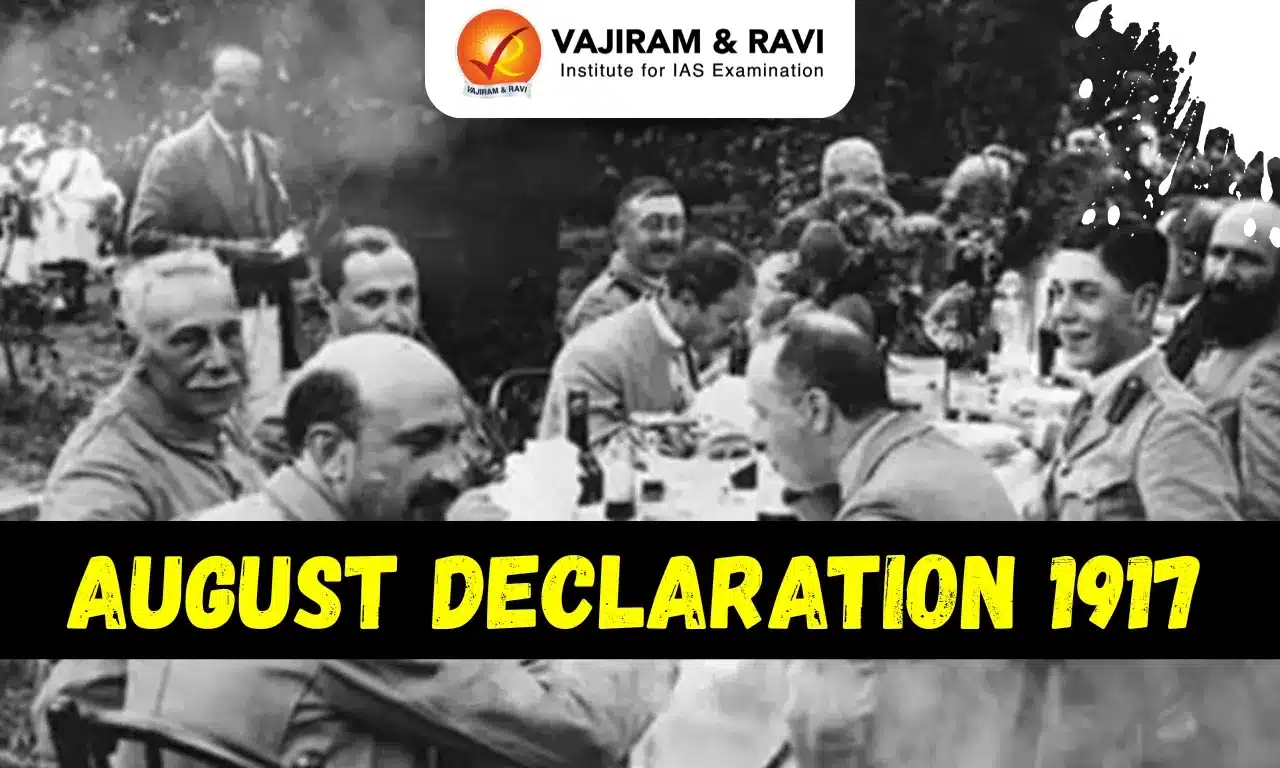
The August Declaration, also known as the Montagu Declaration, was announced on 20 August 1917 in the British Parliament. It came at a time when India’s political consciousness was rising rapidly, fueled by the Home Rule Movement, growing nationalism, and India’s contribution to World War I.

For the first time, the British government publicly accepted that Indians should gradually be associated with the governance of their own country, marking a shift from colonial absolutism to constitutional gradualism.

August Declaration 1917 Objectives

The British government issued the August Declaration 1917 with multiple political and strategic objectives:

  • To secure Indian support during World War I
  • To pacify rising nationalist sentiments and growing demand for self-rule
  • To provide a constitutional roadmap for gradual political reform
  • To strengthen British control while appearing progressive
  • To counter the influence of extremists and revolutionary activities
  • To maintain imperial unity while introducing limited self-governance

Provisions of the August Declaration 1917

The August Declaration 1917 laid down the broad principles for constitutional development in India by promising gradual political advancement and greater Indian participation in governance, while retaining British control over key powers.

  • Declared progressive realization of responsible government in India as the long-term objective of British policy.
  • Promised gradual development of self-governing institutions, not immediate self-rule.
  • Emphasized increasing association of Indians in every branch of administration.
  • Proposed expansion of legislative councils at the central and provincial levels.
  • Assured that reforms would be introduced step by step, based on India’s political maturity.
  • Maintained British supremacy, especially in defence, finance, and administration.
  • Clarified that reforms would be framed under British parliamentary control.
  • Did not define a fixed timeline for self-government.
  • Focused on constitutional methods rather than mass political movements.
  • Became the basis for the Montagu-Chelmsford Reforms and Government of India Act, 1919.

August Declaration 1917 Outcomes

The demand for self-government or Home Rule could no longer be treated as seditious, as the British government itself had now officially accepted self-government as a future goal, marking a sharp departure from Morley’s 1909 assertion that reforms were not intended to lead India toward self-rule.

The use of the term “responsible government” implied that the executive should be accountable to elected representatives rather than solely to the British Parliament in London. However, it was equally evident that the British were unwilling to transfer real power to legislatures dominated by Indian representatives.

To resolve this contradiction and to make the executive appear more accountable while retaining control, the British introduced the concept of dyarchy, under which certain subjects were transferred to Indian ministers while key areas remained under British authority.

August Declaration 1917 Criticism

The August Declaration 1917 faced widespread criticism from Indian nationalists who felt that it failed to meet their legitimate political aspirations. Although it appeared progressive in intent, its limitations soon became evident.

  • Absence of a Clear Time Frame: One of the major objections was the lack of any definite timeline for the introduction of self-government. Nationalist leaders demanded a clear and time-bound roadmap toward responsible government, but the declaration remained vague, creating uncertainty and dissatisfaction.
  • Disappointment with the Montagu Reforms: Prominent nationalist leader Bal Gangadhar Tilak criticised the reforms derived from the declaration, describing them as “unworthy and disappointing – a sunless dawn.” His remark reflected the widespread belief that the reforms failed to provide meaningful political power to Indians.
  • Unilateral British Decision-Making: Indian leaders strongly opposed the fact that the nature and pace of constitutional reforms would be decided solely by the British government. They argued that Indians themselves should have a decisive role in determining their political future, rather than being passive recipients of British policies.
  • Criticism by Annie Besant: Annie Besant, a leading Home Rule advocate, condemned the declaration as “unworthy of England to offer and India to accept.” Her criticism highlighted the gap between Indian expectations and British intentions, emphasizing that the declaration fell far short of genuine self-governance.

August Declaration 1917 FAQs

Q1: What was the August Declaration of 1917?

Ans: The August Declaration was a policy statement made on 20 August 1917 by Edwin Montagu, the Secretary of State for India, announcing that the British government aimed at the gradual development of self-governing institutions in India.

Q2: Why was the August Declaration announced?

Ans: It was announced to gain Indian support during World War I, respond to rising nationalist pressure, and outline a future constitutional path for India without immediately transferring power.

Q3: Who announced the August Declaration?

Ans: The declaration was announced by Edwin Montagu in the British Parliament.

Q4: What was the main objective of the August Declaration?

Ans: Its main objective was the gradual introduction of responsible government in India and increased participation of Indians in administration.

Q5: Did the August Declaration promise self-government?

Ans: Yes, but only in a gradual and undefined manner. It did not specify a time frame or guarantee full self-rule.

Engineering Export Promotion Council of India (EEPC India)

Engineering Export Promotion Council of India

Engineering Export Promotion Council of India (EEPC India) Latest News

The Engineering Export Promotion Council of India (EEPC) recently demanded lowering of income tax for non-corporate manufacturing MSMEs in the Union Budget and expediting payment of GST refunds.

About Engineering Export Promotion Council of India (EEPC India)

  • It is the premier trade and investment promotion organization in India, catering to the Indian engineering sector. 
  • Sponsored by the Ministry of Commerce & Industry, it actively contributes to the policies of the Government of India as an advisory body and acts as an interface between the engineering industry and the government. 
  • Set up in 1955, EEPC India now has a membership base of over 13,000, out of whom 60% are SMEs.
  • EEPC India facilitates sourcing from India and encourages MSMEs to raise their standard at par with international best practices. 
  • It also encourages MSMEs to integrate their business with the global value chain.
  • Motto: Engineering the Future
  • It serves as the reference point for the Indian engineering industry and the international business community in its efforts towards establishing India as a major engineering hub in the future.
  • EEPC India publishes several reports/studies to make its members aware of international trends and opportunities in order to enhance their global footprint.
  • EEPC India is regarded as the Model Export Promotion Council in India by the Ministry of Commerce and Industry.

Source: TH

Engineering Export Promotion Council of India (EEPC India) FAQs

Q1: What is the Engineering Export Promotion Council of India (EEPC India)?

Ans: EEPC India is the premier trade and investment promotion organisation for the Indian engineering sector.

Q2: Which Ministry sponsors Engineering Export Promotion Council of India (EEPC India)?

Ans: EEPC India is sponsored by the Ministry of Commerce & Industry.

Q3: What role does Engineering Export Promotion Council of India (EEPC India) play in government policymaking?

Ans: It contributes to government policies as an advisory body and acts as an interface between the engineering industry and the government.

Q4: When was Engineering Export Promotion Council of India (EEPC India) established?

Ans: Engineering Export Promotion Council of India (EEPC India)

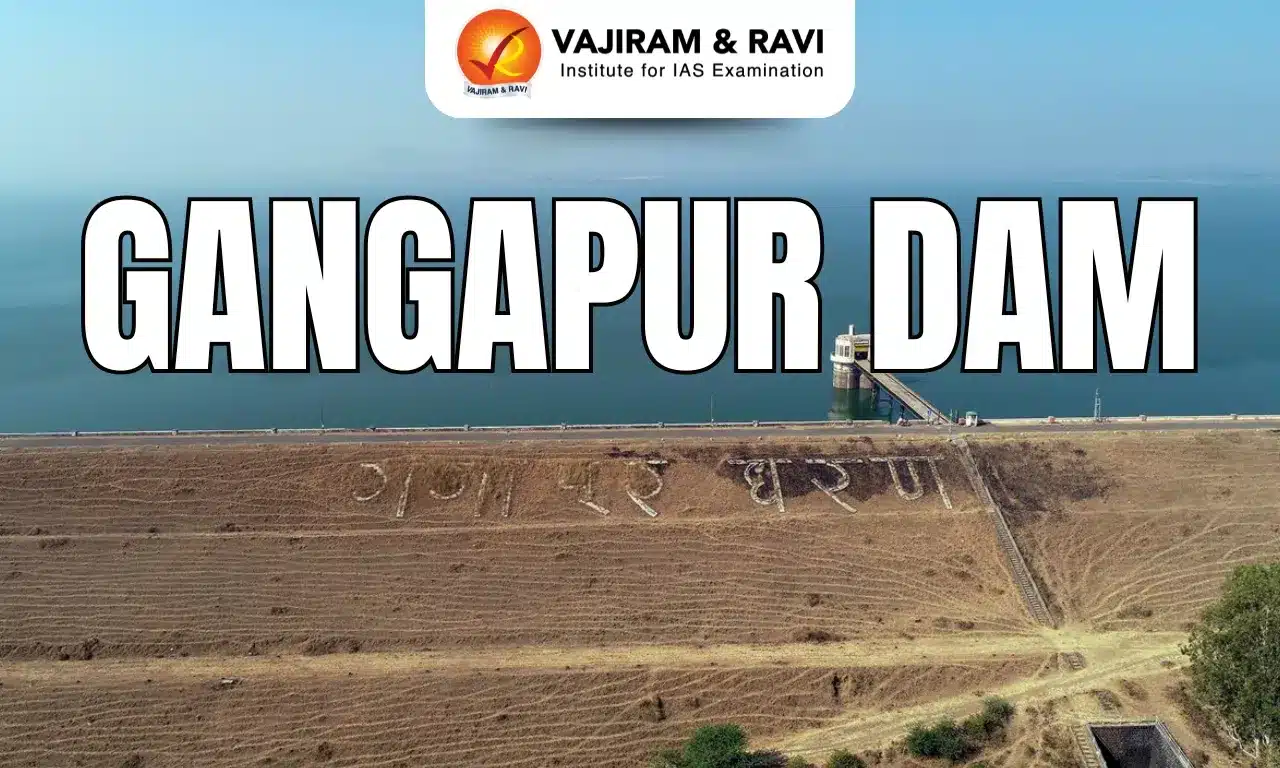
Gangapur Dam

Gangapur Dam

Gangapur Dam Latest News

The air show, featuring the Indian Air Force’s Suryakiran aerobatic team, took place over the Gangapur dam in the Nashik district recently.

About Gangapur Dam

  • It is an earthfill dam on the River Godavari, near Nashik, Maharashtra.
  • It is the longest earthen reservoir of Asia, with a length of 9.8 kilometers and a height of 36.6 meters. 
  • The dam has a unique design, with a curved shape and a spillway in the middle. 
  • It was built in 1965 as part of the Godavari Marathwada Irrigation Development Project. 
  • The dam was constructed to provide irrigation and drinking water to the drought-prone areas of Nashik, Ahmednagar, and Aurangabad districts. 
  • The dam has a storage capacity of 215.88 million cubic meters and a catchment area of 2,122 sq.km. 
  • The dam also has an upstream dam called Kashypi Dam, which regulates the water flow and prevents flooding.
  • The dam also has two canals; the left bank canal is 64 km long, and the right bank canal is 30 km.
  • The area around the dam features beautiful gardens and is home to numerous migratory birds, adding to its scenic beauty.

Source: TH

Gangapur Dam FAQs

Q1: Gangapur Dam is located on which river?

Ans: Godavari

Q2: Gangapur Dam is situated which state?

Ans: It is located near Nashik, Maharashtra.

Q3: Gangapur Dam is best described as which type of dam?

Ans: It is an earthfill dam.

Q4: Gangapur Dam was constructed as part of which project?

Ans: Godavari Marathwada Irrigation Development Project

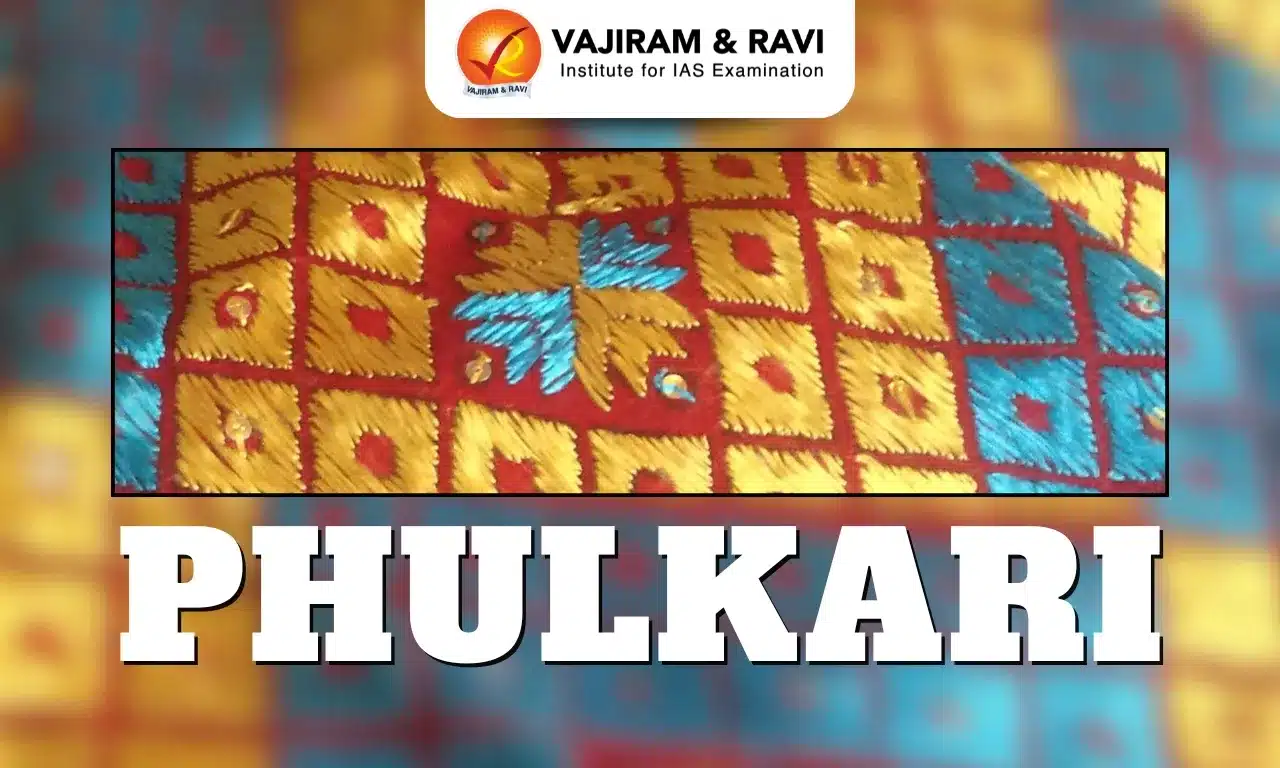
Phulkari

Phulkari

Phulkari Latest News

Over 40 rare pre-Partition textiles at an exhibition trace how phulkari functioned within women’s lives, and their everyday worlds.

About Phulkari

  • Phulkari, meaning "flower work," is a traditional embroidery from undivided Punjab, including present-day Pakistan and Haryana. 
  • The term first appeared in 18th-century Punjabi literature and may be linked to the Iranian art of gulkari.
  • Historically, phulkari chaddars were an essential part of a girl's marriage trousseau, crafted by mothers and grandmothers from the girl's birth. 
  • Girls learned to embroider early, with the number of phulkaris reflecting the family's status and marking cultural milestones.

Phulkari Features

  • It is a form of counted-thread embroidery recognised by its neat, regular patterns of geometric and natural motifs.
  • Phulkari embroidery uses khaddar, a handspun and handwoven cotton fabric, traditionally dyed in madder brown, rust red, indigo, or green.
  • Colourful silk threads are used to create flower patterns on the fabric.
  • The mix of colourful silk threads creates a beautiful and exciting design. 
  • The floral imagery used in phulkari includes marigolds, jasmines, lotuses, and Tree of Life motifs. 
  • Modern motifs such as trains, trucks, and cars have also found their way into phulkari patterns. 
  • Phulkari’s product range includes embroidered chaddars, dupattas, and stoles, traditionally worn by brides or for ceremonies.

Source: TH

Phulkari FAQs

Q1: What is Phulkari?

Ans: It is a traditional embroidery from undivided Punjab, including present-day Pakistan and Haryana.

Q2: What does the term “Phulkari” literally mean?

Ans: “Flower work”.

Q3: Which Iranian art form is Phulkari believed to be linked with?

Ans: Gulkari.

Q4: What role did Phulkari chaddars play in traditional Punjabi marriages?

Ans: They were an essential part of a girl’s marriage trousseau.

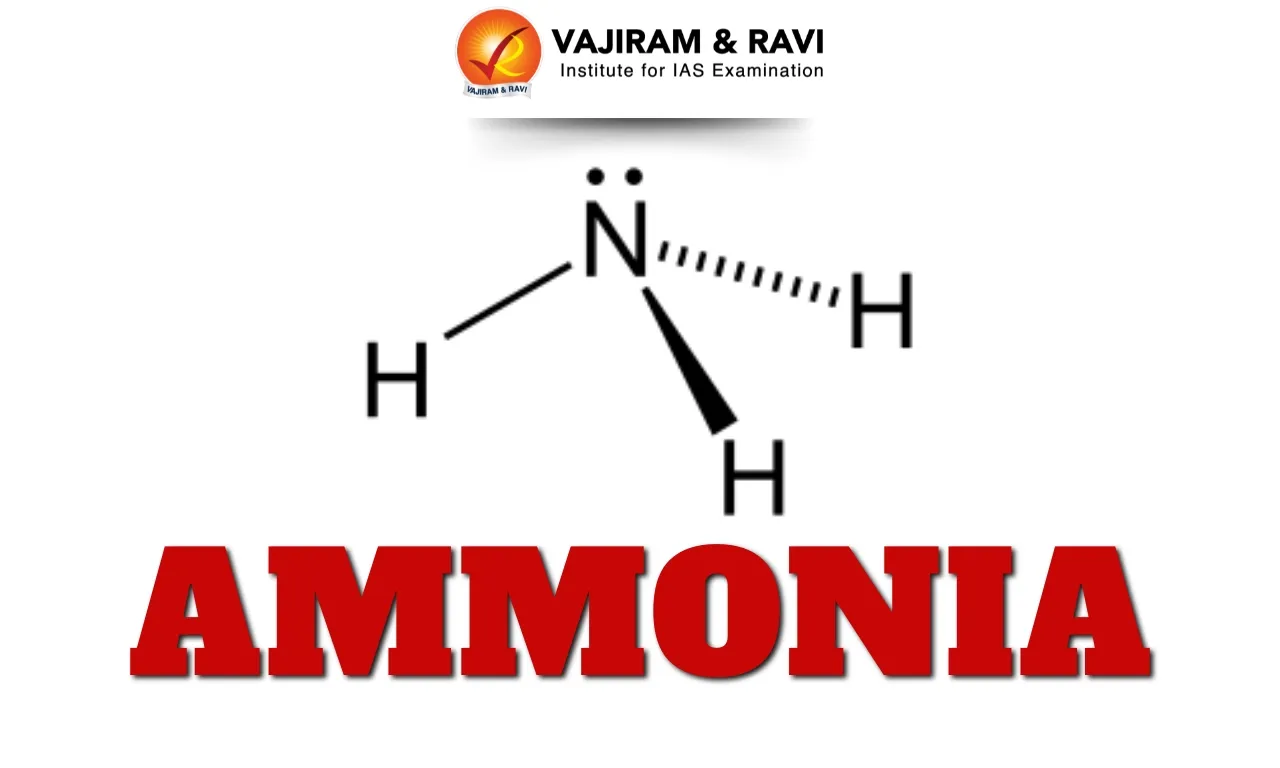
Ammonia

Ammonia

Ammonia Latest News

Officials explained that ammonia spikes in the Yamuna are a chronic winter issue, generally occurring between 15 and 22 times a year.

About Ammonia

  • It is a colorless, pungent gas composed of nitrogen and hydrogen with the formula NH3.
  • It is the simplest stable compound of these elements and serves as a starting material for the production of many commercially important nitrogen compounds.
  • It exists naturally in humans and in the environment. 
    • In the environment, ammonia is part of the nitrogen cycle and is produced in soil from bacterial processes. 
    • Ammonia is also produced naturally from decomposition of organic matter, including plants and animals.
  • Industrial production: Manufactured mainly by the Haber–Bosch process (from nitrogen and hydrogen).
  • Ammonia gas can be dissolved in water. This kind of ammonia is called liquid ammonia or aqueous ammonia. Once exposed to open air, liquid ammonia quickly turns into a gas.
  • Uses:
    • The major use of ammonia is as a fertilizer
      • Ammonia is a basic building block for ammonium nitrate fertilizer, which releases nitrogen, an essential nutrient for growing plants.
      • About 90 percent of ammonia produced worldwide is used in fertilizer.
    • Additional uses include as a refrigerant, stabilizer, neutralizer, and purifier — particularly in food transport and water treatment applications. 
    • It can also be used in the manufacture of plastics, explosives, fabrics, dyes, and pharmaceuticals.
  • Exposure to high levels of ammonia in air may be irritating to a person’s skin, eyes, throat, and lungs and cause coughing and burns.
  • To prevent the release of toxic fumes, ammonia should not be mixed with other chemicals (especially chlorine bleach).

Source: HT

Ammonia FAQs

Q1: What is ammonia?

Ans: Ammonia is a colourless, pungent gas composed of nitrogen and hydrogen.

Q2: What is the chemical formula of ammonia?

Ans: The chemical formula of ammonia is NH₃.

Q3: Does ammonia occur naturally in the human body and environment?

Ans: Yes, ammonia exists naturally in humans and in the environment.

Q4: How is ammonia produced naturally in the environment?

Ans: It is produced through bacterial processes in soil and by the decomposition of organic matter from plants and animals.

Q5: Which industrial process is mainly used to manufacture ammonia?

Ans: Ammonia is mainly manufactured using the Haber–Bosch process.

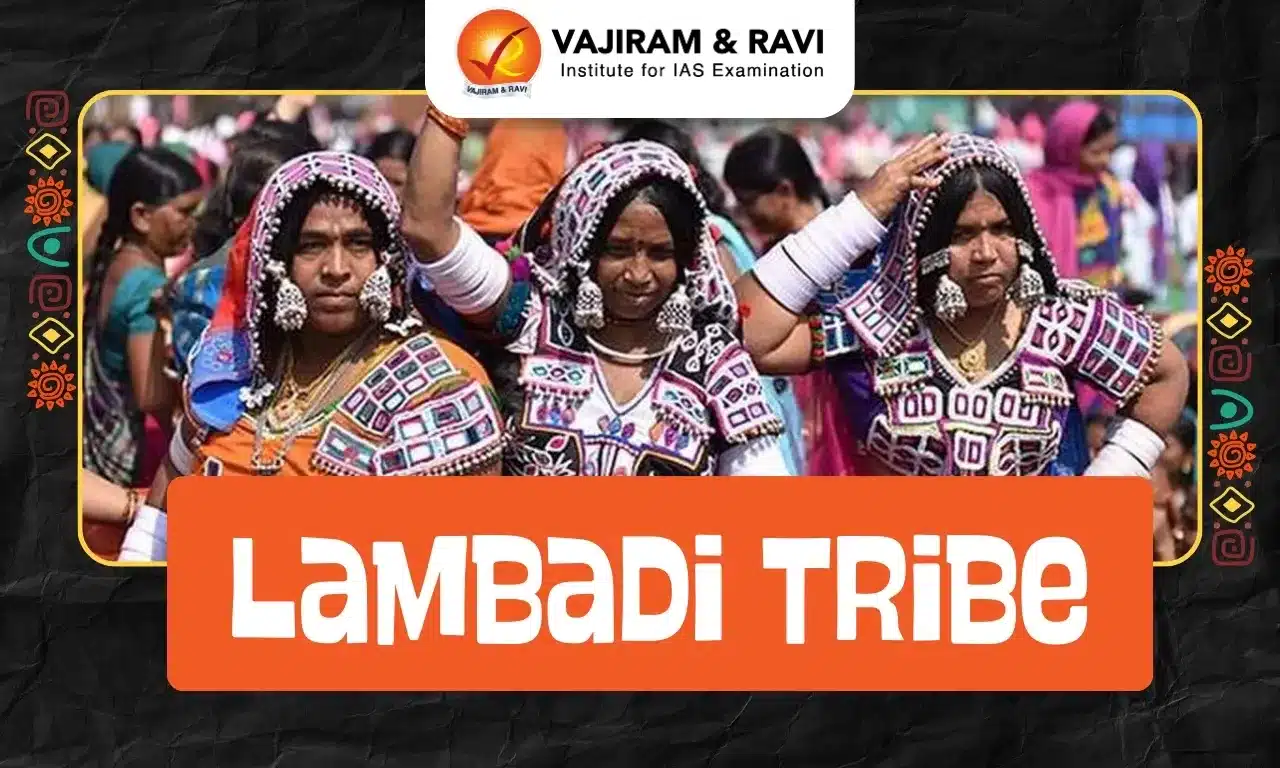
Lambadi Tribe

Lambadi Tribe

Lambadi Tribe Latest News

The Supreme Court is once again being asked to rule on long-standing controversy of Parliament’s decision on Scheduled Tribe status to Lambadi community in Telangana.

About Lambadi Tribe

  • They are found in Telangana, Andhra Pradesh and Karnataka states in South India.
  • They are also known as Sugali or Banjara.
  • Language: They speak Gor Boli also called Lambadi which belongs to the Indo-Aryan Group of Languages. Lambadi has no script.
  • Belief System: The majority of Banjara in India are Hindu; some have combined Hindu practices with their own animistic beliefs.

Culture of Lambadi Tribe

  • Banjara people celebrate the festival of Teej during Shravanam (in the month of august).
  • In this festival young unmarried Banjara girls pray for a good groom.
  • Fire dance and Chari are the traditional dance forms of the banjara people.
  • Tattoos are very common in their community.
  • Women, Lambadi / Gor women (Thandri) wear a very colourful red style dress and lots of jewellery. The clothes they wear are decorated with pieces of mirror and cowl. we wear ivory bangles and ornaments.

Source: DTE

Lambadi Tribe FAQs

Q1: Where is the Lambadi tribe primarily found?

Ans: South India

Q2: What is another name for the Lambadi tribe?

Ans: Banjara

The Peshwas (1674-1818), List, Administration, Economy, Decline

The Peshwas

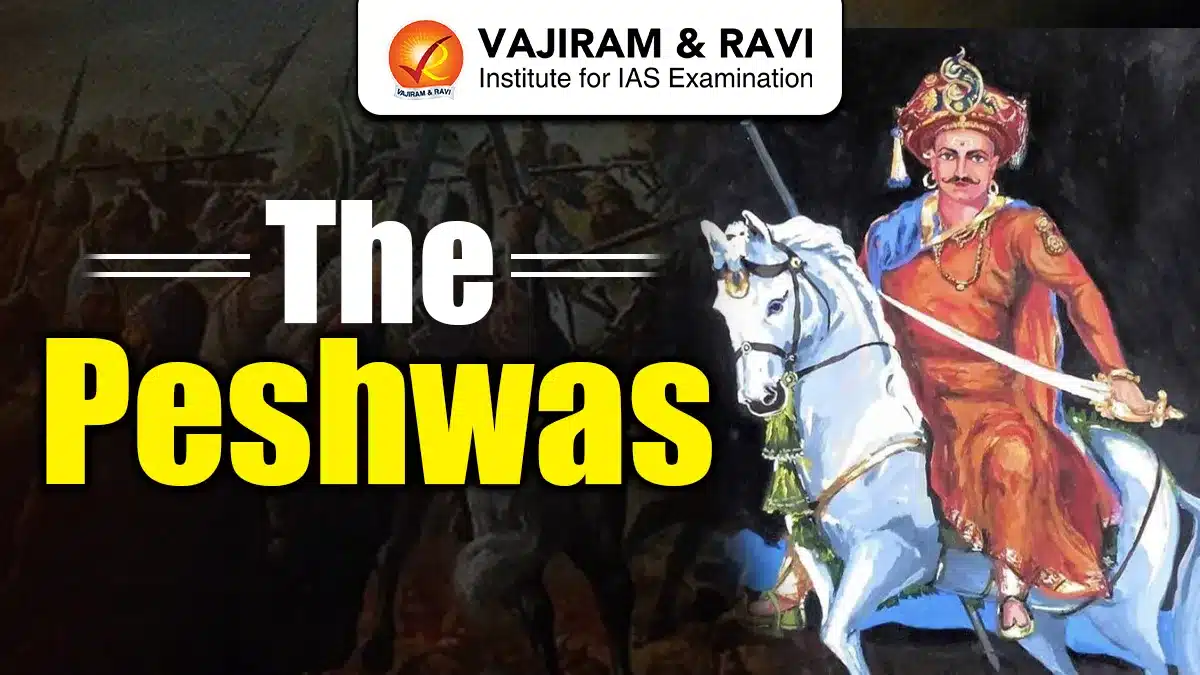
The Peshwas were the prime ministers of the Maratha Empire and ranked second only to the Chhatrapati in authority and prestige during 1674 to 1818. Over time, especially after Shahu’s death, the Peshwas emerged as the real power holders, while the Chhatrapati became largely nominal. They handled administration, revenue, military command, diplomacy and internal stability, transforming the Maratha state into a vast confederacy ruling most of the Indian subcontinent during the eighteenth century.

List of the Peshwas

The Peshwas played a decisive role in expanding, consolidating and later struggling to maintain the Maratha Empire. These positions were appointed by Chhatrapati until 1713, when Shahu Ji was succeeded by his son Baji Rao I. It became hereditary under Bhat family. The list of major Peshwa in chronological order has been given below:

1. Moropant Trimbak Pingle (1674-1683) 

  • He was appointed by Shivaji in 1674 as the first Peshwa and head of the Ashta Pradhan; he managed administration, revenue and state correspondence.
  • He helped organize Shivaji’s civil administration, fort management, revenue assessment and coordination between military and civil officials.
  • His tenure laid the institutional foundation of the Peshwa office, which later evolved into the most powerful position in the Maratha Empire.

2. Nilopant Moreshvar Pingle (1683-1689)

  • Son of Moropant Pingle, he served as Peshwa under Sambhaji after his father’s death in 1683.
  • His tenure coincided with Mughal invasions under Aurangzeb and internal instability within the Maratha state.
  • Continued administrative continuity during a difficult phase but lacked the authority later enjoyed by hereditary Peshwas.

3. Ramchandra Pant Amatya (1689-1708)

  • Appointed Peshwa by Rajaram I in 1689, he acted as regent when Rajaram fled to Jinji.
  • Personally recaptured several forts from the Mughals between 1690 and 1694 using guerrilla warfare techniques.
  • Managed finances, handled rebellions and ensured economic stability during severe famine and Mughal pressure.
  • Played a crucial role in preserving the Maratha state during its most vulnerable period.

4. Balaji Vishwanath Bhat (1713-1720)

  • Appointed by Chhatrapati Shahu in 1713 after the Maratha civil war. He was the first hereditary Peshwa.
  • Secured Mughal recognition of “Shahu” as king and obtained rights to collect Chauth and Sardeshmukhi in six Deccan provinces.
  • Strengthened revenue system and restored jagirs, making the Peshwa the most powerful office in the empire.
  • Established hereditary succession by ensuring his son Baji Rao I succeeded him as Peshwa, making Shahu as centre of the Peshwa Family Tree.

5. Baji Rao I (1720-1740)

  • Appointed at age twenty after his father, he is regarded as a military genius who never lost a single battle.
  • He fought over 40 battles, including decisive victories at Palkhed (1728) and Bhopal (1737), and is considered as the greatest Peshwa.
  • He expanded the Maratha empire, his influence was seen from Cuttack in the east to Attock in the northwest.
  • Initiated Maratha confederacy, empowering Scindias, Holkars, Gaekwads and Bhonsles as regional administrators.
  • Shifted the administrative capital from Satara to Pune in 1728, making it the Peshwa power center.

6. Balaji Baji Rao (1740-1761) 

  • Balaji Baji Rao, also called Nana Saheb, succeeded Baji Rao I and ruled during the peak of Maratha territorial expansion.
  • After Shahu’s death in 1749, he imprisoned Ramraja, making the Peshwa the supreme authority by the Sangola Agreement of 1750.
  • Secured Mughal agreement in 1752 granting Marathas revenue rights over Agra and Ajmer.
  • He won the Battle of Udgir (1760) against the Nizam but faced catastrophic defeat at the Third Battle of Panipat (1761).
  • Deeply affected by Panipat losses, he died in June 1761, marking a major turning point.

7. Madhav Rao I (1761-1772) 

  • Became Peshwa at a young age under the regency of Raghunath Rao after the Panipat disaster.
  • Defeated Nizam of Hyderabad in 1763 and forced Haider Ali of Mysore into unfavorable treaties.
  • Reasserted Maratha authority over Rajputs, Jats and Rohillas and restored Shah Alam II to Delhi in 1771.
  • Regarded as the most capable administrator after Baji Rao I who restored the Maratha Power.
  • Died prematurely in 1772, ending a highly effective reign.

8. Narayan Rao (1772-1773)

  • Succeeded Madhav Rao I but ruled for barely a year.
  • Faced severe factionalism between Raghunath Rao and Nana Fadnavis.
  • Murdered at age eighteen due to conspiracy involving Raghunath Rao and Anandibai.
  • His death destabilized the Peshwa administration and accelerated decline.

9. Madhav Rao II (1774-1795)

  • Proclaimed Peshwa posthumously at birth, with Nana Fadnavis acting as chief administrator.
  • Real power lay with ministers and Maratha chiefs, weakening central authority.
  • Period marked by increasing British interference and internal Maratha rivalries.
  • His long but weak reign ended in 1795.

10. Baji Rao II (1796-1818)

  • Son of Raghunath Rao, became Peshwa amid intense British influence.
  • Signed the Subsidiary Alliance in 1802, severely compromising Maratha sovereignty.
  • Defeated by British East India Company in the Battle of Khadki during the Third Anglo Maratha War.
  • Deposed in 1818, his territories annexed and he was pensioned off by the British.
  • He was the last Peshwa and his defeat marked the end of the Peshwa institution and Maratha political independence.

Economy under the Peshwas

The features of economy under Peshwa has been highlighted below:

  • Revenue System: The Peshwas relied on Chauth and Sardeshmukhi, collecting assessed land revenue from Mughal and regional territories, forming the backbone of Maratha finances.
  • Agricultural Stability: Emphasis was placed on protecting cultivators, restoring war damaged villages and encouraging cultivation, especially during Balaji Baji Rao’s relatively peaceful Deccan phase between 1741 and 1745.
  • Jagir and Cash Assignments: Revenue was distributed through jagirs to soldiers and officials, reducing immediate cash burden but gradually weakening central control over finances.
  • Urban Growth: Pune emerged as a major administrative and economic center, witnessing growth in markets, banking and artisan activity due to sustained Peshwa patronage.
  • Trade and Taxation: The Peshwas encouraged inland trade and maintained pragmatic relations with European traders to secure customs revenue and supplies for the army.

Administration under the Peshwas

The administrative features under Peshwa has been listed below:

  • Hereditary Executive Authority: Under the Bhat family, the Peshwa became the supreme executive, controlling appointments, revenue, diplomacy and military command across the confederacy.
  • Council and Officials: Administration relied on experienced ministers, diplomats and accountants, ensuring continuity even during weak or minor Chhatrapatis.
  • Confederate Governance: Maratha chiefs like Scindias, Holkars, Gaekwads and Bhonsles governed their regions autonomously while acknowledging Peshwa supremacy.
  • Judicial Oversight: Village level disputes were settled locally, while major cases and political matters were handled by Peshwa-appointed officials in Pune.
  • Advisors: Influential figures like Nana Fadnavis shaped policy during later years, often balancing internal rivalries and external threats.

Military under the Peshwas

The military strength of the Peshwas rested on mobility, cavalry dominance and adaptive strategies suited to Indian terrain and politics.

  • Cavalry Warfare: The Maratha army emphasized fast moving cavalry, enabling deep raids, long pursuits and disruption of enemy supply lines.
  • Guerrilla Tactics: Following Shivaji’s legacy, Peshwas like Baji Rao I perfected hit-and-run warfare, ambushes and strategic retreats.
  • Command Structure: Senior generals such as Malhar Rao Holkar, Scindia and Gaikwad commanded independent forces under overall Peshwa direction.
  • Logistics and Speed: Armies carried minimal baggage, allowing rapid movement across hundreds of kilometers, as seen in northern expeditions up to Attock.
  • Limitations: Dependence on cavalry and lack of strong artillery and infantry coordination proved costly against Afghan and European style armies.

Society under the Peshwas

Peshwa rule influenced social structures while remaining largely pragmatic due to the demands of governance and warfare.

  • Caste Composition: Early Peshwas belonged to the Marathi Deshastha Brahmin community, yet administration and armies included diverse castes and groups.
  • Social Pragmatism: Military needs reduced rigid caste barriers, as cooperation across communities was essential for taxation and warfare.
  • Limited Caste Intervention: Direct interference in caste matters was rare, except under Narayan Rao, who altered the disputed social status of Prabhus.
  • Lifestyle of Peshwas: Early Peshwas lived modestly, with legends describing Baji Rao I sharing food and hardships with his soldiers.
  • Urban Society: Pune developed as a cultural and political hub, attracting scholars, artisans, administrators and merchants.

Battles fought by the Peshwas

Military campaigns under the Peshwas reshaped Indian politics and expanded Maratha influence across regions. Major Battles fought under Peshwa were:

  • Battle of Palkhed (1728): Baji Rao I decisively defeated the Nizam of Hyderabad using superior mobility and strategy, establishing Maratha dominance in the Deccan.
  • Battle of Bhopal (1737): Maratha forces forced the Mughal emperor to concede revenue rights, strengthening Maratha claims in northern India.
  • Battle of Dabhoi (1731): Baji Rao crushed internal rebellion led by Trimbak Rao Dabhade, reinforcing Peshwa authority over Maratha chiefs.
  • Battle of Udgir (1760): Peshwa forces defeated the Nizam during succession disputes, capturing key Deccan forts and territories.
  • Third Battle of Panipat (1761): A catastrophic defeat against Ahmad Shah Abdali resulted in massive casualties and temporarily shattered Maratha power in the north.

The Peshwas’ Relations with Contemporary Rulers 

The Peshwas maintained complex relations with Indian rulers and European powers to safeguard Maratha interests.

  • Mughal Empire: Agreements with Mughal emperors granted Marathas Chauth and Sardeshmukhi in return for military protection.
  • Nizam of Hyderabad: Relations alternated between alliance and conflict, with repeated wars over Deccan supremacy.
  • Regional Powers: The Peshwas subdued Rajputs, Jats, Rohillas and Nawabs to assert Maratha dominance in northern India.
  • British East India Company: Early cooperation for trade and naval matters later turned into conflict, culminating in Anglo Maratha wars.
  • French Influence: Limited engagement with French trained troops occurred, but Marathas failed to fully modernize their forces like European armies.

Decline of the Peshwas

The decline of the Peshwas resulted from internal discord, military setbacks and rising European colonial power.

  • The murder of Narayan Rao by Raghunath Rao and Anandibai severely weakened moral authority and unity.
  • Autonomous Maratha chiefs increasingly pursued independent interests, reducing centralized control from Pune.
  • Failure to modernize infantry and artillery left Marathas vulnerable against Afghan and British forces.
  • The Peshwaship was abolished in 1818 by the British East India Company after the Third Anglo Maratha War (1817-1818).
  • Baji Rao II was pensioned off, marking the formal end of Peshwa rule and Maratha sovereignty under colonial domination.

The Peshwas FAQs

Q1: Who were the Peshwas in the Maratha Empire?

Ans: The Peshwas were the prime ministers of the Maratha Empire, second in rank to the Chhatrapati and later became the real executive rulers.

Q2: When did the office of Peshwa become hereditary?

Ans: The Peshwa position became hereditary in 1720 when Chhatrapati Shahu appointed Baji Rao I, son of Balaji Vishwanath, as Peshwa.

Q3: Which Peshwa is regarded as the greatest military commander?

Ans: Baji Rao I is considered the greatest Peshwa due to his undefeated military career and expansion of Maratha power across India.

Q4: What was the Third Battle of Panipat’s impact on the Peshwas?

Ans: The third Battle of Panipat in 1761 caused massive Maratha losses and marked the beginning of the political decline of the Peshwas.

Q5: Who was the last Peshwa and how did Peshwa rule end?

Ans: Baji Rao II was the last Peshwa and his defeat by the British in 1818 ended Peshwa rule and Maratha sovereignty.

Liberalised Remittances Scheme (LRS)

Liberalised Remittances Scheme (LRS)

Liberalised Remittances Scheme (LRS) Latest News

Analysis of data on the outward remittances under the RBI’s Liberalised Remittances Scheme (LRS) shows that the amount of money sent or spent abroad by Indians fell to a two-year low of $1.94 billion in November 2025, pulled down in large part by a sharp dip in the amount spent on foreign studies.

About Liberalised Remittances Scheme (LRS)

  • It is part of the Foreign Exchange Management Act (FEMA) 1999, which lays down the guidelines for outward remittance from India. 
  • Under LRS, all resident individuals, including minors, are allowed to freely remit up to USD $250,000 per financial year (April–March). 
    • This can be for any permissible current or capital account transaction, or a combination of both.
    • Any remittance exceeding this limit requires prior permission from the RBI.
  • The scheme was introduced on February 4, 2004.
  • Who can remit funds under LRS?
    • Only individual Indian residents, including minors, are permitted to remit funds under LRS.
    • Corporates, partnership firms, Hindu Undivided Family (HUF), trusts, etc., are excluded from its ambit. 
  • Frequency of Remittances:
    • There is no restriction on the frequency or number of transactions during a financial year. 
    • However, the total amount of foreign exchange remitted through all sources in India under LRS during the current FY should be within the LRS limit as specified by the RBI, i.e., USD $250,000.
  • Types of transactions permitted:
    • Opening of a foreign currency account abroad with a bank;
    • Acquisition of immovable property abroad, overseas direct investment (ODI), and overseas portfolio investment (OPI);
    • Extending loans, including loans in Indian Rupees to non-resident Indians (NRIs) who are relatives as defined in the Companies Act, 2013;
    • Private visits abroad (excluding Nepal and Bhutan); 
    • Maintenance of relatives abroad;
    • Medical treatment abroad;
    • Pursuing studies abroad;
    • Any other current account transaction that does not fall under the definition of current account (FEMA 199);
  • Types of transactions not permitted: 
    • Remittance for purposes specifically prohibited, such as buying lottery tickets or restricted items.
    • Sending money from India for margins or margin calls to overseas exchanges or parties.
    • Remittance for buying Foreign Currency Convertible Bonds (FCCBs) issued by Indian companies in the overseas secondary market.
    • Sending money for trading in foreign exchange abroad.
    • Sending money to individuals and entities identified as posing a significant risk of terrorism.
    • Sending money to countries identified as “non-cooperative countries and territories” by the Financial Action Task Force (FATF).
  • Tax Imposed on LRS:
    • Tax Collected at Source (TCS) applies to LRS transactions exceeding INR 7 lakh in a financial year.
      • Current TCS rates are 20% for general remittances and may vary based on the purpose and the total amount remitted.
    • Any profit made from abroad investments under LRS is subject to tax in India depending on the holding period.

Source: TH

Liberalised Remittances Scheme (LRS) FAQs

Q1: What is the Liberalised Remittances Scheme (LRS)?

Ans: LRS is a scheme under the Foreign Exchange Management Act (FEMA), 1999 that provides guidelines for outward remittances from India.

Q2: When was the Liberalised Remittances Scheme introduced?

Ans: The scheme was introduced on February 4, 2004.

Q3: Who is eligible to remit funds under Liberalised Remittances Scheme (LRS)?

Ans: Only resident individual Indians, including minors, are eligible to remit funds under LRS.

Q4: Which entities are not permitted to remit funds under Liberalised Remittances Scheme (LRS)?

Ans: Corporates, partnership firms, Hindu Undivided Families (HUFs), trusts, and similar entities are excluded.

Q5: What is the maximum amount that can be remitted under Liberalised Remittances Scheme (LRS) in a financial year?

Ans: Up to USD 250,000 per financial year (April–March).

Indira Gandhi Peace Prize

Indira Gandhi Peace Prize

Indira Gandhi Peace Prize Latest News

Recently, Mozambican rights activist and humanitarian Graca Machel has been selected for the Indira Gandhi Prize for Peace, Disarmament and Development for 2025.

About Indira Gandhi Peace Prize

  • It was instituted in the memory of the former Prime Minister Indira Gandhi by a trust in her name in 1986.
  • It is also known as the Indira Gandhi Prize for Peace, Disarmament, and Development,
  • It consists of a monetary award of 25 lakh rupees along with a citation.
  • It is awarded annually by the Indira Gandhi Memorial Trust  to a person or organization without any distinction of nationality, race or religion, in recognition of creative efforts towards:
    • Promoting international peace and disarmament, racial equality, and goodwill and harmony among nations;
    • Securing economic co-operation and promoting a new international economic order;
    • Accelerating the all-round advancement of developing nations;
    • Ensuring that the discoveries of science and modern knowledge are used for the larger good of the human race; and
    • Enlarging the scope of freedom and enriching the human spirit.

Source:  TH

Indira Gandhi Peace Prize FAQs

Q1: Who was awarded the Indira Gandhi Peace Prize for 2025?

Ans: Graca Machel

Q2: What is the Indira Gandhi Peace Prize awarded for?

Ans: Promoting international peace, disarmament, and development

Netaji Subhash Chandra Bose Jayanti 2026, Parakram Diwas

Netaji Subhash Chandra Bose Jayanti

Netaji Subhash Chandra Bose Jayanti is celebrated on the occasion of Netaji’s birthday. Born on 23rd January 1897 in Orissa, the day is also known as Parakram Diwas.To commemorate the spirit and selfless service of Netaji Subhas Chandra Bose, the Government of India has declared his birthday, January 23rd, as "Parakram Diwas." The day aims to spread awareness and inspire the people of India, especially the youth, to exhibit courage in the face of challenges, just as Netaji did, and to foster a deep sense of national pride.

Netaji Subhash Chandra Bose Jayanti 2026

Netaji Subhash Chandra Bose Jayanti also known as Parakram Diwas is celebrated on 23rd January every year. Remembered for his famous slogan “ Tum Mujhe Khoon Do, Main Tumhe Azadi Dunga,” Netaji qualified the Indian Civil Services Examination in 1919 but later resigned. Apart from being a strong political leader, he was inspired by the teachings of Vivekananda and was a spiritual guru. He started the independence movement journey in 1921 by starting Swarajya Newspaper in Allahabad, Uttar Pradesh. He was awarded the Bharat Ratna Award in 1992 but it was later withdrawn due to the controversy about his death. 

Netaji Subhash Chandra Bose Biography 

Subhas Chandra Bose was born on January 23, 1897, in Cuttack, Orissa.

  • In 1920, he passed the civil services examination but resigned from his position in April 1921 after hearing of the nationalist unrest in India.
  • Bose became a prominent leader in the Indian independence movement, joining the Indian National Congress to fight against British colonial rule.
  • He was elected president of the Indian National Congress for two consecutive terms but resigned due to ideological differences with Mahatma Gandhi.
  • In 1939, he founded the Forward Bloc to unite all anti-British forces in India.
  • During World War II, Bose fled India and sought alliances in the Soviet Union, Germany, and Japan to combat British rule.
  • With Japanese support, he reorganized the Indian National Army (INA), consisting of Indian prisoners-of-war and plantation workers, to fight against the British.
  • He established the Azad Hind Government in exile, with assistance from Japan, and led the INA in battles at Imphal and Burma.

Netaji Subhash Chandra Bose Political Life and Career 

Subhas Chandra Bose joined the Indian National Congress in 1921 and was elected President of the All India Youth Congress in 1923. He actively participated in the Salt Satyagraha in 1930 and, during the 1930s, worked closely with Jawaharlal Nehru and M.N. Roy. Bose opposed the Motilal Nehru Report, which sought dominion status for India, advocating instead for complete independence. He also disagreed with the suspension of the Civil Disobedience Movement and the signing of the Gandhi-Irwin Pact in 1931. In 1938, he won the INC presidency at the Haripura session, and in 1939, he triumphed again at Tripuri, defeating Mahatma Gandhi’s candidate, Pattabhi Sitarammayya. However, due to ideological differences with Gandhi, he resigned from the INC, with Rajendra Prasad taking his place. On May 3, 1939, Bose founded the "Forward Bloc" in Makur, Unnao, Uttar Pradesh, to consolidate the political left and gain significant support in Bengal.

Netaji Subhash Chandra Bose in Armed Forces

In 1934, Subhas Chandra Bose arrived in Japanese-controlled Singapore and issued his iconic "Delhi Chalo" call. On October 21, 1943, he proclaimed the formation of the Azad Hind Government and the Indian National Army (INA), which he took leadership of that same year. The INA was initially founded under the leadership of Mohan Singh and Japanese Major Fujiwara, composed primarily of Indian prisoners of war captured by Japan in the Malayan campaign and at Singapore. The INA established regiments like the Rani Jhansi Regiment, playing a crucial role in Bose’s vision for an independent India. Bose’s leadership led to the creation of the Provisional Government of Free India in Singapore, aligning with the INA. His death in 1945, allegedly due to a plane crash in Taiwan, marked the end of INA’s active operations. However, the subsequent court-martials of INA soldiers upon their return to India sparked widespread national resistance. Bose's life exemplifies courage, patriotism, leadership, perseverance, and sacrifice for the motherland.

Netaji Subhash Chandra Bose FAQs

Q1: Who gave the title of Netaji to Subhas Chandra Bose in UPSC?

Ans: The title "Netaji" was given to Subhas Chandra Bose by the Indian soldiers of the Indian National Army (INA).

Q2: Why is 23rd January famous?

Ans: 23rd January is famous as the birth anniversary of Subhas Chandra Bose, celebrated as "Parakram Diwas."

Q3: What was the role of Subhas Chandra Bose in the national movement in UPSC?

Ans: Subhas Chandra Bose played a key role in the Indian independence movement by leading the Indian National Army (INA) and forming the Azad Hind Government in exile.

Q4: What is the importance of 23rd January?

Ans: 23rd January is significant as it marks the birth anniversary of Subhas Chandra Bose, a prominent freedom fighter, and is observed as "Parakram Diwas" to honor his contributions.

Q5: When was Bose born?

Ans: Subhas Chandra Bose was born on January 23, 1897, in Cuttack, Orissa.

Daily Editorial Analysis 23 January 2026

Daily Editorial Analysis

A Dangerous March Towards a Himalayan Ecocide

Context

  • The year 2025 marked a turning point as climate extremes intensified across India.
  • With nearly 331 days of cascading impacts and more than 4,000 deaths, disasters became a near-continuous reality.
  • The Himalayas, among the world’s most fragile mountain systems, suffered disproportionate losses, with towns such as Dharali, Harsil, Uttarkashi, Chamoli, Kullu, Mandi and Kishtwar repeatedly struck by cloudbursts, avalanches and flash floods.
  • These events underscore that ecological instability is no longer episodic but structural, demanding a reassessment of how infrastructure is planned in sensitive regions.

Infrastructure Expansion in a Disaster Zone

  • A central example is the Char Dham road-widening project.
  • In November 2025, approval was granted to divert 43 hectares of forest land in the Dharali-Harsil region for the Char Dham project, including extensive muck dumping.
  • Nearly 7,000 Devdar trees were marked for felling in an area already devastated by an avalanche-turned-flash flood.
  • The project follows the DL-PS standard, enforcing a 12-metre-wide paved road despite repeated scientific warnings.
  • Geologically, the region lies north of the Main Central Thrust, a zone where large-scale construction is discouraged due to unstable geology.
  • The landscape is further destabilised by hanging glaciers, many fed by the rapidly retreating Gangotri Glacier.
  • Moraine-laden ice bodies increase the probability of slope failure, as demonstrated by the glacier avalanche that triggered the Dharali disaster.
  • Proceeding with large infrastructure under such conditions reflects a failure of basic risk assessment.

Ecological Value of Devdar Forests

  • The threatened forests perform irreplaceable ecological functions in the Himalayan landscape.
  • Their deep root systems stabilise slopes, reduce erosion and significantly lower the incidence of landslides and debris flows.
  • Removing them directly increases downstream hazard exposure.
  • These forests also safeguard the upper reaches of the Ganga, as they fall within the Bhagirathi Eco-Sensitive Zone.
  • Their antimicrobial properties, derived from complex organic compounds, regulate riverine microbial communities and support aquatic biodiversity.
  • By maintaining cooler microclimates, Devdar forests regulate snowmelt-fed streams, sustain dissolved oxygen levels and preserve the river’s ecological character.
  • Large-scale deforestation would initiate irreversible changes, including higher water temperatures, reduced oxygen content and the collapse of natural self-purification processes.
  • Proposals to translocate centuries-old Devdars ignore their site-specific ecological roles; uprooting them is functionally equivalent to destruction.

A Project Built on Structural and Procedural Flaws

  • The road-widening initiative illustrates how not to build in the Himalayas.
  • Environmental safeguards were bypassed through fragmented clearances, incorrect road-width standards and destabilising vertical hill-cutting.
  • Excavated debris was dumped indiscriminately into streams, compounding damage.
  • The outcomes are visible along nearly 700 kilometres of roadway, where more than 800 active landslide zones now exist.
  • Key routes remain frequently closed, undermining the project’s promise of all-weather connectivity.
  • Retrofitting slopes with bolts and wire mesh, proposed years after destabilisation began, fails to address the root problem: slopes cut beyond their natural angle of repose.

Policy Contradictions and Governance Failures

  • Current practices directly contradict the National Mission for Sustaining the Himalayan Ecosystem, a policy framework designed to protect mountain ecology, mitigate hazards and guide sustainable livelihoods.
  • This contradiction reveals systemic governance failures, where short-term connectivity goals override long-term safety.
  • Unsafe land use, wide highways on unstable slopes, tunnels without adequate surveys and large hydropower projects, has repeatedly been flagged by regulatory bodies.
  • While such activities act as immediate triggers, accelerated warming functions as a risk multiplier.
  • High-altitude regions have warmed significantly faster than the global average, intensifying rainfall variability, glacial melt and extreme events.
  • These pressures are amplified by unregulated tourism, unchecked traffic and the absence of carrying-capacity planning.
  • Together, they erode ecological resilience and expose communities to escalating hazards.

Conclusion

  • The continuing crisis reinforces a fundamental truth: without the Himalayas, there is no India. The range underpins water security, climate regulation and cultural continuity.
  • Persisting with vulnerable models of development undermines national security rather than strengthening it.
  • Disaster-resilient planning rooted in science, sustainability and accountability is not optional, it is essential.
  • Failing to act ensures that loss, displacement and instability will intensify, demanding urgent accountability from those shaping the future of this irreplaceable landscape.

A Dangerous March Towards a Himalayan Ecocide FAQs

Q1. Why is the Himalayan region especially vulnerable to disasters?
Ans. The Himalayan region is highly vulnerable due to fragile geology, accelerating climate warming, and unsafe infrastructure development.

Q2. What makes Devdar forests ecologically important?
Ans. Devdar forests stabilise slopes, reduce landslides, and protect the ecological health of the Ganga river system.

Q3. Why is the Char Dham road project considered risky?
Ans. The project involves excessive road widening and construction in a geologically unstable and disaster-prone zone.

Q4. How does climate change intensify Himalayan disasters?
Ans. Climate change increases erratic rainfall, accelerates glacial melt, and magnifies the severity of extreme weather events.

Q5. What is the core governance failure highlighted in the analysis?
Ans. The central governance failure is prioritising short-term development over long-term ecological resilience and safety.

Source: The Hindu


BRICS India Summit Needs a Green and Resilient Agenda

Context

  • The forthcoming BRICS Summit to be hosted by India offers a critical opportunity to align national priorities with the urgent needs of the Global South.
  • With the successful organisation of the G-20 Summit in 2023, India already has the infrastructure and diplomatic capacity required.
  • The central challenge now lies in defining a focus that resonates across member states while addressing global developmental concerns.
  • The growing climate crisis and the need for enhanced resilience provide a unifying and strategic agenda, particularly for developing countries that are disproportionately affected by climate impacts.

The Global Context: A Leadership Vacuum in Climate Governance

  • Global multilateralism is under severe strain amid heightened geopolitical polarisation.
  • The United States, under the influence of Trump-era policies, has deprioritised climate action, promoted increased fossil fuel usage, and withdrawn from multiple international initiatives.
  • This retreat has weakened global momentum on sustainability, especially as the U.S. has distanced itself from climate forums and institutions central to collective action.
  • At the same time, European countries that previously positioned themselves as climate leaders are experiencing domestic fatigue and shifting their attention toward security and economic concerns.
  • This convergence of disengagement among major developed economies has created a leadership vacuum in global climate governance.
  • Within this context, BRICS has the potential to emerge as a stabilising platform capable of sustaining cooperation on climate action and development-oriented responses.

BRICS as a Platform for Collective Climate Action

  • While BRICS is often viewed with suspicion in Washington, India’s diplomatic strength lies in its ability to balance competing interests.
  • Its performance during the G-20 Summit demonstrated a capacity to navigate complex global geopolitics while preserving strategic autonomy through multi-alignment.
  • A similar approach at the BRICS Summit can advance climate cooperation without undermining crucial bilateral relationships.
  • Climate impacts affect all BRICS countries, though in diverse ways. These include risks to infrastructure, public health, ecosystems, and livelihoods across varied geographies.
  • Such shared vulnerabilities strengthen the case for collective action focused on adaptation, equity, and sustainable development, ensuring that climate responses do not constrain growth prospects for developing economies.

Reinforcing and Expanding Climate Coalitions

  • Within the UNFCCC, groupings such as BASIC have historically played a vital role in articulating developing country concerns.
  • However, the expanded BRICS grouping brings greater political and economic weight, enabling stronger coordination among major developing nations.
  • This collective influence has already proven effective in safeguarding development priorities during recent climate negotiations.
  • Several BRICS members have also played key roles in sustaining the global climate process in the post-Paris Agreement period by presiding over major climate conferences.
  • Additionally, BRICS can provide a coordinated response to unilateral measures that bypass multilateral principles, particularly those that link climate policy with trade restrictions.

Climate Finance: The Central Enabler

  • Access to adequate finance remains the cornerstone of effective climate action.
  • The BRICS Leaders’ Framework Declaration on Climate Finance adopted in 2025 underscored the urgency of mobilising resources for developing countries.
  • India has consistently emphasised that climate commitments must be matched by financial support that reflects historical responsibilities and present capacities.
  • Meaningful progress in this area requires engagement beyond BRICS institutions such as the New Development Bank.
  • Inclusion of the World Bank and the IMF is essential, given their central role in global financial flows.
  • Treating these institutions as external or exclusive to developed blocs would limit the effectiveness of any climate finance strategy.
  • This engagement is particularly important in light of declining private-sector interest in climate-related investments, including ESG

India’s Strategic and Geopolitical Opportunity

  • The expanded BRICS grouping now represents a significant share of the global population, economic output, and trade flows.
  • As chair, India is uniquely positioned to shape a collective agenda that prioritises climate resilience and inclusive growth.
  • Such leadership would reinforce India’s global standing while addressing the pressing vulnerabilities of developing nations.
  • Geopolitically, a strong BRICS-led climate initiative also serves to balance competing ambitions, particularly those of China, in shaping the global climate leadership
  • By advancing a development-centric green agenda that emphasises resilience and cooperation, India can ensure that climate action remains inclusive, equitable, and aligned with the long-term interests of the Global South.

Conclusion

  • The upcoming BRICS Summit represents a strategic moment for India to influence the trajectory of global climate governance.
  • By foregrounding resilience and inclusive development, India can position BRICS as a stabilising force amid global uncertainty, strengthen cooperation among developing nations.
  • India’s leadership can also contribute to a more balanced and sustainable international order, one that integrates climate action with growth, equity, and trade.

BRICS India Summit Needs a Green and Resilient Agenda FAQs

Q1. Why is climate resilience an appropriate focus for the BRICS Summit hosted by India?

Ans. Climate resilience addresses the shared vulnerabilities of the Global South and aligns with India’s leadership on inclusive and sustainable development.

Q2. How has global climate governance been weakened in recent years?
Ans. Global climate governance has weakened due to reduced commitment by major powers, geopolitical polarisation, and declining multilateral cooperation.

Q3. What role can BRICS play in the current international climate landscape?
Ans. BRICS can act as a stabilising platform that sustains collective climate action and protects development priorities of emerging economies.

Q4. Why is climate finance central to effective climate action for developing countries?
Ans. Climate finance enables adaptation, mitigation, and resilience-building without constraining economic growth in developing nations.

Q5. How does India benefit geopolitically from leading a BRICS climate agenda?
Ans. India strengthens its global leadership, balances competing powers, and advances the interests of the Global South through cooperative climate diplomacy.

Source: The Hindu

Daily Editorial Analysis 23 January 2026 FAQs

Q1: What is editorial analysis?

Ans: Editorial analysis is the critical examination and interpretation of newspaper editorials to extract key insights, arguments, and perspectives relevant to UPSC preparation.

Q2: What is an editorial analyst?

Ans: An editorial analyst is someone who studies and breaks down editorials to highlight their relevance, structure, and usefulness for competitive exams like the UPSC.

Q3: What is an editorial for UPSC?

Ans: For UPSC, an editorial refers to opinion-based articles in reputed newspapers that provide analysis on current affairs, governance, policy, and socio-economic issues.

Q4: What are the sources of UPSC Editorial Analysis?

Ans: Key sources include editorials from The Hindu and Indian Express.

Q5: Can Editorial Analysis help in Mains Answer Writing?

Ans: Yes, editorial analysis enhances content quality, analytical depth, and structure in Mains answer writing.

Draft National Electricity Policy 2026: Key Reforms for India’s Power Sector

Draft National Electricity Policy 2026

Draft NEP 2026 Latest News

  • The Ministry of Power has released the Draft National Electricity Policy (NEP) 2026, outlining a roadmap to overhaul India’s power sector in line with the vision of Viksit Bharat @2047. 
  • Once finalised, the new policy will replace the existing NEP 2005, reflecting two decades of changes in energy demand, technology, and climate priorities.

From Shortages to Scale: How the Power Sector Has Evolved

  • The first National Electricity Policy (NEP), notified in 2005, focused on core issues such as power shortages, limited electricity access, and weak infrastructure. 
  • Since then, India’s power sector has transformed significantly. 
  • Installed generation capacity has grown fourfold with strong private sector participation, universal electrification was achieved by March 2021, and a unified national grid became operational in 2013. 
  • Per capita electricity consumption rose to 1,460 kWh in 2024–25, while power markets and exchanges improved flexibility and efficiency in procurement.

Persistent Stress Points in Distribution and Tariffs

  • Despite these gains, structural problems persist, especially in the distribution segment. 
  • High accumulated losses, mounting debt of discoms, and non–cost-reflective tariffs continue to strain the system. 
  • Heavy cross-subsidisation has pushed up industrial power tariffs, hurting the global competitiveness of Indian industry.

Draft NEP 2026: Ambitious Consumption and Climate Goals

  • Against this backdrop, the Draft National Electricity Policy 2026 sets forward-looking targets. 
  • It aims to raise per capita electricity consumption to 2,000 kWh by 2030 and over 4,000 kWh by 2047. 
  • The policy also aligns the power sector with India’s climate commitments, including a 45% reduction in emissions intensity from 2005 levels by 2030 and net-zero emissions by 2070, signalling a decisive shift towards low-carbon energy pathways.

Draft National Electricity Policy 2026: Key Interventions at a Glance

  • The Draft NEP 2026 proposes wide-ranging reforms across planning, tariffs, markets, generation, grids, and technology to build a reliable, competitive, and low-carbon power system.

Resource Adequacy Planning

  • Decentralised advance planning: DISCOMs and State Load Despatch Centres (SLDCs) to prepare utility- and state-level Resource Adequacy (RA) plans under State Commission regulations.
  • National coordination: Central Electricity Authority (CEA) to prepare a national RA plan to ensure capacity adequacy at the country level.

Financial Viability and Economic Competitiveness

  • Automatic tariff revision: Linking tariffs to a suitable index for annual revision if State Commissions do not issue tariff orders.
  • Cost-reflective tariffs: Progressive recovery of fixed costs through demand charges to reduce cross-subsidisation across consumer categories.
  • Cross-subsidy exemptions: Removal of cross-subsidies and surcharges for manufacturing, railways and metro railways to lower logistics costs and improve industrial competitiveness.
  • Large consumers: Possible exemption of distribution licensees from Universal Service Obligation for consumers with contracted load of 1 MW and above.
  • Faster resolution: Strengthening dispute resolution mechanisms to reduce burden on regulators and lower costs for consumers.

Renewable Energy Generation and Storage

  • Market-based capacity addition: Greater reliance on markets and captive power plants for RE expansion.
  • Distributed Renewable Energy (DRE): DISCOM-led storage for small consumers to gain economies of scale; bulk consumers to install their own storage.
  • Energy trading: Peer-to-peer (P2P) trading of surplus DRE and stored energy, directly or via aggregators.
  • Scheduling parity: Equal treatment of renewable and conventional power in scheduling and deviation mechanisms by 2030.
  • Market deployment: Market-based rollout of storage, promotion of Battery Energy Storage Systems (BESS), domestic manufacturing of cells and components, and incentives such as Viability Gap Funding (VGF) for BESS and pumped storage.

Thermal Power: Supporting the Energy Transition

  • Grid support role: Integration of storage and repurposing of older thermal units to support grid stability and renewable integration.
  • Efficiency gains: Exploring direct use of steam from thermal plants for district cooling and industrial processes.

Nuclear Energy Expansion

  • Advanced technologies: In line with the SHANTI Act, 2025, adoption of advanced nuclear technologies, modular reactors and small reactors.
  • Long-term target: Scaling nuclear capacity to 100 GW by 2047, including use by commercial and industrial consumers.

Hydropower Development

  • Storage-based hydro: Fast-tracking storage hydro projects for flood moderation, irrigation, water security and energy security.

Power Markets and Competition

  • Market oversight: Strong regulatory framework for monitoring and surveillance to prevent collusion, gaming and market dominance.

Transmission Reforms

  • Right of Way (RoW): Use of advanced technologies and appropriate land-use compensation to address RoW challenges.
  • Tariff parity: Equal transmission tariff treatment for renewable and conventional power by 2030.
  • Efficient access: Utilisation-based allocation of transmission connectivity to prevent speculative hoarding.

Distribution System Reforms

  • Loss reduction: Targeting single-digit Aggregate Technical and Commercial (AT&C) losses.
  • Network sharing: Shared distribution networks to enhance competition and avoid duplication of infrastructure.
  • Distribution System Operator (DSO): Establishment of DSOs to enable network sharing and integrate distributed renewables, storage and Vehicle-to-Grid (V2G) systems.
  • Urban reliability: N-1 redundancy at distribution transformer level in cities with population above 10 lakh by 2032; undergrounding of networks in congested urban areas.

Grid Operations and Governance

  • Institutional reform: Functional unbundling of State Transmission Utilities and creation of independent entities for SLDC operations and transmission planning.
  • Regulatory alignment: Harmonising State Grid Codes with the Indian Electricity Grid Code issued by CERC.

Cybersecurity and Data Sovereignty

  • Cyber resilience: Establishment of a robust cybersecurity framework for the power sector.
  • Data localisation: Mandatory storage of power sector data within India to ensure sovereignty and system security.

Data Sharing and Visibility

  • Transparent data framework: Sharing of operational and market data under a central government-prescribed framework.
  • Real-time monitoring: Ensuring real-time visibility of Distributed Energy Resources for DISCOMs and SLDCs.

Technology and Skill Development

  • Indigenous systems: Transition to domestically developed SCADA systems by 2030.
  • Software self-reliance: Development of Indian software solutions for all critical power system applications.

Source: PIB | IE

Draft National Electricity Policy 2026 FAQs

Q1: What is the Draft National Electricity Policy 2026?

Ans: The Draft National Electricity Policy 2026 is India’s updated electricity policy framework aimed at transforming generation, distribution, markets and grids to support growth and climate goals.

Q2: Why is Draft National Electricity Policy 2026 needed?

Ans: Draft National Electricity Policy 2026 addresses rising electricity demand, discom losses, tariff distortions and the need for large-scale renewable integration after two decades of sectoral change.

Q3: What consumption targets does Draft National Electricity Policy 2026 set?

Ans: Draft National Electricity Policy 2026 targets per capita electricity consumption of 2,000 kWh by 2030 and over 4,000 kWh by 2047.

Q4: How does Draft National Electricity Policy 2026 support renewables?

Ans: Draft National Electricity Policy 2026 promotes market-based renewable expansion, energy storage, peer-to-peer trading, scheduling parity and domestic battery manufacturing.

Q5: What distribution reforms are proposed in Draft National Electricity Policy 2026?

Ans: Draft National Electricity Policy 2026 proposes reducing AT&C losses, shared distribution networks, Distribution System Operators and improved urban grid reliability.

Trump’s Board of Peace: Why India Is Taking a Cautious Stand

Board of Peace

Board of Peace Latest News

  • India has chosen to stay away, for now, from US President Donald Trump’s proposed Board of Peace, unveiled at Davos, opting for a cautious “wait and watch” approach despite an invitation to Prime Minister Narendra Modi.

About Trump’s Board of Peace

  • The Board of Peace is a US-led intergovernmental body established by Donald Trump to manage global conflict resolution and post-war reconstruction.
  • Origin and Purpose - Proposed in September 2025, the board was created to oversee “Phase Two” of the US-brokered ceasefire in Gaza following the 2023–2025 conflict.
  • Immediate Mandate - Its primary role is to supervise the National Committee for the Administration of Gaza (NCAG) — a Palestinian technocratic authority — while managing Gaza’s reconstruction and the disarmament of Hamas.
  • Leadership and Composition - Chaired by Donald Trump, the board includes prominent figures such as Jared Kushner, former UK Prime Minister Tony Blair, and US Secretary of State Marco Rubio.
  • Countries that have accepted the invitation include: Argentina, Saudi Arabia, Israel, UAE, Egypt, Turkey, Qatar, Pakistan, Indonesia, Vietnam, among others.
  • Notable absentees: Major European powers such as France, Germany, the UK and Italy. Permanent members of the UN Security Council — Russia, China, France and the UK.

India’s Immediate Response on Joining the Board of Peace

  • India neither accepted nor declined the invitation at Davos.
  • New Delhi is assessing strategic, political and diplomatic implications before taking a decision.

Why Trump’s Board of Peace Puts India in a Tight Spot

  • An Exclusive, Pay-to-Enter Peace Club - Permanent membership reportedly requires a $1-billion contribution to a reconstruction fund, effectively turning peace-making into a pay-to-enter arrangement.
  • Unclear Scope, Expanding Concerns: Uncertainty over the Board of Peace’s mandate deepens India’s unease. 
    • Though Gaza is the immediate focus, reports suggest the charter avoids explicit territorial limits, using broad phrases like “world peace,” raising fears of mission creep and expansion into other conflicts.
  • Fragmented Peace-Making, Outside the UN - The board’s design risks selective and fragmented conflict resolution. 
    • Unlike the UN General Assembly or Security Council, it excludes many stakeholders, raising concerns about arbitrariness in conferring “peace” through a restricted forum.
  • India’s Multilateral Principles at Stake - India has long defended multilateralism and the primacy of the United Nations, even while pushing for UN reform to reflect Global South realities. 
    • Joining a US-led body seen as bypassing the UN could undercut India’s credibility on this front.
  • The Cost of Staying Out - Avoiding the Board of Peace is not risk-free. India seeks a seat where global security, conflict resolution, and reconstruction are discussed. 
    • Opting out could mean ceding strategic space and appearing passive as new power structures take shape.
  • The Palestine–Israel Balancing Act - India has consistently supported a two-state solution and Palestinian rights while strengthening strategic ties with Israel. 
    • Joining a West-centric, Trump-driven Gaza platform risks upsetting this delicate balance and complicating India’s Global South positioning.
  • Sharing the Platform With Pakistan - Pakistan’s reported invitation creates a fresh dilemma. 
    • Sharing a high-profile forum with Islamabad could trigger domestic backlash, particularly as India maintains a firm stance against engaging with sponsors of terror.
    • At the same time, India fears that staying out could exclude it from future deliberations affecting India–Pakistan crises.
  • Security and Military Red Lines - Reports that Pakistan may offer troops for a Gaza stabilisation force further complicate matters. India has ruled out participation in non-UN military missions, reinforcing its preference for UN legitimacy.

A High-Stakes Strategic Choice

  • India is unlikely to ignore the platform entirely, yet joining carries reputational and political risks. 
  • The challenge lies in balancing engagement with caution—protecting India’s multilateral principles, domestic politics, and global credibility in a Trump-led forum.

Source: IE | IT | IE

Board of Peace FAQs

Q1: What is Trump’s Board of Peace?

Ans: The Board of Peace is a US-led intergovernmental body created to manage conflict resolution and reconstruction, starting with Gaza after the Israel-Hamas war.

Q2: Why is India cautious about the Board of Peace?

Ans: India is concerned about the Board of Peace bypassing the UN, unclear mandate, pay-to-enter structure, and implications for multilateral credibility.

Q3: How does the Board of Peace differ from the UN?

Ans: Unlike the UN, the Board of Peace is selective, contribution-based and lacks universal participation, raising concerns over legitimacy and inclusiveness.

Q4: Why is Pakistan’s presence in the Board of Peace sensitive for India?

Ans: Pakistan’s inclusion could force India to share diplomatic space despite no-talks policy, while staying out risks exclusion from future security discussions.

Q5: What is India’s likely approach to the Board of Peace?

Ans: India is expected to balance engagement with caution, prioritising UN-based multilateralism while avoiding isolation from emerging global security platforms.

Pangolakha Wildlife Sanctuary

Pangalokha Wildlife Sanctuary

Pangolakha Wildlife Sanctuary Latest News

Recently, a forest fire continued to rage inside Sikkim's Pangolakha Wildlife Sanctuary along the Indo-China border at an altitude of 13,000 feet.

About Pangolakha Wildlife Sanctuary

  • Location: It is located in the state of Sikkim.
  • It is connected to the forests of Bhutan and Neora Valley National Park in West Bengal.
  • The Pangolakha Range, extending below the Chola Range, separates Sikkim from Bhutan.
  • Vegetation: It has typical alpine-temperate-subtropic vegetation.
  • Lakes: It features high-altitude lakes, including Lake Tsongmo which is a biodiversity hotspot for migratory birds.
  • Rivers: Important Rivers like Rangpo and Jaldhaka originate from nearby lakes within the sanctuary.
  • Flora: Rhododendron, Silver Fir, Juniper forest and associated ground flora, moss-filled oak forests.
  • Fauna: Tiger, Leopard , Takin, Red Panda, Musk Deer etc.

Source: TH

Pangolakha Wildlife Sanctuary FAQs

Q1: Where is Pangolakha Wildlife Sanctuary located?

Ans: Sikkim

Q2: Which mountain pass is near Pangolakha Wildlife Sanctuary?

Ans: Nathula Pass

Household Finances in India – The Hidden Fault Line before Union Budget 2026

Household Finances in India

Household Finances in India Latest News

  • With Union Budget 2026 approaching, India’s macroeconomic indicators project stability and strong relative growth amid global uncertainty. 
  • However, a closer reading of RBI data (Financial Stability Report, Annual Report 2024–25) and recent Budget documents reveals a structural shift in India’s growth mode.
  • The Indian households saving less and borrowing more, thereby absorbing economic risks earlier shared by the State.

Aggregates Presenting a Partial Picture

  • Household debt: 41.3% of GDP (March 2025), lower than peers like China (60.1%), Malaysia (69.6%), Thailand (88%).
  • Trajectory: Gradual rise from about 36% (mid-2021) to 41% (2025), indicating no traditional household debt crisis.
  • Limitation: Debt-to-GDP ratios reveal how much debt exists, not why households are borrowing or their repayment capacity.

Uneven Incomes, Stable Consumption

  • RBI Annual Report (2024–25): It highlights uneven real income growth, especially outside formal and high-productivity sectors.
  • Borrowing as an adjustment mechanism: Despite this, consumption remains resilient, implying households are adjusting via borrowing, not income growth or savings.

Credit as a Cushion, Not Capital

  • Asset vs consumption credit: Borrowing is increasingly used to bridge income–expenditure gaps, not to create assets.
  • Household vulnerability: Even moderate debt becomes risky when it substitutes for income growth and savings.

Stock vs Flow - Where the Stress Lies

  • Balance sheet position:
    • Financial liabilities accounted for 41.3% of GDP (in March 2025), while gross household financial assets stood at 106.6% of GDP. 
    • There is no indication that liabilities have surpassed assets, and households continue to be net holders of financial wealth - meaning household finances remain sound.
  • Flow data (critical insight):
    • Net financial savings fell to 3–4% of GDP, later rebounding to 7.6% (Q4, 2024–25).
    • Volatility is driven by faster growth of liabilities than assets.
    • Inference: Financial wealth may rise, but the shock-absorbing buffer is eroding.

Why are Households Borrowing More (The Fiscal Angle)

  • At the State level (Quiet transfer of risk from State to households):
    • A Study of Budgets 2024–25 reveals that State governments have prioritised capital expenditure while limiting revenue expenditure.
    • Committed expenditures — interest payments, pensions, and salaries — now account for between 30 and 32% of State revenue receipts, leaving little space for income support or countercyclical transfers. 
    • States have actually become less responsive to household income stress while also becoming fiscally leaner.
  • At the Union level:
    • The Budget 2025-26 shows a continued emphasis on public investment, with capital expenditure budgeted at ₹11.2 lakh crore and effective capital expenditure at ₹15.5 lakh crore. 
    • This strategy is growth-enhancing, but it is not household-neutral. 
    • Infrastructure investment raises medium-term potential, yet does little to smooth short-term income volatility.

A Macro Risk Hiding in Plain Sight

  • Private consumption: Accounts for close to 60% of GDP, making household spending the economy’s primary stabiliser. 
  • Three interacting trends:
    • Uneven income growth (RBI Annual Report).
    • Rapid expansion of unsecured retail credit despite improved borrower profiles.
    • Volatile and compressed net financial savings.
  • Risk: Any shock—income slowdown, tighter financial conditions, unemployment—could force abrupt consumption retrenchment, destabilising growth.

Challenges and Policy Options for Budget 2026-27

  • Challenges:
    • Rising household leverage: Especially among vulnerable groups.
    • Debt-financing: Consumption-led growth.
    • Reduced fiscal cushioning: At State and Union levels.
    • Declining household capacity: To absorb economic shocks.
  • Policy options:
    • Enhance disposable incomes: Targeted income support, tax relief for middle and lower-income groups. 
    • Promote labour-intensive employment: To stabilise income flows.
    • Rebalance fiscal policy: Complement capital expenditure with selective revenue spending for income smoothing.
    • Strengthen household savings: Incentivise financial savings and reduce dependence on unsecured credit.
    • Align growth with resilience: Ensure that consumption growth is backed by incomes, not debt.

Conclusion

  • India’s macroeconomic stability ahead of Union Budget 2026 masks a fragile household finance dynamic. 
  • Growth sustained by debt-financed consumption is not self-sustaining. Restoring balance between income, savings, and borrowing must become a central fiscal priority. 
  • Without strengthening household shock-absorbing capacity, India risks an economy where growth persists on the surface while resilience steadily weakens beneath.

Source: TH

Household Finances in India FAQs

Q1: How does rising household debt challenge the sustainability of India’s consumption-led growth model?

Ans: Rising household debt sustains consumption in the short term but undermines long-term growth.

Q2: Why are debt-to-GDP ratios an inadequate indicator of household financial health in India?

Ans: Debt-to-GDP ratios show the scale of borrowing but fail to capture income stagnation, repayment capacity, etc.

Q3: How fiscal consolidation has led to a silent transfer of economic risk from the State to households in India?

Ans: By prioritising capital expenditure over income support, fiscal consolidation shifts the burden of managing income volatility.

Q4: What macroeconomic risks arise from the increasing use of unsecured retail credit in India?

Ans: This could heighten vulnerability to income shocks and can trigger abrupt consumption contraction during economic downturns.

Q5: Why is restoring household savings critical for maintaining macroeconomic stability in India?

Ans: Household savings act as the primary buffer for private consumption, which constitutes nearly 60% of GDP.

CAQM Report on Delhi Winter Air Pollution – Explained

Air Pollution

Air Pollution Latest News

  • A recent synthesis report by the Commission for Air Quality Management has identified secondary particulate matter as the single largest contributor to Delhi’s winter air pollution. 

Background: Understanding Delhi’s Air Pollution Challenge

  • Delhi and the National Capital Region (NCR) experience severe air pollution every winter due to a combination of meteorological, geographical, and emission-related factors. 
  • Low wind speeds, temperature inversion, and high moisture levels trap pollutants close to the ground, leading to persistent smog episodes. 
  • Over the years, multiple studies have attempted to identify dominant pollution sources, but variations in methodology often led to conflicting conclusions, complicating policy responses.
  • To address this gap, the Commission for Air Quality Management (CAQM) undertook a meta-analysis of existing scientific studies to present a consolidated and evidence-based assessment of pollution sources affecting Delhi during the winter months.

Key Findings of the CAQM Meta-Analysis

  • The CAQM synthesis report presents a clear source-wise contribution to winter air pollution in Delhi:
    • Secondary particulate matter: 27%
    • Transport emissions: 23%
    • Biomass burning (including crop residue and municipal waste): 20%
    • Dust (road and construction): 15%
    • Industrial emissions: 9%
  • The report clarifies that no new pollution sources have been identified. 
  • Instead, it harmonises findings from earlier studies that used differing analytical techniques, thereby offering a unified scientific basis for policymaking. 

Secondary Particulate Matter as the Dominant Pollutant

  • Secondary particulate matter is not emitted directly from sources such as vehicles or factories. 
  • Instead, it forms in the atmosphere through chemical reactions involving primary pollutants like sulphur dioxide (SO₂), nitrogen oxides (NOx), and ammonia (NH₃).
  • These reactions lead to the formation of sulphates and nitrates, which together constitute nearly 25-60% of PM2.5 concentrations during winter. 
  • Fine particles of this nature are especially harmful as they penetrate deep into the lungs and bloodstream, aggravating respiratory, cardiovascular, and ophthalmic diseases.
  • The CAQM report emphasises that focusing solely on visible emission sources may be insufficient without addressing these secondary chemical processes.

Role of Ammonia in Pollution Formation

  • Ammonia plays a critical enabling role in the formation of secondary particulate matter. 
  • Studies cited in the report indicate that nearly 80% of ammonia emissions in India originate from agricultural activities, particularly fertiliser use and livestock excreta.
  • In the atmosphere, ammonia reacts with sulphuric and nitric acids, formed from SO₂ and NOx emissions, to produce ammonium sulphate and ammonium nitrate aerosols. 
  • These compounds significantly increase PM2.5 levels during winter, underscoring the rural-urban linkage in Delhi’s air pollution problem.

Transport, Biomass Burning, and Dust Contributions

  • Transport emissions remain the second-largest contributor, reflecting the high vehicle density, fossil fuel use, and congestion in Delhi-NCR. 
  • Biomass burning, including crop residue burning in neighbouring States and municipal waste burning, contributes one-fifth of winter pollution, particularly during peak burning periods.
  • Dust pollution arises from unpaved roads, construction activities, and resuspension of settled particles. 
  • Although often overlooked, dust contributes substantially to particulate load, especially under stagnant winter conditions.

Policy Implications and Future Studies

  • The CAQM report has important implications for air quality governance:
    • It highlights the need for multi-sectoral interventions, including agriculture, transport, energy, and waste management.
    • It calls for integrated emission inventories and updated source apportionment studies, with 2026 as the proposed base year.
    • The findings will support improved Air Quality Early Warning Systems and Decision Support Systems, which had earlier faced limitations in forecasting pollution spikes accurately.
  • A more science-driven approach is expected to improve both preventive and responsive policy measures.

Source: TH

Air Pollution FAQs

Q1: What is the largest contributor to Delhi’s winter air pollution?

Ans: Secondary particulate matter accounts for the highest share at 27%.

Q2: Why is secondary particulate matter harmful?

Ans: It forms fine PM2.5 particles that penetrate deep into the lungs and bloodstream.

Q3: What role does ammonia play in air pollution?

Ans: Ammonia reacts with SO₂ and NOx to form harmful secondary aerosols.

Q4: How much do transport emissions contribute to winter pollution?

Ans: Transport accounts for about 23% of Delhi’s winter air pollution.

Q5: What is the significance of the CAQM report?

Ans: It provides a unified scientific basis for air pollution control policies.

Indo-Pacific Oceans Initiative (IPOI)

Indo-Pacific Oceans Initiative (IPOI)

Indo Pacific Oceans Initiative Latest News

Recently, India has welcomed Spain joining the Indo-Pacific Oceans Initiative (IPOI).

About Indo Pacific Oceans Initiative

  • It was launched by India in November 2019 at the ASEAN-led East Asia Summit (EAS) in Bangkok.
  • Objective: To promote cooperation for a free and open Indo-Pacific and the rules-based regional order.
  • It is a non-treaty-based voluntary arrangement.
  • It aims to achieve greater cohesion and integration through common understanding and actions related to shared interests. 
  • It leans heavily on the EAS mechanism, which includes ASEAN member states and its eight dialogue partners.
  • It has outlined seven pillars, and it was indicated that one or two countries could take the lead for a pillar with others joining in voluntarily.
  • The seven IPOI pillars are:
    • Maritime Security: The United Kingdom (UK) and India
    • Maritime Ecology: Australia and Thailand
    • Maritime Resources: France and Indonesia
    • Capacity Building and Resource Sharing: Germany
    • Disaster Risk Reduction and Management: India and Bangladesh
    • Science, Technology, and Academic Cooperation: Italy and Singapore
    • Trade, Connectivity, and Maritime Transport: Japan and the United States (US).

Source: News On Air

Indo Pacific Oceans Initiative FAQs

Q1: Which country launched the Indo-Pacific Oceans Initiative?

Ans: India

Q2: What is one of the key areas of focus for IPOI?

Ans: Maritime security

Red-Eared Slider Turtle

Red-Eared Slider Turtle

Red-Eared Slider Turtle Latest News

Red-eared slider turtle, an invasive turtle species that got circulated across countries through pet trade poses a threat to water bodies in Coimbatore.

About Red-Eared Slider Turtle

  • It is one of the world’s most widely introduced freshwater turtles.
  • Habitat:   It is predominantly aquatic, becoming terrestrial only when expanding its range.
  • Distribution: It now has an established distribution across all continents except Antarctica.
  • Appearance: It is known for its distinct red stripes behind each ear.

Characteristics of Red-Eared Slider Turtle

  • It is highly adaptable and can survive under sub-optimal temperature conditions.
  • Its flexibility allows it to thrive in non-native environments.
  • These species exhibit aggressive hunting behaviour during certain periods.
  • One such phase is during pregnancy, when the turtle requires excess food and easily preys on native aquatic species.
  • Life Span: In the wild, red sliders can live from 20 to 50 years.
  • Conservation Status: IUCN: Least Concerned

Issues of Red-Eared Sliders Turtle

  • They breed quickly and expand unchecked due to the absence of natural predators.
  • The species competes directly with India’s native turtles for basking sites, nesting grounds and food.
  • It shows aggressive behaviour and higher consumption patterns also affect fish population, disturbing freshwater ecosystems

Source: TH

Red-Eared Slider Turtle FAQs

Q1: What is the scientific name of the Red-Eared Slider Turtle?

Ans: Trachemys scripta elegans

Q2: Where is the Red-Eared Slider Turtle native to?

Ans: North America

Enquire Now