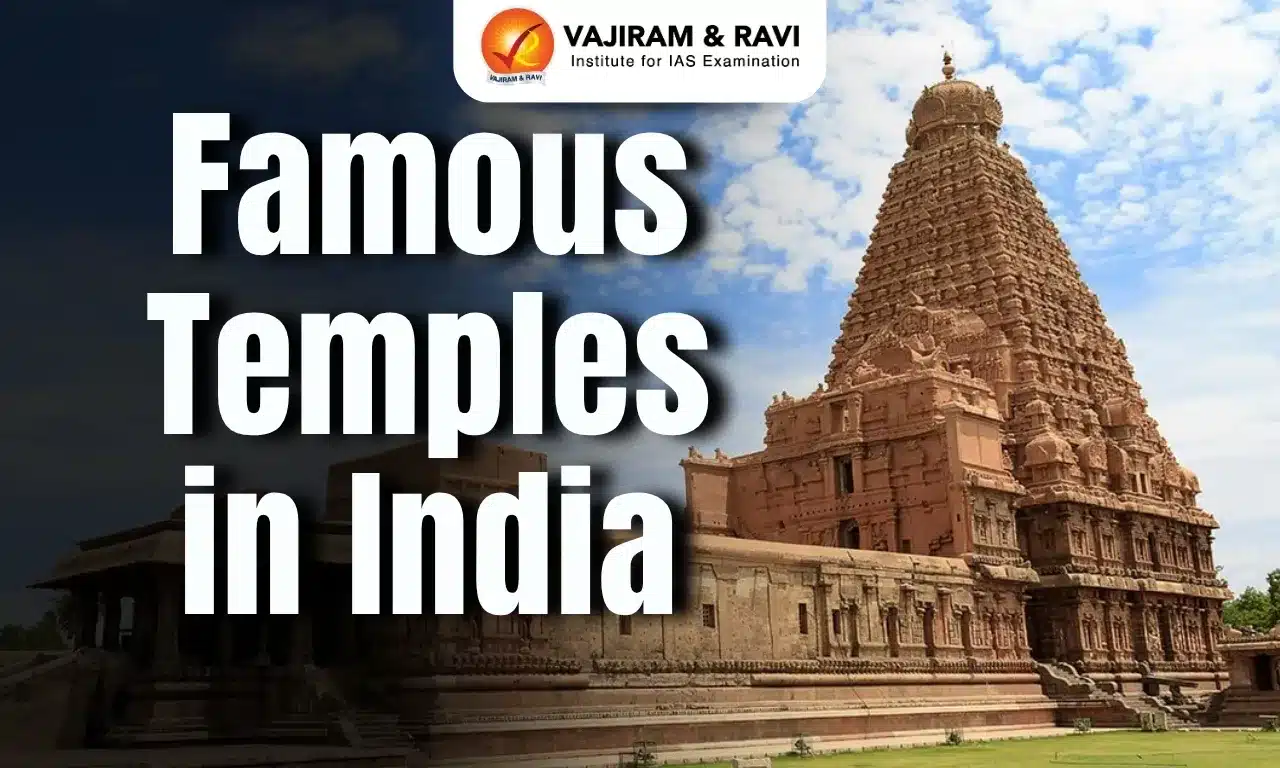
India is home to thousands of temples that reflect its rich history, religious traditions and architectural heritage. From the Himalayan shrines of Kedarnath and Badrinath to the magnificent temple complexes of Tamil Nadu and Odisha, these sacred places attract millions of devotees and tourists every year.
List of Famous Temples in India
The following table lists 20 famous temples in India and their locations.
|
Temple Name
|
Location
|
|
Kedarnath Temple
|
Rudraprayag, Uttarakhand
|
|
Khajuraho Temples
|
Chhatarpur, Madhya Pradesh
|
|
Siddhivinayak Temple
|
Mumbai, Maharashtra
|
|
Tirumala Venkateswara Temple
|
Tirumala, Andhra Pradesh
|
|
Kashi Vishwanath Temple
|
Varanasi, Uttar Pradesh
|
|
Mahabodhi Temple
|
Bodh Gaya, Bihar
|
|
Konark Sun Temple
|
Konark, Odisha
|
|
Jagannath Temple
|
Puri, Odisha
|
|
Sree Padmanabhaswamy Temple
|
Thiruvananthapuram, Kerala
|
|
Vaishno Devi Temple
|
Katra, Jammu and Kashmir
|
|
Amarnath Cave Shrine
|
Anantnag district, Jammu and Kashmir
|
|
Ramanathaswamy Temple
|
Rameswaram, Tamil Nadu
|
|
Brihadeeswara Temple
|
Thanjavur, Tamil Nadu
|
|
Meenakshi Amman Temple
|
Madurai, Tamil Nadu
|
|
Sri Ranganathaswamy Temple
|
Srirangam, Tiruchirappalli, Tamil Nadu
|
|
Somnath Temple
|
Prabhas Patan, Gujarat
|
|
Dwarkadhish Temple
|
Dwarka, Gujarat
|
|
Virupaksha Temple
|
Hampi, Karnataka
|
|
Badrinath Temple
|
Chamoli, Uttarakhand
|
|
Kamakhya Temple
|
Guwahati, Assam
|
Top 20 Famous Temples in India
India is home to many famous temples known for their religious importance, history, and architecture. Here are 20 famous temples in India and their significance.
1. Kedarnath Temple, Uttarakhand
Kedarnath Temple is one of the most famous Hindu temples in India, located in the Garhwal Himalayas of Uttarakhand.
- Location: Rudraprayag district, near the Mandakini River, at an altitude of approximately 3,583 metres.
- Presiding Deity: Lord Shiva, worshipped in the form of a Jyotirlinga.
- Religious Significance: One of the twelve Jyotirlingas and one of the four temples in Uttarakhand's Char Dham pilgrimage circuit.
- Key Feature: Its stone architecture and Himalayan setting make it an important destination for pilgrims and visitors.
2. Khajuraho Temples, Madhya Pradesh
The Khajuraho Group of Monuments is renowned for its intricate sculptures and outstanding examples of medieval Indian temple architecture.
- Location: Chhatarpur district, Madhya Pradesh.
- Historical Background: Most temples were constructed between the 10th and 11th centuries under the Chandela dynasty.
- Religious Significance: The complex includes Hindu temples dedicated to deities such as Shiva and Vishnu, as well as Jain temples.
- Key Feature: The temples feature detailed carvings depicting deities, celestial figures, everyday life and various aspects of human experience.
- UNESCO Recognition: The Khajuraho Group of Monuments was designated a UNESCO World Heritage Site in 1986.
3. Siddhivinayak Temple, Maharashtra
Shree Siddhivinayak Temple in Mumbai is one of the most prominent temples dedicated to Lord Ganesha in western India.
- Location: Prabhadevi, Mumbai, Maharashtra.
- Established: The temple was founded in 1801.
- Presiding Deity: Lord Ganesha, worshipped as the remover of obstacles and the deity of wisdom and prosperity.
- Religious Significance: Devotees visit the temple before important personal and professional undertakings, seeking Ganesha's blessings.
- Key Feature: The temple attracts large numbers of devotees, particularly on Tuesdays and during the festival of Ganesh Chaturthi.
4. Tirumala Venkateswara Temple, Andhra Pradesh
Tirumala Venkateswara Temple is one of India's most prominent Hindu pilgrimage centres and is widely known for its religious traditions and elaborate rituals.
- Location: Tirumala hills, near Tirupati, Andhra Pradesh.
- Presiding Deity: Lord Venkateswara, a form of Lord Vishnu.
- Religious Significance: The temple is an important centre of Vaishnavism, a tradition centred on the worship of Lord Vishnu and his forms.
- Architecture: The temple follows the Dravidian architectural tradition and features a richly decorated main shrine.
- Key Feature: The tradition of offering hair as an act of devotion and the preparation of the famous Tirupati Laddu prasadam.
5. Kashi Vishwanath Temple, Uttar Pradesh
Kashi Vishwanath Temple is one of the most sacred Hindu temples in Varanasi and holds a central place in the worship of Lord Shiva.
- Location: Varanasi, Uttar Pradesh, near the River Ganga.
- Presiding Deity: Lord Shiva, worshipped as Vishwanath, meaning the Lord of the Universe.
- Religious Significance: One of the twelve Jyotirlingas and a major pilgrimage destination for Shiva devotees.
- Historical Background: The temple has undergone destruction and reconstruction at different points in history. The present main temple was built in the 18th century under the patronage of Ahilyabai Holkar.
- Key Feature: Its golden domes and close association with Varanasi's sacred geography make it one of India's best-known temples.
6. Mahabodhi Temple, Bihar
The Mahabodhi Temple in Bodh Gaya is one of the most important Buddhist pilgrimage sites in the world.
- Location: Bodh Gaya, Bihar.
- Religious Significance: The site is associated with Gautama Buddha's attainment of enlightenment.
- Historical Background: The original shrine is traditionally associated with Emperor Ashoka's patronage in the 3rd century BCE, while the surviving complex reflects later phases of construction and restoration.
- Architecture: The temple is known for its pyramidal tower, carved stone features and sacred surroundings.
- Key Feature: The nearby Bodhi Tree is traditionally associated with the Buddha's enlightenment.
- UNESCO Recognition: The Mahabodhi Temple Complex was designated a UNESCO World Heritage Site in 2002.
7. Konark Sun Temple, Odisha
Konark Sun Temple is a historic monument famous for its distinctive chariot-shaped design and elaborate stone carvings.
- Location: Konark, Puri district, Odisha.
- Built By: King Narasimhadeva I of the Eastern Ganga dynasty in the 13th century.
- Presiding Deity: Surya, the Hindu Sun God.
- Architecture: The temple was designed as a monumental stone chariot, with carved wheels and horses representing the movement of the Sun God.
- Key Feature: Its sculptures depict deities, musicians, dancers and aspects of medieval Indian life.
- UNESCO Recognition: The Konark Sun Temple became a UNESCO World Heritage Site in 1984.
8. Jagannath Temple, Odisha
Jagannath Temple in Puri is one of the most important Hindu pilgrimage centres in eastern India and a major centre of Vaishnava traditions.
- Location: Puri, Odisha.
- Presiding Deities: Lord Jagannath, Lord Balabhadra and Goddess Subhadra.
- Historical Background: The present temple structure is generally associated with the 12th century and the reign of King Anantavarman Chodaganga Deva.
- Religious Significance: The temple is one of the four traditional Char Dham pilgrimage destinations.
- Key Feature: The annual Rath Yatra involves the ceremonial procession of the three deities in large decorated chariots.
- Temple Tradition: Mahaprasad prepared in the temple kitchen is an important part of its religious practices.
9. Sree Padmanabhaswamy Temple, Kerala
Sree Padmanabhaswamy Temple is a prominent religious landmark in Kerala, known for its distinctive architecture and the form in which Lord Vishnu is worshipped.
- Location: Thiruvananthapuram, Kerala.
- Presiding Deity: Lord Vishnu, reclining on the serpent Anantha.
- Architecture: The temple combines elements of Kerala and Dravidian architectural styles, including a towering entrance structure and intricate stonework.
- Religious Significance: It is an important centre of Vaishnava worship and has strong historical associations with the Travancore royal family.
- Key Feature: The temple received widespread attention following the discovery of valuable objects in its underground vaults.
10. Vaishno Devi Temple, Jammu and Kashmir
The Vaishno Devi shrine is one of India's most visited pilgrimage destinations dedicated to the Divine Mother.
- Location: Trikuta Hills, near Katra, Jammu and Kashmir.
- Presiding Deity: Mata Vaishno Devi, worshipped as a manifestation of the Divine Mother.
- Religious Significance: The shrine is associated with Shakti worship and attracts devotees from across India.
- Pilgrimage: Devotees undertake a mountain journey to reach the cave shrine.
- Key Feature: Inside the cave, the goddess is worshipped through three natural rock formations known as Pindis, representing the forms of Mahakali, Mahalakshmi and Mahasaraswati in the temple tradition.
11. Amarnath Cave Shrine, Jammu and Kashmir
The Amarnath Cave Shrine is a major Himalayan pilgrimage destination associated with Lord Shiva.
- Location: The Himalayas in the Anantnag district of Jammu and Kashmir.
- Presiding Deity: Lord Shiva.
- Religious Significance: The cave is associated with the Hindu tradition of Shiva revealing the secret of immortality to Goddess Parvati.
- Key Feature: A naturally formed ice stalagmite, commonly worshipped as the ice lingam, develops inside the cave under suitable climatic conditions.
- Pilgrimage: The annual Amarnath Yatra is organised during the summer, subject to weather, security arrangements and official permissions.
12. Ramanathaswamy Temple, Tamil Nadu
Ramanathaswamy Temple is one of the most important Shiva temples in southern India and a major destination for Hindu pilgrims.
- Location: Rameswaram island, Tamil Nadu.
- Presiding Deity: Lord Shiva, worshipped as Ramanathaswamy.
- Religious Significance: One of the twelve Jyotirlingas and one of the four traditional Char Dham pilgrimage destinations.
- Historical Association: Hindu tradition connects Rameswaram with the Ramayana and the worship of Lord Shiva by Lord Rama.
- Architecture: The temple is famous for its long pillared corridors, carved pillars and expansive temple complex.
- Key Feature: Its sacred water tanks, known as theerthams, are associated with ritual bathing and pilgrimage practices.
13. Brihadeeswara Temple, Tamil Nadu
Brihadeeswara Temple, also known as the Big Temple, is a landmark of Chola architecture and one of India's most celebrated historic temples.
- Location: Thanjavur, Tamil Nadu.
- Built By: Chola king Rajaraja I in the early 11th century.
- Presiding Deity: Lord Shiva.
- Architecture: The temple is known for its massive vimana, stone construction and monumental scale.
- Historical Significance: It reflects the political power, artistic achievements and temple-building traditions of the Chola dynasty.
- UNESCO Recognition: It forms part of the Great Living Chola Temples, inscribed on the UNESCO World Heritage List in 1987.
14. Meenakshi Amman Temple, Tamil Nadu
Meenakshi Amman Temple is one of the most recognisable temple complexes in southern India, celebrated for its elaborate architecture and religious festivals.
- Location: Madurai, Tamil Nadu.
- Presiding Deities: Goddess Meenakshi, a form of Parvati, and Lord Sundareswarar, a form of Shiva.
- Architecture: The complex features colourful gopurams, intricately carved sculptures, pillared halls and numerous shrines.
- Religious Significance: The temple is central to Madurai's religious and cultural life.
- Key Feature: The annual Meenakshi Thirukalyanam festival celebrates the divine marriage of Meenakshi and Sundareswarar and attracts large numbers of devotees.
15. Sri Ranganathaswamy Temple, Tamil Nadu
Sri Ranganathaswamy Temple at Srirangam is a major centre of Vaishnavism and one of the most important temples dedicated to Lord Vishnu.
- Location: Srirangam, Tiruchirappalli, Tamil Nadu.
- Presiding Deity: Lord Ranganatha, a reclining form of Lord Vishnu.
- Religious Significance: The temple has a central place in the Sri Vaishnava tradition and is associated with the devotional hymns of the Alvars.
- Architecture: Its extensive complex contains multiple enclosures, shrines, pillared halls and monumental gateway towers.
- Historical Background: The temple developed over several centuries under different South Indian dynasties.
- Key Feature: Its vast layout and numerous gateway towers make it a distinctive example of South Indian temple architecture.
16. Somnath Temple, Gujarat
Somnath Temple is one of the most important Shiva pilgrimage sites in India, with a long history of destruction and reconstruction.
- Location: Prabhas Patan, near Veraval, Gujarat.
- Presiding Deity: Lord Shiva.
- Religious Significance: One of the twelve Jyotirlingas.
- Historical Background: The temple has been rebuilt several times throughout history. The present structure was reconstructed after India's independence and inaugurated in 1951.
- Architecture: The current temple follows the traditional Chaulukya style of temple architecture.
- Key Feature: Its location on the Arabian Sea coast and its historical significance make it a prominent pilgrimage destination.
17. Dwarkadhish Temple, Gujarat
Dwarkadhish Temple, also known as Jagat Mandir, is an important Hindu pilgrimage site associated with Lord Krishna.
- Location: Dwarka, Gujarat.
- Presiding Deity: Lord Krishna, worshipped as Dwarkadhish, or the King of Dwarka.
- Religious Significance: Dwarka is one of the four traditional Char Dham pilgrimage destinations.
- Historical Association: Hindu traditions identify Dwarka with the kingdom of Lord Krishna.
- Architecture: The temple is known for its towering spire, carved stone structure and traditional temple design.
- Key Feature: It remains a major centre of Krishna worship, particularly during festivals such as Janmashtami.
18. Virupaksha Temple, Karnataka
Virupaksha Temple is a historic Hindu temple in Hampi that continues to function as an active place of worship.
- Location: Hampi, Vijayanagara district, Karnataka.
- Presiding Deity: Lord Shiva, worshipped as Virupaksha.
- Historical Background: Although the temple's origins predate the Vijayanagara Empire, it received significant patronage during the empire's rule.
- Architecture: Its prominent features include a towering entrance gateway, pillared halls and traditional South Indian temple structures.
- Religious Significance: It is an important pilgrimage centre in the Hampi region.
- UNESCO Recognition: The temple is situated within the UNESCO World Heritage Site of Hampi, which preserves the remains of the Vijayanagara capital.
19. Badrinath Temple, Uttarakhand
Badrinath Temple is a major Himalayan pilgrimage site dedicated to Lord Vishnu and an important destination in the Char Dham tradition.
- Location: Chamoli district, Uttarakhand, along the Alaknanda River.
- Presiding Deity: Lord Vishnu, worshipped as Badrinarayan.
- Religious Significance: One of the four traditional Char Dham pilgrimage destinations and a key centre of Vaishnava worship.
- Geographical Setting: The temple lies amid the Himalayan mountains and is generally accessible during the warmer months.
- Key Feature: Its colourful façade and religious importance make it one of Uttarakhand's best-known pilgrimage sites.
20. Kamakhya Temple, Assam
Kamakhya Temple is one of the most important centres of goddess worship in India and a prominent pilgrimage destination in northeastern India.
- Location: Nilachal Hill, Guwahati, Assam.
- Presiding Deity: Goddess Kamakhya.
- Religious Significance: One of the prominent Shakti Peethas and an important centre of Shaktism and Tantric traditions.
- Distinctive Tradition: The main shrine is associated with a natural rock formation symbolising the goddess's creative power rather than a conventional anthropomorphic idol.
- Key Feature: The annual Ambubachi Mela attracts devotees, ascetics and visitors from across India.
- Architecture: The temple's distinctive structure combines elements of regional and broader Indian temple-building traditions.
Famous Temples in India by Region
India's temple architecture varies across regions, reflecting local building traditions, dynastic histories and religious practices.
Famous Temples in North India
North India is home to ancient pilgrimage centres, Himalayan shrines and temples associated with major Hindu traditions.
- Kedarnath Temple, Uttarakhand: One of the twelve Jyotirlingas dedicated to Lord Shiva.
- Badrinath Temple, Uttarakhand: An important pilgrimage destination dedicated to Lord Vishnu.
- Kashi Vishwanath Temple, Uttar Pradesh: A major Shiva temple located in Varanasi.
- Vaishno Devi Temple, Jammu and Kashmir: A prominent pilgrimage shrine dedicated to Mata Vaishno Devi.
- Amarnath Cave Shrine, Jammu and Kashmir: Famous for its naturally formed ice lingam associated with Lord Shiva.
Famous Temples in South India
South India is particularly renowned for its large temple complexes, monumental gopurams, detailed stone carvings and long-standing religious traditions.
- Meenakshi Amman Temple, Tamil Nadu: Famous for its colourful gateway towers and elaborate sculptures.
- Brihadeeswara Temple, Tamil Nadu: A major example of Chola architecture and part of the Great Living Chola Temples.
- Ramanathaswamy Temple, Tamil Nadu: Known for its long pillared corridors and sacred water tanks.
- Sri Ranganathaswamy Temple, Tamil Nadu: One of the most important Vaishnava pilgrimage centres.
- Tirumala Venkateswara Temple, Andhra Pradesh: A major pilgrimage destination dedicated to Lord Vishnu.
- Sree Padmanabhaswamy Temple, Kerala: Renowned for its deity in the reclining form of Lord Vishnu.
- Virupaksha Temple, Karnataka: A historic temple that continues to function as a place of worship.
Famous Temples in East India
Eastern India has a rich temple heritage shaped by regional dynasties, Hindu traditions and Buddhist history.
- Jagannath Temple, Odisha: Famous for the annual Rath Yatra and its association with Lord Jagannath.
- Konark Sun Temple, Odisha: A UNESCO World Heritage Site dedicated to Surya.
- Mahabodhi Temple, Bihar: A major Buddhist pilgrimage site associated with Gautama Buddha's enlightenment.
- Kamakhya Temple, Assam: An important Shakti Peetha and centre of Tantric traditions.
Famous Temples in West India
Western India features temples associated with major Hindu pilgrimage traditions and distinctive architectural styles.
- Somnath Temple, Gujarat: One of the twelve Jyotirlingas dedicated to Lord Shiva.
- Dwarkadhish Temple, Gujarat: A major pilgrimage centre associated with Lord Krishna.
- Siddhivinayak Temple, Maharashtra: A prominent temple dedicated to Lord Ganesha.
Famous Temples in Central India
Central India preserves important examples of medieval temple architecture and sculpture.
Khajuraho Temples, Madhya Pradesh: Famous for their intricate carvings and architectural excellence, the temples are part of a UNESCO World Heritage Site.
UNESCO World Heritage Sites Associated with Famous Temples in India
Several important Indian temples and temple complexes are recognised by UNESCO for their outstanding cultural and historical value.
|
Temple or Monument
|
State
|
Historical and Architectural Significance
|
|
Khajuraho Group of Monuments
|
Madhya Pradesh
|
Known for medieval Hindu and Jain temple architecture and intricate sculptures.
|
|
Konark Sun Temple
|
Odisha
|
A 13th-century temple designed as a monumental stone chariot dedicated to Surya.
|
|
Great Living Chola Temples
|
Tamil Nadu
|
A group of major Chola-era temples, including Brihadeeswara Temple in Thanjavur.
|
|
Mahabodhi Temple Complex
|
Bihar
|
Associated with Gautama Buddha's enlightenment and an important centre of Buddhist pilgrimage.
|
|
Hampi
|
Karnataka
|
A historic landscape containing Virupaksha Temple and the remains of the Vijayanagara capital.
|
These sites demonstrate India's architectural achievements and the historical role of religious institutions in art, culture and society.
Famous Temples in India FAQs
Q1: Which are the most famous temples in India?
Ans: Some of the most famous temples in India include Kedarnath Temple, Kashi Vishwanath Temple, Tirumala Venkateswara Temple, Jagannath Temple, Somnath Temple, and Meenakshi Amman Temple.
Q2: Which are the four Char Dham pilgrimage sites in India?
Ans: The four traditional Char Dham pilgrimage sites are Badrinath in Uttarakhand, Dwarka in Gujarat, Jagannath Puri in Odisha, and Rameswaram in Tamil Nadu. They are associated with important Hindu pilgrimage traditions across India.
Q3: Which temples in India are associated with the 12 Jyotirlingas?
Ans: The Kedarnath Temple, Kashi Vishwanath Temple, Ramanathaswamy Temple, and Somnath Temple are among the 12 Jyotirlingas dedicated to Lord Shiva. These shrines hold great religious significance for Hindu devotees.
Q4: Which is the richest temple in India?
Ans: The Sree Padmanabhaswamy Temple in Thiruvananthapuram, Kerala, is widely known for its valuable treasure discovered in underground vaults.
Q5: Which temple in India is associated with Gautama Buddha's enlightenment?
Ans: The Mahabodhi Temple in Bodh Gaya, Bihar, is associated with Gautama Buddha's attainment of enlightenment and is one of the most important Buddhist pilgrimage sites.