PM RAHAT Scheme

PM RAHAT Scheme

PM RAHAT Scheme Latest News

Recently, the government of India launched the PM RAHAT (Road Accident Victim Hospitalization and Assured Treatment) Scheme.

About PM RAHAT Scheme

  • It has prioritized life-saving intervention, financial certainty for hospitals, and a structured emergency response system for accident victims.

Features of PM RAHAT Scheme

  • It will be integrated with the Emergency Response Support System (ERSS) 112 enabling victims, Good Samaritans to dial 112 to locate the nearest designated hospital and request ambulance assistance.
  • Under the Scheme, every eligible road accident victim on any category of road will be entitled to cashless treatment up to ₹1.5 lakh per victim.
  • It is implemented through amalgamating the Electronic Detailed Accident Report (eDAR) platform of the Ministry of Road Transport and Highways with the Transaction Management System (TMS 2.0) of the National Health Authority.
  • Reimbursement: To hospitals will be made through the Motor Vehicle Accident Fund (MVAF).
    • In cases where the offending vehicle is insured, payment will be drawn from contributions made by General Insurance Companies.
    • In uninsured and Hit & Run cases, payment will be made through budgetary allocation by the Government of India.
  • Grievance Redressal: Grievances will be addressed by a Grievance Redressal Officer nominated by the District Road Safety Committee chaired by the District Collector / District Magistrate.

Source: PIB


PM RAHAT Scheme FAQs

Q1: What is the cashless treatment limit under PM RAHAT Scheme?

Ans: ₹1.5 lakh

Q2: What does PM RAHAT stand for?

Ans: Pradhan Mantri Road Accident Hotline And Assistance for Treatment Scheme

Startup India Fund of Funds 2.0

Startup India Fund of Funds 2.0

About Startup India Fund of Funds 2.0

Startup India Fund of Funds 2.0 is launched under the Startup India initiative.

Startup India Fund of Funds 2.0 Latest News

Recently, the Union Cabinet chaired by the Prime Minister of India approved the establishment of the Startup India Fund of Funds 2.0 (Startup India FoF 2.0).

About Startup India Fund of Funds 2.0

  • It is launched under the Startup India initiative.
  • It is designed to accelerate the next phase of India’s startup journey by mobilising long-term domestic capital, strengthening the venture capital ecosystem, and supporting innovation-led entrepreneurship across the country.
  • Financial Outlay: A total corpus of Rs. 10,000 crore for the purpose of mobilizing venture capital for the startup ecosystem of the country.

Features of the Scheme

  • It will have a targeted, segmented funding approach to support
  • Deep tech and tech-driven innovative manufacturing: Prioritizing breakthroughs in high-tech areas that require patient, long-term capital.
  • Empowering early-growth stage founders: Providing a safety net for new and innovative ideas, reducing early-stage failures caused by lack of funding.
  • National reach: Encouraging investment beyond major metros so that innovation thrives in every corner of the country.
  • Designed to address high‑risk capital gaps: Directing greater capital to priority areas which are important for self-reliance and boosting economic growth.
  • Strengthen India’s domestic venture capital base, particularly smaller funds to further boost the domestic investment landscape.

Source: PIB

Startup India Fund of Funds 2.0 FAQs

Q1: What is the corpus size of Startup India Fund of Funds 2.0?

Ans: ₹10,000 crore

Q2: How does Startup India Fund of Funds 2.0 invest in startups?

Ans: Invests in SEBI-registered Alternative Investment Funds (AIFs)

Urban Challenge Fund

Urban Challenge Fund

Urban Challenge Fund Latest News

Recently, the Union Cabinet chaired by the Prime Minister of India approved the launch of the Urban Challenge Fund (UCF).

About Urban Challenge Fund

  • It is a new centrally sponsored scheme of the Ministry of Housing and Urban Affairs.
  • It aims to build resilient, productive, inclusive and climate-responsive cities, positioning those as key driver of the country’s next phase of economic growth.
  • Financial Outlay: Total Central assistance of ₹1 lakh crore.
  • Tenure: It will be operational from FY 2025–26 to FY 2030–31, with an extendable implementation period up to FY 2033–34.

Features of the Urban Challenge Fund

  • A minimum of 50 per cent of project financing has to be mobilised from market sources, including municipal bonds, bank loans and Public–Private Partnerships (PPPs).
    • The remaining share may be contributed by States, Union Territories (UTs), Urban Local Bodies (ULBs) or other sources.
  • Projects will be selected through a transparent and competitive challenge mode, ensuring support to high-impact and reform-oriented proposals.
  • Focus area: A strong thrust on reforms across Urban Governance, Market & Financial systems, Operational efficiency, and Urban Planning
  • A dedicated ₹5,000 crore corpus will enhance the creditworthiness of 4223 cities including Tier- II and Tier-III cities, particularly for first-time access to market finance.
  • The Fund will cover:
    • All cities with a population of 10 lakh or more (2025 estimates);
    • All State and Union Territory capitals not covered above; and
    • Major industrial cities with a population of 1 lakh or more
    • Additionally, all ULBs in hilly States, North-Eastern States, and smaller ULBs with population below 1 lakh will be eligible for support under the Credit Repayment Guarantee Scheme.

Source: PIB

Urban Challenge Fund FAQs

Q1: What is the primary objective of the Urban Challenge Fund (UCF)?

Ans: To support transformative and bankable urban projects

Q2: Which cities are eligible for the Urban Challenge Fund?

Ans: Cities with a population above 10 lakh, state capitals, and major industrial cities

Cheer Pheasant

Cheer Pheasant

Cheer Pheasant Latest News

Recently, it is observed that hunting and habitat degradation remain the biggest threats of ground-dwelling Cheer Pheasant.

About Cheer Pheasant

  • It is also known as Wallich's pheasant or chir pheasant, belongs to the pheasant family, Phasianidae.
  • Habitat: It is found in steep, rocky hillsides studded with scrub, stunted trees and grassy slopes between 1,200 and 3,350 metres.
  • Distribution: Western Himalaya from northern Pakistan through Kashmir, Himachal Pradesh and Uttarakhand, to central Nepal.

Characteristics of Cheer Pheasant

  • The cheer pheasant’s nest is a simple ground scrape, tucked beneath undergrowth or sheltered by rocks.
  • It exhibits high natal philopatry­—individuals often return to, or remain near, the area where they were born to breed.
  • It depends on early successional grasslands created by traditional grass cutting and burning—practices.
  • Diet: It depends on items such as roots, tubers, bulbs, buried seeds and possibly insect larvae and earthworms.

Conservation Status of Cheer Pheasant

  • IUCN: Vulnerable
  • CITES: Appendix I
  • Wildlife (Protection) Act, 1972: Schedule I

Source: DTE

Cheer Pheasant FAQs

Q1: What is the conservation status of Cheer Pheasant?

Ans: Vulnerable

Q2: Where is the primary habitat of Cheer Pheasant?

Ans: Steep, rocky hillsides with scrub and grassy slopes

Army Ant Species

Army Ant Species

Army Ant Species Latest News

Researchers from Karnataka and Odisha have discovered two new species of army ants namely Aenictus chittoorensis and Aenictus lankamallensis in the Eastern Ghats of Andhra Pradesh.

About Army Ant Species

  • Army ants are defined as a nomadic species of ants that lack a permanent nest.
  • They belong to one of the subfamilies of ants called the Dorylinae.
  • Habitat: Army ants are highly aggressive predators found mainly in tropical ecosystems.

Characteristics of Army Ant Species

  • They do not build permanent nests.
  • They form temporary living structures known as ‘bivouacs’, made entirely from the bodies of worker ants.
  • They are social insects, form massive colonies that conduct coordinated raids, consuming insects and small animals in their path.
  • They are distinguished by their large, sharp mandibles, stinging ability and heavy reliance on chemical pheromones to navigate and communicate.
  • These ants are practically blind and rely on a pheromonal system with which they mark their paths and by which they follow paths taken by others. 
  • They have a single queen ant who lays all the eggs and female workers that tend the young and collect food for the colony.
  • Ecological Role: As keystone predators they play a critical role in regulating arthropod populations and shaping forest biodiversity by consuming large quantities of invertebrates on a daily basis.

Source: DH

Army Ant Species FAQs

Q1: What is unique about Army Ant colonies?

Ans: They form massive colonies with coordinated raids

Q2: How do Army Ants primarily communicate?

Ans: Through pheromones

PM-DAKSH Scheme

PM-DAKSH scheme

PM-DAKSH Scheme Latest News

Recent data released in the Lok Sabha revealed that Less than half of the students trained under the PM-DAKSH scheme between 2021 and 2024 were placed.

About PM-DAKSH Scheme

  • The Pradhan Mantri Dakshata Aur Kushalata Sampanna Hitgrahi (PM-DAKSH) Yojana, is a Central Sector Scheme that was launched during 2020-21.
  • Aim: To provide skills through good quality institutions so that candidates from its target group can find employment.
    • There are four types of skill development training programmes under this namely, Up-skilling/Re-skilling, Short Term Training Programmes, Long Term Training Programmes, and Entrepreneurship Development Programme.
  • Target Group:  Scheduled Castes, Other Backward Castes, Economically Weaker Sections, and the De-notified Tribes in India (DNTs), ‘Safai Karamcharis’ or waste pickers.
  • Eligibility
    • Age: 18-45 years
    • OBC and EWS candidates must have a family income below Rs. 3 lakh, while there is no income limit for SC, DNT, or Safai Mitras/Waste Pickers.
  • It has been merged with the Pradhan Mantri Kaushal Vikas Yojana of the Ministry of Skill Development and Entrepreneurship.

Source: TH

PM-DAKSH scheme FAQs

Q1: Who is eligible for PM-DAKSH Scheme?

Ans: Marginalised persons of SC, OBC, EBC, DNT, and sanitation workers

Q2: What is the objective of PM-DAKSH Scheme?

Ans: To provide skill development training to marginalized groups⁵

Papikonda National Park

Papikonda National Park

Papikonda National Park Latest News

The adult male tiger, named ‘Explorer’, was reintroduced into the wild in the Papikonda National Park (PNP) in Andhra Pradesh as part of Operation Stripes.

About Papikonda National Park

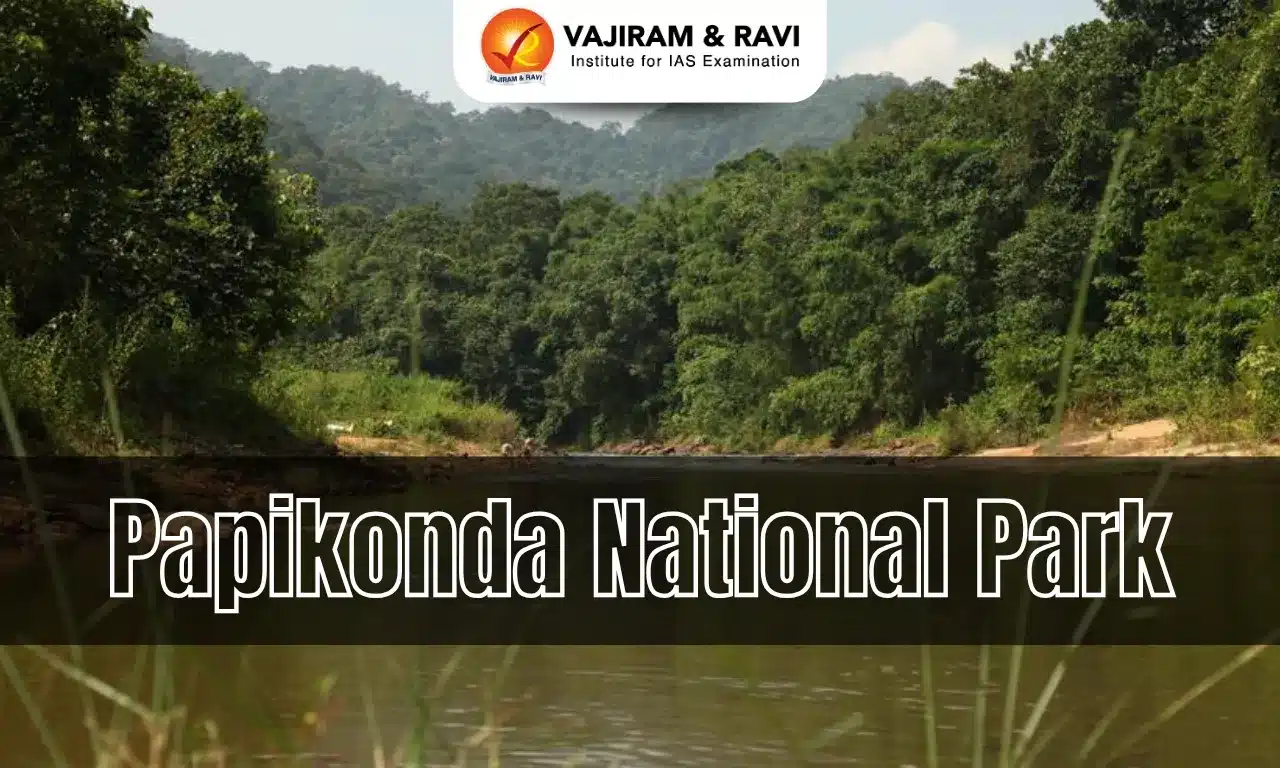
  • Location: It is located in the East Godavari and West Godavari Districts of Andhra Pradesh.
  • It lies along the banks of the Godavari River.
  • Terrain: It encompasses a rugged landscape with steep slopes, hills, and deep valleys. 
  • Mountains: There are 62 named mountains in the park. Devara Konda is the highest point. The most prominent mountain is Verala Konda.
  • It has been recognized as an Important Bird and Biodiversity Area by BirdLife International.
  • Vegetation: The park is characterized by tropical, moist deciduous forests mixed with patches of semi-evergreen and dry deciduous forests.
  • Flora: The park is home to several types of trees, including teak, rosewood, sandalwood, bamboo, eucalyptus, sal, mahua, pterocarpus, terminalia, and cassia.
  • Fauna:  Bengal tiger, Indian leopard, sloth bear, and Indian wild dog (dhole).
    • A unique dwarf breed of goat known locally as the “kanchu mekha” originates in this region.

Source: TH

Papikonda National Park FAQs

Q1: Which river flows through Papikonda National Park?

Ans: Godavari River

Q2: What is the main attraction of Papikonda National Park?

Ans: Four Horned Antelope

White-Rumped Vulture

White-Rumped Vulture

White-Rumped Vulture Latest News

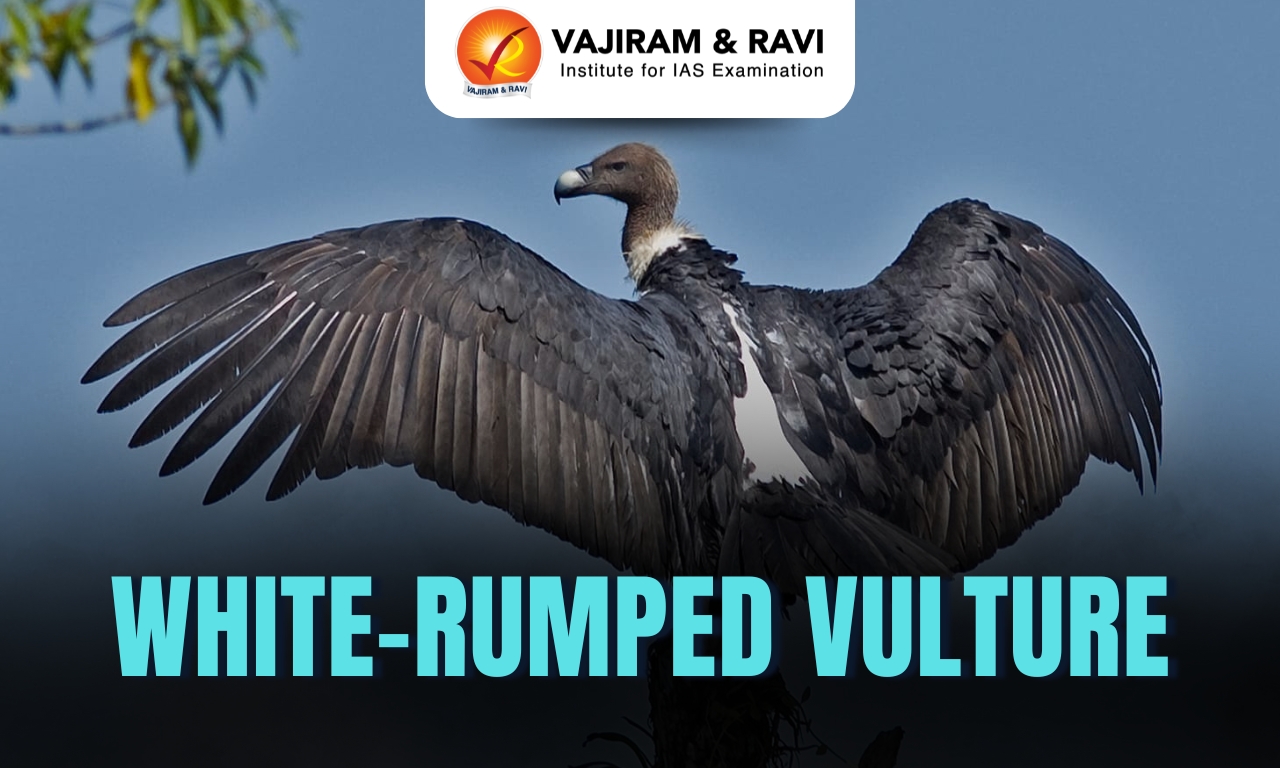
Forest officials recently rescued a critically endangered White-rumped vulture found weak and grounded at Mampad near Nilambur, Kerala.

About White-Rumped Vulture

  • It is a small Old World vulture native to South and Southeast Asia.
  • Scientific name: Gyps bengalensis
  • It is also known as Indian White-backed Vulture or Oriental White-backed Vulture.
  • Like other vultures, it feeds mostly on carcasses, which it finds by soaring high in thermals and spotting other scavengers. 
  • Distribution: Pakistan, India, Bangladesh, Nepal, Bhutan, Myanmar (Burma), Thailand, Laos, Cambodia, and southern Vietnam.
  • Habitat
    • Found mostly in plains and less frequently in hilly regions
    • It can also be seen in villages and cities near to cultivation.

White-Rumped Vulture Population

  • In the 1980s, the global population was estimated at several million individuals, and it was thought to be “the most abundant large bird of prey in the world”.
  • As of 2021, the global population was estimated at less than 6,000 mature individuals.
  • The main reason for this big decline is a medicine called diclofenac
  • This medicine, used for farm animals, poisons the vultures when they eat dead animals.
  • It causes their kidneys to fail.

White-Rumped Vulture Features

  • It has an unfeathered head and neck, very broad wings, and short tail feathers.
  • Adults are 75 to 85 cm tall, their wing span is 180 to 210 cm, and their weight ranges from 3.5 to 7.5 kg.
  • The sexes are approximately equal in size.
  • Adults are darker than juveniles, with blackish plumage, a white neck-ruff, and a white patch of feathers on the lower back and upper tail, from which their common name is derived.
  • There is a pale grey patch on the upper surface of the wings, visible when the wings are folded. The undersides of the wings are a dark slate to brownish color.

White-Rumped Vulture Conservation Status

It is classified as 'Critically Endangered' under the IUCN Red List.

Source: TH


White-Rumped Vulture FAQs

Q1: In which regions is the White-Rumped Vulture native?

Ans: It is native to South and Southeast Asia.

Q2: What are the other common names of the White-Rumped Vulture?

Ans: It is also known as the Indian White-backed Vulture or Oriental White-backed Vulture.

Q3: What type of habitat does the White-Rumped Vulture prefer?

Ans: It is mostly found in plains and less frequently in hilly regions, and can also be seen near villages and cultivated areas.

Q4: What is the conservation status of the White-Rumped Vulture according to the IUCN Red List?

Ans: It is listed as Critically Endangered.

Chincha Kingdom

Chincha Kingdom

Chincha Kingdom Latest News

New archaeological evidence reveals that seabird guano – nutrient-rich bird droppings - may have been a major factor in the rise of Peru’s precolonial Chincha Kingdom.

About Chincha Kingdom

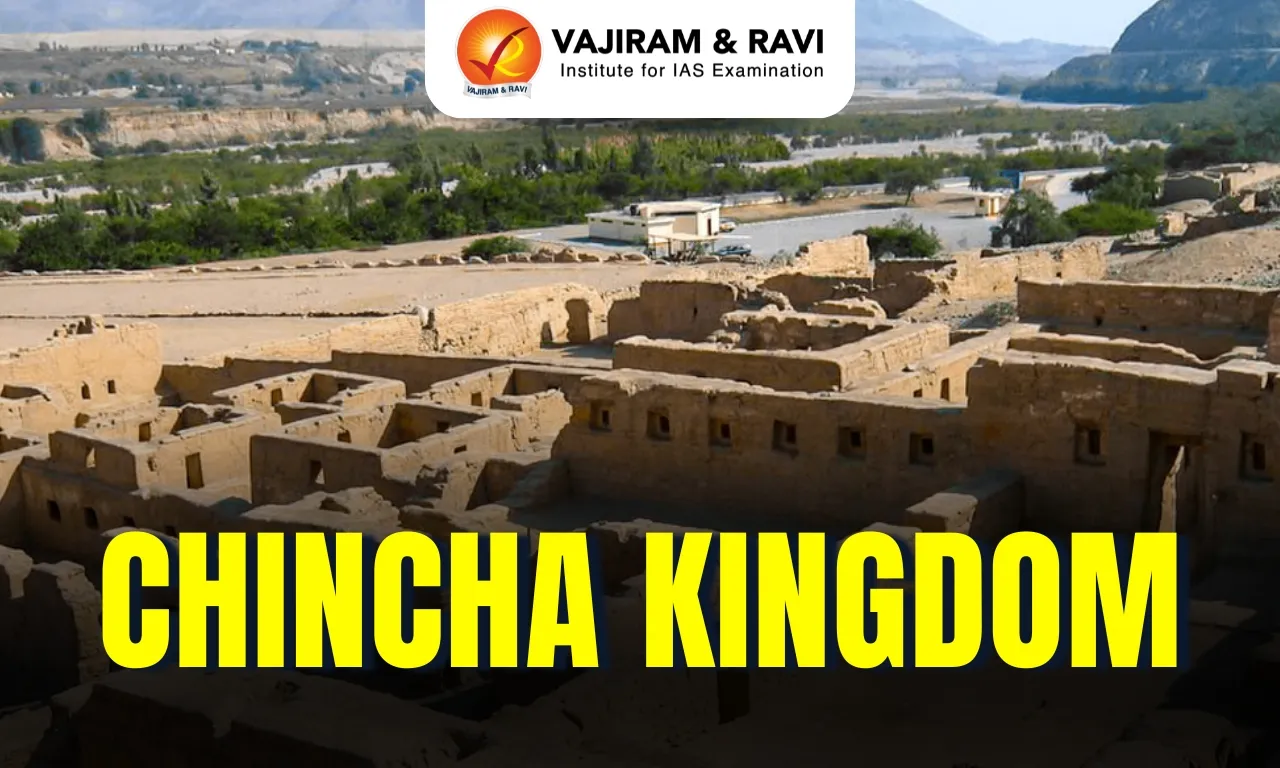
  • The 'Chincha Kingdom,' which was established in the coastal region of modern-day Peru, was a powerful ancient state that flourished before the rise of the Inca Empire.
  • It ruled the Chincha Valley, about 130 miles south of Lima (capital of Peru).
  • The Chincha Kingdom and its culture were very strong between 900 CE and 1450 CE.  This time is known as the Late Intermediate Period in pre-Columbian Peru.
  • It was a large-scale society comprising an estimated 100,000 people. 
  • It was organised into specialist communities such as fisherfolk, farmers, and merchants
  • The Chinchas did not build enormous cities but left important marks in their religious and administrative constructions. 
  • Their temples, palaces, and fortresses were built mainly with adobe, a technique they mastered skillfully. 
  • They applied stucco to decorate walls, shaping figures of fish heads, gannets, and seabirds. 
  • The dwellings of most of their inhabitants were built around these enclosures, made with mats and reeds.
  • An important old ruin linked to the Chincha is La Centinela, found near the city of Chincha Alta.
  • Decline:
    • Conquered by the Inca Empire around 1476 CE.
    • Later affected by Spanish conquest in the 16th century.
      The population drastically declined due to diseases and colonization.
  • A new analysis suggests that the secret to the Chincha Kingdom's prosperity was seabird droppings (guano). 
    • The analysis indicates that the nutrient-rich droppings, high in nitrogen, acted as a fertilizer, increasing corn yields and significantly contributing to the economic development of the time.

Source: EA


Chincha Kingdom FAQs

Q1: Where was the Chincha Kingdom established?

Ans: It was established in the coastal region of modern-day Peru.

Q2: During which period did the Chincha Kingdom flourish?

Ans: It flourished between 900 CE and 1450 CE.

Q3: How was Chincha society organized?

Ans: It was organized into specialist communities such as fisherfolk, farmers, and merchants.

Q4: What is an important archaeological ruin linked to the Chincha Kingdom?

Ans: La Centinela is an important ruin linked to the Chincha Kingdom.

Q5: Why did the population of the Chincha Kingdom drastically decline?

Ans: The population declined due to diseases and colonization.

Semaglutide

Semaglutide

Semaglutide Latest News

Hyderabad-based Natco Pharma recently received approval from the Central Drugs Standard Control Organisation (CDSCO) to manufacture and market generic semaglutide injection in India.

About Semaglutide

  • It belongs to a class of medications known as glucagon-like peptide-1 receptor agonists, or GLP-1 RAs. 
  • It mimics the GLP-1 hormone, released in the gut in response to eating.
  • One role of GLP-1 is to prompt the body to produce more insulin, which reduces blood sugar (glucose).
  • For that reason, semaglutide is used for the following:
    • to control blood sugar levels in certain patients with type 2 diabetes (a condition in which blood sugar is too high because the body does not make or use insulin normally).
    • to reduce the risk of a heart attack, stroke, or death in adults with type 2 diabetes and heart and blood vessel disease.
    • to reduce the risk of a heart attack, stroke, or death in adults who are obese or overweight and have heart and blood vessel disease.
    • to reduce the risk of worsening of kidney disease and death in certain adults with type 2 diabetes and kidney disease
    • to assist with weight loss in certain people who are obese or overweight and have weight-related medical problems.

Source: CN


Semaglutide FAQs

Q1: What class of medications does semaglutide belong to?

Ans: Semaglutide belongs to the class of medications known as glucagon-like peptide-1 receptor agonists (GLP-1 RAs).

Q2: What hormone does semaglutide mimic in the body?

Ans: Semaglutide mimics the GLP-1 hormone, which is released in the gut in response to eating.

Q3: When is the GLP-1 hormone released in the body?

Ans: GLP-1 is released in the gut in response to eating food.

Q4: How does semaglutide help reduce blood sugar levels?

Ans: Semaglutide increases insulin production, which reduces blood sugar (glucose) levels.

India’s Power Sector – Transitioning From Coal Backbone to Renewable Dominance For Net Zero

India’s Power Sector - Transitioning From Coal Backbone to Renewable Dominance For Net Zero

India’s Power Sector Latest News

  • A new study by NITI Aayog titled “Scenarios Towards Viksit Bharat and Net Zero” outlines possible pathways for India’s electricity transition up to 2070.
  • While coal currently dominates India’s electricity generation, the report projects a long-term structural shift toward renewable energy (RE).
  • This shift will be supported by nuclear expansion, storage technologies, and possible decarbonisation of coal through Carbon Capture, Utilisation and Storage (CCUS).
  • The study examines two pathways: Current Policy Scenario (CPS) – Continuation of existing policies, and Net Zero Scenario (NZS) – Accelerated pathway aligned with India’s 2070 net-zero target.

Present Electricity Landscape - Coal Still the Backbone

  • Coal accounts for about 74% of electricity generation, providing low-cost base-load power, grid stability, and round-the-clock reliability.
  • Installed capacity (December 2025):
    • Total: 513 GW
    • Fossil-based: 48%
    • Renewable: 50%
    • Nuclear: 1.7%
  • However, despite renewables constituting 50% of installed capacity, their contribution to actual electricity generation remains only about 22% (2024-25).

Structural Constraints in Renewable Energy

  • The gap between renewable capacity and actual generation is due to following structural challenges -
    • Low capacity utilisation factor (CUF): Solar and wind operate below maximum potential output.
    • Intermittency and variability: Solar and wind are weather-dependent, leading to curtailment, dispatch challenges, and grid instability risks.
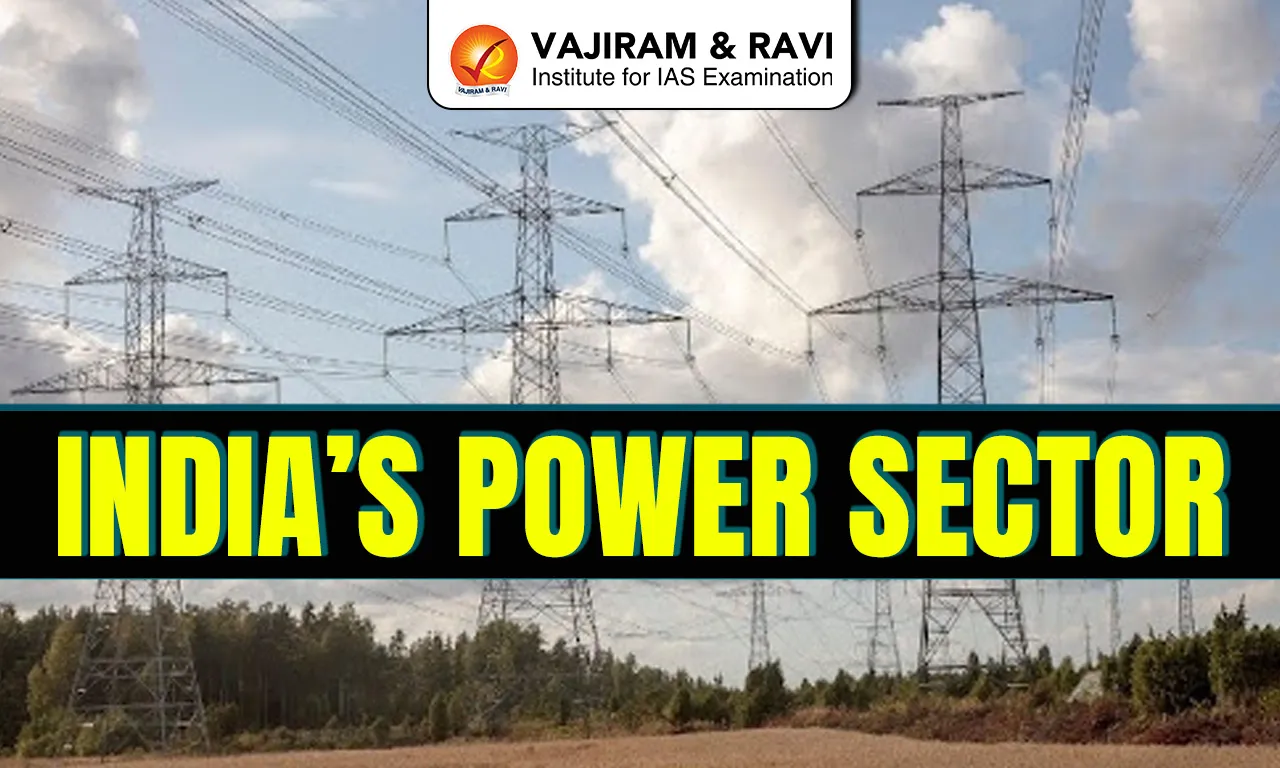
    • Grid constraints: Limited transmission capacity, and inadequate system flexibility.
    • Storage deficit: Lack of large-scale long-duration energy storage. 
  • Because of these constraints, coal continues to provide essential balancing power.

Electricity Mix Projections up to 2070

  • Under CPS:
    • Renewable share in generation is expected to increase from 20% (2024-25) to over 80% (2070). The respective share of coal and nuclear will be coal share [74% → 6–10%], and nuclear [3% → 5–8%].
    • Coal capacity may rise from 268 GW (2025) to peak at 450–470 GW by 2050, and gradually decline afterward.
  • Under NZS:
    • Coal-based generation could fall to zero by 2070, and coal capacity may peak earlier at 420–435 GW by 2045, and decline sharply thereafter.
    • Renewables become the dominant backbone of the grid.

Massive Storage Expansion Required

  • A renewables-heavy grid demands unprecedented storage capacity.
  • Battery Energy Storage Systems (BESS) to scale up from less than 50 GW in 2030 to about 1,300-1,400 GW under CPS and up to 2,500-3,000 GW under NZS by 2070.
  • Pumped Storage Plants are also expected to play a crucial role in providing long-duration storage and grid stability, growing from 13-19 GW in 2030 to about 110 GW in CPS and 150-165 GW in NZS.
  • Storage becomes central to grid reliability, load balancing, and round-the-clock power supply.

Nuclear Power as Strategic Pillar

  • Targets:
    • The study identifies nuclear energy as crucial in a renewable-dominated grid.
    • It projects nuclear power capacity to grow from the current 8.18 GW in 2025 to 90-135 GW by 2070 under CPS — an increase of 10 to 15 times.
    • Under the NZS, nuclear capacity could touch 295-320 GW. 
  • Key roles of nuclear energy:
    • Firm low-carbon base-load power
    • Industrial high-temperature heat
    • Power supply for green hydrogen electrolyzers
    • Grid balancing support
  • The report recommends:
    • Advanced reactors
    • Small Modular Reactors (SMRs)
    • Transition of captive coal plants to SMRs. This helps reuse existing land, transmission connectivity, and industrial infrastructure.

Coal’s Continuing Role in Transition

  • Despite the clean energy push, coal remains indispensable in the near to medium term because storage remains expensive; nuclear projects have high capital cost, long gestation period; and renewables face land and clearance challenges.
  • In some pathways, coal continues even in 2070 with deep decarbonisation via:
    • CCUS: Captures CO₂ from coal plants. Stores underground or reuses it. Prevents atmospheric emissions.
    • This pathway becomes relevant if nuclear expansion slows, renewable deployment faces cost or grid barriers.

Alternative Pathway Risks

  • If nuclear growth remains limited, solar capacity may need to exceed 5,500 GW, storage requirements would rise dramatically, and grid stability risks would intensify.
  • This creates financial stress, infrastructure bottlenecks, and land acquisition challenges.

Challenges and Way Forward

  • Intermittency of renewables: Rapid scale-up of BESS and Pumped Storage. Improve market mechanisms for flexible dispatch.
  • High storage costs: Develop domestic manufacturing ecosystem for storage technologies. Promote CCUS research and pilot deployment.
  • Grid infrastructure inadequacy: Accelerate grid modernization and transmission expansion.
  • Nuclear capital intensity: Fast-track nuclear expansion including SMRs. Encourage industrial shift to nuclear-based captive power.
  • Managing stranded coal assets: Strategic planning to avoid stranded coal assets.

Conclusion

  • India’s electricity transition will not be a simple coal-to-solar swap. It will require a carefully calibrated mix of renewables, storage, nuclear expansion, grid reform, and transitional coal support.
  • Coal may remain the backbone in the medium term, but by 2070, renewables — supported by large-scale storage and nuclear power — could decisively reshape India’s energy architecture.
  • The real challenge lies not in installing capacity, but in ensuring reliability, flexibility, affordability, and system stability in a net-zero compatible electricity grid.

Source: IE

India’s Power Sector FAQs

Q1: Why has installed renewable capacity share in actual electricity generation remained modest in India?

Ans: Due to low CUF, intermittency, grid constraints, variability-driven curtailment, and inadequate storage capacity.

Q2: What projections are made under the Current Policy Scenario (CPS) and Net Zero Scenario (NZS) by 2070?

Ans: Under CPS, renewables exceed 80% and coal declines to 6–10%, while under NZS coal-based generation may fall to zero.

Q3: Why is nuclear energy considered a strategic pillar in India’s renewable-dominated electricity grid?

Ans: Because nuclear provides firm, low-carbon base-load power and grid stability, crucial for balancing intermittent renewables.

Q4: What is the role of energy storage in India’s long-term electricity transition?

Ans: Massive scaling of BESS and Pumped Storage Plants is essential to ensure grid reliability, load balancing, etc.

Q5: What is the continuing relevance of coal in India’s energy transition towards Net Zero?

Ans: Coal remains critical in the near-to-medium term for energy security and grid stability, with possible long-term decarbonisation through CCUS.

Urban Challenge Fund: ₹1 Lakh Crore Boost for India’s Urban Infrastructure

₹1 Lakh Crore Urban Challenge Fund Cleared

Urban Challenge Fund Latest News

  • The Union Cabinet has approved the launch of the Urban Challenge Fund (UCF). The fund will provide ₹1 lakh crore in central assistance to drive urban development initiatives.
  • According to the government, the UCF is expected to catalyse a total investment of ₹4 lakh crore over the next five years in the urban sector, significantly boosting city infrastructure and development.
  • The approval comes alongside the Centre’s clearance of projects worth about ₹1.6 trillion ($18 billion) focused on infrastructure, urban development, and startup ecosystems.

Urban Challenge Fund: Budget Announcement and Allocations

  • The Urban Challenge Fund (UCF) was first announced in the Union Budget 2025–26 by Finance Minister Nirmala Sitharaman. 
  • The fund, with a proposed corpus of ₹1 lakh crore, aims to support projects focused on cities as growth hubs, creative urban redevelopment, and improvements in water and sanitation infrastructure.
  • An initial allocation of ₹10,000 crore was proposed for 2025–26, though operational rules were still pending at the time. 
  • In the Union Budget 2026–27, another ₹10,000 crore was allocated to continue the rollout of the fund.

Objectives and Vision of the Urban Challenge Fund

  • The UCF aims to mobilise market financing, encourage private sector participation, and promote citizen-centric reforms to build high-quality urban infrastructure.
  • It seeks to create resilient, productive, inclusive, and climate-responsive cities, positioning urban centres as engines of India’s next phase of economic growth.
  • The initiative represents a shift from traditional grant-based funding to a market-linked, reform-driven, and outcome-oriented model of urban development.
  • The UCF will operate from FY 2025–26 to FY 2030–31, with a possible extension of implementation up to FY 2033–34.

Coverage and Target Cities Under the Urban Challenge Fund

  • The UCF will cover all cities with a population above 10 lakh, all State capitals, and major industrial cities with populations exceeding 1 lakh.
  • In addition, the Centre will place special emphasis on Tier-II and Tier-III cities, as well as cities in the North Eastern and hilly regions, ensuring balanced and inclusive urban development across the country.

Project Focus Areas Under the Urban Challenge Fund

  • The Urban Challenge Fund (UCF) will support projects across three key verticals aimed at strengthening urban infrastructure and sustainability.
  • Cities as Growth Hubs - This vertical focuses on greenfield and semi-greenfield development, along with trunk infrastructure creation. It includes projects along transit and economic corridors, as well as the development of counter-magnets to improve urban mobility and reduce congestion.
  • Creative Redevelopment of Cities - This component emphasises retrofitting and upgrading legacy infrastructure, promoting pedestrian-friendly mobility, and rejuvenating Central Business Districts and heritage cores. It also supports regeneration of brownfield areas and removal of negative externalities.
  • Water and Sanitation - Under this segment, projects will upgrade water supply, sewerage, and stormwater systems, and establish water grids. The focus includes Swachhata initiatives, solid waste management, legacy waste remediation, and integrated water processing systems.

Funding Structure of the Urban Challenge Fund

  • Under the UCF, the Centre will provide 25% of a project’s cost as central assistance, provided that at least 50% of the funding is raised through market sources.
  • The remaining 25% will be contributed by States, Union Territories, urban local bodies, or other external stakeholders, ensuring shared financial responsibility and market participation.

Source: IE | IE | PMI

Urban Challenge Fund FAQs

Q1: What is the Urban Challenge Fund?

Ans: The Urban Challenge Fund is a ₹1 lakh crore central assistance scheme aimed at transforming Indian cities through market-linked, reform-driven infrastructure development and urban renewal projects.

Q2: When was the Urban Challenge Fund announced?

Ans: The Urban Challenge Fund was first announced in the Union Budget 2025-26, with allocations continuing in Budget 2026-27.

Q3: Which cities are eligible under the Urban Challenge Fund?

Ans: Cities above 10 lakh population, state capitals, major industrial cities, Tier-II and Tier-III cities, and North Eastern and hilly region cities are covered.

Q4: How will the Urban Challenge Fund projects be financed?

Ans: The Centre funds 25%, at least 50% must be raised from markets, and the remaining 25% comes from states, ULBs, or external partners.

Q5: What sectors does the Urban Challenge Fund prioritise?

Ans: The Urban Challenge Fund prioritises growth corridors, creative urban redevelopment, water supply upgrades, sewerage, stormwater systems, and solid waste management.

India-US-Bangladesh Textile Trade Dynamics

India-US-Bangladesh Textile Trade Dynamics

Textile Trade Latest News

  • The U.S.-Bangladesh reciprocal trade agreement, granting zero reciprocal tariffs on select apparel, has triggered concerns for Indian textile exporters. 

Background of the U.S.-Bangladesh Textile Deal

  • The United States has agreed to establish a mechanism under which certain textile and apparel goods from Bangladesh will receive a zero reciprocal tariff rate. 
  • However, this benefit is conditional. The zero reciprocal tariff will apply only to a specified volume of imports and will be linked to the use of U.S.-produced cotton and man-made fibre (MMF) textile inputs. 
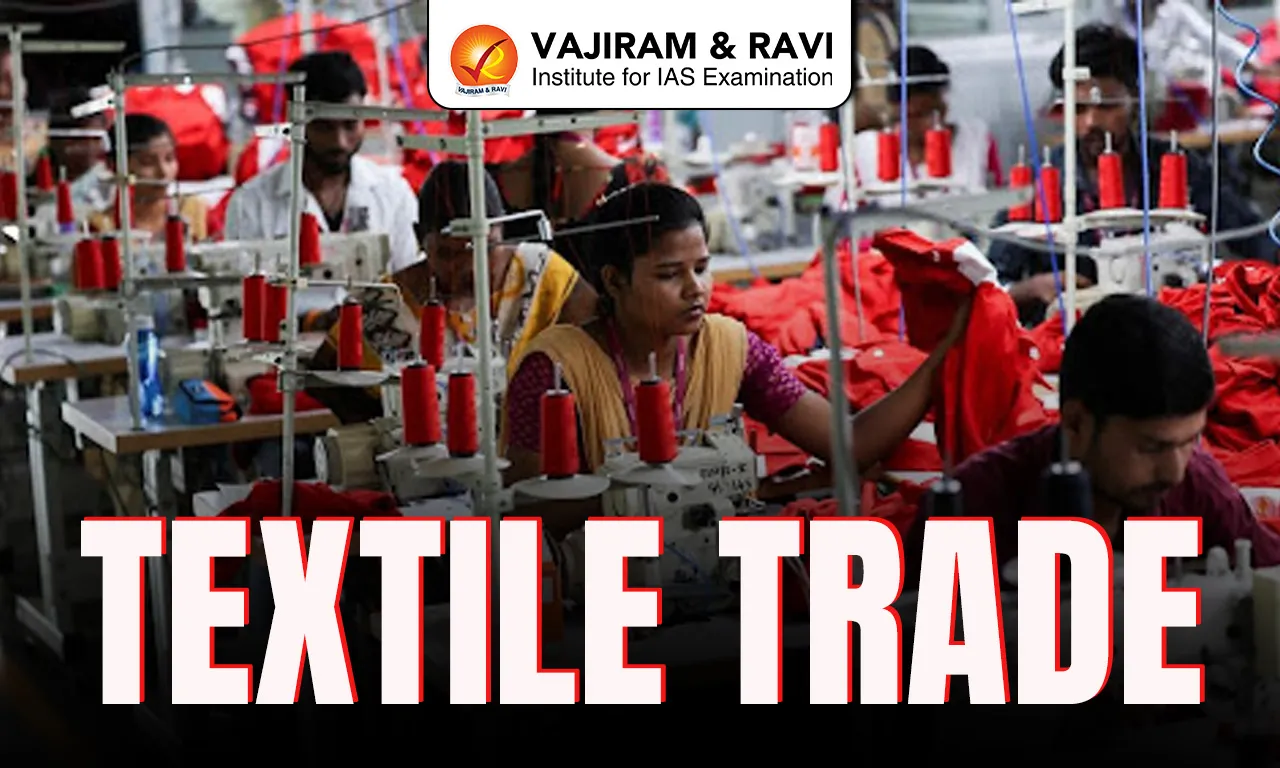
  • This development is significant because Bangladesh is one of the largest exporters of garments to the U.S., competing directly with India, China, and Vietnam.

Structure of Bangladesh’s Textile Industry

  • Bangladesh exported garments worth $50.9 billion globally in 2024, with $7.4 billion going to the U.S. 
  • Its industry model is heavily dependent on imported textile inputs. In 2024, Bangladesh imported textile inputs worth $16.1 billion, of which $3.1 billion came from India. 
  • Bangladesh imports around 85 lakh bales of cotton annually from Brazil, India, and African countries. India alone exported 12-14 lakh bales of cotton and $1.47 billion worth of cotton yarn to Bangladesh in 2024-25. 
  • This indicates that Bangladesh’s garment exports are deeply integrated with Indian raw material supply chains.

India’s Exposure to the U.S. Market

  • India exports approximately $16 billion worth of garments annually, with nearly one-third going to the U.S. 
  • Both India and Bangladesh primarily produce cotton-based apparel. Therefore, any preferential access granted to Bangladesh directly affects Indian exporters competing in the same market segment.
  • Currently, Indian goods face an 18% reciprocal tariff in the U.S., while Bangladeshi goods will face 19%, reduced from 20%. 
  • Thus, the tariff differential between India and Bangladesh has narrowed significantly.

India-U.S. Cotton Trade

  • India imports around five lakh bales of U.S. cotton annually, including 2.5 lakh bales of extra-long staple (ELS) cotton such as American PIMA. 
  • India levies an 11% import duty on cotton, except for ELS cotton. Indian mills are already nominated by American brands to supply yarn made from U.S. cotton.
  • The Union Commerce Ministry has stated that Indian garment exporters will receive similar access benefits to the U.S. market as Bangladesh. 
  • However, operational clarity on this promise is still awaited.

Possible Shift in Trade Dynamics

  • Bangladesh may replace Indian cotton with U.S.-produced cotton to qualify for zero reciprocal tariffs. 
  • If this happens, the immediate impact will be on Indian cotton and yarn exporters supplying Bangladesh.
  • However, analysts note that over 63% of Bangladesh’s garment exports go to the European Union duty-free. 
  • Since its supply chains are oriented toward European buyers, restructuring production to use U.S. cotton may require significant investment in spinning and fabric processing capacity.

Key Concerns for Indian Exporters

  • Several practical concerns remain:
    • Whether India will waive the 11% import duty on U.S. cotton to ensure competitiveness.
    • How the U.S. will determine the quantity of U.S. cotton content in garments.
    • Whether increased demand will push up U.S. cotton prices, reducing cost competitiveness.
    • Whether benefits apply only to reciprocal tariffs or also to basic duties.
  • Both India and Bangladesh exporters will get relief only from the reciprocal tariff if they use U.S. cotton, not from the basic duty. 
  • If U.S. cotton becomes expensive due to higher demand, garments made from it may not remain competitive compared to those made from cheaper global cotton.

Broader Strategic Implications

  • The development highlights three structural issues:
    • Growing importance of rules-of-origin conditions in trade agreements.
    • Increasing integration of trade with supply-chain geopolitics.
    • Need for India to align domestic tariff policy with export competitiveness.
  • India’s textile industry is the largest employment generator after agriculture. 
  • Hence, any shift in global trade patterns has serious economic and employment implications.

Source : TH

[youtube url="https://www.youtube.com/watch?v=FBITZNIfw0Y" width="560" height="315"]

Textile Trade FAQs

Q1: What did the U.S. promise Bangladesh under the new trade agreement?

Ans: The U.S. agreed to grant zero reciprocal tariffs on select apparel linked to the use of U.S. cotton and MMF.

Q2: How much of Bangladesh’s garment exports go to the U.S.?

Ans: Bangladesh exported $7.4 billion worth of garments to the U.S. in 2024.

Q3: What is India’s share in Bangladesh’s textile input imports?

Ans: Bangladesh imported $3.1 billion worth of textile inputs from India in 2024.

Q4: What is the current tariff difference between India and Bangladesh in the U.S.?

Ans: Indian goods face 18% reciprocal tariff, while Bangladesh faces 19% after the new deal.

Q5: What is the key concern for Indian exporters?

Ans: Uncertainty over cotton import duty, pricing of U.S. cotton, and operational clarity of the proposed facility.

Enquire Now