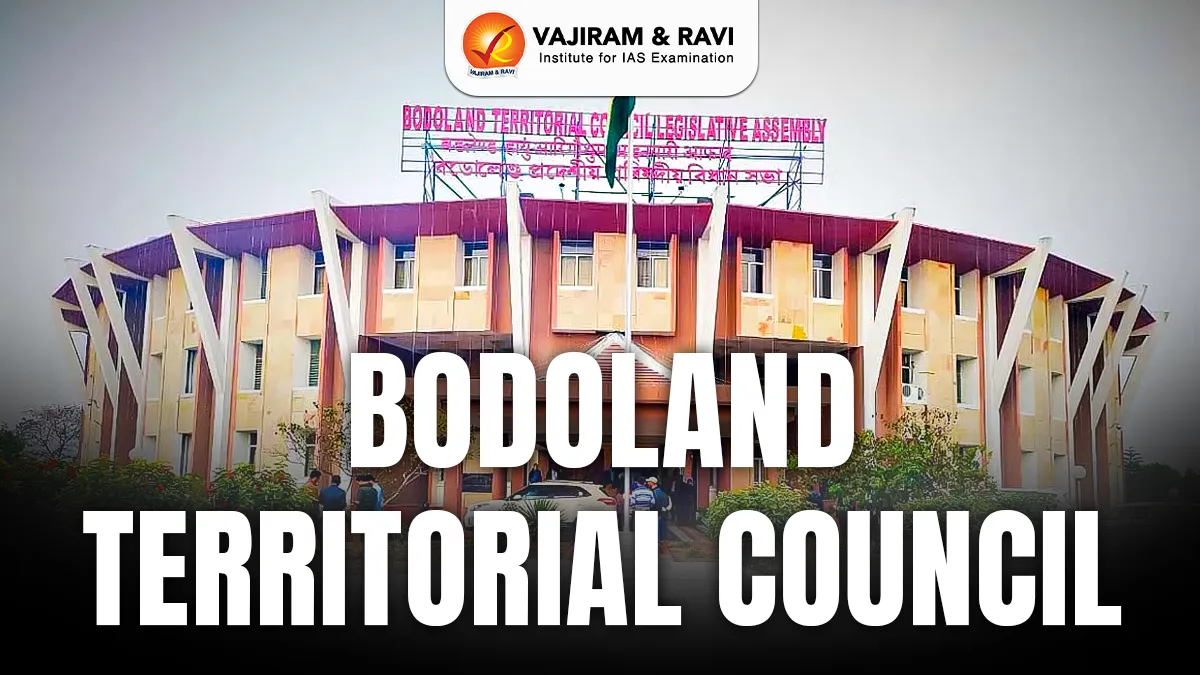
Bodoland Territorial Council (BTC), Objectives, Composition

Bodoland Territorial Council

Bodoland Territorial Council (BTC) is an autonomous administrative body in Assam created to give the Bodo people self-governance and control over their region. It plays an important role in promoting development, preserving culture, and ensuring political representation for the Bodo community.

Bodoland Territorial Council (BTC) Background 

The demand for a separate Bodoland state began in the 1980s, led by the All Bodo Students Union (ABSU), as the Bodo people sought political power, cultural recognition, and development. After years of protests and unrest, the Bodo Accord 2003 was signed between the Government of India, Assam, and the militant group Bodo Liberation Tigers Force (BLTF).

Following this agreement, the Bodoland Territorial Council (BTC) was established in 2003 under the Sixth Schedule of Indian Constitution to provide autonomy and self-governance to the Bodo people.

The BTC administers the Bodoland Territorial Region, which includes four districts of Assam - Kokrajhar, Chirang, Baksa and Udalguri.

Bodoland Territorial Council Objectives

The main objectives of the Bodoland Territorial Council (BTC) are:

  • Political Autonomy: To provide the Bodo people with self-governance and allow them to make decisions for their own region.
  • Cultural Preservation: To protect and promote Bodo language, traditions, customs, and cultural identity.
  • Social and Economic Development: To ensure development in areas like education, healthcare, infrastructure, agriculture, and employment.
  • Inclusive Representation: To give fair political representation to all communities living in the Bodoland region, including underrepresented groups.
  • Peace and Stability: To reduce conflicts and integrate the region into the democratic framework, replacing earlier unrest and insurgency.
  • Regional Planning: To plan and implement local development schemes that reflect the needs of the community and improve their quality of life.

Bodoland Territorial Council (BTC) Composition and Structure 

The composition and structure of the Bodoland Territorial Council (BTC) is as follows:

  • The Bodoland Territorial Council can have a maximum of 46 members. 
  • Out of these, 40 members are elected by the people of the Bodoland region, while the remaining 6 members are nominated by the Governor of Assam to represent communities that might otherwise be underrepresented.
  • Among the 40 elected seats, 35 seats are reserved for Scheduled Tribes and certain non-tribal communities, ensuring adequate representation of the Bodo people and other local communities. 
  • The remaining 5 seats are unreserved and open to candidates from any community.
  • The council is headed by a Chief Executive Member (CEM), who leads the executive administration and is supported by other executive members responsible for different departments.

BTC functions as a governing body under the Sixth Schedule of the Indian Constitution, but it is an exception in terms of size and composition compared to other autonomous councils in Northeast India. 

Bodoland Territorial Council (BTC) Powers and Functions

The Bodoland Territorial Council exercises legislative, executive, and financial powers in matters relating to regional governance. These powers are derived from the provisions of the Sixth Schedule of the Constitution.

  • Legislative Powers: Bodoland Territorial Council (BTC) can make laws on on subjects such as land use, forest management (excluding reserved forests), agriculture, village administration, inheritance, social customs, local cultural practices etc 
  • Executive Powers: Bodoland Territorial Council (BTC) implements development schemes, manages transferred departments, runs welfare programmes, and coordinates with the state for law and order.
  • Financial Powers: Bodoland Territorial Council (BTC) can collect certain taxes, tolls, and fees within its jurisdiction. It also receives grants and financial assistance from both the state government of Assam and the central government for developmental activities.
  • Cultural and Social Functions: Bodoland Territorial Council (BTC) protects and promotes Bodo language, culture, traditions, and community institutions.
  • Developmental Functions: Bodoland Territorial Council (BTC)  plans and executes infrastructure projects and supports livelihood, employment, and skill development initiatives.

Bodoland Territorial Council Significance

The Bodoland Territorial Council plays an important role in the region:

  • It provides autonomy and political representation to the Bodo people.
  • It helps preserve Bodo culture, language, and traditions.
  • It enables regional development by managing local administration and welfare schemes.
  • It contributes to peace and stability by addressing the grievances that once led to unrest.
  • BTC is a model of asymmetrical federalism, showing how India accommodates diverse regional and ethnic aspirations.

Bodoland Territorial Council (BTC) FAQs

Q1: What is the Bodoland Territorial Council (BTC)?

Ans: The Bodoland Territorial Council (BTC) is an autonomous administrative body in Assam, created in 2003 to provide self-governance and development for the Bodo people.

Q2: Which areas are covered under the Bodoland Territorial Council (BTC)?

Ans: The Bodoland Territorial Council (BTC) administers the Bodoland Territorial Region (BTR), which includes the districts of Kokrajhar, Chirang, Baksa, and Udalguri.

Q3: How is the Bodoland Territorial Council (BTC) structured?

Ans: The Bodoland Territorial Council (BTC) has 46 members – 40 elected (35 reserved for Scheduled Tribes and some non-tribal communities, 5 unreserved) and 6 nominated by the Governor, led by a Chief Executive Member (CEM).

Q4: What powers does the Bodoland Territorial Council (BTC) have?

Ans: The Bodoland Territorial Council (BTC) has legislative, executive, and financial powers over land, forests, agriculture, village administration, culture, development schemes, taxes, and welfare programmes.

Q5: Why is the Bodoland Territorial Council (BTC) important?

Ans: The Bodoland Territorial Council (BTC) ensures political autonomy, cultural preservation, regional development, fair representation, and peace in the Bodo areas.

127th Constitutional Amendment Bill, Objective, Key Provisions

127th Constitutional Amendment Bill

The 127th Constitutional Amendment Bill, 2021 was introduced in the Lok Sabha on 9 August 2021 by the Minister of Social Justice and Empowerment, Dr. Virendra Kumar. The bill aimed to amend the Constitution to clarify the powers of the central and state governments regarding the identification of socially and educationally backward classes (SEBCs). After being passed by Parliament, the bill became the 105th Constitutional Amendment Act.

127th Constitutional Amendment Bill, 2021 Objective

The main objective of the 127th Constitutional Amendment Bill was to amend the Constitution of India to clearly restore the power of states and union territories to prepare and maintain their own list of socially and educationally backward classes (SEBCs), commonly known as Other Backward Classes (OBCs). The amendment was introduced to remove the confusion created after the 102nd Constitutional Amendment Act and to ensure that the federal structure of India is preserved.

127th Constitutional Amendment Bill Background

The 102nd Constitutional Amendment Act, 2018 inserted three important provisions in the Constitution. These were Article 338B, Article 342A, and Article 366(26C).

  • Article 338B created the National Commission for Backward Classes and gave it constitutional status. This commission is responsible for examining matters related to the welfare and protection of socially and educationally backward classes.
  • Article 342A gave the President of India the power to notify the list of socially and educationally backward classes for each state and union territory.
  • Article 366(26C) defined the term “socially and educationally backward classes”.

Although the intention of the 102nd Constitutional Amendment was mainly related to the Central List of OBCs, confusion arose about whether states still had the authority to maintain their own list of backward classes.

This issue became prominent after the judgment of the Supreme Court of India in Jaishri Laxmanrao Patil v. State of Maharashtra. In this case, the Court interpreted the constitutional provisions in a way that suggested that only the President could notify the list of backward classes, which appeared to remove the powers of states to maintain their own OBC lists. To resolve this issue and restore the traditional powers of states, the government introduced the 127th Constitutional Amendment Bill.

127th Constitutional Amendment Bill Key Provisions

The 127th Constitutional Amendment Bill introduced important amendments in Articles 338B, 342A and 366 of the Constitution to clarify the roles of the central government and the states in identifying socially and educationally backward classes.

Amendment to Article 338B

  • Article 338B deals with the powers and functions of the National Commission for Backward Classes.
  • The 127th Constitutional Amendment Bill inserted a provision in Article 338B(9) stating that states and union territories are not required to consult the National Commission for Backward Classes when preparing their own list of socially and educationally backward classes under Article 342A(3).
  • This provision ensures that states can independently prepare and maintain their own list of backward classes without mandatory consultation with the central commission.

Amendment to Article 342A

The 127th Constitutional Amendment Bill made significant changes to Article 342A.

  • First, it clarified that the President will notify the list of socially and educationally backward classes only for the purposes of the Central Government. This list is known as the Central List of OBCs.
  • Second, the amendment added a new clause Article 342A(3). This clause clearly states that every state or union territory can prepare and maintain its own list of socially and educationally backward classes through a law passed by the state legislature.

This means that the state list of OBCs can be different from the central list, depending on local social and economic conditions.

Amendment to Article 366(26C)

The 127th Constitutional Amendment Bill also amended Article 366(26C), which defines socially and educationally backward classes.

  • The amendment clarified that socially and educationally backward classes refer to those communities that are recognised under Article 342A for the purposes of the Central Government or the State or Union Territory.

This ensures that both the central list and state lists of OBCs are constitutionally recognised.

105th Constitutional Amendment Act, 2021

After Parliament passed the 127th Constitutional Amendment Bill, it became the 105th Constitutional Amendment Act, 2021.

The 105th Constitutional Amendment Act formally restored the powers of states and union territories to identify and maintain their own list of socially and educationally backward classes.

The Act clarified that:

  • The Central Government will maintain the Central List of OBCs.
  • State governments can maintain their own State List of OBCs through legislation.
  • The state list may differ from the central list depending on local conditions.

Thus, the 105th Constitutional Amendment Act removed the constitutional ambiguity that had emerged after the Supreme Court’s interpretation of the 102nd Amendment.

105th Constitutional Amendment Act Importance

The 127th Constitutional Amendment Bill is significant for several reasons.

  • It restores the powers of states and union territories to identify socially and educationally backward classes according to their own social realities.
  • It removes constitutional ambiguity created after the interpretation of the 102nd Constitutional Amendment.
  • It strengthens the federal structure of India, as states once again have authority over reservation policies related to backward classes.
  • It maintains a clear distinction between the central list and the state lists of OBCs, which helps in better implementation of reservation policies.

127th Constitutional Amendment Bill FAQs

Q1: What is the 127th Constitutional Amendment Bill?

Ans: The 127th Constitutional Amendment Bill was introduced in 2021 to restore the power of states and union territories to prepare and maintain their own list of socially and educationally backward classes (OBCs).

Q2: Which Act was passed after the 127th Constitutional Amendment Bill?

Ans: After being passed by Parliament, the 127th Constitutional Amendment Bill became the 105th Constitutional Amendment Act.

Q3: Why was the 127th Constitutional Amendment Bill introduced?

Ans: The bill was introduced to remove the confusion created after the 102nd Constitutional Amendment Act and to restore the authority of states to identify backward classes.

Q4: What was the final outcome of the 127th Constitutional Amendment Bill?

Ans: The bill was passed by Parliament and became the 105th Constitutional Amendment Act, 2021, which restored the authority of states to maintain their own OBC lists.

Q5: What is the main significance of the 105th Constitutional Amendment Act?

Ans: The 105th Constitutional Amendment Act restored the power of states and union territories to maintain their own OBC lists, thereby strengthening India’s federal structure and clarifying the distinction between central and state lists of backward classes.

Soil Degradation, Types, Causes, Effects, Conservation Methods

Soil Degradation

Soil Degradation is the decline in the quality, fertility and productivity of soil because of physical, chemical and biological processes, caused by human activities and natural factors. Soils are important assets that provide the base for all terrestrial ecosystems, making the control of soil degradation important for human survival. In this article, we are going to cover soil degradation, its types, effects and conservation efforts. 

Soil Degradation 

Soil Degradation means the decline in the soil health like its quality, fertility and productivity due to physical, chemical and biological processes. Soil degradation can be biological, chemical and physical. Currently, about 33% of the world’s soils are severely degraded. About 40% of these degraded soils are in Africa, with remaining concentrated in areas plagued by poverty and hunger. This degradation of soil is linked with food production and nutrition and in order to control this degradation, it is important to adopt localised strategies to reverse degradation, boost agricultural output and fight hunger specially in climate-vulnerable areas. 

Soil Degradation can be seen at the physical, chemical and biological level of soils. Examples include declining fertility, loss of organic content, poor structure, erosion from wind or water, salinity shifts from irrigation or urban activities, rising acidity or alkalinity, compaction, sealing of the surface, landslides and contamination from pollutants and toxic substances. 

Soil Degradation Types

Soil Degradation happens due to multiple processes. These types include: 

  • Water Erosion: Activities like sheet erosion, rill, or gully erosion result in a heavy water runoff of soil along with the water. 
  • Wind erosion leads to the erosion of soil when soil particles are displaced by air currents. 
  • Salinity develops through salt accumulation in arid lands, high irrigation or urban processes. Due to this the decline of organic matter reduces fertility and water retention. 
  • Soil acidity and alkalinity imbalances become a restriction in the growth of crops. 
  • Structural degradation through compaction affects water flow and root penetration. 
  • The top soil gets replaced by gravity driven movement. Soil contamination from chemicals undermines ecosystems and endangers human health. 

Soil Degradation Causes

Soil Degradation is caused due to many many factors:

  • Physical Causes: Rainfall, flooding, runoff, wind erosion, tillage, and slope movements strip away fertile topsoil.
  • Biological Causes: Human and plant-related activities, microbial imbalance, and poor farming practices reduce productivity.
  • Chemical Causes: Alkalinity, acidity, waterlogging, and nutrient depletion alter soil chemistry, weakening its fertility.
  • Deforestation: Tree removal disrupts soil stability, binding capacity, and fertility, heightening erosion risks.
  • Excess Fertilizers & Pesticides: Overuse disrupts soil organisms, destroys minerals, and creates toxic buildup.
  • Mining & Industry: These strip crop cover, pollute soil, and alter its structure, chemistry, and biology.
  • Faulty Cultivation: Deep plowing, mono-cropping, and irrigation mismanagement reduce fertility and regeneration.
  • Urbanization: Construction causes compaction, altered drainage, erosion, and pollutant-laden runoff.
  • Overgrazing: Livestock pressure erodes topsoil, removes vegetation, and reduces crop productivity.

Soil Degradation Effects

Soil Degradation affects the environment and human health in many ways: 

  • Land Degradation: Fertile soil loss makes 40% of agricultural land severely degraded.
  • Desertification: Overgrazing, deforestation, and poor tillage drive aridity, drought, and biodiversity loss.
  • Loss of Arable Land: Topsoil erosion leaves productive land barren, threatening food security.
  • Increased Flooding: Soil’s diminished water-holding capacity causes higher runoff and flood frequency.
  • Waterway Pollution: Sediments, fertilizers, and pesticides clog rivers, damage aquatic ecosystems, and reduce usable water.

Soil Degradation Conservation Methods

Soil Degradation can be controlled by adopting the following strategies:

  • Curbing Deforestation: Encourage afforestation, forest protection, and sustainable forestry.
  • Land Reclamation: Restore organic matter, manage rangelands, and rehabilitate salinized soils.
  • Preventing Salinization: Use salt-tolerant crops, efficient irrigation, and reduced waterlogging.
  • Conservation Tillage: Limit deep plowing, retain crop residues, and reduce structural damage.
  • Agroforestry: Integrate crops with trees and hedges to prevent erosion, enhance biodiversity, and stabilize soils.
  • Permaculture: Adopt sustainable farming by creating interdependent systems, avoiding harmful chemicals, and recycling nutrients.
Related Post
Soil Pollution Black Soil
Soil Degradation Alluvial Soil
Soil Conservation Red Soil
Soil Erosion Mountain Soil
Laterite Soil Soil Fertility
Soils of India Western Disturbances
Geomorphology Coastal States of India
Soil Profile Loamy Soil
Khadar Soil Bhangar Soil

Soil Degradation FAQs

Q1: What is meant by soil degradation?

Ans: Soil degradation is the decline in soil quality, fertility, and productivity due to physical, chemical, and biological factors.

Q2: What are the 4 causes of soil degradation?

Ans: Deforestation, overgrazing, improper agricultural practices, and industrial or mining activities.

Q3: How to control soil degradation?

Ans: Soil Degradation can be controlled by adopting afforestation, conservation tillage, proper irrigation, and sustainable land management practices.

Q4: What are the types of soil degradation?

Ans: Physical, chemical, biological degradation, along with erosion by water and wind.

Q5: What is wind erosion?

Ans: Wind erosion is the removal and transport of the top layer of soil particles by strong winds.

UPSC Daily Quiz 11 March 2026

UPSC-Daily-Quiz

[WpProQuiz 111]

UPSC Daily Quiz FAQs

Q1: What is the Daily UPSC Quiz?

Ans: The Daily UPSC Quiz is a set of practice questions based on current affairs, static subjects, and PYQs that help aspirants enhance retention and test conceptual clarity regularly.

Q2: How is the Daily Quiz useful for UPSC preparation?

Ans: Daily quizzes support learning, help in revision, improve time management, and boost accuracy for both UPSC Prelims and Mains through consistent practice.

Q3: Are the quiz questions based on the UPSC syllabus?

Ans: Yes, all questions are aligned with the UPSC Syllabus 2025, covering key areas like Polity, Economy, Environment, History, Geography, and Current Affairs.

Q4: Are solutions and explanations provided with the quiz?

Ans: Yes, each quiz includes detailed explanations and source references to enhance conceptual understanding and enable self-assessment.

Q5: Is the Daily UPSC Quiz suitable for both Prelims and Mains?

Ans: Primarily focused on Prelims (MCQ format), but it also indirectly helps in Mains by strengthening subject knowledge and factual clarity.

Rani Kamlapati, The Last Hindu Queen of Bhopal, Biography

Rani Kamlapati

Rani Kamlapati was a Gond queen associated with Bhopal in the early 18th century. She is remembered as the last Hindu queen of Bhopal and is known for her courage, leadership, and sacrifice during a period of political instability in central India.

About Rani Kamlapati Early Life

  • Rani Kamlapati belonged to the Gond tribe, one of the largest tribal communities of central India. 
  • She was born at Ginnorgarh Fort, which was an important Gond stronghold. 
  • She was married to Nizam Shah, a Gond ruler who controlled territories around Bhopal. 
  • According to historical accounts, Nizam Shah was poisoned by Alam Shah, his nephew, who wanted to capture the kingdom and marry Rani Kamlapati.
  • To avenge the death of her husband and protect her kingdom, she sought the assistance of Dost Mohammad Khan, an Afghan military commander. She reportedly offered him a reward of one lakh rupees to defeat Alam Shah. Dost Mohammad Khan later led a combined force of Gond soldiers and Afghan warriors and defeated Alam Shah.
  • After the assassination of Nizam Shah, Rani Kamlapati assumed responsibility for the administration of the kingdom and protected the interests of her minor son.
  • Over time, Dost Mohammad Khan consolidated his influence and eventually took control of Bhopal. This marked a turning point in the region’s history, as Bhopal evolved into a princely state under his authority, bringing an end to Hindu rule in the area.
  • According to historical traditions, Rani Kamlapati chose ‘Jal Jauhar’ (ritual self-sacrifice by drowning) after facing betrayal and the loss of her kingdom. Her sacrifice is remembered as a symbol of dignity and resistance.

Also Read: Sarojini Naidu

Rani Kamlapati Legacy

Rani Kamlapati is remembered not only for her political leadership but also for her developmental works. She made several contributions to the welfare of her people.

  • She played an important role in water management, constructing tanks and improving water systems in the region.
  • She promoted the construction of temples, gardens, and public spaces, which contributed to the cultural and social life of the kingdom.
  • Her administration helped maintain stability in the region during a period of political turmoil.

Several places have been named in her honour, including the Rani Kamlapati Railway Station, formerly known as Habibganj Railway Station.Another important monument associated with her memory is the Rani Kamlapati Palace, located near the Upper Lake in Bhopal.

Also Read: Jhansi Rani Lakshmibai

Rani Kamlapati FAQs

Q1: Who was Rani Kamlapati?

Ans: Rani Kamlapati was a Gond queen of the early 18th century associated with Bhopal. She is remembered as the last Hindu queen of Bhopal and is known for her courage and leadership during a period of political conflict in central India.

Q2: Which dynasty did Rani Kamlapati belong to?

Ans: Rani Kamlapati belonged to the Gond tribe, one of the largest tribal communities of central India that ruled several regions collectively known as Gondwana.

Q3: Who was the husband of Rani Kamlapati?

Ans: Rani Kamlapati was married to Nizam Shah, a Gond ruler who controlled territories around Bhopal before his death.

Q4: Why did Rani Kamlapati seek help from Dost Mohammad Khan?

Ans: After the death of her husband, she sought help from Dost Mohammad Khan to defeat Alam Shah and protect her kingdom. However, Dost Mohammad Khan later gained control over Bhopal.

Q5: Why was Rani Kamlapati in the news recently?

Ans: Rani Kamlapati came into the news in 2021 when Habibganj Railway Station was renamed Rani Kamlapati Railway Station to honour her legacy.

Bascule Bridge

Bascule Bridge

Bascule Bridge Latest News

The Union government recently approved a Rs 117.54 crore project for the renovation of the Bascule Bridge at Syama Prasad Mookerjee Port, Kolkata.

About Bascule Bridge

  • It is a type of bridge that can be raised to provide clearance for waterway traffic and is also referred to as a lifting bridge or a drawbridge.
  • It makes use of a counterweight to balance a span or leaf through its upward trajectory. 
  • The balance of the weight is sometimes adjusted according to the frequency of waterway traffic.
  • The counterweight is usually heavier than the leaf itself, which makes lifting easier and reduces the energy needed to operate the bridge.
  • The span can be single or double, and in rare cases it may even be triple or quadruple. 
  • A pulley system helps raise and lower the bridge. 
    • Cables or chains connected to the counterweight run through pulleys and are attached to the leaf. 
    • This mechanical system helps reduce the force needed to lift the leaf, using something called "mechanical advantage.”
  • The word ‘bascule’ is French in origin and translates loosely as a seesaw or a balancing mechanical device. 
  • It is thought that bascule bridges were first designed during the mediaeval era in Europe, when they served defensive purposes.
  • The longest double-leaf bascule bridge in the world is the Broadway Bridge in Portland, Oregon, USA.

Source: DEVD

Bascule Bridge FAQs

Q1: What is a bascule bridge?

Ans: It is a movable bridge that can be raised to allow ships or boats to pass through a waterway.

Q2: What is another name for a bascule bridge?

Ans: It is also known as a lifting bridge or drawbridge.

Q3: What mechanism helps a bascule bridge lift its span?

Ans: A counterweight system helps balance and lift the span of the bridge.

Q4: What is the movable part of a bascule bridge called?

Ans: The movable part of a bascule bridge is called the leaf or span.

Q5: Which is the longest double-leaf bascule bridge in the world?

Ans: The longest double-leaf bascule bridge in the world is the Broadway Bridge in Portland, Oregon, USA.

Devon Island

Devon Island

Devon Island Latest News

NASA uses Devon Island to study Mars, primarily because it's barren and its freezing, polar desert conditions allow researchers to test next-generation rovers.

About Devon Island

  • It is located in the Canadian arctic archipelago, within the zone classified as the High Arctic. 
  • It is the world’s largest uninhabited island.
  • Ellesmere Island lies to the north of Devon Island and Baffin Bay lies to its east.
  • Although completely devoid of human settlements, a few species reside on the island
  • The short growing season of only about 40 to 55 days and the low temperatures (2° to 8°C in summer) discourage the growth of plants here.
  • Winters are extremely harsh with temperatures being as low as −50 °C. 
  • The limited solar energy input is also one of the factors influencing the existence of life on this island.
  • Little precipitation is also received on Devon Island.
  • The “out-of-the-world-like” landscape here is cold, dry, and rocky. Snow and ice blanket the island’s ice cap for the entire year.
  • Astronauts preparing for Mars missions do pay occasional visits to Devon Island to get used to extraterrestrial conditions.
  • NASA uses Devon Island to study Mars, primarily because it's barren, and its freezing, polar desert conditions allow researchers to test next-generation rovers. 
  • It is home to a 14-mile-wide Haughton Crater. It was formed when a meteorite struck millions of years ago, leaving behind terrain that resembles the surface of Mars.

Source: TOI

Devon Island FAQs

Q1: Where is Devon Island located?

Ans: Devon Island is located in the Canadian Arctic Archipelago in the High Arctic region of Canada.

Q2: What is Devon Island known for globally?

Ans: Devon Island is known as the world’s largest uninhabited island.

Q3: Why do astronauts sometimes visit Devon Island?

Ans: Astronauts visit Devon Island to train and prepare for Mars missions because its terrain resembles Mars-like conditions.

Q4: Which large crater is located on Devon Island?

Ans: Devon Island is home to the Haughton Crater.

National Leprosy Eradication Programme

National Leprosy Eradication Programme

National Leprosy Eradication Programme Latest News

The Union Minister of State for Health and Family Welfare informed the Rajya Sabha about the National Leprosy Eradication Programme.

About National Leprosy Eradication Programme

  • It is a centrally sponsored scheme under the overarching umbrella of National Health Mission (NHM).
  • Aim: The primary aim is controlling leprWhich strategy does NLEP focus on for leprosy control?osy through early detection and treatment.
  • Goal: Its goal is to make India leprosy-free by interrupting transmission, eliminating stigma, and ensuring dignified care for all affected individuals.
  • The programme offers free-of-cost services for prevention, diagnosis, treatment, and rehabilitation of leprosy through all public health facilities across India.
    • It provides both technical and financial support to all States and Union Territories for implementation of activities related to prevention, early detection, case confirmation, treatment, disability prevention, and post-treatment care.
    •  It also facilitates convergence with other national health programmes and deploys digital platforms such as Nikusth 2.0 for surveillance and reporting.
    • The programme is aligned with the Sustainable Development Goals (SDGs) and the WHO Global Leprosy Strategy.
  • WHO Global Leprosy Strategy aims to achieve zero transmission, zero disability, and zero discrimination by 2027.
  • It was declared as a Notifiable Disease

Objectives of National Leprosy Eradication Programme

  • To reduce Prevalence rate less than 1/10,000 population at sub national and district level.
  • To reduce Grade II disability % < 1 among new cases at National level.
  • To reduce Grade II disability cases < 1 case per million populations at National level.
  • Zero disabilities among new Child cases.
  • Zero stigma and discrimination against persons affected by leprosy.

Source: PIB

National Leprosy Eradication Programme FAQs

Q1: Which strategy does NLEP focus on for leprosy control?

Ans: Early detection and treatment

Q2: What is the primary objective of NLEP?

Ans: To eliminate leprosy cases in India

Blue-and-White Flycatcher

Blue-and-White Flycatcher

Blue-and-White Flycatcher Latest News

A male blue-and-white flycatcher, a small and striking migratory bird rarely seen in India, was recently spotted on Pavagadh Hills, Gujarat.

About Blue-and-White Flycatcher

  • It is a migratory songbird in the Old World flycatcher family, Muscicapidae.
  • Scientific Name: Cyanoptila cyanomelana
  • It is also known as the Japanese flycatcher.

Blue-and-White Flycatcher Distribution

  • It breeds in Japan, Korea, and in parts of northeastern China and the Russian Far East. 
  • It winters in Southeast Asia, especially in Vietnam, Cambodia, Thailand, Sumatra, and Borneo.
  • Habitat
  • It lives in wooded areas in lowlands and submontane forests such as taiga, wooded slopes, and gullies at up to 1200 metres of elevation. 
  • It can also be found in scrub, bushes, and plantations.

Blue-and-White Flycatcher Features

  • Adult males have most of the upperparts cobalt-blue, including upperwing coverts, flight feather edges, and tail. 
  • On the underparts, the chin, throat, breast, and flanks are black, whereas the belly and vent are white.
  • The bill is black. Eyes are dark brown.
  • Female is different. She has grey-brown upperparts, including head and face. Wings are blackish, with broad rufous-brown edges on tertials.
  • On the underparts, the chin and throat are grey to grey-brown, with distinct creamy throat patches.

Blue-and-White Flycatcher Conservation Status

It is classified as 'Least Concern' under the IUCN Red List.

Source: TOI

Blue-and-White Flycatcher FAQs

Q1: What is the Blue-and-White Flycatcher?

Ans: It is a migratory songbird in the Old World flycatcher family, Muscicapidae.

Q2: Where does the Blue-and-White Flycatcher mainly breed?

Ans: It breeds in Japan, Korea, northeastern China, and the Russian Far East.

Q3: Where does the Blue-and-White Flycatcher spend the winter?

Ans: It winters in Southeast Asia, including Vietnam, Cambodia, Thailand, Sumatra, and Borneo.

Q4: What are the distinctive colour features of the male Blue-and-White Flycatcher?

Ans: The male has cobalt-blue upperparts with black chin, throat, breast, and flanks, and a white belly and vent.

Q5: How does the female Blue-and-White Flycatcher differ from the male?

Ans: The female has grey-brown upperparts, blackish wings with rufous-brown edges, and greyish underparts with creamy throat patches.

PB-SHABD Platform

PB-SHABD Platform

PB-SHABD Platform Latest News

Prasar Bharati’s Shared Audio-Visuals for Broadcast and Dissemination (PB-SHABD) will provide free access to logo-free daily news content till March next year. 

About PB-SHABD Platform

  • Prasar Bharati-Shared Audio-Visuals for Broadcast and Dissemination (PB-SHABD) was launched in March, 2024.
  • It is a news feed service from Prasar Bharati.
  • It provides access to logo free, daily news items across various formats including video, audio, text, and photos to media organizations.
  • PB-SHABD offers the latest news from every corner of India.
    • Daily 1000 stories, covering varied news categories such as agriculture, technology, foreign affairs, and political developments, are uploaded daily in all major Indian languages from the Regional News Units (RNUs) and headquarters combined.

Key Facts about Prasar Bharti

  • It is the Public Service Broadcaster of the country.
  • It is a statutory autonomous body established in 1997 under the Prasar Bharati Act.
  • Objective: To conduct public broadcasting services intended to inform and entertain the public.
  • It comprises the Doordarshan Television Network and All India Radio, which were earlier media units of the Ministry of Information and Broadcasting.
  • Headquarter: New Delhi

Source: PIB

PB-SHABD Platform FAQs

Q1: What is PB-SHABD?

Ans: A digital news platform by Prasar Bharati

Q2: What is the primary objective of PB-SHABD?

Ans: To provide news content to media outlets

Roopkund Lake

Roopkund Lake

Roopkund Lake Latest News

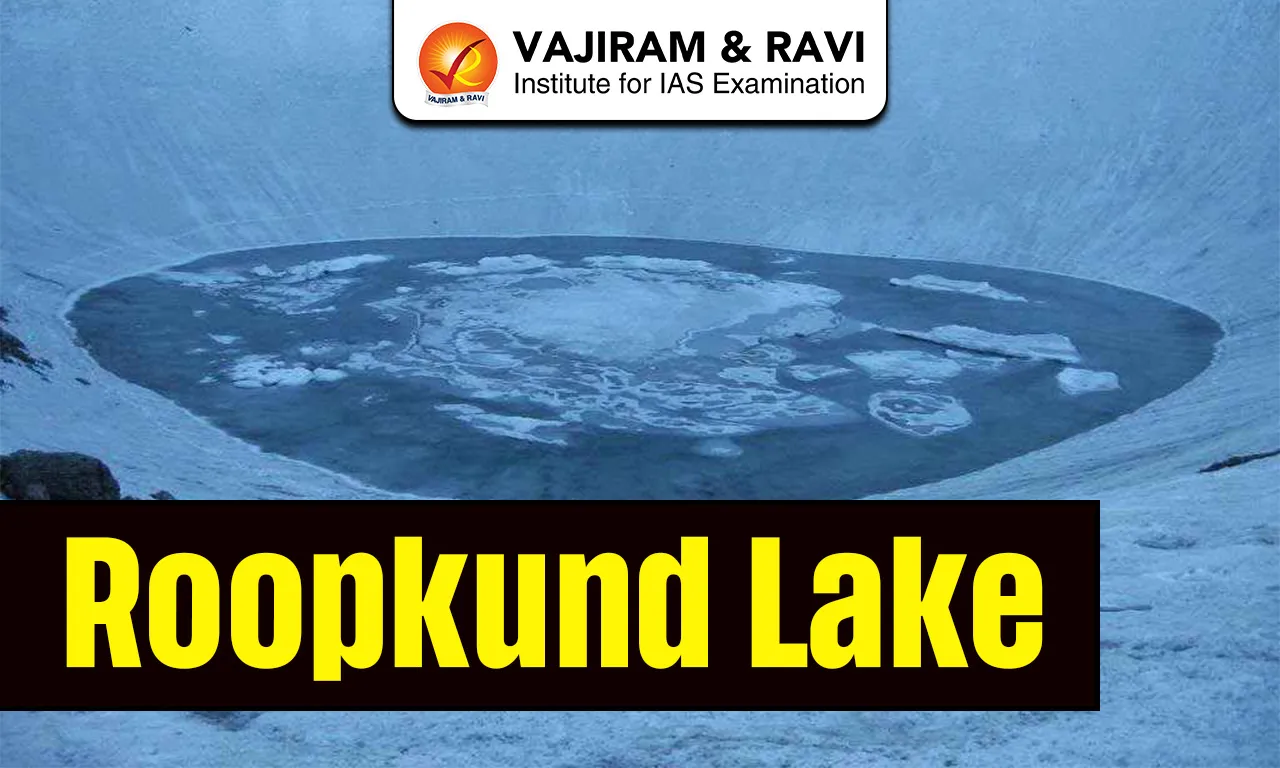
Roopkund Lake, often called Skeleton Lake, is famous for the hundreds of human skeletons found around its icy waters.

About Roopkund Lake

  • Roopkund, also known as the ” lake of skeletons” is a glacial lake in Uttarakhand.
  • It is situated at 5,029 metres (16,500 ft) above sea level at the base of Mt. Trishul in the Garhwal Himalayas.
  • Measuring a mere 130 feet in width, the lake is encased in ice for the majority of the year.
  • It is surrounded by snow-capped peaks and lush green meadows.

Roopkund Lake Mystery

  • It is called the “lake of skeletons” as the glacial body conceals numbers of human skeletons, some with preserved flesh.
  • Depending on the season and weather, the lake, which remains frozen for most of the year, expands and shrinks. 
  • Only when the snow melts are the skeletons visible.
  • The skeletons in the lake were first discovered by a patrolling British forest ranger in 1942. 
  • These skeletal remains, dating back to around the 9th century AD, have led to various theories about the cause of death.
  • Scientific studies used radiocarbon dating and DNA analysis to learn more about the victims.
  • Key discoveries from scientific studies:
    • The remains belong to more than 300 individuals.
    • The skeletons came from different time periods.
    • Deaths occurred in at least two separate events.
  • Researchers identified three ancestry groups:
    • South Asian individuals who died around 800 CE
    • A Southeast Asian individual from around 1800 CE
    • A group with ancestry linked to Eastern Mediterranean regions such as Greece and Crete
    • This discovery challenged the earlier belief that all the skeletons belonged to a single disaster.

Source: MC

Roopkund Lake FAQs

Q1: What is Roopkund Lake commonly known as?

Ans: Roopkund Lake is commonly known as the “Lake of Skeletons.”

Q2: Where is Roopkund Lake located?

Ans: Roopkund Lake is located in Uttarakhand in the Garhwal Himalayas at the base of Mt. Trishul.

Q3: Why is Roopkund Lake called the “Lake of Skeletons”?

Ans: It is called the “lake of skeletons” as the glacial body conceals numbers of human skeletons, some with preserved flesh.

Prioritising Natural Gas Supplies Amid West Asia Crisis

Prioritising Natural Gas Supplies

Prioritising Natural Gas Supplies Latest News

  • The ongoing conflict in West Asia and the disruption of maritime traffic through the Strait of Hormuz have significantly affected Liquefied Natural Gas (LNG) supplies to India. 
  • To manage the supply shock and protect essential consumer sectors, the Government of India has invoked emergency powers under the Essential Commodities Act, 1955 to regulate and prioritise the allocation of natural gas.
  • The Ministry of Petroleum and Natural Gas (MoPNG) has issued an order diverting gas supplies to “priority sectors” such as households and transportation while curtailing supplies to certain industrial sectors.

Strait of Hormuz Disruption

  • The Strait of Hormuz, a narrow waterway between Iran and Oman, connects the Persian Gulf with the Gulf of Oman and the Arabian Sea. 
  • It is one of the most critical energy chokepoints in the world, as it handles about one-fifth of global liquid petroleum consumption and LNG trade.
  • Over 50% of India’s LNG imports from countries such as Qatar and the UAE transit through this route. Cargoes moving through the Strait account for about 30% of India’s total gas consumption.
  • With Iran warning ships against transit and attacks reported on vessels, maritime movement has nearly halted, disrupting LNG shipments to India.

India’s Dependence on Imported Gas

  • India’s energy system is significantly dependent on imported natural gas.
  • Out of the total gas demand of about 190 million standard cubic metres per day (mscmd), around 50% of this demand is met through LNG imports.
  • LPG imports meet nearly 60% of India’s requirement. Over 80% of LPG imports also pass through the Strait of Hormuz.
  • Thus, geopolitical disruptions in West Asia have direct implications for India’s energy security.

Government Measures to Manage the Gas Shortage

  • Invocation of the Essential Commodities Act: The government used emergency powers to regulate gas distribution, ensuring essential sectors receive adequate supplies while shifting the shortage burden to non-priority sectors.
  • Four-tier priority allocation system: The MoPNG created a four-category priority system based on average gas consumption over the past six months.
    • Priority Category I – 100% supply, due to their direct impact on citizens - PNG (Piped Natural Gas) for households, CNG for the transport sector, gas used for LPG production, gas required for essential pipeline operations.
    • Priority Category II – 70% supply. Fertiliser plants - Gas allocation is strictly restricted for fertiliser production only, and units must certify compliance through the Petroleum Planning and Analysis Cell (PPAC).
    • Priority Category III – 80% supply. Tea industries, manufacturing and other industrial consumers connected to the national gas grid.
    • Priority Category IV – 80% supply. Commercial and industrial consumers supplied through City Gas Distribution (CGD) networks.

Curtailment of Gas to Non-Priority Sectors

  • To divert gas to essential sectors, supply to following industrial users has been reduced -
    • Petrochemical units
    • Gas-based power plants
    • Domestic gas consumers from difficult blocks
    • Refineries, whose gas supply has been reduced to 65% of their recent average consumption
  • The public sector company GAIL has been tasked with managing these allocations.

Measures to Secure Supply

  • Increase in domestic LPG production:
    • The government directed refiners to maximise LPG output by using propane and butane streams. This has led to a 10% rise in LPG production.
    • Private companies such as Reliance Industries Limited (RIL) have also pledged to increase LPG output from the Jamnagar refining complex.
  • Prioritisation of domestic consumers:
    • India has over 33 crore domestic LPG consumers, making uninterrupted household supply a top priority.
    • Measures include:
      • Prioritising domestic LPG over commercial LPG users (e.g., hotels and restaurants).
      • Increasing the minimum refill booking gap from 21 days to 25 days to prevent hoarding.
      • Ensuring daily distribution of about 60 lakh LPG cylinders, unchanged from pre-crisis levels.
    • A three-member committee of oil marketing company executives has been formed to review requests from commercial LPG consumers and allocate supplies where feasible.
  • Diversifying LNG imports:
    • India is attempting to source LNG from alternative suppliers such as Norway and the United States.
    • However, diversification faces logistical constraints like shipping time from these countries is around two months, and LNG prices have surged from $6–8 per MMBtu to about $15 per MMBtu.
    • Despite higher costs, imports from distant markets become economically viable once prices exceed $10 per MMBtu.

Challenges and Way Ahead

  • Geopolitical vulnerability: Heavy dependence on West Asian energy supplies exposes India to disruptions during regional conflicts.
    • Diversification: India should expand LNG supply agreements with countries such as Australia, the U.S., and African producers to reduce reliance on West Asia.
  • Chokepoint risk: Reliance on the Strait of Hormuz makes India vulnerable to maritime security disruptions.
    • Creation of strategic gas reserves similar to petroleum reserves could cushion temporary disruptions.
  • Limited domestic gas production: Domestic gas output is insufficient to meet rising demand.
    • Encouraging exploration in deepwater, ultra-deepwater, and difficult basins can increase indigenous gas output.
  • Time lag in diversification: Alternative LNG imports from distant countries involve long shipping lead times.
    • India must strengthen partnerships through long-term contracts and multilateral energy cooperation.
  • Industrial disruption: Curtailing supplies to industries like petrochemicals and power plants may affect production and economic activity.
    • Accelerating solar, wind, and green hydrogen initiatives can reduce dependence on fossil fuels.

Conclusion

  • The disruption of LNG supplies due to the West Asia conflict highlights the fragility of global energy supply chains and India’s vulnerability to geopolitical shocks. 
  • The crisis underscores the urgent need for energy diversification, domestic production enhancement, and resilient supply chains to ensure long-term energy security for India.

Source: TH | IE

Prioritising Natural Gas Supplies FAQs

Q1: Why is the Strait of Hormuz strategically important for India’s energy security?

Ans: It accounts for about 30% of India’s natural gas consumption via imports, making it a critical energy chokepoint.

Q2: How has the Government of India used the Essential Commodities Act to manage the current natural gas shortage?

Ans: By regulating natural gas distribution and prioritising supply to essential sectors such as CNG for transport and LPG production.

Q3: What priority framework has the Government of India introduced for natural gas allocation during the crisis?

Ans: A four-tier priority system has been introduced giving 100% supply to households, transport, and LPG production, 70% to fertiliser plants, etc.

Q4: What steps has India taken to ensure uninterrupted LPG supply to households during the West Asia conflict?

Ans: The government prioritised domestic consumers, directed refiners to maximise LPG output, etc.

Q5: What structural challenge does the LNG supply crisis highlight for India’s energy sector?

Ans: It underscores India’s high dependence on imported LNG, highlighting the need for diversification and greater domestic production.

Jal Jeevan Mission (JJM)

Jal Jeevan Mission

Jal Jeevan Mission Latest News

The Cabinet has approved the extension of the Jal Jeevan Mission (JJM) until December 2028, along with an increased financial outlay. The programme will now move into Jal Jeevan Mission 2.0, focusing on restructuring implementation and introducing structural reforms in the rural drinking water supply sector.

About Jal Jeevan Mission

  • It was launched on August 15, 2019.
  • JJM is envisioned to provide safe and adequate drinking water through individual Functional Household Tap Connections (FHTCs) by 2024 to all households in rural India. 
  • It is based on a community approach to water and will include extensive Information, Education and communication as key components of the mission.
  • Nodal Ministry: Ministry of Jal Shakti.

Components of Jal Jeevan Mission

  • Development of in-village piped water supply infrastructure to provide tap water connections to every rural household.
  • Bottom-up planning: Community engagement in planning, implementation and Operation and Maintenance (O&M)
  • Women empowerment: Involvement of women in planning, decision-making, implementation, monitoring, and O&M
  • Focus on future generations: Provision of tap water supply to schools, tribalhostels, and anganwadi (daycare) centers
  • Skill development and employment generation: Local people are skilled for building and maintaining water supply structures
  • Greywater management: Reuse and recycle waste water for source sustenance
  • Source sustainability: Promote groundwater recharge and water conservation
  • Water Quality: Ensure safe drinking water to reduce water-borne ailments

Funding Pattern for Jal Jeevan Mission

  • 50:50 between Centre and States
  • 90:10 for Himalayan and North-Eastern States.
  • In case of UTs, 100% of the funding is provided by the Central government.

 Source: IE

Jal Jeevan Mission FAQs

Q1: When was the Jal Jeevan Mission launched?

Ans: August 15, 2019.

Q2: What is the primary goal of the Jal Jeevan Mission?

Ans: To provide piped water connection to all rural households.

Fiscal Federalism and the Debate Over the 41% Tax Devolution

Fiscal Federalism

Fiscal Federalism Latest News

  • The Union government’s acceptance of the 16th Finance Commission’s recommendation to retain 41% tax devolution to States has sparked debate about the changing nature of fiscal federalism in India. 

Fiscal Federalism in India

  • Fiscal federalism refers to the distribution of financial powers and responsibilities between different levels of government in a federal system. 
  • In India, fiscal federalism determines how tax revenues are shared between the Union government and the States.
  • The Constitution provides a framework for fiscal relations through several provisions:
    • Articles 268-281: These articles govern taxation powers and revenue sharing between the Centre and the States.
    • Article 280: Provides for the establishment of the Finance Commission to recommend tax devolution and grants to States.
    • 7th Schedule: Divides taxation powers between the Union List and the State List.
  • Since the Union government collects a large portion of taxes, a mechanism is needed to distribute revenue fairly among States. The Finance Commission performs this role by recommending how the divisible pool of central taxes should be shared.
  • Over the years, tax devolution to States has increased. The 14th Finance Commission raised the States’ share to 42%, which was slightly reduced to 41% by the 15th Finance Commission after the reorganisation of Jammu and Kashmir.
  • The 16th Finance Commission has now recommended continuing the 41% share of the divisible pool for States.

Understanding the Divisible Pool

  • The divisible pool refers to the portion of central tax revenues that is shared with States.
  • However, not all tax revenues are included in this pool. Certain components, such as cesses and surcharges, are excluded from sharing with States.
  • These taxes are levied by the Union government for specific purposes and are retained entirely by the Centre.
  • According to Finance Commission data, the share of the divisible pool in gross tax revenues has gradually declined:
    • During the 13th Finance Commission period, the divisible pool averaged 89.2% of gross tax revenues.
    • During the 14th Finance Commission period, it fell to 82.1%.
    • During the 15th Finance Commission period, it further declined to 78.3%
  • This trend suggests that although the States’ share is officially 41%, the actual amount transferred may be lower because the base itself has been shrinking.

Recommendations of the 16th Finance Commission

  • The 16th Finance Commission examined the fiscal position of both the Union and State governments and proposed several recommendations regarding tax sharing and fiscal discipline.
  • The Union government accepted several key recommendations, including:
    • Retaining 41% tax devolution to States
    • Accepting the horizontal distribution formula among States
    • Approving local body grants
    • Supporting the disaster management funding framework 
  • However, several structural reforms proposed by the Commission were deferred. These include:
    • Reform of Fiscal Responsibility Legislation (FRL) frameworks
    • Regulation of off-budget borrowings by States
    • Reforms in the power sector distribution companies (DISCOMs)
    • Rationalisation of subsidies
  • The Union government indicated that these issues would be examined separately at a later stage.

Structural Issues in State Finances

  • The Finance Commission’s analysis highlights growing fiscal stress in several States.
  • For instance:
    • Punjab’s debt-to-GSDP ratio reached 42.9% in 2023-24, along with a revenue deficit of 3.7% of GSDP.
    • Rajasthan’s liabilities stood at 37.9% of GSDP.
    • West Bengal recorded liabilities of 38.3% of GSDP.
    • Andhra Pradesh had liabilities of about 34.6% of GSDP. 
  • In some cases, borrowing is used primarily to meet revenue expenditure, such as salaries and interest payments, rather than to create productive capital assets.
  • Another concern is off-budget borrowing, where States borrow through government-controlled entities and repay the loans using public funds. This practice keeps liabilities outside official fiscal deficit figures.
  • The Finance Commission recommended tighter regulation of such borrowing practices, but implementation has been deferred.

Changes in the Horizontal Devolution Formula

  • The Finance Commission also revised the formula used to distribute funds among States.
  • Previously, a portion of transfers depended on tax and fiscal effort, which rewarded States that improved their tax collection efficiency relative to their economic capacity.
  • Under the new formula, this criterion has been replaced by a “contribution to GDP” indicator, which carries a weight of 10% in the allocation formula. 
  • This shift benefits economically stronger States such as Maharashtra, Gujarat, and Karnataka.
  • These States contribute significantly to the national GDP and already have relatively strong fiscal capacity.
  • On the other hand, poorer States such as Bihar, Jharkhand, and Uttar Pradesh, which rely more heavily on central transfers, may benefit less from this criterion.
  • Critics argue that this change weakens the principle of fiscal equalisation, which traditionally aimed to help less developed States.

Local Body Grants and Conditionalities

  • Another major component of the Finance Commission transfers involves grants to local governments.
  • The Sixteenth Finance Commission recommended Rs. 7,91,493 crore in grants for rural and urban local bodies
  • These grants are divided into two categories:
    • Basic grants - Provided to support essential services and administrative functions of local governments.
    • Performance grants - Provided only if certain conditions are met, such as:
      • Timely constitution of State Finance Commissions
      • Maintenance of audited accounts
      • Compliance with central data reporting systems
  • While these conditions aim to improve governance, some analysts argue that they may disproportionately affect States with weaker administrative capacity.
  • During the previous Finance Commission period, only about 62.6% of recommended urban local body grants were actually released, indicating implementation challenges.

Implications for India’s Fiscal Federalism

  • The recent developments reflect broader trends in India’s fiscal federal system.
  • Three key implications emerge:
    • Growing Centre-State asymmetry: Increasing reliance on cesses and surcharges allows the Union government to retain a larger share of tax revenues.
    • Shift in allocation principles: Greater weight to GDP contribution may favour richer States over poorer ones.
    • Delayed structural reforms: Important issues such as fiscal discipline rules and power sector reforms remain unresolved.
  • Together, these trends may gradually reshape fiscal relations between the Union and the States.

Source: TH

Fiscal Federalism FAQs

Q1: What is fiscal federalism?

Ans: Fiscal federalism refers to the distribution of financial powers and revenue sharing between the Union and State governments.

Q2: What is the divisible pool of taxes?

Ans: The divisible pool is the portion of central tax revenues that is shared with States based on Finance Commission recommendations.

Q3: What share of taxes has been recommended for States by the Sixteenth Finance Commission?

Ans: The Sixteenth Finance Commission recommended retaining the States’ share at 41% of the divisible pool.

Q4: Why is the 41% devolution sometimes called an “illusion”?

Ans: Because cesses and surcharges are excluded from the divisible pool, reducing the actual share of tax revenues transferred to States.

Q5: Why are Finance Commissions important in India?

Ans: Finance Commissions determine tax sharing and grants to States, ensuring balanced fiscal relations in the federal system.

Daily Editorial Analysis 11 March 2026

Daily-Editorial-Analysis

AI and the National Security Calculus

Context

  • The rapid expansion of Artificial Intelligence, particularly Generative AI, has intensified global debates about technological power, national security, and governance.
  • Recent tensions involving Anthropic and Chinese AI firms such as DeepSeek, MoonshotAI, and MiniMax reveal how AI development is increasingly shaped by geopolitical rivalry and corporate competition.
  • Disputes over model distillation, the military use of AI, and technological restrictions illustrate a struggle for technological dominance.
  • Sustainable solutions require international governance frameworks rather than unilateral restrictions.

AI Competition and National Security Concerns

  • Concerns emerged when Anthropic urged policymakers to classify certain Chinese AI laboratories as national security threats, alleging large-scale model distillation.
  • Distillation allows a weaker model to learn from the outputs of a stronger system. The activity reportedly involved fraudulent accounts, deceptive access methods, and millions of interactions with Anthropic’s Claude model.
  • Such actions violated terms of service and raised questions about intellectual property protection and technological access controls.
  • At the same time, AI systems developed by American firms have reportedly been used by the United States military to accelerate the kill chain, linking target identification, legal approval, and military strikes.
  • This highlights the dual-use technology nature of AI: tools designed for civilian applications can easily be adapted for military operations.
  • Even Anthropic faced scrutiny when the Pentagon reportedly labelled it a supply chain risk, demonstrating the tensions between corporate autonomy, defence partnerships, and government oversight.

The Limits of the Nuclear Non-Proliferation Analogy

  • Comparisons between AI and nuclear weapons have encouraged calls for strict technology containment.
  • However, the analogy is flawed. Nuclear non-proliferation works because fissile material is scarce, traceable, and controlled by governments.
  • AI models, by contrast, are mathematical systems that can be copied, modified, and distributed with relative ease.
  • Unlike nuclear research, historically driven by government programs such as the Manhattan Project, advanced AI development occurs primarily in private companies focused on commercial innovation.

Model Distillation and the Debate over Guardrails

  • Arguments that distilled models will lack safety guardrails are weakened by the reality that frontier models themselves may support controversial applications.
  • Leading firms including OpenAI, Google, and xAI possess technologies capable of enabling surveillance systems, cyberwarfare, and even autonomous weapons.
  • Competitive pressure for lucrative defence contracts creates incentives for companies to adopt more permissive policies regarding military use.
  • While some firms express concern over the ethical implications of these applications, others accept broader agreements with government agencies.
  • This environment risks a race to the bottom, where ethical safeguards weaken in response to market competition

The Difficulty of Controlling AI Diffusion

  • Efforts to restrict AI development face significant structural barriers. Talent mobility across borders ensures that expertise circulates globally.
  • Many researchers currently employed by Chinese AI laboratories received education or professional experience in American universities and technology firms, illustrating the interconnected nature of the global research ecosystem.
  • Restrictions on technological inputs such as advanced AI chips have repeatedly encountered circumvention strategies and partial policy reversals.
  • Model distillation represents another pathway that is even harder to regulate because it relies on analysing model outputs rather than accessing proprietary code or architecture.
  • Each new restriction tends to produce new technical solutions, limiting the effectiveness of input-based controls.

Power, Intellectual Property, and Market Dominance

  • Debates surrounding distillation also raise complex questions about data ownership and market concentration.
  • Frontier AI companies argue that distillation amounts to large-scale intellectual property theft.
  • However, these same models are trained on enormous datasets composed of web content, creative works, and publicly available texts created by millions of individuals who did not provide explicit consent or receive compensation.
  • From this perspective, learning from model outputs may not be fundamentally more extractive than training models on publicly produced knowledge.
  • Although violating a company’s terms of service is legally problematic, framing distillation purely as theft overlooks deeper structural issues about data ethics and digital labour.

The Way Forward: Toward Global Governance of Military AI

  • The integration of AI into military systems appears increasingly inevitable as states seek advantages in strategic competition.
  • Corporate guardrails alone cannot regulate such developments because companies can be pressured, replaced, or compelled by governments.
  • Effective regulation requires plurilateral agreements among states that define responsible military uses of AI.
  • Key commitments should include meaningful human control over lethal decisions, prohibitions on mass civilian surveillance, and auditable technical standards governing AI-enabled systems.
  • These rules must apply universally to avoid selective enforcement driven by geopolitical interests.

Conclusion

  • The intersection of Artificial Intelligence, national security, and corporate competition is reshaping global technological politics.
  • Attempts to treat AI like nuclear technology underestimate its decentralized innovation structure and the speed of knowledge diffusion.
  • Restrictive policies may slow competitors but cannot prevent technological spread and may reinforce corporate monopolies.
  • A balanced approach requires international cooperation, transparent standards, and shared commitments to responsible military use.

AI and the National Security Calculus FAQs

Q1. What is model distillation in Artificial Intelligence?
Ans. Model distillation is a process in which a weaker Artificial Intelligence model learns by studying the outputs of a more advanced model, allowing it to replicate similar capabilities at lower cost.

Q2. Why is Artificial Intelligence considered a dual-use technology?
Ans. Artificial Intelligence is considered a dual-use technology because systems designed for civilian purposes can also be adapted for military applications such as surveillance or autonomous weapons.

Q3. Why is the comparison between AI and nuclear technology considered flawed?
Ans. The comparison is flawed because AI models are software-based mathematical systems that can be copied and shared easily, unlike nuclear materials, which are rare and tightly controlled.

Q4. What challenges exist in restricting the global diffusion of AI?
Ans. The global spread of AI is difficult to control due to talent mobility, knowledge sharing, and technological workarounds such as model distillation.

Q5. What kind of governance is required for the responsible use of military AI?
Ans. Responsible use of military AI requires international agreements that ensure meaningful human control, restrict mass civilian surveillance, and establish auditable technical standards.

Source: The Hindu


Reevaluating the Office of the Speaker

Context

  • A recent no-confidence motion against Lok Sabha Speaker Om Birla has revived debate about the constitutional role, neutrality, and accountability of the Speaker’s office.
  • Although such motions are rare, they highlight concerns about the functioning of parliamentary institutions and the conventions governing the Speaker’s conduct.
  • The Speaker of the Lok Sabha is a key pillar of India’s parliamentary democracy.
  • S/he presides over the House, maintains order during debates, enforces procedural rules, protects members’ rights, and ensures a balance between the government and the Opposition.
  • The Constitution expects the Speaker to act as an impartial authority above party politics.
  • The Speaker also holds significant powers, including recognising members, interpreting parliamentary rules, exercising disciplinary authority, and certifying Money Bills.
  • Because these powers strongly influence legislative processes, the Constitution provides strong safeguards to ensure that the Speaker cannot be easily removed for political reasons.
  • This article highlights the constitutional role, powers, and accountability of the Lok Sabha Speaker, examining the procedure for removal, the rarity of such motions, concerns about politicisation, and the need to strengthen parliamentary conventions and transparency.

Removal of the Lok Sabha Speaker

  • The removal of the Lok Sabha Speaker is governed by Article 94(c) of the Constitution.
  • The Speaker can be removed only through a resolution passed by a majority of the total membership of the Lok Sabha, not merely by those present and voting.
  • This high requirement protects the stability and dignity of the office.
  • Procedure for Initiating Removal

    • The process begins when a member submits a written notice to the Secretary-General of the Lok Sabha seeking the Speaker’s removal.
    • A minimum notice of 14 days must be given before the motion is taken up.
    • The motion must receive the support of at least 50 members to be admitted for discussion.
  • Rules Governing the Motion

    • The procedure is detailed in the Rules of Procedure and Conduct of Business in Lok Sabha (Rules 200–203).
    • The resolution must clearly state the charges against the Speaker.
    • During the debate, the Speaker may participate as a member of the House.
    • The Speaker can vote in the first instance, but cannot cast a deciding vote in case of a tie.

Rarity of Removal Motions

  • No-confidence motions against the Speaker have been extremely rare in India’s parliamentary history.
  • Only three attempts have occurred:
    • 1954 – against G. V. Mavalankar
    • 1966 – against Hukam Singh
    • 1987 – against Balram Jakhar
  • All these motions failed, highlighting the political and procedural difficulty in removing a Speaker.

Institutional Significance of the Motion

  • Even if the current motion does not lead to the Speaker’s removal, it highlights the principle of accountability in parliamentary democracy.
  • The Speaker’s authority ultimately depends on the confidence of the House, and credibility is closely linked to the perception of neutrality and fairness.
  • The Constitution sets a high threshold for removing the Speaker, protecting the office from routine political pressure.
  • At the same time, it preserves a democratic mechanism for accountability through the possibility of a removal motion.

Challenges to the Functioning of the Speaker’s Office

  • Perception of Politicisation - There is an increasing perception that decisions of the Speaker—particularly regarding disqualification under the anti-defection law and certification of Money Bills—are influenced by partisan considerations.
  • Rising Political Confrontation - Frequent clashes between the ruling party and the Opposition have resulted in procedural disruptions in Parliament. When the Speaker’s neutrality is questioned, trust between political actors declines, making consensus-building more difficult.
  • Weakening Parliamentary Conventions - Traditional parliamentary conventions that once guided the impartial conduct of the Speaker are gradually weakening. As political competition intensifies, these unwritten norms risk being replaced by strategic and partisan considerations.

The Way Forward for the Speaker’s Office

  • Strengthening Parliamentary Conventions
    • To maintain the credibility of Parliament, political parties must reaffirm the tradition of the Speaker’s neutrality.
    • Once elected, the Speaker is expected to function above party politics, preserving the integrity of the institution.
  • Enhancing Transparency in Decisions
    • Greater transparency in procedural rulings can build trust in the Speaker’s office.
    • Providing clear explanations for key decisions, such as rejecting debates or certifying bills, would reduce perceptions of bias.
  • Promoting Dialogue Between Government and Opposition
    • Improving communication and consultation between the ruling party and the Opposition is essential.
    • Structured discussions on parliamentary procedures and reforms can reduce confrontations and improve legislative functioning.
  • Clarifying Discretionary Powers
    • Codifying best practices for the Speaker’s discretionary powers can help remove ambiguities.
    • While procedural flexibility must remain, clearer guidelines would reduce disputes over interpretation and strengthen parliamentary governance.

Reevaluating the Office of the Speaker FAQs

Q1. Why has the debate over the Speaker’s office resurfaced recently?

Ans. The debate has resurfaced after a no-confidence motion against Lok Sabha Speaker Om Birla, raising concerns about neutrality, accountability, and the functioning of parliamentary institutions and conventions.

Q2. What are the key constitutional powers of the Lok Sabha Speaker?

Ans. The Speaker presides over the Lok Sabha, maintains order, interprets procedural rules, recognises members, exercises disciplinary powers, and certifies Money Bills, significantly influencing legislative processes and debates.

Q3. How can the Lok Sabha Speaker be removed from office?

Ans. Under Article 94(c), the Speaker can be removed through a resolution passed by a majority of the total membership of the Lok Sabha after a 14-day notice.

Q4. Why are removal motions against the Speaker rare in India?

Ans. Removal motions are rare because they require majority support of the entire Lok Sabha and have historically failed, reflecting the high constitutional threshold protecting the office.

Q5. What reforms are suggested to strengthen the credibility of the Speaker’s office?

Ans. Strengthening parliamentary conventions, ensuring transparency in procedural rulings, promoting dialogue between government and opposition, and clarifying discretionary powers can improve trust and institutional functioning.

Source: TH

Daily Editorial Analysis 11 March 2026 FAQs

Q1: What is editorial analysis?

Ans: Editorial analysis is the critical examination and interpretation of newspaper editorials to extract key insights, arguments, and perspectives relevant to UPSC preparation.

Q2: What is an editorial analyst?

Ans: An editorial analyst is someone who studies and breaks down editorials to highlight their relevance, structure, and usefulness for competitive exams like the UPSC.

Q3: What is an editorial for UPSC?

Ans: For UPSC, an editorial refers to opinion-based articles in reputed newspapers that provide analysis on current affairs, governance, policy, and socio-economic issues.

Q4: What are the sources of UPSC Editorial Analysis?

Ans: Key sources include editorials from The Hindu and Indian Express.

Q5: Can Editorial Analysis help in Mains Answer Writing?

Ans: Yes, editorial analysis enhances content quality, analytical depth, and structure in Mains answer writing.

Press Note 3 Relaxation: India Eases FDI Rules for China and Neighbouring Countries

Press Note 3 Relaxation

Press Note 3 Relaxation Latest News

  • The Union Cabinet has approved a partial relaxation of FDI restrictions under Press Note 3 (2020) for countries sharing land borders with India, including China. 
  • The easing allows limited investments in select manufacturing sectors such as capital goods, electronic capital goods, electronic components, and solar manufacturing inputs like polysilicon and ingot-wafer. 
  • However, FDI restrictions remain in place for strategic sectors, including semiconductors.

What is Press Note 3 (PN3)

  • Press Note 3 amended India’s FDI policy by stating that:
    • Any investment from countries sharing a land border with India must receive government approval.
    • Investments where the beneficial owner is from such countries also require approval.
    • This applies to investors from China, Pakistan, Bangladesh, Nepal, Myanmar, Bhutan and Afghanistan.
  • The objective was to prevent opportunistic takeovers of Indian companies and safeguard national security.

Background: Why Press Note 3 Was Introduced

  • In April 2020, the Government of India introduced Press Note 3 (PN3) amid concerns that foreign investors might exploit the economic slowdown during the Covid-19 pandemic to acquire distressed Indian companies.
  • The policy mandated prior government approval for any FDI from countries sharing land borders with India, including China.
  • The restrictions were reinforced after the Galwan Valley clash in 2020, when national security concerns increased.
  • Although the rule applied to all neighbouring countries, it was primarily aimed at Chinese investments, as China had been a major investor in Indian startups and technology firms.

Why the Government Has Eased the Restrictions

  • Several factors led to the decision to partially relax PN3 rules.
  • Need for Investment and Technology - India requires capital, technology transfer, and integration with global supply chains, particularly in manufacturing sectors such as electronics and solar components.
  • Recommendations from Policy Bodies - A high-level committee chaired by NITI Aayog member Rajiv Gauba recommended easing restrictions to boost investments.
  • Economic Survey Recommendation - The Economic Survey 2023-24 suggested that Chinese investments could strengthen India’s export competitiveness, especially in manufacturing.
  • Impact on Global Investors - The PN3 restrictions also affected global private equity and venture capital funds that had minor Chinese ownership stakes.
  • Supply Chain and Global Economic Pressures - Geopolitical tensions and supply disruptions—such as risks to energy supplies through the Strait of Hormuz—have increased the need to strengthen domestic manufacturing capacity.

Key Details of the New Relaxation

  • Limited Sectoral Opening - FDI from land-border sharing countries will now be allowed in selected manufacturing sectors such as: Capital goods; Electronic capital goods; Electronic components; Solar manufacturing inputs such as polysilicon and ingot-wafer.
    • However, strategic sectors such as semiconductors remain restricted.
  • Investment Threshold - Investments up to 10% beneficial ownership from land-border countries will be allowed through the automatic route.
  • Indian Ownership Requirement - The majority ownership and control must remain with Indian residents or Indian entities.
  • Faster Approval Process - The government has set a 60-day deadline for processing investment proposals.
  • Oversight Mechanism - A Committee of Secretaries (CoS) headed by the Cabinet Secretary will review and revise the list of sectors eligible for relaxation.
  • Beneficial Ownership Rules - Investments will be assessed based on beneficial ownership criteria aligned with anti-money laundering rules.

Potential Impact of the Policy Change

  • Boost to Manufacturing - The relaxation may attract new investments in electronics and renewable energy manufacturing, helping India expand domestic production.
  • Technology Transfer - Foreign investments could provide access to advanced technologies, improving India’s competitiveness in global markets.
  • Supply Chain Integration - Greater investment may help integrate Indian firms into global value chains, especially in electronics manufacturing.
  • Higher FDI Inflows - Relaxing restrictions may increase FDI inflows, supplement domestic capital and support economic growth.
  • Strategic Safeguards Maintained - By retaining restrictions in critical sectors such as semiconductors, the government seeks to balance economic openness with national security concerns.

Gradual Normalisation of India–China Economic Engagement

  • The move reflects a calibrated and cautious approach toward economic engagement with China.
  • Recent steps indicating gradual normalisation include:
    • Easing business visa processes for Chinese workers
    • Allowing joint ventures in electronics manufacturing, such as the partnership between Dixon Technologies and China’s Longcheer
    • Diplomatic efforts to stabilise relations, including resumption of Kailash Mansarovar Yatra and restoration of direct flights

Conclusion

  • The easing of Press Note 3 represents a carefully calibrated policy shift, aimed at attracting investment and strengthening manufacturing while maintaining strategic safeguards. 
  • It signals India’s effort to balance economic growth, supply chain resilience, and national security concerns in a changing global environment.


Source: IE | BS

Press Note 3 Relaxation FAQs

Q1: What is the Press Note 3 relaxation in India’s FDI policy?

Ans: The Press Note 3 relaxation allows limited foreign direct investment from land-border countries like China in selected manufacturing sectors while retaining restrictions in strategic industries.

Q2: Why was Press Note 3 originally introduced in 2020?

Ans: Press Note 3 was introduced to prevent opportunistic takeovers of Indian companies by investors from neighbouring countries during the Covid-19 economic slowdown.

Q3: What sectors are allowed under the Press Note 3 relaxation?

Ans: The Press Note 3 relaxation allows investments in sectors like capital goods, electronic components, and solar manufacturing inputs such as polysilicon and ingot-wafer.

Q4: Which sectors remain restricted despite the Press Note 3 relaxation?

Ans: Even after the Press Note 3 relaxation, strategic sectors such as semiconductors remain restricted due to national security considerations.

Q5: How can the Press Note 3 relaxation impact India’s economy?

Ans: The Press Note 3 relaxation may increase FDI inflows, boost manufacturing, enhance technology transfer, and integrate Indian firms into global supply chains while safeguarding strategic sectors.

CEC Removal Motion: Legal Provisions for Removing the Chief Election Commissioner

CEC Removal Motion

CEC Removal Motion Latest News

  • The Opposition is preparing to move a motion to impeach Chief Election Commissioner (CEC) Gyanesh Kumar, alleging biased conduct. 
  • The removal process will follow the same procedure as that for removing a Supreme Court judge, as provided under the law.

Opposition’s Allegations Against the CEC

  • The Opposition is drafting an impeachment motion against Chief Election Commissioner Gyanesh Kumar and is gathering the required signatures from MPs. 
  • The primary allegation is “biased conduct”, with the EC accused of targeting West Bengal during the Special Intensive Revision of electoral rolls, including the deployment of micro-observers in the state.

Process for Removal of the Chief Election Commissioner (CEC)

  • The removal of the Chief Election Commissioner (CEC) is governed by Article 324(5) of the Constitution. 
  • It states that the CEC can be removed only in the same manner and on the same grounds as a judge of the Supreme Court.
  • The Article also provides that Election Commissioners can be removed only on the recommendation of the Chief Election Commissioner. 
  • The removal process is subject to laws enacted by Parliament.

Legal Framework

  • Parliament enacted the Chief Election Commissioner and Other Election Commissioners (Appointment, Conditions of Service and Term of Office) Act, 2023.
  • Section 11 of this Act deals with the resignation and removal process.
  • It reiterates the constitutional provision that the CEC can only be removed in the same manner as a Supreme Court judge.

Grounds for Removal

  • The grounds for removal are the same as those applicable to Supreme Court judges under Article 124(4):
    • Proved misbehaviour, or
    • Incapacity

Parliamentary Procedure for Removal

  • The removal process follows the procedure laid down in the Judges (Inquiry) Act, 1968.
  • Initiation of Motion - A motion for removal must be signed by: At least 100 members of the Lok Sabha, or At least 50 members of the Rajya Sabha.
  • Admission of Motion - The Speaker of the Lok Sabha or the Chairman of the Rajya Sabha may admit or reject the motion.

Inquiry by Investigation Committee

  • If the motion is admitted, a three-member inquiry committee is constituted to investigate the charges.
  • The committee must include:
    • One Supreme Court judge
    • One Chief Justice of a High Court
    • One distinguished jurist
  • The committee investigates the allegations and submits a report to the Speaker or Chairman.

Parliamentary Voting

  • If the committee finds the charges proved, the motion is taken up for voting in Parliament.
  • To succeed, the motion must be passed by:
    • A majority of the total membership of each House, and
    • A two-thirds majority of members present and voting.
    • Both Houses must pass the motion in the same session.

Final Order by the President

  • Once both Houses pass the motion, an address is sent to the President, who then issues an order removing the Chief Election Commissioner from office.

Source: IE | TH

CEC Removal Motion FAQs

Q1: What is the CEC removal motion in India?

Ans: The CEC removal motion is a parliamentary process to remove the Chief Election Commissioner under Article 324(5), following the same procedure used to remove a Supreme Court judge.

Q2: Under which constitutional provision is the CEC removal motion governed?

Ans: The CEC removal motion is governed by Article 324(5) of the Constitution, which states that the Chief Election Commissioner can be removed in the same manner as a Supreme Court judge.

Q3: What are the grounds for a CEC removal motion?

Ans: A CEC removal motion can be initiated on the grounds of proved misbehaviour or incapacity, the same conditions required for removing a Supreme Court judge.

Q4: What parliamentary majority is required for a CEC removal motion to pass?

Ans: For a CEC removal motion to succeed, both Houses must pass it by a majority of the total membership and a two-thirds majority of members present and voting.

Q5: What happens after Parliament passes a CEC removal motion?

Ans: After Parliament approves the CEC removal motion, the President issues an order removing the Chief Election Commissioner from office following the constitutional procedure.

Enquire Now