Silver Economy, Features, Significance, Challenges, Initiatives

Silver Economy

Silver Economy refers to the system of production, distribution and consumption of goods and services designed for older people, using their growing purchasing power and experience. With India’s elderly population projected to rise from 103.8 million in 2011 to 193.4 million by 2031 and exceed 20% by 2050, it is becoming a major driver of economic transformation.

Silver Economy Features

The Silver Economy is expanding rapidly due to demographic shifts, rising longevity and increasing participation of elderly individuals in economic activities.

  • Need: India’s elderly population will rise from 103.8 million in 2011 to 193.4 million by 2031, creating strong demand for elderly focused goods and services.
  • Purpose: It aims to meet healthcare, housing and financial needs of seniors using their purchasing power and growing economic role in society.
  • Active Aging Model: India is shifting towards active aging where seniors remain healthier, independent and economically productive. The 45-64 age group currently holds the highest wealth share, making older individuals a strong consumer base while also contributing through continued employment and experience based roles.
  • Consumer Market: By 2030, India’s Silver Economy is expected to manage nearly $1.5 trillion in assets, reflecting high consumption demand in healthcare, housing, insurance and wellness sectors driven by ageing population needs.
  • Healthcare Demand: More than 75% of elderly individuals suffer from chronic diseases, significantly increasing demand for home based healthcare services, long term care and assisted living solutions across both urban and rural areas.
  • Technological Integration: Telemedicine, wearable devices like fall detectors and GPS trackers and remote monitoring systems are transforming elderly care. The remote patient monitoring market is projected to grow at 12.7% CAGR, reaching ₹56.94 billion by 2030.
  • Rise of Senior Housing: Senior living infrastructure is expected to grow by 300% by 2030, reflecting increasing demand for age friendly housing, assisted living communities and long term residential care facilities.
  • AYUSH Based Care: There is growing reliance on Ayurveda and traditional medicine due to lower side effects and preventive care benefits, making AYUSH based wellness services a major component of elderly healthcare demand.

Silver Economy Challenges

Despite strong potential, the growth of the Silver Economy faces multiple structural, financial and social challenges that limit its full development.

  • Healthcare Infrastructure Gaps: India has only around 200 geriatricians for over 120 million elderly people, while older adults account for nearly 60% of ICU admissions, showing a severe mismatch in healthcare capacity and specialised care availability.
  • High Medical Costs: Medical inflation reached 14% in 2024, the highest in Asia, making treatment for chronic illnesses expensive and unaffordable, especially for seniors without stable income sources or insurance coverage.
  • Low Insurance Coverage: Only about 18% of senior citizens are covered under health insurance, leading to high unaffordable expenditure and reduced access to quality healthcare services.
  • Rural-Urban Divide: Nearly 70% of elderly population lives in rural areas, where they travel over 28 km for healthcare compared to 10 km in urban regions, highlighting accessibility issues in medical infrastructure.
  • Financial Insecurity: Around 78% of elderly individuals do not receive pensions, especially those from the unorganised sector, forcing dependence on family support and reducing financial independence.
  • Digital Divide: Limited digital literacy among seniors restricts access to telehealth, online banking and e-commerce, preventing them from fully benefiting from modern service delivery systems.
  • Social Isolation: Breakdown of joint family systems due to urbanisation and migration has increased loneliness, mental health issues and reduced emotional support among elderly individuals.
  • Workforce Barriers: Age based discrimination and lack of flexible work models reduce employment opportunities for seniors despite their experience and ability to contribute productively.

Silver Economy Significance

The Silver Economy plays a critical role in ensuring inclusive growth, social stability and economic sustainability in an ageing society.

  • Economic Contribution: Elderly individuals are emerging as key economic actors, contributing through consumption, investment and workforce participation, thereby supporting sectors like healthcare, insurance and real estate.
  • Demographic Utilisation: India’s elderly population is projected to surpass children by 2046, making it essential to integrate seniors into economic activities to balance demographic changes effectively.
  • Healthcare Sector: Increasing demand for geriatric care, preventive health and chronic disease management is driving growth in healthcare services, pharmaceuticals and medical technology industries.
  • Social Stability and Experience: Seniors provide mentorship, ethical guidance and community leadership, strengthening social harmony and intergenerational knowledge transfer within society.
  • Financial Independence: Economic participation through pensions, savings schemes and employment ensures dignity and independence among elderly individuals, reducing dependency on family systems.
  • Infrastructure Development: Growth of age friendly housing, transport systems and public spaces supports inclusive urban planning and improves quality of life for elderly populations.
  • Innovation and Market Growth: Increasing demand for elderly focused products is encouraging startups and private players to innovate in assistive devices, healthcare technology and service delivery models.

Silver Economy Government Initiatives

Government interventions focus on healthcare expansion, financial security, innovation support and social protection to strengthen the Silver Economy ecosystem.

  • Ayushman Bharat-PMJAY: Health coverage of ₹5 lakh annually has been extended to senior citizens above 70 years, covering treatment in both public and private hospitals and reducing financial burden on elderly patients.
  • National Programme for Health Care of the Elderly (NPHCE): This programme provides dedicated geriatric healthcare services at primary, secondary and tertiary levels, focusing on prevention, treatment and rehabilitation of age related diseases.
  • SAGE Programme: The Senior Aging Growth Engine initiative promotes startups working on elderly care solutions by supporting innovation in assistive devices, healthcare services and technology based interventions.
  • SACRED Portal: Senior Able Citizens for Re-Employment in Dignity connects elderly individuals with private sector job opportunities, enabling continued workforce participation and financial independence.
  • Pension and Insurance Schemes: Schemes like Indira Gandhi National Old Age Pension Scheme (IGNOAPS), Atal Pension Yojana (APY) and Pradhan Mantri Vaya Vandana Yojana ensure minimum income security and stable returns for senior citizens.
  • Rashtriya Vayoshri Yojana (RVY): Provides assistive living devices such as hearing aids, wheelchairs and walking sticks to elderly persons from economically weaker sections to improve mobility and independence.
  • Integrated Programme for Older Persons (IPOP): Focuses on providing shelter, food, healthcare and recreational facilities to improve quality of life for elderly individuals, especially those without family support.
  • Longitudinal Ageing Study of India (LASI): Covers over 72,250 individuals to generate data on ageing patterns, health conditions and socio-economic status, helping in evidence based policy formulation.
  • Legal and Constitutional Support: The Maintenance and Welfare of Parents and Senior Citizens Act, 2007 ensures financial and social support, while Directive Principles like Article 41 promote public assistance for the elderly.

Silver Economy FAQs

Q1: What is the Silver Economy?

Ans: It refers to all economic activities, goods and services designed to meet the needs of senior citizens using their growing purchasing power.

Q2: What problems do elderly people commonly face in India?

Ans: They face financial insecurity, low pension coverage, healthcare access issues, digital illiteracy and social isolation due to changing family structures.

Q3: Which sectors benefit from the Silver Economy?

Ans: Key sectors include healthcare, insurance, housing, wellness and technology such as telemedicine and wearable health devices.

Q4: What are the main challenges in the Silver Economy?

Ans: Major issues include healthcare gaps, low insurance coverage, financial insecurity, digital illiteracy and lack of age friendly infrastructure.

Q5: What steps has the government taken for the Silver Economy?

Ans: Initiatives include Ayushman Bharat, SAGE Programme, SACRED Portal, pension schemes and healthcare programs for elderly welfare.


Lightning Formation, Types, Causes, Process, Effects, Indian Aspect

Lightning Formation

Lightning is a powerful atmospheric electrical discharge occurring between charged regions in clouds or between cloud and ground. It releases massive energy ranging from 200 megajoules to 7 gigajoules, heating surrounding air and producing visible flashes and thunder. It plays a key role in atmospheric chemistry and the global electrical circuit.

Lightning Types

Lightning occurs in three main forms based on discharge location within atmosphere and between cloud systems and Earth’s surface.

  1. Intra cloud: Occurs within a single thundercloud between oppositely charged regions. It is the most frequent type and often appears as sheet lightning, visible at long distances without audible thunder.
  2. Cloud to cloud: Happens between two separate clouds due to potential difference. It often creates branching patterns called “anvil crawlers,” moving across upper cloud layers, especially during mature or decaying thunderstorms.
  3. Cloud to ground: Discharge between cloud and Earth, posing maximum risk to life and property. It involves stepped leaders and upward streamers forming a conductive path before a high current return stroke.

Lightning Formation Causes

Lightning Formation occurs due to atmospheric instability, charge buildup in clouds and interactions between temperature, moisture and air movements.

  • Atmospheric Instability: Mixing of warm moist air with colder air creates strong updrafts, leading to thunderstorm formation and necessary conditions for charge separation inside clouds.
  • Moisture and Temperature: High moisture content and temperature differences help form supercooled droplets and ice particles, which collide and generate electrical charges within clouds.
  • Air Movements: Updrafts and downdrafts inside storms move charged particles in different directions, helping in the development of distinct positive and negative regions.
  • Aerosols and Dust: Presence of dust, smoke and pollutants influences cloud electrification by affecting particle collisions, increasing the chances of lightning occurrence.
  • Weather Systems: Lightning also occurs in volcanic eruptions, forest fires, hurricanes and dust storms due to strong energy release and turbulent atmospheric conditions.
  • Electric Field Strength: When the electric field becomes strong enough to overcome air resistance, it results in sudden discharge in the form of lightning.

Lightning Formation Process

The process of Lightning Formation has been highlighted below:

  • Inside a thundercloud, tiny ice particles collide and create electrical charges. Positive charges move to the top, while negative charges gather in the middle and lower parts.
  • This separation of positive and negative charges creates a strong difference in electrical energy within the cloud and between cloud and ground.
  • The difference in charges builds a powerful electric field in the air, which acts like stored electrical energy waiting to be released.
  • When the electric field becomes too strong, the air (which normally acts as an insulator) breaks down and allows electricity to pass through.
  • A path called a leader forms between the charged regions, creating a channel for electricity to flow.
  • Electricity rapidly flows through this channel, producing a bright flash of lightning and heating the air, which later causes thunder.

Also Read: Hailstorm Formation

Lightning Formation in India

  • As per National Crime Records Bureau 2021, lightning caused 2,880 deaths, contributing about 40% of total accidental deaths from natural forces, showing its major impact across India.
  • Lightning frequency is highest in northeastern states along with West Bengal, Sikkim, Jharkhand, Odisha and Bihar, while central states like Madhya Pradesh, Maharashtra and Chhattisgarh report higher death counts.
  • Bihar remains one of the most vulnerable states, with 107 deaths recorded till July 2023, mainly due to frequent cloud to ground lightning and dense rural exposure.
  • A sharp 184% increase in lightning deaths during March-April 2025 across 12 states highlights growing intensity and frequency of lightning events in recent years.
  • Interaction of moist easterly winds from Bay of Bengal with western disturbances and jet streams creates unstable atmospheric conditions, increasing thunderstorm formation and lightning probability.
  • Urban heat island effect, land use changes and pollution aerosols influence cloud formation and electrification, leading to higher lightning frequency in rapidly urbanizing regions.
  • India is among five countries with lightning early warning systems, providing forecasts from 5 days to 3 hours, with IMD systems and Damini app offering location based real time alerts.
  • Lightning is not classified under SDRF disaster list and the Union government focuses on awareness campaigns, lightning resistant infrastructure and safety education rather than disaster declaration.

Lightning Formation Effects

Lightning produces several impacts affecting the environment and humans following manners.

  • Extreme Heating: Lightning heats air up to about 30,000°C, causing rapid expansion and generating shock waves that are heard as thunder.
  • Electromagnetic Radiation: It emits radiation across multiple wavelengths, including visible light, making lightning appear as a bright flash.
  • Fire Ignition: Lightning acts as a natural source of ignition, often causing forest fires, especially in dry conditions known as dry lightning events.
  • Atmospheric Chemistry: It influences atmospheric composition by altering gases and contributing to chemical reactions in the atmosphere.
  • Damage to Infrastructure: High voltage and current can damage buildings, power lines and electronic devices through direct strikes or induced surges.
  • Human and Animal Risk: Cloud to ground lightning can cause fatalities through direct strikes or step voltage effects near the strike location.

Lightning Formation FAQs

Q1: What is the main cause of Lightning Formation in India?

Ans: Lightning mainly occurs due to unstable weather conditions formed by moist air interactions and strong convection during thunderstorms.

Q2: Which state is most affected by Lightning in India?

Ans: Bihar is one of the most affected states, recording frequent lightning incidents and high number of fatalities.

Q3: What is Lightning Formation?

Ans: Lightning Formation is the process of electrical discharge between charged regions in clouds or between cloud and ground due to charge buildup.

Q4: At what temperature does Lightning heat the air?

Ans: Lightning heats surrounding air up to about 30,000°C, causing rapid expansion and producing thunder.

Q5: Which type of Lightning is most dangerous?

Ans: Cloud to ground lightning is the most dangerous as it directly strikes the Earth and can harm life and property.

Sulphur Cycle, Process, Economic Importance, Key Details

Sulphur Cycle

The sulphur cycle is the natural movement of sulphur between the air, soil, water, and living organisms. It is an essential element for plant and animal growth and enters the environment through natural processes and human activities. This cycle helps maintain ecological balance, though excess sulphur can cause problems like acid rain.

About Sulphur Cycle

  • The sulphur cycle is a type of biogeochemical cycle in which sulphur moves between the land, air, water, and living organisms. It is called a sedimentary cycle because most of the sulphur is stored in rocks and soil rather than in the atmosphere.
  • This cycle mainly involves oxidation and reduction processes, where sulphur keeps changing its chemical form as it moves through different parts of the environment.
  • The largest reservoir of sulphur is the soil, where it is stored in different forms. Apart from soil, sulphur is also found in oceans, swamps, marshes, and volcanic areas, which act as important natural sources.
  • When sulphur is exposed to air, it reacts with oxygen and gets converted into sulphate (SO₄), which is the form that plants and microorganisms can easily absorb.
  • Plants absorb sulphate from the soil and convert it into organic substances like proteins and amino acids, which are essential for their growth and development.
  • When animals consume plants, sulphur enters the food chain and moves from one organism to another.
  • After plants and animals die, decomposers like bacteria and fungi break down organic matter, releasing sulphur back into the soil and completing the cycle.
  • Some microorganisms also play an important role by converting sulphur into different forms, especially in oxygen-rich (aerobic) and oxygen-poor (anaerobic) conditions.
  • In the biosphere, sulphur exists in three main forms:
    • Elemental sulphur, which is found in natural deposits and mineral ores.
    • Inorganic sulphur, which exists as sulphates in oxygen-rich soils and sulphides in oxygen-deficient environments.
    • Organic sulphur, which is present in living organisms, especially in proteins and amino acids.
  • Human activities such as burning fossil fuels and industrial processes release sulphur into the atmosphere, which can lead to environmental problems like acid rain.

Process of Sulphur Cycle

  • The sulphur cycle is a continuous process in which sulphur moves through the atmosphere, land (soil and rocks), water bodies, and living organisms. It mainly involves chemical changes like oxidation and reduction, where sulphur changes its form again and again.
  • Atmosphere (Sulphur in Air)
    • The main form of sulphur present in the air is sulphur dioxide (SO₂), which is largely released due to human activities like burning coal, petrol, and diesel in industries and vehicles.
    • Natural sources also add sulphur to the atmosphere. For example, volcanic eruptions release large amounts of sulphur gases into the air.
    • Another important gas is hydrogen sulphide (H₂S), which is produced when bacteria break down dead plants and animals, especially in wetlands, marshes, and oceans.
    • When hydrogen sulphide comes in contact with oxygen in the air, it gets converted into sulphur dioxide, continuing the cycle.
  • Biosphere (Movement into Land and Water)
    • Sulphur enters the biosphere through rainfall and weathering of rocks. When sulphur dioxide mixes with water in the atmosphere, it forms weak sulphuric acid, which falls on the earth with rain.
    • This process helps sulphur move from the air into the soil and water bodies, making it available for plants and microorganisms.
    • Sulphur particles and aerosols from the atmosphere also settle on land and water, adding to the sulphur content.
    • Another important process is weathering of rocks, where sulphur stored in rocks is slowly released into the soil and water over time.
  • Absorption by Living Organisms
    • Once in the soil and water, sulphur becomes available to plants, bacteria, and other organisms.
    • Plants absorb sulphur mainly in the form of sulphates through their roots, which are essential for making proteins and enzymes.
    • Certain bacteria, such as green sulphur bacteria, use sulphur as a source of energy and play an important role in maintaining the cycle.
    • Animals, including humans, do not take sulphur directly from the environment. Instead, they get it indirectly by eating plants or other animals, allowing sulphur to move through the food chain.
    • In living organisms, sulphur is an important part of amino acids, proteins, and some vitamins, making it essential for growth and survival.
  • Release (Return to Environment)
    • The final stage of the sulphur cycle is the release of sulphur back into the environment.
    • When plants and animals die, decomposers like bacteria and fungi break down their bodies, releasing sulphur back into the soil.
    • During this process, sulphur is often converted into hydrogen sulphide (H₂S) or other inorganic forms.
    • Special bacteria called sulphate-reducing bacteria help convert sulphates into sulphides, while other bacteria convert them back, keeping the cycle active.
    • Some sulphur returns to the atmosphere as gases, while some remains stored in soil, water, or gets locked deep inside the Earth in the form of rocks and sediments for long periods.
  • Human Impact
    • Human activities like industrial pollution and burning fossil fuels have increased the amount of sulphur in the atmosphere, which can lead to environmental issues such as acid rain, affecting soil, water, plants, and buildings.

Economic Importance of Sulphur

  • A major use of sulphur is in the production of sulphuric acid, which is one of the most widely used chemicals in industries. It is essential for making fertilizers, chemicals, detergents, paints, and explosives, making sulphur crucial for industrial growth.
  • In the energy sector, sulphur is associated with the formation of fossil fuels like coal, petroleum, and natural gas. Its presence influences the quality and processing of these fuels.
  • Sulphur has the ability to act as both an oxidising and reducing agent, which makes it important in many chemical and metallurgical processes.
  • It is also closely linked with the formation of metal ores and mineral deposits. Many valuable metals such as copper, zinc, and lead are found in sulphide ores, making sulphur important in mining and extraction industries.

Sulphur Cycle FAQs

Q1: What is the sulphur cycle?

Ans: The sulphur cycle is the natural movement of sulphur between air, soil, water, and living organisms, helping maintain ecological balance.

Q2: Why is the sulphur cycle called a sedimentary cycle?

Ans: It is called a sedimentary cycle because most sulphur is stored in rocks and soil rather than in the atmosphere.

Q3: In what forms does sulphur exist in the biosphere?

Ans: Sulphur exists as elemental sulphur, inorganic forms like sulphates and sulphides, and organic forms in proteins and amino acids.

Q4: How does sulphur enter the atmosphere?

Ans: Sulphur enters the atmosphere through volcanic eruptions, decomposition of organic matter, and human activities like burning fossil fuels.

Q5: How do plants and animals obtain sulphur?

Ans: Plants absorb sulphur from the soil as sulphates, while animals get it indirectly by consuming plants or other animals.

La Nina, Causes, Characteristics, Economic & Environmental Impacts

La Nina

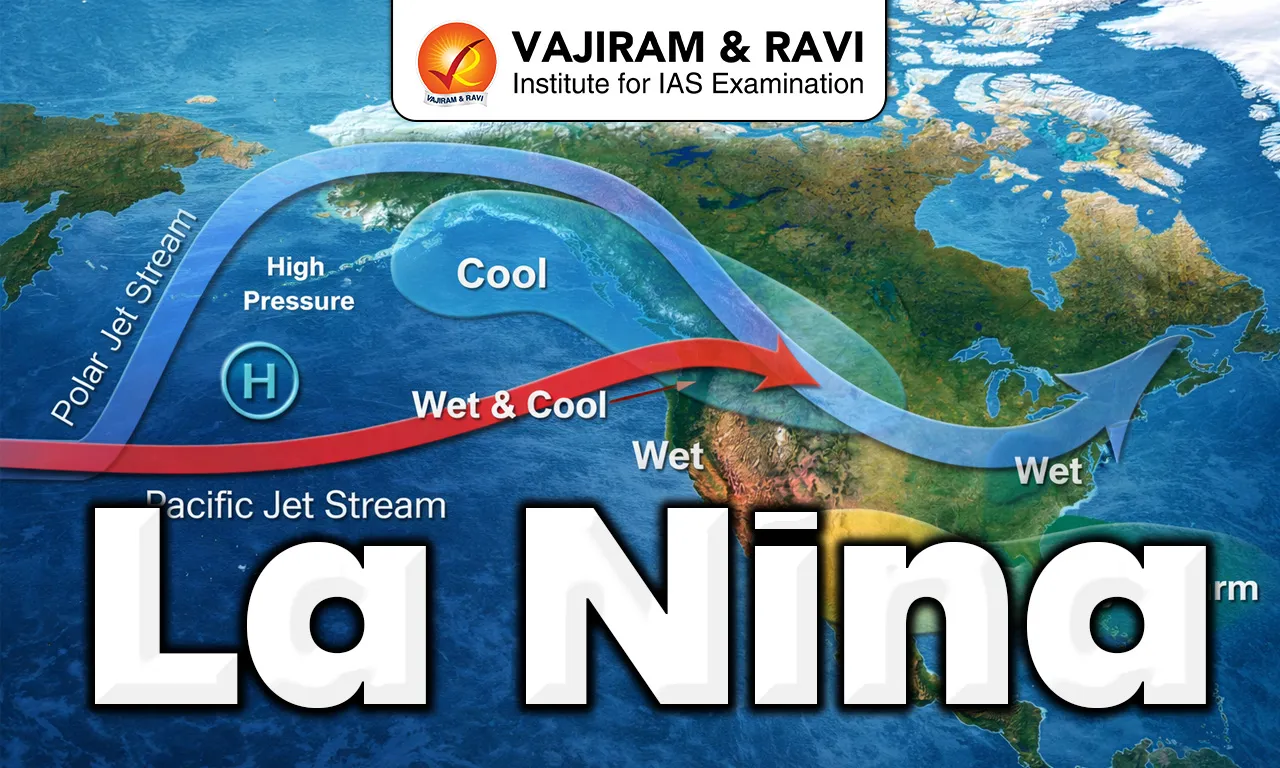
La Nina is the cool phase of the El Nino-Southern Oscillation (ENSO), marked by colder-than-normal sea surface temperatures in the central and eastern Pacific, which influence weather and rainfall patterns worldwide.

About La Nina

La Nina is a climate phenomenon marked by the cooling of the central and eastern Pacific Ocean. It is the cool phase of the El Nino Southern Oscillation (ENSO), which is a natural cycle involving the Pacific Ocean and the atmosphere. La Nina is the opposite of El Nino, which involves warming of the Pacific waters. This phenomenon affects global weather, ocean currents, and monsoon patterns, influencing rainfall, temperature, and storms across the world.

Causes of La Niña

The causes of La Nina are as follows:

  • Strengthened Trade Winds: During La Nina, the easterly trade winds blow stronger than usual, pushing warm surface water toward the western Pacific near Indonesia and Australia.
  • Upwelling of Cold Water: As warm water moves west, cold, nutrient-rich water rises to the surface in the eastern Pacific, lowering sea temperatures.
  • Atmosphere-Ocean Interaction: The combination of cooler sea surface temperatures and changes in atmospheric pressure (Southern Oscillation) sustains La Nina conditions for months or even years.
  • Walker Circulation: The east-west atmospheric circulation becomes stronger, causing more rainfall in the western Pacific and drier conditions in the east.

Characteristics of La Nina

Major Characteristics of La Nina are:

  • Cooler Sea Surface Temperatures: The central and eastern Pacific waters become colder than normal.
  • Enhanced Rainfall in Western Pacific: Countries like Indonesia and Australia often see increased rainfall.
  • Altered Global Weather Patterns: La Nina can change jet streams and winds, affecting weather far from the Pacific.
  • Duration: Typically lasts 9-12 months, but strong events can continue for up to 2 years.

Global Impacts of La Nina

The global impacts of La Nina are observed across different regions, affecting rainfall, temperature, and weather patterns worldwide.

  • Asia and India: La Nina usually strengthens the southwest monsoon in India, bringing above-average rainfall. While this benefits water resources and crops like rice, it can also cause floods in eastern India and Bangladesh.
  • Australia and Southeast Asia: Countries in this region experience higher rainfall, sometimes causing floods, while supporting agriculture such as rice and palm oil production.
  • North and South America: Southwestern United States and parts of South America often experience drier conditions. La Nina can also increase hurricane activity in the Atlantic. Northern parts of South America, such as Colombia and Venezuela, may face heavier rainfall.
  • Africa: East Africa can experience drought, affecting crops, while Southern Africa generally receives more rainfall, which supports agriculture but may also cause floods.

Economic and Environmental Impacts

  • Agriculture: Crops are highly sensitive to changes in rainfall. Excess or deficient precipitation can reduce yields.
  • Water Resources: Reservoirs may overflow due to heavy rain or dry out during droughts.
  • Fisheries: Upwelling of cold, nutrient-rich waters in the eastern Pacific boosts fish stocks, benefiting local fisheries.
  • Disaster Preparedness: Governments and communities need to prepare for floods, cyclones, droughts, and storms during La Nina events.

La Nina FAQs

Q1: What is La Nina?

Ans: La Nina is a climate phenomenon marked by colder‑than‑normal sea surface temperatures in the central and eastern Pacific Ocean, forming the cool phase of the El Nino-Southern Oscillation (ENSO) and affecting global weather patterns.

Q2: How often does La Nina occur and how long does it last?

Ans: La Nina events usually occur every 2-7 years and normally last about 9-12 months, though some events can continue for up to 2 years or more.

Q3: Why does La Nina happen?

Ans: La Nina happens when the easterly trade winds strengthen and push warm surface water toward the western Pacific, allowing cold, deeper water to rise in the eastern Pacific and cool the ocean surface.

Q4: How does La Nina affect global weather?

Ans: La Nina shifts atmospheric circulation and jet streams, often leading to more rain in Southeast Asia and Australia, stronger monsoons in India, drier conditions in parts of the Americas, and changes in hurricane activity.

Q5: How does La Nina affect the Indian monsoon?

Ans: La Nina usually strengthens the southwest monsoon, leading to above-average rainfall across India.

Campbell Bay National Park, Location, Area, Flora, Fauna

Campbell Bay National Park

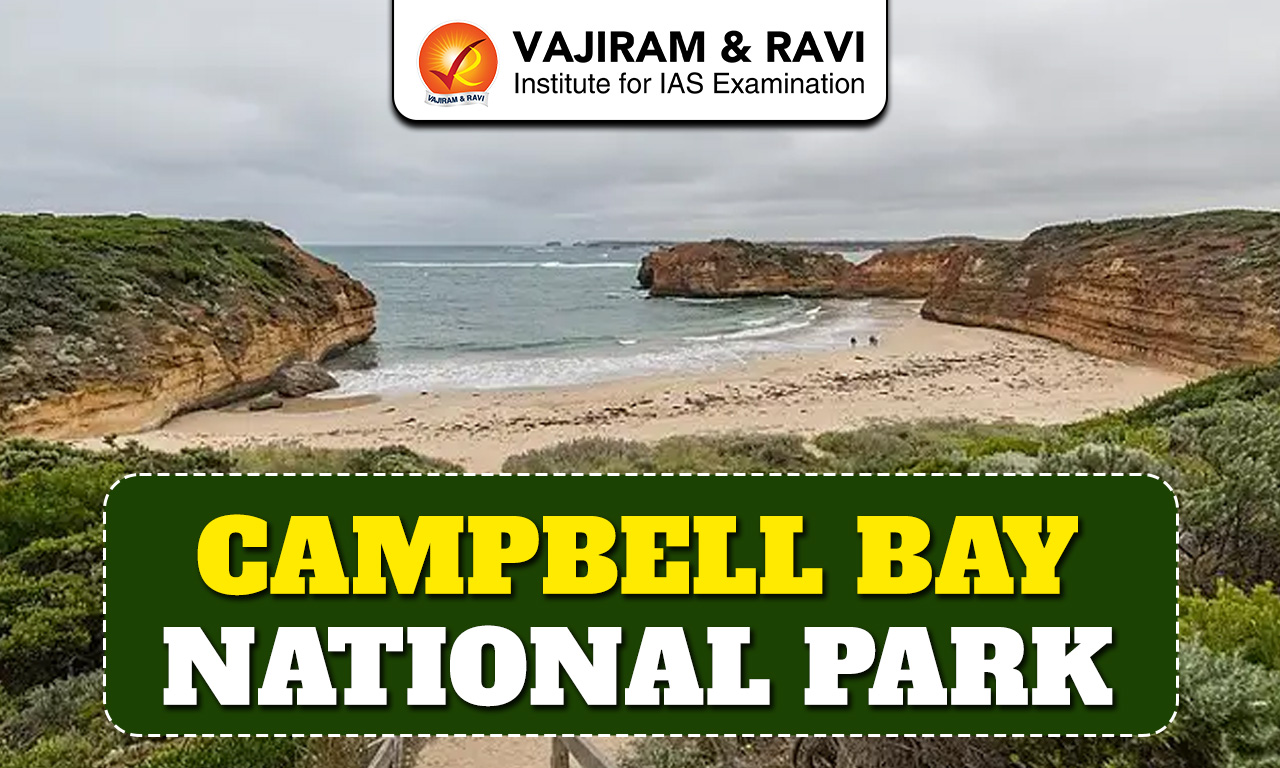
Campbell Bay National Park, located on Great Nicobar Island, is a protected area of India established in 1992, forming part of the Great Nicobar Biosphere Reserve, and is known for its rich tropical evergreen forests, diverse flora including orchids, and unique fauna such as the Nicobar pigeon, Megapode, and giant robber crab.

About Campbell Bay National Park

  • Campbell Bay National Park is situated on the island of Great Nicobar, the largest of the Nicobar Islands in the eastern Indian Ocean some 190 km to the north of Sumatra. 
  • It was gazetted as a national park of India in 1992.
  • It forms part of the Great Nicobar Biosphere Reserve.
  • The park has an approximate area of some 426 km² and is separated from the smaller Galathea National Park by a 12-km wide forest buffer zone.
  • The Campbell Bay National Park consists of different types of Orchid and flowering plants which attracts different species of birds making it an ideal place for bird watching. 
  • The vegetation of this park includes the tropical evergreen forest, orchids, tree fern.
  • Prominent Animals found in Campbell Bay National Park: Megopode, Nicobar Pigeon, Giant Robber Crab, Crab eating Macaque etc.

Campbell Bay National Park FAQs

Q1: Where is Campbell Bay National Park located?

Ans: Campbell Bay National Park is situated on Great Nicobar Island, the largest of the Nicobar Islands in the eastern Indian Ocean, about 190 km north of Sumatra.

Q2: When was Campbell Bay National Park established?

Ans: It was officially gazetted as a national park in 1992.

Q3: What is the area of Campbell Bay National Park?

Ans: The park covers an approximate area of 426 km² and is separated from the nearby Galathea National Park by a 12-km wide forest buffer zone.

Q4: What types of vegetation are found in Campbell Bay National Park?

Ans: The park is dominated by tropical evergreen forests, orchids, and tree ferns, making it rich in plant diversity.

Q5: Which notable animals inhabit Campbell Bay National Park?

Ans: Prominent fauna include the Nicobar pigeon, Megapode, giant robber crab, and crab-eating macaque, along with other endemic and rare species.

Energy Crisis in India, Reasons, Consequences, Initiatives

Energy Crisis in India

An Energy Crisis happens when the demand for energy becomes higher than its supply, leading to problems in the economy, international relations, and environmental management. It occurs because the natural resources used to produce energy, like fossil fuels, are limited and are being used faster than they can be replaced. Since these resources take a very long time to form, their increasing consumption raises concerns about future availability. The Energy Crisis in India has been discussed in detail in this article.

Energy Crisis in India Reasons

  • Conflict in West Asia and Supply Disruptions 
    • The ongoing conflict involving Iran has disrupted the Strait of Hormuz, through which a large share of India’s crude oil and nearly 30% of its natural gas is transported. 
    • This has led to reduced shipments from key suppliers like Qatar and Abu Dhabi, forcing companies such as Petronet LNG to declare force majeure, thereby creating supply shortages, price instability, and fuel scarcity in India.
  • Price Rise and Economic Pressure
    • The geopolitical tensions have caused a sharp rise in global oil prices, with fears of prices crossing $100 per barrel. 
    • Since India depends heavily on imports, even a small increase in crude oil prices significantly raises the import bill (about $13-14 billion for every $10 increase), leading to inflation, higher fuel costs, and pressure on the overall economy.
  • High Import Dependence and Limited Reserves
    • India imports around 88% of its crude oil and a large portion of natural gas, making it highly dependent on external sources. 
    • At the same time, its strategic reserves are limited, with petroleum reserves lasting only about 10 days and LPG/LNG reserves lasting a few weeks, which reduces the country’s ability to handle sudden supply shocks.
  • Infrastructure and Transmission Bottlenecks 
    • Despite increasing renewable energy production, India faces challenges in transmitting power efficiently due to weak grid infrastructure and limited capacity. 
    • As a result, renewable energy generated in states like Rajasthan often remains underutilized, highlighting inefficiencies in energy distribution and management.
  • Rising Demand due to Heatwaves and Industrial Growth 
    • Unusually early heatwaves have increased electricity demand for cooling, while strong industrial growth has further pushed energy consumption, with industries accounting for nearly half of total power usage. 
    • This sudden surge in demand has put additional strain on already limited energy supplies.
  • Depletion of Fossil Fuels and Growing Global Demand: The continued dependence on limited fossil fuels such as coal, oil, and natural gas, combined with rising global population, urbanization, and improved living standards, has led to a steady increase in energy demand, creating long-term supply concerns and intensifying the energy crisis.
  • Geopolitical Instability and Chokepoints: Political instability, conflicts, sanctions, and control over key energy routes such as the Suez Canal and the Strait of Hormuz disrupt global energy supply chains, making countries like India vulnerable to external shocks and fluctuations in supply and prices.
  • Policy, Technological, and External Disruptions
    • Challenges such as slow adoption of renewable energy, lack of advanced storage technology, underinvestment in infrastructure, and policy gaps further worsen the crisis.
    • Additionally, factors like natural disasters, pipeline failures, labour strikes, and even terrorist attacks on energy infrastructure can disrupt supply, while the global economy’s heavy dependence on oil means that even minor disruptions can have widespread economic impacts.

Energy Crisis Consequences

  • Business Closures and Job Losses
    • The shortage of LPG and fuel has severely affected businesses, especially small and medium enterprises. In cities like Mumbai, around 20% of hotels and restaurants have already shut down, and many more are at risk. 
    • Industrial areas like Morbi have seen about 170 factories close, leading to job losses for nearly one lakh workers.
  • Slower Economic Growth: High energy prices and supply disruptions are slowing down India’s economic growth. Experts estimate that GDP growth could fall by around 0.15% to 0.4%, and in extreme situations, a major rise in oil prices could reduce GDP by more than 2%, affecting overall economic stability.
  • Rising Inflation: The increase in energy prices has raised production and transportation costs across sectors. This leads to higher prices of goods and services, pushing inflation up by about 0.3% to 0.5%, which directly impacts the cost of living for people.
  • Pressure on Government Finances and Economy: As oil prices rise, India’s import bill increases significantly, with every $10 rise adding around $13-14 billion. This puts pressure on government finances, increases the current account deficit, and weakens the Indian Rupee.
  • Fertilizer and Agricultural Impact: Fertilizer plants are receiving only about 70% of their required gas supply, which can reduce fertilizer production. This may affect farming, especially during important crop seasons, and could lead to lower yields and higher food prices in the future.
  • Household LPG Shortages: Although the government is prioritizing households, many people are still facing LPG shortages. In some areas, cylinders are being sold in the black market at very high prices, creating difficulties for daily cooking needs.
  • Shortage of CNG and Transport Issues: There is a shortage of CNG and auto-LPG in cities, leading to long queues at fuel stations. In some places, the number of auto-rickshaws has dropped by nearly 30% because drivers are unable to find fuel, affecting daily transport.
  • Impact on Aviation Sector: Airlines are facing higher costs due to the rise in Aviation Turbine Fuel (ATF) prices. This is likely to result in increased airfares, especially during peak travel seasons, making air travel more expensive for passengers.

Initiatives to Overcome the Energy Crisis in India

  • Government Intervention through Essential Commodities Act (ECA), 1955 
    • The government has taken strong action by invoking the Essential Commodities Act, 1955 through the Natural Gas (Supply Regulation) Order, 2026 to control the situation. 
    • A priority system has been introduced where PNG for households, CNG for transport, and LPG production are given top priority with full supply ensured, while industries are facing reduced gas supply. 
    • Fertilizer plants are getting only about 70% of their usual supply, and other industries around 80%, as gas is being diverted to essential uses. To prevent panic buying and hoarding of LPG, a rule of a 25-day gap between cylinder bookings has also been introduced.
  • Diversification of Energy Supply Sources: To reduce dependence on disrupted routes like the Strait of Hormuz, India has started importing oil and gas from alternative countries such as Algeria, Norway, Canada, and Australia. These supplies are being transported through longer but safer routes like the Cape of Good Hope to ensure continuity of energy supply.
  • Increased Oil Imports from Russia: India has increased its purchase of oil from Russia to make up for shortages caused by disruptions in West Asia. This has been supported by a temporary relaxation in Western sanctions, allowing India to secure additional supplies and maintain energy stability.
  • Boosting Domestic Energy Production: The government has also focused on increasing domestic production, especially of LPG. Oil refineries have been instructed to maximize output, leading to about a 10% increase in LPG production in a short time. This additional supply is mainly being directed towards households to reduce shortages and ensure basic energy needs are met.

Way Forward to Tackle the Energy Crisis

  • Increasing Domestic Fossil Fuel Production
    • India needs to reduce its heavy dependence on imports by increasing its own oil and gas production. Under initiatives like Mission Samudra Manthan, the government plans to expand deep-sea exploration by increasing the number of drilling wells significantly in the coming years. 
    • This will help tap into unexplored offshore reserves and boost domestic production over time, reducing reliance on foreign energy sources and improving energy security.
  • Expanding Strategic Energy Reserves
    • India must strengthen its emergency reserves to handle sudden supply disruptions. Currently, petroleum reserves cover only about 10 days of imports, but the goal is to increase this significantly by adding more storage capacity. 
    • Along with oil, creating a strategic gas reserve will provide an additional safety cushion during global crises or geopolitical conflicts.
  • Investing in Energy Storage Systems
    • Since renewable energy sources like solar and wind are not always available (due to weather conditions), India needs to invest heavily in energy storage technologies. 
    • Plans include large-scale deployment of battery storage systems and pumped hydro storage to store excess energy and use it when needed, ensuring a stable and reliable power supply.
  • Promoting Green Hydrogen as Future Fuel 
    • Green hydrogen is being seen as a long-term clean energy solution. India aims to produce large quantities of green hydrogen to reduce dependence on imported natural gas, especially in sectors like fertilizers and steel. 
    • This will not only improve energy security but also support climate goals and reduce carbon emissions.
  • Diversifying Energy Sources and Suppliers 
    • India should avoid depending on a single country or region for energy imports. Instead, it should diversify its supply by sourcing energy from multiple regions such as Russia, Africa, the United States, and Latin America. 
    • At the same time, the country should explore alternative energy sources like tidal energy, geothermal energy, and hydrogen to build a more balanced and resilient energy mix.
  • Expanding Nuclear Energy Capacity: Nuclear energy can provide a stable and low-carbon source of power. India can take advantage of its large thorium reserves to develop long-term nuclear energy solutions. Additionally, new technologies like small modular reactors (SMRs) can be promoted as efficient and safer options for future energy needs.
  • Improving Energy Efficiency and Conservation: Reducing energy demand is as important as increasing supply. India should focus on energy-efficient technologies in industries, buildings, and transport systems. Measures like smart grids, energy-efficient appliances, and better urban planning can help save energy, reduce costs, and lower dependence on imports.
  • Strengthening Policy and Private Sector Participation: A clear and stable policy framework is needed to attract investment in the energy sector. Encouraging private companies and startups to participate in renewable energy, storage, and innovation can improve efficiency and accelerate growth. Public-private partnerships can play a key role in building a strong and sustainable energy system.

Energy Crisis in India FAQs

Q1: What is an Energy Crisis?

Ans: An energy crisis is a situation where energy demand exceeds supply, causing shortages, price rise, and economic problems.

Q2: Why is India highly vulnerable to an energy crisis?

Ans: India is vulnerable due to its heavy dependence on imported oil and gas and limited emergency reserves.

Q3: How do geopolitical conflicts impact India’s energy security?

Ans: Conflicts disrupt supply routes like the Strait of Hormuz, leading to shortages and higher energy prices.

Q4: What are the major economic impacts of the energy crisis in India?

Ans: It increases inflation, raises import bills, and slows down economic growth.

Q5: How does the energy crisis affect daily life and industries?

Ans: It causes fuel shortages, higher costs, transport issues, and industrial shutdowns.

Intanki National Park, Location, Area, Vegetation, Key Details

Intanki National Park

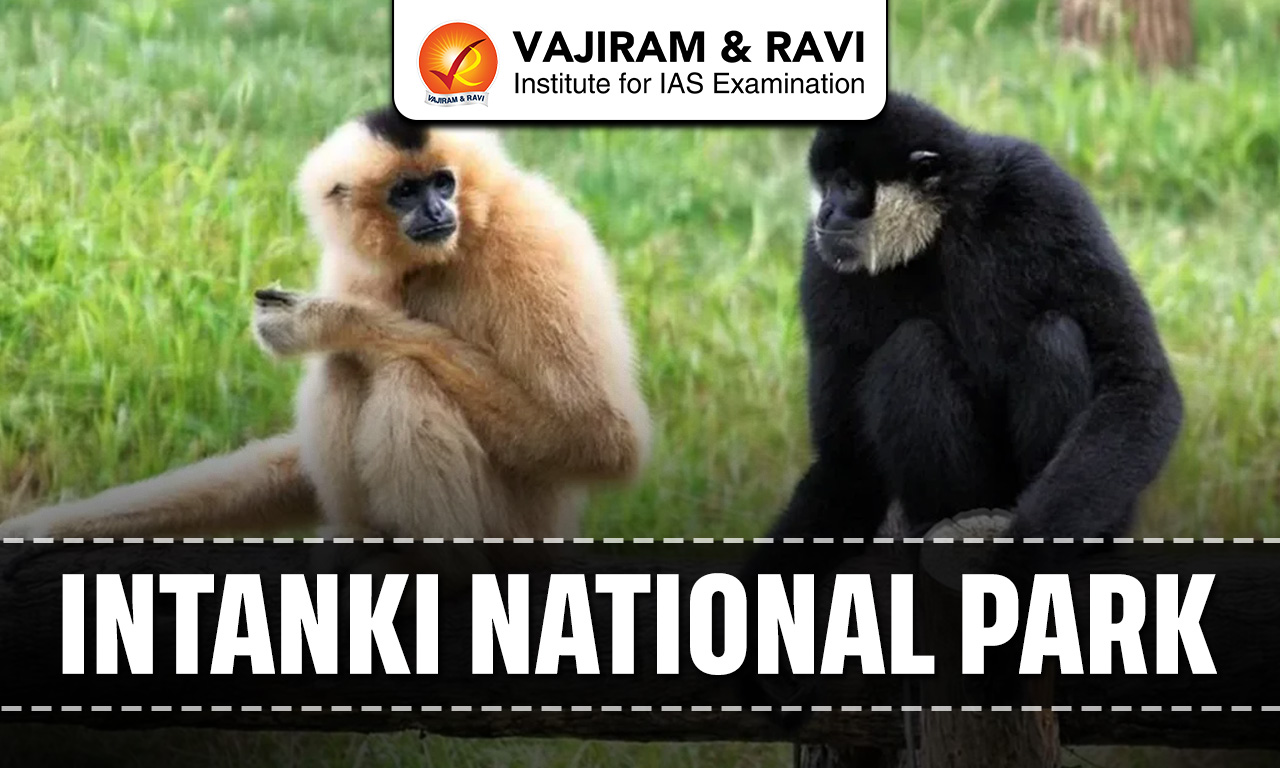
Intanki National Park, also known as Ntangki National Park, is a protected area located in Peren district of Nagaland, India. Established in 1993, it is known for its dense tropical rainforests, rich biodiversity.

About Intanki National Park

  • Intanki National Park, also known as Ntangki National Park, is a protected area located in Peren district of Nagaland.
  • While the area was protected as a Reserved Forest during the British era (1923), it was notified as a Wildlife Sanctuary in 1975 before being upgraded to a National Park in 1993.
  • It was declared an elephant reserve in 2005.
  • The park covers an area of approximately 202.02 km². 
  • The park’s terrain includes mountains, cliffs, valleys, and dense tropical rainforests, providing a natural habitat for mammals, birds, reptiles, and insects.
  • The vegetation consists of tropical evergreen forests, orchids, bamboo groves, and tree ferns.
  • Notable animals in Intanki National Park include Gur (Indian Bison), wild buffalo, tiger, sloth bear, hornbill, palm civets, monitor lizard, python, and flying squirrels.
  • The park is ideal for trekking, hiking, camping, and wildlife observation, with guided eco-tours organized during the tourist season.

Intanki National Park FAQs

Q1: Where is Intanki National Park located?

Ans: Intanki National Park is located in Peren district, Nagaland.

Q2: When was Intanki National Park established?

Ans: It was declared a national park in 1993.

Q3: What is the area of Intanki National Park?

Ans: The park covers approximately 202.02 km² and also forms part of an elephant reserve.

Q4: What types of vegetation are found in Intanki National Park?

Ans: The park has tropical evergreen forests, bamboo groves, orchids, and tree ferns, providing diverse habitats for wildlife.

Q5: Which notable animals inhabit Intanki National Park?

Ans: Prominent fauna include the, wild buffalo, tiger, sloth bear, hornbill, monitor lizard, and flying squirrels.

Smart Ports, Features, Challenges, V.O. Chidambaranar Port

Smart Ports

A Smart Port is a technologically advanced Sea Port that uses digitalisation, automation and data driven systems to improve efficiency, security and sustainability. It integrates IoT, artificial intelligence, big data and blockchain. It also enables real time cargo tracking, faster operations and better decision making while reducing environmental impact and improving overall logistics performance.

Smart Ports Features

Smart Ports use advanced technologies to improve operations, efficiency and sustainability while ensuring smooth cargo movement and real time monitoring systems.

  • Digital Integration: Smart Ports connect all systems using IoT, AI and big data to enable real time monitoring of cargo, vessels, weather and traffic conditions, improving coordination and decision making accuracy across operations.
  • Operational Efficiency: Automation in loading, unloading and transport processes reduces manual work, lowers costs and can even double port capacity without requiring additional land or heavy infrastructure investment.
  • Traffic and Space Optimization: Sensors, cameras and smart lights manage traffic flow and parking efficiently, helping ports handle increasing ship sizes and cargo volumes while minimizing congestion and delays.
  • Economic Significance: Smart workflow systems reduce turnaround time of ships, allowing more cargo clearance in less time, increasing revenue, lowering operational costs and improving resilience against economic disruptions.
  • Environmental Sustainability: Smart Ports use energy monitoring and automation to reduce emissions, control pollution and efficiently use natural resources, supporting long term environmental commitments and cleaner port operations.
  • Advanced Security Systems: Artificial intelligence enables automated screening and security checks, making processes faster, safer and less dependent on human error, while ensuring standardized and reliable inspection systems.

Also Read: Major Ports in India

V.O. Chidambaranar Port

V.O. Chidambaranar Port is India’s first Smart Port initiative that demonstrates digital transformation as highlighted below:

  • Location: It is located in Thoothukudi district of Tamil Nadu along the Coromandel Coast.
  • Digital Twin Technology: Launched on 23 February 2026, this system creates a real time virtual replica of port infrastructure.
  • Technology Integration: The platform uses IoT sensors, GPS tracking, LiDAR mapping, drones and CCTV networks.
  • Operational Monitoring: It provides live data on berth occupancy, vessel movement, crane usage and yard capacity.
  • Predictive Maintenance: AI based monitoring predicts equipment failures in advance, reducing downtime.
  • Efficiency Improvement: The system is expected to reduce vessel turnaround time by up to 25%, optimise traffic flow and improve overall port productivity significantly.
  • Sustainability Measures: It includes energy tracking and emission monitoring, helping reduce carbon footprint while supporting data driven environmental management and long term sustainable port development.

Smart Ports Challenges

Despite several advancements, Smart Ports faces challenges as highlighted below:

  • High Initial Investment: Setting up smart port infrastructure requires heavy investment in technologies like IoT, AI systems, sensors and automation, making it costly for developing economies and smaller ports.
  • Cybersecurity Risks: Increased digitalisation makes ports vulnerable to cyber attacks, data breaches and system failures, which can disrupt operations and affect trade security.
  • Skilled Workforce Requirement: Smart ports need trained personnel to manage advanced technologies and lack of technical skills can slow down implementation and efficient functioning.
  • Coordination Challenges: Effective smart port functioning requires strong cooperation between government authorities, businesses and stakeholders, which can be complex and time consuming to achieve.

Smart Port FAQs

Q1: What is a Smart Port?

Ans: A Smart Port is a modern seaport that uses technologies like IoT, AI and data analytics to improve efficiency, safety and environmental performance.

Q2: Which technologies are used in Smart Ports?

Ans: Smart Ports use IoT sensors, artificial intelligence, big data, blockchain, drones, GPS tracking and automated systems for smooth operations.

Q3: How do Smart Ports improve efficiency?

Ans: They automate cargo handling, optimize traffic flow and use real time data to reduce delays and increase overall operational speed.

Q4: Which is the first Smart Port in India?

Ans: V.O. Chidambaranar Port is the first Indian port to implement Digital Twin technology for smart and efficient port management.

Q5: What are the environmental benefits of Smart Ports?

Ans: Smart Ports reduce pollution, optimize energy use and track emissions, helping in sustainable and eco friendly port operations.

Difference Between Invertebrates and Vertebrates, Key Examples

Difference Between Invertebrates and Vertebrates

Difference Between Invertebrates and Vertebrates is based on backbone presence. Invertebrates lack a spinal column, while vertebrates possess it. Around 1.37 million animal species are identified, with nearly 97% invertebrates and only about 3% vertebrates.

Difference Between Invertebrates and Vertebrates

The Difference Between Invertebrates and Vertebrates highlights structural, physiological and functional variations between these two major animal groups as tabulated below:

Difference Between Invertebrates and Vertebrates

Aspect

Invertebrates

Vertebrates

Backbone

These animals do not have a backbone or vertebral column. e.g., worms, insects

These animals have a well developed backbone or spine., e.g., mammals, birds

Skeleton

They usually have an external exoskeleton made of chitin, while some may not have any skeleton at all.

They possess an internal skeleton made of bone or cartilage.

Body Size

Most of them are small in size, although some, like the colossal squid, can grow up to about 46 feet.

They are generally larger in size and have a strong body structure.

Circulation

They mostly have an open circulatory system where blood flows freely in the body cavity.

They have a closed circulatory system that allows efficient transport of blood.

Nervous System

Their nervous system is simple and less organized.

Their nervous system is complex and includes a brain and spinal cord.

Eyes

Compound eyes are commonly found, especially in insects and arthropods.

They do not have compound eyes and instead have advanced visual organs.

Symmetry

Their body symmetry can be radial or bilateral, as seen in starfish and insects.

Their body structure shows strictly bilateral symmetry.

Nutrition

They may follow autotrophic, parasitic, or heterotrophic modes of nutrition.

They mainly follow a heterotrophic mode of nutrition.

Diversity

Over 1.25 million species of invertebrates are found and are highly diverse.

This group includes around 62,000 species worldwide.

Examples

Sponges, arthropods, molluscs, etc.

Fish, amphibians, reptiles, birds, mammals, etc.

Difference Between Invertebrates and Vertebrates FAQs

Q1: What is the key Difference Between Invertebrates and Vertebrates?

Ans: The key difference is that vertebrates have a backbone, while invertebrates do not possess any vertebral column.

Q2: Which group has more species: invertebrates or vertebrates?

Ans: Invertebrates dominate with about 97% of animal species, while vertebrates make up only around 3%.

Q3: How does the circulatory system differ in Invertebrates and Vertebrates?

Ans: Invertebrates mostly have an open circulatory system, whereas vertebrates have a closed circulatory system.

Q4: Which among Invertebrates and Vertebrates has a more complex nervous system?

Ans: Vertebrates have a highly developed nervous system with a brain and spinal cord, unlike the simpler system in invertebrates.

Q5: What are the common examples of Invertebrates and Vertebrates?

Ans: Invertebrates include insects, worms and molluscs, while vertebrates include fish, birds, reptiles, amphibians and mammals.

Major Military Exercises of India, List, Army, Navy, Air Force

Major Military Exercises of India

Major military exercises of India are joint training activities conducted by the Indian Armed Forces with other countries or within the country. These exercises help improve coordination, strengthen defence capabilities, and prepare forces for different security challenges. They also play an important role in building strategic partnerships and ensuring national security.

Major Military Exercises of India Need

  • Joint military exercises are important activities under defence cooperation that highlight the professionalism and preparedness of the Indian Army. They provide a platform for troops from different countries to train together and exchange knowledge about modern military practices.
  • These exercises are designed to be practical and cover a wide range of situations. They include operations such as counter-terrorism, humanitarian assistance and disaster relief (HADR), United Nations peacekeeping missions, and combat training in different terrains like high-altitude areas, deserts, urban regions, and jungles.
  • In recent times, the nature of these exercises has become more advanced. They now incorporate emerging aspects of warfare such as drone operations and grey zone conflicts, making the training more realistic and relevant to current security challenges.

Major Military Exercises conducted by Indian Army

Major military exercises conducted by the Indian Army are an important part of India’s defence cooperation with other countries. These exercises help in improving coordination, operational skills, and mutual understanding between participating forces. The Major Military Exercises conducted by the Indian Army are discussed below.

Major Military Exercises conducted by Indian Army

Country

Joint Exercise

Australia

Exercise AUSTRA HIND

Bangladesh

Exercise SAMPRITI

China

Exercise HAND IN HAND

France

Exercise SHAKTI

Indonesia

Exercise GARUDA SHAKTI

Kazakhstan

Exercise PRABAL DOSTYK

Kyrgyzstan

Exercise KHANJAR

Maldives

Exercise EKUVERIN

Mongolia

Exercise NOMADIC ELEPHANT

Myanmar

IMBEX

Nepal

Exercise SURYA KIRAN

Oman

Exercise AL NAGAH

Russia

Exercise INDRA

Seychelles

Exercise LAMITIYE

Sri Lanka

Exercise MITRA SHAKTI

Thailand

Exercise MAITREE

UK

Exercise AJEYA WARRIOR

USA

Exercise YUDH ABHYAS

USA

Exercise VAJRA PRAHAR

Major Military Exercises conducted by Navy

Major military exercises conducted by the Indian Navy play a key role in strengthening maritime security and cooperation with other countries. The Major Military Exercises conducted by the Indian Navy are discussed below.

Major Military Exercises conducted by Navy

Exercise

Participating Countries

MALABAR

India, USA, Japan, Australia

VARUNA

India, France

LA PEROUSE

India, Australia, USA, France, Japan, UK

SEA DRAGON

India, USA, Japan, Canada, South Korea

KONKAN

India, UK

AIME & IMDEX

India, ASEAN Countries

BRIGHT STAR

India, 34 Countries

RIMPAC

India, USA (Multilateral)

SLINEX

India, Sri Lanka

SAMUDRA SHAKTI

India, Indonesia

AL-MOHED AL-HINDI

India, Saudi Arabia

INDIA–FRANCE–UAE Trilateral Exercise

India, France, UAE

KOMODO

India, Multiple (36 Countries)

AUSINDEX

India, Australia

SIMBEX

India, Singapore

IN-BN CORPAT

India, Bangladesh

IBSAMAR

India, Brazil & South Africa

IN-MN Table Top Ex

India, Malaysia

IMCOR, IN-MN BILAT

India, Myanmar

Naseem-al Bahr

India, Oman

INDRA NAVY

India, Russia

INDO-THAI CORPAT

India, Thailand

Major Military Exercises conducted by Air Force

Major military exercises conducted by the Indian Air Force are crucial for enhancing air combat capabilities and operational readiness. These exercises involve coordination with friendly foreign air forces and help in mastering advanced technologies and tactics. The Major Military Exercises conducted by the Indian Air Force are discussed below.

Major Military Exercises conducted by Air Force

Exercise Name

Description

Exercise Veer Guardian

India, Japan

Exercise PASSEX (France)

India, France

Exercise Desert Flag-8

First participation of Tejas in an international exercise (multilateral air exercise)

Exercise Cobra Warrior

Multinational air exercise

Exercise Cope India

Joint exercise with USAF; Japan as observer

Exercise Orion

Multinational air exercise

Exercise INIOCHOS

First air exercise between India and Greece

Exercise Bright Star

Joint exercise with Egypt

Humanitarian Assistance and Disaster Relief (HADR) & Search and Rescue (SAR) Operations

Humanitarian Assistance and Disaster Relief (HADR) and Search and Rescue (SAR) operations involve the Indian Armed Forces responding to disasters and emergencies. These operations focus on rescue, relief, and evacuation of affected people. They are discussed below in the table.

Humanitarian Assistance and Disaster Relief (HADR) & Search and Rescue (SAR) Operations

Operation Name

Year

Objective

Operation Seawave

2004

Tsunami relief and rescue in Andaman & Nicobar Islands

Operation Castor

2004

Humanitarian assistance to Maldives after tsunami

Operation Rainbow

2004

Relief and rescue support to Sri Lanka after tsunami

Operation Rahat

2013

Rescue and evacuation during Uttarakhand floods

Operation Surya Hope

2013

Army-led rescue and relief in Uttarakhand disaster

Operation Megh Rahat

2014

Rescue and relief during Jammu & Kashmir floods

Operation Maitri

2015

Earthquake relief and assistance to Nepal

Kerala Flood Relief Ops

2018

Rescue, evacuation, and relief during Kerala floods

Cyclone Fani Relief Ops

2019

Disaster response and evacuation along Odisha coast

Operation Samudra Setu

2020

Evacuation of Indian citizens during COVID-19

Mission SAGAR

2020-2022

Humanitarian aid and medical support to Indian Ocean countries

Cyclone Amphan Relief Ops

2020

Disaster preparedness and relief in eastern India

Operation Devi Shakti

2021

Evacuation from Afghanistan

Operation Ganga

2022

Evacuation of Indians from Ukraine conflict

Operation Dost

2023

Earthquake relief in Türkiye and Syria

Operation Kaveri

2023

Evacuation of Indians from Sudan

Operation HIMRAHAT

2023

Rescue during Sikkim Glacial Lake Outburst Flood

Tunnel Rescue (Silkyara)

2023

Rescue of trapped workers in Uttarakhand tunnel collapse

Cyclone Michaung Relief Ops

2023

Flood rescue and relief in Chennai

Operation Brahma

2025

Earthquake relief and humanitarian aid to Myanmar

Operation Sagar Bandhu

2025

Cyclone relief and assistance to Sri Lanka

Nationwide Flood Relief Ops

2024-2025

Rescue, medical aid, and relief across multiple Indian states

Integrated Exercises With Sister Services

Integrated exercises with sister services involve joint training conducted by the Army, Navy, and Air Force. These exercises aim to improve coordination, joint planning, and effective use of resources across services. They enhance overall combat readiness and promote integrated operations.

Integrated Exercises With Sister Services

Exercise Name

Description

Ex Kranti Mahotsav

Multi-Role Helicopter (MLH) operations

Ex Chakra Drishti

Use of fighter aircraft, RPA, and AEW&C systems

Western Command Theatre Exercise

Involves helicopters, transport aircraft, RPA, and fighter aircraft

Long-Range Maritime Strike

Operations using fighters, transport aircraft, and AWACS

MiG-29K Detachment at AFS Naliya

Joint detachment with Indian Navy’s MiG-29K fighter aircraft

Major Military Exercises Advantages

  • Better Coordination (Interoperability): Joint exercises help armed forces of different countries work smoothly together. Soldiers learn common procedures, communication methods, and teamwork, which is important during joint operations.
  • Sharing of Knowledge and Best Practices: These exercises provide a platform to exchange ideas, strategies, and modern techniques. Countries learn from each other’s strengths, which improves overall military efficiency and innovation.
  • Strengthening Diplomatic Relations: Military exercises act as a tool of defence diplomacy. They build trust, improve mutual understanding, and strengthen political and strategic partnerships between nations. Example: The Malabar Exercise enhances cooperation among like-minded countries.
  • Assessment of Military Capability: Exercises help identify strengths and weaknesses in planning, coordination, and technology. Based on these observations, countries can improve their defence systems and strategies.
  • Deterrence and Strategic Signalling: Conducting joint exercises sends a strong message of preparedness and unity to potential adversaries. It acts as a deterrent by showcasing military strength and readiness.
  • Preparedness for Humanitarian Assistance (HADR): Many exercises include disaster relief scenarios such as earthquakes, floods, and evacuations. This improves coordination between military forces and civilian agencies during real emergencies.
  • Adaptation to Modern Warfare: Exercises now include new dimensions like cyber warfare, drone operations, and grey zone conflicts. This helps forces stay updated with evolving security challenges.
  • Operational Readiness in Diverse Terrains: Training in deserts, mountains, jungles, and maritime environments improves the ability of forces to operate effectively in different geographical conditions.
  • Confidence Building Measures (CBMs): Regular interaction reduces misunderstandings and builds confidence among participating countries, especially in sensitive regions.
  • Support to Global Peace and Security: Through joint training for UN peacekeeping and crisis response, military exercises contribute to maintaining international peace and stability.

Major Military Exercises FAQs

Q1: What are Major Military Exercises of India?

Ans: They are training activities conducted by the Indian Armed Forces with other countries or domestically to improve combat skills and coordination.

Q2: Why are military exercises important for India?

Ans: They enhance defence preparedness, improve coordination, and help tackle various security and disaster-related challenges.

Q3: What types of military exercises does India conduct?

Ans: India conducts bilateral, multilateral, and tri-service exercises, along with disaster relief and peacekeeping training.

Q4: What are some major Army, Navy, and Air Force exercises of India?

Ans: Some of the major exercises include Yudh Abhyas (Army), Malabar (Navy), and Cope India (Air Force).

Q5: What is the role of military exercises in diplomacy?

Ans: They strengthen strategic partnerships, build trust among nations, and promote regional stability.

Captive Generating Plant, Definition, Types, Benefits, Rule Changes

Captive Generating Plant

Government of India has notified the Electricity (Amendment) Rules, 2026, amending Rule 3 of the Electricity Rules, 2005 relating to Captive Generating Plants (CGPs). The amendments aim to remove interpretational ambiguities, improve ease of doing business for industry, and align the captive generation framework with India’s energy transition and industrial growth objectives.

Captive Generating Plant (CGP) Definition 

A Captive Generating Plant (CGP) is a power plant set up by an industrial, commercial, or large institutional user primarily to generate electricity for their own consumption, rather than for selling to the general grid. It is “captive” because it serves the needs of the owner and is not a public utility.

A Captive Generating Plant (CGP), according to Section 2(8) of the Electricity Act, 2003, is a power plant set up primarily to generate electricity for the self-consumption of the owner, where the captive user(s) must hold at least 26% of the equity and consume at least 51% of the electricity generated annually. Surplus electricity may be sold to other consumers or the grid as per regulatory approval.

Key Features of Captive Generating Plant (CGP)

A Captive Generating Plant (CGP) possesses several distinct features that differentiate it from conventional power plants: 

  • Ownership: Typically owned by industrial or commercial establishments such as steel plants, cement factories, IT parks, or large institutional complexes.
  • Purpose: Ensures self-consumption of electricity to reduce dependency on the state grid.
  • Capacity Range: Varies from small-scale plants (few kW) to large industrial plants (hundreds of MW).
  • Fuel Source: Can be thermal (coal, gas, diesel), hydro, or renewable energy (solar, wind, biomass) depending on availability and cost-effectiveness.
  • Regulatory Oversight: Governed under the Electricity Act, 2003; often requires approvals from state electricity regulatory commissions if surplus power is sold.
  • Location: Usually located on-site (factory premises) or nearby to reduce transmission losses.

Types of Captive Generating Plants

Captive Generating Plants (CGPs) can be classified into different types based on the source of energy they use for power generation.

  • Thermal CGPs: Use coal, diesel, or gas; common in energy-intensive industries like steel, cement, or chemicals.
  • Hydro CGPs: Small or mini-hydro plants for industries near rivers or water resources.
  • Renewable CGPs: Solar rooftop plants, wind energy plants, or biomass-based plants; increasingly encouraged for sustainability and environmental compliance.

Advantages of Captive Generating Plants (CGPs)

Captive Generating Plants (CGPs) offer several advantages, especially for industries and large organizations that require reliable and cost-effective power.

  • Reliable Power Supply: Industries can maintain continuous operations even during grid outages.
  • Cost Efficiency: Bulk generation and self-consumption can reduce electricity costs in the long term.
  • Grid Support: CGPs can sell surplus electricity to the grid, aiding energy distribution.
  • Energy Security: Reduces dependency on state electricity boards and mitigates power shortage risks.
  • Environmental Benefits: When using renewable CGPs, industries reduce their carbon footprint and comply with environmental regulations.

Challenges and Limitations

  • High Capital Investment: Setting up a CGP requires significant initial costs.
  • Operational Expertise: Industries need trained personnel to operate and maintain power plants.
  • Fuel Dependence: Thermal CGPs depend on consistent fuel supply; any disruption can affect power generation.
  • Regulatory Compliance: Selling surplus electricity requires adherence to licensing, tariffs, and grid codes.

Legal and Regulatory Framework in India

Captive Generating Plants (CGPs) are governed primarily by the Electricity Act, 2003. The National Electricity Policy, 2005 recognised captive generation as an important mechanism for ensuring reliable and cost-effective electricity supply to industry.

The Electricity (Amendment) Rules, 2026 have been introduced to provide greater clarity and flexibility in the framework governing captive power plants so that industries can more easily generate electricity for their own consumption.

Key Features of the 2026 Amendments for CGPs: 

  • Clear Ownership: Companies, subsidiaries, and holding companies can collectively own a CGP, including group or corporate structures. Earlier it was not clear whether subsidiaries or holding companies could count as owners, causing disputes for corporate groups.
  • Uniform Verification: Captive status will be checked for the entire financial year, making the process simple and consistent.
  • Group Projects (AoP) Flexibility: The amendments allow captive users in AoP-based group captive projects to draw power per operational needs, subject to overall statutory compliance. A member with 26% or more ownership is exempt from proportionate consumption requirements, with its entire consumption qualifying as captive.
  • Verification Agencies: States/UTs will appoint agencies for intra-state verification, while the National Load Despatch Centre (NLDC) will handle inter-state cases. A grievance committee will resolve any disputes.
  • No Extra Charges During Verification: Cross-Subsidy and Additional Surcharges will not be applied while the captive status is being checked. If the plant fails verification later, the charges will apply with interest.
  • Implementation: Rules related to group projects, verification, and surcharges start from 1st April 2026, while other amendments are effective immediately.

These rules make it easier for industries to set up captive power, promote renewable energy, reduce costs, and strengthen industrial growth, supporting Viksit Bharat @2047.

Captive Generating Plants (CGPs) Significance 

Captive Generating Plants (CGPs) are significant because: 

  • Reliable Power Supply: Ensures uninterrupted electricity for industries.
  • Industrial Growth: Supports manufacturing and energy-intensive sectors.
  • Cost Efficiency: Reduces electricity costs compared to grid supply.
  • Energy Security: Lowers dependence on state electricity boards.
  • Decentralized Generation: Reduces transmission losses and improves system efficiency.
  • Renewable Adoption: Promotes solar, wind, and biomass-based captive projects.
  • Clean Energy Transition: Aligns with India’s net-zero and sustainable energy goals.
  • Viksit Bharat @2047: Strengthens industrial competitiveness and long-term economic growth.

Captive Generating Plant FAQs

Q1: What is a Captive Generating Plant (CGP)?

Ans: A Captive Generating Plant (CGP) is a power plant set up by an industrial, commercial, or large institutional user primarily to generate electricity for their own consumption, rather than for selling to the general grid.

Q2: Who can own a Captive Generating Plant (CGP)?

Ans: Industries, companies, or large institutions can own a CGP, including their subsidiaries and holding companies, as clarified under the Electricity (Amendment) Rules, 2026.

Q3: What types of Captive Generating Plants (CGPs) exist?

Ans: CGPs can be thermal, hydro, or renewable (solar, wind, biomass), depending on fuel availability, cost, and sustainability goals.

Q4: What are the benefits of a Captive Generating Plant (CGP)?

Ans: A CGP provides reliable power, reduces electricity costs, improves energy security, supports industrial growth, and promotes renewable energy adoption.

Q5: How has the 2026 amendment improved Captive Generating Plants (CGPs)?

Ans: The Electricity (Amendment) Rules, 2026 clarified ownership, simplified verification, allowed flexible group arrangements, and ensured no extra charges while captive status is being verified, making CGPs easier and more cost-effective for industries.

Space Diplomacy of India, Role of Technology, Challenges

Space Diplomacy of India

Space Diplomacy of India refers to the use of space activities and international cooperation to strengthen global relations and achieve strategic goals. India is actively leveraging its space technology to build partnerships, promote development, and expand its global influence. India marked its first National Space Day on 23 August 2024, highlighting the rising importance of outer space in world affairs. According to the World Economic Forum, the global space economy is expected to reach about $1.8 trillion by 2035, indicating rapid growth.

India’s Space Diplomacy

  • India’s space diplomacy refers to how India uses its space technology and capabilities to build strong relations with other countries, especially developing nations. Many countries in the Global South depend on advanced nations for space technology, but India is helping them become more self-reliant by providing affordable and useful space services.
  • India mainly focuses on using space for development purposes such as improving communication, disaster management, agriculture, and resource management. Through this, India not only supports its own growth but also helps other developing countries achieve their development goals.
  • One important example is Project NETRA (2019), which is India’s Space Situational Awareness system. It helps in tracking space debris and other dangers in space. India can share this information with other countries to improve their space safety systems.
  • India is also known for its low-cost satellite launch services through the Indian Space Research Organisation, especially the Polar Satellite Launch Vehicle (PSLV). This has attracted many countries to launch their satellites through India.
  • In addition, India has a strong network of remote sensing satellites like EOS-06 and EOS-07, which provide useful data for agriculture, water management, and urban planning. This data can also be shared with other countries for their development.
  • India has promoted regional cooperation through the South Asia Satellite (GSAT-9) launched in 2017. It helps neighbouring countries in communication, weather forecasting, disaster management, and telemedicine services.
  • India also uses space diplomacy to strengthen strategic and security interests. For example, it has set up ground stations in countries like Bhutan and signed agreements with countries like the United States for space cooperation.
  • Further, India is involved in international collaborations such as the NISAR mission with NASA, which shows technology sharing and advanced research cooperation.
  • For countries like India and its neighbours, space diplomacy can also promote regional cooperation and support sustainable development, even though limited resources remain a challenge.

Global North vs Global South in Space

  • Global space governance is mainly influenced by institutions like the United Nations Office for Outer Space Affairs and United Nations Committee on the Peaceful Uses of Outer Space. However, decisions are largely shaped by powerful countries, especially the Permanent Five (P5) nations, most of which belong to the Global North. This creates concerns about unequal control over space resources.
  • For example, NASA launched the Psyche mission in 2023 to study a metal-rich asteroid, which could have future economic benefits. Similarly, the European Union’s Copernicus programme is used for Earth observation but also has potential security and surveillance uses.
  • China has also developed advanced anti-satellite (ASAT) technologies that can disable or destroy satellites. This raises security concerns for countries like India and pushes them to develop their own space defence capabilities.

Prominent Space Diplomacy Initiatives in the Global South

Prominent space diplomacy initiatives in the Global South focus on cooperation among developing countries to enhance access to space technology, satellite data, and capacity building for sustainable development.

Prominent Space Diplomacy Initiatives in the Global South

Region

Initiatives

South Asia

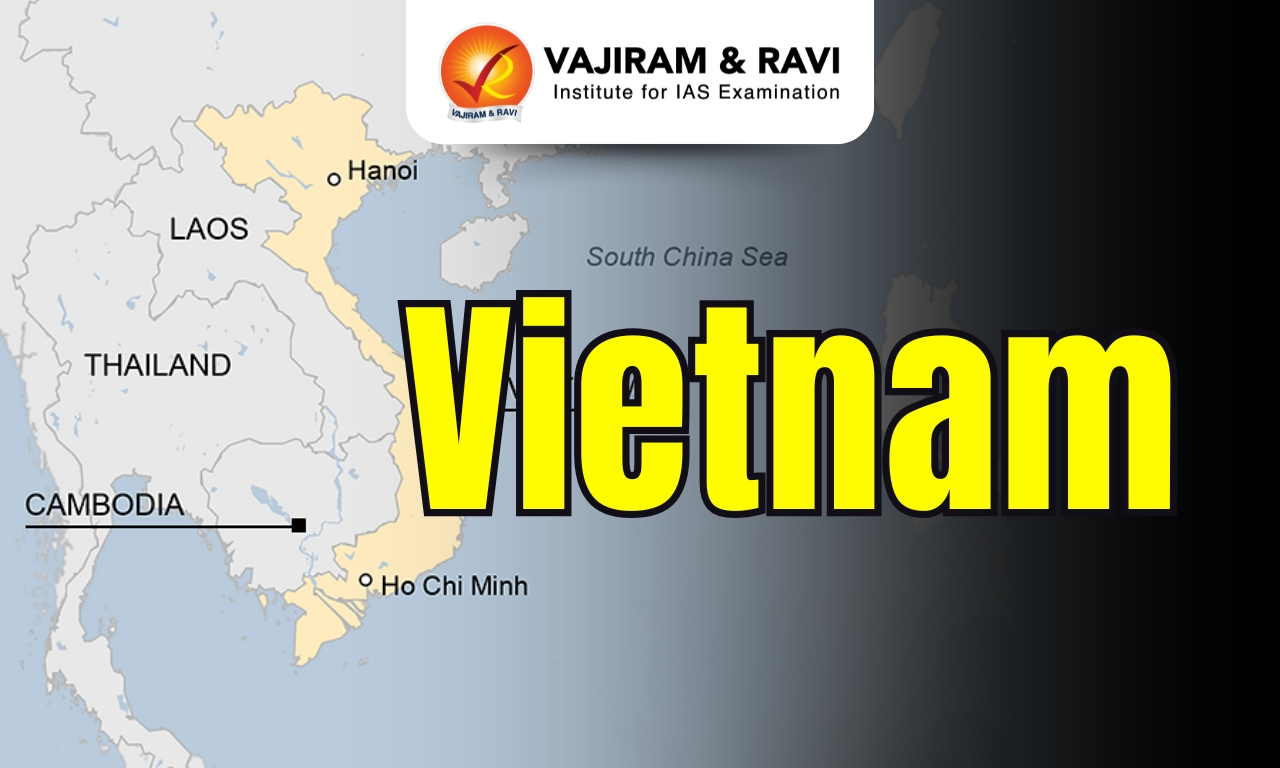
India shares space knowledge through the Indian Institute of Remote Sensing and Centre for Space Science and Technology Education in Asia and the Pacific. It also runs the UNNATI programme by Indian Space Research Organisation to train countries in building nanosatellites. India is also developing a space facility in Vietnam for remote sensing support in the region.

Latin America & Caribbean

Countries in this region cooperate with the US and European Space Agency, along with nations like Italy and Argentina, to launch satellites. Argentina and Brazil are jointly developing the SABIA-Mar satellite for ocean monitoring. The LATCOSMOS-C programme by Ecuador, Mexico, and Colombia aims to launch the region’s first crewed mission.

Africa

The Egyptian Space Agency has signed many agreements with countries like the US, China, and Japan for space cooperation. Nigeria has launched satellites for disaster management, while the South African Space Agency is building partnerships with countries like India, France, and Russia.

Southeast Asia

Vietnam is developing its space capabilities with support from countries like Japan and Israel. The ASEAN Sub-Committee on Space Technology and Application promotes cooperation among ASEAN nations in areas like technology sharing, capacity building, and joint space applications.

Expanding Role of Space Technology

  • Growing Space Market: The global space economy is expanding rapidly. According to the World Economic Forum, it is expected to reach about $1.8 trillion by 2035, showing huge growth compared to recent years.
  • Use in Daily Life: Space technology plays an important role in everyday life. Satellites help in communication, navigation, and weather forecasting. They also support disaster management and provide useful data for agriculture through remote sensing.
  • Capacity Building and Development: The space sector helps in improving areas like water resource management, education, and telemedicine. Through cooperation and sharing of technology, countries can strengthen their development and move towards sustainable growth.
  • Strategic and Security Role: Advanced countries are increasingly using space for strategic purposes, including military applications. However, this also raises concerns such as cyber warfare and the exploitation of resources on celestial bodies like the Moon and asteroids.

Challenges for Space Diplomacy

  • Security Concerns: India faces security risks in space, especially due to activities by neighbouring countries. For example, China has developed advanced satellite facilities near the border that could monitor or interfere with India’s space assets. This raises concerns about the safety of satellites and space infrastructure.
  • Technological Competition: Space exploration is becoming highly competitive. Countries like the United States, Russia, and China have advanced technologies, making it challenging for India to keep pace in areas like deep space missions, satellite systems, and space defence.
  • Budgetary Constraints: Space activities require huge investment. Developing satellites, launching missions, and building new technologies can put pressure on India’s limited financial resources, especially when compared to richer space powers.
  • Strategic Alliances and Partnerships: Global politics can affect space cooperation. Changing international relations may make it difficult for India to form stable partnerships or participate in large joint missions.
  • Restrictions on Dual-Use Technologies: Many space technologies have both civilian and military uses. Due to this, advanced countries often restrict sharing of sensitive technologies, which can slow down India’s progress in certain areas.
  • Space Debris and Safety Issues: The growing amount of space debris increases the risk of collisions with satellites. This can damage important space assets and disrupt services like communication and navigation.
  • Commercial Competition: India faces strong competition in the global space market. Companies like SpaceX and European launch providers offer advanced and reusable technologies, making it necessary for India to continuously innovate and keep costs low.
  • Need for Advanced Infrastructure: To remain competitive, India needs to improve its space infrastructure, including launch facilities, tracking systems, and research capabilities.
  • Regulatory and Policy Challenges: A clear and supportive policy framework is needed to encourage private sector participation. Delays or gaps in regulations can slow down growth in the space sector.
  • Balancing Civilian and Military Use: India must carefully balance peaceful uses of space with growing defence needs, ensuring that its space diplomacy remains cooperative while also protecting national interests.

Future of Space Diplomacy

  • Focus on Advanced Technology: India should invest more in research and innovation to improve its space technology. This includes better satellites, launch vehicles, and deep-space missions so that India can remain a leading space power.
  • Build Strong Strategic Partnerships: India should strengthen cooperation with major spacefaring countries through joint missions, shared infrastructure, and research collaborations. This will help in knowledge exchange and reduce costs.
  • Promote Skill Development: There is a need to develop a skilled workforce in space science and technology. Expanding education, training programmes, and research opportunities will support long-term growth of the space sector.
  • Expand Diverse Partnerships: India should go beyond traditional partners and work with startups, private companies, and new countries. This will bring fresh ideas, innovation, and wider collaboration in space activities.
  • Develop a Clear Space Diplomacy Policy: A well-defined policy framework is needed to guide India’s space diplomacy. It should align with national interests and focus on cooperation, development, and peaceful use of outer space.
  • Encourage Private Sector Participation: Greater involvement of private players will improve efficiency and innovation. Supporting startups and companies can boost commercial space activities and reduce the burden on government agencies like the Indian Space Research Organisation.
  • Support Global Space Governance: India should actively participate in shaping international rules for space. It should promote fair, inclusive, and peaceful use of outer space to avoid conflicts and ensure shared benefits.
  • Improve Space Situational Awareness (SSA): India should strengthen its ability to track satellites and space debris. Cooperation with other countries for data sharing and early warning systems will help protect space assets.
  • Integrate Space with National Security: Space capabilities should be closely linked with defence planning. This includes satellite surveillance, communication, and navigation systems to enhance national security and protect critical infrastructure.
  • Promote Sustainable and Responsible Use of Space: India should focus on reducing space debris, using eco-friendly technologies, and ensuring long-term sustainability of space activities for future generations.

Space Diplomacy of India FAQs

Q1: What is space diplomacy?

Ans: Space diplomacy refers to the use of space technology and international cooperation to improve relations between countries and achieve strategic, economic, and developmental goals.

Q2: How is India using space diplomacy?

Ans: India uses its space capabilities to support development, share technology, and build partnerships, especially with developing countries in the Global South.

Q3: What are the key examples of India’s space diplomacy?

Ans: Examples include Project NETRA for space safety, the South Asia Satellite (GSAT-9) for regional cooperation, and low-cost satellite launches by Indian Space Research Organisation.

Q4: How does space technology benefit society?

Ans: Space technology supports communication, weather forecasting, disaster management, agriculture, and resource planning, improving daily life and development.

Q5: What are the major challenges in India’s space diplomacy?

Ans: Key challenges include security risks, strong global competition, limited budget, dependence on advanced countries, space debris, and regulatory issues.

Purvanchal Hills, List of Hills, Biodiversity, Significances

Purvanchal Hills

Purvanchal Hills are also known as the Eastern Highlands. They form the eastern extension of the Himalayan mountain system in northeastern India. These hills curve sharply south after the Dihang Gorge and extend along India’s border with Myanmar. It covers about 94,800 km² of the area and includes states like Nagaland, Manipur, Mizoram, Tripura, parts of Assam and Arunachal Pradesh.

Purvanchal Hills List

The Purvanchal region consists of multiple Purvanchal Hill ranges arranged in north-south direction with distinct physical and geological characteristics across northeastern India.

  • Patkai Hills: Located along the India-Myanmar border, these hills are formed during the Mesozoic era through tectonic activity. They have steep slopes, deep valleys and conical peaks. The region is dominated by sandstone formations and dense forests, supporting diverse ecosystems and acting as an important watershed.
  • Naga Hills: Extending across Nagaland into Myanmar, these hills act as a natural boundary and watershed between Indian and Myanmar rivers. Peaks often exceed 3000 m, with Saramati (3926 m) as the highest. The terrain is rugged, forest covered and receives heavy monsoon rainfall.
  • Manipur Hills: Surrounding the central Imphal Valley, these hills form an oval shaped structure. Elevations range between 900 m and 2100 m. The region includes Loktak Lake, the lowest point and supports agriculture in valley areas along with dense forest cover on slopes.
  • Lushai Hills (Mizo Hills): Located mainly in Mizoram, these hills display parallel ridges and valleys arranged alternately. Elevation generally ranges from 150 m to above 1500 m. The terrain supports shifting cultivation and dense vegetation due to high rainfall conditions.
  • Jampui Hills (Tripura Hills): These hills are composed of parallel folds running north to south. Elevation gradually decreases southward towards the plains. Ridges such as Deotamura, Atharamura and Langtarai increase in height eastward, merging into the Ganga-Brahmaputra lowlands.

Purvanchal Hills Biodiversity

The Purvanchal Hills are rich in vegetation diversity due to variations in altitude, rainfall and climate across short distances.

  • Forest Diversity: The region shows a wide range of forests from tropical evergreen in low altitudes to temperate evergreen and coniferous forests in higher areas. 
  • Bamboo Dominance: Bamboo forests are widely spread across the region, forming an important ecological and economic resource.
  • Tropical Evergreen Species: Trees like Mesua ferrea, Careya arborea and Ficus elastica dominate lower elevations.
  • Temperate Vegetation: Higher altitudes support species such as oak, chestnut, birch, maple, laurel and cherry. 
  • Ravine Vegetation: Deep valleys and ravines support unique plants like Photiki and Photkola, which grow as small trees.

Purvanchal Hills Significance

The Purvanchal Hills play an important role in shaping the geography, climate, ecology and human life of northeastern India.

  • Geographical Extension of Himalayas: These hills represent the eastern continuation of the Himalayan system. They form a natural link between the Himalayas and the Arakan Yoma ranges.
  • Strategic Location: The region lies along international borders with Myanmar, Bangladesh and China. This makes it important for connectivity and border management.
  • Watershed Function: The hills act as water divides between rivers flowing into India and Myanmar. Drainage systems like the Tixu River cut across these ranges.
  • Climatic Influence: The region experiences a monsoonal climate with four distinct seasons. Heavy rainfall during monsoon months supports dense vegetation, while temperature variations across seasons influence agriculture and human activities.
  • Agricultural Practices: Due to hilly terrain and dense forests, Shifting Cultivation or Jhum Farming is widely practiced. Valleys like Imphal provide fertile land for settled agriculture, supporting rice cultivation and local economies.
  • Topographical Diversity: The terrain includes parallel ridges, narrow valleys and low plains like Tripura and Cachar. Elevation varies from below 150 m to above 4500 m at Dapha Bum.
  • Ecological Importance: The dense forest cover helps in soil conservation, prevents erosion and maintains ecological balance. It also supports diverse plant species and contributes to environmental stability in the region.
  • Population and Settlement: With a population exceeding 4 million, settlements are mostly located in valleys and lowlands. The difficult terrain limits large scale urbanization, maintaining a balance between human activity and natural environment.
  • Geological Composition: The hills are mainly composed of strong sandstone formations, making them structurally different from central Himalayas. This affects slope stability, erosion patterns and land use in the region.
  • Transition Zone: The region acts as a transition between the Assam valley in the west and mountainous terrain in the east. This creates varied landscapes within short distances, influencing climate, vegetation and human settlement patterns.

Purvanchal Hills FAQs

Q1: What are Purvanchal Hills?

Ans: Purvanchal Hills are the eastern extension of the Himalayan mountain system located in northeastern India along the India-Myanmar border.

Q2: Which states are covered by Purvanchal Hills?

Ans: They extend across Nagaland, Manipur, Mizoram, Tripura, parts of Assam and Arunachal Pradesh.

Q3: What are the major hills of Purvanchal Ranges?

Ans: The main ranges include Patkai Hills, Naga Hills, Manipur Hills, Lushai (Mizo) Hills and Jampui (Tripura) Hills.

Q4: What type of climate is found in Purvanchal Hills?

Ans: The region has a monsoonal climate with four seasons: winter, pre-monsoon, monsoon and retreating monsoon.

Q5: What is the highest peak in the Purvanchal Hills?

Ans: Dapha Bum, with an elevation of about 4579 meters, is the highest peak in the Purvanchal region.

UPSC Daily Quiz 19 March 2026

[WpProQuiz 118]

UPSC Daily Quiz FAQs

Q1: What is the Daily UPSC Quiz?

Ans: The Daily UPSC Quiz is a set of practice questions based on current affairs, static subjects, and PYQs that help aspirants enhance retention and test conceptual clarity regularly.

Q2: How is the Daily Quiz useful for UPSC preparation?

Ans: Daily quizzes support learning, help in revision, improve time management, and boost accuracy for both UPSC Prelims and Mains through consistent practice.

Q3: Are the quiz questions based on the UPSC syllabus?

Ans: Yes, all questions are aligned with the UPSC Syllabus 2025, covering key areas like Polity, Economy, Environment, History, Geography, and Current Affairs.

Q4: Are solutions and explanations provided with the quiz?

Ans: Yes, each quiz includes detailed explanations and source references to enhance conceptual understanding and enable self-assessment.

Q5: Is the Daily UPSC Quiz suitable for both Prelims and Mains?

Ans: Primarily focused on Prelims (MCQ format), but it also indirectly helps in Mains by strengthening subject knowledge and factual clarity.

Universal Immunisation Programme (UIP), About, Objective, Evolution

Universal Immunisation Programme

Universal Immunisation Programme, launched in 1985 and implemented by the Ministry of Health and Family Welfare, aims to provide free vaccines to children and pregnant women against various diseases.

About Universal Immunisation Programme (UIP) 

The Universal Immunisation Programme (UIP) is a flagship initiative of the Ministry of Health and Family Welfare, aimed at providing free vaccination to children and pregnant women against preventable diseases.

Coverage and Scale: 

  • Universal Immunisation Programme (UIP) is one of the world’s largest immunisation programmes, reaching about 2.9 crore pregnant women and 2.54 crore newborns annually, free of cost.

Diseases Covered:

  • Under the Universal Immunisation Programme (UIP), vaccines are provided free of cost to protect against 12 major diseases.
  • These include Diphtheria, Pertussis (whooping cough), Tetanus, Polio, Measles, Rubella, severe childhood Tuberculosis, Rotavirus infection, Hepatitis B, Pneumococcal diseases, and Haemophilus influenzae type B (Hib). 
  • Additionally, Japanese Encephalitis (JE) is included in the programme but only in endemic districts where the disease is prevalent.

Universal Immunisation Programme (UIP) Objective

The objectives of the Universal Immunisation Programme (UIP) are:

  • To increase immunisation coverage
  • To improve the quality of services
  • To establish a reliable cold chain system to the health facility level
  • Monitoring of performance
  • To achieve self-sufficiency in vaccine production

Evolution of Universal Immunisation Programme (UIP)

The programme originated as the Expanded Programme on Immunization (EPI) in 1978, covering limited urban populations. In 1985, it was renamed UIP and expanded nationwide to reduce mortality and morbidity from six vaccine-preventable diseases, supported by phased implementation and the establishment of a cold chain system. Key milestones include:

  • 1986: Launch of Technology Mission on Immunization for monitoring under the Prime Minister’s 20-point programme.
  • 1992: Integration with Child Survival and Safe Motherhood (CSSM) programme.
  • 1997: Integration with Reproductive and Child Health (RCH) programme.
  • 2005: Strengthening under the National Rural Health Mission.
  • 2014: India declared polio-free.
  • 2016: Maternal and neonatal tetanus elimination achieved.

Over the last decade, UIP has expanded to include new vaccines, improved cold chain and digital monitoring, and strengthened urban immunization and vaccine safety systems.

Vaccines under Universal Immunisation Programme (UIP)

In the past decade, several new vaccines were introduced: Inactivated Polio Vaccine (IPV) (2015), Rotavirus Vaccine (RVV) (2016), Measles-Rubella (MR) vaccine (2017), and Pneumococcal Conjugate Vaccine (PCV) (2017). Currently, UIP provides immunization against the following vaccines:

  • Bacillus Calmette-Guerin (BCG)
  • Diphtheria, Pertussis, and Tetanus (DPT)
  • Tetanus and adult Diphtheria (Td)
  • Bivalent Oral Polio Vaccine (bOPV)
  • Measles-Rubella (MR) vaccine
  • Hepatitis B (Hep B)
  • Pentavalent vaccine (DPT + Hep B + Hib)
  • Rotavirus Vaccine (RVV)
  • Pneumococcal Conjugate Vaccine (PCV)
  • Japanese Encephalitis (JE) vaccine in endemic districts

Universal Immunisation Programme (UIP) Achievements and Impact

UIP has been instrumental in reducing vaccine-preventable diseases and under-five mortality in India. Key achievements include:

  • Eradication of smallpox (1977)
  • Polio-free certification in 2014
  • Elimination of maternal and neonatal tetanus in 2016
  • Substantial improvement in full immunization coverage from 62% in NFHS-4 (2015-16) to 76.4% in NFHS-5 (2019-21)
  • Introduction of new vaccines has strengthened protection against emerging and high-burden diseases like Rotavirus, Pneumococcal infections, and Measles-Rubella.

Universal Immunisation Programme FAQs

Q1: What is the Universal Immunisation Programme (UIP)?

Ans: The Universal Immunisation Programme (UIP), launched in 1985 by the Ministry of Health and Family Welfare, provides free vaccines to children and pregnant women to prevent vaccine-preventable diseases in India.

Q2: Which diseases are covered under Universal Immunisation Programme (UIP)?

Ans: UIP protects against twelve diseases including Diphtheria, Pertussis, Tetanus, Polio, Measles, Rubella, severe childhood Tuberculosis, Rotavirus, Hepatitis B, Pneumococcal infections, Hib, and Japanese Encephalitis in endemic districts.

Q3: What are the objectives of the Universal Immunisation Programme (UIP)?

Ans: UIP aims to increase immunisation coverage, ensure service quality, maintain an efficient cold chain, monitor performance, and achieve self-sufficiency in vaccine production.

Q4: What new vaccines have been added recently?

Ans: Recent additions include Inactivated Polio Vaccine (2015), Rotavirus Vaccine (2016), Measles-Rubella vaccine (2017), and Pneumococcal Conjugate Vaccine (2017).

Q5: What are UIP’s key achievements?

Ans: UIP has eradicated smallpox, made India polio-free, eliminated maternal and neonatal tetanus, and increased full immunisation coverage from 62% (NFHS-4) to 76.4% (NFHS-5), while expanding protection against major childhood diseases.

Ganga River Pollution, Sources, Impacts, Government Initiatives

Ganga River Pollution

The Ganga River is the cultural soul and economic backbone of India. Nearly 47% of the country’s population depends on Ganga river, making it one of the most densely populated river basins in the world. Traditionally revered as sacred and life-sustaining, the river has played a central role in shaping India’s civilisation, agriculture, and settlement patterns.

However, in recent decades, Ganga river pollution has emerged as a critical environmental challenge. 

Nature and Sources of Pollution

The Ganga River shows significant spatial variation in pollution levels. In the upper reaches, especially in Uttarakhand, the river remains relatively clean due to low population pressure and better natural flow. However, as it moves into the plains, particularly in Uttar Pradesh and Bihar, pollution levels rise sharply.

The pollution of the Ganga is multi-dimensional, arising from a complex interplay of anthropogenic pressures.

Sewage Pollution (Primary Source):

  • According to the Central Pollution Control Board, about 71% of monitoring stations on the Ganga River exceed the permissible faecal coliform limit (2,500 MPN/100 ml), with levels often above 11,000 MPN and reaching 92,000 MPN in parts of Bihar. 

Industrial Effluents:

  • Industrial clusters along the river, especially tanneries in Kanpur and chemical industries, release toxic substances such as chromium, arsenic, and lead. 
    • Approximately 500 MLD of industrial waste is discharged daily, especially in the middle Ganga basin.
  • These pollutants are not only harmful to aquatic ecosystems but also pose long-term health risks to humans through bioaccumulation.

Agricultural Runoff:

  • With over 65% of the Ganga Basin under agriculture, excessive use of fertilisers and pesticides in the Indo-Gangetic plains leads to nutrient-rich runoff entering the river, causing eutrophication, algal blooms, and depletion of dissolved oxygen.

Solid Waste and Plastics:

  • As per the Central Pollution Control Board, Indian cities generate over 1.5 lakh tonnes of municipal solid waste per day, and a significant portion remains unprocessed.
  • Poor waste management systems lead to plastics and other non-biodegradable waste entering the river through drains and open dumping, causing persistent environmental damage.

Religious and Cultural Practices:

  • While culturally significant, practices such as immersion of idols, disposal of partially cremated bodies, and ritual bathing contribute to microbial contamination and organic pollution.

Ganga River Pollution Impacts

The impacts of pollution in the Ganga River are wide-ranging, affecting public health, ecological balance, economic activities, and the overall sustainability of the river system.

Public Health Concerns: 

  • High faecal contamination in the Ganga River increases incidence of water-borne diseases such as cholera, diarrhoea etc, creating a persistent health risk for millions dependent on the river.

Ecological Impact:

  • Elevated Biological Oxygen Demand (BOD) and reduced dissolved oxygen levels have degraded aquatic habitats, threatening species like the Ganges River Dolphin and leading to a decline in fish populations.
  • High organic and chemical pollution disrupts ecological processes such as nutrient cycling and reduces the river’s natural assimilative capacity.

Impact on Agriculture: 

  • Use of polluted water for irrigation leads to soil degradation and accumulation of harmful substances, affecting crop quality and long-term agricultural productivity.

Livelihood Challenges: 

  • Communities dependent on the river for fisheries, agriculture, and related activities face economic hardship due to declining resource availability and deteriorating river health.

Groundwater contamination: 

  • Pollution in the river system contributes to the degradation of connected groundwater sources, increasing the presence of contaminants such as arsenic, fluoride, and nitrates in several basin regions.

Increased economic burden: 

  • The need for medical treatment, safe drinking water, and river cleaning initiatives results in significant financial costs for both households and the government.
  • As highlighted by World Bank estimates, water pollution costs India nearly 3% of its GDP annually; additionally, under the Namami Ganga Programme, the government has allocated over ₹32,000 crore for river cleaning, while households bear rising expenses on healthcare and access to safe drinking water.

Rapid urbanisation, inadequate sewage treatment, industrial discharge, and intensive agricultural practices have significantly degraded the river’s water quality. These anthropogenic pressures, coupled with excessive water extraction and institutional inefficiencies, have pushed the river into a state of ecological stress,

Government Initiatives to Address Ganga River Pollution

Over the years, the government has made several attempts to clean and restore the Ganga River. These efforts show a gradual shift from narrow pollution control measures to a more integrated and long-term river rejuvenation approach.

Ganga Action Plan (GAP), 1985: 

  • This was the first major step taken by the government to tackle pollution in the Ganga.
  • The focus was mainly on intercepting drains and setting up sewage treatment plants in major cities. 
  • However, the plan could not achieve its objectives due to poor maintenance of infrastructure, lack of coordination among agencies, and underestimation of sewage generation.

Ganga Action Plan Phase II, 1993:

  • In the second phase, the programme was extended to tributaries and more towns. While the scope increased, the fundamental issues such as weak implementation and lack of local participation remained unresolved.

National Ganga River Basin Authority (NGRBA), 2009:

  • The National Ganga River Basin Authority (NGRBA) was established in 2009 as an empowered body for planning, financing, monitoring, and coordinating all efforts to clean and conserve the Ganga River.
  • The NGRBA’s main objective is to ensure effective pollution abatement and conservation by adopting a river basin approach, maintaining minimum ecological flows, and promoting environmentally sustainable development across the entire Ganga basin.
  • It was chaired by the Prime Minister of India and includes Union Ministers and the Chief Ministers of states through which the Ganga flows.
  • Presently, National Ganga River Basin Authority (NGRBA) no longer exists as a separate body. It was merged into the Ministry of Jal Shakti after the launch of the Namami Gange Programme (2014).

Today, all river cleaning, conservation, and management efforts under the basin-level approach are implemented through the National Mission for Clean Ganga (NMCG), which serves as the operational arm of the government for pollution abatement, river rejuvenation, and ecological restoration.

Namami Gange Programme:

The Government of India (GoI) launched the Namami Gange Programme (NGP) in 2014-15 for the rejuvenation of river Ganga and its tributaries with a budgetary outlay of ₹ 20,000 crore, for five years, up to March 2021 and has been further extended to March 2026 with a budgetary outlay of ₹ 22,500 crore.

The programme is implemented by the National Mission for Clean Ganga (NMCG) with a total budget of over ₹32,000 crore.

Main Pillars of the Namami Gange Programme

The Namami Gange Programme (2014) is structured around eight main pillars to ensure comprehensive cleaning, ecological restoration, and sustainable management of the Ganga River:

  1. Sewage Treatment Infrastructure: Construction, augmentation, and proper operation of sewage treatment plants (STPs) to prevent untreated domestic wastewater from entering the river.
  2. River-Front Development: Restoration and development of ghats, crematoria, and riverfront areas to support cultural, social, and ecological functions.
  3. River-Surface Cleaning: Removal of floating debris, plastics, and solid waste from the river to improve water quality and aesthetics.
  4. Biodiversity Conservation: Protection and restoration of aquatic and riparian biodiversity, including endangered species such as the Ganges River Dolphin.
  5. Afforestation: Plantation along riverbanks to prevent erosion, improve soil quality, and enhance ecological resilience.
  6. Public Awareness and Community Engagement: Campaigns and initiatives to involve citizens, NGOs, and religious institutions in river conservation.
  7. Industrial Effluent Monitoring: Regulation and monitoring of industrial discharges, including promotion of Zero Liquid Discharge (ZLD) systems in polluting industries.
  8. Ganga Gram Initiative: Development of villages along the Ganga basin with sustainable sanitation, solid waste management, and ecological awareness.

To give strategic direction to these pillars, the Namami Gange Programme also works under four thematic components:

  1. Pollution Abatement (Nirmal Ganga): Focuses on reducing pollution from sewage, industrial effluents, and other contaminants.
  2. Improving Ecology and Flow (Aviral Ganga): Ensures continuous water flow and restores ecological health, including biodiversity conservation.
  3. Strengthening People-River Connect (Jan Ganga): Encourages community participation, awareness campaigns, and cultural engagement to build a sustainable relationship with the river.
  4. Facilitating Research and Policy (Gyan Ganga): Promotes scientific research, river mapping, and evidence-based policymaking for effective river management.

Legal and Institutional Framework:

The National Green Tribunal and the Supreme Court have played active roles in monitoring pollution levels and enforcing compliance. The Ganga has also been accorded the status of a “living entity” by the Uttarakhand High Court, although with legal complexities.

Challenges in River Cleaning Efforts

Despite initiatives like the Namami Gange Programme, the Ganga River continues to face serious challenges:

  • Inadequate Sewage Infrastructure: Treatment capacity remains insufficient relative to waste generation.
  • Fragmented Governance: Multiple agencies operate at different levels, leading to fragmentation and lack of coordination. This weakens accountability and delays implementation.
  • Lack of Behavioural Change: Rituals, idol immersion, and open defecation continue to contribute directly to river pollution, highlighting the need for stronger public awareness campaigns.
  • Environmental Flow (E-flow) Issues: Excessive water extraction for irrigation reduces the river’s natural ability to dilute pollutants.
  • Urbanisation Pressure: Rapid urban growth in cities like Kanpur, Varanasi, and Patna has increased sewage and solid waste loads, outpacing existing infrastructure.

Way Forward

A long-term solution requires a holistic and multi-pronged strategy:

  • Strengthening Sewage Treatment: Expansion of modern sewage treatment plants (STPs) with real-time monitoring is essential.
  • Industrial Regulation: Strict enforcement of zero liquid discharge norms and adoption of cleaner technologies must be ensured.
  • Ecological Restoration: Maintaining environmental flows, afforestation along riverbanks, and wetland conservation can enhance the river’s self-purification capacity.
  • Community Participation: Local communities, religious leaders, and civil society must be actively involved in conservation efforts.
  • Sustainable Agriculture Practices: Promoting organic farming and rational fertiliser use can reduce runoff pollution.
  • Integrated River Basin Management: A basin-wide approach considering upstream-downstream linkages is crucial for effective governance.

Ganga River Pollution FAQs

Q1: What is the current state of Ganga River Pollution?

Ans: Ganga river pollution is high, particularly in the plains of Uttar Pradesh, Bihar, and West Bengal, with untreated sewage, industrial effluents, and agricultural runoff significantly degrading water quality. CPCB (2023) reports that 71% of monitoring stations exceed faecal coliform limits.

Q2: What are the main sources of Ganga River Pollution?

Ans: The primary sources include untreated sewage from cities, industrial effluents (tanneries, chemicals), agricultural runoff carrying fertilizers and pesticides, solid waste and plastics, and cultural practices like idol immersion and ritual bathing.

Q3: What are the impacts of Ganga River Pollution?

Ans: Ganga river pollution affects public health, aquatic biodiversity, agriculture, livelihoods, and groundwater quality, increasing waterborne diseases and threatening species like the Ganges River Dolphin.

Q4: What government initiatives exist to tackle Ganga River Pollution?

Ans: Key initiatives include the Ganga Action Plan (1985), National Ganga River Basin Authority (2009), and Namami Gange Programme (2014), implemented by the National Mission for Clean Ganga (NMCG), focusing on sewage treatment, industrial effluent management, riverfront development, and community engagement.

Q5: What are the main challenges in addressing Ganga River Pollution?

Ans: Challenges include insufficient sewage treatment capacity, fragmented governance, limited public awareness, excessive water extraction reducing environmental flow, and rapid urbanisation in major basin cities like Kanpur, Varanasi, and Patna.

Oceanic Crust Formation, Major Minerals, Importance

Oceanic Crust

Oceanic crust is the outermost layer of the Earth that lies beneath the oceans. It is thinner (5-10Km), denser, and younger compared to continental crust. This type of crust plays a vital role in shaping the Earth’s surface through continuous geological processes like seafloor spreading and subduction. The study of oceanic crust is important in understanding plate tectonics, ocean basins, earthquakes, and volcanic activity.

Oceanic Crust Formation

Oceanic Crust forms at mid-ocean ridges where magma from the mantle rises, cools, and solidifies. This continuous process of seafloor spreading creates new crust while older crust moves away and eventually gets recycled.

  • Mantle Convection Initiates the Process: Heat from the Earth’s interior creates convection currents in the mantle, causing hot, less dense material to rise upward beneath oceanic ridges.
  • Divergent Plate Movement: At mid-ocean ridges, tectonic plates move away from each other, creating a gap or weak zone where magma can rise easily.
  • Magma Upwelling: Molten magma from the asthenosphere rises through cracks and fractures due to reduced pressure (decompression melting).
  • Cooling and Solidification: When magma reaches the ocean floor, it comes in contact with cold seawater and cools rapidly, forming fine-grained basaltic rocks.
  • Formation of Pillow Basalts: Rapid cooling underwater leads to the formation of rounded, pillow-shaped lava structures known as pillow basalts.
  • Development of Layered Structure: Continuous magma supply forms different layers, basalt at the top, sheeted dikes in the middle, and gabbro deeper below.
  • Seafloor Spreading Mechanism: Newly formed crust pushes older crust away from the ridge on both sides, gradually expanding the ocean basin.
  • Magnetic Striping Evidence: As lava cools, iron minerals align with Earth’s magnetic field, recording polarity reversals and creating symmetrical magnetic stripes.
  • Aging and Cooling of Crust: As oceanic crust moves away from the ridge, it cools, becomes denser, and subsides deeper into the ocean basin.

Also Read: Hailstorm Formation

Major Minerals found in Oceanic Crust

Oceanic crust is mainly composed of mafic igneous rocks such as basalt and gabbro, which are rich in silica and magnesium, commonly referred to as SiMa. These rocks contain high amounts of iron and magnesium, making oceanic crust denser than continental crust.

  • Pyroxene: An important silicate mineral commonly found in basaltic rocks
  • Plagioclase Feldspar: A dominant mineral in the upper layers of oceanic crust
  • Olivine: Present in deeper layers like gabbro and mantle-derived rocks
  • Silica and Magnesium: Basic chemical components forming mafic rocks
  • Rich in iron, contributing to higher density
  • Hydrothermal Sulfides: Found near mid-ocean ridges, containing valuable metals like copper, zinc, and gold
  • Polymetallic Nodules: Located on the ocean floor, rich in manganese, cobalt, and nickel

Oceanic Crust Importance

Oceanic crust plays a crucial role in Earth’s geological processes by driving plate tectonics and shaping ocean basins. It also supports the largest carbon sink and sustains vast plant and animal ecosystems of the world.

  • Drives plate tectonics through seafloor spreading and subduction
  • Helps in formation and evolution of ocean basins
  • Supports the largest plant and animal ecosystem (marine ecosystem) on Earth
  • Controls occurrence of earthquakes and volcanic activity
  • Provides habitat for diverse marine biodiversity
  • Source of valuable minerals like manganese nodules
  • Helps regulate global climate systems
  • Provides insights into Earth’s internal structure and processes

Oceanic Crust FAQs

Q1: What is oceanic crust?

Ans: Oceanic crust is the thin, dense outer layer of the Earth found beneath oceans, mainly composed of basaltic rocks.

Q2: How is oceanic crust formed?

Ans: It is formed at mid-ocean ridges when magma rises from the mantle, cools, and solidifies through seafloor spreading.

Q3: What is the average thickness of oceanic crust?

Ans: Oceanic crust is generally about 5–10 km thick.

Q4: Why is oceanic crust younger than continental crust?

Ans: Because it is continuously created at mid-ocean ridges and destroyed at subduction zones.

Q5: What is oceanic crust mainly made of?

Ans: It is mainly composed of basalt and gabbro, rich in iron and magnesium.

Coconut

Coconut

Coconut Latest News

Recently the Minister of State for Agriculture and Farmers Welfare informed the Lok Sabha that India is the world’s largest producer of coconuts contributing to 30.37% of the Global coconut production.

About Coconut

  • Coconut (Cocos nucifera) is a large palm of the family Arecaceae.
  • It grows in the subtropical coastal regions of Asia (India, Philippines, Sri Lanka, Thailand, Indonesia) and Oceania.
  • It originated in Southeast Asia, and was transported throughout the Pacific either by migrating Indonesians and Polynesians.
  • Distribution in India: It is majorly grown in Kerala, Tamil Nadu, Karnataka, Andhra Pradesh, Odisha, Goa, and West Bengal.
  • Uses: Coconuts are used as whole fruits or, conversely, by their parts: mesocarp fibers, milk, kernel (or flesh), husk.

Required Climatic Conditions for Coconut

  • Rainfall: 1000-3000 mm per year. Prefers evenly distributed rainfall
  • Temperature: Optimum 27°C with a diurnal variation of 6-7 0C Cold spells are more limiting than high temperatures. Light- Coconut palm requires maximum sunlight.
  • Altitude: Up to 600 m above mean sea level.
  • If temperature remains favourable, the palm grows well up to an altitude of 800 m. 
  • Humidity:  Needs warm and humid conditions
  • Soils: It is particularly adapted to the coastal light sandy and sandy loam type soils. Coconuts also thrive well in laterite soils.

Source: PIB

Coconut FAQs

Q1: Which part of the coconut is used to produce coconut oil?

Ans: Coconut flesh

Q2: What is the scientific name of the coconut palm?

Ans: Cocos nucifera

Climate Mitigation Strategies, Global Measures, India’s Role

Climate Mitigation Strategies

Climate change mitigation refers to the actions taken to reduce or prevent the emission of greenhouse gases (GHGs) and enhance activities that remove these gases from the atmosphere. It is one of the two primary responses to climate change, the other being adaptation. 

The global framework for mitigation is guided by the United Nations Framework Convention on Climate Change (UNFCCC), whose ultimate objective is to stabilize greenhouse gas concentrations at a level that prevents dangerous human interference with the climate system.

Strategies to Mitigate Climate Change

Climate change mitigation strategies focus on reducing greenhouse gas emissions and enhancing natural systems that absorb carbon. These strategies combine technological innovation, policy mechanisms, and sustainable practices to limit global warming. Effective mitigation requires coordinated efforts at local, national, and global levels.

1. Carbon Sequestration

Carbon sequestration involves capturing and storing carbon dioxide from the atmosphere to reduce its concentration and slow global warming. It can be achieved through both natural processes and advanced technologies.

  • Natural sequestration occurs through forests, soils, and oceans absorbing carbon
  • Biochar application in soil enhances long-term carbon storage
  • Direct Air Capture (DAC) technology removes CO₂ directly from ambient air
  • Helps in achieving long-term climate goals like net-zero emissions
  • Reduces the carbon footprint of heavy industries like cement and steel
  • Depleted oil and gas fields can be used to store captured CO₂ safely underground
  • Saline aquifers (deep underground saltwater reservoirs) are among the largest potential storage sites
  • Unmineable coal seams can store CO₂ while enhancing methane recovery
  • Barren and degraded lands can be converted into carbon sinks through afforestation and soil restoration
  • Basalt rock formations can mineralize CO₂ into stable carbonates for permanent storage

2. Carbon Sink

A carbon sink is any system that absorbs more carbon than it emits, playing a crucial role in regulating atmospheric CO₂ levels. Strengthening carbon sinks is essential for long-term climate stability.

  • Forests act as major carbon sinks through photosynthesis
  • Oceans absorb nearly 25-30% of global CO₂ emissions
  • Blue carbon” ecosystems (mangroves, seagrasses, salt marshes) store large carbon reserves
  • Soil carbon storage can be enhanced through sustainable agricultural practices
  • Urban green spaces also contribute to carbon absorption
  • Conservation and restoration of ecosystems increase sink capacity
  • Climate change can weaken sinks (e.g., forest fires, ocean warming)

3. Carbon Credit

Carbon credits are market-based instruments that allow countries or companies to trade emission allowances. They promote cost-effective emission reduction through economic incentives.

  • 1 Carbon Credit = Permission to emit 1 tonne of CO₂ or equivalent greenhouse gases
  • Based on the cap-and-trade mechanism where emission limits are fixed
  • Originated under the Kyoto Protocol through mechanisms like Clean Development Mechanism (CDM)
  • Further strengthened under the Paris Agreement which promotes global carbon markets (Article 6)
  • Governments allocate emission caps to industries and sectors
  • Companies emitting less can sell surplus credits in the carbon market
  • Companies exceeding limits must buy additional credits, ensuring accountability
  • Encourages adoption of renewable energy and cleaner technologies
  • Facilitates international cooperation in emission reduction
  • Helps in achieving long-term goals like net-zero emissions
  • Requires strong Monitoring, Reporting, and Verification (MRV) systems
  • Criticism includes risks of greenwashing, double counting, and inequitable benefits

4. Carbon Offsetting

Carbon offsetting allows individuals or organizations to compensate for their emissions by investing in environmental projects elsewhere. It is widely used by businesses to achieve carbon neutrality.

  • Funds projects like afforestation, renewable energy, and clean cooking solutions
  • Helps balance unavoidable emissions
  • Must meet criteria like additionality, permanence, and no leakage
  • Promotes sustainable development in developing regions
  • Supports community development and job creation
  • Easy to implement compared to structural emission reductions
  • Criticism includes lack of transparency and over-reliance

5. Carbon Tax

Carbon tax is a market-based policy instrument that imposes a direct fee on carbon emissions to reduce the use of fossil fuels. It follows the “polluter pays principle” by making emitters financially responsible for their emissions. This encourages a shift toward cleaner energy and sustainable practices.

  • Encourages industries and consumers to reduce emissions and adopt cleaner alternatives
  • Provides government revenue that can be invested in renewable energy and climate adaptation
  • Helps internalize environmental costs into economic decision-making
  • Can be introduced gradually to allow industries time to transition
  • The European Union has implemented strong carbon pricing mechanisms under its Emissions Trading System (EU ETS)
  • The EU is also introducing the Carbon Border Adjustment Mechanism (CBAM) to impose carbon costs on imports from countries with weaker climate policies
  • Countries like Sweden, Canada, and France have successfully implemented carbon taxes
  • Carbon tax helps reduce dependence on fossil fuels and promotes green innovation
  • Can impact low-income groups if not designed with equity measures (like subsidies or rebates)

6. Geo-Engineering

Geo-engineering refers to large-scale, deliberate interventions in the Earth’s climate system aimed at reducing global warming. It is considered a supplementary or last-resort strategy when mitigation efforts are insufficient. 

The techniques of geo-engineering are broadly divided into two categories:

  • Carbon Dioxide Removal (CDR)
  • Solar Radiation Management (SRM)

Carbon Dioxide Removal (CDR) Techniques:

  • Afforestation and Reforestation – Planting trees to absorb CO₂ naturally
  • Direct Air Capture (DAC) – Machines that extract CO₂ directly from the atmosphere
  • Bioenergy with Carbon Capture and Storage (BECCS) – Biomass energy generation with CO₂ capture and storage
  • Ocean Fertilization – Adding nutrients (like iron) to oceans to stimulate phytoplankton growth that absorbs CO₂
  • Enhanced Weathering – Spreading minerals (like basalt) to accelerate natural carbon absorption
  • Soil Carbon Sequestration – Improving agricultural practices to increase carbon storage in soil

Solar Radiation Management (SRM) Techniques:

  • Stratospheric Aerosol Injection – Spraying sulphate aerosols into the atmosphere to reflect sunlight
  • Marine Cloud Brightening – Increasing cloud reflectivity over oceans
  • Space-based Reflectors/Mirrors – Placing mirrors in space to deflect solar radiation
  • Surface Albedo Modification – Whitening roofs, roads, and urban surfaces to reflect more sunlight
  • Cirrus Cloud Thinning – Reducing heat-trapping high-altitude clouds

Global Measures to Curb Greenhouse Gas Emissions

Global initiatives to reduce greenhouse gas (GHG) emissions involve coordinated international agreements, scientific bodies, and policy frameworks. These efforts aim to limit global warming, promote sustainable development, and ensure collective climate action across nations.

  • Intergovernmental Panel on Climate Change (IPCC): Established in 1988 by WMO and UNEP; provides periodic scientific assessments on climate change, impacts, risks, and mitigation/adaptation options; releases Assessment Reports guiding global policy.
  • United Nations Framework Convention on Climate Change (UNFCCC): Signed in 1992, enforced in 1994; aims to stabilize GHG concentrations; based on CBDR principle; organizes annual COP meetings; foundation for global climate agreements.
  • Kyoto Protocol (KP): Adopted in 1997 (COP3), enforced in 2005; legally binding targets for developed nations; aimed at 5% emission reduction from 1990 levels (2008–2012); introduced CDM, JI, and emission trading mechanisms.
  • Kyoto Greenhouse Gases: Covers CO₂, CH₄, N₂O, HFCs, PFCs, and SF₆ as major gases targeted for reduction.
  • Paris Agreement: Adopted in 2015 (COP21); aims to limit warming below 2°C and pursue 1.5°C; applies to all countries; introduces NDCs, global stocktake every 5 years, climate finance, and net-zero goals by mid-century.
  • Green Climate Fund (GCF): Supports climate mitigation and adaptation projects in developing countries; established under UNFCCC; aims to mobilize $100 billion annually; funds renewable energy, resilience, and low-carbon development.
  • REDD+: Focuses on reducing emissions from deforestation and forest degradation; promotes conservation, sustainable forest management, and enhancement of forest carbon stocks; provides financial incentives to developing countries.
  • International Solar Alliance (ISA): Launched by India and France; promotes solar energy deployment in tropical countries; aims to reduce dependence on fossil fuels and improve energy access.
  • Global Methane Pledge: Launched in 2021; aims to reduce global methane emissions by at least 30% by 2030 from 2020 levels; focuses on energy, agriculture, and waste sectors.
  • Mission Innovation: Global initiative to accelerate research, development, and deployment of clean energy technologies; encourages public-private collaboration; aims to make clean energy affordable and accessible.

India’s Measures to Curb Greenhouse Gas Emissions

  • National Action Plan on Climate Change (NAPCC): Launched in 2008; comprehensive climate policy framework; includes 8 National Missions like Solar Mission and Green India Mission; integrates mitigation and adaptation; promotes sustainable development and state-level action plans (SAPCCs).
  • LiFE Mission: Launched at COP26 (2021); promotes sustainable lifestyle and behavioral changes; focuses on resource conservation and circular economy; encourages global mass movement for climate action.
  • Panchamrit Targets: Announced at COP26 (Glasgow, 2021); includes 500 GW non-fossil capacity by 2030; 50% energy from renewables; reduction of 1 billion tonnes of emissions; 45% reduction in carbon intensity; net-zero target by 2070; aligned with Paris Agreement commitments.

Climate Mitigation Strategies FAQs

Q1: What is climate change mitigation?

Ans: Climate change mitigation refers to actions aimed at reducing or preventing greenhouse gas (GHG) emissions and enhancing carbon sinks.

Q2: What is the difference between mitigation and adaptation?

Ans: Mitigation deals with addressing the causes of climate change by reducing emissions, while adaptation focuses on managing the impacts such as floods, droughts, and sea-level rise. Both are essential and complementary strategies.

Q3: What are the main strategies for climate change mitigation?

Ans: Major strategies include carbon sequestration, carbon sinks, carbon credits, carbon offsetting, carbon tax, and geo-engineering.

Q4: What is carbon sequestration?

Ans: Carbon sequestration is the process of capturing and storing carbon dioxide from the atmosphere.

Q5: What are carbon credits?

Ans: Carbon credits are permits that allow the emission of a certain amount of greenhouse gases. One credit equals one tonne of CO₂ or equivalent gases. They are traded in carbon markets under mechanisms developed by agreements like the Kyoto Protocol.

Autonomous District Councils

Autonomous District Council

Autonomous District Council Latest News

Recently, the Meghalaya State Government has extended the term of the Garo Hills Autonomous District Council (GHADC) for a period of six months..

About Autonomous District Council

  • The Autonomous District Councils being autonomous bodies under the Sixth Schedule to the Constitution of India.
  • The Sixth Schedule of the Indian constitution provides a list of ten tribal areas in Assam (3), Meghalaya (3), Tripura (1) and Mizoram (3).
  • Each of these tribal areas constitutes an autonomous district. Each autonomous district has an Autonomous District Council (ADC).

Membership of Autonomous District Council

  • They have up to 30 members with a term of five years.
  • Out of 30, four are nominated by the governor and the remaining 26 are elected on the basis of adult franchise.
  • Tenure of Autonomous District Council: Five years from the date of their constitution. 

Functions of Autonomous District Council

  • They makes laws on land, management of forests, except reserved forests, appointment of traditional chiefs and headmen, 
  • They make rules regulating the inheritance of property, marriage, divorce, the constitution of village courts, 
  • It can establish, construct or manage primary schools, dispensaries, markets, ferries, fisheries, roads and so on in the district.
  • It can also make regulations for the control of money lending and trading by non-tribals. But such regulations require the assent of the governor.

Revenue source of Autonomous District Council

  • Taxes on professions, trades, callings and employment; taxes on animals, vehicles and boats;
  • Taxes on the entry of goods into a market and sale therein, and tolls on passenger and goods carried on ferries; and taxes for the maintenance of school, dispensaries or roads.

 Source: News On Air

Autonomous District Council FAQs

Q1: What is a key power of Autonomous District Councils?

Ans: Managing local resources and customs

Q2: Under which schedule of the Indian Constitution are Autonomous District Councils formed?

Ans: 6th Schedule

Small Hydro Power (SHP) Development Scheme

Small Hydro Power (SHP) Development Scheme

Small Hydro Power (SHP) Development Scheme Latest News

Recently, the union cabinet approved the ‘Small Hydro Power (SHP) Development Scheme for the period FY 2026-27 to FY 2030-31’. 

About Small Hydro Power (SHP) Development Scheme

  • It supports the installation of small hydro projects (1-25 MW capacity each) with a total capacity of 1,500 MW across the country.
  • Its special focus is on hilly and North-Eastern states that hold high untapped potential.
  • Time Period: FY 2026-27 to FY 2030-31’

Key Features of Small Hydro Power Development Scheme

  • North East & Border Incentives: Higher central financial assistance (CFA) of ₹3.6 crore per MW (or 30% of cost, capped at ₹30 crore per project) for North Eastern states and international border districts.
  • General State Support: CFA of ₹2.4 crore per MW (or 20% of cost, capped at ₹20 crore per project) for other states.
  • DPR Pipeline: Allocation of ₹30 crore to support government agencies in preparing Detailed Project Reports (DPRs) for about 200 future projects.
  • Employment Generation: Expected to create 51 lakh person-days of employment during construction, plus long-term roles in operations and maintenance.
  • Indigenous Sourcing: Mandates 100% sourcing of plant and machinery from domestic manufacturers to boost the local industrial base.
  • The initiative emphasises environment-friendly "run-of-the-river" technology that generates power directly from the natural flow of rivers without large dams, minimising displacement, deforestation and ecological disruption.
  • Significance:  SHP projects are environmentally sustainable, as they avoid large-scale land acquisition, deforestation, and displacement of communities.

Source: PIB

Small Hydro Power (SHP) Development Scheme FAQs

Q1: Which ministry is involved in the SHP Development Scheme in India?

Ans: Ministry of New and Renewable Energy

Q2: What is the typical capacity range of Small Hydro Power projects?

Ans: 1-25 MW

IOS SAGAR

IOS SAGAR

IOS SAGAR Latest News

Recently, the second edition of Indian Ocean Ship (IOS) SAGAR commenced.

About IOS SAGAR

  • Indian Ocean Ship (IOS) Sagar is a maritime security cooperation initiative in the Southwest Indian Ocean Region (IOR).
  • It is the second edition of Indian Ocean Ship (IOS) SAGAR initiative.
  • It is designed as a unique operational engagement programme that enables naval personnel from Friendly Foreign Countries to train and sail together onboard an Indian Naval Ship.
  • Participating members: This Edition includes participation from 16 nations of the Indian Ocean Naval Symposium (IONS) of the Indian Ocean Region(IOR).
  • The initiative reflects the Government of India’s vision of Security and Growth for All in the Region (SAGAR) and framework of MAHASAGAR – Mutual and Holistic Advancement for Security Across the Regions.
  • Activities
    • It involves professional training interactions at Indian Naval training establishments in Kochi.
    • This phase will be followed by deployment onboard an Indian Naval Ship, where international participants will sail together with Indian Navy personnel and take part in operational activities at sea.

Source: PIB

IOS SAGAR FAQs

Q1: What does IOS SAGAR stand for?

Ans: Indian Ocean States Action for Growth and All Round Development

Q2: What is the primary focus of IOS SAGAR?

Ans: Regional cooperation in the Indian Ocean

Indian Wolf

Indian Wolf

Indian Wolf Latest News

Recently, an Indian wolf named Geeta at Pilikula Biological Park gave birth to seven pups.

About Indian Wolf

  • It is a subspecies of the Grey Wolf found in the Indian subcontinent and Southwest Asia.
  • Habitat: It prefers scrublands, semi-arid grasslands, and pastoral agro-ecosystems.
  • Behavior: Indian wolves generally live in smaller packs rarely exceeding 6-8 individuals.
  • They are also relatively less vocal and have rarely been known to howl and are territorial and hunt during the night.
  • Appearance: Intermediate in size between the Tibetan and Arabian wolves, but lacks a thick winter coat due to adaptation to warmer climates.
  • Distribution: Indian wolves are found in India, Pakistan, Afghanistan, Nepal, Bhutan, Israel, Turkey, Iran, and Syria.
  • Threats: It faces a steady decline driven by habitat loss, shrinking prey base, and human persecution.

Conservation Status of Indian Wolf

  • IUCN:  Vulnerable 
  • CITES: Appendix I
  • Wildlife (Protection) Act, 1972: Schedule I

Source: TH

Indian wolf FAQs

Q1: What is the primary habitat of the Indian wolf?

Ans: Grasslands and scrublands

Q2: What is the scientific name of the Indian wolf?

Ans: Canis indica

Vietnam

Vietnam

Vietnam Latest News

Recently,  a high-level bilateral meeting between the Ministry of Tribal Affairs, Government of India, and the Ministry of Ethnic and Religious Affairs, Government of the Socialist Republic of Vietnam, was convened.

About Vietnam

  • Location: It is located in the eastern portion of mainland Southeast Asia.
  • Bordering Countries: It is bordered by China to the north, and Cambodia and Laos to the west.
  • Maritime Boundaries: It shares a border with South China Sea (East and South), Gulf of Thailand (Southwest). 
  • It is roughly S-shaped, running for a distance of about 1,650 km in the north-to-south directions.
  • Capital City: Hanoi.

Geographical Features of Vietnam

  • Terrain: It is a country of tropical lowlands, rolling green hills, and densely forested mountains. 
  • Major Rivers: Red River and Mekong River both drain into the South China Sea.
  • Major Mountain: Vietnam’s principal physiographic features are the Annamese Cordillera which extends generally from northwest to southeast in central Vietnam.
  • Highest Point: Vietnam’s highest point is Phan Xi Pang whose summit reaches 3,144 m
  • Climate: It is located in the tropical zone. Its climate is characterized by high temperature and humidity all year round.
  • Natural Resources: It is mainly abundant in antimony, phosphates, coal, manganese, rare earth elements, bauxite, chromate, offshore oil and gas deposits.

Source: PIB

Vietnam FAQs

Q1: What is the capital of Vietnam?

Ans: Hanoi

Q2: Which river is a major waterway in Vietnam?

Ans: Mekong River

Bharat Audyogik Vikas Yojna

Bharat Audyogik Vikas Yojna

Bharat Audyogik Vikas Yojna Latest News

Recently, the union Cabinet has approved the Bharat Audyogik Vikas Yojna (BHAVYA).

About Bharat Audyogik Vikas Yojna

  • It aims to develop world-class industrial infrastructure, unlocking manufacturing potential and driving India’s growth story.
  • Target: Developing 100 plug-and-play industrial parks across the country.
  • Implementation: BHAVYA will be implemented in partnership with states and private sector players.

Features of Bharat Audyogik Vikas Yojna

  • Financial Scale: Total expenditure of ₹33,660 crore, providing up to ₹1 crore per acre for park development.
  • Plug-and-Play Ecosystem: Provides ready-built factory sheds, testing labs, and underground utilities to enable industries to move from "intent to production" with speed.
  • Infrastructure Scope: Covers core utilities, value-added facilities (warehousing), and social infrastructure such as worker housing.
  • Connectivity & Logistics: Aligned with PM GatiShakti principles for seamless multimodal connectivity; external infrastructure support is provided up to 25% of the project cost.
  • Sustainability Focus: Features green energy integration and a "no-dig" environment through integrated underground utility corridors for uninterrupted operations.
  • Selection Process: Projects are selected via a challenge mode, prioritizing states that implement investor-friendly reforms and effective single-window systems.

What is "Plug-and-Play" Industrial Infrastructure?

  • Plug-and-play infrastructure refers to industrial parks that are fully equipped with all necessary utilities and regulatory clearances before an investor arrives.

Source: PIB

Bharat Audyogik Vikas Yojna FAQs

Q1: What does "Audyogik" mean in Bharat Audyogik Vikas Yojna?

Ans: Industrial

Q2: Under which ministry is the Bharat Audyogik Vikas Yojna implemented?

Ans: Ministry of Commerce and Industry

Stockholm Water Prize

Stockholm Water Prize

Stockholm Water Prize Latest News

Recently, Kaveh Madani has been named the 2026 recipient of the Stockholm Water Prize.

About Stockholm Water Prize

  • It is regarded as the world’s most prestigious award for water-related work.
  • It has been presented annually since 1991.
  • It is awarded by the Stockholm Water Foundation in collaboration with the Royal Swedish Academy of Sciences.
  • Eligibility for Stockholm Water Prize
    • The Prize is awarded to a person or organization who contributes to the conservation and protection of water resources, and to the well-being of the planet and its inhabitants.
    • Everyone who has made extraordinary water-related achievements is eligible.
  • The prize is presented by H. M. King Carl XVI Gustaf of Sweden, who is the official patron of the prize, at the awarding ceremony during World Water Week in August. 
  • Nomination: Anyone can submit a nomination for the Stockholm Water Prize, however, self-nominations or nominations by persons with direct professional or family ties to the candidate are not permitted.

Source: DTE

Stockholm Water Prize FAQs

Q1: Who is the 2026 Stockholm Water Prize laureate?

Ans: Kaveh Madani

Q2: What is the Stockholm Water Prize?

Ans: An award for outstanding achievements in water conservation

Cotton Corporation of India

Cotton Corporation of India

Cotton Corporation of India Latest News

Recently, the Cabinet Committee on Economic Affairs has approved Minimum Support Price (MSP) funding to the Cotton Corporation of India (CCI) for the cotton season 2023–24.

About Cotton Corporation of India

  • It was established on 31st July 1970.
  • It is a Public Sector Undertaking under the Companies Act 1956.
  • Nodal Ministry: It works under the administrative control of Ministry of Textiles, Government of India
  • Functions:
    • The major role of the CCI is to undertake price support operations, whenever the market prices of kapas fall below the minimum support prices (MSP) announced by Govt. of India, without any quantitative limit.
    • Besides MSP operations, to fulfil the raw material requirement of the domestic textile industry particularly for lean season, CCI undertakes commercial purchase operations.
    • It has PAN India presence through headquarters at Navi Mumbai (Maharashtra), 19 branches in all major cotton growing States.

Cotton cultivation

  • Cotton is a tropical and subtropical crop that requires warm conditions.
  • Cotton Cultivation Growing Requirements 
    • Temperature: The ideal temperature ranges in between 21°C to 30°C. It needs 210 frost-free days annually, as frost is highly damaging.
    • Rainfall: The crop requires 50–100 cm of rainfall, ideally well-distributed.
    • Soil: Cotton grows best in deep black soils (regur) of the Deccan Plateau, Malwa Plateau, and Gujarat. It also grows well in the alluvial soils of North India and red and lateritic soils in the South.
  • Major Cotton Growing states: Gujarat is the leading producer Telangana ranks second, followed by Maharashtra.

Source: PIB

Cotton Corporation of India FAQs

Q1: Which ministry is responsible for the Cotton Corporation of India?

Ans: Ministry of Textiles

Q2: What is the main objective of the Cotton Corporation of India (CCI)?

Ans: To ensure fair prices for cotton farmers

PM POSHAN Scheme and Proposal for Breakfast & Expansion

PM POSHAN Scheme

PM POSHAN Scheme Latest News

  • A Parliamentary Standing Committee has recommended expanding the PM POSHAN Scheme to include breakfast and extending coverage up to Class 12.

PM POSHAN Scheme

  • The PM POSHAN Scheme (Pradhan Mantri Poshan Shakti Nirman) is the restructured version of the Mid-Day Meal Scheme, launched in 2021. 
  • It is one of the world’s largest school nutrition programmes aimed at improving the nutritional status of children and enhancing school participation.
  • Objectives
    • Improving nutritional levels among school children
    • Increasing enrolment, retention, and attendance in schools
    • Reducing dropout rates, especially among disadvantaged groups
    • Promoting social equity by encouraging children from different backgrounds to eat together
  • Coverage and Beneficiaries
    • The scheme currently provides one cooked meal per day to:
      • Students of government and government-aided schools
      • Students studying from Class 1 to Class 8
  • Components of the Scheme
    • Hot Cooked Meals: Nutritious meals prepared as per prescribed calorific and protein norms
    • Nutritional Standards: Meals designed to meet daily energy and protein requirements
    • Supplementary Nutrition: Inclusion of local and seasonal foods
    • School Nutrition Gardens: Promotion of locally grown vegetables and fruits
    • Monitoring Mechanisms: Use of technology for real-time monitoring and quality checks
  • Budget and Funding Pattern
    • The scheme is centrally sponsored, with funding shared between the Centre and States.
    • The overall budget for PM POSHAN (2021-26) is over Rs. 1.3 lakh crore
    • The Centre bears a major share of the cost, while States contribute the remaining portion
  • Key Achievements
    • ~11.80 crore children are covered under the scheme
    • Around 100+ crore meals served per month Nutritional Standards Achieved
    • Primary (Classes 1-5): 450 calories, 12 grams of protein
    • Upper Primary (Classes 6-8): 700 calories, 20 grams of protein

News Summary

  • The Parliamentary Standing Committee on Education has recommended significant reforms to strengthen the PM POSHAN Scheme.
  • Proposal to Introduce Breakfast
    • The Committee has suggested that schools should provide at least a light breakfast along with the existing midday meal.
    • Morning nutrition is expected to improve concentration and cognitive performance
  • Expansion of Coverage
    • The Committee recommended expanding the scheme in a phased manner:
      • Immediate extension up to Class 10
      • Gradual expansion up to Class 12 within five years 
  • Focus on Adolescent Nutrition
    • The Committee highlighted that adolescence is a critical stage of growth.
    • Stopping nutritional support after Class 8 leaves a gap during an important developmental phase
    • Adequate nutrition during this stage can prevent long-term health issues
    • It can also reduce dropout rates, particularly among girls 
  • Link Between Nutrition and Education
    • The Committee emphasised that nutrition and education are closely linked.
    • Students in Classes 10 and 12 face academic pressure due to board exams
    • Proper nutrition can improve focus, memory, and overall academic performance
  • Other Recommendations
    • Extending the benefits of PM-SHRI schools to more government schools
    • Ensuring the timely release of funds under Samagra Shiksha
    • Addressing resource concentration in select institutions

Significance of the Proposed Changes

  • The proposed reforms have wider implications for India’s education and health systems.
  • Addressing Malnutrition: Expanding the scheme will help tackle malnutrition among adolescents, which remains a major public health issue in India.
  • Improving Learning Outcomes: Better nutrition directly contributes to improved cognitive abilities and academic performance.
  • Promoting Gender Equity: Nutritional support for older students, especially girls, can reduce dropout rates and encourage continued education.
  • Strengthening Human Capital: Investing in nutrition and education simultaneously enhances human capital development, which is crucial for long-term economic growth.

Source: TH

PM POSHAN Scheme FAQs

Q1: What is the PM POSHAN Scheme?

Ans: It is a government scheme that provides cooked meals to school children to improve nutrition and education outcomes.

Q2: Who are the beneficiaries under the scheme?

Ans: Students from Class 1 to Class 8 in government and aided schools.

Q3: What new recommendation has the Parliamentary Committee made?

Ans: It has suggested providing breakfast and extending the scheme up to Class 12.

Q4: Why is extending the scheme beyond Class 8 important?

Ans: It ensures proper nutrition during adolescence, a critical growth phase.

Q5: How does the scheme impact education?

Ans: It improves attendance, reduces dropouts, and enhances learning outcomes through better nutrition.

Daily Editorial Analysis 19 March 2026

Daily-Editorial-Analysis

India’s Future Demographic Challenges

Context

  • India stands at a critical demographic juncture, as highlighted in the report Unravelling India’s Demographic Future: Population Projections for States and Union Territories, 2021–2051.
  • The projections suggest a significant transformation in the country’s population dynamics, moving away from the long-feared population explosion towards a phase of slower growth, urbanisation, and ageing.
  • While this transition reflects developmental progress, it also introduces complex socio-economic challenges that demand careful policy responses.

From Population Explosion to Stabilisation

  • The report estimates that India’s population will rise from 1,355.8 million in 2021 to 1,590.1 million by 2051, growing at an average annual rate of just 0.5%.
  • This marks a clear departure from earlier high-growth projections and indicates that India is entering a phase of demographic stabilisation.
  • The country is gradually transitioning from a youthful, rapidly expanding population to a more balanced and mature demographic structure.
  • This shift reflects declining fertility rates, improved healthcare, and increased awareness about family planning.
  • However, it also signals the eventual end of a demographic advantage that has long powered India’s economic aspirations.

Implications for the Education Sector

  • One of the most immediate consequences of declining fertility is the shrinking child population.
  • The number of children aged 0–4 years is expected to fall dramatically, reducing demand for schooling infrastructure.
  • While this could improve teacher-student ratios and educational quality, it also presents structural challenges.
  • A notable concern is the emergence of uneconomic schools, particularly in the government sector, where declining enrolment makes institutions financially unsustainable.
  • Evidence already shows a decline in the number of government schools, alongside a rise in private institutions.
  • This shift reflects changing parental aspirations, as families increasingly prefer private schools due to perceived quality differences and social pressures.
  • Thus, while the education system may benefit from improved resource allocation, it must also address inequalities between public and private schooling and manage workforce implications for teachers.

The Demographic Dividend and Its Limits

  • India’s demographic dividend, driven by a large working-age population, has been a cornerstone of its growth narrative.
  • The working-age population is projected to peak around 2041, after which it will begin to decline. This indicates a limited window for harnessing economic benefits from a youthful workforce.
  • Countries like China, Japan, and South Korea have successfully leveraged similar phases to accelerate economic development.
  • For India, the urgency lies in creating employment opportunities, enhancing skills, and ensuring productivity gains before this window closes.
  • Encouragingly, even by 2051, a substantial proportion of the population will remain within the working-age group.
  • However, without adequate job creation and skill development, this potential could remain underutilised.

The Challenge of an Ageing Population

  • Parallel to the decline in fertility is the rapid growth of the elderly population. By 2051, over one-fifth of India’s population is expected to be aged 60 and above.
  • The median age is also projected to rise significantly, signalling a transition towards an ageing society.
  • This demographic shift will place increasing pressure on healthcare systems, pension schemes, and social security frameworks.
  • The need for geriatric care, long-term healthcare infrastructure, and financial support systems will become more pronounced.
  • Without adequate preparation, this could strain public finances and widen social vulnerabilities.
  • At the same time, an ageing population also opens up new economic possibilities.
  • The emergence of a silver economy can drive demand for specialised services, healthcare innovations, and new market opportunities.

Policy Priorities for a Changing Demography

  • India’s demographic transition calls for a comprehensive reorientation of public policy.
  • In the education sector, declining enrolment should be leveraged to improve quality rather than simply reduce infrastructure.
  • Investments in skill development and modern education systems are crucial to prepare the workforce for evolving economic demands.
  • In healthcare, resources freed from reduced maternity demands can be redirected towards improving overall care quality and expanding geriatric services.
  • Continued focus on family planning and reproductive health remains essential to sustain demographic gains.
  • Moreover, increasing female participation in the workforce presents a significant opportunity.
  • By tapping into this gender dividend, India can offset the decline in its working-age population and boost economic productivity.
  • Finally, strengthening social security systems and designing sustainable pension and healthcare models will be critical to managing the ageing population effectively.

Conclusion

  • India’s demographic future is marked by both promise and complexity; The shift from rapid population growth to stabilisation, coupled with ageing, represents a natural progression in development.
  • However, the benefits of this transition are not automatic. They depend on timely and strategic policy interventions.
  • If India successfully harnesses its remaining demographic dividend, invests in human capital, and prepares for an ageing society, it can transform these challenges into opportunities.

India’s Future Demographic Challenges FAQs

Q1. What is the projected trend of India’s population growth by 2051?
Ans. India’s population is expected to grow slowly, indicating a shift towards demographic stabilisation.

Q2. How will declining fertility affect the education sector?
Ans. Declining fertility will reduce student enrolment, leading to fewer schools and improved teacher-student ratios.

Q3. What is the demographic dividend?
Ans. The demographic dividend refers to economic growth driven by a large working-age population.

Q4. What challenge does an ageing population create?
Ans. An ageing population increases pressure on healthcare and social security systems.

Q5. How can India offset the decline in its working-age population?
Ans. India can offset this decline by increasing women’s participation in the wo

Source: The Hindu


The Opportunity in Cameroon To Rebalance the WTO

Context

  • Global trade is increasingly shaped by geopolitics rather than pure economics, with tariffs and economic dependencies used as strategic tools.
  • In this context, the WTO’s Ministerial Conference (MC14) in Yaoundé (March 2026) is crucial, as it will test whether the WTO can adapt quickly enough to remain relevant in a shifting, power-driven global trade order.
  • This article highlights how the WTO’s Ministerial Conference (MC14) in Cameroon comes at a critical juncture, where rising geopolitical tensions, institutional weaknesses, and changing global production patterns are challenging the relevance of a rules-based global trade system.

WTO in Turmoil: Crisis and Changing Global Trade Dynamics

  • Institutional Crisis and Weak Enforcement
    • The WTO faces its deepest crisis since 1995, with its dispute settlement system weakened.
    • The Appellate Body remains paralysed, undermining enforcement and trust in global trade rules.
  • Inability to Keep Pace with Modern Trade
    • WTO negotiations lag behind rapid changes like digital commerce.
    • Existing rules have not evolved to address new forms of global economic activity.
  • Decision-Making Gridlock
    • With 166 diverse member countries, reaching consensus has become slow and difficult.
    • Many negotiations yield limited results, leaving key issues unresolved.
  • Rise of Geopolitics in Trade
    • Increasing use of tariffs and economic pressure as political tools has distorted markets.
    • Trade is shifting from cooperation to strategic competition.
  • Continued Relevance of WTO
    • Despite challenges, most global trade still follows WTO rules.
    • Weakening multilateral rules would make trade unpredictable and harm smaller economies.
  • Shift Toward Power-Based Trade Order
    • Global trade is moving toward “wrecking-ball politics”—short-term, disruptive strategies.
    • Rise of unilateral actions, coercion, and bilateral deals threatens rule-based systems.
    • If current trends continue, rule-based trade may give way to power-driven arrangements, undermining stability and fairness in global commerce.

WTO Reform in a Changing Global Production Landscape

  • Changing Nature of Global Trade
    • MC14 presents an opportunity to rebalance predictability and fairness in global trade.
    • The WTO’s original framework no longer reflects current realities:
      • Emerging economies now export high-tech and advanced products
      • Climate-related trade measures are increasing
      • Digital networks are reshaping global production
    • Rules built for the 20th century are inadequate for 21st-century trade dynamics.
  • Restoring Credibility Through Enforcement
    • A key priority is reviving the dispute settlement system.
    • Without enforcement, rules lose meaning and trust declines.
    • A strong, binding system helps reduce political interference and maintain confidence in multilateral trade.
  • Balancing Predictability with Fairness
    • Persistent issues include:
      • Agricultural subsidies
      • Market distortions
      • Unequal market access
    • Developing countries argue WTO ensures legality but not always fair outcomes.
    • Reforms should:
      • Improve transparency on subsidies
      • Address distortive practices
      • Update special and differential treatment to reflect current realities
  • Need for Institutional Adaptability
    • WTO structures struggle due to large and diverse membership.
    • Smaller group initiatives (e-commerce, investment, services) can help progress.
    • However, they must remain:
      • Transparent and inclusive
      • Linked to the broader WTO framework
    • Flexibility should advance reform, not fragment the system.
  • Broader Concern: Power vs Rules
    • WTO reform is not just technical but also normative.
    • A shift toward transactional, power-based trade could:
      • Benefit stronger nations
      • Leave weaker countries vulnerable
    • Preserving a rules-based system is essential for stability and equity in global trade.

The Choice Before WTO: Reform or Fragmentation

  • The WTO’s core role is to ensure that global trade is governed by rules rather than coercion, protecting countries—especially weaker ones—from economic domination in an era of strategic competition.
  • At MC14, members face a clear choice:
    • Pursue meaningful reforms to update rules, strengthen procedures, and restore balance, or
    • Allow the system to fragment further into power-driven arrangements
  • Successful reform will require political will and collective responsibility.
  • Strengthening the WTO is essential to maintain a stable, cooperative framework for global trade in an increasingly interdependent world.

The Opportunity in Cameroon To Rebalance the WTO FAQs

Q1. Why is WTO MC14 significant in the current global context?

Ans. WTO MC14 is crucial as it will determine whether the organisation can adapt to geopolitical trade pressures and remain relevant in a rapidly evolving global trade system.

Q2. What are the major challenges facing the WTO today?

Ans. The WTO faces a paralysed dispute system, slow decision-making, outdated rules, and rising geopolitical tensions that weaken multilateralism and reduce effectiveness of global trade governance.

Q3. Why is dispute settlement reform important for the WTO?

Ans. A functioning dispute settlement system ensures enforcement of rules, builds trust among members, and prevents political interference, making global trade more stable and predictable.

Q4. What reforms are needed to ensure fairness in global trade?

Ans. Reforms should address subsidies, market distortions, and unequal access, while updating special and differential treatment to reflect current economic realities and ensure equitable outcomes.

Q5. What is the risk if WTO reforms are not undertaken?

Ans. Failure to reform could lead to fragmentation, dominance of power-based trade, weakening of multilateral rules, and increased vulnerability of smaller and developing countries in global trade.

Source: TH


Defining the Aravallis - Science, Law, and the Risk of Ecological Oversight

Context

  • The debate over defining the extent of the Aravalli Range has resurfaced following directions from the Supreme Court of India to evolve a uniform definition.
  • A new expert committee is being constituted after the Court stayed its (November 2025) judgment amid environmental concerns.
  • The issue holds immense ecological significance, as the Aravallis act as a natural barrier against desertification, support biodiversity, and sustain groundwater systems in north-west India.

Background

  • Earlier mapping efforts - FSI’s scientific mapping (2011)
    • The Forest Survey of India (FSI), following a 2010 SC order, undertook independent mapping of the Aravalli hills across 15 districts of Rajasthan.
    • Using Survey of India topographic sheets (1:50,000 scale) and GIS-based analysis, FSI -
      • Digitised contours painstakingly.
      • Applied a 3-degree slope criterion to delineate hills.
    • The final map was submitted (in April 2011), forming a scientifically robust baseline.
  • Recent developments
    • Committee-based redefinition (2024–25):
      • A committee of secretaries proposed a 100-metre elevation criterion for defining the Aravallis.
      • The report (October 2025) significantly reduced the geographical spread of Aravalli hills from FSI’s 62 districts to only 37 districts.
    • Judicial intervention:
      • The SC’s (November 2025) judgment triggered protests by environmentalists.
      • The SC (in November 2025) accepted a new, restrictive definition of the Aravalli hills—defining them as only those with a height of/over 100 meters or clusters of such hills within 500 meters.
      • This move is criticized for potentially leaving smaller hills vulnerable to mining.
      • Later (December 2025), the SC stayed its own judgment, and ordered formation of a new expert committee.

Core Issue - Elevation vs Slope-Based Definition:

  • Problems with 100 m elevation criterion:
    • It is an arbitrary benchmark, which ignores geomorphological continuity.
    • It excludes low-lying hills, constituting many ecologically critical areas that fall below 100 m.
    • This endangers fragmentation of landscape, and breaks ecological connectivity.
  • Strength of 3-degree slope criterion (used by FSI in 2011):
    • Captures actual terrain characteristics (terrain continuity and ecological integrity)
    • Ensures continuity of hill systems
    • Based on field-tested GIS analysis

Key Concerns Raised

  • Large-scale exclusion of districts: Important districts like Sawai Madhopur and Chittorgarh excluded despite inclusion in Aravalli Green Wall Project, and recognition under UNESCO’s Hill Forts of Rajasthan.
  • Policy inconsistency across agencies: Multiple agencies recognize the broader Aravalli extent. For example, the Ministry of Environment, Ministry of Culture, Central Ground Water Board, Geological Survey of India.
  • Ecological risks:
    • Rajasthan has only ~8% forest and tree cover (ISFR 2023), and majority of this lies within the Aravalli region.
    • Hence, misclassification may lead to mining expansion, deforestation, groundwater depletion, and desertification (Thar expansion).

Key Challenges

  • Scientific challenges: Lack of consensus on definitional criteria, risk of discarding legacy datasets (2011 mapping).
  • Administrative challenges: Inter-agency inconsistency, pressure from development and mining interests.
  • Legal challenges: Frequent judicial interventions leading to policy uncertainty.
  • Environmental challenges: Fragile ecosystem with low forest cover. High vulnerability to climate change and land degradation.

Way Forward

  • Adopt scientific and tested criteria: Re-evaluate and possibly retain the 3-degree slope method, avoid arbitrary elevation-based definitions.
  • Use existing high-quality data: Retain Survey of India-based datasets (2011), ensure continuity in methodology.
  • Inter-agency harmonisation: Align definitions across the Environment Ministry, cultural and geological bodies.
  • Precautionary principle: In case of doubt, adopt broader inclusion to protect ecology.
  • Independent expert review: New committee should include GIS experts, ecologists, and geomorphologists.
  • Strengthen legal safeguards: Clear, enforceable definition to regulate mining, land use change.

Conclusion

  • The debate on defining the Aravallis is not merely technical—it is a test of India’s commitment to evidence-based environmental governance.
  • Discarding scientifically evolved methodologies in favour of arbitrary thresholds risks irreversible ecological damage.
  • A balanced approach, grounded in scientific rigour, institutional memory, and ecological prudence, is essential to preserve this old mountain system for future generations.

Defining the Aravallis FAQs

Q1. What are the challenges involved in defining the extent of the Aravalli Range?

Ans. The key challenge lies in reconciling scientific accuracy (slope-based criteria) with administrative convenience (elevation thresholds).

Q2. Why is the 3-degree slope criterion considered superior in delineating the Aravallis?

Ans. It better captures terrain continuity and ecological integrity, unlike the arbitrary and exclusionary elevation-based approach.

Q3. What is the ecological significance of the Aravalli range in north-west India?

Ans. The Aravallis act as a barrier against desertification, support biodiversity, and sustain groundwater systems.

Q4. What is the role of the SC in environmental governance with reference to the Aravalli issue?

Ans. It has played a proactive role by mandating scientific mapping and intervening to prevent environmentally harmful definitions.

Q5. What are the potential consequences of excluding large areas from the Aravalli definition?

Ans. It may lead to increased mining, deforestation, and ecological degradation, accelerating desertification and loss of forest cover.

Source: IE

Daily Editorial Analysis 19 March 2026 FAQs

Q1: What is editorial analysis?

Ans: Editorial analysis is the critical examination and interpretation of newspaper editorials to extract key insights, arguments, and perspectives relevant to UPSC preparation.

Q2: What is an editorial analyst?

Ans: An editorial analyst is someone who studies and breaks down editorials to highlight their relevance, structure, and usefulness for competitive exams like the UPSC.

Q3: What is an editorial for UPSC?

Ans: For UPSC, an editorial refers to opinion-based articles in reputed newspapers that provide analysis on current affairs, governance, policy, and socio-economic issues.

Q4: What are the sources of UPSC Editorial Analysis?

Ans: Key sources include editorials from The Hindu and Indian Express.

Q5: Can Editorial Analysis help in Mains Answer Writing?

Ans: Yes, editorial analysis enhances content quality, analytical depth, and structure in Mains answer writing.

Iran Attacks US Assets: Why NATO Obligations Do Not Apply in Iran Conflict

NATO

NATO Latest News

  • US President Donald Trump has urged NATO allies to support the ongoing US-Israel war against Iran, particularly in securing the Strait of Hormuz, warning of consequences if they refuse. 
  • However, several NATO members, including Germany, have rejected this call, stating the conflict is not a NATO matter. 
  • The war, now in its third week, has escalated tensions across West Asia, including the closure of the Strait of Hormuz, a critical route for nearly 20% of global oil shipments.

NATO: Structure and Core Principle of Collective Defence

  • NATO, established in 1949 after World War II, is an intergovernmental military alliance comprising 32 member countries, mainly from Europe, along with the US and Canada.
  • Its defining feature is collective defence under Article 5, which states that an attack on one member is considered an attack on all, ensuring mutual security against external threats.

Why NATO Is Not Fighting as an Alliance

  • Violation of NATO’s Peace Principles - Article 1 requires members to resolve disputes peacefully and avoid force inconsistent with UN principles. The current conflict does not align with these norms, limiting NATO’s collective involvement.
  • Article 5 Applies Only to Defensive Situations - Article 5 mandates action only in case of an armed attack on a member state. Even after 9/11, allies were not obligated to join US military action, choosing voluntary participation instead.
  • Flexibility in Support - NATO members can choose non-military support, such as financial or humanitarian aid, instead of direct military involvement.
  • Geographical Limitations - Article 6 restricts NATO’s defence obligations to Europe, North America, Turkey, and parts of the North Atlantic. The Iran-related conflict lies outside NATO’s operational zone.
  • High Threshold for Collective Action - NATO maintains a strict threshold for invoking collective defence. Attacks on member assets do not automatically trigger Article 5 unless conditions are clearly met.

Current NATO Position in the Iran Conflict

  • Limited Role: “Enabling Support” - NATO has confined itself to logistics and missile defence support, avoiding direct military involvement. The alliance has not invoked Article 5, maintaining a cautious stance.
  • Official Stand: No Collective Military Action - NATO leadership has clarified there are no plans for formal involvement. Any participation is through individual member actions, not as a unified alliance.
  • European Resistance to US Call - Several European nations, including Germany, have rejected calls for escalation. Preference is for diplomatic solutions, with leaders stressing “this is not our war.”

Individual Allies Acting Independently 

  • Some members are supporting operations at their own discretion:
    • UK: Allowing use of bases in Cyprus and deploying forces
    • Greece: Sending frigates and F-16s
    • France: Deploying naval assets
  • NATO forces have also intercepted Iranian drones and missiles in key locations.
  • The alliance’s eastern flank is handling conflict spillovers, especially near Turkey.
  • Despite rising tensions, NATO continues to avoid formal entry into the war.

Trump’s Grievances Against NATO

  • Burden-Sharing Concerns - Donald Trump has long argued that NATO allies underfund defence, placing a disproportionate burden on the US. Members are expected to spend at least 2% of GDP on defence.
  • Misleading Claims and Reality - Trump claimed many countries were “not paying anything,” which is inaccurate. Rising defence spending among allies has been driven largely by security concerns like the Russia-Ukraine war.
  • NATO’s Support to the US - Article 5 has been invoked only once, after the 9/11 attacks, in support of the US. NATO allies actively participated in Afghanistan and Iraq wars, contributing troops and resources.
  • Diverging Perspectives on US Wars - Some European leaders view interventions like the 2003 Iraq War as costly and misguided. This has shaped reluctance toward future US-led military engagements.

Overall Position

  • While Trump highlights funding imbalances, data shows growing contributions by allies, alongside a history of shared military commitments and sacrifices.
  • US defence spending accounted for 63% of NATO’s total in 2024 (down from 72% in 2016).
  • However, the US ranks sixth in defence spending as a percentage of GDP.
  • Non-US allies increased spending significantly from $292 billion (2016) to $482 billion (2024).
  • 18 of 31 members met the 2% target in 2024, up from just 4 in 2016.

Source: IE | BBC

NATO FAQs

Q1: Why are NATO obligations not triggered in the Iran conflict?

Ans: NATO obligations Iran conflict are not triggered because Article 5 applies only to defensive responses against attacks on member territories, which does not apply here.

Q2: What does Article 5 of NATO state?

Ans: Article 5 states that an attack on one NATO member is considered an attack on all, requiring collective defence, but only under clearly defined defensive circumstances.

Q3: How is NATO involved in the current Iran conflict?

Ans: NATO is providing limited logistical and defensive support, while individual members act independently, avoiding formal alliance involvement under NATO obligations Iran conflict.

Q4: What role does geography play in NATO obligations?

Ans: NATO obligations apply only within defined regions like Europe and North America. The Iran conflict lies outside this area, limiting NATO’s legal responsibility to intervene.

Q5: Why have European allies resisted US calls for support?

Ans: European allies prefer diplomatic solutions and view the conflict as outside NATO’s mandate, reflecting strategic caution and differing perspectives on US-led military interventions.

India Tightens Solar Sourcing Norms: How Solar Sourcing Norms Reduce Chinese Imports

Solar Sourcing Norm

Solar Sourcing Norm Latest News

  • The government has expanded its domestic sourcing mandate for solar equipment to include wafers and ingots, effective from June 2028. 
  • This requirement will apply mainly to government-backed, utility-scale, and commercial projects, including schemes like PM Surya Ghar.
  • Currently, the mandate covers mainly solar PV modules, while other components can still be imported. 
  • However, a separate rule mandating domestic solar cells will come into effect from June this year, indicating a gradual push toward full supply chain localisation.

Reducing Import Dependence in Solar Manufacturing

  • The extension of domestic sourcing norms to wafers and ingots aims to cut import dependence and strengthen local manufacturing in India’s solar sector.
  • While India has built strong capacity in solar modules (172 GW) and cells (27.2 GW), upstream segments like polysilicon, ingots, and wafers remain underdeveloped, with wafer and ingot capacity at only about 2 GW.
  • Wafers are an important step in making solar panels. First, raw material (polysilicon) is turned into ingots, then cut into thin wafers. 
  • These wafers are used to make solar cells, which are finally assembled into solar panels. That’s why producing wafers in India is important for reducing dependence on imports.

Domestic Wafer Rollout Norms in Solar Sector

  • According to a memorandum by the Ministry of New and Renewable Energy (MNRE), a list of domestic wafer manufacturers will be announced only when: 
    • At least three independent units exist (no common ownership)
    • Combined capacity reaches 15 GW.
  • A new Approved List of Models and Manufacturers (ALMM) i.e. ALMM List-III will be created specifically for wafers.
  • Manufacturers must also have matching ingot production capacity to qualify.
  • The framework ensures end-to-end domestic sourcing, strengthening India’s solar manufacturing ecosystem and reducing reliance on imports.

ALMM Framework for Solar Supply Chain

  • MNRE’s Approved List of Models and Manufacturers (ALMM) ensures domestic sourcing:
    • List-I: Solar modules
    • List-II: Solar cells
    • List-III (new): Solar wafers
  • Cascading Requirement
    • Modules must come from List-I manufacturers
    • Cells must come from List-II manufacturers
    • Wafers used in cells must come from List-III manufacturers

Transitional Exemptions

  • Projects are exempt from domestic wafer sourcing if:
    • Bid submission is on or before the cut-off date
    • Cut-off = 7 days after first wafer ALMM list is issued
  • Projects with bids or PPAs before the cut-off remain exempt, even if later procurement occurs.

Mandatory Compliance After Cut-Off

  • Projects with bids after the cut-off date must ensure:
  • Modules, cells, and wafers are sourced strictly from ALMM List-I, II, and III
  • Tender documents must explicitly include these requirements.

Upstream Challenges in India’s Solar Manufacturing

  • Despite growth in solar module manufacturing, upstream segments like polysilicon, ingots, and wafers face challenges.
  • Key issues include high capital requirements and price competition from cheaper Chinese imports.

Performance of the PLI Scheme

  • The Production Linked Incentive (PLI) scheme covers both:
    • Upstream: Polysilicon, ingots, wafers
    • Downstream: Cells and modules
  • Launched in 2021 to build 65 GW annual capacity, with total outlay of ₹24,000 crore.
  • However, progress has been uneven, with upstream segments lagging behind.

Implementation Gaps and Capacity Achievement

  • Overall operational capacity reached only 29% of awarded capacity (as of June 2025).
  • Performance across segments:
    • Modules: 59% (strong progress)
    • Cells: 22%
    • Wafers/Ingot: 10%
    • Polysilicon: 14%
  • Indicates significant execution gaps, especially in upstream manufacturing.

Continued Import Dependence

  • India still relies heavily on imports:
    • Solar cells: $1,641 million
    • Wafers: $156 million
      • Polysilicon: $0.03 million (FY25)
  • Highlights vulnerability in critical supply chain components.

Policy Response and Way Forward

  • Government is exploring new capital subsidy schemes for wafers and ingots.
  • Aim is to boost domestic capacity and reduce reliance on imports in upstream segments.
  • While downstream manufacturing is advancing, upstream bottlenecks remain a key hurdle, requiring targeted policy support and investment for full solar supply chain self-reliance.

Source: IE | FE

Solar Sourcing Norm FAQs

Q1: What are solar sourcing norms in India?

Ans: Solar sourcing norms in India mandate use of domestically manufactured components like modules, cells, wafers, and ingots to reduce import dependence and boost local solar manufacturing capacity.

Q2: Why is India expanding solar sourcing norms?

Ans: India is expanding solar sourcing norms to reduce dependence on Chinese imports, strengthen domestic supply chains, and achieve self-reliance in renewable energy manufacturing.

Q3: What is the ALMM framework in solar sourcing norms India?

Ans: The ALMM framework lists approved domestic manufacturers for modules, cells, and wafers, ensuring cascading sourcing requirements across the solar value chain under solar sourcing norms India.

Q4: What challenges exist in upstream solar manufacturing?

Ans: Upstream segments like wafers and polysilicon face high capital costs, low capacity, and competition from cheaper Chinese imports, slowing progress despite policy support like the PLI scheme.

Q5: How will solar sourcing norms impact imports?

Ans: Solar sourcing norms India will gradually reduce imports by mandating domestic production of key components, strengthening energy security and boosting local manufacturing ecosystems.

Ethyl Chloroformate

Ethyl Chloroformate

Ethyl Chloroformate Latest News

Recently, India has launched an anti-dumping investigation into imports of ethyl chloroformate from China after domestic producers alleged that the chemical was being sold in the Indian market at unfairly low prices.

About Ethyl Chloroformate

  • It is a colorless to yellowish liquid with a pungent odor.
  • Properties of Ethyl Chlorofomate
    • It hydrolyses in the presence of water.
    • It is very toxic by inhalation and  corrosive to metals and tissue.
    • Its vapors are heavier than air.
    • It is highly flammable and emits fumes containing HCl on contact with moist air.
    • It decomposes exothermically.
    • It is slightly soluble in water; soluble in organic solvents like ethanol and ether.
    • It should be stored in a cool, dry, and well-ventilated area in tightly closed containers away from sources of ignition and incompatible materials.
  • Uses:
    • It was used in the synthesis of nitrile oxides.
    • It is used as an intermediate in organic synthesis, particularly in the production of pharmaceuticals, agrochemicals, and other specialty chemicals.
  • Health Impact: Prolonged exposure to low concentrations or short exposure to high concentrations may have adverse health effects from inhalation.

Source: TOI

Ethyl Chloroformate FAQs

Q1: What is Ethyl Chloroformate used for?

Ans: Production of pharmaceuticals, agrochemicals, and other specialty chemicals.

Q2: What is the chemical formula of Ethyl Chloroformate?

Ans: C2H5OCOCl

Enquire Now