Aerosols

Aerosols

Aerosols Latest News

A new study revealed that South Asia faces the highest climate impacts from dust-pollution aerosols, leading to significant atmospheric heating. 

About Aerosols

  • Aerosols are tiny particles suspended in the atmosphere.
  • Source: They originate from sources such as desert dust, vehicle emissions, industrial pollution and forest fires.
  • Properties
    • Size: Aerosols range in size from a few tens of nanometers to several tens of micrometers.
    • These particles can either reflect sunlight back into space or absorb it,
    • They are often not or barely visible to the human eye, yet their impact on climate, weather, health, and ecology are significant.
    • These particles alter Earth's energy balance and influence temperatures, cloud formation and rainfall.
  • Types
    • Primary Aerosols: These are injected into the atmosphere directly and are known as 'primary aerosols'
    • Examples: Sea spray, mineral dust, smoke, and volcanic ash are all primary aerosols.
    • Secondary aerosols: These are aerosols which were emitted in another form (e.g. gases), then become aerosol particles after going through chemical reactions in the atmosphere,
    • Example:  Sulfate aerosols from volcanoes or industrial emissions.

Key Highlights of the Study

  • Scientists classified aerosols into seven categories:
    • Pure dust, dust-dominated mixtures, pollution-dominated mixtures, very weakly absorbing, weakly absorbing, moderately absorbing and strongly absorbing aerosols
  • Pure dust dominates northern Africa, while Europe and North America are largely characterised by less-absorbing urban and industrial aerosols.
  • Strongly absorbing aerosols, which often contain high levels of black carbon, produced the greatest atmospheric warming.
  • Very weakly absorbing aerosols had the lowest atmospheric forcing, reflecting more sunlight back into space and producing a much smaller warming effect.
  • Tropical regions affected by biomass burning are mainly dominated by strongly absorbing aerosols.
  • Black carbon-rich aerosols drive stronger warming

Source: PIB

Aerosols FAQs

Q1: What are the natural source of aerosols?

Ans: Volcanic eruptions, Sea spray, Dust storms, Forest fires

Q2: What NASA instrument sensor gathers information on aerosols?

Ans: CloudSat and CALIPSO

Slogans of Freedom Fighters, List, History, Impact, Significance

Slogans of Freedom Fighters

India’s freedom struggle was shaped not only by movements, protests, and sacrifices but also by powerful slogans that inspired millions. These slogans created emotional unity, political awareness, and national identity during the long battle against British colonial rule. They helped mobilize masses, strengthen resistance, and communicate complex ideas in simple words. Many of these slogans continue to guide India even today, reminding us of the courage and vision of our freedom fighters.

Slogans of Freedom Fighters

Slogans were short, impactful statements used to motivate people, communicate political messages, and unify the masses. During the independence movement, leaders used slogans to demand freedom, oppose injustice, and awaken national consciousness. These slogans played a major role in public mobilization and collective action, making them an essential part of India’s political history.

Slogans of Freedom Fighters Historical Background

The use of Slogans of Freedom Fighters intensified during the major phases of India’s freedom movement. These slogans became symbolic expressions of resistance and courage.

Major Slogans of Freedom Fighters

The major Slogans of Freedom Fighters with their background and significance has been listed below:

  • “Do or Die”
    • Given by Mahatma Gandhi on 8 August 1942 during Quit India Movement.
    • Called for complete commitment to independence.
    • Aimed to push British rule out of India immediately.
  • “Satyameva Jayate”
    • Promoted by Gandhi during social and political reform.
    • Originally from the Mundaka Upanishad.
    • Meaning- Truth Alone Triumphs
  • “Give me blood and I shall give you freedom”
    • Delivered by Netaji Subhash Chandra Bose at a rally in Burma in 1944.
    • Encouraged Indians to join the INA.
  • “Jai Hind”
    • Adopted by the INA under Bose.
    • Earlier used by Chempakaraman Pillai
    • Later became India’s national salutation.
  • “Inquilab Zindabad” 
    • Meaning- Long Live the Revolution
    • Popularised by Bhagat Singh, used first by Maulana Hasrat Mohani.
    • Became the rallying cry of revolutionary nationalism.
  • “Down with Imperialism”
    • Used by Bhagat Singh during trials and writings.
    • Represented resistance to colonial oppression.
  • “Simon Go Back”
    • Lala Lajpat Rai delivered it during protests against the Simon Commission (1928).
    • Became a symbol of rejecting imperial policies without Indian participation.
  • “Swaraj is my birthright and I shall have it”
  • “Aaram haram hai”
    • Meaning- Rest is forbidden
    • Used by Nehru to motivate youth for national service.
  • “Jana Gana Mana” (National Anthem)
    • Delivered by Rabindranath Tagore
    • A patriotic composition expressing India’s unity.
    • Publicly adopted as the national anthem in 1950.
  • “Vande Mataram”
    • Written in the novel Anandamath (1882) by Bankim Chandra Chattopadhyay.
    • Became a national song inspiring Swadeshi and early nationalism.
  • “We will face bullets but will not bow before the British”
    • Strongly associated with Chandrashekhar Azad’s revolutionary ideology.
  • “I am proud to die for my motherland”
    • Ashfaqulla Khan expressed before his execution.
    • Symbolised sacrifice and unity beyond religion.
  • “Quit India”
    • Used widely by masses during the 1942 uprising.
  • “Britishers Leave India”
    • Demonstrated urgency for independence.

Slogans of Freedom Fighters Classification

India’s freedom movement witnessed a wide range of slogans that inspired courage, unity, and resistance against British rule. These slogans can be understood better when grouped into meaningful categories, as each reflects a specific phase, emotion, or ideological direction of the struggle.

1. Revolutionary Nationalist Slogans

This category includes slogans that sparked aggressive resistance and encouraged people to rise against colonial oppression. They were powerful calls for immediate action and sacrifice. 

Examples:

  • “Inquilab Zindabad”
  • “Vande Mataram”

2. Non-Violent Mass Mobilization Slogans

These slogans promoted peace, truth, and civil disobedience. They were central to movements like Non-Cooperation and Quit India, helping mobilize millions without violence.

Examples:

  • “Do or Die”
  • “Satyameva Jayate”

3. Social Reform and Unity Slogans

These slogans highlighted equality, harmony, and the need to break social barriers that weakened national unity.

Examples:

  • “Sarfaroshi ki Tamanna”
  • “Jai Hind”

Slogans of Freedom Fighters List

The List for the Slogans of Freedom Fighters based on the Personalities has been given below:

List of Freedom Fighters and Their Slogans
S. No. Freedom Fighter Slogans

1

Mahatma Gandhi

  • Do or Die- Quit India speech (1942)
  • Satyameva Jayate (promoted from Mundaka Upanishad)
  • Ahimsa Parmo Dharma (Gandhian principle)
  • Sarvodaya
  • My Life is My Message

2

Subhas Chandra Bose

  • Give Me Blood and I Shall Give You Freedom – INA speech
  • Jai Hind (earlier used by Chempakaraman Pillai)
  • Dilli Chalo
  • It is Blood Alone That Can Avenge the Blood
  • We Shall Not Rest Until Delhi Is Ours

3

Bhagat Singh

  • Inquilab Zindabad
  • Down With Imperialism – leaflet trial papers
  • Revolution is an Inalienable Right
  • The Sword of Revolution is Sharpened on the Whetting-Stone of Ideas

4

Chandra Shekhar Azad

  • We Will Face Bullets but Will Not Bow
  • I Will Never Be Captured Alive

5

Ram Prasad Bismil

  • Sarfaroshi Ki Tamanna Ab Hamare Dil Mein Hai (coined by Bismil Azimabadi)
  • Hum Desh Ke Liye Marenge

6

Ashfaqulla Khan

Our Blood Will Bring Freedom One Day

7

Sardar Vallabhbhai Patel

  • Work is Worship
  • Forget Self for the Nation

8

Bal Gangadhar Tilak

  • Swaraj is My Birthright and I Shall Have It
  • Freedom is Life

9

Lala Lajpat Rai

  • Simon Go Back
  • Every Blow on My Body Will Break the Chains of Slavery

10

Bipin Chandra Pal

  • We shall be free not because we claim freedom, but because we practice it 
  • The meaning of Nationalism is not that one nation is against another, but that every nation is for itself

11

Gopal Krishna Gokhale

What Bengal Thinks Today, India Thinks Tomorrow

12

Jawaharlal Nehru

  • Aaram Haram Hai
  • Unity is the Greatest Strength
  • The Light Has Gone Out of Our Lives

13

Rabindranath Tagore

  • Jana Gana Mana
  • Amar Sonar Bangla

14

Bankim Chandra Chattopadhyay

Vande Mataram

15

Sri Aurobindo

  • India Will Rise, India Will Be Great
  • Swaraj We Must Have

16

Annie Besant

Better remain silent, better not even think, if you are not prepared to act

17

Maulana Abul Kalam Azad

  • Unity is the Strength of India
  • Hindustan is One Nation

18

Hasrat Mohani

Inquilab Zindabad (original coinage)

19

Mangal Pandey

Maaro Firangi Ko (war cry, 1857)

20

Rani Lakshmibai

Main Apni Jhansi Nahi Doongi

21

Tatya Tope

Desh Ke Liye Ladna Hai

22

Kunwar Singh

Chalo Dilli Angrezi Hatao

23

Bhikaji Cama

Vande Mataram (flag at Stuttgart, 1907)

24

Sukhdev Thapar

Freedom Demands Courage

25

Udham Singh

I Will Avenge Jallianwala Bagh

26

Matangini Hazra

Vande Mataram (last words)

27

Sarojini Naidu

Rise for Freedom

28

Birsa Munda

Abua Dishum, Abua Raj (Our Land, Our Rule)

29

C. Rajagopalachari

Peace Leads to Freedom

30

Khan Abdul Ghaffar Khan

There is Nothing Greater than Peace

31

Vinayak Damodar Savarkar

  • Independence is never given, it is always taken
  • Better to die fighting for freedom then be a prisoner all the days of your life
  • An educated mind is the greatest weapon in the struggle for freedom

32

Pandit Madan Mohan Malaviya

  • India is for Indians
  • Let Education Build the Nation

33

Mahatma Jyotiba Phule

  • Education is the greatest weapon to eradicate social evils
  • There cannot be a nation worth the name until and unless all the people of the land become truly educated

34

Dr. B. R. Ambedkar

  • Educate, Agitate, Organise
  • Freedom of Mind is Real Freedom

35

Alluri Sitarama Raju

Fight Till Your Last Breath

36

Velu Nachiyar

Victory to My Land (battle cry)

37

Tiruppur Kumaran

Do Not Drop the National Flag

38

Surya Sen (Master-da)

Chittagong Will Be Free

39

Jatin Das

Death is Preferable to Surrender

40

Aruna Asaf Ali

March Forward With Courage

41

Durgawati Devi (Durga Bhabhi)

The Fight Must Continue

42

Tantia Bhil

We Shall Not Submit

43

Lakshmi Sahgal (INA)

March to Freedom

44

Captain Lakshmi (Azad Hind Fauj)

Women Will Fight for Freedom

45

Jhalkari Bai

Jhansi Will Never Fall

46

Chakali Ilamma

We Will Resist Oppression

47

Peer Ali Khan

We Shall Not Live as Slaves

48

Kanaklata Barua

Do Not Move, I Will Carry the Flag

49

Thakkar Bapa

Serve the Poor, Serve the Nation

50

Syama Prasad Mukherjee

  • Whatever work you undertake, do it seriously, thoroughly and well; never leave it half-done or undone 
  • Political and social justice requires... equality of opportunity for all

51

V. O. Chidambaram Pillai

Freedom Through Swadeshi

52

Lokenath Bal

Take Up Arms for Freedom

53

Benoy-Badal-Dinesh

Death Before Dishonour

54

Pritilata Waddedar

Down With Imperialism

55

Veerapandiya Kattabomman

We Shall Never Bow to the British

Slogans of Freedom Fighters Impact

The Impact of the Slogans of Freedom Fighters can be seen in several aspects as given below:

  • Political Impact
    • United people against colonial policies.
    • Strengthened the call for self-rule.
    • Created emotional pressure on the British government.
  • Social Impact
    • Spread awareness among illiterate masses.
    • Brought diverse communities together.
    • Built national identity and collective consciousness.
  • Psychological Impact
    • Boosted courage in times of suppression.
    • Made freedom fighters fearless.
    • Converted passive citizens into active participants.
  • Cultural Impact
    • Inspired literature, songs, and theatre.
    • Helped create a nationalist cultural renaissance.

Slogans of Freedom Fighters Significance

Significance of Slogans of Freedom Fighters in India’s Freedom Movement is discussed here:

  • Made the freedom struggle accessible to the masses.
  • Strengthened emotional unity across regions.
  • Served as tools of peaceful and revolutionary resistance.
  • Created memorable symbols of national identity.
  • Guided strategies of both moderate and revolutionary movements.

Slogans of Freedom Fighters UPSC

Slogans were powerful weapons in India’s freedom struggle. They shaped the political mindset of the people, awakened national consciousness, and inspired sacrifices. Each slogan carried the emotions, courage, and determination of the leaders and common citizens who fought for independence. Even today, these slogans remain part of India’s collective memory, reminding us of the values of unity, bravery, truth, and patriotism that formed the foundation of modern India.

Slogans of Freedom Fighters FAQs

Q1: Which is the most famous slogan of the freedom struggle?

Ans: "Vande Mataram" and "Inquilab Zindabad" are among the most iconic slogans of India’s freedom movement.

Q2: Who gave the slogan “Do or Die”?

Ans: Mahatma Gandhi announced it during the Quit India Movement in 1942.

Q3: Which slogan is associated with Subhas Chandra Bose?

Ans: “Give me blood, and I shall give you freedom” and “Jai Hind”.

Q4: Who popularised “Swaraj is my birthright”?

Ans: Bal Gangadhar Tilak made the slogan widely popular.

Q5: What role did slogans play in the freedom movement?

Ans: They united people, spread political awareness, and built emotional strength against British rule.

Picrorhiza Kurroa

Picrorhiza Kurroa

Picrorhiza Kurroa Latest News

A sustainable cultivation model adopted by farmers in Himachal Pradesh’s Mandi district is showing promising signs of conserving the Picrorhiza kurroa species. 

About Picrorhiza Kurroa

  • It is a perennial herb with the presence of rhizomes.
  • Picorrhiza word has been taken from the Greek language. In Greek, the word “Picros” means bitter and “Rhiza” means root, so bitter root. 
  • It is locally known as Kutki.
  • Habitat: It is native to the alpine and sub-alpine regions (2,700-4,500 metres) of the Himalayas.
  • Distribution: It is found in Himalayan region, from Garwal to Bhutan and Kashmir to Sikkim, Pakistan, Tibet, west of China and Myanmar.
  • Required Climatic Conditions
    • It prefers moist, relatively less exposed, north-west facing slopes.
    • Soil: Sandy clay textured soil is the best for its growth.
    • It needs porous soil layers, which facilitate horizontal spreading of the rhizomes underneath, that produce aerial sprouts from the nodes.
    • It suffers heavy mortality during prolonged and intense rains.
  • Propagation: The planting stock can initially be raised through seedlings, but can also be propagated through rhizomes/stolons/offsets.
    • Stolons are a side branch which creeps on the soil and possesses nodes and is a type of stem.

Applications of Picrorhiza Kurroa

  • Kutki is an anti-pyretic, anthelmintic, carminative, stomachic, hepatoprotector, anti-malarial, and laxative in small doses but cathartic in large doses.
  • It improves appetite and stimulates gas- tric secretions.
  • It is useful for asthma, cold, and cough.

Conservation Status of Picrorhiza Kurroa

  • IUCN Red List: Endangered
  • CITES: Appendix II

Source: TH

Picrorhiza Kurroa FAQs

Q1: Picrorhiza kurroa is primarily found in which region of India?

Ans: Himalayan region

Q2: Which part of Picrorhiza kurroa is used for medicinal purposes?

Ans: Rhizome and Roots

Kusha Missile

Kusha Missile

Kusha Missile Latest News

Recently, the Defence Research & Development Organisation (DRDO) successfully conducted the maiden flight-test of ‘Kusha’ Missile from the APJ Abdul Kalam Island.

About Kusha Missile

  • It is a long-range Surface-to-Air missile.
  • Developed By: All weapon system elements, including the missiles, radars, command and control centre, have been developed by various DRDO laboratories and Industry partners.
  • Range: A long-range SAM typically has a range of over 200 km. 
  • Capability: It is capable of neutralising a wide variety of aerial threats including fighter jets, missiles, unmanned aerial vehicles and large enemy aircraft within a wide range & altitude envelope. 
  • The successful test marks a key step in the development of Project Kusha, India's indigenous long-range air defence programme

Key Facts about Project Kusha

  • It is also referred to as the Extended Range Air Defence System (ERADS).
  • It is being developed by DRDO as the backbone of India's future long-range air defence network.
  • The system is planned as a three-tier architecture comprising M1, M2 and M3 interceptor missiles with engagement ranges of approximately 150 km, 250 km and up to 350-400 km, respectively.
  • It is designed to integrate with India’s Integrated Air Command and Control System (IACCS) for network-centric air defence.

Source: PIB

Kusha Missile FAQs

Q1: What is the primary role of Kusha Missile system?

Ans: Provide long-range air defence against aircraft, drones and missiles

Q2: Which organisation is developing Kusha missile system?

Ans: DRDO

National Parks in India 2026, State Wise List, Latest Map

National Parks in India

National Parks in India 2026 are government-protected areas established to conserve wildlife, natural habitats, and ecological diversity. As of 2026, India currently has 107 National Parks and 573 Wildlife Sanctuaries. These protected areas serve as important centers for biodiversity conservation and wildlife protection. Madhya Pradesh and the Andaman & Nicobar Islands have the highest number of National Parks in India, with nine parks each.

National Parks in India 2026

National Parks in India play a vital role in protecting wildlife and their natural habitats. These areas have strict rules that ban hunting, poaching, industrial activities, and farming to keep the environment undisturbed. With secure boundaries, no outside activities are allowed near or within these parks. The main purpose of National Parks in India is to conserve India’s diverse wildlife. Below is a List of National Parks in India 2026, which is useful for competitive exams and general knowledge.

What is a National Park?

A National Park is a protected area established by the government under the Wildlife Protection Act 1972 to conserve wildlife, flora, and natural ecosystems. These parks aim to safeguard biodiversity and provide a secure habitat for endangered species. Human activities like hunting, poaching, and commercial use of resources are strictly prohibited within their boundaries. National Parks also promote eco-tourism, environmental education, and scientific research to maintain ecological balance and awareness.

List of National Parks in India 2026 State Wise

India proudly hosts around 107 national parks, each dedicated to preserving its remarkable biodiversity and distinctive landscapes. Here’s a List of National Parks in India 2026 State wise with Declaration/ Establishment Year and Famous Animals:

List of National Parks in India 2026 State wise

State/Union Territory

Total National Parks

National Parks Name

Declaration/ Establishment Year

Famous Animal

Andaman & Nicobar Islands

9

Campbell Bay National Park

1992

Nicobar Megapode, Giant Robber Crab

Galathea Bay National Park

1992

Giant Leatherback Turtle

Mahatama Gandhi Marine (Wandoor) National Park

1982

Dugong

Middle Button Island National Park

1987

Dugong

Mount Harriett National Park

1987

Andaman wild pig

North Button Island National Park

1987

Dugong, Dolphins

Rani Jhansi Marine National Park

1996

Dugong

Saddle Peak National Park

1987

Andaman wild pig, water monitor lizard, Andaman hill myna, Andaman imperial pigeon

South Button Island National Park

1987

Dugongs, sea turtles, blue whales, dolphins

Andhra Pradesh

3

Papikonda National Park

2008

Bengal Tiger

Rajiv Gandhi (Rameswaram) National Park

2005

Spotted deer (chital), Black-naped hare

Sri Venkateswara National Park

1989

Sloth Bear, Slender Loris, Indian Golden Gecko, Red Sanders 

Arunachal Pradesh

2

Mouling National Park

1986

Red Panda, Himalayan Takin

Namdapha National Park

1983

Namdapha Flying Squirrel, Hoolock Gibbon, Red Panda

Assam

8

Dibru-Saikhowa National Park

1999

White-winged Wood Duck, feral horses, Gangetic River Dolphin

Kaziranga National Park

1974

Great Indian One-Horned Rhinoceros

Manas National Park

1990

Bengal Tiger, Pygmy Hog

Nameri National Park

1998

Royal Bengal Tiger, Asian Elephant, White-winged Wood Duck

Rajiv Gandhi Orang National Park

1999

Great Indian One-Horned Rhinoceros, Royal Bengal Tiger, Wild Water Buffalo, Asian Elephant

Dehing Patkai National Park

2021

Royal Bengal Tiger, Indian Leopard, Hoolock Gibbon, White-Winged Wood Duck, Grey Peacock-Pheasant

Raimona National Park

2021

Gee's Golden Langur

Sikhna Jwhwlao National Park

2025

Gee's Golden Langur

Bihar

1

Valmiki National Park

1989

Royal Bengal Tiger

Chhattisgarh

3

Guru Ghasidas (Sanjay) National Park

1981

Royal Bengal Tiger

Indravati (Kutru) National Park

1982

Wild Water Buffalo

Kanger Valley National Park

1982

Bastar Hill Myna

Goa

1

Mollem National Park

1992

Bengal Tiger, Gaur

Gujarat

4

Vansda National Park

1979

Indian Leopard, Four-horned Antelope (Chausinga), Indian Giant Squirrel,

Blackbuck (Velavadar) National Park

1976

Indian blackbuck

Gir National Park

1975

Asiatic Lion

Marine (Gulf of Kachchh) National Park

1982

Dugong

Haryana

2

Kalesar National Park

2003

Indian Leopard

Sultanpur National Park

1989

Siberian Crane, Greater Flamingo, Bar-headed Goose

Himachal Pradesh

5

Great Himalayan National Park

1984

Snow Leopard

Inderkilla National Park

2010

Snow Leopard

Khirganga National Park

2010

Snow Leopard

Pin Valley National Park

1987

Snow Leopard

Simbalbara National Park

2010

Goral, Sambhar, Chittal

Jammu and Kashmir

4

City Forest (Salim Ali) National Park

1992

Hangul

Dachigam National Park

1981

Hangul

Kishtwar National Park

1981

Snow Leopard

Jharkhand

1

Betla National Park

1986

Bison, Elephant, Tiger, Leopard, and Axis-axis (Spotted Deer

Karnataka

5

Anshi National Park

1987

Black Panther

Bandipur National Park

1974

Bengal Tiger, Asian Elephant

Bannerghatta National Park

1974

Asian Elephant

Kudremukh National Park

1987

Lion-tailed Macaque

Nagarhole National Park

1988

Bengal tigers

Kerala

6

Anamudi Shola National Park

2003

Nilgiri Tahr, Asian Elephant

Eravikulam National Park

1978

Nilgiri Tahr

Mathikettan Shola National Park

2003

Asian Elephant

Pambadum Shola National Park

2003

Nilgiri marten

Periyar National Park

1982

Asian Elephant, Bengal Tiger 

Silent Valley National Park

1984

Lion-tailed Macaque

Madhya Pradesh

9

Bandhavgarh National Park

1968

Royal Bengal Tiger

Fossil National Park

1983

prehistoric plant and mollusk fossils

Pench National Park

1975

Royal Bengal Tiger

Kanha National Park

1955

Hard Ground Barasingha, Royal Bengal Tiger

Madhav National Park

1959

Royal Bengal Tiger

Panna National Park

1981

Royal Bengal Tiger

Sanjay National Park

1981

Royal Bengal Tiger

Satpura National Park

1981

Indian Giant Squirrel

Van Vihar National Park

1979

White tigers, Hard Ground Barasingha, Royal Bengal Tiger

Dinosaur Fossils National Park

2011

Sauropods, Abelisaurids, fossilized herbivorous dinosaur eggs

Kuno National Park

2018

Cheetah

Maharashtra

6

Chandoli National Park

2004

Bengal tiger

Gugamal National Park

1975

Bengal tiger

Nawegaon National Park

1975

Indian leopard, Bengal tiger 

Pench (Jawaharlal Nehru) National Park

1975

Bengal tiger 

Sanjay Gandhi (Borivali) National Park

1983

Leopard

Tadoba Andhari National Park

1955

Bengal tiger 

Manipur

1

Keibul-Lamjao National Park

1977

Sangai

Meghalaya

2

Balphakram National Park

1985

Asian elephant

Nokrek Ridge National Park

1986

Red Panda

Mizoram

2

Murlen National Park

1991

Hoolock Gibbon

Phawngpui Blue Mountain National Park

1992

Hoolock Gibbon

Nagaland

1

Intanki National Park

1993

Hoolock Gibbon

Odisha

2

Bhitarkanika National Park

1988

Saltwater Crocodile

Similipal National Park

2025

Royal Bengal Tiger, black tigers

Rajasthan

5

Mukundra Hills National Park

2006

Royal Bengal Tiger

Desert National Park

1992

Great Indian Bustard

Keoladeo Ghana National Park

1981

Siberian Crane

Ranthambhore National Park

1980

Royal Bengal Tiger

Sariska National Park

1992

Royal Bengal Tiger

Sikkim

1

Khangchendzonga National Park

1977

Snow Leopard

Tamil Nadu

5

Guindy National Park

1976

Blackbuck

Gulf of Mannar Marine National Park

1980

Dugong

Indira Gandhi (Annamalai) National Park

1989

Asian Elephant

Mudumalai National Park

1990

Bengal Tiger

Mukurthi National Park

1990

Nilgiri Tahr

Ladakh

1

Hemis National Park

1981

Snow Leopard

Telangana

3

Kasu Brahmananda Reddy National Park

1994

Indian Peafowl

Mahaveer Harina Vanasthali National Park

1994

Blackbuck

Mrugavani National Park

1994

Spotted Deer

Tripura

2

Clouded Leopard National Park

2007

Clouded Leopard

Bison (Rajbari) National Park

2007

Indian Gaur

Uttar Pradesh

1

Dudhwa National Park

1977

Swamp Deer (Barasingha)

Uttarakhand

6

Corbett National Park

1936

Royal Bengal Tiger

Gangotri National Park

1989

Snow Leopard

Govind National Park

1990

Snow Leopard

Nanda Devi National Park

1982

Snow Leopard, Bharal 

Rajaji National Park

1983

Asian Elephant

Valley of Flowers National Park

1982

Snow Leopard, Himalayan Musk Deer, Asiatic Black Bear

West Bengal

6

Buxa National Park

1992

Royal Bengal Tiger

Gorumara National Park

1992

Great Indian One-Horned Rhinoceros

Jaldapara National Park

2012

Great Indian One-Horned Rhinoceros

Neora Valley National Park

1986

Red Panda

Singalila National Park

1986

Red Panda

Sunderban National Park

1984

Royal Bengal Tiger

Total 107

How Many National Parks in India 2026?

With the addition of Sikhna Jwhwlao National Park and Similipal National Park in 2025, there are 107 Total National Parks in India as of 2026. 

National Parks in India 2026 Map

There are 107 National Parks in India as of 2026 covering around 44,403 km2 covering the diverse including the Himalayas to coastal regions. The First National Park in India is Jim Corbett National Park which was initially known as Hailey National Park established in 1936 in Uttarakhand where as South Button Island NP in the Andaman & Nicobar Islands, which is referred as the Smallest National Park in India about 5 km². 

National Park in India Features

  • Legal Protection: National Parks are legally protected; activities like hunting, grazing, and forestry are prohibited.
  • Wildlife Conservation: They serve as safe habitats for endangered and native species of animals and birds.
  • Ecological Balance: Helps in preserving ecosystems, biodiversity, and natural landscapes.
  • Public Access: Generally open to visitors for education and eco-tourism under strict rules.
  • Scientific Research: Provide opportunities for research, wildlife monitoring, and conservation studies.

Latest National Parks in India 2026

Similipal National Park is the Newest National Parks in India, established in 2025. The Top 3 Recently Added National Parks in India 2026 are:

Newest National Parks in India 2026
Rank National Parks  Location Year

1

Similipal National Park

Odisha

2025

2

Sikhna Jwhwlao National Park

Assam

2025

3

Dihing Patkai National Park

Assam

2021

4

Raimona National Park

Assam

2021

Oldest National Parks in India 2026

Corbett National Park, established in 1936, is the Oldest National Parks in India. Located in the Himalayas in Uttarakhand, it was initially named Hailey National Park. Renowned for its rich biodiversity, the park is especially famous for being the first area to come under the Project Tiger initiative in 1973. Jim Corbett Tiger Reserve is home to Bengal tigers, elephants, leopards, and hundreds of bird species, making it one of the most prominent wildlife sanctuaries in India.

Oldest National Parks in India 2026

S.No

National Parks in India

Location

Year

1

Corbett National Park

Uttrakhand

1936

2

Kanha National Park

Madhya Pradesh

1955

3

Tadoba National Park

Maharashtra

1955

Top 30 Largest National Parks in India 2026

Hemis National Park is the Largest National Parks in India in India by area. It is located in the eastern part of Ladakh (previously part of Jammu and Kashmir) in northern India and spans an area of approximately 4,400 square kilometers. Nestled in the trans-Himalayan region, this park is renowned for being the highest altitude national park in the country and serves as a vital sanctuary for the elusive snow leopard, along with other rare wildlife like the Tibetan wolf, red fox, and bharal (blue sheep).

Largest National Parks in India 2026

Rank

National Park

Location (State/UT)

Area (km²)

1

Hemis National Park

Ladakh

3,350

2

Desert National Park

Rajasthan

3,162

3

Gangotri National Park

Uttarakhand

2,390

4

Namdapha National Park

Arunachal Pradesh

1,808

5

Khangchendzonga National Park

Sikkim

1,784

6

Guru Ghasidas (Sanjay) National Park

Chhattisgarh

1,441

7

Sundarbans National Park

West Bengal

1,330

8

Indravati (Kutru) National Park

Chhattisgarh

1,258

9

Papikonda National Park

Andhra Pradesh

1,013

10

Kanha National Park

Madhya Pradesh

940

11

Bandipur National Park

Karnataka

874

12

Kaziranga National Park

Assam

859

13

Simlipal National Park

Odisha

846

14

Rajaji National Park

Uttarakhand

820

15

Great Himalayan National Park

Himachal Pradesh

754

16

Khirganga National Park

Himachal Pradesh

710

17

Pin Valley National Park

Himachal Pradesh

675

18

Nagarahole National Park

Karnataka

643

19

Nanda Devi National Park

Uttarakhand

625

20

Kudremukh National Park

Karnataka

600

21

Satpura National Park

Madhya Pradesh

585

22

Panna National Park

Madhya Pradesh

543

23

Corbett National Park

Uttarakhand

521

24

Manas National Park

Assam

500

25

Dudhwa National Park

Uttar Pradesh

490

26

Mouling National Park

Arunachal Pradesh

483

27

Govind National Park

Uttarakhand

472

28

Sanjay National Park

Madhya Pradesh

467

29

Bandhavgarh National Park

Madhya Pradesh

449

30

Campbell Bay National Park

Andaman & Nicobar Islands

426

Smallest National Parks in India 2026

South Button Island National Park is the Smallest National Parks in India covering an area of just 5 sq.km. It is located in the Andaman and Nicobar Islands, off the southeastern coast of the Indian mainland. Despite its small size, the park is rich in marine biodiversity, offering vibrant coral reefs, sea turtles, and exotic fish species. It forms part of the Rani Jhansi Marine National Park and is a popular site for scuba diving.

Smallest National Parks in India 2026

Rank

National Park

Location

Area (km^2)

1

South Button Island NP

Andaman and Nicobar Islands

0.03

2

Fossil National Park

Madhya Pradesh

0.3

4

North Button Island National Park

Andaman and Nicobar Islands

0.4

5

Middle Button Island National Park

Andaman and Nicobar Islands

0.9

7

Dinosaur Fossils National Park

Madhya Pradesh

1.4

8

Pambadum Shola National Park

Tamil Nadu

1.4

National Parks in India 2026 Facts

  • Hemis National Park (Jammu & Kashmir): The largest national park in India, famous for its snow leopard population.
  • South Button Island National Park (Andaman & Nicobar Islands): The smallest national park in India, known for its coral reefs and marine life.
  • Rann of Kutch (Gujarat): The largest wildlife sanctuary in India, home to the Indian wild ass and migratory birds.
  • Bor Tiger Reserve (Maharashtra): The smallest wildlife sanctuary in India, critical for tiger conservation.

Biodiversity Conservation in India 2026

India has established several constitutional, legal, and policy measures to protect its rich flora and fauna. These provisions aim to conserve biodiversity, protect endangered species, prevent illegal wildlife trade, and ensure sustainable management of natural resources.

Constitutional Provisions

  • Article 48A – Directs the State to protect and improve the environment and safeguard forests and wildlife.
  • Article 51A(g) – Makes it a Fundamental Duty of every citizen to protect and improve the natural environment, including forests, lakes, rivers, and wildlife.
  • Forests and Wildlife were transferred to the Concurrent List through the 42nd Constitutional Amendment Act, 1976, allowing both the Centre and States to make laws on these subjects.

Major Laws for Flora & Fauna Conservation

  • Wild Life (Protection) Act, 1972
    • Provides legal protection to wild animals, birds, and plants.
    • Regulates hunting and wildlife trade.
    • Establishes National Parks, Wildlife Sanctuaries, and Conservation Reserves.
    • Creates schedules for different levels of species protection.
  • Forest (Conservation) Act, 1980
    • Restricts the diversion of forest land for non-forest purposes without Central Government approval.
    • Helps prevent deforestation and habitat destruction.
  • Environment (Protection) Act, 1986
    • Provides a comprehensive framework for environmental protection.
    • Empowers the Central Government to take measures for protecting ecosystems and biodiversity.
  • Biological Diversity Act, 2002
    • Conserves biological diversity and promotes sustainable use of biological resources.
    • Ensures fair and equitable sharing of benefits arising from biological resources.
    • Established the National Biodiversity Authority (NBA).
  • Indian Forest Act, 1927
    • Regulates forest management and protection.
    • Controls forest produce and forest-related activities.

International Conventions Supported by India

  • Convention on Biological Diversity (CBD)
  • Convention on International Trade in Endangered Species of Wild Fauna and Flora (CITES)
  • Ramsar Convention
  • Convention on Migratory Species

Important Conservation Initiatives

  • Project Tiger (1973)
  • Project Elephant (1992)
  • Integrated Development of Wildlife Habitats
  • National Biodiversity Action Plan
  • Green India Mission

National Parks in India Importance

National Parks in India play a vital role in wildlife conservation, biodiversity protection, and the preservation of natural ecosystems. They help protect endangered species, maintain ecological balance, and ensure sustainable use of natural resources for future generations.

  • Conservation of Wildlife: National Parks provide a safe and protected habitat for various wildlife species, including endangered animals such as the Bengal Tiger, Asiatic Lion, and One-Horned Rhinoceros.
  • Protection of Biodiversity: These parks preserve a wide variety of flora and fauna, ensuring the survival of numerous plant, bird, reptile, and mammal species.
  • Maintenance of Ecological Balance: National Parks help maintain healthy ecosystems by protecting forests, grasslands, wetlands, and other natural habitats that support life.
  • Preservation of Natural Habitats: They prevent habitat destruction caused by deforestation, urbanization, and human encroachment, allowing wildlife to thrive in their natural environment.
  • Climate Change Mitigation: Forests within National Parks act as carbon sinks, absorbing carbon dioxide and helping reduce the effects of global warming and climate change.
  • Protection of Water Resources: Many National Parks safeguard rivers, lakes, wetlands, and watersheds, ensuring a continuous supply of clean water and supporting groundwater recharge.
  • Scientific Research and Conservation Studies: National Parks serve as important centers for wildlife research, ecological studies, and biodiversity monitoring, helping scientists understand environmental changes.
  • Promotion of Eco-Tourism: Parks attract millions of tourists every year, promoting sustainable tourism while creating awareness about wildlife conservation and environmental protection.
  • Environmental Education and Awareness: They provide opportunities for students, researchers, and visitors to learn about ecosystems, wildlife, and conservation practices.
  • Protection of Endangered Species: Several conservation programs are implemented within National Parks to protect species facing the risk of extinction and to increase their population.
  • Support for Ecosystem Services: National Parks contribute to essential ecosystem services such as pollination, soil conservation, water purification, and nutrient cycling.
  • Preservation of Genetic Diversity: They protect the genetic resources of plants and animals, which are important for future scientific research and species adaptation.
  • Control of Soil Erosion: Forest vegetation and natural landscapes in National Parks help prevent soil erosion and land degradation.
  • Boost to Local Economy: Eco-tourism and conservation-related activities generate employment opportunities for local communities, guides, forest staff, and tourism operators.
  • Protection of India's Natural Heritage: National Parks preserve India's unique wildlife and natural landscapes, ensuring that future generations can experience and benefit from this rich ecological heritage.
  • Support for National Conservation Programs: Many National Parks are part of initiatives such as Project Tiger and Project Elephant, which focus on protecting key wildlife species and their habitats.
  • Disaster Risk Reduction: Healthy ecosystems within National Parks help reduce the impact of floods, droughts, landslides, and other natural disasters by stabilizing the environment.
  • Contribution to Sustainable Development: National Parks support the goals of sustainable development by balancing environmental conservation with economic and social benefits.
  • Conservation of Rare and Medicinal Plants: Many National Parks protect valuable medicinal and endemic plant species that are important for healthcare, research, and biodiversity conservation.
Also Check Other Posts
Biosphere Reserves in India National Parks in India
Waterfalls in India Highest Peak in India
Ramsar Sites in India Wildlife Sanctuaries in India
Dams in India Tiger Reserves in India
Mountain Passes in India Longest Bridge in India


National Parks in India FAQs

Q1: How many National Parks are there in India?

Ans: There are a total of 107 National Parks in India.

Q2: Which is the largest national park in India?

Ans: Hemis National Park, situated in the Leh district of Jammu and Kashmir, holds the distinction of being India's largest national park, covering an expansive area of approximately 4,400 square kilometers.

Q3: Which state has the maximum number of national parks?

Ans: Madhya Pradesh and Andaman and Nicobar Islands are the leaders in India when it comes to the number of National Parks, each boasting a total of nine parks.

Q4: Which is the first national park in India?

Ans: India's inaugural national park was Hailey National Park, established in 1936. It is currently known as Jim Corbett National Park.

Ratle Hydroelectric Project

Ratle Hydroelectric Project

Ratle Hydroelectric Project Latest News

Continuous heavy rainfall across Jammu and Kashmir has led to a sharp rise in the water level of the Chenab River recently, damaging the temporary cofferdam at the under-construction 850 MW Ratle Hydroelectric Power Project.

About Ratle Hydroelectric Project

  • It is an 850 MW hydroelectric power project being built on the Chenab River in the Kishtwar District of Jammu & Kashmir.
  • It is a run-of-river project.  
  • It is located downstream of the Dulhasti project and upstream of the Baghlihar project. 
  • The project is implemented by the Ratle Hydroelectric Power Corporation (RHPCL).
    • RHPCL was formed as a joint venture (JV) between Jammu & Kashmir State Power Development Corporation (JKSPDC) and India’s state-owned National Hydroelectric Power Corporation (NHPC).
    • NHPC and JKSPDC hold 51% and 49% equity ownership in RHPCL, respectively.
  • The construction work is being undertaken by Megha Engineering and Infrastructure Limited (MEIL).
  • The project includes a 133-meter-tall and 194.8-meter-long concrete gravity dam, a diversion dam, and an underground powerhouse on the right bank of the river.
  • The underground powerhouse will house four 205 MW Francis turbine-generating units and a 30 MW auxiliary turbine-generating unit.
  • The project is expected to generate 3,137 GWh of electricity.
  • Pakistan has frequently alleged that the project violates the Indus Waters Treaty of 1960.

News: PT

Ratle Hydroelectric Project FAQs

Q1: What is the Ratle Hydroelectric Project?

Ans: It is an 850 MW run-of-river hydroelectric power project on the Chenab River.

Q2: Where is the Ratle Hydroelectric Project located?

Ans: Kishtwar district, Jammu & Kashmir.

Q3: What type of hydroelectric project is the Ratle Hydroelectric Project?

Ans: A run-of-river hydroelectric project.

Q4: Which corporation is implementing the Ratle Hydroelectric Project?

Ans: Ratle Hydroelectric Power Corporation (RHPCL).

Romania

Romania

Romania Latest News

Recently, the President of India held bilateral talks with the Romanian President during her State Visit to Romania.

About Romania

  • Location: It is located in South Eastern Europe.
  • Bordering Countries: It is bordered by Ukraine in the north; Moldova in the northeast; Bulgaria in the south, Serbia in the southwest and Hungary in the west.
  • Maritime Border: It is bounded by the Black Sea in the southeast.
  • Capital City: Bucharest
  • It joined NATO in 2004 and the European Union in 2007.

Geographical Features of Romania

  • Climate:  The climate is temperate and marked by four distinct seasons.
  • Relief: It is dominated by the Carpathian Mountains.
  • Major rivers: Danube, Arges, Tisza, Prut, etc.
  • Highest Peak: Mount Moldoveanu.
  • Natural Resources: It mainly consists of petroleum, gold, silver, uranium

Source: DD News

Romania FAQs

Q1: Romania shares border with which sea?

Ans: Black Sea

Q2: What is the Capital of Romania?

Ans: Bucharest

Black Sea

Black Sea

Black Sea Latest News

India issued a security warning recently for ships venturing into the Black Sea that are locally flagged or employ its seafarers.

About Black Sea

  • It is a large inland sea situated at the southeastern extremity of Europe.
  • It is located where Europe and Asia meet. 
  • It is one of the marginal seas of the Atlantic Ocean.
  • The roughly oval-shaped body of water has a surface area of  436,000 sq.km.
  • Bordering Regions:
    • West: Balkan Peninsula (Southeastern Europe).
    • East: Caucasus Mountains.
    • North: East European Plains (Russia & Ukraine).
    • South: Anatolia (Turkey, Western Asia).
  • It is bordered by Ukraine to the north, Russia to the northeast, Georgia to the east, Turkey to the south, and Bulgaria and Romania to the west. The Crimean Peninsula juts into the Black Sea from the north.
  • Though far inland, it connects with the Atlantic Ocean through a series of other waterways. 
    • The Bosporus Strait, the Sea of Marmara, and the Dardanelles Strait link the Black Sea to the Aegean Sea, the Mediterranean Sea, and finally, the Atlantic
  • To its east, the Kerch Strait links the Black Sea to the smaller Sea of Azov. 
  • Major rivers flowing into it include the Danube, Dnieper, Southern Bug, Rioni, and Dniester.
  • Ukraine has the highest number of islands in the Black Sea, including the sea’s largest island, Dzharylhach Island. 
  • The Black Sea has lower salinity than the world’s oceans due to isolation from the Mediterranean.
  • Russia has the longest coastline (2,300 km), followed by Turkey (1,329 km) and Ukraine (1,282 km).
  • It is the starting point for the shipment of goods from Eastern Europe to the rest of the world. 

News: DC


Black Sea FAQs

Q1: Where is the Black Sea located?

Ans: It is a large inland sea situated at the southeastern extremity of Europe.

Q2: Which countries border the Black Sea?

Ans: Ukraine, Russia, Georgia, Turkey, Bulgaria, and Romania.

Q3: Which strait connects the Black Sea to the Sea of Marmara?

Ans: The Bosporus Strait.

Q4: Which country has the longest coastline along the Black Sea?

Ans: Russia.

Q5: What is the economic significance of the Black Sea?

Ans: It serves as the starting point for the shipment of goods from Eastern Europe to the rest of the world.

Crime and Criminal Tracking Network & Systems

Crime and Criminal Tracking Network & Systems

Crime and Criminal Tracking Network & Systems Latest News

Recently, Chhattisgarh's digital policing framework has come under scrutiny after the latest National Crime Records Bureau assessment awarded the state just 64.97 out of 100 in the Crime and Criminal Tracking Network & Systems (CCTNS) performance index.

About Crime and Criminal Tracking Network & Systems

  • It was conceptualized by the Ministry of Home Affairs in 2009.
  • It aims at creating a comprehensive and integrated system for enhancing the efficiency and effective policing at all levels and especially at the Police Station level.
  • It facilitates collection, updation, and sharing of data related to crime and criminals in near real time basis.
  • It facilitates various benefits to State/ Union Territory Police, Central Law Enforcement Agencies and citizens of India.
  • Objectives
    • Provide Citizen Centric Police Services via a web portal
    • Pan India search on National database of Crime & Criminal records
    • Crime and Criminal reports at State and Center
    • Computerization of Police Processes
  • The scope of CCTNS spans all States and Union Territories and covers all Police Stations (15,000+ in number) and all Higher Police Offices in the country.
  • The CCTNS project includes vertical connectivity of police units (linking police units at various levels within the States - police stations, district police offices, state headquarters, SCRB and other police formations) as well as horizontal connectivity, linking police functions at State and Central level to external entities.

Source: NIE

Crime and Criminal Tracking Network & Systems FAQs

Q1: CCTNS is implemented by which ministry?

Ans: Ministry of Home Affairs

Q2: What is the purpose of CCTNS?

Ans: It is an Indian government project for creating a comprehensive and integrated system for effective policing through e-Governance.

East Asia Summit (EAS)

East Asia Summit

East Asia Summit Latest News

Participating in the 21st East Asia Summit in Manila, the External Affairs Minister recently said that the global maritime channels “must remain safe and unimpeded”.

About East Asia Summit

  • It is the Indo-Pacific’s premier forum for strategic dialogue. 
  • It is the only leader-led forum at which all key Indo-Pacific partners meet to discuss political, security, and economic challenges facing the region.
  • It was established in 2005 with the convening of the 1st Summit in Kuala Lumpur, Malaysia
  • Members
    • The EAS has 19 members: the 11 ASEAN countries (Brunei, Cambodia, Indonesia, Laos, Malaysia, Myanmar, the Philippines, Singapore, Thailand, Timor-Leste, and Vietnam) along with Australia, China, India, Japan, New Zealand, the Republic of Korea, Russia, and the United States. 
    • Timor-Leste became the latest member of the EAS following its ASEAN accession on 26 October 2025.  
    • India is a founding member of EAS.
  • ASEAN leads the forum, and the chair rotates annually among ASEAN member states. 
  • Six priority areas of regional cooperation within the framework of the EAS:
    • Environment and Energy,
    • Education,
    • Finance,
    • Global Health Issues and Pandemic Diseases,
    • Natural Disaster Management, and
    • ASEAN Connectivity.
  • The EAS is an annual Leaders' Summit usually held in October or November.  
  • Along with the Leaders' Summit, each year there is an EAS Foreign Ministers’ Meeting and an EAS Economic Ministers’ Meeting. 
  • Senior officials of EAS participating countries meet throughout the year to prepare for meetings of leaders and ministers and to engage in frank exchanges of views on political, regional security, economic, and other issues.

News: TH


East Asia Summit FAQs

Q1: What is the East Asia Summit (EAS)?

Ans: It is the Indo-Pacific's premier forum for strategic dialogue.

Q2: Where was the first East Asia Summit held?

Ans: Kuala Lumpur, Malaysia.

Q3: Is India a founding member of the East Asia Summit?

Ans: Yes.

Q4: Which six priority areas are identified for regional cooperation under the East Asia Summit?

Ans: Environment and Energy; Education; Finance; Global Health Issues and Pandemic Diseases; Natural Disaster Management; and ASEAN Connectivity.

Q5: Which countries outside ASEAN are members of the East Asia Summit?

Ans: Australia, China, India, Japan, New Zealand, the Republic of Korea, Russia, and the United States.

Arunachaleswarar Temple

Arunachaleswarar Temple

Arunachaleswarar Temple Latest News

A 38-year-old man was arrested for using duplicate keys to take devotees to worship at Arunachaleswarar temple in Tiruvannamalai.

About Arunachaleswarar Temple

  • The Arunachaleshwarar Temple, also known as the Annamalaiyar Temple, is a Hindu temple located at the base of Arunachala Hill in Tiruvannamalai in Tamil Nadu.
  • It is one of the largest and most ancient temples in India.
  • It is dedicated to Lord Arunachalesvara, a form of Lord Shiva.
  • The temple’s origin dates back thousands of years, with references in ancient scriptures and Tamil Saiva texts. 
  • The current structure, however, was built during the period of the early Chola kings (9th century AD), expanded during the period of the later Cholas, Hoysala (Bhosala) kings, and Vijayanagarar Nayakar kings.

Arunachaleswarar Temple Architecture

  • The temple is a fine example of South Indian (Dravidian) architecture and sculpture.
  • Spread out over 25 acres, the temple complex is among the largest in the country.
  • It boasts four gopurams, or gateway towers, richly embellished with intricate carvings and pillars. 
  • Notably, the eastern tower, reaching a height of 66 meters and consisting of 11 stories, ranks among the tallest temple towers in India. 
  • The temple has 5 precincts. Each of the precincts has a huge Nandi (sacred bull of Shiva) and several towers .
  • The temple complex features numerous halls, with the most prominent being the thousand-pillared hall, constructed during the Vijayanagara period.

News: TH

Arunachaleswarar Temple FAQs

Q1: Where is the Arunachaleswarar Temple located?

Ans: At the base of Arunachala Hill in Tiruvannamalai, Tamil Nadu.

Q2: To which deity is the Arunachaleswarar Temple dedicated?

Ans: Lord Arunachalesvara, a form of Lord Shiva.

Q3: During whose reign was the current structure of the Arunachaleswarar Temple first built?

Ans: The early Chola kings (9th century AD).

Q4: Which dynasties expanded the Arunachaleswarar Temple after the early Cholas?

Ans: The later Cholas, Hoysala (Bhosala) kings, and Vijayanagarar Nayakar kings.

Q5: Which style of architecture is seen in the Arunachaleswarar Temple?

Ans: South Indian (Dravidian) architecture.

Kargil War 1999, Reason, Duration, Heroes, Response, Impacts

Kargil War

The Kargil War was a high altitude conflict fought between India and Pakistan started on 3 May till 26 July 1999 for the duration of 2 months, 3 weeks and 2 days (85 days) in the Kargil district of Ladakh. It took place along the Line of Control in the disputed Kashmir region and is considered one of the rare conventional wars between two nuclear armed nations. The Kargil War stands as a significant military episode marked by extreme terrain, strategic challenges and remarkable acts of bravery by soldiers on both sides.

Kargil War Background and Reasons

The Kargil War developed from long standing India and Pakistan tensions and strategic miscalculations that escalated into a limited but intense conflict in 1999. The timeline for the reasons that resulted into the war has been listed below:

  • Partition and Kashmir Dispute: The roots of the Kargil War lie in the Partition of India 1947, which led to disputes over Accession of Jammu and Kashmir to India, triggering the first India Pakistan War.
  • Continued Hostilities: The Indo-Pak War 1965 and 1971 deepened mistrust, while the 1972 Simla Agreement established the Line of Control but failed to permanently resolve territorial tensions in Kashmir.
  • Rise of Insurgency: During the 1980s and 1990s, Kashmir witnessed insurgency and cross border infiltration, increasing military engagement and instability along the Line of Control.
  • Nuclear Context: In 1998, both India and Pakistan conducted nuclear tests, making the Kargil War a rare instance of direct conflict between nuclear armed states under global scrutiny.
  • Lahore Declaration: In February 1999, both countries signed an agreement to resolve disputes peacefully, but the spirit of cooperation soon broke due to covert military actions.
  • Pakistani Infiltration: In early 1999, Pakistani troops and militants infiltrated across the Line of Control under a planned strategy to occupy high altitude posts in Kargil.
  • Strategic Objective: The aim was to cut off the Srinagar-Leh highway, weakening India’s supply line and forcing negotiations on the Kashmir issue.
  • Terrain Advantage: Pakistani forces occupied higher peaks, giving them a tactical advantage to observe and target Indian troop movements below.

Also Read: Carnatic Wars

Kargil War Course

The Kargil War unfolded through a clear timeline of infiltration, detection, counterattack and eventual withdrawal under pressure.

  • Initial Infiltration: Pakistani troops secretly occupied Indian positions in February 1999, taking advantage of winter conditions when posts were lightly held.
  • Detection of Intrusion: On May 3, 1999, local shepherds reported unusual movements, leading to confirmation of infiltration by Indian forces on May 5.
  • Launch of Operation Vijay: India initiated a large scale military operation on May 10 to push back intruders and reclaim occupied territories.
  • Air Support Begins: On May 26, the Indian Air Force launched Operation Safed Sagar to assist ground troops with aerial strikes and reconnaissance missions.
  • Diplomatic Efforts: Talks between foreign ministers on June 12 failed, while international pressure gradually built against Pakistan’s actions.
  • Capture of Tololing: On June 13, Indian forces recaptured Tololing peak after intense fighting, marking a turning point in the Kargil War.
  • Victory at Tiger Hill: On July 4, Indian troops successfully retook Tiger Hill, a strategic peak that significantly shifted momentum in India’s favor.
  • Withdrawal Announcement: On July 11, Pakistan agreed to withdraw its troops under international pressure, especially after diplomatic engagement with global powers.
  • Declaration of Success: On July 14, India declared Operation Vijay successful after regaining major positions along the Line of Control.
  • End of Conflict: The Kargil War officially ended on July 26, 1999, which is now commemorated annually as Kargil Vijay Diwas in India.

Kargil War Battles and Operations

The Kargil War witnessed several high altitude battles and coordinated military operations that determined the outcome of the conflict.

  • Battle of Tololing: Tololing peak, over 16,000 feet high, was recaptured after a three week assault, marking a critical early success for Indian forces.
  • Battle of Tiger Hill: This fierce battle involved intense combat at 16,500 feet, where Indian troops reclaimed the peak after sustained and coordinated attacks.
  • Battle of Point 4875: Located in the Dras sector, this strategic peak allowed monitoring of the highway and was recaptured after heavy fighting.
  • Operation Vijay: The Indian Army’s primary mission focused on reclaiming occupied positions through coordinated infantry assaults, artillery support and strategic planning.
  • Operation Safed Sagar: The Indian Air Force conducted precision strikes using Mirage 2000 aircraft and laser guided bombs to destroy enemy bunkers.
  • Operation Talwar: The Indian Navy ensured maritime security and strategic deterrence, positioning fleets to signal readiness for escalation if required.

India’s Response in Kargil War

India’s response during the Kargil War combined military precision, strategic restraint and diplomatic efforts to achieve success.

  • Military Strategy: India focused on evicting intruders without crossing the Line of Control, maintaining strategic discipline and international legitimacy.
  • Infantry Operations: Soldiers undertook dangerous climbs on steep slopes under enemy fire, engaging in close combat to recapture peaks.
  • Air Power Utilization: The Indian Air Force carried out precision strikes, reconnaissance and logistical support, significantly enhancing operational effectiveness.
  • Logistical Support: Supplies such as food, ammunition and medical aid were airlifted to high altitude positions, ensuring continuous operational capability.
  • Intelligence and Surveillance: Use of satellite imagery, UAVs and ground intelligence helped identify enemy positions and plan targeted attacks.
  • Diplomatic Campaign: India highlighted Pakistan’s violation of the Line of Control, gaining global support and isolating Pakistan diplomatically.
  • Psychological Warfare: Efforts were made to demoralize enemy troops through broadcasts and strategic communication about India’s military strength.
  • Joint Operations: Coordination between the Army, Air Force and Navy ensured unified execution of operations and effective battlefield outcomes.
  • High Altitude Warfare: Battles occurred at extreme altitudes around 16,500 feet, requiring specialized training, acclimatization and resilience under harsh conditions.
  • Artillery: Bofors FH-77B howitzers played a decisive role by targeting enemy positions and providing covering fire for advancing troops.

Kargil War Impacts and Aftermath

The Kargil War had significant military, political and diplomatic consequences for both India and Pakistan.

  • Casualties: Over 500 Indian soldiers lost their lives, while Pakistani losses ranged between 400 and 4,000, reflecting the intensity of the conflict.
  • Territorial Outcome: India successfully recaptured all occupied positions by July 26, restoring control over its territory along the Line of Control.
  • Strategic Lessons: The war exposed gaps in surveillance and intelligence, leading to reforms in defense preparedness and border monitoring systems.
  • Political Impact in Pakistan: The conflict led to tensions between civilian leadership and the military, culminating in a coup later in 1999.
  • International Reaction: Global powers largely supported India’s stance and criticized Pakistan for violating the Line of Control.
  • Nuclear Concerns: The war raised fears of escalation into nuclear conflict, prompting international diplomatic intervention to de-escalate tensions.
  • Strengthening Diplomacy: India’s restraint and diplomatic outreach enhanced its global image and strengthened future international partnerships.
  • National Unity: The Kargil War generated strong public support and patriotism across India, bringing attention to the sacrifices of soldiers.

Kargil War Heroes

The Kargil War is remembered for extraordinary bravery displayed by soldiers who made significant contributions during the conflict.

  • Capt. Vikram Batra: He led successful assaults on Points 5140 and 4875 under heavy fire and was awarded the Param Vir Chakra posthumously.
  • Capt. Yogendra Singh Yadav: Despite multiple bullet injuries, he climbed Tiger Hill and played a crucial role in capturing enemy bunkers, earning the Param Vir Chakra.
  • Capt. Manoj Kumar Pandey: He led an attack on Khalubar Ridge, destroying enemy bunkers despite injuries and was posthumously awarded the Param Vir Chakra.
  • Rifleman Sanjay Kumar: He fought face to face combat, captured enemy weapons and turned them against intruders, receiving the Param Vir Chakra.
  • Major Rajesh Adhikari: He led operations during the Tololing battle and sacrificed his life while neutralizing enemy positions, and was awarded Maha Vir Chakra (Posthumous).
  • Captain Anuj Nayyar: He destroyed multiple enemy bunkers during the assault on Pimple II before being killed in action, earning the Maha Vir Chakra.
  • Lieutenant Clifford Nongrum: He led attacks on steep slopes and inspired troops to capture key positions despite sustaining fatal injuries, received Maha Vir Chakra.
  • Major Vivek Gupta: He played a key role in the Tololing assault, breaking enemy defenses despite being critically wounded, and was awarded Maha Vir Chakra (Posthumous).
  • Captain Vijyant Thapar: He led the assault on Knoll in Dras sector, destroyed multiple enemy bunkers despite injuries, and was martyred near the objective, earning the Vir Chakra (Posthumous).

Kargil War Awards

The Kargil War witnessed exceptional bravery and dedication, with numerous soldiers being honoured for their courage, leadership and service under extreme combat conditions.

  • Param Vir Chakra (PVC): 4 soldiers were awarded India’s highest gallantry award for displaying the most exceptional bravery in the face of the enemy.
  • Maha Vir Chakra (MVC): 9 soldiers received this award for acts of conspicuous gallantry during intense combat operations.
  • Vir Chakra (VC): 55 personnel were honoured for their courage and valour in battlefield conditions.
  • Sarvottam Yudh Seva Medal (SYSM): 1 soldier was awarded for exceptional service during wartime operations.
  • Uttam Yudh Seva Medal (UYSM): 6 personnel were recognised for distinguished service of a high order in operational roles.
  • Yudh Seva Medal (YSM): 8 soldiers were awarded for notable service in operational situations.
  • Sena Medal (SM): 83 personnel received this award for individual acts of bravery and devotion to duty.
  • Vayu Sena Medal (VSM): 24 personnel of the Air Force were honoured for distinguished service and courage during aerial operations.

Kargil War Memorial

The Kargil War Memorial stands as a tribute to the soldiers who sacrificed their lives during the conflict and symbolizes national pride and remembrance.

  • Location: The memorial is located in Dras, about 60 kilometers from Kargil, near the battlefield where intense fighting took place.
  • Construction: Built by the Indian Army, the memorial features pink sandstone walls inscribed with names of soldiers who died during the war.
  • Symbolic Structure: It includes a central monument with soldiers depicted holding the national flag, representing courage, sacrifice and victory.
  • Commemoration: Every year on July 26, Kargil Vijay Diwas is observed at the site to honor the martyrs of the Kargil War.
  • Emotional Significance: Visitors experience a deep sense of respect and reflection while walking through the memorial and reading the names of fallen soldiers.
  • Cultural Importance: The memorial has become a symbol of patriotism and serves as a reminder of the sacrifices made to protect the nation’s sovereignty.

Kargil War FAQs

Q1: What was the Kargil War?

Ans: The Kargil War was a conflict between India and Pakistan fought from May to July 1999 in the Kargil region along the Line of Control.

Q2: Why did the Kargil War happen?

Ans: It occurred due to Pakistani infiltration into Indian territory to capture strategic peaks and disrupt the Srinagar-Leh highway.

Q3: What was Operation Vijay 1999 that took place during the Kargil War?

Ans: Operation Vijay was India’s military operation launched to recapture occupied areas from Pakistani intruders during the Kargil War.

Q4: When is Kargil Vijay Diwas observed?

Ans: Kargil Vijay Diwas is observed every year on July 26 to mark India’s victory in the Kargil War.

Q5: Who were the major heroes of the Kargil War?

Ans: Major heroes of the Kargil War include Capt. Vikram Batra, Capt. Manoj Kumar Pandey, Grenadier Yogendra Singh Yadav and Rifleman Sanjay Kumar.

Foreign Direct Investment in E-commerce – Government Liberalises Policy

Foreign Direct Investment

Foreign Direct Investment Latest News

  • The Government has amended the Foreign Direct Investment (FDI) policy to permit foreign investment in inventory-based e-commerce entities exclusively for exports of goods manufactured or produced in India.

Background

  • India's FDI policy has traditionally distinguished between two models of e-commerce, marketplace-based and inventory-based.
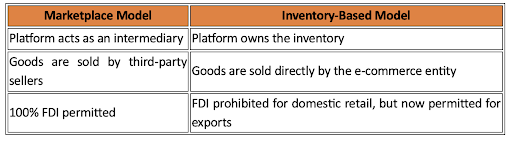
  • Since 2016, the Government has permitted 100% FDI under the automatic route in the marketplace model of e-commerce, while prohibiting FDI in the inventory-based model for domestic retail trade. 
  • This restriction was intended to protect small retailers and ensure a level playing field by preventing foreign-funded e-commerce companies from directly owning and selling inventory in the Indian market.
  • However, the Government has increasingly focused on promoting e-commerce exports as part of its broader objective of enhancing India's manufacturing competitiveness and increasing merchandise exports. 
  • Measures such as amendments to the Foreign Trade Policy, customs reforms for courier exports, and digital trade facilitation have been introduced to encourage Indian manufacturers and MSMEs to access global markets.
  • In this context, the Department for Promotion of Industry and Internal Trade (DPIIT) issued Press Note 3 of 2026, allowing FDI in inventory-based e-commerce entities exclusively for exports while retaining restrictions on domestic retail operations.

What is the Inventory-Based E-commerce Model?

  • An inventory-based model is an e-commerce model in which the platform owns the inventory of goods and sells them directly to consumers.
  • In contrast, under the marketplace model, the e-commerce entity acts only as a digital intermediary that connects buyers with independent sellers without owning the goods.

Difference Between the Two Models

Differences Between Marketplace & Inventory-Based Model

Key Features of the New Policy

  • FDI Permitted Only for Export Operations
    • The amended policy permits 100% FDI in inventory-based e-commerce entities only when they deal exclusively in exports of goods manufactured or produced in India.
    • The liberalisation does not extend to domestic retail sales.
  • No Change in Domestic E-commerce Rules
    • The Government has retained the existing restrictions on Business-to-Consumer (B2C) inventory-based e-commerce within India.
    • Foreign-funded e-commerce companies cannot own inventory for direct sale to Indian consumers.
  • Support for Indian Manufacturers
    • The policy is intended to provide Indian manufacturers, particularly MSMEs and businesses located in Tier-II and Tier-III cities, with easier access to international markets through large global e-commerce platforms.
    • By allowing these platforms to maintain export-oriented inventories, the Government expects to improve logistics, reduce delivery timelines, and enhance the competitiveness of Indian products overseas.
  • Removal of Regulatory Ambiguity
    • The amendment also addresses an interpretational issue under the earlier FDI policy.
    • While FDI was already permitted in Business-to-Business (B2B) e-commerce, uncertainty existed regarding whether inventory restrictions applicable to domestic retail also applied to export-oriented operations.
    • The revised policy clarifies that the inventory restriction is limited to domestic retail trade and does not apply to export-only operations.

Expected Benefits of the Policy

  • Boost to E-commerce Exports
    • The policy is expected to strengthen India's e-commerce export ecosystem by enabling global platforms to procure, store, and ship Indian products more efficiently.
    • The Government has set an ambitious target of achieving $200 billion in e-commerce exports by 2030.
  • Greater Opportunities for MSMEs
    • Small manufacturers often face challenges related to warehousing, logistics, and international market access.
    • The new framework enables them to leverage the infrastructure and global customer networks of major e-commerce companies.
  • Support for Manufacturing Growth
    • The initiative aligns with the Government's objective of increasing the manufacturing sector's share in GDP to 25% by 2035 and expanding merchandise exports.
    • Improved export opportunities may encourage higher domestic production and employment generation.

Concerns and Challenges

  • Possibility of Policy Misuse
    • Some experts have expressed concerns that maintaining separate inventories for export and domestic sales may be difficult to monitor.
    • They argue that the export-only relaxation could eventually lead to demands for similar liberalisation in the domestic market.
  • Impact on Domestic Retail
    • Although the current amendment does not affect domestic retail, there are apprehensions that future policy changes could intensify competition for traditional retailers if inventory-based FDI is permitted beyond exports.
  • Need for Effective Monitoring
    • Successful implementation will require robust monitoring mechanisms to ensure that inventory created for export purposes is not diverted to the domestic market in violation of FDI regulations.

Significance of the Policy

  • The amendment represents a calibrated liberalisation of India's FDI policy.
  • It seeks to balance two important objectives:
    • Promoting exports through global e-commerce platforms 
    • Preserving safeguards applicable to domestic retail trade 
  • The policy also complements India's broader initiatives under Make in India, Foreign Trade Policy, and Districts as Export Hubs, while supporting the country's ambition of becoming a major global manufacturing and export hub.

Source: TOI | BS

Foreign Direct Investment FAQs

Q1: What is an inventory-based e-commerce model?

Ans: It is a model in which the e-commerce entity owns the inventory of goods and sells them directly to customers.

Q2: Does the new policy allow inventory-based FDI for domestic retail sales?

Ans: No. The relaxation applies only to exports of goods manufactured or produced in India.

Q3: Which department issued the amendment?

Ans: The Department for Promotion of Industry and Internal Trade (DPIIT) issued the amendment through Press Note 3 of 2026.

Q4: How does the policy benefit Indian MSMEs?

Ans: It enables MSMEs to utilise the logistics and global distribution networks of large e-commerce platforms, improving access to international markets.

Q5: What is the Government's target for e-commerce exports?

Ans: The Government aims to increase e-commerce exports to $200 billion by 2030.

Festivals of Madhya Pradesh 2026, Name, Famous Fair & Festival List

Festivals of Madhya Pradesh

Festivals of Madhya Pradesh 2026 reflect the state's rich historical, cultural, tribal and religious heritage. Madhya Pradesh is known as the "Heart of India" and celebrates festivals that preserve folk traditions and community harmony. 

The state is known for promoting cultural heritage through government supported festivals and community celebrations. Along with its three UNESCO World Heritage Sites, vibrant tribal traditions and rich folk culture, festivals remain an important part of the social and cultural identity of Madhya Pradesh.

Festivals of Madhya Pradesh 2026

Festivals in Madhya Pradesh represent the state's traditions, history, tribal heritage, classical arts and religious diversity. They promote unity among different communities and preserve local customs, music, dance, literature, theatre, handicrafts and folk traditions. Many festivals are organized by the Department of Culture, Madhya Pradesh Tourism and various cultural academies, making the state one of India's leading centres for cultural celebrations throughout the year.

List of Festivals of Madhya Pradesh 2026

The Festivals of Madhya Pradesh include cultural, religious, tribal, literary, music, dance, theatre and agricultural celebrations held across different districts every year. The List of main Festivals of Madhya Pradesh 2026 has been provided below:

Hareli Festival of Madhya Pradesh

  • Community: This important agricultural festival is celebrated by farming communities, where agricultural implements are worshipped for prosperity and successful cultivation.
  • Observance: It is generally observed on the Amavasya of Shravan, while Mandla celebrates it on Shravan Purnima and the Malwa region observes it during Ashad as Hariyagodha.

Bhagoria Haat Festival of Madhya Pradesh

  • Community: Bhagoria Haat Festival is celebrated by the Bhil tribe for three days before Holi, mainly in Jhabua and Khargone districts and is popularly known as the "Festival of Love."
  • Tradition: Young men and women traditionally choose their life partners by applying red gulal to each other before seeking acceptance from their families.
  • Celebration: Tribal dance, music, colourful markets, traditional ornaments, handicrafts, local food and community gatherings make Bhagoria one of the most distinctive tribal festivals of Madhya Pradesh.

Karma Festival of Madhya Pradesh

  • Community: Karma is celebrated mainly by the Oraon tribal community with traditional songs, dances and collective worship that strengthens social unity and cultural identity.
  • Significance: The festival expresses gratitude for prosperity, nature and community well-being while preserving traditional customs through music and dance performances.

Larukaz Festival of Madhya Pradesh

  • Community: Larukaz is celebrated by the Gond tribe.
  • Celebrations: It is observed in honour of Narayana Dev and remains an important expression of Gond religious traditions and cultural heritage.

Rasnava Festival of Madhya Pradesh

  • Community: Rasnava is celebrated by the Baiga tribe, especially in Mandla district, in memory of Adi Purush Naga Baiga, reflecting ancestral traditions and tribal beliefs.

Meghnath Festival of Madhya Pradesh

  • Community: Meghnath is an important traditional festival of the Gond tribe and represents their long-preserved cultural and religious customs through community participation.

Madai Festival of Madhya Pradesh

  • Location: Madai is among the most famous tribal festivals of Mandla and Dindori districts, where Gond communities gather for traditional rituals, fairs, music and dance.
  • Features: The festival promotes tribal identity through cultural performances, local markets, community interaction and preservation of indigenous customs.

Kaksar Festival of Madhya Pradesh

  • Community: Kaksar is celebrated by the Abujh-Madia tribe, where unmarried young men and women traditionally select their life partners during festive community gatherings.

Chethiyagiri Vihara Festival of Madhya Pradesh

  • Location: The festival is organized every November at Sanchi in Raisen district, an internationally important Buddhist heritage centre.
  • Historical Importance: Devotees visit to view the sacred relics of Buddha's disciples Sariputta and Mahamogallena, discovered in Stupa No. 3 during 1853.

Diwali

  • Observance: Diwali is celebrated on Kartik Amavasya as the festival of lights with homes, temples and public places decorated using lamps and colourful decorations.
  • Significance: The festival symbolizes the victory of light over darkness and is celebrated with prayers, family gatherings, sweets and cultural traditions.

Holi

  • Celebration: Holi is celebrated during Phalguna with colours, music, community gatherings and traditional festivities across towns, villages and tribal regions of Madhya Pradesh.
  • Meaning: The festival represents the victory of good over evil while strengthening social harmony through collective celebrations.

Madhya Pradesh Utsav

  • Foundation Day: Madhya Pradesh Utsav is organized every year on 1 November by the Department of Culture to celebrate the state's Foundation Day.
  • Venue and Activities: State-level programmes are held at Lal Parade Ground, Bhopal, featuring folk dance, drama, music, singing and performances by eminent artists.

Lokrang Festival of Madhya Pradesh

  • Organization: Lokrang Festival is organized every January in Bhopal by the Madhya Pradesh Adivasi Lok Kala Academy.
  • Features: Folk dances, classical dance performances, tribal handicrafts, folk music and cultural exhibitions highlight India's traditional artistic heritage.

Akhil Bhartiya Kalidas Samaroh

  • History: Organized in Ujjain, this seven-day festival began in 1958 to honour the literary contributions of the great poet Kalidas.
  • Activities: Theatre, poetry recitation, story reading, exhibitions, literature, painting and cultural performances are organised around Kalidas's works.

Khajuraho Festival of Madhya Pradesh

  • History: Started in 1976, the seven-day Khajuraho Festival is organized every February in Chhatarpur district near the Chitragupta and Vishwanatha temples.
  • Performances: Renowned artists perform classical and folk dances including- Kathak, Bharatanatyam, Odissi, Kuchipudi, Manipuri and Kathakali, while exhibitions display sculptures, handicrafts and local artworks.

Malwa Utsav

  • Background: Started in 1991, Malwa Utsav is organized in Indore, Ujjain and Mandu, bringing together artists from India and abroad.
  • Highlights: Folk dance, music, drama, handicrafts, visual arts and cultural exhibitions celebrate the artistic traditions of the Malwa region.

Tansen Sangeet Samaroh

  • Location: Organized since 1980 at Behat village in Gwalior district every December as a tribute to legendary musician Tansen.
  • Importance: Classical musicians perform near Tansen's tomb for four days, making it one of India's most respected classical music festivals.

Pachmarhi Utsav

  • Celebration: Organized during the last week of December at Pachmarhi, the festival presents folk arts, workshops, demonstrations, handicrafts and cultural exhibitions.
  • Features: Carpets, bamboo crafts, sculptures, traditional dress materials and performances from different Indian folk traditions are major attractions.

Dhrupad Samaroh

  • Importance: Held annually in Bhopal, the festival is dedicated to the ancient Dhrupad tradition, one of the oldest forms of Hindustani classical music.

Raag Ameer Festival

  • Organization: This three-day music festival is organized every March in Indore by the Ustad Alauddin Khan Sangeet and Kala Academy.
  • Dedication: The event honours Ustad Amir Khan, founder of the Indore Gharana, through classical music performances by distinguished artists.

Madhya Pradesh Samaroh

  • History: Started in 1982 in Delhi, the festival promotes Madhya Pradesh through singing, dancing, theatre and painting exhibitions.

Orchha Festival of Madhya Pradesh

  • Celebration: Started in 1994, Orchha Festival is organized every March at the Sheesh Mahal Complex by the Madhya Pradesh Tourism Board.
  • Focus: The festival celebrates Bundelkhand's dance, literature, music, drama and cultural heritage through traditional performances.

Namaste Orchha Festival of Madhya Pradesh

  • Background: The first edition was organized from 6 to 8 March 2020 to promote Orchha as an international heritage tourism destination.
  • Activities: Guided heritage walks, photography, music, dance, art exhibitions, Kisan Melas and business meetings form the main attractions.

Nimar Utsav

  • History: Started in 1994, this three-day festival is organized every November at Maheshwar on the banks of the Narmada during Kartik Purnima.
  • Features: Tribal music, dance, theatre, boating, canoeing, folk performances and traditional arts are organized to honour excellence in tribal cultural heritage.

Other Famous Festivals in Madhya Pradesh

  • Makar Sankranti: Makar Sankranti marks the Sun's northward journey during January and is widely celebrated with prayers, charitable activities and colourful kite flying.
  • Dussehra: Dussehra, also known as Vijayadashami, commemorates the victory of Lord Rama over Ravana and symbolizes the triumph of righteousness over evil.
  • Krishna Janmashtami: Krishna Janmashtami celebrates the birth of Lord Krishna during August with devotional singing, temple worship, cultural programmes and community participation.
  • Navratri: Navratri honours Goddess Durga's victory over Mahishasura through nine days of worship, devotional music, fasting and cultural celebrations.
  • Ganesh Chaturthi: Ganesh Chaturthi marks the birth anniversary of Lord Ganesha with idol installation, prayers, devotional songs and public celebrations.
  • Bhaiya Dooj: Bhaiya Dooj is celebrated twice annually in Madhya Pradesh, once after Holi and again after Diwali, highlighting the bond between brothers and sisters.
  • Eid-ul-Fitr: Eid-ul-Fitr is celebrated after the completion of the holy month of Ramadan with prayers, charity, community meals and family gatherings.
  • Eid-al-Adha: Eid-al-Adha honours the devotion and sacrifice of Prophet Ibrahim and is observed with prayers, charitable acts and community participation.
  • Muharram: Muharram is observed as a period of mourning to remember the sacrifice of Imam Hussain, the son of Hazrat Ali.
  • Guru Nanak Jayanti: Guru Nanak Jayanti commemorates the birth anniversary of Guru Nanak through prayers, devotional singing and community service.
  • Prakash Utsav: Prakash Utsav marks the birth anniversary of Guru Gobind Singh, the tenth Sikh Guru, with religious ceremonies and community gatherings.
  • Christmas: Christmas is celebrated on 25 December with prayers, church services, decorations and gatherings commemorating Jesus Christ.
  • Good Friday: Good Friday remembers the crucifixion of Jesus Christ through prayer services and religious observances in churches across the state.
  • Buddha Purnima: Buddha Purnima marks the birth anniversary of Lord Buddha and is observed with prayers, meditation and religious gatherings.
  • Mahavir Jayanti: Mahavir Jayanti celebrates the birth anniversary of Lord Mahavira, the 24th Tirthankara, through religious processions, prayers and charitable activities.

Festivals of Madhya Pradesh 2026 FAQs

Q1: Which is the most famous tribal festival of Madhya Pradesh?

Ans: Bhagoria Haat Festival is the most famous tribal festival of Madhya Pradesh. It is celebrated by the Bhil community in Jhabua and Khargone before Holi.

Q2: Which is the famous dance festival of Madhya Pradesh?

Ans: Khajuraho Festival is the most famous dance festival of Madhya Pradesh. It features classical Indian dance forms near the UNESCO-listed Khajuraho temples every February.

Q3: When is Madhya Pradesh Utsav celebrated?

Ans: Madhya Pradesh Utsav is celebrated every year on 1 November to mark the state's Foundation Day with folk dance, music, drama and cultural programmes.

Q4: Which is the oldest classical music festival in Madhya Pradesh?

Ans: Tansen Sangeet Samaroh, organized since 1980 at Behat in Gwalior district, is one of the oldest and most prestigious classical music festivals in Madhya Pradesh.

Q5: What are the major festivals of Madhya Pradesh?

Ans: Major festivals of Madhya Pradesh include Bhagoria Haat Festival, Khajuraho Festival, Lokrang Festival, Tansen Sangeet Samaroh, Kalidas Samaroh, Malwa Utsav, Nimar Utsav, Pachmarhi Utsav and Madhya Pradesh Utsav.

Fast-Track Courts in India: Legal Basis, Performance, Challenges

Fast-Track Courts in India

Fast-Track Courts in India Latest News

  • PM Modi has proposed setting up fast-track courts (FTCs) to try paper leak cases amid ongoing protests. 
  • This has renewed focus on whether such courts can genuinely deliver on their promise of speedy justice, given India's persistent judicial backlog.

What Are Fast-Track Courts?

  • FTCs are not governed by a single central legislation. Their origin lies in the recommendations of the Fourteenth Finance Commission (2015–2020), which proposed setting up 1,800 FTCs to expedite trials of:
    • Heinous crimes such as murder, kidnapping, and extortion
    • Property disputes pending for over five years
    • Cases involving vulnerable groups — women, children, senior citizens, persons with disabilities, and those with terminal illnesses

Fast-Track Special Courts (FTSCs)

  • In 2019, following a criminal law amendment and a Supreme Court directive, the Union government launched a centrally sponsored scheme for FTSCs
  • Partly funded through the Nirbhaya Fund, these courts are dedicated exclusively to time-bound trials of rape cases and offences under the POCSO Act.

Can a Special Court Be Set Up for a Single Case?

  • Setting up special courts must satisfy Article 14 (equality before law). 
  • In State of West Bengal vs Anwar Ali Sarkar (1952), the Supreme Court struck down a law allowing arbitrary selection of cases for special courts merely for "speedier trial," holding that speed alone is too vague a justification. 
  • Any classification for fast-tracking must rest on a rational, objective basis — such as the nature of the offence or victim vulnerability.

Precedents of case-specific special courts

  • Andhra Pradesh High Court set up a special court in 2010 for the Satyam Computer Services scam.
  • The Supreme Court directed a dedicated special court for the 2G spectrum allocation scam (notified March 2011, Patiala House Courts).
  • It remains to be seen whether the NEET paper leak case, currently before a Delhi court, will similarly be referred to a special court.

Speed and Targets

  • Litigants have no automatic statutory right to a fixed trial deadline.
  • The Bharatiya Nagarik Suraksha Sanhita (BNSS) recommends trials be completed within two years generally, and within two months for sexual offences.
  • Each FTSC is expected to dispose of 41–42 cases per quarter, translating to at least 165 cases annually.

Performance So Far

  • As of January 2026: 862 regular FTCs functioning across 21 states/UTs, alongside 774 FTSCs (including 398 exclusive POCSO courts) across 29 states/UTs.
  • FTSC disposal rate stands at around 96%.
  • In 2024, 88,902 new cases were filed in FTSCs while 85,595 were resolved.
  • An FTSC disposes of about 9.5 cases per month — nearly three times the 3.3 cases cleared monthly by a regular trial court of similar jurisdiction.
  • Despite high clearance rates, pendency remains significant: over 2.4 lakh cases were pending in FTSCs by end-2023.

Why Delays Persist

  • The Ministry of Law and Justice, in a March 2026 Lok Sabha response, attributed delays to multiple factors: infrastructure availability, case complexity, investigation quality, evidence nature, and cooperation among the bar, investigating agencies, forensic support, witnesses, and litigants.
  • Legal experts note mixed efficacy across subject areas — FTCs handling POCSO and IPC cases face heavy case volumes and judge shortages, while those under the Prevention of Corruption Act show comparatively better outcomes.

Judicial Position on Trial Timelines

  • In P. Rama Chandra Rao vs State of Karnataka (2002), a seven-judge Constitution Bench ruled it is "neither advisable nor judicially permissible" to prescribe a fixed outer limit for concluding criminal trials, holding that such rigid limitation would amount to impermissible judicial legislation.

Conclusion

  • Fast-track courts offer measurably faster case disposal than regular courts, but their success is constrained by infrastructure gaps, judge shortages, and rising case inflow. 
  • Without addressing these root causes, fast-tracking risks becoming a symbolic response to public pressure rather than a durable fix for India's justice delivery system.

Source: IE

Fast-Track Courts in India FAQs

Q1: What are Fast-Track Courts in India and why were they established?

Ans: Fast-Track Courts in India were created to expedite trials involving heinous crimes, long-pending disputes and cases concerning vulnerable groups through dedicated judicial mechanisms.

Q2: How are Fast-Track Courts in India different from Fast-Track Special Courts?

Ans: Fast-Track Courts in India handle diverse categories of cases, whereas Fast-Track Special Courts primarily conduct time-bound trials for rape and POCSO offences under a centrally sponsored scheme.

Q3: Can Fast-Track Courts in India be established for a single case?

Ans: Fast-Track Courts in India can be created only on a rational and objective classification, as arbitrary case-specific courts would violate Article 14 of the Constitution.

Q4: Why do Fast-Track Courts in India continue to face delays despite higher disposal rates?

Ans: Fast-Track Courts in India are constrained by judicial vacancies, inadequate infrastructure, complex investigations, witness-related issues and increasing case inflow despite faster disposal.

Q5: Why are Fast-Track Courts in India important for judicial reforms?

Ans: Fast-Track Courts in India strengthen access to timely justice, but their long-term success depends on systemic reforms, adequate staffing and sustained judicial infrastructure.

India’s Shift Towards Polymer Currency – Opportunities, Challenges and the Road Ahead

Polymer Currency

Polymer Currency Latest News

  • The Reserve Bank of India (RBI), through its currency-printing arm Bharatiya Reserve Bank Note Mudran Pvt. Ltd. (BRBNMPL), has invited global Expressions of Interest (EOI) for supplying Biaxially Oriented Polypropylene (BOPP) polymer substrates with advanced security features. 
  • This marks India's most significant move towards introducing polymer (plastic) banknotes since the proposal was first made in 2009.

Why is RBI Considering Polymer Currency?

  • Greater durability:
    • Polymer notes last 2.5–4 times longer than conventional cotton-paper notes.
    • Lower denominations such as ₹10 and ₹20, which experience the highest circulation and physical wear, are likely to be introduced first.
    • Longer lifespan reduces the frequency of replacement under the RBI's Clean Note Policy.
  • Better security against counterfeiting:
    • Polymer banknotes can incorporate advanced security features such as -
      • Transparent windows
      • Metallic numerals
      • Magnetic pseudo-threads
      • Holograms
      • Shadow images
      • Iridescent patterns
      • Durable tactile markings for visually impaired persons
    • These features are significantly harder to replicate than those on paper currency.
  • Improved currency management: Although manufacturing costs are higher initially, fewer replacement cycles can reduce printing expenditure, transportation costs, storage and logistics costs, and destruction of soiled notes.

Economic Rationale

  • Current cost of currency management:
    • RBI spends roughly ₹5,000 crore annually on printing and maintaining currency.
    • Security printing expenditure - ₹5,101 crore (FY2023-24), ₹6,373 crore (FY2024-25), and ₹4,875 crore (FY2025-26).
    • India destroys 20–24 billion soiled notes annually, largely lower denominations.
  • Cost challenges:
    • Polymer notes cost 30–60% more to manufacture than paper notes.
    • In several countries, production cost for low-value polymer notes has reached 20–24% of their face value.
    • Additional transition costs include recalibration of ATMs, currency sorting machines, vending machines, and cash-processing infrastructure.

Environmental Dimensions

  • Potential benefits: A TERI study commissioned by RBI found that -
    • Longer circulation life reduces manufacturing and transportation requirements.
    • Over the complete lifecycle, polymer notes may have a lower overall carbon footprint than paper notes.
    • End-of-life polymer notes can be recycled into plastic products.
  • Concerns:
    • Polymer is produced from polypropylene, a petroleum-based product.
    • Higher initial carbon footprint.
    • Need for specialised recycling facilities.
    • Dependence on fossil fuel-derived raw materials raises sustainability concerns.

Unanswered Questions

  • Dependence on petrochemical imports:
    • Polymer substrate is made from BOPP (Biaxially Oriented Polypropylene).
    • India imports around one-fifth of its polypropylene requirement.
    • Volatility in crude oil prices, aggravated by geopolitical tensions (especially West Asia), could increase manufacturing costs.
    • This is despite planned domestic capacity expansion by companies such as Reliance Industries and Indian Oil Corporation.
  • Relevance in an increasingly digital economy:
    • India's payment ecosystem presents a paradox - UPI processes over 24,000 crore transactions annually, accounting for nearly 85% of retail digital payments.
    • Yet, currency in circulation has exceeded ₹41 lakh crore (2025–26), compared to around ₹16–17 lakh crore a decade earlier.
    • The Currency-to-GDP ratio remains above 11%, indicating sustained demand for cash despite rapid digitalisation.
    • Reasons for continued cash demand: Large informal economy, limited digital infrastructure in rural areas, and cash remains essential for financial inclusion and small-value transactions.

Historical Evolution and Global Experience

  • Evolution:
    • 2009: RBI first proposed polymer ₹10 notes.
    • 2012
      • Pilot planned in Kochi, Mysuru, Jaipur, Bhubaneswar and Shimla to test diverse climatic conditions.
      • The project was later shelved due to technological challenges and the disruption caused by 2016 demonetisation and subsequent currency redesign.
    • 2026: BRBNMPL's global EOI revives the proposal, with field trials expected to begin for ₹10 and ₹20 notes.
  • Global experience:
    • Australia pioneered polymer currency and has fully transitioned to it. 
    • Around 60 countries now use polymer banknotes in some form, including Canada, United Kingdom, New Zealand, Mexico, Brazil, Saudi Arabia, Romania, and Barbados.
    • Their experience indicates improved durability, enhanced security and lower lifecycle costs despite higher initial production expenses.

Way Forward

  • Begin with limited pilot projects in lower denominations before nationwide adoption.
  • Encourage domestic production of polymer substrates to reduce import dependence.
  • Conduct comprehensive cost-benefit and environmental impact assessments (EIAs).
  • Upgrade ATM and cash-handling infrastructure in a phased manner.
  • Ensure coexistence of paper and polymer notes during transition without demonetisation.
  • Align currency reforms with India's broader objectives of Digital India, financial inclusion, and efficient cash management.

Conclusion

  • India's move towards polymer currency represents an attempt to modernise its cash ecosystem by improving durability, security and lifecycle efficiency. However, concerns warrant a cautious, evidence-based rollout
  • The objective should not be merely replacing paper with plastic, but creating a cost-effective, secure and sustainable currency system suited to India's evolving payment landscape.

Source: IETH

Polymer Currency FAQs

Q1: Why is the RBI considering the introduction of polymer banknotes in India?

Ans: To enhance currency durability, improve anti-counterfeiting security, reduce long-term currency management costs, etc.

Q2: What is the 'currency demand paradox' highlighted by the RBI?

Ans: Simultaneous rapid growth of digital payments, alongside a continued increase in currency in circulation.

Q3: What are the major challenges associated with adopting polymer currency in India?

Ans: Higher initial production costs, dependence on polypropylene imports, infrastructure upgradation costs, etc.

Q4: Why are ₹10 and ₹20 notes likely to be prioritised for polymer conversion?

Ans: Because they experience the highest circulation, wear and tear, making them the most cost-effective denominations.

Q5: How can polymer banknotes contribute to environmental sustainability?

Ans: Their longer lifespan potentially lowers the overall lifecycle carbon footprint, while recycling polymer substrates.

Income Tax Day 2026 (Aaykar Diwas), History, Significance

Income Tax Day 2026

Income Tax Day 2026 (Aaykar Diwas) is observed in India every year on 24 July to commemorate the introduction of income tax in the country. The day recognizes the contributions of taxpayers and highlights the crucial role of the Income Tax Department in strengthening the nation's economy. It also promotes tax awareness, voluntary compliance, and transparent tax administration, encouraging citizens to fulfill their tax responsibilities for India's growth and development.

Income Tax Day 2026

Income Tax Day 2026 is observed on Friday, 24 July 2026, marking the 166th anniversary of the introduction of income tax in India by Sir James Wilson in 1860. The day, also known as Aaykar Diwas, celebrates the evolution of India's tax administration and honors honest taxpayers whose contributions support national development. 

Income Tax Day 2026 History

Income Tax Day commemorates the introduction of income tax in India and reflects the evolution of the country's tax administration over the years.

  • 24 July 1860: Sir James Wilson, the first Finance Member of the Governor-General's Council, introduced Income Tax in British India to address the financial crisis following the Revolt of 1857.
  • The first income tax was introduced as a temporary measure to generate revenue for the government.
  • The Income Tax Act, 1886 was enacted to establish a more structured framework for income tax in India.
  • The Income Tax Act, 1922 further reorganized tax administration and strengthened the legal framework for direct taxation.
  • After Independence, the Income Tax Act, 1961 replaced the 1922 Act and came into effect on 1 April 1962. It continues to serve as the primary law governing income tax in India, with regular amendments.
  • The Central Board of Direct Taxes (CBDT) oversees the administration of direct taxes under the Ministry of Finance.
  • In 2010, the Income Tax Department began celebrating Aaykar Diwas (Income Tax Day) to mark 150 years of income tax in India.
  • Today, Income Tax Day promotes tax awareness, encourages voluntary tax compliance, and recognizes the contribution of honest taxpayers to India's economic development.

Income Tax Day 2026 Significance

Income Tax Day highlights the importance of taxation in India's economic development and encourages citizens to contribute towards nation-building through responsible tax compliance.

  • Recognizes the contributions of honest taxpayers to the country's growth and development.
  • Promotes voluntary tax compliance and encourages timely filing of Income Tax Returns (ITRs).
  • Creates awareness about the importance of paying taxes for national progress.
  • Highlights the role of income tax in funding education, healthcare, infrastructure, defence, and social welfare schemes.
  • Encourages financial transparency and accountability among individuals and businesses.
  • Showcases the digital transformation of the Income Tax Department through initiatives such as e-filing, faceless assessment, and online taxpayer services.
  • Strengthens public trust in a fair, efficient, and taxpayer-friendly tax system.
  • Supports the government's efforts to broaden the tax base and improve revenue collection.
  • Reinforces the idea that taxes are essential for sustainable economic growth and public welfare.
  • Inspires citizens to actively participate in nation-building by fulfilling their tax responsibilities.

Role of the Income Tax Department in Nation Building

Income Tax Day highlights the importance of taxation in India's economic development and encourages citizens to contribute towards nation-building through responsible tax compliance.

  • Recognizes the contributions of honest taxpayers to the country's growth and development.
  • Promotes voluntary tax compliance and encourages timely filing of Income Tax Returns (ITRs).
  • Creates awareness about the importance of paying taxes for national progress.
  • Highlights the role of income tax in funding education, healthcare, infrastructure, defence, and social welfare schemes.
  • Encourages financial transparency and accountability among individuals and businesses.
  • Showcases the digital transformation of the Income Tax Department through initiatives such as e-filing, faceless assessment, and online taxpayer services.
  • Strengthens public trust in a fair, efficient, and taxpayer-friendly tax system.
  • Supports the government's efforts to broaden the tax base and improve revenue collection.
  • Reinforces the idea that taxes are essential for sustainable economic growth and public welfare.
  • Inspires citizens to actively participate in nation-building by fulfilling their tax responsibilities.

Income Tax Day 2026 FAQs

Q1: When is Income Tax Day 2026 celebrated?

Ans: Income Tax Day 2026 is celebrated on 24 July 2026 across India.

Q2: Why is Income Tax Day celebrated?

Ans: Income Tax Day is celebrated to commemorate the introduction of income tax in India on 24 July 1860 and to promote tax awareness, voluntary compliance, and responsible tax-paying practices.

Q3: What is another name for Income Tax Day?

Ans: Income Tax Day is also known as Aaykar Diwas in India.

Q4: What is the theme of Income Tax Day 2026?

Ans: The official theme for Income Tax Day 2026 has not been announced yet by the Income Tax Department.

Q5: Who introduced income tax in India?

Ans: Sir James Wilson, the first Finance Member of the Governor-General's Council, introduced income tax in British India on 24 July 1860.

US-Saudi Nuclear Deal: Implications for West Asia and Global Non-Proliferation

US-Saudi Nuclear Deal

US-Saudi Nuclear Deal Latest News

  • The United States and Saudi Arabia have signed a landmark civilian nuclear cooperation agreement. 
  • Framed as a "peaceful nuclear cooperation agreement," the 30-year pact has sparked concerns that it could enable Saudi Arabia to eventually develop nuclear weapons.

What the Deal Involves

  • The agreement gives American companies substantial access to Saudi Arabia's nuclear energy programme. 
  • Alongside it, a "bilateral safeguards agreement" was also signed, though the full text remains undisclosed. 
  • Reports suggest the deal could permit Saudi Arabia to enrich uranium domestically — fuel primarily meant for power plants, but which can also be diverted toward weapons-grade material.
  • Some US media reports question whether the accompanying safeguards are robust enough.

The 123 Agreement: Legal Backbone of the Deal

  • Named after Section 123 of the US Atomic Energy Act, 1954, a 123 Agreement is mandatory before the US can undertake significant nuclear cooperation with any country.
  • It facilitates transfer of nuclear materials, equipment, and technology for peaceful purposes while ensuring non-proliferation compliance.
  • India precedent: India's 123 Agreement with the US, cleared by Congress on October 1, 2008, ended three decades of technology-denial restrictions. India agreed to place select civilian facilities under India-specific IAEA safeguards in exchange for uninterrupted fuel supply — a model frequently cited in nuclear diplomacy discussions.
  • The Saudi deal must similarly be ratified by the US Congress — a politically uncertain process, since Saudi Arabia lacks the broad bipartisan support Israel enjoys in the US legislature.

Why the Deal Raises Concerns

  • Regional arms race risk: West Asia already has one nuclear power (Israel) and one on the threshold (Iran). A Saudi enrichment capability could trigger a proliferation cascade.
  • Iran factor: Saudi Arabia's then-Crown Prince Mohammed bin Salman stated in 2018 that the Kingdom would pursue nuclear weapons if Iran did. The deal could embolden Iran's own weapons ambitions and push it closer to China and Russia.
  • Weak inspection regime: Unlike the 2009 US-UAE nuclear deal — under which Abu Dhabi does not enrich its own fuel and faces multiple restrictions — the Saudi pact may allow indigenous enrichment, setting a more permissive precedent.
  • Geopolitical timing: The deal comes amid escalating US-Iran hostilities. Saudi Arabia hosts US military bases that have faced Iranian attacks, and it comes just two days after Yemen's Houthis announced a maritime blockade against the Kingdom.
  • Conflict of interest concerns: The Trump Organisation has significant financial dealings with Saudi Arabia, having raised around $50 million in 2024 alone from Saudi-linked business, raising questions about the deal's underlying motivations.

Strategic and Economic Rationale

  • For the US: Opens major sales opportunities for American nuclear firms, notably Westinghouse.
  • For Saudi Arabia: Enables diversification away from oil-based electricity generation toward nuclear power, freeing more crude for export.
  • Both governments have officially framed the deal as mutually beneficial and non-proliferation-compliant.

Conclusion

  • The US-Saudi nuclear deal marks a major diplomatic win for Riyadh but carries significant proliferation risk in an already volatile West Asia. 
  • Its ultimate impact will hinge on the strength of safeguards, Congressional ratification, and whether it triggers a wider regional race for nuclear capability — making it a critical case study in the balance between energy diplomacy and non-proliferation.

Source: IE | BBC

US-Saudi Nuclear Deal FAQs

Q1: What is the significance of the US-Saudi Nuclear Deal?

Ans: The US-Saudi Nuclear Deal expands civilian nuclear cooperation while raising important questions regarding uranium enrichment, regional security and nuclear non-proliferation safeguards.

Q2: How does the 123 Agreement support the US-Saudi Nuclear Deal?

Ans: The US-Saudi Nuclear Deal is based on a Section 123 Agreement, which provides the legal framework for peaceful nuclear cooperation under US domestic law.

Q3: Why has the US-Saudi Nuclear Deal generated non-proliferation concerns?

Ans: The US-Saudi Nuclear Deal may permit domestic uranium enrichment, increasing concerns about nuclear weapons proliferation and a potential arms race in West Asia.

Q4: How could the US-Saudi Nuclear Deal affect regional geopolitics?

Ans: The US-Saudi Nuclear Deal could influence strategic competition involving Iran, Israel and major powers, potentially reshaping the regional nuclear balance in West Asia.

Q5: Why is the US-Saudi Nuclear Deal important for global nuclear governance?

Ans: The US-Saudi Nuclear Deal will test the effectiveness of international safeguards while balancing peaceful nuclear cooperation with global non-proliferation objectives.

Respiratory System, Parts, Structure, Functions & Breathing Process

Respiratory System

The Respiratory System is one of the most important organ systems in the human body. It is responsible for supplying oxygen (O₂) to the body and removing carbon dioxide (CO₂), a waste product of metabolism. Every cell in the body depends on oxygen to produce energy, making the respiratory system essential for survival. Along with breathing, it also plays a role in speech, smell, and maintaining the body's acid-base balance.

Respiratory System Parts

The Respiratory System is divided into the upper respiratory tract and the lower respiratory tract, which work together to carry air into and out of the lungs. Each part performs a specific role in filtering, warming, humidifying, and transporting air to ensure efficient breathing and gas exchange.

  • Nose: The nose is the primary entry point for air. It filters dust and microorganisms with tiny hairs (cilia) and mucus while warming and moistening the inhaled air.
  • Nasal Cavity: The nasal cavity is lined with a mucus membrane that traps harmful particles, allergens, and pathogens. It also helps regulate the temperature and humidity of incoming air.
  • Sinuses: The paranasal sinuses are air-filled spaces within the skull that lighten its weight, produce mucus, and enhance the resonance of the voice.
  • Pharynx (Throat): The pharynx is a muscular passage that connects the nasal cavity to the larynx. It serves as a common pathway for both air and food.
  • Larynx (Voice Box): The larynx contains the vocal cords responsible for speech. It also protects the lower airways by preventing food and liquids from entering the trachea during swallowing.
  • Trachea (Windpipe): The trachea is a flexible tube supported by C-shaped cartilage rings. It carries air to the lungs and uses cilia to remove trapped dust and foreign particles.
  • Bronchi: The right and left bronchi branch from the trachea and transport air into each lung. These airways further divide into smaller branches inside the lungs.
  • Bronchioles: The bronchioles are the smallest branches of the bronchial tree. They regulate airflow and deliver air directly to the alveoli.
  • Alveoli: The alveoli are tiny air sacs where oxygen enters the bloodstream and carbon dioxide leaves the blood through diffusion. They provide a large surface area for efficient gas exchange.
  • Lungs: The lungs are the primary respiratory organs containing millions of alveoli. They facilitate the exchange of gases and help maintain adequate oxygen levels in the body.
  • Diaphragm: The diaphragm is the main muscle of respiration. It contracts during inhalation to expand the chest cavity and relaxes during exhalation to push air out of the lungs.

Functions of the Respiratory System

The respiratory system performs several vital functions that ensure the body receives oxygen for energy production while removing carbon dioxide and maintaining overall health.

  • Supplies Oxygen: Delivers oxygen (O₂) from the air to the bloodstream, where it is transported to all body cells.
  • Removes Carbon Dioxide: Eliminates carbon dioxide (CO₂), a waste product of cellular respiration, through exhalation.
  • Facilitates Gas Exchange: Enables the exchange of oxygen and carbon dioxide in the alveoli of the lungs.
  • Maintains Blood pH: Helps regulate the body's acid-base balance by controlling carbon dioxide levels in the blood.
  • Filters and Cleans Air: Traps dust, pollen, bacteria, and other harmful particles using mucus and cilia.
  • Warms and Humidifies Air: Adjusts the temperature and moisture of inhaled air to protect the lungs.
  • Supports Speech: The larynx (voice box) produces sound by vibrating the vocal cords during airflow.
  • Enables Sense of Smell: The olfactory receptors in the nasal cavity detect different odors.
  • Protects Against Infections: Acts as a defense system by preventing harmful microorganisms from reaching the lungs.
  • Supports Cellular Respiration: Provides the oxygen required by body cells to produce energy (ATP) for normal functioning.

How the Respiratory System Works?

The respiratory system works by drawing oxygen-rich air into the lungs, exchanging gases in the alveoli, and expelling carbon dioxide-rich air from the body. This continuous process ensures that body tissues receive oxygen for energy production while removing waste gases. Step-by-Step Working of the Respiratory System:

  1. Air Enters the Body: Breathing begins when air enters through the nose or mouth, where it is filtered, warmed, and humidified.
  2. Air Travels Through the Airways: The air passes through the pharynx, larynx, and trachea, then enters the right and left bronchi.
  3. Distribution of Air: The bronchi divide into smaller bronchioles, which carry air deep into the lungs.
  4. Gas Exchange in the Alveoli: Air reaches the alveoli, where oxygen diffuses into the blood through surrounding capillaries, while carbon dioxide diffuses from the blood into the alveoli.
  5. Transport of Oxygen: Oxygen binds to hemoglobin in red blood cells and is transported to all tissues and organs for cellular respiration.
  6. Removal of Carbon Dioxide: Carbon dioxide produced by body cells is carried back to the lungs through the bloodstream.
  7. Exhalation: During exhalation, the diaphragm relaxes, reducing lung volume and forcing carbon dioxide-rich air out through the nose or mouth.

Common Diseases of the Respiratory System

Respiratory diseases affect the lungs and airways, making it difficult to breathe and reducing the body's ability to receive sufficient oxygen. These conditions may be caused by infections, allergies, smoking, air pollution, or genetic factors.

  • Asthma: A chronic inflammatory disease that narrows the airways, causing wheezing, coughing, chest tightness, and shortness of breath.
  • Chronic Obstructive Pulmonary Disease (COPD): A progressive lung disease, mainly caused by smoking, that damages the airways and lungs, making breathing increasingly difficult.
  • Pneumonia: A lung infection that inflames the alveoli, which may fill with fluid or pus, causing fever, cough, chest pain, and difficulty breathing.
  • Tuberculosis (TB): A contagious bacterial infection caused by Mycobacterium tuberculosis that primarily affects the lungs and spreads through airborne droplets.
  • Bronchitis: Inflammation of the bronchial tubes, leading to persistent cough, mucus production, and breathing discomfort. It may be acute or chronic.
  • Emphysema: A type of COPD in which the alveoli are permanently damaged, reducing the lungs' capacity for efficient gas exchange.
  • Lung Cancer: A serious disease characterized by the uncontrolled growth of abnormal cells in the lungs, commonly associated with smoking, air pollution, and occupational exposure to harmful substances.
  • Influenza (Flu): A contagious viral infection that affects the respiratory tract, causing fever, sore throat, cough, body aches, and fatigue.
  • COVID-19: A viral respiratory disease caused by SARS-CoV-2 that can range from mild cold-like symptoms to severe pneumonia and respiratory failure.
  • Allergic Rhinitis: An allergic condition affecting the nasal passages, resulting in sneezing, nasal congestion, runny nose, and itchy eyes.
  • Sinusitis: Inflammation of the paranasal sinuses, causing facial pain, nasal blockage, headache, and thick nasal discharge.
  • Pleurisy: Inflammation of the pleura (the membrane surrounding the lungs), leading to sharp chest pain, especially during breathing or coughing.
  • Pulmonary Fibrosis: A chronic disease in which lung tissue becomes scarred and stiff, making it difficult for the lungs to function properly.

Respiratory System FAQs

Q1: What is the respiratory system?

Ans: The respiratory system is a network of organs and airways that enables the body to breathe by supplying oxygen (O₂) and removing carbon dioxide (CO₂).

Q2: What are the main organs of the respiratory system?

Ans: The main organs include the nose, nasal cavity, pharynx, larynx, trachea, bronchi, bronchioles, alveoli, lungs, and diaphragm.

Q3: What is the primary function of the respiratory system?

Ans: The primary function of the respiratory system is to provide oxygen to the body, remove carbon dioxide, and facilitate gas exchange in the lungs.

Q4: Where does gas exchange occur in the respiratory system?

Ans: Gas exchange takes place in the alveoli, the tiny air sacs in the lungs, where oxygen enters the bloodstream and carbon dioxide is removed.

Q5: What is the difference between breathing and respiration?

Ans: Breathing is the physical process of inhaling and exhaling air, while respiration is the biological process in which body cells use oxygen to produce energy and release carbon dioxide.

Folk Dances of Maharashtra, Name, List, Features, Cultural Significance

Folk Dances of Maharashtra

Folk Dances of Maharashtra reflect the rich culture, traditions, and lively spirit of the people of the state. These dances are closely connected with festivals, religious rituals, and everyday life, making them an important part of social celebrations. From the energetic beats of Lavani and Tamasha to the devotional movements of Koli and Dhangari Gaja, each dance tells a unique story about the region’s history and lifestyle. With their colorful costumes, rhythmic music, and expressive movements, these folk dances bring people together and keep Maharashtra’s cultural heritage alive across generations. 

Famous Folk Dances of Maharashtra

The famous Folk Dances of Maharashtra reflect the state’s diverse culture, traditions, and regional lifestyles. These dances are performed during festivals, religious occasions, and social gatherings, showcasing energy, devotion, and storytelling through music and movement. Each dance form has its own unique style, costume, and cultural significance, representing different communities and traditions of Maharashtra. Some of the most popular and widely performed folk dances are discussed below. 

1. Lavani Dance

  • Lavani is one of the most vibrant and expressive Folk Dances of Maharashtra, known for its combination of powerful rhythm, graceful movements, and emotional storytelling. The term comes from “Lavanya,” meaning beauty, which is reflected in its style and presentation.
  • It is usually performed by women dressed in a nine-yard Nauvari saree, along with traditional jewelry, expressive makeup, and confident body language, making it visually striking.
  • The dance is performed to the fast and energetic beats of the dholki, supported by instruments like manjeera and harmonium, creating a lively musical environment.
  • Lavani often deals with themes like love, social issues, politics, romance, and humor, making it both entertaining and thought-provoking.
  • Historically, it flourished during the Peshwa period, where it was used to entertain soldiers and boost their morale during wars.
  • Today, Lavani is closely associated with Tamasha theatre and remains an important symbol of Maharashtra’s cultural identity and artistic richness.

2. Koli Dance

  • Koli Dance is performed by the Koli fishing community, and it beautifully captures their daily life, traditions, and strong bond with the sea.
  • The dance is usually performed in groups of men and women, representing teamwork and cooperation, which are essential in fishing activities.
  • Movements in the dance imitate real-life actions like rowing boats, casting fishing nets, and the movement of ocean waves, making it realistic and engaging.
  • The dancers wear traditional coastal attire, with women in bright sarees and ornaments, and men often carrying props like oars or nets.
  • It is commonly performed during festivals, weddings, and community gatherings, reflecting the joy, unity, and cultural pride of the Koli people.
  • This dance highlights how occupation and environment influence cultural expression.

3. Dhangari Gaja Dance

  • Dhangari Gaja is a traditional dance of the Dhangar (shepherd) community, mainly from the Solapur region, and reflects their pastoral lifestyle and devotion to nature.
  • The dance is closely associated with their deity Biruba, and is performed as a way to express gratitude, seek blessings, and celebrate their return home after long periods of grazing cattle.
  • Dancers wear simple yet colorful traditional attire like dhoti, angarakha, and pheta, often decorated with scarves and accessories.
  • The performance is accompanied by the strong beats of drums, creating a powerful and rhythmic atmosphere.
  • It also includes folk poetry (ovi), which conveys beliefs, emotions, and life experiences of the community.
  • The dance represents faith, simplicity, and harmony with nature, which are central to rural life.

4. Povada

  • Povada is a dramatic folk performance that combines dance, music, and storytelling, mainly used to narrate historical and heroic tales.
  • It is strongly associated with Chhatrapati Shivaji Maharaj, highlighting his courage, leadership, and contribution to the Maratha Empire.
  • The performers use loud, energetic singing, expressive gestures, and dramatic narration to create a powerful emotional and patriotic effect.
  • Musical instruments like dhol, taal, and shehnai are used to enhance the intensity of the performance.
  • Povada is performed during cultural events, festivals, and historical celebrations, helping people connect with their history and regional pride.
  • It plays an important role in preserving historical memory and inspiring future generations.

5. Lezim Dance

  • Lezim dance is a highly energetic and synchronized folk dance, which is also considered a form of physical training and group exercise.
  • It is widely performed during festivals, school programs, parades, and especially during Ganesh Chaturthi processions.
  • Dancers use a small handheld instrument called “Lezim”, which has metal jingles, producing rhythmic sounds as they move.
  • The dance involves various formations like rows, circles, and pairs, showing discipline, coordination, and teamwork.
  • There are several regional variations such as Ghoti Lezim, Dakhni Lezim, and Ghungroo Lezim, each with slight differences in style.
  • Lezim promotes fitness, unity, and festive enthusiasm, making it popular among youth and communities.

6. Tamasha

  • Tamasha is a traditional folk theatre form that combines dance, music, drama, and humor, making it one of the most popular entertainment forms in Maharashtra.
  • It includes Lavani performances, along with dialogues, comic acts, and storytelling, creating a complete stage experience.
  • Performers wear colorful costumes and elaborate makeup, enhancing the visual appeal and theatrical effect.
  • The performances often deal with social issues, folklore, and mythological themes, making them both entertaining and meaningful.
  • Tamasha has been a major source of rural entertainment and continues to attract audiences even today.
  • It reflects Maharashtra’s strong tradition of performing arts and storytelling.

7. Kala Dandya

  • Kala Dandya is a traditional stick dance, commonly performed during Navratri, similar to the popular Dandiya Raas.
  • Dancers form a circle and strike sticks rhythmically, creating a lively and synchronized performance.
  • The dance is performed in bright traditional costumes, with fast-paced music played on instruments like dhol and tabla.
  • It encourages group participation, coordination, and festive joy, making it popular among all age groups.
  • The dance reflects the spirit of celebration and unity during festivals.

8. Warli Dance

  • Warli Dance is performed by the Warli tribal community, reflecting their simple lifestyle, traditions, and deep connection with nature.
  • It is usually performed during harvest festivals, weddings, and rituals, often around a bonfire or open space.
  • The movements are simple, rhythmic, and repetitive, representing daily activities like farming, hunting, and social gatherings.
  • The music includes traditional drums and chants, creating a natural and earthy atmosphere.
  • This dance is closely linked with Warli paintings, both of which depict nature, community life, and harmony.

9. Dholacha Dance

  • Dholacha Dance is a high-energy group dance, performed to the loud and rhythmic beats of the dhol.
  • Dancers form a circle, place hands on each other’s shoulders, and move in coordination while shouting joyful sounds.
  • It is commonly performed during festivals and celebrations, creating a festive and energetic environment.
  • The dance represents unity, enthusiasm, and collective happiness.

10. Dahi Handi (Handi Nritya)

  • This dance is performed during Janmashtami, inspired by the childhood stories of Lord Krishna.
  • Participants form human pyramids to break a pot filled with curd or butter, symbolizing Krishna’s playful nature.
  • The event is filled with music, dance, and excitement, attracting large public participation.
  • It represents teamwork, coordination, devotion, and celebration.

11. Dashavatar Dance

  • Dashavatar is a religious dance drama depicting the ten incarnations of Lord Vishnu.
  • It begins with prayers to Lord Ganesha and Saraswati, followed by dramatic storytelling through costumes and performance.
  • It is performed during religious festivals, combining spirituality with entertainment.
  • The dance helps in spreading religious knowledge and cultural values.

12. Radha Nach

  • Radha Nach is based on the divine love of Radha and Krishna, expressed through graceful dance and facial expressions.
  • The performance follows a musical storytelling format, where one dancer sings and others repeat.
  • It is known for its simple steps, emotional depth, and devotional theme.
  • The dance highlights love, devotion, and cultural aesthetics.

Also Read : Festivals of Maharashtra

Folk Dances of Maharashtra Cultural Significance

  • Folk Dances of Maharashtra are closely linked to the daily life and occupations of people, such as fishing, farming, and herding. Dances like Koli Dance and Dhangari Gaja reflect the lifestyle, environment, and traditions of specific communities.
  • These dances play an important role in festivals and celebrations, bringing people together in joy and devotion. Forms like Lezim, Kala Dandya, and Dholacha Dance are commonly performed during events like Ganesh Chaturthi and Navratri, creating a festive atmosphere.
  • Many folk dances act as a medium of storytelling, preserving history and culture. For example, Povada narrates the bravery of Chhatrapati Shivaji Maharaj, while Tamasha and Lavani present stories related to society, romance, and daily life.
  • Folk dances also have a strong religious and devotional connection, where performances are dedicated to gods and traditions. Dances like Dahi Handi, Dashavatar, and Radha Nach are linked with Lord Krishna and Lord Vishnu, showing faith and spirituality.
  • These dances promote community bonding and teamwork, as most of them are performed in groups. Activities like Dahi Handi (human pyramid) and group dances like Koli and Lezim highlight cooperation, unity, and participation.
  • Folk Dances of Maharashtra help in preserving cultural identity and traditions, and many like Lavani and Tamasha have also gained popularity beyond the state, representing Maharashtra’s rich cultural heritage on a wider level.

Folk Dances of Maharashtra FAQs

Q1: What are the most famous Folk Dances of Maharashtra?

Ans: The most famous include Lavani, Tamasha, Koli Dance, Dhangari Gaja, Lezim, and Povada, each reflecting different aspects of Maharashtra’s culture and traditions.

Q2: What is the cultural significance of Lavani dance?

Ans: Lavani represents emotions, social themes, and women’s expression, often performed with energetic music and traditional attire.

Q3: How does Koli dance reflect Maharashtra’s lifestyle?

Ans: Koli Dance showcases the life of fishing communities, highlighting their daily activities, unity, and connection with the sea.

Q4: Why is Dhangari Gaja important in Maharashtra?

Ans: Dhangari Gaja is linked to shepherd communities and reflects their devotion, livelihood, and rural traditions.

Q5: What role does Tamasha play in Maharashtra’s culture?

Ans: Tamasha is a folk theatre form combining dance, music, and storytelling, used for entertainment and social awareness.

International Tiger Day 2026, Theme, History, Importance

International Tiger Day 2026

International Tiger Day 2026 is observed every year on 29 July to raise global awareness about tiger conservation and the urgent need to protect their natural habitats. The day encourages governments, conservation organizations, and communities to work together to prevent poaching, habitat loss, and illegal wildlife trade. It also highlights the ecological importance of tigers as apex predators that help maintain the balance of forest ecosystems.

International Tiger Day 2026

International Tiger Day 2026 will be observed on 29 July 2026. The day serves as a global platform to promote tiger conservation, spread awareness about the threats faced by wild tigers, and encourage sustainable efforts to protect their habitats. India, home to the world's largest wild tiger population, plays a leading role in global tiger conservation through initiatives such as Project Tiger and the National Tiger Conservation Authority (NTCA).

International Tiger Day 2026 Theme

The International Tiger Day 2026 Theme has not been officially announced yet. Every year, governments, conservation agencies, and wildlife organizations organize awareness campaigns, educational programs, plantation drives, wildlife exhibitions, and community participation activities focusing on tiger conservation. Once officially released, the 2026 theme will guide global events and campaigns for the observance.

International Tiger Day 2026 History

International Tiger Day was established in 2010 during the Saint Petersburg Tiger Summit in Russia to address the alarming decline in the global wild tiger population.

  • Origin at the Saint Petersburg Tiger Summit (2010): International Tiger Day was declared during the Tiger Summit held in Saint Petersburg, Russia, where leaders from the 13 tiger-range countries came together to discuss the future of wild tigers.
  • Response to Declining Tiger Numbers: The observance was introduced after reports showed that the global wild tiger population had fallen to around 3,200, primarily due to poaching, habitat destruction, and illegal wildlife trade.
  • Adoption of the TX2 Goal: During the summit, participating countries adopted the TX2 Goal, an ambitious international commitment to double the global wild tiger population by 2022 through coordinated conservation efforts.
  • First Observance in 2011: The first International Tiger Day was celebrated on 29 July 2011, marking the beginning of annual global campaigns to promote tiger conservation.
  • Global Conservation Collaboration: The day encourages cooperation among governments, wildlife organizations, scientists, and local communities to protect tiger habitats and strengthen anti-poaching initiatives.
  • Focus on Habitat Protection: Since its inception, International Tiger Day has emphasized conserving forests, improving wildlife corridors, and restoring ecosystems essential for tiger survival.
  • Raising Public Awareness: Annual observance of the day has increased awareness about the ecological importance of tigers and inspired educational campaigns, wildlife exhibitions, and community participation worldwide.

International Tiger Day 2026 Importance

International Tiger Day 2026 highlights the urgent need to protect one of the world's most iconic endangered species and its natural habitat. The observance promotes global cooperation, strengthens conservation efforts, and raises awareness about the ecological role of tigers in maintaining healthy forest ecosystems.

  • Promotes Tiger Conservation: Encourages governments and conservation organizations to implement effective measures for protecting wild tigers and increasing their population.
  • Raises Public Awareness: Educates people about the threats faced by tigers, including poaching, habitat loss, climate change, and illegal wildlife trade.
  • Protects Biodiversity: Conserving tigers helps safeguard thousands of other plant and animal species that share the same ecosystems.
  • Maintains Ecological Balance: As apex predators, tigers regulate herbivore populations, preventing overgrazing and ensuring the health of forest ecosystems.
  • Supports Forest Conservation: Protecting tiger habitats also preserves forests, which play a vital role in carbon storage, water conservation, and climate regulation.
  • Encourages Global Cooperation: Brings together tiger-range countries, international organizations, researchers, and local communities to achieve common conservation goals.
  • Strengthens Anti-Poaching Efforts: Highlights the importance of strict law enforcement, wildlife crime control, and monitoring systems to combat poaching and illegal wildlife trade.
  • Promotes Sustainable Development: Encourages conservation practices that balance wildlife protection with the livelihoods of local communities living near tiger habitats.
  • Boosts Eco-Tourism: Healthy tiger populations support responsible wildlife tourism, generating income and employment opportunities for local communities while promoting conservation.

About Tiger

The tiger (Panthera tigris) is the largest wild cat and an apex predator that plays a crucial role in maintaining ecological balance by protecting healthy forest ecosystems.

  • Tigers belong to the Felidae (cat) family and are scientifically known as Panthera tigris.
  • They are classified as Endangered on the IUCN Red List.
  • India is home to the largest population of wild tigers in the world.
  • The Royal Bengal Tiger is the National Animal of India.
  • Tigers inhabit tropical forests, grasslands, mangroves, and wetlands.
  • They are carnivorous animals that prey on deer, wild boar, gaur, and other mammals.
  • Each tiger has a unique stripe pattern, making every individual distinguishable.
  • Tigers are solitary and territorial animals, except during mating and while raising cubs.
  • They are excellent swimmers and capable of covering long distances in search of food and territory.
  • Major threats to tigers include poaching, habitat loss, illegal wildlife trade, and human-wildlife conflict.
  • As apex predators, tigers help maintain biodiversity and the health of forest ecosystems.
  • Conserving tigers also protects many other species that share their habitat.

Tiger Conservation in India

Tiger conservation in India is one of the country's most successful wildlife protection efforts, focusing on safeguarding tigers through habitat conservation, anti-poaching measures, scientific monitoring, and community participation.

  • Project Tiger: Launched in 1973, Project Tiger is the Government of India's flagship programme for conserving tigers and their natural habitats.
  • National Tiger Conservation Authority (NTCA): Established in 2005, the NTCA oversees tiger conservation policies, monitors tiger reserves, and strengthens protection measures across the country.
  • Tiger Reserves: India has 58 tiger reserves (as of 2026) spread across multiple states, providing protected habitats for tigers and other wildlife.
  • Largest Tiger Population: India is home to more than 70% of the world's wild tiger population, making it the global leader in tiger conservation.
  • All India Tiger Estimation: Conducted every four years using camera traps, GPS mapping, and scientific surveys to monitor tiger populations and habitat conditions.
  • Anti-Poaching Measures: Forest departments use special protection forces, drones, camera traps, intelligence networks, and regular patrolling to prevent poaching and illegal wildlife trade.
  • Habitat Conservation: Efforts include restoring degraded forests, protecting wildlife corridors, and ensuring adequate prey availability for tigers.
  • Community Participation: Local communities are involved through eco-development programmes, awareness campaigns, and livelihood initiatives that support conservation.
  • Wildlife Protection Act: Tigers receive the highest level of legal protection under the Wild Life (Protection) Act, 1972, with strict penalties for poaching and illegal trade.
  • Eco-Tourism: Responsible wildlife tourism in tiger reserves generates income for local communities while promoting conservation awareness.
  • Conservation Success: India's tiger population has shown a steady increase over the years, reflecting the effectiveness of coordinated conservation initiatives and scientific management.

International Tiger Day 2026 FAQs

Q1: Why is International Tiger Day celebrated?

Ans: International Tiger Day is celebrated on 29 July every year to raise awareness about tiger conservation, prevent poaching, protect natural habitats, and promote global efforts to increase wild tiger populations.

Q2: When is International Tiger Day 2026?

Ans: International Tiger Day 2026 will be observed on Wednesday, 29 July 2026.

Q3: What is the theme of International Tiger Day 2026?

Ans: The official International Tiger Day 2026 Theme has not been announced yet.

Q4: Why are tigers important to the ecosystem?

Ans: Tigers are apex predators that regulate herbivore populations, maintain ecological balance, and contribute to the health of forest ecosystems.

Q5: What is Project Tiger?

Ans: Project Tiger is a flagship wildlife conservation programme launched by the Government of India in 1973 to protect tigers, conserve their habitats, and improve tiger populations.

Kargil Vijay Diwas 2026, Date, Theme, History, Significance

Kargil Vijay Diwas

Kargil Vijay Diwas 2026 is observed on 26 July 2026, commemorating the 27th anniversary of India's victory in the Kargil War of 1999. The day pays tribute to the extraordinary courage, sacrifice, and patriotism of the Indian Armed Forces who reclaimed strategic positions occupied by Pakistani intruders along the Line of Control (LoC) in the Kargil sector.

Kargil Vijay Diwas 2026

Kargil Vijay Diwas 2026 commemorates India's successful military victory through Operation Vijay, which restored control over strategic positions in the Kargil sector. The Indian Army and the Government of India organize memorial ceremonies, outreach programmes, and public events to honor the martyrs and veterans. Kargil Vijay Diwas serves as a symbol of patriotism, national unity, and the unwavering commitment of the Indian Armed Forces to safeguarding the country's sovereignty.

Kargil Vijay Diwas 2026 Overview

The key highlights related to the Kargil Vijay Diwas 2026 have been tabulated below.

Kargil Vijay Diwas 2026 Overview

Particular

Details

Name

Kargil Vijay Diwas 2026

Date

26 July 2026

Anniversary

27th Anniversary

Commemorates

India's victory in the Kargil War (1999)

First Observed

2000

Organized By

Government of India and Indian Army

Main Venue

Kargil War Memorial, Dras, Ladakh

Objective

To honor the bravery and sacrifice of Indian soldiers

Theme for 2026

Honouring the heroes of Kargil through nationwide memorial outreach and public participation

Kargil Vijay Diwas 2026 Theme

Unlike many international observances, Kargil Vijay Diwas does not have an officially declared annual theme. The Kargil Vijay Diwas 2026 commemoration focuses on honoring the courage and sacrifice of the Kargil War heroes through nationwide memorial outreach programmes. It also aims to inspire patriotism, national unity, and awareness among the younger generation by sharing the stories of India's brave soldiers.

Kargil Vijay Diwas 2026 Historical Background

Kargil Vijay Diwas commemorates India's victory in the Kargil War of 1999, fought to reclaim strategic positions occupied by Pakistani intruders along the Line of Control (LoC).

  • The Kargil War was fought between India and Pakistan from May to July 1999.
  • Pakistani soldiers and infiltrators crossed the Line of Control (LoC) and occupied strategic mountain peaks in the Kargil sector.
  • The intrusion threatened National Highway 1A (now NH-1), India's key supply route to Ladakh.
  • India launched Operation Vijay to evict the intruders and restore control over the occupied areas.
  • The Indian Air Force supported the mission through Operation Safed Sagar.
  • Fierce battles were fought at Tiger Hill, Tololing, Point 4875, and other high-altitude locations.
  • On 26 July 1999, India successfully regained the occupied territory and declared victory.
  • Since 2000, Kargil Vijay Diwas has been observed every year on 26 July to honor the bravery and supreme sacrifice of the Indian Armed Forces.

Causes of the Kargil War

The Kargil War was triggered by strategic, political, and military factors that led to the infiltration of Pakistani forces across the Line of Control (LoC) in 1999.

  • Cross-border Infiltration: Pakistani soldiers and armed intruders secretly crossed the LoC and occupied strategic Indian positions in the Kargil sector.
  • Kashmir Dispute: The long-standing territorial dispute over Jammu and Kashmir remained the primary cause of tensions between India and Pakistan.
  • Strategic Objective: Pakistan aimed to capture high-altitude peaks overlooking National Highway 1A (now NH-1) to disrupt India's military supply route to Ladakh.
  • Violation of the LoC: The infiltration violated the sanctity of the Line of Control and existing bilateral understandings.
  • Military Miscalculation: Pakistan believed India would find it difficult to reclaim the occupied mountain positions due to the challenging terrain and weather.
  • Failure of Diplomatic Efforts: The conflict occurred despite the Lahore Declaration (1999), which sought to improve relations between the two countries.
  • Nuclear Tensions: The war took place shortly after both India and Pakistan conducted nuclear tests in 1998, raising concerns about escalation between two nuclear-armed neighbours.

Operation Vijay and India's Military Response

Operation Vijay was the military operation launched by India in May 1999 to drive out Pakistani intruders from the Kargil sector and restore the sanctity of the Line of Control (LoC).

  • Launch of Operation Vijay: The Indian Army launched Operation Vijay on 26 May 1999 to recapture strategic peaks occupied by Pakistani forces and infiltrators.
  • Objective: The mission aimed to evict the intruders, secure the Line of Control (LoC), and protect India's territorial integrity.
  • Operation Safed Sagar: The Indian Air Force supported ground operations through Operation Safed Sagar, providing aerial reconnaissance and precision strikes.
  • High-Altitude Warfare: Indian soldiers fought at altitudes of 15,000-18,000 feet, facing steep terrain, freezing temperatures, and enemy fire.
  • Major Battles: Fierce battles were fought at Tiger Hill, Tololing, Point 4875, Batalik, and Dras, leading to the recapture of key positions.
  • Joint Military Effort: The Indian Army, Indian Air Force, and supporting logistics units worked in close coordination throughout the operation.
  • Successful Outcome: By 26 July 1999, India had regained control of the occupied territories, forcing the withdrawal of Pakistani forces and declaring victory.
  • Legacy: Operation Vijay is regarded as one of India's most successful military campaigns and a symbol of the courage, determination, and sacrifice of the Indian Armed Forces.

Kargil Vijay Diwas Significance

Kargil Vijay Diwas honors the bravery and supreme sacrifice of the Indian Armed Forces while celebrating India's victory in the Kargil War of 1999 and reaffirming the nation's commitment to protecting its sovereignty.

  • Honours the Martyrs: Pays tribute to the soldiers who made the supreme sacrifice while defending India's territorial integrity.
  • Celebrates India's Victory: Marks the successful completion of Operation Vijay and India's victory in the Kargil War.
  • Promotes Patriotism: Inspires citizens, especially the youth, with the values of courage, dedication, and service to the nation.
  • Recognises Military Bravery: Highlights the exceptional courage and professionalism displayed by the Indian Armed Forces in high-altitude warfare.
  • Strengthens National Unity: Brings people together to remember the sacrifices made for the country's security and sovereignty.
  • Raises Awareness of National Security: Reminds citizens of the importance of safeguarding India's borders and maintaining defence preparedness.
  • Preserves Military History: Keeps alive the stories of the Kargil heroes and ensures that future generations remember their contributions.
  • Honours Veterans and Their Families: Expresses gratitude to war veterans and the families of soldiers who laid down their lives during the conflict.
  • Encourages Civic Responsibility: Motivates citizens to contribute towards nation-building and uphold the values for which the Kargil heroes fought.

Kargil Vijay Diwas 2026 FAQs

Q1: When is Kargil Vijay Diwas celebrated?

Ans: Kargil Vijay Diwas is observed every year on 26 July. In 2026, India celebrates the 27th anniversary of its victory in the Kargil War.

Q2: Why is Kargil Vijay Diwas celebrated?

Ans: It commemorates India's victory in the Kargil War of 1999 and honors the brave soldiers of the Indian Armed Forces who sacrificed their lives to protect the nation's sovereignty.

Q3: What was Operation Vijay?

Ans: Operation Vijay was the military operation launched by the Indian Army in 1999 to recapture strategic positions in the Kargil sector that had been occupied by Pakistani intruders.

Q4: Where is the Kargil War Memorial located?

Ans: Captain Vikram Batra, Captain Manoj Kumar Pandey, Grenadier Yogendra Singh Yadav and Rifleman Sanjay Kumar were awarded the Param Vir Chakra for exceptional bravery during the Kargil War.

Q5: What is the significance of the Kargil War Memorial at Dras?

Ans: The Kargil War Memorial is located at Dras in Ladakh, where annual tribute ceremonies are held to honor the Kargil martyrs.

Enquire Now