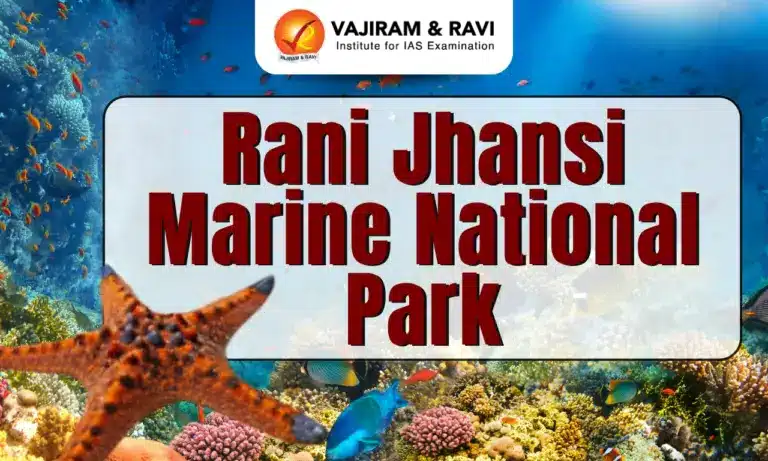
Rani Jhansi Marine National Park is a protected natural area known for its rich marine life and coastal beauty. It is located in the Andaman and Nicobar Islands and includes many small islands, coral reefs, and clear blue waters. The park plays an important role in protecting marine biodiversity and offers a glimpse of unique underwater ecosystems.
About Rani Jhansi Marine National Park
-
Location and Overview
-
-
- Rani Jhansi Marine National Park is a protected marine area located in the Andaman and Nicobar Islands, India.
- It covers an area of around 249 sq. km and lies in the southern part of Ritchie’s Archipelago, near well-known islands such as Havelock Island and Neil Island.
- The park is recognized for its pristine natural environment, calm surroundings, and rich marine biodiversity, making it an important ecological zone in the Bay of Bengal.
-
-
Physical Features and Ecosystem
-
- The park is mainly composed of coral reefs, clear lagoons, mangrove forests, and shallow coastal waters.
- The coral reefs here are highly diverse and act as the foundation of the marine ecosystem, supporting thousands of marine species.
- The mangrove forests grow along the coastline and serve as natural protectors against erosion while also acting as breeding and nursery grounds for fish.
- The nearby islands are covered with tropical evergreen vegetation, including trees like padauk and Andaman redwood, which add to the green landscape.
Rani Jhansi Marine National Park Flora and Fauna
- Flora
- Rani Jhansi Marine National Park has a rich and diverse plant system made up of mangrove forests, tropical rainforests, and coastal vegetation, which together support the park’s fragile ecosystem.
- Mangrove forests grow densely along the shoreline and act as natural protectors against coastal erosion while also serving as important breeding and nursery areas for many marine organisms.
- The park also contains lowland evergreen and semi-evergreen rainforests, which remain green throughout the year and support a variety of tropical plant species adapted to humid conditions.
- Along the coastal zones, littoral vegetation is found where sandy beaches gradually merge into lagoons and coral reef areas, creating a smooth transition between land and sea ecosystems.
- The surrounding marine environment also supports underwater plant life such as algae and seagrass beds, along with extensive coral reef systems, which form the foundation of the marine ecosystem and provide shelter and nutrients for many species.
- Fauna
- The park is home to a wide variety of wildlife, making it one of the richest marine biodiversity zones in the Andaman and Nicobar Islands, India.
- One of the most important species found here is the dugong (sea cow), a rare and endangered marine mammal that is considered the flagship species of the region.
- The waters of the park also support several species of sea turtles, including olive ridley, green, hawksbill, and leatherback turtles, which come ashore for nesting.
- Occasional sightings of dolphins and large whales, including blue whales, highlight the ecological richness of the deep waters around the park.
- Reptiles such as saltwater crocodiles are found in creeks, while land and coastal areas support monitor lizards, forest lizards, and skinks.
- The park also has rich birdlife, including species like white-bellied sea eagles, kingfishers, herons, and hornbills, which depend on both forest and coastal habitats.
- Fruit bats are commonly seen and play an important role in pollination and seed dispersal, helping maintain forest regeneration.
- The coral reef ecosystem supports over 80 species of corals along with a wide range of marine life such as clownfish, angelfish, parrotfish, starfish, sea cucumbers, and reef crabs, making the underwater world highly diverse and vibrant.


Conservation Measures in Rani Jhansi Marine National Park
- Regulated Tourism Activities: Strict eco-tourism guidelines are followed, with controlled access, designated zones, and limits on visitor numbers to reduce environmental pressure.
- Monitoring of Recreational Activities: Activities like snorkeling, scuba diving, and boating are carefully supervised to prevent damage to coral reefs and marine life.
- Coral Reef Protection: Measures are taken to prevent coral bleaching and physical damage caused by human interference.
- Coral Restoration Programs: Active efforts are made to restore damaged coral reefs and support their natural recovery.
- Awareness on Coral Safety: Visitors and fishermen are educated to avoid touching or stepping on coral structures.
- Protection of Endangered Species: Special focus is given to conserving species like dugongs and sea turtles.
- Sea Turtle Conservation: Nesting sites are monitored and protected, especially during breeding seasons.
- Fishing Regulations: Fishing is restricted or controlled in sensitive areas to protect breeding and feeding grounds.
- Mangrove Conservation: Mangrove forests are strictly protected as they prevent coastal erosion and support marine life.
- Ban on Mangrove Cutting: Deforestation and cutting of mangroves are prohibited within the park.
- Mangrove Restoration: Efforts are made to replant and restore degraded mangrove areas.
- Pollution Control Measures: Strict rules are enforced to reduce marine pollution, including limits on plastic use and waste disposal.
- Cleanliness Initiatives: Regular clean-up drives are conducted to remove waste from beaches and marine areas.
- Community Participation: Local communities are involved in conservation activities and sustainable livelihood practices.
- Awareness and Education Programs: Campaigns are conducted to spread awareness about marine biodiversity conservation.
- Support from Local Communities: Locals help in reporting illegal activities like poaching and fishing.
- Scientific Monitoring: Continuous monitoring of coral health, water quality, and marine biodiversity is carried out.
- Research and Data Collection: Scientific studies help in understanding ecosystem changes and improving conservation strategies.
- Improved Management Planning: Data-driven policies are used to ensure long-term protection of the ecosystem.
Major Threats in Rani Jhansi Marine National Park
- Overfishing and Destructive Fishing Practices: Indiscriminate and excessive fishing is damaging coral reef ecosystems and significantly reducing fish populations.
- Poaching and Illegal Collection: Activities like shell diving and sea cucumber collection are putting immense pressure on marine biodiversity.
- Tourism Pressure: Easy accessibility from Port Blair has led to a rapid increase in both domestic and international tourists, causing stress to fragile ecosystems.
- Habitat Disturbance from Settlements: Expanding human settlements along park boundaries are disturbing natural habitats and wildlife.
- Pollution and Waste Disposal: Dumping of domestic waste into the sea is harming coral reefs and affecting marine organisms.
- Deforestation and Plantation Activities: Tree-felling and plantation practices have contributed to habitat degradation within and around the park.
- Historical Timber Extraction: Large-scale logging by companies like Wimco and Andaman Timber Industries during the 1960s-70s caused long-term environmental damage.
- Past Logging Activities: Continued forest department logging until 2002 (stopped after a Supreme Court order) also led to habitat loss.
- Rising Human Dependence on Resources: Increasing reliance on marine and forest resources by nearby populations is adding pressure on the ecosystem.
Rani Jhansi Marine National Park Significance
- It is an important marine biodiversity hotspot supporting diverse ecosystems like coral reefs, mangroves, seagrass beds, fish, sea turtles, and rare species such as the dugong.
- It plays a crucial role in the protection of coral reef ecosystems, which support marine life and help maintain oceanic balance.
- The coral reefs act as natural barriers, protecting coastal areas from strong waves and erosion.
- The presence of mangroves, coral reefs, and seagrass beds together helps maintain ecological balance and environmental stability in the region.
- Mangroves in the park help in improving water quality, preventing soil erosion, and providing breeding grounds for marine organisms.
- The park supports complex marine food chains, ensuring survival of species from plankton to large marine predators.
- Healthy marine ecosystems in the park contribute to the sustainability of fisheries in nearby areas.
- It is a major center for eco-tourism, attracting visitors for activities like scuba diving, snorkeling, and glass-bottom boat rides.
- Eco-tourism in the park helps in generating awareness about marine conservation and supports the local economy.
- The park serves as an important site for scientific research and environmental studies, especially related to coral reefs and climate change.
- It plays a key role in climate regulation and coastal protection, reducing the impact of storms and sea-level changes.
- Overall, the park is significant for biodiversity conservation, environmental protection, and sustainable development.

 Last updated on Oct, 2026
→ UPSC 2027 Notification will be released on 13 January 2027 at upsconline.nic.in.
→ Check Nobel Prize 2026 Winners List here.
→ Download PIB PRiSM Monthly Magazine 2026 here.
→ Check UPSC Monthly Current Affairs Magazine The Recitals here.
→ Check out the latest UPSC Syllabus here.
→ Download UPSC Model Answers for Mains 2026
→ UPSC Mains Question Paper 2026 is out now for Essay & GS Paper 1, 2, 3 & 4.
→ UPSC Calendar 2027 has been released.
→ Enroll in Vajiram & Ravi’s UPSC Mains Test Series 2027 for structured answer writing practice, expert evaluation, and exam-oriented feedback.
→ Join Vajiram & Ravi’s UPSC Mentorship Program 2027 for personalized guidance, strategy planning, and one-to-one support from experienced mentors.
→ Go through the UPSC Mains Previous Year Papers to enhance your preparation.
→ UPSC has released UPSC Toppers List 2025 with the Civil Services final result on its official website.
→ Also check Best UPSC Coaching in India
Rani Jhansi Marine National Park FAQs
Q1. Where is Rani Jhansi Marine National Park located?+
Q2. Why is Rani Jhansi Marine National Park important?+
Q3. What type of ecosystem is found in the park?+
Q4. Which animals are found in Rani Jhansi Marine National Park?+
Q5. What are the major threats to the park?+
Tags: environment environment notes rani jhansi marine national park