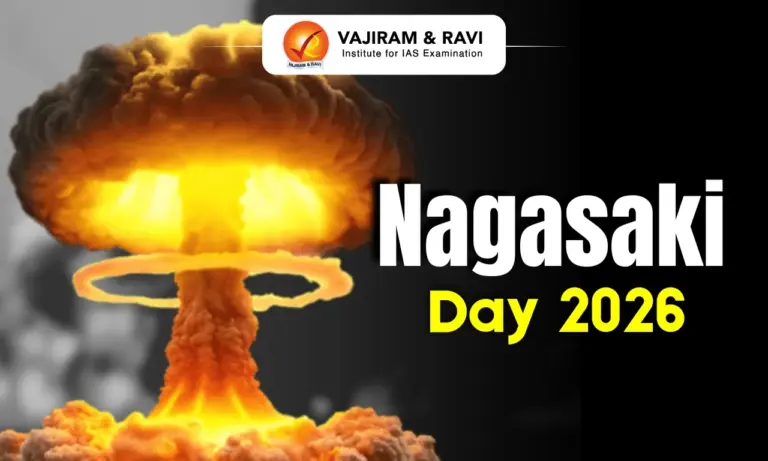
Nagasaki Day 2026 will be observed on August 9, 2026, to remember the victims of the atomic bombing of Nagasaki during World War II. The day serves as a reminder of the devastating consequences of nuclear warfare and highlights the importance of global peace, disarmament, and international cooperation.
Every year, memorial ceremonies are held in Nagasaki, Japan, where survivors, government leaders, and people from around the world pay tribute to those who lost their lives and renew their commitment to a world free of nuclear weapons.
Nagasaki Day History
Nagasaki Day History marks the remembrance of the atomic bombing of Nagasaki on August 9, 1945, a tragic event that changed the course of World War II and continues to inspire global efforts for peace and nuclear disarmament.
- August 9, 1945: The United States dropped the Fat Man atomic bomb on Nagasaki, Japan, at approximately 11:02 a.m.
- Primary Target Changed: The original target was Kokura, but poor weather forced the bomber to divert to Nagasaki.
- Bomb Used: Fat Man was a plutonium-based atomic bomb with an explosive yield of about 21 kilotons of TNT.
- Aircraft: The bomb was delivered by the B-29 Superfortress Bockscar.
- Massive Destruction: The explosion destroyed large parts of the city, including homes, industries, schools, and hospitals.
- Human Loss: Around 40,000–75,000 people died immediately, while the death toll rose to approximately 70,000–80,000 by the end of 1945 due to injuries and radiation exposure.
- End of World War II: The bombing, along with the Hiroshima bombing, contributed to Japan’s surrender on August 15, 1945, bringing World War II to an end.
- Annual Observance: Since 1946, Nagasaki Day has been observed every August 9 to honor the victims and promote world peace, nuclear disarmament, and the prevention of future nuclear conflicts.
Also Read:- Hiroshima Day 2026
Why is Nagasaki Day Observed?
Nagasaki Day is observed every year on August 9 to remember the victims of the 1945 atomic bombing of Nagasaki and honor the survivors. The day highlights the devastating humanitarian consequences of nuclear weapons and the importance of preserving peace. It also raises awareness about the need for global nuclear disarmament and encourages countries to resolve conflicts through dialogue rather than war. Nagasaki Day serves as a powerful reminder to future generations of the value of peace, compassion, and international cooperation.


The Atomic Bombing of Nagasaki
The Atomic Bombing of Nagasaki was one of the most devastating events of World War II, occurring on August 9, 1945, when the United States dropped the Fat Man atomic bomb on the Japanese city of Nagasaki.
- Bomb Used: The Fat Man was a plutonium-based atomic bomb with an explosive yield of about 21 kilotons of TNT.
- Aircraft: The bomb was delivered by the B-29 Superfortress Bockscar.
- Target Change: The original target was Kokura, but poor weather conditions led to Nagasaki being selected instead.
- Widespread Destruction: The explosion destroyed residential areas, factories, schools, hospitals, and public infrastructure across the city.
- Historical Importance: The bombing of Nagasaki was the second and last use of a nuclear weapon in warfare, contributing to Japan’s surrender and the end of World War II.
Impact of the Nagasaki Bombing
The Nagasaki bombing had devastating humanitarian, environmental, economic, and political consequences, leaving a lasting impact on Japan and shaping global attitudes toward nuclear weapons and world peace.
- Massive Loss of Life: Around 40,000–75,000 people died immediately, with the death toll rising to approximately 70,000–80,000 by the end of 1945.
- Radiation Effects: Thousands of survivors suffered from radiation sickness, cancers, leukemia, and other long-term health complications.
- Infrastructure Destruction: The explosion destroyed homes, hospitals, schools, factories, and public buildings, leaving much of the city in ruins.
- Psychological Trauma: Survivors experienced lifelong emotional distress, grief, and psychological disorders caused by the disaster.
- Environmental Damage: The blast and radioactive fallout contaminated the surrounding environment, affecting ecosystems and agriculture.
- Economic Setback: Nagasaki’s industries, transport networks, and businesses were severely damaged, requiring years of reconstruction.
- End of World War II: The bombing accelerated Japan’s surrender on August 15, 1945, bringing World War II to a close.
- Global Awareness: The tragedy strengthened international efforts toward nuclear disarmament, arms control, and the promotion of global peace.
Differences Between Hiroshima and Nagasaki Bombings
The Hiroshima and Nagasaki bombings were the only two uses of atomic weapons in warfare. While both occurred during the final days of World War II, they differed in terms of the type of bomb, target selection, geography, casualties, and extent of destruction.
| Differences Between Hiroshima and Nagasaki Bombings | ||
|
Basis of Comparison |
Hiroshima Bombing |
Nagasaki Bombing |
|
Date of Bombing |
August 6, 1945 |
August 9, 1945 |
|
City |
Hiroshima, Japan |
Nagasaki, Japan |
|
Original Target |
Hiroshima |
Kokura was the primary target; Nagasaki became the secondary target due to poor weather over Kokura. |
|
Atomic Bomb Used |
Little Boy |
Fat Man |
|
Bomb Type |
Gun-type uranium-235 bomb |
Plutonium-239 implosion bomb |
|
Explosive Yield |
About 15 kilotons of TNT |
About 21 kilotons of TNT |
|
Aircraft |
B-29 Enola Gay |
B-29 Bockscar |
|
Pilot |
Colonel Paul W. Tibbets Jr. |
Major Charles W. Sweeney |
|
Altitude of Detonation |
Approximately 600 metres above the city |
Approximately 503 metres above the city |
|
Terrain |
Mostly flat, allowing the blast to spread widely |
Hilly terrain reduced the spread of the blast in some areas |
|
Extent of Destruction |
Nearly 70% of buildings were destroyed and most of the city was devastated |
Large parts of the city were destroyed, but the hilly landscape limited the blast compared to Hiroshima |
|
Major Target Characteristics |
Important military headquarters, industrial centre, and transportation hub |
Major shipbuilding, industrial, and military production centre |
|
Radiation Effects |
Severe long-term radiation exposure, cancers, and genetic disorders |
Similar long-term radiation-related illnesses and environmental contamination |
|
Role in World War II |
First-ever use of an atomic bomb in warfare |
Second and last use of a nuclear weapon in warfare |
|
Historical Significance |
Demonstrated the destructive power of nuclear weapons |
Reinforced global calls for peace, arms control, and nuclear disarmament, contributing to Japan’s surrender on August 15, 1945 |
Global Efforts Toward Nuclear Disarmament
Global efforts toward nuclear disarmament aim to reduce and ultimately eliminate nuclear weapons through international treaties, diplomatic negotiations, and cooperation to ensure global peace and collective security.
- Treaty on the Non-Proliferation of Nuclear Weapons (NPT): Entered into force in 1970 to prevent the spread of nuclear weapons, promote peaceful uses of nuclear energy, and advance nuclear disarmament.
- International Atomic Energy Agency (IAEA): Monitors the peaceful use of nuclear technology and verifies that civilian nuclear programs are not diverted for military purposes.
- Comprehensive Nuclear-Test-Ban Treaty (CTBT): Prohibits all nuclear test explosions. Although not yet in force, it has significantly reduced nuclear testing worldwide.
- Treaty on the Prohibition of Nuclear Weapons (TPNW): Adopted by the United Nations in 2017 and entered into force in 2021, it is the first legally binding treaty to comprehensively prohibit nuclear weapons.
- Strategic Arms Reduction Treaties (START/New START): Agreements between the United States and Russia to limit and reduce deployed strategic nuclear warheads and delivery systems.
- United Nations Initiatives: The UN General Assembly regularly adopts resolutions supporting nuclear disarmament, non-proliferation, and international security.
- Role of Hibakusha: Survivors of the Hiroshima and Nagasaki bombings, known as Hibakusha, continue to advocate globally for a world free of nuclear weapons by sharing their experiences.
Nagasaki Day 2026 Significance
Nagasaki Day 2026 serves as a solemn reminder of the devastating consequences of nuclear warfare and reinforces the global commitment to peace, nuclear disarmament, and the prevention of future armed conflicts.
- Honors the Victims: Pays tribute to the thousands of people who lost their lives in the atomic bombing of Nagasaki on August 9, 1945.
- Remembers the Survivors: Recognizes the resilience and lifelong struggles of the Hibakusha (atomic bomb survivors), many of whom continue to advocate for peace.
- Promotes World Peace: Encourages nations to resolve disputes through dialogue, diplomacy, and cooperation rather than violence.
- Raises Awareness: Educates people about the humanitarian, environmental, and health impacts of nuclear weapons.
- Supports Nuclear Disarmament: Reinforces global efforts to reduce and ultimately eliminate nuclear arsenals through international treaties and cooperation.
- Preserves Historical Memory: Ensures that future generations understand the consequences of World War II and the importance of preventing similar tragedies.
- Encourages Humanitarian Values: Inspires compassion, tolerance, and respect for human rights and human dignity.

 Last updated on Oct, 2026
→ UPSC 2027 Notification will be released on 13 January 2027 at upsconline.nic.in.
→ Asian Games 2026 are being held in Aichi-Nagoya, Japan, from 19 September to 4 October.
→ Check Nobel Prize 2026 Winners List here.
→ Download PIB PRiSM Monthly Magazine 2026 here.
→ Check UPSC Monthly Current Affairs Magazine The Recitals here.
→ Check out the latest UPSC Syllabus here.
→ Download UPSC Model Answers for Mains 2026
→ UPSC Mains Question Paper 2026 is out now for Essay & GS Paper 1, 2, 3 & 4.
→ UPSC Calendar 2027 has been released.
→ Enroll in Vajiram & Ravi’s UPSC Mains Test Series 2027 for structured answer writing practice, expert evaluation, and exam-oriented feedback.
→ Join Vajiram & Ravi’s UPSC Mentorship Program 2027 for personalized guidance, strategy planning, and one-to-one support from experienced mentors.
→ Go through the UPSC Mains Previous Year Papers to enhance your preparation.
→ UPSC has released UPSC Toppers List 2025 with the Civil Services final result on its official website.
→ Also check Best UPSC Coaching in India
Nagasaki Day 2026 FAQs
Q1. When is Nagasaki Day observed?+
Q2. Why is Nagasaki Day observed?+
Q3. Why was Nagasaki chosen as the target?+
Q4. What happened on Nagasaki Day?+
Q5. How many people died in the Nagasaki bombing?+
Q6. Which atomic bomb was dropped on Nagasaki?+
Q7. What is the significance of Nagasaki Day?+
Tags: important days Important Days august important days in 2026 nagasaki nagasaki day nagasaki day 2026