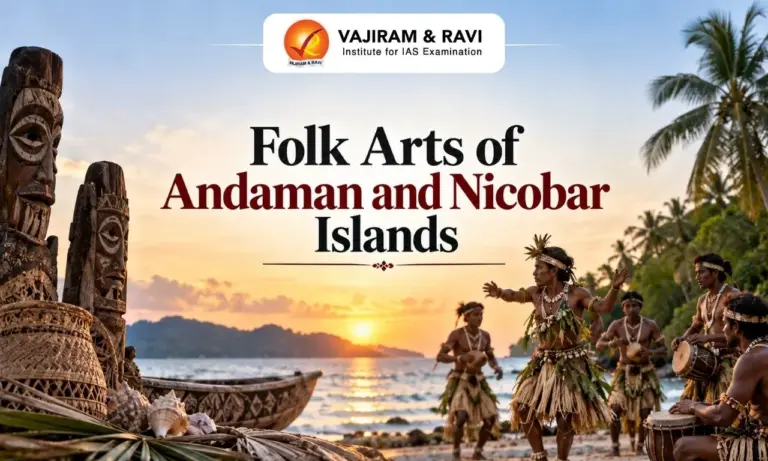
Folk Arts of Andaman and Nicobar Islands 2026 reflect indigenous tribal traditions, settler influences, island resources, community life and close links with nature. The cultural landscape includes dance, music, crafts, performance traditions and architecture. Nicobari traditions remain especially important, while Bengali, Tamil, Telugu, Malayali, Ranchi and Karen communities add further cultural forms. These traditions together create a distinctive cultural identity shaped by the islands’ history and environment.
Folk Arts of Andaman and Nicobar Islands 2026
Folk Arts of Andaman and Nicobar Islands in 2026 include traditional dances, tribal music, handicrafts, storytelling, bamboo work, shell craft, woodwork and indigenous architecture. Nicobarese traditions remain central to island culture. Karen, Bengali, Tamil, Telugu, Malayali and Ranchi communities also contribute to the wider cultural landscape. Festivals such as the Island Tourism Festival and Subhash Mela provide platforms for presenting these traditions through public performances, music, dance and cultural programmes.
List of Famous Folk Arts of Andaman and Nicobar Islands
The major Folk Arts of Andaman and Nicobar Islands 2026 can be grouped into dance, music, theatre, crafts, basketry and architecture traditions.
Folk Dances of Andaman and Nicobar Islands 2026
Traditional Dances of Andaman and Nicobar Islands 2026 connect island communities with festivals, ceremonies, nature, folklore and social life through coordinated movement, singing and community participation.
- Nicobarese Dance: This is a major traditional dance of the Nicobarese community, especially associated with the Nicobar Islands. It is performed as a circular group dance near community houses.
- Circular Group Performance: Dancers move together in repetitive rhythms under the guidance of a leader. Sideways movements and coordinated jumps create a synchronised community performance.
- Singing with Dance: Singing is an important part of Nicobarese dance. Participants sing together while maintaining coordinated movements during traditional ceremonies and social gatherings.
- Nicobari Festival Dance: Nicobari Dance is performed during festivals and community occasions. Its themes include nature, harvest, celebration and community bonding.
- Bamboo and Coconut Elements: Traditional descriptions associate Nicobari performances with bamboo sticks and coconut shells. These elements reflect the use of materials available in the island environment.
- Andamanese Tribal Dances: Indigenous communities such as the Jarawa and Onge have traditional dance practices connected with rituals, hunting, nature and tribal folklore.
- Nature and Animal Movements: Andamanese ritual dances may imitate animal movements and natural elements. Body paint and naturally available materials are also associated with these traditional performances.
- Karen Bamboo Dance: This dance belongs to the Karen community, which has roots in Myanmar and settled in the Andaman Islands during the British period.
- Bamboo Pole Performance: Dancers move between rhythmically clapped or moved bamboo poles. The performance requires timing, coordination and agility from participants.
- Karen Cultural Identity: The Karen Bamboo Dance represents the community’s cultural heritage in the Islands. Webi village in Mayabunder, North and Middle Andaman, is particularly associated with the Karen community.
- Bengali Dance Traditions: Bengali settlers continue dance traditions connected with Basanta Utsav. These traditions form part of the wider cultural mix found in the Islands.
- Tamil Dance Traditions: Tamil settlers perform Kavadi Attam, a devotional dance associated with Lord Murugan. It represents the continuation of Tamil cultural traditions within the Islands.
- Ranchi Dance Traditions: Ranchi communities, including people of Oraon and Munda origin, preserve folk traditions with roots in Chhotanagpur culture. Their traditions came through historical settlement and labour migration.
Folk Music of Andaman and Nicobar Islands 2026
Music Traditions of Andaman and Nicobar Islands 2026 combine indigenous songs, ritual performance, community singing and mainland influences brought by different settler communities.
- Jarawa Chants: Traditional Jarawa chants include call and response singing during tribal ceremonies. They represent the role of collective vocal traditions in indigenous community life.
- Nicobari Songs: Music and dance are closely connected in Nicobari culture. Dancing is traditionally accompanied by singing during festivals, ceremonies and other community occasions.
- Folk Songs and Folklore: Nicobari communities narrate folklore and sing folk songs during festive occasions. These traditions help maintain community memories and cultural practices.
- Modern Nicobari Music: Film songs and Western vocal music have influenced contemporary Nicobari musical practices. Some Nicobari people now compose romantic music and perform it using guitars and other instruments.
- Pū Kuta Yem Nga: A traditional Andaman musical instrument was the pū kuta yem nga. It is a large oval wooden sounding board partly buried in sand and supported by a stone.
- Rhythmic Sound Board: During dancing, performers step on the sounding board to produce rhythm. The instrument shows how locally available materials became part of traditional performance practices.
- Historical Documentation: In 1888, British naval officer Maurice Vidal Portman recorded Andamanese music and documented it using Western musical notation. His work was published in the Journal of the Royal Asiatic Society.
- Andamanese Song Creation: Traditional song making could occur during everyday activities such as carving boats or bows and rowing. A newly created song could later be introduced during a dance.
- Community Song Practice: A song creator could first practise the composition with female relatives and a women’s chorus. The song leader then performed it at a dance while others joined the refrain.
- Mainland Musical Influences: Bengali and Tamil settlers adapted folk songs to island life. Settler communities also maintain mainland Indian musical traditions through community gatherings and cultural programmes.
- Carnatic and Hindustani Music: Mainland Indian classical traditions are practised by settler communities. Carnatic and Hindustani music performances can form part of cultural gatherings in the Islands.
- Christian Hymns and Carols: On All Saints Day, Easter and Christmas, Nicobari communities sing hymns and carols. People from other islands may visit and exchange greetings during these occasions.
Theatre and Performance Traditions of Andaman and Nicobar Islands 2026
Indigenous performance traditions of Andaman and Nicobar Islands 2026 use storytelling, chants, gestures and ritual actions to communicate folklore, beliefs, community memories and traditional knowledge.
- Shamanic Performances: Tribal medicine men conduct ritualistic storytelling through chants and gestures. These performances form part of indigenous cultural and traditional practices.
- Ritual Storytelling: Shamanic traditions combine spoken performance with gestures and chanting. They provide a traditional way of communicating stories and cultural knowledge within communities.
- Community Performances: Folk performances occur during ceremonies, festivals and social gatherings. Dance, singing and storytelling often work together rather than appearing as completely separate cultural activities.
Traditional Handicrafts of Andaman and Nicobar Islands 2026
The islands provide wood, cane, bamboo, coconut, shells, coral, driftwood and plant materials that support distinctive traditional handicraft practices of Andaman and Nicobar Islands 2026.
- Woodwork: Woodworking is an important handicraft tradition. Local workshops produce furniture and decorative products using woods such as marble wood, Paduak and Chui.
- Paduak Burr Table Tops: Paduak burr table tops are distinctive wooden handicrafts associated with the Islands. Their decorative appearance makes them notable among local wood products.
- Driftwood Art: Sea currents shape driftwood into natural forms. Andaman artists transform this material into decorative art objects through creative and careful woodworking.
- Wooden Statues: Some islands are known for carefully crafted wooden figures showing male and female couples, animals and birds. These figures may be brightly painted.
- Cane and Bamboo Work: Cane and bamboo are used to create baskets, household articles and furniture. These crafts are particularly associated with immigrant communities from Andhra Pradesh and Kerala.
- Cane Baskets: Thin cane pieces are used to produce baskets for carrying and storing fruits and vegetables. These products combine everyday utility with decorative craftsmanship.
- Shell Art: Shell craft includes decorative objects such as ashtrays, lamps, buttons and jewellery. Polished shells provide the basic material for these products.
- Tortoiseshell Craft: Tortoiseshell has been used for decorative products such as table lamps, small containers and other objects. It is described as a rare and visually distinctive material.
- Coconut Shell Craft: Coconut shells are widely available because coconut palms are abundant. Artisans use them to make items such as finger bowls, table lamps and decorative products.
- Basketry: Basket making is among the traditional crafts practised in the Islands. Women commonly undertake such work during leisure time using locally available plant materials.
- Mat Making: Mats are produced from pandanus leaves and coconut stems. They are soft, light and cool and can be used for sleeping and sitting.
- Palm Mats: Palm based mats are also used as sitting mats and doormats. Their light and cool character makes them useful in island homes.
- Crossbows: Traditional crossbows are notable craft products and popular tourist souvenirs. They use grooved wooden beams, iron loops, arrows and a furrowed central bar.
Traditional Canoe Making of Andaman and Nicobar Islands 2026
Seafaring traditions have encouraged specialised woodcraft, with Nicobari communities developing lightweight canoes suited to island conditions and daily requirements.
- Large Seafaring Canoes: Nicobari communities traditionally make large seafaring canoes from carefully hollowed wood. Their construction makes the boats light enough to be carried despite their size.
- Wood Hollowing: Canoe makers carefully hollow a single piece of wood. This demonstrates the practical skill involved in converting natural timber into functional watercraft.
- Cultural and Practical Value: Canoe making reflects the close connection between Nicobari art, environment and community needs. It combines traditional craftsmanship with the requirements of island life.
Traditional Architecture of Andaman and Nicobar Islands 2026
Architecture of Andaman and Nicobar Islands 2026 reflects both indigenous adaptation and colonial history through stilt houses, local materials, historic buildings and distinctive structures.
- Nicobari Huts: Traditional Nicobari houses are built as stilt structures using locally available materials. Their form reflects adaptation to the island environment and community requirements.
- Cellular Jail: Cellular Jail represents the colonial architectural heritage of the Islands. Its distinctive star shaped design makes it an important historic structure in Port Blair.
- British era Buildings: Port Blair contains buildings reflecting British colonial architectural influence. These structures form an important part of the built heritage of the Islands.
- Local Materials: Indigenous construction traditions make use of materials available within the Islands. This approach is visible in traditional huts, wooden structures and related community buildings.


Folk Arts of Andaman and Nicobar Islands Significance
Folk Arts of Andaman and Nicobar Islands are significant for cultural identity, community continuity, heritage preservation, tourism and understanding the Islands’ indigenous and settler history.
- Indigenous Heritage: Traditional dances, chants, crafts and rituals preserve cultural practices of indigenous communities. Jarawa, Onge and Nicobarese traditions form important parts of this heritage.
- Nicobari Cultural Identity: Music, dance, folklore, canoe making, huts and handicrafts collectively express Nicobari life. These practices remain closely connected with community needs and the island environment.
- Community Bonding: Group dancing, singing, festivals and collective ceremonies strengthen social relationships. The Nicobari tradition also places strong importance on community based cultural participation.
- Tuhet Institution: The TUHET, or large joint family, is mainly prevalent in Car Nicobar. Members living in different areas of a village remain united for practical purposes under the Tuhet.
- Environmental Connection: Island crafts use materials such as wood, cane, bamboo, coconut, pandanus leaves, shells and driftwood. This gives many traditional art forms a strong connection with local resources.
- Cultural Diversity: Bengali, Tamil, Telugu, Malayali, Ranchi and Karen communities have added their own traditions to the cultural landscape. The result is a distinctive combination of indigenous and settler influences.
- Historical Heritage: Cellular Jail and British era buildings represent the colonial phase of island history. Indigenous huts and traditional crafts provide a contrasting record of local cultural practices.
- Tourism Promotion: Handicrafts, dance, music and festivals provide important cultural attractions. The Island Tourism Festival and Subhash Mela help present island traditions to visitors and wider audiences.
- Living Tradition: Folk art in the Islands is not limited to museum objects. Dance, songs, festivals, crafts, community gatherings and religious celebrations continue to provide active spaces for cultural expression.
- Inter island Cultural Links: Nicobari communities maintain cultural interaction across islands through visits during important occasions. Inter island marriages are also common, supporting social connections between communities.
- Cultural Harmony: Religious and community participation during festivals encourages interaction among different groups. Invitations to non Christians during Nicobari Christian celebrations reflect traditions of social participation and peaceful coexistence.
- Preservation of Traditional Skills: Canoe building, woodworking, basketry, mat making and shell craft preserve practical skills passed through community traditions. These crafts also demonstrate the creative use of island materials.
- Contemporary Adaptation: Nicobari music shows how traditional culture changes with new influences. Film songs, Western vocal music, guitars and other instruments have contributed to newer forms of local musical expression.
- Overall Cultural Value: Folk Arts of Andaman and Nicobar Islands represent the interaction of indigenous heritage, natural resources, migration, colonial history and contemporary cultural influences within a distinctive island society.

 Last updated on Sep, 2026
→ UPSC 2027 Notification will be released on 13 January 2027 at upsconline.nic.in.
→ Check out the latest UPSC Syllabus here.
→ Download UPSC Model Answers for Mains 2026
→ UPSC Mains Question Paper 2026 is out now for Essay & GS Paper 1, 2, 3 & 4.
→ UPSC Calendar 2027 has been released.
→ Enroll in Vajiram & Ravi’s UPSC Mains Test Series 2027 for structured answer writing practice, expert evaluation, and exam-oriented feedback.
→ Join Vajiram & Ravi’s UPSC Mentorship Program 2027 for personalized guidance, strategy planning, and one-to-one support from experienced mentors.
→ Go through the UPSC Mains Previous Year Papers to enhance your preparation.
→ UPSC has released UPSC Toppers List 2025 with the Civil Services final result on its official website.
→ Also check Best UPSC Coaching in India
Folk Arts of Andaman and Nicobar Islands 2026 FAQs
Q1. What are the major Folk Arts of Andaman and Nicobar Islands?+
Q2. Which is the famous folk dance of Nicobar Islands?+
Q3. What are the main handicrafts of Andaman and Nicobar Islands?+
Q4. What is the Karen Bamboo Dance of Andaman and Nicobar Islands?+
Q5. Why are Folk Arts of Andaman and Nicobar Islands important?+
Tags: folk arts of andaman and nicobar Islands