What’s in today’s article?
- Why in News?
- The Charges Against the Officers
- Conduct Rules for IAS Officers
- Issues with the Current Framework of Conduct Rules and Recommendations for Improvement
- Conclusion
Why in News?
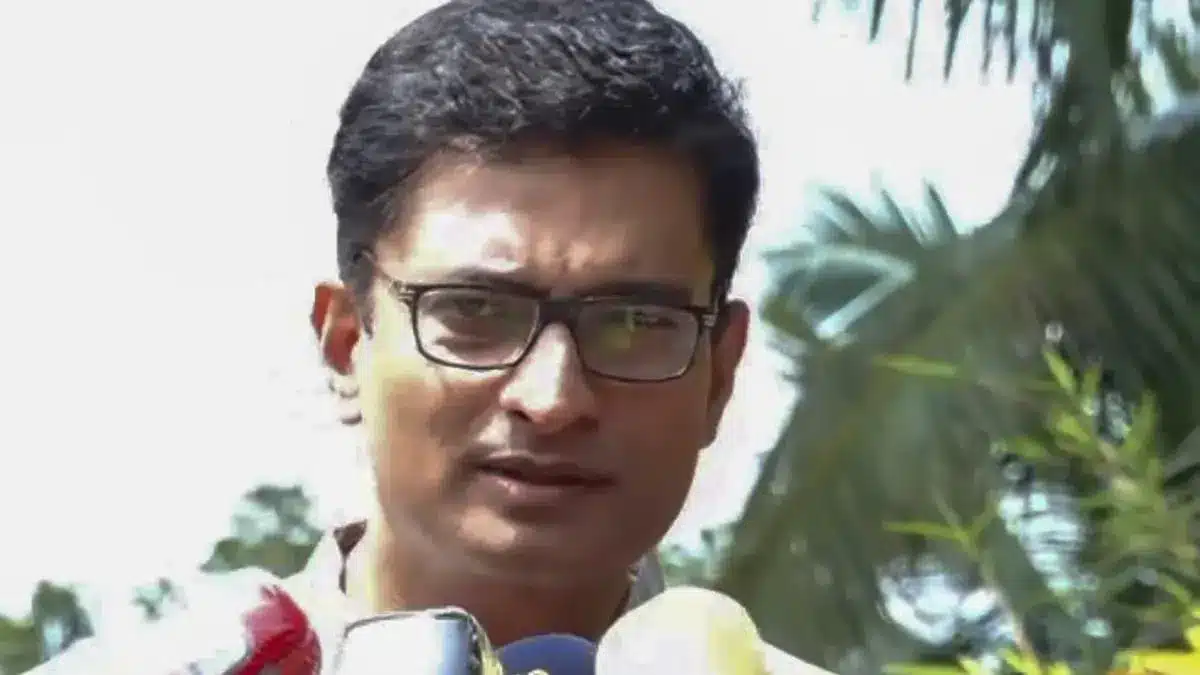
- Kerala has suspended two Indian Administrative Service (IAS) officers, N. Prashant and K. Gopalakrishnan, citing violations of service rules.
- The suspensions have sparked discussions on the conduct rules for civil servants, particularly concerning social media usage and maintaining professional integrity.


The Charges Against the Officers:
- Allegation against N. Prashant:
- He is accused of making derogatory statements on social media against A. Jayathilak IAS, Additional Chief Secretary.
- The remarks were deemed unbecoming of an officer and a violation of service discipline, tarnishing the administrative machinery’s public image.
- However, Prashant alleged that Jayathilak orchestrated baseless reports against him and denied the accusations.
- Allegation against K. Gopalakrishnan:
- Accused of creating a religion-based WhatsApp group named ‘Mallu Hindu Officers’, promoting disunity and communal formations within the IAS cadre.
- No evidence supported Gopalakrishnan’s claim that his phone was hacked. A factory reset of the phone before police inquiry raised suspicions.
Conduct Rules for IAS Officers:
- The All-India Services (Conduct) Rules 1968 set a code of conduct for IAS, IPS, and Indian Forest Service officers.
- Relevant provisions include:
- Ethics and integrity: Officers must uphold high standards of ethics, political neutrality, and constitutional values.
- Social media use: Officers can use public media to discharge duties but must not criticise government policies.
- General behaviour: Actions considered unbecoming of a member of the service are prohibited.
- Legal recourse: Officers need government sanction to approach courts or the press for vindication of official acts under criticism.
Issues with the Current Framework of Conduct Rules and Recommendations for Improvement:
- Issues:
- Lack of explicit social media guidelines: Existing rules do not specifically address social media communication, creating ambiguity.
- Ambiguity in “Unbecoming Conduct”: The term remains vaguely defined, allowing potential misuse by senior officers or government authorities.
- Power imbalance: Junior officers may be vulnerable to the discretionary power of senior officials in enforcing rules.
- Recommendations:
- Specific social media guidelines:
- Define permissible and prohibited content related to official duties.
- Include provisions to address defamatory campaigns against officers.
- Clarifying “Unbecoming Conduct”: Develop an illustrative list based on past cases to reduce ambiguity and ensure fair enforcement.
- Promoting responsible anonymity: Officers should maintain anonymity while disseminating information about government initiatives, ensuring professionalism and neutrality.
- Specific social media guidelines:
Conclusion:
- The suspensions of two IAS officers of Kerala cadre highlight the need for clearer and more specific conduct rules, especially regarding social media usage.
- While maintaining transparency is crucial, civil servants must balance responsible communication with professional anonymity to safeguard their roles and the public image of the administrative machinery.
Q.1. What are the constitutional provisions for creating All India Services in India?
Article 312 of the Indian Constitution gives Parliament the power to create All India Services, including an All-India judicial service. The Council of States must declare that it is necessary or expedient to create these services before Parliament can do so.
Q.2. What is the All India Services Act, 1951?
The All India Services Act 1951 created the IAS and the IPS. It also provided for the creation of three more All India Services, but only the Indian Forest Service was created in 1966.
News: Why were the Kerala IAS offic suspended? | Explained

 Last updated on Oct, 2026
→ UPSC 2027 Notification will be released on 13 January 2027 at upsconline.nic.in.
→ Asian Games 2026 are being held in Aichi-Nagoya, Japan, from 19 September to 4 October.
→ Check Nobel Prize 2026 Winners List here.
→ Download PIB PRiSM Monthly Magazine 2026 here.
→ Check UPSC Monthly Current Affairs Magazine The Recitals here.
→ Check out the latest UPSC Syllabus here.
→ Download UPSC Model Answers for Mains 2026
→ UPSC Mains Question Paper 2026 is out now for Essay & GS Paper 1, 2, 3 & 4.
→ UPSC Calendar 2027 has been released.
→ Enroll in Vajiram & Ravi’s UPSC Mains Test Series 2027 for structured answer writing practice, expert evaluation, and exam-oriented feedback.
→ Join Vajiram & Ravi’s UPSC Mentorship Program 2027 for personalized guidance, strategy planning, and one-to-one support from experienced mentors.
→ Go through the UPSC Mains Previous Year Papers to enhance your preparation.
→ UPSC has released UPSC Toppers List 2025 with the Civil Services final result on its official website.
→ Also check Best UPSC Coaching in India