Carbon-14 Latest News
Martin Kamen and Samuel Ruben’s discovery of the radioactive isotope carbon-14 in 1940 helped usher in a new era of dating artifacts from past civilizations.
About Carbon-14
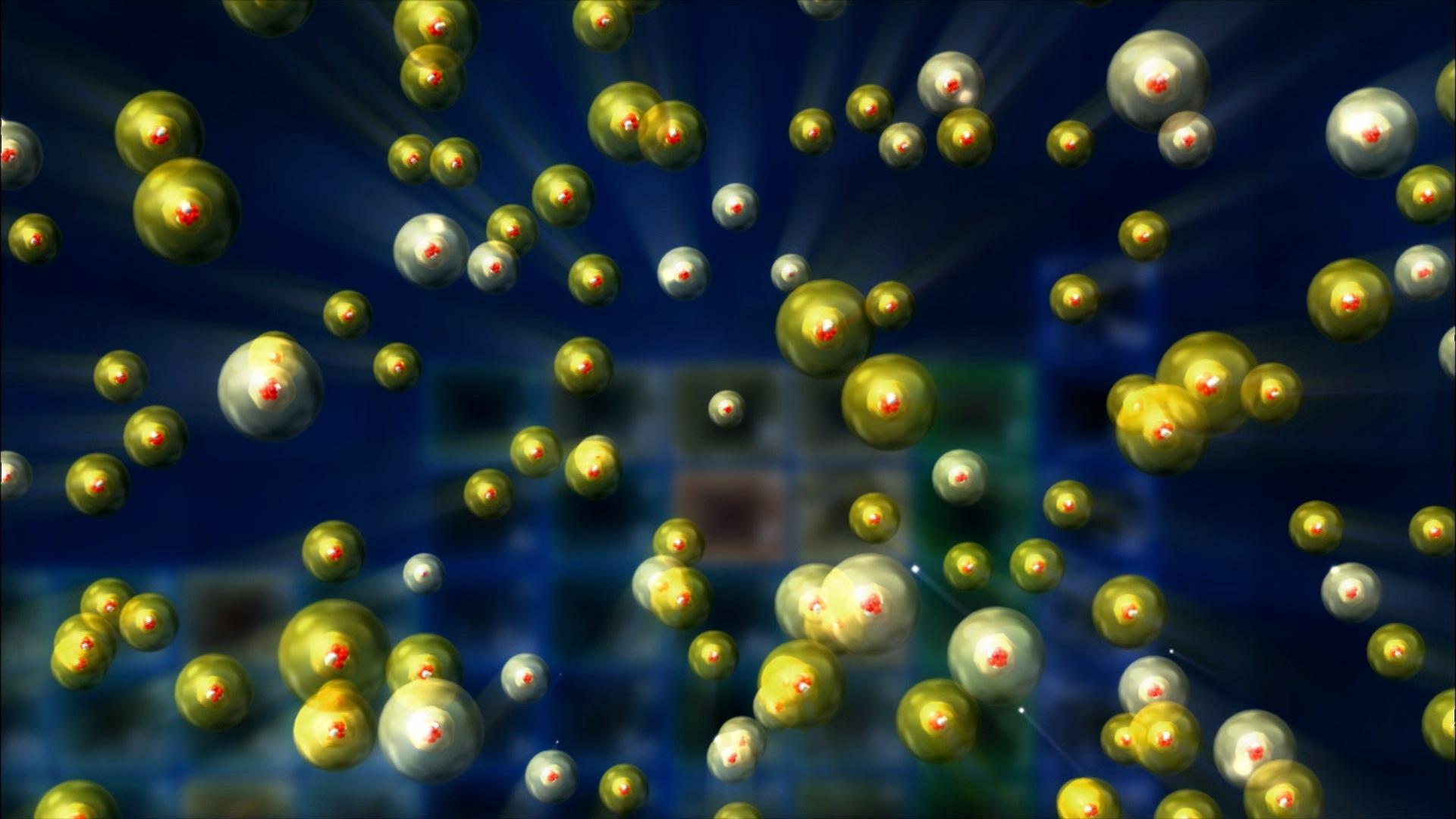
- Carbon has three main isotopes: carbon-12, carbon-13, and carbon-14. The first two are stable.
- Carbon-14 is a radioactive isotope of carbon.
- It is created in the atmosphere through the bombardment of nitrogen by cosmic rays.
- It has six protons and eight neutrons in its nucleus.
- By contrast, most of the carbon in our bodies and in the outside world, known as carbon-12, has six protons and six neutrons.
- Crucially, those two extra neutrons make the nucleus of a carbon-14 atom unstable so that it decays radioactively into an atom of nitrogen.
- It is used in radiocarbon dating to determine the age of organic substances by measuring its decay over time.


What is Radiocarbon Dating, or Carbon-14 Dating?
- It is a method that provides objective age estimates for carbon-based materials that originated from living organisms.
- It is based on the fact that living organisms—like trees, plants, people, and animals—absorb carbon-14 into their tissue.
- When they die, the carbon-14 starts to change into other atoms over time.
- Carbon-14 has a half-life of approximately 5,730 years (i.e., half the amount of the isotope present at any instant will undergo spontaneous disintegration during the succeeding 5,730 years).
- Because carbon-14 decays at this constant rate, an estimate of the date at which an organism died can be made by measuring the amount of its residual carbon-14.
- The technique was developed in the late 1940s at the University of Chicago by a team led by chemistry professor Willard Libby, who would later receive the Nobel Prize for the work.
- It has proved to be a versatile technique of dating archaeological specimens from 500 to 50,000 years old.
- Over the years, carbon-14 dating has also found applications in geology, hydrology, geophysics, atmospheric science, oceanography, paleoclimatology, and even biomedicine.
Source: LS

 Last updated on Oct, 2026
→ UPSC 2027 Notification will be released on 13 January 2027 at upsconline.nic.in.
→ Check Nobel Prize 2026 Winners List here.
→ Download PIB PRiSM Monthly Magazine 2026 here.
→ Check UPSC Monthly Current Affairs Magazine The Recitals here.
→ Check out the latest UPSC Syllabus here.
→ Download UPSC Model Answers for Mains 2026
→ UPSC Mains Question Paper 2026 is out now for Essay & GS Paper 1, 2, 3 & 4.
→ UPSC Calendar 2027 has been released.
→ Enroll in Vajiram & Ravi’s UPSC Mains Test Series 2027 for structured answer writing practice, expert evaluation, and exam-oriented feedback.
→ Join Vajiram & Ravi’s UPSC Mentorship Program 2027 for personalized guidance, strategy planning, and one-to-one support from experienced mentors.
→ Go through the UPSC Mains Previous Year Papers to enhance your preparation.
→ UPSC has released UPSC Toppers List 2025 with the Civil Services final result on its official website.
→ Also check Best UPSC Coaching in India
Carbon-14 FAQs
Q1. What is Carbon-14?+
Q2. How is Carbon-14 formed in the atmosphere?+
Q3. How many protons and neutrons are present in a Carbon-14 atom?+
Q4. What is the primary use of Carbon-14?+
Q5. What is the half-life of Carbon-14?+
Tags: carbon-14 prelims pointers upsc current affairs upsc prelims current affairs