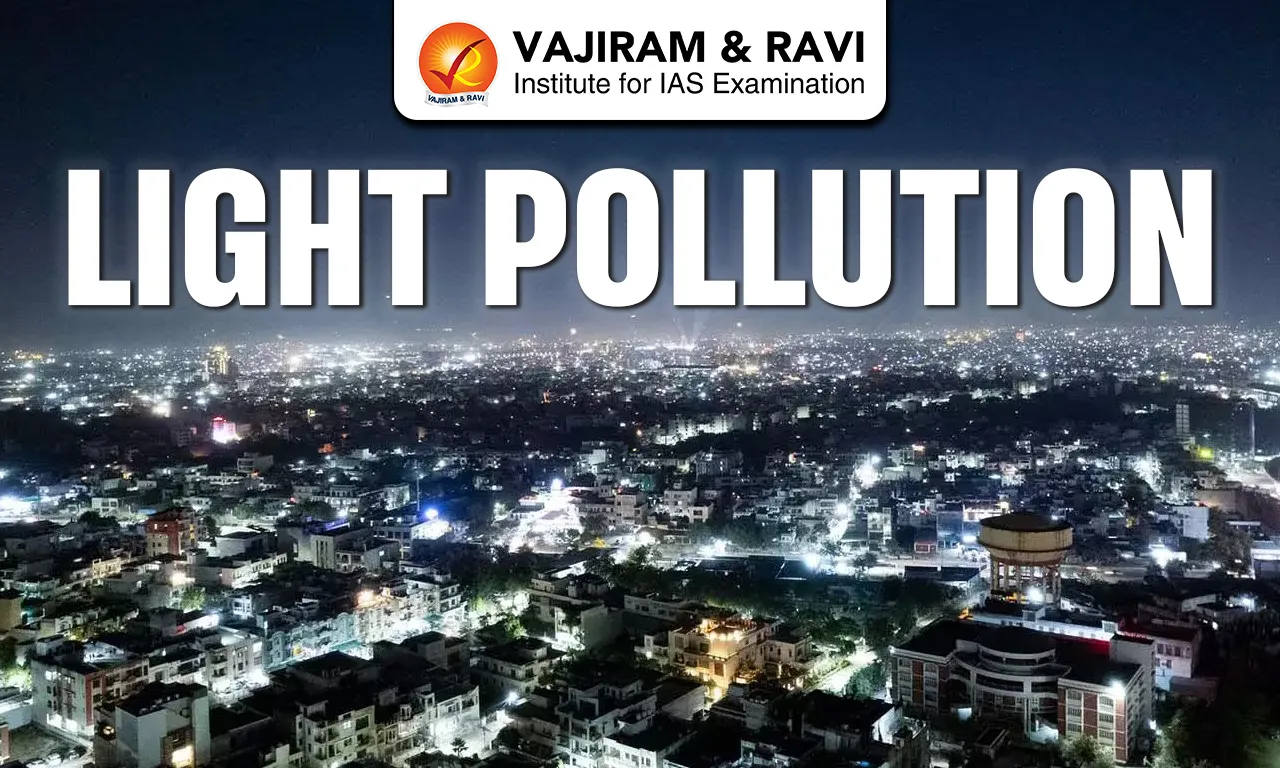
Light pollution refers to the excessive or poorly directed use of artificial light that brightens the night sky and disturbs the natural darkness of the environment. It mainly occurs when lights are used unnecessarily or inefficiently at night. This problem has increased with the growth of cities, industries, and modern lifestyles. Common sources of light pollution include streetlights, lighting in buildings and offices, illuminated advertisements, parking areas, factories, and lights used in sports stadiums and other outdoor places.
Light Pollution Causes
Light pollution mainly occurs because of the excessive and poorly managed use of artificial lighting. Some of the major causes are:
- Excessive Outdoor Lighting: Many streetlights, floodlights, and decorative lights are not properly shielded, so the light spreads in all directions instead of focusing on the ground. This unnecessary scattering of light brightens the night sky and creates glare.
- Rapid Urbanization: The fast growth of cities has led to a large increase in artificial lighting from roads, buildings, shopping areas, and public spaces, which contributes significantly to light pollution.
- Industrial Activities: Factories, warehouses, and industrial zones often use powerful lighting at night for safety and operational purposes, which adds to the overall brightness in surrounding areas.
- Bright Advertisements and Signboards: Illuminated billboards, digital screens, and neon signs used for advertising remain lit for long hours, especially in busy commercial areas, increasing unnecessary lighting.
- Inefficient Lighting Technology: The use of outdated or poorly designed lighting systems can produce more light than required and waste energy, thereby increasing light pollution.
- Security Lighting: Overly bright or poorly directed security lights used in residential areas, offices, and public places can also contribute to unnecessary lighting at night.
- Lighting in Stadiums and Sports Complexes: Large stadiums and sports facilities use very powerful lights for night events, which can brighten the surrounding sky and contribute to light pollution.
- Decorative and Festive Lighting: Lights used for decoration during festivals, celebrations, and events may also increase light levels at night, especially in urban areas.
Also Read: Environmental Pollution
Components of Light Pollution
Light pollution is generally understood through several key components that describe different ways artificial light affects the environment.
- Glare: Glare refers to excessive brightness from artificial lights that causes visual discomfort and reduces visibility. Very bright lights, especially when they shine directly into the eyes, can make it difficult for people to see properly and may even lead to safety issues on roads and public places.
- Skyglow: Skyglow is the brightening of the night sky over cities and towns due to scattered artificial light from streetlights, buildings, and advertisements. Because of skyglow, the natural darkness of the sky is reduced and stars become difficult to see, especially in urban areas.
- Light Trespass: Light trespass occurs when unwanted or unnecessary light spreads into areas where it is not needed. For example, light from streetlights or nearby buildings entering houses or residential areas can disturb people and disrupt the natural night environment.
- Light Clutter: Light clutter refers to the excessive grouping of bright lights in a particular area, such as busy streets filled with illuminated billboards, signboards, and decorative lights. This creates a confusing and visually crowded environment and can distract drivers and pedestrians.
Also Read: Air Pollution




Impacts of Light Pollution
Light pollution has become a growing environmental concern across the world. A large part of the global population now lives under artificially bright night skies. Although artificial lighting is useful for safety and development, excessive lighting at night can create several problems for humans, wildlife and the environment.
- Impact on Human Health: Too much artificial light at night can disturb the circadian rhythm, which is the body’s natural sleep–wake cycle. When people are exposed to bright light during nighttime, the production of the hormone melatonin may decrease. This can lead to sleep problems, fatigue, stress, headaches, and other health issues over time.
- Impact on Plants: Plants require sunlight during the day for photosynthesis, but they also need darkness at night for proper growth and development. Artificial light at night can disturb this natural cycle and affect processes such as flowering, seed germination, and seasonal growth patterns.
- Impact on Animals and Wildlife: Many animals depend on natural darkness for activities such as hunting, feeding, and reproduction. Artificial lighting can confuse nocturnal animals and disturb their natural behaviour. It may also affect the balance between predators and prey, thereby disturbing the ecosystem.
- Impact on Birds and Migration: Several bird species use the moon and stars to guide their migration. Bright city lights can confuse these birds and cause them to change their direction or timing of migration. As a result, they may miss suitable conditions for nesting and breeding.
- Impact on Marine Life: Light pollution can also affect marine animals. For example, sea turtle hatchlings usually move towards the natural light reflected from the sea. However, bright lights from coastal areas can mislead them and cause them to move inland instead of towards the ocean, which may threaten their survival.
- Loss of Insect Biodiversity: Artificial lights attract many insects at night, which can disturb their feeding and breeding patterns. Over time, this can reduce insect populations and affect the food chain because many birds and animals depend on insects for food.
- Disruption of Ecosystems: Because light pollution affects plants, insects, birds, and animals together, it can disturb the natural balance of ecosystems. Changes in the behaviour of one species can have wider effects on other species in the food chain.
- Impact on Astronomy: Excessive artificial lighting creates a bright glow in the sky known as skyglow, which makes it difficult to observe stars, planets, and other celestial objects. This creates challenges for astronomers and scientific research.
- Energy Waste and Environmental Impact: A large amount of artificial light is often wasted because it spreads into the sky or areas where it is not needed. This leads to unnecessary energy consumption and contributes indirectly to greenhouse gas emissions.
- Economic Impact: Light pollution can also affect activities such as astronomical tourism and scientific research. Dark skies are important for observatories and tourism in some regions and excessive lighting can reduce these opportunities.
Measures to Control Light Pollution
- Use Energy-Efficient and Directional Lighting: Lights should be designed to point downward rather than spreading in all directions. Using energy-efficient bulbs and motion sensors can reduce unnecessary lighting and save electricity.
- Establish Dark Sky Parks and Reserves: Governments can create special areas where artificial lighting is strictly controlled. These places help protect the natural night sky, support wildlife, and allow people to observe stars clearly.
- Light-Optimized Urban Design: Cities can be planned in a way that uses only the required amount of lighting in streets, buildings, and public places. Proper spacing and placement of lights can reduce excessive brightness and glare.
- Lighting Regulations and Policies: Authorities can introduce rules to control the brightness, direction, and timing of outdoor lighting. For example, lights in commercial areas or billboards can be dimmed or turned off after a certain time.
- Adoption of Smart and Modern Lighting Technologies: The use of modern technologies such as energy-efficient LEDs, smart lighting systems, and automatic timers can help control the intensity and duration of lighting.
- Public Awareness and Responsible Use: People should be encouraged to switch off unnecessary lights at homes, offices, and public spaces. Awareness about the negative effects of light pollution can promote responsible lighting practices.
Also Read: Water Pollution
Global Initiatives to Reduce Light Pollution
- International Dark-Sky Association (IDA): The International Dark-Sky Association works to protect the natural night sky by promoting responsible outdoor lighting. It also certifies Dark Sky Parks and Reserves around the world where strict lighting rules help preserve natural darkness.
- Globe at Night Campaign: Globe at Night is a global citizen-science program in which people observe the night sky and report the visibility of stars. These observations help scientists measure light pollution levels and spread public awareness.
- World Atlas of Artificial Night Sky Brightness: The World Atlas of Artificial Night Sky Brightness maps how bright the night sky has become due to artificial lights. It provides important data that helps researchers and policymakers understand the global extent of light pollution.
- International Year of Light (2015): The International Year of Light 2015 was declared by the United Nations to highlight the importance of light in science and daily life. It also encouraged the responsible and sustainable use of artificial lighting to reduce light pollution.
- Dark Sky Scotland Project: The Dark Sky Scotland promotes the protection of dark skies in Scotland by encouraging better lighting practices and supporting dark-sky tourism and conservation.

 Last updated on July, 2026
→ UPSC Prelims Result 2026 is now out.
→ UPSC IFoS Prelims Result 2026 is now out.
→ Enroll in Vajiram & Ravi’s UPSC Mains Test Series 2026 for structured answer writing practice, expert evaluation, and exam-oriented feedback.
→ Join Vajiram & Ravi’s UPSC Mentorship Program 2026 for personalized guidance, strategy planning, and one-to-one support from experienced mentors.
→ Join Vajiram & Ravi’s UPSC Mentorship Program 2027 for personalized guidance, strategy planning, and one-to-one support from experienced mentors.
→ UPSC Prelims Provisional Answer Key 2026 out for GS Paper 1 and CSAT.
→ UPSC Prelims Question Paper 2026 Out, Download GS Paper 1 PDF conducted on 24th May 2026.
→ UPSC Mains 2026 will be conducted from 21st August 2026 onwards, and UPSC Prelims 2027 will be held on 23rd May 2027.
→ UPSC Final Result 2025 is now out.
→ UPSC has released UPSC Toppers List 2025 with the Civil Services final result on its official website.
→ Anuj Agnihotri secured AIR 1 in the UPSC Civil Services Examination 2025.
→ UPSC Notification 2026 & UPSC IFoS Notification 2026 is now out on the official website at upsconline.nic.in.
→ UPSC Calendar 2027 has been released.
→ Check out the latest UPSC Syllabus 2026 here.
→ The UPSC Selection Process is of 3 stages-Prelims, Mains and Interview.
→ Shakti Dubey secures AIR 1 in UPSC CSE Exam 2024.
→ Also check Best UPSC Coaching in India
Light Pollution FAQs
Q1. What is Light Pollution?+
Q2. What are the major causes of Light Pollution?+
Q3. What are the main components of Light Pollution?+
Q4. How does light pollution affect human health?+
Q5. How does light pollution affect wildlife?+
Tags: environment environment notes Light Pollution