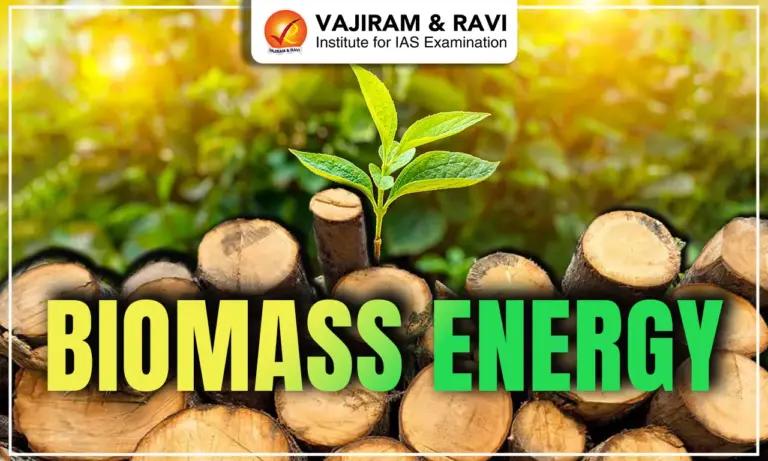
Biomass Energy is a renewable source of power that is created from natural organic materials like plant residues, crop waste and animal manure. It makes use of biological matter to produce electricity, heat and biofuel. As an alternative to fossil fuels, biomass reduces greenhouse gas emissions, improves waste management, and strengthens energy independence. In this article, we are going to cover biomass energy, its role, government initiatives and its advantages.
Biomass Energy
Biomass Energy means renewable organic matter that is made using plants and animals. It is the energy produced from living or non-living organisms and is an important fuel for cooking and heating. In developed countries, biomass is also used for electricity generation and transportation fuel to cut down the use of carbon dioxide emissions from fossil fuels.
Biomass Energy Sources
The sources of Biomass production include:
- Wood and Wood Processing Wastes: firewood, pellets, chips, sawdust, and black liquor from paper mills.
- Agricultural Crops and Residues: corn, sugarcane, soybeans, switchgrass, algae, and other crop wastes.
- Biogenic Materials in Municipal Solid Waste: paper, food waste, cotton, wool, yard waste, and wood scraps.
- Animal Manure and Human Sewage.





Biomass Conversion to Energy
Biomass can be turned into energy using different ways like:
- Direct Combustion (Burning) to Produce Heat
The most common method is burning biomass to generate heat. This heat can be used for buildings, water heating, industrial processes, or electricity generation through steam turbines. - Thermochemical Conversion
Thermochemical Conversion is the method that produces solid, gaseous, and liquid fuels through processes like pyrolysis and gasification. Biomass is heated in high-pressure vessels called gasifiers, breaking it down into useful fuels. - Chemical Conversion
Processes like trans-esterification convert vegetable oils, fats, and greases into biodiesel, a renewable alternative to diesel fuel. - Biological Conversion
- Fermentation: turns biomass into ethanol, used as a vehicle fuel.
- Anaerobic digestion: produces renewable natural gas (biogas/biomethane), generated in digesters at sewage plants, landfills, or livestock farms.
- Anaerobic Digestion or Biomethanation
Microorganisms break down biodegradable matter without oxygen, producing methane-rich biogas. The process occurs in three stages: hydrolysis, acidogenesis, and methanogenesis. - Cogeneration
Cogeneration produces two forms of energy like always heat and either electricity or mechanical energy from a single fuel source. Unlike conventional power plants that waste low-pressure steam, cogeneration uses it for heating, reaching efficiencies of 75%–90%. This reduces fuel use, costs, and emissions.
Biomass Energy Importance
The use of Biomass Energy can be extremely helpful in conserving fossil fuels and protecting the environment. Biomass Energy has the following importance:
- Renewable Resource: Uses organic waste to ensure long-term sustainability.
- Carbon Neutral: Recycles carbon already present in the ecosystem, lowering emissions.
- Energy Diversification: Lessens reliance on fossil fuels.
- Waste Management: Converts agricultural, industrial, and household waste into energy.
- Economic Growth: Creates jobs and boosts rural development.
- Versatility: Generates heat, power, and biofuels for multiple purposes.
Role of Bioenergy in Meeting India’s Energy Demands
- Energy Demand: Nearly 25% of India’s primary energy is from biomass, with 70% of rural households relying on it for daily needs. Bioenergy is crucial in meeting rural energy demand.
- Climate Change Mitigation: Biomass recycles carbon and reduces fossil fuel use, helping cut greenhouse gas emissions.
- Market Growth: India’s renewable energy market is growing fast, with crops like Jatropha and Neem being explored for biodiesel. Yet, bioenergy is often underrepresented in energy studies.
- Waste to Energy: Biofuels made from plastic, municipal waste, forestry residues, and crop waste can support India’s 175 GW renewable energy target.
- Income Generation: Using biofuels can increase farmers’ income and create jobs.
- Reduce Imports: With 46% of energy needs met through imports, biomass can enhance India’s energy security.
Biomass Energy Government Initiatives
The Government of India has taken up various initiatives to promote the use of Biomass Energy. These initiatives include:
- National Policy on Biofuels: Targets 20% blending of biofuels with fossil fuels by 2025.
- Policy for Biomass and Bagasse Cogeneration: Provides subsidies and incentives for biomass and sugar mills to expand energy production.
- 10 GW National Target: MNRE set a target of 10 GW biomass power by 2022.
- Waste to Energy Projects: Energy generation from urban, industrial, and agricultural waste like food waste, residues, and effluents.
- Fiscal Incentives: 10-year income tax holidays, duty exemptions, and state-level sales tax benefits.
- National Biomass Repository: A central system to track and support biofuel production.
National Mission on Use of Biomass in Coal-based Thermal Power Plants
The National Mission on Use of Biomass in Coal Based Thermal Power Plants was launched by the Ministry of Power to tackle stubble burning, reduce emissions, and promote clean energy.
The Objectives of this mission include:
- Raising biomass co-firing in thermal power plants from 5% to higher levels.
- Supporting R&D in boiler design for high-silica and alkali biomass pellets.
- Improving supply chains for biomass transport.
- Addressing regulatory challenges.
Biomass Energy Advantages
The use Biomass Energy has many advantages, that includes:
- Renewable: Sourced from naturally replenished materials.
- Carbon Neutral: Releases only the carbon absorbed during growth.
- Waste Reduction: Uses different types of waste efficiently.
- Energy Security: Lowers fossil fuel dependence.
- Versatile: Provides power, heat, and fuels.
- Economic Benefits: Creates rural jobs and supports local businesses.
- Decentralized Production: Generates energy close to consumption points.
Biomass Energy Concerns
Despite the advantages, there are several concerns regarding the use of Biomass. These concerns include:
- Land Use: May compete with food production.
- Air Pollution: Burning biomass can release harmful pollutants.
- Deforestation: Overharvesting can damage forests.
- Energy Efficiency: Less efficient compared to some renewables.
- Carbon Emissions: Processing and transport add emissions.
- Cost: Infrastructure can be expensive.
- Biodiversity Impact: Large plantations may affect ecosystems.
| Also Check Other Posts | |
| Soils of India | Western Disturbances |
| Geomorphology | Coastal States of India |

 Last updated on March, 2026
→ UPSC Final Result 2025 is now out.
→ UPSC has released UPSC Toppers List 2025 with the Civil Services final result on its official website.
→ Anuj Agnihotri secured AIR 1 in the UPSC Civil Services Examination 2025.
→ UPSC Marksheet 2025 is now out.
→ UPSC Notification 2026 & UPSC IFoS Notification 2026 is now out on the official website at upsconline.nic.in.
→ UPSC Calendar 2026 has been released.
→ Check out the latest UPSC Syllabus 2026 here.
→ UPSC Prelims 2026 will be conducted on 24th May, 2026 & UPSC Mains 2026 will be conducted on 21st August 2026.
→ The UPSC Selection Process is of 3 stages-Prelims, Mains and Interview.
→ Prepare effectively with Vajiram & Ravi’s UPSC Prelims Test Series 2026 featuring full-length mock tests, detailed solutions, and performance analysis.
→ Enroll in Vajiram & Ravi’s UPSC Mains Test Series 2026 for structured answer writing practice, expert evaluation, and exam-oriented feedback.
→ Join Vajiram & Ravi’s Best UPSC Mentorship Program for personalized guidance, strategy planning, and one-to-one support from experienced mentors.
→ Shakti Dubey secures AIR 1 in UPSC CSE Exam 2024.
→ Also check Best UPSC Coaching in India
Biomass Energy FAQs
Q1. What is biomass energy?+
Q2. What are 5 examples of biomass energy?+
Q3. What are the uses of biomass?+
Q4. How is biomass produced?+
Q5. What is National Policy of Biofuels?+
Tags: biomass energy