About Dooars
- These are the alluvial floodplains in northeastern India that lie south of the outer foothills of the Himalayas and Brahmaputra plain.
- This region is about 30 km wide and stretches over about 350 km from the Teesta River in West Bengal to the Dhansiri River in Assam.
- The region forms the gateway to Bhutan, Sikkim and Eastern Nepal. There are 18 passages or gateways between the hills in Bhutan and the plains in India.
- This region is divided by the Sankosh River into Eastern and Western Dooars, consisting of an area of 880 km2 . The Western Dooars are also known as the Bengal Dooars, and the Eastern Dooars also as the Assam Dooars.
- Significance of Dooars:
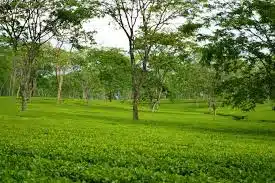
- The deep, well drained and fertile soil rich in the humus of the Dooars has been used for the developed for the tea plantations.
- The main industry of the Dooars region is the tea industry. Thousands of people are engaged in the tea estates and factories.
Q1: What is Alluvial soil?
Alluvial soils are widespread in the northern plains and the river valleys. The alluvial soils vary in nature from sandy loam to clay. They are generally rich in potash but poor in phosphorous.
Source: Death and distress in Bengal’s Dooars tea gardens


 Last updated on Oct, 2026
→ UPSC 2027 Notification will be released on 13 January 2027 at upsconline.nic.in.
→ Check Nobel Prize 2026 Winners List here.
→ Download PIB PRiSM Monthly Magazine 2026 here.
→ Check UPSC Monthly Current Affairs Magazine The Recitals here.
→ Check out the latest UPSC Syllabus here.
→ Download UPSC Model Answers for Mains 2026
→ UPSC Mains Question Paper 2026 is out now for Essay & GS Paper 1, 2, 3 & 4.
→ UPSC Calendar 2027 has been released.
→ Enroll in Vajiram & Ravi’s UPSC Mains Test Series 2027 for structured answer writing practice, expert evaluation, and exam-oriented feedback.
→ Join Vajiram & Ravi’s UPSC Mentorship Program 2027 for personalized guidance, strategy planning, and one-to-one support from experienced mentors.
→ Go through the UPSC Mains Previous Year Papers to enhance your preparation.
→ UPSC has released UPSC Toppers List 2025 with the Civil Services final result on its official website.
→ Also check Best UPSC Coaching in India