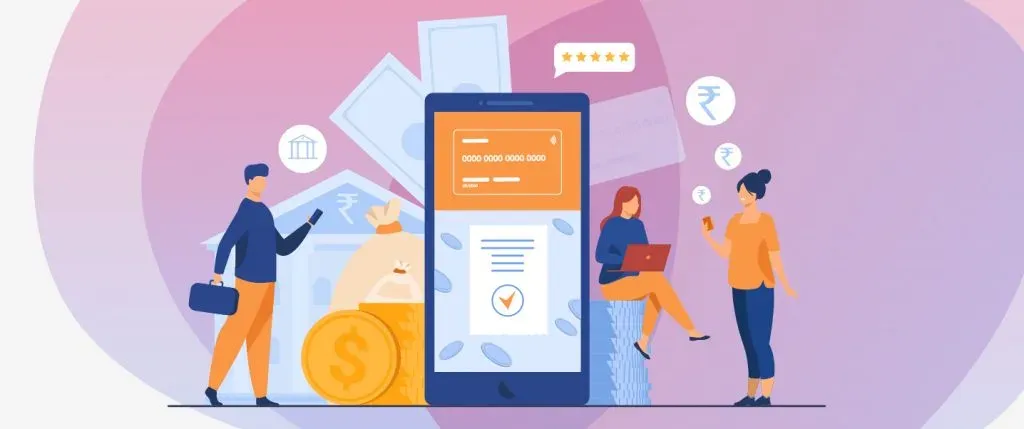
About Lending Service Providers (LSPs)
- LSPs are engaged by the Regulated Entities (REs) (banks or NBFCs) to carry out some functions of RE in connection with lenders’ functions on digital platforms.
- The LSPs generally, under an outsourcing arrangement, offer their services to REs for a fee or commission.
- RBI defines an LSP as an agent of an RE that carries out one or more functions of the lender, including customer acquisition, underwriting support, pricing support, disbursement, servicing, monitoring, collection, and loan recovery on behalf of the RE.
- In simple terms, LSPs are loan aggregators which provide loans from their partner REs.
- In some cases, a RE can also act as an LSP.
- They are technology-centric entities which have the client reach and are thus capable of offering a marketplace for both lenders and borrowers.
LSPs entail aggregation of loan offers from multiple lenders on an electronic platform, which enables the borrowers to compare and choose the best available option to avail a loan from one of the available lenders.
Q1: What is a Non-Banking Financial Company (NBFC)?
An NBFC is a company registered under the Companies Act 1956 engaged in the business of loans and advances, acquisition of shares/stocks/bonds/debentures/securities issued by the Government or local authority or other marketable securities of a like nature. They offer various banking services but do not have a banking license. They provide banking services like loans, credit facilities, TFCs, retirement planning, investing and stocking in the money market. Generally, these institutions are not allowed to take traditional demand deposits—readily available funds, such as those in checking or savings accounts—from the public. NBFCs are regulated by the Reserve Bank of India (RBI), the central bank of India.
Source: RBI releases draft regulation for web aggregation of loan products in digital lending


 Last updated on Oct, 2026
→ UPSC 2027 Notification will be released on 13 January 2027 at upsconline.nic.in.
→ Check Nobel Prize 2026 Winners List here.
→ Download PIB PRiSM Monthly Magazine 2026 here.
→ Check UPSC Monthly Current Affairs Magazine The Recitals here.
→ Check out the latest UPSC Syllabus here.
→ Download UPSC Model Answers for Mains 2026
→ UPSC Mains Question Paper 2026 is out now for Essay & GS Paper 1, 2, 3 & 4.
→ UPSC Calendar 2027 has been released.
→ Enroll in Vajiram & Ravi’s UPSC Mains Test Series 2027 for structured answer writing practice, expert evaluation, and exam-oriented feedback.
→ Join Vajiram & Ravi’s UPSC Mentorship Program 2027 for personalized guidance, strategy planning, and one-to-one support from experienced mentors.
→ Go through the UPSC Mains Previous Year Papers to enhance your preparation.
→ UPSC has released UPSC Toppers List 2025 with the Civil Services final result on its official website.
→ Also check Best UPSC Coaching in India