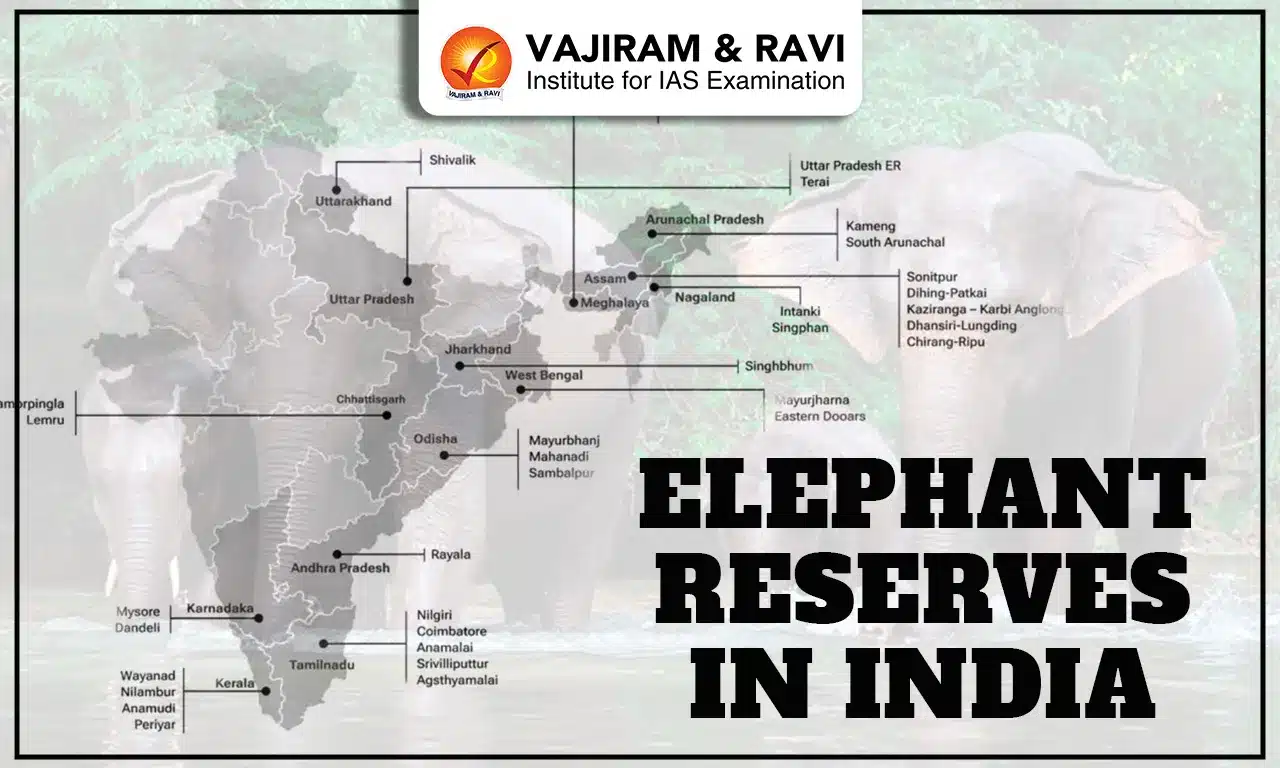
Elephant Reserves in India are important sanctuaries dedicated to the protection and conservation of elephants. Elephants are considered to be the most majestic and intelligent creatures of the animal kingdom. These reserves have been established to safeguard the natural habitats of elephants and ensure their survival amid the growing threats such as habitat loss, human-wildlife conflicts and poaching. In this article, we are going to cover Elephant Reserves, their importance, structure and impact of these Elephant reserves in India.
What are Elephant Reserves?
Elephant Reserves are special areas created for the conservation and protection of elephants and their habitats. Their main goal is to make sure the long-term survival and well-being of the elephant population is maintained. These reserves protect the natural habitat, migration corridors and feeding ground important for elephant sustenance. They contribute to biodiversity conservation and foster coexistence between elephants and local communities.
India’s wild elephant population is currently between 25,000 to 29,000 individuals. However, the conservation of male elephants known as tuskers is increasingly precarious with only 1,200 estimated in India.
How Many Elephant Reserves in India 2026?
As of 2026, there are total 33 Elephant Reserves in India. With the addition of Terai Elephant Reserve (TER) in Uttar Pradesh, India has increased its Total Elephant Reserves from 32 to 33 in 2022. They cover about 80,777.78 sq. km of area. These reserves support elephant conservation, reduce human-elephant conflict and safeguard wildlife corridors.
Also Read:- World Elephant Day 2026


Elephant Reserves in India State Wise List 2026
At present, 33 Elephant Reserves are these spread across 14 major elephant states. These elephant reserves often overlap with Tiger Reserves, Wildlife Sanctuaries, and Reserved Forests, all protected under the Wildlife (Protection) Act, 1972, the Indian Forest Act, 1927, and relevant state laws. The State wise list of Elephant Reserves in India as of 2026 include:
- Mayurjharna Elephant Reserve (West Bengal): Covers 414 sq. km. It is an important elephant habitat in West Bengal and supports elephant conservation through protected forests and connected wildlife landscapes.
- Singhbhum Elephant Reserve (Jharkhand): Spread across 13,440 sq. km., it is the largest Elephant Reserve in India by area and plays a major role in conserving large elephant populations and migration routes.
- Mayurbhanj Elephant Reserve (Odisha): Covers 3,214 sq. km. It protects elephant habitats in northern Odisha and supports safe movement through forested landscapes.
- Mahanadi Elephant Reserve (Odisha): Spread over 1,038 sq. km., this reserve conserves elephant populations and strengthens habitat protection in the Mahanadi landscape.
- Sambalpur Elephant Reserve (Odisha): Covers 427 sq. km. It provides protected habitat for elephants and contributes to wildlife conservation in western Odisha.
- Badalkhol-Tamorpingla Elephant Reserve (Chhattisgarh): Spread across 1,143.34 sq. km., it safeguards elephant habitats and helps maintain ecological connectivity in central India.
- Lemru Elephant Reserve (Chhattisgarh): Covers 1,995.48 sq. km. It is an important conservation landscape supporting elephant movement and reducing habitat fragmentation.
- Kameng Elephant Reserve (Arunachal Pradesh): Spread over 1,892 sq. km., this reserve protects elephants within the rich forest ecosystems of eastern Himalayan landscapes.
- Sonitpur Elephant Reserve (Assam): Covers 1,420 sq. km. It supports elephant conservation in Assam through protected forests and connected habitats.
- Dihing-Patkai Elephant Reserve (Assam): Spread across 937 sq. km., it conserves elephants within one of India’s important biodiversity-rich forest regions.
- South Arunachal Elephant Reserve (Arunachal Pradesh): Covers 1,957.50 sq. km. It protects elephant habitats while supporting conservation across dense forest landscapes.
- Kaziranga-Karbi Anglong Elephant Reserve (Assam): Spread over 3,270 sq. km., it connects important elephant habitats and strengthens wildlife movement between protected areas.
- Dhansiri-Lungding Elephant Reserve (Assam): Covers 2,740 sq. km. It plays a key role in maintaining elephant corridors and conserving northeastern forest ecosystems.
- Intanki Elephant Reserve (Nagaland): Spread across 202 sq. km., this reserve provides secure habitat for elephants within Nagaland’s protected forest region.
- Singphan Elephant Reserve (Nagaland): Covering 23.57 sq. km., it is the smallest Elephant Reserve in India and contributes to local elephant habitat conservation.
- Chirang-Ripu Elephant Reserve (Assam): Spread over 2,600 sq. km., it supports elephant conservation by protecting forests and improving habitat connectivity.
- Eastern Dooars Elephant Reserve (West Bengal): Covers 978 sq. km. It is an important elephant landscape linking forests and migration corridors in northern West Bengal.
- Garo Hills Elephant Reserve (Meghalaya): Spread across 3,500 sq. km., it conserves elephant habitats within the forested hills of Meghalaya.
- Mysore Elephant Reserve (Karnataka): Covers 8,055.94 sq. km. It is one of India’s largest elephant reserves and forms a major elephant conservation landscape in southern India.
- Dandeli Elephant Reserve (Karnataka): Spread over 2,321.11 sq. km., it protects elephant habitats through extensive forests and connected wildlife areas.
- Wayanad Elephant Reserve (Kerala): Covers 1,200 sq. km. It supports elephant conservation by maintaining continuous forest habitats in Kerala.
- Nilgiri Elephant Reserve (Tamil Nadu): Spread across 4,663 sq. km., it is one of India’s major elephant conservation landscapes with extensive forest connectivity.
- Rayala Elephant Reserve (Andhra Pradesh): Covers 766 sq. km. It provides protected habitat for elephants within the forests of Andhra Pradesh.
- Nilambur Elephant Reserve (Kerala): Spread over 1,419 sq. km., it conserves elephants through protected forests and habitat management.
- Coimbatore Elephant Reserve (Tamil Nadu): Covers 566 sq. km. It protects elephant populations and supports movement across forest ecosystems.
- Anamalai Elephant Reserve (Tamil Nadu): Spread across 1,457 sq. km., it provides an important habitat for elephants in the Western Ghats landscape.
- Anamudi Elephant Reserve (Kerala): Covers 3,728 sq. km. It strengthens elephant conservation across extensive forest ecosystems in the southern Western Ghats.
- Agasthyamalai Elephant Reserve (Tamil Nadu): Spread over 1,197.48 sq. km., it conserves elephants within one of India’s ecologically significant mountain landscapes.
- Periyar Elephant Reserve (Kerala): Covers 3,742 sq. km. It is a major elephant conservation area that protects forests, wildlife habitats and migration routes.
- Srivilliputtur Elephant Reserve (Tamil Nadu): Spread across 1,249 sq. km., it supports elephant conservation through protected forests and connected habitats.
- Shivalik Elephant Reserve (Uttarakhand): Covers 5,405 sq. km. It conserves elephants across the Shivalik landscape and protects important migration corridors in northern India.
- Uttar Pradesh Elephant Reserve (Uttar Pradesh): Spread over 744 sq. km., it safeguards elephant habitats and supports conservation in the state’s forest areas.
- Terai Elephant Reserve (Uttar Pradesh): Covers 3,072.358 sq. km. It protects elephant habitats across the Terai landscape and strengthens long-term conservation and corridor connectivity.
Also Read: National Parks in India 2026
Elephant Reserves Significance
Elephant Reserves in India are important due to many reasons:
- Habitat Preservation: They maintain forests, grasslands, and water bodies vital for elephant survival.
- Biodiversity Conservation: Protecting elephant habitats benefits numerous other species, sustaining ecosystem health.
- Migration Route Maintenance: Reserves preserve migratory routes, preventing disruptions from human activity or infrastructure.
- Genetic Diversity: Safeguarding distinct populations helps maintain genetic diversity, ensuring healthier elephants.
- Conservation of Endangered Species: Overlapping habitats with other endangered species helps protect overall biodiversity.
- Human-Elephant Conflict Mitigation: Providing safe spaces reduces the likelihood of elephants entering human settlements.
- Sustainable Resource Use: Proper management ensures a balance between human needs and ecosystem conservation.
- Promotion of Ecotourism: Well-managed reserves offer eco-tourism opportunities, generating revenue for conservation efforts.
Also Read: Wildlife Sanctuaries in India 2026
Elephant Reserves Functions
Elephant Reserves are responsible for a number of functions. These functions are:
- Habitat Protection: Dedicated areas safeguard forests, grasslands, and water bodies for elephant well-being.
- Biodiversity Conservation: Conserving ecosystems benefits numerous plant and animal species.
- Migration Route Maintenance: Reserves maintain traditional migratory paths, preventing human-induced disruptions.
- Genetic Diversity Conservation: Protecting distinct populations sustains genetic variety within elephants.
- Human-Elephant Conflict Mitigation: Safe reserves reduce encounters with human settlements.
- Sustainable Resource Use: Proper management balances ecological and human needs for long-term viability.
Asian Elephant Protection
Elephant Reserves are important for the conservation of Asian elephants (Elephas maximus), an endangered species of iconic significance. They safeguard habitats and make sure that the overall well-being of elephants is maintained.
- Habitat Protection: Elephant Reserves provide protection from poaching, habitat loss, and human-elephant conflicts.
- Elephant Corridors: Elephant Reserves facilitate migration and movement across states while supporting research, education, and community involvement.
Also Read: Biosphere Reserves in India 2026
Project Elephant
Project Elephant was launched in February 1992, and is a Central Government initiative aimed at the conservation and management of elephants in states with wild populations. The goal of launching Project Elephant were:
- Protect habitats and corridors to ensure wild elephant survival.
- It covers 16 states, including Arunachal Pradesh, Assam, Andhra Pradesh, Chhattisgarh, Jharkhand, Kerala, Karnataka, Meghalaya, Maharashtra, Nagaland, Odisha, Tamil Nadu, Uttarakhand, Uttar Pradesh, and West Bengal.
- Provide technical and financial support to participating states for censuses, training, and conflict mitigation.
Project Elephant Objectives:
The objectives of launching Project Elephant are:
- Promote scientific management and anti-poaching measures.
- Prevent unnatural causes of elephant mortality.
- Restore ecological habitats and migration routes.
- Mitigate human-elephant conflicts.
- Reduce livestock grazing pressures in critical habitats.
- Support scientific research, public awareness, veterinary care, and eco-development initiatives.
Also Read: Project Tiger
MIKE Program
The MIKE (Monitoring of Illegal Killing of Elephants) Program, launched in South Asia in 2003 under CITES, provides essential data to manage and protect elephant populations effectively, analyzing poaching trends and contributing factors.
Campaign Haathi Mere Saathi
The Campaign Haathi Mere Saathi was launched on May 24, 2011, in collaboration with the Wildlife Trust of India, to raise public awareness about elephant welfare and conservation, fostering stronger bonds between humans and elephants in India.
Difference Between Asian and African Elephant
Elephants are the largest land mammals divided mainly into two species: Asian Elephants and African Elephants. While both Elephants share some similarities, there are also many differences between them when it comes to physical features, behaviours and habitat.
The differences in between Asian and African Elephants are:
| Difference Between Asian and African Elephant | ||
| Aspect | Asian Elephant | African Elephant |
|
Scientific Name |
Elephas maximus |
Loxodonta africana |
|
Size |
Smaller, with a shoulder height of 2–3.5 meters |
Larger, with a shoulder height of 3–4 meters |
|
Ears |
Smaller, rounded ears |
Larger, fan-shaped ears |
|
Forehead |
Twin-domed forehead with a deep groove in the centre |
Sloped, smooth forehead |
|
Tusks |
Only males usually have tusks, and some may lack them entirely |
Both males and females have tusks |
|
Skin Texture |
Smoother skin |
Wrinkled skin |
|
Trunk Structure |
One finger-like projection at the tip of the trunk |
Two finger-like projections at the tip of the trunk |
|
Habitat |
Found in forests and grasslands across Asia |
Inhabit savannas, forests, and deserts of Africa |
|
Social Structure |
Smaller herds led by a matriarch |
Larger herds with more complex social structures |
|
Diet |
Primarily grazers with occasional browsing |
Both grazers and browsers |
|
Population Status |
Endangered due to habitat loss and human conflict |
Vulnerable due to poaching and habitat |

 Last updated on Oct, 2026
→ UPSC 2027 Notification will be released on 13 January 2027 at upsconline.nic.in.
→ Asian Games 2026 are being held in Aichi-Nagoya, Japan, from 19 September to 4 October.
→ Check Nobel Prize 2026 Winners List here.
→ Download PIB PRiSM Monthly Magazine 2026 here.
→ Check UPSC Monthly Current Affairs Magazine The Recitals here.
→ Check out the latest UPSC Syllabus here.
→ Download UPSC Model Answers for Mains 2026
→ UPSC Mains Question Paper 2026 is out now for Essay & GS Paper 1, 2, 3 & 4.
→ UPSC Calendar 2027 has been released.
→ Enroll in Vajiram & Ravi’s UPSC Mains Test Series 2027 for structured answer writing practice, expert evaluation, and exam-oriented feedback.
→ Join Vajiram & Ravi’s UPSC Mentorship Program 2027 for personalized guidance, strategy planning, and one-to-one support from experienced mentors.
→ Go through the UPSC Mains Previous Year Papers to enhance your preparation.
→ UPSC has released UPSC Toppers List 2025 with the Civil Services final result on its official website.
→ Also check Best UPSC Coaching in India
Elephant Reserves in India 2026 FAQs
Q1. Which is the 33rd elephant reserve of India 2026?+
Q2. How many elephant reserves are there in India 2026?+
Q3. Which was the first elephant reserve in India?+
Q4. Which state has the highest elephant reserve 2026?+
Q5. Which is the largest elephant sanctuary in India 2026?+
Tags: elephant reserves in india environment environment and ecology governance