About Eucalyptus:
- It is a large genus of more than 660 species of shrubs and tall trees of the myrtle family (Myrtaceae).
- Some of the tallest trees in the world are eucalypti.
- It is native to Australia, Tasmania, and nearby islands.
- In Australia, the eucalypti are commonly known as gum trees or stringybark trees.
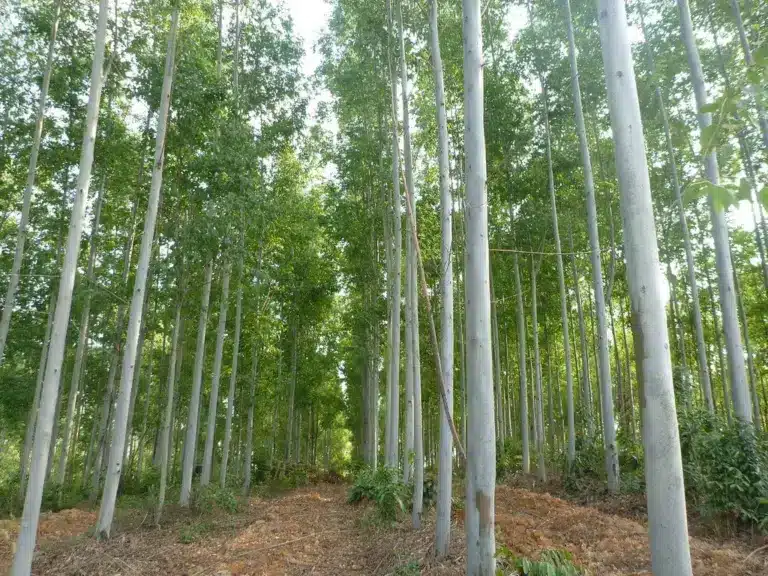
- Many species are cultivated widely in many areas of the world as shade trees or in forestry plantations.
- Features:
- It has a gum-infused bark, long stems, and circular leaves that are hard to digest if eaten whole.
- Small flowers grow on eucalyptus trees. They come in many colors, including white, yellow, and shades of red.
- Eucalypti also have small woody capsules. Inside the capsules are seeds.
- Uses:
- It is widely used for its medicinal properties.
- Some eucalyptus leaves contain an oil that has a strong smell.
- It is useful to treat a variety of common diseases and also works amazingly when applied topically in diluted form.
- The main compound of eucalyptus oil is cineole, also known as eucalyptol. The oil also contains flavonoids and tannins, which acts as anti-inflammatory and antioxidants.
- It is known for its ability to relieve congestion and ease breathing in colds.
- It is also used as a pain reliever for sore and overextended muscles.
- It is an excellent topical remedy for aching joints and rheumatism. It helps improve blood circulation.
- Eucalyptus wood is tough and durable. It is used to build things such as furniture and fences.
- Eucalyptus Plantations in India:
- Eucalyptus tereticornis and Eucalyptus hybrid are the two most widely planted eucalypts in India.
- It is widely grown in Tamil Nadu, Andhra Pradesh, Gujrat, Haryana, Mysore, Kerala, and in the Nilgiri Hill.
- It grows well in deep, fertile, well-drained loamy soil with adequate moisture.
Q1: What are flavonoids?
Flavonoids are phytochemical compounds present in many plants, fruits, vegetables, and leaves, with potential applications in medicinal chemistry. Flavonoids possess a number of medicinal benefits, including anticancer, antioxidant, anti-inflammatory, and antiviral properties. They also have neuroprotective and cardio-protective effects.
Source: The controversy over eucalyptus planting in Kerala | Explained





 Last updated on March, 2026
→ UPSC Final Result 2025 is now out.
→ UPSC has released UPSC Toppers List 2025 with the Civil Services final result on its official website.
→ Anuj Agnihotri secured AIR 1 in the UPSC Civil Services Examination 2025.
→ UPSC Marksheet 2025 is now out.
→ UPSC Notification 2026 & UPSC IFoS Notification 2026 is now out on the official website at upsconline.nic.in.
→ UPSC Calendar 2026 has been released.
→ Check out the latest UPSC Syllabus 2026 here.
→ UPSC Prelims 2026 will be conducted on 24th May, 2026 & UPSC Mains 2026 will be conducted on 21st August 2026.
→ The UPSC Selection Process is of 3 stages-Prelims, Mains and Interview.
→ Prepare effectively with Vajiram & Ravi’s UPSC Prelims Test Series 2026 featuring full-length mock tests, detailed solutions, and performance analysis.
→ Enroll in Vajiram & Ravi’s UPSC Mains Test Series 2026 for structured answer writing practice, expert evaluation, and exam-oriented feedback.
→ Join Vajiram & Ravi’s Best UPSC Mentorship Program for personalized guidance, strategy planning, and one-to-one support from experienced mentors.
→ Shakti Dubey secures AIR 1 in UPSC CSE Exam 2024.
→ Also check Best UPSC Coaching in India