What’s in today’s article?
- Why in News?
- Drug Regulation in India
- About the Ayurveda, Siddha and Unani Drugs
- The SC’s Efforts to Protect Consumers from Being Trapped by Misleading Ads
Why in News?
- The Supreme Court of India stayed a notification issued by the Ministry of AYUSH in which Rule 170 of the Drugs and Cosmetics Rules, 1945 was omitted.
- The Rule deals with the power to take action against objectionable or misleading advertisements about Ayurvedic, Siddha, and Unani drugs.




Drug Regulation in India:
- The Drugs and Cosmetics Act, 1940 and Rules 1945: These have entrusted various responsibilities to central and state regulators for regulation of drugs and cosmetics.
- Central Drugs Standard Control Organisation (CDSCO):
- The CDSCO under the Directorate General of Health Services, Ministry of Health & Family Welfare, is the National Regulatory Authority (NRA) of India.
- Under the Drugs and Cosmetics Act, CDSCO is responsible for –
- Approval of Drugs.
- Conduct of Clinical Trials.
- Laying down the standards for Drugs.
- Control over the quality of imported Drugs in the country.
- Coordination of the activities of State Drug Control Organisations.
- Further CDSCO along with state regulators, is jointly responsible for grant of licences of certain specialised categories of critical Drugs such as vaccine and sera, etc.
- The Indian government has announced plans to subject all medical devices, including implants and contraception, to CDSCO scrutiny.
- Drugs Controller General of India (DCGI):
- DCGI is the head of department of the CDSCO responsible for approval of licences of specified categories of drugs such as blood and blood products, vaccines and sera, etc., in India.
- DCGI also sets standards for manufacturing, sales, import, and distribution of drugs in India.
About the Ayurveda, Siddha and Unani Drugs:
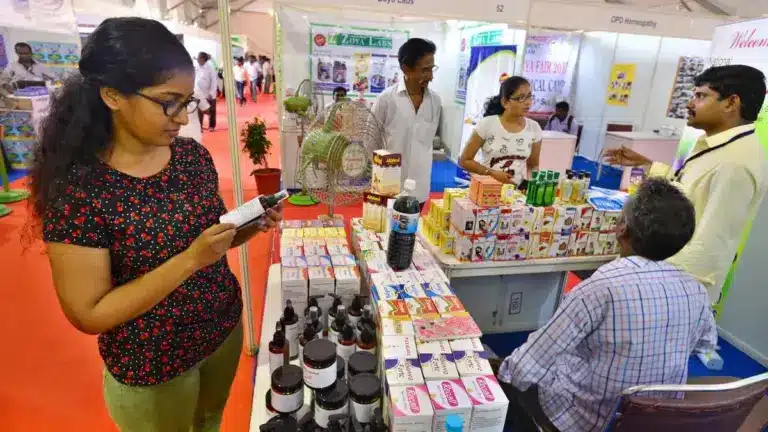
- Definition: The Drugs and Cosmetics Act 1940 defines Ayurvedic, Siddha, and Unani drugs as medicines that are used internally or externally to treat, prevent, mitigate, or diagnose diseases or disorders in humans or animals.
- Regulation:
- The act also establishes the Ayurvedic, Siddha, and Unani Drugs Technical Advisory Board (ASUDTAB), which sets the standards for these drugs.
- The Central Government can also make or change rules regarding these drugs after consulting with the board.
- Schedule T under Drugs and Cosmetics Act 1940: Schedule T describes the Good Manufacturing Practice for Ayurvedic, Siddha and Unani Medicines.
The SC’s Efforts to Protect Consumers from Being Trapped by Misleading Ads:
- In a contempt case against Patanjali Ayurved Limited, the SC (on May 7,2024) directed that advertisers should submit self-declarations that they are not misrepresenting or making false claims about products before promoting them in the media.
- However, the Ministry of AYUSH (on July 1, 2024) notified that Rule 170 of the Drugs and Cosmetics Rules, 1945 was no longer operational.
- According to the ministry, the basis of this notification is a recommendation made by the ASUDTAB.
- In its recent order, the SC stays centre’s notification (dated July 1) to omit Rule 170 of the Drugs and Cosmetics Rules, 1945, as it runs contrary to directions issued by this court.
Q.1. What are traditional systems of medicine?
Traditional systems of medicine are a collection of knowledge, practices, and skills that are based on the beliefs, experiences, and theories of different cultures.
Q.2. What are Indian systems of medicine?
India has the unique distinction of having six recognized systems of medicine in this category. They are – Ayurveda, Siddha, Unani and Yoga, Naturopathy and Homoeopathy.
Source: Misleading ads case: SC stays Ayush ministry’s notification on drugs, cosmetic rules | TH

 Last updated on March, 2026
→ UPSC Final Result 2025 is now out.
→ UPSC has released UPSC Toppers List 2025 with the Civil Services final result on its official website.
→ Anuj Agnihotri secured AIR 1 in the UPSC Civil Services Examination 2025.
→ UPSC Marksheet 2025 is now out.
→ UPSC Notification 2026 & UPSC IFoS Notification 2026 is now out on the official website at upsconline.nic.in.
→ UPSC Calendar 2026 has been released.
→ Check out the latest UPSC Syllabus 2026 here.
→ UPSC Prelims 2026 will be conducted on 24th May, 2026 & UPSC Mains 2026 will be conducted on 21st August 2026.
→ The UPSC Selection Process is of 3 stages-Prelims, Mains and Interview.
→ Prepare effectively with Vajiram & Ravi’s UPSC Prelims Test Series 2026 featuring full-length mock tests, detailed solutions, and performance analysis.
→ Enroll in Vajiram & Ravi’s UPSC Mains Test Series 2026 for structured answer writing practice, expert evaluation, and exam-oriented feedback.
→ Join Vajiram & Ravi’s Best UPSC Mentorship Program for personalized guidance, strategy planning, and one-to-one support from experienced mentors.
→ Shakti Dubey secures AIR 1 in UPSC CSE Exam 2024.
→ Also check Best UPSC Coaching in India