Social Media Takedowns in India Latest News
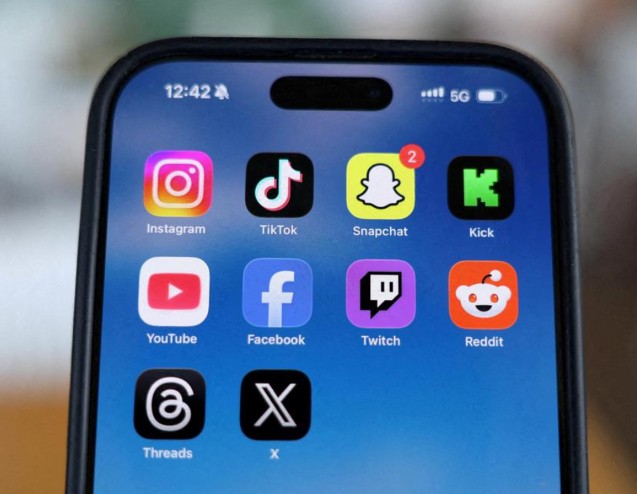
- In recent weeks, social media users across Instagram, Facebook, and X have reported a surge in posts, reels, and accounts being blocked, with notices reading “Your post is unavailable in India.”
- This wave of restrictions coincides with protests against the Special Intensive Revision (SIR) of electoral rolls and demands for Chief Election Commissioner Gyanesh Kumar’s resignation.
- The episode has thrust India’s content-blocking powers, shortened compliance deadlines, and platforms’ own automated moderation systems into sharp focus.
What Triggered the Latest Wave of Takedowns?
- The surge follows two advisories issued by MeitY (Ministry of Electronics and Information Technology) in succession, amid anti-CEC protests:
- October 8 Advisory (to all platforms)
- Urged platforms to show enhanced diligence. This meant contextualising misleading content.
- It also meant prioritising complaints from authorised government agencies.
- Platforms were told to curb manipulated or out of context content. This was in addition to existing rules on AI-generated deepfakes.
- October 10 Advisory (specifically to Meta)
- This one focused on how content spreads through feeds and recommendation systems.
- MeitY flagged a specific risk. Content on public-order situations, if shown without context, could cause confusion.
- It could also disturb public order if heavily amplified by algorithms.
- What Meta Was Asked To Do
- Identify content that risks public disorder or incitement. Review its ranking and recommendation algorithms.
- Add context to visuals with unclear authenticity.
- Ensure users aren’t shown only a single narrative.
- Speed up escalation of fast-spreading content.
- Cooperate with law enforcement, within IT Rules timelines.
- The advisory also stressed that “lawful civic and public discourse should not be unnecessarily restricted.”
- October 8 Advisory (to all platforms)


How Amended IT Rules Made Takedowns Faster
- The Information Technology (Intermediary Guidelines and Digital Media Ethics Code) Amendment Rules, 2026 —effective from February 2026 — tightened obligations, particularly around synthetically generated/AI-altered content.
- Key Change — Rule 3(1)(d): Intermediaries receiving actual knowledge via a court order or reasoned intimation from an authorised government officer must remove unlawful content within just 3 hours — down sharply from 36 hours under the earlier framework.
- Safe-Harbour Clarification: Removing content via automated tools, in compliance with the Rules, does not itself violate safe-harbour protections under Section 79(2), IT Act.
- This leaves platforms with far less time to properly assess a takedown notice’s scope before acting.
The Three Key Legal Provisions Governing Takedowns
- Section 69A, IT Act, 2000 – Empowers the Central Government (or authorised officer) to block public access to content on specified grounds — sovereignty, defence, security, public order, friendly relations with foreign states, incitement prevention.
- Governed by the 2009 Blocking Rules, with examination, recorded reasons, review, and an emergency procedure.
- Rule 3(1)(d), IT Rules 2021 – Sets intermediary obligations after receiving a court order or qualifying government intimation.
- 2025 amendments added safeguards: senior-level authorisation (police intimations now require DIG rank or above), specific content identification, periodic review.
- February 2026 amendments then cut the compliance window to 3 hours.
- Section 79(3)(b), IT Act – Governs intermediaries’ conditional liability protection — this protection can lapse if a platform fails to act after receiving a legally required takedown notification.
Are These Takedowns Government-Driven?
- Interestingly, government-issued takedown notices actually declined in October, even as automated takedowns rose.
- Delhi Police issued ~300 takedown requests in the past three months, with most acted upon by platforms.
- Law enforcement identifies posts through routine monitoring, assessing content and providing removal reasons.
- Experts note that the recent takedowns are a direct consequence of the advisory issued to Meta. These advisories have been incorporated into Meta’s community standards, contributing to restrictions imposed under the company’s own policies.
What Recourse Do Users Have?
- Restrictions under Sections 69A/79(3)(b): Users can challenge legality, including through courts.
- Restrictions under a platform’s own community standards: Users must first approach the platform’s Grievance Officer, then appeal to the government’s Grievance Appellate Committee (GAC) if dissatisfied.
- Experts, however, point that this shift to platform-level enforcement significantly delays relief.
- Grievance officer complaints often get only an automated acknowledgment.
- Appeals to the GAC require waiting 30 days for a result.
- Total delay: 60-90 days — during which the account remains blocked, potentially harming the user’s livelihood and credibility.
- Crucially, users lack recourse to constitutional courts when Meta itself initiates the takedown under its own policies, rather than a government order.
Conclusion
- The recent wave of social media blocking in India reveals something important. The system is now built for speed, not scrutiny. Compliance windows have shrunk from 36 hours to just 3.
- Much of the actual content removal happens through platforms’ own automated systems. These systems respond to government advisories. They don’t rely on formal, challengeable legal orders.
- This approach may help curb misinformation during sensitive events, like election-related protests. But it also creates a real accountability gap. Users facing platform-driven restrictions lose access to constitutional courts.
- Instead, they must go through a grievance process. This process can stretch to 90 days. During this time, their digital presence stays frozen. Sometimes, their livelihood is affected too.
- India’s digital governance framework still faces one unresolved tension. It must balance the need for rapid content moderation during public-order situations.
- At the same time, it must ensure meaningful and timely recourse for users who are wrongly restricted.

 Last updated on Oct, 2026
→ UPSC 2027 Notification will be released on 13 January 2027 at upsconline.nic.in.
→ Check Nobel Prize 2026 Winners List here.
→ Download PIB PRiSM Monthly Magazine 2026 here.
→ Check UPSC Monthly Current Affairs Magazine The Recitals here.
→ Check out the latest UPSC Syllabus here.
→ Download UPSC Model Answers for Mains 2026
→ UPSC Mains Question Paper 2026 is out now for Essay & GS Paper 1, 2, 3 & 4.
→ UPSC Calendar 2027 has been released.
→ Enroll in Vajiram & Ravi’s UPSC Mains Test Series 2027 for structured answer writing practice, expert evaluation, and exam-oriented feedback.
→ Join Vajiram & Ravi’s UPSC Mentorship Program 2027 for personalized guidance, strategy planning, and one-to-one support from experienced mentors.
→ Go through the UPSC Mains Previous Year Papers to enhance your preparation.
→ UPSC has released UPSC Toppers List 2025 with the Civil Services final result on its official website.
→ Also check Best UPSC Coaching in India
Social Media Takedowns in India FAQs
Q1. What triggered the recent wave of social media takedowns in India? +
Q2. How have the amended IT Rules affected social media takedowns in India? +
Q3. Which legal provisions govern social media takedowns in India? +
Q4. Are recent social media takedowns in India entirely government-driven? +
Q5. What remedies are available against social media takedowns in India? +
Tags: mains articles Social media takedowns in India upsc current affairs upsc mains current affairs