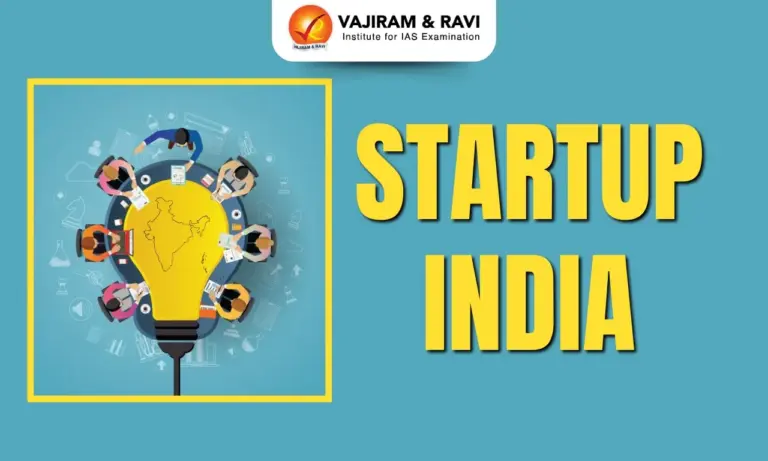
What is Startup India Scheme?
Startup India is a comprehensive government initiative designed to foster a conducive environment for startups to achieve sustainable economic growth and large-scale job creation. The scheme is implemented and coordinated by the Department for Promotion of Industry and Internal Trade (DPIIT) under the Ministry of Commerce and Industry.
Definition of a Startup (As per DPIIT)
An entity is recognized as a Startup for government purposes if it fulfills the following conditions:
- Incorporated as a Private Limited Company, Partnership Firm, or Limited Liability Partnership (LLP) in India
- Age of the entity should not exceed 10 years from the date of registration
- Annual turnover must not exceed ₹100 crore in any financial year
- Focused on innovation, improvement of products/services, or scalable business models
- Has the potential for wealth creation or employment generation
- Must not be formed by splitting or restructuring an existing business





Startup India Objectives
- Promote Entrepreneurship by encouraging risk-taking, innovation, and enterprise creation across sectors
- Build a Startup-Friendly Ecosystem that supports startups from ideation to scaling
- Improve Ease of Doing Business through simplified regulations, self-certification, and digital governance
- Encourage Innovation and Technology Development in products, services, and business models
- Provide Access to Finance through seed funding, venture capital support, and credit guarantees
- Generate Employment Opportunities by fostering new businesses and self-employment
- Support Inclusive Growth by expanding startups to tier-2, tier-3, rural, and semi-urban regions
- Strengthen Industry-Academia Collaboration for research, incubation, and skill development
- Promote Global Competitiveness of Indian startups through market access and exposure
- Foster Sustainable Economic Growth by supporting scalable and innovation-driven enterprises
Pillars of the Startup India Action Plan
- Simplification and Handholding
- Self-certification under selected labour and environmental laws
- Digital registration and single-window clearance system
- Faster approvals and continuous mentoring support
- Funding Support and Incentives
- Government-backed funding through venture and seed funds
- Tax exemptions and fiscal incentives for eligible startups
- Credit guarantee mechanisms to improve access to loans
- Industry-Academia Partnership and Incubation
- Establishment of incubators and research parks
- Collaboration between universities, research institutions, and industry
- Mentorship, innovation support, and technology commercialization
Financial Support Mechanisms under Startup India
- Fund of Funds for Startups (₹10,000 crore) to provide venture capital through SEBI-registered funds
- Startup India Seed Fund Scheme (₹945 crore) for proof of concept, prototype development, and market entry
- Credit Guarantee Fund for Startups to enable collateral-free loans from banks and financial institutions
- Income Tax Exemption on profits for three consecutive years for eligible startups
- Capital Gains Tax Exemption on investments made in eligible startups and government-notified funds
- Angel Tax Exemption subject to prescribed eligibility and compliance norms
- Fast-track IPR Support with fee rebates to reduce innovation-related costs
Role of Startups in Employment Generation
- Large-Scale Direct Employment: DPIIT-recognised startups have generated over 10 lakh direct jobs since the launch of Startup India, spanning technology, manufacturing, healthcare, education, and services sectors.
- Youth-Centric Job Creation: A significant share of startup employment is created for the 20-35 age group, supporting India’s demographic dividend through high-skill and innovation-led jobs.
- Indirect Employment Multiplier Effect: Each startup generates multiple indirect jobs in supply chains, logistics, marketing, legal services, and platform-based work, amplifying overall employment impact.
- Regional Employment Expansion: Nearly 50% of recognised startups are located in Tier-2 and Tier-3 cities, contributing to decentralised job creation and reducing migration pressure on metros.
- Women Workforce Participation: Around 45% of startups have at least one woman founder, leading to higher participation of women in formal and flexible employment structures.
- High-Growth Employment via Unicorns: India has crossed 100+ unicorns, many of which employ thousands of workers directly and create large-scale ecosystem jobs through vendors and partners.
- Promotion of Self-Employment and Entrepreneurship: Startup India supports first-generation entrepreneurs, encouraging self-employment and enterprise-led livelihoods, especially among educated youth.
- Skill Development and New-Age Jobs: Startups drive demand for skills in AI, fintech, biotech, renewable energy, and deep-tech, contributing to workforce upskilling and future-ready employment.
Issues Related to Startup in India
- Regulatory and Compliance Complexity: Despite ease-of-doing-business reforms, startups face compliance under multiple laws. India ranked 63rd in Ease of Doing
- Business (World Bank, last edition): indicating persistent procedural and regulatory challenges, especially at state and local levels.
- Funding Gap at Early Stages: While India attracted large venture capital, nearly 70% of startup funding is concentrated in late-stage startups and metro cities, leaving seed and early-stage startups, particularly in Tier-2 and Tier-3 cities, underfunded.
- Taxation and Policy Uncertainty: Issues related to angel tax, valuation scrutiny, and delayed tax exemptions have affected investor sentiment. Many eligible startups face delays in availing the 3-year income tax holiday due to stringent certification norms.
- High Failure Rate and Sustainability Issues: Studies indicate that around 80-90% of startups fail within the first five years, mainly due to poor market fit, cash flow constraints, and lack of scalable business models.
- Skilled Workforce and Talent Retention Challenges: India produces a large graduate base, yet less than 50% are considered industry-ready, leading to skill mismatches.
Way Forward
- Simplify Rules – Make startup regulations and compliance easier to follow.
- Increase Funding – Provide more money for early-stage startups, especially in smaller cities.
- Improve Incubation – Set up more incubators, research hubs, and mentorship programs.
- Develop Skills – Train youth with industry-ready skills and retain talent in startups.
- Support Regional Growth – Promote startups in tier-2, tier-3, and rural areas.
- Global Expansion – Help startups access international markets and investors.

 Last updated on March, 2026
→ UPSC Final Result 2025 is now out.
→ UPSC has released UPSC Toppers List 2025 with the Civil Services final result on its official website.
→ Anuj Agnihotri secured AIR 1 in the UPSC Civil Services Examination 2025.
→ UPSC Marksheet 2025 is now out.
→ UPSC Notification 2026 & UPSC IFoS Notification 2026 is now out on the official website at upsconline.nic.in.
→ UPSC Calendar 2026 has been released.
→ Check out the latest UPSC Syllabus 2026 here.
→ UPSC Prelims 2026 will be conducted on 24th May, 2026 & UPSC Mains 2026 will be conducted on 21st August 2026.
→ The UPSC Selection Process is of 3 stages-Prelims, Mains and Interview.
→ Prepare effectively with Vajiram & Ravi’s UPSC Prelims Test Series 2026 featuring full-length mock tests, detailed solutions, and performance analysis.
→ Enroll in Vajiram & Ravi’s UPSC Mains Test Series 2026 for structured answer writing practice, expert evaluation, and exam-oriented feedback.
→ Join Vajiram & Ravi’s Best UPSC Mentorship Program for personalized guidance, strategy planning, and one-to-one support from experienced mentors.
→ Shakti Dubey secures AIR 1 in UPSC CSE Exam 2024.
→ Also check Best UPSC Coaching in India
Startup India FAQs
Q1. What is Startup India?+
Q2. When was Startup India launched?+
Q3. Who implements Startup India?+
Q4. What types of support are provided under Startup India?+
Q5. Why is Startup India important for economic development?+
Tags: startup india