National Botanical Research Institute (NBRI)

National Botanical Research Institute

National Botanical Research Institute Latest News

The National Botanical Research Institute (NBRI) recently achieved a breakthrough by cultivating the exotic flower, Eustoma, native to Mexico and America, in Odisha after successfully growing it on its campus in Lucknow.

About National Botanical Research Institute

  • It is amongst one of the constituent research institutes of the Council of Scientific and Industrial Research (CSIR).
  • It is located in the city of Lucknow, Uttar Pradesh.
  • It is a multi-disciplinary plant research centre of international repute, undertaking basic and applied R&D programmes in several strategically important areas of plant sciences.
  • Originally set up as the National Botanic Gardens (NBG) by the State Government of Uttar Pradesh (U.P.), it was taken over by the CSIR in 1953. 
  • Though initially engaged in research work in the classical botanical disciplines, the NBG went on laying an increasing emphasis, in keeping with the national needs and priorities in the field of plant sciences, on its applied and developmental research activities.
  • NBG was renamed as the NBRI, i.e., The National Botanical Research Institute in 1978. 
  • Objectives:
    • Basic and applied research on plant diversity and prospection, plant-environment interaction and biotechnological approaches for plant improvement.
    • Development of technologies for new plant and microbial sources of commercial importance.
    • Building up germplasm repository of plants of indigenous and exotic origin, including rare, endangered and threatened species
    • Providing expertise and assistance for identification, supply and exchange of plants and propagules, garden layout and landscaping.
    • Dissemination of scientific knowledge and technologies on plants and microbial resources through publications, training, capacity building and extension activities
  • The NBRI R&D department has seven divisions under which they conduct various researches. Those seven divisions are
    • Plant Diversity, Systematics and Herbarium.
    • Pharmacognosy, Phytochemistry and Product Development.
    • Plant Ecology and Environment Technologies.
    • Molecular Biology and Biotechnology.
    • Plant Genetic Resources and Improvement.
    • Botanical Garden, Plant Conservation and Agro-technologies.
    • S & T Management.
  • CSIR-NBRI is equipped with state-of-the-art laboratories to support R&D.
  • CSIR-NBRI has a well-designed Botanic Garden spread over 25 hectares with documented collections of about 5,000 indigenous and exotic plant species and varieties.
  • It has an herbarium with 253,103 reference collections of flowering and non-flowering plants of India and two field research stations at Banthra.
  • The institute is known for its outstanding contributions to enriching the knowledge base on India’s plant diversity, particularly in developing globally competent biotech and microbial technologies, herbal products, and plant databases.
  • NBRI is recognized as a leading institute and referral center by different Ministries/Departments of the Government of India and the United Nations in matters related to the Convention on Biological Diversity (CBD), Traditional Knowledge, and Intellectual Property Rights. 
  • The Institute has been recognized by Government of India as one of the National Repositories for Indian flora under the National Biodiversity Authority and as per the provisions of the Biological Diversity Act, 2002.

Source: TH

National Botanical Research Institute FAQs

Q1: Where is the National Botanical Research Institute (NBRI) located?

Ans: It is located in the city of Lucknow, Uttar Pradesh.

Q2: National Botanical Research Institute (NBRI) is a constituent institute of which organization?

Ans: Indian Council of Agricultural Research (ICAR)

Q3: Where are the two field research stations of National Botanical Research Institute (NBRI) located?

Ans: Banthra, near Lucknow, Uttar Pradesh.

STAR Missile

STAR Missile

STAR Missile Latest News

STAR ends India’s dependence on expensive imported target systems for missile training.

About STAR Missile

  • The Supersonic TARget (STAR) missile is an indigenous, high-speed missile designed to simulate realistic threats for training India’s armed forces.
  • It was developed by the Defence Research and Development Organisation (DRDO).
  • Unlike combat missiles, STAR doesn’t aim to destroy enemy targets—instead, it mimics the enemy, helping our forces practice interception in real-time.
  • The STAR missile is engineered to simulate the behavior of modern supersonic anti-ship missiles and cruise missiles.
  • To serve different combat needs, DRDO is developing STAR in two variants: 
    • Air-Launched STAR: Carried by fighters like the LCA Tejas, it simulates air-to-air and air-to-ground strikes, including Anti-Radiation and Anti-AWACS roles. 
    • Ground-Launched STAR: Truck-mounted and mobile, this version can be deployed from shorelines or remote zones without expensive infrastructure, making it highly versatile for Navy and Army drills. 

STAR Missile Features

  • At the heart of STAR is a two-stage propulsion system: 
    • Solid booster rocket for quick lift-off 
    • Liquid Fuel Ramjet (LFRJ) for sustained supersonic flight 
  • Max Speed: Mach 1.8 – 2.5.
  • It operates across a wide altitude range from 100 meters to 10 kilometers, with an operational range of 55 to 175 kilometers. 
  • With flight times spanning 50 to 200 seconds, it can simulate various attack scenarios, flying as low as 12 feet above water to mimic modern sea-skimming missiles or plunging from over 30,000 feet to replicate high-altitude attacks.
  • High Manoeuvrability: Simulates zig-zag, evasive enemy movement.
  • Tracking by Defence Systems: Test radar, missile interception, and tracking systems.
  • Safe Recovery or Detonation: Depending on mission type.

Source: BT

STAR Missile FAQs

Q1: Which organisation developed the STAR missile?

Ans: It was developed by the Defence Research and Development Organisation (DRDO).

Q2: What is the primary purpose of STAR missile?

Ans: Simulate realistic threat profiles for training and testing.

Q3: What is the maximum speed range of STAR missile?

Ans: Mach 1.8 – 2.5

Bairabi-Sairang Rail Line

Bairabi-Sairang Rail Line

Bairabi-Sairang Rail Line Latest News

The Prime Minister recently inaugurated Mizoram’s first-ever railway line, the Bairabi–Sairang broad-gauge project, marking a historic moment in the state’s connectivity journey.

About Bairabi-Sairang Rail Line

  • It extends connectivity from Bairabi on the Assam–Mizoram border to Sairang, just 20 km from Aizawl (capital of Mizoram), directly linking the state capital with India’s railway network for the first time.
  • With the new connection, Aizawl becomes the fourth northeastern state capital linked to the national railway network after Guwahati, Agartala, and Itanagar.
  • The Bairabi–Sairang line stretches 51.38 km, running through some of the most challenging and hilly terrain in the Northeast.
  • The project includes 48 tunnels, 142 bridges (55 major and 87 minor), and multiple road overbridges and underbridges. 
  • Notably, Bridge No. 196 stands 104 meters tall- taller than Delhi’s Qutub Minar- making it the highest bridge in the state and the second-highest pier bridge in Indian Railways.
  • The total length of tunnels in this project is 12,853 meters.
  • The passenger trains can run at speeds of up to 100 kmph on the newly built rail line.
  • The line was built at a cost of over Rs 8,070 crore.

Source: TOI

Bairabi-Sairang Rail Line FAQs

Q1: Bairabi-Sairang Rail Line connects which places?

Ans: It extends connectivity from Bairabi on the Assam–Mizoram border to Sairang, just 20 km from Aizawl (capital of Mizoram).

Q2: What is the total length of the Bairabi–Sairang Rail Line?

Ans: 51.38 km

Q3: What is the maximum speed at which passenger trains can run on the newly built Bairabi–Sairang Rail Line?

Ans: 100 kmph

AI-Based Weather Forecasting Program

AI-Based Weather Forecasting Program

AI-Based Weather Forecasting Program Latest News

The Ministry of Agriculture and Farmers’ Welfare (MoAFW) launched AI-based monsoon forecasts via SMS (m-Kisan) to nearly 3.8 crore farmers across 13 states this year.

About AI-Based Weather Forecasting Program

  • It was launched by the Ministry of Agriculture and Farmers’ Welfare.
  • Under this initiative AI-based monsoon forecasts were sent using the m-Kisan portal.
  • This is the first-of-its-kind targeted dissemination of AI weather forecasts to date.
  • These AI-based forecasts distributed by the MoAFW correctly identified 20 days' pause in monsoon progression.
  • The government sent updated information to farmers every week until continuous rains arrived in their area.
  • AI Models used
    • The forecasts used were a blend of two open-access models—Google’s Neural GCM and European Centre for Medium-Range Weather Forecasts’ (ECMWF) Artificial Intelligence Forecasting Systems (AIFS). 
  • Significance: It centers specifically on the needs of farmers by providing tailored weather forecasts in easy to understand language and helps them make informed farming decisions.

What is m-Kisan Portal?

  • It is a platform which provides web-based mobile advisory to farmers with the technological backstopping from Research Institutes and Agricultural Universities supporting farmers.
  • It enables all Central and State government organizations in agriculture and allied sectors to provide information/services/advisories to farmers by SMS in their language, preference of agricultural practices and location.
  • Through this portal messages are tailored to the farmer’s language, location, and preferred practices, helping them stay updated on weather, crops, pest control, and government schemes.

Source: PIB

AI-Based Weather Forecasting Program FAQs

Q1: What is Artificial Intelligence (AI)?

Ans: It is an emerging technology that enables computers and machines to simulate human intelligence and problem-solving capabilities.

Q2: What is neural GCM?

Ans: NeuralGCM is a differentiable hybrid atmospheric model that combines the strengths of traditional GCMs with machine learning for weather forecasting and climate simulation.

Certificate of Deposit (CD)

Certificate of Deposit

Certificate of Deposit Latest News

Issuance of certificates of deposit (CDs) by banks has fallen sharply in the last few months, pushing mutual funds to explore alternative money market instruments such as treasury bills and commercial papers to park funds.

About Certificate of Deposit

  • It is a fixed-income financial tool that is governed by the Reserve Bank of India (RBI) and is issued in a dematerialized form. 
  • It is a type of agreement made between the depositors and the banks, wherein the bank pays an interest on your investment.
  • It is a short-term investment that comes with fixed investment amounts and maturity tenure ranging between 1-3 years.

Features of Certificate of Deposit

  • A CD in India can be issued for a minimum deposit of Rs. 1 lakh or in subsequent multiples of it.
  • Eligibility Criteria
    • CDs are issued by the Scheduled Commercial Banks (SCBs) and All-India Financial Institutions. 
    • The Cooperative Banks and the Regional Rural Banks (RRBs) are not eligible for issuing a CD.
    • It is issued to individuals, corporations, companies, and funds, among others. 
    • CDs could also be issued to NRIs but on a non-repatriable basis only. 
  • Maturity Period: 
    • The maturity period of a CD can range between 7 days and 1 year when issued by commercial banks. 
    • However, for other financial institutions, the maturity period ranges from 1 year to 3 years.
  • CDs are offered at discount rates or floating rates, depending on the banks’ requirements.
  • Interest Rates: A CD offers a higher interest rate than savings accounts or some other fixed-term financial products. 
  • CDs in dematerialised form can be transferred through endorsement or delivery, similar to dematerialised securities. This feature enhances the liquidity and ease of transactions for CDs.
  • Unlike some other financial instruments, there is no lock-in period for a CD. This flexibility allows investors to access their funds or reinvest after the agreed-upon term without restrictions.
  • Since CDs do not have any lock-in period, CDs cannot be used as collateral, and banks can’t buy back their own CDs before maturity.
  • Banks have to maintain the statutory liquidity ratio and cash reserve ratio on the price of a CD.
  • A CD is fully taxable under the Income Tax Act.
  • A CD cannot be publicly traded.

Source: TH

Certificate of Deposit FAQs

Q1: Who regulates the issuance of Certificates of Deposit (CDs) in India?

Ans: Reserve Bank of India (RBI)

Q2: What is the minimum deposit amount required for issuing a Certificate of Deposit (CD) in India?

Ans: ₹1,00,000

Q3: What is the maturity period for Certificates of Deposit (CDs) issued by commercial banks?

Ans: 7 days to 1 year

Q4: Can Certificates of Deposit (CDs) be issued to Non-Resident Indians (NRIs)?

Ans: Yes, but only on a non-repatriable basis.

Erra Matti Dibbalu

Erra Matti Dibbalu

Erra Matti Dibbalu Latest News

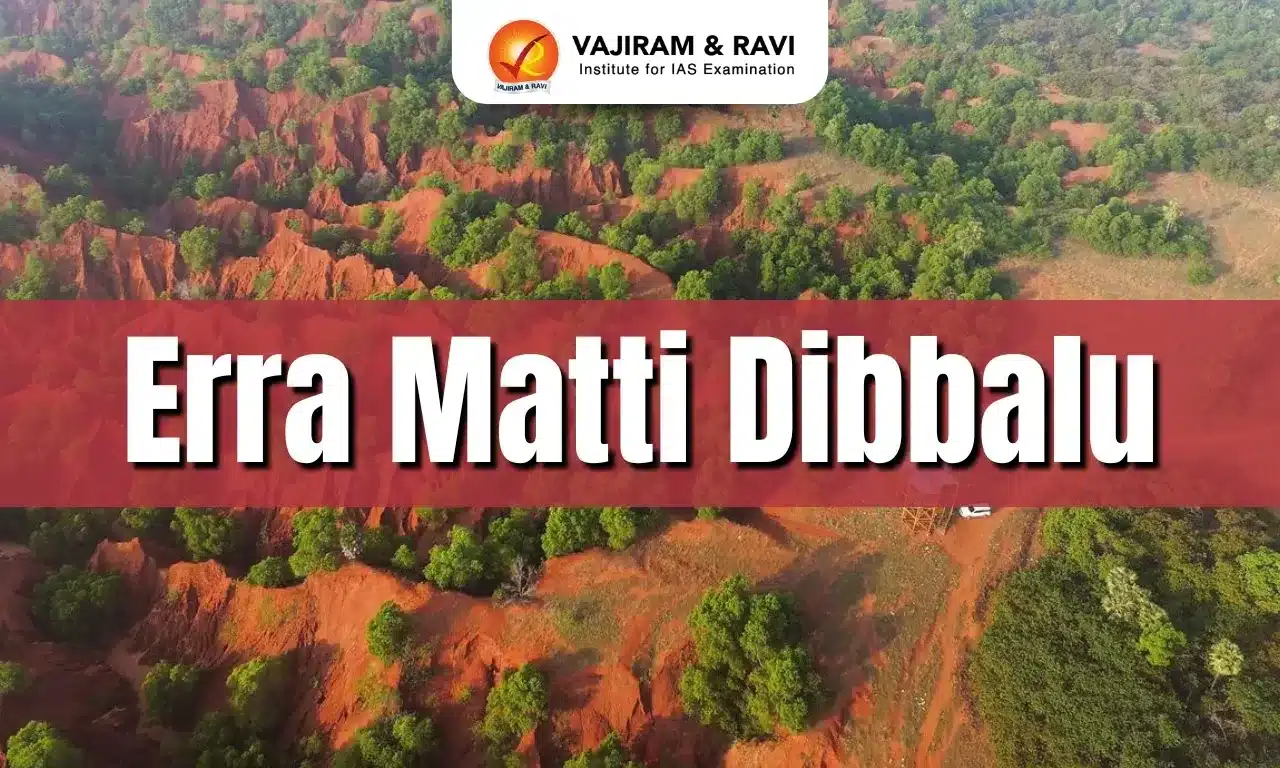
Recently, Andhra Pradesh’s Erra Matti Dibbalu (Red Sand Dunes) have been included in the UNESCO Tentative List of World Heritage Sites. 

About Erra Matti Dibbalu

  • Erra Matti Dibbalu, also known as the Red Sand Dunes is located along the coast near Visakhapatnam in Andhra Pradesh.
  • It was first documented by British geologist William King in 1886, these formations are regarded as rare coastal geomorphological features.

Key Features of Erra Matti Dibbalu

  • It is composed of sand, silt, and clay, with their distinct reddish hue resulting from natural oxidation over thousands of years.
  • The uniqueness of this site is that the red sediments are a part of the continuation of the evolution of the earth and represent the late quaternary geologic age.
  • They exhibit badland topography with different geomorphic landforms and features, including gullies, sand dunes, buried channels, beach ridges, paired terraces, the valley in the valley, wave-cut terrace, knick point and waterfalls.
  • It is a lively scientific evolution site, which depicts the real-time effects of climate change.
  • The site also has archaeological significance, as studies of artefacts indicate an Upper Palaeolithic horizon and on cross dating assigned to Late Pleistocene epoch, which is 20,000 BC.
  • The site contains dendritic drainage patterns and sediment layers that record fluctuations in sea level and climatic changes over the late Quaternary period.
  • Other similar sites: Only two other similar sites exist in the world, one in Sri Lanka and another in Tamil Nadu (Teri Sands).
  • The Geological Survey of India (GSI) declared Erra Matti Dibbalu a National Geo-heritage Monument in 2016. 
  • Issues: Experts note that the site faces threats from tourism and filming activities.

Source: NIE

Erra Matti Dibbalu FAQs

Q1: How many national geological monuments are there in India?

Ans: 34

Q2: Which is India's first geo heritage site?

Ans: Ramgarh Crater

Gandhi Sagar Wildlife Sanctuary

Gandhi Sagar Wildlife Sanctuary

Gandhi Sagar Wildlife Sanctuary Latest News

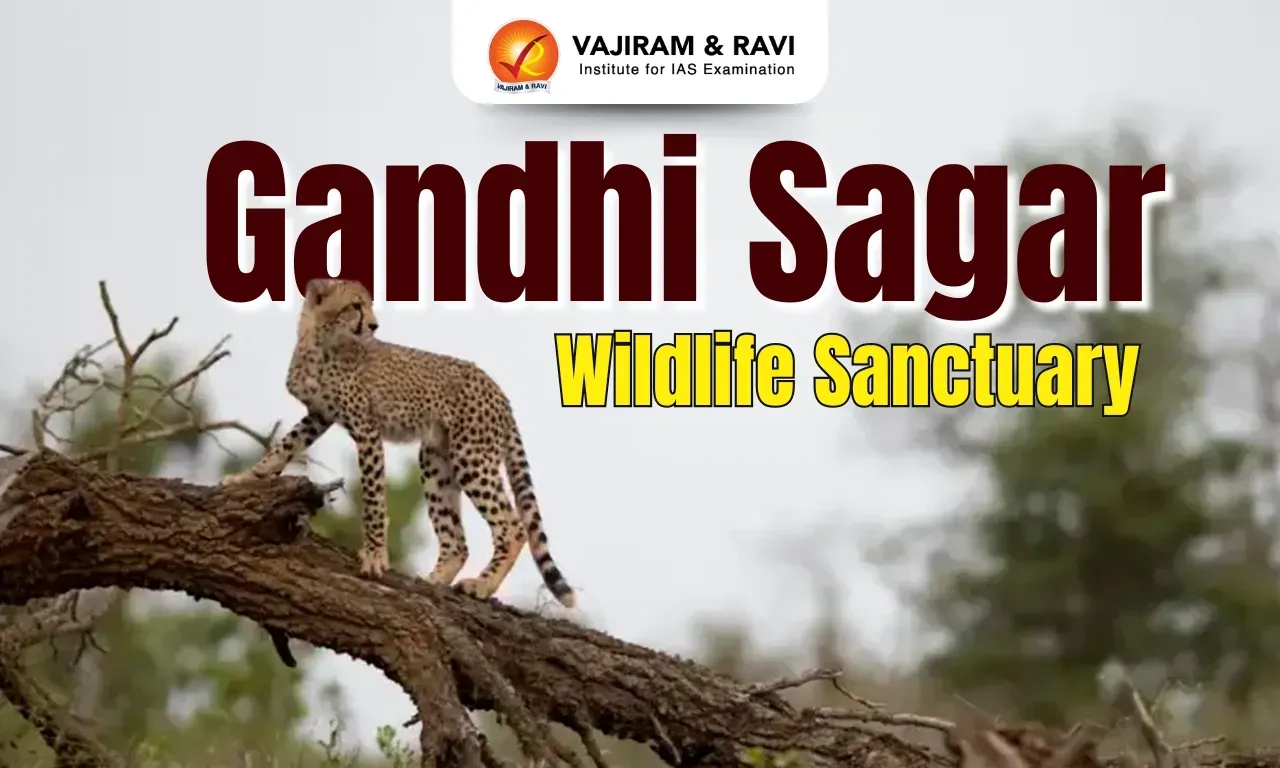
Madhya Pradesh wildlife officials have initiated plans to introduce a female cheetah to the Gandhi Sagar wildlife sanctuary.

About Gandhi Sagar Wildlife Sanctuary

  • Location: It is situated in northwestern Madhya Pradesh, along the Madhya Pradesh-Rajasthan border and lies within the Khathiar-Gir dry deciduous forests ecoregion.
  • Key features:
    • It was declared a sanctuary in 1974, covering an area of 368 sq. km.
    • Rivers: The Chambal River flows through the sanctuary, dividing it into two parts.
    • It is a designated Important Bird and Biodiversity Area (IBA).
    • The sanctuary houses sites of historical and archaeological significance, such as Chaurasigarh, Chaturbhujnath Temple, Bhadkaji rock paintings, Hinglajgarh Fort,and Taxakeshwar Temple.
  • Topography and Vegetation: The sanctuary includes hills, plateaus, and the catchment area of the Gandhi Sagar Dam.
  • Vegetation: Northern tropical dry deciduous forest, Northern tropical dry mixed deciduous forest, Dry deciduous scrub.
  • Flora: It mainly consists of Khair, Salai, Kardhai, Dhawda, Tendu, and Palash trees.
  • Fauna: Chinkara, Nilgai, and Spotted Deer, Indian Leopard, Striped Hyena, and Jackal etc.

Source: IE

Gandhi Sagar Wildlife Sanctuary FAQs

Q1: Which are the main tributaries of the Chambal River?

Ans: The tributaries of the Chambal include KShipra, Choti Kalisindh, Sivanna, Retam, Ansar, Kalisindh.

Q2: In which state Gandhi Sagar WildLife Sanctuary is located?

Ans: Madhya Pradesh

Mission Amrit Sarovar

Mission Amrit Sarovar

Amrit Sarovar Mission Latest News

The Government recently informed that over 68 thousand ponds have been created under the Amrit Sarovar Mission.

About Amrit Sarovar Mission

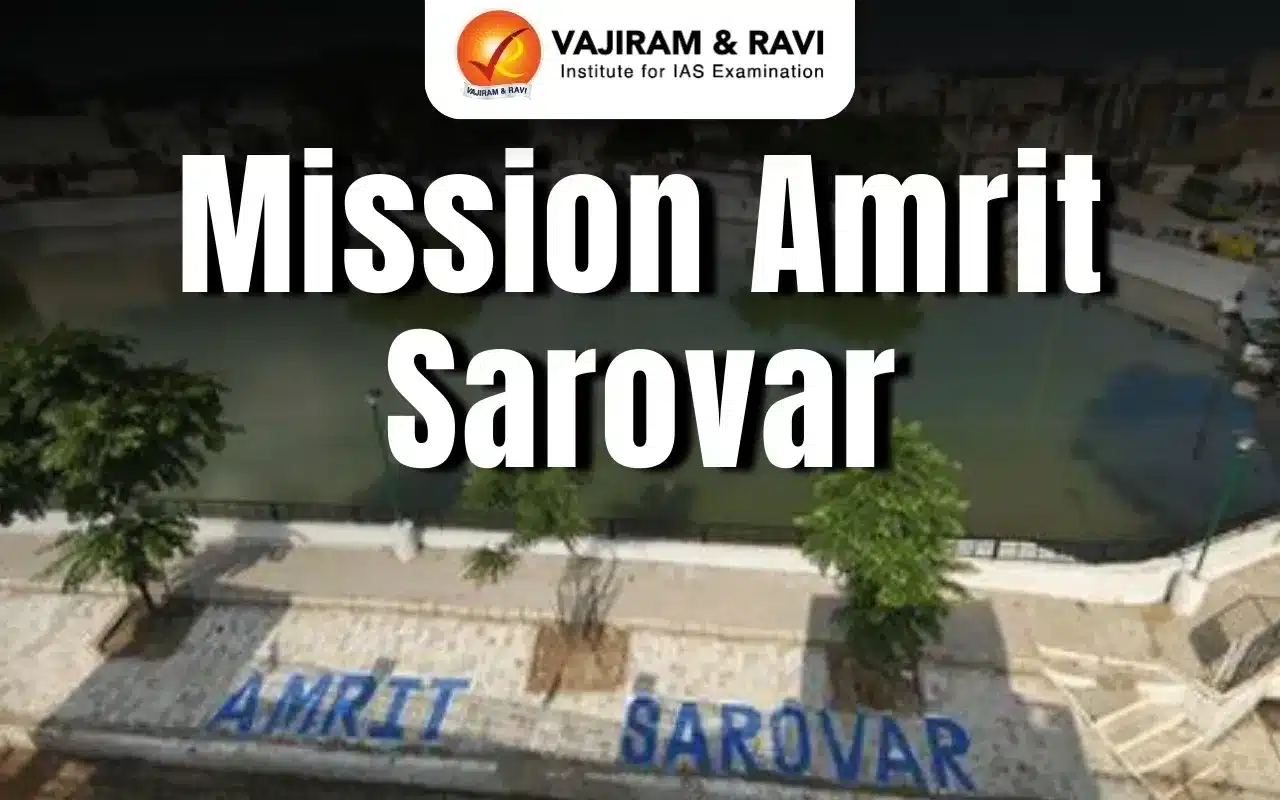
  • It was launched in April 2022 to construct or rejuvenate 75 Amrit Sarovars (ponds) in each district of the country as a part of the celebration of Azadi ka Amrit Mahotsav.
  • It helps to overcome the water crisis in rural areas of the country.

Salient Features of Amrit Sarovar Mission

  • Every Amrit Sarovar will have a pondage area of at least 1 acre with a water holding capacity of about 10,000 cubic metre.
  • Every Amrit Sarovar will be surrounded by trees like Neem, Peepal, and Banyan, etc.
  • Every Amrit Sarovar will be a source of generation of livelihoods by using the water for different purposes like irrigation, fisheries, duckery, cultivation of water chestnut, water tourism, and other activities. 
  • The Amrit Sarovar will also act as a social gathering point in that locality.
  • The site of Amrit Sarovars will be approved by special Gram Sabha, which will also name Panchayat Partinidhi, who will supervise the development of Amrit Sarovar on its behalf.
  • It focuses on water conservation, people’s participation, and proper utilization of soil excavated from the water bodies to boost infrastructure projects.
  • It is based on the “Whole of Government” approach with the participation from the Ministry of Rural Development, Ministry of Jal Shakti, Ministry of Culture, Ministry of Panchayati Raj, Ministry of Environment, Forest & Climate Change, and technical organizations.
  • There is no separate financial allocation for Mission Amrit Sarovar.
  • Mission Amrit Sarovar works are being taken up by the states and districts with convergence from various ongoing schemes such as Mahatma Gandhi NREGS, 15th Finance Commission Grants, Pradhan Mantri Krishi Sichayi Yojna sub-schemes such as the Watershed Development Component, Har Khet ko Pani, besides States’ own schemes.
  • Bhaskar Acharya National Institute for Space Application and Geo-informatics (BISAG-N) has been engaged as a technical partner for the Mission.
    • Amrit Sarovar Portal and Mobile App developed by BISAG-N is used for tracking the progress/ performance of Mission Amrit Sarovar in districts.

Source: NOA

Amrit Sarovar Mission FAQs

Q1: What is the purpose of Mission Amrit Sarovar?

Ans: To construct or rejuvenate 75 Amrit Sarovars (ponds) in each district of the country.

Q2: When was the Amrit Sarovar Mission launched?

Ans: April 2022

Q3: Which body approves the site of an Amrit Sarovar?

Ans: The site of Amrit Sarovars will be approved by special Gram Sabha.

Q4: Which organization serves as the technical partner for the Amrit Sarovar Mission?

Ans: Bhaskar Acharya National Institute for Space Application and Geo-informatics (BISAG-N)

Brown Trout

Brown Trout

Brown Trout Latest News

The Kashmir fisheries department plans to reintroduce the Brown trout back into the Valley for game.

About Brown Trout

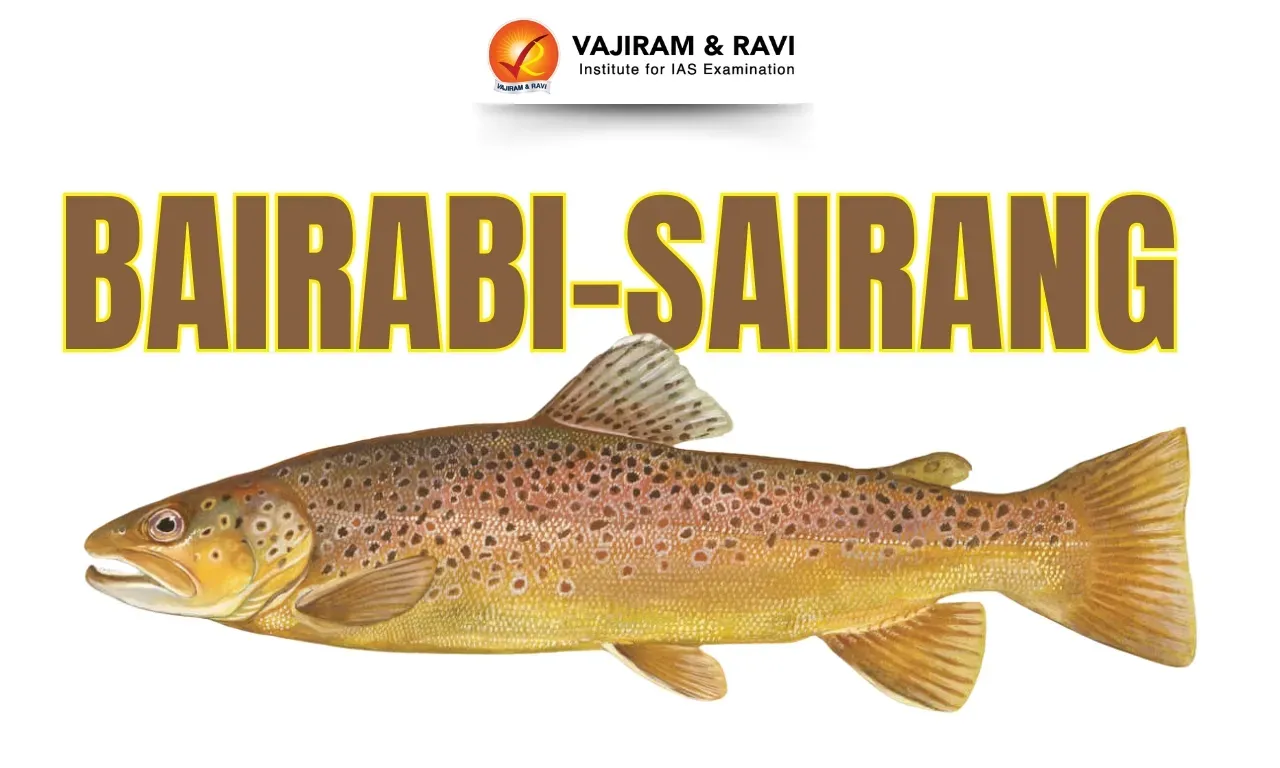
  • The brown trout (Salmo trutta) is a species of salmonid ray-finned fish and the most widely distributed species of the genus Salmo.
  • It has been widely introduced globally as a game fish.
  • It is one of the world's worst invasive species outside of its native range.
  • It is a cold-water fish that prefers cool and well-oxygenated water.
  • Appearance: It usually grows to between 15 and 22 inches in length and between 1 and 5 pounds, the trout is considered a popular game fish..
  • Breeding Season: October/November is the breeding season for this fish.
  • It is best suited to freshwaters; this fish spends much of its time in crevices between boulders in streams. 
  • Distribution: The native range extends from northern Norway and White Sea tributaries in Russia in the Arctic Ocean to the Atlas Mountains in North Africa.
  • The western limit of their native range is Iceland in the north Atlantic, while the eastern limit is in Aral Sea tributaries in Afghanistan and Pakistan.
  • In India, the British first introduced the brown trout in the Valley’s streams in 1900.
  • Conservation Status: Least Concern (IUCN Red List)

Source: IE

Brown Trout FAQs

Q1: Where is trout most commonly found?

Ans: They spend their entire lives exclusively in freshwater lakes, rivers and wetlands.

Q2: What is meant by invasive species?

Ans: Invasive species are the subset of established non-native alien or naturalized species that are a threat to native species and biodiversity.

Exercise Siyom Prahar

Exercise Siyom Prahar

Exercise Siyom Prahar Latest News

Recently, the Indian Army successfully conducted Exercise Siyom Prahar.

About Exercise Siyom Prahar

  • It is a major field training exercise conducted by the Indian Army.
  • It is aimed at validating the employment of drone technology in modern tactical operations.
  • The exercise was held under realistic battlefield conditions and marked “a significant step in operational preparedness” by integrating unmanned aerial systems across tactical and operational depths.
  • The drones were employed for persistent surveillance, battlefield reconnaissance, target acquisition and precision strikes, underscoring their role in enhancing combat effectiveness.
  • Focus: The central focus of the exercise was the development and validation of new Tactics, Techniques and Procedures for future battlefields.
  • It included methods of fusing drone-derived intelligence with conventional firepower, refining joint targeting processes and ensuring rapid decision-making in dynamic combat environments.

Significance of Exercise Siyom Prahar

  • The exercise highlighted the importance of adaptability and synergy between traditional combat arms and emerging technological enablers, the official added.
  • This exercise reflected the Indian Army’s proactive approach to adapting to modern warfare and its emphasis on future-readiness.

Source: TH

Exercise Siyom Prahar FAQs

Q1: In which state Exercise Siyom Prahar was conducted by the Indian Army?

Ans: Arunachal Pradesh

Q2: What is the drone?

Ans: A drone refers to an aerial vehicle that receives remote commands from a pilot or relies on software for autonomous flight.

Enquire Now