Preponderance of Probability

Preponderance of Probability

Preponderance of Probability Latest News

The judgment on the title battle over the 1,500 square yards in the town of Ayodhya is founded on the “test of preponderance of probabilities” over who had possession of the outer and inner courtyards of the disputed premises, according to former Chief Justice of India D.Y. Chandrachud.

About Preponderance of Probability

  • It is a widely accepted standard of proof in civil proceedings.
  • The preponderance of probability refers to the greater likelihood of one event or fact over another. 
  • In this context, a fact is considered proven when the evidence suggests that the occurrence of the fact is more likely than not. 
  • It is not about certainty or eliminating all doubts but rather about weighing evidence to see which side presents a more probable scenario. 
  • In civil cases, the party bearing the burden of proof needs to show that their version of events is more plausible than the opposing party’s.
  • This standard contrasts sharply with the criminal law standard of “beyond a reasonable doubt,” where the prosecution must prove the defendant’s guilt to a much higher level of certainty. 
  • In civil cases, by contrast, the balance of probabilities leans toward the more convincing narrative.
  • In Narayan Ganesh Dastane v. Sucheta Narayan Dastane (1975), the Supreme Court of India stated that under Section 3 of the Indian Evidence Act, a fact is said to be proved when the court believes in its existence based on a “preponderance of probability.” 
  • The court applies this test by evaluating conflicting probabilities and choosing the most probable scenario.

Application of Preponderance of Probability in Civil Law

  • The preponderance of probability is the standard of proof used in most civil litigation. 
  • Civil cases typically involve disputes over rights, contracts, property, or torts, and the plaintiff must demonstrate that their claim is more likely true than false. 
  • For example, in a breach of contract case, the plaintiff must show that it is more likely than not that the contract was breached.

Source: TH

Preponderance of Probability FAQs

Q1: What is meant by the term preponderance of probability in civil law?

Ans: The preponderance of probability refers to the greater likelihood of one event or fact over another.

Q2: In which type of legal proceedings is the preponderance of probability standard primarily applied?

Ans: The preponderance of probability standard is primarily applied in civil proceedings.

Q3: What does the plaintiff need to establish in a civil case under the preponderance of probability standard?

Ans: In a civil case under the preponderance of probability standard, the plaintiff needs to establish that their version of events is more likely true than false.
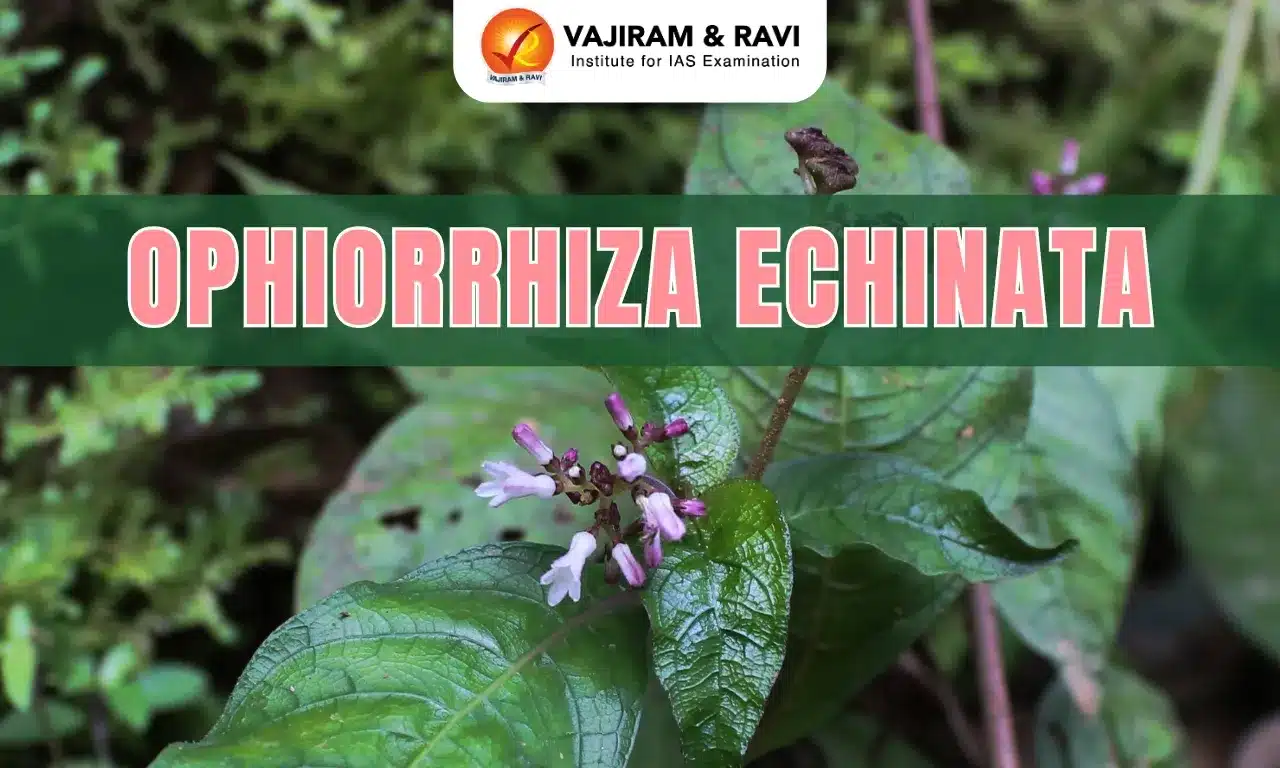

Ophiorrhiza Echinata

Ophiorrhiza Echinata

Ophiorrhiza echinata Latest News

A new coffee plant species named Ophiorrhiza echinata was recently found in the Western Ghats.

About Ophiorrhiza echinata

  • It is a new species of coffee plant.
  • It was discovered in the highly biodiversity-rich shola forests of the Western Ghats at Devikulam in the Idukki District of Kerala.
  • It grows in the ecotone region between evergreen forest and grassland vegetation at an elevation of 1,630 m above sea level and may have medicinal potential.
  • It belongs to the family Rubiaceae and is closely related to the genus Ophiorrhiza mungos, which is a key ingredient in cancer treatment and antidote preparations.
  • Ophiorrhiza echinata has so far only been collected from the type locality. 
  • The area of occupancy is estimated to be less than four square kilometres, and the known populations contain a maximum of only 35 plants.

Source: TOI

Ophiorrhiza echinata FAQs

Q1: What is Ophiorrhiza echinata?

Ans: It is a new species of coffee plant.

Q2: Where was the new plant species Ophiorrhiza echinata discovered?

Ans: Devikulam, Idukki District, Kerala

Q3: In which biodiversity-rich ecosystem was Ophiorrhiza echinata discovered?

Ans: Shola forests of the Western Ghats

Q4: Why is Ophiorrhiza echinata considered highly vulnerable?

Ans: It has very limited area of occupancy and low population size.

Swachh Shehar Jodi Initiative

Swachh Shehar Jodi Initiative

Swachh Shehar Jodi Initiative Latest News

Recently, the Ministry of Housing and Urban Affairs (MoHUA) has launched the Swachh Shehar Jodi (SSJ) initiative.

About Swachh Shehar Jodi Initiative

  • It is a structured mentorship and collaborative action program involving 72 mentor cities and around 200 mentee cities.
  • Based on the recent performance in the Swachh Survekshan rankings, top-performing cities have been identified as mentor cities and paired with low-performing mentee cities. It is implemented under the Swachh Bharat Mission – Urban (SBM-U).
  • It is aimed to foster knowledge and experience sharing, peer learning and transforming best practices in sanitation and waste management across urban India.

Objectives of Swachh Shehar Jodi Initiative

  • The objective is to support comparatively low performing cities in improving their swachhata performance by drawing on the experience of mentor cities to:
  • Replicate tested best practices in sanitation and waste management

Implementation of Swachh Shehar Jodi Initiative

  • It is envisioned that the mentor cities will be those cities that adhere to the following criteria:
    • Top performing cities that have featured across Rank 1, 2 or 3 in Swachh Survekshan (SS) 2022, 2023, and 2024 ( i.e. – cities that are part of the Super Swachh League)
    • Top three cities that are featured across population categories in Swachha Sarvesksha 2024.
    • Promising clean cities that emerge across States/UTs as part of SS 2024.
  • The mentee city may be selected on the baisis of the following criteria:
    • Featured in the bottom of the State cumulative ranking of the latest SS rankings
    • Geographical proximity of the jodi cities to each other
  • Funding: Both mentor and mentee cities may utilize the Capacity Building (CB) Funds allocated to each State/UT as part of SBM-U 2.0. State/UT Governments are encouraged to top up this fund, if required.
  • Cities can also leverage funds from other sources / partner organizations.

Source: PIB

Swachh Shehar Jodi Initiative FAQs

Q1: What is the duration of the mentorship program under Swachh Shehar Jodi?

Ans: 100 days.

Q2: What is the primary objective of the Swachh Shehar Jodi initiative?

Ans: To foster city-to-city mentorship for waste management.

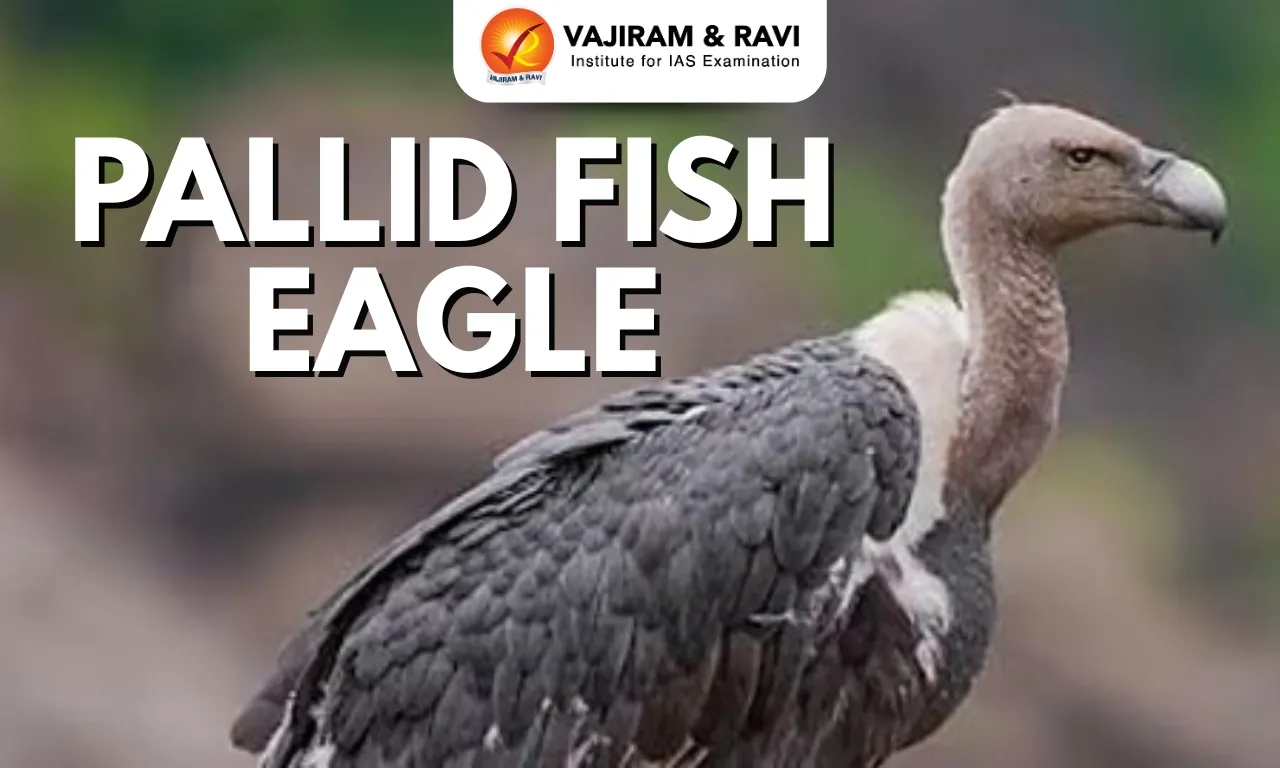
Pallid Fish Eagle

Pallid Fish Eagle

Pallid Fish Eagle Latest News

Recently, a survey conducted jointly by the State Forest Department and the World Wide Fund for Nature (WWF) has revealed rare nesting of Pallid Fish Eagle in Corbett Tiger Reserve.

About Pallid Fish Eagle

  • It is also known as Pallas’s sea eagle or band-tailed fish eagle, is a large, brownish sea eagle.
  • It can be seen near lakes, marshes and large rivers, from lowlands to 5,000 metres of elevation.
  • Food: It feeds primarily on fish, but many other prey are part of its diet.
  • It breeds usually near water in a large nest placed in a tall tree.
  • It is partially migratory, with Central Asian birds wintering among the southern Asian birds in northern India, and also further west to the Persian Gulf.
  • Distribution: It is found in the east Palearctic in Kazakhstan, Russia, Tajikistan, Turkmenistan, Uzbekistan, Mongolia,China, India, Nepal, Bangladesh and Myanmar. 
  • Conservation status: IUCN Red List: Endangered
  • Threats: Humans contribute to the decline of this species through habitat degradation, pollution, and draining or overfishing lakes.

Key Facts about Corbett Tiger Reserve

  • It is located on the foothills of the Himalayas in Uttarakhand.
  • It was originally established as Hailey National Park in 1936.
  • It is not only the first national park in India, but also the first to come under the Project Tiger initiative.
  • Terrain: The terrain is undulating with several valleys. The rivers Ramganga, Pallaen, and Sonanadi flow through the valleys.
  • It is spread over the Bhabar and lower Shivalik regions with a deep-water table.
  • Vegetation: North Indian tropical moist deciduous forests and tropical dry deciduous forests. In general, the vegetation comprises sal and mixed forests, interspersed with grass lands and riparian vegetation.

Source: New India Express

Pallid Fish Eagle FAQs

Q1: Where is the Pallid Fish Eagle primarily found?

Ans: East Palearctic region

Q2: What is the primary source of food for the Pallid Fish Eagle?

Ans: Fish

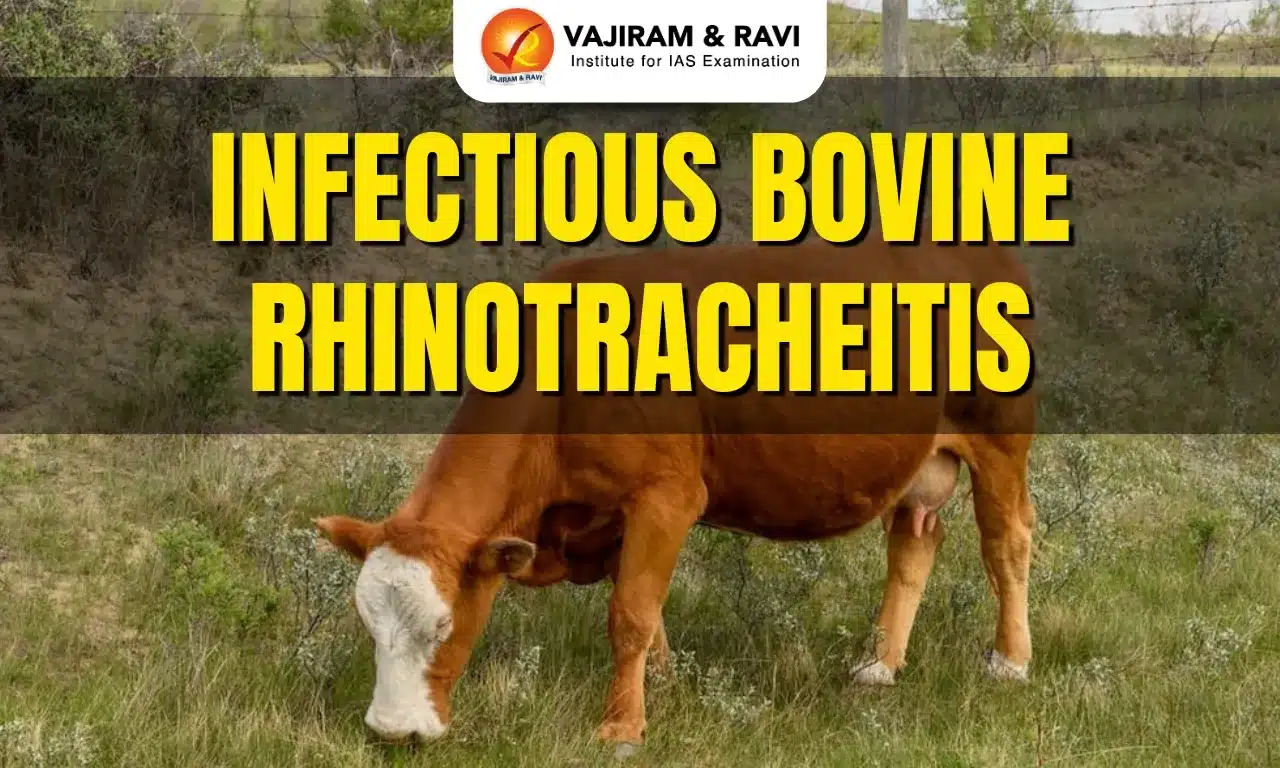
Infectious Bovine Rhinotracheitis

Infectious Bovine Rhinotracheitis

Infectious Bovine Rhinotracheitis Latest News

Recently, Indian Immunologicals (IIL) has launched India’s first indigenously developed glycoprotein E (gE) deleted DIVA marker vaccine against infectious bovine rhinotracheitis (IBR).

About Infectious Bovine Rhinotracheitis

  • It is endemic in India and caused by Bovine Herpes Virus (BHV-1). 
  • BoHV-1 is a member of the genus Varicellovirus in the subfamily Alphaherpesvirinae,
  • It is a disease of domestic and wild cattle.
  • There are three forms: respiratory, genital and encephalitic, the first two are more common.
  • Transmission: The disease is transmitted through the aerosol route and affects reproductive systems. It is also transmitted by semen from bulls to milch animals.
  • Impacts on Bovines: Infertility, abortions and lower milk productivity are some of the major impacts of the disease.
  • Treatment: There is no vaccine available in India and there is no specific treatment against this disease thus far. 

Symptoms of Infectious Bovine Rhinotracheitis

  • It is characterised by clinical signs of the upper respiratory tract, such as a (muco)purulent nasal discharge, hyperaemia of the muzzle (red nose disease) and by conjunctivitis.
  • Signs of general illness are fever, depression, inappetence, abortions and reduced milk yield.

Source: TH

Infectious Bovine Rhinotracheitis FAQs

Q1: What is the causative agent of Infectious Bovine Rhinotracheitis (IBR)?

Ans: It is caused by Bovine alphaherpesvirus 1 (BoHV-1).

Q2: What are the primary symptoms of Infectious Bovine Rhinotracheitis (IBR)?

Ans: Respiratory issues, fever, and nasal discharge.

National Crime Records Bureau

National Crime Records Bureau

National Crime Records Bureau Latest News

According to the latest data released by the National Crime Records Bureau (NCRB), crimes against Scheduled Tribes (STs) increased 28.8 per cent in 2023 as compared to the previous year.

About National Crime Records Bureau

  • It was established in 1986 to act as a repository of information on crime and criminals. 
  • It was set up based on the recommendations of the Tandon Committee, the National Police Commission (1977-1981) and the Task Force of the Home Ministry.
  • Nodal Ministry: It comes under the Ministry of Home Affairs (MHA), Government of India.
  • Headquarters: New Delhi

Functions of National Crime Records Bureau

  • It is responsible for collecting and analysing crime data as well as serving as a repository of such information to aid investigators in tracing crimes and criminals.
  • It is entrusted with the responsibility of monitoring, coordination, and implementing the Crime and Criminal Tracking Network and System (CCTNS) project. 
  • Under the National Digital Police Portal police officers  look for a criminal or suspect on the CCTNS database and give citizens with services such as online complaint filing, etc.
  • The Bureau has also been entrusted to maintain the National Database of Sexual Offenders (NDSO) and share it with the States/UTs on a regular basis.
  • NCRB has also been designated as the Central Nodal Agency to manage the technical and operational functions of the ‘Online Cyber-Crime Reporting Portal’ through which any citizen can lodge a complaint or upload a video clip as evidence of crime related to child pornography, rape/gang rape.
  • The NCRB has also launched CyTrain, a portal for online training of different stakeholders in cybercrime investigations and prosecution. 
  • The Central Finger Print Bureau under the NCRB is a national repository of all fingerprints in the country.
  • NCRB also compiles and publishes National Crime Statistics i.e. Crime in India, Accidental Deaths & Suicides, and also Prison Statistics. 

Source: IE

National Crime Records Bureau FAQs

Q1: When was the National Crime Records Bureau (NCRB) established?

Ans: 1986.

Q2: What is the Crime and Criminal Tracking Network & Systems (CCTNS) project?

Ans: A project to connect police stations across the country. The CCTNS project aims to create a comprehensive and integrated system for enhancing policing efficiency.

Hunga Tonga–Hunga Haʻapai (HTHH) Volcano

Hunga Tonga–Hunga Haʻapai (HTHH) Volcano

Hunga Tonga–Hunga Haʻapai Volcano Latest News

A collaborative research team recently returned from a major 54-day voyage on CSIRO research vessel (RV) Investigator to explore the impacts of the devastating 2022 eruption of Tonga's underwater Hunga Volcano.

About Hunga Tonga–Hunga Haʻapai Volcano

  • It is a submarine stratovolcano in the Tongan archipelago in the southern Pacific Ocean.
  • The HTHH volcano includes the small islands of Hunga Tonga and Hunga Ha’apai, along with shallow reefs along the caldera rim of a much larger submarine edifice in the western South Pacific Ocean, west of the main inhabited islands in the Kingdom of Tonga. 
  • It is located about 30 km south of the submarine volcano of Fonuafoʻou and 65 km north of Tongatapu, the country’s main island.
  • The volcano is part of the highly active Tonga–Kermadec Islands volcanic arc, a subduction zone extending from New Zealand north-northeast to Fiji.
    • The Tonga-Kermadec arc was formed as a result of the subduction of the Pacific Plate beneath the Indo-Australian Plate. 
  • It has erupted regularly over the past few decades.
  • On January 15, 2022, the HTHH volcano experienced an explosive eruption, considered one of the largest volcanic eruptions of the 21st century.
    • The eruption caused a plume of volcanic materials and gasses to be pushed into the stratosphere and sent shock waves through the atmosphere and tsunami waves across ocean basins.

What is a Stratovolcano?

  • It is a tall, steep, and cone-shaped type of volcano.
  • Unlike flat shield volcanoes, they have higher peaks.
  • They are typically found above subduction zones, and they are often part of large volcanically active regions, such as the Ring of Fire that frames much of the Pacific Ocean.
  • Strato Volcanoes comprise the largest percentage (~60%) of the Earth’s individual volcanoes, and most are characterized by eruptions of andesite and dacite, lavas that are cooler and more viscous than basalt.
  • These more viscous lavas allow gas pressures to build up to high levels. Therefore, these volcanoes often suffer explosive eruptions. 
  • They are usually about half-half lava and pyroclastic material, and the layering of these products gives them their other common name, composite volcanoes.
  • At their peak, they usually have a small crater. The crater may be filled with water or ice, or it may contain a volcanic dome during a period of relative inactivity.

Source: PHYS

Hunga Tonga–Hunga Haʻapai (HTHH) Volcano FAQs

Q1: The Hunga Tonga–Hunga Haʻapai (HTHH) Volcano is located in which ocean?

Ans: Southern Pacific Ocean

Q2: Hunga Tonga–Hunga Haʻapai (HTHH) is classified as which type of volcano?

Ans: Submarine stratovolcano

Q3: To which country does the HTHH volcano belong?

Ans: The Hunga Tonga–Hunga Haʻapai (HTHH) volcano belongs to Tonga.

Red Sanders

Red Sanders

Red Sanders Latest News

Recently, the National Biodiversity Authority (NBA) has sanctioned an amount of ₹82 lakh to the Andhra Pradesh Biodiversity Board for the conservation of the endemic plant species Red Sanders (Pterocarpus santalinus). 

About Red Sanders

  • It is native to the Southern Eastern Ghats and found particularly in the districts of Anantapur, Chittoor, Kadapa, and Kurnool of Andhra Pradesh.
  • Required Climatic Conditions: It usually grows in rocky, degraded and fallow lands with Red Soil and a hot and dry climate.
  • Threats: It has been under heavy threat due to its high commercial value, leading to rampant smuggling.
  • Conservation Status:

Key Facts about National Biodiversity Authority

  • It is a statutory body established under the Biological Diversity Act, 2002.
  • It was formally set up in 2003.
  • To ensure effective implementation of the Act at different administrative levels, two additional entities were created alongside the NBA:
    • State Biodiversity Boards (SBBs): Functioning at the state level to regulate access to biological resources within their jurisdiction.
    • Biodiversity Management Committees (BMCs): Established at the local village or panchayat level to promote grassroots-level biodiversity conservation and documentation.
  • Headquarters: Chennai, Tamil Nadu.

Composition of National Biodiversity Authority

  • Chairperson: An eminent person with proven knowledge and experience in biodiversity conservation, sustainable use of biological resources, and equitable sharing of benefits.
  • 10 Ex-officio Members: Senior representatives from the Government of India, nominated to provide policy insights and ensure inter-ministerial coordination.
  • 5 Non-Official Members: Experts and professionals from diverse fields related to biodiversity management, nominated to contribute independent perspectives and specialized expertise.

Source: PIB

Red Sanders FAQs

Q1: What is the IUCN conservation status of Red Sanders?

Ans: Endangered

Q2: Where is Red Sanders primarily found?

Ans: Eastern Ghats

Gulf of Aden

Gulf of Aden

Gulf of Aden Latest News

A suspected missile strike, likely from Yemen's Houthi rebels, caused a vessel to catch fire in the Gulf of Aden recently.

About Gulf of Aden

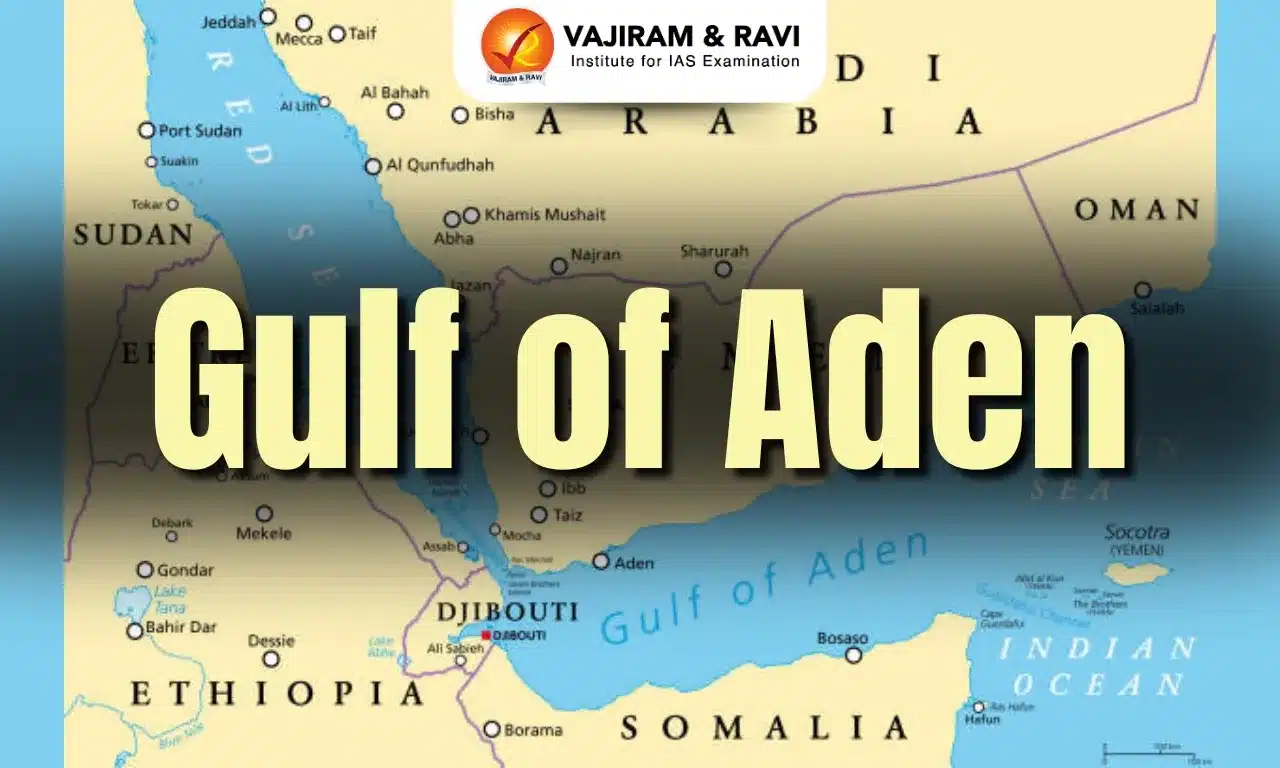
  • It is an extension of the Indian Ocean, located between the Arabian Peninsula and the African continent. 
  • The gulf connects the Red Sea to the Arabian Sea via the Strait of Bab el Mandeb.
  • The gulf is named after “Aden,” a port city on Yemen’s coast.
    • It is one of the largest natural harbors in the world, with an area of about 70 sq. km of sheltered water.
  • It is approximately 900 km long and 500 km wide and covers roughly 410,000 sq.km.
  • It is bounded to the south by Somalia and the Socotra Islands (part of Yemen), north by Yemen, east by the Arabian Sea, and west by Djibouti
  • The gulf is connected to the Somali Sea to the south by the Guardafui Channel.
  • In the west, it narrows into the Gulf of Tadjoura,near Djibouti.
  • It is demarcated from the Arabian Sea by the Horn of Africa and the Socotra Islands.
  • It is a geologically young body of water with a unique rich biodiversity that comprises many varieties of coral, fish, seabirds, and invertebrates.
  • The dominant relief feature of the gulf’s terrain is the Sheba Ridge,an extension of the Indian Ocean ridge system, which extends along the middle of the gulf.
  • The Gulf of Aden is strongly influenced by the upwelling of cool, nutrient-rich waters during the southwest and northeast monsoons and is characterized by a prevailing high-energy climate.
  • Compared to the neighbouring Red Sea, the Gulf of Aden has a lower saline content.
  • Some of the major cities near the gulf include Aden, Mukalla, Ahnwar, Balhaf, Berbera, Bosaso, and Djibouti City.
  • Major Ports: Aden in Yemen, and Berbera and Bosaso in Somalia. 
  • It is also a critical part of the Suez Canal shipping route, which connects the Red Sea and the Mediterranean Sea.
  • An estimated 11% of seaborne petroleum passes through the Gulf of Aden en route to the Mediterranean or Arabian Seas.

Source: TOI

Gulf of Aden FAQs

Q1: The Gulf of Aden connects which two major bodies of water?

Ans: Red Sea and Arabian Sea

Q2: Which countries does the Gulf of Aden border?

Ans: Yemen, Somalia, Djibouti

Q3: How does the salinity of the Gulf of Aden compare to the Red Sea?

Ans: Lower than the Red Sea.

Q4: Which major ports are located along the Gulf of Aden?

Ans: Aden in Yemen, and Berbera and Bosaso in Somalia.

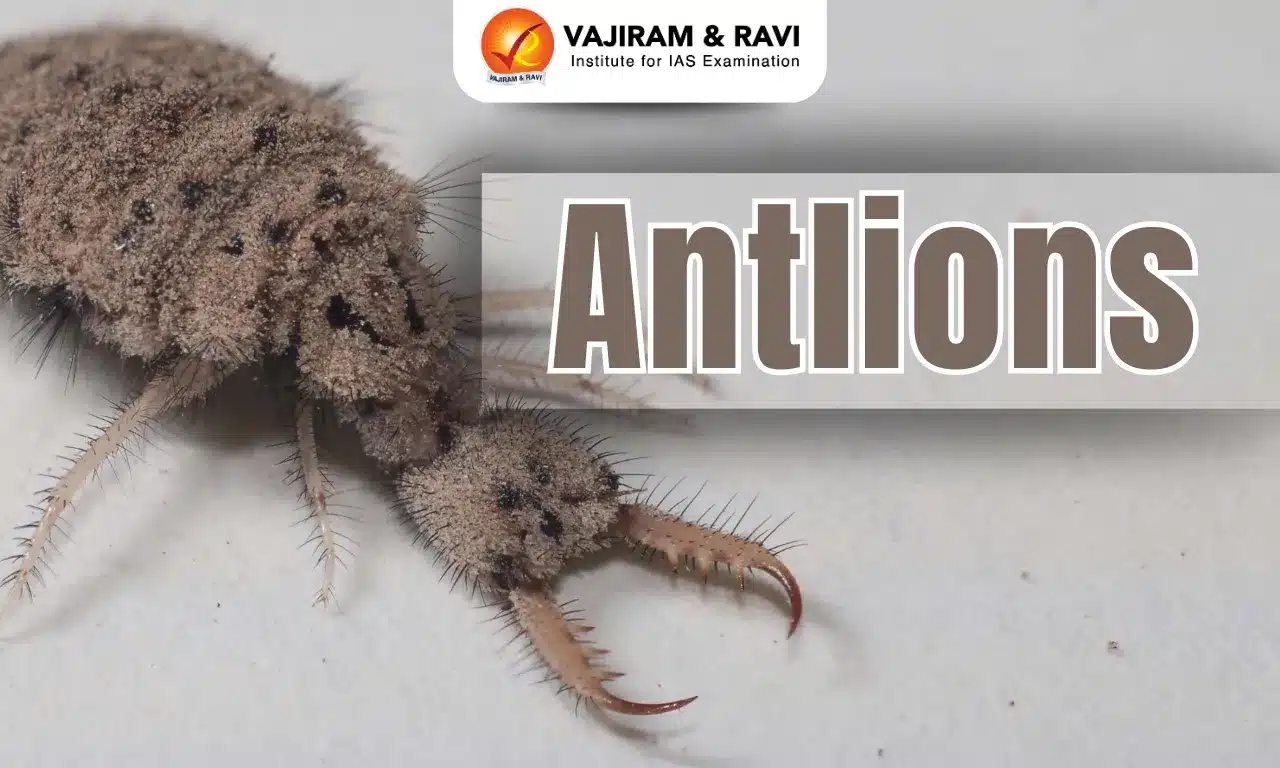
Antlions

Antlions

Antlions Latest News

Researchers recently discovered two new species of antlions named Indophanes keralaensis and Indophanes sahyadriensis belonging to the family Myrmeleontidae under the order Neuroptera.

About Antlions

  • Antlions are a group of about 2,000 different species of insects. 
  • They belong to a family called Myrmeleontidae
  • They are named for the predatory nature of the larvae, which commonly trap ants and other small insects in pits dug into the ground.
  • Adult antlions are not as well known. They live for a shorter time than the larvae. 
    • Adult antlions, sometimes called antlion lacewings, usually fly at dusk or after dark. 
    • People sometimes mistake them for dragonflies or damselflies.
  • Habitat and Distribution:
    • Antlions live all over the world. 
    • Most types are found in warm, tropical places. 
    • But some species, like the European Euroleon nostras, live in colder areas. 
    • They often live in dry, sandy places. This is where their larvae can easily dig their traps. 
    • However, some larvae hide under leaves or other bits of nature. They wait to ambush their prey there.
  • They come in various shapes and sizes, with larvae typically measuring from a few millimeters to several centimeters, depending on the species. 
    • Antlion larvae have rounded bodies with long sickle-shaped jaws
    • The larvae are found at the base of cone-shaped pits in sandy areas.
    • In North America, these larvae are sometimes called doodlebugs. This is because of the wiggly marks they leave in the sand.
    • They usually remain in the larval stage for one to two years, depending on the species.
    • Once they pupate, they require up to one month to complete their development.
  • Antlions are harmless and cause no damage to flowers, people, or structures.
  • They are highly beneficial and feed on ants and other insects that fall into their traps.

Source: TH

Antlions FAQs

Q1: Antlions belong to which insect family?

Ans: Myrmeleontidae

Q2: Why are antlions named so?

Ans: Because their larvae trap ants and other insects in sandy pits.

Q3: How long do antlion larvae usually remain in the larval stage?

Ans: 1–2 years

Q4: Adult antlions are often mistaken for which insects?

Ans: Dragonflies and damselflies

Q5: Where are antlions most commonly found?

Ans: Warm, tropical regions with sandy soil.

Enquire Now