IUCN’s World Commission on Protected Areas

IUCN’s World Commission on Protected Areas

IUCN’s World Commission on Protected Areas Latest News

Recently, the Director of Kaziranga National Park and Tiger Reserve has received the Kenton R. Miller Award, constituted by the IUCN World Commission on Protected Areas (WCPA). 

About IUCN’s World Commission on Protected Areas

  • IUCN World Commission on Protected Areas is one of six technical commissions of the International Union for Conservation of Nature (IUCN).
  • It was established in 1948 as a global network dedicated to the conservation of nature and the sustainable use of natural resources.
  • Functions: It specializes in protected area governance, management, and policy, supporting the creation and effective management of protected areas globally, including national parks, reserves, and marine protected areas.

Key Facts about Kenton R. Miller Award

  • It was established in 2006.
  • It is presented every two years by the IUCN-WCPA for Innovation in National Parks and Protected Area Sustainability.
  • It was named after a former Director General of the IUCN.
  • The award recognises individuals or teams whose innovations in planning, management, finance, governance, monitoring, capacity building, and communication have a significant impact and peer recognition without prior international awards.
  • The Kenton Miller Award comes with a US $5,000 cash prize. 

Source: TH

IUCN’s World Commission on Protected Areas FAQs

Q1: What is the primary function of the World Commission on Protected Areas (WCPA)?

Ans: To provide scientific and technical advice on protected areas.

Q2: What is the purpose of the IUCN's Protected Planet Report?

Ans: To evaluate the global status of protected and conserved areas.
Naked Mole Rat

Naked Mole Rat

Naked Mole Rat Latest News

A new study of the naked mole rat shows that these animals have evolved a DNA repair mechanism that could explain their longevity.

About Naked Mole Rat

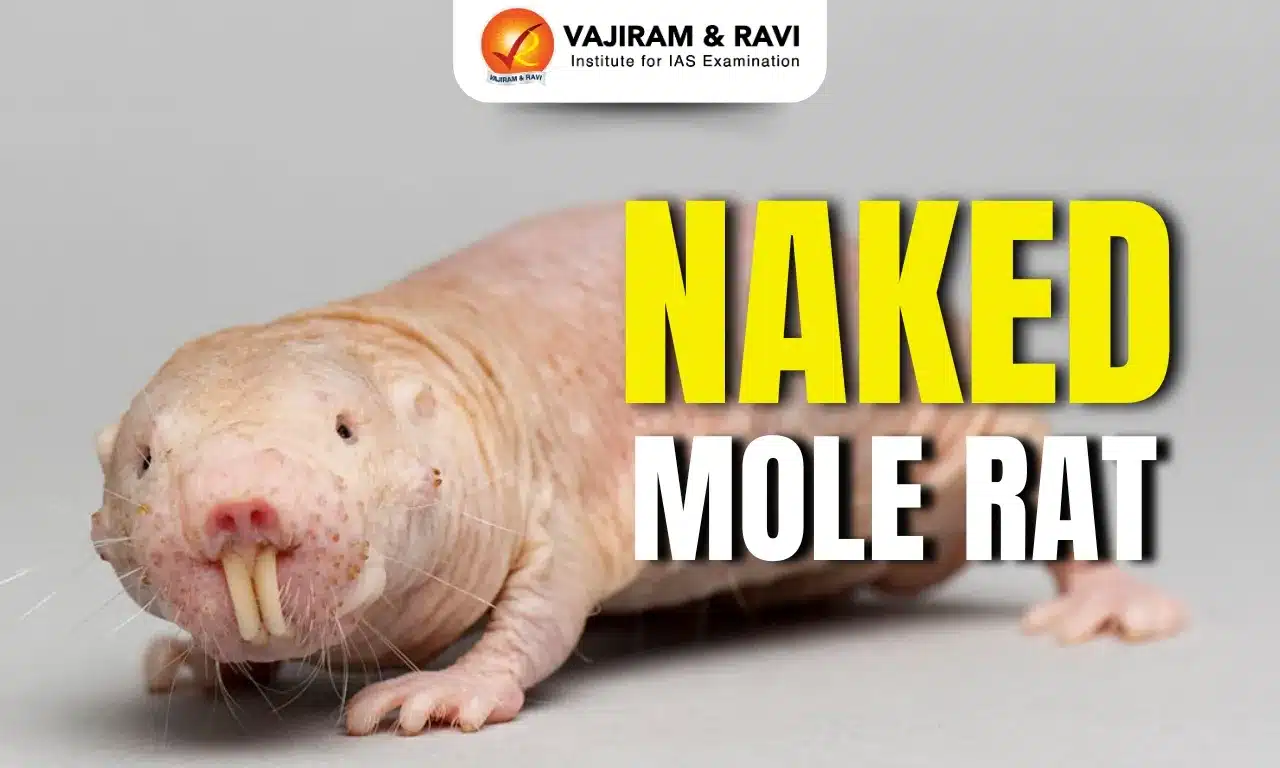
  • It is a small, hairless burrowing rodent native to parts of East Africa.
  • Distribution: They are predominantly found in southern Ethiopia, Kenya, Somalia, and Djibouti.
  • Habitat: They inhabit drier parts of the tropical grasslands and savanna.
  • Food: They are herbivores and feed primarily on very large tubers.
  • Social Structure: It is eusocial, meaning they live in large colonies in which only one female breeds and the majority of workers (both males and females) spend their entire lives working for the colony. 
  • Conservation Status: IUCN: Least Concern

Characteristics of Naked Mole Rat

  • It is famous for living an astonishingly long time, up to around 37 years, nearly 10x longer than mammals of similar size. 
  • It lacks pain sensitivity in its skin and has very low metabolic and respiratory rates.
  • It is also remarkable for its longevity and its resistance to cancer and oxygen deprivation.
  • Their lifestyle is more akin to that of bees and wasps and other eusocial insects.
  • They live in underground burrows that may stretch to 5 km, in colonies of around 70 animals.
  • It is cold-blooded, unable to control their body temperature and dependent on the prevailing outside temperature.

Key Findings of Researchers

  • The cyclic GMP-AMP synthase (cGAS) functions differently in naked mole rats compared to humans and mice. (GMP –AMP synthesis which modulates various cellular processes)
  • Key differences in cGAS function
    • Humans and Mice: cGAS interferes with DNA repair, increasing the risk of aging and cancer
    • Naked Mole Rats: cGAS enhances DNA repair, promoting genome stability and potentially contributing to their longevity.
    • This is due to four amino acid substitutions in the cGAS structure that allow it to bind to DNA longer and facilitate repair by bringing together repair proteins FANCI and RAD50.

Source: TH

Naked mole rat FAQs

Q1: What is the habitat of Naked Mole Rats?

Ans: Arid regions of East Africa.

Q2: What is unique about naked mole rats' pain perception?

Ans: They lack pain sensitivity in their skin, particularly to acids and capsaicin.

Maitri II Station

Maitri II Station

Maitri II Station Latest News

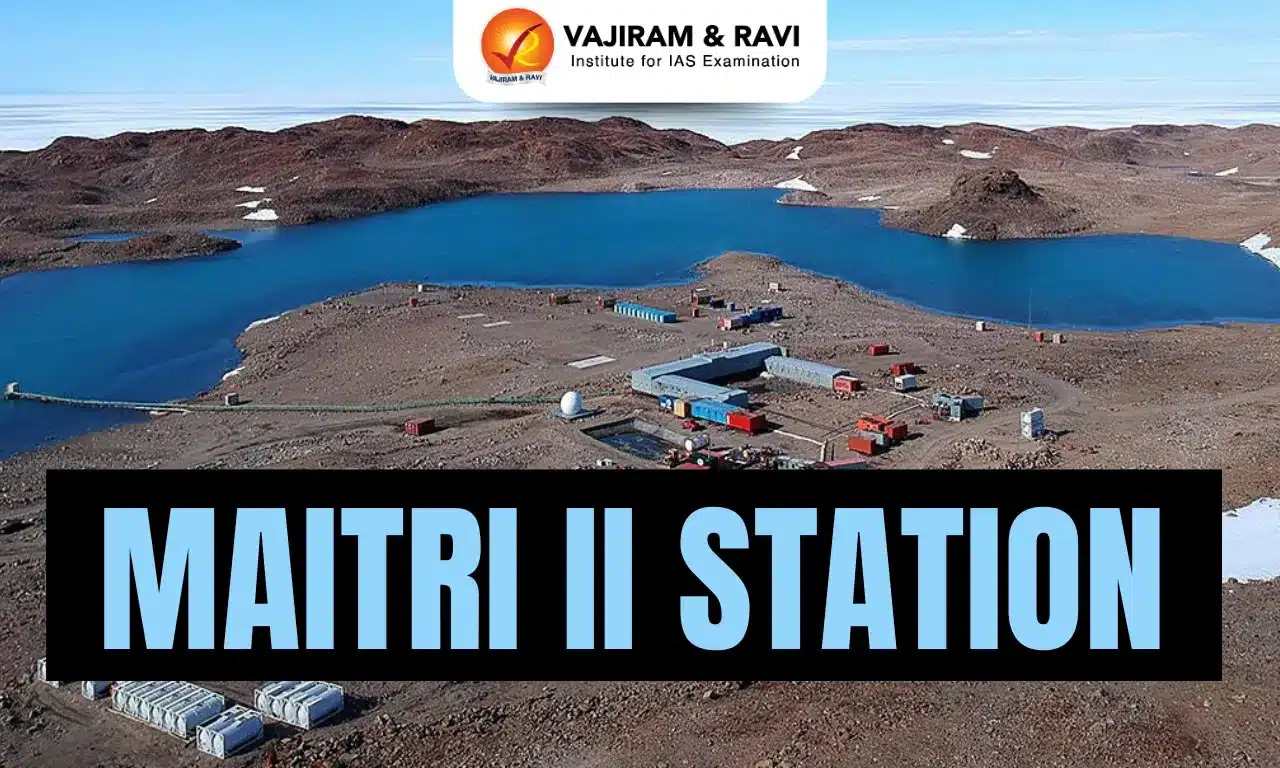
Recently, the Finance Ministry has granted approval for Maitri II — the country’s newest research station proposed to come up in eastern Antarctica.

About Maitri II Station

  • It is India’s newest research station proposed to come up in eastern Antarctica.
  • It will be larger than Maitri I, with plans to design it as a green research base.
  • The proposal includes using renewable energy sources — solar power for summer expeditions and wind energy to harness the strong Antarctic winds — to run the station’s operations. 
  • It is planned to deploy automated instruments onboard Maitri II which will keep recording data and relay it to mainland India, even if the station remains unmanned for some period.
  • The construction of the research station is expected to be completed by January 2029.
  • Nodal Agency: National Centre for Polar and Ocean Research (NCPOR) under the Ministry of Earth Sciences (MoES) is the nodal agency responsible for operating and organising missions to Antarctica and the Arctic.

Key Facts about Maitri Station

  • It has been hosting researchers since 1989, and is located along the Schirmacher Oasis — a 20 km-long ice-free landmass in East Antarctica.
  • It comprises the main building, a fuel farm, a fuel station, a lake water pump house, a summer camp, and several smaller containerised modules.
  • Maitri can accommodate between 25 and 40 scientists, depending on mission requirements and season.
  • India’s other research base in Antarctica: Dakshin Gangotri (first base in Antarctica), operated for a few years. Bharati which is operational since 2012.

Source: IE

Maitri II Station FAQs

Q1: Where is India's Maitri research station located?

Ans: Schirmacher Oasis, Antarctica.

Q2: What is the primary purpose of India's research stations in Antarctica?

Ans: To carry out scientific research and exploration.

Somnath Temple

Somnath Temple

Somnath Temple Latest News

The President, on a three-day visit to Gujarat, offered prayers at the historic Somnath Mahadev temple in Gir Somnath district recently.

About Somnath Temple

  • It is a Hindu temple dedicated to Lord Shiva.
  • It is located in Prabhas Patan near Veraval in Saurashtra on the western coast of Gujarat.
  • It is the first of the 12 jyotirlinga shrines in India that are regarded as the manifestation of the Lord Shiva Himself.
  • The site of Somnath has been a pilgrimage site from ancient times on account of being a Triveni Sangam: the confluence of three rivers, namely Kapila, Hiran, and Saraswati. 
  • The ancient temple’s timeline can be traced from 649 BC but is believed to be older than that. 
  • The temple was reconstructed several times in the past after repeated destruction by multiple Muslim invaders and rulers, notably starting with an attack by Mahmud Ghazni in the 11th century.
    • The present temple was reconstructed in the Chalukya style of Hindu temple architecture and completed in May 1951.
    • The reconstruction was completed by Vallabhbhai Patel.

Source: TH

Somnath Temple FAQs

Q1: The Somnath Temple is dedicated to which Hindu deity?

Ans: Lord Shiva

Q2: Where is the Somnath Temple located?

Ans: It is located in Prabhas Patan near Veraval in Saurashtra on the western coast of Gujarat.

Q3: Who was the first major invader to destroy the Somnath Temple in the 11th century?

Ans: Mahmud Ghazni

Q4: In which architectural style was the present Somnath Temple reconstructed?

Ans: Chalukya style

Q5: When was the reconstruction of the present Somnath Temple completed?

Ans: 1951

India-UK Connectivity and Innovation Centre (CIC)

India-UK Connectivity and Innovation Centre

India-UK Connectivity and Innovation Centre (CIC) Latest News

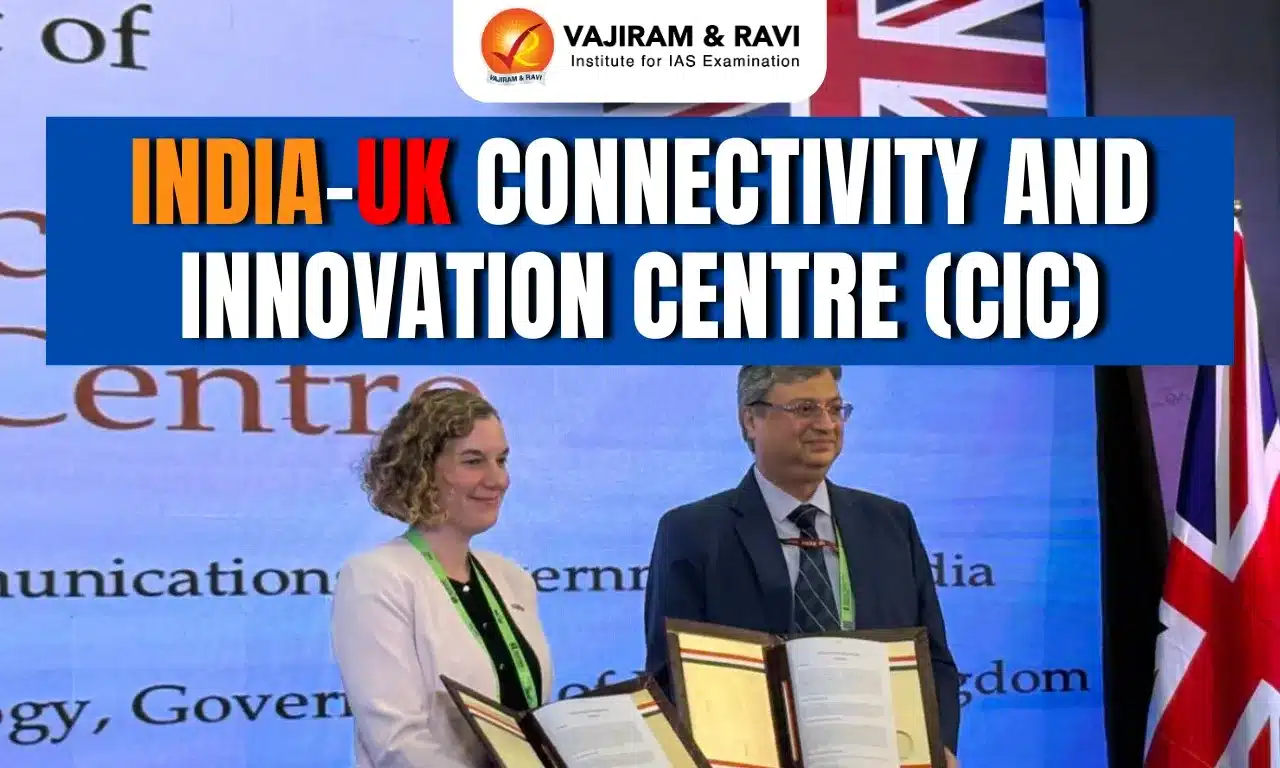
India and the United Kingdom recently announced the launch of the India-UK Connectivity and Innovation Centre.

About India-UK Connectivity and Innovation Centre (CIC)

  • It is a strategic partnership between India and the United Kingdom launched at India Mobile Congress 2025.
  • The initiative aims to advance digital inclusion and shape the future of secure, innovative, and resilient communications between the two nations. 
  • It will be implemented under the UK-India Technology Security Initiative, jointly delivered by the UK Research and Innovation (UKRI) and India’s Department of Telecommunications (DoT).
  • The Centre will bring together the complementary strengths of India and the UK in advanced connectivity – linking cutting-edge university research with lab testing, field trials, and pathways for market deployment.
  • Over the next four years – a critical phase for shaping the technological and commercial contours of 6G – the Centre will focus on three strategic areas:
    • Transforming Telecom with AI: Using advanced artificial intelligence tools to optimise networks, enhance efficiency, and enable new digital services.
    • Non-Terrestrial Networks (NTNs): Developing satellite and airborne systems to deliver high-speed, reliable connectivity to rural and remote regions.
    • Telecoms Cybersecurity: Strengthening network resilience through open, interoperable, and secure communication systems for businesses and consumers.
  • Funding
    • Both nations have jointly committed an initial £24 million (approximately ₹250 crore) over four years to drive the initiative.
    • The funding will support applied research through collaborations between academic and industry partners, establishment of joint testbeds, and participation in global standards development for emerging telecommunications technologies.

Source: DDN

India-UK Connectivity and Innovation Centre (CIC) FAQs

Q1: What is the main objective of the India-UK Connectivity and Innovation Centre (CIC)?

Ans: It aims to advance digital inclusion and shape the future of secure, innovative, and resilient communications between the two nations.

Q2: What is the total initial funding committed under the India-UK Connectivity and Innovation Centre (CIC) initiative?

Ans: Both India and UK have jointly committed an initial £24 million (approximately ₹250 crore) over four years to drive the initiative.

Q3: Under which initiative will the India-UK Connectivity and Innovation Centre (CIC) be implemented?

Ans: It will be implemented under the UK-India Technology Security Initiative.

Chowna Buku Chulu

Chowna Buku Chulu

Chowna Buku Chulu Latest News

Arunachal Pradesh scientists recently identified a new Begonia species in Basar, boasting striking red leaves. Named 'Chowna Buku Chulu'.

About Chowna Buku Chulu

  • It is a new species of Begonia discovered in Basar in the Leparada District of Arunachal Pradesh.
  • The new species has been named ‘Chowna Buku Chulu (Aryarakta)’, meaning “Noble Red”, in honour of Deputy Chief Minister Chowna Mein.
  • It is a vibrant red-leafed begonia found in the region's natural habitat.

Key Facts about Begonia

  • It is a genus of perennial flowering plants in the family Begoniaceae. 
  • The genus contains more than 1,800 different plant species. 
  • They are native to moist subtropical and tropical climates. 
  • Some species are commonly grown indoors as ornamental houseplants in cooler climates.
  • In cooler climates some species are cultivated outside in summertime for their bright colourful flowers, which have sepals but no petals.

Source: TOI

Chowna Buku Chulu FAQs

Q1: Where was the new species of Begonia named ‘Chowna Buku Chulu (Aryarakta)’ discovered?

Ans: Basar in Leparada District, Arunachal Pradesh.

Q2: To which plant family does the Begonia genus belong?

Ans: Begonia is a genus of perennial flowering plants in the family Begoniaceae.

Q3: In which type of climate are Begonias naturally found?

Ans: Moist subtropical and tropical climates.

Fomoflation

Fomoflation

Fomoflation Latest News

The recent signing of a proclamation by the U.S. president raising the annual fee for H-1B visas to $100,000 a year led to a sudden panic-driven demand that pushed ticket prices higher, illustrating a textbook case of fomoflation.

About Fomoflation

  • Fomoflation occurs when consumer behaviour (demand psychology) and market or supply pressures combine to create rapid inflation even in essentials, where prices rise faster than underlying economic factors would justify.
  • The cycle of panic-driven demand and resultant price surges illustrates how fomoflation operates.
  • Therefore, it is the fear of ‘scarcity’ or the Fear Of Missing Out (FOMO) which triggers buying frenzy, setting off an ‘artificial demand’ loop and eventual price rises.
  • Unlike usual inflation, which is an outcome of macroeconomic factors, fomoflation arises from behavioral psychology, often amplified by social media.
  • It can also be seen in consumer goods. 
    • For example, during festive seasons, demand for staples such as pulses and cooking oil spikes after media reports highlight potential shortages or price hikes. 
    • Influenced by the reports, consumers rush to stock up, pushing prices higher even when supply is sufficient.

Source: TH

Fomoflation FAQs

Q1: What best describes the term ‘Fomoflation’

Ans: Price rise driven by fear-based consumer behaviour rather than actual supply shortages.

Q2: What triggers Fomoflation in an economy?

Ans: Fear of scarcity or ‘Fear Of Missing Out’ among consumers.

Q3: Which factor amplifies Fomoflation in the modern economy?

Ans: Social media-induced panic buying.

Q4: How does Fomoflation differ from usual inflation?

Ans: It arises from behavioural psychology rather than macroeconomic causes.

Exercise AUSTRAHIND

Exercise AUSTRAHIND

Exercise AUSTRAHIND Latest News

Recently, an Indian Army contingent comprising 120 personnel departed for Irwin Barracks, Perth, Australia, to participate in the fourth edition of Exercise AUSTRAHIND 2025.

About Exercise AUSTRAHIND

  • It is an annual joint military exercise held between India and Australia.
  • This edition, Indian Army contingent is being led by a Battalion of Gorkha Rifles along with troops from other arms and services.
  • It is aimed at enhancing military cooperation, improving interoperability and providing a platform for participating armies to exchange tactics, techniques and procedures in the domains of sub conventional warfare in urban/ semi urban terrain.
  • It will focus on joint company level operations in open and semi desert terrain, wherein troops will undertake missions ranging from joint planning, tactical drills and special arms skills.
  • It will offer a valuable opportunity to hone operational capabilities, integrate emerging technologies and operate jointly in a combat environment.
  • Other Exercises between India and Australia are AUSINDEX, and PITCHBLACK. 

Source: PIB

Exercise AUSTRAHIND FAQs

Q1: What is Exercise AUSTRAHIND?

Ans: A joint military exercise between India and Australia

Q2: How often is Exercise AUSTRAHIND conducted?

Ans: Annually

Kiru Hydroelectric Project

Kiru Hydroelectric Project

Kiru Hydroelectric Project Latest News

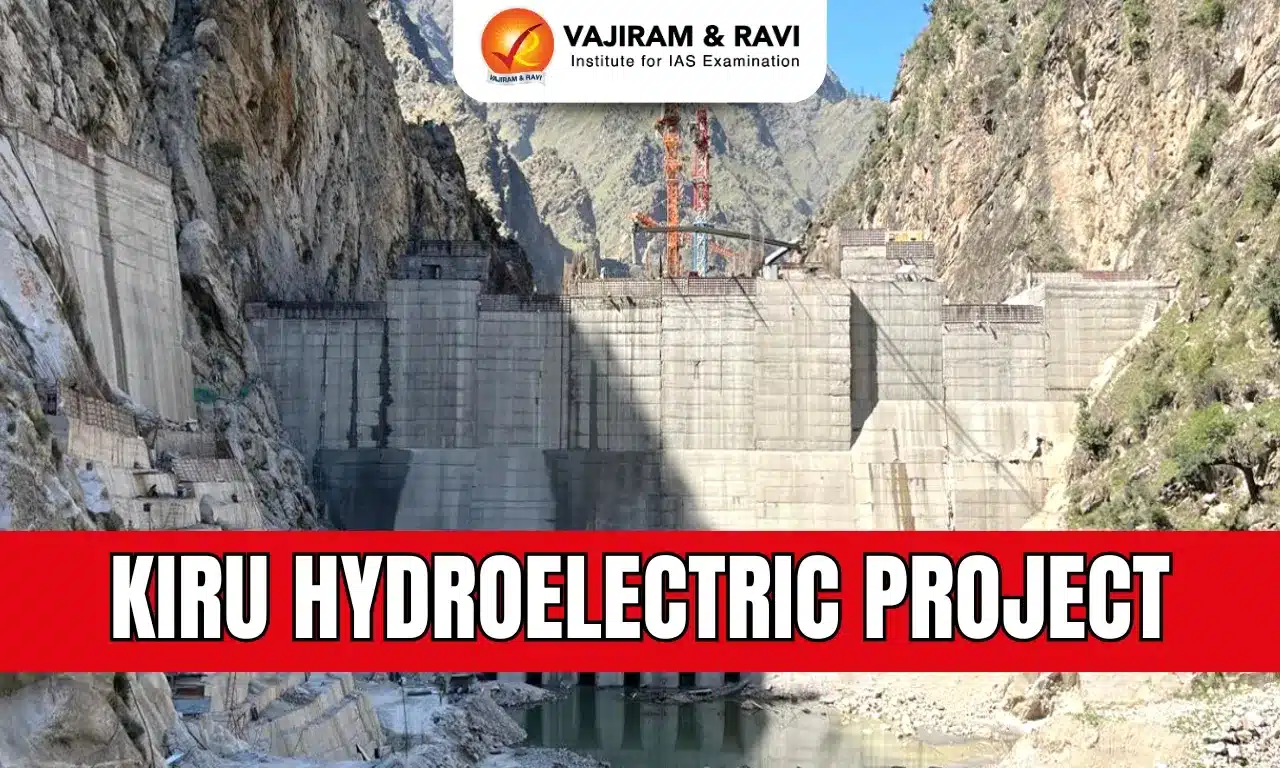
The 624-megawatt Kiru hydroelectric project recently reached a significant milestone with the completion of 10 lakh cubic meters of Dam Concreting, out of a total target of 12 lakh cubic meters.

About Kiru Hydroelectric Project

  • It is a 624-megawatt (MW) run-of-river project being developed over the Chenab River near the villages of Patharnakki and Kiru in Kishtwar District, Jammu and Kashmir (J&K).
  • It is located between the Kirthai II hydroelectric project to its upstream and the Kwar hydroelectric project to its downstream.
  • The project will include the construction of a concrete gravity dam with a height of 135 m and an underground powerhouse located on the left bank of the river that will comprise four vertical Francis turbines with a capacity of 156 MW each. 
  • The project will provide much-needed power for the grid in northern India. 
  • It is being developed by Chenab Valley Power Projects (CVPP), a joint venture between 
    • National Hydroelectric Power Corporation (NHPC, 49%)
    • Jammu & Kashmir State Power Development Corporation (JKSPDC, 49%) 
    • Power Trading Corporation (PTC, 2%).

Source: STATES

Kiru Hydroelectric Project FAQs

Q1: Where is the Kiru Hydroelectric Project located?

Ans: Kishtwar District, Jammu and Kashmir.

Q2: Over which river is the Kiru Hydroelectric Project being developed?

Ans: Chenab River

Q3: What is the total installed capacity of the Kiru Hydroelectric Project?

Ans: 624 MW

Q4: The Kiru Hydroelectric Project is classified as which type of hydro project?

Ans: Run-of-river project.

Sundarbans National Park

Sundarbans Tiger Reserve

Sundarbans National Park Latest News

Recently, the International Union for Conservation of Nature (IUCN) revealed that Sundarbans National Park has experienced a deterioration in its conservation outlook status from ‘Good with Some Concerns’ to ‘Significant Concerns’ in the last five years.

About Sundarbans National Park

  • Location: It is located in the southeastern region of West Bengal, near Kolkata, and forms part of the Gangetic Delta.
  • It is part of the larger Sundarbans mangrove forest, one of the largest in the world.
  • It was established in 1973 under India's Project Tiger initiative to protect the endangered Royal Bengal Tiger.
  • It was designated as a World Heritage Site by UNESCO in 1987 for its natural ecosystem and tiger habitat.
  • It was declared as a Biosphere Reserve in 1989 by the Government of India.
  • In 2001, it was included in the UNESCO World Network of Biosphere Reserves for its role in biodiversity conservation and sustainable development.
  • In 2019, the Sundarbans Wetland was recognized as a Ramsar Site, adding its importance for migratory birds and environmental sustainability.
  • Rivers: The Sundarbans delta is formed by the coming together of three rivers, Ganga, Brahmaputra and Meghna. 
  • Flora: Some of the common species of plants which are found include Sundari tree, Golpati, Champa, Dhundul, Genwa and Hatal. 
  • Fauna: Royal Bengal Tiger, fishing cats, macaques, leopard cats, Indian grey mongoose, wild boar, flying fox, pangolin, and Indian grey mongoose. 

Source: DTE

Sundarbans National Park FAQs

Q1: Where is Sundarbans National Park located?

Ans: West Bengal

Q2: What type of forest is found in Sundarbans National Park?

Ans: Mangrove forest

Enquire Now