INS Savitri

INS Savitri

INS Savitri Latest News

Indian Naval Ship (INS) Savitri recently arrived at Port Louis, Mauritius as part of a Long-Range Operational Deployment to the South West Indian Ocean Region.

About INS Savitri

  • It is an indigenously built Offshore Patrol Vessel of the Indian Navy.
  • It was built by Mazagon Dock Limited, Mumbai, and commissioned on 7 June 1990.
  • It is under the Eastern Naval Command based at Visakhapatnam.
  • The ship has wide-ranging operational roles, including aerial surveillance and in search & rescue roles. 
  • With a top speed of 15 knots (30 km/h), the ship boasts impressive features such as the 40×60 Bofors Gun and a helicopter deck capable of operating the Chetak helicopter. 
  • In the past, INS Savitri has been deployed for various expeditionary missions.  
  • It has taken part in patrols off the Maldives, Seychelles and Mauritius.

Source: PIB

INS Savitri FAQs

Q1: INS Savitri is classified as which type of naval vessel?

Ans: Offshore Patrol Vessel

Q2: INS Savitri was built by which Indian shipyard?

Ans: Mazagon Dock Limited (MDL), Mumbai

Q3: In which year was INS Savitri commissioned into the Indian Navy?

Ans: 1990

Q4: INS Savitri operates under which Naval Command?

Ans: Eastern Naval Command
Cycad Plant

Cycad Plant

Cycad Plant Latest News

The All India Institute of Medical Sciences (AIIMS), Bhubaneswar has initiated a research on Cycad, over concerns that the plant contains BMAA, a potential neurotoxin.

About Cycad Plant

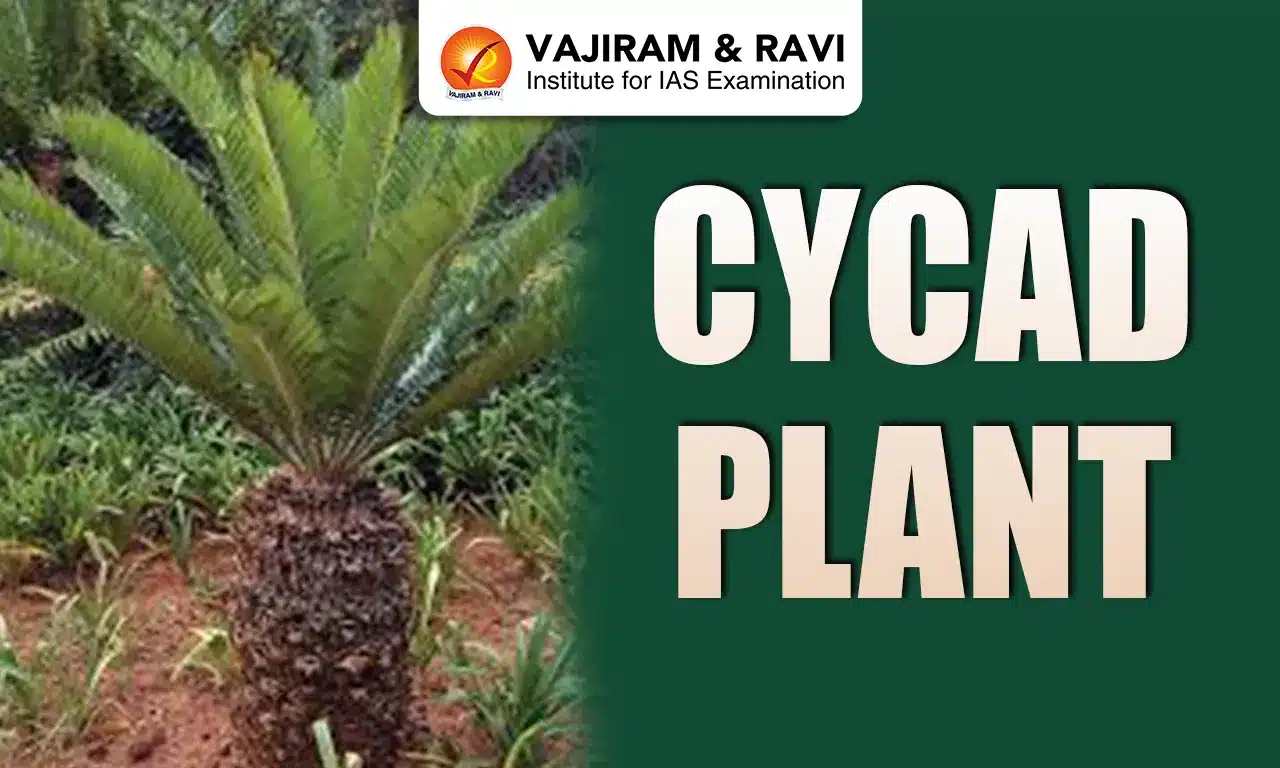
  • It is the palmlike woody gymnospermous plants.
  • It is an ancient plant species that is believed to have coexisted with dinosaurs for over 300 million years.
  • Habitat: They occupy a variety of habitats. Some are native to wet rainforests while others are from semidesert climates; others grow in grasslands or seasonally dry forests.
  • Distribution: Tropical and subtropical latitudes in the Americas, Caribbean, sub-Saharan Africa, Madagascar, eastern India, China, Japan, southeast Asia, Oceania and Australia. 

Features of Cycad Plant

  • They are woody, long-lived, unisexual plants and their main roots thickened, fleshy and often tuberous.
  • They are distinguished by crowns of large pinnately compound leaves and by cones.
  • Cycads in general are fire-adapted, losing leaves to the blaze but soon restoring them in a growth flush.
  • Soil: They may be found growing in rich, organic soils, sand, or rock, in swampy soils or even in halophytic (salty) soils.
  • Cycads are long-lived, don’t reproduce frequently, and most populations are small, putting them at risk of extinction.
  • Threats:   Habitat conversion through agriculture or development, illegal removal of wild plants for horticultural collection, and climate change.

Source: TOI

Cycad Plant FAQs

Q1: What is the primary habitat of Cycad plants?

Ans: Tropical and subtropical regions

Q2: What is a characteristic feature of Cycad plants?

Ans: They are gymnosperms

Ramman Festival

Ramman Festival

Ramman Festival Latest News

Recently, the President of India was presented with a Ramman mask at a special session of the Uttarakhand Assembly.

About Ramman Festival

  • It is an annual religious festival celebrated in late April in the twin villages of Saloor-Dungra, Uttarakhand, in honour of the local deity Bhumiyal Devta. 
  • In 2009, Ramman was inscribed in the list of UNESCO’s Intangible Cultural Heritage of Humanity.

Features of Ramman Festival

  • It features complex rituals, recitations of the Ramayana, songs, and masked dances, with each caste and group playing distinct roles.
  • Divine Storytelling: The performances include recitations of the Rama Katha (episodes from the Ramayana), combined with masked dances of deities and local legends, blending mythic and local narrative layers.
  • Sacred Space: It is held in the courtyard of the Bhumiyal Devta temple in Saloor Dungra.
  • Community Participation: Entire village households contribute: roles are caste-based (priests, mask-makers, drum players), funding comes from the village, and participation spans elders to youth.
  • Transmission of Knowledge & Values: Oral transmission of epic songs, dance forms, and ritual lore across generations. 
  • Fusion of Art Forms: It blends narration, masked dances, ritual drama, music, and mask craft into one integrated festival.
  • The festival involves theatrical performances of the Ramayana and local legends, in which people sing songs and wear masks while dancing.
  • There are 18 different types of masks made of Bhojpatra, Himalayan birch, that performers wear during the event.
  • Some of the instruments documented include: Dhol (a type of drum) Damau (smaller percussion drum), Manjira (small hand cymbals), Jhanjhar (larger cymbals), Bhankora (a kind of trumpet).

Source: IE

Ramman Festival FAQs

Q1: Where is the Ramman festival primarily celebrated?

Ans: Uttarakhand

Q2: What is the Ramman festival dedicated to?

Ans: Local deity Bhumiyal Devta

River Umngot

River Umngot

River Umngot Latest News

Recently, a concern has been raised that the pristine waters of River Umngot are turning murky due to massive dumping of soil and construction debris into river systems.

About River Umngot

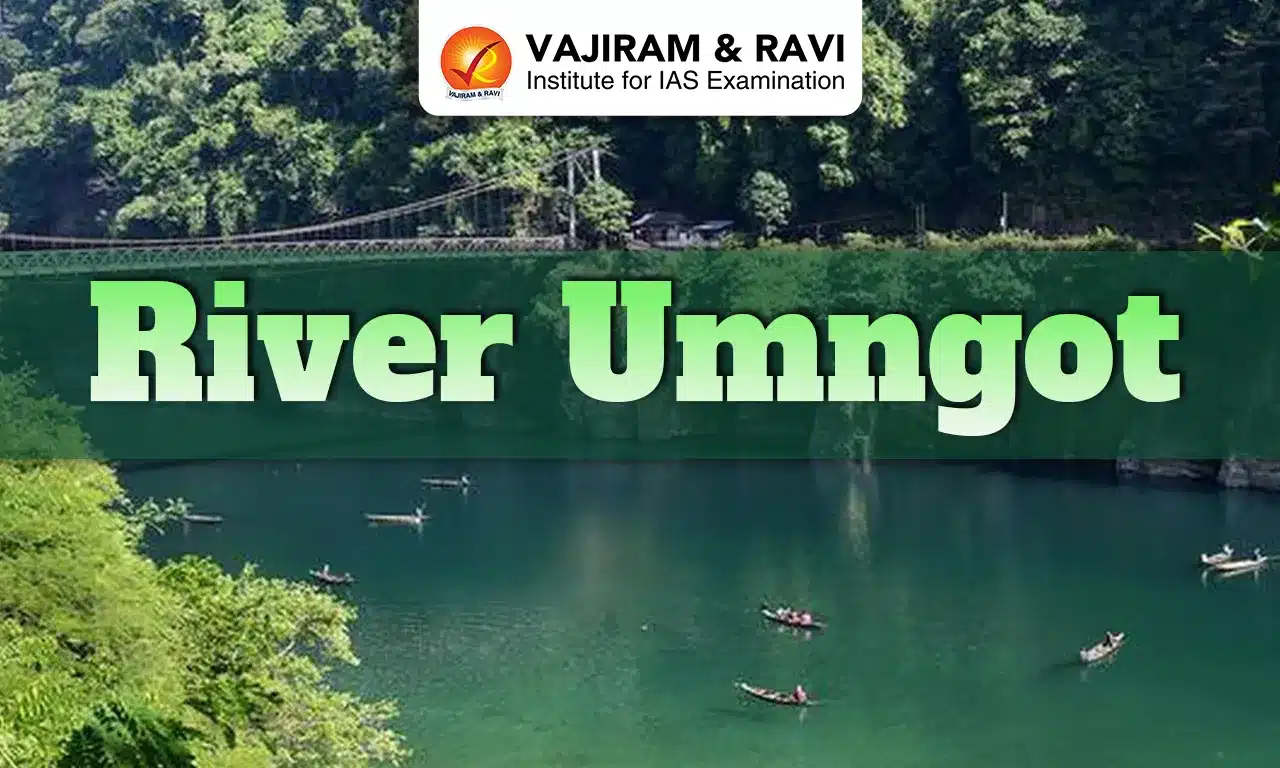
  • It is popularly known as Dawki river which flows through the West Jaintia Hills district of Meghalaya. 
  • Origin: It originates from the Eastern Shillong Peak, which is located 1,800 m above sea level.
  • It is famous for its picturesque crystal-clear water.
  • The water is so transparent that it often creates an illusion of boats floating in mid-air.
  • This surreal phenomenon has earned it the reputation of being the cleanest river in India.
  • The river builds up an innate boundary between two hills district of Meghalaya one being the Jaintia Hills and other being the Khasi hills.
  • Umngot River is also known for the annual boat race in the month of March-April.
  • It also helps in building a natural one of the international boundary between India (Meghalaya) and Bangladesh.
  • Transportation: The suspension bridge over the Dawki River on NH-40 was constructed way back in 1932 and it is one of the busiest bilateral trade routes between India and Bangladesh. 

Source: IE

River Umngot FAQs

Q1: Where is the River Umngot located?

Ans: Meghalaya

Q2: What is a notable feature of the River Umngot?

Ans: It's known for its crystal-clear waters.

Tanzania

Tanzania

Tanzania Latest News

Tanzanian President Samia Suluhu Hassan played down days of bloody protest as she was inaugurated recently, with an internet blackout still in place as the opposition says hundreds were killed.

About Tanzania

  • It is an East African country situated just south of the Equator.
  • It encompasses an area of approximately 945,087 sq.km. 
  • Bordering Countries: 
    • It shares borders with eight countries: Kenya and Uganda to the north, Rwanda, Burundi, and the Democratic Republic of the Congo to the west, and Zambia, Malawi, and Mozambique to the south. 
    • The eastern border of Tanzania meets the Indian Ocean.
  • Capital: Dar es Salaam (administrative captial), Dodoma (legislative capital).
  • The separate states of Tanganyika and Zanzibar gained independence from Britain in the early 1960s and merged to form the United Republic of Tanzania in 1964. 
  • Form of Government: Presidential Republic
  • Official Language: Kiswahili or Swahili, English
  • Currency: Tanzanian shilling
  • Climate type: Tropical, with a long dry season and two rainy seasons.
  • Major lakes: Lake Victoria (the world's second-largest freshwater lake, shared with Uganda and Kenya) in the north, Lake Tanganyika in the west, and Lake Nyasa in the southwest.
  • Highest Peak: Mount Kilimanjaro – Highest in Africa, and a dormant volcano
  • Major rivers:  Several rivers course through Tanzania, including the Great Ruaha, Rufiji, and Kagera rivers. 
  • Islands
    • The country also includes a number of major islands and archipelagos. 
    • The most significant are Zanzibar, Pemba, and Mafia, all located off the eastern coast in the Indian Ocean.

Source: TH

Tanzania FAQ's

Q1: Tanzania is located in which part of Africa?

Ans: Eastern Africa

Q2: Which is the capital of Tanzania?

Ans: Dodoma (legislative), Dar es Salaam (administrative)

Q3: Which is the highest peak in Africa, located in Tanzania?

Ans: Mount Kilimanjaro

Q4: Which ocean lies to the east of Tanzania?

Ans: Indian Ocean

Q5: What are the major rivers flowing through Tanzania?

Ans: Several rivers course through Tanzania, including the Great Ruaha, Rufiji, and Kagera rivers.

Indian Mouse Deer

Indian Mouse Deer

Indian Mouse Deer Latest News

A rare Indian mouse deer was recently photographed at Tungareshwar Wildlife Sanctuary in Vasai.

About Indian Mouse Deer

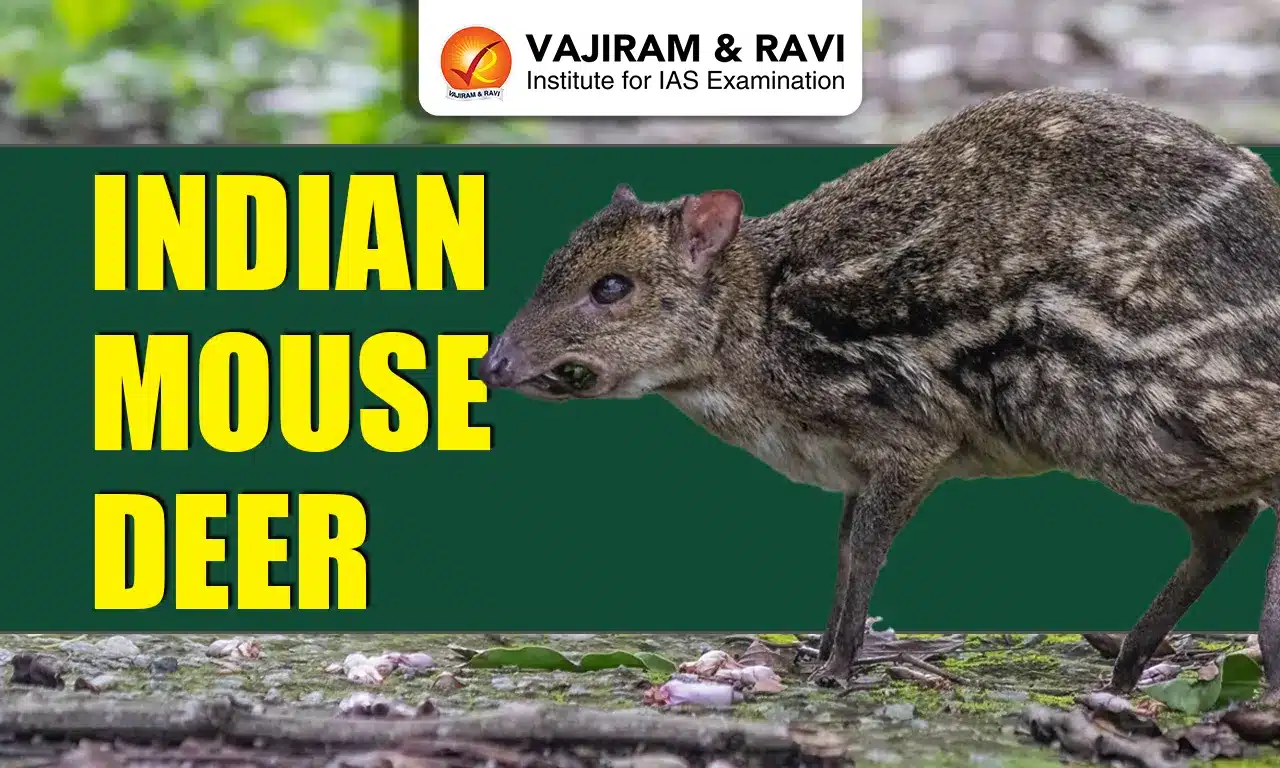
  • The Indian Mouse Deer, or Indian Spotted Chevrotain, is a species of even-toed ungulate belonging to the family Tragulidae. 
  • Scientific Name: Moschiola indica
  • It is the smallest deer species found in India and is known for its elusive and shy nature.

Indian Mouse Deer Distribution

  • It is endemic to the Indian Subcontinent.
  • It is mainly found in peninsular India, with some old records from Nepal.
  • Sri Lanka has a separate species called the spotted chevrotain (Moschiola meminna).
  • Within India, it is commonly encountered in a number of forest areas along the Western Ghats, in the Eastern Ghats up to Orissa, and in the forests of central India.

Indian Mouse Deer Features

  • It is small, 25-30 cm at shoulder height, and weighs from two to four kg.
  • The fur color is dark brown with white underparts.
  • There are four or five light rows of white spots on the back. 
  • Males of this species have tusk-like upper canines.
  • A unique feature of this group is that instead of a four-chambered stomach like in other ruminants, they have a three-chambered stomach.
  • Diet: It forages on the forest floor for fruits, roots, leaves, and herbs. It has occasionally been observed eating insects, crustaceans, and even small mammals.
  • Life Span: 8 to 12 years.

Indian Mouse Deer Conservation Status

It is classified as 'Least Concern' under the IUCN Red List. 

Source: MD

Indian Mouse Deer FAQs

Q1: What is the scientific name of the Indian Mouse Deer?

Ans: Moschiola indica

Q2: The Indian Mouse Deer is endemic to which region?

Ans: Indian Subcontinent

Q3: What is the IUCN conservation status of the Indian Mouse Deer?

Ans: Least Concern

Mussel

Mussel

Mussel Latest News

Recently, Greek scientists have deployed thousands of mussels on the seafloor to help detect microplastics.

About Mussel

  • It is a bivalve of mollusks belonging to the marine family Mytilidae and to the freshwater family Unionidae. 
  • Distribution: They are most common in cool seas. Freshwater mussels known as naiads inhabit streams, lakes, and ponds over most of the world.

Features of Mussel

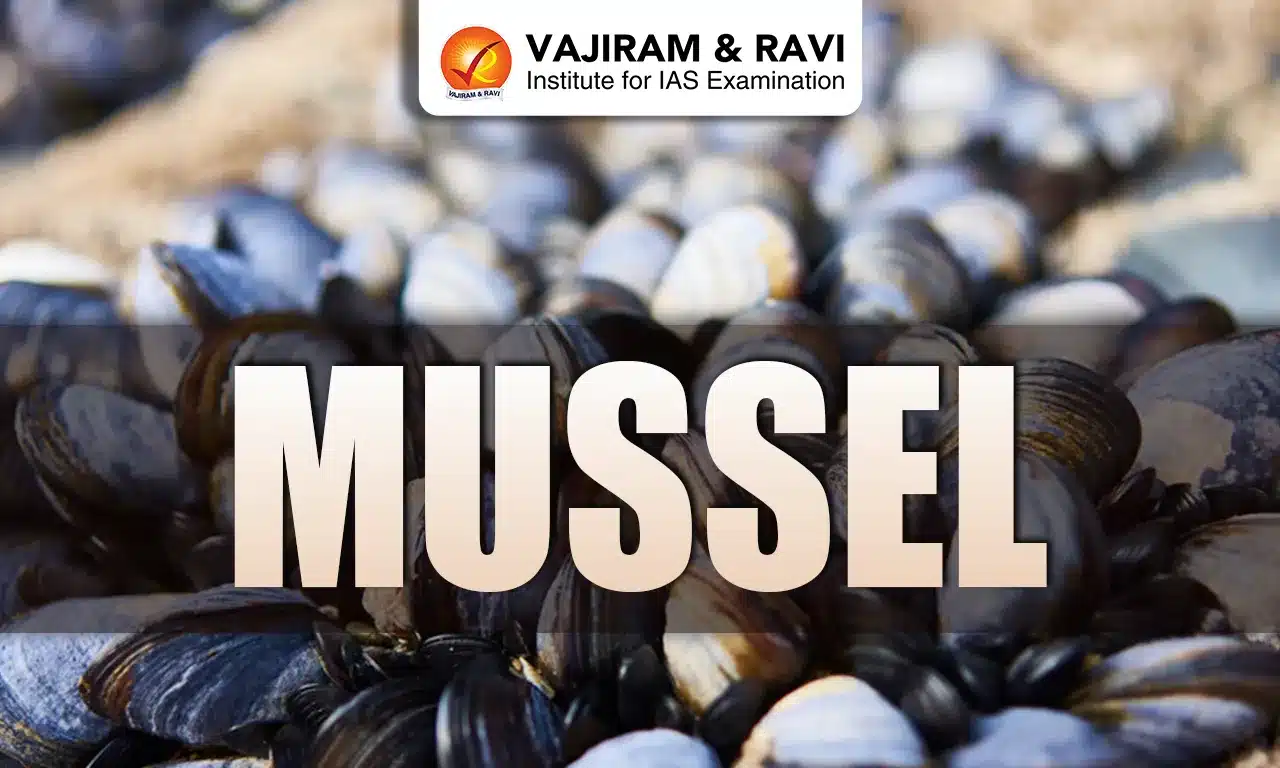
  • Appearance: Marine mussels are usually wedge-shaped or pear-shaped and range in size from about 5 to 15 centimetres. 
  • They may be smooth or ribbed and often have a hairy covering.
  • The shells of many species are dark blue or dark greenish brown on the outside; on the inside they are often pearly.
  • They attach themselves to solid objects or to one another by proteinaceous threads called byssus threads.
  • They often occur in dense clusters.
  • Ecological Role: These species are filter-feeding organisms that absorb a range of contaminants into their tissue, including invisible microplastics.
  • They have been used globally for decades as a barometer of marine pollution.

Benefits of Mussel

  • Food Source: They are edible and considered nutritious, rich in protein, omega-3 fatty acids, and various vitamins and minerals.
  • Pearl Production: Freshwater mussels are used for pearl cultivation.
  • Ecological Role: These species are filter-feeding organisms that absorb a range of contaminants into their tissue, including invisible microplastics.
  • They have been used globally for decades as a barometer of marine pollution.

 Source: Reuters

Mussel FAQs

Q1: What type of creature is a mussel?

Ans: Mollusk

Q2: What is the term for the process by which mussels filter water to obtain food?

Ans: Filter feeding

Bandipur Tiger Reserve

Bandipur Tiger Reserve (BTR)

Bandipur Tiger Reserve Latest News

As per the order by Minister for Environment, Ecology and Forests Eshwar B Khandre, one late evening safari trip - each in jeep and bus - are being stopped at Bandipur Tiger Reserve (BTR), in the first phase.

About Bandipur Tiger Reserve 

  • It is situated in the Mysore and Chamarajanagar revenue districts of southern Karnataka. 
  • It is located at the tri-junction area of the States of Karnataka, Tamil Nadu, and Kerala.
  • Geographically, it is an “ecological confluence” of the Western and Eastern Ghats.
  • It was once a hunting ground for the rulers of the neighbouring kingdom of Mysore.
  • It is part of the larger Nilgiri Biosphere Reserve, which is recognized as a UNESCO World Heritage Site.
  • BTR is surrounded by:
    • Nagarahole Tiger Reserve (Tamil Nadu) in the North West (Kabini Reservoir separates the two).
    • Mudumalai Tiger Reserve (Tamil Nadu) in the South.
    • Wayanad Wildlife Sanctuary (Kerala) in the South West.
  • Rivers: It is surrounded by River Kabini in its north and River Moyar in its south.
  • Climate: Bandipur has a typical tropical climate with distinct wet and dry seasons.
  • Flora:
    • It comprises diverse vegetation of dry deciduous to tropical mixed deciduous.
    • It includes rosewood, Indian kino tree, sandalwood, Indian laurel, clumping bamboo, and giant clumping bamboo, etc.
  • Fauna:
    • It is a shelter for the largest population of wild Asian elephants in South Asia. 
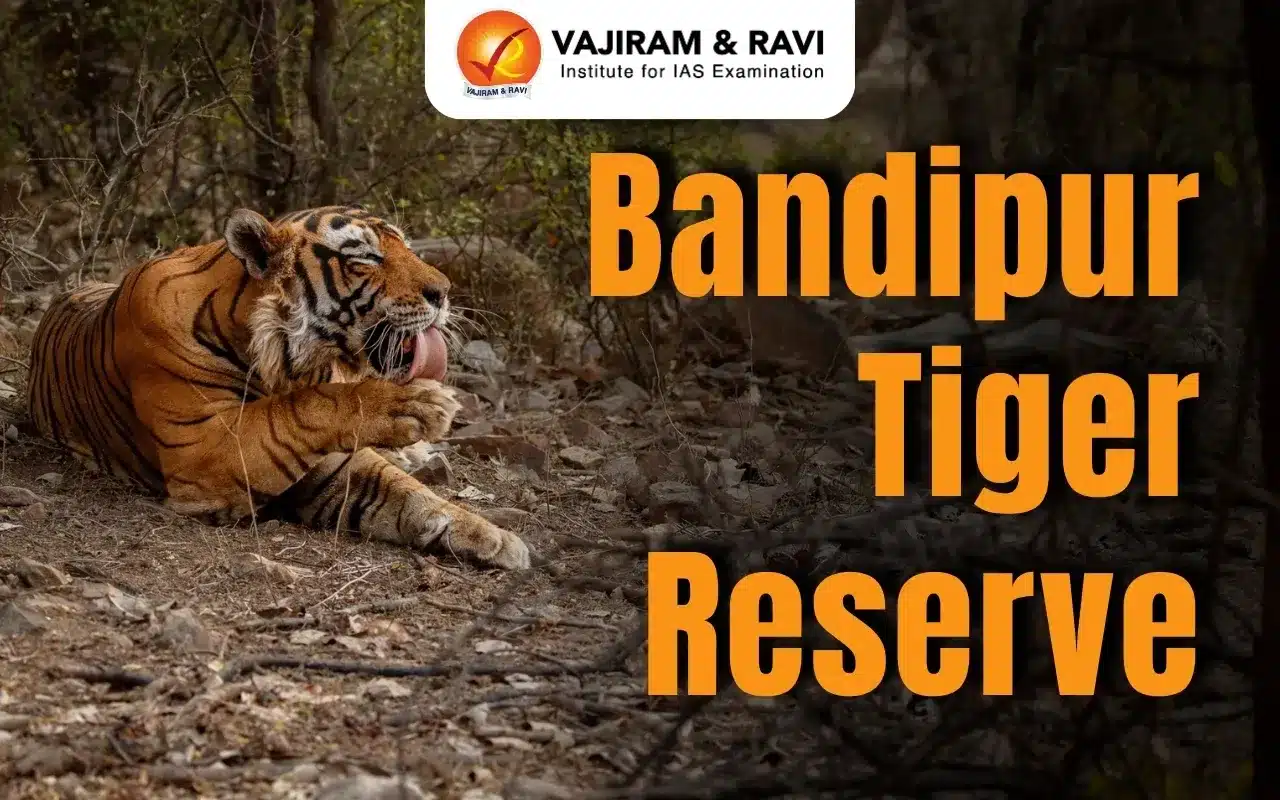
    • It comprises other mammals such as the Bengal tiger, gaur, sloth bear, golden jackal, dhole, and four-horned antelope, etc.

Source: DH

Bandipur Tiger Reserve FAQs

Q1: Bandipur Tiger Reserve lies at the tri-junction of which three states?

Ans: Karnataka, Kerala, and Tamil Nadu

Q2: Bandipur Tiger Reserve represents an ecological confluence of which two major mountain ranges?

Ans: Western Ghats and Eastern Ghats

Q3: Bandipur Tiger Reserve forms part of which UNESCO-recognized Biosphere Reserve?

Ans: Nilgiri Biosphere Reserve

Q4: Which river forms the northern boundary of Bandipur Tiger Reserve?

Ans: Kabini River

Q5: Which river forms the southern boundary of Bandipur Tiger Reserve?

Ans: Moyar River

Scrub Typhus

Scrub Typhus

Scrub Typhus Latest News

A Gulf Keralite’s impulsive decision to return home to treat a persistent fever turned out to be life-saving after he was diagnosed with scrub typhus — a potentially fatal infection that requires early treatment.

About Scrub Typhus

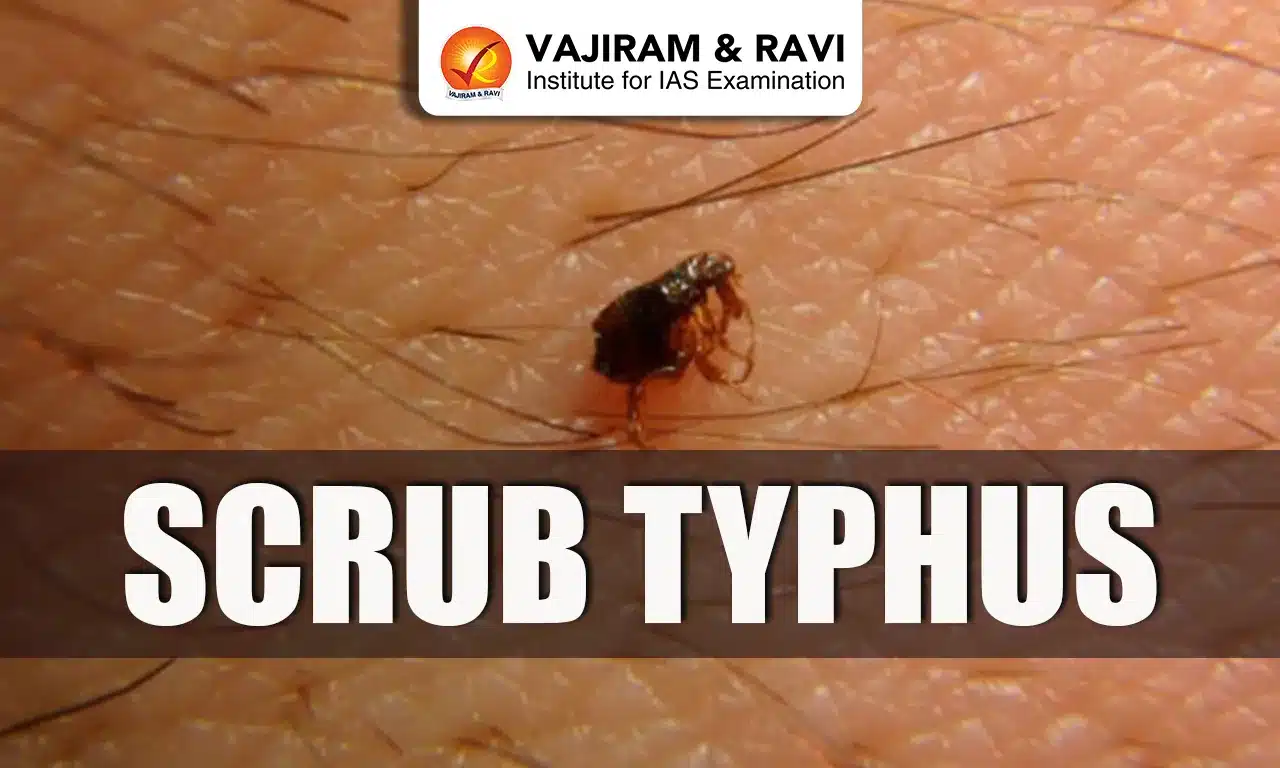
  • It is an infectious disease caused by bacteria called Orientia tsutsugamushi.
  • It is transmitted through infected chiggers (young mites).
  • Several factors, like vector abundance, climatic factors, exposures like farming and owning domestic animals, outdoor activities and sanitation, affect its prevalence.
  • This disease is more prevalent in cooler months.
  • It will not spread from person to person.
  • Symptoms:
    • The symptoms typically include fever, headache, body ache, and sometimes a rash.
    • In severe cases, the infection can lead to respiratory distress, brain and lung inflammation, kidney failure, and multi-organ failure, ultimately resulting in death.
  • Treatment
    • It is treated with doxycycline, which is most effective when administered early.
    • There is no vaccine available for this disease.

Key Facts about Typhus Fever

  • Typhus (or typhus fever) is the name used for several different types of bacterial infections spread by bug bites that cause similar symptoms, like high fever and rash. 
  • These symptoms can be severe and lead to serious complications if left untreated.
  • There are three types of illnesses commonly called typhus:
    • Epidemic Typhus: It is caused by Rickettsia prowazeki and it is spread to people through contact with infected body lice. 
    • Scrub Typhus: It is caused by Orientia tsutsugamushi and spread by chiggers.
    • Murine Typhus: It is caused by Rickettsia typhi spread by fleas. It occurs in tropical and subtropical climates around the world.

Source: NIE

Scrub Typhus FAQs

Q1: What is the causative organism of Scrub Typhus?

Ans: It is caused by bacteria called Orientia tsutsugamushi.

Q2: Through which vector is Scrub Typhus transmitted to humans?

Ans: It is transmitted through infected chiggers (young mites).

Q3: Can Scrub Typhus spread from person to person?

Ans: It will not spread from person to person.

Q4: What are the common symptoms of Scrub Typhus?

Ans: The symptoms typically include fever, headache, body ache, and sometimes a rash.

Interstellar Comet 3I/ATLAS

Interstellar Comet 3I/ATLAS

Interstellar Comet 3I/ATLAS Latest News

Recently, NASA astronomers have confirmed the detection of water’s chemical fingerprint on the interstellar comet 3I/ATLAS.

About Interstellar Comet 3I/ATLAS

  • It is the third known interstellar object from outside our solar system after 1I/ʻOumuamua(2017) and 2I/Borisov (2019). 
  • It has hyperbolic orbit and travels at 57–68 km/s speed relative to the Sun.
  • It will exit the solar system permanently after a brief interaction with the Sun.
  • This interstellar comet was first seen by a NASA-supported telescope in Rio Hurtado, Chile, which is part of the ATLAS (Asteroid Terrestrial-impact Last Alert System) survey.

Physical Characteristics of Interstellar  Comet 3I/ATLAS

  • 3I/ATLAS is confirmed to be an active comet, with a visible coma, a cloud of ice particles and dust surrounding the nucleus.
  • As it nears the Sun, it is expected to develop a tail, a characteristic cometary feature formed by solar heating.
  • Photometric analysis shows a reddish hue suggests the surface may be rich in complex organic compounds or water ice.
  • The nucleus is estimated to be 10–30 km wide.

What are interstellar Objects?

  • These are celestial bodies that originate outside the solar system, and travel through it. These objects are not gravitationally bound to a star.
  • They can come from other solar systems and be thrown into interstellar space (the area between the stars) due to collisions or be slingshotted by a planet’s or star’s gravity.
  • The trajectory of these objects is basically open-ended hyperbolic orbit, where there is a perihelion point (closest to the Sun) but no aphelion.

Source: ET

Interstellar Comet 3I/ATLAS FAQs

Q1: What is the origin of the Interstellar Comet 3I/ATLAS?

Ans: Outside our solar system

Q2: What is unique about the orbit of 3I/ATLAS?

Ans: It is hyperbolic.

Enquire Now