ReALCRaft Portal

ReALCRaft Portal

ReALCRaft Portal Latest News

Recently, the government notified rules for “Sustainable Harnessing of Fisheries in the Exclusive Economic Zone” and an Access Pass required for mechanized and large-sized motorized vessels can be obtained through the online ReALCRaft portal.

About ReALCRaft Portal

  • The Registration And Licensing of Fishing Craft (ReALCRaft) portal is developed as a national online platform under open source technology. 
  • It is developed by the Department of Fisheries, Ministry of Fisheries, Animal Husbandry & Dairying.
  • It provides web-based, citizen-centric services to marine fishers and coastal States/UTs for the registration and licensing of fishing vessels, transfer of ownership, and related processes.
  • Objectives:  To develop a modern, comprehensive and transparent vessel data management system in the country with the aim to enhance security features and to bring efficiency, transparency, accountability and reliability in services.

Features of ReALCRaft Portal

  • Integration with state-specific payment gateway (Bank /treasury),
  • Integration with security agencies to record the movements and track the vessels.
  • Upstream integration with insurance agencies, subsidy schemems for eDBT.
  • Integration with ISRO facilitates real-time communication with fishermen at sea.
  • Integration & data sharing with Govt. Agencies/ Security Agencies
  • It is also being integrated with Marine Products Export Development Authority (MPEDA) and the Export Inspection Council (EIC) for issuance of Fish Catch and Health Certificates.

Source: PIB

ReALCRaft Portal FAQs

Q1: What is the primary objective of the ReALCRaft Portal?

Ans: To provide online services for vessel registration and licensing.

Q2: Which department launched the ReALCRaft Portal?

Ans: Department of Fisheries

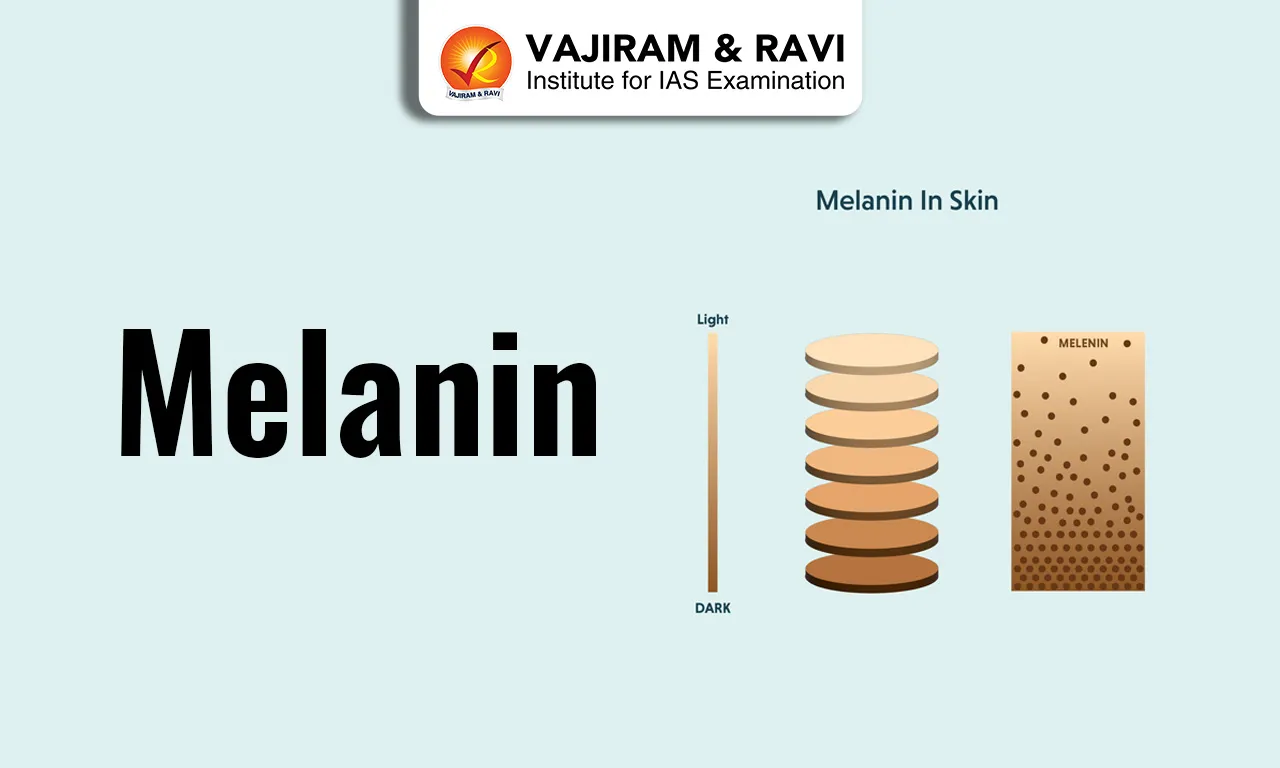
Melanin

Melanin

Melanin Latest News

Melanin tells the tale of how our ancestors survived from the Sun's heavy UV rays 50000 years back.

About Melanin

  • Melanin is a natural pigment found in most living organisms. 
  • It is present in human and animal skin to varying degrees, and is responsible for your unique eye, hair and skin color.
  • Melanin is produced within special structures called melanosomes. Melanosomes are found inside melanin-producing pigment cells called melanocytes.

Types of Melanin

  • Eumelanin: It is responsible for brown and black shades of hair, skin, and eyes.
  • Pheomelanin: It produces red or yellow hues — more common in people with red hair or lighter skin.
  • Neuromelanin: It is found in the brain, and develops from the oxidation of dopamine (a feel good chemical) and noradrenaline (a fight-or-flight hormone)

Melanin-Related Skin Conditions

  • Vitiligo: It is a condition where the skin loses its pigment-producing cells, leading to white patches.
  • Albinism:  It is a genetic mutation that prevents melanin production, resulting in pale skin, hair, and eyes.
  • Hyperpigmentation: Excess melanin causes darker spots or patches, often due to sun exposure or hormones.

Role of Melanin

  • Biological Shield: It acts as a biological shield, absorbing harmful ultraviolet rays and thereby protecting the skin from potential skin cancers like melanoma, and various carcinomas
  • Camouflage and Survival: It helps animals to blend in with their environment via camouflage. This ability is very crucial for both predator and prey.
  • Thermoregulation:  It also helps in thermoregulation, controlling heat loss and generation through mechanisms like sweating.

Source: TH

Melanin FAQs

Q1: What is the primary function of melanin in the human body?

Ans: To protect the skin from UV radiation.

Q2: Where is melanin produced in the skin?

Ans: It is produced in Melanocytes.

Key Facts about Peru

Key Facts about Peru

Peru Latest News

Recently, the 9th round of India-Peru trade agreement was successfully concluded in Peru.

About Peru

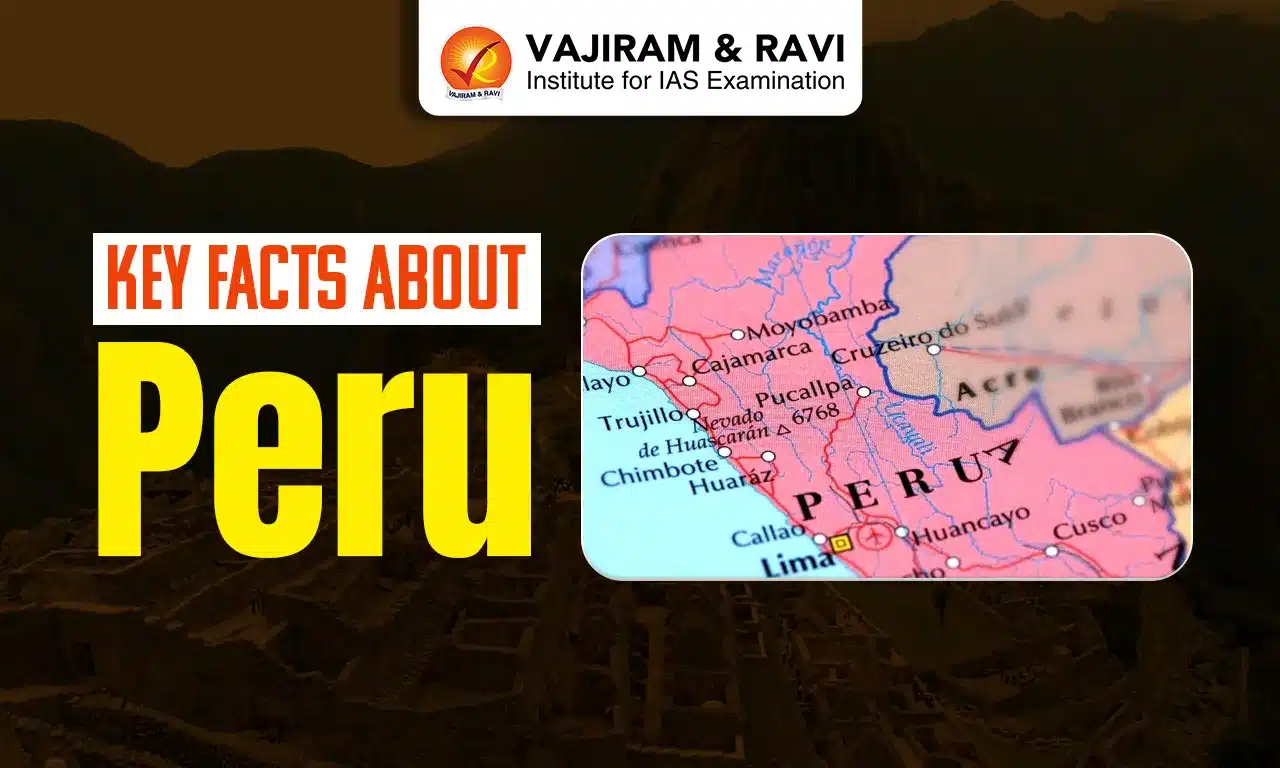
  • Location: It is situated just to the south of the Equator in South America.
  • It is the third largest country in South America, after Brazil and Argentina.
  • Bordering Countries: Ecuador (North), Brazil (East), Bolivia (Southeast) and Chile (South)
  • Bordering Ocean: Its western border lies along the Pacific Ocean. 
  • Capital City: Lima

Geographical Features of Peru

  • It is characterized by three major regions: the Costa, Sierra, and Amazonia.
    • The Costa is an arid coastal strip along the Pacific Ocean.
    • The Sierra consists of the Andes Mountains, which run through the center of the country.
    • The Andes are divided into three main ranges: the Cordilleras Occidental, Central, and Oriental. 
  • Highest Peak: Mount Huascarán (6,768 m)
  • Rivers: Amazon, Ucayali, Madre de Dios
  • Lakes: Lake Titicaca (world’s highest navigable lake), which Peru shares with Bolivia.
  • Climate: It varies from tropical in east to dry desert in west; temperate to frigid in the Andes.
  • Natural Resources: Copper, silver, Gold, Petroleum, timber, Iron ore, coal, Phosphate, potash, natural gas.

Source: PIB

Peru FAQs

Q1: What is the capital of Peru?

Ans: Lima

Q2: What is the currency of Peru?

Ans: Sol

Q3: What is the name of the Peruvian festival celebrated on June 24th?

Ans: Inti Raymi

Deendayal Antyodaya Yojana – National Rural Livelihoods Mission

Deendayal Antyodaya Yojana - National Rural Livelihoods Mission

Deendayal Antyodaya Yojana - National Rural Livelihoods Mission Latest News

Ethiopian delegates expressed their intention to apply the lessons learned from the Deendayal Antyodaya Yojana - National Rural Livelihoods Mission (DAY-NRLM) their Productive Safety Net Program.

About Deendayal Antyodaya Yojana - National Rural Livelihoods Mission

  • It is a flagship poverty alleviation program implemented by the Ministry of Rural Development, Government of India.
  • It aims at mobilizing rural poor households into Self Help Groups (SHGs) and continuously nurturing and supporting them to take economic activities till they attain an appreciable increase in income over a period of time.
  • Objectives 
    • Access to formal credit;
    • Support for diversification and strengthening of livelihoods; and
    • Access to entitlements and public services.
  • Background
    • National Rural Livelihood Mission (NRLM) was launched in 2010  by restructuring the erstwhile Swarnajayanti Grameen Swarojgar Yojana (SGSY).
    • In 2016, it was renamed Deendayal Antyodaya Yojana – National Rural Livelihood Mission (DAYNRLM).
  • Funding: The central and state governments jointly fund this centrally sponsored scheme.

Four core components of Deendayal Antyodaya Yojana - National Rural Livelihoods Mission

  • Social mobilization and promotion and strengthening of self-managed and financially sustainable community institutions of the rural poor women;
  • Financial inclusion;
  • Sustainable livelihoods; and
  • Social inclusion, social development and access to entitlements through convergence

Source: NDTV

Deendayal Antyodaya Yojana - National Rural Livelihoods Mission FAQs

Q1: What is the primary objective of Deendayal Antyodaya Yojana - National Rural Livelihoods Mission (DAY-NRLM)?

Ans: To reduce poverty by promoting diversified and gainful self-employment for rural households.

Q2: What is the name of the platform that connects Self-Help Groups (SHGs) with banks?

Ans: Aajeevika

Lichen

Lichen

Lichen Latest News

Researchers recently discovered four new lichen species, enhancing biodiversity understanding in the Western Ghats.

Why in News?

  • The newly identified species – Parmotrema sahyadricum (discovered from Wayanad), Solenopsora rhizomorpha (from Eravikulam and Mathikettanshola National Parks), Buelloa ghattensis (Mathikettanshola National Park) and Pyxine janakiae (Mathikettanshola National Park) – have been published in international scientific journals. 
  • The work that started in 2022 resulted in these discoveries. 
  • The team also recorded more than 50 species of lichens, which are new reports to the Kerala part of the Western Ghats.

About Lichen

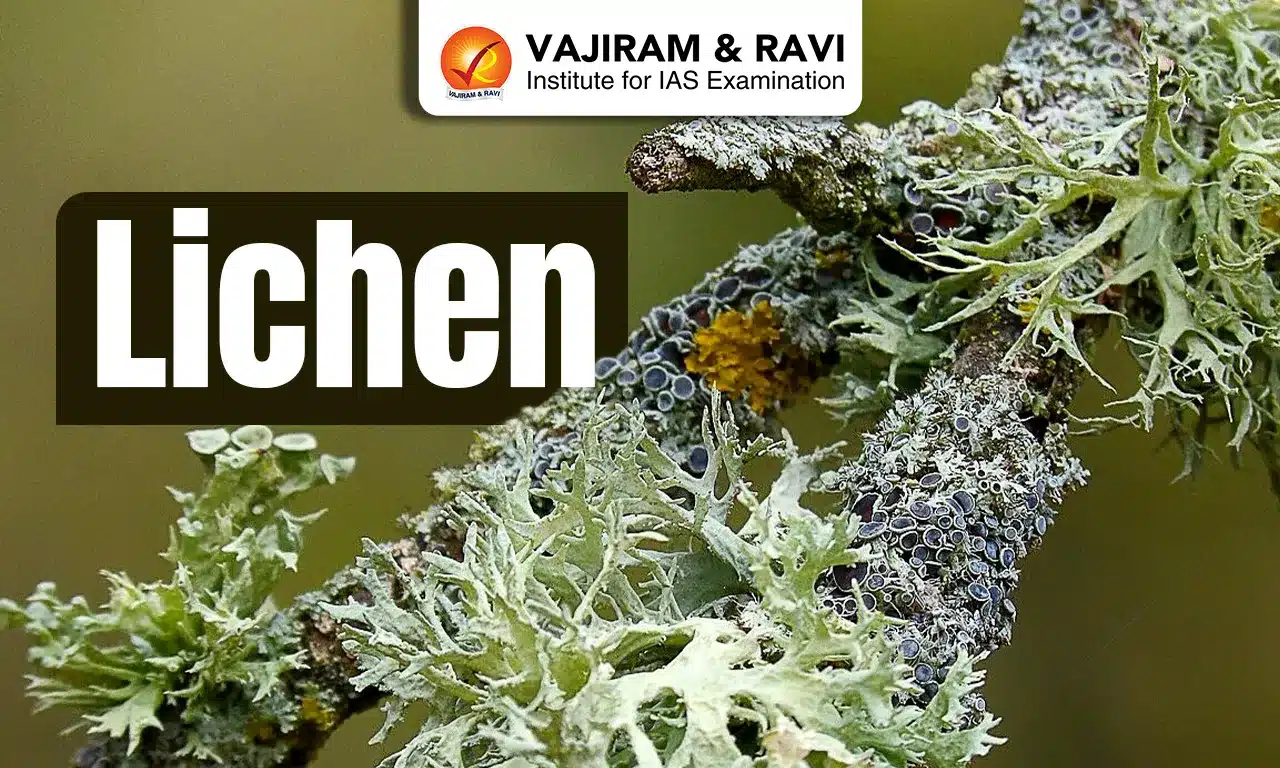
  • A lichen is a symbiosis between different organisms — a fungus and an algae or cyanobacterium.
  • The basis of their relationship is the mutual benefit that they provide each other. 
  • The photosynthetic algae or cyanobacteria form simple carbohydrates that, when excreted, are absorbed by fungi cells and transformed into a different carbohydrate. 
  • They also produce vitamins that the fungi need. 
  • Fungi contribute to the symbiosis by absorbing water vapour from the air and by providing much-needed shade for the light-sensitive algae beneath.
  • The composite body of a lichen is called a thallus (plural thalli); the body is anchored to its substrate by hairlike growths called rhizines.
  • Lichens are found worldwide and occur in a variety of environmental conditions. 
  • A diverse group of organisms, they can colonize a wide range of surfaces and are frequently found on tree bark, exposed rock, and as a part of biological soil crust.

Benefits that Lichen Give to Nature

  • They are a keystone species in many ecosystems.
  • They serve as a food source and habitat for many animals, such as deer, birds, and rodents.
  • They provide nesting materials for birds.
  • They protect trees and rocks from extreme elements such as rain, wind, and snow.
  • Pioneers of Colonization: 
    • Lichens are considered as primary colonisers.
    • These invade bare areas and contribute to soil formation by breaking down rock minerals both physically and chemically and thus creating conditions for other species such as mosses and liverworts to follow.

Source: TH

Lichen FAQs

Q1: A lichen is a symbiotic association between which organisms?

Ans: A lichen is a symbiosis between different organisms — a fungus and an algae or cyanobacterium.

Q2: In lichens, what is the role of algae or cyanobacteria?

Ans: Perform photosynthesis and provide food.

Q3: In lichens, what is the role of fungi?

Ans: Absorb water vapour and provide shade to algae.

Q4: Why are lichens considered keystone species in many ecosystems?

Ans: They provide food, habitat, and nesting material to various organisms.

Rhesus Macaque

Rhesus Macaque

Rhesus Macaque Latest News

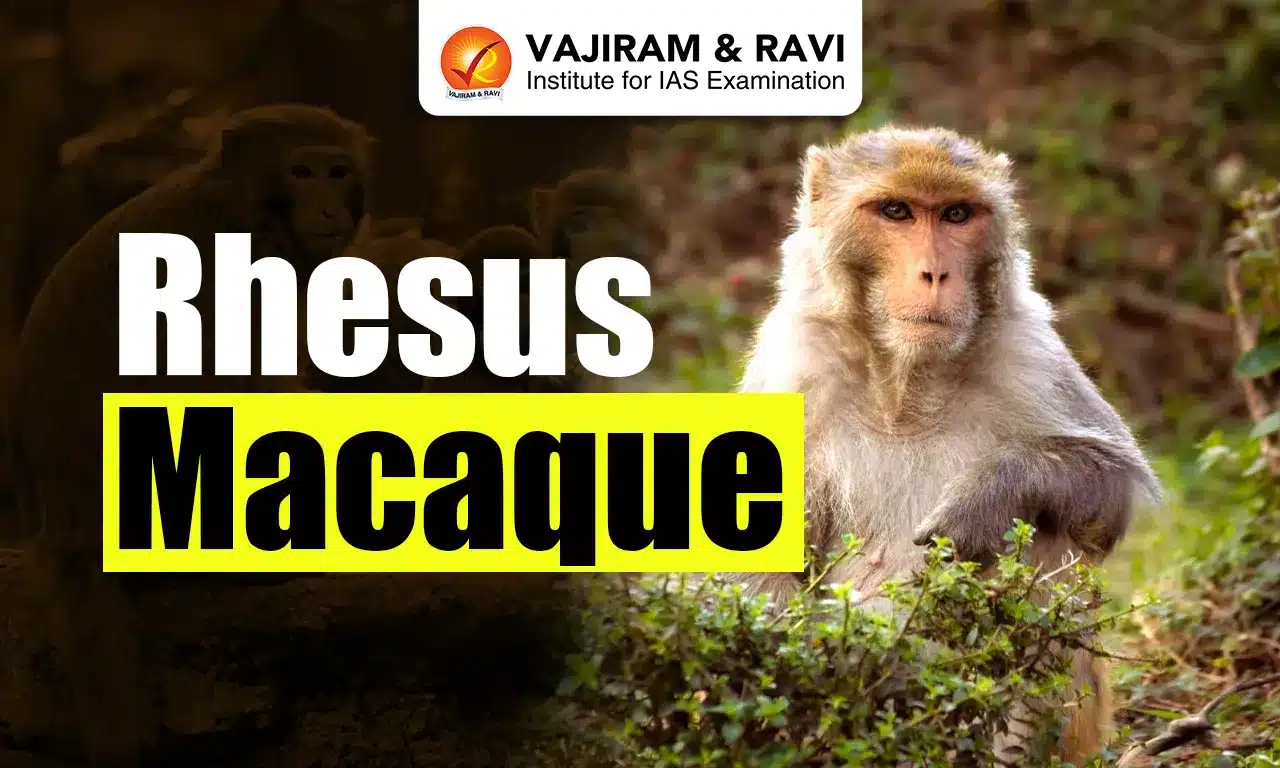
Recently, the standing committee of the National Board for Wildlife (SC-NBWL) has recommended reinstating Rhesus Macaque species of monkeys under Schedule II of the Wildlife (Protection) Act, 1972.

About Rhesus Macaque

  • The Rhesus macaque (Macaca mulatta) is a species of Old World monkey.
  • Appearance: Rhesus macaques are familiar brown primates with red faces and rears. They have close-cropped hair on their heads, which accentuates their very expressive faces.
  • Distribution: They are native to India, Bangladesh, Pakistan, Nepal, Myanmar, Thailand, Afghanistan, Vietnam, southern China, and some neighboring areas.
  • Habitat: They may be found in forests, mangroves, scrub, grasslands, and mountainous regions.
  • They also adapt well to human presence and form larger troops in human-dominated landscapes than in forests.
  • Diet: Rhesus macaques are omnivorous animals, eating seeds, roots, bark, fruits, and cereals.

Characteristics of Rhesus Macaques

  • Social groups: They live in large groups, often led by a dominant male.
  • Lifestyle: These are social, diurnal, and both terrestrial and arboreal animals. 
  • Communication: They use vocalizations, facial expressions, and body language.

Conservation Status of Rhesus Macaques

  • IUCN: Least Concern
  • Wildlife Protection Act of 1972: Schedule II 

Source: IE

Rhesus Macaque FAQs

Q1: What is the diet of the Rhesus Macaque?

Ans: Omnivorous

Q2: What is the conservation status of the Rhesus Macaque?

Ans: Least Concern

Pradhan Mantri Jan Dhan Yojana (PMJDY)

Pradhan Mantri Jan Dhan Yojana (PMJDY)

About Pradhan Mantri Jan Dhan Yojana (PMJDY): 

  • Launch date: August 28, 2014
  • Objective: To promote financial inclusion by providing access to financial services, including banking/savings accounts, remittance, credit, insurance, and pensions, affordably.
  • Significance: Forms the backbone for several government economic initiatives and facilitates Direct Benefit Transfers (DBTs).
  • Eligibility:
    • The applicant should be an Indian National.
    • The applicant should be aged between 18 and 59 years.
    • If minors above ten years apply, they will require support from their legal guardians to administer their PMJDY account.
  • Jan Dhan Account:
    • An individual can open an account under this scheme with any bank branch or Business Correspondent (Bank Mitr) outlet.
    • Accounts opened under PMJDY can be opened with zero balance. However, if the account holder wishes to get a chequebook, he/she will have to fulfill the minimum balance criteria.
    • The account holders under this scheme will be given a RuPay debit card which can be used across all ATMs for cash withdrawal.

Scheme highlights:

  • Zero-balance accounts: Accounts can be opened with no minimum balance requirement.
  • RuPay debit card: Provides a free RuPay debit card with in-built accident insurance coverage.
    • Accident insurance: Up to ₹2 lakh.
    • Life insurance: Up to ₹30,000 for eligible first-time account holders.
  • Overdraft facility:
    • Up to ₹10,000 is available to one account per household, with an additional ₹5,000 loan after six months of satisfactory account activity.
  • Coverage focus: 66.6% of accounts are in rural and semi-urban areas, with 55.6% of account holders being women.
  • Banking access: 99.95% of inhabited villages have banking facilities within a 5 km radius.

Recent developments:

  • Account growth:
    • Accounts increased from 14.72 crore in March 2015 to 53.13 crore by August 2024.
    • Deposits in PMJDY accounts surged from ₹15,670 crore (March 2015) to over ₹2.31 lakh crore (August 2024).
  • Financial Year 2024-25 target: The government aims to open an additional 3 crore PMJDY accounts.

Operative accounts: Out of 173 crores CASA accounts in the country, over 53 crores are PMJDY accounts, with an 80% operation rate.


Q1. What is a “Farmer's Producer Organisation” (FPO)?

It is one type of PO where the members are farmers. Small Farmers’ Agribusiness Consortium (SFAC) is providing support for the promotion of FPOs. PO is a generic name for an organization of producers of any produce, e.g., agricultural, non-farm products, artisan products, etc.

Source: Over 3 crore PM Jan Dhan accounts to be opened in FY25: FM Sitharaman | Business News - The Indian Express

Nidhi Companies

Nidhi Companies

About Nidhi Companies:

  • A NIDHI Company is recognised under Section 406 of the Companies Act2013 and typically operates in the Non-Banking Financing Sector of India.
  • It is formed to borrow and lend money to its members. It inculcates the habit of saving among its members and works on the principle of mutual benefit. 
  • It isn’t required to receive the license from Reserve Bank of India (RBI), as these are registered with the companies act.
  • Members: Minimum of seven members is required to start a Nidhi Company out of which three members must be the directors of the company.
  • Activities Prohibited in a Nidhi Company
    • It can’t deal with chit funds, hire-purchase finance, leasing finance, insurance or securities business.
    • It is strictly prohibited from accepting deposits from or lending funds to, any other person except members.
    • Nidhi companies should not issue preference shares, debentures or any other debt instrument in any manner, name or form.
    • Nidhi companies should not open current accounts with their members.

Q1: What is a Non-Banking Financial Company (NBFC)?

A NBFC is a company registered under the Companies Act, 1956, engaged in the business of loans and advances, the acquisition of shares/stocks/bonds/debentures/securities issued by the Government or local authority or other marketable securities of a like nature, leasing, hire-purchase, insurance business, chit business.

Source: MCA cracks down on errant Nidhi companies, penalises two dozen in a fortnight

Batten Disease

Batten Disease

Batten Disease Latest News

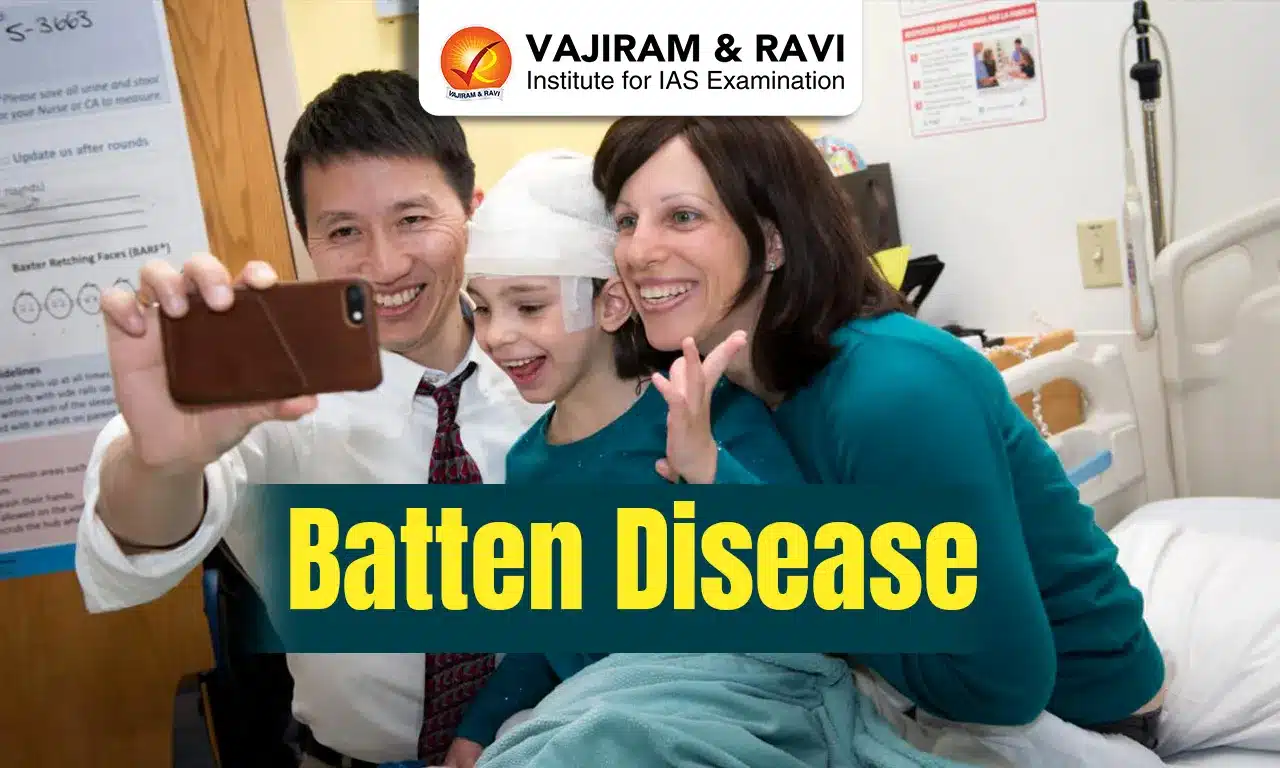
Researchers recently have found that male and female brains show different responses as the Batten Disease progresses and have found a model of the disease that could transform future treatments.

About Batten Disease

  • It is a very rare genetic disorder that affects the brain and nervous system. 
  • Batten disease is a congenital, progressive, and terminal neurological disease. 
  • Symptoms sometimes begin in infancy and sometimes later in childhood, after apparently normal early development. 
  • Occasionally it may start in adulthood. 
  • In individuals suffering from Batten disease, nervous system function steadily declines, causing a wide variety of neurologic problems, including loss of vision and seizures.
  • The life expectancy of a child born with Batten disease can vary, depending on the form of the disease and the age of onset. 
  • Some children die in early childhood, while others may be able to live into their teens or twenties.

What Causes Batten Disease?

  • Batten disease is actually a family of related disorders also known as neuronal ceroid lipofuscinoses. 
  • It can be caused by genetic mutations in any of more than a dozen known genes, collectively referred to as CLN genes (CLN1, CLN2, etc).
  • There are 13 known forms of Batten disease (CLN1 through CLN14). 
  • Each form is classified by the specific version of the CLN (ceroid lipofuscinosis, neuronal) gene that causes it, with each numbered subtype referring to a different gene that causes its own respective form of the disease. 
  • The most common type of Batten disease is CLN3.

Batten Disease Symptoms

  • Most forms of Batten disease cause vision loss, seizures, delayed developmental milestones, behavioral and learning problems, and loss of language and motor skills.
  • Some children with infantile Batten disease also develop microcephaly.
  • Vision loss is often the first symptom and can rapidly progress. 
  • Parents also often notice clumsiness and stumbling in older children due to a loss of motor coordination. 
  • Eventually, children with Batten disease become blind, unable to walk, talk, or swallow, and confined to a wheelchair or bed.

Batten Disease Treatment 

  • Currently, there is no treatment to reverse the effects of Batten disease. 
  • But some medications can help improve symptoms like seizures. 
  • Some people with Batten disease get physical or occupational therapy to help them function.

Source: MED

Batten Disease FAQs

Q1: Batten disease primarily affects which part of the human body?

Ans: Brain and nervous system

Q2: What is the cause of Batten disease?

Ans: It can be caused by genetic mutations in any of more than a dozen known genes, collectively referred to as CLN genes (CLN1, CLN2, etc).

Q3: At what age can Batten disease symptoms begin?

Ans: In infancy, childhood, or occasionally adulthood.

Q4: Is Batten disease curable?

Ans: There is no cure; treatment focuses on symptom management.

Christmas Island

Christmas Island

Christmas Island Latest News

Google plans to build a large artificial intelligence data centre on Australia's remote Indian Ocean outpost of Christmas Island after signing a cloud deal with the Department of Defence earlier this year.

About Christmas Island

  • It is an island in the Indian Ocean.
  • It lies about 360 km south of the island of Java and 1,400 km northwest of Australia.
  • It is administered as an external territory of Australia. 
  • The island is the summit of an oceanic mountain whose highest point on the island is Murray Hill, rising to 1,184 feet (361 metres) in the western part of the island. 
  • The main settlement and chief port is at Flying Fish Cove on the northeastern part of the island.
  • History:
    • Although Europeans sighted Christmas Island in 1615, it was named for the day of its rediscovery in 1643.
    • The discovery of phosphate on the island in 1887 led to the UK annexing it the following year. 
    • In 1900 Christmas Island was incorporated in the British crown colony of the Straits Settlements with its capital at Singapore. 
    • During World War II the island was occupied by the Japanese. 
    • In 1958 the island became an Australian territory.
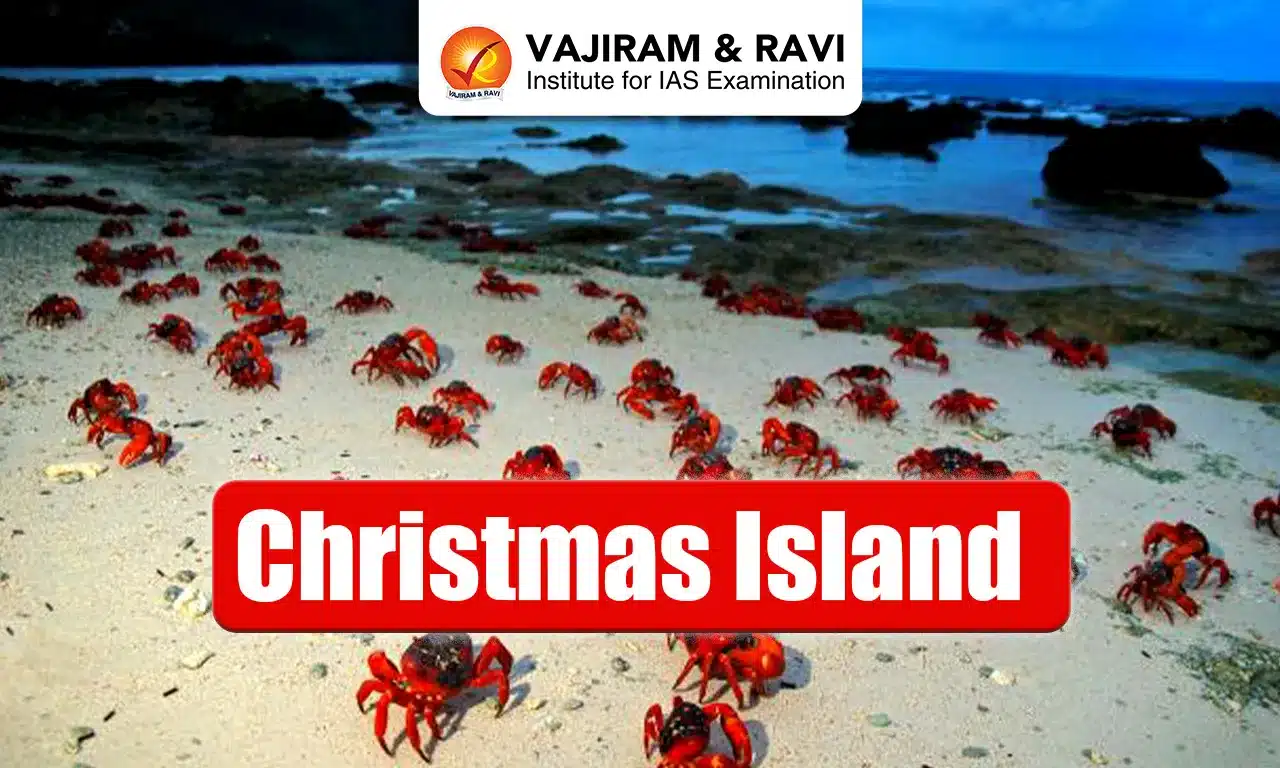
  • Tropical rainforest covers most of Christmas Island, and fauna includes large numbers of seabirds, small reptiles, land crabs, and insects.
  • One of the island’s best-known animal residents is the Christmas Island red crab (Gecarcoidea natalis), whose spectacular annual emergence and migration draws large numbers of tourists.
  • The population includes many ethnic Chinese, a small number of people of European ancestry, and Malay labourers recruited mainly from Malaysia, Singapore, and the Cocos (Keeling) Islands.
  • Economy
    • The territory’s economy was long based almost entirely on the mining and extraction of phosphate.
    • With the recoverable reserves of phosphate nearly exhausted, efforts were turned toward developing tourism.
    • Small-scale subsistence cropping and fishing are practiced, but most food is imported.

Source: REUT

Christmas Island FAQs

Q1: Christmas Island is located in which ocean?

Ans: Indian Ocean

Q2: Which country administers Christmas Island as an external territory?

Ans: Australia

Q3: What is the highest point on Christmas Island?

Ans: Murray Hill

Q4: Which valuable natural resource led to the annexation of Christmas Island by the UK in 1888?

Ans: Phosphate

Methylocucumis oryzae

Methylocucumis oryzae

About Methylocucumis oryzae: 

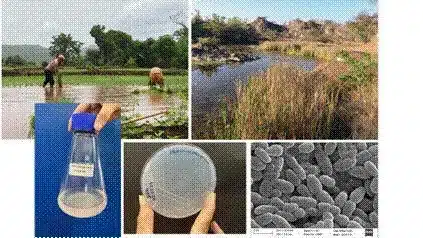
  • It is a bacterium which exists in nature in abundance in wetlands and rice fields.
  • It had a characteristic oval and elongated shape, similar to that of a cucumber, and hence the name ‘methane eating cucumbers’ was given to this novel genus.
  • Features
    • It is found to be important methanotroph components.
    • It has a remarkably large size compared to other bacteria and is equal to the size of a small yeast (3-6 µm).
    • Another unique feature of this bacterium is that it has a strict mesophilic nature and cannot grow above 37ºC while most of the other methanotrophs can tolerate or grow at 37ºC or even at 40ºC.
    • The bacterium forms light pale pink colored colonies, and the genome is indicative of a carotenoid pathway.
    • In recent years, this methanotroph was also found to promote the growth of rice plants by inducing early flowering and increased grain yield.
  • The current constraints with Methylocucumis are slow growth which limits growing this culture on a larger scale, needed for mitigation and biotechnological applications.

What are methanotrophs?

  • Methanotrophs or methane oxidizing bacteria oxidize this methane and build up their biomass, breathing oxygen and producing CO2 and H2O as we do.
  • These are natural methane mitigating agents and are present in all the environments where methane and oxygen both are available.
  • Habitat: Wetlands, rice fields, ponds and other water bodies are the habitats where these grow in abundance.

Q1: What is Methane?

It is a colorless odorless gas, flammable water insoluble gas. It is also known as marsh gas or methyl hydride.It is easily ignited. The vapors are lighter than air. Under prolonged exposure to fire or intense heat the containers may rupture violently and rocket.

Source: India can bank on its own natural methane mitigator to tackle climate challenges

What is Project-76?

What is Project-76?

About Project-76:

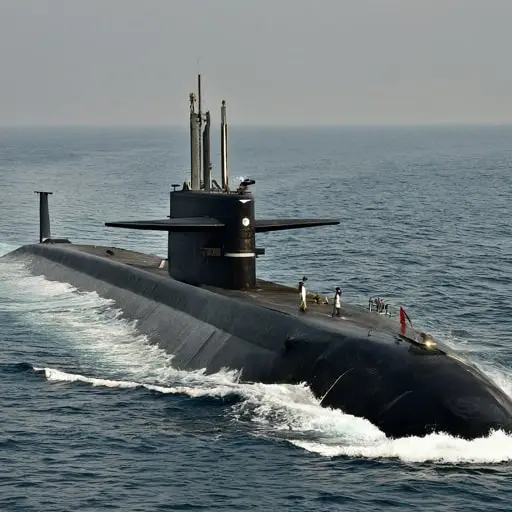
  • Under Project 76, the Warship Design Bureau of the Indian Navy is working on designing and developing the country’s first indigenously conventional diesel-electric submarine
  • The Indian Navy wants to build 12 submarines under Project 76. 
  • Envisioned as air-independent propulsion (AIP)-equipped diesel-electric attack submarines, these submarines, expected to have a submerged displacement of 3,000 tons, represent a leap beyond their foreign-designed predecessors like Project-751 (India) and Project-75 submarines. 
  • It aims to succeed the renowned Sindhughosh (Kilo) class, emphasizing the Navy’s commitment to maintaining a robust 3,000-ton class of submarines.
  • It is expected to feature some of the most advance features such as, indigenous Weapon Control system and Lithium-ion batteries. 
  • It represents a pivotal milestone in India’s pursuit of maritime supremacy, amalgamating top-tier French technology from Project 75 and the expertise of German/Spanish collaboration from Project 751 (India). 
  • The objective is to initiate the construction of the prototype by 2028.
  • This undertaking holds immense significance for India’s submarine-building capabilities, aiming to reduce reliance on foreign Original Equipment Manufacturers (OEMs) for submarine design.

Q1: What is the Defence Research and Development Organisation (DRDO)?

DRDO is the R&D wing of Ministry of Defence, Govt of India, with a vision to empower India with cutting-edge defence technologies and a mission to achieve self-reliance in critical defence technologies and systems, while equipping our armed forces with state-of-the-art weapon systems and equipment in accordance with requirements laid down by the three Services. DRDO was formed in 1958 by merging the then-existing Technical Development Establishment (TDEs) of the Indian Army and the Directorate of Technical Development and Production (DTDP) with the Defence Science Organisation (DSO).

Source: DRDO takes up preliminary study on development of indigenous conventional submarine

What is Bioacoustics?

What is Bioacoustics?

About Bioacoustics:

  • It is a cross-disciplinary science that combines biology and acoustics.
  • Usually, it refers to the investigation of sound production, dispersion, and reception inanimals.
  • Bioacoustics research can include approaches whereby scientists focus on specific species and conduct fieldwork to record their vocalisations at close range.
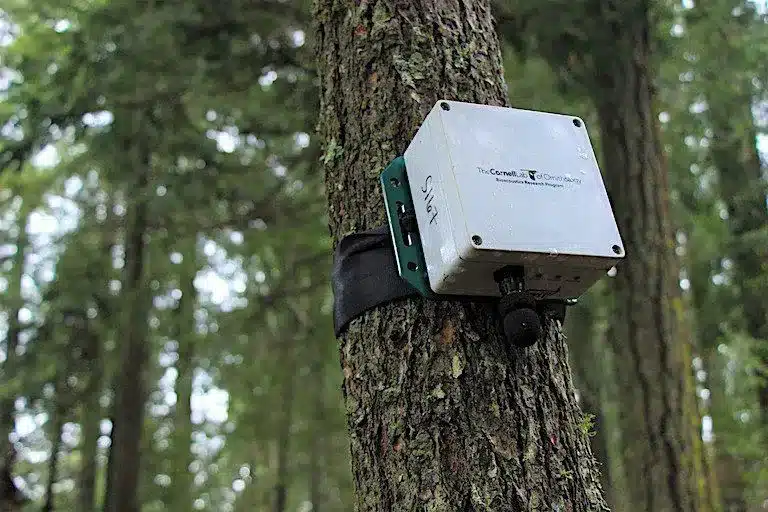
  • Alternatively, it may involve the placement of passive acoustic monitors in a set location to record audio data over a longer period of time.
  • In terms of conservation research, bioacoustics:
    • Allows us to quickly gather in-depth information about ecosystems, including species’ presence (determined by their vocalisations), rain patterns, and human activity.
    • Helps us monitor threatened species, examine habitat use and migration patterns, and understand how ecosystems recover from disturbance events like logging or forest fires.
    • Provides data to guide conservation planning and support the development of new conservation strategies.

Q1: What is acoustics?

Acoustics is the branch of physics that deals with the study of sound, including its production, transmission, and effects. It encompasses the science of how sound waves behave in various environments, their interactions with different materials, and how they are perceived by listeners.

News: How bioacoustics and AI can help study animal populations in the forest and beneath the waves

Dogri Language

Dogri Language

Dogri Language Latest News

In recent years, growing concern has emerged over the gradual decline of the Dogri language in the Jammu region.

About Dogri Language

  • It is an Indo-Aryan language, part of the larger Indo-European family of languages.
  • It is spoken in India, chiefly in the Jammu region of Jammu and Kashmir. 
  • It is also spoken in the state of Himachal Pradesh and in northern Punjab, other parts of Jammu and Kashmir, and elsewhere.
  • The earliest written reference to Dogri (using the paleonym Duggar) is found in the Nuh sipihr (“The Nine Heavens”), written by the poet Amir Khosrow in 1317 CE.
  • It has its origin in the old Indo-Aryan language, i.e., language of the Vedas and Laukik Sanskrit. 
    • Like other modern Indo-Aryan languages, Dogri has also passed through Old Indo-Aryan (Sanskrit) and Middle Indo-Aryan (Pali, Prakrit, and Apabhramsha) stages of development and entered the modern Indo-Aryan stage around the 10th century A.D. 
    • Hence, it shows its three-fold process of development of its sound structure, expressing its affinity with Shaurseni Prakrit.
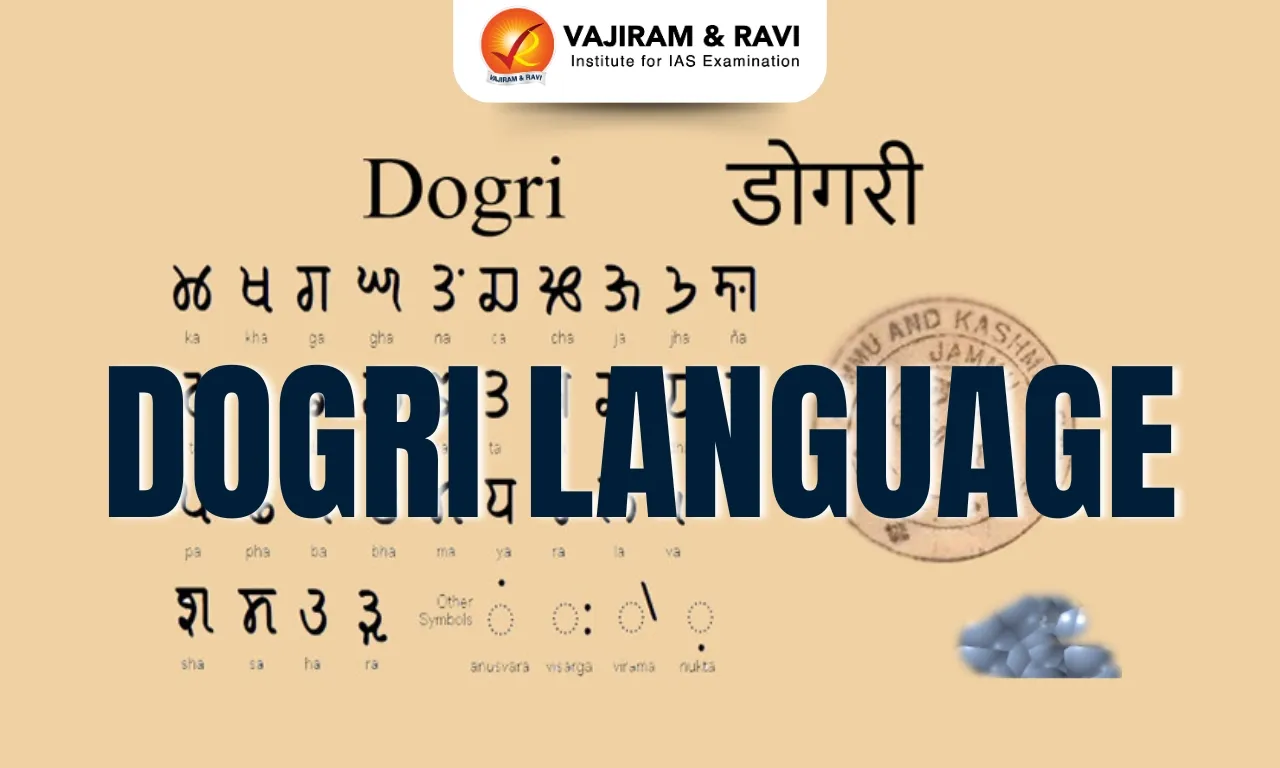
  • Initially written in the Takri script, Dogri now uses the Devanagari script, which is also utilized by several other Indian languages.

Source: TH

Dogri Language FAQs

Q1: Dogri language belongs to which branch of the Indo-European family of languages?

Ans: Indo-Aryan

Q2: In which region of India is Dogri language chiefly spoken?

Ans: Jammu region of Jammu and Kashmir.

Q3: The earliest written reference to Dogri (as Duggar) is found in which work?

Ans: The earliest written reference to Dogri is found in the Nuh sipihr (“The Nine Heavens”), written by the poet Amir Khosrow in 1317 CE.

Q4: Which script is used to write the Dogri language?

Ans: Initially written in the Takri script, Dogri now uses the Devanagari script.

World Bank Group Guarantee Platform

World Bank Group Guarantee Platform

About World Bank Group Guarantee Platform: 

  • It is housed at the Multilateral Investment Guarantee Agency (MIGA), brings together products and experts from the World Bank, International Finance Corporation (IFC), and MIGA for simplicity, efficiency, and speed.
  • It aims to boost WBG annual guarantee issuance to $20 billion by 2030.
  • WBG Guarantees will serve as a one-stop-shop for all WBG guarantee business, providing the best guarantee solutions for clients to meet project needs and development priorities.
  • WBG clients can now choose from a simplified market-friendly menu of guarantee options.
  • The platform will provide three types of coverages:
    • Credit guarantees for loans to the public or private sector;
    • Trade finance guarantees for trade finance projects involving public entities;
    • Political risk insurance against non-commercial risks for private sector projects or public-private partnerships.
  • Significance
    • Initiated in 2024, World Bank Group Guarantees consolidates all guarantee products and experts from across the World Bank Group institutions at MIGA.
    • It provides a simplified and comprehensive menu of guarantee solutions, enabling clients to select the instrument that best suits their needs.
    • The platform streamlines processes, removes redundancies, and provides greater accessibility by de-risking investments in developing countries.

Q1: What is the World Bank?

The WB is an international financial institution that provides loans and grants to the governments of low and middle-income/developing countries for the purpose of pursuing capital projects. It was established along with the IMF at the 1944 Bretton Woods Conference.

Source: World Bank Group Guarantee Platform Goes Live

What is Primary Amoebic Meningoencephalitis (PAM)?

What is Primary Amoebic Meningoencephalitis (PAM)?

About Amoebic Meningoencephalitis (PAM):

  • It is a rare, usually fatal, infection of the central nervous system (brain and spinal cord).
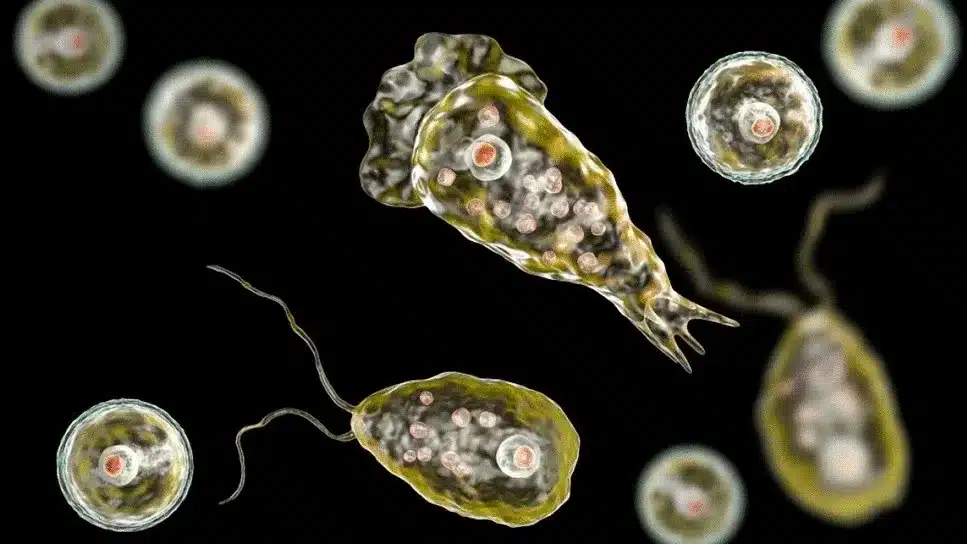
  • It is caused by a type of free-living amoeba (a microscopic, single-celled organism) called Naegleria fowleri.
    • Naegleria fowleri occurs in shallow surface waters and incorrectly maintained swimming pools, hot tubs, and spas, particularly in warm climates.
    • The amebas can enter the brain through the nose when people swim in contaminated warm, fresh water.
    • The amoeba then invades the brainand meninges through the nose.
  • Symptoms:
    • Symptoms, which include fever, headache, vomiting, and sensitivity to light, typically appear within five days of infection and progress rapidly.
    • In the later stages, one can suffer from a stiff neck, seizures, hallucinations, and even coma.
  • Treatment:
    • There are no standard treatments for the treatment of PAM.
    • Combination therapy using medicines to treat parasites offers the most promise.
  • PAM differs from granulomatous amebic encephalitis, which is another very rare, usually fatal infection of the central nervous system caused by different free-living amebas, Acanthamoeba species or Balamuthia mandrillaris.

Q1: What is amoeba?

It is a generic term used to refer to a group of single-celled organisms belonging to the biological kingdom Protista. Amoebas are eukaryotic microorganisms that are characterized by their ability to change shape and move using pseudopods, which are temporary extensions of the cell membrane. 

Source: Kerala govt issues warning against amoebic meningoencephalitis: Know what it is

Nugu Wildlife Sanctuary

Nugu Wildlife Sanctuary

Nugu Wildlife Sanctuary Latest News

A farmer was recently killed in a tiger attack near Nugu Wildlife Sanctuary in Mysuru.

About Nugu Wildlife Sanctuary

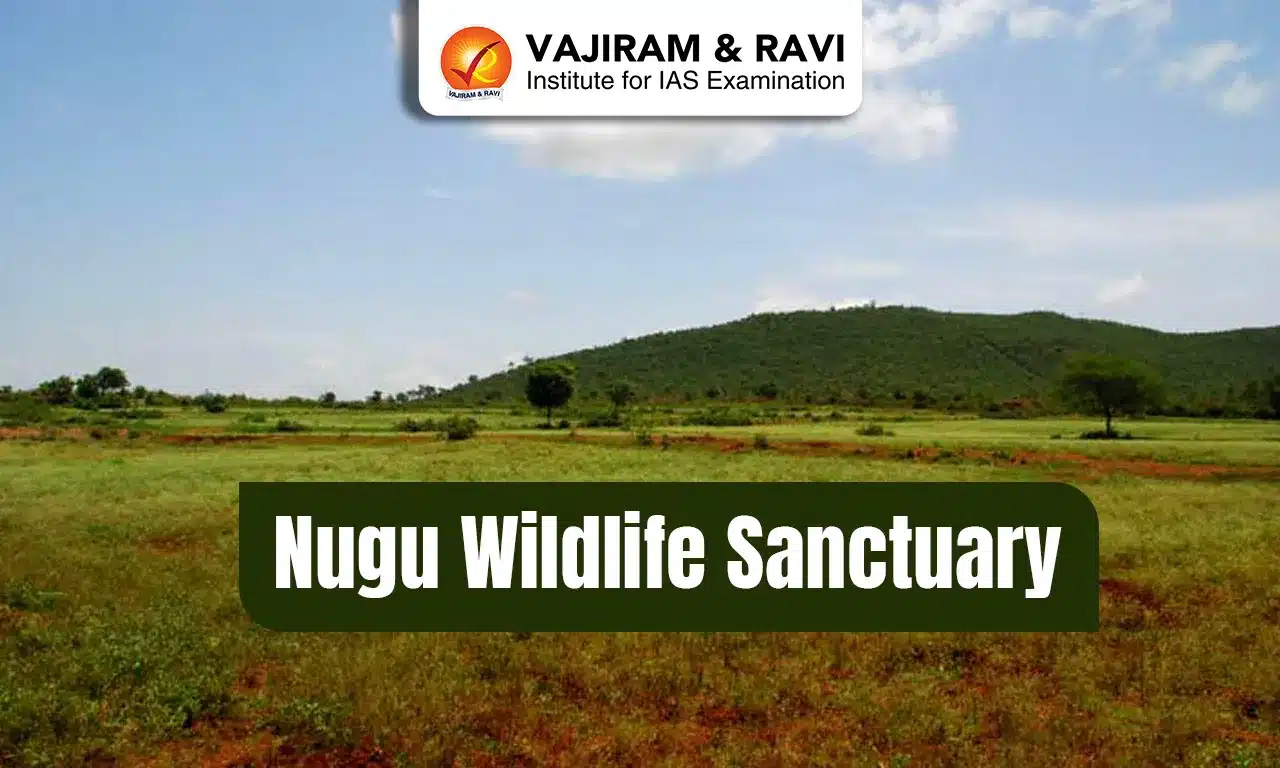
  • It is situated in the Mysuru district, Karnataka.
  • It lies north of Bandipur National Park.
  • It covers about 30 sq.km., and the northern part of the sanctuary is occupied by the Nugu Reservoir.
    • Nugu Dam is built across the Nugu River, a tributary of the Cauvery.
  • In the year 1974, Nugu was declared as a Wildlife Sanctuary, and later, during the year 2003-2004, the area of Nugu Wildlife Sanctuary was added to the Nilgiri Biosphere Reserve. 
  • Rainfall: The area receives rainfall from both southwest and northeast monsoons. The average amount of rainfall received in this area is 1000 mm.
  • Vegetation: Most of the vegetation in the forests is dry deciduous interspersed with patches of plantations.
  • Flora: Some of the tree species found in this region include Dipterocarpus indicus, Calophyllum tomentosum, and Hopea parviflora.
  • Fauna:
    • The sanctuary supports a diverse range of fauna, including elephants, tigers, leopards, wild dogs, striped hyenas, sloth bears, gaurs, sambhars, chitals, and four-horned antelopes.
    • It is also home to two important riverine wildlife species: the smooth-coated otter and the marsh crocodile, emphasizing its rich biodiversity.
    • The area is also rich in avifauna with birds like peafowl, India rind dove, Grey Jungle Fowl, Brahminy kite, Grey headed fish eagle, etc.

Source: NIE

Nugu Wildlife Sanctuary FAQ's

Q1: Nugu Wildlife Sanctuary is located in which Indian state?

Ans: Karnataka

Q2: Nugu Wildlife Sanctuary lies to the north of which major protected area?

Ans: Bandipur National Park

Q3: The Nugu River is a tributary of which major river system?

Ans: Cauvery

Koraga Tribe

Koraga Tribe

Koraga Tribe Latest News

A groundbreaking genomic study led by researchers from Mangalore University and Yenepoya (Deemed-to-be University) has identified a distinct ancestral source in the Koraga tribe that may date back to the Indus Valley Civilisation.

About Koraga Tribe

  • The Koraga is an indigenous tribal community that is basically found mainly in the Dakshina Kannada, Udupi districts of Karnataka and the Kasaragod district of Kerala state.
  • The Koragas are classified as a Particularly Vulnerable Tribal Group (PVTG).
  • As per the 2011 census, their total population is 1582, in which 778 were males and 804 females.
  • Language: People communicate either in their language, known as Koraga Bhasha, or in Tulu.
  • Culture and Economy:
    • The Koragas mainly depend on agriculture and forest resources for their livelihoods. 
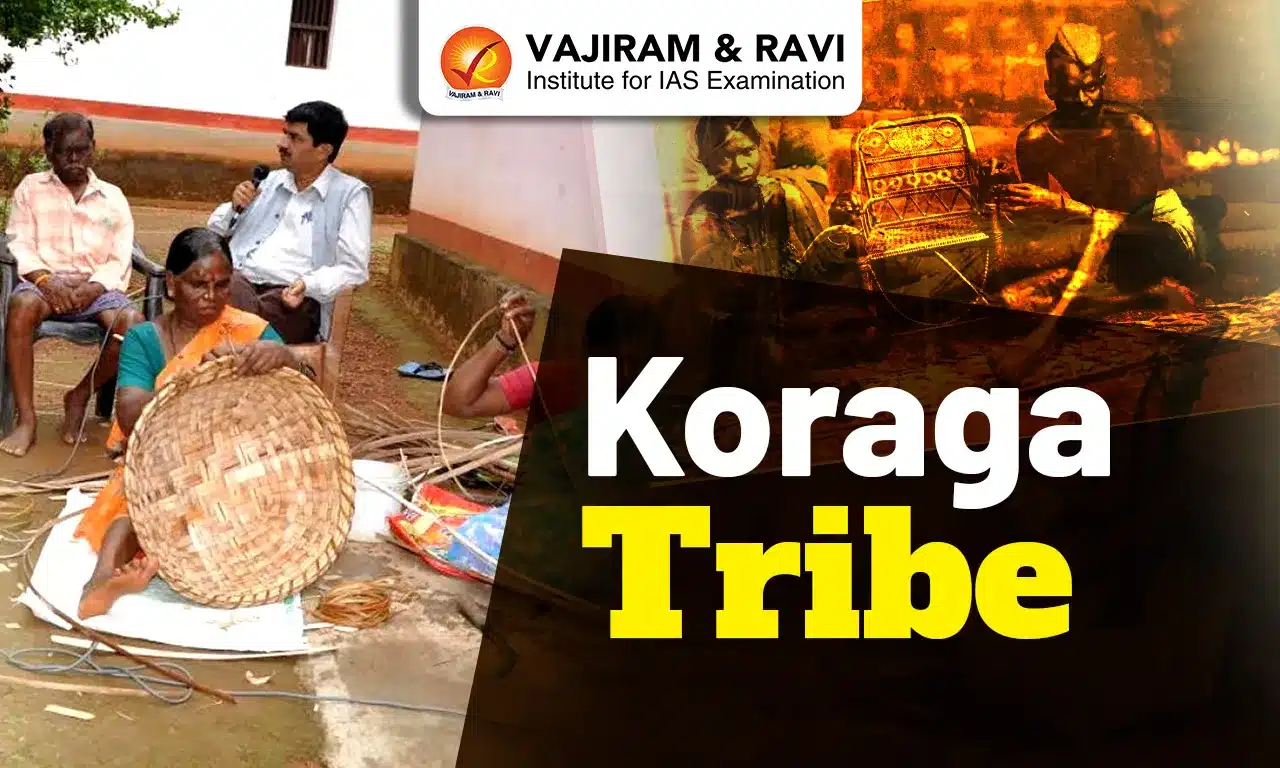
    • They are known for their traditional crafts, such as basket-making, and actively participate in folk dances and rituals that reflect their rich cultural heritage. 
    • The Koraga community follows a matrilineal family system and a unique clan structure called "bali," which plays an important role in their social organization. 
    • Koragas are led by the most senior person in the village, often known as Mooppan. He ensures the well-being of the members of the community. 
    • Drumming and traditional music are integral to their rituals and community celebrations.
    • Dholu and Voote (Drum and Flute) were two important musical instruments of the Koragas.
    • The rhythmic drum-beating, especially with the "dholu," is a significant aspect of their cultural identity, used in various ceremonies and gatherings.
  • Religious Beliefs: 
    • The Koragas follow Hinduism but have distinct tribal religious beliefs and practices. 
    • They worship spirits known as "Bhutas" and believe in the power of magic and rituals to ward off evil.

Source: NIE

Koraga Tribe FAQs

Q1: The Koraga tribe is predominantly found in which states?

Ans: Karnataka and Kerala

Q2: Which all languages are spoken by the Koraga people?

Ans: Koraga people communicate either in their language, known as Koraga Bhasha, or in Tulu.

Q3: The Koraga community follows which type of family system?

Ans: The Koraga community follows a matrilineal family system.

Q4: What is the name of the clan system followed by the Koraga tribe?

Ans: Bali

Cesses and Surcharges

Cesses and Surcharges

About Cesses and Surcharges:

  • Cess and surcharges are levied by the Central government for the purposes of the Union under Article 271 of the Constitution of India.
  • A cess is a tax on tax. The Indian government levies it on the tax liability, including surcharge, and it is used for a specific purpose.
  • Cesses are named after the identified purpose; the purpose itself must be certain and for the public good.
    • Some different types of cesses levied in India are infrastructure cess on motor vehicles, Krishi Kalyan cess on service value, Swachch Bharat cess, education cess, and cess on crude oil, among others.
  • On the other hand, a surcharge is charged on the income taxes paid. It is usually paid by taxpayers, whether individuals, associations of persons, or companies, who fall in a particular tax bracket. 
    • Surcharge is not collected for any specific purpose but can be used for any reason as seen reasonable by the Central government.
  • The proceeds collected from a surcharge and a cess levied by the union form part of the Consolidated Fund of India.
    • The funds need not be shared with the State governments and are thus at the exclusive disposal of the union government. 
    • The proceeds of such surcharges and cesses go towards meeting certain specific needs, such as financing of centrally sponsored schemes.
    • The benefit of such expenditure also percolates to the states.

Q1: What is the Consolidated Fund of India?

Constituted under Article 267 of the Constitution, the Consolidated Fund of India is one of the most important government accounts. All the income generated through direct taxes, indirect taxes, and other sources of revenue (excluding exceptional items) are part of the Consolidated Fund of India.This fund is used for all the expenditures carried out by the government, barring a few transactions which are funded by the Contingency Fund or the Public Account.

News: Dispute over cesses and surcharges a complicated issue: Arvind Panagariya

National Pest Surveillance System (NPSS)

National Pest Surveillance System (NPSS)

About National Pest Surveillance System (NPSS):

  • It is a digital initiative of the Ministry of Agriculture and Farmers Welfareleveraging Artificial Intelligence (AI) and Machine Learning (ML) to provide timely pest management advisories to farmers across the country.
  • It promises to reshape pest management practices and empower farmers across India.
  • The primary goal of NPSS is to reduce farmers' reliance on pesticide retailers and foster a scientific approach to pest control. 
  • The system comprises a user-friendly mobile app and a web portal, ensuring accessibility for all farmers.
  • By leveraging real-time data and advanced analytics, NPSS enables accurate pest identification, monitoring, and management.
  • Farmers will greatly benefit from NPSS as it provides quick solutions to pest attacks and crop diseases, reducing crop losses and thus improving productivity.
  • The system's comprehensive pest incidence data and automated advisories will empower farmers with actionable insights, helping them make informed decisions and take proactive measures to protect their crops.

Q1: What is Machine Learning?

Machine learning is an essential branch of artificial intelligence that employs data and algorithms to mimic human learning processes, gradually enhancing its accuracy. It is a cornerstone of the emerging field of data science. It involves training algorithms to find patterns in data, which enables them to make predictions or perform tasks without being explicitly programmed.

Source: New AI platform will connect farmers and scientists over phone, aid in pest control

Bhuvan Panchayat geoportal 4.0

Bhuvan Panchayat geoportal 4.0

About Bhuvan Panchayat geoportal 4.0: 

  • It is an online geospatial data and services dissemination platform to support integration and utilisation of space-based information into governance and research initiatives involving spatial planning up to Gram Panchayat level.
  • Developed by: This WebGIS platform developed by NRSC, ISRO.
  • It enables visualisation, analysis, sharing of web map service (WMS) services of all thematic data products generated at 1:10k under the Space based Information Support for Decentralized Planning (SISDP) project.

What is the National Database for Emergency Management (NDEM) portal?

  • It provides a comprehensive uniform, structured, multi-scale scale geospatial database for the entire country for situational assessment and effective decision-making during disasters/ emergency situations.
  • It acts as a national level geo-portal to provide space-based information with the amalgamation of DSS tools and services of disaster forecasting organisations with value addition addressing all natural disasters in all phases of disasters for an effective Disaster Risk Reduction in the Country.
  • It will also act as a Disaster Recovery and Data Provider node for the Integrated Control Room for Emergency Response (ICR-ER) being established by MHA, New Delhi.

Q1: What does the ISRO do?

The ISRO (Indian Space Research Organisation) is the country's space agency. The organisation is involved in science, engineering, and technology in order to reap the benefits of space for India and humanity.

Source: Curtain Raiser for Launch of geoportals Bhuvan Panchayat (Ver. 4.0) & National Database for Emergency Management (NDEM Ver. 5.0) by Union Minister Dr. Jitendra Singh on 28th June 2024

Sloth bear

Sloth bear

About Sloth bear: 

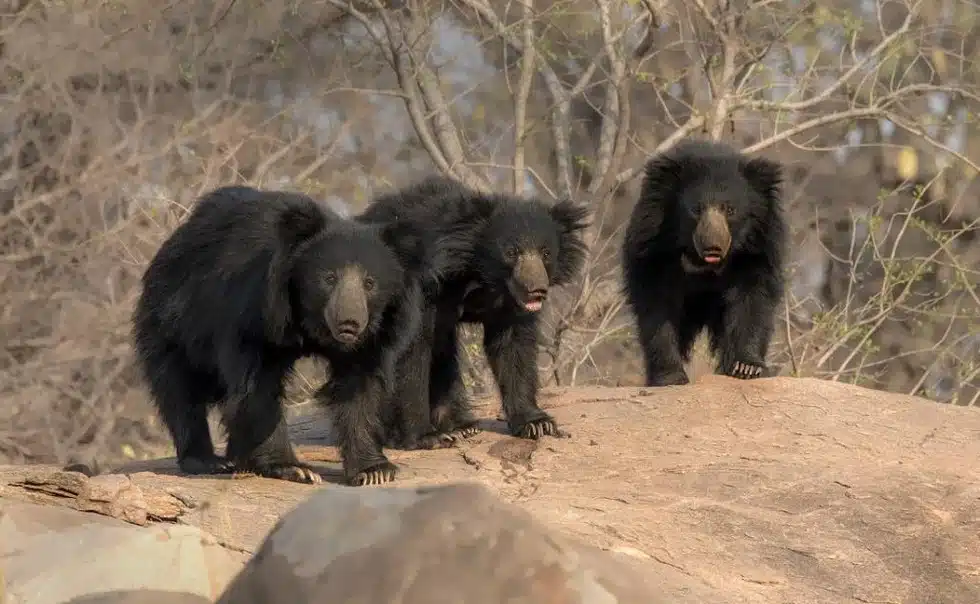
  • Sloth bears are one of the eight bear species found across the world.
  • They are myrmecophagous, meaning, they find bugs and termites to be their most sought after meal.
  • Habitat: They live in a variety of dry and moist forests and in some tall grasslands, where boulders, scattered shrubs and trees provide shelter.
  • Distribution: They mainly inhabit the region of India, Nepal, Sri Lanka and presumably Bhutan.
  • Appearance: They have long, shaggy dark brown or black fur and curved claws, which are the longest out of any of the bear species.
  • These bears are mostly nocturnal, foraging for food at night and resting in secluded locations
  • Sloth Bear Sanctuaries in India: Daroji Sloth Bear Sanctuary (Karnataka)
    , Jessore Sloth Bear Sanctuary (Gujarat).
  • Conservation Status
    • IUCN: Vulnerable
    • Wildlife Protection Act, 1972: Schedule 1
    • CITES: Appendix I

Q1:What is CITES ?

The Convention on International Trade in Endangered Species of Wild Fauna and Flora (CITES) is an international agreement between governments to ensure that international trade in specimens of wild animals and plants does not threaten the survival of the species.

Source: How can people across the Indian Subcontinent prevent fatal encounters with sloth bears? Learn from species’ behaviour towards tigers, advise scientists

Common Services Centres Special Purpose Vehicle

Common Services Centres Special Purpose Vehicle

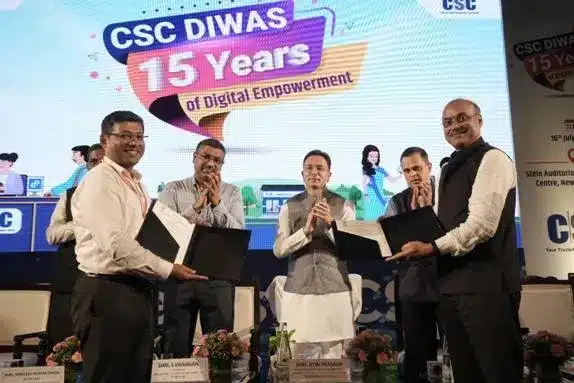
About Common Services Centres Special Purpose Vehicle:

  • It is incorporated under the Companies Act, 1956 by the Ministry of Electronics and Information Technology (MeitY), Government of India,
  • It monitors the implementation of the Common Services Centers Scheme.
    • Common Services Centres (CSC) scheme is one of the mission mode projects of the Digital India Programme.
  • It provides a centralized collaborative framework for delivery of services to citizens through CSCs, besides ensuring systemic viability and sustainability of the scheme.

Key facts about Common Services Centres

  • It is an initiative of the Ministry of Electronics & IT (MeitY), Government of India.
  • These act as the front-end delivery points for Government, private and social sector services to rural citizens of India, in an integrated manner.
  • CSCs are the access points for delivery of various electronic services to villages in India, thereby contributing to a digitally and financially inclusive society.
  • These are the access points for delivery of essential public utility services, social welfare schemes, healthcare, financial, education and agriculture services, apart from host of B2C services to citizens in rural and remote areas of the country.
  • It is a pan-India network catering to regional, geographic, linguistic and cultural diversity of the country, thus enabling the Government’s mandate of a socially, financially and digitally inclusive society.

Q1: What are the provisions of the Digital India Act 2023?

It upholds the concept of an open internet, striking a balance between accessibility and necessary regulations to maintain order and protect users. It mandates stringent Know Your Customer (KYC) requirements for wearable devices, accompanied by criminal law sanctions.

Source: Common Services Centres Special Purpose Vehicle completes 15 glorious years of its establishment

What is Global Alliance for Improved Nutrition (GAIN)?

What is Global Alliance for Improved Nutrition (GAIN)?

About Global Alliance for Improved Nutrition (GAIN):

  • It is a Swiss-based foundation launched at the United Nations in 2002 to tackle the human suffering caused by malnutrition. 
  • Headquartered in Geneva, Switzerland, GAIN has offices in countries with high levels of malnutrition.
  • Working with governments, businesses, and civil society, GAIN aims at making healthier food choices more affordable, more available, and more desirable.
  • GAIN’s purpose is to improve nutrition outcomes by improving the consumption of nutritious and safe food for all people, especially the most vulnerable.
  • It mobilizes public-private partnerships and provides financial and technical support to deliver nutritious foods to those people most at risk of malnutrition. 
  • The organization also supports improved maternal and infant health by promoting breastfeeding and specialised products for infants over six months and young children.
  • In addition, they partner with local businesses to improve the quality of food along agricultural value chains.
  • GAIN-supported nutrition programs are reaching an estimated 667 million vulnerable people in more than 30 countries.

Q1: What is the Food and Agriculture Organization (FAO)?

Food and Agriculture Organization (FAO) is a specialized agency of the United Nations that leads international efforts to defeat hunger and improve nutrition and food security. Its goal is to achieve food security for all and make sure that people have regular access to enough high-quality food to lead active, healthy lives. Its sister bodies are the World Food Programme (WFP) and the International Fund for Agricultural Development (IFAD).

Source: Nutrition investments in agri-food sector can reduce gender inequalities: Report

Hayflick limit

Hayflick limit

About Hayflick limit:

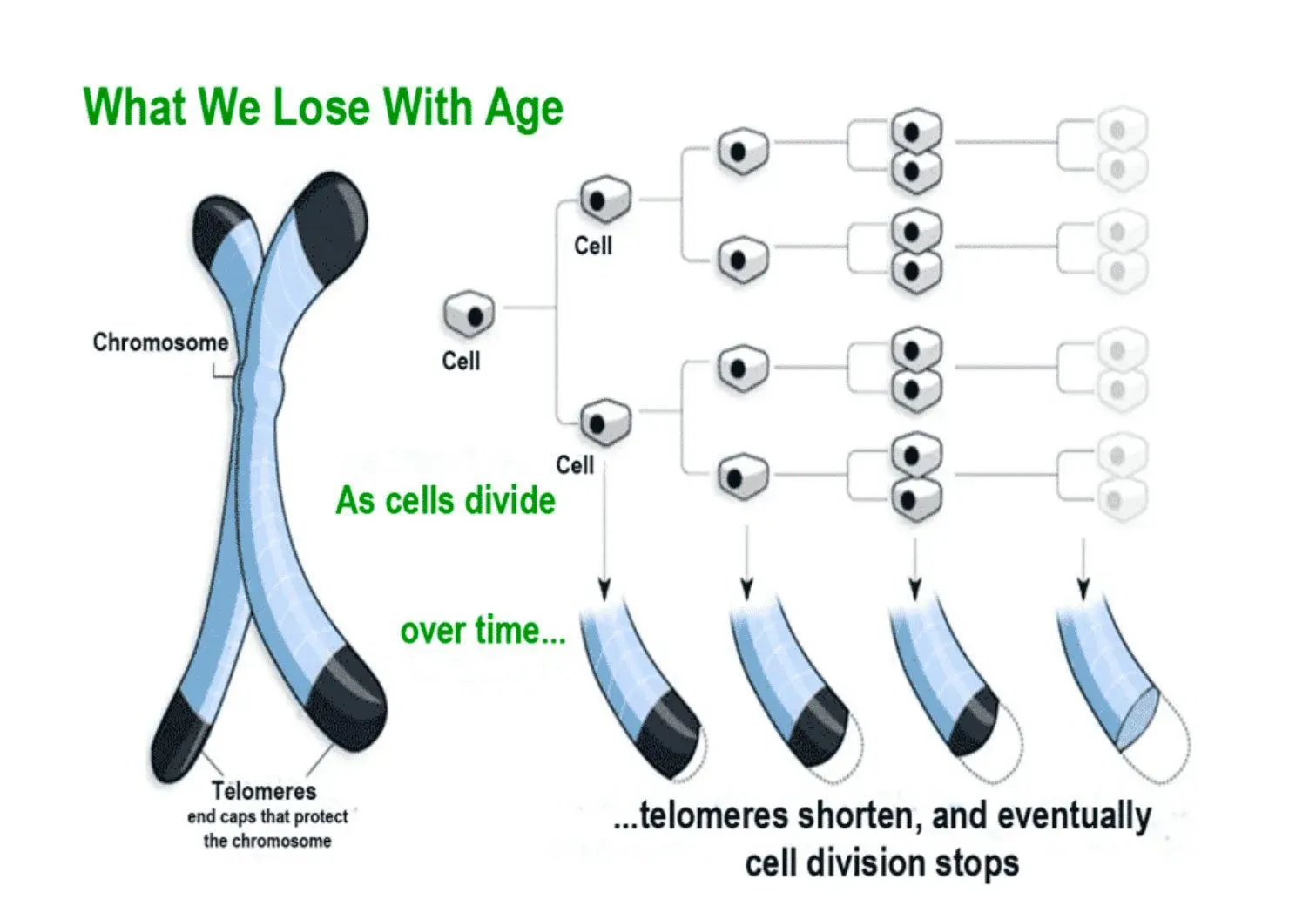
  • It refers to the maximum number of times a cell can divide.
  • It's named after scientist Leonard Hayflick, who discovered this phenomenon.
  • The limit plays a crucial role in aging and the development of age-related diseases.
  • Hayflick found that cells go through three phases.
    • The first is rapid, healthy cell division.
    • In the second phase, mitosis slows. In the third stage, senescence, cells stop dividing entirely.
    • They remain alive for a time after they stop dividing, but sometime after cellular division ends, cells do a particularly disturbing thing: Essentially, they commit suicide.
    • Once a cell reaches the end of its life span, it undergoes a programmed cellular death called apoptosis.
  • Hayflick’s discovery got further weight after researchers in the 1970s discovered telomeres.
  • Telomeres are repetitive DNA sequences at the very end of these strands, meant to protect the chromosome.
  • Crucially, with each cell division, these telomeres get slightly shorter. Eventually, the telomere loss reaches a critical point at which cell division ends.
  • That said, while shortening telomeres is related to aging, the exact relationship between telomere length and lifespan remains unclear. 

Q1: What is Mitosis?

It is the process by which a cell replicates its chromosomes and then segregates them, producing two identical nuclei in preparation for cell division. Mitosis is generally followed by equal division of the cell's content into two daughter cells that have identical genomes.

Source: Hayflick limit: Why immortality remains out of humans’ reach

World Craft City

World Craft City

About World Craft City:

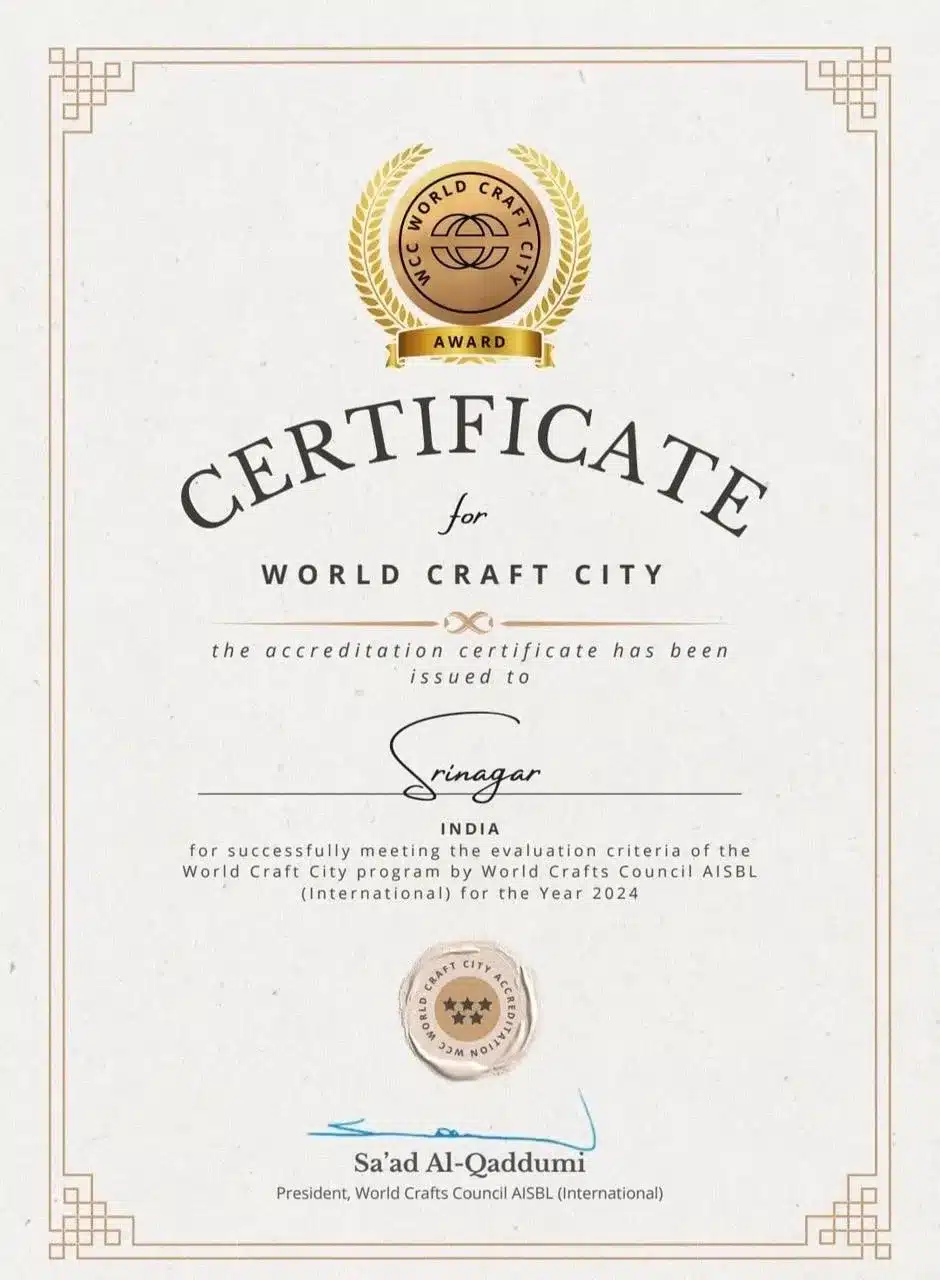
  • It is a groundbreaking initiative launched in 2014 by the World Crafts Council AISBL (WCC-International) in recognition of the pivotal role local authorities, craftspeople, and communities play in cultural, economic, and social development worldwide.
  • It establishes a dynamic network of craft cities across the globe, aligning with the principles of the creative economy.
  • Under the World Craft City Programme, Jaipur (Rajasthan), Mammalapuram (Tamil Nadu) and Mysore (Karnataka)have been added as craft cities from India.

Some of the famous crafts from Srinagar

  • Papier-Mache: It refers to the art of making an object from mashed and molded paper pulp. The object so made is traditionally painted and usually covered with a layer of lacquer or varnish.
  • Pashmina: Shawls, Kani, Sozni: The Pashmina fabric, hand spun and hand woven, emerged from the picturesque landscape of Kashmir.
  • Sozni shawls: Sozni embroidery is one of such arts that have its origin into the geography of Kashmir. The word Sozni is a Persian derived word which means needle and sozankari, the needle work. The person who performs this craft is called the sozankar. 

Key facts about World Crafts Council

  • It was founded by Ms.Aileen O.Webb, Ms.Margaret M.Patch, and Smt. Kamaladevi Chattopadhyay in 1964, as a non-governmental and non-profit organization.
  • The main objective of the World Crafts Council is to strengthen the status of crafts in cultural and economic life.
  • Aim: The Council aims to promote fellowship among crafts persons by offering them encouragement, help, and advice.
  • It fosters and assists cultural exchange through conferences, international visits, research study, lectures, workshops, exhibitions, and other activities.

Q1: What is UNESCO’s Creative Cities Network (UCCN)?

The UCCN was created in 2004 to promote cooperation among cities that have identified creativity as a strategic factor for sustainable urban development. It now includes 350 cities in over a hundred. countries.

Source: Srinagar’s ‘World Craft City’ tag, allows Kashmir to re-connect globally

Nemaline Myopathy

Nemaline Myopathy

About Nemaline Myopathy:

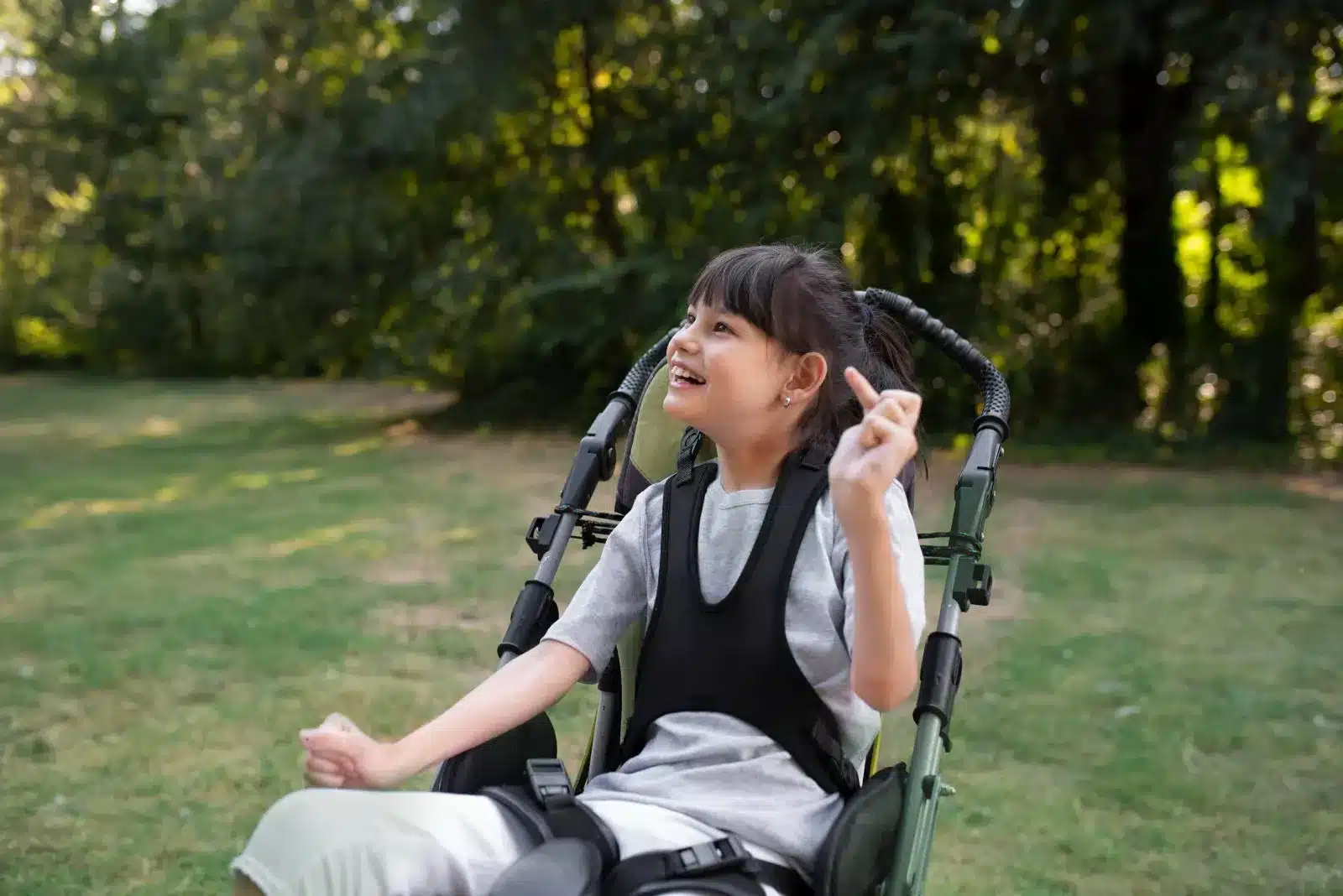
  • It is a rare genetic muscle disorder characterised by the presence of thread-like structures within muscle fibres affecting mobility and functionality.
  • It is also known as rod myopathy, is a rare congenital disorder that weakens the skeletal muscles.
  • This condition is hereditary, stemming from genetic mutations that impact muscle proteins.
  • It is found in approximately 1 in every 50,000 births.
  • The disorder can vary in severity, ranging from mild cases with minimal impact on daily life to more severe forms that lead to substantial muscle weakness, requiring significant medical intervention.
  • Symptoms
    • Muscle weakness in the face, neck, and trunk, along with difficulties in feeding, breathing, and sometimes deformities.
    • Affected individuals may also experience foot deformities, abnormal curvature of the spine (scoliosis), and joint deformities (contractures).
  • Treatment: There is no cure for this disease. Currently, treatment for nemaline myopathy is largely symptomatic and focuses on supportive care, including physiotherapy and muscle strengthening exercises.

Q1: What is genetic mutation?

It is a change to a gene's DNA sequence to produce something different. It creates a permanent change to that gene's DNA sequence. Genetic variations are important for humans to evolve, which is the process of change over generations.

News: CJI opens up about foster daughters' battle with nemaline myopathy. What is this rare disorder?

What is Bulava Missile?

What is Bulava Missile?

About Bulava Missile:

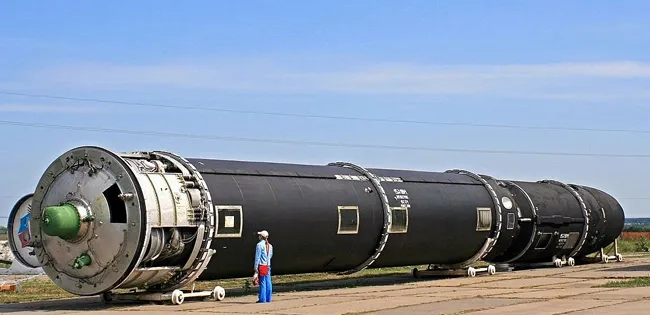
  • RSM-56 Bulava (NATO reporting name: SS-N-32) is a Russian submarine-launched intercontinental ballistic missile (ICBM).
  • Designed by the Moscow Institute of Thermal Technology, development of the missile was launched in the late 1990s, and is designed to be deployed on Russia’s Borei-class submarines.
  • Bulava represents a core component of Russia’s future strategic nuclear force.
  • Features:
    • It is a three-stage solid-propellant missile.
    • The missile has a launch mass of about 36.8 tonnes and a throw weight of 1,150 kg.
    • It measures 12.1 meters in length in a launch container and 2 meters in diameter. 
    • Bulava has a maximum range of 8,300 km (5,160 miles) and a payload of up to 10 multiple independently targetable re-entry vehicles, or MIRVs, capable of delivering nuclear warheads to different targets.
    • The missile’s RVs are capable of in-flight maneuverability and re-targeting to out maneuver any enemy defense.
    • The RVs have an expected accuracy of around 250 to 300 m.

Q1: What are Ballistic Missiles?

Ballistic missiles are powered initially by a rocket or series of rockets in stages, but then follow an unpowered trajectory that arches upwards before descending to reach its intended target. Ballistic missiles can carry either nuclear or conventional warheads.

Source: Putin Adds New Nuclear Missile To Russia's Arsenal: How Deadly Is Bulava Submarine-Launched ICBM?

Astrophysical Jets

Astrophysical Jets

About Astrophysical Jets: 

  • These are outflows of ionised matter that are emitted as extended beams from celestial objects such as black holes, neutron stars, and pulsars.
  • Highlights of the study
    • The scientists showed that the change in plasma composition leads to the difference in propagation velocities of the jets even if the initial parameters for the jets remain the same.
    • Jets composed of electrons and positrons were found to be slowest in comparison to jets containing protons, contrary to expectation. Protons are about two thousand times more massive than electrons or positrons.
    • It is essential to understand the plasma composition of jets as the change in plasma composition changes the internal energy of the jet which is reflected in the change in propagation speeds.
    • In addition, the plasma composition also affects the jet structures like number and strength of recollimation shocks, shape and dynamics of reverse shock and so on.
    • Recollimation shocks are the regions in the jet beam that form due to the interaction of the jet beam with the backflowing material.
    • The electron-positron jets show more pronounced turbulent structures. The growth of these structures also results in the deceleration of the jets. The formation and growth of turbulent structures are known to affect the stability of the jets. Hence, plasma composition may also influence the long-term stability of the jets.

Q1: What is Black holes?

Black holes are some of the strangest and most fascinating objects in space. They're extremely dense, with such strong gravitational attraction that not even light can escape their grasp.

Source: Scientists trace the effect of plasma composition on dynamics of astrophysical jets from celestial bodies

Unified Payments Interface (UPI) block mechanism

Unified Payments Interface (UPI) block mechanism

About Unified Payments Interface (UPI) block mechanism:

  • It is similar to the Application Supported by Blocked Amount (ASBA) facility that allows trading with blocked amounts.
  • In the primary market, the facility ensures that money from an investor gets moved only when the allotment is completed.
  • In the UPI block mechanism, clients can trade in the secondary market based on blocked funds in their bank accounts, instead of transferring the funds upfront to the trading member.
  • The facility is currently optional for investors, and not mandatory for Trading Members (TMs) to offer as a service to clients.
  • Significance: It provides enhanced protection to the client's funds and securities.

Key facts about Application Supported by Blocked Amount

  • It was first introduced by SEBI in 2008.
  • It is a process for making initial public offerings (IPOs) or rights issue subscriptions.
  • ASBA is a facility provided by banks that allows investors to apply for an IPO or rights issue by blocking the application amount in their bank account instead of transferring the money to the issuer.
  • Under ASBA, the investor's application money remains in their bank account, and only a block is created on the funds for the IPO application amount.
  • This blocked amount remains in the investor's bank account until the allotment process is completed.
  • Once the shares are allotted to the investor, the block is released, and only the amount for the allotted shares is deducted from the investor's account.
  • In public issues and rights issues, all investors have to mandatorily apply through ASBA.

Q1: What is Unified Payments Interface (UPI)?

The UPI is a digital and real-time payment system developed by the National Payments Corporation of India (NPCI) and regulated by the Reserve Bank of India (RBI). It was launched on April 11, 2016. It is designed to enable peer-to-peer inter-bank transfers through a single two-click factor authentication process.

Source: SEBI proposes mandatory UPI block mechanism facility for secondary market trading

Pradhan Mantri Vanbandhu Kalyan Yojana

Pradhan Mantri Vanbandhu Kalyan Yojana

About Pradhan Mantri Vanbandhu Kalyan Yojana:

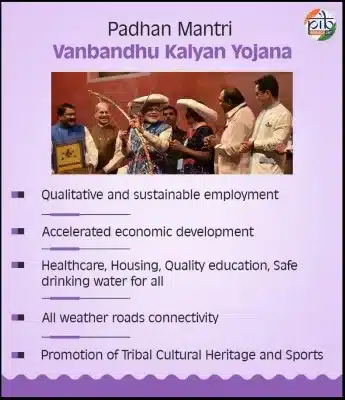
  • It is a landmark initiative that was launched on October 28, 2014.
  • It aims to empower tribal communities in India, recognizing their historical neglect. The initiative not only provides financial assistance but also establishes a framework for sustainable development.

Six Key Steps Under PMVKY

  • Pradhan Mantri Adi Adarsh Gram Yojana
    • It revamps the existing Special Central Assistance to Tribal Sub-Plan, which focuses on integrated village development in 36,428 villages with significant tribal populations.
    • It targets critical sectors such as road and telecom connectivity, education, health services, and sanitation, all of which aim to raise the living standards of tribal communities.
  • Development of Particularly Vulnerable Tribal Groups (PVTGs)
    • It is designed to ensure the socio-economic upliftment of the most marginalized tribal communities (PVTC families) while preserving their cultural heritage.
    • The initiative provides financial support to state governments for tailored developmental activities in housing, health, and education sectors.
    • The Pradhan Mantri PVTG Development Mission has been launched to enhance further living conditions and provide PVTG families with access to basic facilities.
    • Under this mission Rs. 15,000 crore will be allocated over three years for essential amenities like secure housing, clean drinking water, sanitation, education, health, nutrition, and enhanced connectivity.
  • Support to Tribal Research Institutes (TRI): It facilitates research and documentation efforts related to tribal communities. Financial assistance is allocated to state governments and UTs based on their proposals to strengthen the knowledge base concerning tribal cultures and challenges.
  • Pre-Matric Scholarships: It caters to students in grades IX and X, the scholarship is available for students with a parental income of up to ₹2.50 lakhs, ensuring that financial constraints do not hinder educational advancement.
  • Post-Matric Scholarships: It follows similar terms and conditions as the Pre-Matric scheme but caters to Scheduled Tribe students studying beyond class 10.
  • Administrative Assistance for Project Management Units: The PMVKY also allocates funds to establish project management units within state governments, ensuring that schemes related to the welfare of Scheduled Tribes are effectively monitored and implemented.

Q1: Who are Particularly Vulnerable Tribal Groups (PVTGs)?

PVTGs are a more vulnerable group among tribal groups in India. These groups have primitive traits, geographical isolation, low literacy, zero to negative population growth rate and backwardness. Moreover, they are largely dependent on hunting for food and a pre-agriculture level of technology.

News: Pradhan Mantri Vanbandhu Kalyan Yojana

Dark Pattern

Dark Pattern

About Dark Pattern:

  • Dark patterns are defined as any deceptive design patterns using user interface/user experience interactions on any platform.
  • The term was coined by Harry Brignull in 2010.
    • They are designed to mislead or trick users to do something they originally did not intend or want to do;
    • It is done by subverting or impairing the consumer autonomy, decision making or choice; amounting to misleading advertisement or unfair trade practice or violation of consumer rights.
  • The Central Consumer Protection Authority notified the Guidelines for Prevention and Regulation of Dark Patterns in 2023 and specified 13 dark patterns, namely:
    • False urgency, Basket Sneaking, Confirm shaming, forced action, Subscription trap, Interface Interference, Bait and switch, Drip Pricing, Disguised Advertisements and Nagging, Trick Wording, Saas Billing and Rogue Malwares.

 Key points about 'Jago Grahak Jago App,' 'Jagriti App,' and ‘Jagriti Dashboard’ 

  • These are part of an intelligent cyber-physical system, which operates in real-time and runs on the Airawat AI Supercomputer under the National Supercomputing Mission for AI and Data Analytics.
  • This innovative system analyses existing text and design elements on e-commerce platforms to determine whether they are being used to influence consumer psychology.
    • 'Jago Grahak Jago App: Itprovides essential e-commerce information about all URLs during a consumer’s online activities, alerting them if any URL may be unsafe and requires caution.
    • 'Jagriti App: It allows users to report URLs where they suspect the presence of one or more dark patterns declared illegal. These reports are then registered as complaints to the Central Consumer Protection Authority (CCPA) for possible redressal and subsequent action.
    • ‘Jagriti Dashboard’: It is used to generate real-time reports on e-commerce URLs for the presence of the aforementioned dark patterns, enhancing the capability to monitor and regulate online consumer interactions effectively.
  • Significance: This solution will aid the CCPA in identifying dark patterns, speeding up the resolution of consumer disputes and will go a long way in curbing practices that are detrimental to consumer interests.

Q1: What is Basket sneaking?

It means inclusion of additional items such as products, services, payments to charity/donation at the time of checkout from a platform, without the consent of the user, such that the total amount payable by the user is more than the amount payable for the product(s) and/or service(s) chosen by the user

News: Department of Consumer Affair’s to launch 'Jago Grahak Jago App,' 'Jagriti App,' and 'Jagriti Dashboard” on 24th December 2024 on National Consumer Day 2024 to protect Consumers from the Dark Patterns

What is the Empowered Committee for Animal Health (ECAH)?

What is the Empowered Committee for Animal Health (ECAH)?

About Empowered Committee for Animal Health (ECAH):

  • Established in 2021, ECAH serves as the Department of Animal Husbandry and Dairying’s (DAHD’s) think tank,providing evidence-based insights and policy recommendations on national health programs,emerging disease threats, One Health initiatives, and regulatory frameworks for veterinary vaccines, drugs, and biologicals.
  • It brings together various animal health experts to collaborate on achieving the completion of its goals. 
  • It was setup under the aegis of the Office of Principal Scientific Adviser (PSA) to the Government of India.
    • It is chaired by the Principal Scientific Adviser (PSA), Government of India, and vice-chaired by the Secretary, Department of Animal Husbandry and Dairying (DAHD), Ministry of Animal Husbandry, Dairying, and Fisheries.
    • The members represented on the committee include experts from the Central Drug Standard Control Organization (CDSCO), the Department of Biotechnology (DBT), the Indian Council of Agricultural Research (ICAR), the Indian Council of Medical Research (ICMR), the Indian Veterinary Research Institute (IVRI), the Veterinary Council of India (VCI), and prominent academics from notable veterinary institutes and industry.
  • ECAH is focused on creating resilient, farmer-centric animal health systems in India and bringing forth changes to ensure the long-term success of India’s livestock sector by
    • Acting as a think tank to provide inputs on animal health programmes of national importance.
    • Streamlining and improving the process of regulatory approval to protect public, animal health, and the environment by examining the safety, efficacy, and quality of veterinary products.
    • Overseeing and supporting programmes/initiatives to drive uptake of innovative practices in the Indian animal health sector.
    • Assessing the threat of and offering guidance on emerging animal diseases that have epidemic/pandemic potential.

Q1: What is the Central Drug Standard Control Organization (CDSCO)?

It is the National Regulatory Authority (NRA) of India for the medical devices industry under the provisions of the Drugs & Cosmetics Rules. It works under the Ministry of Health & Family Welfare. Drugs Controller General of India (DCGI) is the head of the CDSCO.

Regional Analysis of Indian Ocean System

Regional Analysis of Indian Ocean System

About Regional Analysis of Indian Ocean System: 

  • It is a data assimilation system developed in Indian National Centre for Ocean Information Services (INCOIS).
  • The previous version used only salinity and sea surface temperature, this upgraded version factors in sea surface height. The system has been under development since 2023 and was implemented in recent months.
  • The new version has been incorporated with the Sea surface height anomaly (SSHA).
  • In the new system, for running ocean models, observations are taken at the ocean’s surface and below the water at depths ranging from 3 metres to 2,000 metres, depending on the requirement.
  • As a result, the ocean current analysis from the additional information obtained has improved the ocean current analysis.

Key facts about Indian National Centre for Ocean Information Services

  • It was established as an autonomous body in 1999 under the Ministry of Earth Sciences (MoES) and is a unit of the Earth System Science Organization (ESSO).
  • Mandate: To provide the best possible ocean information and advisory services to society, industry, government agencies, and the scientific community through sustained ocean observations and constant improvements through systematic and focused research.
  • Activities:
    • It provides round-the-clock monitoring and warning services for the coastal population on tsunamis, storm surges, high waves, etc. through the in-house Indian Tsunami Early Warning Centre (ITEWC).
    • The Intergovernmental Oceanographic Commission (IOC) of UNESCO designated ITEWC as a Regional Tsunami Service Provider (RTSP) to provide tsunami warnings to countries on the Indian Ocean Rim.
    • It povides daily advisories to fisher folk to help them easily locate areas of abundant fish in the ocean while saving on both fuel and time used to search for the same.

Q1: What is Salinity?

It is the dissolved salt content of a body of water. It is a strong contributor to conductivity and helps determine many aspects of the chemistry of natural waters and the biological processes within them.

Source: For better tracking of Indian Ocean’s health, INCOIS upgrades data assimilation system

Kasturba Gandhi Balika Vidyalayas (KGBV)

Kasturba Gandhi Balika Vidyalayas (KGBV)

About Kasturba Gandhi Balika Vidyalayas:

  • KGBV Scheme was launched by the Government of India in August, 2004 for setting up residential schools at upper primary level for girls belonging predominantly to the Scheduled Caste (SC), Scheduled Tribe (ST), Other Backward Classes (OBC), and Minority Communities in difficult areas.
  • KGBV is being implemented in educationally backward blocks (EBBs) of the country where the female rural literacy is below the national average and the gender gap in literacy is above the national average.
  • The scheme provides for a minimum reservation of 75% of the seats for girls belonging to SC, ST, OBC, or minority communities, and priority for the remaining 25% is accorded to girls from families below the poverty line.
  • The objective of KGBV is to ensure access and quality education to the girls of disadvantaged groups of society by setting up residential schools at upper primary level.
  • The scope of the scheme is the setup of schools in areas with:
    • Concentration of tribal population,
    • With low female literacy and/or a large number of girls out of school;
    • Concentration of SC, OBC, and minority populations,
    • Areas with a large number of small, scattered habitations that do not qualify for a school;
  • Eligibility Criteria:
    • Girls belonging to disadvantaged groups such as
      • SC,
      • ST,
      • OBC,
      • Minority and
      • Below Poverty Line (BPL) families.
    • Girl students in the age group of 14 to 18 years.
    • Girls living in areas with low female literacy.
    • Girls in difficult circumstances who are unable to complete primary education can be enrolled under exceptional cases.
  • KGBV scheme was merged with Sarva Shiksha (SSA) in the 12th Plan with effect from 1st April, 2007.
  • SSA itself has been absorbed in the newly launched Integrated Scheme of School Education- Samagra Shiksha, effective from the year 2018-19, and along with this development provision has been made to upgrade the existing KGBVs at upper primary level to up to senior secondary level with a capacity of 150-250 girls in convergence with the erstwhile Girls Hostel Scheme.
  • Thus, the Scheme now provides for access and quality education to girls from disadvantaged groups of girls in the age group of 10-18 years aspiring to study in Classes VI to XII.
  • KGBV provides the facility to have at least one residential school for girls from Classes VI-XII in every EBBs.

Q1: What is the National Council of Educational Research and Training (NCERT)?

The National Council of Educational Research and Training (NCERT) is an autonomous organisation set up in 1961 by the Government of India to assist and advise the Central and State Governments on policies and programs for qualitative improvement in school education. The major objectives of NCERT and its constituent units are to undertake, promote and coordinate research in areas related to school education; prepare and publish model textbooks, supplementary material, newsletters, journals and develops educational kits, multimedia, digital materials, etc. organize pre-service and in-service training of teachers; develop and disseminate innovative educational techniques and practices; collaborate and network with state educational departments, universities, NGOs and other educational institutions; act as a clearinghouse for ideas and information in matters related to school education. NCERT is an implementation agency for bilateral cultural exchange programs with other countries in the field of school education.

Source: Lack of transparency in spending, weak infrastructure, safety concerns: NCERT report highlights issues in KGBV schools

Rule 170 of the Drugs and Cosmetics Act

Rule 170 of the Drugs and Cosmetics Act

About Rule 170 of the Drugs and Cosmetics Act:

  • It was introduced in 2018 to govern the manufacture, storage, and sale of medicines in the country, “specifically for controlling inappropriate advertisements ofAyurvedic, Siddha, and Unani medicines”.
  • The rule was introduced after a parliamentary standing committee highlighted the problem of misleading claims, and the need for the AYUSH ministry to proactively pursue the issue.
  • The rule prohibits AYUSH drug manufacturers from advertising their products without approval and allotment of a unique identification number from the state licensing authority. 
  • The manufacturers have to submit details such as textual references and rationale for the medicine from authoritative books, indications for use, and evidence of safety, effectiveness, and quality of drugs.
  • The rule states that the application will be rejected if the manufacturer does not provide their contact details, if the contents of the advertisement are obscene or vulgar, products for enhancement of male or female sexual organs,depict photographs or testimonials from celebrities or government officials, refers to any government organisation, gives false impressions, or makes misleading or exaggerated claims.

Q1: What is the Drugs and Cosmetics Act, 1940?

Drugs and Cosmetics Act regulates the import, manufacture, and sale or distribution of drugs and cosmetics through licences and permits. Its main objective is to ensure that the drugs and cosmetics marketed in India are reliable, efficient, and in compliance with national standards. The associated Drugs and Cosmetics Rules, 1945, which were formulated in association with the 1940 Act, provide provisions for classifying medications into schedules and instructions for the storage, sale, presentation, and prescription of each schedule.

Source: Supreme Court Stays Ayush Ministry's Notification That Omitted Prohibition On Ads Of Ayurvedic, Unani & Siddha Drugs Without Approval

Sampoornata Abhiyan

Sampoornata Abhiyan

About Sampoornata Abhiyan: 

  • It is a 3-month campaign to undertake a sustained effort to achieve saturation of 6 key indicators in Aspirational Districts and 6 key indicators in Aspirational Blocks across the country.
  • It seeks to achieve saturation in each of the 6 identified indicators in the 112 Aspirational Districts and 500 Aspirational Blocks under the Aspirational Districts Programme and Aspirational Blocks Programme.
  • Key indicators of Aspirational Blocks include:
    • Percentage of pregnant women registered for Antenatal Care (ANC) within the first trimester;
    • Percentage of persons screened for Diabetes against the targeted population in the Block;
    • Percentage of persons screened for Hypertension against the targeted population in the Block;
    • Percentage of pregnant women taking Supplementary Nutrition under the ICDS Programme regularly;
    • Percentage of Soil Health Cards generated against the soil sample collection target; and
    • Percentage of SHGs that have received a Revolving Fund against the total SHGs in the block
  • Key indicators of Aspirational Districts includes
    • Percentage of pregnant women registered for Antenatal Care (ANC) within the first trimester;
    • Percentage of pregnant women taking Supplementary Nutrition under the ICDS Programme regularly;
    • Percentage of children fully immunized (9-11 months) (BCG+DPT3+OPV3+Measles 1)
    • Number of Soil Health Cards distributed;
    • Percentage of schools with functional electricity at the secondary level; and
    • Percentage of schools providing textbooks to children within 1 month of the start of the academic session

NITI Aayog, in collaboration with the relevant Central Ministries and Departments, as well as the Governments of States and Union Territories, will work together to ensure the effective and rapid development of these Districts and Blocks.


Q1: What is a Soil Health Card?

It is used to assess the current status of soil health and, when used over time, to determine changes in soil health that are affected by land management. A Soil Health Card displays soil health indicators and associated descriptive terms.

Source: Sampoornata Abhiyan’ launched by NITI Aayog

Samudra Pratap

Samudra Pratap

About Samudra Pratap:

  • The vessel will help to check the oil spillage in the country’s sea coast.
  • The ship was launched and named as 'Samudra Pratap'.
  • It is built by Goa Shipyard Limited (GSL) for the Indian Coast Guard.
  • It is the first time these types of vessels are being designed and built indigenously in India.
  • Features
    • It boasts a length of 114.5 meters, a breadth of 16.5 meters, and a displacement of 4,170 tons. The vessel will be manned by 14 officers and 115 sailors and is equipped with state-of-the-art technology for pollution control.
    • Notably, it features side-sweeping arms to contain oil spills while in motion, an advanced radar system for oil spill detection, and facilities to recover and store various types of oil.
  • Significance
    • The vessel is a crucial addition to the Indian Coast Guard’s fleet, enhancing its capacity to manage oil spill response operations in India’s Exclusive Economic Zone (EEZ) and beyond.

Q1: What is the Indian Coast Guard?

It is an armed force that protects India's maritime interests and enforces maritime law, with jurisdiction over the territorial waters of India, including its contiguous zone and exclusive economic zone.It was formally established in 1978 by the Coast Guard Act, 1978 as an independent Armed force of India.

Source: Goa Shipyard launches indigenous pollution control vessel ‘Samudra Pratap’

What is Canine Distemper?

What is Canine Distemper?

About Canine Distember:

  • It is a contagious and serious disease caused by the canine distemper virus (CDV).
  • The virus attacks the respiratory, gastrointestinal, and nervous systems of dogs.
  • All dogs are at risk of canine distemper. Those at particular risk include puppies younger than four months and dogs that have not been vaccinated against CDV.
  • In addition to dogs, CDV can infect ferrets as well as a wide range of other mammals, especially carnivores.
    • These include several wildlife species such as wild canines (e.g., foxes and wolves), raccoons, and skunks. Cats also may become infected but are unlikely to get sick.
  • Transmission:
    • It is spread through direct contact or airborne exposure.
    • The virus does not last long in the environment and can be destroyed by most disinfectants. 
    • However, the distemper-infected dogs can shed the virus for up to several months, putting dogs around them at risk.
  • Symptoms:
    • Once a dog is infected, the virus quickly spreads throughout the entire body and significantly weakens the immune system, leaving them susceptible to secondary infections.
    • The skin, respiratory, gastrointestinal (GI), and central nervous systems can all be affected.
    • Coughing is the most common symptom. They usually develop fever and discharge from the eyes and/or nose.
    • The disease can also cause disorientation, tremors, twitches, and seizures.
  • Treatment:
    • There is no cure, and no antiviral drugs have been approved to combat the infection. 
    • The best way to prevent canine distemper is through vaccination.

Q1: What is a Virus?

A virus is an infectious microbe consisting of a segment of nucleic acid (either DNA or RNA) surrounded by a protein coat. A virus cannot replicate alone; instead, it must infect cells and use components of the host cell to make copies of itself. Often, a virus ends up killing the host cell in the process, causing damage to the host organism. Well-known examples of viruses causing human disease include AIDS, COVID-19, measles and smallpox.

Source: Stray dogs within 2 km radius of Corbett Tiger Reserve's boundaries to be vaccinated

Asbestos

Asbestos

About Asbestos

  • Asbestos is a generic term for a group of six silicate minerals with similar but distinct properties.
  • These are generally divided into two sub-groups; serpentine and amphiboles. Serpentine asbestos (chrysotile or white asbestos) was the most commonly used type of asbestos.
  • Properties:
    • These are resistant to heat and corrosion.
    • It is non-flammable even at very high temperatures and is extremely flexible and durable.
    • It has good tensile strength.
    • It has low heat conductivity and high resistance to electricity.
  • It was once widely used in construction materials, insulation and consumer goods.
  • India's asbestos requirement is met through imports from Russia, Kazakhstan, Brazil and China.
  • The newly banned chrysotile asbestos in the USA was primarily used by the chlor-alkali industry, which produces chlorine bleach, caustic soda and other chemicals used in water treatment.
  • Health impacts:
    • According to the World Health Organization, all varieties of asbestos are associated with conditions such as lung cancer, mesothelioma, laryngeal cancer, ovarian cancer and asbestosis, a lung fibrosis.
    • If products containing asbestos are disturbed, tiny asbestos fibers are released into the air.
    • When asbestos fibers are breathed in, they may get trapped in the lungs and remain there for a long time.

Q1) What is Corrosion?

It is wearing away due to chemical reactions, mainly oxidation.It occurs whenever a gas or liquid chemically attacks an exposed surface, often a metal, and is accelerated by warm temperatures and by acids and salts.

Source: United States bans white asbestos, last of its kind still in use

Key Facts about Denisovans

Key Facts about Denisovans

About Denisovans:

  • Denisovans are an extinct species of hominid and a close relative to modern humans.
  • They’re a recent addition to the human family tree—scientists first identified Denisovan remains from a cave in Siberia in 2010.
  • Denisovans lived across a wide range of areas and conditions, from the cold mountains of Siberia and Tibet to the jungles of Southeast Asia during the last Ice Age. 
  • Time Period: 500,000 to 30,000 years ago
  • DNA evidence suggests Denisovans are related to both Neanderthals and modern humans, and may have interbred with both.
  • Denisovans share a common ancestor with both modern humans and Neanderthals.
  • This common ancestor, called Homo heidelbergensis, most likely lived in Africa.
  • Denisovans may have had dark skin, dark hair, and dark eyes.

The Denisovan genome appears to have low genetic diversity, which means their population may never have been very large.


Q1: Who were the Neanderthals?

Neanderthals are our closest extinct human relative. They lived throughout Europe and parts of Asia from about 400,000 until about 40,000 years ago. Neanderthals co-existed with modern humans for long periods of time before eventually becoming extinct. Some defining features of their skulls include the large middle part of the face, angled cheek bones, and a huge nose for humidifying and warming cold, dry air. Their bodies were shorter and stockier than modern humans, another adaptation to living in cold environments.

Source: Denisovans were living on the Tibetan plateau surprisingly recently, scientists say

Enquire Now