Borax

Borax

Borax Latest News

In a tragic incident from Tamil Nadu, a 19-year-old college girl recently died after consuming borax for weight loss.

About Borax

  • Borax, also known as sodium tetraborate decahydrate, is a powdery white mineral.
  • It’s a combination of boron, sodium, and oxygen. 
  • Chemical Formula: Na2B4O7·10H2O 
  • It is used in many ways—as a component of glass and pottery glazes in the ceramics industry, as a solvent for metal-oxide slags in metallurgy, as a flux in welding and soldering, and as a fertilizer additive, a soap supplement, a disinfectant, a mouthwash, and a water softener.
  • Borax occurs naturally in evaporite deposits produced by the repeated evaporation of seasonal lakes. 
  • Borax can also be produced synthetically from other boron compounds. 
  • Naturally occurring borax is refined by the process of recrystallization.

Source: NDTV

Borax FAQs

Q1: What is Borax?

Ans: Borax, also known as sodium tetraborate decahydrate, is a powdery white mineral.

Q2: Which elements combine to form Borax?

Ans: Boron, sodium, and oxygen.

Q3: What is the chemical formula of Borax?

Ans: Na₂B₄O₇·10H₂O.

Q4: How is Borax used in agriculture?

Ans: As a fertilizer additive.

Q5: In what type of geological deposits does Borax occur naturally?

Ans: Borax occurs naturally in evaporite deposits produced by the repeated evaporation of seasonal lakes.

ICE Cloud

ICE Cloud

ICE Cloud Latest News

Recently, the Centre for Development of Advanced Computing (CDAC) revealed that it has significantly expanded capabilities of the Integrated Cloud Environment (ICE) platform.

About ICE Cloud

  • It is an indigenous, comprehensive digital platform for conducting complex scientific research using Artificial Intelligence (AI) and High-Performance Computing (HPC).
  • It provides ease of access to computational resources.
  • It is built indigenously to provide cloud services for research and development that is reproducible.
  • It now offers an open-access platform equipped with supercomputers and tools for software development, AI, quantum technologies, simulation studies and more.
  • The platform is available to students, scientists, researchers, start-ups and others.
  • ICE offers an array of services — storage, bioinformatics tools, virtual hosting, pipeline execution, AI visualisation, development environments on the cloud and seamless collaboration features.
  • Use Cases of ICE Cloud: Research Institutes, Researchers, Developers and Industry
  • It was funded by the Department of Biotechnology (DBT) to support scientific research.

Source: TH

ICE Cloud FAQs

Q1: Who developed the ICE cloud?

Ans: C-DAC

Q2: What does ICE stand for in C-DAC's ICE cloud?

Ans: Integrated Cloud Environment

Muna Island

Muna Island

Muna Island Latest News

The painted outline of a human hand inside a cave on the Indonesian island of Muna represents what researchers are calling the oldest example of rock art in the world, created at least 67,800 years ago.

About Muna Island

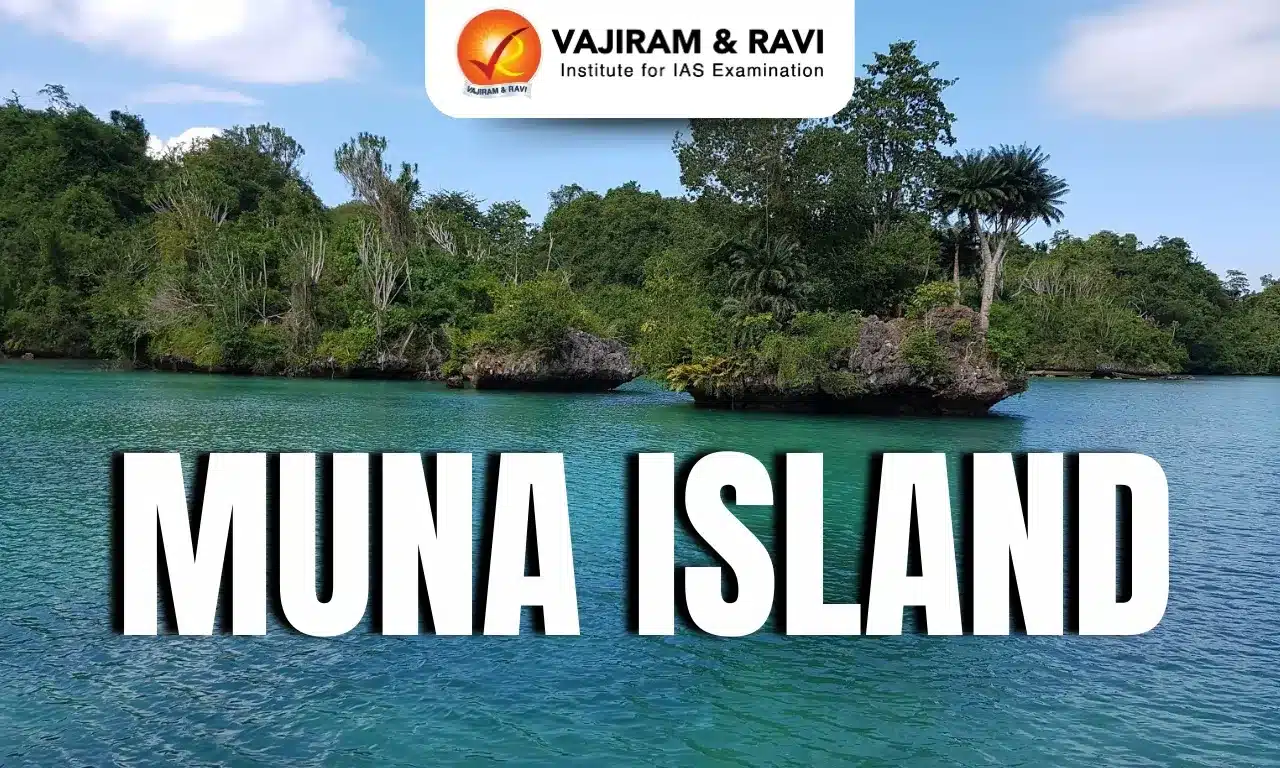
  • It is situated in the Southeast Sulawesi province of Indonesia.
  • With an area of 1,704 sq.km., it has a hilly surface, rising to 1,460 feet (445 metres). The north and northeast have teak forests.
  • It is known for its diverse culture and natural beauty, including lush forests and pristine beaches. 
  • The island is home to the Muna people, who have a rich cultural heritage and are known for their traditional crafts and dances. 
  • The economy of Muna Island is primarily based on agriculture, fishing, and local crafts. 
  • The main town and principal port is Raha, on the northeastern coast across the Strait of Buton from the neighbouring island of Buton to the east.
  • One of the most famous natural attractions on Muna Island is the Liangkobori Cave, which contains prehistoric paintings. 
  • Additionally, there is Napabale Lake, which has a natural tunnel connecting it directly to the sea.

Source: REUT

Muna Island FAQs

Q1: Where is Muna Island located?

Ans: It is located in the Southeast Sulawesi province of Indonesia.

Q2: What type of terrain characterises Muna Island?

Ans: It has a hilly surface.

Q3: What is the main town and principal port of Muna Island?

Ans: Raha

Q4: Which island lies to the east of Muna Island?

Ans: Buton Island.

Q5: Which cave on Muna Island is famous for prehistoric paintings?

Ans: Liangkobori Cave.

Kaladi

Kaladi

Kaladi Latest News

Recently, the union Minister of State for Science & Technology directed that "Kaladi" traditional dairy products be upscaled for wider food applications and recipes.

About Kaladi

  • Kaladi is a famous Dogra cuisine.
  • It is a traditional dairy product of Udhampur district, Jammu & Kashmir.
  • It has received the Geographical Indication tag (GI).

Preparation of Kaladi

  • It is traditionally prepared from raw full-fat milk using whey water as a coagulant.
  • The raw full fat milk, vigorously churned in an iron pot with a wooden plunger-like tool.
  • The molten mass of milk solids was then separated by adding sour milk or curd called mathar.
  • Once stretched, the flattened cheese was cooled on the black iron pot itself, before being placed in a bowl to solidify.
  • The solidified cheese was then sun dried to help it to lose the moisture.
  • Since the ambient temperature in the mountainous area of Udhampur remains low despite a strong sun, the Kalari dried from the outside yet remain moist inside

Key Facts about Geographical Indication Tag

  • It is a sign used on products that have a specific geographical origin and possess qualities or a reputation that are due to that origin.
  • This is typically used for agricultural products, foodstuffs, wine and spirit drinks, handicrafts and industrial products.
  • The Geographical Indications of Goods (Registration and Protection) Act, 1999 seeks to provide for the registration and better protection of geographical indications relating to goods in India.

This GI tag is valid for 10 years following which it can be renewed.

Kaladi FAQs

Q1: What is kaladi made of?

Ans: It is made using raw, full-fat milk that is churned vigorously in an iron pot.

Q2: Which organization administers GI tags in India?

Ans: eographical Indications Registry, India

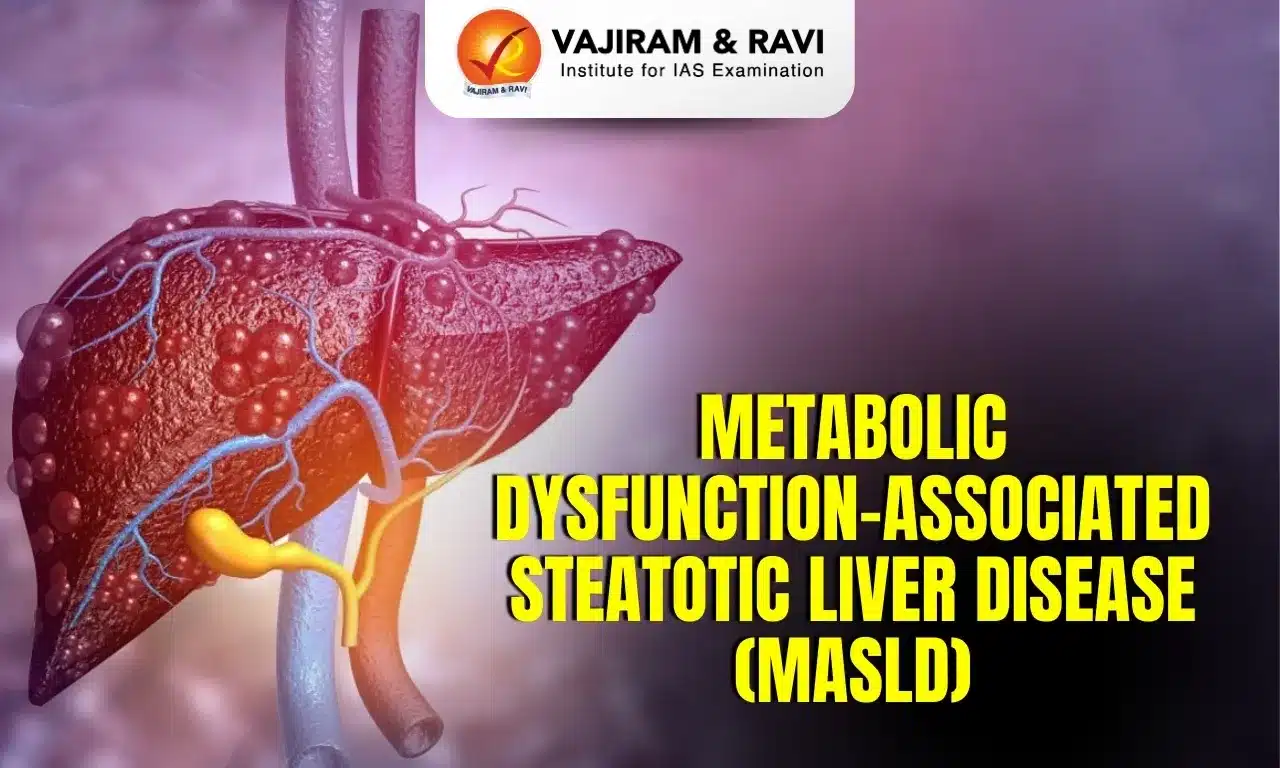
Metabolic Dysfunction-Associated Steatotic Liver Disease (MASLD)

Metabolic Dysfunction-Associated Steatotic Liver Disease (MASLD)

Metabolic Dysfunction-Associated Steatotic Liver Disease (MASLD), Latest News

Metabolic Dysfunction-Associated Steatotic Liver Disease, or MASLD, is emerging as a significant health concern, particularly in India.

About Metabolic Dysfunction-Associated Steatotic Liver Disease (MASLD)

  • Often referred to as a “silent” disease, MASLD is a liver condition that can progress over time if left unaddressed. 
  • It is a long-lasting liver condition caused by having too much fat in the liver. 
  • Previously known as Non-Alcoholic Fatty Liver Disease (NAFLD), its name was changed to better reflect the condition’s underlying causes. 
  • The new term highlights that the disease is a metabolic one, linked to factors such as obesity, diabetes, and high cholesterol. 
  • It is the most common form of liver disease in the world. 
  • MASLD ranges in severity from hepatic steatosis — sometimes called diffuse hepatic steatosis, or formerly fatty liver infiltration or simply fatty liver — to a more severe form of disease called metabolic dysfunction-associated steatohepatitis (MASH), formerly called nonalcoholic steatohepatitis (NASH).
  • Symptoms
    • MASLD often has no symptoms. 
    • If symptoms begin, however, they usually include fatigue (extreme tiredness), weakness, discomfort, or pain in the abdomen.
    • If MASLD begins to advance to MASH, other symptoms may begin. 
      • These can include jaundice (yellowing of the eyes and skin), severe itching, fluid buildup in the belly (ascites), and fluid buildup in the ankles (edema).
      • Sometimes mental confusion can occur.
      • MASH causes the liver to swell and become damaged.
  • Treatment: Treating MASLD with a healthy diet, physical activity, and weight loss can slow or even reverse liver damage, especially if it is at an earlier stage.

Source: TH

Metabolic dysfunction-associated steatotic liver disease (MASLD) FAQs

Q1: What is Metabolic dysfunction-associated steatotic liver disease (MASLD)?

Ans: It is a long-lasting liver condition caused by excessive fat accumulation in the liver.

Q2: What was Metabolic dysfunction-associated steatotic liver disease (MASLD) previously known as?

Ans: Non-Alcoholic Fatty Liver Disease (NAFLD).

Q3: Which metabolic factors are linked to Metabolic dysfunction-associated steatotic liver disease (MASLD)?

Ans: Obesity, diabetes, and high cholesterol.

Q4: What is the more severe form of Metabolic dysfunction-associated steatotic liver disease (MASLD) called?

Ans: Metabolic dysfunction-associated steatohepatitis (MASH).

Q5: What lifestyle measures are recommended for treating Metabolic dysfunction-associated steatotic liver disease (MASLD)?

Ans: A healthy diet, regular physical activity, and weight loss.

Metadon Ghorpadei and Metadon Reemeri

Metadon Ghorpadei and Metadon Reemeri

Metadon Ghorpadei and Metadon Reemeri Latest News

Researchers recently discovered two rare ant-fly species in India, Metadon ghorpadei and Metadon reemeri.

About Metadon Ghorpadei and Metadon Reemeri

  • They are two new species of ant flies.
  • These insects belong to the Microdontinae subfamily of hoverflies. 
  • Metadon ghorpadei was discovered in Delhi’s Northern Ridge Forest. 
  • Metadon reemeri was found in the Siruvani Hills of the Western Ghats
  • Globally, many Microdontinae species are considered rare or threatened due to their specialised habitat requirements and patchy distribution.
    • They are known for their unique association with ants, as their larvae live inside ant nests and feed on ant broods, a specialised behaviour called myrmecophily that makes them exceptionally rare and difficult to detect. 
    • Of the 454 species reported worldwide, only 27 are known from the Indian subcontinent.

Source: TH

Metadon Ghorpadei and Metadon Reemeri FAQs

Q1: What are Metadon ghorpadei and Metadon reemeri?

Ans: They are two newly discovered species of ant flies.

Q2: Where was Metadon ghorpadei discovered?

Ans: It was discovered in Delhi’s Northern Ridge Forest.

Q3: Where was Metadon reemeri found?

Ans: It was found in the Siruvani Hills of the Western Ghats.

Q4: What unique ecological association are Microdontinae species known for?

Ans: Their larvae live inside ant nests and feed on ant broods.

Atal Pension Yojana

Atal Pension Yojana

Atal Pension Yojana Latest News

Recently, the union cabinet approved the continuation of Atal Pension Yojana (APY) up to FY 2030-31.

About Atal Pension Yojana

  • It was launched by the Government of India on 9th May 2015.
  • It was designed to encourage voluntary savings for retirement by offering defined pension benefits, linked to the age of joining and amount of contribution.

Key Features of Atal Pension Yojana

  • Target Group: It is aimed at workers in the unorganised sector.
  • It was initially available to all citizens of India between 18 and 40 years of age.
  • With effect from 1st October 2022, individuals paying income tax are not eligible to join the scheme.
  • Guaranteed Pension: Subscribers can opt for a fixed pension ranging from ₹1,000 to ₹5,000 per month, depending on the contribution made.
  • Government Co-Contribution: For subscribers who enrolled between June 1, 2015, and March 31, 2016, and met certain criteria, the government contributed 50% of the subscriber’s amount or ₹1,000 per annum for five years.
  • It is administered by the Pension Fund Regulatory and Development Authority (PFRDA).
  • Exit and withdrawal options 
    • Exit at age 60: Full pension begins.
    • Exit before age 60: Permitted only in cases of death or terminal illness.
    • Voluntary Exit: Allowed, but the subscriber only receives the contribution made (with interest) and government co-contribution (if any) is forfeited.

Source: PIB

Atal Pension Yojana FAQs

Q1: When was Atal Pension Yojana launched?

Ans: 2015

Q2: What is the primary objective of Atal Pension Yojana?

Ans: To provide pension benefits to workers in the unorganized sector

Small Industries Development Bank of India

Small Industries Development Bank of India

Small Industries Development Bank of India Latest News

Recently, the Union Cabinet has approved the equity support of Rs.5,000 crore to Small Industries Development Bank of India (SIDBI).

About Small Industries Development Bank of India

  • It was set up on 2nd April, 1990 by the Government of India under an act of the Parliament, as a wholly owned subsidiary of IDBI Bank.
  • It was delinked from IDBI on March 27, 2000. 
  • Mandate: It is mandated to serve as the Principal Financial Institution for executing the triple agenda of promotion, financing and development of the MSME sector and coordination of the functions of the various Institutions engaged in similar activities.
  • Functions of Small Industries Development Bank of India
    • Offers direct loans and refinancing to banks and NBFCs.
    • Promotes entrepreneurship and MSME growth
    • Provides venture capital and technology support
  • Financial support to MSMEs is provided by way of
    • Indirect/refinance to banks/Financial Institutions for onward lending to MSMEs
    • Direct finance in niche areas like risk capital, sustainable finance, receivable financing, service sector financing, etc..
  • SIDBI was made responsible for administering the Small Industries Development Fund and the National Equity Fund that were administered by IDBI before.
  • Major Stakeholders in SIDBI: Government of India (GOI), State Bank of India (SBI), LIC, and NABARD are among the major stakeholders in the SIDBI.
  • Headquarters: Lucknow, Uttar Pradesh

Source: PIB

Small Industries Development Bank of India FAQ's

Q1: What is the primary objective of SIDBI?

Ans: To develop and finance small-scale industries

Q2: Under which ministry does SIDBI operate?

Ans: Ministry of Finance

Bhitarkanika National Park

Bhitarkanika National Park

Bhitarkanika National Park Latest News

Bhitarkanika National Park saw a marginal increase in winged guests as compared to the previous year, according to the latest census report released by the forest department recently.

About Bhitarkanika National Park

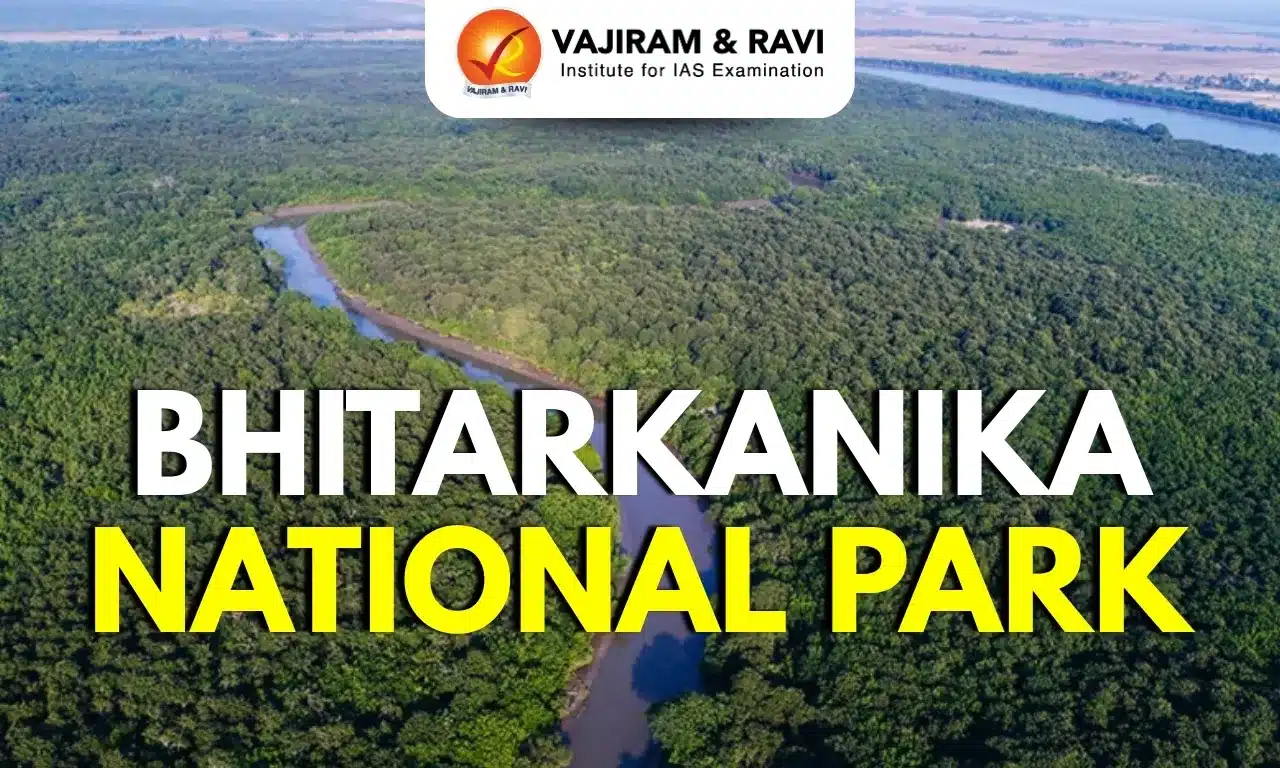
  • It is located in the Kendrapara district of Odisha.
  • Spread across an area of 672 sq.km. of the mangrove swamp situated on the delta formed by the three rivers, namely Brahmani, Baitarani, and Dhamra, the park houses an array of creeks, backwaters, estuaries, deltas, and mudhuts.
  • The national park is surrounded by the Bhitarkanika Wildlife Sanctuary. Gahirmatha Beach and Marine Sanctuary lie to the east, and separates a swamp region covered with a canopy of mangroves from the Bay of Bengal. 
  • It is India’s second largest mangrove ecosystem after the Sunderbans
  • Proximity to the Bay of Bengal makes the soil of the area enriched with salt.
  • The vegetation and species of the sanctuary are those that are mainly found in the tropical and subtropical intertidal regions.
  • It is also designated as a Ramsar site.
  • Flora: Mangrove species, casuarinas, and grasses like the indigo bush.
  • Fauna:
    • It is home to the largest congregation of the endangered saltwater crocodile in the country.
    • The Gahirmatha Beach is the largest colony of the Olive Ridley Sea Turtles.
    • It is also home to numerous animals like hyenas, wild boar, Chitals, Sambar, Spotted Deer, Wild Boar, Jungle cat, Wild Pigs, etc., and migratory birds, which make it their home during the winter season, lending a vibrant hue to the ecosystem.
    • It is also home to eight varieties of Kingfisher birds, which is also a rarity.

Source: TP

Bhitarkanika National Park FAQs

Q1: Where is Bhitarkanika National Park located?

Ans: It is located in the Kendrapara district of Odisha.

Q2: Bhitarkanika National Park is situated on the delta formed by which rivers?

Ans: The Brahmani, Baitarani, and Dhamra rivers.

Q3: What type of ecosystem dominates Bhitarkanika National Park?

Ans: A mangrove swamp ecosystem.

Q4: Which beach and marine sanctuary lie to the east of Bhitarkanika National Park?

Ans: Gahirmatha Beach and Gahirmatha Marine Sanctuary.

Q5: Which endangered reptile has the largest congregation in Bhitarkanika National Park?

Ans: The saltwater crocodile.

Steel Slag

Steel Slag

Steel Slag Latest News

Recently, the union Minister of State (Independent Charge) for Science and Technology advocated wider adoption of steel slag–based road construction and repair technology, particularly in hilly and Himalayan regions.

About Steel Slag

  • Steel slag is an industrial byproduct obtained from the steel manufacturing industry.
  • It is produced in large quantities during steel-making operations that use electric arc furnaces.
  • It can also be produced by smelting iron ore in a basic oxygen furnace.
  • Composition: Primarily, slag consists of calcium, magnesium, manganese and aluminium silicates and oxides in various combinations.
  • The cooling process of slag is responsible mainly for generating different types of slags required for various end-use consumers

Applications of Steel Slag

  • Environmental Remediation: It has found use as a barrier material remedy for waste sites where heavy metals tend to leach into the surrounding environment.
    • Steel slag forces the heavy metals to drop out of solution in water run off because of its high oxide mineral content.
    • It has been used successfully to treat acidic water discharges from abandoned mines.
  • It can replace coarse aggregate due to a higher impact and crushing strength, and better anti-skid capacity.

Source: DD news

Steel Slag FAQs

Q1: What is steel slag primarily composed of?

Ans: Calcium, magnesium, manganese, and aluminium silicates and oxide

Q2: What is one of the applications of steel slag?

Ans: Treating acidic water discharges from abandoned mines

Enquire Now