Exercise CINBAX-II

Exercise CINBAX-II

Exercise CINBAX-II Latest News

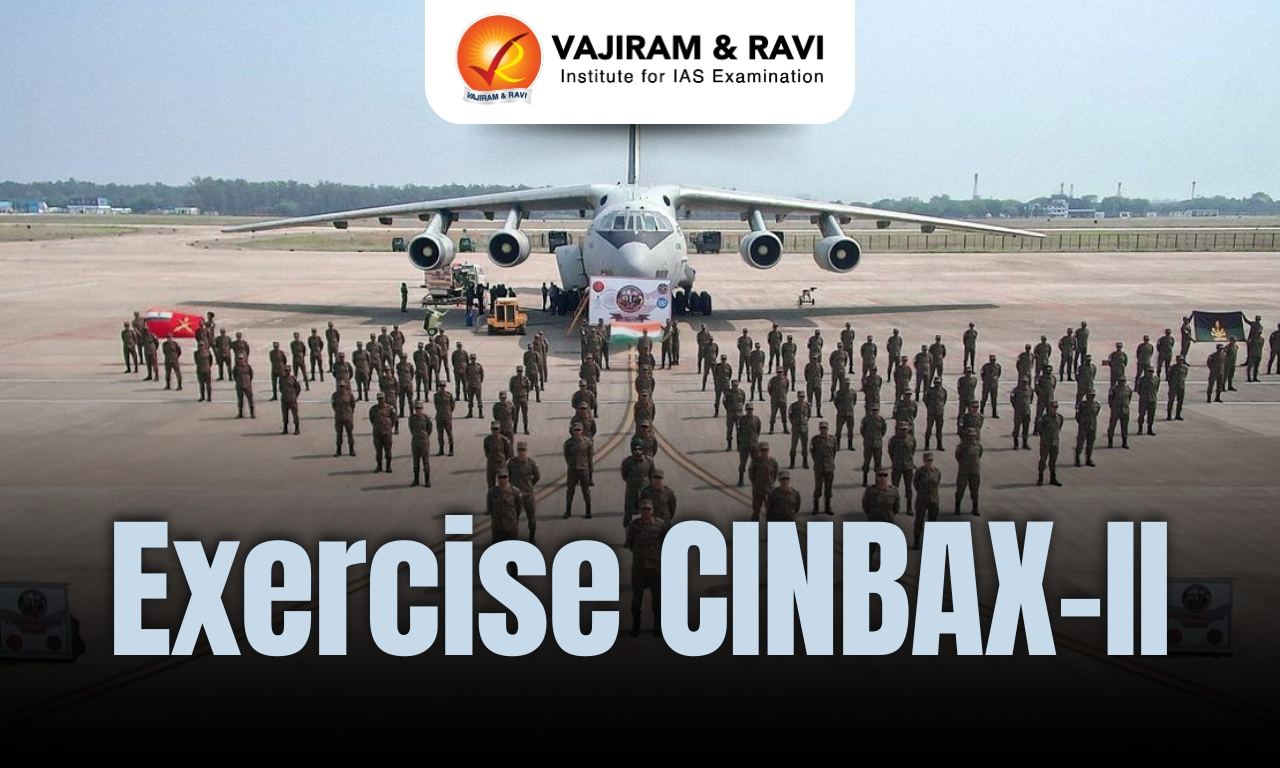
Recently, the Indian Army contingent has departed to Cambodia for the second edition of India-Cambodia Bilateral Military Exercise CINBAX-II. 

About Exercise CINBAX-II

  • It is the bilateral military exercise conducted between the Indian Army and the Cambodian Army.
  • It is conducted in Kampong Speu Province, Cambodia.
  • Participating Contingent: The Indian Army contingent comprises 120 personnel, majorly from a Battalion of the Maratha Light Infantry Regiment.
  • The exercise will be conducted under the framework of Chapter VII of UN Mandate, showcasing Company level joint training for conduct of operations in sub-conventional environments.
  • CINBAX-II aims to boost interoperability, coordination, and operational synergy between the two forces.
  • It will also serve as a platform to exchange best practices and share operational experiences, particularly in semi-urban combat environments.
  • It will centre on counter-terrorism operations aligned with real-world UN peacekeeping scenarios. 
  • Significance: The exercise underscores the growing defence ties between India and Cambodia and is expected to deepen bilateral relations.

Source: News On Air

Exercise CINBAX-II FAQs

Q1: Exercise CINBAX-II is a military exercise between which two countries?

Ans: India and Cambodia

Q2: What is the main objective of Exercise CINBAX-II?

Ans: Enhance interoperability in Counter-Terrorism and UN Peacekeeping Operations
Rashtriya Bal Swasthya Karyakram

Rashtriya Bal Swasthya Karyakram

Rashtriya Bal Swasthya Karyakram Latest News

Recently, the Ministry of Health and Family Welfare released the Rashtriya Bal Swasthya Karyakram (RBSK) 2.0 Guidelines.  

About Rashtriya Bal Swasthya Karyakram

  • It was launched in February, 2013 under the National Rural Health Mission. 
  • It is a program to improve the overall quality of life of children and provide comprehensive care to all the children in the community.
  • Target Group: This program involves screening of children from birth to 18 years of age for four Ds- Defects at birth, Diseases, Deficiencies and Development delays.
  • Under this programme, its screening spans 32 common health conditions for early detection and free treatment and management, including surgeries at tertiary level.
  • Major strategies followed are
    • Comprehensive newborn screening – at delivery points to screen birth defects of the newborn
    • Community screening at the Anganwadi and Government schools for children in the age group 0 -18 years in convergence with Ministry of Women and Child Development and Ministry of Education
    • Screening of the newborns/infants by ASHA through the HBNC/HBYC program as a part of Early Childhood Development
    • Therapeutic management of the identified children at the District Early Intervention Centres (DEIC)

Key Feature of RBSK 2.0

  • It has expanded screening scope, covering a wider range of conditions including,
    • Developmental disorders, mental health issues, behavioural concerns, lifestyle risks, risk factors for non-communicable diseases such as diabetes and hypertension, and additional conditions like kidney disorders, 
  • It has introduced digital health cards, real-time data systems, and integrated platforms for tracking, monitoring and service delivery.

Source: PIB

Rashtriya Bal Swasthya Karyakram FAQs

Q1: Rashtriya Bal Swasthya Karyakram was launched under which scheme?

Ans: National Health Mission

Q2: RBSK provides child health screening for which age group?

Ans: 0-18 years

Mission Drishti

Mission Drishti

Mission Drishti Latest News

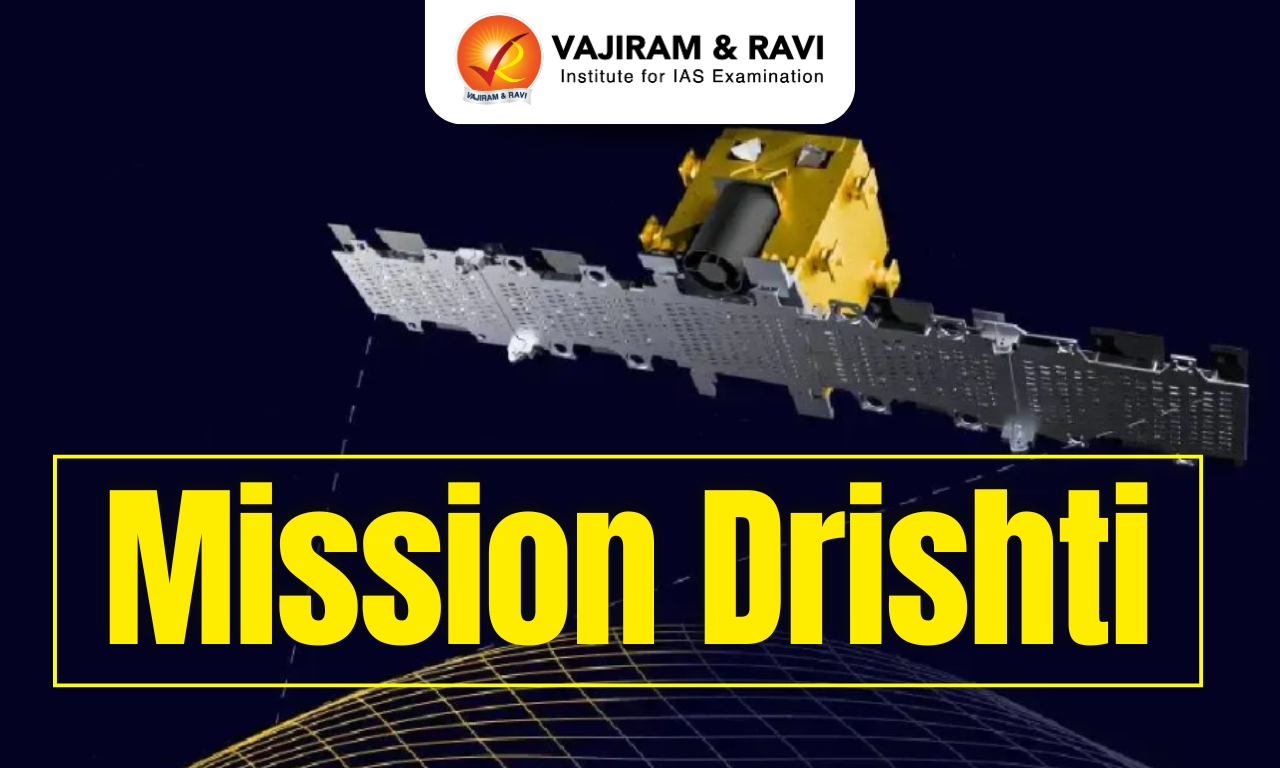
Recently, Bengaluru-based space start-up GalaxEye successfully launched its Mission Drishti satellite aboard Falcon 9 from California.

About Mission Drishti

  • It is the world’s first multi-sensor Earth observation (EO) satellite.
  • It is India’s largest privately built satellite and also the highest-resolution satellite developed in the country.
  • It is planned by Bengaluru based space startup – GalaxEye.

Key Features Mission Drishti

  • It is the world’s first OptoSAR satellite, combining electro-optical (EO) and synthetic aperture radar (SAR) sensors into a single platform.
  • While EO sensors capture high-resolution images in daylight and clear skies, SAR enables imaging in all weather conditions and at any time using radar pulses.
  • It is engineered as a remote-sensing Earth observation system, optimised for spatial, spectral and temporal resolutions to capture high-precision imagery.
  • The satellite weighs 190 kg and offers 1.5 metre resolution.
  • Range of applications: It will enable governments, defence agencies and industries to perform advanced geospatial analysis across a wide range of applications, including;
    • Border surveillance, disaster management, defence, infrastructure monitoring, agriculture financial and insurance assessment etc.

Source: TH

Mission Drishti FAQs

Q1: What is Mission Drishti?

Ans: World’s first OptoSAR satellite by Indian startup GalaxEye

Q2: Mission Drishti was launched aboard which rocket?

Ans: SpaceX Falcon 9 from California

Bureau of Indian Standards

Bureau of Indian Standards

Bureau of Indian Standards Latest News

Recently, the Bureau of Indian Standards (BIS) has published a number of standards for medical assistive technologies as a part of the NLEAP (National List of Essential Assistive Products) initiative.

About Bureau of Indian Standards

  • It is the national standard body of India established under the Bureau of Indian Standards Act 2016.
  • Objective: It was established for the harmonious development of the activities of standardization, marking, and quality certification of goods and for matters connected therewith or incidental thereto.
    • It is the successor of the Indian Standards Institution (ISI), which was created in 1947.
  • BIS represents India in International Organization for Standardization (ISO) and International Electrotechnical Commission (IEC).
  • Nodal Ministry: It is functioning under the administrative control of the Ministry of Consumer Affairs, Food and Public Distribution.
  • Headquarter: It is headquartered in New Delhi and maintains regional and branch offices throughout the country.

Functions of Bureau of Indian Standards

  • BIS has been providing traceability and tangibility benefits to the national economy in a number of ways by
    • Providing safe, reliable quality goods; 
    • Minimizing health hazards to consumers; 
    • Promoting exports and imports substitute; control over proliferation of varieties etc. through standardization, certification, and testing.
  • It operates product certification schemes through which it grants licenses to manufacturers covering practically every industrial discipline, from agriculture and textiles to electronics.

Source: PIB

Bureau of Indian Standards FAQs

Q1: Where is the headquarters of Bureau of Indian Standards located?

Ans: New Delhi

Q2: Under which ministry does BIS function?

Ans: Ministry of Consumer Affairs, Food and Public Distribution

Hantavirus

Hantavirus

Hantavirus Latest News

Recently, three people have died and three are ill after a Netherlands-based cruise ship was hit by a suspected outbreak of hantavirus

About Hantavirus

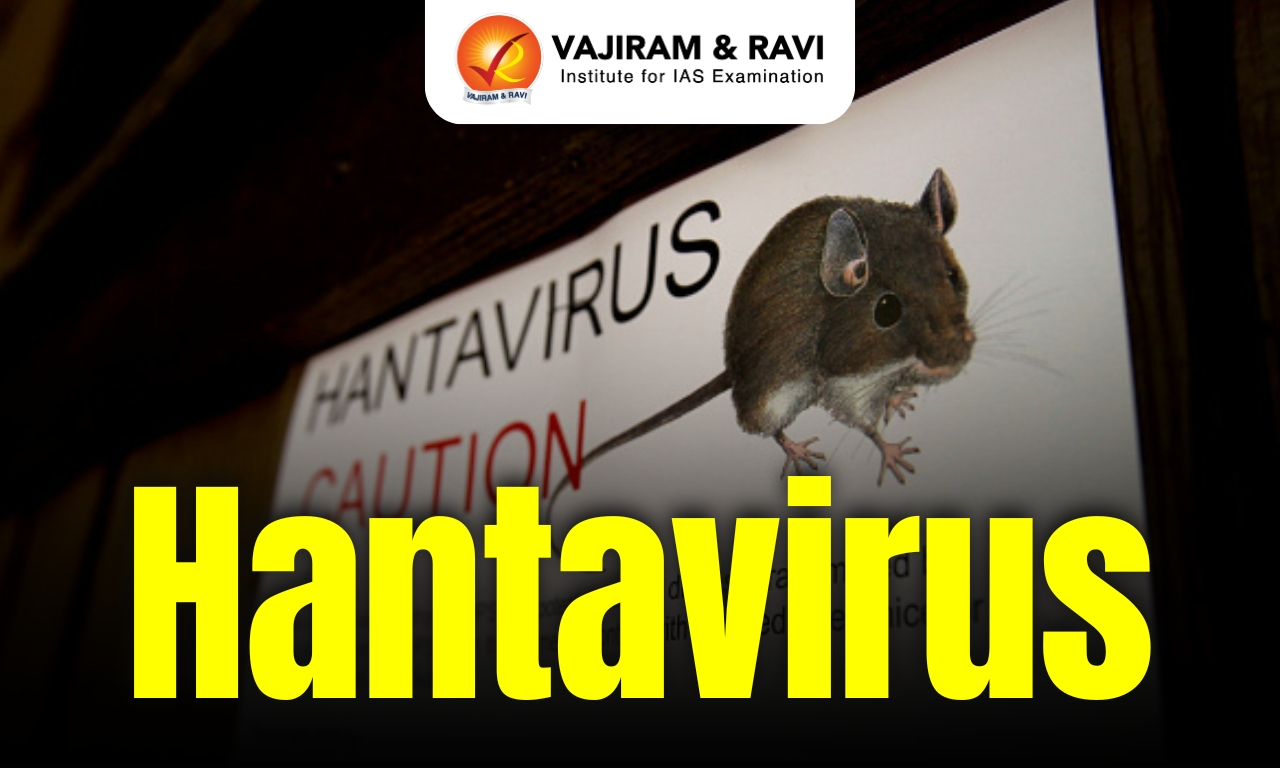
  • Hantavirus is a strain of virus carried by rodents.
  • Transmission: It is transmitted to humans through inhalation of particles from dried rodent droppings.
  • People most typically become infected when a virus in rodent droppings, saliva and urine becomes airborne.
  • The virus is known to cause two severe illnesses one that primarily affects the lungs and the other that attacks the kidneys. 
    • Hantavirus Pulmonary Syndrome (HPS): It is a respiratory illness and has a high fatality rate of about 40%.
    • Haemorrhagic Fever with Renal Syndrome (HFRS), which is a more severe infection and impacts the kidneys. Symptoms can include low blood pressure, internal bleeding, and acute kidney failure.
  • Symptoms
    • Hantavirus usually begins with flu-like symptoms, such as fatigue and fever, one to eight weeks after exposure, according to the CDC.
    • Four to 10 days later, coughing, shortness of breath and fluid in the lungs appear.
  • Treatment: There is no specific therapy for hantavirus infection, so treatment focuses on supportive care including rest and fluids.

Source: DD News

Hantavirus FAQs

Q1: How does Hantavirus spread to humans?

Ans: Inhaling rodent droppings dust

Q2: What is Hantavirus?

Ans: A virus transmitted by rodents

Dimethyl Ether

Dimethyl Ether

Dimethyl Ether Latest News

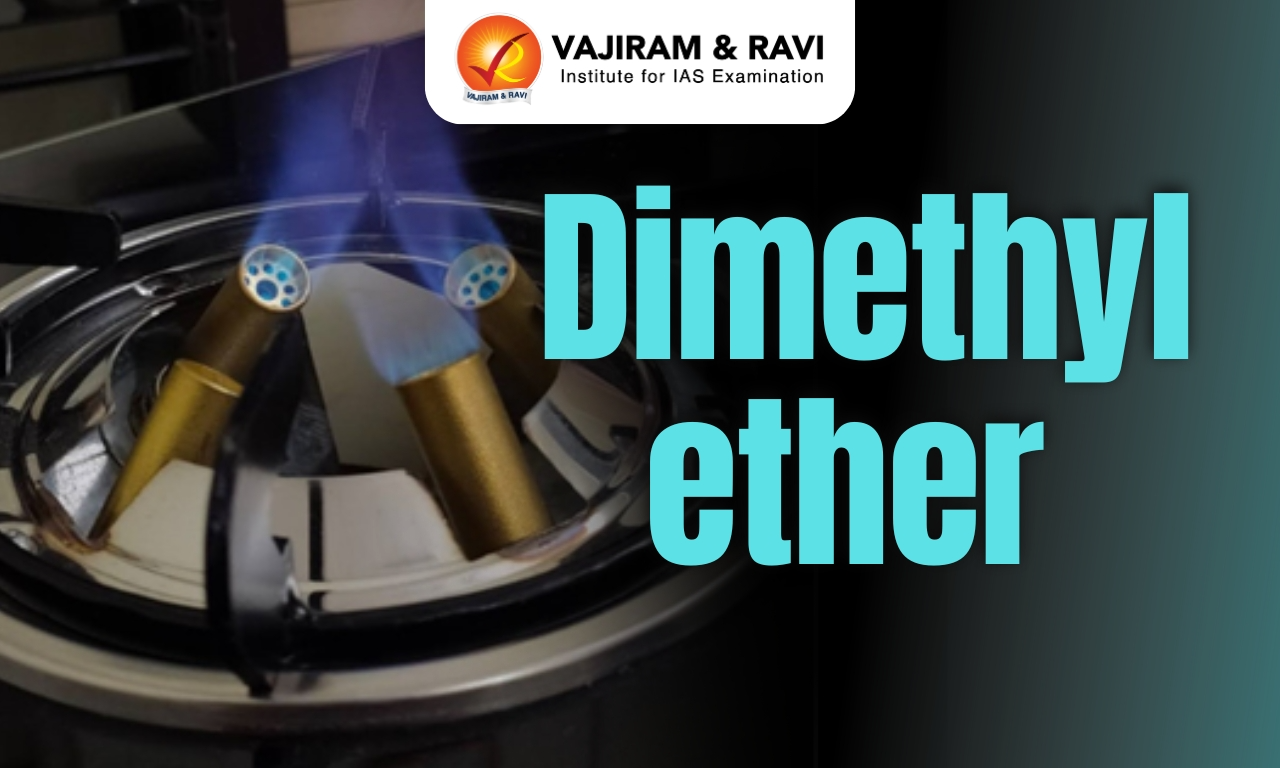
Oil and Natural Gas Corporation (ONGC), along with CSIR–National Chemical Laboratory (CSIR-NCL), is set to launch an industrial pilot project to produce dimethyl ether (DME) in Pune. 

About Dimethyl Ether

  • It is a synthetically produced alternative to diesel for use in specially designed compression ignition diesel engines.

Properties of Dimethyl Ether 

  • High Cetane Number: It has a very high cetane number, which is a measure of the fuel’s ignitibility in compression ignition engines.
  • Under normal atmospheric conditions, DME is a colorless gas.
  • Clean Burning: It burns cleaner, emitting minimal amounts of soot, nitrogen oxides (NOx), sulfur oxides (SOx), and particulate matter.
  • Thermal efficiency: It exhibits thermal efficiency that is comparable to traditional fuels, making it a viable substitute
  • Alternate Fuel: It can be a viable alternative fuel and engine technology to adapt to conventional diesel engines used in India’s economy’s agricultural and transport sectors.

Application of Dimethyl Ether

  • It is used extensively in the chemical industry and as an aerosol propellant.
  • It is used in chemical industries and also to produce dyes and plastics.

Source: NIE

Dimethyl Ether FAQs

Q1: What is Dimethyl Ether?

Ans: A synthetically produced alternative to diesel for compression ignition engines

Q2: Which standard measure of DME makes it suitable for compression ignition diesel engines?

Ans: Very high cetane number

Debt Recovery Tribunals

Debt Recovery Tribunals

Debt Recovery Tribunals Latest News

The Department of Financial Services (DFS) convened a colloquium of Chairpersons of Debt Recovery Appellate Tribunals and Presiding Officers of Debt Recovery Tribunals (DRTs) in New Delhi.

About Debt Recovery Tribunals

  • DRTs are quasi-judicial bodies established under the Recovery of Debts Due to Banks and Financial Institutions Act, 1993.
  • Role: Their primary role is adjudicating debt recovery disputes related to banks and financial institutions.
  • DRTs handle loan default cases above ₹20 lakh, focusing on secured debts.
  • DRTs also hear Securitisation Applications (SAs) filed under the SARFAESI Act, 2002 by borrowers or aggrieved parties.
  • There are currently 39 DRTs functioning across India, each headed by a Presiding Officer.
  • Composition
    • A DRT is presided over by a judicial officer qualified to be a District Judge.
    • It can also have administrative and technical members appointed by the Central Government.

Powers of DRTs

  • Summon and examine witnesses,
  • Compel the production of documents,
  • Receive evidence on affidavits,
  • Review or dismiss applications,
  • Conduct ex parte proceedings,
  • Issue commissions for document and witness examination.
  • Jurisdiction of DRTs: Each DRT has a territorial jurisdiction defined by the Central Government.
  • Jurisdiction is limited to cases involving debt recovery by banks and financial institutions.

Source: News On Air

Debt Recovery Tribunals FAQs

Q1: Under which ministry do DRTs function?

Ans: Ministry of Finance

Q2: DRTs deal with recovery of debts due to which entities?

Ans: Banks and financial institutions

Sanjay Gandhi National Park (SGNP)

Sanjay Gandhi National Park (SGNP)

Sanjay Gandhi National Park Latest News

The Maharashtra forest department has held over a proposal to increase the annual ticket rates for the Sanjay Gandhi National Park (SGNP).

About Sanjay Gandhi National Park 

  • It is located near Borivali in the northern part of Mumbai.
  • It is situated partly in the Thane District and in the Mumbai Suburban District of Maharashtra.
  • In the early days, the park was known as Krishnagiri National Park. However, in 1974 the name of this park was changed to ‘Borivali National Park’ and in 1981 to ‘Sanjay Gandhi National Park’.
  • It covers an expansive area of 103 sq.km., making it one of the largest parks in the world located within city limits. It forms roughly 20% of Mumbai city's geographical area. 
  • The Kanheri Caves in the center of the park were an important Buddhist learning center and pilgrimage site sculpted by Buddhist monks between the 9th and the 1st centuries BCE. 
    • They were chiseled out of a massive basaltic rock outcropping. 
    • Caves feature viharas, stupas, prayer halls, and other structures of old-style Buddhist architecture.  
    • There is a Jain Temple with three huge carved idols situated on the way to the caves. 
  • Besides, the park also has two lakes, namely Tulsi Lake and Vihar Lake, the deer park, the lion safari, and the Samadhi of Mahatma Gandhi
  • Flora
    • Kadamba, Teak, Karanj, Shisham, and species of acacia, Ziziphus, euphorbias, etc. are found in this National Park.
    • The most famous of these is the karvi plant, which blooms just once every eight years.
  • Fauna:
    • Leopard, sambar, chital, barking deer, rusty spotted cat, hyena, common palm civet, small Indian civet, Indian crested porcupine, Indian hare, Indian flying fox, common langur, and bonnet macaque.
    • The park also boasts 251 species of birds and a large variety of butterflies.

Source: IE

Sanjay Gandhi National Park FAQs

Q1: Where is Sanjay Gandhi National Park located?

Ans: Near Borivali in the northern part of Mumbai

Q2: Why is the Sanjay Gandhi National Park unique in terms of location?

Ans: It is one of the largest parks in the world within city limits.

Q3: What are the Kanheri Caves known for?

Ans: Being an ancient Buddhist learning center and pilgrimage site.

Mayon Volcano

Mayon Volcano

Mayon Volcano Latest News

Thousands of people have been evacuated from areas south of Manila after the Mayon Volcano erupted recently.

About Mayon Volcano

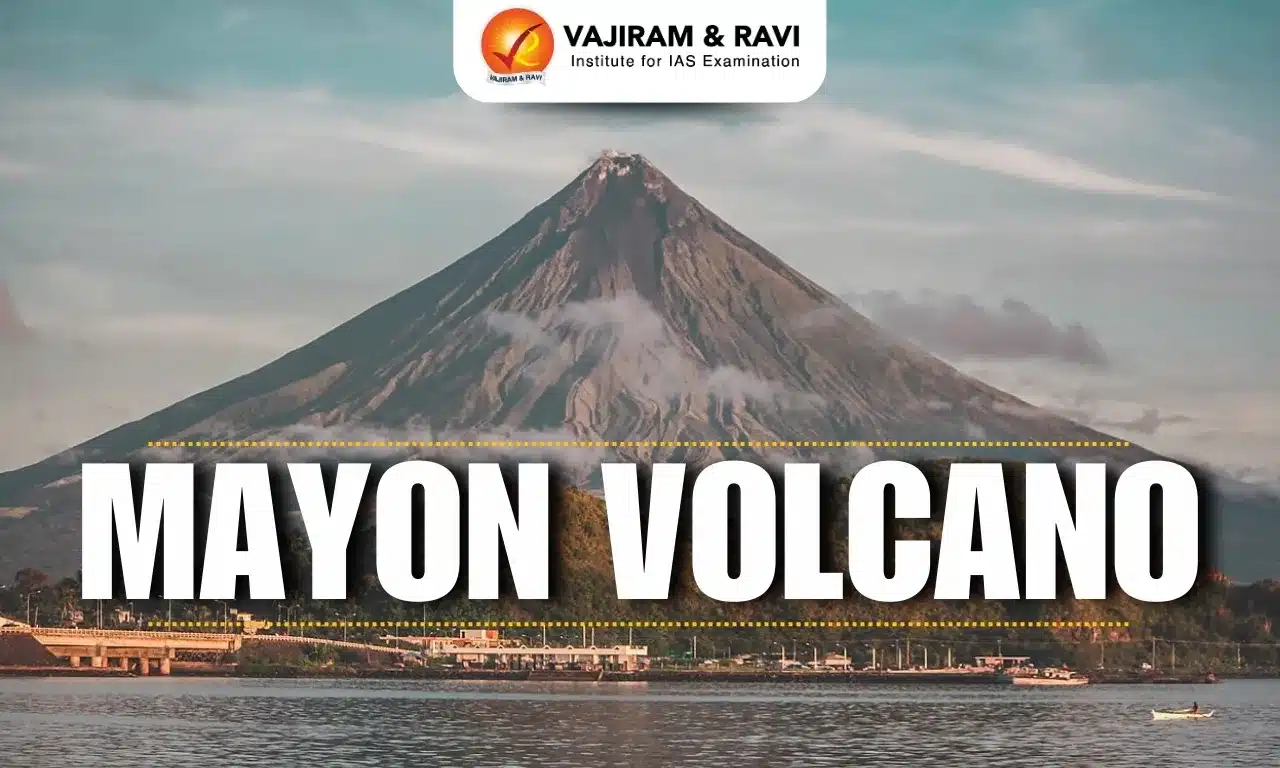
  • It is an active stratovolcano located in Albay province on Luzon Island in the Philippines.
  • It is part of the Pacific Ring of Fire.
  • It is located on the eastern side of Luzon, beside the Philippine Trench, which is the convergent boundary where the Philippine Sea Plate is driven under the Philippine Mobile Belt. 
  • Rising to 2462 m above the Albay Gulf, it is the Philippines’ most active volcano. 
  • Called the world’s most perfect volcanic cone because of the symmetry of its shape, it has a base 130 km in circumference and rises to 2,462 metres from the shores of Albay Gulf.
  • It has steep upper slopes capped by a small summit crater. 
  • Popular with climbers and campers, the volcano is the centre of Mayon Volcano National Park.
  • There are large abaca plantations on its lower slopes. 
  • Historical eruptions date back to 1616 CE that have been characterized by Strombolian eruptions, lava flows, pyroclastic flows, and mudflows. 
    • There have been more than 30 eruptions recorded since 1616.  
    • Mayon’s most violent eruption, in 1814, killed more than 1200 people and devastated several towns. 
    • An eruption in 1993 caused 79 deaths. 
    • Eruptions occur predominately from the central conduit and have also produced lava flows that travel far down the flanks.  

What is a Stratovolcano?

  • It is a tall, steep, and cone-shaped type of volcano.
  • Unlike flat shield volcanoes, they have higher peaks.
  • They are typically found above subduction zones, and they are often part of large volcanically active regions, such as the Ring of Fire that frames much of the Pacific Ocean.
  • Stratovolcanoes comprise the largest percentage (~60%) of the Earth’s individual volcanoes, and most are characterized by eruptions of andesite and dacite, lavas that are cooler and more viscous than basalt.
  • These more viscous lavas allow gas pressures to build up to high levels. Therefore, these volcanoes often suffer explosive eruptions. 
  • They are usually about half-half lava and pyroclastic material, and the layering of these products gives them their other common name of composite volcanoes.
  • At the peak, stratovolcanoes usually have a small crater.

Source: TOI

Mayon Volcano FAQs

Q1: Where is Mayon Volcano located?

Ans: Albay province on Luzon Island in the Philippines.

Q2: What type of volcano is Mayon Volcano?

Ans: Stratovolcano

Q3: Which was the most violent eruption of Mayon Volcano?

Ans: The 1814 eruption.

CARICOM

CARICOM

CARICOM Latest News

The External Affairs Minister recently arrived in Kingston, Jamaica, at the start of his own nine-day visit to the Caribbean ‘CARICOM’ grouping of countries.

About CARICOM

  • CARICOM, which stands for Caribbean Community, is the oldest surviving integration movement in the developing world.
  • It is an organization of Caribbean countries and dependencies originally established as the Caribbean Community and Commons Market in 1973 by the Treaty of Chaguaramas.
  • Main Purposes:
    • Promote economic integration and cooperation among its members;
    • To ensure that the benefits of integration are equitably shared;
    • To coordinate foreign policy;
  • It replaced the former Caribbean Free Trade Association (CARIFTA), which had become effective in 1968.  
  • The treaty spurred the development of associate institutions, including the Caribbean Development Bank and the Organization of East Caribbean States, both of which promote economic growth and cooperation.
  • In July 2001 the heads of government revised the Treaty of Chaguaramas, establishing the Caribbean Community and the CARICOM Single Market and Economy (CSME), which would harmonize economic policy and create a single currency. 
  • In 2007, CARICOM officially inaugurated the Caribbean Court of Justice (CCJ), which serves as the final court of appeal for CARICOM members and also handles regional trade disputes.
  • Members:
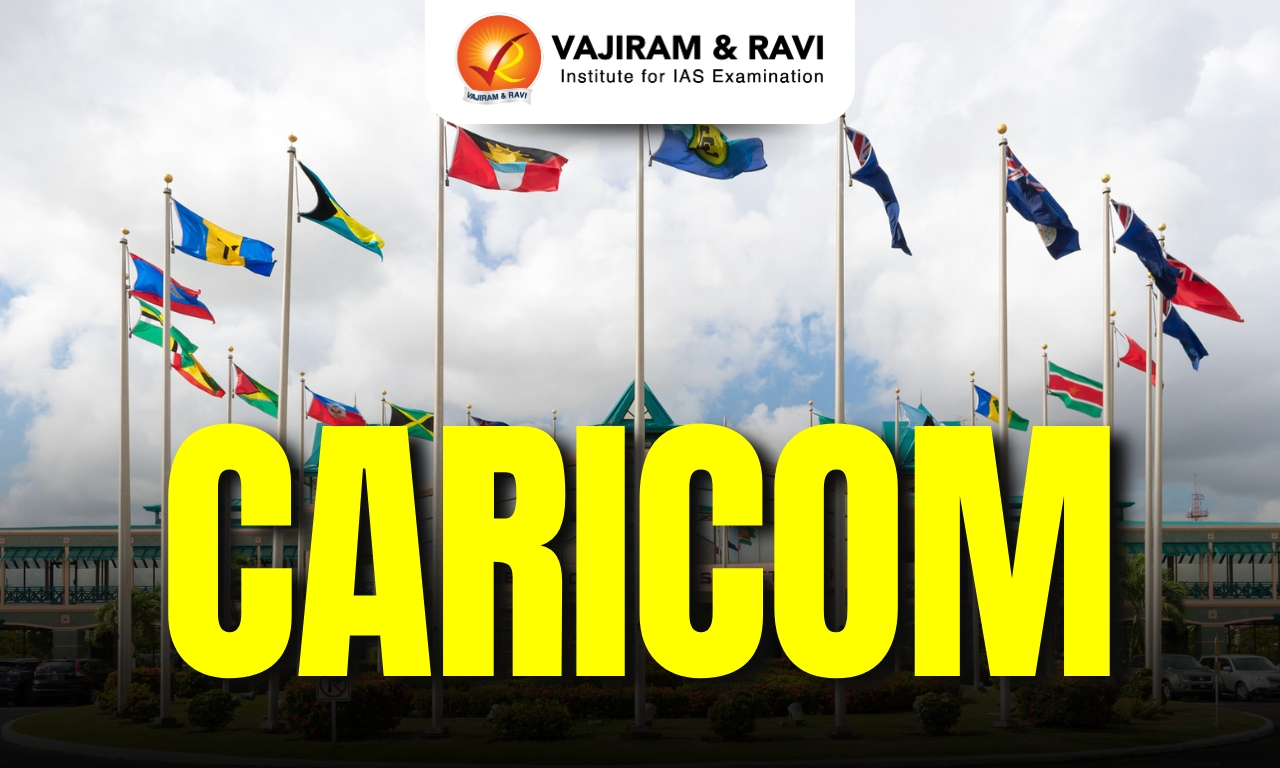
    • It has 15 members; Antigua and Barbuda, The Bahamas, Barbados, Belize, Dominica, Grenada, Guyana, Haiti, Jamaica, Montserrat, Saint Kitts and Nevis, Saint Lucia, Saint Vincent and the Grenadines, Suriname, and Trinidad and Tobago.
    • Of the 15, all except Montserrat are nation-states. 
    • Anguilla, Bermuda, British Virgin Islands, Cayman Islands, and Turks & Caicos Islands are associate members of the community.
  • The chairmanship of the community is rotated every six months among the member countries’ heads.
  • The permanent secretariat has its headquarters in Georgetown, Guyana.  

Source: TH

CARICOM FAQs

Q1: What does CARICOM stand for?

Ans: Caribbean Community

Q2: What type of organization is CARICOM?

Ans: A regional organization of Caribbean countries and dependencies.

Q3: Which treaty established CARICOM?

Ans: Treaty of Chaguaramas.

Q4: Which bank is associated with CARICOM for economic development?

Ans: Caribbean Development Bank

Q5: How many member states are part of CARICOM? Answer: 15 members

Ans: 15 members

Enquire Now