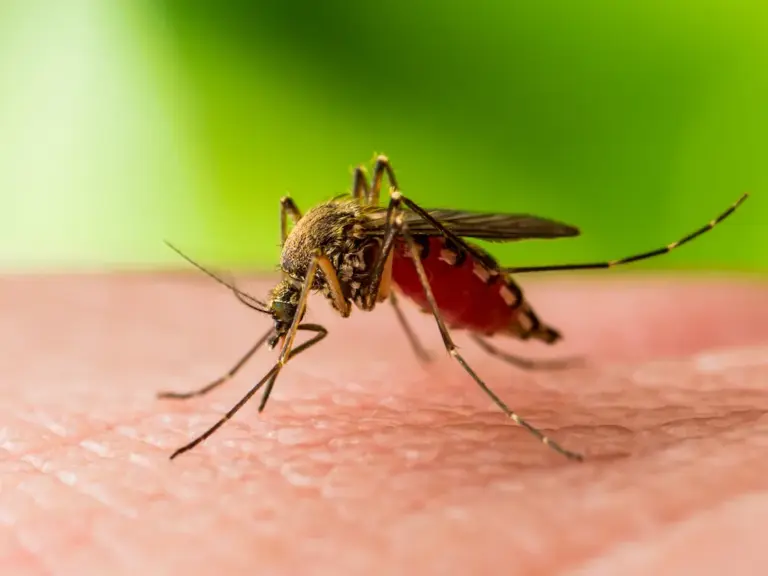
About West Nile virus:
- West Nile Virus (WNV) is a member of the flavivirus genus and belongs to the family Flaviviridae.
- It was first isolated in a woman in the West Nile district of Uganda in 1937.
- It is commonly found in Africa, Europe, the Middle East, North America and West Asia.
- According to the World Health Organization (WHO), it typically spikes between the summer and autumn months of June and September.
- Transmission: Human infection is most often the result of bites from infected mosquitoes. Mosquitoes become infected when they feed on infected birds, which circulate the virus in their blood for a few days.
- The virus may also be transmitted through contact with other infected animals, their blood, or other tissues.
- Symptoms:
- Infection with WNV is either asymptomatic (no symptoms) in around 80% of infected people, or can lead to West Nile fever or severe West Nile disease.
- About 20% of people who become infected with WNV will develop West Nile fever and symptoms include fever, headache, and tiredness, and body aches, nausea, vomiting, occasionally with a skin rash.
- So far, 19 countries, including Albania, Austria, Bulgaria, Croatia, Cyprus, Czechia, France, Germany, Greece, Hungary, Italy, North Macedonia, Romania, Serbia, Slovakia, Slovenia, Spain and Türkiye and Kosovo have reported outbreaks.
- Treatment: No vaccine is available for WNV and only supportive treatments can be provided to neuroinvasive WNV patients.
Q1: What are Viruses?
These are parasitic entities lacking cells, making them unclassifiable within any specific kingdom. They are sub-microscopic infectious agents that can only replicate inside host cells of living organisms. They range from 20 to 400 nm and can infect all life forms – humans, animals, plants, bacteria.
Source: Deadly West Nile virus spreads across Ukraine, 11 fatalities since July






 Last updated on March, 2026
→ UPSC Final Result 2025 is now out.
→ UPSC has released UPSC Toppers List 2025 with the Civil Services final result on its official website.
→ Anuj Agnihotri secured AIR 1 in the UPSC Civil Services Examination 2025.
→ UPSC Marksheet 2025 is now out.
→ UPSC Notification 2026 & UPSC IFoS Notification 2026 is now out on the official website at upsconline.nic.in.
→ UPSC Calendar 2026 has been released.
→ Check out the latest UPSC Syllabus 2026 here.
→ UPSC Prelims 2026 will be conducted on 24th May, 2026 & UPSC Mains 2026 will be conducted on 21st August 2026.
→ The UPSC Selection Process is of 3 stages-Prelims, Mains and Interview.
→ Prepare effectively with Vajiram & Ravi’s UPSC Prelims Test Series 2026 featuring full-length mock tests, detailed solutions, and performance analysis.
→ Enroll in Vajiram & Ravi’s UPSC Mains Test Series 2026 for structured answer writing practice, expert evaluation, and exam-oriented feedback.
→ Join Vajiram & Ravi’s Best UPSC Mentorship Program for personalized guidance, strategy planning, and one-to-one support from experienced mentors.
→ Shakti Dubey secures AIR 1 in UPSC CSE Exam 2024.
→ Also check Best UPSC Coaching in India