Sustainable Development Goals (SDGs) are a comprehensive set of 17 SDG goals adopted by the UN in 2015 to address poverty, inequality, climate change, and more. With 169 targets and 304 indicators, they aim for a sustainable, equitable future. The SDGs build on the Millennium Development Goals, addressing their shortcomings with a broader, universal approach.
India has made progress in areas like poverty and climate action, but challenges persist in funding and regional disparities. The United Nations Sustainable Development Goals Report 2026 highlights slow global progress, with only 36% of targets on track and rising inequalities exacerbating issues.
Sustainable Development Goals (SDGs)
Sustainable Development Goals (SDGs) are a set of 17 global goals with 169 targets and 231 unique indicators adopted by the United Nations General Assembly as part of the 2030 Agenda for Sustainable Development. They are intended to address a variety of global issues, such as poverty, inequality, climate change, environmental degradation, peace, and justice. The SDGs build on the success and shortcomings of the Millennium Development Goals (MDGs) and aim to make the world more inclusive, equitable, and sustainable.
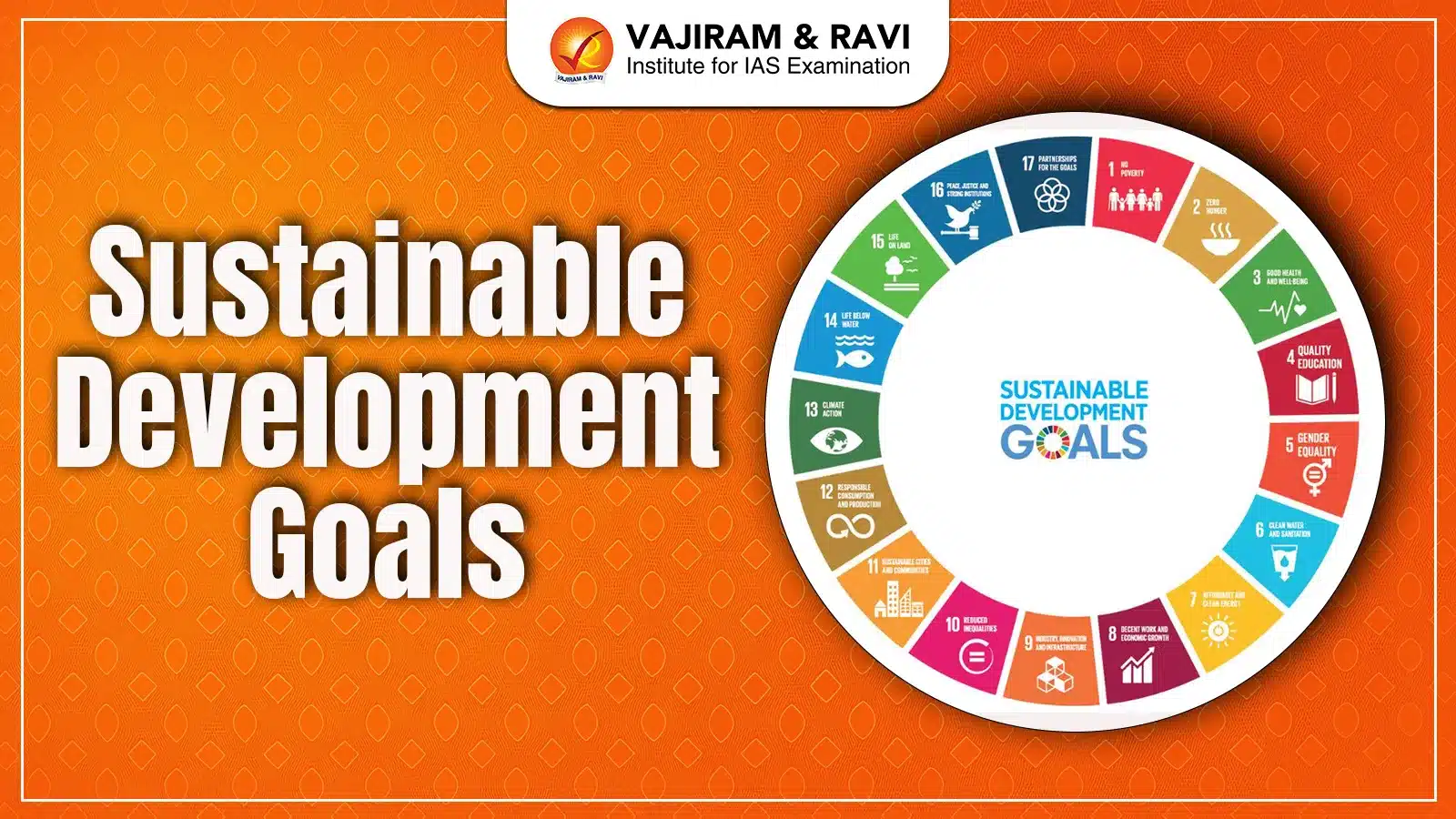
17 Sustainable Development Goals List
17 Sustainable Development Goals aim to eliminate poverty and hunger, improve health and education, ensure gender equality, protect the environment, and foster long-term economic growth and global partnerships for a better world. These 17 Sustainable Development Goals are:
- SDG 1 - No Poverty: All forms of poverty must be eradicated worldwide.
- SDG 2 - Zero Hunger: Eliminate hunger, increase food security, improve nutrition, and promote sustainable agriculture.
- SDG 3 - Good Health and Well-Being: Ensure healthy lifestyles and promote well-being for people of all ages.
- SDG 4 - Quality Education: Ensure that all students receive an inclusive and equitable education, as well as opportunities for lifelong learning.
- SDG 5 - Gender Equality: Ensure gender equality and empower all women and girls.
- SDG 6 - Clean Water and Sanitation: Ensure that water and sanitation are available to everyone and managed sustainably.
- SDG 7 - Affordable and Clean Energy: Ensure that everyone has access to affordable, reliable, sustainable, and modern energy sources.
- SDG 8 - Decent Work and Economic Growth: Encourage long-term, inclusive, and sustainable economic growth, full and productive employment, and decent jobs for all.
- SDG 9 - Industry, Innovation, and Infrastructure: Create resilient infrastructure, encourage inclusive and sustainable industrialisation and foster innovation.
- SDG 10 - Reduced Inequality: Reduce inequality within and between countries.
- SDG 11- Sustainable Cities and Communities: Create cities and human settlements that are inclusive, safe, resilient, and sustainable.
- SDG 12 - Responsible Consumption and Production: Ensure your consumption and production patterns are sustainable.
- SDG 13 - Climate Action: Take immediate steps to combat climate change and its consequences.
- SDG 14 - Life Below Water: Conserve and sustainably use the oceans, seas, and marine resources to promote sustainable development.
- SDG 15 - Life on Land: Protect, restore, and promote the sustainable use of terrestrial ecosystems, manage forests sustainably, combat desertification, and halt biodiversity loss.
- SDG 16 - Peace, Justice, and Strong Institutions: Encourage peaceful and inclusive societies, ensure equal access to justice for all, and establish effective, accountable, and inclusive institutions.
- SDG 17 - Partnerships for the Goals: Strengthen implementation mechanisms and revitalise global partnerships for sustainable development.


Sustainable Development Goals Need
As the 2015 deadline for the Millennium Development Goals (MDGs) approached, it became clear that significant global challenges still existed. Approximately 1 billion people continued to live in extreme poverty, defined by the World Bank as less than $1.25 per day. More than 800 million people lacked adequate food. This unsettling reality highlighted the MDGs' limitations and the need for a more comprehensive and inclusive approach to global development, resulting in the creation of the Sustainable Development Goals (SDGs).
Sustainable Development Goals (SDGs) vs Millennium Development Goals (MDGs)
The Sustainable Development Goals (SDGs) were introduced to address the shortcomings of the Millennium Development Goals (MDGs) by broadening the focus, emphasising human rights, and involving all countries in a universal agenda for sustainable development.
- MDGs Were Too Narrow: The MDGs concentrated primarily on health, education, and poverty reduction, failing to address larger, interconnected development issues.
- Lack of Focus on Root Causes of Poverty: The MDGs ignored structural factors such as inequality, limited access to resources, and economic disparities that contribute to poverty.
- No Emphasis on Human Rights: Unlike the SDGs, the MDGs made no explicit mention of human rights, which are critical for sustainable development.
- Perception as Targets for Poor Countries: The MDGs were frequently viewed as goals for developing countries to achieve with funding from wealthier countries, with little regard for global responsibility.
- Universal Scope of SDGs: The SDGs are a global agenda that applies to all countries, developed and developing alike, and promotes collective action towards shared goals.
- Inclusion of Governance and Justice (Goal 16): The SDGs include goals for promoting peaceful societies, access to justice, and strong institutions, which were not covered by the MDGs.
- More Inclusive Development Process: The SDGs were created through an inclusive process that included broad consultations at the Rio+20 Summit and "global conversations" with diverse stakeholders, resulting in a more comprehensive and representative agenda.
Sustainable Development Goals (SDGs) Significance
The United Nations Sustainable Development Goals cover a wide range of issues, including poverty, inequality, climate change, environmental degradation, peace, and justice. They are significant for several reasons:
- Global Framework for Development: The SDGs offer a comprehensive framework for addressing a wide range of issues, including poverty, inequality, climate change, environmental degradation, peace, and justice. They are intended to be universal, affecting all countries, regardless of their level of development.
- Interconnectedness of Goals: SDG Goals are interconnected, which means that success in one area can have a positive impact on others. For example, achieving gender equality (SDG 5) can aid in poverty reduction (SDG 1) and health improvement (SDG 3).
- Focus on Sustainability: The SDGs highlight sustainable development by meeting current needs without compromising future generations. This includes fostering long-term economic growth, social inclusion, and environmental protection.
- Addressing Global Challenges: The SDGs tackle critical global challenges such as climate change (SDG 13), biodiversity loss (SDG 15), and sustainable cities (SDG 11), which require coordinated international efforts.
- Long-term Vision: The 2030 Agenda for Sustainable Development provides a long-term vision for the future, encouraging countries to think beyond short-term gains and work towards lasting solutions that will benefit future generations.
Sustainable Development Goals Criticism
While the Sustainable Development Goals (SDGs) are widely praised, they have faced several criticisms. It includes the following:
- Non-Binding Nature: Despite their ambitious name, the SDGs lack binding commitments. Without an enforcement mechanism, accountability for their implementation is weak.
- Underfunding: Currently, almost 40% of all developing countries suffer from severe debt problems. The shortfall is estimated at $4 trillion annually for developing countries.
- Lack of Progress: The 2024 SDG Report reveals alarming stagnation in global progress: Only 17% of the SDG targets are on track. Nearly half of the targets show minimal or moderate progress, and over one-third have stalled or regressed.
- Vagueness: The SDGs have been criticised for their broad and ambiguous goals, such as "living in harmony with nature" and "ending poverty in all its forms." Critics argue that this vagueness renders the goals less actionable and measurable.
- Negative Impacts of COVID-19: The pandemic has undermined countries' ability to achieve the SDGs by 2030. It exacerbated existing inequalities and slowed progress, especially for SDGs 3 (health), 4 (education), 6 (water/sanitation), 10 (inequality), and 17 (partnerships).
- Excessive Number of Goals: With 17 goals and 169 targets, the SDGs can overwhelm resource-strapped countries. A focused set of achievable goals would help address immediate challenges while safeguarding progress in health and education.
Sustainable Development Goals India
Sustainable Development Goals in India represent a comprehensive national commitment to achieving the United Nations’ 2030 Agenda, focusing on eradicating poverty, ensuring inclusive growth, and fostering environmental sustainability. The implementation of SDGs in India is spearheaded by NITI Aayog, which tracks progress through the SDG India Index, measuring performance across 16 goals and 113 indicators.
- SDG India Index: According to the NITI Aayog’s SDG India Index, India's overall SDG score improved to 71 in 2023-24, up from 66 in 2020-21 and 57 in 2018. All states have shown improvement in overall scores since 2018.
- Areas of Progress: Significant improvements in SDG 1 (No Poverty), SDG 8 (Decent Work and Economic Growth), SDG 13 (Climate Action), and SDG 15 (Life on Land). SDG 13 (Climate Action) saw the highest increase, from 54 in 2020-21 to 67 in 2023-24.
-
- Government Initiatives: Programs like the Pradhan Mantri Awas Yojana, Swachh Bharat Mission, Ujjwala Yojana, Jal Jeevan Mission, and Ayushman Bharat have helped drive improvements.
- Challenges: Despite progress, economic disparities, regional imbalances, and social inequalities remain challenges, impacting the overall progress toward the SDGs.
-
- Adequate funding and resource mobilisation for SDG-related projects remain a challenge.
- India faces major environmental challenges, including air and water pollution, deforestation, and climate change.
Sustainable Development Goals Report 2026
The 2026 report reveals a stark gap between ambition and achievement, with only four years left. While data precision has reached historic highs, progress remains uneven due to rising conflicts, climate chaos, and a record collapse in official development assistance.
- SDG Targets Status: Currently, only 36% of assessable targets are on track or making moderate progress. Soberingly, nearly half are advancing too slowly, while 15% have reversed below their 2015 baselines.
- Country Progress Gaps: Development is deeply uneven, with sub-Saharan Africa housing 71% of the world's extreme poor. Fragile settings face three times higher under-5 mortality rates and account for 61% of global maternal deaths.
- Food Systems Delayed: Food insecurity affects 2.3 billion people, remaining well above 2015 levels. Progress toward zero hunger is stalled by conflicts and climate extremes, with one in four people worldwide currently experiencing moderate or severe food insecurity.
- Emissions and Resource Impact: Global CO₂ emissions reached record highs of 38.1 gigatons in 2025. Agriculture remains the largest freshwater user, while food loss and waste account for up to 10 per cent of global greenhouse gas emissions.
- The Digital Divide: Internet access reached 74%, yet only 4% in low-income countries have 5G. This advancement outpaces digital skills, leaving many unable to navigate online safety or content creation in the AI era.
- The Financing Crisis: Official development assistance collapsed by a record 23% in 2025. Developing countries face an annual $4 trillion SDG financing gap, while record debt burdens further hinder essential sustainable development investments and services.
SDG Report 2026 Key Findings
The 2026 report reveals a stark gap between global ambition and achievement. Intersecting crises, like climate change and surging conflicts, now threaten to undo decades of hard-won progress.
- Extreme Poverty Stagnation: Global extreme poverty affects 10% of the population (approximately 826 million people) in 2026, as progress toward eradication has largely stalled following the unmistakable impact of the pandemic.
- Escalating Climate Crisis: Climate change has intensified, with 2024 marking the hottest year on record and global energy-related CO₂ emissions reaching a new peak of 38.1 gigatons in 2025.
- Social Protection vs. Funding Gaps: For the first time in history, social protection covers over half of the global population (52.4%), yet this milestone is threatened by shrinking financial support for national data systems and sharp cuts in health-focused development aid.
- Conflict Offsetting Successes: Significant gains in renewable energy and digital connectivity (which now reaches 74% of the world) are being offset by a surge in violent conflicts that have displaced 118 million people and reversed years of hard-won development.
Sustainable Development Goals UPSC PYQs
Q1: Fast economic growth requires increased freight transport. How far can modernizing transport logistics achieve the Sustainable Development Goals (SDGs) and reduce carbon emissions? (UPSC Mains 2023)
Q2: "Access to affordable, reliable, sustainable and modern energy is a sine qua non to achieve Sustainable Development Goals (SDGs).” Comment on the progress made in India in this regard. (UPSC Mains 2018)
Q3: With reference to ‘Agenda 21’, sometimes seen in the news, consider the following statements: (UPSC Prelims 2016)
- It is a global action plan for sustainable development
- It originated in the World Summit on Sustainable Development held in Johannesburg in 2002
Which of the statements given above is/are correct?
(a) 1 only
(b) 2 only
(c) Both 1 and 2
(d) Neither 1 nor 2
Ans: (a)
Q4: Consider the following statements: (UPSC Prelims 2016)
- The Sustainable Development Goals were first proposed in 1972 by a global think tank called the ‘Club of Rome’
- The Sustainable Development Goals have to be achieved by 2030
Which of the statements given above is/are correct?
(a) 1 only
(b) 2 only
(c) Both 1 and 2
(d) Neither 1 nor 2
Ans: (b)

 Last updated on August, 2026
→ UPSC Mains Question Paper 2026 is out now for Essay & GS Paper 1, 2, 3 & 4.
→ UPSC Mains GS Paper 1 2026 is out now.
→ UPSC Mains GS Paper 2 2026 is out now.
→ UPSC Mains GS Paper 3 2026 is out now.
→ UPSC Mains GS Paper 4 2026 is out now.
→ UPSC Mains Indian Language Paper & English Compulsory Paper are out now.
→ Check out the latest UPSC Syllabus 2026 here.
→ UPSC Mains Admit Card 2026 is now out.
→ Enroll in Vajiram & Ravi’s UPSC Mains Test Series 2027 for structured answer writing practice, expert evaluation, and exam-oriented feedback.
→ Join Vajiram & Ravi’s UPSC Mentorship Program 2027 for personalized guidance, strategy planning, and one-to-one support from experienced mentors.
→ Go through the UPSC Mains Previous Year Papers to enhance your preparation.
→ Download UPSC Mains Essay Paper 2025, UPSC Mains GS Paper-I 2025, UPSC Mains GS Paper-II 2025, UPSC Mains GS Paper-III 2025, UPSC Mains GS Paper-IV 2025, UPSC Mains English (Compulsory) Paper 2025, UPSC Mains Hindi (Qualifying) Paper 2025 here.
→ UPSC has released UPSC Toppers List 2025 with the Civil Services final result on its official website.
→ UPSC Calendar 2027 has been released.
→ Also check Best UPSC Coaching in India
Sustainable Development Goals (SDGs) FAQs
Q1. What are the 17 Sustainable Development Goals?+
Q2. What are the Sustainable Development Goals?+
Q3. What are the 5 pillars of SDGs?+
Q4. What are the main goals of SDG 2030?+
Q5. What are the 5 C's of sustainable development?+
Tags: quest sdgs sustainable development goals upsc economy notes