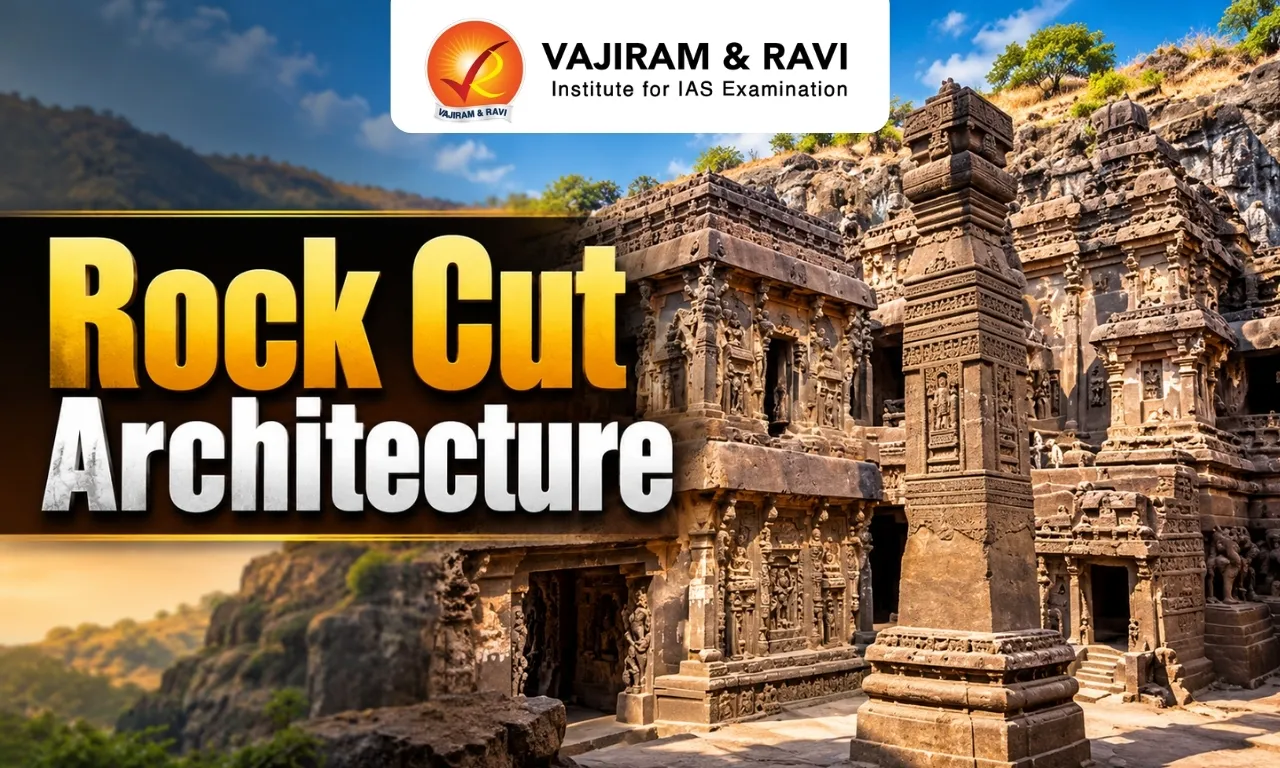
Rock Cut architecture in India represents one of the earliest and most significant architectural traditions, evolving from natural shelters in the Palaeolithic-Mesolithic period to elaborate Buddhist, Jain, and Hindu cave complexes. Sites like Bhimbetka, Barabar, Ajanta, Ellora, and Badami reflect religious, cultural, and artistic developments spanning over two millennia.
These caves feature chaityas, viharas, stupas, and monolithic temples, showcasing intricate carvings, polished surfaces, and murals. Patronised by rulers such as Ashoka, Kharavela, Pallavas, Chalukyas, and Rashtrakutas, rock cut architecture also influenced stepwells like Chand Baori and Rani ki Vav. It combines functionality, aesthetics, and spiritual symbolism across India.
Rock Cut Architecture Evolution
Roots of Indian rock cut architecture trace back to the Mesolithic period (10,000–8,000 BCE), when early humans carved and painted rock shelters. Though not formal architectural structures, these laid the foundation for later developments.
- First Phase: The earliest rock cut architecture caves emerged under the Mauryan Empire, patronised through Ashokan inscriptions and his grandson, Dasaratha, marking India’s formal advancement in stone excavation.
- Between the 2nd century BCE and the 2nd century CE, Buddhist chaityas and viharas flourished at Karla, Kanheri, Nasik, Bhaja, Bedsa, and Ajanta, initially imitating wooden structures.
- Second Phase (5th Century CE): Rock cut architecture transitioned from timber to stone, with the Buddha image as a central element in architectural design.
- Third Phase (8th–14th Century): Dravidian rock-cut architecture flourished, featuring mandapas and rathas, representing its peak development.
- Decline (Post-12th Century): Focus shifted to free-standing temples, though rock-cut caves continued. Artisans adapted techniques, carving stones into bricks for new constructions.
Rock Cut Architecture Types
Rock cut architecture is an engineering and artistic approach that involves carving structures, buildings, and sculptures straight from solid, living natural rock rather than combining separate components such as bricks or stone blocks.
- Rock-Cut Caves: Chambers and sanctuaries dug straight into hillsides or cliffs, typically used as residences, shrines, or meditation areas. Early examples are the Mauryan-era Barabar Caves.
- Chaitya Halls: Apsidal prayer halls with a central nave, side aisles, and a stupa on the apsidal end. Some notable examples include the Great Chaitya Cave at Karla Caves and the Ajanta Caves.
- Viharas (Monastic Residences): Rectangular or square residential buildings where monks lived, studied, and slept, with a central hall and little carved-out private chambers.
- Rock-Cut Temples: Hollowed-out interior shrines or cave-temples fashioned to resemble structural free-standing architectural structures and embellished with pillars, reliefs, and Hindu, Buddhist, or Jain deities. Examples include the Badami and Elephanta Caves.
- Monolithic Temples: Entire free-standing structural complexes carved from the top down of a single, huge rock mass, totally disconnecting the temple from its parent cliff. The prominent examples are Ellora's Kailash Temple (Cave 16) and Mahabalipuram's Rathas.
- Mandapas: Open pillared pavilion halls dug from rock faces, usually with a columned hall and small sanctuary cells on the back wall, typical of Dravidian rock-cut style.
- Rock Relief Sculptures: Monumental figures, panels, and religious narratives carved directly onto exposed rock faces or cliff edges (such as the massive Gommateshwara statue).


Buddhist Rock Cut Architecture
Buddhist rock cut architecture primarily features three iconic structures—stupas for relics, chaitya-grihas for worship, and viharas as monastic dwellings for meditation and community living.
- Stupas: Originally earthen mounds for relics, later converted to stone with symbolic elements like chatras (umbrellas) and surrounded by circumambulatory paths called pradakshina.
- Rock-cut Caves: Earliest examples at Barabar and Nagarjuni, dedicated to Ajivikas, imitating wooden structures.
- Chaityas: Barrel-vaulted halls with apsidal ends housing stupas; early sites at Bhaja and Kondane reflect Hinayana traditions with symbolic emphasis.
- Viharas: Monastic dwellings with cells around a central hall; the Mahayana period added Buddha images and ornate sculptures (e.g., Ajanta, Ellora).
Jain Rock Cut Architecture
Jain rock cut architecture is prominently examples are the Khandgiri and Udayagiri caves in Odisha, built around 2,000 years ago under King Kharavela, serving as monastic shelters.
- Udayagiri Caves: Feature the double-storied Rani Gumpha with excellent acoustics, decorated with royal processions, mythological and celestial imagery (e.g., Surya on a chariot).
- Ganesa Gumpha contains Jain Tirthankara sculptures and later Ganesha figures.
- Khandgiri Caves: Khandgiri caves are mostly single-storied with rectangular plans and feature exquisite sculptural panels portraying Jain saints, Sasana Devis, and symbolic motifs.
Hindu Rock Cut Architecture
Hindu rock cut architecture flourished mainly from the 5th century CE onwards, particularly in South India under the patronage of Chalukyas, Pallavas, Rashtrakutas, and later dynasties. This phase marked a shift from Buddhist to Brahmanical temple building. Key sites include Badami, Ellora, Elephanta, Mamallapuram, Aurangabad, and Aihole.
Chalukyan Architecture
Chalukyan architecture is classified into rock-cut shrines and structural Hindu temples. The cave temples of Badami and Aihole influenced the development of later structural temples in Karnataka.
- Architectural Features: Temples generally feature a mukha mandapa (front porch), mahamandapa (main hall) and garbhagriha (sanctum).
- Badami Caves: Badami has four caves. Cave 1 is dedicated to Shiva, featuring an eighteen-armed Shiva, Mahishasuramardini and Ardhanarisvara. Cave 2 depicts Vishnu, Shiva, Brahma and Ashtadikpalas. Cave 3, dedicated to Vishnu, dates to 578 CE under Mangalesa. Cave 4 is a Jain shrine featuring Mahavira and Tirthankaras.
- Aihole Caves: The sixth-century Ravana Phadi cave, dedicated to Shiva, contains a rock-cut Shivalinga, elaborate pillars and carvings of Hindu deities, including Vishnu as Varaha and Durga as Mahishasuramardini.
Rock-Cut Caves of the Kalachuris and Rashtrakutas
The Ellora Caves in Maharashtra represent the coexistence of Hinduism, Buddhism and Jainism. Located about 30 km northwest of Aurangabad, these caves date from the 6th–12th centuries CE and are renowned for their craftsmanship.
- Religious Classification: Caves 1–12 are Buddhist, 13–29 are Hindu (Brahmanical), and 30–34 are Jain.
- Kalachuri Contribution: Caves 1–10 and Cave 21 belong to the period of the Kalachuris of Mahishmati.
- Rashtrakuta Contribution: Cave 15 belongs to the period of Dantidurga (753–757 CE), supported by inscriptional evidence.
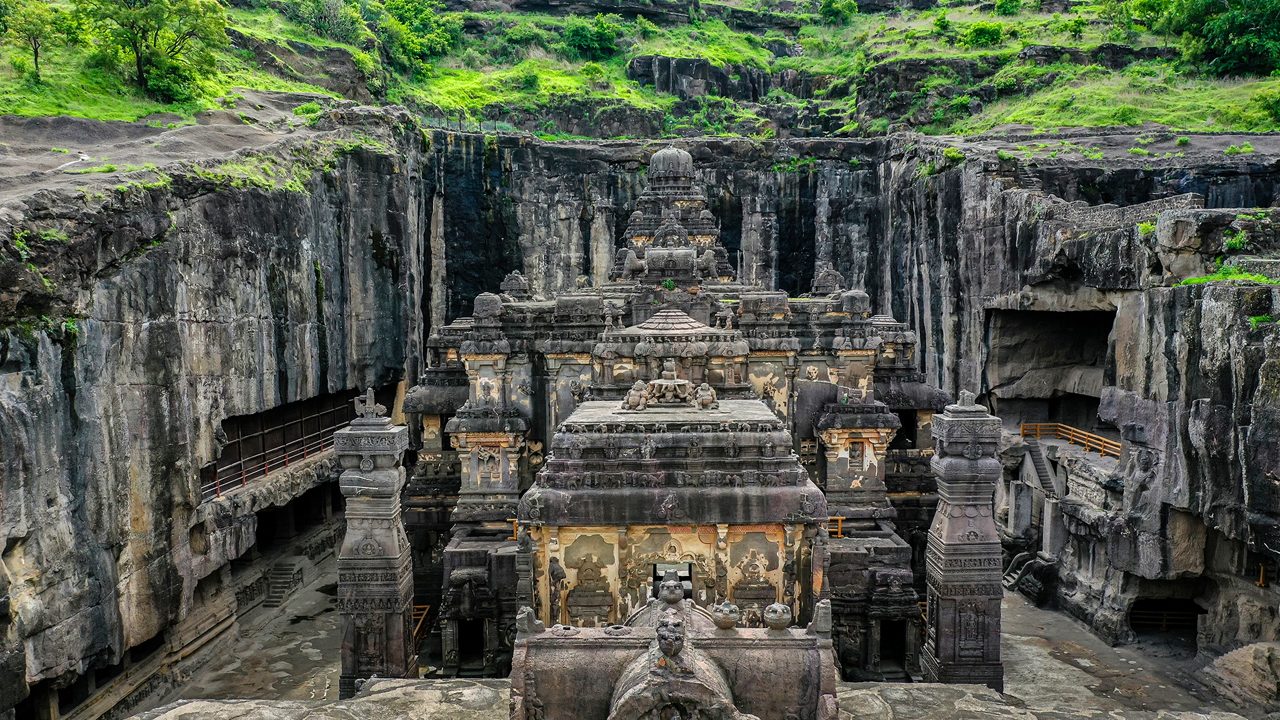
- Kailasa Temple (Cave 16): Commissioned under Krishna I (757–783 CE), it represents the mature phase of Indian rock-cut architecture.
- A massive, west-facing temple complex carved from rock.
- Includes a gateway, Nandi Mandapa, sanctum (Garbhagriha) and a multi-storeyed vimana.
Pallava Rock Cut Architecture
The Pallavas of Kanchi ruled parts of the Telugu and northern Tamil regions from the sixth to ninth centuries CE. They pioneered Dravidian temple architecture, using hard rocks such as granite, gneiss and basalt. Mahendravarman I initiated rock-cut architecture in Tamil Nadu during the early seventh century.
- First Cave Temple: The Lakshitaayatana Tridevamurti cave at Mandagapattu was carved entirely from granite without bricks, mortar, wood or metal.
- Mandapa Structure: Temples featured pillared halls called mandapas, divided into mukha mandapa and mahamandapa.
- Pillars: Pillars had square upper and lower sections called sadurams and an octagonal middle section called kattu.
- Decorations: Lotus medallions, creepers, and motifs of animals and mythical beings adorned pillars. Corbels featured curved, wavy ornamentation.
- Sculptures: Early caves were simple, with dvarapalas but generally lacked deity images in the sanctum.
Post-Mahendra Style Rock-Cut Temples
The Post-Mahendra style marked an important evolution in Pallava architecture under Narasimhavarman I Mamalla (630–668 CE). While the general cave-temple layout remained unchanged, ornamentation and architectural complexity increased.
- Architectural Features: Sanctums became more elaborate, and pillars were taller, slenderer and more widely spaced. Somaskanda (Shiva with Skanda) appeared for the first time.
- Mamalla Style and Rathas: Monolithic, free-standing shrines called rathas emerged at Mamallapuram under Narasimhavarman I.
- Three Main Components: The mandapa featured adhishthana (base), kudya-stambha (pilasters) and prastara (decorative parapet).
- Hara Decoration: The kapota (cornice) featured kudu motifs, while miniature salas (oblong shrines) and kutas (square shrines) formed a decorative garland called hara.
- Pillar Ornamentation: Crouching vyalis (mythical lions) adorned pillar bases. Other features included kalasa, kumbha and wavy potika brackets.
Pallava Monolithic Rathas
The Pallava monolithic rathas are free-standing rock-cut temples carved from granite and gneiss outcrops at Mamallapuram. The famous Pandava Rathas and Draupadi Ratha were constructed during the reign of Narasimhavarman I (Mamalla).
- Plan: Simple design with a small mukha-mandapa (front hall) before the sanctum.
- Types: Rathas feature single-storeyed or multi-storeyed vimanas.
- Ektala Vimana: Six parts—adhishthana (base), bhitti (wall), prastara (entablature), griva (neck), shikhara (spire) and stupi (finial).
- Dvitala Vimana: Both storeys feature hara elements—sala, kuta and panjara.
- Roof Types: Kuta has a domical roof (kutina-shikhara), while sala has a barrel-vaulted roof (sala-shikhara).
- Storeys: Tritala and chatushtala denote three- and four-storeyed vimanas; five or more storeys are called mukhya vimanas.
- Architecture: Successively smaller storeys create a tapering structure, enhancing height, stability and durability.
Pandya Architecture
Towards the end of the 7th century, the Pandyas developed rock-cut architecture, inspired by the Pallavas and Chalukyas. Their cave temples featured distinctive architectural elements and religious sculptures.
- Important Temples: The Sri Karpaga Vinayakar Temple at Pillaiyarpatti, dating to the early 7th century, is among the earliest Pandya rock-cut shrines. Other examples include Tiruttangal, Piranmalai, Sittannavasal and Malaiyadikurichi.
- Notable Shrines: The Narasimha cave at Anamalai and Subrahmanya cave at Tirupparankunram are significant examples.
- Vettuvankoil: Located at Kalugumalai, this unfinished 8th-century temple illustrates Pandya rock-cutting techniques, including a six-faced, dome-shaped shikhara decorated with kudu arches.
- Architectural Features: Temples featured a garbhagriha, pillared mandapas, cushion-shaped capitals and relatively plain potikas. Sivalingas and Nandi figures were carved from living rock.
Rock Cut Architecture Famous Caves
Rock-cut caves represent India’s earliest architectural forms; natural caves served as shelters and religious sites from the Palaeolithic–Mesolithic period (c. 6000 BCE). Bhimbetka Rock Shelters (UNESCO) feature tools and paintings from 8,000 BCE. By the 5th–6th century BCE, caves like Saptaparni and Indrasala in Bihar were used for Buddhist councils.
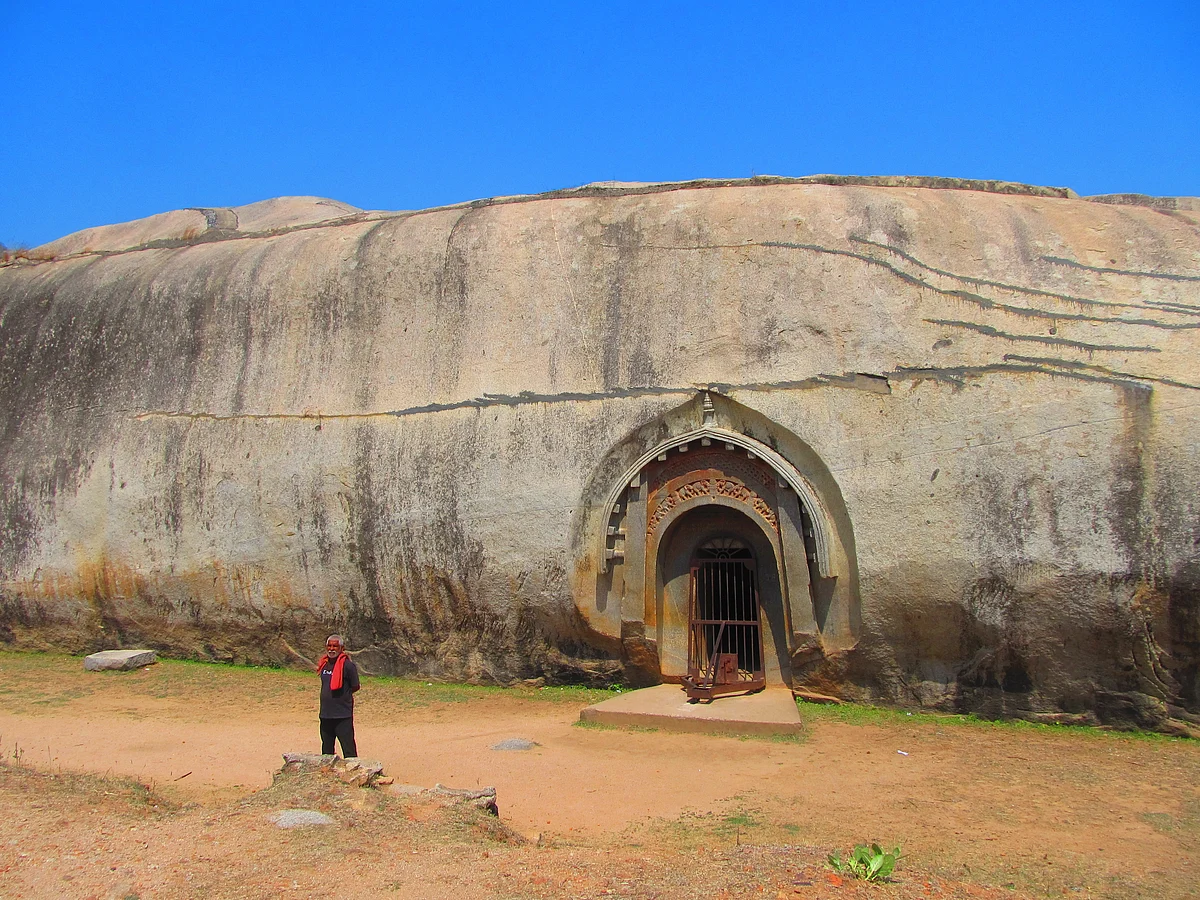
- Barabar Caves: Jehanabad, Bihar, are the oldest surviving rock-cut caves in India, dating to the 3rd century BCE during the Mauryan Empire. Dedicated to the Ajivika sect, the caves feature Ashokan inscriptions in the name of "King Piyadasi" (c. 258–251 BCE) as part of his Minor Rock Edicts, contemporaneous with Gautama Buddha and Mahavira.
- Lomas Rishi bears a later inscription by Anantavarman. Carved from granite with Mauryan polish, each cave has a rectangular hall leading to a circular, domed chamber.
- Sudama Caves: Dedicated by Emperor Ashoka in 261 BCE, as indicated by an inscription in Brahmi at its arched entrance. It features a circular vaulted chamber accompanied by a rectangular mandapa.
- Lomas Rishi Cave: The facade of the Lomas Rishi Cave imitates timber construction and features an ogee-shaped "chaitya arch" or chandrashala. Notable carved elephants on the entrance arch symbolise processions toward stupas.
- Karan Chaupar Cave: Karan Chaupar, also known as Karna Chaupar, consists of a simple rectangular room with polished surfaces and contains an inscription dating back to 245 BCE, emphasising functionality over ornamentation.
- Visvakarma Cave: Visvakarma Cave is accessible via the “steps of Ashoka”, carved into the cliff and consists of two rectangular rooms. It is also noted for its well-polished surfaces, akin to those found in the other Barabar caves.
- Nagarjuni Caves: East of Barabar, they were built by Dasharatha Maurya for the Ajivikas, featuring three caves, Gopika, Vadathika, and Vapiyaka, with polished interiors and inscriptions in the name of Devanampiya Dasaratha.
Udayagiri Caves and Khandagiri Caves
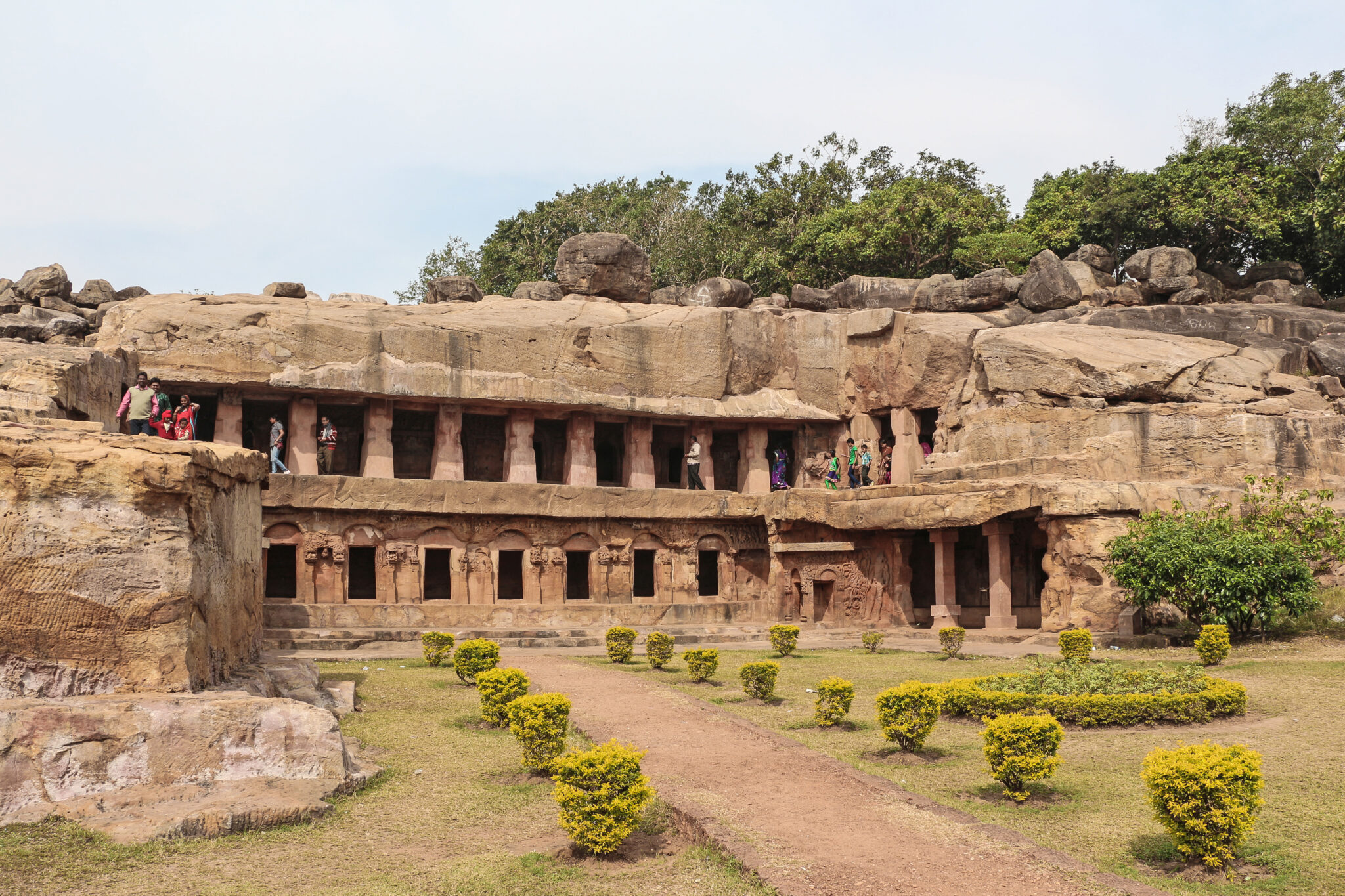
Located near Bhubaneswar, Odisha, on two adjacent hills, constructed in the 2nd century BCE. Udayagiri (“Sunrise Hill”) has 18 caves; Khandagiri has 15 caves. They served as residential blocks for Jain monks during King Kharavela’s reign. The Hathigumpha inscription refers to the hills as Kumari Parvat. Notable caves include
- Rani Gumpha (Udayagiri): Largest cave; double-storied with three wings per level; central wing is largest; upper floor supported by nine columns; reliefs depict the king’s victorious march; cells contain carved dwarpalas.
- Hati Gumpha (Udayagiri): Natural cavern with intricate elephant carvings; contains the Hathigumpha inscription in Brahmi script detailing Kharavela’s reign.
- Important Khandagiri caves: Tatowa Gumpha, Navamuni Gumpha, Barabhuji Gumpha, Dhyana Gumpha, Ambika Gumpha, Ekadasi Gumpha.
Ajanta Caves
Ajanta Caves, located in the Aurangabad district of Maharashtra, are rock-cut Buddhist monuments dating from the 2nd century BCE to around 480 CE. In total, there are 29 caves, with 25 serving as Viharas (residential caves) and 4 functioning as Chaityas (prayer halls).
- The caves were built in two phases.
- Satavahana Period: Caves 9, 10, 12, 13, 15A; murals depicting Jataka tales.
- Vakataka Period (5th century CE): Caves 1–8, 11, 14–29; reflects Mahayana Buddhist tradition.
- Notable Features:
- Chaityas: Caves 19, 26, 29; Viharas: remaining caves.
- Famous sculptures: Mahaparinirvana of Buddha (Cave 26), Naga King with consort (Cave 19).
- Frescoes: Painted with local plants and minerals; outlined in red; absence of blue; highly naturalistic.
- Patronage: Vakataka rulers, including Harishena.
- Tradition: Reflects Hinayana and Mahayana traditions (5 Hinayana, 24 Mahayana caves).
- Travellers' Account: Mentioned by Chinese pilgrims Fa Hien and Hieun Tsang.
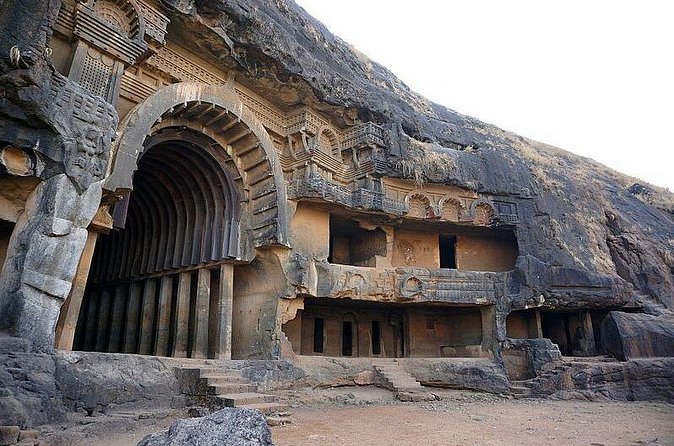
Karla Caves
Karla Caves, near Mumbai, showcase Hinayana Buddhist architecture, featuring one of India’s largest chaityas. Built with Satavahana patronage, Cave 8 (Great Chaitya) contains a grand, intricately designed prayer hall dating to 120 CE, reflecting early Buddhist religious practices and advanced rock-cut architectural skill.
Nasik Caves
Pandavleni (Nasik) Caves are 24 Hinayana Buddhist rock-cut caves carved under the Kshatrapas, Satavahanas, and Abhirs. Featuring viharas, chaityas, and shrines, Cave 3 and 18 are notable for carvings and inscriptions. Some caves, like Cave 1, served as water reservoirs, with donor records including Gautami Balasri.
Ellora Caves
Ellora Caves in Maharashtra, a UNESCO World Heritage Site, are one of the largest rock-cut complexes, featuring over 100 Hindu, Buddhist, and Jain monuments (600–1000 CE). Key caves include
- Cave 16 (Kailash Temple, monolithic Shiva temple), Cave 15 (Dashavatara, two-storey Shiva-Vishnu temple), Cave 10 (Vishvakarma Cave or "Carpenter’s Cave), and Cave 32 (Indra Sabha, Jain, 9th century).
- Constructed mainly under the Rashtrakutas, with Jain caves by the Yadavas, the site exemplifies diverse religious rock-cut architecture and intricate carvings.
Bagh Caves
Bagh Caves in Madhya Pradesh, dating to the 5th–6th centuries CE, are rock-cut Buddhist caves renowned for their frescoes, comparable to Ajanta. Comprising nine caves, Cave 3 notably depicts Bodhisattvas. These caves likely served as monastic quarters, reflecting Buddhism’s significant influence in ancient India.
Other Important Rock Cut Caves
Other Important Rock Cut Caves include the Elephanta Caves and the Bedsa Caves, known for their chaitya halls and remarkable rock-cut architecture.
- Elephanta Caves (8th century, Mumbai): Feature early Brahmanical architecture, including the Ganesh Gumpha with a columned verandah and elephant-flanked steps. Key sculptures include the three-faced Shiva, Ravana shaking Mount Kailasa, Shiva-Parvati marriage, Tandava dance, and Ardhanariswara.
- Bedsa Caves (near Pune): It features a smaller chaitya hall similar to Karla Caves, with four pillars carved with horses, bulls, and elephants, each shown with male and female riders.
Rock Cut Architecture Temples
Rock-cut temple architecture involves carving massive rocks into temple forms with detailed decorations. The Pancha Rathas at Mamallapuram, crafted by Pallava architects in the late 7th century, and Ellora’s Kailash Temple, carved top-down over a century for Lord Shiva, exemplify this style, which coexisted with free-standing temples until the 12th century.
Rock Cut Temples Under the Pallavas
Rock cut temple architecture under the Pallava Dynasty initiated monolithic temple-like structures. Beginning with Mahendravarman, temples reflected rulers’ stylistic preferences and evolved through four stages:
- Mahendra Group: Early rock-cut mandapas under Mahendravarman, differing from Nagara-style assembly halls.
- Narasimha Group: Temples featured intricate sculptures, segmented mandapas, e.g., Dharmaraja ratha (largest) and Draupadi ratha (smallest).
- Rajsimha and Nandivarman Groups: The Emergence of structural temples gradually replaced earlier rock-cut designs.
Kailash Temple
Kailash Temple (Cave 16, Ellora) is a monumental rock-cut temple dedicated to Lord Shiva, carved from a single monolith under Rashtrakuta king Krishna I in the 8th century AD. It features:
- A spacious courtyard, reliefs of Ravana shaking Mount Kailash, and panels depicting the Ramayana, Mahabharata, and Hindu deities, reflecting Pallava and Chalukya influences.
- Recognised as one of the largest rock-cut temple complexes, it is a UNESCO World Heritage Site.
Badami Cave Temple
Badami Cave Temples are located in Karnataka. It served as the Chalukya capital and included four caves—three Hindu and one Jain—dating to the 6th century AD.
- Cave 1: Features Lord Shiva as Nataraja and Harihara (fusion of Vishnu and Shiva).
- Cave 2: Dedicated to Vishnu, with the largest Trivikrama relief and avatars Vamana and Varaha.
- Cave 3: The largest cave with detailed carvings of Trivikrama, Anantasayana, Vasudeva, Varaha, Harihara, and Narasimha.
- Cave 4: Jain cave showcasing Bahubali, Parshvanatha, Mahavira, and other Tirthankaras.
Rock Cut Architecture UPSC PYQs
Q1: The rock cut architecture represents one of the most important sources of our knowledge of early Indian art and history. Discuss. (UPSC Mains 2020)
Q2: With reference to the art and archaeological history of India, which one among the following was made earliest? (UPSC Prelims 2015)
- Lingaraja Temple at Bhubaneswar
- Rock-cut Elephant at Dhauli
- Rock-cut Monuments at Mahabalipuram
- Varaha Image at Udayagiri
Ans: (b)
Q3: Some Buddhist rock-cut caves are called Chaityas, while the others are called Viharas. What is the difference between the two? (UPSC Prelims 2013)
- Vihara is a place of worship, while Chaitya is the dwelling place of the monks.
- Chaitya is a place of worship, while Vihara is the dwelling place of the monks.
- Chaitya is the stupa at the far end of the cave, while Vihara is the hall axial to it.
- There is no material difference between the two.
Ans: (b)
Q4: With reference to the history of Indian rock-cut architecture, consider the following statements: (UPSC Prelims 2013)
- The caves at Badami are the oldest surviving rock-cut caves in India
- The Barabar rock-cut caves were originally made for Ajivikas by Emperor Chandragupta Maurya
- At Ellora, caves were made for different faiths.
Which of the statements given above is/are correct?
- 1 only
- 2 and 3 only
- 3 only
- 1, 2 and 3
Ans: (c)

 Last updated on Oct, 2026
→ UPSC 2027 Notification will be released on 13 January 2027 at upsconline.nic.in.
→ Check Nobel Prize 2026 Winners List here.
→ Download PIB PRiSM Monthly Magazine 2026 here.
→ Check UPSC Monthly Current Affairs Magazine The Recitals here.
→ Check out the latest UPSC Syllabus here.
→ Download UPSC Model Answers for Mains 2026
→ UPSC Mains Question Paper 2026 is out now for Essay & GS Paper 1, 2, 3 & 4.
→ UPSC Calendar 2027 has been released.
→ Enroll in Vajiram & Ravi’s UPSC Mains Test Series 2027 for structured answer writing practice, expert evaluation, and exam-oriented feedback.
→ Join Vajiram & Ravi’s UPSC Mentorship Program 2027 for personalized guidance, strategy planning, and one-to-one support from experienced mentors.
→ Go through the UPSC Mains Previous Year Papers to enhance your preparation.
→ UPSC has released UPSC Toppers List 2025 with the Civil Services final result on its official website.
→ Also check Best UPSC Coaching in India
Rock Cut Architecture FAQs
Q1. Who introduced rock-cut architecture in India?+
Q2. What is rock-cut architecture?+
Q3. What is an example of rock-cut architecture in India?+
Q4. Which Indian city is famous for its rock-cut temples?+
Q5. Are Ajanta Caves rock-cut?+
Tags: quest rock cut architecture UPSC Art and Culture Notes