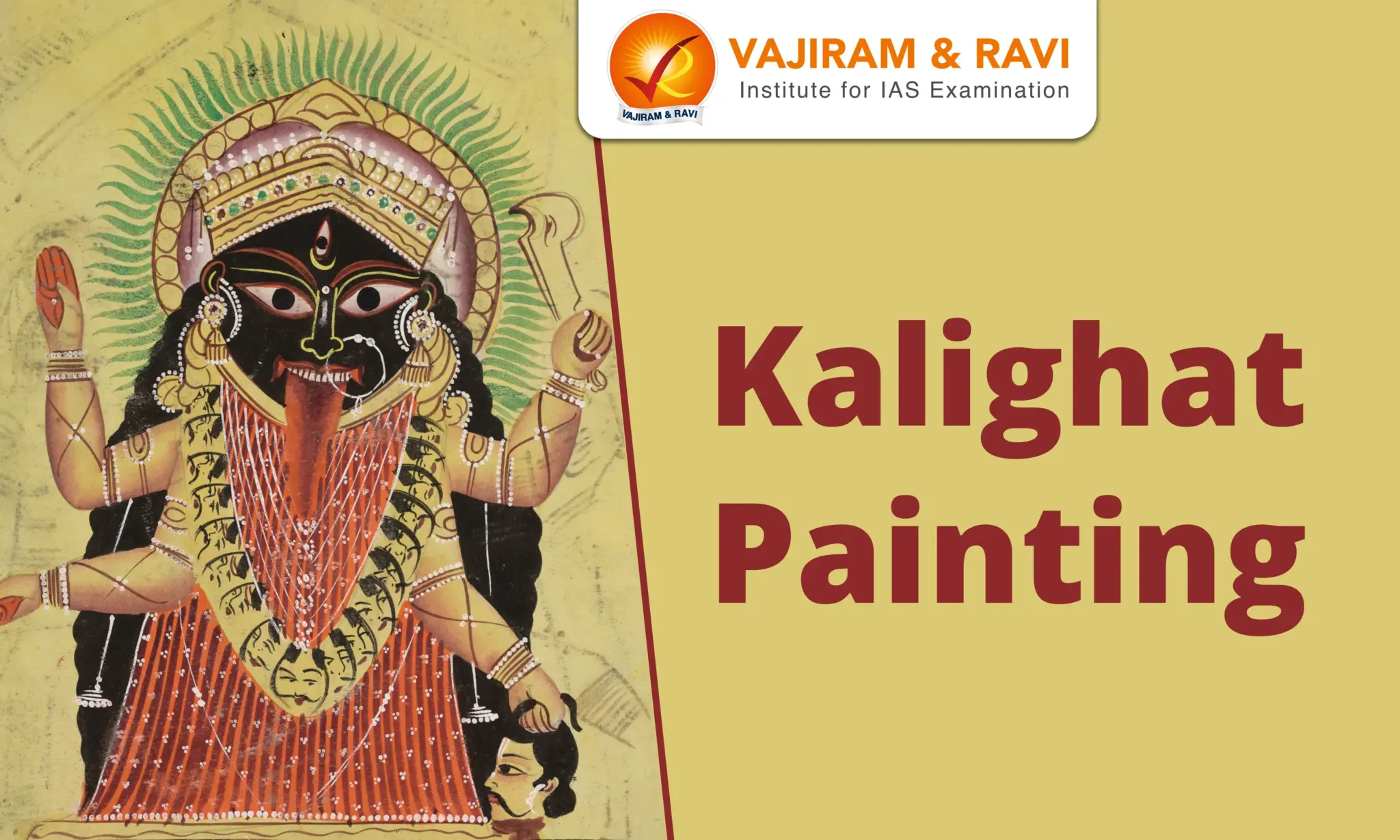
Kalighat painting, also known as Kalighat Patachitra, is a distinctive style of Indian art that emerged in the 19th century. This art form was initially developed by specialized scroll painters called patuas, who worked near the Kalighat Kali Temple in Kolkata, West Bengal. Currently, the Victoria and Albert Museum in London houses the largest collection of Kalighat paintings globally.
Kalighat paintings often depict mythological tales, representing Hindu deities. It also depicts scenes from everyday life, reflecting the socio-cultural transformations occurring in society during the 19th and early 20th centuries.
Kalighat Painting History
The origins of Kalighat painting can be traced back to the early 19th century when artists, primarily from the traditional Patuas community, started producing these works for pilgrims visiting the Kalighat Kali Temple. Initially, these paintings served as souvenirs for the devotees, often illustrating scenes from Hindu mythology and local legends.
- With the arrival of the British and the subsequent exposure to Western artistic styles, Kalighat paintings began to evolve. Artists started incorporating new themes, such as social issues and everyday life, into their work.
- With the import of mill-made paper and readymade paints from Britain, the process became more accessible, allowing artists to produce works in larger quantities.
- By the late 19th century, Kalighat paintings gained popularity among the bourgeoisie, who appreciated their aesthetic and cultural value. This led to the commercialization of the art form.
Kalighat Painting Features
Kalighat paintings are renowned for their bold outlines, vibrant colours, and minimal background details. Initially crafted on hand-made paper, artists later transitioned to machine-manufactured paper, which made production easier. These artworks portrayed a variety of themes, both religious and secular.
- Hindu deities, such as Kali, Shiva, Durga, and Lakshmi, were frequently depicted, as pilgrims bought these artworks as souvenirs.
- The artists also captured contemporary events and daily life in Kolkata, reflecting the socio-cultural scene of the time.
- Influenced by Mughal and British art, they even painted domestic animals, fish, birds, and marine life like prawns and lobsters.


Kalighat Painting Techniques
The creation of Kalighat paintings was a meticulous process, often carried out by family units in an assembly-line fashion. Artists mixed natural colours with gum and ground them on stones, using brushes made from goat tail or squirrel fur. The colour palette included water-based and opaque pigments, with shades like blue, yellow, green, and black.
- Precious ornaments and jewellery were highlighted with silver, gold, and colloidal tin to mimic jewel-like effects.
- The blue came from the Aparajita flower, the yellow from turmeric, and the black from soot.
- Over time, imported factory-made watercolours from Britain replaced many of the natural pigments, simplifying the painting process.

 Last updated on Oct, 2026
→ UPSC 2027 Notification will be released on 13 January 2027 at upsconline.nic.in.
→ Check Nobel Prize 2026 Winners List here.
→ Download PIB PRiSM Monthly Magazine 2026 here.
→ Check UPSC Monthly Current Affairs Magazine The Recitals here.
→ Check out the latest UPSC Syllabus here.
→ Download UPSC Model Answers for Mains 2026
→ UPSC Mains Question Paper 2026 is out now for Essay & GS Paper 1, 2, 3 & 4.
→ UPSC Calendar 2027 has been released.
→ Enroll in Vajiram & Ravi’s UPSC Mains Test Series 2027 for structured answer writing practice, expert evaluation, and exam-oriented feedback.
→ Join Vajiram & Ravi’s UPSC Mentorship Program 2027 for personalized guidance, strategy planning, and one-to-one support from experienced mentors.
→ Go through the UPSC Mains Previous Year Papers to enhance your preparation.
→ UPSC has released UPSC Toppers List 2025 with the Civil Services final result on its official website.
→ Also check Best UPSC Coaching in India
Kalighat Painting FAQs
Q1. What is Kalighat painting famous for?+
Q2. What are the colours used in Kalighat painting?+
Q3. What were local scroll painters in Kalighat called?+
Q4. On which material Kalighat paintings were mostly done?+
Q5. Why are Kalighat paintings called so?+
Tags: kalighat painting quest