Biodiversity hotspots in India are ecologically exceptional regions that harbour a remarkable variety of plants, animals and microorganisms, including numerous species found nowhere else on Earth. At the same time, these regions have experienced extensive habitat degradation due to deforestation, infrastructure development, agriculture, urbanisation and other human pressures. This combination of high biological uniqueness and significant habitat loss makes biodiversity hotspots in India extremely important for conservation.
India has parts of four global biodiversity hotspots: the Himalayas, Indo-Burma, Western Ghats-Sri Lanka and Sundaland. Protecting these biodiversity hotspots in India is crucial for conserving endemic species, maintaining ecosystem services, supporting livelihoods, strengthening climate resilience, preventing land degradation and irreversible biodiversity loss.
Biodiversity Hotspots in India Meaning
A biodiversity hotspot is a biologically exceptional region containing many species found nowhere else, but where natural habitats have undergone extensive destruction. The concept helps conservation efforts prioritise areas where protecting relatively limited remaining habitat can safeguard a disproportionately large share of global biodiversity.
Biodiversity Hotspots in India Criteria
The biodiversity hotspot criteria combine two dimensions - irreplaceable biological richness and severe habitat loss to identify regions where conservation action is especially urgent. According to Conservation International, a region must satisfy both of the following criteria:
- High endemism: It must contain at least 1,500 endemic species of vascular plants, meaning species that occur naturally nowhere else in the world.
- Severe habitat loss: The region must have 30% or less of its original natural vegetation, implying that at least 70% has been lost.


Biodiversity Hotspots in India Map
Biodiversity hotspots in India include the following regions of India.
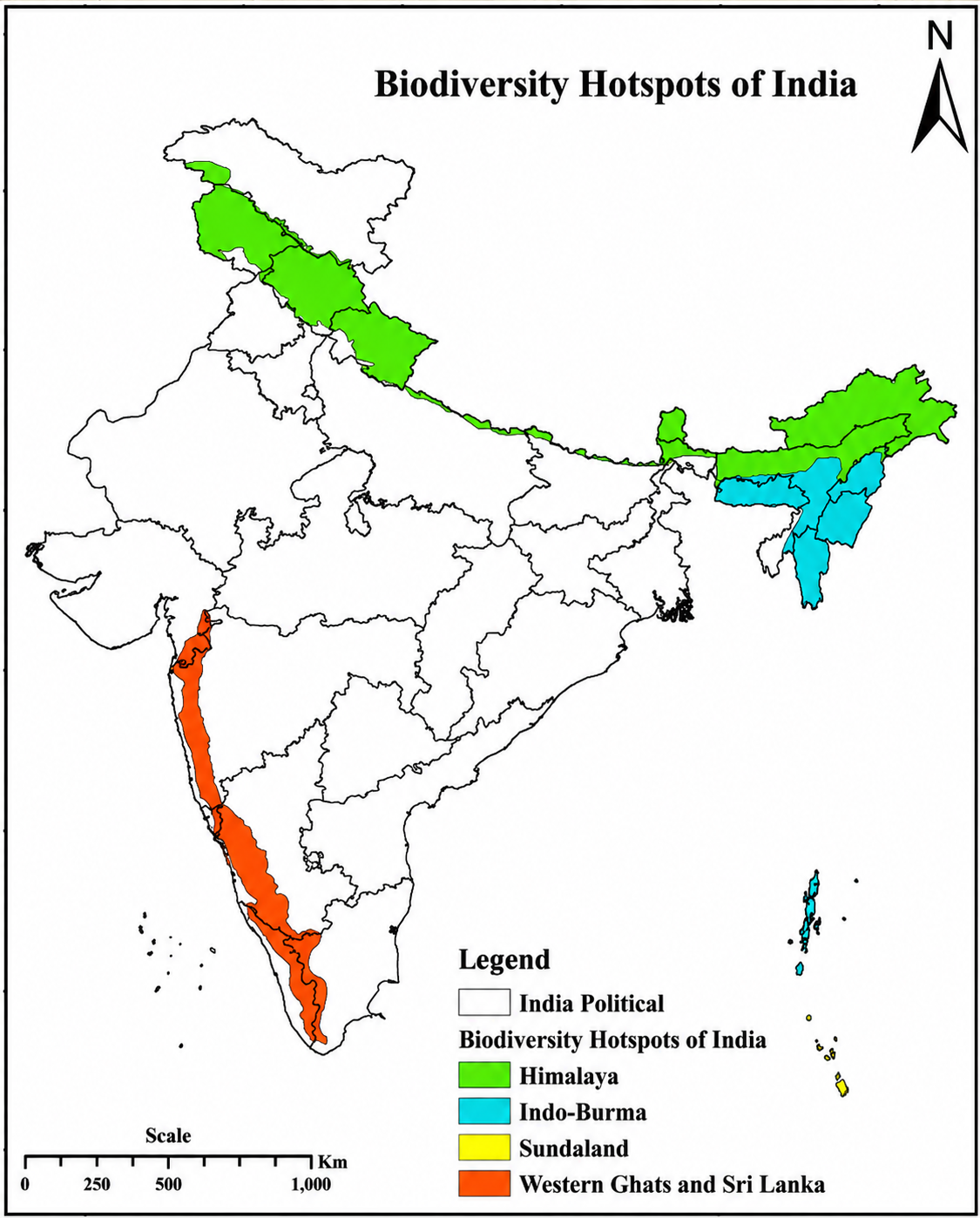
Biodiversity Hotspots in India
India's geographical diversity places parts of the country within four globally recognised biodiversity hotspots, spanning the Himalayas, Northeast, Western Ghats and Nicobar Islands. The four recognised biodiversity hotspots in India are:
- Himalaya
- Indo-Burma
- Western Ghats–Sri Lanka
- Sundaland
Himalaya Biodiversity Hotspot
The Himalaya Biodiversity Hotspot in India is divided broadly into the Eastern Himalaya and Western Himalaya, covering parts of several countries and supporting a high concentration of endemic species. It is one of the most important components of the biodiversity hotspots in India because of its exceptional altitudinal and ecological diversity.
- Eastern Himalayas: The Eastern Himalayas extend across parts of Nepal, Bhutan, northeastern India, southeast Tibet (China) and northern Myanmar. In India, it includes West Bengal, Sikkim, Assam and Arunachal Pradesh.
- The region is characterised by diverse habitats and supports a wide variety of endemic flora and fauna.
- Western Himalayas: The Western Himalayas include parts of Kumaon-Garhwal, northwestern Kashmir and northern Pakistan. It represents another important ecological zone within the broader Himalayan biodiversity region.
- Species Endemism in the Himalayas: The Himalayan region contains significant numbers of endemic species across different taxonomic groups:
- Plants: Around 3,160 endemic species
- Mammals: 12 endemic species
- Birds: 15 endemic species
- Reptiles: 48 endemic species
- Amphibians: 42 endemic species
- Freshwater fishes: 33 endemic species
- Himalayan Flora: The hotspot contains several distinctive plant groups, including Tetracentraceae, Hamamelidaceae, Circaesteraceae, Butomaceae and Stachyuraceae.
- Important genera such as Rhododendron, Primula and Pedicularis are also associated with the Himalayan flora. The Himalayas are particularly rich in orchids, with around 750 species reported from the region.
- Ermania himalayensis is cited as a distinctive plant discovered on the slopes of Mount Kamet in the northwestern Himalayas.
- Himalayan Wildlife: The Himalayan Biodiversity Hotspot in India provides habitat for several endangered and threatened wildlife species, making the conservation of its forests, mountain ecosystems and other natural habitats important for maintaining India's biodiversity.
Indo-Burma Biodiversity Hotspot
The Indo-Burma Biodiversity Hotspot is a biologically diverse region spanning parts of South and Southeast Asia, with varied landscapes, river systems and forests supporting exceptional species richness and endemism.
- Geographical Extent: The Indo-Burma hotspot incorporates the eastern extensions of the Himalayas and several major Asian river systems and their floodplains.
- It encompasses approximately 2.373 million sq km of the Ganges-Brahmaputra lowlands.
- Its varied topography and climatic conditions have produced a wide range of habitats, including evergreen, semi-evergreen and deciduous forests.
- Among the biodiversity hotspots of India, this hotspot is particularly associated with the Northeastern region, making states such as Arunachal Pradesh, Assam, Manipur, Meghalaya, Mizoram, Nagaland and Tripura important components of India's Indo-Burma biodiversity landscape.
- Species Diversity and Endemism: The broader Indo-Burma region is estimated to contain approximately 15,000–25,000 vascular plant species, with around 50% reported as endemic.
- It also supports about 470 mammal species, more than 1,300 bird species, 670 reptile species, 380 amphibian species and 1,440 fish species.
- Unique Wildlife Discoveries: The Indo-Burma hotspot is particularly notable for the discovery of several large mammal species since 1992, demonstrating how much of the region's biodiversity remains scientifically important. These discoveries include:
- Antlered muntjac
- Annamite muntjac
- Grey-shanked douc langur
- Annamite striped rabbit
- Leaf deer
- Saola
Sundaland Biodiversity Hotspot
The Sundaland Biodiversity Hotspot covers the western portion of the Indo-Malayan archipelago and is one of the world's richest centres of terrestrial and freshwater biodiversity. It comprises nearly 17,000 equatorial islands, with Borneo (725,000 sq km) and Sumatra (427,300 sq km) being its two largest islands.
- Geographical Extent: The hotspot covers parts of Indonesia, Malaysia, Singapore, Brunei and southern Thailand, while India’s share is represented by the Nicobar Islands. Its total area is approximately 1.5–1.6 million sq km.
- The Sundaland region includes Peninsular Malaysia, Sabah and Sarawak, Brunei, Singapore, western Indonesia, including Kalimantan, Sumatra, Java and Bali, and parts of southern Thailand.
- India's Nicobar Islands also fall within the hotspot. The landscape ranges from tropical lowland forests and mountains to mangroves, swamps, volcanic areas, coral reefs and aquatic ecosystems.
- Species Diversity and Endemism: Sundaland has exceptionally high levels of species richness and endemism. According to biodiversity hotspot data, it contains approximately 25,000 species of vascular plants, of which around 15,000 are endemic, representing about 60% endemism.
- Notable Flora: Among the biodiversity hotspots in India, this hotspot is famous for its extraordinary plant diversity. Rafflesia is among the most distinctive plant genera associated with the hotspot; several Rafflesia species occur in the region, including Rafflesia arnoldii, known for producing the world's largest individual flower.
- Borneo also contains more than 2,000 orchid species, highlighting the exceptional botanical richness of the hotspot.
- Important Wildlife: Sundaland supports several globally threatened and iconic animals, including orangutans, rhinoceroses, proboscis monkeys and other specialised island fauna.
- The hotspot contains the Critically Endangered Bornean and Sumatran orangutans, while the Javan rhinoceros and Sumatran rhinoceros are among its most threatened large mammals.
- Sundaland and India: For India, the Nicobar Islands are the country's only part of the Sundaland Biodiversity Hotspot. Their tropical forests, coastal ecosystems and island isolation support numerous endemic and threatened species.
- The Great Nicobar Biosphere Reserve alone contains around 650 species of plants and more than 1,800 recorded animal species, including several endemic species
Western Ghats–Sri Lanka Biodiversity Hotspot
The Western Ghats, also known as the Sahyadri in Maharashtra, run roughly parallel to India's western coast, while Sri Lanka lies separately across the sea. Together, the two regions share important similarities in their geological history, climate and evolutionary development. The broader hotspot covers approximately 1,89,611 sq km.
- Geographical Features: The Western Ghats extend along India's western side and influence the climatic conditions of the peninsula, particularly through their role in the southwest monsoon and rainfall patterns.
- The resulting moisture gradient supports several distinct vegetation types, including tropical evergreen forests, semi-evergreen forests, deciduous forests, montane forests, scrub vegetation and grasslands.
- The Western Ghats account for around 5% of India's geographical area, yet they support a disproportionately wide variety of species.
- Species Diversity and Endemism: Among the Biodiversity Hotspots in India, the Western Ghats have around 7,402 plant species, including 24 endemic genera.
- Birds: The region supports over 508 bird species, including 29 endemic species, of which 15 are threatened.
- Amphibians: Ongoing discoveries have pushed the count of amphibians much higher. Scientists have identified over 250 amphibian species in the region, with the endemism rate remaining exceptionally high at over 80–90%.
- Reptiles: The region has over 227 reptile species, including 107 endemic species, with 18 classified as threatened.
- Mammals: The Western Ghats support over 137 mammal species, including 16 endemic species
- Rich and Diverse Vegetation: High rainfall combined with differences in altitude and terrain has produced a mosaic of vegetation across the Western Ghats. Major vegetation formations include scrub forests, deciduous forests, tropical forests, montane forests, rolling grasslands and plains.
- This habitat diversity provides ecological niches for a wide range of plants, mammals, birds, reptiles, amphibians and freshwater species.
- Important Flora: Among the biodiversity hotspots in India, the Western Ghats contain several distinctive plant groups and genera.
- Important examples include Impatiens, Dipterocarpus, Calamus and Podocarpus. The region's high plant endemism makes its forests particularly valuable for conserving species that have restricted distributions.
- UNESCO Site: The Western Ghats are also recognised as one of the UNESCO World Heritage Sites in India because of their exceptional biological diversity and endemism.
- Notable Feature: The Agasthyamalai Hills are especially significant for their exceptionally high levels of plant diversity and endemism, making this landscape an important centre for botanical conservation.
Biodiversity Hotspots in India Importance
Biodiversity hotspots in India are important because they concentrate irreplaceable species and ecosystem services in relatively small areas where conservation can prevent disproportionately large biological losses.
- Conservation of Endemic Species: Biodiversity hotspots in India contain species that occur nowhere else. Protecting their habitats is therefore essential because habitat destruction in these areas can result in global extinction.
- Ecosystem Services: The ecological significance of biodiversity hotspots in India extends beyond species conservation, such as:
- Water regulation
- Pollination
- Soil conservation
- Carbon storage
- Climate regulation
- Food and medicinal resources
- Water Security: The Western Ghats, for example, influence rainfall patterns and contain the origins or catchments of several major peninsular rivers.
- Climate Resilience: Healthy forests, wetlands and other ecosystems store carbon and help communities adapt to climate-related stresses.
- Livelihood Support: Millions of people depend directly or indirectly on forests, rivers, agricultural landscapes and other ecosystems associated with biodiversity-rich regions.
- Scientific and Genetic Value: Biodiversity hotspots in India provide important genetic resources for agriculture, medicine, biotechnology and ecological research
Biodiversity Hotspots in India Major Threats
Biodiversity hotspots in India face increasing threats from habitat fragmentation, infrastructure expansion, climate change and unsustainable resource use, threatening both species and ecosystem functions.
- Habitat Loss and Fragmentation: Conversion of forests for agriculture, settlements, industries and infrastructure reduces available habitat and isolates wildlife populations.
- Infrastructure Development: Roads, railways, dams, transmission lines and other projects can divide previously connected habitats and disrupt animal movement.
- Mining and Extraction: Mining can lead to forest clearance, soil degradation, water pollution and fragmentation, particularly in ecologically sensitive landscapes.
- Unsustainable Tourism: Unplanned tourism can increase waste, water consumption, traffic, construction and disturbance to wildlife.
- Agricultural Expansion and Monocultures: Conversion of natural forests to plantations such as tea, coffee, rubber or other commercial crops can alter native ecosystems. Such pressures have been documented in the Western Ghats.
- Invasive Alien Species: Non-native species can compete with indigenous species and alter ecosystem processes.
- Forest Fires: Increasing frequency or intensity of fires can damage vegetation, wildlife habitats and ecological processes.
- Climate Change: Changing temperature and rainfall patterns can shift species distributions and place additional pressure on ecosystems, particularly mountain and island habitats and thus have ecological impact on biodiversity hotspots in India.
- Human-Wildlife Conflict: Habitat fragmentation and increasing human activity around forests can intensify conflicts involving elephants, big cats and other wildlife.
Biodiversity Hotspots in India Conservation Efforts
Conservation of biodiversity hotspots in India combines protected areas, species-focused programmes, habitat restoration, legal safeguards and community participation to balance ecological protection with human needs.
- Protected Areas: National parks, wildlife sanctuaries, conservation reserves and tiger reserves provide legal and institutional protection to important habitats.
- Wildlife Protection Act, 1972: The Wildlife (Protection) Act, 1972, provides the principal legal framework for protecting wild animals, plants and their habitats in India.
- Forest Conservation Framework: The Van (Sanrakshan Evam Samvardhan) Adhiniyam, 1980, along with environmental regulations, regulates the diversion of forest land for non-forest purposes.
- Biosphere Reserves: Biosphere reserves combine biodiversity conservation with research, monitoring and sustainable development. India's first biosphere reserve, Nilgiri Biosphere Reserve, is located in the Western Ghats landscape
- Species Conservation Programmes: India implements targeted conservation programmes for species and ecosystems such as:
- Project Tiger
- Project Elephant
- Species Recovery Programme
- Snow Leopard Conservation Initiatives
- Rhino Conservation Programmes
- Western Ghats Conservation: The Western Ghats benefit from multiple protection regimes, including national parks, wildlife sanctuaries, tiger reserves and reserved forests. UNESCO notes that its World Heritage components are protected under several Indian laws and management arrangements.
- Community Participation: Conservation increasingly recognises the role of local communities through participatory management, livelihood support and mechanisms that integrate community interests with ecological protection.
- International Cooperation: India's biodiversity conservation is also linked to international frameworks such as the Convention on Biological Diversity (CBD) and global conservation initiatives.
Biodiversity Hotspots in India UPSC PYQs
Q1. Three of the following criteria have contributed to the recognition of western Ghats , Sri Lanka and Indo-Burma regions as hotspots of biodiversity: (UPSC Prelims 2011)
- Species richness.
- Vegetation density.
- Endemism.
- Ethno-botanical importance.
- Threat perception.
- Adaption of flora and fauna to warm and humid conditions.
Which three of the above are correct criteria in this context?
a) 1, 2, and 6
b) 2, 4 and 6
c) 1, 3 and 5
d) 3, 4 and 6
Ans: (c)
Q2. Consider the following statements: (UPSC Prelims 2010)
- Biodiversity hotspots are located only in tropical regions.
- India has four bio-diversity hotspots i.e. Eastern Himalayas, Western Himalayas, Western Ghats and Andaman and Nicobar Islands.
Which of the statements given above is/are correct?
a) 1 only
b) 2 only
c) Both 1 and 2
d) Neither 1 nor 2
Ans: (d)

 Last updated on Oct, 2026
→ UPSC 2027 Notification will be released on 13 January 2027 at upsconline.nic.in.
→ Check Nobel Prize 2026 Winners List here.
→ Download PIB PRiSM Monthly Magazine 2026 here.
→ Check UPSC Monthly Current Affairs Magazine The Recitals here.
→ Check out the latest UPSC Syllabus here.
→ Download UPSC Model Answers for Mains 2026
→ UPSC Mains Question Paper 2026 is out now for Essay & GS Paper 1, 2, 3 & 4.
→ UPSC Calendar 2027 has been released.
→ Enroll in Vajiram & Ravi’s UPSC Mains Test Series 2027 for structured answer writing practice, expert evaluation, and exam-oriented feedback.
→ Join Vajiram & Ravi’s UPSC Mentorship Program 2027 for personalized guidance, strategy planning, and one-to-one support from experienced mentors.
→ Go through the UPSC Mains Previous Year Papers to enhance your preparation.
→ UPSC has released UPSC Toppers List 2025 with the Civil Services final result on its official website.
→ Also check Best UPSC Coaching in India
Biodiversity Hotspots in India FAQs
Q1. Which is the largest biodiversity hotspot in India?+
Q2. Which is the first biodiversity hotspot in India?+
Q3. How many hotspots are there in India in 2026?+
Q4. Who gave the name biodiversity hotspot?+
Q5. Who declares biodiversity hotspots in India?+
Tags: biodiversity hotspots in India quest UPSC Environment & Ecology Notes