




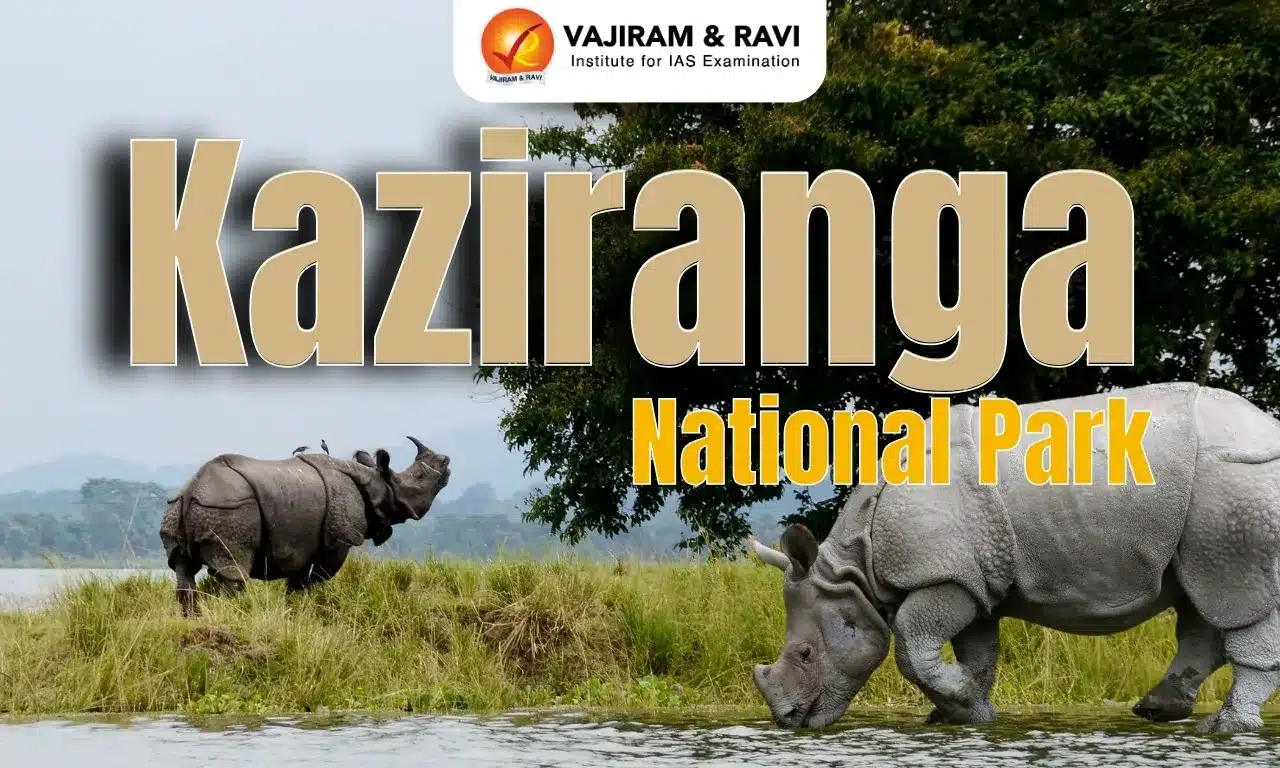
Kaziranga National Park is located in Assam, the east region of India is a UNESCO World Heritage Site which is also recognised for its exceptional biodiversity and conservation efforts. Kaziranga National Park is also recognised as a Wildlife Sanctuary as well as a Tiger Reserve. Other than this, Many wildlife sanctuaries were later upgraded to national parks and tiger reserves due to their ecological importance. Kaziranga National Park is located in the floodplains of the Brahmaputra River, which shapes its unique ecosystem.
Kaziranga National Park History
Kaziranga National Park was established as a Reserve Forest in 1905 to protect Indian Rhinoceros and their habitat. Later in 1950, ungraded to Wildlife Sanctuary and then in 1942, Kaziranga was officially recognised as a National Park. Further, received the UNESCO World Heritage Site designation in 1985. In response to a decline in the tiger population, the Indian government approved the creation of the Kaziranga Tiger Reserve in August 2006, reinforcing it as a critical wildlife conservation area.
Kaziranga National Park Flora
- Tropical Semi-Evergreen and Deciduous Forests are home to tree species such as Bombax ceiba (cotton tree), Trewia nudiflora, and various Ficus species, providing shelter and food for wildlife.
- Vast areas of Alluvial Grasslands are dominated by tall grasses like Saccharum and Phragmites, which serve as grazing grounds for herbivores, including the Indian rhinoceros and elephants.
- Annually flooded by the Brahmaputra River, these water-rich areas sustain aquatic plants and serve as critical habitats for waterfowl, migratory birds, and other wetland species.





Kaziranga National Park Fauna
- Kaziranga National Park is well-known for Indian One-Horned Rhinoceros (Rhinoceros unicornis) and home to over 2,600 rhinoceroses.
- With one of the highest tiger densities among Indian national parks, this national park plays a major role in tiger conservation.
- The park serves as a habitat for Asian Elephants (Elephas maximus), frequently spotted in grasslands and near water bodies.
- Kaziranga supports one of the largest populations of Wild Water Buffalo (Bubalus arnee).
- Swamp Deer (Rucervus duvaucelii ranjitsinhi) also known as barasingha, Kaziranga is one of the few places where this rare species can still be found.
Kaziranga National Park Interesting Facts
- It is home to two of the world’s largest snakes, the Reticulated Python and Rock Python, along with the King Cobra, the longest venomous snake in the world.
- Kaziranga National Park is one of the few places other than Africa where multiple species of big cats, including leopards and Royal Bengal Tigers also exist.
- The park holds the largest global population of the Great Indian One-horned Rhinoceros, Wild Asiatic Water Buffalo, and Eastern Swamp Deer.
- According to the latest rhino census, Kaziranga is home to 2,413 rhinoceroses.
- The park also boasts the highest density of tigers in the world.
- The name Kaziranga is believed to have originated from the Karbi word "Kajir-a-rang", meaning “the village of Kajir”, referring to a woman ruler of the region.
- The British played a major role in establishing Kaziranga National Park. In 1904, Mary Curzon, wife of Lord Curzon, persuaded him to take action to protect rhinos, leading to the creation of the park on June 1, 1905.
- Kaziranga is the only place in the world where the Eastern Swamp Deer (Barasingha) is found, growing up to 6 feet tall with distinctive white spots along its spine.
- The park’s grasslands closely resemble African savannas, with common tall grasses like sugarcane, spear grass, elephant grass, and common reed.
- The park was once home to seven species of vultures, but today, only four survive: Indian Vulture, Slender-billed Vulture, and Indian White-rumped Vulture.

 Last updated on March, 2026
→ UPSC Final Result 2025 is now out.
→ UPSC has released UPSC Toppers List 2025 with the Civil Services final result on its official website.
→ Anuj Agnihotri secured AIR 1 in the UPSC Civil Services Examination 2025.
→ UPSC Marksheet 2025 is now out.
→ UPSC Notification 2026 & UPSC IFoS Notification 2026 is now out on the official website at upsconline.nic.in.
→ UPSC Calendar 2026 has been released.
→ Check out the latest UPSC Syllabus 2026 here.
→ UPSC Prelims 2026 will be conducted on 24th May, 2026 & UPSC Mains 2026 will be conducted on 21st August 2026.
→ The UPSC Selection Process is of 3 stages-Prelims, Mains and Interview.
→ Prepare effectively with Vajiram & Ravi’s UPSC Prelims Test Series 2026 featuring full-length mock tests, detailed solutions, and performance analysis.
→ Enroll in Vajiram & Ravi’s UPSC Mains Test Series 2026 for structured answer writing practice, expert evaluation, and exam-oriented feedback.
→ Join Vajiram & Ravi’s Best UPSC Mentorship Program for personalized guidance, strategy planning, and one-to-one support from experienced mentors.
→ Shakti Dubey secures AIR 1 in UPSC CSE Exam 2024.
→ Also check Best UPSC Coaching in India
Kaziranga National Park FAQs
Q1. In which state is Kaziranga National Park located?+
Q2. Why is Kaziranga National Park so famous?+
Q3. What is special in Kaziranga?+
Q4. Which district is Kaziranga Falls in?+
Q5. Which animal is Manas National Park famous for?+
Tags: kaziranga national park