Mission LiFE (Lifestyle for Environment) is an India-led global initiative that encourages individuals and communities to adopt environmentally responsible habits. Prime Minister Narendra Modi introduced it at COP26 in Glasgow in November 2021; it promotes mindful resource use instead of excessive consumption. The mission recognises that environmental protection requires not only government policies and technological solutions but also changes in everyday behaviour. It encourages people to conserve energy and water, avoid single-use plastics, adopt sustainable food practices and make environmentally conscious choices.
Mission LiFE seeks to turn these individual actions into a collective movement, influence market demand and encourage supportive policy changes. It also connects sustainable lifestyles with India’s climate commitments and the wider global effort to address climate change and environmental degradation.
Mission LiFE Meaning
Mission LiFE stands for Lifestyle for Environment, an initiative that places sustainable everyday choices at the centre of environmental protection and encourages people to become active participants in addressing ecological challenges.
- Mission LiFE encourages a shift from increased consumption towards mindful and responsible use of natural resources, such as conserving energy and water, reducing waste and making environmentally responsible choices.
- It encourages individuals, households, communities and institutions to make practical changes that reduce environmental harm.
Mission LiFE Launch
Mission LiFE was first introduced at COP26 in Glasgow on 1 November 2021, before being formally launched in Gujarat in October 2022 to promote sustainable lifestyles globally.
- Introduction: Prime Minister Narendra Modi presented the LiFE concept at the 26th Conference of the Parties (COP26) to the United Nations Framework Convention on Climate Change (UNFCCC) in Glasgow, United Kingdom, on 1 November 2021.
- Formal launch: Mission LiFE was launched by the Prime Minister on 20 October 2022 at the Statue of Unity in Ekta Nagar, Gujarat, in the presence of UN Secretary-General António Guterres.
- Global significance: India positioned the initiative as a mass movement to encourage individual and collective environmental action.
- Climate commitment: India became the first country to include LiFE in its Nationally Determined Contributions (NDCs) under the Paris Agreement.


Mission LiFE Objectives
Mission LiFE aims to convert environmental awareness into measurable action by encouraging sustainable behaviour, strengthening community participation and promoting changes in consumption and production patterns. Its key objectives include:
- Promoting resource efficiency: Reduce unnecessary consumption and support more efficient use of natural resources, and translate the vision of LiFE into measurable impact.
- Influencing markets and industries: Encourage businesses to respond to demand for sustainable products, services and production practices.
- Supporting climate action: Strengthen public participation in efforts to address climate change and environmental degradation.
- Building an environmentally conscious society: Make sustainable habits part of daily life and encourage people to act as responsible environmental citizens.
- Making sustainable living a social norm: People who adopt environmentally responsible habits under the initiative are described as "Pro-Planet People". The idea is to make sustainable living a social norm rather than an activity limited to environmental organisations or government agencies.
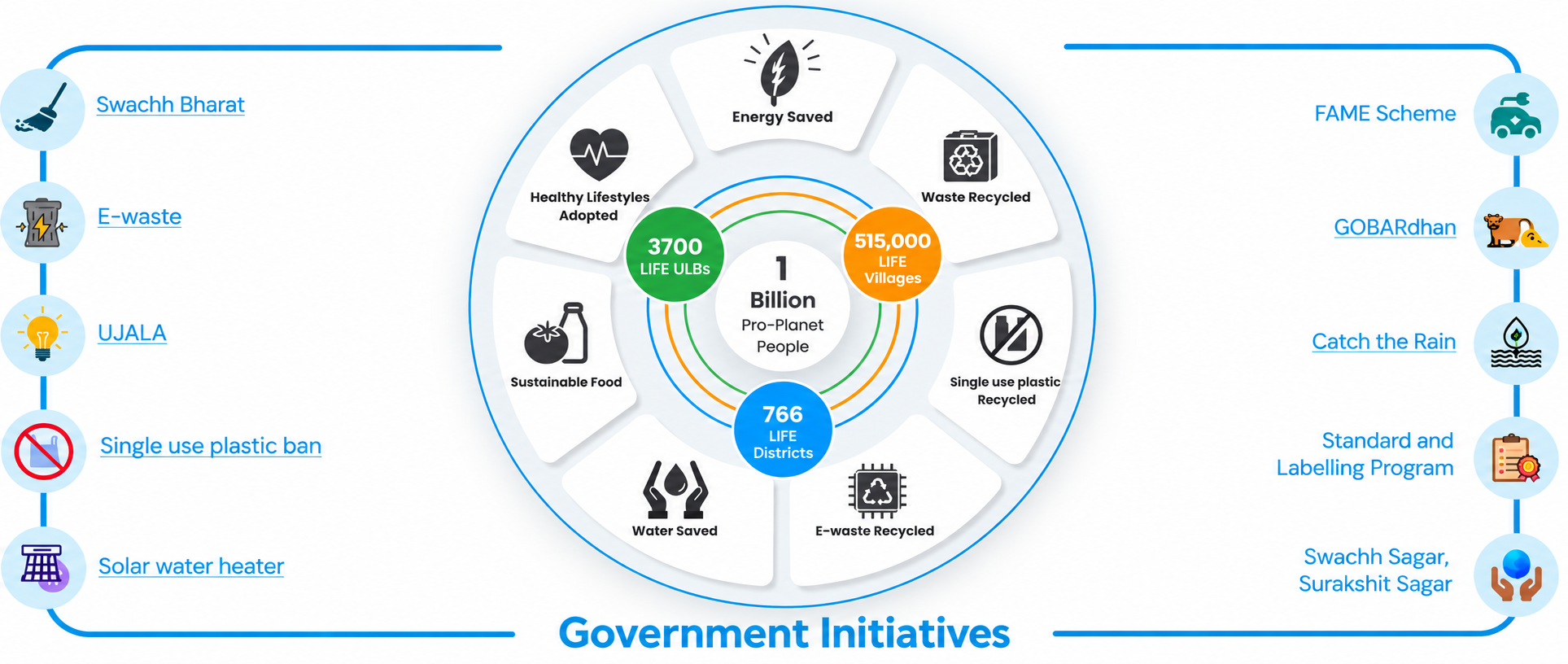
- Popular mobilisation: The framework set the goal of mobilising at least one billion Indians and other global citizens for individual and collective environmental action during 2022–2028.
- It also set an aspiration for at least 80% of villages and urban local bodies in India to become environment-friendly by 2028.
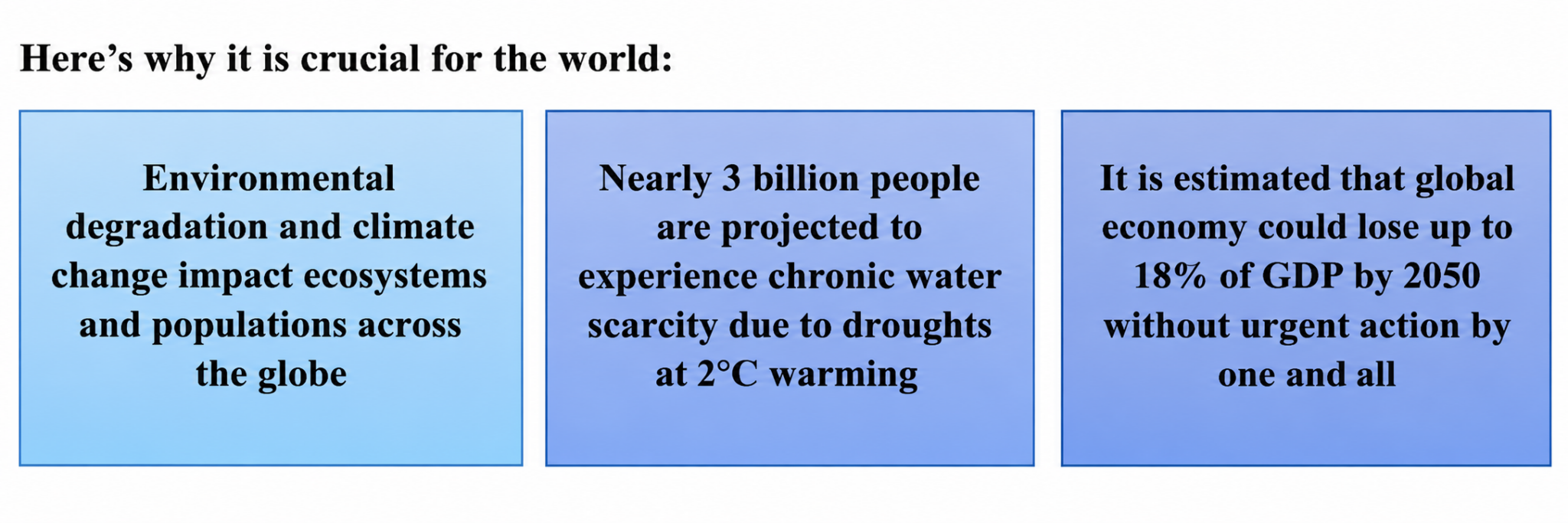
Mission LiFE Seven Themes
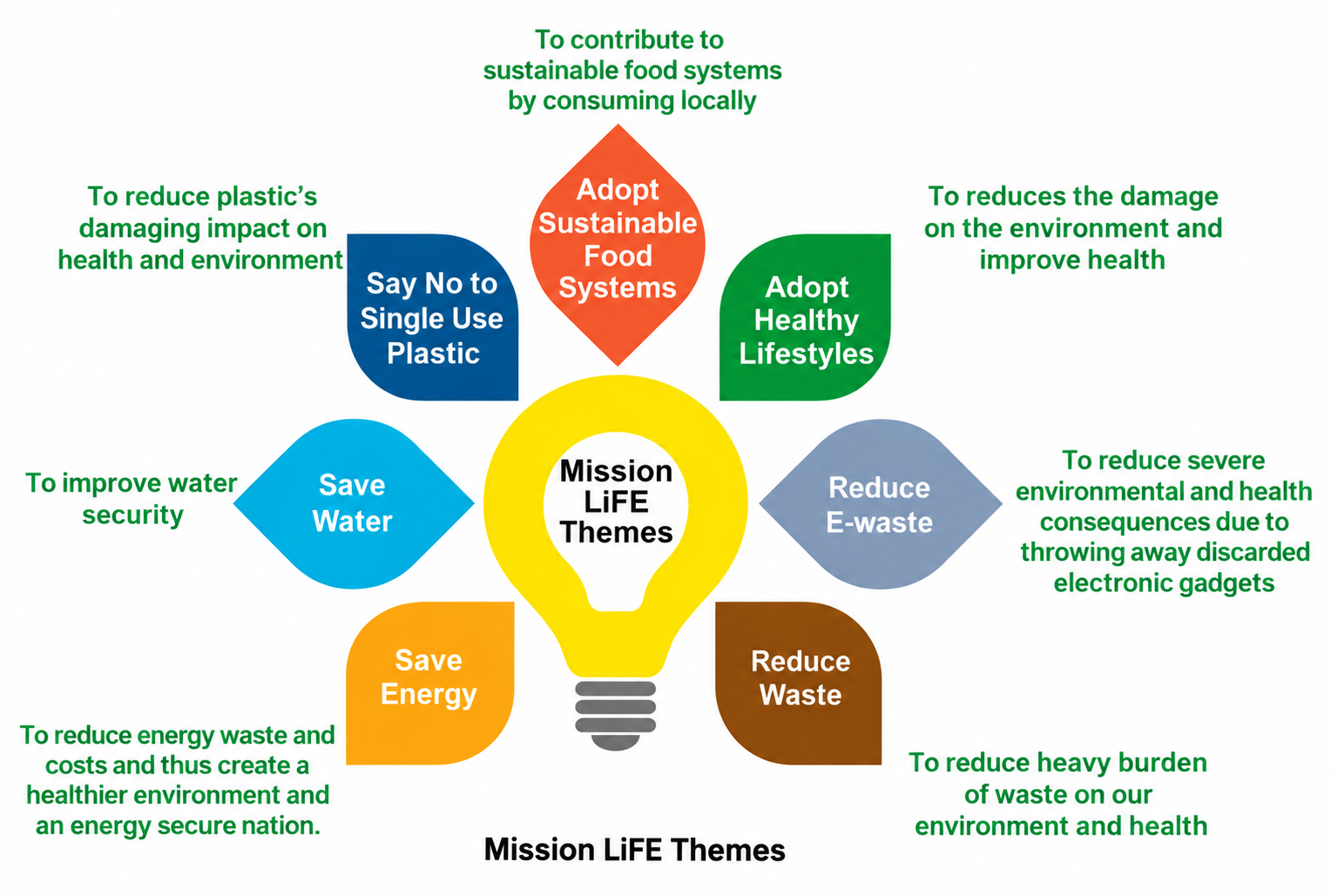
Mission LiFE identifies seven areas of everyday life where practical behavioural changes can reduce resource use, prevent pollution and support more sustainable consumption patterns.
Mission LiFE Eco Clubs
Eco Clubs for Mission LiFE promote environmental awareness among students by translating sustainable lifestyle principles into practical school activities, community participation and measurable environmental action.
- Eco Clubs for Mission LiFE are an educational initiative aligned with the National Education Policy (NEP) 2020 and the broader objectives of Mission LiFE.
- They encourage students to develop environmentally responsible habits and apply sustainability principles in their everyday lives.
- The initiative connects classroom learning with practical activities, helping students understand the importance of conserving natural resources and reducing environmental damage.
Mission LiFE Implementation Mechanism
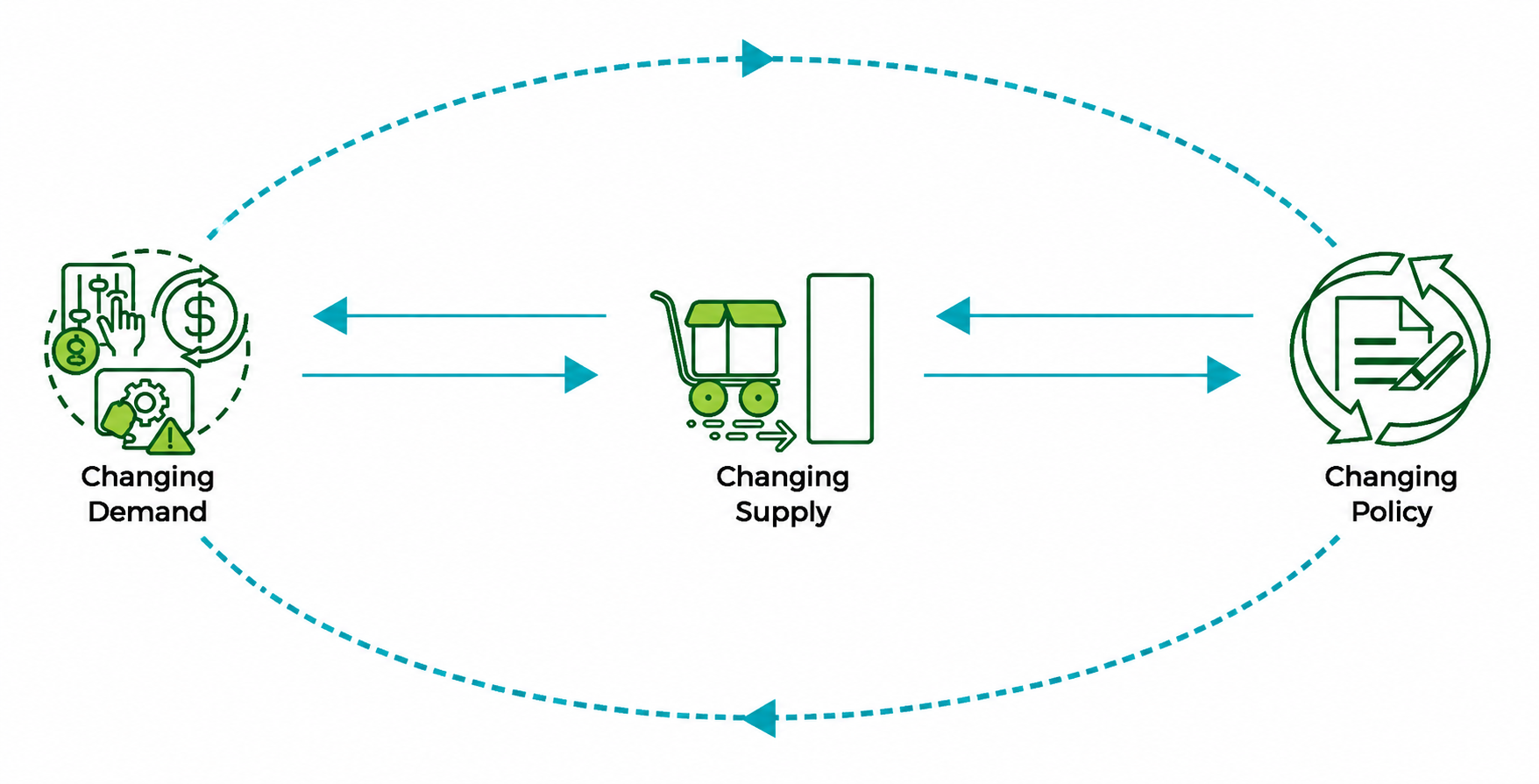
Mission LiFE follows a mission-mode approach that combines coordinated government action, measurable environmental practices and behavioural change to influence consumption, markets and public policy. The framework is organised around three interconnected phases. These phases are designed to reinforce one another rather than operate as strictly separate stages.
- Phase I - Change in Demand: The first phase encourages individuals and communities to adopt environmentally responsible practices in their daily lives.
- Examples include saving electricity, reducing water use, avoiding disposable plastics, choosing public transport and preventing food waste.
- Phase II - Change in Supply: As demand for sustainable products and services increases, businesses and markets are encouraged to adjust production, procurement and supply chains. This phase seeks to make environmentally preferable options more available to consumers.
- Phase III - Change in Policy: The third phase aims to encourage changes in industrial practices and government policies. These changes can create an enabling environment for sustainable consumption and production across sectors.
Mission LiFE Impact and Significance
Mission LiFE promotes sustainable living by encouraging responsible consumption, resource conservation and community participation. Its significance is reflected in the following areas:
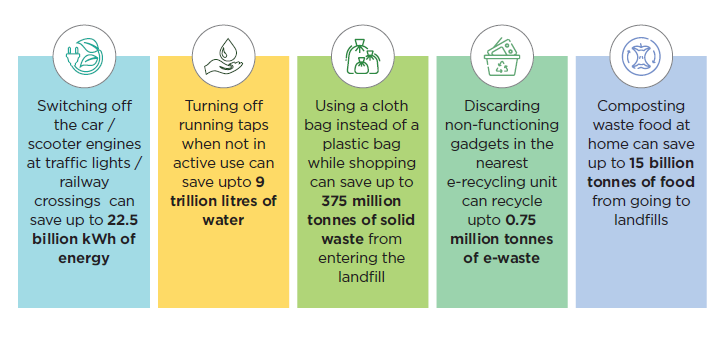
- Public participation: Mission LiFE has mobilised citizens through environmental campaigns and community activities. As reported by the government in July 2026, over 7.3 crore participants took part in more than 40 lakh LiFE events.
- Example: Community cleanliness drives, environmental awareness campaigns and school-based sustainability activities.
- Energy conservation: Promotes energy-efficient appliances and reduced electricity wastage.
- Example: Under the UJALA programme, approximately 36.87 crore LED bulbs had been distributed by 6 January 2025, supporting energy-efficient lighting.
- Waste reduction: Encourages waste segregation, reuse, recycling and reduced dependence on single-use plastics.
- Example: Households can segregate wet and dry waste, compost kitchen scraps and send discarded electronics to authorised recyclers.
- Tree plantation and biodiversity: Encourages citizens to participate in greening and environmental conservation activities. The government reported over 272 crore saplings planted under the Ek Ped Maa Ke Naam initiative by July 2026.
- Example: Planting suitable native species and maintaining them to improve survival and support local biodiversity.
- Environmental education: Eco Clubs for Mission LiFE encourage students to practise sustainable habits through school activities. More than 12 lakh Eco-Clubs were reported to be engaging young people by July 2026.
- Example: Students conducting water-saving campaigns, school composting and biodiversity activities.
- Climate action: Encourages everyday practices that can complement India's broader climate commitments.
- Example: Using public transport, switching off unused appliances and reducing food waste can help lower environmental impacts.
- Economic benefits: Resource efficiency can reduce household expenses and encourage sustainable consumption.
- Example: LED lighting reduces electricity consumption, while repairing and reusing products can lower replacement costs.
Mission LiFE and Sustainable Development Goals (SDGs)
Mission LiFE complements the United Nations Sustainable Development Goals by promoting responsible consumption, efficient resource use and collective action to protect the environment. The mission is particularly relevant to the following SDGs:
- SDG 6 – Clean Water and Sanitation: Encourages water conservation, efficient water use and community-level protection of water resources.
- SDG 7 – Affordable and Clean Energy: Supports energy efficiency and responsible energy consumption.
- SDG 11 – Sustainable Cities and Communities: Promotes waste reduction, cleaner public spaces and more sustainable urban lifestyles.
- SDG 12 – Responsible Consumption and Production: Closely aligns with reducing waste, reusing materials and making sustainable purchasing choices.
- SDG 13 – Climate Action: Encourages everyday practices that can contribute to climate change mitigation.
- SDG 14 – Life Below Water: Reducing plastic waste and preventing pollution can help protect marine ecosystems.
- SDG 15 – Life on Land: Responsible consumption and waste reduction can help reduce pressure on ecosystems and natural resources.
- SDG 17 – Partnerships for the Goals: The mission relies on cooperation among governments, businesses, communities and international partners.
Mission LiFE Challenges
Mission LiFE faces several practical and institutional barriers, including established consumption habits, uneven awareness, affordability concerns and inadequate infrastructure for sustainable living.
- Behavioural inertia: People may find it difficult to change familiar habits, especially when environmentally harmful practices are convenient or socially normalised.
- Limited environmental awareness: Some individuals may not understand how everyday choices contribute to pollution, resource depletion and climate change.
- Affordability and accessibility: Sustainable products and services may be costly or difficult to access, particularly for low-income households and remote communities.
- Inadequate infrastructure: Limited public transport, insufficient waste collection and recycling facilities, and uneven access to clean energy can restrict sustainable choices.
- Difficulty measuring outcomes: Awareness campaigns and pledges do not necessarily demonstrate actual reductions in energy use, water consumption, waste or emissions.
- Uneven participation: Differences in income, education, location and access to information can affect people's ability to participate in the mission.
- Industry and policy gaps: Individual efforts may have limited impact when production systems, product design and public policies continue to encourage resource-intensive consumption.
- Risk of greenwashing: Businesses may make environmental claims without providing sufficient evidence that their products or operations deliver genuine benefits.
Mission LiFE Way Forward
Mission LiFE can achieve greater impact by combining sustained behavioural awareness with accessible green alternatives, measurable outcomes and coordinated action across government, businesses and communities.
- Strengthen environmental education: Integrate practical sustainability activities into schools, colleges, workplaces and community programmes to make environmentally responsible habits easier to adopt.
- Improve access to green alternatives: Expand affordable public transport, energy-efficient appliances, water-saving technologies and reliable waste collection and recycling facilities.
- Promote local participation: Involve panchayats, urban local bodies, resident associations, self-help groups and community organisations in identifying and implementing locally relevant LiFE actions.
- Improve monitoring and evaluation: Use transparent indicators and periodic assessments to measure actual changes in consumption, waste generation, resource savings and environmental outcomes.
- Encourage sustainable business practices: Support durable product design, repair and reuse services, responsible packaging and circular-economy models while discouraging misleading environmental claims.
- Strengthen policy coordination: Align Mission LiFE with climate policies, waste-management rules, energy-efficiency programmes and water conservation initiatives.
- Recognise traditional knowledge: Adapt proven local practices, including rainwater harvesting and resource-efficient lifestyles, to contemporary environmental needs.
- Ensure inclusive implementation: Design interventions that account for income differences, rural–urban disparities and the practical constraints faced by vulnerable communities.
- Lead by example: Public institutions can encourage sustainable procurement, energy conservation, waste segregation and responsible resource use in their own operations.

 Last updated on Oct, 2026
→ UPSC 2027 Notification will be released on 13 January 2027 at upsconline.nic.in.
→ Check Nobel Prize 2026 Winners List here.
→ Download PIB PRiSM Monthly Magazine 2026 here.
→ Check UPSC Monthly Current Affairs Magazine The Recitals here.
→ Check out the latest UPSC Syllabus here.
→ Download UPSC Model Answers for Mains 2026
→ UPSC Mains Question Paper 2026 is out now for Essay & GS Paper 1, 2, 3 & 4.
→ UPSC Calendar 2027 has been released.
→ Enroll in Vajiram & Ravi’s UPSC Mains Test Series 2027 for structured answer writing practice, expert evaluation, and exam-oriented feedback.
→ Join Vajiram & Ravi’s UPSC Mentorship Program 2027 for personalized guidance, strategy planning, and one-to-one support from experienced mentors.
→ Go through the UPSC Mains Previous Year Papers to enhance your preparation.
→ UPSC has released UPSC Toppers List 2025 with the Civil Services final result on its official website.
→ Also check Best UPSC Coaching in India
Mission LiFE FAQs
Q1. What is Mission LiFE?+
Q2. Who launched Mission LiFE in India?+
Q3. What are the seven themes of Mission LiFE?+
Q4. What are the three phases of Mission LiFE?+
Q5. What are Eco Clubs for Mission LiFE?+
Tags: quest UPSC Environment and Ecology Notes