Operation Kagar

Operation Kagar

Operation Kagar Latest News

Telangana Chief Minister recently said there should be a national-level debate on Operation Kagar.

About Operation Kagar

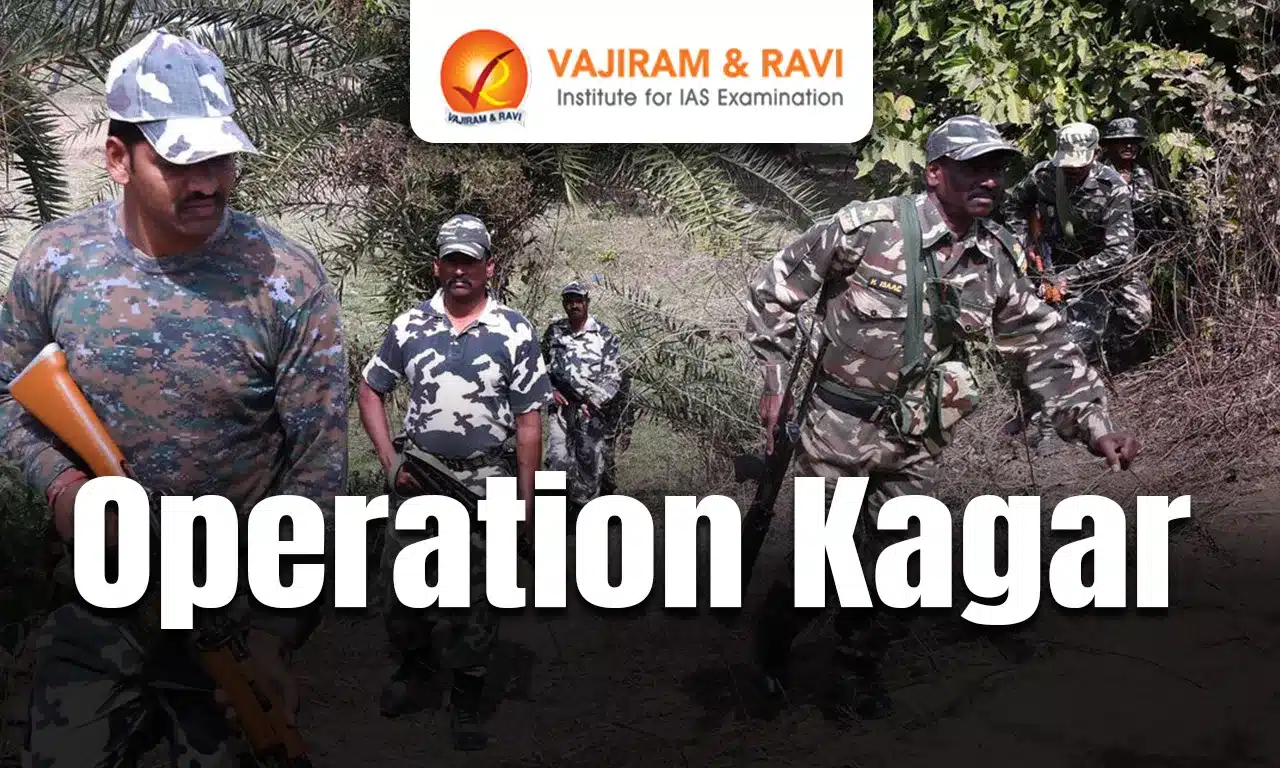
  • It is a large-scale counterinsurgency initiative launched by the Indian government in 2024, aimed at dismantling the Maoist (Naxalite) insurgency, particularly in the "Red Corridor" spanning Chhattisgarh, Telangana, and neighbouring states.
  • Under this operation, around 1 lakh paramilitary troops, including the Central Reserve Police Force (CRPF), its elite CoBRA units, District Reserve Guards (DRG), and state police, have been deployed in the left-wing terrorism-affected areas. 
  • These security personnel are equipped with modern technology like drones for information gathering, AI for intelligence gathering, and satellite imagery, among others.
  • The primary goal of Operation Kagar is to eradicate Maoist influence by March 2026.
  • Operation Kagar, which roughly means ‘Final Mission’, follows a four-part plan:
    • Establishing forward operating bases deep in Maoist territory.
    • Building hundreds of fortified police stationsin reclaimed areas.
    • Gathering intelligence through high-tech monitoring.
    • Pushing a "generous surrender policy" that has seen thousands of Naxalites lay down arms in the past decade.

What do Naxals want in India?

  • Naxals, also called Maoists, want to change the way India is run
  • They believe the government is unfair, especially to poor people, tribal communities, and farmers. 
  • They think rich people and big companies control too much land and resources, while poor people suffer.
  • The Naxals want a revolution — they want to take land and power away from the rich and give it to the poor. 
  • They believe in armed struggle to bring this change because they think peaceful ways like voting do not work for poor people.
  • Their final goal is to create a classless society where everyone is treated equally, based on communist ideas.

Source: NOA

Operation Kagar FAQs

Q1: What is the primary objective of Operation Kagar?

Ans: Eliminate Maoist insurgency from affected regions.

Q2: In which year was Operation Kagar launched?

Ans: 2024

Q3: What is the deadline set for the eradication of Maoist influence under Operation Kagar?

Ans: March 2026

Bhakra Dam

Bhakra Dam

Bhakra Dam Latest News

Cutting across political lines, all Punjab parties recently unanimously decided not to spare a single drop of additional water to Haryana from the Bhakra dam.

About Bhakra Dam

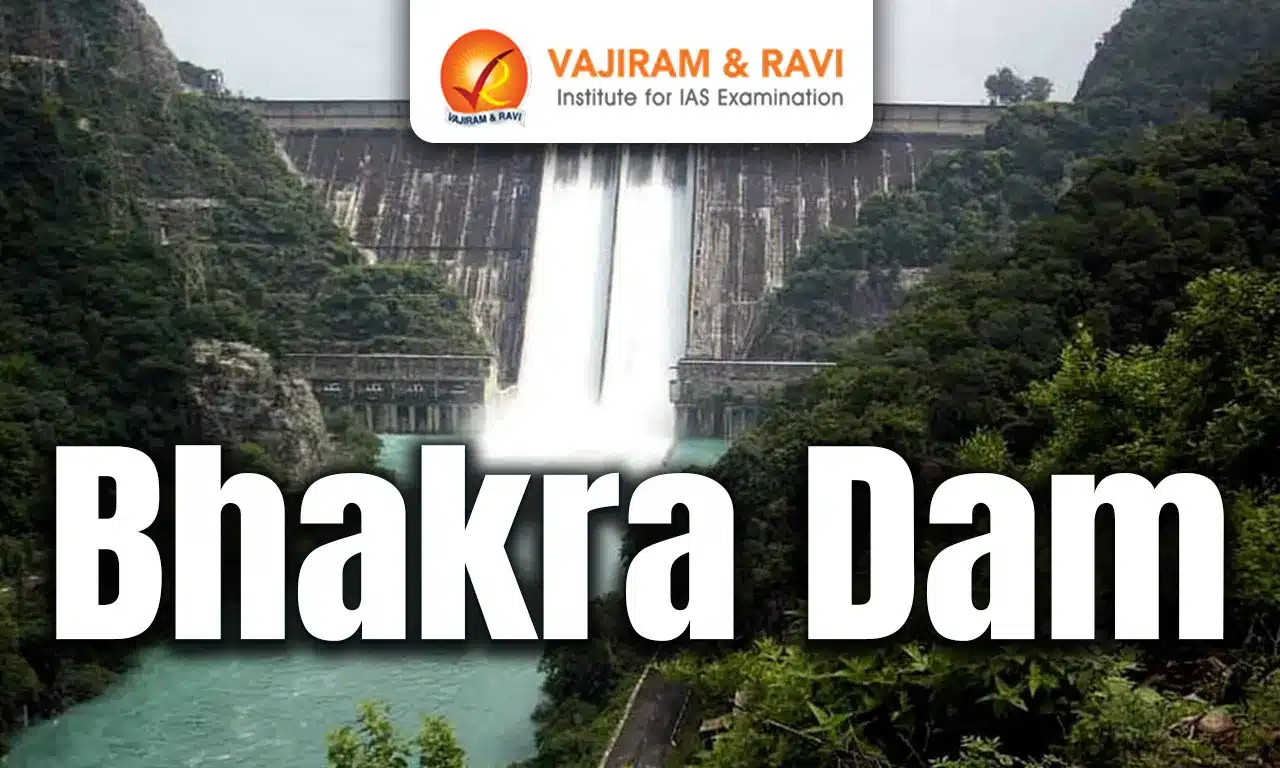
  • It is a concrete gravity dam across the Sutlej River and is near the border between Punjab and Himachal Pradesh.
  • It is located at a gorge near the upstream Bhakra village in the Bilaspur district of Himachal Pradesh.
  • It is the highest straight gravity dam in the world, with a height of about 207.26 meters.
  • It is Asia’s second tallest dam, next to the 261m Tehri Dam, also in India. 
  • It has a length of 518.25 (1,700 ft) meters and a width of 9.1 meters (30ft) approximately.
  • History:
    • The Bhakra Dam is one of the earliest river valley development schemes undertaken by India after independence. 
    • The construction of this dam started in 1948, when Jawahar Lal Nehru, the first prime minister of India, poured the first bucket of concrete into the foundations of Bhakra. 
    • The dam was completed by the end of 1963.
    • Bhakra Dam was described as the ‘New Temple of Resurgent India’ by Jawaharlal Nehru.
  • Operation and maintenance of the Bhakra dam is done by the Bhakra Beas Management Board (BBMB).
  • Its reservoir, known as the “Gobind Sagar”, stores up to 9.34 billion cubic meters of water. 
    • The 90 km long reservoir created by the Bhakra Dam is spread over an area of 168.35 sq.km. 
    • In terms of storage of water, it is the second largest reservoir in India, the first being Indira Sagar Dam in Madhya Pradesh with a capacity of 12.22 billion cu m.
  • Nangal Dam is another dam downstream of Bhakra Dam. Sometimes both the dams together are called the Bhakra-Nangal Dam though they are two separate dams.

SourceNIE

Bhakra Dam FAQs

Q1: On which river is Bhakra dam?

Ans: Sutlej River

Q2: Is Bhakra dam the highest dam in India?

Ans: No, Bhakra Dam is not the highest dam in India. The highest dam in India is the Tehri Dam (261 m).

Q3: What type of dam is the Bhakra Dam?

Ans: Gravity dam

Ceasefire Violations Along the LoC – Causes, Consequences & Strategic Dynamics in India-Pakistan Relations

Ceasefire Violations Along the LoC - Causes, Consequences & Strategic Dynamics in India-Pakistan Relations

What’s in Today’s Article?

  • LoC & Strategic Dynamics in India-Pakistan Relations Latest News
  • Evolution of the India-Pakistan Ceasefire
  • Nature of Ceasefire Violations
  • Ceasefire Understanding of 2021 and Its Significance
  • Current Developments and Strategic Outlook
  • Conclusion
  • LoC & Strategic Dynamics in India-Pakistan Relations FAQs

LoC & Strategic Dynamics in India-Pakistan Relations Latest News

  • Pakistani troops violated the ceasefire along several sectors at the Line of Control (LoC) and International Border for the 8th consecutive night following the April 22 Pahalgam terrorist attack, which killed 26 civilians.
  • The Indian army has retaliated to each of these violations in a calibrated and proportionate manner.
  • Though no casualties yet, the situation marks the most intense ceasefire breakdown since the 2021 Directorates General of Military Operations (DGMOs) ceasefire agreement.

Evolution of the India-Pakistan Ceasefire

  • Origin and legal ambiguity:
    • Ceasefire Line first established via Karachi Agreement (1949) post 1948-49 war.
    • Simla Agreement (1972) renamed it as the LoC, not an international boundary (IB) but a military control line.
    • Ceasefire agreements between the two nations is not a formal treaty; but based on military-level "understandings".
  • LoC and IB - Distinct legal interpretations:
    • LoC (de facto border between India and Pakistan): Approx. 740 km, from Sangam in Kashmir to Point NJ-9842 near the Siachen Glacier.
    • IB: 
      • In Jammu, the LoC changes into the IB for India, since it has no territorial claims on Pakistani Punjab on the other side. 
      • But for Pakistan, the IB is a “Working Boundary”, since it claims Jammu on the Indian side - and hence deems the border unsettled.
  • Operational dynamics:
    • Heavy troop presence with fortified structures on both sides.
    • Seasonal terrain shifts affect actual positions.
    • Mandate is to prevent infiltration and unilateral changes.
    • However, there has been a rise in infiltration and Pakistan Border Action Teams (BAT) raids since 1989.
    • Ceasefire often violated and restored informally - e.g., 2003, 2021.

Nature of Ceasefire Violations

  • Motivations behind violations:
    • Typically increase during every bilateral crisis since 1972 to impose military costs on the other side.
    • Such violations have ranged from limited small-arms fire to full-fledged cross-border operations such as the Indian surgical strikes against terrorist infrastructure in Pakistan occupied Kashmir in 2016.
    • "Autonomous military factors": Local commanders act independently for boosting troop morale, revenge, testing enemy resolve.
  • Absence of formal rules of engagement:
    • No strict protocols prevent firing; governed by unwritten SOPs.
    • Conflict resolution mechanisms:
      • Flag meetings between local commanders.
      • Hotlines between DGMOs in New Delhi and Rawalpindi.
  • These reduce escalation but do not prevent future violations.

Ceasefire Understanding of 2021 and Its Significance

  • Strategic rationale behind 2021 understanding:
    • Pakistan: Internal instability and Afghanistan border tensions.
    • India: Focus on China and the Line of Actual Control (LAC, Ladakh).
    • Result: Drop in violations, increased civilian safety, agriculture revival, and economic stability in border villages.
  • Diplomatic and military communication:
    • Since the 2019 India-Pakistan diplomatic freeze, only military-level communication remains active.
    • Weekly DGMO calls continue; April 29 call saw India objecting to ongoing violations.

Current Developments and Strategic Outlook

  • Cross-border dynamics post-Pahalgam attack:
    • Firing possibly used by Pakistan to maintain military pressure and leverage.
    • India needs to:
      • Retaliate (militarily) to the Pakistani violations.
      • Resolve BSF jawan detention issue (crossed IB accidentally on April 23).
      • During times of crisis, such accidental crossings act as leverage for one side over the other.
  • Risks of escalation:
    • Ceasefire violations are low-intensity yet high-risk events.
    • Often the first and most controlled military response in crisis.
    • However, risk of rapid escalation remains, especially under public or political pressure.

Conclusion

  • Ceasefire at the LoC remains an evolving military understanding, prone to crises and local dynamics.
  • Despite communication mechanisms, long-term peace requires political will and strategic foresight.

LoC & Strategic Dynamics in India-Pakistan Relations FAQs

Q1. Explain the significance of the 2021 India-Pakistan DGMO understanding in the context of ceasefire violations along the Line of Control (LoC).

Ans. The 2021 DGMO understanding marked a significant de-escalation along the LoC, reducing ceasefire violations and allowing both countries to focus on internal and external strategic challenges, notably India’s LAC standoff with China.

Q2. Differentiate between the Line of Control (LoC) and the International Border (IB) in the context of India-Pakistan boundary disputes.

Ans. The LoC is a military control line demarcated post-1972 Simla Agreement without legal international status, while the IB is a settled international boundary recognized by India but termed a "Working Boundary" by Pakistan.

Q3. Discuss the role of ‘Autonomous Military Factors’ in ceasefire violations along the India-Pakistan border.

Ans. Autonomous Military Factors refer to localized military decisions, such as testing enemy positions or boosting troop morale, which often trigger ceasefire violations independent of political directives.

Q4. What mechanisms exist to manage ceasefire violations between India and Pakistan, and how effective are they?

Ans. Mechanisms like flag meetings and the DGMO hotline provide immediate conflict management tools, but they are not effective in preventing recurring violations.

Q5. Assess the impact of ceasefire violations on civilian life in the border areas of Jammu and Kashmir.

Ans. Ceasefire violations disrupt civilian livelihoods through shelling-induced displacement, crop damage, and fatalities.

Source: IE

Delhi’s Record Rain: Second Highest Single-Day Rainfall in May Since 1901

Delhi’s Record Rain: Second Highest Single-Day Rainfall in May Since 1901

What’s in Today’s Article?

  • Delhi Rainfall May 2024 Latest News
  • What Happened Over Delhi on Friday
  • 5 Key Reasons Behind Delhi’s Intense Rainfall
  • Delhi Rainfall May 2024 FAQs

Delhi Rainfall May 2024 Latest News

  • Delhi experienced an intense pre-monsoon weather event due to a rare combination of high atmospheric moisture, clashing wind patterns, and strong vertical air movement (dynamic lift). 
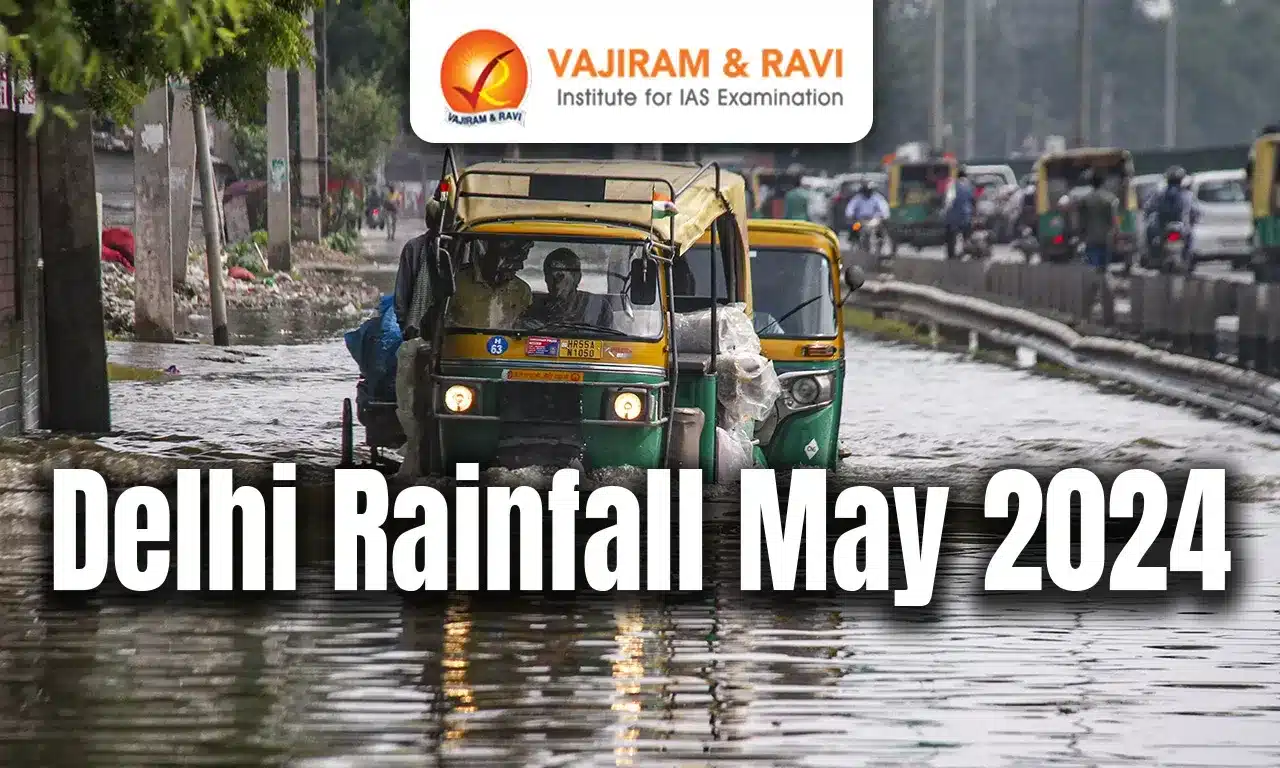
  • What began as mild drizzle soon turned into a severe downpour. It became the second-highest single-day rainfall for May since 1901, with the heaviest being 119.3 mm in 2021. 
  • The heavy rain overwhelmed the city's infrastructure, causing waterlogging, power cuts, flight delays, and resulting in five deaths. 

What Happened Over Delhi on Friday

  • Dual Moisture Plumes Over Delhi:
    • On May 2 morning, Delhi was positioned beneath two major moisture-laden wind systems — easterlies from the Bay of Bengal and southerlies from the Arabian Sea.
      • Easterlies are winds that blow from the east toward the west. 
      • In India, they often originate from the Bay of Bengal, carrying moisture inland. 
      • These winds can significantly influence weather patterns, especially during the pre-monsoon and monsoon seasons.
  • Formation of a Convergence Zone
    • These wind systems collided over Delhi-NCR, creating a strong low-level convergence zone where moist air was forced to rise.
  • Atmospheric Lifting
    • As the converging moist air was squeezed upwards, it triggered intense cloud formation and precipitation.
  • Transitional Weather Phase
    • May is a transition period for northern India, making such weather phenomena more likely, though their intensity depends on additional factors.
  • Role of Troughs
    • The presence of troughs — elongated low-pressure zones — further intensified the convergence and rainfall in the region.
      • A trough is an elongated region of relatively low atmospheric pressure, often associated with unsettled weather. 
      • It helps channel moisture and lift air, contributing to cloud formation, rainfall, and thunderstorms.

5 Key Reasons Behind Delhi’s Intense Rainfall

  • Western Disturbance and Cyclonic Circulations
    • A Western Disturbance, seen as a cyclonic circulation over south Punjab, north Rajasthan, and west Haryana, interacted with multiple upper-air cyclonic circulations across southwest and northeast Rajasthan.
    • This intensified regional instability.
  • Shifting Upper-Air Systems
    • A cyclonic system moved from southeast Rajasthan to northeast Rajasthan and northwest Madhya Pradesh, altering wind patterns and contributing to strong vertical air movement.
  • Active Monsoon Trough
    • The presence of a monsoon trough from west Madhya Pradesh to north Kerala helped channel moist air from the southern peninsula into the northern plains, feeding the storm system.
  • Strong Surface Winds Over Delhi
    • Delhi experienced strong westerly surface winds (20–25 kmph, gusting up to 54 kmph) that enhanced the vertical lift by interacting with incoming moist air, promoting convection.
  • Powerful Convective Activity and Himalayan Influence
    • Intense upward motion of heat and moisture (convection) led to the formation of towering cumulonimbus clouds (up to 13 km high), indicated by satellite visuals of overshooting tops. 
      • Cumulonimbus clouds are large, towering clouds associated with thunderstorms and heavy rainfall. 
      • They form due to intense upward motion of warm, moist air and can reach heights over 13 km, often producing lightning, strong winds, and hail.
    • Cool winds descending from the Himalayas since midnight also contributed to thunderstorm formation.
       

Delhi Rainfall May 2024 FAQs

Q1. Why did Delhi receive heavy rain in May 2024?

Ans. Due to a rare clash of easterlies and southerlies, convergence zones, and strong vertical air movement.

Q2. What is a convergence zone?

Ans. It's a region where opposing wind systems meet, forcing air upward and causing cloud formation and heavy rain.

Q3. What role did the trough play in Delhi’s rain?

Ans. The trough intensified moist air uplift, increasing rainfall and storm severity across Delhi.

Q4. Which clouds caused Delhi’s storm?

Ans. Towering cumulonimbus clouds formed due to convective activity, reaching 13 km and triggering heavy downpour.

Q5. What were the effects of the rain in Delhi?

Ans. The rain caused waterlogging, flight delays, power outages, and resulted in five reported fatalities.


Source: IE | IE

Depot Darpan Portal

Depot Darpan Portal

Depot Darpan Portal Latest News

The government recently said it will soon launch the Depot Darpan portal and mobile application, with an objective to ensure that the food storage depots meet the highest quality and performance standards.

About Depot Darpan Portal

  • It is an initiative of the Ministry of Consumer Affairs, Food & Public Distribution, Government of India.
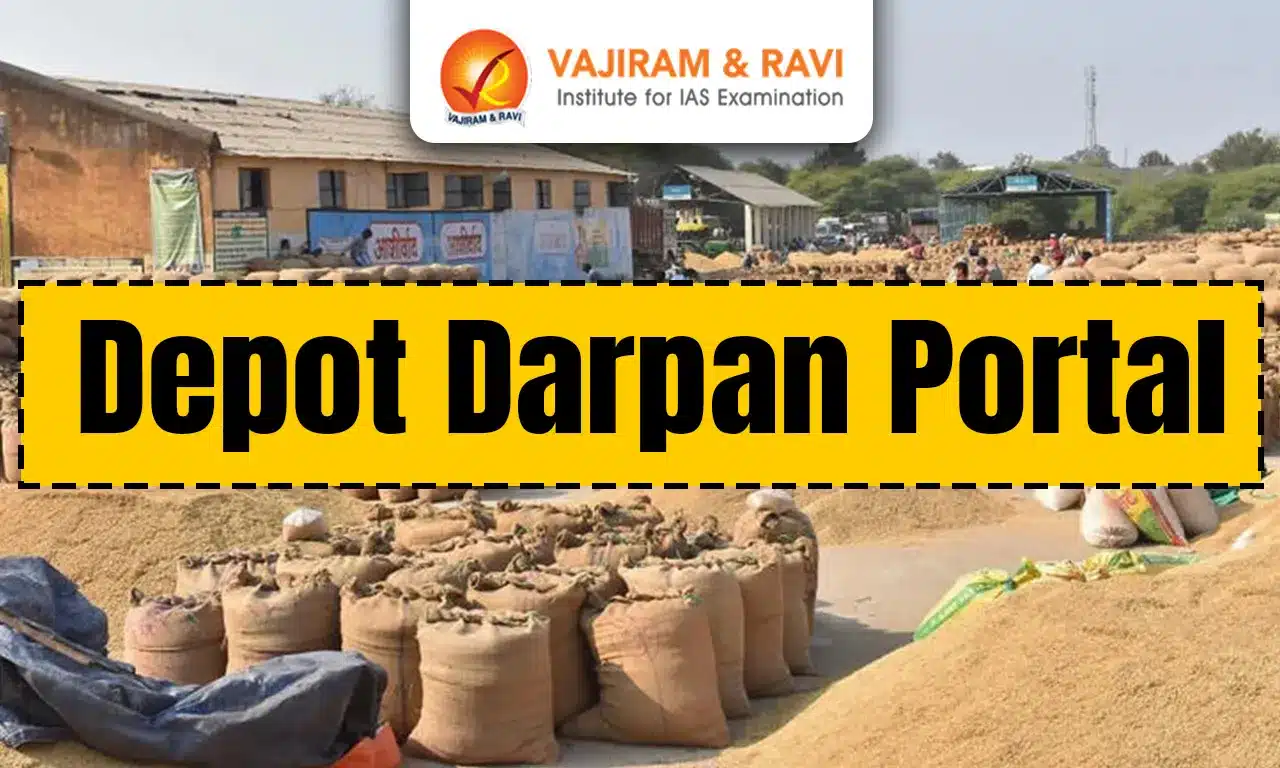
  • Conceived by the Department of Food and Public Distribution (DFPD), Depot Darpan will digitise the operations of 2,278 grain depots managed by the Food Corporation of India (FCI), Central Warehousing Corporation (CWC), and various state agencies. 
  • Objective: To ensure that the food storage depots meet the highest quality and performance standards. 
  • It enables depot managers to evaluate infrastructure, operational, and financial performance on a near real-time basis.
  • Depot Managers upload geo-tagged inputsof the infrastructure available in their depot, generating automated ratings and action points for timely improvements. 
  • The system ensures 100% validation by the supervisory officers and random third-party audits.
  • The warehouses are assessed based on two main categories:
    • Infrastructural aspects, which include safety standards, storage conditions, environmental, technology adoption, and statutory parameters.
    • Operational efficiency aspects, which include stock turnover, losses, space utilisation, manpower expenses, and profitability.
  • Each category is evaluated independently, and the warehouse receives a star rating based on the composite scoring from both parameters.
  • Depot Darpan is uniquely integrated with smart warehousing technologies, creating a seamless digital monitoring ecosystem that includes: CCTV Surveillance and IoT sensors.
  • The IoT-Enabled Monitoring includes:
    • Ambient sensorTemperature and relative humidity to monitor grain moisture and temperature.
    • Carbon dioxide (CO2): To monitor and indicate potential grain infestation.
    • Phosphine gas sensor: Ensures occupational safety for workers through early warning to prevent exposure to toxic gas levels. Detects fumigation leakages, increasing effectiveness of treatment.
    • Gate Shutter sensor: Detection of unauthorised door access. Alerts for unauthorised door openings outside designated hours. Monitors door status during fumigation processes. Ensures proper ventilation by tracking door openings as required.
    • Fire/smoke sensor: Provides early warning to prevent fire-related damage and ensure safety.
  • In addition, AI-based technology for bag counting, ANPR (Automatic Number Plate Recognition) for vehicle identification and tracking, and Face Recognition technology (FRS) for access control and security are also deployed in warehouses on a pilot basis.
  • The Depot Darpan mobile app will allow supervisory officials to track warehouse performance in real-time, helping them make informed decisions and drive continuous improvements through automated reports.

Source: HANSI

Depot Darpan Portal FAQs

Q1: Which ministry launched the Depot Darpan Portal?

Ans: Ministry of Consumer Affairs, Food & Public Distribution.

Q2: What is the primary objective of the Depot Darpan Portal?

Ans: To ensure highest quality and performance standards at food storage depots.

Q3: On what basis are warehouses given a star rating in the Depot Darpan system?

Ans: Based on composite scoring from infrastructure and operational efficiency.

Kendu Leaf

Kendu Leaf

Kendu Leaf Latest News

Eight Gram Sabhas in Baipariguda block of Koraput district, Odisha have collected over 4 lakh bundles of kendu leaves and are awaiting government notification to deregulate the trade.

Why in the News?

  • In the Koraput district of Odisha, eight Gram Sabhas from Baipariguda block, including villages like Kalatha JodiKupuli Guda, and Badali Beda, have collectively harvested more than 4 lakh bundles of kendu leaves during the 2025 season.
  • These tribal communities are seeking to independently manage and sell kendu leaves under the Forest Rights Act (FRA), 2006.

What is Kendu Leaf?

  • The Kendu Leaf, also called “Green Gold of Odisha”, is one of the most vital non-wood forest products (NWFPs) in the region. In other parts of India, it is known as the Tendu Leaf.
  • It is nationalised, like Bamboo and Sal seed, meaning its collection and trade are regulated by the government. 
  • Primary use: Used to roll tobacco into bidis (local cigarettes); also holds medicinal value.
  • Key Producer StatesMadhya PradeshChhattisgarhOdishaJharkhandAndhra PradeshMaharashtraGujarat.
  • Odisha is the third-largest producer after MP and Chhattisgarh.

Tribal Rights Under FRA

  • Forest Rights Act (FRA), 2006 recognises rights of forest-dwelling communities to collect, use, and sell minor forest produce (MFP) like kendu leaves.
  • 2012 Amendment to FRA:
    • Empowers communities to processstoretransport, and sell MFP without paying royalties or seeking permission.
    • Transit permits must be issued by the Community Forest Rights Management Committee (CFRMC), not forest officials.

CFRMC Role & Transit Permits

  • Under FRA, Transit Permits must be issued by the Community Forest Rights Management Committee (CFRMC). State laws like the Odisha Kendu Leaf (Control of Trade) Act cannot override the FRA, as its provisions hold legal supremacy.

Source: DTE

Kendu Leaf FAQs

Q1: What is Kendu Leaf used for?

Ans: Kendu leaves are primarily used as a wrapper for making bidis (hand-rolled cigarettes).

Q2: In which Indian states is kendu leaf primarily grown?

Ans: Odisha, Chhattisgarh, Madhya Pradesh, and Jharkhand are major producers of kendu leaf.

Q3: Is Kendu Leaf classified as a Minor Forest Produce (MFP)?

Ans: Yes, Kendu Leaf is classified as a Minor Forest Produce under the Forest Rights Act, 2006.

The Arabian Desert and Green Arabia Hypothesis

The Arabian Desert and Green Arabia Hypothesis

The Arabian Desert and Green Arabia Hypothesis Latest News

A recent study published in Nature presents evidence of recurring humid periods in the Arabian Desert, currently the largest expanse of dunes on Earth.

Geography of the Arabian Desert

  • Spans around 900,000 square miles, making it the second-largest desert in the world (after the Sahara).
  • Located across Saudi Arabia, UAE, Yemen, and Oman, and stretches into Iraq, Jordan, Qatar, and Kuwait.
  • Composed of three main deserts:
    • Rub’al-Khali (Empty Quarter) – the largest dune desert.
    • Ad-Dhana Desert – central corridor.
    • An-Nafud Desert – northern zone.

Climatic Features

  • The region is hyper-arid, with less than 33 mm of annual rainfall.
  • Extreme temperature variations: above 50°C during the day, dropping sharply at night.
  • Frequent sandstorms, including seasonal Shamals and whirlwinds called Dust Devils, reduce visibility and affect human movement.

 Flora and Fauna

  • Plant life is scarce but includes Date palmsadenium (desert rose)acaciaghaf treessalt-bush, and juniper.
  • Animal species:
    • Large mammals like the Arabian oryxcamels, and gazelles.
    • Predators like striped hyenasArabian wolves, and caracals (now rare).
    • Reptiles like dhub lizardshorned vipers, and cobras.
    • Birds like falconsvultures, and doves.
    • Insects including scarab beetlesants, and wasps.

Green Arabia Key Discoveries

  • Speleothems (Stalagmites & Stalactites): Found deep within caves in the Arabian Peninsula, these mineral deposits form only with consistent rainfallvegetation, and soil.
    • Their existence points to multiple “green phases” in the region over the last 8 million years.
  • Uranium dating: Used to accurately determine the age of speleothem formations, providing one of the oldest continuous climate records for Arabia.
  • Oxygen isotope analysis: Helped estimate past rainfall levels and periods of humidity, confirming that Arabia was not always a desert.
  • Archaeological evidence: In the Baynunah Formation (UAE), fossils dating back 7 million years show the presence of: Hippos, Elephants, Giraffes & Primates.
    • These fossils indicate that Green Arabia served as a migratory route for animals and hominids.

Source: SCN

The Arabian Desert and Green Arabia Hypothesis FAQs

Q1: What is the Green Arabia Hypothesis?

Ans: The Green Arabia Hypothesis proposes that the Arabian Peninsula experienced periodic wet phases, supporting human migration and biodiversity.

Q2: What evidence supports the Green Arabia theory?

Ans: Fossilised lakes, river channels, and ancient stone tools discovered in Saudi Arabia and the UAE support the hypothesis.

Q3: How is the Arabian Desert relevant to human evolution?

Ans: It is believed to have served as a corridor for early human migration out of Africa into Eurasia.

Mt. Makalu

Mt. Makalu

Mt. Makalu Latest News

The Indo Tibetan Border Police (ITBP) has successfully scaled Mt. Makalu — the world’s fifth highest peak, the China-border guarding force said recently.

About Mt. Makalu

  • It is the fifth highest mountain in the world, standing at 8,485 meters (27,838 ft) above sea level.
  • It is located in the Mahalangur range of the Nepal Himalayas on the border between Nepal and Tibet.
  • It lies 14 miles (23 km) southeast of Mount Everest. 
  • The mountain lies in the Makalu Barun National Park and is known for its perfect pyramid shape with four sharp ridges.
  • Makalu I and Makalu II are the two notable subsidiary peaks of Makalu lying 3 km north-northwest of the main summit. 
  • At the base of Mt. Makalu, there lies a natural wonder: the Barun Valley. 
    • This valley facilitates stunning elevated waterfalls falling inside the deep gorges,diverse species of flora and fauna with rich cultures of ethnic communities like Sherpa and Kirat. 
  • Makalu is one of the harder eight-thousanders and is considered one of the most difficult mountains in the world to climb. 
    • Makalu expeditions are difficult because the mountain is notorious for its steep pitches and knife-edged ridges that make the climbing Makalu very open to the elements. 
    • The final ascent of the summit pyramid involves technical rock climbing. 
    • Mt. Makalu was first summited on 15 May 1955 by a French team including Lionel Terray and Jean Couzy, led by Jean Franco, two years after the first ascent of Everest (the highest mountain in the world).

Source: TH

Mt. Makalu FAQs

Q1: Where is Makalu mountain located?

Ans: It is located in the Mahalangur range of the Nepal Himalayas on the border between Nepal and Tibet.

Q2: What is the rank of Mount Makalu in terms of height among the world’s highest mountains?

Ans: Fifth

Q3: Who were the first climbers to summit Mount Makalu in 1955?

Ans: Makalu was first summited on May 15, 1955, by Lionel Terray and Jean Couzy of a French expedition led by Jean Franco.

Teak (Tectona grandis)

Teak (Tectona grandis)

Teak (Tectona grandis) Latest News

Tissue-cultured teak is being promoted as a high-yield, fast-return solution to boost India’s timber cultivation and trade, raising debates about its productivity, economic viability, and ecological sustainability.

About Teak (Tectona grandis)

  • Teak (Tectona grandis) is globally valued for its durability, strength, and resistance to pests and water, earning it the title of "king of timbers".
  • It is one of the world’s most valuable tropical hardwoods, extensively used in shipbuildingconstructionfurnitureflooring, and musical instruments.
  • India holds 35% of the world’s planted teak forests, with Asia accounting for over 95% of global teak resources.
  • As per the FAO Global Teak Resources and Market Assessment 2022Madhya Pradesh and Maharashtra have the largest areas of native teak forests.

Geographic Distribution

  • Native to South and Southeast Asia, especially India, Myanmar, Thailand, Laos, and Indonesia.
  • In India, teak is found in states like Madhya PradeshMaharashtraKarnatakaKeralaTamil NaduAssam, and the Northeast region.
  • Grows primarily in moist deciduous and mixed deciduous forests.
  • Prefers well-drained soils and full sunlight; can grow up to 30–40 meters in height and live for hundreds of years.

Ecological and Structural Characteristics

  • Large, deciduous tree with a straight, cylindrical trunk (1–1.5 m diameter).
  • Leaves: Oblong, glossy, dark green; arranged in opposite pairs.
  • Flowers: Small, white/cream, fragrant, borne in clusters.
  • Wood colour: Golden brown to dark brown.
  • Ecological role: Supports wildlife and biodiversity in native ecosystems.

Regulatory Context

  • Green felling (commercial harvesting of trees) is prohibited in government forests under the Forest Conservation Act, 1980, and National Forest Policy, 1988.
  • Hence, private teak plantations are key to meeting domestic and export demands.

Source: DTE

Teak (Tectona grandis) FAQs

Q1: What is the botanical name of teak?

Ans: The botanical name of teak is Tectona grandis, a tropical hardwood tree species.

Q2: Where is teak naturally found in India?

Ans: Teak is native to the deciduous forests of central and southern India, especially in states like Madhya Pradesh, Maharashtra, and Kerala.

Q3: Why is teak economically important?

Ans: Teak is valued for its durable and water-resistant timber, widely used in furniture and shipbuilding.

Di-2-ethylhexyl Phthalate (DEHP)

Di-2-ethylhexyl Phthalate (DEHP)

Di-2-ethylhexyl Phthalate (DEHP) Latest News

A recent study in The Lancet eBioMedicine found a strong correlation between exposure to Di-2-ethylhexyl phthalate (DEHP) and increased cardiovascular mortality, especially in the 55–64 age group.

About Di-2-ethylhexyl Phthalate (DEHP) 

  • Di-2-ethylhexyl phthalate (DEHP) is a synthetic chemical primarily used as a plasticiser, meaning it is added to plastics to make them more flexible, durable, and resistant to breaking.
  • DEHP is a colourless, oily liquid with little to no odour, and is soluble in oils but not in water. It is widely used in the manufacture of polyvinyl chloride (PVC) plastics.
  • Alternate names for DEHP include Dioctyl Phthalate (DOP) and Bis(2-ethylhexyl) Phthalate (BEHP), often found in industrial and consumer products.
  • DEHP is prevalent in everyday items, such as food packaging materials, medical devices (like IV tubes), children’s toys, shampoos, lotions, and vinyl flooring, making human exposure widespread and continuous.
  • In 2018, exposure to DEHP was linked to around 356,238 global deaths in that age group, accounting for over 13% of global cardiovascular deaths for individuals aged 55–64.
  • India accounted for the highest number of DEHP-related cardiovascular deaths globally, with an estimated 103,587 deaths, nearly one-third of the global burden.
  • DEHP is known to cause inflammation in coronary arteries, thereby increasing the risk of heart attacks and strokes over time.
  • Apart from cardiovascular issues, DEHP exposure is associated with multiple health disorders, including:
    • Obesity and Type 2 diabetes
    • Hormonal disruptions and infertility
    • Increased risk of certain cancers
    • Premature birth and developmental disorders in infants
  • About 75% of the global DEHP-related deaths occurred in regions like Asia, the Middle East, and the Pacific, highlighting the disproportionate burden on developing countries.

Source: DTE

Di-2-ethylhexyl Phthalate (DEHP) FAQs

Q1: What is Di-2-ethylhexyl Phthalate (DEHP)?

Ans: DEHP is a phthalate used as a plasticiser to make plastics, especially PVC, more flexible and durable.

Q2: Why is DEHP considered hazardous?

Ans: DEHP is classified as an endocrine-disrupting chemical (EDC) and may cause reproductive and developmental issues in humans and animals.

Q3: In which products is DEHP commonly found?

Ans: DEHP is widely used in medical devices, food packaging, building materials, and personal care products.

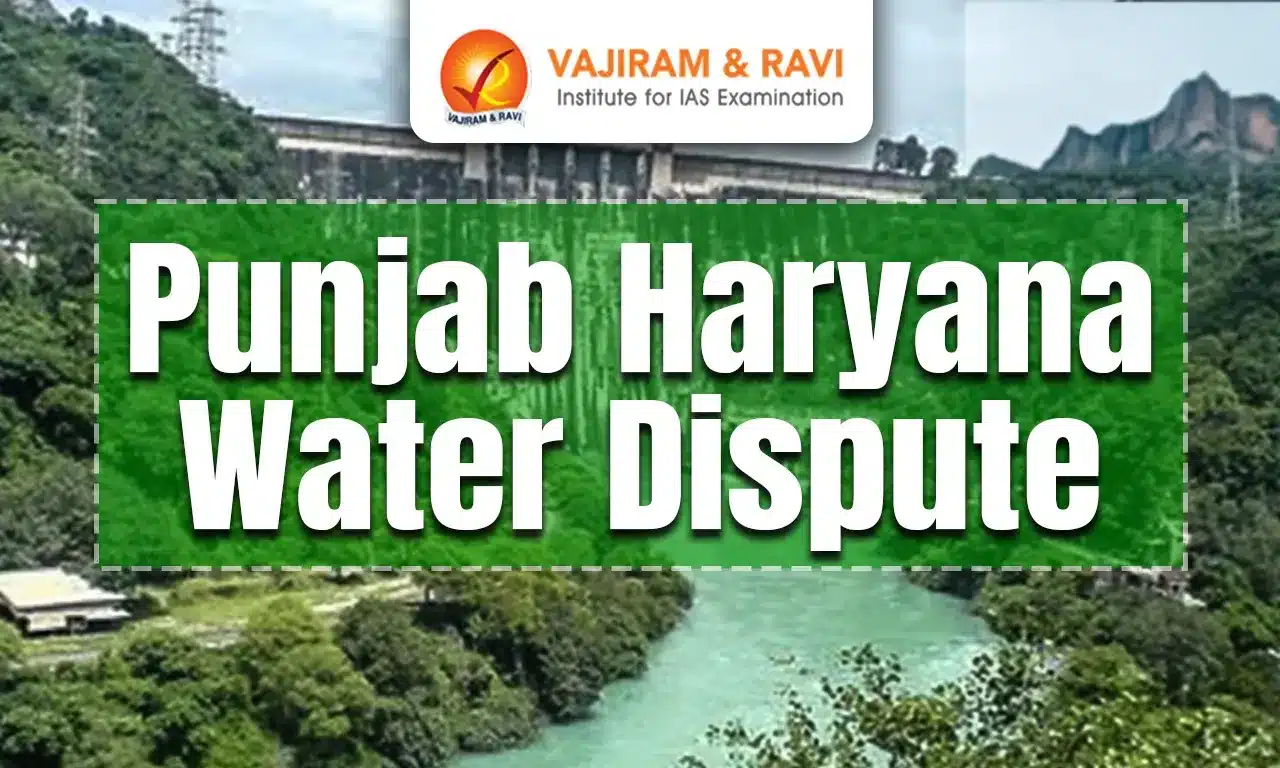
Punjab-Haryana Water Dispute: Tensions Rise Over Bhakra Beas Board Decision

Punjab-Haryana Water Dispute: Tensions Rise Over Bhakra Beas Board Decision

What’s in Today’s Article?

  • Punjab Haryana Water Dispute Latest News
  • The Current Water Crisis Between Punjab and Haryana
  • BBMP and Water Sharing
  • Punjab's Claim: Not Enough Water
  • Punjab Haryana Water Dispute FAQs

Punjab Haryana Water Dispute Latest News

  • Amid rising tensions with Haryana over water sharing, all political parties in Punjab united to oppose the Bhakra Beas Management Board’s decision to release an additional 4,500 cusecs of water to Haryana. 

The Current Water Crisis Between Punjab and Haryana

  • Trigger for the Standoff
    • The crisis began on April 23 when Haryana demanded 8,500 cusecs of water from the Bhakra-Nangal project—an increase of 4,500 cusecs over its current allocation. 
    • Punjab refused the request and referred the matter to the Bhakra Beas Management Board (BBMP).
  • BBMP Meeting and Voting Outcome
    • In a BBMP meeting, Haryana, Rajasthan, and Delhi voted in favour of releasing the extra water to Haryana. 
    • Himachal Pradesh abstained. Punjab opposed the move and refused to open additional sluice gates at the Nangal dam.
  • Legal Action by Haryana
    • In response to Punjab's resistance, the Haryana government announced it would move the Supreme Court to secure its “fair” share of water.
  • Punjab’s Firm Stand and Legal Recourse
    • Punjab is also considering legal action, calling the BBMP's decision "unprecedented" and vowing not to release even a drop of extra water. 

BBMP and Water Sharing

  • Historical Background of the Bhakra-Nangal Project
    • Conceived in the 1910s, the Bhakra-Nangal project is one of India’s earliest post-Independence river valley development initiatives. 
    • It includes the Bhakra Dam in Himachal Pradesh and the Nangal Dam in Punjab, built on the River Satluj. 
    • The then Prime Minister Nehru took personal interest in the project.
  • Formation of the Bhakra Beas Management Board (BBMP)
    • After the 1966 reorganisation of Punjab, which created Haryana and Himachal Pradesh, the Bhakra Management Board was formed under Section 79 of the Punjab Reorganisation Act to manage water distribution among the new states. 
    • In 1976, the board was renamed BBMP and assigned the additional responsibility of managing Beas River projects like the Pandoh Dam (Beas-Sutlej Link) and Pong Dam.
  • BBMP’s Current Role and Responsibilities
    • BBMP oversees the distribution of water from the Satluj and Beas rivers to Punjab, Haryana, Rajasthan, Himachal Pradesh, and Delhi. 
    • At the beginning of each water year (September–August), BBMP allocates water based on monsoon predictions and availability.
  • Current Year’s Water Allocation
    • For the ongoing year, BBMP has allocated:
      • Punjab: 5.512 million acre-feet (MAF)
      • Haryana: 2.987 MAF
      • Rajasthan: 3.318 MAF

Punjab's Claim: Not Enough Water

  • Punjab's Claim: Haryana Exceeded Its Quota
    • Punjab asserts that Haryana has already drawn 3.110 million acre-feet (MAF) of water—104% of its annual share—even before the end of the water year.
    • Punjab, which is grappling with the fast depleting groundwater, is stressing the use of canal water.
  • Falling Water Levels in Key Dams
    • Water reserves are under stress due to reduced Himalayan snowfall:
      • Ranjit Sagar Dam: 16.9 feet below last year’s level
      • Pong Dam: 31.87 feet lower
      • Bhakra Dam: 12 feet lower
  • Haryana's Accusation and Demand
    • Haryana CM accused Punjab of “dirty politics” and claimed Haryana has not received its rightful share. 
    • He emphasized the need for urgent water supply in drought-hit districts such as Hisar, Sirsa, and Fatehabad, especially for drinking water.
  • Expert View: Need for Temporary Sharing, with Conditions
    • Water experts recommended short-term sharing to meet drinking water needs, but insisted the state-wise quota must remain unchanged. 
    • If Haryana gets extra water now, it must be compensated later to Punjab to preserve fairness and legal allocation.

Punjab Haryana Water Dispute FAQs

Q1. What triggered the Punjab-Haryana water dispute in April 2024?

Ans. Haryana demanded 4,500 cusecs more water; Punjab opposed and escalated the issue to BBMP.

Q2. What is BBMP’s role in the dispute?

Ans. BBMP manages Beas-Sutlej waters and allocates state-wise shares yearly based on monsoon and availability.

Q3. What’s Punjab’s argument?

Ans. Punjab claims Haryana already used 104% of its share and that its own groundwater levels are critical.

Q4. Why is Haryana demanding more water?

Ans. Due to severe drought conditions in Hisar, Sirsa, and Fatehabad districts, especially for drinking purposes.

Q5. What is the expert recommendation?

Ans. Allow short-term extra water to Haryana for drinking but adjust quotas later to maintain fairness.

Source: IE | News18

Solar Energy Corporation of India Ltd. (SECI)

Solar Energy Corporation of India

Solar Energy Corporation of India Ltd. Latest News

Reliance NU Suntech recently signed a 25-year Power Purchase Agreement with the Solar Energy Corporation of India, to develop and commission Asia’s largest single-location integrated solar and battery energy storage system (BESS) project.

About Solar Energy Corporation of India Ltd

  • It is the leading Central Public Sector Undertaking (CPSU) dedicated to the development and expansion of Renewable Energy (RE)capacity in India.
  • It is the only CPSU dedicated to the renewable energy sector.
  • SECI was incorporated in 2011 as a not-for-profit company (Sec. 25 of the Companies Act, 1956) and converted to a commercial company in 2015 (Sec. 3 of the Companies Act, 2013).
  • It was established to facilitate the implementation of the National Solar Mission. 
  • It is under the administrative control of the Ministry of New and Renewable Energy (MNRE).
  • It has been accorded the status of Miniratna Category-I CPSU.
  • SECI serves as an implementing agency for the development of Solar, Wind, and Hybrid Projects as part of fulfilling the country’s Nationally Determined Contributions (NDCs).
    • To achieve this, SECI releases tenders for selection of Renewable Energy (RE) developers for the establishment of projects on a pan-India or state-specific basis. 
    • The selection process for successful bidders is conducted through a tariff-based competitive e-bidding procedure. 
    • Once selected, SECI enters into a 25-year Power Purchase Agreement (PPA) with the chosen bidders for the procurement of power from these projects. 
    • Further, SECI establishes back-to-back 25-year Power Sale Agreements (PSA) with DISCOMs/buying entities for the saleof the procured power. 
  • Procuring Power:
    • SECI is a Category-I (highest) Power Trading Licensee for trading power on a pan-India basis. 
    • It is the intermediary power procurer for projects being set up through SECI tenders. 
    • It procures power from successful developers under its tenders and sells it to buying entities (i.e. DISCOMs) through long0term PPAs and PSAs, respectively. 
    • SECI is a premier trader of renewable energy power in the country.
  • Providing Consultancy Services to other entities: SECI also offers Project Management Consultancy in the Renewable Energy sector to Public Sector/Government entities, including Feasibility Studies, Bid process Management, Construction Monitoring and Management, Commissioning, etc.
  • SECI now oversees a massive 65.3 GW of awarded generation capacity.
    • Out of this, more than 60%—over 40 GW—is solar energy.
    • The remaining capacity includes 16.3 GW of wind energy and about 9 GW of hybrid energy projects.

Source: MINT

Solar Energy Corporation of India Ltd FAQs

Q1: Under which ministry does Solar Energy Corporation of India Ltd. (SECI) operate?

Ans: Ministry of New and Renewable Energy

Q2: In which year was SECI incorporated?

Ans: 2011

Q3: What kind of bidding process does SECI use to select renewable energy developers?

Ans: Tariff-based competitive e-bidding

Pangolin

Pangolin

Pangolin Latest News

Global trafficking of pangolin scales has sharply declined since 2020, primarily due to COVID-19-related disruptions, sustained law enforcement actions, and evolving smuggling tactics, according to the Wildlife Justice Commission (WJC) report.

About Pangolin

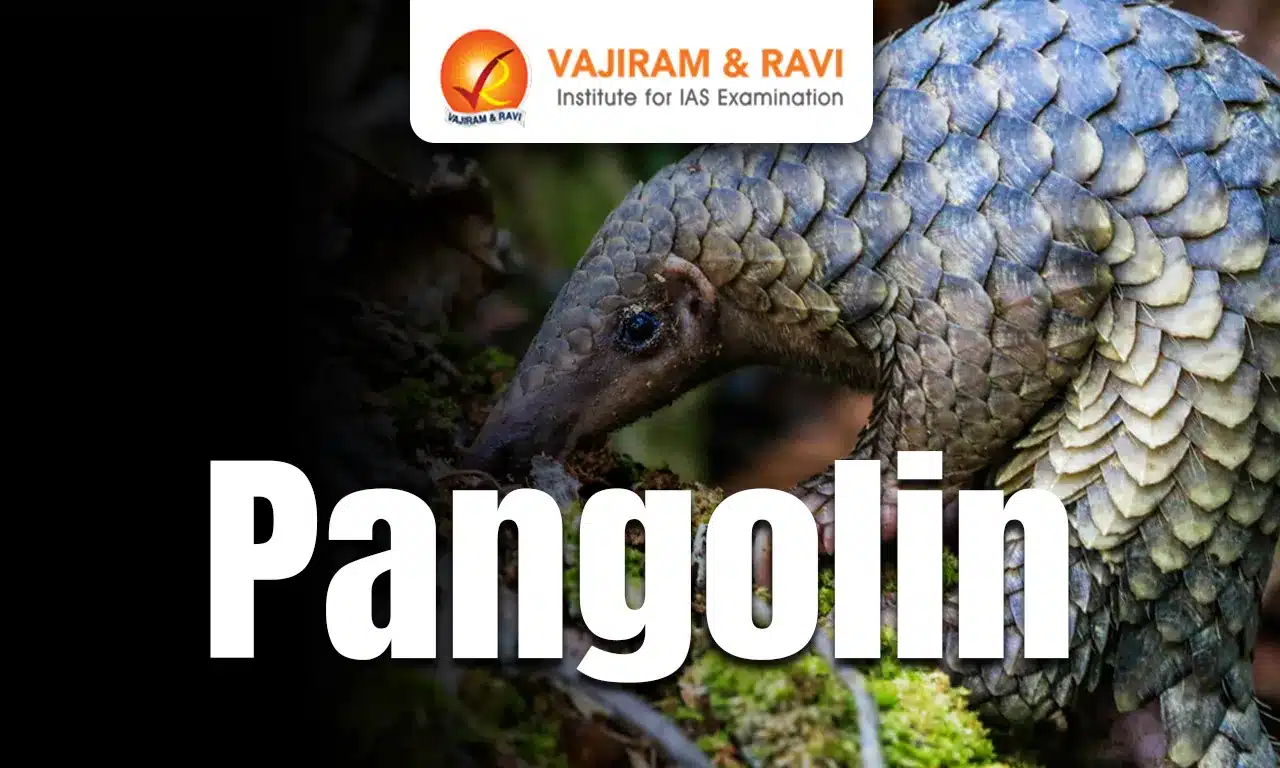
  • Species: There are 8 species of pangolins4 in Africa (Black-bellied, White-bellied, Giant Ground, Temminck’s Ground) and 4 in Asia (Indian, Chinese, Sunda, Philippine pangolins).
  • Physical and Behavioural Traits
    • Habitat: Pangolins live in tropical forests, grasslands, and agricultural areas, and are found close to human settlements. The Indian pangolin is common across India, Nepal, Sri Lanka, and Bangladesh.
    • Diet and Ecosystem Role: They feed primarily on ants and termites, contributing to pest control and soil aeration, making them crucial for ecosystem balance.
  • Threats: They are heavily targeted for illegal trade in Asia, where their scales are used in traditional medicine and meat is considered a delicacy. Additionally, habitat loss has worsened their decline.
  • Conservation Status:
    • Indian pangolin is Endangered on the IUCN Red List.
    • The Chinese pangolin is listed as Critically Endangered
    • Both are protected under Schedule I of India’s Wildlife (Protection) Act, 1972
    • All 8 species are listed in CITES Appendix I, prohibiting international commercial trade.

Source: DTE

Pangolin FAQs

Q1: What type of animal is a pangolin?

Ans: Pangolins are scaly, insectivorous mammals known for their unique keratin scales.

Q2: How many species of pangolin are found in India?

Ans: India hosts two species — the Indian pangolin (Manis crassicaudata) and the Chinese pangolin (Manis pentadactyla).

Q3: What is the IUCN status of Indian pangolins?

Ans: Indian pangolin is listed as ‘Endangered’, while the Chinese pangolin is listed as ‘Critically Endangered’ on the IUCN Red List.

Vizhinjam Port Inaugurated: A Major Boost to India’s Maritime and Economic Future

Vizhinjam Port Inaugurated: A Major Boost to India’s Maritime and Economic Future

What’s in Today’s Article?

  • Vizhinjam Port Latest News
  • Introduction
  • About Vizhinjam Deepwater Port
  • Key Features and Strategic Importance
  • Economic Impact and Cost Savings
  • Vision for a Port-led Economy
  • Wider Maritime and Industrial Push
  • Conclusion
  • Vizhinjam Port FAQs

Vizhinjam Port Latest News

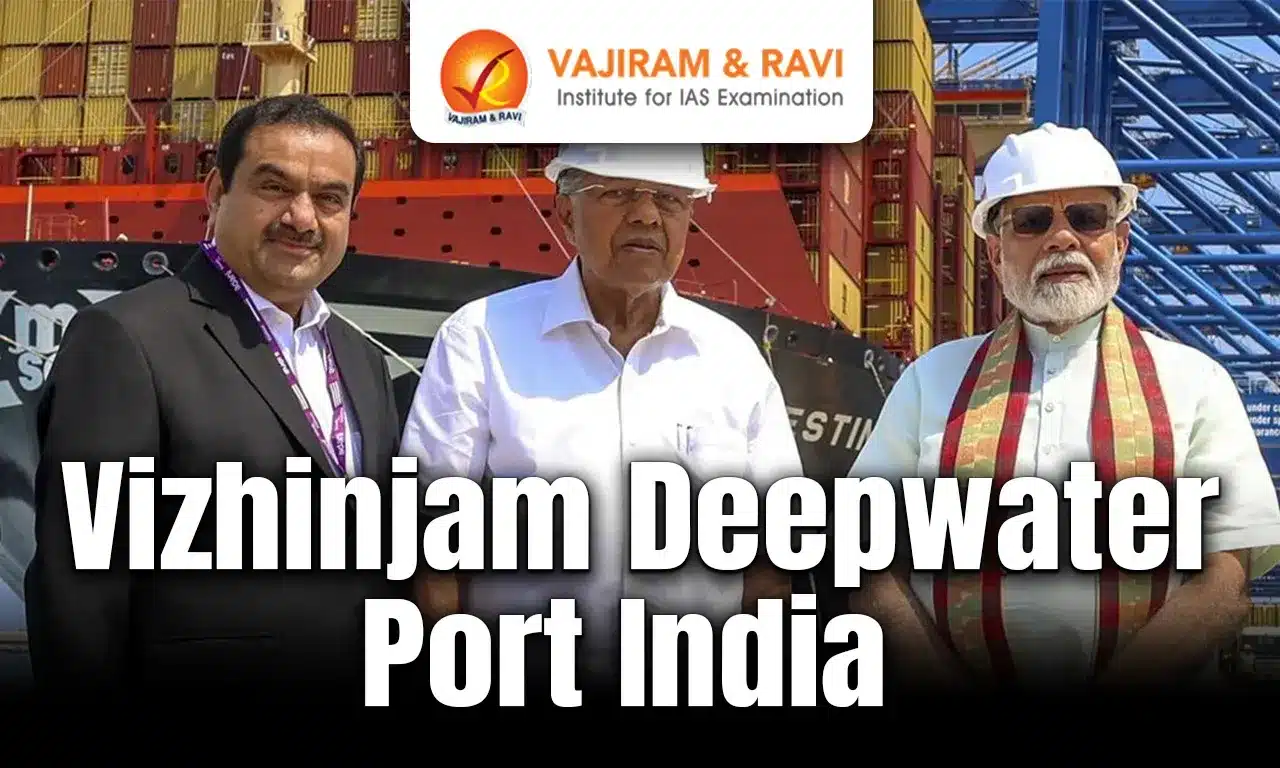
  • Prime Minister Narendra Modi commissioned the ₹8,800 crore Vizhinjam International Deepwater Multipurpose Seaport in Kerala’s capital.

Introduction

  • India has officially entered the global container transhipment league with the inauguration of the Vizhinjam International Deepwater Multipurpose Seaport in Kerala. 
  • Commissioned by Prime Minister Narendra Modi on May 2, 2025, the ₹8,800 crore project marks the culmination of decades-long efforts to establish India's first deepwater transhipment port, positioned strategically to serve as a vital logistics hub in the Indian Ocean region.

About Vizhinjam Deepwater Port

  • The Vizhinjam Port, located near Thiruvananthapuram in Kerala, has been developed under a Public-Private Partnership (PPP) model between the Adani Group and the Kerala government
  • With a natural draft of nearly 20 metres, it can accommodate ultra-large container vessels, a key requirement for global cargo movement.
  • The port had been conceptualized as far back as 1991, but saw several delays due to environmental, legal, and logistical challenges. Its eventual operationalization in 2025 marks a major milestone in India’s maritime infrastructure ambitions.

Key Features and Strategic Importance

  • Natural Depth & Strategic Location: The port’s depth and proximity to international shipping lanes make it ideal for large cargo vessels with over 20,000 container capacity.
  • Low Maintenance Advantage: Minimal coastal sand movement around the port ensures reduced dredging and maintenance costs.
  • Reduced Dependency on Foreign Ports: Vizhinjam aims to significantly reduce India’s reliance on transhipment hubs like Colombo, Singapore, and Jebel Ali, which currently handle 75% of India’s transhipped cargo.

Economic Impact and Cost Savings

  • According to government estimates, India will save approximately $220 million annually by managing its own transhipment cargo. Presently, the country pays an additional $80–$100 per container due to reliance on foreign ports. Bringing these operations in-house will:
    • Improve logistics efficiency
    • Reduce delivery delays
    • Strengthen India’s economic resilience during geopolitical disruptions
  • This move is expected to transform the shipping landscape in the country by retaining foreign exchange and increasing internal job opportunities within the port and logistics sectors.

Vision for a Port-led Economy

  • In his address, Prime Minister Modi emphasized that port cities and coastal states will play a critical role in realizing the vision of a developed India. 
  • He noted that the government’s maritime policy over the last decade has focused on integrating modern infrastructure with ease of doing business. Over the last ten years, billions have been invested through PPP models to modernize Indian ports and bring them on par with global standards.
  • The Vizhinjam port also serves as a model of cooperative federalism, with a Left-led state government partnering with a major private enterprise, Adani Ports and SEZ Ltd, to realize a shared economic vision.

Wider Maritime and Industrial Push

  • The inauguration of the Vizhinjam Port aligns with broader national strategies:
    • Shipbuilding Promotion: The Union Budget has introduced policies to promote indigenous ship construction.
    • Kochi Shipbuilding Cluster: A shipbuilding and repair hub is being developed in Kochi to enhance employment and manufacturing in the sector.
    • Improved Global Rankings: India now has two ports in the world’s top 30 and ranks among the top 20 in the Logistics Performance Index.

Conclusion

  • The Vizhinjam International Deepwater Port is not just a logistical upgrade; it is a strategic economic pivot. 
  • By reducing external dependencies, optimizing maritime routes, and creating local employment, the port symbolizes India’s growing stature in global trade. 
  • As its capacity expands in the coming years, it is expected to become a cornerstone of India’s maritime policy and a major economic engine in the Indo-Pacific region.

Vizhinjam Port FAQs

Q1. What is the Vizhinjam Port?

Ans. It is India’s first dedicated deepwater container transshipment port located in Kerala.

Q2. How much has been invested in the Vizhinjam Port project?

Ans. The port has been built at an estimated cost of ₹8,800 crore under a public-private partnership.

Q3. What are the economic benefits of the Vizhinjam Port?

Ans. It is expected to save India $220 million annually by reducing reliance on foreign transshipment hubs.

Q4. Which companies and governments are involved in the project?

Ans. The port is operated by Adani Ports in partnership with the Kerala government.

Q5. How will Vizhinjam Port impact global trade for India?

Ans. It will allow India to directly handle large cargo ships, improve logistics, and boost trade efficiency.


Source: TH | HT

Enquire Now