UPSC Daily Quiz 4 October 2025

UPSC Daily Quiz

The Daily UPSC Quiz by Vajiram & Ravi is a thoughtfully curated initiative designed to support UPSC aspirants in strengthening their current affairs knowledge and core conceptual understanding. Aligned with the UPSC Syllabus 2025, this daily quiz serves as a revision resource, helping candidates assess their preparation, revise key topics, and stay updated with relevant issues. Whether you are preparing for Prelims or sharpening your revision for Mains, consistent practice with these Daily UPSC Quiz can significantly enhance accuracy, speed, and confidence in solving exam-level questions.

[WpProQuiz 87]

UPSC Daily Quiz FAQs

Q1: What is the Daily UPSC Quiz?

Ans: The Daily UPSC Quiz is a set of practice questions based on current affairs, static subjects, and PYQs that help aspirants enhance retention and test conceptual clarity regularly.

Q2: How is the Daily Quiz useful for UPSC preparation?

Ans: Daily quizzes support learning, help in revision, improve time management, and boost accuracy for both UPSC Prelims and Mains through consistent practice.

Q3: Are the quiz questions based on the UPSC syllabus?

Ans: Yes, all questions are aligned with the UPSC Syllabus 2025, covering key areas like Polity, Economy, Environment, History, Geography, and Current Affairs.

Q4: Are solutions and explanations provided with the quiz?

Ans: Yes, each quiz includes detailed explanations and source references to enhance conceptual understanding and enable self-assessment.

Q5: Is the Daily UPSC Quiz suitable for both Prelims and Mains?

Ans: Primarily focused on Prelims (MCQ format), but it also indirectly helps in Mains by strengthening subject knowledge and factual clarity.

Intertropical Convergence Zone (ITCZ), Causes, Characteristics

Intertropical Convergence Zone

The Intertropical Convergence Zone (ITCZ) is one of the most important elements in the study of meteorology and climatology. It plays an important role in shaping global weather systems and long-term climatic patterns. The ITCZ refers to a belt near the equator where the northeast and southeast trade winds converge, forcing warm, moist air upward. This upward movement triggers convection, leading to the formation of cumulonimbus clouds, frequent thunderstorms, and heavy rainfall. For this reason, it is also often referred to as the Equatorial Convergence Zone or simply the doldrums.

The position of the ITCZ is not fixed. It oscillates northward and southward in tune with the seasonal migration of the overhead sun. This shifting character makes it a dynamic system that directly impacts weather and climate across tropical and subtropical regions. For instance, the northward movement of the ITCZ plays a critical role in triggering the Indian summer monsoon.

In this article, we are going to cover the Intertropical Convergence Zone, its characteristics, impact and its importance. 

Intertropical Convergence Zone

The Intertropical Convergence Zone is essentially a thermal low-pressure belt encircling the Earth near the equator. It forms as a result of intense solar heating in equatorial latitudes. The sun’s rays fall almost vertically on the equator, heating the surface air and causing it to rise. As the moist, warm air ascends, it cools, condenses, and produces towering cloud formations followed by heavy rainfall.

Thus, the ITCZ is not just a meteorological zone but a dynamic system that shifts with the apparent movement of the sun. In the Northern Hemisphere summer, it moves northward over Asia and Africa, while during the Southern Hemisphere summer, it shifts southward, influencing weather over South America and parts of Africa.

Intertropical Convergence Zone Causes

The development and shifting of the ITCZ are driven by multiple interconnected factors:

  1. Solar Heating: The equatorial region receives maximum insolation throughout the year. This extreme heating generates rising air currents, creating a zone of low pressure that draws in the trade winds from both hemispheres.
  2. Earth’s Rotation: The Coriolis effect resulting from Earth’s rotation alters the path of trade winds, making them converge around the equatorial region. This convergence sustains the ITCZ.
  3. Seasonal Shifts of the Sun: The tilt of the Earth’s axis causes the sun’s direct rays to migrate north and south of the equator, dragging the ITCZ along. This is responsible for seasonal rainfall patterns in the tropics.
  4. Ocean Currents and Surface Temperatures: Warm ocean currents intensify convection and enhance rainfall in the ITCZ belt, while cold currents suppress rainfall. For instance, the Benguela Current reduces rainfall in parts of southwestern Africa.

Intertropical Convergence Zone Characteristics

The ITCZ can be identified by many features including: 

  • Heavy Rainfall: Precipitation often exceeds 2000 mm annually in regions under its influence. Rainfall is frequent and intense due to continuous convection.
  • Thunderstorms: Deep convection leads to regular thunderstorms, making the zone highly unstable.
  • Cloud Cover: Cumulonimbus and stratocumulus clouds dominate the ITCZ region, creating a near-constant overcast sky.
  • Seasonal Migration: The ITCZ shifts northward in June–July and southward in December–January, corresponding to the sun’s position.
  • Low Pressure Zone: It remains a belt of weak, variable winds and calm conditions, historically referred to as the doldrums by sailors.

Intertropical Convergence Zone Impact

The ITCZ is not just an equatorial phenomenon; its shifting belt has far-reaching consequences for global and regional climates.

  1. Influence on Monsoons: In India and Southeast Asia, the northward migration of the ITCZ during summer brings monsoon rains. Conversely, its southward retreat signals the withdrawal of the monsoon.
  2. Support for Tropical Rainforests: Regions like the Amazon Basin, Congo Basin, and parts of Southeast Asia owe their dense rainforest ecosystems to the high rainfall generated by the ITCZ.
  3. Droughts and Floods: Any irregularity in ITCZ positioning can cause extreme weather. A delayed northward shift may weaken the Indian monsoon, leading to drought, while excessive rainfall may cause floods.
  4. Part of Global Circulation: The ITCZ forms an important component of the Hadley Cell circulation, which governs global atmospheric circulation and redistribution of heat.
  5. Impact on Agriculture: Farmers in tropical regions depend on the seasonal migration of the ITCZ for planning, sowing and harvesting. Its predictable rainfall ensures agricultural cycles.

ITCZ Importance in India

For India, the Intertropical Convergence Zone is specially important because of its connection with the Southwest Monsoon. The northward migration of the ITCZ towards the Tropic of Cancer in June draws in moisture-laden winds from the Indian Ocean, resulting in heavy rains across the subcontinent. Similarly, its retreat southwards in October-November signals the onset of the Northeast Monsoon, especially over Tamil Nadu.

Also Check Other Posts
Geomorphology Major Dams in India
Composition and Structure of Atmosphere Major Ports in India
Types of Forests in India Coastal States of India
Ocean Acidification Migration in India
Deep Ocean Mission Natural Vegetation of India

Intertropical Convergence Zone FAQs

Q1: What is the Intertropical Convergence Zone?

Ans: The Intertropical Convergence Zone (ITCZ) is a low-pressure belt near the equator where the northeast and southeast trade winds converge, causing rising air, cloud formation, and heavy rainfall.

Q2: What is the ITCZ zone?

Ans: The ITCZ zone is the equatorial belt characterized by converging trade winds, persistent convection, thunderstorms, and high annual rainfall.

Q3: What is the cause of the ITCZ?

Ans: The ITCZ is caused by intense solar heating at the equator, which makes warm, moist air rise and create a low-pressure zone that draws in trade winds.

Q4: How is ITCZ connected with the southwest monsoon?

Ans: The northward shift of the ITCZ during summer draws in moisture-laden winds from the Indian Ocean, triggering the Indian southwest monsoon.

Q5: What is the impact of the Intertropical Convergence Zone?

Ans: The ITCZ influences global rainfall distribution, supports tropical rainforests, drives monsoon systems, and impacts agriculture, droughts, and floods in tropical regions.


Mar Del Plata Canyon

Mar del Plata Canyon

Mar Del Plata Canyon Latest News

A groundbreaking expedition to Argentina's Mar del Plata Canyon uncovered over 40 potential new deep-sea species, including glass squids and pink lobsters.

About Mar Del Plata Canyon

  • It is located at the continental margin off the coast of Buenos Aires Province, Argentina.
  • It lies about 250-300 km offshore from the city of Mar del Plata.
  • It is one of Argentina’s largest submarine canyons.
  • The area is characterised by fine sand with a mixture of terrigenous material and planktonic foraminifera substrate.
  • It is highly productive and influenced by the permanent Argentine Shelf-break Front.
    • This front marks the boundary where subantarctic shelf waters meet the cooler, more saline waters of the Falkland-Malvinas Current, creating a significant thermohaline front.

What are Submarine Canyons?

  • A submarine canyon is any of a class of narrow, steep-sided valleys that cut into continental slopes and continental rises of the oceans. 
  • Submarine canyons originate either within continental slopes or on a continental shelf. 
  • They are rare on continental margins that have extremely steep continental slopes or escarpments. 
  • Most submarine canyons extend only about 48 km (30 miles) or less in length, but a few are more than 320 km (200 miles) long.
  • They usually are many kilometres in width; for instance, the Grand Bahama Canyon measures 37 km (23 miles) at its widest point.
  • Submarine canyons are so called because they resemble canyons made by rivers on land.
  • A relatively large number of submarine canyons are located directly offshore of river canyons of adjacent land areas and may have once been connected to extensions of the latter. 
  • In most cases, however, the characteristics of the submarine variety and those of the nearby land canyons are quite distinct. 
    • The submarine canyons, for example, tend to have steeper side slopes, much higher gradients, and considerably narrower floors. 
  • Like rivers on land, these underwater features act as the primary conduits for sediments (and associated nutrients and organic carbon) transported from the continental shelf to the deep ocean basins.
    • Here the sediment is deposited, forming enormous sediment accumulations, called submarine fans, that resemble river deltas.

Source: TOI

Mar Del Plata Canyon FAQs

Q1: Where is the Mar del Plata Canyon located?

Ans: Off the coast of Buenos Aires Province, Argentina.

Q2: Which oceanographic front influences the productivity of the Mar del Plata Canyon?

Ans: The Argentine Shelf-break Front influences the productivity of the Mar del Plata Canyon.

Q3: Where do submarine canyons usually originate?

Ans: Within continental slopes or on continental shelves.

Q4: What role do submarine canyons play in marine sediment transport?

Ans: They act as conduits carrying sediment from continental shelves to deep ocean basins.

INS Sutlej

INS Sutlej

INS Sutlej Latest News

INS Sutlej recently arrived at Port Louis to undertake the 18th Joint Hydrographic Survey at Mauritius.

About INS Sutlej

  • It is a specialised hydrographic survey vessel of the Indian Navy.
  • It was built by the Goa Shipyard Limited and commissioned into the Indian Navy in 1993.
  • It is currently based at Kochi under the Southern Naval Command.
  • It is equipped with a range of surveying, navigational, and communication systems. 
  • The next-generation surveying systems provided on board include the multi-beam swath echo sounding system, differential global positioning system, motion sensors, sea gravimeter, magnetometer oceanographic sensors, side scan sonars, and an automated data logging system. 
  • These are designed to meet the stringent international/ISO 9002 digital survey accuracy standards required for the production of electronic navigation charts and publications. 
  • The ship also carries a Chetak helicopter and four survey motorboats.

Source: PIB

INS Sutlej FAQs

Q1: What is INS Sutlej?

Ans: It is a specialised hydrographic survey vessel of the Indian Navy.

Q2: INS Sutlej is based at which naval command?

Ans: It is currently based at Kochi under the Southern Naval Command.

Q3: INS Sutlej was commissioned in which year?

Ans: 1993

Clean Slate Doctrine under the Insolvency and Bankruptcy Code (IBC)

Clean Slate Doctrine under the Insolvency and Bankruptcy Code

Clean Slate Doctrine under the Insolvency and Bankruptcy Code (IBC) Latest News

The Delhi High Court recently confirmed the “clean slate” doctrine under the Insolvency and Bankruptcy Code (IBC) by holding that a successful resolution applicant cannot be burdened with the criminal liabilities of a corporate debtor’s past management.

About Clean Slate Doctrine under the Insolvency and Bankruptcy Code 

  • The Clean Slate Doctrine is a key legal principle embedded in the Insolvency and Bankruptcy Code, 2016 (“IBC”), which plays a pivotal role in the corporate insolvency process in India.  
  • The doctrine suggests that once a company successfully undergoes the insolvency resolution process and is taken over by a new buyer, the new owner should not be held accountable for any of the company’s pre-existing debts, penalties, or liabilities.  
  • This principle is designed to give the company a fresh start, essentially, a “clean slate” free from the baggage of its prior financial troubles.  
  • The Clean Slate Doctrine has been upheld in several landmark rulings by India’s Supreme Court (SC), reaffirming its crucial role in the IBC framework.
    • In the Essar Steel India case, the SC emphasized that one of the primary objectives of the IBC is to streamline insolvency procedures in India and bring all claims under a unified system.  
      • The SC ruled that once a resolution plan is approved by the National Company Law Tribunal (NCLT), any and all previous liabilities, including debts and penalties, are extinguished.  
      • This means no party can initiate or continue any legal proceedings related to a claim that is not included in the approved resolution plan.
    • In the Edelweiss Asset Reconstruction case, the SC held that government dues, such as taxes and duties, are extinguished if they are not part of the resolution plan. 
    • In the Surya Exim case, the Gujarat High Court, following the SC rulings, held that any tax demands issued after the NCLT’s approval of a resolution plan should be cancelled, reinforcing the idea that claims not included in the approved plan are no longer valid.

Source: TAXS

Clean Slate Doctrine under the Insolvency and Bankruptcy Code (IBC) FAQs

Q1: What is the Clean Slate Doctrine under the Insolvency and Bankruptcy Code (IBC)?

Ans: A principle stating that after insolvency resolution, the new owner is not liable for pre-existing debts and liabilities.

Q2: What is the main purpose of the Clean Slate Doctrine?

Ans: To provide a fresh start for the company free from prior financial troubles.

Q3: According to the Clean Slate Doctrine, what happens to claims not included in the approved resolution plan?

Ans: They are extinguished and no legal proceedings can be initiated.

Urban Flood Risk Management Programme

Urban Flood Risk Management Programme

Urban Flood Risk Management Programme Latest News

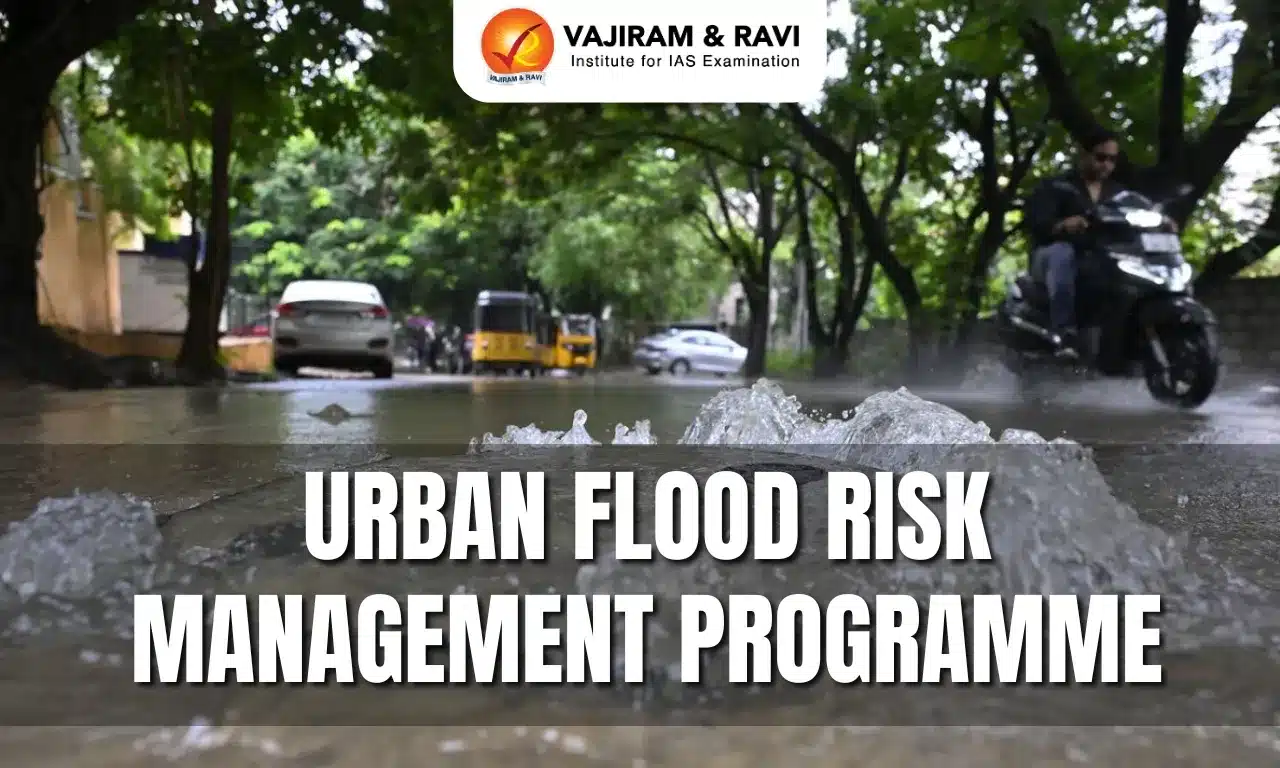
Recently, a high-level committee headed by the Union Home Minister approved the Urban Flood Risk Management Programme (UFRMP) Phase-2.

About Urban Flood Risk Management Programme

  • The programme will complement the states in mitigating the risk of urban flooding in the cities through uniform structural and non-structural intervention measures.
  • Cities Involved (11 cities) -- Bhopal, Bhubaneshwar, Guwahati, Jaipur, Kanpur, Patna, Raipur, Trivandrum, Vishakhapatnam, Indore and Lucknow
  • Selection Criteria: The 11 cities were selected on the basis of their status of being the most populous cities/state capitals, primarily prone to floods, as well as consideration of other physical, environmental, socio-economic and hydro-meteorological factors
  • Funding: The funding pattern will be on a cost-sharing basis between the Centre and the states according to the NDMF guidelines, i.e., 90 per cent from the Centre and 10 per cent from the states.
  • Activities under Urban Flood Risk Management Programme
    • Structural measures of Interlinking of water bodies to Stormwater Management, Construction of flood protection wall, Erosion Control and Soil Stabilisation using Nature-Based Solutions (NBS),etc.
    • Non-structural measures such as Flood Early Warning System and Data Acquisition System and capacity building, etc.

 Source: ET

Urban Flood Risk Management Programme FAQs

Q1: How is the Urban Flood Risk Management Programme funded?

Ans: 90% funding from the Centre and 10% from the State.

Q2: Which cities are included in the Urban Flood Risk Management Programme Phase-II?

Ans: 11 cities. The cities included are Bhopal, Bhubhaneshwar, Guwahati, Jaipur, Kanpur, Patna, Raipur, Trivandrum, Vishakhapatnam, Indore, and Lucknow.

Cassini Spacecraft

Cassini Spacecraft

Cassini Spacecraft Latest News

A fresh look at data collected by NASA’s Cassini spacecraft has uncovered more evidence that Saturn’s moon Enceladus may be able to support life.

About Cassini Spacecraft

  • It is a joint project of NASA, the European Space Agency and the Italian space agency (ASI).
  • Cassini was a sophisticated robotic spacecraft sent to study Saturn and its complex system of rings and moons in unprecedented detail.
  • It was launched on October 15, 1997. It was one of the largest interplanetary spacecraft.
  • The mission consisted of NASA’s Cassini orbiter, which was the first space probe to orbit Saturn, and the ESA’s Huygens probe, which landed on Titan, Saturn’s largest moon

Objectives of Cassini Spacecraft

  • Saturn—Study cloud properties and atmospheric composition, winds and temperatures, internal structure and rotation, ionosphere, origin, and evolution
  • Rings—Observe their structure and composition, dynamical processes, interrelation of rings and satellites, dust and micrometeoroid environment.
  • Titan—Study abundances of atmospheric constituents, distribution of trace gases and aerosols, winds and temperatures, composition and state of the surface, and upper atmosphere
  • Saturn’s Magnetosphere—Study its structure and electric currents; composition, sources, and sinks of particles within it; dynamics; interaction with the solar wind, satellites, and rings; Titan’s interaction with solar wind and magnetosphere

Components of Cassini Spacecraft

  • The instruments on board Cassini included radar to map the cloud-covered surface of Titan and a magnetometer to study Saturn’s magnetic field. 
  • The disk-shaped Huygens probe was mounted on the side of Cassini and carried six instruments designed to study the atmosphere and surface of Titan.

Key Facts about Enceladus

  • It is named after a giant in ancient Greek mythology,
  • It is one of the innermost moons of the ringed gas giant Saturn.
  • It has a diameter of 313 miles (504 km) and orbits Saturn at a distance of roughly 148,000 miles (238,000 km).
  • Scientists believe Enceladus possesses the chemical ingredients needed for life and has hydrothermal vents releasing hot, mineral-rich water into its ocean, the same type of environment that may have spawned Earth’s first living organisms.
  • Its ocean resides under a crust of ice about 12-19 miles (20-30 km) thick.

Source: DD News

Cassini Spacecraft FAQs

Q1: What was the primary mission of the Cassini spacecraft?

Ans: To study the geology and magnetic field of Saturn

Q2: What significant discovery was made by the Cassini spacecraft regarding Enceladus?

Ans: Geysers of water vapor and ice particles.

Daily Editorial Analysis 4 October 2025

Daily Editorial Analysis

India’s Clean Energy Rise Needs Climate Finance Expansion

Context

  • India’s clean energy transition has gained global recognition for its rapid scale and ambition; In 2024 alone, the country added 24.5 gigawatts (GW) of solar energy capacity, becoming the third-largest contributor worldwide after China and the United States.
  • This accomplishment, alongside its leadership in creating the International Solar Alliance (ISA), places India at the forefront of the global shift towards renewables.
  • However, beneath the success stories lies a significant financial gap that threatens to slow the pace of transformation.
  • Without adequate and innovative climate finance mechanisms, India risks falling short of both its national and international climate commitments.

India’s Rising Leadership in Renewable Energy

  • India’s clean energy sector has expanded at an impressive rate, making it a central player in the global renewable energy landscape.
  • The United Nations Secretary-General’s 2025 Climate Report highlights India, alongside Brazil and China, as a leading developing nation in scaling up solar and wind energy.
  • This progress is not merely environmental but also economic.
  • By 2023, the renewable energy sector employed over one million people and contributed nearly 5% to India’s GDP growth.
  • Off-grid solar solutions alone created 80,000 jobs in 2021, reflecting the sector’s potential for inclusive growth.
  • Moreover, the International Renewable Energy Agency (IRENA) projects that if India follows a 1.5°C-aligned pathway, it could achieve average annual GDP growth of 2.8% through 2050, more than double the G20 average.
  • This illustrates the economic case for clean energy, particularly through technologies such as decentralised grids, battery-integrated renewables, and green hydrogen.

The Critical Gap: Financing the Transition

  • Despite this remarkable progress, India faces a pressing financial challenge. To remain on track with its climate targets, India requires between $1.5 trillion and $2.5 trillion by 2030.
  • These funds are essential not only for scaling renewable energy but also for modernising electricity grids, deploying battery storage, advancing sustainable transport, and ensuring climate-resilient agriculture.
  • Current climate finance flows remain inadequate to meet this scale of investment.
  • While India’s green finance market has shown growth, with cumulative green, social, sustainability and sustainability-linked (GSS+) debt issuance reaching $55.9 billion by 2024, the funding remains concentrated.
  • Green bonds, which account for over 80% of this issuance, have primarily benefited large corporations.
  • Micro, small, and medium enterprises (MSMEs), local infrastructure projects, and agri-tech innovators often struggle to access climate finance due to high risks and lack of concessional funding.
  • This imbalance underscores the need for diversified strategies that extend beyond large corporate players.

The Way Forward

  • Expanding the Climate Finance Strategy

    • To bridge the financial gap, India must diversify its climate finance instruments and strengthen policy frameworks.
    • Public finance will play a catalytic role. National and state governments can leverage budgetary allocations and fiscal incentives to de-risk green projects, thereby attracting private investment.
    • Blended finance models, which combine public and private funds, represent a powerful tool in this effort.
    • Instruments such as credit guarantees, subordinated debt, and risk-sharing mechanisms can make renewable projects more attractive to private lenders.
    • For instance, performance guarantees could unlock financing for mid-sized clean energy infrastructure in smaller urban centres, where governance and delivery risks may otherwise deter investors.
  • Tapping Emerging Avenues: Carbon Markets and Innovation

    • Beyond traditional finance, India must also explore innovative approaches.
    • The launch of the Carbon Credit Trading Scheme offers an opportunity to mobilise new funding streams, provided it is managed transparently and equitably.
    • Similarly, financing for adaptation and loss-and-damage measures must gain greater attention, ensuring vulnerable communities are not left behind.
    • Technology-driven solutions can also strengthen India’s climate finance framework.
    • Blockchain could improve transparency in tracking funds, while Artificial Intelligence can enhance risk assessments for green portfolios.
    • Tailored blended finance models that reflect India’s diverse social and economic realities will be critical in ensuring that the transition remains inclusive and scalable.

Conclusion

  • India has demonstrated global leadership in renewable energy deployment and job creation, while also contributing meaningfully to international climate cooperation.
  • Yet, the journey ahead depends on closing the enormous climate finance gap.
  • By diversifying financial instruments, unlocking institutional capital, and embracing innovative tools such as carbon markets and AI-driven assessments, India can not only meet its climate commitments but also drive inclusive, sustainable economic growth.

India’s Clean Energy Rise Needs Climate Finance Expansion FAQs

Q1. What achievement made India the third-largest contributor to global renewable energy in 2024?
Ans. India added 24.5 gigawatts of solar energy capacity in 2024, making it the third-largest contributor after China and the United States.

Q2. Why is climate finance crucial for India’s clean energy transition?
Ans. Climate finance is essential because India needs between $1.5 trillion and $2.5 trillion by 2030 to meet its clean energy and climate targets.

Q3. Which sectors face challenges in accessing green finance in India?
Ans. Micro, small, and medium enterprises, agri-tech innovators, and local infrastructure developers face challenges in accessing green finance.

Q4. How can India attract more private investment in renewable energy?
Ans. India can attract more private investment by using blended finance models, credit guarantees, and fiscal incentives to reduce investment risks.

Q5. What innovative tools can support India’s climate finance system?
Ans. Tools like blockchain for tracking climate funds and Artificial Intelligence for assessing green investment risks can strengthen India’s climate finance system.

Source: The Hindu


The Maritime Signalling After Operation Sindoor

Context

  • While the May 2025 standoff between India and Pakistan unfolded primarily in the air domain, subsequent developments indicate that the focus of their rivalry has shifted toward the maritime theatre.
  • Naval manoeuvres, statements from political and military leaders, and visible demonstrations of capability all suggest that the Indian Ocean is becoming a central arena of competition.
  • Unlike past crises that remained confined to land and air, the growing salience of the sea reflects both changing force postures and a wider geopolitical context shaped by Chinese and Turkish involvement.

Naval Posturing After the Air Crisis

  • Indian Navy’s Preparedness

    • India’s maritime activity since Operation Sindoor reflects a shift toward forward deterrence and a more assertive naval posture.
    • Defence Minister Rajnath Singh’s October warning, invoking the 1965 war, signalled a willingness to escalate in response to Pakistan’s infrastructure buildup in Sir Creek.
    • Similarly, Admiral Dinesh Tripathi’s statement that the Navy would be the first to act in future conflicts underscores a doctrinal recalibration toward proactivity at sea.
    • The induction of INS Nistar and joint patrols with the Philippines in the South China Sea illustrate India’s dual focus: strengthening domestic capability while embedding itself more firmly within the Indo-Pacific strategic framework.
  • Pakistan’s Naval Posture

    • Pakistan, meanwhile, has responded with its own demonstrations.
    • The launch of the Chinese-built Hangor-class submarine PNS Mangro and the unveiling of the P282 ship-launched ballistic missile showcase an expanding arsenal.
    • Naval dispersal from Karachi to Gwadar, intended to reduce vulnerability, signals strategic adaptation, while overlapping missile tests and live-fire drills maintain operational pressure on India.
    • Together, these moves demonstrate that Pakistan is no longer content to concede maritime inferiority, but rather seeks to complicate Indian operational planning and deny uncontested dominance in the Arabian Sea.

Escalation Risks at Sea

  • Unlike aerial skirmishes, naval confrontations present a unique challenge for escalation control.
  • Ships and submarines, once deployed, linger in contested waters, making disengagement slower and costlier.
  • Memories of India’s decisive naval blockade in 1971 continue to shape Pakistan’s maritime outlook, motivating its pursuit of anti-access/area-denial capabilities and reinforcing its emphasis on deterrence-by-denial.
  • The psychological weight of Gwadar and Karachi adds to the volatility. Both are more than logistical hubs, they are strategic pressure points embedded within Pakistan’s national security psyche.
  • Any Indian naval action against these sites risks being interpreted as existential, potentially triggering escalation beyond limited aims.
  • The prospect of Chinese involvement through the People’s Liberation Army Navy (PLAN) further heightens the stakes, narrowing the space for coercion short of war.

The External Dimension

  • India and Pakistan’s naval manoeuvres must also be read in a wider geopolitical context.
  • China’s presence in Gwadar and Karachi raises the possibility of PLAN involvement in a crisis, eroding India’s traditional dominance in the Indian Ocean.
  • Türkiye’s growing role, primarily as a supplier of Babur-class corvettes and naval training, introduces another external actor into the maritime balance.
  • For India, joint patrols in the Indo-Pacific and indigenous shipbuilding efforts signal intent to integrate its maritime strategy with broader regional security concerns.
  • At the same time, Pakistan’s modernisation trajectory underscores its intent to prevent a repeat of 1971, when its navy was decisively outmatched.
  • The interplay of external partnerships thus complicates deterrence, introducing uncertainty into crisis planning on both sides.

Doctrinal Shifts and Strategic Drift

  • Both India and Pakistan appear to be adapting their naval doctrines to reflect new realities, yet they remain constrained by precedents from past crises.
  • India is under pressure to leverage its naval advantages as a coercive tool, while Pakistan continues to invest in capabilities designed to offset asymmetry.
  • However, technological innovations, from hypersonic missiles to unmanned systems, are reshaping the escalatory ladder in ways that traditional assumptions may no longer capture.
  • This creates a risk of strategic drift. If decision-making in future crises remains anchored to outdated frameworks, miscalculation becomes more likely.
  • At the same time, the continuous presence of naval forces may paradoxically develop mutual awareness, reducing the fog of war through repeated observation and interaction.
  • In this sense, the maritime domain may provide both heightened risks and unexpected stabilising effects.

Conclusion

  • Naval exercises, missile tests, and capability inductions suggest that both sides are preparing for the possibility of confrontation at sea.
  • India retains advantages in numbers and geography, but Pakistan’s modernisation, combined with Chinese and Turkish involvement, is narrowing the gap.
  • Ultimately, India faces a choice: whether to treat the maritime theatre as an arena for early signalling in crises, or to hold it in reserve as an escalatory lever.
  • Either way, the next India–Pakistan confrontation is unlikely to remain confined to the skies; the Indian Ocean is fast becoming the new frontier of their enduring rivalry.

The Maritime Signalling After Operation Sindoor FAQs

Q1. What recent shift has occurred in the India–Pakistan strategic rivalry?
Ans. The rivalry has shifted from the air domain to the maritime theatre, with both countries increasing naval activity and signalling readiness for escalation at sea.

Q2. How has India demonstrated its enhanced naval posture after Operation Sindoor?
Ans. India has adopted a forward deterrent posture by inducting new vessels like INS Nistar and conducting joint patrols in the South China Sea, signalling both capability and regional engagement.

Q3. What key steps has Pakistan taken to strengthen its naval capability?
Ans. Pakistan has launched the Hangor-class submarine PNS Mangro, developed the P282 ship-launched ballistic missile, and dispersed its fleet between Karachi and Gwadar to reduce vulnerability.

Q4. Why is escalation control more difficult in the maritime domain?
Ans. Naval engagements are harder to manage because ships remain deployed for long periods, increasing the risk of miscalculation and making disengagement more complex than in aerial conflicts.

Q5. What external factors are influencing the India–Pakistan maritime balance?
Ans. Chinese involvement through the PLAN in Gwadar and Karachi, along with Türkiye’s supply of naval assets, has introduced new uncertainties into the regional maritime equation.

 Source: The Hindu

Daily Editorial Analysis 4 October 2025 FAQs

Q1: What is editorial analysis?

Ans: Editorial analysis is the critical examination and interpretation of newspaper editorials to extract key insights, arguments, and perspectives relevant to UPSC preparation.

Q2: What is an editorial analyst?

Ans: An editorial analyst is someone who studies and breaks down editorials to highlight their relevance, structure, and usefulness for competitive exams like the UPSC.

Q3: What is an editorial for UPSC?

Ans: For UPSC, an editorial refers to opinion-based articles in reputed newspapers that provide analysis on current affairs, governance, policy, and socio-economic issues.

Q4: What are the sources of UPSC Editorial Analysis?

Ans: Key sources include editorials from The Hindu and Indian Express.

Q5: Can Editorial Analysis help in Mains Answer Writing?

Ans: Yes, editorial analysis enhances content quality, analytical depth, and structure in Mains answer writing.

India to Mandate AVAS in EVs from 2026 for Safer Roads

Acoustic Vehicle Alerting System

Acoustic Vehicle Alerting System Latest News

  • The Ministry of Road Transport and Highways (MoRTH) has proposed mandatory Acoustic Vehicle Alerting Systems (AVAS) in electric cars, buses, and trucks to curb road accidents. 
  • AVAS will generate artificial sound when EVs move at 0–20 kmph, alerting pedestrians and other road users to their presence.
  • As per the draft notification, all new EV models manufactured after October 1, 2026, must be fitted with AVAS, while existing models must comply by October 1, 2027
  • The move addresses safety concerns caused by the near-silent operation of EVs at low speeds, ensuring better audibility and reducing accident risks.

Acoustic Vehicle Alerting System (AVAS)

  • AVAS is a safety feature designed to generate an audible warning sound for electric and hybrid vehicles, which are often nearly silent when operating at low speeds. 
  • It's intended to alert pedestrians, cyclists, and other vulnerable road users to the vehicle's presence, helping to prevent accidents.

Working of AVAS

  • AVAS operates automatically based on the vehicle's driving condition:
    • Activation
      • The system is typically mandated to activate when the vehicle is moving at low speeds, generally from startup up to a threshold like 20 km/h (about 12 mph) or 30 km/h depending on the specific regulations. 
      • It also usually activates when the vehicle is in reverse gear, regardless of speed.
    • Sound Generation
      • The AVAS uses an external speaker (often mounted beneath the bodywork) to generate an artificial, continuous sound. 
      • This sound is usually designed to resemble that of a conventional internal combustion engine vehicle or a distinct, recognizable warning signal.
    • Speed Synchronization
      • The system is connected to the vehicle's electronic control unit (ECU) or CAN-Bus to get real-time data on speed and gear. 
      • The pitch (frequency) and sometimes the volume of the generated sound automatically vary in proportion to the vehicle's speed. 
      • This change in characteristic helps pedestrians to perceive the vehicle's acceleration, deceleration, and distance.
    • Deactivation
      • When the vehicle exceeds the low-speed threshold (e.g., above 20 km/h or 30 km/h), the AVAS typically deactivates. 
      • At higher speeds, the natural noise generated by the vehicle's tires on the road and aerodynamic drag becomes sufficiently loud to alert other road users.

Why India Needs Acoustic Alert Systems in EVs

  • Electric vehicles (EVs) running below 20 kmph produce minimal sound, making them harder to detect and raising the risk of accidents, especially for pedestrians and cyclists. 
  • To address this safety gap, the MoRTH has proposed Acoustic Vehicle Alerting Systems (AVAS), which will generate sound to warn road users of an approaching EV.
  • The move comes amid a rapid surge in EV adoption. 
  • According to MoRTH’s e-Vahan portal, 19.5 lakh EVs were sold in 2024, accounting for 7.44% of all vehicles sold that year. 
  • India’s EV share has grown from just 0.01% in 2014-15 to 7.31% in 2024-25, with over 56.75 lakh EVs registered by February 2025. 
  • The government sees AVAS as crucial, especially since EV penetration is expanding beyond metros into suburbs and small colonies, driven by the popularity of e-rickshaws and two- and three-wheelers for last-mile connectivity.

AVAS Rules Exclude Two- and Three-Wheelers for Now

  • The draft notification on Acoustic Vehicle Alerting Systems (AVAS) currently applies only to electric cars, buses, and trucks — not to two-wheelers, three-wheelers, e-rickshaws, or e-carts. 
  • Analysts, however, caution that excluding these vehicles, which often operate in congested urban and suburban areas, could raise accident risks.
  • While EVs generate tyre noise at speeds above 20 kmph, they remain nearly silent below this threshold. 
  • Experts suggest AVAS should cover all categories of EVs, as seen in countries like the US and Japan, to ensure comprehensive road safety.

Source: IE | ToI

AVAS FAQs

Q1: What is AVAS in electric vehicles?

Ans: AVAS is a sound-emitting safety device that alerts pedestrians and road users when EVs move silently at speeds below 20 kmph.

Q2: When will AVAS become mandatory in India?

Ans: All new electric cars, buses, and trucks must have AVAS from October 1, 2026, while existing models must comply by October 1, 2027.

Q3: Why does India need AVAS for EVs?

Ans: Since EVs are nearly silent at low speeds, AVAS reduces accident risks by alerting pedestrians, cyclists, and other vulnerable road users.

Q4: Are two- and three-wheelers included in AVAS rules?

Ans: Not yet. The draft mandates AVAS only for electric cars, buses, and trucks, though experts urge inclusion of two- and three-wheelers for safety.

Q5: How does AVAS work in EVs?

Ans: AVAS uses external speakers linked to the vehicle’s ECU to emit artificial sounds, which change with speed, making EVs more audible to pedestrians.

NITI Aayog Proposes Presumptive Taxation for Foreign Companies

Presumptive Taxation

Presumptive Taxation Latest News

  • NITI Aayog has proposed an optional presumptive taxation regime for foreign companies to reduce tax disputes, simplify compliance, and attract greater foreign direct investment into India.

Introduction

  • India has emerged as one of the most attractive investment destinations in the world, with cumulative foreign direct investment (FDI) inflows crossing USD 1 trillion between April 2000 and March 2025. 
  • However, persistent taxation disputes, particularly around Permanent Establishment (PE) rules and profit attribution, have been a recurring concern for multinational companies. 
  • To address these issues, NITI Aayog has proposed an optional presumptive taxation regime for foreign companies, aiming to reduce litigation, improve compliance, and encourage higher FDI inflows.

Understanding Presumptive Taxation

  • Presumptive taxation is a simplified tax regime where taxable income is calculated as a fixed percentage of gross revenue, rather than through detailed accounting. 
  • This mechanism reduces the compliance burden, avoids prolonged disputes, and provides certainty to businesses.
  • India already uses presumptive taxation in limited sectors such as:
    • Electronics manufacturing services: 25% of gross payments are deemed as profit.
    • Non-resident cruise operators: 20% of gross receipts deemed as profit.
  • NITI Aayog’s proposal seeks to extend this principle across sectors, particularly those involving digital services, technology, and offshore supply, where disputes are more common.

Key Features of NITI Aayog’s Proposal

  • The proposed presumptive tax system introduces several reforms designed to simplify taxation for foreign companies:
    • Optional Participation - Foreign companies may choose between the presumptive regime and continue under the regular tax framework.
    • Sector-Specific Rates - Profit attribution percentages would vary across industries, ranging between 5% and 30%. For example, in technology, 5% of offshore supply and 20% of onshore services could be deemed profitable.
    • Safe Harbour Protection - Companies opting for presumptive taxation would not face litigation over the existence of a PE for those activities.
    • Reduced Compliance Burden - Firms would not need to maintain exhaustive local books or undergo prolonged audits.
    • Flexibility - Companies could revert to the regular regime if their actual profit is lower than the presumptive rate.

Rationale Behind the Proposal

  • Tackling PE and Profit Attribution Disputes
    • Determining whether a foreign company has a Permanent Establishment in India has often been subjective, especially in the digital economy. Disputes on profit attribution can last 6-12 years, increasing costs for businesses. A presumptive taxation regime provides certainty and sidesteps prolonged litigation.
  • Aligning with Global Practices
    • The proposal suggests codifying PE and profit attribution rules in domestic law while aligning them with OECD and UN tax models. This ensures India remains internationally competitive while protecting its source-based taxing rights.
  • Enhancing FDI and Ease of Doing Business
    • By offering clarity, predictability, and a reduced compliance burden, the regime is expected to attract higher-quality FDI, particularly in digital and service-based industries.

Industry Reactions

  • Experts say that the scheme provides a clear path forward by eliminating ambiguities around PEs, reducing disputes, and lowering the costs of doing business.
  • Also,  sector-specific benchmarks allow businesses to plan operations efficiently, offering both clarity and reduced litigation risks.

Challenges in Implementation

  • Revenue Concerns - The government must ensure that the regime does not lead to significant revenue leakage.
  • Sector-Specific Rates - Determining fair presumptive percentages for multiple industries will be complex.
  • Centre–State Coordination - While direct taxes fall under the Centre, some coordination with states will be required.
  • Data Privacy Issues - Safe harbour provisions may raise concerns about handling corporate financial data.

Way Forward

  • The NITI Aayog report recommends a multi-pronged approach, including:
    • Expanding Advance Pricing Agreements (APA) and Mutual Agreement Procedures (MAPs) for quicker dispute resolution.
    • Establishing a formal consultation framework with industry bodies before major tax reforms.
    • Considering binding arbitration for international disputes.
  • The Finance Ministry is expected to examine the proposal and may include it in future budgetary reforms, potentially constituting a working group to draft provisions and consult stakeholders.

Source : FE | BS

Presumptive Taxation FAQs

Q1: What is presumptive taxation?

Ans: It is a simplified tax regime where a fixed percentage of gross revenue is deemed as profit, reducing compliance and litigation.

Q2: Why has NITI Aayog proposed presumptive taxation for foreign companies?

Ans: To address disputes on Permanent Establishment and profit attribution, while attracting more foreign investment.

Q3: What range of profit attribution has been suggested under the new proposal?

Ans: Between 5% and 30% of gross revenues, depending on the sector.

Q4: How will foreign companies benefit from this regime?

Ans: They will gain safe harbour protection, reduced compliance costs, and greater tax certainty.

Q5: What challenges does the proposal face?

Ans: Concerns include revenue protection, sector-specific rate determination, Centre–State coordination, and data privacy.

India’s IIAS Presidency – Proposal to Introduce an International Governance Index

India’s IIAS Presidency

India’s IIAS Presidency Latest News

  • India, as the current president of the International Institute of Administrative Sciences (IIAS), has proposed the development of a new International Governance Index. 
  • This initiative comes amid India’s declining rankings in several existing global indices, which the government has often criticized for being perception-based and lacking transparency.

International Institute of Administrative Sciences (IIAS)

  • About: 
    • The IIAS is an international non-profit organization created in 1930. 
    • It is a Federation of 31 Member Countries (including India, Japan, China, Germany and Saudi Arabia), 20 National Sections and 15 Academic Research Centres jointly collaborating for scientific research on public administration
  • Working relationship with the UN: While the Brussels (Belgium)-based IIAS is not a formally affiliated body of the UN, it actively engages with the UN’s work in public administration.
  • India’s participation: The Department of Administrative Reforms and Public Grievances (DARPG) represents India as a Member State of the IIAS since 1998.

India’s IIAS Presidency

  • Many firsts: This is the first time in the history of IIAS that the election to the post of President was held by ballot process and it is the first time that India has secured the historic mandate for the Presidency (for 2025-2028) of the IIAS.
  • DARPG involvement: It is spearheading the proposal, with IIAS President V. Srinivas highlighting the agenda for strengthening scientific strategy in governance measurement.

Key Developments

  • Proposal of International Governance Index:
    • Plans to leverage existing frameworks of the World Bank (WB), OECD (Organisation for Economic Cooperation and Development) and UN DESA (United Nations Department of Economic and Social Affairs).
    • A working group will be formed, and the agenda will be part of the IIAS Annual Conference 2026.
  • India’s criticism of existing indices:
    • In its reports, the Varieties of Democracy (V-Dem) Institute of the University of Gothenburg, Sweden, has listed India as an electoral autocracy since 2017. The latest report (2025) ranked India 100 out of 179 countries.
    • Freedom in the World Index and EIU Democracy Index placed India at levels comparable to the emergency period.
    • Economic Advisory Council to PM (2022) highlighted lack of transparency in methodologies.
  • World Governance Indicators (WGI):
    • It covers over 200 economies with 6 parameters - voice and accountability, political stability, government effectiveness, regulatory quality, rule of law, and control of corruption.
    • The 2023 WGI gives India the percentile rank of -
      • 51.47 for voice and accountability; 
      • 21.33 for political stability; 
      • 67.92 for government effectiveness; 
      • 47.17 for regulatory quality; 
      • 56.13 for rule of law and 
      • 41.51 for control of corruption.

Concerns with Current Global Indices

  • Subjectivity: Reliance on perception-based data and expert opinions without adequate on-ground presence.
  • Transparency issues: Unclear weighting in credit rating agency assessments.
  • Bias: Concentration of assessment by Western institutions, raising questions of contextual accuracy.

India’s Strategic Objectives

  • Rebalancing narratives: Challenge dominance of Western-centric governance assessments.
  • Bridging North-South divide: Promote inclusivity and balanced representation of developing nations.
  • Governance reform agenda: Align with the Indian government’s vision of “maximum governance, minimum government.

Way Forward

  • Establishing methodology: Ensure evidence-based, transparent, and inclusive metrics for governance.
  • International collaboration: Engage with global bodies (World Bank, OECD, UN DESA) for credibility.
  • Strengthening domestic research: Encourage Indian think tanks to develop independent indices.
  • Promoting inclusivity: Incorporate perspectives from both developed and developing nations.

Conclusion

  • India’s proposal for an International Governance Index under its IIAS presidency reflects its bid to shape global governance discourse and reduce dependence on Western perception-based indices. 
  • If implemented effectively, this initiative could strengthen transparency, inclusivity, and credibility in global governance rankings, providing a balanced platform for both developed and developing countries.

Source: IE

India’s IIAS Presidency FAQs

Q1: Why has India proposed the creation of a new International Governance Index under its presidency of IIAS?

Ans: To counter the dominance of perception-based global indices that portray India negatively and to establish a transparent global governance assessment framework.

Q2: What criticisms has India raised against existing governance indices?

Ans: India has argued that these indices carry Western bias, and influence credit ratings without contextual accuracy.

Q3: What is the significance of India’s presidency of the IIAS?

Ans: It provides India an opportunity to advance inclusive governance research, bridge the North-South divide, etc.

Q4: What parameters are covered under the World Governance Indicators (WGI)?

Ans: WGI covers six parameters—voice & accountability, political stability, government effectiveness, etc. India shows mixed performance with high effectiveness but low political stability.

Q5: How can developing nations benefit from India’s initiative of proposing an International Governance Index?

Ans: It could provide balanced representation, reduce Western institutional monopoly, and ensure more inclusive and context-sensitive governance assessments.

Decline of Maoist Movement in India: Six Decades of Insurgency Nears End

Maoist Insurgency

Maoist Insurgency Latest News

  • Nearly six decades after the Naxalbari uprising, India’s Maoist insurgency is witnessing deep internal rifts and sustained government pressure. 
  • Union Home Minister Amit Shah has pledged to end the insurgency by March next year, intensifying state action.
  • Amid this backdrop, CPI (Maoist) ideological head Mallojula Venugopal Rao has twice urged the group to consider ending armed struggle to save the party. 
  • While Rao insists he has support from senior cadres and grassroots members, other leaders strongly rejected his stance, reaffirming commitment to armed rebellion.
  • The contrasting positions highlight a weakening movement at odds over whether to persist with armed conflict or adapt to survive.

Decline of the Maoist Movement

  • The Maoist movement has been severely weakened by continuous operations of central armed forces and elite state police units. 
  • Top leaders like former General Secretary Nambala Keshav Rao (Basvaraj) and several Central Committee members have been killed this year, alongside many cadres. 
  • Maoist strongholds are now restricted to small pockets in Bastar, Dandakaranya, and the Chhattisgarh-Telangana border, with dwindling supplies of arms and ammunition.

Shrinking Recruitment Base

  • Recruitment challenges have deepened the crisis. Non-tribal recruits disappeared over a decade ago, and even tribal youth today are reluctant to join. 
  • The growing impact of government welfare schemes, free education, and digital connectivity has reduced the appeal of the Maoist cause. 
  • Young people, exposed to modern opportunities, are disinterested in the harsh, uncertain life of a guerrilla fighter.

Aging Leadership and Surrenders

  • Most surviving Maoist leaders are now elderly and battling serious illnesses. 
  • Many find surrendering attractive, given the government’s rehabilitation packages. 
  • Several leaders’ wives and partners have already surrendered, reinforcing the trend toward disengagement from armed struggle.

Ideological Disconnect

  • The inability of Maoist ideology to adapt to social and material changes in its former bastions has eroded its resonance. 
  • As tribal communities integrate into mainstream opportunities, the once formidable insurgency now appears to be in irreversible decline.

The Possible End of the Maoist Insurgency

  • Despite recent surrender offers from senior Maoist leaders, both the Centre and state governments remain skeptical. 
  • Past attempts at peace — notably the 2004 talks with Andhra Pradesh under Y. S. Rajashekara Reddy — collapsed quickly due to mistrust, leading to a renewed surge in violence. 
  • Officials caution that peace overtures may simply be a tactic to buy time and regroup, given the Maoist ideology’s deep commitment to armed struggle.
  • Some security officials, however, note a shift in perspective among senior leaders who fear complete annihilation of the movement if current crackdowns continue. 
  • They believe surrendering and joining the mainstream may now be the only viable path to preserve remnants of the party and its ideology. 

Maoist Insurgency: From Naxalbari to Decline (1967–2025)

  • The Maoist-Naxal movement began in Naxalbari, West Bengal, on May 18, 1967, when armed peasants attacked landlords and seized land. 
  • Its ideologue, Charu Mazumdar, framed the “Historic Eight Documents,” calling the Indian state bourgeois and urging a protracted revolutionary war on the model of Mao and Castro. 
  • The uprising split CPI(M), leading Mazumdar and Kanu Sanyal to form CPI(ML) in 1969. 
    • CPI(M) had opposed armed struggle.
  • However, a strong government crackdown saw leaders killed, arrested, or underground. Mazumdar died in police custody in 1972.

Spread Beyond Bengal

  • Though it weakened in Bengal, the movement spread to Andhra Pradesh, Srikakulam, and later across central India — Maharashtra, Odisha, Bihar, Jharkhand, Chhattisgarh, and parts of Bengal. 
  • The leadership became Telugu-dominated, mobilising youth and students, particularly from Warangal’s Regional Engineering College in the 1970s, where many went underground to join the armed struggle.

Organisational Growth (1980s–2000s)

  • In 1980, Kondapalli Seetaramaiah founded CPI(ML) People’s War, strengthening guerrilla warfare tactics. 
  • The Maoists engaged in armed violence, extortion, destruction of infrastructure, and forced recruitment, including of children. 
  • The insurgency peaked in the 2000s, with the People’s Liberation Guerrilla Army (2000) and the formation of CPI(Maoist) in 2004 after merging factions like People’s War and the Maoist Communist Centre. 
  • By the late 2000s, left-wing extremism affected nearly 180 districts across 92,000 sq km.

Government Counter-Offensive and Decline

  • Government strategy combining security operations, development, and community engagement steadily weakened the insurgency. 
  • By April 2024, only 38 districts remained affected, of which six were deemed districts of concern.
  • According to Union Home Minister Amit Shah, in 2025 alone, 270 Naxalites were killed, 680 arrested, and 1,225 surrendered. 

The Road Ahead

  • After nearly six decades, the Maoist insurgency stands at a crossroads. 
  • Once widespread and feared, it is now confined to shrinking strongholds, weakened leadership, and declining recruitment, marking what could be its final chapter.

Source: IE | TH

Maoist Movement FAQs

Q1: What is causing the decline of the Maoist movement in India?

Ans: Relentless security crackdowns, loss of leadership, poor recruitment, and government welfare schemes reducing tribal dependence on insurgents have weakened the movement.

Q2: Where are Maoist strongholds still active?

Ans: Maoist activity is now confined to small pockets in Bastar, Dandakaranya, and the Chhattisgarh-Telangana border with dwindling resources.

Q3: Why is Maoist recruitment declining?

Ans: Young people benefit from welfare schemes, free education, and digital access, making the austere jungle life of Maoist guerrillas unattractive.

Q4: What role has the government played in weakening Maoists?

Ans: The government’s combined strategy of security enforcement, development programs, and community engagement reduced Maoist-affected districts from 180 to just 38.

Q5: Could the Maoist insurgency end soon?

Ans: Yes. With 270 killed, 680 arrested, and 1,225 surrendered in 2025 alone, the insurgency appears in irreversible decline, though officials remain cautious about peace talks.

National Dam Safety Authority (NDSA)

National Dam Safety Authority (NDSA)

National Dam Safety Authority Latest News

After two years of political and administrative controversy over the structural ability of the barrages of the Kaleshwaram project, the government recently decided to repair the three barrages based on the suggestions of the National Dam Safety Authority (NDSA).

About National Dam Safety Authority 

  • It is a statutory body set up by the Central Government under the Dam Safety Act, 2021.
  • It operates with a clear mandate to regulate, oversee, and inspect dams.
  • It is headed by a chairman and assisted by five members to lead its five wings - policy and research, technical, regulation, disaster and resilience, and administration and finance.
  • It has its headquarters at New Delhi.
  • Functions of the Authority include: 
    • implementing the policies formulated by the National Committee on Dam Safety;
    • resolving issues between State Dam Safety Organisations (SDSOs), or between a SDSO and any dam owner in that state;
    • specifying regulations for inspection and investigation of dams;
    • providing accreditation to agencies working on construction, design, and alteration of dams.
  • One of the standout features of the NDSA’s approach is its commitment to establishing and enforcing comprehensive safety standards. 
    • These standards encompass various aspects, including structural integrity, environmental impact, and emergency response protocols.
  • The NDSA actively engages in nationwide awareness programs to educate citizens about dam safety.
  • In the face of natural calamities or unforeseen events, the NDSA ensures that comprehensive emergency response plans are in place.

Source: TH

National Dam Safety Authority FAQ's

Q1: The National Dam Safety Authority (NDSA) was established under which Act?

Ans: National Dam Safety Authority (NDSA) is a statutory body set up by the Central Government under the Dam Safety Act, 2021.

Q2: What is the primary mandate of the National Dam Safety Authority (NDSA)?

Ans: It operates with a clear mandate to regulate, oversee, and inspect dams.

Q3: Where is the headquarters of the National Dam Safety Authority (NDSA) located?

Ans: It has its headquarters at New Delhi.

Electronics Components Manufacturing Scheme

Electronics Components Manufacturing Scheme

Electronics Component Manufacturing Scheme Latest News

Recently, the central Minister of Electronics & IT highlighted that the Electronics Components Manufacturing Scheme has received an overwhelming response from both domestic and international industry leaders.

About Electronics Component Manufacturing Scheme

  • It is the first dedicated production-linked incentive (PLI) scheme to promote the manufacturing of select passive electronic components, including resistors, capacitors, speakers, microphones, special ceramics, relays, switches, and connectors. 
  • Objective: To develop a robust component manufacturing ecosystem by attracting investments (global / domestic) across the value chain by integrating its domestic electronic industry with the Global Value Chains (GVCs).
  • The scheme will offer three incentive structures
    • Turnover-linked incentive (based on revenue)
    • Capex-linked incentive (for investments in plants & machinery)
    • Hybrid incentive model (a combination of both)
    • Incentives for incremental investments and turnover range from 1–10% depending on the year and the component.
  • Employment generation will be a mandatory requirement for all applicants, including both component manufacturers and capital equipment producers. Thus, the scheme not only boosts manufacturing but also creates skilled jobs.
  • Tenure: This scheme has a tenure of six years, with a one-year gestation period.
  • The scheme focuses particularly on passive electronic components. In contrast, active components fall under the purview of the India Semiconductor Mission (ISM).
  • This scheme is set to benefit a number of industries, such as automobiles, consumer electronics, and electronics.

 Source: PIB

Electronics Component Manufacturing Scheme FAQs

Q1: What is the tenure of the Electronics Component Manufacturing Scheme?

Ans: 6 years

Q2: What is the primary objective of the Electronics Component Manufacturing Scheme?

Ans: To develop a robust component ecosystem and increase domestic value addition

The Commission for Air Quality Management in NCR & Adjoining Areas (CAQM)

Commission for Air. Quality Management in National Capital Region and Adjoining Areas,

Commission for Air Quality Management in National Capital Region and Adjoining Areas (CAQM) Latest News

With the paddy harvest season beginning in northern India, the Commission for Air Quality Management in the National Capital Region and Adjoining Areas (CAQM) has stepped up measures to curb stubble burning, one of the key contributors to winter air pollution in the Capital.

About Commission for Air Quality Management in National Capital Region and Adjoining Areas 

  • It is a statutory body established under the Commission for Air Quality Management in National Capital Region (NCR) and Adjoining Areas, Act 2021.
  • Mandate: Better coordination, research, identification, and resolution of problems surrounding the air quality index and for matters connected therewith or incidental thereto.
  • It undertakes action for the prevention and control of Air pollution in Delhi-NCR & Adjoining Areas which impacts the air quality of the National Capital Territory (NCT) of Delhi.
  • The Commission is required to coordinate its actions on monitoring of air quality with the government of Delhi and the adjoining states, which includes Punjab, Haryana, Rajasthan, and Uttar Pradesh. 

Commission for Air Quality Management Powers

  • Restricting activities influencing air quality.
  • Investigating and conducting research related to environmental pollution impacting air quality, preparing codes and guidelines to prevent and control air pollution.
  • Issuing directions on matters including inspections, or regulations, which will be binding on the concerned person or authority.
  • All the directions and orders by the Commission are of binding nature, and any person, officer, or authority shall be bound to comply with the same.
  • The commission is directly accountable to the parliament. 

Commission for Air Quality Management Composition

  • Chairperson: To be chaired by a government official of the rank of Secretary or Chief Secretary. He will hold the post for three years or until s/he attains the age of 70 years.
  • It will also have five ex-officio members who are either Chief Secretaries or Secretaries in charge of the department dealing with environment protection in the States of Delhi, Punjab, Haryana, Rajasthan, and Uttar Pradesh.
  • Three full time technical members.
  • Three members from non-government organisations.
  • Technical members from the Central Pollution Control Board (CPCB), the Indian Space Research Organisation, and NITI Aayog.

Source: TH

Commission for Air Quality Management in National Capital Region and Adjoining Areas (CAQM) FAQs

Q1: The Commission for Air Quality Management (CAQM) was established under which Act?

Ans: Commission for Air Quality Management in National Capital Region (NCR) and Adjoining Areas, Act 2021.

Q2: What is the main mandate of Commission for Air Quality Management (CAQM)?

Ans: Coordination, research, and resolution of problems related to air quality in Delhi-NCR and adjoining states

Q3: To whom is the Commission for Air Quality Management directly accountable?

Ans: The commission is directly accountable to the parliament.

Q4: The Commission for Air Quality Management coordinates its actions with Delhi and which adjoining states?

Ans: Punjab, Haryana, Rajasthan, and Uttar Pradesh.

Kanha Tiger Reserve (KTR)

Kanha Tiger Reserve (KTR)

Kanha Tiger Reserve Latest News

Recently, three tigers, including two female cubs, have been found dead inside the Kanha Tiger Reserve (KTR) attributing the deaths to territorial fights among big cats.

About Kanha Tiger Reserve

  • Location: It is located in the “Maikal” ranges of the Satpuras in the state of Madhya Pradesh.
  • It was declared a reserve forest in 1879 and revalued as a wildlife sanctuary in 1933. Its position was further upgraded to a national park in 1955.
  • Corridor: It has an active corridor between Kanha and Pench Tiger Reserves. Kanha is also connected with the Achanakmar Tiger Reserve of Chhattisgarh State. 
  • Habitat: It is characterized mainly by forested shallow undulations, hills with varying degrees of slopes, plateaus, and valleys.
  • Tribal Communities: The region is known for some of the ancient tribal communities, like the Gond and Baiga still inhabit the region. 
  • It is also the first tiger reserve in India to officially introduce a mascot, “Bhoorsingh the Barasingha”. 
  • Flora: It is primarily a moist Sal and moist mixed deciduous forest where Bamboo, Tendu, Sal, Jamun, Arjun, and Lendia flourish.
  • Fauna: The Park has a significant population of Royal Bengal Tigers, leopards, sloth bears, and Indian wild dogs.
  • The Park is respected globally for saving the Barasingha (the state animal of Madhya Pradesh) from near extinction and has the unique distinction of harbouring the last world population of this deer species.

Source: TH

Kanha Tiger Reserve FAQ's

Q1: Where is the Kanha Tiger Reserve located?

Ans: Madhya Pradesh

Q2: What type of forests can be found in the Kanha Tiger Reserve?

Ans: The Kanha Tiger Reserve is characterized by deciduous forests, including sal, teak, and other tree species

Enquire Now