Indian Ports Act 2025, Objectives, Provisions, Impact

Indian Ports Act, 2025

The Indian Ports Act 2025 marks a major step in modernizing India’s maritime governance by replacing the century-old Indian Ports Act 1908. Ports handle nearly 95% of India’s EXIM cargo by volume and 70% by value, making them central to trade, logistics, and industrial growth. With 12 major ports, upcoming major ports like Vadhavan and Chabahar and over 200 minor ports, the sector’s expansion demands updated regulations, cooperative federalism, and integrated development. The Act introduces a contemporary framework focused on efficiency, sustainability, and global competitiveness.

Indian Ports Act 2025

The Indian Ports Act 2025, passed by Parliament in August 2025, provides an integrated legal structure to regulate port development and operations across India. It replaces outdated colonial-era provisions and introduces modern standards for port governance, digitalisation, environmental compliance, and disaster readiness. This Act strengthens coordination between the Centre and coastal States and equips ports to become engines of economic growth, trade facilitation, and regional connectivity.

Also Read: Disaster Management Act

Indian Ports Act 2025 Objectives

The Indian Ports Act 2025 aims to establish a modern, coordinated, and globally competitive maritime framework aiming for Viksit Bharat by 2047. The main objective and vision of the act are:

  • Promote integrated and uniform development of ports across India’s coastline.
  • Strengthen cooperative federalism through structured Centre-State coordination.
  • Enhance global competitiveness by aligning port operations with international maritime practices.
  • Improve governance, transparency, and accountability across port institutions.
  • Promote digitalisation to simplify procedures and improve operational efficiency.
  • Strengthen environmental safeguards and disaster readiness across ports.
  • Facilitate sustainable port-led growth while ensuring regulatory clarity.
  • Build a predictable policy environment to support long-term investments.
  • Ensure ports act as engines of industrial, logistical, and regional development.
  • Promote data transparency and evidence-based planning through updated institutional mechanisms.

Indian Ports Act 2025 Provisions

The Indian Ports Act 2025 introduces structural, operational, regulatory, and environmental reforms to modernise port governance. The major provisions of the act are given below:

  • Designation of Port Officers: The conservator is formally empowered as the port officer with expanded authority over vessel movements, fee recovery, damage assessment, disease control, and enforcement of penalties.
  • Recognition of State Maritime Boards: State Maritime Boards are given statutory backing to oversee planning, licensing, tariff regulation, infrastructure expansion, and safety compliance for non-major ports.
  • Statutory Maritime State Development Council (MSDC): The MSDC coordinates national planning, inter-state data sharing, legislative reforms, and connectivity strategies to ensure unified development.
  • Dispute Resolution Committees (DRCs): States must establish DRCs for conflicts involving non-major ports, concessionaires, and service operators, with appeals directed to the High Court.
  • Tariff Regulation Mechanism: Major ports will determine tariffs through the Major Port Authority Board, while State Maritime Boards or concessionaires will set tariffs for non-major ports with mandatory electronic publication for transparency.
  • Safety Provisions: Stricter penalties are imposed for damaging navigational aids, unsafe handling of combustibles, and violations of safety norms within port limits.
  • Environmental and Global Norms Compliance: Ports must comply with MARPOL, Ballast Water Management rules, pollution control mandates, and disaster preparedness protocols.
  • Central Government Environmental Audits: Specialised audits will verify compliance with waste management, emergency planning, and pollution-control measures.
  • Digitalisation and Modern Operations: The Act promotes Maritime Single Window systems, advanced traffic management technologies, and digitised documentation to improve Ease of Doing Business.
  • Strengthening of Regulatory Enforcement: Updated regulatory powers enable better monitoring of port operations, infrastructure use, and adherence to national maritime standards.

Also Read: Mediation Act

Indian Ports Act 2025 Significance

The Indian Ports Act 2025 creates a unified, transparent, and future-oriented maritime governance system. The key importance of the act are:

  • Unified Legal Framework: Replaces fragmented century-old provisions with a consolidated modern system covering all aspects of port operations.
  • Enhanced Ease of Doing Business: Transparent tariffs, digital systems, and uniform regulations reduce procedural delays and promote investor confidence.
  • Integrated National Development: Supports coordinated planning across coastal states, enabling strategic port-led industrial and logistics growth.
  • Stronger Institutional Capacity: State Maritime Boards and the MSDC gain statutory roles, improving governance and long-term port planning.
  • Improved Safety and Navigation: Updated safety norms strengthen navigational reliability, port security, and emergency preparedness.
  • Environmental Sustainability: Mandatory global green norms support pollution control, waste management, and ecosystem protection within port limits.
  • Better Disaster Readiness: Ports must maintain robust plans for emergencies, environmental hazards, and operational disruptions.
  • Faster Dispute Resolution: DRCs and High Court-based appeals create clearer, more efficient mechanisms to settle port-related disputes.
  • Boost to Competitiveness: The Act aligns India’s maritime governance with global standards, supporting India’s position as a rising maritime power.
  • Strategic Maritime Growth: Encourages holistic utilization of India’s 7500 km coastline for trade, connectivity, and industrial transformation.

Indian Ports Act 2025 FAQs

Q1: What is the Indian Ports Act 2025?

Ans: It is a modern legislation that replaces the 1908 Act, establishing an updated regulatory framework for integrated port development, digitalisation, safety, and environmental compliance.

Q2: Why was the old 1908 Ports Act replaced with Indian Ports Act 2025?

Ans: The 1908 Act was outdated and did not match current maritime requirements. The 2025 Act introduces modern governance, global standards, and structured Centre-State coordination.

Q3: What new institutions are created under the Indian Ports Act 2025?

Ans: The Act grants statutory status to State Maritime Boards and the Maritime State Development Council, strengthening planning, coordination, and regulation across ports.

Q4: How does the Indian Ports Act 2025 improve transparency?

Ans: Tariffs at major and non-major ports must be published electronically, and digital systems like Maritime Single Window streamline procedures and reduce delays.

Q5: What environmental safeguards are included in Indian Ports Act 2025?

Ans: The Act mandates compliance with MARPOL and Ballast Water Management rules, strengthens pollution control, and requires disaster readiness and environmental audits.

The Advocates Act 1961, Objectives, Provisions, Significance

The Advocates Act 1961

The Advocates Act 1961 was enacted to replace the fragmented colonial-era system of legal practice with one unified, regulated and standardised structure across India. Before independence, multiple categories such as advocates, vakils, pleaders and mukhtars functioned under laws like the Legal Practitioners Act 1879 and Indian Bar Councils Act 1926, creating uneven standards.After Independence, The All-India Bar Committee (S. R. Das Committee, 1953) recommended a unified bar, even education standards and a self-regulating structure. After the Constitution came into force, the 1953 All-India Bar Committee recommended a Parliament enacted the Act in 1961 to establish the Bar Council of India and State Bar Councils, granting uniform rights, accountability and professional mobility nationwide.

The Advocates Act 1961 Objectives

The Advocates Act 1961 aims to create a unified, regulated and accountable legal profession.

Recognise one class of legal professionals called advocates.

  • Confer an all-India right to practise for every enrolled advocate.
  • Consolidate laws governing legal practitioners.
  • Provide a structured disciplinary mechanism for misconduct.
  • Set standards of professional conduct and discipline.
  • Establish the Bar Council of India and State Bar Councils.
  • Regulate legal education, including recognition and inspection of law institutions.

The Advocates Act 1961 Provisions

The Advocates Act 1961 creates a nationwide regulatory framework defining enrolment, rights, ethics and discipline. The key provisions of the act has been highlighted below:

  • Structure of the Act: 
      • Seven chapters covering definitions, councils, enrolment, right to practise, discipline, miscellaneous matters and transitional provisions.
      • Establishes a uniform system across all courts and authorities empowered to record evidence.
  • Definitions: It has defined several terms such as-
      • Advocate: Person enrolled on any State roll.
      • BCI: Apex regulatory body for legal education, ethics and national standards.
      • State Bar Council: State-level authority for enrolment, discipline and welfare.
      • State Roll: Official register of Senior Advocates and other advocates.
      • Law Graduate: Degree holder from a university recognised under BCI norms.
  • Bar Councils (National and State):
      • BCI includes Attorney-General and Solicitor-General as ex officio members and one elected member from each State Bar Council.
      • State Bar Councils include the Advocate-General and elected representatives chosen through proportional representation.
      • Councils handle elections, rule-making, audits, fund management, legal aid and welfare.
  • Admission and Enrolment:
      • Two classes: Senior Advocates and Other Advocates.
      • Eligibility: Minimum age 21, recognised law degree, citizenship norms and prescribed fees.
      • Disqualifications include convictions involving moral turpitude and dismissals from service for similar grounds.
      • State roll maintains seniority; advocates may transfer rolls between states.
  • Right to Practise:
      • Section 30 grants every advocate the right to practise in any court, tribunal or authority across India.
      • Section 32 permits non-advocates to appear only when allowed for specific cases.
      • Section 34 empowers High Courts to frame practice rules for their jurisdiction.
  • Professional Conduct and Discipline:
      • Misconduct includes breaching professional ethics, conflict of interest, confidentiality breaches, touting, improper fee arrangements or disrespect to the court.
      • Disciplinary Committees have civil court powers to summon witnesses and documents.
      • Penalties include reprimand, suspension or removal of name from the roll.
      • Appeals lie first to BCI and then to the Supreme Court.
  • Miscellaneous Provisions:
      • Illegal practice attracts penalties under Section 45.
      • Section 47 empowers the Central Government to impose reciprocity restrictions on foreign advocates.
      • BCI’s rule-making power under Section 49 covers ethics, education, elections and conduct.
      • Central Government rule-making under Section 49A is limited to specific regulatory areas.
  • Transitional Provisions: Smooth transfer from older laws, first-term council arrangements and roll integration for previously recognised practitioners.

The Advocates Act 196 Significance

The Advocates Act 1961 builds a self-governing, uniform and ethically regulated legal profession. The major features and importance has been highlighted below:

  • Establishes a single class of advocates for equal professional status nationwide.
  • Creates the BCI as a national standard-setting body for ethics and education.
  • Provides State Bar Councils autonomy for enrolment, discipline and welfare.
  • Grants advocates an all-India right to practise.
  • Ensures uniform legal education standards through inspections and recognition.
  • Provides comprehensive disciplinary procedures with appellate safeguards.
  • Introduces transitional arrangements for seamless conversion from older systems.

The Advocates Act 196 FAQs

Q1: What is the primary purpose of the Advocates Act 1961?

Ans: It establishes a unified legal profession, regulates enrolment, ethics, education and disciplinary control across India.

Q2: Who regulates advocates under the Advocates Act 1961?

Ans: The Bar Council of India oversees national standards, while State Bar Councils manage enrolment and discipline.

Q3: What rights does an enrolled advocate receive under the Advocates Act 1961?

Ans: Every advocate on a State roll gains the statutory right to practise in all courts and tribunals in India.

Q4: How is misconduct of an advocate handled under the Advocates Act 1961?

Ans: Complaints go to State Bar Councils, whose disciplinary committees can reprimand, suspend or remove advocates.

Q5: What are the eligibility conditions given in the Advocates Act 1961 for enrolment as an advocate?

Ans: A person must be 21 years old, hold a recognised law degree and meet citizenship and prescribed fee requirements.

Official Secrets Act 1923, Objectives, Provisions, Penalties, Criticism

Official Secrets Act 1923

The Official Secrets Act 1923 is a colonial-era national security law designed to prevent espionage, protect classified information, and secure strategic government installations. The Act’s roots trace to the 1889 and 1904 secrecy laws, strengthened under Lord Curzon before the final 1923 revision. 

It criminalises actions that may aid an enemy state through disclosure of sensitive documents, codes, sketches, or communications related to defence and security. The Act also restricts access to prohibited areas such as military zones, power installations, and communication hubs. It continues to remain significant due to India’s sensitive security environment and frequent concerns over information leaks.

Official Secrets Act 1923 Objectives

The Official Secrets Act 1923 aims to safeguard classified information and prevent any activity that could compromise India’s security.

  • Prevent espionage, spying, or communication of sensitive material that may support enemy states or foreign agencies.
  • Prohibit unauthorised access, approach, inspection, or mapping of restricted government locations such as power substations or defence sites.
  • Restrict dissemination of sketches, plans, models, official codes, passwords, or classified documents to unauthorised persons.
  • Ensure that only authorised government officials handle classified material and impose strict accountability for any breach.
  • Strengthen state authority to act against attempts to interfere with national security, both intentional and unintentional.
  • Protect defence operations, military preparedness, and confidential diplomatic communications.

Official Secrets Act 1923 Provisions

The Official Secrets Act 1923 outlines broad powers for investigation, prosecution, access restrictions, document handling rules, and secrecy obligations covering citizens and entities.

  • Espionage criminalization (Section 3): Possession or sharing of sensitive documents, secret codes, or information endangering national security attracts severe penalties, including imprisonment up to 14 years.
  • Disclosure offences (Section 5): Penalizes unauthorized disclosure, retention, or failure to return official documents, even by those knowingly receiving such material.
  • Authority-based access: Only authorized personnel may handle classified information; others are punishable for possession inside or outside prohibited areas.
  • Search powers: Magistrates may issue search warrants at any time if evidence suggests possible security risks.
  • Journalistic obligations: Journalists must assist police or military officers during investigations, including revealing sources when required by law.
  • Closed hearings: Courts may exclude the public and media from proceedings if sensitive information is involved.
  • Corporate liability: When a company commits an offence, persons involved in management (including editors and publishers of newspapers) may be held responsible.

Official Secrets Act 1923 Penalties

The Official Secrets Act 1923 prescribes strict penalties for espionage, unauthorized disclosure, possession of secret material, and corporate involvement in classified information breaches.

  • Imprisonment range: Punishments vary from three years to life imprisonment depending on the severity and intent of the offence.
  • Section 3 penalties: Sharing/ Obtaining sensitive information may lead imprisonment up to 14 years with/ without fine.
  • Section 5 penalties: Unauthorized disclosure or retention of documents attracts imprisonment up to 3 years with/ without fine.
  • Section 10 penalties: sheltering espionage involving individuals may lead to imprisonment up to 3 years with/ without fine.
  • Punishable Offences under this act are:
    • War-related intent: Intent to assist an enemy state or engage in acts linked to war against India may lead to life imprisonment.
    • Corporate liability: Directors, managers, editors, and proprietors of organizations involved in violations can be prosecuted.
    • Harboring spies: Persons sheltering individuals involved in espionage face additional criminal liability.
    • Possession in prohibited areas: Handling secret material within restricted zones by unauthorized persons invites prosecution.
    • Search-related offences: Obstructing authorized searches or investigations attracts penal action.
    • Strict liability nature: A person can be punished even if the act was unintentional, provided classified material was handled without authority.

Official Secrets Act 1923 Criticism

The Official Secrets Act 1923 has been criticised for its broad definitions, colonial character, and conflict with transparency laws.

  • Conflict with RTI Act 2005: Section 6 labels all government information as official, enabling authorities to deny disclosure, though the Supreme Court has clarified that RTI overrides OSA.
  • Opaque and outdated framework: Provisions retain colonial intent of suppressing press freedom and discouraging public scrutiny.
  • Misuse against journalists: Cases like Iftikhar Gilani (2002) exposed arbitrary arrests despite information being publicly available.
  • Lack of clarity on classification: Documents marked “secret” may not actually contain sensitive security material, leading to misuse.
  • Over-criminalisation: Punishments apply even when actions are unintentional or without national security threat.
  • Conflict with modern transparency needs: RTI requirements for public interest disclosure clash with OSA’s secrecy-centric approach.

Official Secrets Act 1923 Recent Cases

Since 2014, India has recorded 50 Official Secrets Act violation cases, with most in 2016; Tamil Nadu, Punjab, and Uttar Pradesh led filings. Major cases highlighting judicial scrutiny, reform discussions, rising case registrations, and debates on balancing security with transparency and press freedom are given below:

  • Iftikhar Gilani Case (2002-2004): Charges collapsed after military intelligence confirmed information was publicly available.
  • Delhi Court judgment (2009): Ruled that publishing a document merely labeled “secret” does not automatically make a journalist liable under OSA.
  • Santanu Saikia case (2015): Journalist arrested for allegedly using stolen government documents; released after 80 days on bail.
  • Proposed reforms (2017): Home Ministry recommended updating OSA to align with transparency requirements under the RTI Act.
  • Rafale documents issue (2019): The government indicated OSA could apply to leaked papers published by The Hindu; the Supreme Court referenced RTI Act sections overriding OSA.
  • Jyoti Rani Case (May 2025): A Haryana-based travel blogger and a YouTuber were arrested under Sections 3 and 5 of OSA and Section 152 of the BNS for alleged espionage and pro-Pakistan propaganda.

Official Secrets Act 1923 FAQs

Q1: What is the main purpose of the Official Secrets Act 1923?

Ans: The Act aims to prevent espionage and unauthorized disclosure of classified information that may threaten national security or aid enemy entities.

Q2: Who can be prosecuted under the Official Secrets Act 1923?

Ans: Any citizen, non-citizen, government official, journalist, or member of an organization handling classified material without authorization can be prosecuted.

Q3: Does the Right to Information Act override the Official Secrets Act 1923?

Ans: Yes. Courts have held that the RTI Act overrides OSA in many situations, especially when public interest outweighs potential harm to protected information.

Q4: What are the penalties under the Official Secrets Act 1923?

Ans: Penalties range from three years to life imprisonment depending on the nature of the offence, intent, and type of information involved.

Q5: Are journalists protected under the Official Secrets Act 1923?

Ans: Journalists are not exempt; they must cooperate with investigations and may be prosecuted for unauthorized possession or publication of classified documents.

Disaster Management Act 2005, Background, Objectives, Key Provisions

Disaster Management Act 2005

The Disaster Management Act, 2005 (DM Act) was enacted by the Government of India to provide a legal framework for the efficient management of disasters, including natural and man-made calamities. Although passed in 2005, the Act came into force in January 2006. It marks a significant step in transforming India’s approach from reactive disaster response to proactive disaster management.

Definition of “Disaster”

Section 2(d) of the Disaster Management Act, 2005 defines a disaster as:

“A catastrophe, mishap, calamity, or grave occurrence in any area, arising from natural or man-made causes.”

This broad definition includes floods, earthquakes, industrial accidents, epidemics, and other serious events that threaten human life and property.

Disaster Management Act, 2005 Background

  • Indian Ocean Tsunami 2004 – The devastating tsunami on 26th December 2004 affected the coasts of Tamil Nadu, Andhra Pradesh, and other parts of India, killing over 10,000 people and causing widespread destruction. This disaster highlighted the lack of a coordinated disaster management framework in India.
  • Need for Legal Framework – The tsunami exposed gaps in disaster preparedness, early warning systems, and response mechanisms, prompting the government to formulate a comprehensive law for disaster management.
  • Enactment of the Act – In response, the Disaster Management Act was passed in 2005, providing a legal and institutional structure for disaster preparedness, mitigation, and relief.
  • Shift from Relief to Preparedness – Prior to the Act, India’s approach was largely reactive, focusing on relief and rehabilitation. The Act introduced a proactive approach, emphasizing prevention, mitigation, capacity-building, and risk assessment.

Disaster Management Act, 2005 Objectives

  1. Efficient Disaster Management – To ensure effective management of disasters, including natural and man-made calamities.
  2. Mitigation Strategies – To prepare and implement strategies to reduce the impact of disasters.
  3. Capacity Building – To set up authorities at national, state, and district levels, such as the National Disaster Management Authority (NDMA), State Disaster Management Authorities (SDMAs), and District Disaster Management Authorities (DDMAs).
  4. Preparedness and Response – To establish a framework for timely and coordinated disaster response.
  5. Risk Assessment and Planning – To identify disaster-prone areas and formulate plans for disaster prevention, mitigation, and relief.
  6. Research and Training – To promote research, awareness, and training programs for improving disaster management capabilities.
  7. Coordination Among Agencies – To ensure cooperation and coordination between government bodies, NGOs, and civil society during disasters.
  8. Financial Preparedness – To provide funding mechanisms like the National Disaster Response Fund for emergency response and rehabilitation.

Provisions of Disaster Management Act, 2005 

The Disaster Management Act, 2005 provides a detailed legal and institutional framework for disaster preparedness, mitigation, and response in India. Key sections of the Act focus on national, state, and district-level authorities, their functions, and specialized bodies like the National Disaster Response Force (NDRF).

1. National Disaster Management Authority (NDMA)

Relevant Sections:

  • Section 6 – Empowers NDMA to formulate national disaster management plans and ensure state agencies implement them.
  • Section 10 – Authorizes the National Executive Committee (NEC) to direct government actions during disasters.
  • Section 33 – Allows District Authorities to direct local officers or departments to take necessary measures to prevent or reduce disaster impact.

Composition of NDMA:

  • Headed by the Prime Minister of India.
  • Can have up to 9 members, including a Vice-Chairperson designated by the Chairperson.
  • Members have a term of 5 years.
  • The Authority meets as needed and can form advisory committees of experts.

Functions and Duties of NDMA:

  1. Formulate disaster management policies.
  2. Approve the National Plan and plans from other central ministries.
  3. Set standards for state agencies and departments.
  4. Coordinate implementation of disaster management plans.
  5. Recommend financial resources for mitigation measures.
  6. Assist other nations during disasters, if needed.
  7. Promote preparedness, mitigation, prevention, and capacity building.
  8. Establish operational rules for the National Institute of Disaster Management (NIDM)

2. National Executive Committee (NEC)

Relevant Sections:

  • Section 8 – Constitutes the NEC to assist NDMA in its functions.
  • Section 10 – Outlines the NEC’s powers and responsibilities.

Composition of NEC:

  • Chairperson: Secretary of the Ministry/Department handling disaster management.
  • Members include:
    • Chief of Integrated Defence Staff of the Chiefs of Staff Committee.
    • Secretaries of relevant central ministries and departments.
    • Other central and state government officials as necessary.

Functions and Duties of NEC:

  1. Coordinate and monitor disaster management across the country.
  2. Prepare the National Disaster Management Plan for NDMA approval.
  3. Monitor implementation of the National Policy.
  4. Lay down guidelines for state and central ministries to prepare disaster plans.
  5. Promote public awareness and education on disaster management.
  6. Advise, assist, and coordinate NGOs and other authorities involved in disaster management.
  7. Provide technical support to states for disaster preparedness.
  8. Assess the readiness of government machinery at all levels.
  9. Organize specialized training programs in disaster management.
  10. Request personnel and resources from the government during emergencies.
  11. Form sub-committees to effectively discharge its duties.

3. State Disaster Management Authority (SDMA)

Relevant Sections:

  • Section 14 – Requires each state to establish a SDMA.
  • Section 22 – State Executive Committee is responsible for preparing the State Disaster Management Plan and implementing the National Plan.

Composition:

  • Ex-officio Chairperson: Chief Minister (states) or Lieutenant Governor (UTs).
  • Members: Maximum of 8 nominated by the Chairperson.
  • Vice-Chairperson: One nominee of the Chairperson.
  • Chief Executive Officer (CEO): Also chairs the State Executive Committee.

Functions and Duties of SDMA (Section 18):

  1. Formulate the state’s disaster management strategy.
  2. Approve the state plan and departmental plans.
  3. Set rules for state departments regarding disaster preparedness.
  4. Coordinate implementation of disaster management plans.
  5. Advise on fund allocation for mitigation measures.
  6. Review departmental preparedness and provide directives for capacity building and mitigation.

4. District Disaster Management Authority (DDMA)

Relevant Section:

  • Section 25 – Provides for the establishment of DDMA in each district.

Composition:

  • Ex-officio Chairperson: District Collector, Magistrate, or Deputy Commissioner.
  • Co-Chairperson: Elected representative of local authority.
  • Members:
    • Chief Executive Officer of the District Authority.
    • Police Superintendent.
    • Chief Medical Officer of the district.
    • Up to 2 additional officers nominated by the state government.

5. National Disaster Response Force (NDRF)

  • Section 44 – Establishes the NDRF for effective disaster response.
  • NDRF is composed of trained professional units for specialized disaster response.
  • Operates under the control and direction of NDMA.
  • Command and supervision rest with the Director General of NDRF, appointed by the Central Government.

Challenges Towards Disaster Management Act 2005

  • The Act lacks provisions for declaring disaster-prone zones, making proactive planning and resource allocation difficult.
  • It focuses mainly on sudden disasters, ignoring gradual or progressive disasters like dengue and tuberculosis that cause significant annual deaths.
  • Multiple national bodies like NDMA, NEC, NIDM, and NDRF have overlapping functions, creating coordination challenges.
  • Procedural delays in decision-making and implementation reduce the effectiveness of disaster response, as seen in events like the 2019 Bihar floods.
  • India has limited technological capacity for early warning and accurate prediction, increasing the impact of disasters, especially in rural areas.
  • Financial, resource, and awareness gaps exist, with funds sometimes delayed and public knowledge of disaster preparedness remaining low (only 30–35% of rural populations aware, according to NDMA 2022).

Way Forward

  • Strengthen local authorities as first responders by providing training, resources, and clear operational roles.
  • Integrate technology for early warning systems, accurate disaster prediction, and real-time monitoring.
  • Increase public awareness through education campaigns and community-level disaster preparedness programs.
  • Enhance coordination between national, state, and district authorities, NGOs, and private sectors for faster response.
  • Ensure timely funding and resource allocation through NDRF and SDRF to improve disaster mitigation and relief.
  • Include progressive and climate-related disasters in planning to address emerging risks like epidemics, heatwaves, and cyclones.

Disaster Management Act, 2005 FAQs

Q1: When was the Disaster Management Act passed and implemented?

Ans: The Act was passed in 2005 and came into force in January 2006.

Q2: What is the main objective of the Disaster Management Act, 2005?

Ans: Its main objective is to ensure efficient disaster management, including preparedness, mitigation, capacity building, and coordinated response to natural and man-made disasters.

Q3: Who heads the NDMA?

Ans: The Prime Minister of India serves as the Chairperson of NDMA. It can have up to 9 members, including a Vice-Chairperson.

Q4: Which ministry is the nodal agency for disaster management in India?

Ans: The Ministry of Home Affairs (MHA) is designated as the nodal ministry to coordinate disaster management activities at the national level.

Q5: How does the Act define a “disaster”?

Ans: Section 2(d) defines a disaster as a catastrophe, mishap, calamity, or grave occurrence in any area, arising from natural or man-made causes.

UPSC Daily Quiz 12 December 2025

UPSC Daily Quiz

[WpProQuiz 44]

UPSC Daily Quiz FAQs

Q1: What is the Daily UPSC Quiz?

Ans: The Daily UPSC Quiz is a set of practice questions based on current affairs, static subjects, and PYQs that help aspirants enhance retention and test conceptual clarity regularly.

Q2: How is the Daily Quiz useful for UPSC preparation?

Ans: Daily quizzes support learning, help in revision, improve time management, and boost accuracy for both UPSC Prelims and Mains through consistent practice.

Q3: Are the quiz questions based on the UPSC syllabus?

Ans: Yes, all questions are aligned with the UPSC Syllabus 2025, covering key areas like Polity, Economy, Environment, History, Geography, and Current Affairs.

Q4: Are solutions and explanations provided with the quiz?

Ans: Yes, each quiz includes detailed explanations and source references to enhance conceptual understanding and enable self-assessment.

Q5: Is the Daily UPSC Quiz suitable for both Prelims and Mains?

Ans: Primarily focused on Prelims (MCQ format), but it also indirectly helps in Mains by strengthening subject knowledge and factual clarity.

Mediation Act 2023, Objectives, Features, Role, and Functions

Mediation Act

The Mediation Act, 2023 is a key reform aimed at promoting voluntary, time-bound, and cost-effective resolution of civil and commercial disputes in India. It establishes a legal framework for institutional mediation, ensures the enforceability of mediated settlement agreements, and encourages parties to resolve conflicts outside traditional courts.

The Act seeks to reduce the burden on the judiciary and make dispute resolution more efficient, transparent, and accessible.

Mediation Act, 2023 Objectives

The Mediation Act, 2023 was introduced with the purpose of strengthening the culture of alternative dispute resolution in India. Its major objectives include:

  • Promote mediation as the first step in dispute resolution to reduce unnecessary litigation.
  • Ensure time-bound mediation, generally completing the process within 120 days, extendable by another 60 days.
  • Provide legal recognition to mediated settlement agreements, making them legally enforceable.
  • Encourage institutional mediation through accredited institutions and the Mediation Council of India.
  • Ensure confidentiality, transparency, and ethical standards during the mediation process.
  • Promote online mediation to widen access and reduce costs.

Mediation Act, 2023 Features

  • The Mediation Act, 2023 creates a strong and uniform law for mediation in India, making the entire process clear, structured, and easy to use.
  • It makes pre-litigation mediation mandatory for many civil and commercial disputes, so people must try settling the matter before going to court.
  • The Act sets up the Mediation Council of India, which will regulate mediators, register mediation institutions, set standards, and promote mediation across the country.
  • It allows online mediation, community mediation, and institutional mediation, giving people many options to resolve disputes quickly and conveniently.
  • The Act ensures confidentiality. Anything said or shared during mediation cannot be used later in court.
  • Mediated Settlement Agreements (MSAs) now have the same power as a court order, making them legally enforceable without delay.
  • The Act provides very limited grounds for challenging an MSA. Challenges are allowed only for serious issues such as:
    • fraud
    • corruption
    • impersonation
    • coercion
    • major procedural defects
  • Any challenge to an MSA must be made within a strict timeline of 90 days, which can be extended by another 90 days only if the court finds valid reasons.
  • The Act gives a broad definition of mediation, bringing different methods like mediation, conciliation, online mediation, and community mediation under one single legal category. 

Role and Functions of the Mediation Council of India

  • Registers and regulates mediation service providers, such as mediation centres and institutions.
  • Accredits mediators and sets standards for their training, qualifications, and professional conduct.
  • Maintains a national panel/list of qualified mediators, ensuring transparency and public access.
  • Frames rules, regulations, and guidelines for mediation procedures across the country.
  • Promotes awareness about mediation through campaigns, workshops, and educational programs.
  • Ensures ethical conduct of mediators and addresses complaints or misconduct cases.
  • Monitors the quality of mediation services and ensures institutions follow the standards set under the Act.
  • Develops training modules and certification programs to improve mediator skills and professionalism.
  • Encourages research and innovation in mediation and alternative dispute resolution (ADR).
  • Supports the growth of online mediation by issuing guidelines for technology use and digital processes.

Disputes Excluded from the Purview of the Mediation Act

  • Criminal offences that are non-compoundable, such as serious crimes involving violence or major public harm.
  • Disputes involving minors, persons of unsound mind, or individuals requiring legal guardianship, where court supervision is necessary.
  • Cases affecting the rights of third parties who are not part of the mediation process.
  • Tax matters, including income tax, GST, customs, and other fiscal disputes connected to government revenue.
  • Matters involving the sovereign functions of the government, such as defence, foreign affairs, atomic energy, and national security.
  • Public interest issues, including cases where the outcome affects society at large and cannot be negotiated privately.
  • Disputes under specific special laws that explicitly prohibit mediation.
  • Cases involving allegations of serious fraud, fabrications, or actions that require formal court investigation.
  • Matters requiring urgent court intervention, such as emergency injunctions or orders to prevent immediate harm.
  • Any dispute the Central Government notifies as non-mediable in the interest of public order or policy.

Challenges and Concerns Related to the Act

Shortage of trained mediators

  • India currently has fewer than 10,000 professionally trained mediators, which is insufficient for a population of over 140 crore.
  • Rapid expansion of mandatory pre-litigation mediation may face practical hurdles.

Possible delays due to mandatory pre-litigation mediation

  • Although the Act aims for quick resolution, mandatory mediation may add an extra 120–180 days before parties can approach courts.
  • In time-sensitive cases, this may increase, not decrease, delays.

Low awareness and acceptance among citizens

  • Surveys by NITI Aayog show that over 65% of litigants are unaware of mediation as an option.
  • Many people still prefer court litigation over negotiation.

Digital divide affecting online mediation

  • Around 49% of rural households lack regular internet access (NFHS-5 data).
  • Online mediation may become inaccessible for rural and low-income participants.

Implementation capacity varies across states

  • States with limited mediation centres or trained staff may struggle to meet the Act’s requirements.
  • Urban areas may benefit more than rural/remote regions.

Comparison with Global Mediation Frameworks

U.S. Model of Mediation

  • The U.S. follows a highly decentralized mediation system, where each state has its own mediation rules and programs.
    Court-annexed mediation is common. Many U.S. courts require parties to attempt mediation before trial.
  • The U.S. promotes private mediation through trained professionals and specialised mediation firms.
  • Mediation is widely used in family disputes, workplace conflicts, commercial matters, and community cases.
  • The system encourages settlement by allowing courts to penalize parties who refuse mediation without valid reasons.

U.K. Model of Mediation

  • The U.K. strongly encourages mediation as part of its civil justice system, especially after the Woolf Reforms (1999).
  • Courts can impose cost penalties on parties who refuse to consider mediation during disputes.
  • The U.K. uses Mediation Information and Assessment Meetings (MIAMs) for family cases, making pre-mediation consultation mandatory.
  • There is a mature network of accredited mediators regulated by bodies like the Civil Mediation Council.
  • Mediation is promoted by the government as an effective way to reduce litigation pressure on courts.
  • Businesses widely use mediation for commercial disputes, supported by trusted institutions like CEDR (Centre for Effective Dispute Resolution).

Singapore Model of Mediation

  • Singapore is considered a global leader in mediation due to its strong legal framework and international focus.
  • The country has established world-class institutions like the Singapore International Mediation Centre (SIMC) and Singapore Mediation Centre (SMC).
  • Singapore offers a hybrid dispute resolution model, combining mediation with arbitration (called Arb-Med-Arb model), used widely in commercial disputes.
  • The Singapore Convention on Mediation (2019) allows international mediated settlements to be enforced across signatory countries.
  • Mediation is supported by efficient court processes, including mandatory mediation for certain cases.

Impact of the Mediation Act on Indian Judicial System

Reduces Court Backlog

  • India has over 4.4 crore pending cases (National Judicial Data Grid, 2025).
  • Diverting civil and commercial disputes to mediation can significantly lighten the load on courts.

Faster Resolution of Disputes

  • Mediation is time-bound: 120 days, extendable by 60 days.
  • Provides quicker settlements compared to traditional litigation, which can take 5–10 years in some courts.

Cost-Effective Justice

  • Avoids high court fees and lengthy lawyer expenses.
  • Beneficial for individuals and MSMEs, making justice more affordable.

Enhances Commercial Confidence

  • Confidential and speedy dispute resolution strengthens business relationships.
  • Supports India’s ease of doing business rankings by providing a reliable ADR mechanism.

Promotes Collaborative Culture and ADR

  • Encourages amicable settlements rather than adversarial litigation.
  • Helps preserve family, community, and business relationships while reducing dependence on courts.

Mediation Act 2023 FAQs

Q1: What is the Mediation Act, 2023?

Ans: It is a law that creates a clear and structured system for mediation in India, promoting quick, voluntary, and affordable dispute resolution.

Q2: Is mediation mandatory under this Act?

Ans: Yes. For many civil and commercial disputes, parties must try pre-litigation mediation before filing a case in court.

Q3: How long does the mediation process take?

Ans: The Act sets a time limit of 120 days, which can be extended by another 60 days with mutual agreement.

Q4: What is a Mediated Settlement Agreement (MSA)?

Ans: An MSA is a written settlement reached through mediation. Under this Act, it has the same legal effect as a court decree and is enforceable.

Q5: Can an MSA be challenged in court?

Ans: Yes, but only on limited grounds such as fraud, corruption, impersonation, coercion, or major procedural defects.

Indira Nehru Gandhi vs Raj Narain 1975, Issues, Judgment, Rule of Law

Indira Nehru Gandhi vs Raj Narain

Indira Nehru Gandhi vs Raj Narain (1975), also known as the Election Case, was a landmark Supreme Court case that shaped India’s constitutional history by strengthening the rule of law, judicial review, and basic structure doctrine. Originating from allegations of electoral malpractice against the serving Prime Minister, it raised critical questions about fair elections, constitutional amendments, and limits on parliamentary power. The case became central to debates on democracy, executive accountability, and constitutional supremacy during the politically turbulent period of the 1975 Emergency.

Indira Nehru Gandhi vs Raj Narain Issue Involved

The Indira Nehru Gandhi vs Raj Narain case began after allegations of electoral malpractice against Indira Gandhi following her 1971 Lok Sabha election victory.

  • Indira Nehru Gandhi, then Prime Minister, contested the 1971 general election as the Congress candidate.
  • Raj Narain, her opponent, contested on the opposition ticket and accused her of using government machinery illegally.
  • He filed an election petition before the Allahabad High Court claiming violations of the Representation of the People Act (RPA), 1951.
  • The High Court held her guilty under Section 123(7) of the RPA, declaring her election void.
  • She was disqualified from holding the Prime Minister’s office and barred from contesting elections for six years.
  • Indira Gandhi appealed to the Supreme Court, which granted conditional stay: she could attend Parliament but could not vote.
  • During this period, the Union Government proclaimed a national Emergency.
  • The 39th Constitutional Amendment was passed, inserting Article 329A to prevent judicial scrutiny of elections of the Prime Minister and Speaker.
  • This amendment attempted to remove Supreme Court jurisdiction in her ongoing case.
  • The amendment’s constitutional validity itself became a major issue before the Court.
  • Major Questions Before the Court were:
    • Whether Article 329A(4), inserted through the 39th Amendment, was constitutionally valid.
    • Whether Parliament had the authority to immunize the election of the Prime Minister from judicial review.
    • Whether excluding courts from examining election disputes violated the basic structure of the Constitution.
    • Whether the Allahabad High Court judgment declaring Indira Gandhi’s election void should stand.
    • Whether the alleged electoral misconduct constituted corrupt practices under the Representation of the People Act.
    • Whether evidence presented against the Prime Minister adequately proved misuse of government resources.

Indira Nehru Gandhi vs Raj Narain Judgment

The Indira Nehru Gandhi vs Raj Narain judgment reaffirmed the basic structure doctrine and restored democratic accountability.

  • The Supreme Court held that free and fair elections are part of the basic structure of the Constitution.
  • Judicial review was reaffirmed as a core constitutional feature that Parliament cannot remove through amendments.
  • Article 329A(4), created by the 39th Amendment, was declared unconstitutional as it violated basic structure principles.
  • The Court relied on Kesavananda Bharati vs State of Kerala (1973) to emphasize that Parliament cannot amend the Constitution to destroy its fundamentals.
  • Rule of law was reaffirmed as essential to democracy, preventing arbitrary exclusion of courts from election disputes.
  • After examining the evidence, the Supreme Court found insufficient proof that Indira Gandhi had misused government machinery.
  • Her election was declared valid, overturning the Allahabad High Court’s ruling.
  • The case became a defining moment in limiting legislative overreach and protecting electoral integrity.

What is the Rule of Law?

Rule of Law means every individual, including those in positions of power, is bound by law, and no authority can act arbitrarily. It ensures equality before the law, legal accountability, and independent judicial review. In this case, the Supreme Court emphasized that rule of law is part of the Constitution’s basic structure, and Parliament cannot override it through amendments aimed at protecting elected leaders from scrutiny.

39th Constitutional Amendment Act 1975

The 39th Constitutional Amendment Act 1975 attempted to prevent judicial scrutiny of elections to high constitutional offices.

  • Passed during the Emergency to safeguard the Prime Minister’s position.
  • Inserted Article 329A into the Constitution, specifically exempting elections of the Prime Minister, President, Vice-President, and Speaker from court challenges.
  • Intended to nullify the ongoing case against Indira Gandhi by removing Supreme Court jurisdiction.
  • It declared that disputes concerning these elections would be decided by a Parliamentary body rather than courts.
  • The amendment was challenged for violating the basic structure of the Constitution.
  • The Supreme Court struck down clause (4) of Article 329A as unconstitutional.
  • It became a key example of limits on Parliament’s amending power under the basic structure doctrine.

State of Emergency (1975-77)

During the pendency of the case, the government declared a national Emergency. This political context significantly influenced the legal landscape. The Emergency environment enabled the swift passage of the 39th Constitutional Amendment Act 1975, which sought to curtail judicial scrutiny over elections during an already sensitive political crisis.

Indira Nehru Gandhi vs Raj Narain FAQs

Q1: What triggered the Indira Nehru Gandhi vs Raj Narain case?

Ans: The case began when Raj Narain challenged Indira Gandhi’s 1971 election, alleging misuse of government machinery in violation of the Representation of the People Act.

Q2: Why was the 39th Amendment important in the Indira Nehru Gandhi vs Raj Narain case?

Ans: The amendment introduced Article 329A to prevent courts from examining the Prime Minister’s election, but the Supreme Court struck it down for violating the basic structure.

Q3: What did the Supreme Court decide in Indira Nehru Gandhi vs Raj Narain?

Ans: The Court found no substantial evidence of corrupt practices and upheld her election, reversing the Allahabad High Court’s disqualification order.

Q4: How did the Indira Nehru Gandhi vs Raj Narain judgment strengthen democracy?

Ans: It reaffirmed judicial review, rule of law, and free and fair elections as essential components of the Constitution’s basic structure.

Q5: What is the Rule of Law?

Ans: Rule of law means everyone is equal before the law, and all actions of the government must follow legal rules without discrimination.

Difference Between IPC and CrPC, Definition, Purpose, Details

Difference Between IPC and CrPC

What is Indian Penal Code (IPC)?

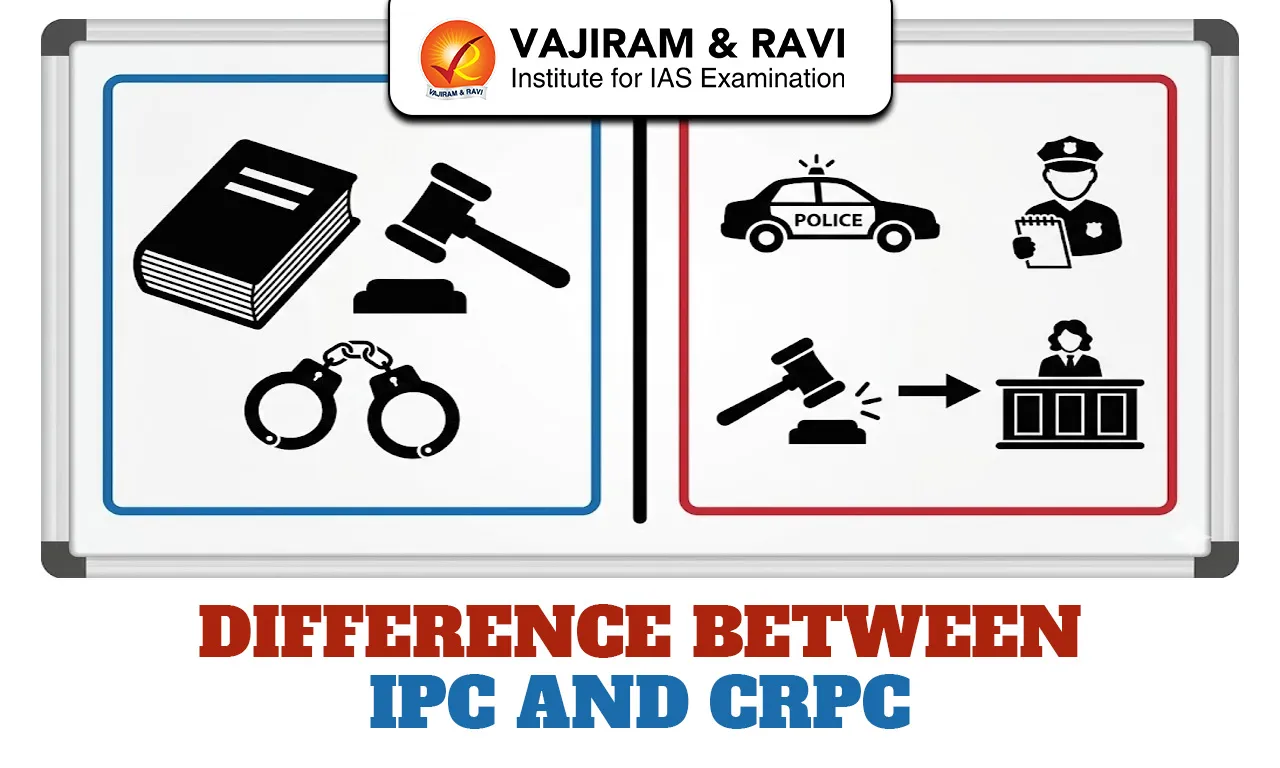
The Indian Penal Code (IPC) is the main criminal code of India that defines offenses and prescribes punishments. It was enacted in 1860 by the British and applies to all Indian citizens. IPC covers almost all types of criminal acts and serves as the foundation of India’s criminal law.

  • Substantive Law: IPC is a substantive law, which means it defines what constitutes a crime and the punishments for each offense.
  • Wide Coverage: It includes offenses such as murder, theft, assault, cheating, fraud, defamation, and more.
  • Sections and Chapters: IPC consists of 23 chapters and 511 sections, addressing all major crimes.
  • Punishments: Depending on the severity of the crime, punishments under IPC may include imprisonment, fines, or death penalty.
  • Applicability: IPC applies to all citizens of India, regardless of religion, caste, or gender.

What is Criminal Procedure Code (CrPC)?

The Criminal Procedure Code (CrPC) governs the procedure for investigating, prosecuting, and trying criminal cases in India. It was enacted in 1973 and ensures that criminal justice is administered fairly and efficiently. CrPC lays down the powers of law enforcement, magistrates, and courts in handling criminal cases.

  • Procedural Law: CrPC is a procedural law, meaning it explains how criminal cases should be handled from investigation to trial.
  • Stages of Criminal Justice: CrPC covers all stages, including arrest, bail, investigation, trial, evidence collection, and sentencing.
  • Authorities: Defines the powers and duties of police, magistrates, and courts in criminal cases.
  • Ensures Fairness: Provides legal safeguards to protect the rights of the accused and ensure justice.
  • Applicability: CrPC is applicable in all criminal proceedings in India, except in certain cases where special laws apply.

Difference Between IPC and CrPC

Although IPC and CrPC are closely linked, they are fundamentally different in purpose and application. The table below highlights the Difference Between IPC and CrPC:

Difference Between IPC and CrPC
Feature Indian Penal Code (IPC) Criminal Procedure Code (CrPC)

Type of Law

Substantive law

Procedural law

Definition

IPC defines criminal acts and prescribes punishments for them.

CrPC lays down the procedure for investigation, trial, and punishment of crimes.

Purpose

To specify what is a crime and what punishment should be given.

To explain how to investigate, prosecute, and try criminal cases.

Year Enacted

1860

1973

Nature

Focuses on substance of criminal law.

Focuses on procedure of criminal justice.

Scope

Covers all types of crimes like murder, theft, fraud, assault, and more.

Covers stages like complaint registration, investigation, arrest, bail, trial, judgment, and appeal.

Authority

Enacted by the Parliament of India.

Enacted by the Parliament of India.

Applicability

Applies to all citizens of India, regardless of religion, caste, or gender.

Applies during criminal proceedings, to police, courts, and magistrates.

Punishment

Specifies punishments like imprisonment, fines, or death penalty depending on the crime.

Does not prescribe punishments, only guides the process to enforce IPC.

Authorities Covered

Not concerned with law enforcement procedures.

Defines powers and duties of police, magistrates, and courts.

Similarities Between IPC and CrPC

The Indian Penal Code (IPC) and Criminal Procedure Code (CrPC) are closely linked laws that together form the foundation of India’s criminal justice system. The Similarities Between IPC and CrPC have been tabulated below.

Similarities Between IPC and CrPC
Similarity Description

Enacted by Parliament

Both are central laws made by the Parliament of India.

Relate to Criminal Law

Both deal with crimes and legal action against offenders.

Purpose

Ensure law and order, protect society, and deliver justice.

Complement Each Other

IPC defines the crime; CrPC explains the procedure for handling it.

Essential for Criminal Justice

Both are parts of India’s criminal justice system.

Applicability

Both apply to all citizens of India.

Difference Between IPC and CrPC FAQs

Q1: What is the main difference between IPC and CrPC?

Ans: IPC defines crimes and prescribes punishments (substantive law). CrPC provides the procedure for investigating, prosecuting, and trying those crimes (procedural law).

Q2: Which law is older, IPC or CrPC?

Ans: IPC is older, enacted in 1860, while CrPC was enacted in 1973.

Q3: Can IPC and CrPC be applied together?

Ans: Yes. IPC defines the offense and its punishment, and CrPC guides the process of handling the case.

Q4: Does CrPC prescribe punishments for crimes?

Ans: No. CrPC only outlines the procedure for criminal cases; punishments are given according to IPC.

Q5: Is IPC a procedural law?

Ans: No. IPC is a substantive law, while CrPC is a procedural law.

Boreendo

Boreendo

Boreendo Latest News

Boreendo, an ancient musical instrument from Pakistan, was recently inscribed on the UNESCO’s List of Intangible Cultural Heritage in Need of Urgent Safeguarding.

About Boreendo

  • The boreendo, or bhorindo, is a traditional musical instrument from Pakistan’s Sindh region.
  • It is a 5,000-year-old musical instrument with a rich history that originates in Mohenjo Daro, part of the Indus Valley Civilisation.
  • It has a hollow, spherical shape with sound holes and is made of clay that is sun-dried and kiln-fired. 
  • It is played by men, while women are involved in decorating the instrument with clay paint.
  • The boreendo produces sound when air is blown into it, and its tone can be adjusted by tilting the mouthpiece. 
  • Its size affects its sound, and recent changes include extra holes to widen its musical range.
  • The boreendo is mainly played at winter bonfires, weddings, and festivals.

Source: DEVD

Boreendo FAQs

Q1: What is Boreendo?

Ans: It is a traditional musical instrument.

Q2: The boreendo is traditionally associated with which region?

Ans: Sindh, Pakistan

Q3: The historical origins of the boreendo trace back to which ancient site?

Ans: It has a rich history that originates in Mohenjo Daro, part of the Indus Valley Civilisation.

Q4: The boreendo is typically made from which material?

Ans: It is made of clay that is sun-dried and kiln-fired.

Pallas’s Gull

Pallas's Gull

Pallas's Gull Latest News

The rare migratory Pallas's Gull was recently spotted in Jharkhand's Udhwa Bird Sanctuary, marking its return after almost a decade.

About Pallas's Gull

  • Pallas's Gull, also called the Great Black-headed Gull, is a large bird species.
  • It is the world's largest black-headed gull and the third-largest species of gull in the world.
  • It belongs to the family Laridae.
  • Scientific Name: Ichthyaetus ichthyaetus

Pallas's Gull Distribution

  • It breeds in colonies in marshes and islands from southern Russia to Mongolia. 
  • It is migratory, wintering in the Mediterranean Sea, the Arabian Peninsula, and India.
  • Habitat: It prefers wetlands, salt lakes, lagoons, and slow-flowing rivers

Pallas's Gull Features

  • It measures 55–72 cm in length with a 142 to 170 cm wingspan. 
  • Summer adults are unmistakable, since no other gull of this size has a black hood. 
  • The adults have grey wings and back, with conspicuous white "mirrors" at the wing tips. 
  • The legs are yellow, and the bill is orangey-yellow with a red tip.
  • In all other plumages, a dark mask through the eye indicates the vestiges of the hood.
  • Pallas's Gulls feed on fish, including dead fish. They also prey upon insects, crustaceans, reptiles, other birds, and small mammals.

Pallas's Gull Conservation Status

It is classified as Least Concern under the IUCN Red List.

Key Facts about Udhwa Lake Bird Sanctuary 

  • It is located in the Sahebganj district of Jharkhand
  • It is the state's only bird sanctuary.
  • It comprises two interconnected wetlands, Pataura Lake and Berhale Lake, which are part of the Ganga River floodplain and surrounded by the Rajmahal Hills.
  • It was declared a Ramsar Site in 2025.
  • It supports a diverse ecosystem with over 146 species of birds, including endangered ones like the band-tailed fish eagle, lesser adjutant stork, and common pochard. 
  • It also hosts a variety of aquatic plants, fish, reptiles, and mammals, such as fishing cats and otters.
  • The sanctuary is an important habitat within the Central Asian flyway, attracting migratory birds during the winter.

Source: DEVD

Pallas's Gull FAQs

Q1: What is Pallas's Gull?

Ans: It is a large bird species.

Q2: In which regions does Pallas’s Gull breed?

Ans: It breeds in colonies in marshes and islands from southern Russia to Mongolia.

Q3: Where does Pallas’s Gull migrate in winter?

Ans: The Mediterranean Sea, Arabian Peninsula, and India.

Q4: What is the IUCN conservation status of Pallas’s Gull?

Ans: Least Concern

National Film Heritage Mission (NFHM)

National Film Heritage Mission (NFHM)

National Film Heritage Mission Latest News

In response to a question in Lok Sabha recently, the Minister of State for Information & Broadcasting said that till date 1,469 titles, equaling 4.3 lakh minutes of films, have been digitized under the National Film Heritage Mission (NFHM).

About National Film Heritage Mission

  • It was launched in 2015 by the Ministry of Information and Broadcasting for restoring and preserving the film heritage of India. 
  • Implementation Agency: National Film Archive of India, Pune.
  • Objectives:
    • Condition assessment of film reels to ascertain the remaining life of the film.
    • 2K/4K picture and sound restoration of landmark films of India and recording of new picture and sound inter-negatives of each film.
    • Digitization of films.
    • Construction of archival and preservation facilities called vaults.
    • Training and workshops for in-house capacity building.
    • Web-based end-to-end IT solution.

Key Facts about National Film Archive of India (NFAI)

  • It was established in February 1964 as a media unit of the Ministry of Information and Broadcasting, Government of India.
  • Its primary objective is to acquire and preserve Indian cinematic heritage. 
  • This includes preservation of film and non-film material, including but not limited to celluloid, stills, glass slides, posters, lobby cards, scripts, and song booklets.
  • Beyond safeguarding celluloid history, the NFAI actively promotes Indian cinema. 
    • They organize screenings, film appreciation courses, and research programs, fostering a deeper understanding of Indian film culture.
  • It is headquartered in Pune with regional centers in Bangalore, Kolkata, and Trivandrum.
  • It has been a member of the International Federation of Film Archives (FIAF) since 1969.

Source: PIB

National Film Heritage Mission FAQs

Q1: Which Ministry launched the National Film Heritage Mission?

Ans: It was launched in 2015 by the Ministry of Information and Broadcasting.

Q2: Which organisation is the implementing agency for National Film Heritage Mission?

Ans: National Film Archive of India (NFAI), Pune

Q3: What is the objective of National Film Heritage Mission?

Ans: Restoring and preserving the film heritage of India.

Diving Support Craft A20

Diving Support Craft A20

Diving Support Craft A20 Latest News

The Indian Navy will commission Diving Support Craft (DSC) A20, at Kochi under the aegis of Southern Naval Command.  

About Diving Support Craft A20

  • It is the first vessel of the indigenously designed and constructed Diving Support Craft.
  • DSC A20 is the lead ship in a series of five Diving Support Craft being built by M/s Titagarh Rail Systems Limited (TRSL), Kolkata. 
  • Purpose: It is built for a wide spectrum of diving and underwater missions in coastal waters.

Features of Diving Support Craft A20

  • It has a catamaran hull design form, the ship offers superior stability, enhanced deck area, and improved seakeeping characteristics,
  • It is equipped with advanced, state-of-the-art diving systems that meet the highest standards of safety and operational efficiency.
  • Capacity: It has a displacement capacity of approximately 390 tons. 
  • It is designed and built in accordance with the Naval Rules and Regulations of the Indian Register of Shipping (IRS),
  • DSC A20 will be based at Kochi and operate under Southern Naval Command.
  • Significance: The Indian Navy’s capability in diving support, underwater inspection, salvage assistance, and coastal operational deployment will be substantially strengthened.

Source: PIB

Diving Support Craft A20 FAQs

Q1: What is the purpose of Diving Support Craft A20?

Ans: Diving and underwater missions in coastal waters

Q2: What is the capacity of Diving Support Craft A20?

Ans: 390 tons

Key Facts about Italy

Key Facts about Italy

Italy Latest News

The recently held Italy–India Business Forum 2025 will strengthen bilateral trade, innovation and strategic economic partnership.

About Italy

  • Location: It is located in South-central Europe on the Apennine Peninsula.
  • Bordering Countries: It shares its border with Switzerland and Austria in the north, Slovenia in the northeast and France in the northwest.  
  • Vatican City and San Marino are the two enclaved sovereign states within Italy.
  • Its southern boundary extends into the Mediterranean Sea.
  • Maritime boundaries: Italian Peninsula is bordered by the Adriatic Sea in the east, the Sea of Sicily in the south, the Ionian Sea in the southeast, the Ligurian Sea, and the Tyrrhenian Sea in the southwest.
  •  Capital City: Rome

Geographical Features of  Italy

  • Terrain: It is mostly rugged and mountainous and has some plains, coastal lowlands.
  • Major Rivers: Po (It is Italy's longest river) and Adige
  • Highest Point: Mont Blanc 
  • Natural Resources: Coal, antimony, mercury, zinc, potash, barite, asbestos, pumice, fluorspar, feldspar, pyrite (sulfur), natural gas and crude oil reserves.
  • Italy is volcanic in origin, and a few of its many volcanoes are active, including Sicily's Mt. Etna, Stromboli in the Aeolian Islands.

Source: PIB

Italy FAQs

Q1: What is the capital of Italy?

Ans: Rome

Q2: Which mountain range runs along the eastern coast of Italy?

Ans: Apennines

Difference Between GMT and IST

Difference Between GMT and IST

GMT is the Greenwich Mean Time which is the unified time zone adopted by most of the English countries which are measured in London at midnight, whereas IST is the Indian Standard Time which is 5 hours 30 minutes ahead of GMT. This time standard is essential for various activities, including legal, social, and business purposes. There are numerous time zones across the globe, with each country or region selecting the time zone that best fits their geographical position and needs. 

Understanding the Difference Between GMT and IST is crucial for UPSC aspirants, as it is a significant topic in the Geography section. This topic features majorly in both the Mains General Studies Paper-1 and the UPSC Prelims Syllabus 2025.

Difference Between GMT and IST

A time zone is a region on Earth where a consistent standard time is followed. While countries have the freedom to choose a time zone within their borders, two time zones are renowned worldwide: Indian Standard Time (IST) and Greenwich Mean Time (GMT).

Difference Between GMT and IST
GMT (Greenwich Mean Time) IST (Indian Standard Time)

The Greenwich Mean Time was created by the Royal Observatory in 1675 for assistance navigators at sea.

The Indian Standard Time was established as the official time zone of India upon its independence on August 15th, 1947

When calculating GMT it is considered equivalent to UT1 (the modern form of mean solar time at 0° longitude), but this meaning can differ from UTC by up to 0.9 seconds.

The IST is calculated on the basis of a clock tower in Mirzapur (with coordinates 25.15° North Latitude and 82.58° East longitude).

Because of Earth’s uneven angular velocity in its elliptical orbit, GMT is rarely the exact moment the Sun crosses the Greenwich meridian

The Time and Frequency Standards Laboratory at the National Physical Laboratory in New Delhi generates official time signals for both commercial and official purposes. These signals are derived from atomic clocks and are synchronised with the global network of clocks.

Time zones are determined by a combination of legal, political, and geographical factors, meaning they do not always align perfectly with meridian lines. This also applies to Greenwich Mean Time (GMT), as discrepancies arise between the legal and geographical definitions of GMT.

India's single time zone, IST, doesn’t suit its vast geography. The country’s east-west stretch of 2,933 kilometres causes the sun to rise and set nearly two hours earlier in the east than in the west. To address this, the government has recently considered introducing multiple time zones.

The term Greenwich Mean Time is used commonly in the United Kingdom and in the Commonwealth of Nations such as Australia, New Zealand and many other countries of the Eastern Hemisphere

Indian Standard Time is used in India and Sri Lanka but it takes references from the UTC (Universal Time Coordinate). The UTC has been developed as a successor to the Greenwich Mean Time

Facts About Indian Standard Time

  1. The Council of Scientific & Industrial Research - National Physical Laboratory (CSIR-NPL), which is responsible for maintaining Indian Standard Time (IST), has put forward a proposal suggesting the adoption of two time zones in India. 
  2. The proposal includes IST I (UTC+5:30) for the entire country and IST II (UTC+6:30) specifically for the North-Eastern regions. 
  3. This recommendation comes in response to the early sunrise in the easternmost parts of India, where the country’s wide longitudinal span results in significant daylight hours being lost. 
  4. The Indian government has not supported this proposal, mentioning potential challenges and complexities involved in implementing two separate time zones.

Time Zones Importance in Geography

Time zones are essential in geography as they help synchronize human activities with Earth’s rotation and the position of the Sun. The Earth is divided into 24 time zones, each generally 15° of longitude apart, allowing for a consistent system of measuring time worldwide.

Understanding Time Zones is crucial in studying global communication, transportation, trade, and daily life patterns. It also explains regional differences in sunrise, sunset, and work hours. Time zones help avoid confusion and maintain coordination in international relations and travel schedules. They also play a role in political boundaries and economic planning.

Countries Passing Through GMT

Greenwich Mean Time (GMT) is the reference time from which all world time zones are calculated. Countries passing through GMT are located along the Prime Meridian (0° longitude), which runs through Western Europe and parts of Africa.

  • United Kingdom(specifically England)
  • France
  • Spain
  • Algeria
  • Mali
  • Burkina Faso
  • Togo
  • Ghana
  • Antarctica(at the South Pole)
Also Check
Difference Between Cabinet and Council of Ministers Difference between National Anthem and National Song
Difference Between GMT and IST Difference Between Citizenship and Nationality
Difference Between District Collector and District Magistrate Difference Between Kumbh and Mahakumbh
Difference Between Fundamental Rights and Fundamental Duties Differences Between Censure and No-Confidence Motion
Differences Between Absolute Poverty and Relative Poverty Difference Between Wildlife Sanctuary and National Park

Difference Between GMT and IMT FAQs

Q1: What is the time difference between GMT and IST?

Ans: The Indian Standard Time (IST) is ahead of the Greenwich Mean Time (GMT) by 5 hours 30 mins.

Q2: What are the countries in the IST time zone?

Ans: IST (Indian Standard Time) zone are followed in India and Sri Lanka.

Q3: What is the Standard Meridian of India?

Ans: The 82.5 degree longitude is considered as the standard meridian of India.

Q4: Which states cross the Indian Standard Time line?

Ans: The Indian Standard Time line passes through the states of Uttar Pradesh, Madhya Pradesh, Chhattisgarh, Orissa and Andhra Pradesh.

Q5: How to convert GMT to IST?

Ans: To convert GMT to IST, add 5 hours and 30 minutes. For example, 12:00 GMT becomes 17:30 IST (Indian Standard Time).

Western Tragopan

Western Tragopan

Western Tragopan Latest News

India’s western tragopan population is steadied by captive breeding but human disturbance and habitat fragmentation continue to endanger its future.

About Western Tragopan

  • It is also known as the western horned tragopan, is amongst the rarest of all living pheasants.
  • Due to its beautiful plumage and large size, this bird is locally known as ‘jujurana’ or ‘king of birds’
  • It is one of the rarest and most stunning pheasant species in the world.
  • These birds are shy and ground-dwelling.
  • They are usually active during dawn and dusk, moving quietly through dense undergrowth.
  • It is the state bird of Himachal Pradesh.
  • Distribution: It is endemic to the northwest Himalaya, within a narrow range from Hazara in north Pakistan through Jammu and Kashmir and Himachal Pradesh, to the western part of Garhwal.
    • The upper part of Great Himalayan National Park’s (GHNP) forest zone holds the world’s largest known population of western tragopan.
  • Habitat: It prefers a habitat of ringal (dwarf) bamboo beneath dense forest.
  • Diet: It feeds mostly on leaves, shoots and seeds, but also consumes insects and other invertebrates.
  • Breeding:  It breeds during May to June, laying 3–5 eggs in concealed nests on the forest floor.
  • Threats: Habitat loss, hunting pressure and anthropogenic disturbances which includes livestock grazing, minor forest produce collection like medicinal herbs etc.
  • Conservation status: IUCN: Vulnerable.

Source: TH

Western Tragopan FAQs

Q1: What is the Western Tragopan also known as?

Ans: Jujurana

Q2: What is the habitat of Western Tragopan?

Ans: Western Himalayas

Daily Editorial Analysis 12 December 2025

Daily Editorial Analysis

The Stark Reality of Educational Costs in India

Context

  • Education is a constitutionally guaranteed right in India. Article 21A ensures free and compulsory education for children aged six to 14, while the NEP 2020 extends this vision to cover ages three to 18.
  • Despite these commitments, schooling continues to impose a substantial financial burden on families, as shown by recent national data.
  • Therefore, it is important to analyse enrolment patterns, educational expenditure, and the growth of private coaching to assess the widening gap between constitutional promises and the reality faced by households.

Enrolment Patterns: The Growing Shift to Private Schools

  • Government schools still enrol 55.9% of students nationally, yet private unaided schools account for a significant 31.9% of enrolments.
  • This shift is far more prominent in urban areas, where 51.4% of students attend private institutions compared to 24.3% in rural regions.
  • The gender gap remains small, with 34% of boys and 29.5% of girls enrolled in private schools.
  • Across all levels of schooling, urban private enrolment is consistently higher, reaching 62.9% at the pre-primary stage and declining to 42.3% at higher secondary.
  • Compared with previous NSS data, private school enrolment has risen across both rural and urban India, particularly at the primary and middle levels.
  • This upward trend reflects increasing parental preference for private institutions, driven by perceptions of better quality.

Educational Expenditure: The Financial Burden on Households

  • Despite official guarantees of free education, many government school students still incur costs. 25.3% of rural and 34.7% of urban government school students report paying course fees.
  • In private schools, the figure is almost universal, with around 98% of students paying fees.
  • The fee gap between government and private schools is stark. In rural government schools, annual fees range from ₹823 to ₹7,308, while in rural private schools they range from ₹17,988 to ₹33,567.
  • Urban households face even higher private school fees, from ₹26,188 at pre-primary to ₹49,075 at higher secondary.
  • When converted into monthly terms, private schooling represents a heavy burden: rural families spend ₹1,499–₹2,797 per month, while urban families spend ₹2,182–₹4,089.
  • These costs align with the monthly consumption of the poorest 5% to the third income decile, indicating that private schooling consumes a disproportionate share of household budgets.
  • This challenges the notion that basic education in India is effectively free.

Private Coaching: An Additional Layer of Inequality

  • Private coaching has become widespread, with 25.5% of rural and 30.7% of urban students relying on it.
  • The proportion rises sharply at higher levels of education, reaching 36.7% in rural and 40.2% in urban secondary schooling.
  • Coaching costs add another burden. Urban students spend an average of ₹13,026 annually on tuition, almost double the rural average of ₹7,066. At the higher secondary stage, expenditures rise to ₹22,394 in urban and ₹13,803 in rural
  • The demand for coaching is driven by higher household income, better parental education, and urban residence.
  • It is particularly common among students in private schools, where teachers are often underpaid and underqualified, compelling families to seek external academic support.
  • Coaching has also become a symbol of academic prestige, deepening inequalities between socio-economic groups.

Implications for Equity and the Public Education System

  • The rise in private schooling and coaching has significant implications for educational equity.
  • Families with limited means face difficult choices, often stretching their finances to provide what they perceive as better educational opportunities.
  • Declining enrolment in government schools further weakens these institutions by reducing demand and resource support.
  • Private coaching amplifies learning disparities. Students from wealthier households gain academic advantages that poorer students cannot afford, widening long-term socio-economic gaps.
  • Strengthening public school quality is therefore critical to reducing reliance on both private schools and tutoring.

The Path Forward: Strengthening Publicly Funded Schools

  • Achieving the NEP 2020 vision of universal and equitable education requires a revitalised public education system.
  • Improved infrastructure, better-trained teachers, and strengthened classroom processes can help rebuild public confidence.
  • High-quality government schools would reduce the need for costly private schooling and limit dependence on coaching.
  • Research links school quality directly to reduced reliance on private tuition, indicating that systemic improvements in government schools can create more equal learning conditions for all students.
  • Investment in teacher development, foundational learning, and early education is essential for inclusive progress.

Conclusion

  • Schooling in India remains financially demanding, despite constitutional guarantees of free education.
  • Rising private school enrolment, high fees, and the normalisation of private coaching impose heavy burdens on households and reinforce educational inequality.
  • Strengthening public schools is essential to ensuring that education remains a right rather than a privilege, and to creating a system that is both equitable and accessible for all children.

The Stark Reality of Educational Costs in India FAQs

Q1. What does Article 21A guarantee to children in India?
Ans. Article 21A guarantees free and compulsory education to children aged six to 14 years.

Q2. Which type of schools have higher enrolment in urban areas?
Ans. Private schools have higher enrolment in urban areas.

Q3. Why do many students rely on private coaching?
Ans. Many students rely on private coaching because school quality is uneven and teachers, especially in private schools, may be underqualified or underpaid.

Q4. What financial burden do private schools impose on families?
Ans. Private schools impose high annual fees that often match or exceed the monthly consumption budgets of low-income households.

Q5. What is one major way to reduce educational inequality in India?
Ans. One major way to reduce educational inequality in India is to strengthen the quality of government schools.

Source: The Hindu


The Madras High Court Must Break Its Silence

Context

  • High Court judge appointments are first recommended by the Collegium — the Chief Justice of the High Court and its two senior-most judges.
  • The recommendation goes to the State government, which may raise objections or request clarifications.
  • However, once the Collegium reiterates its recommendation or provides the required clarifications, the State government is obliged to accept the decision.
  • In this context, this article highlights the growing constitutional concerns surrounding the Madras High Court Collegium’s recent recommendations, focusing on procedural irregularities, the exclusion of a senior judge, and the urgent need for transparency and systemic reform.

Clarification Sought on Composition of the Madras High Court Collegium

  • The Madras High Court Collegium recommended six district judges for elevation in November 2025.
  • While the State government raised no objections regarding the candidates’ merit, it sought clarification on a procedural issue — the constitution of the Collegium itself.
  • The Case of Justice Nisha Banu
    • Justice J. Nisha Banu, elevated in 2016, is the second most senior judge of the Madras High Court and thus a rightful Collegium member.
    • However, a Supreme Court Collegium recommendation dated October 14, 2025 ordered her transfer to the Kerala High Court and placed her ninth in seniority there.
    • Despite this transfer order, she has not joined the Kerala High Court and continues to serve at Madras, making her de facto a Collegium judge.

State Government’s Concern: Why Was She Excluded

  • The State questioned why Justice Nisha Banu was excluded from the Collegium consultations and why Justice M.S. Ramesh, the next senior judge, was included instead.
  • It sought clarification on:
    • The legal authority behind this substitution
    • Whether any Supreme Court directive or constitutional principle justified bypassing a senior judge
    • Whether the Collegium assumed that Justice Nisha Banu was no longer part of the Madras High Court
  • The Collegium did not address these concerns and instead proceeded to recommend nine more advocates for additional vacancies.

Constitutional and Procedural Implications

  • The Memorandum of Procedure clearly states that the Chief Justice and the two seniormost judges of the High Court must form the Collegium for recommending appointments.
  • Ignoring a senior judge raises questions about constitutional validity, institutional integrity, and adherence to established norms.
  • Core Issue
    • Whether intentionally or by oversight, the non-inclusion of Justice Nisha Banu in the Madras High Court Collegium contradicts the prescribed procedure.
    • The State government is therefore entitled to a clarification, as transparency and adherence to constitutional norms lie at the heart of judicial appointments.

When Procedural Lapses Threaten Constitutional Legitimacy

  • Procedural norms in judicial appointments are not trivial technicalities but the very basis of the Collegium’s constitutional legitimacy.
  • Since the Collegium system is built entirely on judicial precedent, it must strictly follow established procedures to maintain credibility.
  • Excluding a judge who continues to hold administrative authority, without recorded reasons, and replacing them with another judge lacking jurisdictional basis, undermines the validity of the Collegium’s decisions.
  • An improperly constituted Collegium risks rendering its recommendations void, creating a constitutional crisis rooted in uncertainty over who is authorised to decide.
  • These concerns intensify long-standing criticisms of the Collegium system — including opacity, alleged nepotism, inadequate representation, political influence, and limited accountability.

Need for Transparency and Clarification

  • The Madras High Court Collegium must explain, in law and procedure, why Justice Nisha Banu was excluded and Justice M.S. Ramesh included.
  • Silence threatens structural judicial integrity and fuels speculation about motive.
  • A judge’s ideological or personal background cannot justify deviation from constitutional norms.
  • Impartiality, consultation, and adherence to justice must guide judicial decisions. Any departure from this principle weakens public trust.

Call for Supreme Court–Led Collegium Reforms

  • The situation highlights the need for long-pending reforms:
    • Clear rules on Collegium composition
    • Published reasons for decisions
    • Mandatory disclosures to enhance transparency
  • The Supreme Court must revisit the system to prevent ambiguity and inconsistency.

Core Issue: Legality of the Appointment Process

  • The controversy is not about the capability of the six district judges or nine advocates recommended.
  • The question is whether their elevation followed Article 217 and the Memorandum of Procedure, which requires recommendations from the Chief Justice and the two seniormost High Court judges.
  • If the Collegium’s constitution itself is questionable, then its recommendations also lose validity.
  • This creates a constitutional conflict between the judiciary and the State government — a crisis that can only be resolved through transparency, adherence to procedure, and systemic reform.

The Madras High Court Must Break Its Silence FAQs

Q1. Why did the State government seek clarification from the Madras High Court Collegium?

Ans. The State sought clarification on why the senior-most eligible judge, Justice Nisha Banu, was excluded from the Collegium despite still serving at the Madras High Court.

Q2. What makes Justice Nisha Banu’s exclusion constitutionally significant?

Ans. Her exclusion contradicts mandatory procedure requiring the Chief Justice and two seniormost judges to form the Collegium, raising questions about legality and institutional integrity.

Q3. How does an improperly constituted Collegium affect judicial appointments?

Ans. If the Collegium is wrongly constituted, its recommendations risk invalidation, creating uncertainty over authority and triggering a potential constitutional conflict with the State government.

Q4. What broader issues about the Collegium system does this situation highlight?

Ans. It exposes systemic problems—opacity, lack of accountability, alleged favouritism, and inadequate representation—strengthening calls for transparent criteria, published reasons, and structural reforms.

Q5. Why is Supreme Court intervention considered necessary?

Ans. Only the Supreme Court can reform Collegium rules, ensure consistent procedures, mandate disclosures, and clarify composition norms to prevent recurring disputes in judicial appointments.

Source: TH

Daily Editorial Analysis 12 December 2025 FAQs

Q1: What is editorial analysis?

Ans: Editorial analysis is the critical examination and interpretation of newspaper editorials to extract key insights, arguments, and perspectives relevant to UPSC preparation.

Q2: What is an editorial analyst?

Ans: An editorial analyst is someone who studies and breaks down editorials to highlight their relevance, structure, and usefulness for competitive exams like the UPSC.

Q3: What is an editorial for UPSC?

Ans: For UPSC, an editorial refers to opinion-based articles in reputed newspapers that provide analysis on current affairs, governance, policy, and socio-economic issues.

Q4: What are the sources of UPSC Editorial Analysis?

Ans: Key sources include editorials from The Hindu and Indian Express.

Q5: Can Editorial Analysis help in Mains Answer Writing?

Ans: Yes, editorial analysis enhances content quality, analytical depth, and structure in Mains answer writing.

Agentic AI

Agentic AI

Agentic AI Latest News

Satya Nadella, Chairman and CEO of Microsoft, recently observed that India is witnessing strong momentum in the deployment of AI and agentic AI applications.

About Agentic AI

  • Agentic AI is an advanced form of artificial intelligence focused on autonomous decision-making and action. 
  • It consists of AI agentsmachine learning models that mimic human decision-making to solve problems in real time.
  • Unlike traditional AI, which primarily responds to commands or analyzes data, agentic AI can set goals, plan, and execute tasks with minimal human intervention.
  • "Agentic" indicates agency — the ability of these systems to act independently, but in a goal-driven manner.
  • At its core, this technology is built on several key components:
    • Perception: Agentic AI starts by gathering information from its surroundings and different sources, such as sensors, databases, and user interfaces. 
    • Reasoning: Using a large language model (LLM), agentic AI analyzes the gathered data to understand the context, identify relevant information, and formulate potential solutions. 
    • Planning: The AI then uses the information it gathered to develop a plan. This involves setting goals, breaking them down into smaller steps, and figuring out the best way to achieve them.
    • Action: Based on its plan, the AI takes action. This could involve performing tasks, making decisions, or interacting with other systems.
    • Reflection: After taking action, the AI learns from the results. It evaluates whether its actions were successful and uses this feedback to adjust its plans and actions in the future. 
  • Agentic AI builds on generative AI (GenAI) techniques by using large language models (LLMs) to function in dynamic environments. 
  • While generative models focus on creating content based on learned patterns, agentic AI extends this capability by applying generative outputs toward specific goals. 
  • For example, a generative AI model like OpenAI’s ChatGPT might produce text, images, or code, but an agentic AI system can use that generated content to complete complex tasks autonomously by calling external tools.

Source: TH

Agentic AI FAQs

Q1: What is Agentic AI?

Ans: It is an advanced form of artificial intelligence focused on autonomous decision-making and action.

Q2: What distinguishes Agentic AI from traditional AI?

Ans: Ability to act independently and pursue goals.

Q3: What makes Agentic AI capable of functioning in dynamic environments?

Ans: Use of large language model (LLM) -based generative abilities combined with autonomous planning

Champions of the Earth Award

Champions of the Earth Award

Champions of the Earth Award Latest News

Recently, the Additional Chief Secretary of the Department of Environment, Climate Change and Forests of Tamil Nadu, Ms Supriya Sahu, has won the UN Environment Programme’s 2025 Champions of the Earth Award. 

About Champions of the Earth Award

  • It was established in 2005 and awarded by the United Nations Environment Programme (UNEP).
  • It is the UN’s highest environmental honour, recognises trailblazers at the forefront of efforts to protect people and the planet.
  • Every year, UNEP honours individuals and organizations working on innovative and sustainable solutions to address the triple planetary crisis of climate change, nature and biodiversity loss, and pollution and waste

Champions of the Earth are Celebrated in Four Categories

  • Policy leadership: Public sector officials leading global or national action for the environment. They shape dialogue, lead commitments and act for the good of the planet.
  • Inspiration and action: Leaders taking bold steps to inspire positive change to protect our world. They lead by example, challenge behavior and inspire millions.
  • Entrepreneurial vision: Visionaries challenging the status quo to build a cleaner future. They build systems, create new technology and spearhead a groundbreaking vision. 
  • Science and innovation: Trailblazers pushing the boundaries of technology for profound environmental benefit. 

Source: News On Air

Champions of the Earth Award FAQs

Q1: What is the Champions of the Earth Award?

Ans: A UN award for environmental protection

Q2: Who established the Champions of the Earth Award?

Ans: United Nations Environment Programme (UNEP)

How India’s New Savings Trend Is Transforming Market Stability & Investor Risks

India’s New Savings Trend

India’s New Savings Trend Latest News

  • India’s capital markets are undergoing a major shift as domestic household savings replace foreign institutional investment, reducing dependence on volatile global capital. 
  • While this strengthens market stability, the rapid rise of inexperienced retail investors poses risks. 
  • As the country pursues “Viksit Bharat 2047,” concerns remain over whether a market driven by uneven participation and modest returns can truly support inclusive and sustainable economic growth.

Domestic Investors Becoming the Market’s New Anchor

  • Foreign Portfolio Investor (FPI) ownership has fallen to a 15-month low, while domestic Mutual Funds and retail investors are reaching record levels of market participation.
  • SIP inflows continue to surge, and individual investors now hold nearly 19% of the equity market — the highest in over 20 years. 
  • This growing domestic base is stabilising markets and cushioning volatility, as reflected in the NIFTY 50’s strong performance in October.

Policy Impact: Greater Flexibility for the RBI

  • With domestic money replacing volatile foreign capital, the Reserve Bank of India gains more policy room. 
  • Record-low inflation and robust household inflows mean less pressure to defend the rupee and more scope to stimulate credit growth and balance growth–inflation objectives.

A New Risk: Fragility Beneath the Stability

  • This policy comfort is not guaranteed. If household sentiment weakens or downturns hit vulnerable investors hardest, the very shift that stabilises markets today could trigger instability tomorrow. 
  • Careful management is essential to ensure this transformation strengthens — rather than threatens — long-term resilience.

Primary Markets Surge on Domestic Capital Strength

  • India’s primary markets are booming, with 71 mainboard IPOs raising over ₹1 lakh crore this fiscal year. 
  • Strong domestic confidence is driving record capital formation, as companies announce over ₹32 lakh crore in investments — a 39% jump from last year. 
  • Private sector participation now accounts for nearly 70% of these commitments, signalling robust economic momentum.

Beneath the Boom: Concerns About Valuation and Risk

  • Despite strong growth, rising valuations raise red flags. IPOs such as Lenskart, Mamaearth and Nykaa reflect sky-high price-to-earnings ratios, prompting concerns that enthusiasm may be outpacing business fundamentals. 
  • Retail investors, drawn into the excitement, risk taking on outsized exposure without fully understanding long-term implications.

The Advice and Performance Gap in India’s Investment Landscape

  • The celebration of retail participation and mutual fund growth often overlooks the uneven quality of financial advice and unequal wealth outcomes. 
  • Financial research underscores a persistent “performance problem” — most active fund managers fail to consistently outperform markets after adjusting for risk and fees. 
  • This suggests that increased participation does not automatically translate into better returns, especially for less-informed investors.

Unequal Wealth Distribution and Rising Risks for New Investors

  • Structural inefficiencies in India’s equity markets are deepening wealth inequality, as equity gains disproportionately accrue to higher-income groups with better financial access. 
  • The recent ₹2.6 lakh crore decline in household equity wealth raises alarm, especially if losses are borne by new, vulnerable investors. 
  • While rising retail participation is often viewed as financial democratisation, inadequate safeguards and weak financial literacy expose inexperienced investors to heightened risks. 
  • When market corrections inflict concentrated losses on first-time participants, long-term trust erodes, undermining both inclusive growth and overall economic demand.

Correcting Access Asymmetry in India’s Financial System

  • India’s growing investor base requires more than higher savings — it demands solutions to the persistent “access asymmetry problem.” 
  • Protecting everyday investors means moving beyond mere disclosures to structural safeguards, including lower fees and wider adoption of passive, low-cost investment vehicles. 
  • With active funds holding 9% of the market versus just 1% for passive funds, reducing expense ratios and improving investor awareness of indexing are essential to addressing the broader “performance problem.”

Strengthening Market Structures and Governance

  • Falling promoter holdings in the NIFTY 50 — now at a 23-year low of 40% — underscore the need to ensure that such trends reflect healthy capital raising rather than opportunistic exits. 
  • Enhancing corporate governance, transparency, and long-term stewardship is crucial to protecting domestic savers’ wealth and market confidence.

Data-Driven Inclusion and Targeted Policy Support

  • Improving financial access requires granular, gender- and location-specific data to identify and address participation gaps. 
  • Bringing more women and underrepresented groups into the financial mainstream must become a core policy priority, not an afterthought.

The Path Forward: From Fund Mobilisation to Institutional Integrity

  • India’s new market foundation—built increasingly on domestic savings—offers promise. 
  • But the next phase demands a shift from merely attracting capital to strengthening institutional integrity, deepening financial literacy, and addressing inherent asymmetries. 
  • Ensuring fair, inclusive, and informed participation is now a fiduciary necessity, not a peripheral goal.

Source: TH

India’s New Savings Trend FAQs

Q1: What is driving India’s shift from foreign to domestic market ownership?

Ans: Declining FPI share and rising SIP flows have pushed domestic investors to nearly 19% ownership, giving markets stability and reducing reliance on volatile global capital.

Q2: How does this shift impact the Reserve Bank of India’s policy space?

Ans: With strong domestic inflows and low inflation, RBI faces less pressure to defend the rupee, gaining flexibility to stimulate credit and manage growth–inflation trade-offs.

Q3: Why are primary markets booming despite valuation concerns?

Ans: Robust domestic confidence and ₹32 lakh crore in new investment commitments are driving IPO activity, though high P/E ratios raise concerns about retail exposure to exuberant valuations.

Q4: What risks do new retail investors face in this changing landscape?

Ans: Inexperienced investors may suffer disproportionate losses during corrections, worsening wealth inequality, reducing consumption, and undermining long-term trust in equity markets.

Q5: Why is addressing access and performance asymmetry essential?

Ans: With active funds holding 9% of the market and passive funds only 1%, lowering fees, improving financial literacy, and strengthening governance are vital for equitable wealth creation.

Trump’s $1 Million Gold Card Visa: Features, Costs, Benefits & India Impact

Trump Gold Card

Trump Gold Card Visa Latest News

  • US President Donald Trump has launched the long-awaited ‘Gold Card’ visa programme, inviting individuals and companies to invest at least $1 million. 
  • The initiative aims to attract global talent, generate significant revenue for the US Treasury, and offer a faster, more advantageous route compared to the conventional EB-5 visa system.

Trump Gold Card

  • The Trump Gold Card is a newly launched US visa programme offering permanent residency and a pathway to citizenship in exchange for high-value investments. 
  • It replaces the EB-5 visa system and is designed to draw foreign capital and skilled talent into the US.

Who Can Apply

  • Individuals: Must qualify for lawful permanent residency and be admissible to the US.
  • Corporations: Can sponsor foreign-born employees.
  • Families: Spouses and unmarried children under 21 may apply but must pay additional fees.

Costs and Fees

  • Processing Fee: $15,000 per applicant or corporate sponsor (non-refundable).
  • Investment/Gift: $1 million for individual applicants; $2 million per employee for corporate sponsors
  • Additional Costs: Visa fees and medical exam charges.

Benefits of the Gold Card

  • Grants US permanent residency through EB-1 or EB-2 categories.
  • Faster processing than traditional visa routes.
  • Eligible family members may join.
  • Offers a direct path to US citizenship.

Key Rules and Restrictions

  • Status may be revoked for security risks or serious criminal offences.
  • Applicants from some countries may face year-long waits.
  • All recipients must pay US taxes on global income.

Growing Interest Among Indians in Investment-Based US Residency

  • With long delays in employment-based Green Card processing, many Indians — especially H-1B holders and wealthy families — are turning to investment pathways for faster US residency.

EB-5: A Favoured Route for Indian Investors

  • The EB-5 visa offers a comparatively quicker route to permanent residency.
    • Requires $800,000–$1,050,000 investment based on project type and location.
    • Must create or preserve 10 full-time US jobs.
    • Typically done through USCIS-approved regional centres, which handle over 90% of EB-5 applications.
    • Begins with a conditional Green Card, later becoming permanent.
  • This programme appeals strongly to Indian HNIs aiming to secure their children’s future in the US.

Gold Card vs EB-5: Key Differences

  • The Trump Gold Card provides permanent residency but differs fundamentally from EB-5:
    • Gold Card requires a non-refundable $1 million (individual) or $2 million (corporate) contribution directly to the US government.
    • No specified job-creation requirement, unlike EB-5.
    • Not an investment, offering no capital return, whereas EB-5 allows potential returns.
    • Applicants must still meet EB-1A or EB-2 NIW criteria of extraordinary ability or national interest.
  • Experts note that while Gold Card may offer faster processing, it does not simplify eligibility requirements or reduce costs compared to EB-5.

Why Experts Still Prefer EB-5

  • Immigration specialists argue that:
    • EB-5 remains the fastest, most cost-effective path to US residency for many.
    • It does not require extraordinary ability, making it more accessible.
    • It helps prevent dependent children from “aging out” while awaiting EB-2 or EB-3 priority dates.
    • Unlike Gold Card, EB-5 offers predictability and potential investment returns.

EB-5 Stability After Legal Reforms

  • The EB-5 Reform and Integrity Act (RIA) 2022 extended the Regional Centre Programme to 2027.
  • Investments made before September 2026 are grandfathered, offering protection even if the programme changes later.
  • This has increased investor confidence and reduced uncertainty.

Rising EB-5 Demand Among Indians

  • EB-5 has seen strong Indian uptake:
    • $4.1 billion invested in the first three quarters of FY2025 alone.
    • 1,050–1,150 Indian applicants post-RIA, making India the second-largest source of EB-5 submissions (20–22%).
    • Growing interest is driven by:
    • H-1B holders frustrated with long Green Card delays.
    • Wealthy families seeking secure US residency and education opportunities for their children.

Source: TH | ToI | NDTV

Trump Gold Card FAQs

Q1: What is the Trump Gold Card visa programme?

Ans: The Gold Card grants permanent residency and a pathway to citizenship in exchange for a $1M+ investment, replacing EB-5 and targeting global talent and capital inflows.

Q2: Who can apply for the Gold Card?

Ans: Eligible individuals must qualify for permanent residency, corporations may sponsor employees, and spouses and children under 21 can join by paying additional fees.

Q3: How does the Gold Card differ from the EB-5 visa?

Ans: Gold Card requires a non-refundable payment with no job-creation requirement, while EB-5 is an investment generating potential returns and mandatory US job creation.

Q4: Why do experts say EB-5 remains more attractive for Indians?

Ans: EB-5 offers predictability, lower net costs, potential capital return, and accessibility without extraordinary-ability criteria, making it ideal for H-1B holders and HNI families.

Q5: What trends show rising Indian interest in EB-5?

Ans: Over 1,050 Indian applications were filed post-RIA, India now ranks second globally, and FY2025 EB-5 investments hit $4.1 billion due to Green Card delays and education goals.

Sanchar Mitra Scheme

Sanchar Mitra Scheme

Sanchar Mitra Scheme Latest News

In a written reply to a question in the Lok Sabha recently, the Minister of State for Communications and Rural Development said that 222 institutions are currently participating in the Sanchar Mitra Scheme.

About Sanchar Mitra Scheme

  • It is a youth-oriented initiative by the Department of Telecommunications (DoT), Ministry of Communications.
  • It is aimed at harnessing the energy and potential of young students to spread awareness about safe digital behaviour.
  • Under this scheme, student volunteers, named as Sanchar Mitra, will raise public awareness about mobile safety, telecom fraud prevention, and government digital initiatives. 
  • They will conduct outreach in communities, schools, and public spaces to educate citizens on responsible and secure use of telecom services.
  • This scheme is open to students from those technical institutes that have active telecom, electronics, computers, cybersecurity, or similar programs and have agreed to participate in the scheme.
  • Sanchar Mitras will receive necessary training from experts and from the National Communications Academy-Technology (NCA-T). 
    • The Sanchar Mitras will receive various training on subjects like cybersecurity, emerging technologies in the telecom sector, telecom policies and regulations, etc. 
  • The scheme offers top performers,
    • access, on a best-effort basis, to research and development (R&D) projects and telecom start-ups;
    • involvement in policy and standards work;
    • participation in field surveys and DoT initiatives;
    • exposure to national conferences and events. 
  • Recognition and incentives will be coordinated through DoT units, leveraging existing resources and partnerships.
  • The scheme has been implemented across all states/UTs through the licensed service area (LSA) field offices of DoT.

Source: PIB

Sanchar Mitra Scheme FAQs

Q1: Which ministry implements the Sanchar Mitra Scheme?

Ans: Ministry of Communications

Q2: What is the primary aim of the Sanchar Mitra Scheme?

Ans: Encouraging youth to spread awareness about safe digital behaviour.

Q3: Who are designated as “Sanchar Mitras” under the scheme?

Ans: Student volunteers

Q4: Students from which institutions can participate in the Sanchar Mitra Scheme?

Ans: Technical institutes with telecom, electronics, computers, cybersecurity or similar programmes.

Q5: Which organisation provides training support to Sanchar Mitras?

Ans: National Communications Academy-Technology (NCA-T)

Supreme Court Declares Forced Narco Test Unconstitutional

Narco Test

Narco Test Latest News

  • The Supreme Court has set aside a Patna High Court order permitting an involuntary narco test in Amlesh Kumar v. State of Bihar (2025). 

Understanding Narco Analysis in Criminal Investigations

  • A narco test involves administering sedatives such as Sodium Pentothal, classified under barbiturates, to suppress an individual’s inhibitions and enhance the likelihood of divulging information. 
  • The technique functions similarly to polygraph tests and brain mapping, aiming to extract concealed facts by reducing conscious control.
  • However, despite being non-violent, narco analysis interferes with cognitive autonomy and has been a subject of constitutional scrutiny. 

Constitutional Protection and Why Narco Tests Raise Concerns

  • Right Against Self-Incrimination (Article 20(3))
    • Article 20(3) protects an accused from being compelled to provide testimonial evidence against themselves. 
    • Any involuntary narco test breaches this protection by forcing the individual to speak in a drug-induced state, thereby suppressing free will.
    • The Court clarified that without free, informed consent, any statement or information obtained from narco analysis is inadmissible as evidence. 
  • Personal Liberty and Privacy (Article 21)
    • Article 21 covers the right to life and personal liberty, which includes physical autonomy and mental privacy. 
    • The judgment reiterates that forced narco testing violates the right to Privacy & Personal autonomy.
  • ‘Procedure established by law’ requirement, meaning any investigative procedure must be fair, just and reasonable.
  • The Court linked this to the Golden Triangle of Articles 14, 19, and 21, an essential framework that safeguards constitutional liberties as established in Maneka Gandhi v. Union of India (1978).

Judicial Precedents Governing Narco Tests

  • Selvi v. State of Karnataka (2010)
    • This landmark case prohibited the involuntary administration of narco tests, polygraph tests, and brain mapping. It mandated that:
      • Consent must be free, informed, and recorded before a magistrate.
      • Medical and legal safeguards must be strictly followed.
      • Test results have no standalone evidentiary value and must be corroborated.
    • The Patna High Court order was struck down because it contradicted these binding guidelines.
  • Courts have consistently held Manoj Kumar Saini v. State of MP (2023) & Vinobhai v. State of Kerala (2025).
  • Both cases reaffirm that narco test results cannot directly confirm guilt; they may only aid investigations and must always be corroborated with independent evidence. 

Consent and Ethical Principles in Criminal Justice

  • Importance of Informed Consent
    • The Supreme Court stressed that narco tests can be conducted only when the accused requests or agrees to undergo such testing.
    • Testing at the stage of defence evidence may be permitted under Section 253 of the Bharatiya Nyaya Sanhita (BNSS), but even then, there is no absolute right to demand the test. 
  • Ethical Foundations
    • The Court referenced philosophical principles of autonomy, particularly Kantian ethics, which emphasise that an act is ethical only when performed with consent. Forced narco analysis violates:
    • Human dignity
    • Bodily integrity
    • Natural justice principles
  • Thus, ethical considerations reinforce the constitutional bar on involuntary tests. 

Implications for India’s Criminal Justice System

  • Strengthening Rights-Based Policing
    • The ruling strengthens procedural fairness and reinforces that investigative efficiency cannot override fundamental rights.
  • Balancing Victims’ Rights and Accused Rights
    • While investigation agencies seek tools to expedite probe outcomes, the judiciary has reaffirmed that constitutional morality must guide criminal justice.
  • Reasserting Judicial Consistency
    • By relying on Selvi (2010) and subsequent cases, the Court reinforces stability and predictability in criminal jurisprudence, crucial for legal integrity and protection of civil liberties.

Source: TH

Narco Test FAQs

Q1: What did the Supreme Court rule about narco tests?

Ans: Forced or involuntary narco tests are unconstitutional and invalid.

Q2: Does a narco test require consent?

Ans: Yes, informed and voluntary consent recorded before a magistrate is mandatory.

Q3: Can narco test results be used as evidence?

Ans: They have no standalone evidentiary value and must be corroborated.

Q4: Which constitutional rights are violated by forced narco tests?

Ans: They violate Article 20(3) (self-incrimination) and Article 21 (privacy and liberty).

Q5: What precedent governs narco test guidelines?

Ans: The Selvi v. State of Karnataka (2010) ruling, reaffirmed by the Supreme Court.

India’s Organ Transplant Crisis – Rising Deaths, Long Waitlists, and Need for Uniform Allocation

India’s Organ Transplant Crisis

India’s Organ Transplant Crisis Latest News

  • Organ transplantation in India continues to face a severe gap between demand and supply. 
  • Recent data submitted by the Union Health Ministry in Parliament (2020–2024) highlights a growing crisis, marked by long waiting lists, state-level disparities, and the dominance of living-donor transplants over deceased organ donations.

Organ Donation in India

  • Overview:
    • While India ranks third globally in the total number of organ transplants (over 18,900 in 2024), the country's organ donation rate remains critically low, particularly for deceased donations. 
    • Though India reports 1,60,000 road traffic deaths annually, only 1,000–1,200 deceased organ donations occur per year.
    • This means, India is heavily reliant on living donors for most transplants, especially for kidneys (for which, overall 13,476 transplants performed in 2024) and liver (4,901 transplants). 
  • Statistics:
    • Living vs. deceased donors: In 2024, India recorded just 1,128 deceased donors compared to over 15,000 living donors. Over 700 of these deceased donors came from just six southern states.
    • Donor-per-million rate: India's donation rate is less than 1 donor per million population, far behind developed countries like Spain (~48 per million) and the US (~36 per million).
    • Supply-demand gap: With over 63,000 people needing a kidney transplant and 22,000 needing a liver, the demand for organs vastly outstrips the supply, and thousands die each year while waiting.

Magnitude of the Crisis

  • Rising deaths while waiting: 2,805 deaths between 2020–2024 while waiting for organs. Delhi accounts for nearly half (1,425 deaths), despite being the state with the highest number of transplants. Maharashtra (297) and Tamil Nadu (233) follow.
  • Large and growing waiting lists: Total patients awaiting transplants are 82,285 (as of December 2025). Out of this, the majority are kidney patients (60,590), followed by liver (18,724), heart (1,695), lungs (970), and pancreas (306).

State-wise Burden of Organ Demand

  • High-burden states:
    • Maharashtra: 20,553 total (13,045 kidney).
    • Gujarat: 9,592 total (7,405 kidney; 2,019 liver).
    • Tamil Nadu: 9,166 total (6,448 kidney; 2,020 liver).
    • Delhi: 8,853 total (5,894 kidney; 2,835 liver).
  • Why Delhi has the highest deaths: Though it conducts the most transplants, the majority are from living relatives, not deceased donors. Demand-surpass-supply dynamic leads to longer queues and higher mortality.

Organ Allocation Systems in India

  • State-specific criteria (fragmented system):
    • Different states follow distinct allocation methods: state-specific scoring systems (Telangana, Maharashtra, Gujarat); first-come, first-served (West Bengal, Karnataka, Rajasthan, Kerala) - allocation based on registration date.
  • Zonal allocation (Tamil Nadu): Divided into three zones; organs circulated zone-wise, then statewide.
  • Priority-based allocation (MP and Chhattisgarh): Priority to patients without a living donor or where a matched donor refuses in writing.

Challenges in India’s Organ Transplant Ecosystem

  • Heavy reliance on living donors: Creates inequity for patients without eligible relatives.
  • Fragmented allocation policies: Lack of a uniform national standard leads to inconsistency and regional disparities.
  • Long waiting times: Waiting periods range from months to years, influenced by: blood type compatibility, body size, health status, and organ availability.
  • State capacities vary widely: Some states have advanced transplant infrastructures; others remain underdeveloped.
  • High mortality among waiting patients: Nearly 3,000 deaths in five years underline systemic gaps.

Government Steps to Boost Organ Donation in India

  • Institutional reforms:
    • The Indian government has taken several steps to improve organ donation rates through the National Organ and Tissue Transplant Organisation (NOTTO). 
    • These include establishing the National Organ Transplant Programme (NOTP) to provide financial support for infrastructure and setting up regional and state bodies (ROTTOs and SOTTOs). 
  • Legal reforms: In 2023, the government removed the upper age limit for deceased donor registration and the state domicile requirement. 
  • Digital initiatives: Include a unique NOTTO-ID system to monitor transplants. 

Policy Response and Way Forward

  • Move toward uniform allocation: The NOTTO is working on:
    • A standardized national allocation model
    • Essential and optional variables for registration
    • Ensuring equitable and transparent organ distribution
    • Reducing regional disparities and improving fairness
  • Nationwide awareness campaigns: To strengthen deceased organ donation, streamline declaration of brain death, incentivize hospitals to improve organ retrieval rates.
  • Expanding transplant infrastructure: Increasing dedicated transplant centres, enhancing human resource training, and ensuring last-mile cold-chain logistics for organ transport.
  • Digital integration: Real-time, nationwide waitlist and organ availability system. Mandatory online reporting by all hospitals.
  • Ethical safeguards: Monitoring to prevent organ trafficking. Oversight mechanisms for living donor consent.

Conclusion

  • India’s organ transplant ecosystem is at a critical juncture, with over 82,000 patients waiting and nearly 3,000 deaths in the last five years. 
  • The need for systemic reform is urgent - to make the organ transplant system equitable, transparent, and efficient. 
  • Addressing these gaps is vital to fulfilling the constitutional mandate of the Right to Life (Article 21) and ensuring accessible, affordable healthcare for all.

Source: IE

India’s Organ Transplant Crisis FAQs

Q1: What are the key reasons behind the rising deaths of patients awaiting organ transplants in India?

Ans: Low deceased organ donation rates, long waiting lists, and fragmented state-wise allocation systems contribute to high mortality among patients awaiting transplants.

Q2: What is the role of state-wise criteria in creating regional disparities in organ allocation in India?

Ans: State-specific scoring, zonal, and first-come allocation systems lead to unequal access and inconsistent prioritisation of patients across states.

Q3: Why is the reliance on living donors considered a structural challenge for India’s transplant ecosystem?

Ans: The dominance of living-donor transplants excludes patients without suitable relatives and limits organ availability, worsening the demand-supply gap.

Q4: What is the significance of NOTTO’s initiative to create a uniform national allocation framework?

Ans: NOTTO’s move aims to ensure equitable, transparent, and standardized organ distribution nationwide, reducing disparities between states.

Q5: What policy measures are needed to strengthen the deceased organ donation ecosystem in India?

Ans: Increasing awareness, streamlining brain-death certification, improving retrieval infrastructure, digital integration, etc.

PM Vishwakarma Scheme

PM Vishwakarma Scheme

PM Vishwakarma Scheme Latest News

Recently, the National Steering Committee (NSC) for the PM Vishwakarma scheme approved several proposals and policy measures to improve loan sanctions and disbursements under this scheme.

About PM Vishwakarma Scheme

  • It is a central sector scheme launched by the Ministry of Micro, Small, and Medium Enterprises.
  • It aims to strengthen and nurture the Guru-Shishya parampara, or family-based practice of traditional skills by artisans and craftspeople working with their hands and tools. 
  • It offers services like market linkage support, skill training, and incentives for digital transactions to artisans and craftspeople engaged in specified trades.
  • Time period: Five years (FY 2023-24 to FY 2027-28). 
  • Eligibility & coverage
    • It is available for rural and urban artisans and craftsmen across India.
    • It covers 18 traditional crafts such as Boat Maker; Armourer; Blacksmith; Hammer and Tool Kit Maker; etc.
    • Aged 18+, engaged in traditional trade, no similar loans in the past 5 years.

Key Features of PM Vishwakarma Scheme

  • Recognition: Recognition of artisans and craftspeople through PM Vishwakarma certificate and ID card.
  • Skill Upgradation: Basic Training of 5-7 days and Advanced Training of 15 days or more, with a stipend of Rs. 500 per day;
  • Toolkit Incentive: A toolkit incentive of upto Rs. 15,000 in the form of e-vouchers at the beginning of Basic Skill Training.
  • Credit Support: Collateral free ‘Enterprise Development Loans’ of upto Rs. 3 lakh in two tranches of Rs. 1 lakh and Rs. 2 lakh at a concessional rate of interest fixed at 5%
  • Coverage: Five lakh families will be covered in the first year and 30 lakh families over five years

Source: PIB

PM Vishwakarma Scheme FAQs

Q1: What is the primary objective of PM Vishwakarma Scheme?

Ans: To support traditional artisans and craftspeople

Q2: Who is eligible for PM Vishwakarma Scheme?

Ans: Artisans and craftspeople above 18 years

Enquire Now