Difference Between Independence Day and Republic Day

Difference Between Independence Day and Republic Day

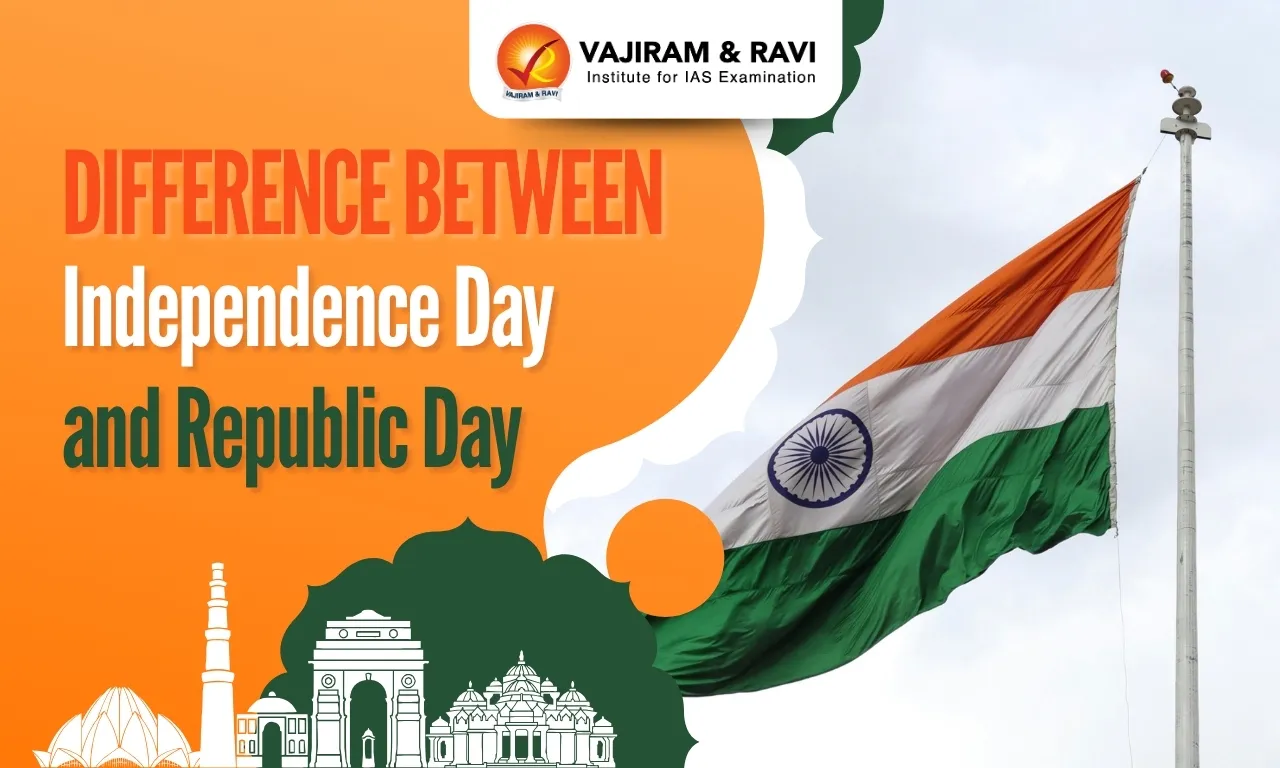
The most celebrated national events include, Republic Day, Independence Day and Gandhi Jayanti out of which Independence Day and Republic Day holds significance as they celebrate India’s journey to becoming a sovereign nation. Both of these days are referred to as National Holidays nationwide. Though many consider them as similar or hold the same significance but it's the opposite, keep reading the article below to know the Difference Between Independence Day and Republic Day.

Independence Day History

India became an independent country on 15th August, 1947 which marks the end of the British era of almost two centuries and beginning of a democratic nation.The independence of India accomplished by various freedom fighters including Mahatma Gandhi, Jawaharlal Nehru, Subhas Chandra Bose, and many others. Independence Day is celebrated each day to pay tribute to the freedom fighters who contributed their lives for free India.

Republic Day History

India gained independence in 1947, it had yet to become a republic. The Constituent Assembly adopted the Indian Constitution on November 26, 1949, and it officially came into effect on January 26, 1950. This historic day signifies India's transition from a British rule to a sovereign republic with a democratically elected government and a written constitution. Republic Day highlights the core constitutional values of justice, liberty, equality, and fraternity.

Difference Between Independence Day and Republic Day

Independence Day and Republic Day celebrates India's journey to freedom, but they highlight different milestones. Independence Day is celebrated on August 15, which marks the end of British rule and the beginning of self-governance. On the other hand, Republic Day, celebrated on January 26, signifies the adoption of the Indian Constitution, transitioning  the nation’s status as a sovereign republic where citizens govern through elected representatives.

Difference Between Independence Day and Republic Day
Basis Independence Day (August 15) Republic Day (January 26)

Historical Significance

Marks India’s independence from British rule in 1947.

Celebrates the adoption of the Indian Constitution in 1950.

Year of Celebration

First celebrated in 1947.

First celebrated in 1950.

Key Figures

Jawaharlal Nehru, Mahatma Gandhi, Bhagat Singh, etc.

Dr. B.R. Ambedkar, Constituent Assembly members.

Flag Hoisting

The Prime Minister hoists the flag at the Red Fort.

President unfurls the flag at Rajpath.

Symbolism

Represents freedom from colonial rule.

Symbolizes democratic governance and the Constitution.

Main Activities

Flag hoisting, military parade, cultural programs, kite flying.

Republic Day parade, military displays, cultural performances.

Significance of Date

Commemorates the end of British rule.

Marks the implementation of the Constitution.

Ceremonial Location

Red Fort, Delhi.

Rajpath, Delhi.

Special Features

Kites flying, patriotic songs, and speeches.

Military and cultural parades, awards, and foreign dignitary presence.

Traditional Emblem

Indian flag with kites in the sky.

Military and cultural displays at Rajpath.

Independence Day Celebration

Independence Day honors India's liberation from British rule, celebrating the nation's sovereignty and the sacrifices of its freedom fighters. It serves as a tribute to their relentless struggle, fostering a sense of national pride and remembrance of the hard-fought journey to independence.

Republic Day Celebration

Republic Day marks the adoption of the Indian Constitution, signifying India’s transformation into a republic. It highlights the nation’s dedication to democratic values, governance by the people, and the supremacy of the rule of law.

Independence Day Hosting Ceremony

At the Red Fort in Delhi, the Prime Minister hosts the national flag, raising it from the bottom of the pole as a powerful symbol of India's earned freedom. This represents the nation's sovereignty and pays tribute to the struggles of the independence movement.

Republic Day Hosting Ceremony

The President of India hosts the national flag at Kartavya Path (formerly Rajpath) in Delhi, pulling it from the top of the pole. This act symbolizes the country’s transition into a republic, announcing its commitment to democratic governance and the principles included in the Constitution of India.

Difference Between Independence Day and Republic Day FAQs

Q1: What is the difference between independence and Republic Day?

Ans: Independence Day marks freedom from British rule, while Republic Day celebrates the Constitution’s adoption, signifying India's transition into a sovereign, self-governing republic.

Q2: What is the difference between 15 August and 26 January flag hoisting?

Ans: On August 15, the Prime Minister raised the flag at the Red Fort, marking independence. On January 26, the President unfurled it, symbolizing India's republic status.

Q3: Why it is called as Republic Day?

Ans: Republic Day marks India's transition to a sovereign republic on January 26, 1950, with the adoption of its Constitution, ensuring democratic governance and people's rule.

Q4: What is the difference between republic and Constitution Day?

Ans: Republic Day (January 26) marks India’s transition to a republic, while Constitution Day (November 26) commemorates the adoption of the Constitution before it came into effect.

Q5: What do you mean by republic?

Ans: Republic form of government in which a state is ruled by representatives of the citizen body.
Difference between Non-Cooperation Movement and Civil Disobedience Movement

Difference between Non-Cooperation Movement and Civil Disobedience Movement

The difference between Non-Cooperation Movement and Civil Disobedience Movement is the time the event took place, the demands of both movements and their nature and intensity. While the Non-cooperation movement led to the decline in administration and operation of government, the Civil Disobedience Movement forced the British government to retrain its activities by opposing laws and policies. In this article, we are going to cover the difference between Non-Cooperation and Civil Disobedience Movement. 

Difference between Non-Cooperation Movement and Civil Disobedience Movement 

The Non-Cooperation and Civil Disobedience Movement are two important movements in the struggle for Indian Independence. Both the movements took place ten years apart, taking an important place in the development of the Gandhian Phase. The difference between Non-Cooperation and Civil Disobedience Movement are: 

Aspect Non-Cooperation Movement (1920–22) Civil Disobedience Movement (1930–34)

Launched by

Mahatma Gandhi

Mahatma Gandhi

Triggering Event

Jallianwala Bagh Massacre (1919), Rowlatt Act (1919), and Khilafat Movement

Salt Law and Gandhi’s Dandi March (1930)

Objective

Peacefully withdraw cooperation from the British government to attain Swaraj

Actively break colonial laws and demand complete independence (Purna Swaraj)

Nature of Protest

Passive resistance: boycott-based movement without violating the law

Active resistance: involved breaking specific colonial laws (like Salt Law)

Major Tactics

- Boycott of British schools, courts, titles, foreign cloth

- Surrender of titles

- Resignations

- Salt Satyagraha

- Boycott of foreign goods

- Non-payment of taxes

- Mass picketing

Public Participation

Wide participation, especially from urban middle classes, students, and lawyers

Broader participation including peasants, women, and tribal groups

Women Participation

Limited

Significant participation by women

Muslim Participation

High, due to the Khilafat Movement alliance

Declined due to collapse of Hindu-Muslim unity

Government Response

Repression: arrests, lathi charges, and bans on gatherings

More brutal repression, mass arrests, and violent suppression

End of Movement

Withdrawn after Chauri Chaura incident (1922) due to violence

Suspended and resumed multiple times; lost momentum after Gandhi-Irwin Pact and arrests

Outcome/Impact

Awakening of political consciousness; first mass-scale resistance

Strengthened demand for Purna Swaraj and showcased the strength of mass civil resistance

Result

Movement ended abruptly; Swaraj not achieved

Created a base for future independence struggle; deepened nationalist sentiment

Non-Cooperation Movement (1920–22)

Launched by Mahatma Gandhi, the Non-Cooperation Movement was India’s first mass civil disobedience campaign against British rule. It urged Indians to boycott British institutions, goods, titles, and promote swadeshi and khadi. Sparked by events like the Jallianwala Bagh massacre and Rowlatt Act, it united Hindus and Muslims in protest. Though it was withdrawn after the Chauri Chaura violence in 1922, the movement awakened national consciousness and marked a turning point in India’s freedom struggle.

Civil Disobedience Movement (1930–34) 

Led by Mahatma Gandhi, the Civil Disobedience Movement began with the iconic Dandi March to break the Salt Law. It called upon Indians to openly defy British laws—refusing to pay taxes, boycotting foreign goods, and breaking unjust colonial rules. Unlike earlier movements, it saw broader participation from women, peasants, and tribal groups. Though it faced severe repression and was temporarily paused during the Gandhi-Irwin Pact, it reignited nationalist spirit and intensified the demand for Purna Swaraj.

Also Check Related Articles
Difference between NITI Aayog and Inter-State Council Difference Between Economic Survey and Union Budget
Difference Between Tropical Evergreen and Tropical Deciduous Forests Difference Between Ordinary Bill and Money Bill
Difference Between Legislative and Executive Difference between Himalayan and Peninsular Plateau
Difference Between Vedas and Upanishads Difference Between Scheduled and Non-Scheduled Banks
Difference Between Written and Unwritten Constitution Difference between NITI Aayog and Planning Commission
Difference between Colonialism and Imperialism Difference between Fundamental Rights and Directive Principles of State Policy
Difference between Procedure Established by Law and Due Process of Law Difference Between Democracy and Republic
Difference between Creamy Layer and Non-Creamy Layer of OBC Difference between Rajya Sabha and Vidhan Sabha
Difference Between Western Ghats and Eastern Ghats Difference Between Payments Bank and Small Finance Bank

Difference between Non-Cooperation Movement and Civil Disobedience Movement FAQs

Q1: What is the difference between Non-Cooperation and Civil Disobedience Movement?

Ans: The Non-Cooperation Movement involved withdrawing support from British institutions, while the Civil Disobedience Movement involved directly breaking British laws.

Q2: What is the difference between the Civil Disobedience Movement and the national movement?

Ans: The Civil Disobedience Movement was a specific phase within the broader Indian national movement for independence.

Q3: Is the Civil Disobedience Movement also known as the Non-Cooperation Movement?

Ans: No, they are distinct movements led by Gandhi at different times with different strategies.

Q4: What is the other name for the Civil Disobedience Movement?

Ans: It is also referred to as the Salt Satyagraha, especially in its initial phase.

Q5: What did Gandhi call the Non-Cooperation Movement?

Ans: Gandhi called it the "first step towards Swaraj" and a peaceful method to resist colonial rule.

Difference Between Communism, Capitalism and Socialism

Difference Between Communism, Capitalism and Socialism

The term communism, capitalism and socialism are three different types of ideologies. While socialism and communism are often used interchangeably, capitalism happens to stand out as a completely different concept. In this article, we are going to learn about all three different ideologies that distinguish them as different.  

Difference Between Communism, Capitalism and Socialism

Communism, Capitalism and Socialism all three are completely different concepts: 

Aspect Capitalism Socialism Communism

Ownership of Resources

Private individuals or corporations own and control resources and industries.

Major industries are owned and regulated by the state or collectively by society.

All property is communally owned; no private ownership.

Economic Planning

Market-driven; demand and supply determine production and pricing.

Central planning with some market forces; state may intervene in production.

Fully centrally planned economy; state controls all production and distribution.

Wealth Distribution

Unequal; based on individual effort, investment, and entrepreneurship.

Attempts more equal distribution of wealth through welfare and taxation.

Theoretically equal distribution of wealth and resources.

Incentive Structure

Profit motive drives innovation and efficiency.

Mixed incentives – both personal gain and public good.

No profit motive; work is done for collective benefit.

Role of Government

Limited role; mainly to enforce laws and protect property rights.

Active role in managing key sectors and ensuring welfare.

Total control over the economy and most aspects of life.

Examples

USA, UK (largely capitalist with welfare policies)

Norway, Sweden, India (mixed economies)

Former USSR, North Korea, Cuba (though all differ in implementation)

Individual Freedom

High personal and economic freedom.

Moderate – economic rights are regulated for equality.

Limited – individual rights often suppressed for collective control.

Difference Between Socialism and Communism 

Socialism and Communism are two terms used interchangeably but both are completely different theories. The difference between socialism and communism are: 

Socialism

In socialism, the government plays an important role in key sectors of the economy, but also leaves space for the private sector to participate. The goal is to reduce income gaps and maintain democracy and individual rights. Sweden and Norway are both examples of socialist economies. 

Communism 

In Communism, the government has complete ownership and the private sector is not allowed to participate in the key sectors of the economy. The economy strives for a classless, stateless society where the wealth is distributed equally. North Korea is an example of Communist Economy. 

Difference Between Capitalism and Socialism

Capitalism and Socialism are completely opposite theories due to the following reasons: 

Capitalism 

Capitalism means private ownership of resources and means of production. This theory is driven by profit motive as well as market competition. The prices and production are determined by drivers of the economy that are demand and supply. This sometimes leads to income inequality depending on market success. The USA and Australia are examples of Capitalist Economy. 

Socialism

Socialism means that the government owns the key industries and services with the goal of focusing on welfare and equality over profit. The government plans and regulates the distribution and production while prioritising collective good over individual profit. Sweden and Norway are examples of socialist economies.

Also Check Related Articles
Difference between NITI Aayog and Inter-State Council Difference Between Economic Survey and Union Budget
Difference Between Tropical Evergreen and Tropical Deciduous Forests Difference Between Ordinary Bill and Money Bill
Difference Between Legislative and Executive Difference between Himalayan and Peninsular Plateau
Difference Between Vedas and Upanishads Difference Between Scheduled and Non-Scheduled Banks
Difference Between Written and Unwritten Constitution Difference between NITI Aayog and Planning Commission
Difference between Colonialism and Imperialism Difference between Fundamental Rights and Directive Principles of State Policy
Difference between Procedure Established by Law and Due Process of Law Difference Between Democracy and Republic
Difference between Creamy Layer and Non-Creamy Layer of OBC Difference between Rajya Sabha and Vidhan Sabha
Difference Between Western Ghats and Eastern Ghats Difference Between Payments Bank and Small Finance Bank

Difference Between Communism, Capitalism and Socialism FAQs

Q1: Is India a communist or capitalist country?

Ans: India follows a mixed economy model, combining elements of both capitalism and socialism.

Q2: What are the major differences between communism and socialism?

Ans: Communism seeks a classless, stateless society with collective ownership, while socialism allows for government-managed ownership aiming at reducing inequality.

Q3: What are three of the main differences between capitalism and socialism?

Ans: Capitalism promotes private ownership, profit motive, and market-driven economy, while socialism emphasizes public ownership, welfare goals, and government planning.

Q4: What is the meaning of capitalism?

Ans: Capitalism is an economic system where resources and industries are privately owned, and market forces determine production and pricing.

Q5: How are communism and capitalism different?

Ans: Capitalism supports private ownership and competition, whereas communism advocates for state or collective ownership and economic equality.

Difference Between Moderates and Extremists, Key Points

Difference Between Moderates and Extremists

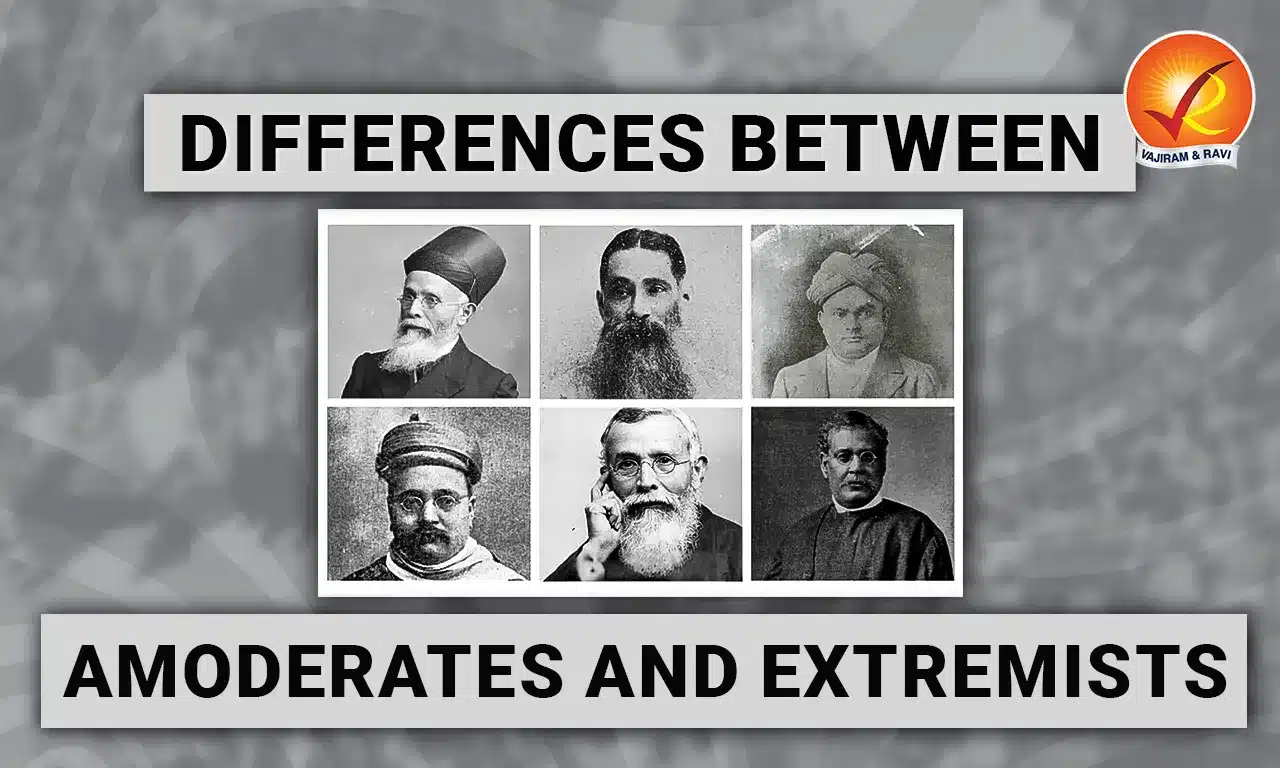
The Indian National Congress saw two dominant ideologies during the freedom movement Moderates and Extremists. From 1885 to 1905, the Moderates, which was led by Dadabhai Naoroji and Gopal Krishna Gokhale relied on petitions, speeches, and dialogue with the British. But as their approach yielded limited results, and with the partition of Bengal in 1905, a more assertive and required mass participation. This marked the rise of the Extremists, whose influence grew from 1905 to around 1920.

Moderates

The Moderates was an ideology adopted during the early phase of the Indian National Congress (1885-1905). They believed in dialogue, diplomacy, and gradual reform. Leaders like Dadabhai Naoroji, Gopal Krishna Gokhale, and M.G. Ranade represented this group. Moderates relied on methods suggested by the constitution, petitions, resolutions, meetings, and deputations to bring changes and reform. They believed that the British government would listen to reason and introduce policies beneficial to Indians. 

Efforts by Moderates included demands for civil rights, expansion of the legislative councils, reduction in military expenditure, and greater Indian participation in administration.

However, their soft approach and slow progress frustrated the younger generation of nationalists, who later became the Extremists.

Extremists

The Extremists came into existence around 1905, during the Swadeshi Movement, which was sparked by the partition of Bengal. Leaders like Bal Gangadhar Tilak, Bipin Chandra Pal, and Lala Lajpat Rai believed in direct action and mass mobilisation.

They rejected the idea of pleasing the British and called for immediate self-rule (Swaraj). Extremists believed that real change could only come through boycotts, protests, strikes, and public movements. Their ideology was based on cultural rebirth, self-reliance, and inspiring national pride.

Unlike Moderates, the Extremists did not hesitate to criticise British rule openly and encouraged people to take pride in India’s heritage and fight for independence.

Difference Between Moderates and Extremists

Evolution of both Moderates and Extremists within the Indian National Congress reflected the political awareness which grew among Indians. Moderates aimed to bring about change through gradual reforms and cooperation with the British, whereas Extremists pushed for direct action and a stronger stance against colonial rule. The table below discusses the Difference Between Moderates and Extremists in a comparison manner to understand the two approaches in an easier manner.

Difference Between Moderates and Extremists
Feature Moderates Extremists

Time Period

Dominated from 1885 to 1905

Prominent post-1905

Key Leaders

Dadabhai Naoroji, G.K. Gokhale, M.G. Ranade

B.G. Tilak, Lala Lajpat Rai, Bipin Chandra Pal

Approach

Constitutional and peaceful

Assertive and confrontational

Aim

Reforms within British rule

Complete Swaraj (Self-rule)

Methods Used

Petitions, resolutions, public meetings

Boycotts, Swadeshi, strikes, protests

Public Participation

Limited mass involvement

Encouraged mass mobilisation

Ideology

Had faith in gradual progress

Followed assertive nationalism

Also Check Related Articles
Difference between NITI Aayog and Inter-State Council Difference Between Economic Survey and Union Budget
Difference Between Tropical Evergreen and Tropical Deciduous Forests Difference Between Ordinary Bill and Money Bill
Difference Between Legislative and Executive Difference between Himalayan and Peninsular Plateau
Difference Between Vedas and Upanishads Difference Between Scheduled and Non-Scheduled Banks
Difference Between Written and Unwritten Constitution Difference between NITI Aayog and Planning Commission
Difference between Colonialism and Imperialism Difference between Fundamental Rights and Directive Principles of State Policy
Difference between Procedure Established by Law and Due Process of Law Difference Between Democracy and Republic
Difference between Creamy Layer and Non-Creamy Layer of OBC Difference between Rajya Sabha and Vidhan Sabha
Difference Between Western Ghats and Eastern Ghats Difference Between Payments Bank and Small Finance Bank

Difference Between Moderates and Extremists FAQs

Q1: Who were the main leaders of the Moderate group?

Ans: Dadabhai Naoroji, Gopal Krishna Gokhale, and M.G. Ranade were key figures among Moderates.

Q2: What triggered the rise of Extremists?

Ans: The Partition of Bengal in 1905 and dissatisfaction with the Moderate approach led to the rise of Extremists.

Q3: What was the goal of the Extremist leaders?

Ans: They demanded Swaraj or complete self-rule for India and used active resistance as a method.

Q4: Why did Moderates and Extremists split?

Ans: The split occurred at the Surat Session of 1907 due to ideological and strategic differences between the two groups.

Q5: Did the Moderates contribute to the freedom movement?

Ans: Yes, they laid the intellectual and political foundation of Indian nationalism and introduced the idea of civil rights and self-governance.

Difference Between Payments Bank and Small Finance Bank

Difference Between Payments Bank and Small Finance Bank

The Difference between Small Finance Bank and Payment Banks lies in their role and functioning. Both banks are registered under the Reserve Bank of India and their functioning is monitored by the central bank of India. While Small Finance banks provide financial services to the country’s unserved, underserved and unbanked areas of the country, Payment banks are small operation based banks that don't involve any credit risk. In this article, we are going to learn about the differences between Small Finance Banks and Payment Banks. 

Difference Between Payment Banks and Small Finance Banks

The difference between Payment Banks and Small Finance Banks include: 

Basis Payment Banks Small Finance Banks

Objective

Financial inclusion through low-cost banking for the unbanked

Provide credit access to underserved sections like small businesses, farmers, etc.

Lending Facility

Cannot lend money

Can lend money and offer full credit services

Deposit Limit

Can accept deposits up to ₹2 lakh per customer

No such limit; can accept all types of deposits

Target Audience

Migrant laborers, low-income households, small businesses

Small and marginal farmers, MSMEs, unorganized sector

Issue of Credit Cards

Not allowed

Allowed

Examples

Paytm Payments Bank, Airtel Payments Bank

AU Small Finance Bank, Equitas Small Finance Bank

Payment Banks in India

Payment Banks are the new type of banks in India that allow customers to deposit only upto 2 lakh rupees. The banks don't provide any credit card and loan facility. Customers can open either a savings or a current account and apply for a debit card or internet banking service. Payment Banks in India include: 

Fino Payment Bank 

  • Fino Payments Bank 
  • NSDL Payments Bank;
  • India Post Payments Bank
  • Paytm Payments Bank;
  • Airtel Payments Bank;
  • Jio Payments Bank.

Small Finance banks in India

Small Finance Banks offer financial assistance to unbanked and unwarranted sectors of India. As per the Companies Act, 2013, Small Finance Banks are enlisted as Public Sector Corporation. These banks can accept deposits, offer loans and conduct all the important banking activities. However, these banks cannot offer any large loan commitments, subsidiaries or deal in high-tech goods. Small Finance Banks in India include: 

  • Ujjivan Small Finance Bank;
  • Suryoday Small Finance Bank;
  • Equitas Small Finance Bank;
  • ESAF Small Finance Bank;
  • Fincare Small Finance Bank;
  • Janalakshmi Small Finance Bank;
  • Utkarsh Small Finance Bank and,
  • AU Small Finance Bank.
Also Check Related Articles
Difference between NITI Aayog and Inter-State Council Difference Between Economic Survey and Union Budget
Difference Between Tropical Evergreen and Tropical Deciduous Forests Difference Between Ordinary Bill and Money Bill
Difference Between Legislative and Executive Difference between Himalayan and Peninsular Plateau
Difference Between Vedas and Upanishads Difference Between Scheduled and Non-Scheduled Banks
Difference Between Written and Unwritten Constitution Difference between NITI Aayog and Planning Commission
Difference between Colonialism and Imperialism Difference between Fundamental Rights and Directive Principles of State Policy
Difference between Procedure Established by Law and Due Process of Law Difference Between Democracy and Republic
Difference between Creamy Layer and Non-Creamy Layer of OBC Difference between Rajya Sabha and Vidhan Sabha
Difference Between Western Ghats and Eastern Ghats Difference Between Payments Bank and Small Finance Bank

Difference Between Payments Bank and Small Finance Bank FAQs

Q1: What is the difference between small finance bank and payment bank?

Ans: Small Finance Banks can lend money and offer full banking services, while Payment Banks cannot lend and have deposit limits.

Q2: What is the difference between SFB and RRB?

Ans: SFBs are private sector banks licensed to serve the unbanked, while RRBs are government-sponsored banks focused on rural credit.

Q3: What is the difference between MFI and SFB?

Ans: MFIs are institutions offering microloans without full banking status, whereas SFBs are licensed banks offering both credit and deposit services.

Q4: What are Small Finance Banks in India?

Ans: SFBs are niche banks licensed by RBI to provide financial services to underserved sections, including loans and full banking facilities.

Q5: What are Payment Banks in India?

Ans: Payment Banks are RBI-licensed banks that can accept deposits (up to ₹2 lakh) and offer payment services, but cannot lend.

Difference between Constitution and Constitutionalism

Difference between Constitution and Constitutionalism

The concept of Constitution and Constitutionalism are closely related as the Constitution stands as the highest level of legislation and form of law setting the framework for the governance in a country whereas Constitutionalism is an idea that the power of the state must be limited by law to protect the freedom of an individual.  In 1215, King John signed the Magna Carta, limiting the authority of the British monarch. Later, in 1689, King William III approved the English Bill of Rights, further strengthening legal limits on power.

Constitution

A Constitution is the supreme law of a country. It lays down the basic structure of the government, the distribution of powers among different organs, and the fundamental rights and duties of citizens. In simple terms, it's a rulebook that defines how a state functions.

India’s Constitution, adopted in 1950, is a detailed document that outlines the framework for governance, protects civil liberties, and ensures the separation of powers between the Legislature, Executive, and Judiciary. It also includes provisions for emergency powers, amendment procedures, and schedules detailing various administrative and political divisions.

A Constitution may be written, like in India and the US, or unwritten, like in the UK. Regardless of the form, it serves as the legal foundation of the state.

Constitutionalism

Constitutionalism is a philosophy that limits the government under the Constitution where the exercise of the power is limited by the law ensuring the authority exercises their powers responsibly and within the limits. 

At its core, Constitutionalism is about accountability, checks and balances, rule of law, and protection of individual rights. It implies that even the government must operate within the boundaries set by the Constitution, and no authority is above the law.

For instance, while a Constitution may grant the Parliament the power to make laws, Constitutionalism ensures that these laws respect fundamental rights and democratic principles.

Difference between Constitution and Constitutionalism

The Constitution is the legal document which determines the limitation to the power of the government, on the other hand Constitutionalism is the concept of limiting the outreach of the state. The table below includes the Difference between Constitution and Constitutionalism:

Difference between Constitution and Constitutionalism
Basis Constitution Constitutionalism

Definition

A legal document that outlines the structure and powers of government

A political philosophy that ensures power is exercised within constitutional limits

Nature

Legal and structural

Ideological and ethical

Focus

What the government can do

What the government shouldn’t do

Presence

Every country may have a constitution

Not every country follows constitutionalism

Guarantees

Grants power and rights

Ensures limitation of power and protection of rights

Example

Indian Constitution

Judicial review, fundamental rights enforcement, limited government

Difference between Constitution and Constitutionalism FAQs

Q1: Can a country have a constitution without following constitutionalism?

Ans: Yes. Some authoritarian regimes have constitutions but do not practice constitutionalism. They concentrate power in one authority without respecting checks and balances or citizen rights.

Q2: Why is constitutionalism important?

Ans: Constitutionalism ensures that power is not misused. It keeps the government accountable, protects individual freedoms, and upholds the rule of law.

Q3: Does constitutionalism require a written constitution?

Ans: Not necessarily. Countries like the UK don’t have a single written constitution but still uphold constitutionalism through conventions, statutes, and judicial decisions.

Q4: How does constitutionalism work in India?

Ans: In India, constitutionalism is enforced through mechanisms like judicial review, fundamental rights, separation of powers, and democratic institutions that limit arbitrary use of power.

Q5: What happens when constitutionalism is ignored?

Ans: When constitutionalism is ignored, governments can become authoritarian. Citizens may lose legal protections, and governance may drift away from democracy and rule of law.

Right to Constitutional Remedies, Supreme Court’s Role, Key Points

Right to Constitutional Remedies

The Right to Constitutional Remedies are part of the fundamental Rights mentioned in the Constitution of India. Enshrined as Article 32, the Right to Constitutional Remedies protects the accountability, justice and independent rights. It provides people the right to seek redressal for the violation of rights in order to safeguard the liberties in the democracy. In this article, we are going to cover Article 32, its role and functions and the writs mentioned in the Indian Constitution. 

Right to Constitutional Remedies in India

Article 32 of the Indian Constitution guarantees the Right to Constitutional Remedies, which is itself a Fundamental Right. It serves as a powerful safeguard against the violation of Fundamental Rights by providing citizens with direct access to the Supreme Court for their enforcement. This article ensures legal protection and empowers individuals to seek justice when their rights are infringed.

Right to Constitutional Remedies (Article 32)

Article 32 of the Indian Constitution guarantees the Right to Constitutional Remedies, which empowers an aggrieved citizen to approach the Supreme Court directly for the enforcement of their Fundamental Rights. This Article plays a pivotal role in upholding the sanctity of these rights and includes the following key provisions:

  • It guarantees every citizen the right to move the Supreme Court for the enforcement of Fundamental Rights.
  • The Supreme Court is empowered to issue directions, orders, or writs—including habeas corpus, mandamus, prohibition, quo warranto, and certiorari—for ensuring the protection of Fundamental Rights.
  • Parliament may authorize other courts to issue similar directions, orders, or writs. However, this does not dilute the authority of the Supreme Court in this regard.
  • The term "any other court" here does not refer to High Courts, as Article 226 already provides them with the power to issue writs independently.
  • The right to move the Supreme Court under Article 32 cannot be suspended, except as provided by the Constitution—such as during a National Emergency, when the President may suspend this right.

Key Points to Understand About Article 32

  • Article 32 elevates the right to seek enforcement of Fundamental Rights to the level of a Fundamental Right itself, thereby making these rights meaningful and enforceable.
  • Dr. B.R. Ambedkar famously described Article 32 as the “heart and soul” of the Constitution, emphasizing its critical importance.

  • It positions the Supreme Court as the ultimate protector and guarantor of Fundamental Rights.

  • The Court is vested with original and wide, but not exclusive powers in this domain:
    • Original Powers: Citizens can approach the Supreme Court directly without needing to go through lower courts.
    • Wide Powers: The Supreme Court's authority includes not only issuing directions or orders but also any kind of writ for enforcement.
    • Not Exclusive: These powers are concurrent with those of other courts empowered by Parliament—most notably, High Courts under Article 226 also hold writ jurisdiction.
  • It is important to note that only Fundamental Rights—not other legal or constitutional rights—can be enforced under Article 32.

Supreme Court’s Role in the Right to Constitutional Remedies

The Supreme Court has declared the Right to Constitutional Remedies as a basic feature of the Constitution, meaning it cannot be altered or removed even through a Constitutional Amendment Act.

Writs under the Indian Constitution

Writs are formal written orders issued by a court to uphold the Fundamental Rights of citizens and address legal wrongs. Both the Supreme Court (under Article 32) and the High Courts (under Article 226) are empowered to issue these writs.

The concept of writs has been adopted from the British legal system, where they are known as Prerogative Writs.

The Constitution of India provides for five types of writs:

  • Habeas Corpus
  • Certiorari
  • Prohibition
  • Mandamus
  • Quo Warranto

Right to Constitutional Remedies FAQs

Q1: What are the rights to Constitutional remedies?

Ans: The right to Constitutional remedies allows citizens to move courts to enforce their Fundamental Rights.

Q2: What are Article 32 and Article 226?

Ans: Article 32 empowers the Supreme Court, and Article 226 empowers the High Courts to issue writs for enforcing rights.

Q3: What are the 5 remedies provided by the Constitution of India?

Ans: The five constitutional remedies (writs) are: Habeas Corpus, Mandamus, Prohibition, Certiorari, and Quo-Warranto.

Q4: What are Writs in India?

Ans: Writs are formal written orders issued by courts to protect citizens' rights and ensure lawful conduct.

Q5: Is Right to Constitutional Remedy a fundamental Right?

Ans: Yes, the Right to Constitutional Remedies is itself a Fundamental Right under Article 32.

Flag Code of India 2002, History, Amendments, Features of Indian Flag

Flag Code of India 2002

The Flag Code of India 2002 includes the rules and protocols for displaying and using the National Flag which was adopted in 1950, following India's independence, includes multiple amendments to align with evolving traditions and official guidelines. A significant amendment in 2002 permitted the National Flag of India to be flown at night, an earlier restriction that limited hoisting between sunrise and sunset. The most recent amendment came with the introduction of the Har Ghar Tiranga campaign.

Flag Code of India 2002

The National Flag of India symbolises national pride, respect and affection towards the nation. The Flag Code of India 2002 is the set of rules and regulations, guidelines for the hoisting of National Flag which is divided into three sections:

  1. National Flag general description
  2. Display of National Flag by Institutions such as Educational, Public, Private etc.
  3. Display of National Flag by Central Government as well as State Governments and their agencies as well.

Indian National Flag Designer

Indian National Flag Designer was Pingali Venkayya, a freedom fighter and a Gandhian. First, the design was presented to Mahatma Gandhi and later adopted during the Constituent Assembly meeting on July 22, 1947.

Flag Hoisting on 78th Independence Day 2024

India celebrated the 78th Independence Day on August 15, 2024 where the Prime Minister of India hosted the National Flag at Red Fort, New Delhi. The Flag Hoisting was held across the government offices and educational institutions to celebrate the freedom of India.

National Flag of India

The National Flag of India is known as Tiranga which stands for Tricolour having 3 strips horizontally of saffron, white and green along with a blue Ashoka Chakra. The flag has a 3:2 width-to-length ratio, and the Ashoka Chakra represents the eternal wheel of law. Each color has a symbolic meaning:

  1. Saffron (Top) denotes courage and sacrifice.
  2. White (Middle) represents peace and truth. The white stripe contains the Ashoka Chakra (wheel) in navy blue, which has 24 spokes.
  3. Green (Bottom) stands for faith, fertility, and the land.

Flag Hoisting Time

Traditionally, the National Flag was hoisted at sunrise on Independence Day. With recent amendments, it can now be hosted at any time of the day or night, as long as it is treated with due respect and dignity.

Flag Code of India 2002 History

The evolution of the Indian Flag Code is deeply connected to the development of the National Flag and the values of respect and honour associated with it. Initially, the display of the Indian flag was regulated by two key legislations: the Emblems and Names (Prevention of Improper Use) Act, 1950 and the Prevention of Insults to National Honour Act, 1971.

To unify these regulations, the Flag Code of India, 2002 was introduced, establishing guidelines for the proper use of the tricolour. Advocate B. M. Birajdar stated, "The Flag Code of India 2002 permits the unrestricted display of the tricolour, consistent with the honour and dignity of the flag." Below is a Flag Code of India 2002 History.

Flag Code of India 2002 History

Year/Date

Event/Development

1906

First unofficial Indian flag was hoisted on August 7, 1906, in Calcutta (now Kolkata) with three horizontal stripes of green, yellow, and red.

1921

Pingali Venkayya presented a design of the national flag to Mahatma Gandhi at the Indian National Congress session, which was later modified.

1931

The Indian National Congress adopted the Tricolour as its official flag, with saffron, white, and green stripes and the spinning wheel (Charkha) in the centre.

1947

The Constituent Assembly of India adopted the current version of the Indian national flag on July 22, 1947. The Ashoka Chakra replaced the spinning wheel.

1950

Emblems and Names (Prevention of Improper Use) Act, 1950 enacted to prevent improper use of the national flag and other national symbols.

1971

Prevention of Insults to National Honour Act, 1971 enacted to prohibit disrespect to the national flag and the Constitution of India.

1995

Naveen Jindal’s Legal Battle: Naveen Jindal, an industrialist, filed a petition challenging restrictions on flag hoisting by citizens.

2002

Flag Code of India, 2002 introduced on January 26, 2002. It allowed Indian citizens to hoist the national flag at their homes, ending years of legal restrictions.

2021 (December)

The amendment allowed machine-made polyester flags. Previously, only hand-spun and handwoven flags were allowed.

2022 (July)

The amendment allowed the national flag to be hoisted day and night at private homes, public places, and institutions, provided it was displayed with dignity.

Indian National Flag Origin

The Indian National Flag's design was officially adopted by the Constituent Assembly on July 22, 1947, just before the country became independent from British rule. It consists of three horizontal bands: saffron at the top, white in the middle, and green at the bottom. At the center of the white stripe is the blue Ashoka Chakra, a 24-spoke wheel. Each element of the flag carries deep significance, symbolizing India's rich heritage, cultural values, and aspirations for the future.

Flag Code of India 2002 and 2022 Amendment

The use and hosting of the Indian National Flag are regulated by the Prevention of Insults to National Honour Act, 1971 and the Flag Code of India, 2002. Below are some key provisions of the Flag Code of India, 2002, for public awareness:

  1. Amendment of 2021: As per the order dated December 30, 2021, the use of machine-made polyester flags was permitted. The national flag can now be made of hand-spun, hand-woven, or machine-made cotton, polyester, wool, silk, or khadi fabric.
  2. Public Display: Citizens, private organizations, and educational institutions are allowed to hoist or display the national flag on any day or occasion, provided it is done with dignity and respect.
  3. Amendment of 2022: An order dated July 19, 2022, modified clause (xi) of paragraph 2.2 of Part II, allowing the flag to be flown day and night when displayed in the open or on a citizen’s house.
  4. Shape & Size: The national flag must always be rectangular, with a length-to-width ratio of 3:2. It can be of any size while maintaining this proportion.
  5. Position of Honour: The flag should always be placed in a position of prominence and must be distinctly displayed.
  6. Condition of the Flag: A damaged, torn, or disheveled flag must not be displayed.
  7. Masthead Protocol: The National Flag should not be flown from the same masthead as any other flag.
  8. Usage on Vehicles: Only select dignitaries, including the President, Vice President, Prime Minister, Governors, and other officials specified in Section IX of Part III of the Flag Code, are permitted to display the flag on their vehicles.
  9. No Higher Placement: No other flag or decorative bunting should be placed higher than or alongside the national flag.

Recent Changes on Flag Code of India 2002

Recent Changes on Flag Code of India 2002
Date Change/Amendment Details

December 30, 2021

Use of Machine-Made Polyester Flags

An amendment was made allowing the use of machine-made polyester flags in addition to hand-spun and handwoven cotton, wool, silk, or khadi flags.

July 20, 2022

Day and Night Hoisting of Flags

Another amendment permitted the national flag to be hoisted day and night at private homes, public places, and institutions, provided it is displayed with dignity.

2022 (General Update)

Flexibility in Flag Display

The government allowed citizens to display the flag on all occasions, formal or informal, not just national holidays, expanding the flexibility of usage.

Flag Code of India 2002 FAQs

Q1: What is the Indian flag code rule?

Ans: The Indian Flag Code Rule is discussed in the article above.

Q2: Is flag code a law under article 13?

Ans: The Flag Code is a set of executive instructions and not statutory rules or legislation.

Q3: What time flag to be taken down today?

Ans: It can now be hosted at any time of the day or night, as long as it is treated with due respect and dignity.

Q4: What is flag code 2002?

Ans: The Flag Code of India brings together all laws, conventions, practices, and instructions for the display of the National Flag. It governs the display of the National Flag by Private, Public, and Government Institutions. The Flag Code of India took effect on 26th January 2002.

Q5: What is the punishment for violating the flag code?

Ans: Imprisonment for a term which may extend to three years, or with fine, or with both.

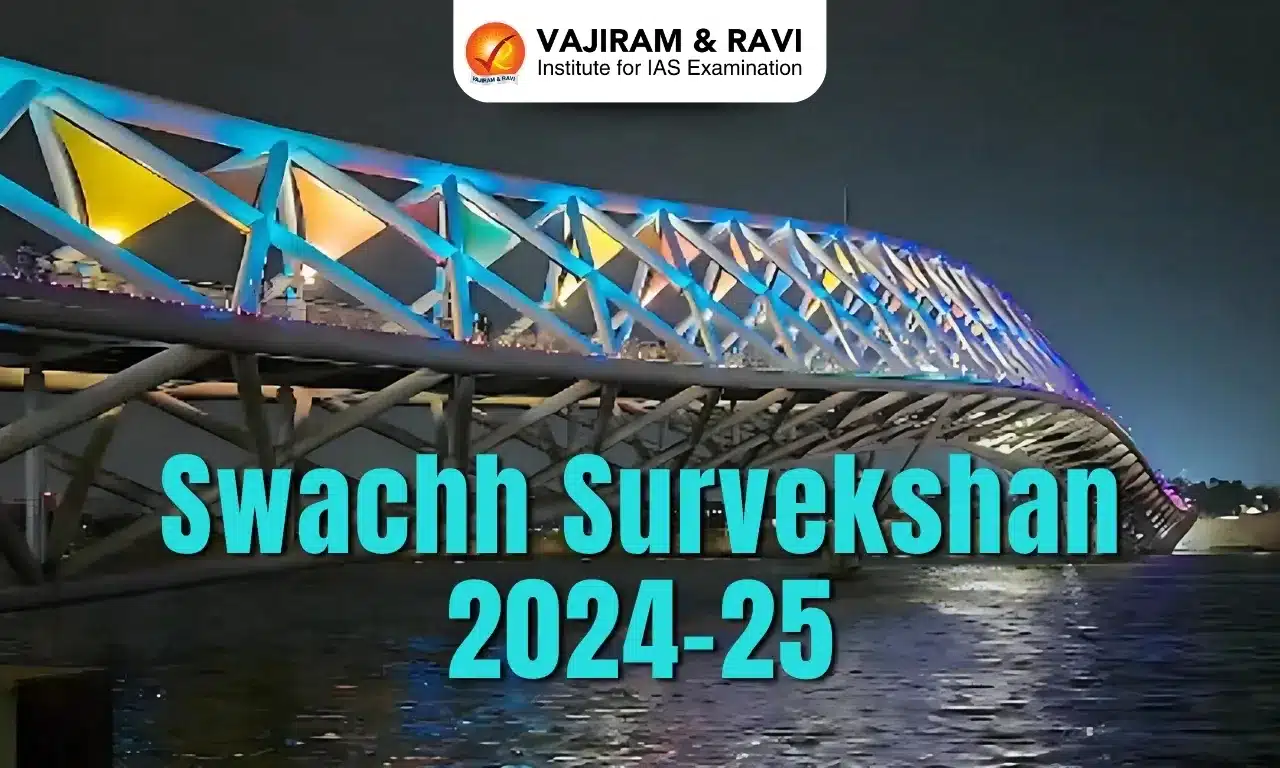
Swachh Survekshan 2024-25 Awards

Swachh Survekshan Award

Swachh Survekshan 2024-25 Awards Latest News

President of India recently conferred Swachh Survekshan 2024-25 Awards at Vigyan Bhagwan, New Delhi hosted by the Ministry of Housing and Urban Affairs (MoHUA).

About Swachh Survekshan 2024-25 Awards

  • Marking its 9th edition, Swachh Survekshan 2024-25 is the world's largest urban cleanliness survey and a key pillar of the Swachh Bharat Mission-Urban.
  • Highlights:
    • In total, 78 awards were presented, recognising cities, cantonments, and institutions for their exemplary performance across a range of sanitation parameters.
    • Indore, Surat, and Navi Mumbai have once again secured the top spots in urban sanitation, emerging as the cleanest cities in the Swachh Survekshan 2024-25 rankings.
    • The three cities were ranked first, second, and third, respectively, in the newly introduced “Super Swachh League,” which recognises sustained excellence in cleanliness. Vijayawada followed closely, securing the fourth position.
    • This year’s Swachh Survekshan introduced a simplified and inclusive assessment framework, enabling smaller cities to compete on equal footing with larger counterparts under the principle of “One City, One Award.” 
    • As a result, 34 cities from various States and Union Territories were declared Promising Swachh Shehars for their notable progress in sanitation and urban cleanliness.
    • Ahmedabad, Bhopal, and Lucknow were declared the new generation of top clean cities, emerging as India’s leading Swachh Shehars. 
    • Prayagraj was honoured as the Best Ganga Town, while Secunderabad Cantonment Board was awarded for its strong sanitation efforts. 
    • Visakhapatnam, Jabalpur, and Gorakhpur received recognition as the Best SafaiMitra Surakshit Shehars for prioritising the safety, dignity, and welfare of sanitation workers.
    • A special award was conferred upon the Government of Uttar Pradesh, the Prayagraj Mela Adhikari, and the Municipal Corporation of Prayagraj for successfully managing urban waste during the Mahakumbh, which saw a record footfall of approximately 66 crore people.

Source: PIB

Swachh Survekshan 2024-25 Awards FAQs

Q1: Which cities secured the top three positions in the “Super Swachh League” of Swachh Survekshan 2024–25?

Ans: Indore, Surat, Navi Mumbai

Q2: Which cities were declared as the new generation of top clean cities?

Ans: Bhopal, Lucknow, Ahmedabad

Chronic Venous Insufficiency

Chronic Venous Insufficiency

Chronic Venous Insufficiency Latest News

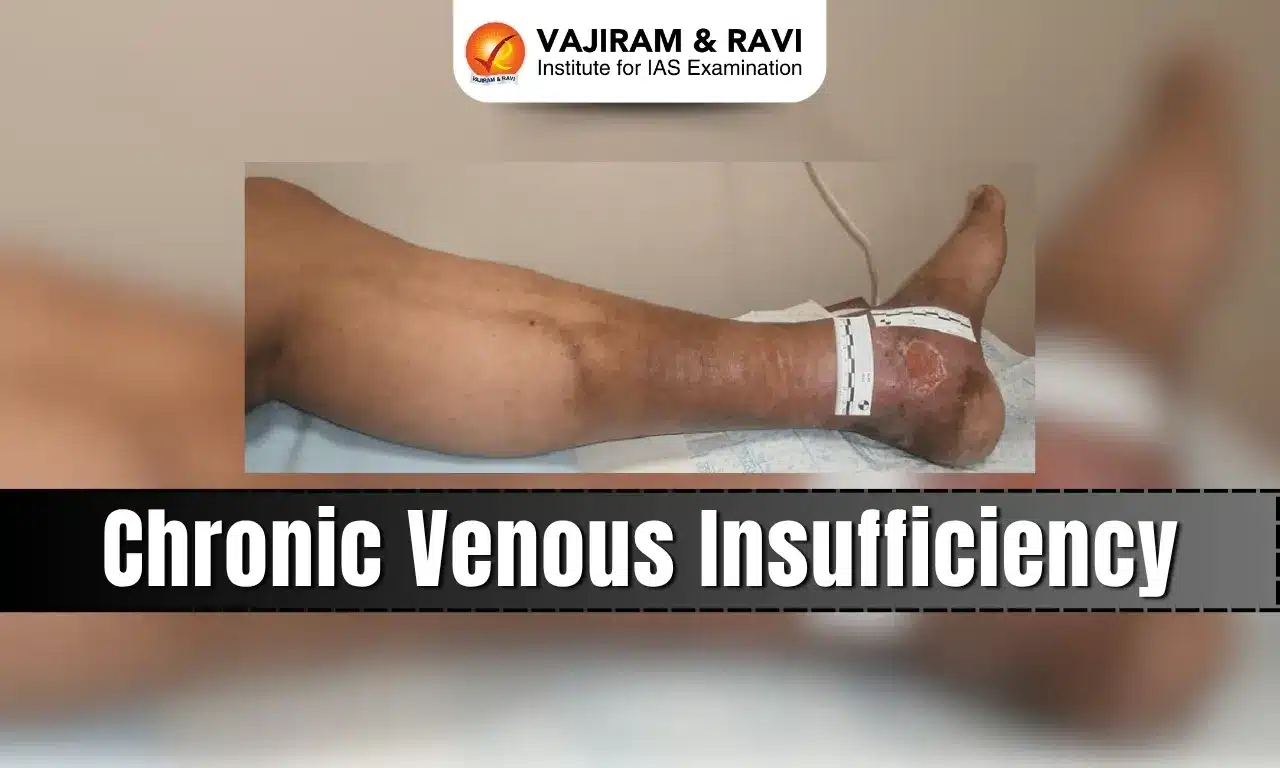
US President Donald Trump has been recently diagnosed with chronic venous insufficiency (CVI).

About Chronic Venous Insufficiency

  • The CVI occurs when your leg veins struggle to allow the flow of blood back to the heart.
    • Under normal conditions, the valves in our veins facilitate the flow of blood towards the heart. 
    • However, when they don't work on the optimum level, the blood may flow backwards and accumulate (pool) in your legs.
  • The condition may not be a serious health threat, but it can cause pain, swelling, cramps, skin changes, varicose veins, leg ulcers, etc.
  • People are more likely to have the condition if/when they are overweight or pregnant or have a family history of the problem. 
  • People may also experience it if they have ever sustained an injury to their leg, had surgery, or had previous blood clots.
  • It affects about 1 in 20 adults. Common among older adults, its risk heightens with age.

Chronic Venous Insufficiency Treatments

  • From lifestyle changes to surgery, there are multiple ways to address the issue. 
  • Regular exercise, leg elevation,  and weight management are considered the first steps to treat the condition.
  • Medicines that boost blood flow through the vessels and compression therapy, which involves tight stockings or bandages, help a long way.

Source: NDTV

Chronic Venous Insufficiency FAQs

Q1: What is Chronic Venous Insufficiency (CVI)?

Ans: A condition where leg veins struggle to return blood to the heart.

Q2: What role do valves in the veins play under normal conditions?

Ans: They facilitate one-way blood flow toward the heart.

Q3: What happens when vein valves don't function properly in Chronic Venous Insufficiency?

Ans: Blood flows backward and pools in the legs

Protostar

Protostar

Protostar Latest News

A team of researchers at the IIST, Thiruvananthapuram, recently discovered radio emission with a special property known as circular polarisation near a massive young protostar that is still forming about 4,500 light-years from Earth.

About Protostar

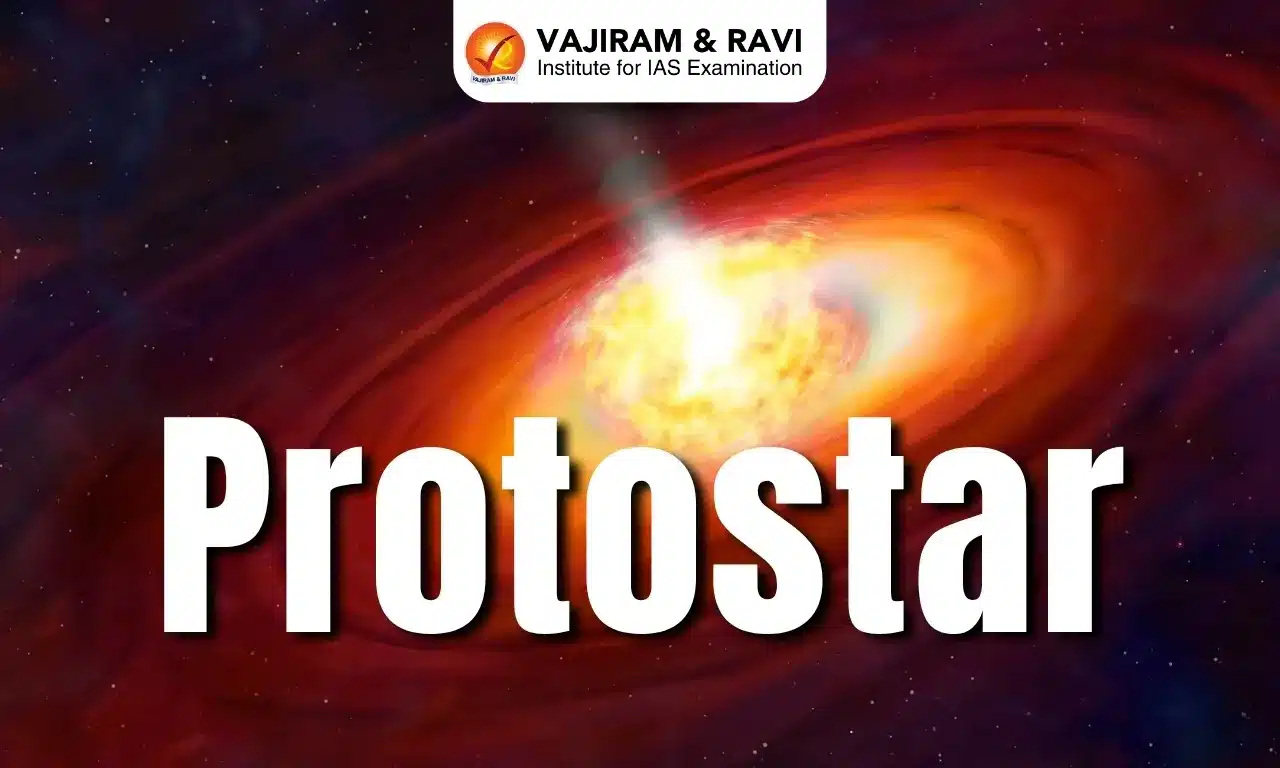
  • A protostar is an early stage in the star formation process
  • It is a large mass of gas and dust formed as a result of the contraction of a giant molecular cloud in the interstellar medium. 
  • As the cloud collapses, gravitational energy is converted into heat, warming the still-forming protostar. 
  • It may last from 100,000 to 10 million years, depending on the mass of the star.
  • It begins with an increase in density in the molecular cloud core and ends with the formation of a pre-main-sequence star
  • Pre-main-sequence stars of similar mass to the Sun are known as T-Tauri stars. 
  • Once hydrogen fusion ignites in the core of a star, it begins producing energy and becomes a main sequence star.
  • Protostars are usually surrounded by dust, which blocks the light that they emit, so they are difficult to observe in the visible spectrum.

Source: TH

Protostar FAQs

Q1: What is a protostar?

Ans: An early stage in the star formation process.

Q2: How is a protostar formed?

Ans: By the gravitational collapse of a molecular cloud.

Q3: What is the primary source of heat in a protostar?

Ans: Conversion of gravitational energy into heat.

Q4: The protostar stage lasts for how long?

Ans: 100,000 to 10 million years, depending on the mass of the star.

Government vs Social Media Platforms on Safe Harbour Doctrine

Safe Harbour Doctrine

Safe Harbour Doctrine Latest News

  • The Centre defended before the Karnataka High Court its expanded use of Section 79 of the Information Technology (IT) Act (which provides for safe harbour doctrine) and the Sahyog Portal to regulate and remove online content by intermediaries such as social media platforms. 
  • The case stems from a legal challenge filed by social media platform X (formerly Twitter) against alleged government overreach in content takedown mechanisms.

Legal Framework and the Challenge

  • Section 79 vs Section 69A of the IT Act:
    • Section 79: Provides “safe harbour” to intermediaries protecting them from liability for third-party content, but this is withdrawn if intermediaries do not comply with takedown notices.
    • Section 69A: Grants power to block content only on specific grounds (e.g. national security, public order), backed by procedural safeguards under the IT (Procedure and Safeguards for Blocking Access of Information by Public) Rules, 2009.
  • X’s argument: The government is misusing Section 79 to issue blocking orders which are only permitted under Section 69A; Sahyog Portal is termed a “censorship portal.”

The Sahyog Portal and Government’s Justification

  • Purpose and scope of Sahyog Portal:
    • Developed under I4C (Indian Cyber Crime Coordination Centre) of the Union Home Ministry.
    • As of March 2025, 38 intermediaries including Google, Amazon, Apple, Telegram, YouTube onboarded; Meta enabled API access.
    • X has refused onboarding, citing legal overreach.
  • Government's stand:
    • Algorithmic content curation is distinct from traditional editorial control, hence needs new regulation.
    • Algorithms amplify harmful content rapidly without oversight, unlike editors in newspapers or TV.
    • Anonymity and pseudonymity on platforms increase incitement risks and shield accountability.
    • Thus, a wider net under Section 79 is essential to tackle a broad class of ‘unlawful content’ beyond what is specified in Section 69A.

Algorithmic Curation vs Traditional Media

  • Key government arguments:
    • Algorithms automatically boost certain content to a wider audience—this lacks any editorial discretion.
    • No transparency or accountability in algorithmic decision-making.
    • Traditional media had built-in gatekeeping functions, ensuring a certain quality control.

Constitutional Perspective and Societal Impact

  • Free speech vs reasonable restrictions:
    • Section 69A deals only with content that falls under Article 19(2) i.e., reasonable restrictions to free speech.
    • The government argues that Section 79 enables actions beyond this scope to address all unlawful content under any law.
    • Emphasis placed on balancing freedom of expression with the right of society and state to prevent harm, maintain public order, and ensure national security.

Conclusion

  • The Centre is asserting its regulatory authority over digital intermediaries through an expanded interpretation of Section 79, citing the unique risks of algorithmic amplification and anonymity. 
  • The case is a significant legal milestone in defining the contours of safe harbour doctrine, online free speech, platform responsibility, and the role of the State in digital governance.

Source: IE

Safe Harbour Doctrine FAQs

Q1: How does the government distinguish algorithmic curation by social media from traditional editorial processes?

Ans: The government argues that algorithmic curation operates at a massive scale without human discretion or transparency, unlike traditional media editors.

Q2: What are the constitutional and legal tensions between Section 69A and Section 79 of the IT Act?

Ans: While Section 69A authorizes content blocking, use of Section 79 via the Sahyog Portal expands takedown powers to broader categories of unlawful content.

Q3: What are the key concerns raised by social media platform X against the Sahyog Portal?

Ans: X challenges the legality of using Section 79 to issue takedown orders through the Sahyog Portal, contending that such actions undermine safe harbour protections.

Q4: How anonymity and algorithmic amplification on digital platforms pose new governance challenges?

Ans: These facilitate the spread of extreme or false content without accountability, necessitating proactive state intervention to uphold public order and national security.

Q5: To what extent can the restriction of online content under Section 79 be justified?

Ans: The government contends that takedown actions under Section 79 are constitutionally valid under the doctrine of reasonable restrictions in Article 19(2).

Daily Editorial Analysis 18 July 2025

Daily Editorial Analysis

A Better Terror Fight With J&K Police Under Elected Government Reins

Context

  • In June 2025, Jammu and Kashmir’s Lieutenant Governor Manoj Sinha reaffirmed the government's focus on eliminating terrorism from the region.
  • Addressing police cadets at Sher-e-Kashmir Police Academy, Udhampur, he urged the J&K Police to combine modern technology, intelligence, community engagement, and inter-agency coordination with traditional beat policing methods.
  • Against this backdrop, the present article highlights J&K’s evolving security strategy and counter-terrorism efforts.

The Central Role of Local Police in J&K’s Counter-Terror Efforts

  • Lieutenant Governor of J&K rightly stressed the importance of the Jammu and Kashmir Police (JAKP) in fighting terrorism.
  • This highlights a well-established fact: local police are the backbone of counter-terror operations, while central forces can only play a supporting role.
  • The JAKP’s strength lies in its deep familiarity with the region’s terrain, demography, and strong community ties, which enable better human intelligence (HUMINT).
  • The April 22, 2025 Pahalgam terror strike, where attackers remain at large, underscores gaps in such local intelligence.
  • Addressing these gaps is essential to prevent future attacks. For this, continuous functional improvement of the JAKP is necessary, including ensuring its command is accountable to an elected government.
  • Local representatives—sarpanches and MLAs—are trusted by the community and often possess vital information about terrorist activities, making their involvement in the security framework crucial for long-term peace and stability in the region.

Restoring Democratic Structures for Stronger Security in J&K

  • Jammu and Kashmir has a strong tradition of democratic participation, especially in local body elections.
  • However, due to prolonged security challenges, elected local representatives have rarely been given real authority as outlined in constitutional provisions.
  • To strengthen counter-terrorism efforts, it is essential to restore and activate all levels of democratic governance—from panchayats and municipal bodies to MLAs and Members of Parliament—making them accountable for security alongside the police.
  • Without this, there is a risk of growing indifference among both leaders and the public, weakening local support against terrorism.
  • Policymakers must promote structured dialogue between police forces and local leaders to share information, address community concerns, and enhance public safety.
  • Given the region’s varied challenges—such as the mix of local and foreign terrorist elements—solutions must be tailored locally rather than applying a uniform strategy.
  • The JAKP, with its grassroots presence through local police stations, plays a crucial role in connecting governance with security, and this partnership needs to be reinforced for more effective outcomes.

Empowering Elected Leaders for Inclusive Security in J&K

  • Keeping elected representatives outside Jammu and Kashmir’s security framework weakens both governance and counter-terrorism efforts.
  • Restoring the JAKP under the control of an elected government would enhance accountability and ensure policing strategies reflect community needs and concerns.
  • Elected officials serve as a crucial link between the police and the public, helping build trust and cooperation essential for effective law enforcement.
  • While holding Assembly and parliamentary elections acknowledges people’s democratic rights, true participatory governance requires involving these leaders in security matters, moving beyond a top-down, elitist approach.
  • Without this inclusion, Lieutenant Governor’s vision of meaningful community engagement will remain incomplete.
  • Strengthening local democratic involvement is key to improving both governance and the region’s overall security situation.

The Parameters of ‘Success’ in Bihar’s Poll Roll Revision

Context

  • Success, whether individual or institutional, is an elusive concept and measuring it requires more than tallying outputs; it demands an evaluation of outcomes, processes, and legitimacy.
  • The distinction between the desire to be successful and the desperation to demonstrate success underscores the tension many organisations face when their performance is under scrutiny.
  • Nowhere is this truer than in democratic institutions, where credibility is both a function of competence and perception.
  • The recent controversy surrounding the Election Commission of India (ECI) and its Special Intensive Revision (SIR) of Bihar’s electoral rolls exemplifies the complexities of assessing success in governance.

Institutional Legacy of ECI, Expectations and The Complexity of Its Success Metrics

  • Institutional Legacy of ECI and Expectations
    • The ECI’s historical reputation compounds the current dilemma.
    • From preparing the first electoral rolls in the nascent years of the republic to conducting elections for over a billion voters, the ECI has earned global admiration as a gold standard.
    • Its capacity to mobilise vast resources, standardise procedures, and develop political consensus has strengthened its credibility.
    • This legacy creates high expectations: any perceived faltering is amplified in public discourse.
    • Thus, the ECI’s decision to launch an extraordinary revision of Bihar’s rolls is judged not only on procedural correctness but also against its storied record of efficiency and impartiality.
  • The Complexity of Success Metrics
    • For the ECI, the challenge is not merely operational but normative.
    • Political parties, the judiciary, civil society, and citizens each employ different yardsticks.
    • For some, success may mean the integrity of the electoral rolls; for others, it may be inclusivity and avoidance of disenfranchisement.
    • The ECI, therefore, operates in a trilemma, balancing legality, feasibility, and legitimacy under public gaze.

The Bihar Imbroglio: Intentions and Contradictions

  • On June 24, 2025, the ECI announced its decision to undertake a large-scale cleansing of Bihar’s electoral rolls, an initiative framed as necessary to ensure purity of the rolls by excluding ineligible and including all eligible voters.
  • At first glance, this appears unassailable: who could object to clean rolls?
  • Yet, the timing and execution sparked opposition from political parties and civil society, raising fears of disenfranchisement.
  • Critics likened the demand for proof of eligibility to requiring a marriage certificate decade into a settled marriage, technically defensible but socially disruptive.
  • The ECI’s subsequent relaxations, accepting parent-based credentials for post-2003 voters and allowing forms without supporting documents, further complicated the narrative.
  • While these adjustments were intended to ease compliance, they also raised operational ambiguities:
    • How will officials verify eligibility without documentation? Will such flexibility withstand judicial scrutiny?
  • Ultimately, the ECI risks replacing one controversy (stringent requirements) with another (perceived arbitrariness).

Defining Success of ECI’s Action and The Citizenship Conundrum

  • Defining Success of ECI’s Action: Inclusion, Exclusion, or Optics?
    • Should the ECI measure its achievement by the sheer volume of duly filled forms, or by the number of ineligible names removed?
    • If success hinges on the latter, was an extraordinary exercise necessary when routine revisions could have addressed issues like duplicate entries or migration?
    • Moreover, the reliance on presumptions, such as assuming the 2003 rolls as a citizenship baseline, raises legal and ethical concerns.
    • Can the ECI guarantee that post-revision, all names on the rolls are indisputably linked to Indian citizenship? If not, is the exercise more symbolic than substantive?
  • The Citizenship Conundrum
    • Perhaps the most profound implication lies in conflating electoral registration with proof of citizenship.
    • The Representation of the People Act authorises the ECI to maintain accurate rolls but does not make it the final arbiter of citizenship, a role vested in other legal frameworks.
    • By operationalising presumptions of citizenship, the ECI risks venturing into contested legal territory.
    • No individual chooses their birthplace or documentation; it is the state’s responsibility to ensure reliable systems.
    • Burdening citizens with retrospective documentary obligations, especially in a state like Bihar with high migration and socio-economic vulnerability, could undermine democratic participation.

Conclusion

  • The ECI’s Bihar initiative underscores the paradox of institutional success: actions taken to enhance credibility can, if poorly timed or inadequately communicated, erode trust.
  • Success, in this context, cannot be reduced to procedural compliance or statistical milestones.
  • It must encompass fairness, transparency, and sensitivity to citizens’ lived realities.
  • Ultimately, the question for whom the bell tolls, resonates beyond Bihar, it tolls for every democratic institution grappling with the dual imperatives of integrity and inclusion.

The Parameters of ‘Success’ in Bihar’s Poll Roll Revision FAQs

Q1. Why did the ECI announce a Special Intensive Revision in Bihar?

Ans. The Election Commission of India announced the Special Intensive Revision to purify the electoral rolls by ensuring that all eligible voters are included and all ineligible names are removed.

Q2. What controversy arose from the Bihar exercise?

Ans. The exercise sparked controversy because critics feared mass disenfranchisement of genuine voters and questioned both the timing and the feasibility of implementing such a large-scale revision.

Q3. What is the main dilemma for the ECI?

Ans. The ECI faces a dilemma in balancing legal compliance, operational efficiency, and maintaining public trust while addressing the concerns of multiple stakeholders such as political parties, the judiciary, and civil society.

Q4. Does inclusion in electoral rolls prove citizenship?

Ans. No, inclusion in electoral rolls does not prove citizenship because the ECI is not the legal authority to determine citizenship under Indian law; that responsibility lies with other designated authorities.

Q5. What is the larger question raised by this episode?

Ans. The larger question is how institutional success should be measured, whether by strict procedural adherence, tangible outcomes, or the ability to sustain public confidence and democratic inclusiveness.

Source:  The Hindu

Daily Editorial Analysis 18 July 2025 FAQs

Q1: What is editorial analysis?

Ans: Editorial analysis is the critical examination and interpretation of newspaper editorials to extract key insights, arguments, and perspectives relevant to UPSC preparation.

Q2: What is an editorial analyst?

Ans: An editorial analyst is someone who studies and breaks down editorials to highlight their relevance, structure, and usefulness for competitive exams like the UPSC.

Q3: What is an editorial for UPSC?

Ans: For UPSC, an editorial refers to opinion-based articles in reputed newspapers that provide analysis on current affairs, governance, policy, and socio-economic issues.

Q4: What are the sources of UPSC Editorial Analysis?

Ans: Key sources include editorials from The Hindu and Indian Express.

Q5: Can Editorial Analysis help in Mains Answer Writing?

Ans: Yes, editorial analysis enhances content quality, analytical depth, and structure in Mains answer writing.

Poshan Tracker App

Poshan Tracker App

Poshan Tracker App Latest News

Anganwadi workers struggles to register beneficiaries on Poshan Tracker app due to technical glitches and connectivity issues.

About Poshan Tracker App

  • It is a mobile-based application rolled out by the Ministry of Women and Child Development, Government of India on 1st March 2021
  • It was developed by the National eGovernance Division.
  • It serves as a specialized digital platform for Anganwadi Centers (AWCs), Anganwadi Workers (AWWs), and enrolled beneficiaries, aiming to enhance nutrition service delivery and support the government’s fight against malnutrition. 
  • The app provides mechanisms for direct data capture, status tracking, and reporting, making it a pivotal tool in the implementation of the Poshan Abhiyaan initiative.
  • Access to Poshan Tracker is limited to designated users, including government-authorized staff and registered beneficiaries. 
  • It facilitates real-time updates on nutrition indicators covering children, pregnant women, and lactating mothers. 
  • Anganwadi workers can record individual attendance, distribute supplements, and update health parameters directly from the field. 
  • Government authorities receive timely insights into resource usage, stock availability, and beneficiary outreach, allowing for improved decision-making and prompt intervention.

What is the Poshan Abhiyaan Initiative?

  • It is a multi-ministerial initiative launched by the Government of India in March 2018.
  • The focus of Abhiyaan is to lay emphasis on the nutritional status of adolescent girls, pregnant women, lactating mothers, and children from 0-6 years of age. 
  • The programme, through the use of technology, convergence, and community involvement with a targeted approach, strives to reduce the level of stunting, undernutrition, anaemia, and low birth weight in children, as also focus on adolescent girls, pregnant women and lactating mothers, thus holistically addressing malnutrition.

Poshan Abhiyaan Initiative Objectives

  • Prevent and reduce stunting in children (0- 6 years).
  • Prevent and reduce undernutrition (underweight prevalence) in children (0-6 years).
  • Reduce the prevalence of anaemia among young children (6-59 months).
  • Reduce the prevalence of anaemia among women and adolescent girls in the age group of 15-49 years.
  • Reduce Low Birth Weight (LBW).

Source: TH

Poshan Tracker App FAQs

Q1: When was the Poshan Tracker App launched?

Ans: 1st March 2021

Q2: What is the primary aim of the Poshan Tracker App?

Ans: To enhance nutrition service delivery and fight malnutrition.

Akash Prime Missile

Akash Prime Missile

Akash Prime Missile Latest News

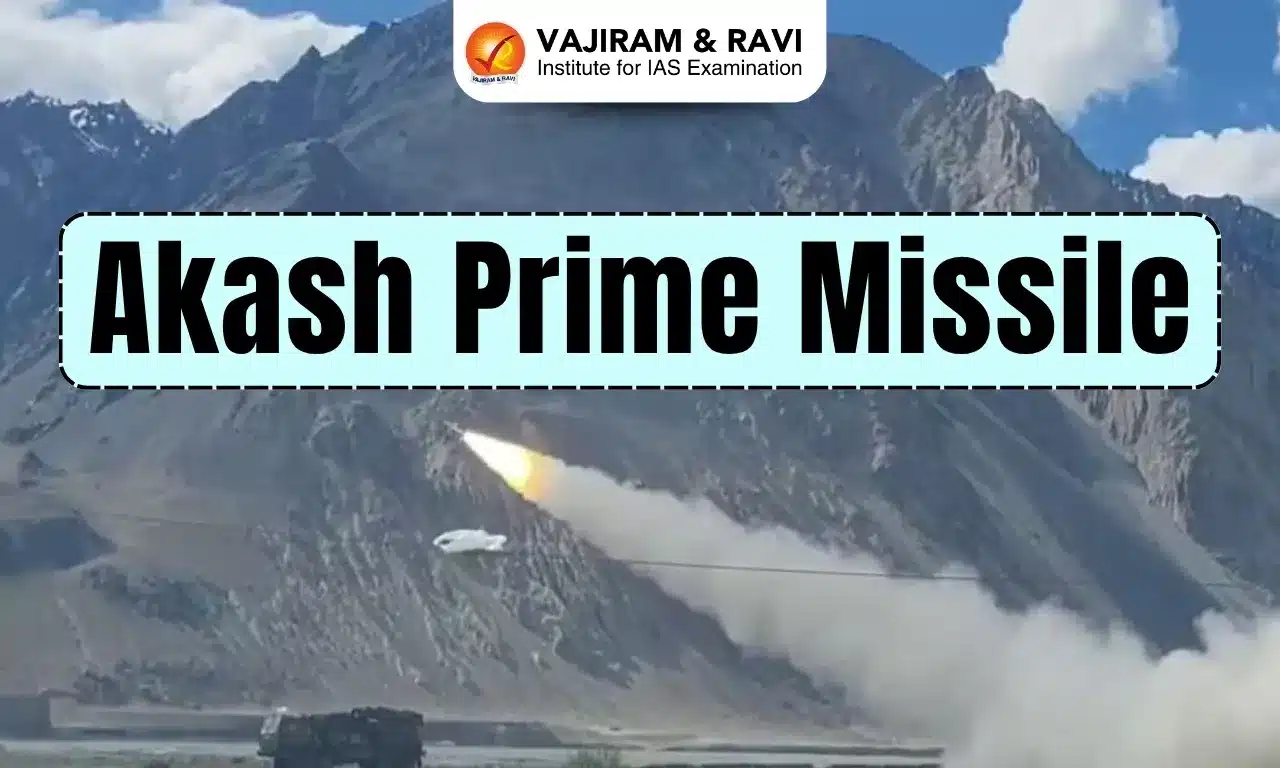
Recently, India achieved a significant milestone by successfully destroying two Aerial High Speed Unmanned targets at high-altitude in Ladakh by Akash Prime.

About Akash Prime Missile

  • It is the upgraded variant of Akash weapon for the high altitude region. 

Features of Akash Prime Missile

  • It is a medium-range, surface-to-air missile platform.
  • It is designed to protect mobile, semi-mobile and static military installations from a range of aerial threats.
  • Its key upgrade is an indigenous Radio Frequency seeker. This allows it to beam out radio signals and home in on targets during the final phase of its flight.
  • It is capable of targeting objects at a range of around 25 to 30 kilometers.
  • Other key enhancements in Akash Prime ensure more reliable performance under low-temperature environments at higher altitudes.
  • Akash Prime is engineered for deployment above 4,500 metres.
  • These new additions have been made after receiving feedback from armed forces, for the deployment of the system to provide air defence cover for vital installations and sensitive areas in high-altitude regions.

Source: PIB

Akash Prime Missile FAQs

Q1: What is Akash Prime?

Ans: It is upgraded with a more advanced system, and it is a hard and rugged version of the indigenous Akash Surface-to-Air Missile (SAM) system of India.

Q2: Which Indian organization developed the Akash Missile System?

Ans: Defence Research and Development Organisation (DRDO)

Ground Penetrating Radar Technology

Ground Penetrating Radar Technology

Ground Penetrating Radar Technology Latest News

A team from the Indian Institute of Technology (IIT) Kanpur has discovered signs of ancient Buddhist stupas and structural remains buried beneath the soil in Yamuna Nagar district of Haryana by using advanced Ground Penetrating Radar (GPR) technology.

About Ground Penetrating Radar Technology

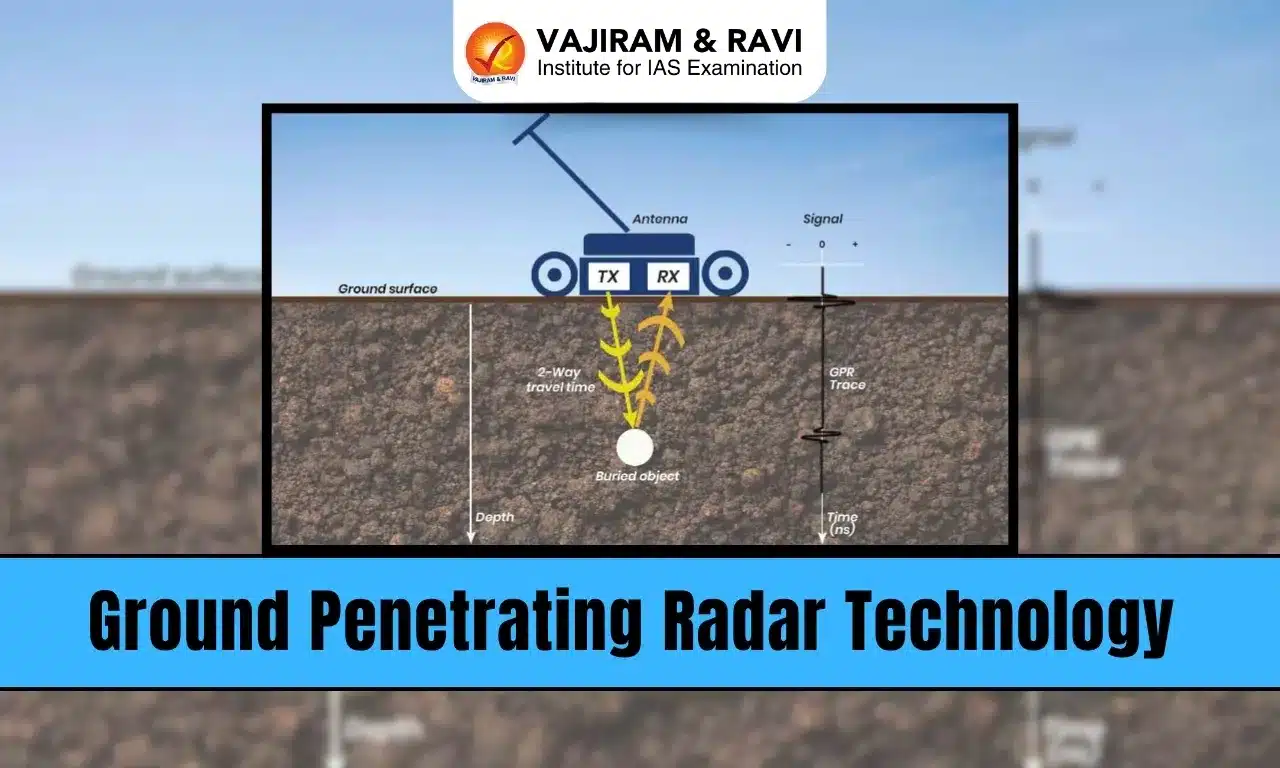
  • It is a geophysical method that uses high-frequency electromagnetic pulses to image the subsurface of the Earth or other solid materials.
  • It is a non-destructive detection and imaging method which identifies subsurface elements either underground or within a surface such as concrete.

Working of Ground Penetrating Radar Technology

  • GPR uses a transmitter antenna to send high-frequency, pulsed, Electromagnetic waves (typically from 10 MHz to 1,000 MHz) into the subsurface to acquire information.
  • The wave spreads out and travels downward until it hits a buried object or boundary with different electromagnetic properties
  • Part of the wave energy is reflected or scattered back to the surface, while part of the energy continues to travel downward.
  • The wave is reflected back to the surface to a receiver antenna that records the amplitude of the reflected energy and the arrival time of the wave on a digital storage device.

Applications of Ground Penetrating Radar Technology

  • GPR can detect both metallic and non-metallic objects, giving it a wide range of applications.
  • It reveals all types of utilities, including electrical conduit, steam pipes, telecommunications lines, gas & oil lines, water lines, and sewer & storm pipes. 

Source: TOI

Ground Penetrating Radar Technology FAQs

Q1: What technology does Ground-penetrating radar use?

Ans: GPR uses the principle of scattering electromagnetic waves to locate buried objects and operates in the frequency range between 10 MHz and 3 GHz.

Q2: What are the advantages of GPR?

Ans: Its main benefits include its ease of execution, varied detection capabilities and wide array of applications.

Hydrogen Peroxide

Hydrogen Peroxide

Hydrogen Peroxide Latest News

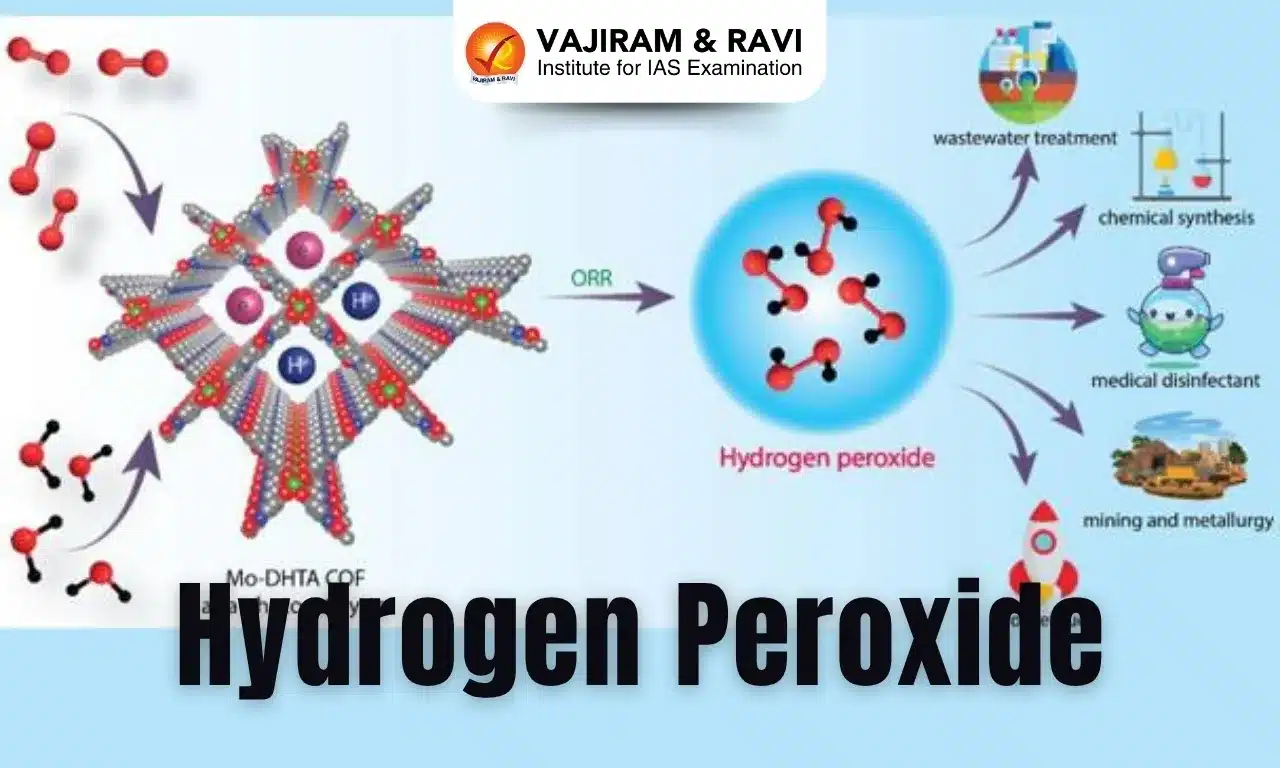
Recently, scientists have developed a novel approach for using a cutting-edge material called Mo-DHTA COF, short for dimolybdenum paddlewheel-embedded covalent organic framework for synthesizing hydrogen peroxide (H2O2) directly from water and sunlight. 

About Hydrogen Peroxide

  • It is a colorless liquid at room temperature with a bitter taste.
  • Small amounts of gaseous hydrogen peroxide occur naturally in the air.

Features of Hydrogen Peroxide

  • It is known for its eco-friendly nature of degrading or breaking down into only water and oxygen.
  • Hydrogen peroxide is unstable, decomposing readily to oxygen and water with release of heat.
  • It is nonflammable; it is a powerful oxidizing agent that can cause spontaneous combustion when it comes in contact with organic material.
  • Hydrogen peroxide is found in many households at low concentrations (3-9%) for medicinal applications and as a clothes and hair bleach.
  • It is a key component in sustainable chemical processes. However, its conventional production methods are energy-intensive, environmentally hazardous, and costly.

Applications of Hydrogen Peroxide

  • It is a vital oxidizing agent with broad applications in chemical synthesis, sterilization, wastewater treatment, and fuel cells.
  • In industry, hydrogen peroxide in higher concentrations is used as a bleach for textiles and paper, as a component of rocket fuels, and for producing foam rubber and organic chemicals.

Source: PIB

Hydrogen Peroxide FAQs

Q1: What is hydrogen peroxide and its uses?

Ans: Hydrogen peroxide is used for hair bleaching and for oxidation in permanent hair dyes and in oral hygiene products such as mouth-rinses and dentifrices as well as in tooth bleaching products.

Q2: What is hydrogen peroxide also known as?

Ans: Hydrogen peroxide (H2O2) – also known as oxygenated water – is a gas widely used as a bleaching agent in paper plants and the textile industry.

UPSC Daily Quiz 18 July 2025

UPSC Daily Quiz

The Daily UPSC Quiz by Vajiram & Ravi is a thoughtfully curated initiative designed to support UPSC aspirants in strengthening their current affairs knowledge and core conceptual understanding. Aligned with the UPSC Syllabus 2025, this daily quiz serves as a revision resource, helping candidates assess their preparation, revise key topics, and stay updated with relevant issues. Whether you are preparing for Prelims or sharpening your revision for Mains, consistent practice with these Daily UPSC Quiz can significantly enhance accuracy, speed, and confidence in solving exam-level questions.

[WpProQuiz 23]  

UPSC Daily Quiz FAQs

Q1: What is the Daily UPSC Quiz?

Ans: The Daily UPSC Quiz is a set of practice questions based on current affairs, static subjects, and PYQs that help aspirants enhance retention and test conceptual clarity regularly.

Q2: How is the Daily Quiz useful for UPSC preparation?

Ans: Daily quizzes support learning, help in revision, improve time management, and boost accuracy for both UPSC Prelims and Mains through consistent practice.

Q3: Are the quiz questions based on the UPSC syllabus?

Ans: Yes, all questions are aligned with the UPSC Syllabus 2025, covering key areas like Polity, Economy, Environment, History, Geography, and Current Affairs.

Q4: Are solutions and explanations provided with the quiz?

Ans: Yes, each quiz includes detailed explanations and source references to enhance conceptual understanding and enable self-assessment.

Q5: Is the Daily UPSC Quiz suitable for both Prelims and Mains?

Ans: Primarily focused on Prelims (MCQ format), but it also indirectly helps in Mains by strengthening subject knowledge and factual clarity.

Reykjanes Peninsula

Reykjanes Peninsula

Reykjanes Peninsula Latest News

A volcano erupted recently in Iceland's Reykjanes peninsula in the southwest, weather authorities said, the ninth eruption to hit the region since the end of 2023.

About Reykjanes Peninsula

  • Reykjanes is a peninsula in southwest Iceland, characterized by immense lava fields, volcanoes, and heightened geothermal activity.
  • It covers an area of 829 sq.km. 
  • The peninsula is where the Mid-Atlantic Ridge rises above sea level, creating a dynamic landscape where the North American and Eurasian tectonic plates meet. 
  • Due to this geological setting, the whole peninsula is extremely volcanically active, covered with moss-coated lava fields and cone-shaped mountains.
  • Since 2021, the Reykjanes Peninsula has seen a marked increase in volcanic activity, with eruptions occurring frequently.
  • There are frequent earthquakes due to the movement of the tectonic plates, but are commonly minor events that can hardly be felt by humans.
  • The peninsula is quite sparsely populated, with the exception of the capital area of Reykjavik, which is the largest city on the peninsula.
  • It is also the site of the Reykjanes Geopark, a UNESCO Global Geopark, which showcases the area’s unique geological features, including fissures, lava fields, hot springs, and volcanic craters.
  • The Gunnuhver Geothermal Field is among the biggest geothermal fields on the peninsula.

Source: NDTV

Reykjanes Peninsula FAQs

Q1: Where is the Reykjanes Peninsula located?

Ans: Southwest Iceland

Q2: What characterizes the landscape of the Reykjanes Peninsula?

Ans: Immense lava fields, cone-shaped mountains, and geothermal features

Q3: Why is the Reykjanes Peninsula volcanically active?

Ans: It is located where two tectonic plates diverge.

Swachh Survekshan 2024-25 – Ahmedabad Tops as India’s Cleanest City

Swachh Survekshan 2024-25

Swachh Survekshan 2024-25 Latest News

  • In a landmark shift in India's cleanliness rankings, Ahmedabad has been declared the cleanest city in the country under the Swachh Survekshan 2024-25, the annual sanitation survey conducted by the Ministry of Housing and Urban Affairs (MoHUA). 
  • This is the first time Ahmedabad has secured the top spot, as the consistent chart-topper Indore transitions into a newly created ‘Swachh Bharat Super League 1.0’, recognising its sustained excellence in urban sanitation.

About Swachh Survekshan

  • Launched in 2016 under the Swachh Bharat Mission-Urban (SBM-U), Swachh Survekshan is the world’s largest urban sanitation survey. It evaluates cities on multiple parameters, including:
    • Citizen feedback
    • Waste segregation and processing
    • Open defecation-free (ODF) status
    • Cleanliness in public areas
    • Municipal innovation and digital monitoring
  • The 2024-25 edition of the survey covered over 4,500 Urban Local Bodies (ULBs), with over 12 crore citizen responses, making it one of the most participatory surveys of its kind globally.

Key Rankings and New Categories Introduced

  • Top Cleanest Cities (Population >1 lakh)
    • Ahmedabad (Gujarat)
    • Bhopal (Madhya Pradesh)
    • Surat (Gujarat)
    • Indore, which has topped the charts for six consecutive years, has now been elevated to the Swachh Bharat Super League 1.0 category, introduced to reward cities that have maintained exemplary standards for an extended period.
  • Cleanest Ganga Towns
    • Varanasi (Uttar Pradesh) - Retained its position as the cleanest Ganga town for the fourth consecutive year
    • Prayagraj and Bijnor also featured among the top three
  • Cleanest Cities (Population <1 lakh)
    • Sasvad (Maharashtra) - Cleanest among cities with under 1 lakh population
    • Lonavala and Vita followed closely
  • Best Performing States
    • Maharashtra ranked as the best-performing state overall
    • Madhya Pradesh and Chhattisgarh followed as second and third respectively

Gujarat’s Remarkable Performance

  • Gujarat’s cities made an impressive mark in the survey, with Ahmedabad, Surat, and Rajkot ranking in the top 10 cleanest cities. The consistent investment in waste processing, mechanised road sweeping, and citizen engagement platforms has paid off.
  • Ahmedabad Municipal Corporation has focused on:
    • Scientific processing of nearly 100% of its solid waste
    • Door-to-door waste collection across all wards
    • Citizen apps for cleanliness reporting and grievance redressal
    • These efforts contributed significantly to its ascent to the top rank this year.

Innovations in Survey 2024-25

  • The Swachh Survekshan 2024-25 introduced some key innovations:
    • AI-Based Tools for validation of cleanliness parameters
    • Swachhta League for Youth engagement
    • Special Emphasis on legacy waste management and city beautification
    • Star Rating for Garbage Free Cities (GFC) updated alongside Survekshan rankings
  • The assessment also used real-time data from Integrated Command and Control Centres (ICCCs) to monitor sanitation activities in urban areas.

Recognition Beyond Rankings

  • In addition to city and state rankings, special recognitions were awarded:
    • Cleanest Cantonment Board: Mhow (Madhya Pradesh)
    • Best Citizen Feedback Response: Chandigarh
    • Best Innovation in Sanitation: Navi Mumbai for circular economy initiatives
    • Cleanest State Capital: Bhopal

Implications for Urban Governance

  • Swachh Survekshan has emerged not only as a cleanliness ranking tool but also as a key driver for competitive federalism, inspiring states and cities to enhance urban governance.
  • The annual exercise has helped:
    • Institutionalise waste segregation and recycling
    • Improve behavioural change communication
    • Foster innovation and public-private partnerships in sanitation
  • It has also catalysed job creation in the waste management sector and promoted entrepreneurship in circular economy ventures.

Source: IE | PIB

Swachh Survekshan 2024-25 FAQs

Q1: Which city was declared the cleanest in India under Swachh Survekshan 2024-25?

Ans: Ahmedabad was declared the cleanest city in India in the 2024-25 edition.

Q2: What is the Swachh Bharat Super League 1.0?

Ans: It is a new category introduced to honour cities like Indore that have consistently maintained top cleanliness rankings.

Q3: Which state ranked highest in overall cleanliness performance?

Ans: Maharashtra ranked as the best-performing state in Swachh Survekshan 2024-25.

Q4: Which city retained the title of cleanest Ganga town?

Ans: Varanasi retained its position as the cleanest Ganga town for the fourth year in a row.

Q5: What are the key focus areas in Swachh Survekshan 2024-25?

Ans: The survey focused on waste processing, citizen feedback, digital monitoring, legacy waste management, and innovation in sanitation.

Scientists Detect Record-Breaking Black Hole Merger Through Gravitational Waves

Black Hole Merger Discovery

Black Hole Merger Discovery Latest News

  • Scientists have detected gravitational waves from the largest black hole merger ever observed. 
  • Such mergers are rare but release immense energy, sending ripples—gravitational waves—across spacetime. These waves, predicted by Einstein’s General Relativity in 1915, are extremely weak and only detectable from major cosmic events like black hole collisions.
  • The latest discovery, given the name GW231123, is exceptional because it involves the biggest black holes to have been observed in any such event.

Why This Black Hole Merger Discovery Is Unique

  • Scientists have detected gravitational waves from the merger of two unusually large black holes—one 140 times and the other 100 times the mass of the Sun—forming a new black hole about 225 times larger than the Sun
    • In general, a black hole is a region in Space where the pulling force of gravity is so strong that neither matter nor light can ever escape.
  • This size range, between 100 and 150 solar masses, defies current scientific theories, which suggest stars that are large typically don’t collapse into black holes. 
    • Stars in this size range are believed to end their lives in powerful explosions, not by collapsing into black holes, according to current scientific theories.
  • Adding to the surprise, one of the black holes was spinning near the maximum speed allowed by Einstein’s General Theory of Relativity. 
  • This discovery not only breaks previous records for black hole mergers but also challenges existing models of black hole formation and the life cycle of massive stars, offering fresh insights into the structure and evolution of the universe.

Gravitational Waves: A New Window to Understand the Universe

  • Before 2015, scientists mainly relied on electromagnetic waves—like light, X-rays, and radio waves—to study the universe. 
  • However, vast portions of the cosmos, especially those involving dark matter and dark energy, remain invisible to these methods. 
  • Black holes are a prime example; their existence was known, but they couldn’t be directly observed. 
  • The discovery of gravitational waves changed this. Generated by massive cosmic events such as black hole mergers, these ripples in spacetime can now be detected on Earth using highly sensitive instruments. 
  • Though all moving objects create gravitational waves, only those from extremely large events are strong enough to reach us. 
  • Gravitational waves offer scientists a new kind of vision, revealing previously hidden aspects of the universe.

LIGO and the Expansion of Gravitational Wave Detection

  • The first-ever detection of gravitational waves in 2015 was achieved by two LIGO observatories in the United States. 
  • Since then, additional detectors like Virgo in Italy and KAGRA in Japan have joined the effort, forming the LVK (LIGO-Virgo-KAGRA) collaboration, which made the latest major discovery. 
  • To strengthen this global network, a third LIGO observatory is planned in India, called LIGO-India. However, the project has faced significant delays. 
    • Originally scheduled to begin operations in 2024, final government approval and a budget of ₹2,600 crore were only secured in 2023. 
  • The Department of Atomic Energy has identified Hingoli district in Maharashtra as the site for the observatory. 

Source: IE | IE | LIGO

Black Hole Merger Discovery FAQs

Q1: Why is the latest black hole merger significant?

Ans: It involves two black holes merging into one 225 times the Sun’s mass, breaking previous records.

Q2: What makes this black hole merger unique?

Ans: The black holes were in a mass range scientists didn’t expect to collapse into black holes under current theories.

Q3: How do gravitational waves help scientists?

Ans: Gravitational waves provide insights into previously invisible cosmic events like black hole mergers, expanding our understanding of the universe.

Q4: What is the LVK collaboration?

Ans: It’s a global network including LIGO, Virgo, and KAGRA observatories, working together to detect gravitational waves worldwide.

Q5: What is the status of LIGO-India?

Ans: LIGO-India has faced delays; construction in Maharashtra is now expected to finish by April 2030 with government support.

India Challenges Double Standards Over Russian Oil Trade Amid US Sanctions Threat

India Russian Oil Trade

India Russian Oil Trade Latest News

  • India firmly dismissed concerns over possible U.S. sanctions on its Russian oil trade. 
  • Petroleum Minister Hardeep Singh Puri emphasized India’s diversified oil imports—from 27 to 40 countries—and said India would handle any challenges. 
  • On the same day, MEA warned against “double standards,” stressing India’s priority is securing affordable energy for its people based on market availability and global conditions
  • These remarks came after NATO chief Mark Rutte suggested countries buying Russian oil could face U.S. secondary sanctions aimed at pressuring Russia over the Ukraine war.

New US Sanctions Threat Looms Over India’s Russian Oil Trade

  • The United States is signaling tougher measures against countries trading with Russia, directly impacting India. 
  • US President Donald Trump, now taking a firmer stance on Russia, has warned of imposing “secondary sanctions” if Moscow does not end its war in Ukraine within 50 days. 
  • This would mean penalties targeting Russia’s key trading partners like India, China, and Brazil. 
  • NATO chief Mark Rutte also cautioned India, urging Delhi to pressure Russia into peace talks to avoid facing severe economic fallout. 
  • In addition, the US Congress is considering a bill that would impose up to 500% tariffs on buyers of Russian energy
  • These moves reflect growing Western frustration as existing sanctions have not crippled Russia’s economy, largely because of its ongoing trade with countries including India.

Should India Be Concerned About New US Sanctions

  • India’s trade with Russia has grown sharply, reaching a record $68.7 billion in FY 2024–25—almost six times the pre-pandemic figure. 
  • India’s key imports from Russia include crude oil, petroleum products, fertilizers, and coal, with oil purchases rising significantly after Western sanctions on Moscow in 2022. 
    • In May 2025 alone, India imported $4.42 billion worth of crude from Russia. 
  • While this raises concern over potential US sanctions, India maintains it has diversified its oil sources and can shift suppliers if necessary
  • Moreover, there’s skepticism over whether former President Trump would follow through on such harsh measures, especially since India and the US are negotiating a trade deal that sanctions would disrupt
  • Another factor is China—Russia’s largest trade partner—making it uncertain if the US would risk escalating tensions with Beijing again. 
  • Finally, targeting Russian oil buyers could unsettle global energy markets, causing blowback for the US and its allies as well.

Mixed Reactions in the West to Trump’s New Russia Sanctions Plan

  • Trump’s proposed 50-day deadline for Russia to end the Ukraine war and threats of secondary sanctions have drawn a mixed response in the West. 
  • Some welcome his tougher stance, seeing it as a shift from his earlier reluctance to support Ukraine. 
  • However, many worry the deadline could backfire—giving Russia time to seize more Ukrainian territory and strengthen its bargaining power. 
  • Critics also point out that Trump’s proposals lack clear details and timelines. 
  • Meanwhile, his core MAGA (Make America Great Again) supporters feel betrayed, viewing this move as a departure from Trump’s pledge to avoid foreign entanglements.

Source: IE | TH | ToI

India Russian Oil Trade FAQs

Q1: Why is India concerned about new US sanctions?

Ans: US plans secondary sanctions on Russian oil buyers, directly affecting India’s growing trade ties with Russia.

Q2: How large is India’s trade with Russia now?

Ans: India’s trade with Russia reached $68.7 billion in FY 2024–25, nearly six times the pre-pandemic trade volume.

Q3: What is NATO’s position on India’s oil trade?

Ans: NATO chief cautioned India, suggesting sanctions could hit hard if Russia doesn’t end its war within 50 days.

Q4: What are India’s options if sanctioned?

Ans: India claims to have diversified oil sources and can shift suppliers if US sanctions disrupt Russian oil purchases.

Q5: How has the West reacted to Trump’s sanctions plan?

Ans: Reactions are mixed—some welcome tougher Russia stance, others fear it could backfire or contradict MAGA promises.

Trade Connect ePlatform

Trade Connect ePlatform

Trade Connect ePlatform Latest News

The Directorate General of Foreign Trade (DGFT), Ministry of Commerce and Industry, participated in two major B2B trade exhibitions this month to enhance awareness and adoption of the Trade Connect ePlatform.

About Trade Connect ePlatform

  • It is a new digital initiative aimed at transforming the landscape of international trade for Indian exporters, especially MSMEs (Medium, Small and Medium Enterprises).
  • It is an initiative of the Directorate General of Foreign Trade (DGFT) under the Ministry of Commerce & Industry.

Features of Trade Connect ePlatform

  • It serves as a comprehensive hub of information and services on international trade for all stakeholders. 
  • It will connect Indian Exporters, MSMEs and Entrepreneurs with various stakeholders including Indian Missions Abroad, Export Promotion Councils, and other Partner Government Agencies. 
  • The platform will provide information on trade events taking place in different parts of the world, benefits available due to India’s Free Trade Agreements (FTAs) and other international trade-related information and data. 
  • It provides latest and updated information on tariffs, certifications, trade events, eCommerce, and buyers in a simplified manner to MSMEs.
  • Interactive courses to introduce MSMEs to exports & related procedures across multiple languages are also provided.
  • It also serves a single point of issuance and validation for preferential and non-preferential certificates of origin through a secure, electronic, paperless issuance process with all authorised issuing agencies being present on the platform.
  • The platform, developed in collaboration with key partners including the Ministry of MSME, EXIM Bank, Department of Financial Services (DFS), and the Ministry of External Affairs (MEA).

Source: PIB

Trade Connect ePlatform FAQs

Q1: What is trade connect e-platform?

Ans: The Trade Connect e-Platform serves as a one-stop solution, providing exporters with near real-time access to critical trade-related information, while seamlessly connecting them to key government entities such as the Indian Missions abroad.

Q2: What is the purpose of DGFT?

Ans: It is responsible for formulating and implementing the Foreign Trade Policy with the main objective of promoting India's exports.

Enquire Now