Hotspot & Mantle Plumes, Impact, Importance, Key Details

Hotspot & Mantle Plumes

Hotspots and Mantle Plumes are geological wonders that lie beneath the Earth’s surface and constantly shape and reshape the planet. Unlike ordinary volcanic activity that occurs along plate boundaries, hotspots are special heat courses known as mantle plumes. These plumes originate from deep within the Earth’s interior and rise upward, it influences the surface by creating volcanoes, volcanic islands and geothermal activity. In this article, we are going to cover Hotspots and Mantle Plumes, its origins, global distributions and impact on Earth’s tectonics. 

Hotspots 

Hotspots are geothermal anomalies that serve as long-live and stationary sources of heat below the Earth’s crust. Unlike the other volcanic regions tied directly to tectonic plate boundaries, hotspots remain persistent and stationary for many years, giving rise to specific volcanic features. A hotspot is an area where the magma is hotter than the surrounding regions, leading to localised melting, thinning of the crust and volcanic eruptions on the Earth’s surface. Since its not related to subduction zones or rift boundaries, hotspots present a unique style of volcanism driven by internal mantle processes. 

Hotspots Relation to Plate Movements

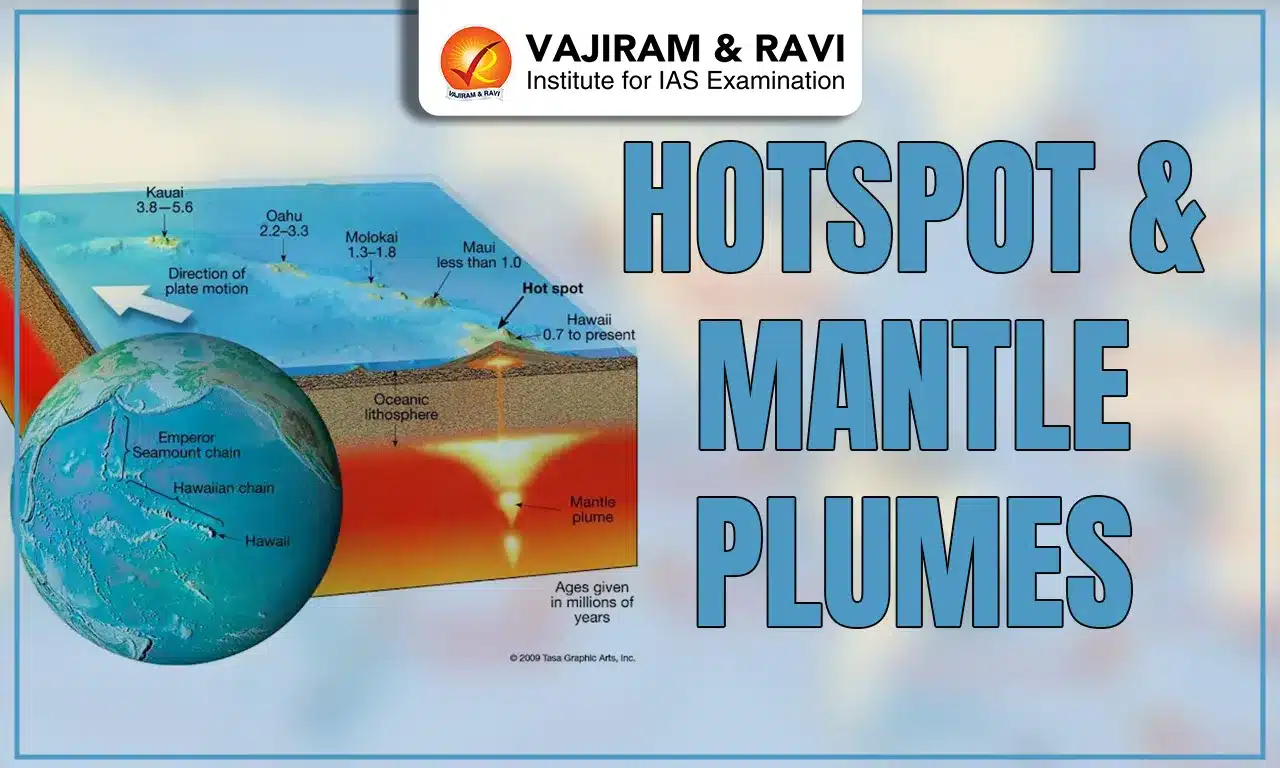
As tectonic plates move slowly across these fixed heat sources, chains of volcanoes are created, recording the direction and speed of plate movement over geological time. The Hawaiian Islands, one of the most studied examples, were formed as the Pacific Plate moved over the Hawaiian hotspot, producing a series of volcanic islands that decrease in age toward the southeast.

Hotspot Formation Theories: Mantle Plumes and Plate Weakness

Two important scientific hypotheses explain the origin and persistence of hotspots. These theories are: 

1. The Mantle Plume Theory

  • The Mantle Plume Theory proposes that hotspots are generated by deep seated mantle plumes, columns of abnormally hot, buoyant molten rock that rise from the lower mantle and the core-mantle boundary. 
  • As tectonic plates drift over these fixed plumes, magma ascends and penetrates the crust, creating volcanic activity.
  • The plume may also weaken or thin the overlying plate, making it more susceptible to eruptions.
  • Over time, this interaction creates linear chains of volcanic islands or seamounts, such as the Emperor-Hawaiian seamount chain in the Pacific Ocean.
  • An important part of this theory is that while tectonic plates move, the plume remains fixed, serving as a “geological marker” for plate motion.

2. The Plate Weakness Theory (Foulger’s Hypothesis)

  • The Plate Weakness Theory was proposed by geologist Gillian Foulger in 2003, this alternative theory challenges the plume concept.
  • It says that hotspots may not necessarily arise from fixed mantle plumes but instead from structural weaknesses or “scars” within tectonic plates.
  • These weak zones, formed by earlier tectonic events such as collisions or rifting, allow magma to rise more easily when they pass over areas with melted subducted material.
  • According to this view, hotspots are the surface expression of shallow processes within tectonic plates rather than deep mantle upwellings.
  • This theory emphasizes that hotspots could form in diverse geological settings without requiring a plume rising from great depths.

Both theories remain debated, and modern seismological studies continue to test whether hotspots indeed originate from deep mantle plumes or shallow lithospheric weaknesses.

Hotspots Associated Landforms

Hotspots have been created by some of the world’s most important geological features. These landforms include:

Volcanic Islands

Chains of volcanic islands form as tectonic plates move above stationary hotspots. The islands typically evolve from active shield volcanoes to extinct eroded landforms over millions of years. Examples include: Hawaiian Islands in the Pacific Ocean, Galápagos Islands near Ecuador and Canary Islands near northwest Africa

Seamounts

Seamounts are submerged volcanic mountains formed by hotspot volcanism. Even when submerged, they often continue erupting, building high underwater volcanic chains.

Large Igneous Provinces (LIPs)

Some hotspots give rise to massive outpourings of lava, covering vast areas with basaltic rock. These are called LIPs, and they have played a role in past mass extinctions. Examples include:

  • Deccan Traps in India
  • Columbia River Basalt Group in the United States

Rift Zones 

Rift zones are generated due to hotspot activity where the crust is stretched and fractured. The areas are characterised by fissures, lava flows and sometimes even the initiation of new ocean basins. Examples include African Rift. 

Geothermal Features

Hotspots are associated with geothermal activity such as geysers, fumaroles, and hot springs. For example the Yellowstone National Park in the United States is world-famous for its geothermal activity, linked to the Yellowstone hotspot.

Hotspots Distribution Across the World

Hotspots are distributed around the globe, each contributing uniquely to Earth’s geology:

  • Hawaiian Hotspot: Responsible for the Hawaiian Islands and Emperor seamount chain, showing the Pacific Plate’s motion.
  • Icelandic Hotspot: Located on the Mid-Atlantic Ridge, it produces volcanism and geothermal activity, with features like rift valleys, shield volcanoes, and geysers.
  • Galápagos Hotspot: Created the Galápagos Islands, home to diverse ecosystems and young volcanic landscapes.
  • Reunion Hotspot: Located in the Indian Ocean, it produced Réunion Island and the submerged Mascarene Plateau.
  • Tahiti Hotspot: Formed the Society Islands, including Tahiti, famous for their volcanic origins and scenic beauty.
  • Canary Islands Hotspot: Generated the Canary Islands off Africa’s northwest coast, with Tenerife as the largest island.
  • Easter Island Hotspot: Produced Easter Island (Rapa Nui), renowned for its iconic Moai statues but geologically significant as a volcanic island.

Mantle Plumes

Mantle Plumes are columns of hot, buoyant rock that rise vertically from deep within the mantle, near the core mantle boundary. They play an important role in driving hotspot volcanism. 

Mantle Plume Formation 

Mantle Plumes are formed using the following sources: 

  1. Heat Source: Generated by residual planetary heat and radioactive decay.
  2. Buoyant Material: Hot, less-dense material rises compared to its cooler surroundings.
  3. Partial Melting: Rising material undergoes decompression, leading to partial melting and magma formation.
  4. Plume Column: A cylindrical column of hot rock ascends toward the lithosphere.
  5. Surface Expression: When the plume head interacts with the lithosphere, massive volcanic eruptions and hotspot features are created.

Mantle Plumes Importance in Plate Tectonics 

Mantle Plumes are important in plate tectonics due to following: 

  • Formation of Volcanic Hotspots: Plumes produce volcanic chains like Hawaii.
  • Rift Formation: Their heat weakens continents, initiating rifting and ocean basin formation.
  • Flood Basalts: Responsible for massive basalt outpourings such as the Deccan and Siberian Traps.
  • Mountain Building: Plumes exert upward pressure, uplifting the lithosphere into ranges.
  • Material and Energy Exchange: They act as conduits between Earth’s deep interior and surface processes.
  • Volcanic Chains: Produce linear, time-progressive volcanic trails that track plate motion.

Hotspot & Mantle Plumes FAQs

Q1: What are hotspot and mantle plumes?

Ans: Hotspots are volcanic regions fed by deep mantle plumes—columns of hot rock rising from Earth’s mantle.

Q2: What is a mantle plume?

Ans: A mantle plume is an upwelling of abnormally hot rock within the Earth’s mantle that fuels surface volcanism.

Q3: What is a hot spot in the Earth's mantle?

Ans: A hot spot is a stationary volcanic center formed above a mantle plume, away from tectonic plate boundaries.

Q4: What is a Rift zone?

Ans: A rift zone is a region where the Earth’s lithosphere is being pulled apart, leading to volcanic activity and crustal thinning.

Q5: What are seamounts?

Ans: Seamounts are underwater volcanic mountains formed by eruptions that rise from the ocean floor but do not reach the surface.

Karachi Session 1931, Resolutions, Landmark Developments

Karachi Session 1931

The Karachi Session held by the Indian National Congress was conducted in Karachi, which was a part of British India at that time. The session was conducted from 26th to 31st March 1931. The session helped in defining the political strategies and shaping the course of the Indian Freedom Movement. In this article, we are going to cover about the Karachi Session 1931, its developments and resolution. 

Karachi Session 1931

The Karachi Session of the Indian National Congress took place in between 26-31 March 1931 and was presided over by Sardar Vallabhbhai Patel. The session took place after the Gandhi-Irwin Pact and the execution of Bhagat Singh, Rajguru, and Sukhdev and was marked by grief, protects and deep political debates. The Karachi session also strongly condemned communalism, stressing national unity against colonial rule, and authorized the resumption of the Civil Disobedience Movement if British promises were not fulfilled. Overall, the Karachi Session was a turning point as it broadened the struggle from merely seeking independence to envisioning a free India based on political freedom, social justice, and economic equality, and its resolutions remained the guiding framework for Congress policies in the years ahead.

Karachi Session 1931 Landmark Developments 

The Karachi Session holds an important place in Indian History due to the important developments that took place during the session. These developments included: 

  • Gandhi-Irwin Pact: In March 1931, the Congress assembled at Karachi in a special session to formally ratify the Gandhi-irwin Pact. 
  • Execution of Revolutionaries: Just six days before the Karachi Session, Bhagat Singh, Rajguru and Sukhdev were hanged, casting a shadow over the proceedings. 
  • Black Flag Demonstrations: Mahatma Gandhi was met with black flag protests by the Punjab Naujawan Bharat Sabha, denouncing his inability to secure clemency for the revolutionaries.  

Karachi Session 1931 Resolutions

The Indian Congress passed two important resolutions at the Karachi Session 1931. One was the Fundamental Rights and the other on a National Economic Programme. The Karachi Session 1931 Resolutions included: 

  • Resolution on Fundamental Rights: It promised free press, free speech, right to form associations, universal franchise, equality before law irrespective of caste, creed or gender, free and compulsory primary education, and safeguards for the language, culture, and script of minorities and linguistic groups.
  • Reaffirmation of Poorna Swaraj: The Congress restated its goal of complete independence and demanded immediate transfer of power, pledging nationwide struggle to secure Poorna Swaraj.
  • Revival of Civil Disobedience: The session backed Gandhi’s call to resume the Civil Disobedience Movement, suspended earlier under the Gandhi-Irwin Pact, highlighting nonviolent resistance and mass participation.
  • National Economic Programme: It called for reduced rent and land revenue, exemption for uneconomic holdings, debt relief, curbs on usury, improved working conditions including a living wage and shorter working hours, safeguards for women workers, rights of peasants and labourers to unionize, and state control of major industries, mines, and transport — all aligned with the Poorna Swaraj vision.
  • Denunciation of Communalism: The Congress firmly rejected communal politics, stressing unity among Indians across religious lines against British imperialism.

Poona Resolution 

The Indian Congress passed the historic Poorna Swaraj Resolution at Lahore Session, 1930. 

  • The goal of the resolution was complete independence. 
  • The resolution marked a decisive shift away from constitutional concessions to complete freedom from British Rule. 
  • The goal was to unify Indians across communities in the struggle for independence. 
  • It propagated peaceful civil disobedience as the main method of resistance. 
  • The resolution stated that from January 26, 1930 the authority of the British Government in India would be deemed illegitimate.

Karachi Session 1931 FAQs

Q1: What was the Karachi session of 1931?

Ans: The Karachi Session of 1931 was a meeting of the Indian National Congress held from 26–31 March 1931 that endorsed the Gandhi-Irwin Pact and passed resolutions on Fundamental Rights and the National Economic Programme.

Q2: Who was the president of the Karachi session?

Ans: The Karachi Session of 1931 was presided over by Sardar Vallabhbhai Patel.

Q3: What were the three demands of the Karachi session?

Ans: The Karachi Session demanded Poorna Swaraj (complete independence), guarantee of Fundamental Rights, and a National Economic Programme ensuring social and economic justice.

Q4: When was the Gandhi-Irwin Pact?

Ans: The Gandhi-Irwin Pact was signed on 5 March 1931.

Q5: When was the Poorna Swaraj declared?

Ans: The Poorna Swaraj (Complete Independence) was declared at the Lahore Session of Congress on 31 December 1929, and celebrated as Independence Day on 26 January 1930.

Praja Mandal Movements, Nature, Role of Congress, Importance

Praja Mandal Movements

The national movement in the princely states gained momentum after 1920, following the Non-Cooperation Movement which had taken place mainly in the British provinces. Inspired by this, the subjects of princely states began forming people’s organisations to demand political rights and reforms. These organisations were popularly known as Praja Mandals or Praja Parishads, and their struggles collectively came to be called the Praja Mandal Movements.

To coordinate these movements, the State’s People’s Conference was established. It brought together representatives from several princely states such as Baroda, Bhopal, Travancore, and Hyderabad. The conference aimed to provide a common platform for dialogue on issues of governance, political stability, and the broader future of India under colonial rule.

Praja Mandal Movements Nature

The Praja Mandal Movements were directed against both feudalism and colonialism. People living in the princely states had to resist the autocratic rule of their feudal princes as well as the overarching control of the British administration. The central demand of these movements was the extension of democratic rights to the people, ensuring greater participation in governance and freedom from oppressive rule.

Praja Mandal Movements Activity

  • Grassroots Implementation of Nationalist Programs: The Praja Mandal movements played a key role in bringing the larger nationalist agenda to the princely states. People actively implemented the constructive programs of the Indian National Movement, ensuring that the spirit of freedom and reform reached even the grassroots level.
  • Promotion of Social Reforms: Alongside political demands, the movements also pushed for social change. They established schools to spread education, promoted the use of khadi, encouraged cottage industries for self-reliance, and launched agitations against untouchability and other social evils.

National Movement Associations in the Princely States

  • The Hitvardhak Sabha: Founded in Poona in May 1921, the Hitvardhak Sabha focused on addressing the problems faced by the people of the southern princely states. It worked as an early platform for voicing public grievances.
  • Akhil Bhor Sansthan Praja Sabha: In November 1921, Wamanrao Patwardhan established this Sabha in the Bhor region. Its aim was to fight against the issues affecting the local population and to push for better rights and governance.
  • All India Association of the People’s Council: The Bombay session of this body in 1927 marked a turning point, as the princely states’ national movement was elevated to the national level. During this session, demands were made for responsible government and full citizenship rights for the people of the princely states.
  • Advocacy for Electoral Rights: The Madras Session of the Congress later supported the demands raised in Bombay. At the Karachi Session of 1936, the Council opposed the provision of the Government of India Act, 1935, that allowed princes to nominate representatives to the Imperial Legislature. Instead, it insisted that the right to elect representatives must belong to the subjects of the princely states. Alongside these political efforts, the Council and related people’s organisations also fought for relief from farmer loans, unfair taxes, and other economic hardships.

Praja Mandal Movements and Role of Congress

The policies and programs of the Indian National Congress played a decisive role in shaping and strengthening the Praja Mandal Movement. The Gandhian methods of non-cooperation and civil disobedience, the Congress’s role in organising the All India States People’s Conference, and the declaration at the Tripuri Session to involve the states in the national struggle gave much-needed confidence and direction to the people’s organisations. By joining hands with the People’s Council, Congress made the princely state’s struggles part of the larger national movement to end British rule and integrate the states into independent India.

  • Formation of the Orissa State People’s Conference (1937): Congress leaders in Orissa took the initiative to form this body in 1937 to investigate the condition of the princely states. In 1938, it was reconstituted with H.K. Mahatab, a member of the Congress Working Committee, as its chairman. The establishment of a popular Congress ministry in Orissa in July 1937 further inspired the people of feudatory states to continue their fight against autocratic rulers.
  • Covert Support to the Feudatory States Movement: Though legal restrictions prevented Congress leaders from openly participating in the princely states’ movements, they extended strong moral support and indirect assistance. This backing strengthened the resolve of the local population.
  • Orissa State Committee’s Enquiry Report (1939): The sufferings of the people in the feudatory states were documented in the enquiry report prepared by the Orissa State Committee. This report was submitted to Lord Linlithgow, the Viceroy, during his visit to Orissa in the first week of August 1939. The Viceroy even held discussions on the issue with the Congress ministry, showing the growing influence of the movement.

Praja Mandal Movements Importance

The Praja Mandal Movement laid bare the exploitative and autocratic nature of feudal rule in the princely states. More importantly, it gave the people a platform to assert their democratic aspirations and align themselves with the larger freedom struggle. The movement was not just about resisting feudal oppression but about the deeper urge of the people to join the political, social, economic, and cultural mainstream of India. By merging with the national movement, it created the momentum that eventually enabled the smooth integration of princely states into independent India after 1947.

Praja Mandal Movements FAQs

Q1: Who was the leader of the Prajamandal movement?

Ans: Key leaders included Nabagopal Mohapatra, Nabakrushna Choudhury, and Harekrushna Mahtab, who mobilized people against feudal oppression in princely states.

Q2: What is the Prajamandal movement of Ranpur?

Ans: It was a peasants’ movement in Odisha’s Ranpur State (1930s) demanding rights, protesting exploitative taxes, and challenging feudal rulers’ authority.

Q3: What were the demands made by Prajamandal in late 1920 and 1930?

Ans: Demands included reduction of land revenue, abolition of forced labour, civil liberties, responsible governance, and merger with democratic India.

Q4: What was the main aim of the Prajamandal movement in Odisha?

Ans: The aim was to secure people’s rights, end feudal exploitation, and integrate princely states into democratic India.

Q5: Where was the first Praja Mandal founded?

Ans: The first Praja Mandal was established in Nilgiri State, Odisha, in 1931, later spreading to other princely states.

Difference Between Statutory Body & Constitutional Body

Difference Between Statutory Body & Constitutional Body

In India, governance is carried out through multiple institutions that operate under distinct legal frameworks. Among these, constitutional bodies and statutory bodies play a central role in maintaining administration and regulation. While both are vital to the functioning of the state, they differ in their origin, powers, and scope of responsibilities. Understanding the Difference Between Statutory Body & Constitutional Body helps in understanding how different mechanisms of governance are structured and how they contribute to effective regulation and public administration.

Statutory Body

A Statutory Body is an institution created by a specific law passed in Parliament or a state legislature. Unlike constitutional bodies, its powers and functions are not drawn directly from the Constitution but from the statute that establishes it. The authority of such bodies depends entirely on this legislation, meaning their structure, role, or even existence can be altered or abolished through amendments to the parent law.

Statutory Body Example

  • National Human Rights Commission (NHRC): Established under the Protection of Human Rights Act, 1993, the NHRC is responsible for safeguarding and promoting human rights across the country.
  • Reserve Bank of India (RBI): Created under the Reserve Bank of India Act, 1934, the RBI serves as India’s central bank and is entrusted with formulating and regulating the nation’s monetary policy.
  • Securities and Exchange Board of India (SEBI): Formed under the SEBI Act, 1992, SEBI functions as the regulator of the securities market, ensuring transparency and protecting investor interests.
  • University Grants Commission (UGC): Set up under the UGC Act, 1956, the UGC oversees higher education in India by maintaining standards, providing funds, and promoting coordination among universities.

Constitutional Bodies

A Constitutional Bodies is one whose origin, powers, and functions are directly derived from the Constitution of India. These bodies are specifically mentioned in the Constitution, and their roles and responsibilities are defined within it. Their existence is permanent in nature, and any change in their structure or functioning requires a constitutional amendment, which is a complex and lengthy process.

Constitutional Bodies Example

  • Election Commission of India (ECI): Established under Article 324 of the Constitution, it is responsible for conducting elections to the Parliament, State Legislatures, and the offices of the President and Vice-President.
  • Comptroller and Auditor General of India (CAG): Created under Article 148, the CAG audits the revenue and expenditure of the Union and State governments to ensure accountability.
  • Union Public Service Commission (UPSC): Formed under Article 315, the UPSC conducts examinations and recruitment for appointments to central government services.
  • Finance Commission: Established under Article 280, it decides the distribution of financial resources between the Union and the States.

Difference Between Statutory Body & Constitutional Body

Statutory Body & Constitutional Body are two key pillars of governance in India. While both play important roles in administration and regulation, they differ in their origin, autonomy, and functions. Constitutional bodies derive their authority directly from the Constitution, making them more permanent and independent, whereas statutory bodies are established through specific laws passed by the legislature for defined purposes. The table below highlights the major Difference Between Statutory Body & Constitutional Body:

Difference Between Statutory Body & Constitutional Body

Basis of Difference

Constitutional Bodies

Statutory Bodies

Origin

Directly established by the Constitution of India under specific articles.

Created through an Act of Parliament or state legislature.

Permanence

Permanent in nature; changes require a constitutional amendment.

Flexible; can be modified, restructured, or dissolved through ordinary legislation.

Autonomy

Highly autonomous, protected by the Constitution from political interference.

Level of autonomy depends on the law creating them; government can amend their powers.

Significance

Perform fundamental state functions like elections, audits, and recruitment.

Serve specific purposes like regulating markets, human rights, or education.

Examples

Election Commission, UPSC, CAG, Finance Commission.

RBI, SEBI, UGC, NHRC.

Amendment Process

Requires constitutional amendment (complex and time-consuming).

Requires simple legislative amendment (relatively easier).

Appointments

Consultative and transparent, involving high constitutional authorities.

Usually done by the government or concerned ministries, less elaborate.

Field of Powers

Broad, core functions of the state (elections, finances, recruitment).

Narrow, sector-specific (finance, human rights, education, etc.).

Control

Protected from direct government control by the Constitution.

Subject to government oversight as per the enabling Act.

Role in Governance

Safeguard democratic processes and accountability of the government.

Address specific administrative/regulatory needs.

Accountability

Accountable to the Constitution and Parliament; subject to judicial review.

Accountable to Parliament/state legislature and government, depending on the statute.

Also Check Related Articles
Difference between NITI Aayog and Inter-State Council Difference Between Economic Survey and Union Budget
Difference Between Tropical Evergreen and Tropical Deciduous Forests Difference Between Ordinary Bill and Money Bill
Difference Between Legislative and Executive Difference between Himalayan and Peninsular Plateau
Difference Between Vedas and Upanishads Difference Between Scheduled and Non-Scheduled Banks
Difference Between Written and Unwritten Constitution Difference between NITI Aayog and Planning Commission
Difference between Colonialism and Imperialism Difference between Fundamental Rights and Directive Principles of State Policy
Difference between Procedure Established by Law and Due Process of Law Difference Between Democracy and Republic
Difference between Creamy Layer and Non-Creamy Layer of OBC Difference between Rajya Sabha and Vidhan Sabha
Difference Between Western Ghats and Eastern Ghats

Difference Between Statutory Body & Constitutional Body FAQs

Q1: What is the difference between constitutional body and statutory body?

Ans: A constitutional body is created by the Constitution; a statutory body is established through laws passed by Parliament or state legislatures.

Q2: What is the difference between Constitution and statutory law?

Ans: The Constitution is the supreme legal framework of a country; statutory laws are detailed rules enacted by legislatures under the Constitution.

Q3: Is the RBI a statutory body or constitutional body?

Ans: The Reserve Bank of India (RBI) is a statutory body, established under the RBI Act, 1934.

Q4: Is UPSC a constitutional body or statutory body?

Ans: The Union Public Service Commission (UPSC) is a constitutional body, created under Articles 315–323 of the Indian Constitution.

Q5: Is NITI Aayog a statutory body?

Ans: No, NITI Aayog is an executive body, created by government resolution in 2015, replacing the Planning Commission.

United Nations Convention on the Law of the Sea, History, Features

United Nations Convention on the Law of the Sea

The United Nations Convention on the Law of the Sea (UNCLOS) is an international agreement that defines the legal framework for the use and management of the world’s oceans and marine resources. Adopted in 1982, it replaced the four Geneva Conventions of 1958, which had separately addressed issues such as territorial seas, the continental shelf, the high seas, fisheries, and the conservation of marine life. UNCLOS brought these aspects under a single, comprehensive treaty, establishing clear rules for maritime boundaries, navigation rights, resource exploitation, and environmental protection.

United Nations Convention on the Law of the Sea

UNCLOS, also known as the Law of the Sea Convention or the Law of the Sea Treaty, defines the rights and responsibilities of nations in their use of the world’s oceans. It provides a comprehensive framework to promote peace, stability, and legal order across global seas, setting out rules for navigation, resource management, and environmental protection.

A central idea of the Convention is that all issues concerning ocean space are closely interconnected and must be dealt with as a whole. To implement its provisions, UNCLOS established three international institutions:

  • The International Tribunal for the Law of the Sea (ITLOS): Adjudicates disputes related to the interpretation and application of the Convention.
  • The International Seabed Authority (ISA): Regulates mineral-related activities in the international seabed area beyond national jurisdiction.
  • The Commission on the Limits of the Continental Shelf (CLCS): Examines and makes recommendations on claims by coastal states regarding the outer limits of their continental shelves.

UNCLOS History

  • UNCLOS replaced the older 17th-century concept of "freedom of the seas," where national rights were limited to a narrow belt of water, usually up to 3 nautical miles (5.6 km) from a country’s shores.
  • Waters beyond this belt were considered international waters.
  • By the mid-20th century, many countries began expanding their claims due to the need for mineral resources, fish stock protection, and pollution control.
  • In 1945, U.S. President Harry S. Truman extended American control over all natural resources of its continental shelf.
  • Soon after, between 1946 and 1950, Chile, Peru, and Ecuador extended their rights to 370 km to protect their Humboldt Current fishing grounds.
  • Other countries extended their territorial seas up to 22 km.
  • Disputes over these changing maritime claims came to global attention in 1967 at the United Nations.
  • During the Third UN Conference on the Law of the Sea (UNCLOS III) in 1973, Maltese ambassador Arvid Pardo called for international authority over the seabed and ocean floor.
  • Despite its name, the United Nations itself has no direct functional role in the implementation of UNCLOS.

UNCLOS Features

  • Under UNCLOS, countries are granted sovereign rights over a 200-nautical-mile zone along their coastlines.
  • This area, known as the Exclusive Economic Zone (EEZ), allows nations to explore, exploit, and manage marine resources for economic purposes.
  • The International Maritime Organization (IMO) plays an important role in supporting UNCLOS operations, particularly in regulating shipping and maritime safety.
  • The International Seabed Authority is another key body responsible for overseeing mineral-related activities in international seabed areas.
  • The International Whaling Commission also plays a significant role in the governance of marine resources under the broader framework of maritime law.

UNCLOS Significance

The United Nations has held three major conferences to shape the law of the sea. Each convention addressed different aspects of maritime boundaries, rights, and responsibilities, eventually leading to the comprehensive framework we know today as UNCLOS. The key highlights of these conventions are:

UNCLOS Significance

Convention

Key Outcomes

UNCLOS I (1958)

Adopted four conventions covering the territorial sea and contiguous zone, continental shelf, high seas, fishing, and conservation of living resources.

UNCLOS II (1960)

Failed to reach an agreement on the exact breadth of territorial seas, leaving disputes unresolved.

UNCLOS III (1973–1982)

Introduced major provisions such as limits of maritime zones, navigation rights, archipelagic status and transit regimes, Exclusive Economic Zones (EEZs), continental shelf jurisdiction, deep seabed mining rules, marine environment protection, scientific research regulations, and mechanisms for dispute resolution.

UNCLOS Terminology

UNCLOS defines maritime zones by setting clear boundaries measured from a legally established baseline. Each zone carries different rights and responsibilities for coastal states, balancing sovereignty with international navigation rights. Below is a structured overview of the key terminologies under the Convention:

UNCLOS Terminology

Term

Definition / Extent

Rights of Coastal State

Rights of Foreign Vessels

Baseline

Reference line, usually the low-water line along the coast. Straight baselines may be used where coasts are indented or island-fringed.

Used to measure maritime zones.

Not applicable.

Internal Waters

Waters on the landward side of the baseline.

Full sovereignty; regulate laws, resources, and usage.

No right of passage.

Territorial Waters

Extend up to 12 nautical miles from the baseline.

Sovereignty over laws, resources, and usage.

Right of innocent passage, subject to conditions.

Right of Innocent Passage

Allows foreign vessels to pass through territorial waters without harming peace, order, or security.

Can impose temporary restrictions for security.

Passage must be continuous and non-threatening; subs must surface and show flag.

Archipelagic Waters

Waters within archipelagic baselines of island states.

Sovereignty similar to internal waters; may regulate passage.

Innocent passage allowed through designated sea lanes.

Contiguous Zone

Extends 12 nautical miles beyond territorial waters (total 24 nautical miles from baseline).

Can enforce laws on customs, taxation, immigration, and pollution.

Subject to enforcement if violations occur.

Exclusive Economic Zone (EEZ)

Extends up to 200 nautical miles from baseline.

Exclusive rights to explore, exploit, conserve, and manage resources.

Freedom of navigation and overflight remain.

Continental Shelf

Natural prolongation of land territory up to 200 nautical miles, or more if proven.

Rights over seabed resources (oil, gas, minerals).

Does not affect navigation or water column rights.

UNCLOS Initiatives

The first United Nations Conference on the Law of the Sea (UNCLOS I) was held in 1956 at Geneva, Switzerland. This conference resulted in four key conventions:

  • Convention on the Territorial Sea and Contiguous Zone
  • Convention on Fishing and Conservation of Living Resources of the High Seas
  • Convention on the Continental Shelf
  • Convention on the High Seas

Institutions Established under UNCLOS

Several important institutions were created after the adoption of UNCLOS to regulate and implement its provisions:

  • International Tribunal for the Law of the Sea (ITLOS)
      • An independent judicial body established by UNCLOS to resolve disputes arising from the treaty.
      • Adopted on December 10, 1982, and came into force on November 16, 1994.
  • International Seabed Authority (ISA)
      • Established in 1994 to regulate the exploration and exploitation of marine non-living resources in international waters.
      • Oversees mining of resources like polymetallic nodules and other deep-sea minerals.
  • Commission on the Limits of the Continental Shelf (CLCS)
    • Created under UNCLOS to help implement rules related to the establishment of the outer limits of the continental shelf beyond 200 nautical miles.

UNCLOS and India

  • India has played a proactive role in the development and adoption of UNCLOS:
  • It actively contributed to the negotiations leading to the 1982 Convention.
  • India became a party to UNCLOS in 1995.

India’s Maritime Boundaries

India shares maritime borders with the following countries:

  • Bangladesh
  • Myanmar
  • Thailand
  • Indonesia
  • Sri Lanka
  • Maldives
  • Pakistan

Resource Rights

  • As a coastal state, India has exclusive rights to exploit resources on its continental shelf, including hydrocarbons, metallic and non-metallic minerals.
  • India has invested significantly in exploring deep-sea resources such as polymetallic nodules, cobalt crusts, and hydrothermal sulfides.
  • With increasing discoveries of hydrocarbons in deeper parts of the continental shelf, India stands to gain both strategically and economically.

United Nations Convention on the Law of the Sea FAQs

Q1: Is India a member of the UNCLOS?

Ans: Yes, India is a party to UNCLOS, having signed in 1982 and ratified it in 1995.

Q2: What are the 5 zones of UNCLOS?

Ans: The five zones are Territorial Sea, Contiguous Zone, Exclusive Economic Zone (EEZ), Continental Shelf, and High Seas.

Q3: When was the United Nations Convention on the Law of the Sea?

Ans: UNCLOS was opened for signature in 1982 at Montego Bay, Jamaica, and came into force in 1994.

Q4: How many countries signed UNCLOS?

Ans: A total of 157 countries signed in 1982; as of now, 168 parties have ratified it.

Q5: What are the four core principles of the Convention?

Ans: The core principles are freedom of navigation, sovereign rights over resources, protection of marine environment, and peaceful dispute settlement.

Engineer’s Day 2025, History, Theme, Significance, Purpose

Engineer's Day 2025

Engineer’s Day 2025 is a day dedicated to recognizing the innovation, effort, and vision of engineers who shape the way we live. From the bridges that connect cities and the buildings that shelter us, to the machines, gadgets, and digital systems we rely on every day, engineering touches every part of life. In India, this day is observed each year to highlight the vital role engineers play in nation-building and progress. It also serves to inspire the next generation to pursue engineering as a career while paying tribute to the legacy of Sir Mokshagundam Visvesvaraya, one of India’s most remarkable engineers and visionaries.

Engineer's Day 2025

Engineer’s Day 2025 celebrated on September 15 across India to honor the contributions of engineers in building and advancing the nation. The day also marks the birth anniversary of Sir Mokshagundam Visvesvaraya, one of India’s greatest engineers, known for his work in dams, irrigation systems, roads, and industrial development.

This occasion highlights how engineers improve lives through innovation and practical solutions. It also inspires students and young professionals to explore engineering as a career. The Engineer's Day 2025 Theme focuses on sustainable solutions, technology, and innovative ideas that can address modern challenges and strengthen systems for energy, water, and urban development.

Engineer’s Day Overview

Engineer’s Day 2025 in India celebrates the remarkable contributions of engineers who shape society through innovation and development. The day also marks the birth anniversary of Sir Mokshagundam Visvesvaraya, whose legacy in infrastructure, irrigation, and industrial projects continues to inspire generations. His vision and dedication laid the foundation for modern engineering in India, making this day both a tribute to his achievements and a reminder of the vital role engineers play in nation-building.

Engineer’s Day Overview

Attribute

Details

Occasion

Engineers Day 2025

Date

15 September 2025

Observed in

India (Schools, colleges, professional institutions)

Dedicated To

Sir Mokshagundam Visvesvaraya

Theme (2025)

Deep Tech & Engineering Excellence: Driving India’s Techade

Purpose

Recognize engineering contributions and inspire innovation

Key Activities

Workshops, seminars, competitions, public awareness campaigns

Engineer’s Day 2025 Theme

Every year, Engineer’s Day is celebrated around a theme that reflects the priorities of society and the rapid progress of technology. For this year, the expected Engineer’s Day 2025 Theme is “Deep Tech & Engineering Excellence: Driving India’s Techade.” This theme emphasizes the role of advanced technologies like artificial intelligence, robotics, quantum computing, and sustainable engineering in shaping India’s future. It underlines the need for innovation, problem-solving, and excellence, encouraging engineers to contribute towards building a stronger, more technologically empowered nation.

Engineer’s Day History

Engineer’s Day in India was first celebrated in 1967 to honor Sir Mokshagundam Visvesvaraya, born on September 15, 1861. He is regarded as one of India’s greatest engineers and visionaries. Apart from his engineering brilliance, he also served as the Diwan of Mysore, where he played a key role in modernizing the state.

In recognition of his immense contributions, Visvesvaraya was awarded the Bharat Ratna in 1955, India’s highest civilian honor. His works in irrigation, flood management, and industrial growth have left a lasting impact on the nation.

Engineer’s Day History

Contribution

Description

Krishna Raja Sagara Dam

Constructed in Mysore to store water for irrigation, provide drinking water, support agriculture, and regulate seasonal rainfall.

Flood Protection Systems

Designed for Hyderabad to control excess river water, prevent flooding, protect homes and farmland, and minimize damage during heavy rainfall.

Urban & Industrial Growth

Planned Mysore’s industrialization by developing factories, roads, and public services, fostering economic growth and organized urban development.

Engineer’s Day 2025 Significance

Engineer’s Day 2025 is more than just a celebration, it is a reminder of how engineering continues to shape society and the future. The key aspects of its significance include:

  • Recognize Contributions: The day honors engineers from both public and private sectors, highlighting their role in building infrastructure, advancing technology, and improving daily life.
  • Encourage Innovation: It inspires young minds to think creatively, fostering sustainable solutions that address modern challenges like urbanization, energy use, and climate change.
  • Promote Awareness: By showcasing how engineering impacts transport, communication, energy, and housing, the day helps people appreciate the value of engineering in raising living standards.
  • Support Professional Development: Events such as seminars, workshops, and panel discussions expose engineers to new technologies, encouraging skill enhancement, collaboration, and career growth.

Engineer's Day 2025 FAQs

Q1: What is the theme of Engineers Day 2025?

Ans: “Engineering Excellence Driving India Forward” is the official theme.

Q2: Which day is celebrated on 15 September 2025?

Ans: India celebrates Engineers’ Day on 15 September each year.

Q3: Which day is World Engineer Day?

Ans: World Engineering Day for Sustainable Development (by UNESCO) is observed on 4 March annually.

Q4: World Engineering Day for Sustainable Development (by UNESCO) is observed on 4 March annually.

Ans: The first woman engineer of India was Ayyalasomayajula Lalitha (1919-1979). She graduated in Electrical Engineering in 1943 from the College of Engineering, Guindy, becoming a pioneer for women in engineering.

Q5: Who declared Engineers Day in India?

Ans: Engineer’s Day in India is observed in honour of Sir Mokshagundam Visvesvaraya-his birth anniversary (15 September) was chosen.

Mediterranean Climate, Definition, Features, Significance

Mediterranean Climate

The Mediterranean Climate is marked by hot, dry summers and mild, rainy winters. It is typically found in regions such as the Mediterranean Basin, coastal California, parts of South and Western Australia, and sections of South Africa and Chile. This climate type supports a wide range of vegetation, including olive groves, vineyards, citrus orchards, and scrublands like chaparral. Its distinct seasonal pattern is shaped by shifting subtropical high-pressure systems and prevailing winds, which bring dryness in summer and rainfall during winter.

Mediterranean Climate

The Mediterranean Climate is defined by hot, dry summers and mild, wet winters. While it is most famously associated with the Mediterranean Basin, this climate type is also found in southern California, central Chile, parts of South Africa, and southwestern Australia.

Its seasonal rhythm is shaped by subtropical high-pressure systems. During summer, these systems dominate, bringing clear skies, high temperatures, and very little rainfall. In winter, shifting pressure patterns allow cooler air masses to move in, resulting in lower temperatures and increased precipitation.

This variation between dry summers and wetter winters has given rise to distinctive vegetation. Olive groves, vineyards, citrus orchards, and shrubs such as chaparral and maquis are typical of these regions. The landscape also supports fertile farmlands, diverse ecosystems, and a wide range of biodiversity.

At the same time, the long dry summers make Mediterranean regions prone to droughts and wildfires. Sustainable land and water management is therefore crucial to protect these environments while maintaining agricultural productivity and ecological balance.

Mediterranean Climate Features

  • Seasonal Temperature Variations: Summers are typically hot and dry, with average temperatures ranging between 25°C and 35°C. Winters, on the other hand, are mild and wet, with temperatures usually falling between 5°C and 15°C.
  • Rainfall Patterns: Most rainfall occurs in the winter season, with annual precipitation varying from about 250 mm to 600 mm. Summers are almost completely dry, which creates conditions of aridity.
  • Vegetation: The climate supports drought-resistant plants such as olive trees, cork oaks, and evergreen shrubs like chaparral and maquis. These plants are adapted not only to dry conditions but also to survive periodic wildfires.
  • Geographic Distribution: Mediterranean climates are found between 30° and 40° latitude on the western coasts of continents. Prominent examples include the Mediterranean Basin, coastal California, central Chile, southwestern Australia, and parts of South Africa.
  • Influencing Factors: Dry summers are caused by the dominance of subtropical high-pressure systems, while winter rains are brought by low-pressure systems and westerly winds shifting toward these regions.
  • Economic Activities: The fertile conditions make this climate highly suitable for agriculture, especially crops such as grapes, olives, citrus fruits, and almonds. Additionally, the pleasant climate and attractive landscapes make these regions popular tourist destinations.

Mediterranean Climate Conditions

  • The Mediterranean Climate is shaped by a mix of seasonal changes and geographic factors. Summers are typically hot and dry, with temperatures between 25°C and 35°C, clear skies, and strong sunlight dominating the season. 
  • Winters, on the other hand, are mild and wet, with temperatures ranging from 5°C to 15°C and only rare frost or snow at lower elevations. 
  • Rainfall is highly seasonal, with most precipitation occurring in winter due to westerly winds and low-pressure systems, while summers remain almost completely dry under the influence of subtropical high-pressure systems. 
  • Annual rainfall usually falls between 250 mm and 600 mm, creating a clear contrast between the two halves of the year. Humidity also shifts with the seasons, staying moderate to high in winter but dropping to very low levels in the dry summer months. 
  • Wind patterns further shape the climate, with westerly winds bringing winter moisture and hot, dry winds like the Mistral or Sirocco intensifying summer aridity. 
  • This sharp contrast between wet and dry periods directly influences vegetation, agriculture, and water availability in these regions. As a result, the Mediterranean Climate stands out as both distinctive and ecologically significant.

Mediterranean Climate Distribution

The Mediterranean Climate is found in select parts of the world, typically between 30° and 40° latitude on the western coasts of continents. Though limited in global extent, these regions share common features like hot, dry summers and mild, wet winters. At the same time, each region has unique ecological and economic characteristics, shaped by local geography and history.

Mediterranean Climate Distribution

Region

Countries/Location

Key Features

Main Crops/Vegetation

Mediterranean Basin

Spain, Italy, Greece, Turkey, Morocco, Algeria, Tunisia

Largest and best-known region; diverse ecosystems; long agricultural history

Olives, grapes, citrus fruits, grains

California (USA)

Central & Southern California

Famous for vineyards and large-scale agriculture

Grapes, citrus fruits, almonds

Central Chile

Coastal regions of central Chile

Unique vegetation; strong wine-producing region

Grapes, fruits, olives

Southwestern Australia

Coastal areas of Western Australia, incl. Perth

Biodiversity hotspot; unique drought-resistant plants

Wheat, grapes, citrus fruits

South Africa

Western Cape (incl. Cape Town)

Rich fynbos vegetation; globally important wine production

Grapes, fruits, grains, indigenous flora

Minor Regions

Southern Portugal, parts of Middle East

Smaller Mediterranean-like zones

Olives, dates, local crops

Mediterranean Climate Significance

  • Ecological Significance: Recognized as a biodiversity hotspot with unique species adapted to dry summers and wet winters. Vegetation includes drought-resistant plants such as olive trees, cork oaks, and evergreen shrubs that protect against soil erosion. Supports ecosystems like chaparral, maquis, and fynbos, which play a role in regulating water cycles, climate, and biodiversity balance.
  • Agricultural Importance: Highly suitable for crops like olives, grapes, citrus fruits, almonds, and wheat. Major regions such as California, Chile, and South Africa are renowned for world-class wine production.
  • Economic Contributions: Picturesque landscapes and favorable weather conditions attract large numbers of tourists every year. Local communities depend heavily on agriculture and tourism for income and livelihood.
  • Cultural Heritage: Ancient civilizations, including the Greeks, Romans, and Phoenicians, prospered in this climate, leaving a lasting cultural legacy.
  • Climate Regulation: Vegetation acts as a carbon sink, helping absorb atmospheric carbon dioxide and reduce climate change impacts. Seasonal rainfall replenishes water supplies, supporting both ecosystems and human needs.

Mediterranean Climate Challenges

  • Climate Change: Rising temperatures intensify droughts and reduce water availability. Unpredictable rainfall patterns disrupt ecosystems and agriculture. Sea level rise threatens coastal areas, especially in the Mediterranean Basin.
  • Water Scarcity: Overuse for agriculture and urban development depletes reservoirs. Dependence on winter rainfall is risky as dry summers become hotter and longer.
  • Wildfires: Hot, dry summers increase wildfire frequency and intensity. Fires destroy vegetation and threaten habitats for endemic species.
  • Urbanization and Land Use Changes: Deforestation for agriculture, tourism, or urban expansion reduces natural vegetation. Development disrupts ecosystems and endangers wildlife.
  • Overexploitation of Resources: Intensive farming and overgrazing degrade soil fertility. Tourism pressure leads to overuse of natural and cultural resources.
  • Invasive Species: Non-native plants and animals compete with local species, threatening biodiversity.

Pollution: Industrial and urban activities cause air and water pollution. Coastal zones face increasing marine pollution from plastic and other waste.

Also Check Other Posts
Coastal Regulation Zone Global Plastic Treaty
Nitrogen Cycle Carbon Cycle

Mediterranean Climate FAQs

Q1: What is the climate in the Mediterranean?

Ans: Mediterranean climate has hot, dry summers and mild, wet winters, typical of regions around the Mediterranean Sea and similar latitudes worldwide.

Q2: What is the Mediterranean climate in India?

Ans: In India, western coastal regions of Maharashtra, Karnataka, and Kerala (hilly areas) show Mediterranean-like features with dry summers and mild rainy winters.

Q3: What is Mediterranean climate in UPSC?

Ans: It refers to Csa and Csb climates in Köppen classification, marked by seasonal rainfall, warm summers, and mild winters, relevant for geography and agriculture.

Q4: What are five characteristics of Mediterranean climate?

Ans: Hot, dry summers, Mild, wet winters, Seasonal rainfall distribution, Evergreen or drought-resistant vegetation, Coastal influence moderates temperature.

Q5: Why is it called a Mediterranean climate?

Ans: Named after the Mediterranean Sea region, where this climate type naturally occurs, influencing agriculture, vegetation, and human settlements.

UPSC Daily Quiz 15 September 2025

UPSC Daily Quiz

The Daily UPSC Quiz by Vajiram & Ravi is a thoughtfully curated initiative designed to support UPSC aspirants in strengthening their current affairs knowledge and core conceptual understanding. Aligned with the UPSC Syllabus 2025, this daily quiz serves as a revision resource, helping candidates assess their preparation, revise key topics, and stay updated with relevant issues. Whether you are preparing for Prelims or sharpening your revision for Mains, consistent practice with these Daily UPSC Quiz can significantly enhance accuracy, speed, and confidence in solving exam-level questions.

[WpProQuiz 70]  

UPSC Daily Quiz FAQs

Q1: What is the Daily UPSC Quiz?

Ans: The Daily UPSC Quiz is a set of practice questions based on current affairs, static subjects, and PYQs that help aspirants enhance retention and test conceptual clarity regularly.

Q2: How is the Daily Quiz useful for UPSC preparation?

Ans: Daily quizzes support learning, help in revision, improve time management, and boost accuracy for both UPSC Prelims and Mains through consistent practice.

Q3: Are the quiz questions based on the UPSC syllabus?

Ans: Yes, all questions are aligned with the UPSC Syllabus 2025, covering key areas like Polity, Economy, Environment, History, Geography, and Current Affairs.

Q4: Are solutions and explanations provided with the quiz?

Ans: Yes, each quiz includes detailed explanations and source references to enhance conceptual understanding and enable self-assessment.

Q5: Is the Daily UPSC Quiz suitable for both Prelims and Mains?

Ans: Primarily focused on Prelims (MCQ format), but it also indirectly helps in Mains by strengthening subject knowledge and factual clarity.

Dongsha Islands

Dongsha Islands

Dongsha Islands Latest News

Taiwan's Coast Guard Administration (CGA) confirmed recently that it had dispatched vessels to repel both a Chinese coast guard ship and a Chinese fishing boat operating near Dongsha Island.

About Dongsha Islands

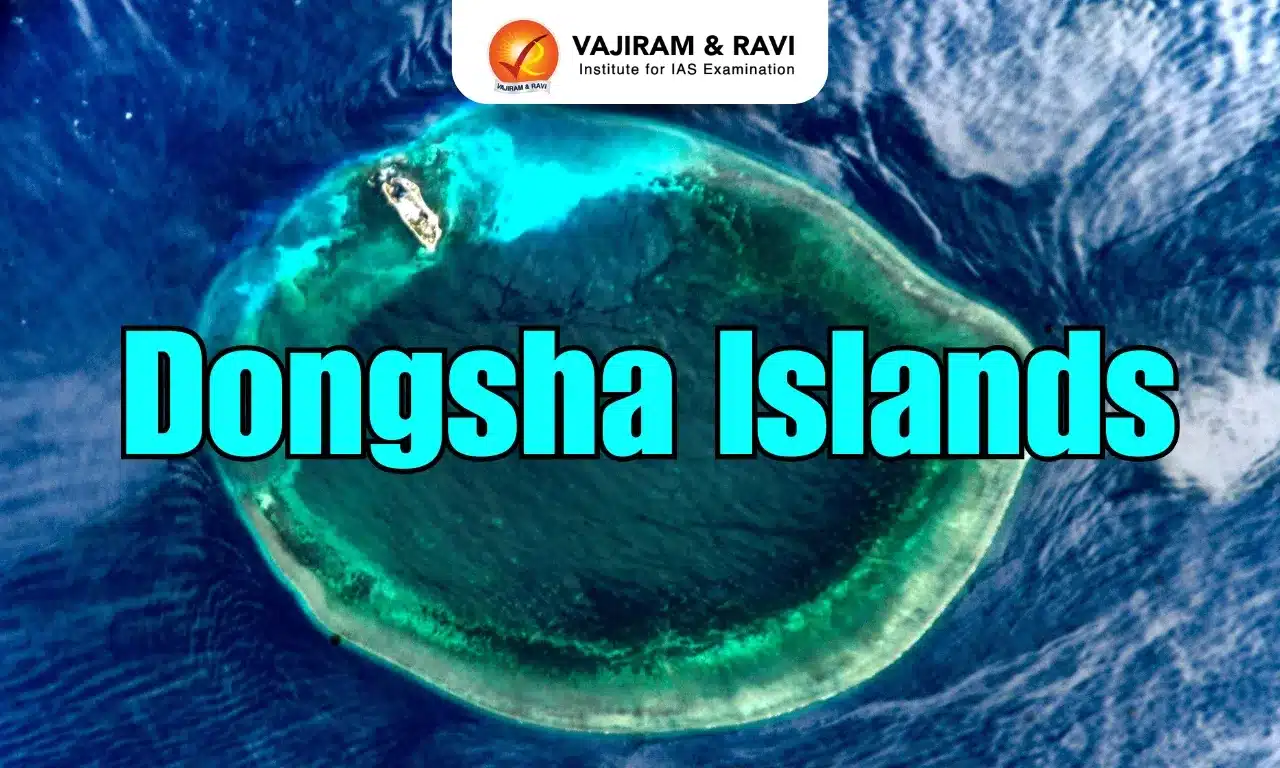
  • The Dongsha Islands, also known as the Pratas Islands, are a small group of three islands located in the northern part of the South China Sea. 
  • It lies approximately 445 km southwest of Kaohsiung, Taiwan, and 320 km southeast of Hong Kong.
  • The Dongsha Islands are governed by Taiwan. There are no permanent residents. But Taiwanese marines are stationed there.
  • These islands are characterized by a circular coral atoll structure.
  • They are composed primarily of clastic coral and reef flats approximately 15 miles (24 kilometers) in diameter, enclosing a lagoon about 10 miles (16 kilometers) in diameter. 
  • The island group includes Dongsha Island, being the only island above sea level, about 1 mile (1.6 kilometers) long and a little over 0.5 miles (0.8 kilometers) wide, and Northern Vereker and Southern Vereker atolls, both of which are below sea level.

Source: ET

Dongsha Islands FAQs

Q1: The Dongsha Islands are located in which sea?

Ans: The Dongsha Islands located in the northern part of the South China Sea.

Q2: Who governs the Dongsha Islands?

Ans: Taiwan

Q3: What is the structural type of the Dongsha Islands?

Ans: Coral atoll

Q4: What is the approximate diameter of the Dongsha atoll?

Ans: 24 km

Garra nambashiensis

Garra nambashiensis

Garra nambashiensis Latest News

Researchers recently discovered a new species of freshwater fish, Garra nambashiensis, in Manipur.

About Garra nambashiensis

  • It is a new species of freshwater fish which belongs to the Labeonine family.
  • It was discovered in Taretlok, a tributary of the Chindwin River, near Nambashi Valley in Manipur’s Kamjong district.
  • It was collected from “swift-flowing riffles (shallow sections of a river or stream) with algae-covered gravel beds and mixed substrate comprising cobbles, boulders, pebbles, sand, fine silt, and coarse sediments.
  • The species features a quadrate-shaped proboscis, 7-8 acanthoid tubercles on the anterolateral margin, black spots on the opercle, 8-11 dorsal-fin scales, and six black stripes extending to the hypural plate.
  • It typically measures 90-140 mm (9-14 cm), and locals call it Nutungnu.
  • Currently, 60 species of Garra have been recorded from various river systems in the Northeast, encompassing the Eastern Himalayan and Indo-Burma regions. 
    • Of these, 32 are grouped in the ‘proboscis species group’ and occur in the Chindwin, Brahmaputra, Barak, and Kaladan river systems. 
    • Eight species have been recorded from the Chindwin river system alone, including the recently described G. chingaiensis.

Source: NEN

Garra nambashiensis FAQ's

Q1: Garra nambashiensis, recently discovered in Manipur, belongs to which family of fishes?

Ans: It belongs to the Labeonine family.

Q2: The new species Garra nambashiensis was discovered in which river system?

Ans: It was discovered in Taretlok, a tributary of the Chindwin River.

Q3: What is the local name of Garra nambashiensis in Manipur?

Ans: Nutungnu

Pink Tax

Pink Tax

Pink Tax Latest News

While there are no specific laws in India to address the issue of Pink Tax, the National Consumer Disputes Redressal Commission ruled that companies must follow fair pricing policies and avoid gender-based price discrimination.

About Pink Tax

  • The Pink tax is neither a real tax nor is it a government-imposed fee.
  • It is a term used to describe the extra cost that some companies charge for products marketed to women compared to similar products marketed to men.
  • This means women might end up spending more money for the same product that men get for less.
  • When companies charge more for pink (female) products compared to blue (male) versions, the extra revenue does not go to the government but benefits the companies themselves.
  • Pink toys, haircuts, dry cleaning, razors, shampoos, body lotions, deodorants, facial care, skincare items, beauty care, clothing, T-shirts, jeans, salon services ,etc. suffer the tax.
  • The term “Pink Tax” is believed to have originated in the U.S. in California in 1994
    • It emerged following the realisation that brands in various cities consistently charged women higher prices for goods and services than men. 
    • As per a study done in the U.S., personal care products targeting women were 13% costlier than men’s. Further, women’s accessories and adult clothing were 7% and 8% more expensive.

Pink Tax in India

  • The "pink tax" is not prohibited by law in India, and there are no set government regulations on this pricing practice. 
  • Female-targeted goods and services prices are determined based on market dynamics and demand. 
  • While there is limited research on the pink tax in India, surveys indicate price variations between products for women and men.
  • While there are no specific laws in India to address the issue of Pink Tax, the National Consumer Disputes Redressal Commission ruled that companies must follow fair pricing policies and avoid gender-based price discrimination.

Source: TH

Pink Tax FAQs

Q1: What is the Pink Tax?

Ans: It is a term used to describe the extra cost that some companies charge for products marketed to women compared to similar products marketed to men.

Q2: Is the Pink Tax prohibited by law in India?

Ans: The "pink tax" is not prohibited by law in India, and there are no set government regulations on this pricing practice.

Q3: Which Indian authority has ruled that companies must follow fair pricing and avoid gender-based price discrimination?

Ans: National Consumer Disputes Redressal Commission (NCDRC)

Koala

Koala

Koala Latest News

Recently, Australia approved the world's first vaccine to save koalas from Chlamydia.

About Koala

  • Koala bear (Phascolarctos cinereus) is an arboreal herbivorous marsupial native to Australia.
  • It is the only extant representative of the family Phascolarctidae and its closest living relatives are the wombats.
  • Koalas are asocial animals, congregating only during the breeding season.
  • They spend most of their time eating and sleeping in eucalyptus trees, and their paws have two opposing thumbs to help them grasp and climb up tree trunks.
  • Distribution: Koalas are distributed across eastern and southeastern Australia, including northeastern, central, and southeastern Queensland, eastern New South Wales, Victoria as well as southeastern parts of South Australia.
  • Habitat: They can be found in habitats ranging from relatively open forests to woodlands, and in climates ranging from tropical to cool temperate.
  • Food: Koalas are herbivorous (folivorous) animals, feeding primarily upon the leaves of the eucalyptus tree.
  • Conservation status: IUCN: Vulnerable
  • Threats: These species are facing compounded threats from disease, habitat loss, climate change and road collisions.   

Chlamydia in Koalas

  • Koalas suffer from both bacterium species Chlamydia pneumonia and Chlamydia pecorum.
  • The disease occurs in koalas multiple ways, including through mating, infected discharges and at birth. 
  • It can cause eye infections, blindness, urinary tract problems, and even infertility.
  • Infected koalas often become weak, dehydrated, and more vulnerable to predators and bushfires.
  • In some areas of Australia, up to 70% of wild koalas carry the disease.
  • Chlamydia spreads quickly in koalas because they live in overlapping territories and groom each other. 

Source: TH

Koala FAQ's

Q1: What is the IUCN status of the koala bear?

Ans: Vulnerable

Q2: What are three animals that are marsupials?

Ans: Kangaroos, wallabies, wombats

Ho Tribe

Ho Tribe

Ho Tribe Latest News

Recently, adivasis from the Ho tribe staged a protest in Jharkhand’s West Singhbhum district against district administration for interfering in their traditional self-governance system called Manki- Munda system.

About Ho Tribe

  • The Ho or Kolha people are an Austroasiatic Munda ethnic group of India.
  • They call themselves the Ho, Hodoko and Horo, which mean 'human' in their own language.
  • Distribution: They are mostly concentrated in the Kolhan region of Jharkhand, Odisha, West Bengal and Bihar.
  • Language: Ho people speak the Ho language, an Austroasiatic language closely related to Mundari.
  • Occupation: The majority of the Ho tribe is involved in agriculture, either as land owners or labourers, while others are engaged in mining.
  • Women have higher status among the Ho than they do in most tribes.
  • Most villages have a dedicated dancing ground, called akhra, usually consisting of a cleared space of hard ground under a spreading tree.
  • Traditional Ho music incorporates native instruments including a dama (drum), dholak, dumeng (mandar), and the rutu (flute).

Belief system of Ho Tribe

  • Over 90% of the Ho practices the indigenous religion Sarnaism.
  • They have a village priest called a deuri.
  • They have a spirit doctor called a deowa who makes sacrifices to these spirits and gods. Much of this happens in a sacred grove outside the village.

What is the Manki- Munda system?

  • The Munda, or the head of the village, was responsible for resolving socio-political disputes at the village level.
  • Each village had one Munda, appointed hereditarily.
  • The Manki headed the pidh, which generally consists of 8 to 15 villages. If cases were not resolved by the Munda, they moved upwards to the Manki.
  • The Manki and Munda had no responsibilities for revenue or land-related issues.
  • The system was purely an internal, self-governing mechanism, with no sovereign authority outside or the concept of paying taxes.

Source: IE

Ho Tribe FAQs

Q1: Where is the Ho tribe located?

Ans: They are concentrated in the area of Kolhān on the lower Chota Nāgpur Plateau.

Q2: What is the festival of the Ho tribe?

Ans: Mage Parab

India’s First Bamboo-Based Ethanol Plant Set Up in Assam

Bamboo-Based Ethanol Plant

Bamboo-Based Ethanol Plant Latest News

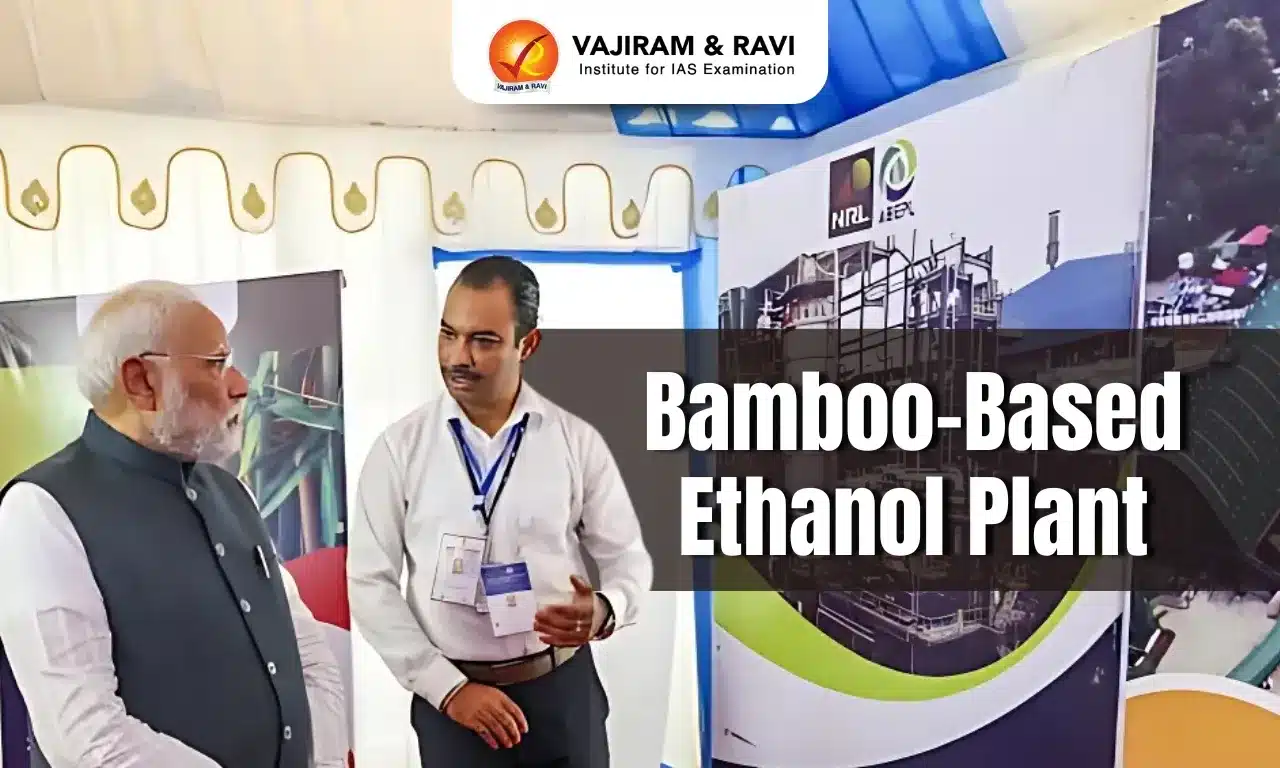
  • India inaugurated its first bamboo-based ethanol plant in Assam’s Golaghat, marking a major step in green energy and rural development.

Introduction

  • India has been steadily advancing toward renewable energy as part of its clean energy transition. 
  • Ethanol blending, a central component of this strategy, has gained momentum with sugarcane and maize-based ethanol. 
  • Now, India has achieved a milestone by inaugurating the world’s first green bamboo-based ethanol plant in Golaghat, Assam. 
  • This facility represents both a technological innovation and an economic opportunity for the Northeast, linking biofuel production with rural livelihoods.

Working of Bamboo-Based Ethanol Plants

  • Feedstock and Processing
    • Bamboo, a lignocellulosic biomass, serves as the primary raw material. 
    • It contains cellulose and hemicellulose, which can be broken down into fermentable sugars through biochemical processes.
    • Pre-treatment - Bamboo undergoes mechanical and chemical pre-treatment to separate cellulose and hemicellulose from lignin.
    • Hydrolysis - Enzymes break down cellulose into glucose and hemicellulose into xylose and other sugars.
    • Fermentation - Specialised microorganisms convert these sugars into ethanol.
    • Distillation - Ethanol is purified to achieve fuel-grade quality suitable for blending with petrol.
  • Co-Products and Zero-Waste Approach
    • Besides ethanol, the Golaghat facility will also produce acetic acid, furfural, and food-grade liquid CO₂, creating multiple revenue streams. 
    • Lignin-rich residues can be used for power generation, making the plant energy self-sufficient.
  • Advantages Over Traditional Ethanol
    • Non-food biomass - Unlike sugarcane, bamboo does not compete with food crops.
    • Sustainability - Bamboo regenerates quickly, making it an abundant renewable resource.
    • Localised benefits - Northeast India, with vast bamboo reserves, can integrate farmers and tribal communities into the bio-economy.

News Summary

  • On September 14, 2025, Prime Minister Narendra Modi inaugurated the bamboo-based ethanol plant. 
  • The plant will use five lakh tonnes of bamboo annually from Assam and nearby states to produce:
    • 48,900 MT ethanol
    • 11,000 MT acetic acid
    • 19,000 MT furfural
    • 31,000 MT liquid CO₂
  • It is expected to boost Assam’s rural economy by Rs. 200 crore annually.
  • Foundation laid for a Rs. 7,230 crore polypropylene plant at Numaligarh Refinery to strengthen industrial growth.
  • PM Modi emphasised that this project reflects India’s broader goal of energy self-sufficiency and the Viksit Bharat vision.

Significance of the Project

  • Energy Security: Reduces dependence on imported crude oil, saving foreign exchange.
  • Rural Development: Enhances farmer income and supports tribal livelihoods.
  • Green Economy: Reinforces India’s climate commitments by cutting emissions through biofuel adoption.
  • Regional Growth: Strengthens Assam’s role in India’s industrial map through Make in Assam and Make in India initiatives.

Source: TH | IE

Bamboo-Based Ethanol Plant FAQs

Q1: Where was India’s first bamboo-based ethanol plant inaugurated?

Ans: It was inaugurated in Golaghat, Assam.

Q2: How much bamboo will the plant source annually?

Ans: The plant will use about five lakh tonnes of green bamboo every year.

Q3: What is the ethanol production capacity of the plant?

Ans: The facility can produce 48,900 metric tonnes of ethanol annually.

Q4: Who are the key partners in this project?

Ans: It is a joint venture between Numaligarh Refinery Limited, Finland’s Fortum, and Chempolis OY.

Q5: What is the estimated economic impact of the project on Assam’s rural economy?

Ans: The plant is expected to boost Assam’s rural economy by Rs. 200 crore annually.

Zircon Missile

Zircon Missile

Zircon Missile Latest News

Russia recently said that it had fired a Zircon (Tsirkon) hypersonic cruise missile at a target in the Barents Sea.

About Zircon Missile

  • The 3M22 Zircon (Tsirkon), NATO code-named SS-N-33, is a scramjet-powered hypersonic cruise missile developed by Russia.
  • Initially designed to target naval assets, the missile has evolved to include land-attack capabilities, making it an important tool for precision strike missions.
  • It entered service in 2022, with initial deployments on Project 22350 Admiral Gorshkov-class frigates. 

Zircon Missile Features

  • It has an estimated length of 9 meters (30 feet) and a diameter of 60 cm (24 inches), with an estimated weight of between 3,000 and 4,000 kg (3–4 tons).
  • The missile is powered by a two-stage propulsion system. 
    • The first stage consists of a booster engine powered by solid fuel, which accelerates the missile to supersonic speeds. 
    • After reaching a certain speed, the scramjet engine in the second stage ignites, utilizing liquid fuel to accelerate the missile to hypersonic speeds.
  • Its speed—reaching up to Mach 9—makes it extremely difficult to intercept.
  • The operational range of the Zircon is reported to be around 400–450 km (250–280 miles) at low altitudes, while it can extend up to 1,000 km (620 miles) in a semi-ballistic trajectory. 
  • It is capable of carrying both conventional and nuclear warheads, providing it with a versatile role in modern warfare.
  • The missile uses a combination of inertial navigation, radar homing, and plasma stealth to navigate towards its target. 
  • One of the key features of the Zircon is its ability to generate a plasma cloud during hypersonic flight, which absorbs radio waves and makes the missile more difficult to detect by radar. This phenomenon is known as plasma stealth.

Source: TH

Zircon Missile FAQs

Q1: The Zircon Missile was developed by which country?

Ans: Zircon Missile was developed by Russia.

Q2: The Zircon missile is powered by which type of propulsion system?

Ans: Two-stage system: solid-fuel booster + scramjet

Q3: What is the NATO reporting name for the Zircon missile?

Ans: SS-N-33

Q4: What is the maximum speed of the Zircon missile?

Ans: Mach 9

Kolhan’s Manki-Munda Governance System: History, Conflict, and Challenges

Manki-Munda System

Manki-Munda System Latest News

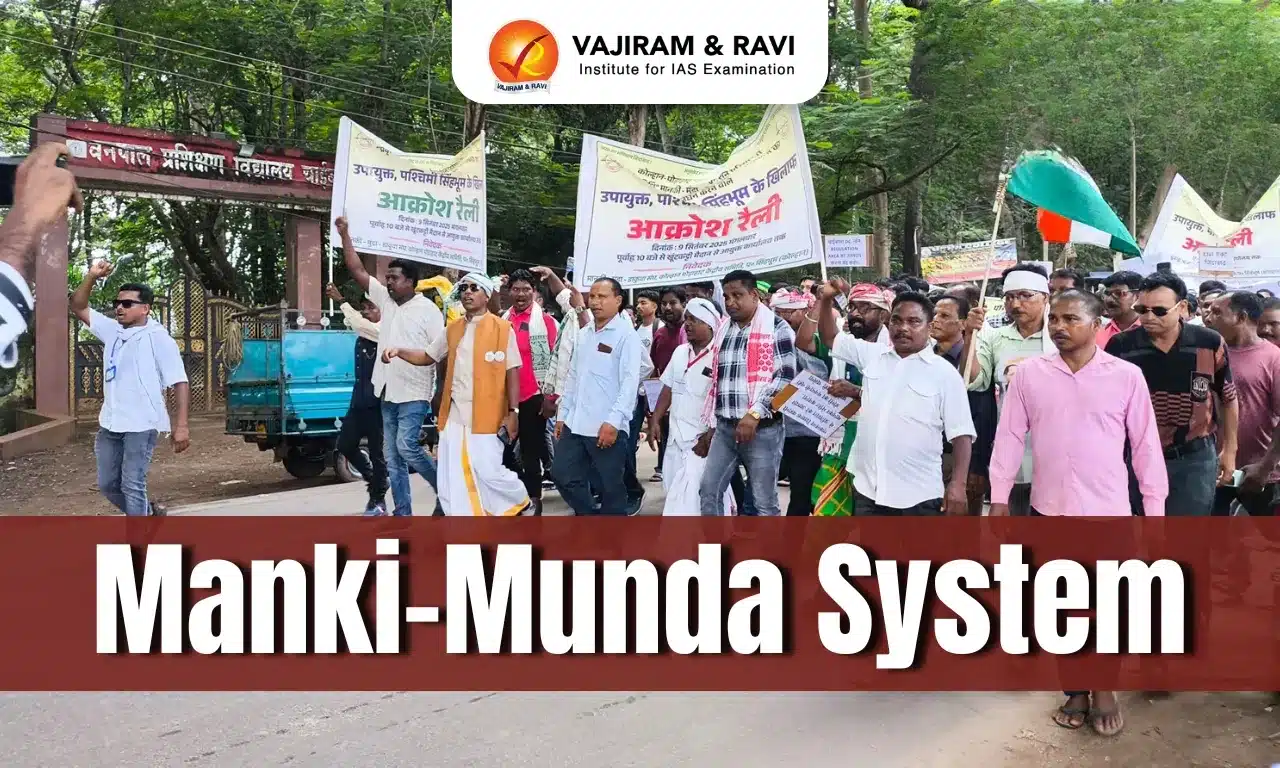
  • Recently, adivasis of the Ho tribe in Jharkhand’s West Singhbhum protested against the Deputy Commissioner, alleging interference in their traditional Manki-Munda self-governance system after the removal of village heads (Mundas). 
  • While the district administration clarified that Mankis and Mundas remain integral to the revenue framework and blamed rumors on social media for the unrest, tribal concerns over losing autonomy persist. 
  • The episode threatens the century-old equilibrium between indigenous governance structures and the state administration in Jharkhand’s Kolhan region.

Traditional Manki-Munda Governance

  • For centuries, the Ho tribe of Jharkhand’s Kolhan region followed a decentralised governance system rooted in social and political responsibilities. 
  • Each village was led by a Munda, the hereditary village head who resolved local disputes. 
  • Groups of 8–15 villages, known as a pidh, were overseen by a Manki, who handled cases unresolved at the village level. 
  • Importantly, the Manki-Munda system dealt only with internal governance, having no role in revenue or land matters, nor any concept of taxes or external sovereign authority. 
  • This changed with the arrival of the East India Company, which introduced taxation.

British Intervention and Co-option of the Manki-Munda System

  • Following victories at Plassey (1757) and Buxar (1764), the East India Company gained diwani rights in 1765, enabling tax collection across Bengal, Bihar, Odisha, and Jharkhand. 
  • The Permanent Settlement Act of 1793 empowered zamindars with land deeds and fixed revenue demands, often beyond their capacity. 
  • To meet targets, zamindars seized Ho lands in Kolhan, sparking adivasi uprisings like the Ho revolt (1821–22) and the Kol revolt (1831). 
  • After repeated military failures, the British adopted a strategic compromise — formally recognising and co-opting the Manki-Munda system into their administration.

Wilkinson’s Rules and Their Lasting Impact

  • In 1837, the British appointed Captain Thomas Wilkinson as Political Agent in the Kolhan Government Estate (KGE) to manage the Ho-dominated region. 
  • Recognising the strength of local governance, Wilkinson drafted 31 “Wilkinson’s Rules” in 1833, formally codifying the Manki-Munda system for the first time. 
  • While appearing to preserve tribal autonomy and restrict outsiders (dikkus), the rules effectively co-opted community leaders as agents of British authority, integrating Kolhan into colonial administration.
  • This shift triggered major changes: the influx of outsiders surged from 1,579 in 1867 to 15,755 by 1897, aided by the railways, creating demographic shifts. 
  • Equally transformative was the introduction of private propertyMundas and Mankis became raiyats (tenants), receiving land deeds (pattas)
  • This altered collective traditions of landholding, fostering individual ownership and reshaping Ho society.

Continuation of Wilkinson’s Rules

  • Although the Kolhan Government Estate was dissolved after Independence in 1947, Wilkinson’s Rules remain in force, with Kolhan exempted from India’s general civil procedure laws
  • Courts upheld their validity for decades, until the Patna High Court in Mora Ho vs State of Bihar (2000) ruled they were old customs, not formal law — yet allowed them to continue in the absence of alternatives. 
  • Despite calls to update the system, neither Bihar nor Jharkhand took action. 
  • A 2021 Jharkhand initiative, Nyay Manch, was proposed but never enacted, leaving Wilkinson’s Rules still operational today.

The Current Conflict in Kolhan

  • The recent unrest in West Singhbhum stems from complaints by Scheduled Castes and OBCs in Ho-dominated villages. 
  • Issues included Mundas restricting the Gope community from pursuing non-traditional livelihoods and prolonged absences of village heads, which hindered access to official documents. 
  • In response, the district administration issued a nine-point directive reminding Mundas of their duties under Wilkinson’s 1837 Hukuknama, aimed at ensuring transparency in the Manki-Munda system. 
  • However, villagers misinterpreted this as interference, sparking rumours of action against Mankis and Mundas. 
  • The administration has clarified that it does not intend to override customary laws.

Larger Issues with the Manki-Munda System

  • In West Singhbhum, 1,850 Manki-Munda posts exist, with 200 vacant, of which 50 were recently filled via Gram Sabhas. 
  • However, concerns remain. Some roles have reportedly been given to non-tribal raiyats, bypassing the village system, sparking discontent. 
  • Within the Ho community, especially among youth, there are growing demands for reforms — including ending the hereditary nature of Munda roles and allowing non-tribal raiyats participation.
  • Hereditary succession often leaves leadership in the hands of individuals lacking formal education, creating challenges in managing today’s document-driven administration. 
  • As a result, villagers frequently escalate unresolved issues to the district administration. 
  • Many leaders note that while the Deputy Commissioner’s role is limited, it is crucial in clarifying provisions of Wilkinson’s Hukuknama and intervening in disputes or succession issues. 
  • Many argue the system should be preserved but modernised to align with democratic needs.

Source: IE | IE | HT

Manki-Munda System FAQs

Q1: What is the Manki-Munda system in Kolhan?

Ans: The Manki-Munda system is a traditional governance structure of the Ho tribe in Jharkhand, with Mundas leading villages and Mankis overseeing groups of villages.

Q2: How did the British impact the Manki-Munda system?

Ans: The British co-opted the system after adivasi revolts, formally codifying it under Wilkinson’s Rules in 1833 to integrate Kolhan into their administration.

Q3: What were Wilkinson’s Rules?

Ans: Wilkinson’s Rules were 31 regulations drafted in 1833 that codified the Manki-Munda system, giving leaders administrative roles while introducing private property concepts.

Q4: Why is the Manki-Munda system facing conflict today?

Ans: Complaints from villagers about leadership failures and misinterpretations of administrative directives sparked fears of government interference in customary laws.

Q5: What reforms are being discussed for the Manki-Munda system?

Ans: Reforms include ending hereditary leadership, involving non-tribal raiyats, and modernising the system to align with today’s democratic and administrative needs.

Supreme Court Guidelines on DNA Evidence: Rules, Rulings, and Importance

Supreme Court DNA Guidelines

Supreme Court DNA Guidelines Latest News

  • In Kattavellai @ Devakar v. State of Tamil Nadu, the Supreme Court mandated strict protocols for DNA evidence in criminal cases. 
  • It directed all State DGPs to prepare Chain of Custody Register forms and related documentation, and circulate them to all districts with clear instructions to ensure the integrity and reliability of DNA samples.

Need for Uniform DNA Handling Guidelines

  • In the Kattavellai @ Devakar case, involving rape, murder, and robbery, the Supreme Court found serious lapses, including unexplained delays in sending vaginal swab samples to the Forensic Science Laboratory and failure to establish a clear chain of custody. 
  • These gaps raised the possibility of contamination. The Court noted that while some bodies had issued guidelines, there was neither uniformity nor a common procedure across states. 
  • Given that ‘Police’ and ‘Public Order’ fall under the State List, the Court still found it essential to issue uniform directions to ensure consistency and reliability in DNA evidence handling nationwide.

Supreme Court’s Guidelines on Handling DNA Evidence

  • The Supreme Court laid down four key guidelines to ensure the integrity of DNA evidence in criminal cases. 
  • First, DNA samples must be collected with due care, properly packaged with FIR details, case particulars, and duly documented with signatures of the medical professional, investigating officer, and independent witnesses. 
  • Second, the investigating officer must transport the samples to the concerned police station or hospital and ensure they reach the Forensic Science Laboratory within 48 hours; any delay must be explained with preservation measures taken. 
  • Third, once stored, samples cannot be opened, altered, or resealed without trial court authorisation. 
  • Finally, a Chain of Custody Register must be maintained from collection until conviction or acquittal, appended to the trial record, with the investigating officer accountable for any lapses.

Supreme Court’s Rulings on DNA Evidence

  • The Supreme Court has consistently stressed that DNA evidence, though powerful, must meet strict standards of collection and handling. 
  • In Anil v. State of Maharashtra (2014), it upheld DNA profiling as valid and reliable, provided laboratory procedures maintain quality control. 
  • In Manoj v. State of Madhya Pradesh (2022), a DNA report was rejected due to contamination risk from recovery in an open area and insufficient, degraded blood samples. 
  • Similarly, in Rahul v. State of Delhi (2022), DNA evidence was discarded because it remained in police custody for two months, raising suspicion of tampering. 
  • In the Devakar case, the Court emphasised that quality control outside laboratories — in collection, sealing, and timely dispatch — is as critical as lab procedure. 
  • Thus, both investigating agencies and forensic experts must ensure rigorous safeguards to maintain credibility of DNA evidence.

Importance of DNA Evidence in Criminal Cases

  • DNA, derived from biological materials like blood, bone, semen, saliva, hair, or skin, helps establish whether a crime scene sample matches a suspect. 
  • While such matches can strongly indicate common biological origin, the Supreme Court in the Devakar case clarified that DNA is only opinion evidence under Section 45 of the Evidence Act (now Section 39 of the Bharatiya Sakshya Adhiniyam, 2023). 
  • Its probative value depends on the circumstances of each case. Thus, DNA evidence is significant but not conclusive, and must be scientifically validated and legally established to hold weight in criminal proceedings.

Conclusion

  • The Supreme Court’s guidelines on DNA evidence aim to ensure reliability, prevent contamination, and strengthen criminal justice. 
  • Their success depends on consistent enforcement by police and forensic agencies.


Source: TH | IE

Supreme Court DNA guidelines FAQs

Q1: Why did the Supreme Court issue guidelines on DNA evidence?

Ans: The Court found serious lapses in handling DNA samples, including delays and poor custody, and mandated uniform procedures to ensure integrity and prevent contamination.

Q2: What are the key Supreme Court guidelines on DNA evidence?

Ans: Samples must be documented, transported to FSL within 48 hours, stored securely with court authorisation for access, and tracked via a Chain of Custody Register.

Q3: What rulings has the Supreme Court made on DNA evidence?

Ans: The Court upheld DNA profiling but rejected reports where samples were degraded, contaminated, or tampered with, stressing strict collection and handling standards.

Q4: Why is DNA evidence not considered conclusive proof?

Ans: The Court ruled DNA is opinion evidence under the Evidence Act; its weight varies by case and must be scientifically and legally validated for credibility.

Q5: How does the new framework improve criminal justice?

Ans: The guidelines strengthen reliability, minimise contamination risks, and ensure consistent handling of DNA, bolstering its value in fair criminal investigations.

INS Trikand

INS Trikand

INS Trikand Latest News

The maiden bilateral maritime exercise between India and Greece will be steered by the Indian Naval Ship Trikand, which was called at Salamis Bay, Greece, during her ongoing deployment to the Mediterranean Sea recently.

About INS Trikand

  • It is a Talwar-class guided-missile frigate of the Indian Navy.
  • It is the third and final ship of the second batch of Talwar-class frigates ordered by the Indian Navy.
  • It was built by the Yantar shipyard in Kaliningrad, Russia.
  • It was commissioned into the Indian Navy on 29 June 2013 at Kaliningrad, Russia.
  • It is part of the Indian Navy's Western Fleet and operates under the Western Naval Command headquartered at Mumbai.

INS Trikand Features

  • INS Trikand carries a state-of-the-art combat suite, which includes the supersonic BRAHMOS missile system, advanced surface-to-air missiles Shtil, an upgraded A190 medium-range gun, electro-optical 30 mm close-in weapon system, anti-submarine weapons such as torpedoes and rockets, and an advanced electronic warfare system.
  • The weapons and sensors are integrated through a Combat Management System ‘Trebovanie-M’, which enables the ship to simultaneously neutralise multiple surface, sub-surface, and air threats. 
  • Powered by four gas turbines, INS Trikand is capable of speeds more than 30 knots and is configured to carry a Kamov 31 helicopter.
  • It has a complement of about 300 personnel, including officers.

Source: HANSI

INS Trikand FAQ's

Q1: INS Trikand was built at which shipyard?

Ans: Yantar Shipyard, Kaliningrad

Q2: When was INS Trikand commissioned into the Indian Navy?

Ans: It was commissioned into the Indian Navy on 29 June 2013.

Q3: INS Trikand operates under which Naval Command?

Ans: It is part of the Indian Navy's Western Fleet and operates under the Western Naval Command headquartered at Mumbai.

Q4: What is the maximum speed of INS Trikand?

Ans: 30+ knotsa

International Electrotechnical Commission

International Electrotechnical Commission

International Electrotechnical Commission Latest News

India will host the 89th General Meeting (GM) of the International Electrotechnical Commission (IEC) from 15 to 19 September 2025 at Bharat Mandapam, New Delhi.    

About International Electrotechnical Commission

  • It is a nonprofit organization which was established in 1906.
  • It is the organization that prepares and publishes international Standards for all electrical, electronic and related technologies.
  • IEC’s mission is to promote, through its members, international cooperation on all questions of electrotechnical standardization and related matters. 
  • Its standards are developed in a consensus process by experts from the participating countries.
  • IEC Standards are often used as a basis to globally harmonize technical requirements in IEC member and non-member countries.
  • IEC standards reach over 150 countries.
  • Governance: Standardization Management Board (SMB) is an apex governance body of IEC responsible for technical policy matters.
  • The IEC works closely with the International Organization for Standardization (ISO) and the International Telecommunication Union (ITU).
  • It is the world’s leading body for developing international standards for electrical, electronic and related technologies, with a network of 30,000 experts worldwide.
  • It is the fourth time India is hosting the prestigious IEC General Meeting, after 1960, 1997 and 2013.
  • It is headquartered in Geneva, Switzerland.

Source: LM

International Electrotechnical Commission FAQs

Q1: What is the International telecommunications Union?

Ans: The International Telecommunication Union is the United Nations specialized agency for information and communication technologies.

Q2: What is the International Organization for Standardization?

Ans: It is an independent, non-governmental international organization. It provides organizations with guidelines to consistently achieve universally recognized standards.

PLI Scheme for White Goods

PLI Scheme for White Goods

PLI Scheme for White Goods Latest News

Recently, the government has re-opened the application window for the production-linked incentive (PLI) scheme for white goods.

About PLI Scheme for White Goods

  • It is designed to create a complete component ecosystem for Air Conditioners and LED Lights Industry in India and make India an integral part of the global supply chains.
  • It is implemented as a pan India scheme and is not specific to any location, area or segment of population.
  • Objectives: It proposes a financial incentive to boost domestic manufacturing and attract large investments in the White Goods manufacturing value chain.
  • Its prime objectives include removing sectoral disabilities, creating economies of scale, enhancing exports, creating a robust component ecosystem and employment generation.
  • Incentives: The scheme will extend an incentive of 4-6% on incremental turnover over base year (2019-20) of goods sold in India and exported to global markets, to eligible companies for a period of 5 years.
  • Eligibility
    • Applicants can be any company that should be incorporated in India under the provisions of the Company Act, 2013.
    • Eligibility shall be subject to the achievement of thresholds of net incremental sales of Eligible Products for the respective financial year over the base year and cumulative incremental investment in the preceding financial year.
    • Any entity availing benefits under any other PLI Scheme of Govt. of India will not be eligible under this scheme for the same products.
  • Duration : It is to be implemented over FY 2021-22 to FY 2028-29
  • Nodal Ministry: The scheme was notified by the Department for Promotion of Industry and Internal Trade (DPIIT), Ministry of Commerce and Industry.

Source: TH

PLI Scheme for White Goods FAQs

Q1: What are white goods in economics?

Ans: White goods traditionally refer to large home appliances such as stoves, refrigerators, freezers and washing machines

Q2: What is the pli scheme for white goods?

Ans: It is designed to create a complete component ecosystem for Air Conditioners and LED Lights Industry in India and make India an integral part of the global supply chains.

INS Androth

INS Andorth

INS Androth Latest News

Recently, the Indian Navy has received the second indigenously built anti-submarine warfare-shallow watercraft INS Andorth.

About INS Androth

  • It draws its name from Androth Island in the Lakshadweep archipelago
  • It is the second of eight anti-submarine warfare-shallow watercraft (ASW-SWC) built by Garden Reach Shipbuilders and Engineers (GRSE), Kolkata.
  • The ASW SWC ships have been indigenously designed and constructed as per the Classification Rules of Indian Register of Shipping (IRS) at GRSE, Kolkata 

Features of INS Androth

  • It is approximately 77 meters in length and it is the largest Indian Naval warship.
  • Propulsion: The ship is propelled by a diesel engine-waterjet combination, which allows for high speed and efficient maneuverability in shallow waters.
  • Armament: It is equipped with state-of-the-art lightweight torpedoes, indigenous ASW rockets, and advanced shallow water SONAR,
  • It enables effective submarine detection and engagement in littoral zones.
  • Significance: It strengthens the Indian Navy's Anti-submarine, coastal surveillance and mine laying capabilities.
  • It is built by using over 80 percent indigenous content, reflecting growing domestic capabilities and reducing dependency on imports.

Source: TH

INS Androth FAQs

Q1: What language is spoken in Androth Island?

Ans: Mahl, Malayalam, and English

Q2: What is meant by Anti-Submarine Warfare?

Ans: Anti-submarine warfare includes a wide range of activities from placing and monitoring passive sensors on the sea floor to actively hunting.

Daily Editorial Analysis 15 September 2025

Daily Editorial Analysis

Bringing Global Education Home

Context

  • In recent years, India has witnessed a significant transformation in its higher education landscape, marked by the entry of world-class foreign universities establishing physical campuses within its borders.
  • Based on the recommendations of the University Grants Commission (UGC), the Ministry of Education has issued twelve letters of intent to leading global institutions, with one U.K. university already commencing operations in Gurugram for the 2025–26 academic session.
  • This shift signals not only a conscious policy realignment but also a strategic vision to expand educational opportunities for Indian students and reshape the nation’s place in global academia.

Policy Foundation and Vision

  • The cornerstone of this development lies in the UGC regulations introduced in 2023, which enabled foreign universities to set up campuses in India with operational autonomy and regulatory clarity.
  • This initiative aligns directly with the National Education Policy (NEP) 2020, which emphasizes reimagining higher education to be both globally competitive and locally grounded.
  • The policy reflects India’s growing ambition to host world-class institutions, thereby integrating global best practices with indigenous educational traditions.

The Reason Behind India’s Timing in Opening Its Doors to Foreign Universities

  • The country is experiencing a unique convergence of factors: a large and aspirational youth population, a rapidly expanding economy, and an innovation-driven startup ecosystem.
  • The demand for high-quality education in emerging fields such as artificial intelligence, sustainability, and data science is rising sharply.
  • At the same time, India’s domestic reforms, such as hybrid learning models, streamlined research funding via the Anusandhan National Research Foundation, and outcome-oriented accreditation reforms, create fertile ground for global institutions to thrive.
  • Foreign universities, many of which face operational challenges and demographic shifts in the West, find in India a promising environment.
  • With its vast youth population and expanding intellectual capital, India offers both opportunity and stability, making it an attractive destination for international expansion.

Local Advantage, Global Gains of the Arrival of Foreign Campuses

  • Transformative Benefits

    • For Indian students and their families, the benefits are transformative. Access to world-class education at home eliminates the financial and logistical burdens of studying abroad.
    • Students can now experience global curricula, diverse peer networks, and international research opportunities without leaving their own cultural and familial environment.
    • This accessibility democratises global education, making it attainable for students who might otherwise have been excluded due to economic or social constraints.
    • Parents, too, find reassurance in this development. They can provide their children with global opportunities while maintaining the security of proximity.
    • The result is a new equilibrium where aspiration and assurance co-exist, thereby reshaping the very notion of international education.
  • Raising the Bar for Indian Institutions

    • The arrival of foreign campuses inevitably raises the bar for domestic universities.
    • Competition compels innovation, urging Indian institutions to upgrade curricula, foster research, and strengthen global linkages.
    • Already, collaborations between IITs, IISERs, AIIMS, and international universities are driving advancements in renewable energy, public health, and engineering.
    • The new campuses will only accelerate such exchanges, enriching both research output and academic culture.
    • Moreover, this influx of foreign players contributes to India’s broader knowledge economy.
    • By facilitating cross-border partnerships, India not only enhances its own academic ecosystem but also strengthens its global educational ties, particularly with partners in Australia, Europe, the UK, and the United States.
  • India as an Education Powerhouse

    • Despite India’s established reputation in technology, diplomacy, and manufacturing, its potential in education remains underemphasised.
    • Yet, the country’s rich intellectual heritage, from ancient centres like Nalanda to modern experiments like Shantiniketan, provides a foundation for positioning India as a distinctive force in international education.
    • The goal is not to mimic Western models but to create an educational environment that blends global excellence with local wisdom.
    • Welcoming international institutions and students is not a diversion from addressing domestic challenges; rather, it amplifies resources, quality, and ambition within the Indian system.
    • By shaping the narrative of what world-class education means, India can move from being a consumer to a co-creator of global educational standards.

Conclusion

  • What began as an idea within NEP 2020 is now evolving into a bold reconfiguration of India’s higher education landscape.
  • By hosting global university campuses, India provides its students with unprecedented choices while strengthening its own academic infrastructure.
  • The dilemma of choosing between studying in India and going abroad is being replaced by a more empowering possibility: accessing global opportunities at one’s doorstep.
  • This transformation represents not just a policy initiative but the unfolding of a new chapter in India’s knowledge economy.

Bringing Global Education Home FAQs

 Q1. Why has India allowed foreign universities to establish campuses within the country?
Ans. India has allowed foreign universities to set up campuses to align with the National Education Policy 2020, which seeks to make higher education globally competitive while remaining locally rooted.

Q2. What advantages do Indian students gain from foreign universities opening campuses in India?
Ans. Indian students gain access to international-quality education, global curricula, and research opportunities without the high costs and challenges of studying abroad.

Q3. How does the entry of foreign universities affect Indian institutions?
Ans. The entry of foreign universities creates healthy competition, encouraging Indian institutions to innovate, improve their curricula, and strengthen research collaborations.

Q4. Why is this development happening at this point in time?
Ans. This development is happening now because India has a large youth population, a growing economy, and ongoing educational reforms that make it attractive for global institutions.

Q5. How does this initiative contribute to India’s global position in education?
Ans. By hosting world-class institutions, India positions itself as an emerging hub of international education, shifting from being a consumer of global education to a co-creator of it.

Source: The Hindu


Cutting Off Online Gaming with the Scissors of Prohibition

Context:

  • In a sudden move, the Government of India passed the Promotion and Regulation of Online Gaming Bill, 2025 at the end of the monsoon session, without debate or consultation with States or industry stakeholders.
  • The Bill bans online real money games while promoting e-sports and social gaming.
  • This abrupt ban has raised concerns about foreign investment, as online gaming was a fast-growing sector with significant global funding.
  • Critics argue that such unpredictable policy shifts could damage investor confidence and undermine India’s potential to lead in digital industries.
  • This article highlights the sudden passage of the Promotion and Regulation of Online Gaming Bill, 2025, which bans online real money games, sparking concerns over jobs, revenues, investment, constitutional rights, and regulatory alternatives.

Fallout of the Online Gaming Ban

  • The ban on online real money gaming strikes directly at India’s digital economy, affecting technology, payments, and digital content — sectors central to Digital India.
  • The industry, projected to employ 1.5 lakh people by 2025 in areas like design, programming, customer support, and analytics, now faces massive job losses, stifled innovation, and weakened entrepreneurship.
  • Additionally, online real money games were expected to contribute about ₹17,000 crore in GST revenue, benefiting both the Centre and States.
  • By cutting this revenue source, the government has imposed a significant financial cost.
  • The Centre justifies the ban by citing financial ruin and addictive behaviour among players, equating gaming with a societal harm akin to drug abuse.
  • However, critics question whether prohibition is the right solution, suggesting that careful regulation — as attempted in States like Tamil Nadu — might address negative impacts without destroying jobs, revenue, and industry growth.

Ignoring Responsible Gaming and Legal Safeguards

  • Online gaming companies had introduced proven tools to promote responsible play, such as age-gating, self-exclusion, deposit and time limits, bot detection, KYC/AML checks, and ethical advertising standards.
  • Instead of strengthening these safeguards, the government imposed a blanket ban, dismantling accountability and pushing players toward illegal offshore platforms that operate outside Indian jurisdiction, evade taxes, and expose users to fraud.
  • The ban also undermines constitutional rights and federal principles. Article 19(1)(g) guarantees the right to practise any profession or business, which this law curtails.
  • Moreover, betting and gambling are State subjects, yet the Union government acted unilaterally, raising constitutional concerns now challenged in court.
  • At the heart of the debate is whether online games are “games of skill” or “games of chance.”
  • Courts have consistently upheld skill-based games as legitimate, while States regulate or ban chance-based gambling.
  • Instead of clarifying this distinction with robust regulation, the government chose prohibition — a blunt approach that risks worsening the very problems it sought to solve.

Finding a Middle Ground in Online Gaming Regulation

  • The solution to online real money gaming lies not in prohibition or unchecked freedom but in balanced legislation.
  • A clear licensing system, strict compliance standards, and a predictable taxation regime could safeguard players, prevent addiction, and respect States’ roles while ensuring industry growth.
  • Instead, the blanket ban drives revenues and opportunities into the underground economy, strips players of protection, and risks fueling unregulated networks.
  • Whether this move truly safeguards citizens or leaves them more vulnerable remains an open question.

Conclusion

  • The abrupt ban on online real money gaming risks job losses, revenue decline, and regulatory gaps, raising doubts about whether it protects citizens or worsens vulnerabilities.

Cutting Off Online Gaming with the Scissors of Prohibition FAQs

Q1. What does the Promotion and Regulation of Online Gaming Bill, 2025 ban, and why is it controversial?

Ans. The Bill bans online real money games, sparking concerns over jobs, investment, and constitutional rights. Critics argue regulation, not prohibition, would balance growth with safeguards.

Q2. How will the gaming ban impact India’s economy and employment?

Ans. The industry was projected to employ 1.5 lakh people and contribute ₹17,000 crore in GST. The ban risks massive job losses, revenue decline, and stifled innovation.

Q3. What safeguards had gaming companies already implemented for responsible gaming?

Ans. Companies introduced age-gating, self-exclusion, deposit limits, KYC/AML checks, and ethical advertising. The ban dismantled these protections, leaving players vulnerable to illegal offshore apps and fraud.

Q4. What constitutional and federal issues are raised by the ban?

Ans. The ban violates Article 19(1)(g), restricting the right to practise any business. It also bypassed States’ authority, since betting and gambling are State subjects.

Q5. What is the suggested middle ground for regulating online gaming?

Ans. A balanced approach involves licensing frameworks, strict compliance, and fair taxation to protect players, prevent harm, and support industry growth without banning real money games.

Source: TH

Daily Editorial Analysis 15 September 2025 FAQs

Q1: What is editorial analysis?

Ans: Editorial analysis is the critical examination and interpretation of newspaper editorials to extract key insights, arguments, and perspectives relevant to UPSC preparation.

Q2: What is an editorial analyst?

Ans: An editorial analyst is someone who studies and breaks down editorials to highlight their relevance, structure, and usefulness for competitive exams like the UPSC.

Q3: What is an editorial for UPSC?

Ans: For UPSC, an editorial refers to opinion-based articles in reputed newspapers that provide analysis on current affairs, governance, policy, and socio-economic issues.

Q4: What are the sources of UPSC Editorial Analysis?

Ans: Key sources include editorials from The Hindu and Indian Express.

Q5: Can Editorial Analysis help in Mains Answer Writing?

Ans: Yes, editorial analysis enhances content quality, analytical depth, and structure in Mains answer writing.

Presidential Reference on Governor’s Assent to Bills

Presidential Reference

Presidential Reference Latest News

  • The Supreme Court has reserved its opinion on the Presidential reference under Article 143(1) of the Constitution concerning the powers of the President and Governors in granting assent to Bills. 
  • The reference comes after the SC’s ruling (April 2025) that held Tamil Nadu Governor R. N. Ravi’s delay in assenting to 10 Bills unconstitutional, invoking Article 142 to enforce assent and prescribing timelines.
  • This development raises fundamental issues of federalism, separation of powers, and judicial review in India’s constitutional framework.

Nature of the Reference

  • Presidential reference under Article 143(1): It enables the President to seek SC’s opinion on questions of law/fact of public importance.
  • States’ argument: The reference is an indirect appeal against the SC’s ruling, violating stare decisis - review lies only before the same Bench.
  • Centre’s argument: The court’s advisory jurisdiction under Article 143 is distinct, and could be used to clarify constitutional doubts, even if past rulings existed.
  • Past practice: SC has earlier refused to answer Presidential references.

Governor’s Powers - Aid and Advice vs. Discretion

  • States’ stance:
    • The governor is bound by the aid and advice of the Council of Ministers (Article 163).
    • Governance must reflect popular mandate, not the Governor’s discretion.
    • Historical rulings of SC have restricted the Governor's role to avoid overreach.
  • Centre’s stance:
    • The governor is not a “postman” or “showpiece.”
    • Discretionary powers exist in exceptional circumstances.
    • Example: A 2004 Punjab law unilaterally terminated a tripartite river-water sharing treaty, highlighting the importance of a Governor’s discretionary powers. The SC in 2016 declared the law unconstitutional.
    • Data (from 1970 to the present): Only 20 out of 17,000 bills were withheld by Governors, with 90% granted assent within the first month.

Governor’s Veto and “Pocket Veto”

  • SC’s ruling (State of TN vs Governor of TN case): Governor cannot indefinitely withhold assent, concluding that a Governor cannot exercise a “pocket veto” over the elected government.
  • Centre’s argument: Withholding assent means the Bill lapses, citing the Government of India Act 1935 as precedent, where the Governor’s “initial withholding was an absolute veto.”
  • States’ rebuttal: Governors are not colonial-era Viceroys - such discretions were consciously omitted in the Constitution.

Judicial Enforcement of Timelines

  • SC ruling: Introduced timelines for assent to prevent delays.
  • Centre’s objection:
    • Timelines amount to judicial amendment of the Constitution.
    • The Constituent Assembly rejected fixed timelines, replacing a six-week limit with the phrase “as soon as possible” in Article 200
    • Impasses should be resolved politically through dialogue between the state and the Governor, rather than the court acting as a “judicial headmaster”.
  • States’ argument:
    • “As soon as possible” implies urgency.
    • The timelines in the April 2025 ruling did not specify when automatic assent would take place; rather, they specified when judicial review would be available.

Fundamental Rights and Writ Jurisdiction

  • Centre’s position: States cannot invoke Article 32, meant for fundamental rights of individuals.
  • States’ counter:
    • Governors act as links between Union and States.
    • Denying writ remedy to states weakens federal balance.
    • Even Andhra Pradesh (where the ruling party is a coalition partner in the Centre) defended states’ right to move SC.

Larger Constitutional and Political Implications

  • Executive vs. judiciary: The reference has become a flashpoint testing limits of judicial review over executive action.
  • Polyvocal court challenge: Whether a 5-judge Bench will reaffirm or differ from the 2-judge ruling of April 2025.
  • Federalism at stake: Opposition-ruled states back judicial intervention; Centre resists it.
  • Impact on democratic governance: Issue of whether Governors’ discretionary power can override popular will of elected legislatures.

Way Forward

  • Clarity on Governor’s role: A constitutional definition of timelines and scope of discretion is necessary to prevent misuse.
  • Strengthening federalism: Balance must be maintained between Union authority and state autonomy.
  • Judicial prudence: SC must respect separation of powers but ensure constitutional morality is upheld.
  • Political dialogue: State–Centre–Governor coordination mechanisms need strengthening to avoid judicialisation of governance.
  • Long-term reform: Consideration of a constitutional amendment or codification of Governor’s functions to prevent recurring disputes.

Conclusion

In essence, the Presidential reference will determine how India negotiates the delicate balance between federalism, constitutional conventions, and judicial oversight.

Source: IE

Presidential Reference FAQs

Q1: What is the significance of Article 143 of the Indian Constitution?

Ans: Article 143 empowers the President to seek the Supreme Court’s advisory opinion on questions of law/public importance.

Q2: How does the principle of stare decisis apply in the debate over the validity of the Presidential reference?

Ans: States argue that the SC’s ruling is binding law under stare decisis and cannot be indirectly reviewed by a different Bench through a Presidential reference.

Q3: Why is the debate on Governors’ discretionary powers central to India’s federal structure?

Ans: It raises the issue of whether Governors act as neutral constitutional authorities or as checks on elected state governments, directly impacting federal balance.

Q4: What constitutional controversy arises from the SC’s ruling prescribing timelines for Governors to assent to Bills?

Ans: The Centre contends it amounts to judicial amendment of the Constitution, while states argue it ensures accountability.

Q5: How does the question of states invoking Article 32 highlight challenges in federalism?

Ans: According to the Centre, states can't invoke Article 32, but states argue it is essential to safeguard their constitutional rights against arbitrary gubernatorial actions.

Enquire Now