Difference Between GMT and IST, Time Zones, Reason, Countries

Difference Between GMT and IST

GMT is the Greenwich Mean Time which is the unified time zone adopted by most of the English countries which are measured in London at midnight, whereas IST is the Indian Standard Time which is 5 hours 30 minutes ahead of GMT. This time standard is essential for various activities, including legal, social, and business purposes. There are numerous time zones across the globe, with each country or region selecting the time zone that best fits their geographical position and needs. 

Understanding the Difference Between GMT and IST is crucial for understanding the time zone across various related regions.

Difference Between GMT and IST

A time zone is a region on Earth where a consistent standard time is followed. While countries have the freedom to choose a time zone within their borders, two time zones are renowned worldwide: Indian Standard Time (IST) and Greenwich Mean Time (GMT).

Difference Between GMT and IST
GMT (Greenwich Mean Time) IST (Indian Standard Time)

The Greenwich Mean Time was created by the Royal Observatory in 1675 for assistance navigators at sea.

The Indian Standard Time was established as the official time zone of India upon its independence on August 15th, 1947

When calculating GMT it is considered equivalent to UT1 (the modern form of mean solar time at 0° longitude), but this meaning can differ from UTC by up to 0.9 seconds.

The IST is calculated on the basis of a clock tower in Mirzapur (with coordinates 25.15° North Latitude and 82.58° East longitude).

Because of Earth’s uneven angular velocity in its elliptical orbit, GMT is rarely the exact moment the Sun crosses the Greenwich meridian

The Time and Frequency Standards Laboratory at the National Physical Laboratory in New Delhi generates official time signals for both commercial and official purposes. These signals are derived from atomic clocks and are synchronised with the global network of clocks.

Time zones are determined by a combination of legal, political, and geographical factors, meaning they do not always align perfectly with meridian lines. This also applies to Greenwich Mean Time (GMT), as discrepancies arise between the legal and geographical definitions of GMT.

India's single time zone, IST, doesn’t suit its vast geography. The country’s east-west stretch of 2,933 kilometres causes the sun to rise and set nearly two hours earlier in the east than in the west. To address this, the government has recently considered introducing multiple time zones.

The term Greenwich Mean Time is used commonly in the United Kingdom and in the Commonwealth of Nations such as Australia, New Zealand and many other countries of the Eastern Hemisphere

Indian Standard Time is used in India and Sri Lanka but it takes references from the UTC (Universal Time Coordinate). The UTC has been developed as a successor to the Greenwich Mean Time

What is Indian Standard Time (IST)?

  • The Council of Scientific & Industrial Research - National Physical Laboratory (CSIR-NPL), which is responsible for maintaining Indian Standard Time (IST), has put forward a proposal suggesting the adoption of two time zones in India. 
  • The proposal includes IST I (UTC+5:30) for the entire country and IST II (UTC+6:30) specifically for the North-Eastern regions. 
  • This recommendation comes in response to the early sunrise in the easternmost parts of India, where the country’s wide longitudinal span results in significant daylight hours being lost. 
  • The Indian government has not supported this proposal, mentioning potential challenges and complexities involved in implementing two separate time zones.

What are Time Zones?

Time zones are essential in geography as they help synchronize human activities with Earth’s rotation and the position of the Sun. The Earth is divided into 24 time zones, each generally 15° of longitude apart, allowing for a consistent system of measuring time worldwide.

Understanding Time Zones is crucial in studying global communication, transportation, trade, and daily life patterns. It also explains regional differences in sunrise, sunset, and work hours. Time zones help avoid confusion and maintain coordination in international relations and travel schedules. They also play a role in political boundaries and economic planning.

Also Check: Time Zones in India

Countries Passing Through GMT

Greenwich Mean Time (GMT) is the reference time from which all world time zones are calculated. Countries passing through GMT are located along the Prime Meridian (0° longitude), which runs through Western Europe and parts of Africa.

  • United Kingdom(specifically England)
  • France
  • Spain
  • Algeria
  • Mali
  • Burkina Faso
  • Togo
  • Ghana
  • Antarctica(at the South Pole)
Also Check
Difference Between Cabinet and Council of Ministers Difference between National Anthem and National Song
Difference Between GMT and IST Difference Between Citizenship and Nationality
Difference Between District Collector and District Magistrate Difference Between Kumbh and Mahakumbh
Difference Between Fundamental Rights and Fundamental Duties Differences Between Censure and No-Confidence Motion
Differences Between Absolute Poverty and Relative Poverty Difference Between Wildlife Sanctuary and National Park

Difference Between GMT and IMT FAQs

Q1: What is the Difference Between GMT and IST time?

Ans: The Indian Standard Time (IST) is ahead of the Greenwich Mean Time (GMT) by 5 hours 30 mins.

Q2: What are the countries in the IST time zone?

Ans: IST (Indian Standard Time) zone are followed in India and Sri Lanka.

Q3: What is the Standard Meridian of India?

Ans: The 82.5 degree longitude is considered as the standard meridian of India.

Q4: Which states cross the Indian Standard Time line?

Ans: The Indian Standard Time line passes through the states of Uttar Pradesh, Madhya Pradesh, Chhattisgarh, Orissa and Andhra Pradesh.

Q5: How to convert GMT to IST?

Ans: To convert GMT to IST, add 5 hours and 30 minutes. For example, 12:00 GMT becomes 17:30 IST (Indian Standard Time).

UPSC Daily Quiz 22 June 2026

UPSC Daily Quiz

[WpProQuiz 191]

UPSC Daily Quiz FAQs

Q1: What is the Daily UPSC Quiz?

Ans: The Daily UPSC Quiz is a set of practice questions based on current affairs, static subjects, and PYQs that help aspirants enhance retention and test conceptual clarity regularly.

Q2: How is the Daily Quiz useful for UPSC preparation?

Ans: Daily quizzes support learning, help in revision, improve time management, and boost accuracy for both UPSC Prelims and Mains through consistent practice.

Q3: Are the quiz questions based on the UPSC syllabus?

Ans: Yes, all questions are aligned with the UPSC Syllabus 2025, covering key areas like Polity, Economy, Environment, History, Geography, and Current Affairs.

Q4: Are solutions and explanations provided with the quiz?

Ans: Yes, each quiz includes detailed explanations and source references to enhance conceptual understanding and enable self-assessment.

Q5: Is the Daily UPSC Quiz suitable for both Prelims and Mains?

Ans: Primarily focused on Prelims (MCQ format), but it also indirectly helps in Mains by strengthening subject knowledge and factual clarity.

India’s First Commercial-Scale Coal-to-Ammonium Nitrate Project

India’s First Commercial-Scale Coal-to-Ammonium Nitrate Project

In a significant step towards strengthening energy security and industrial self-reliance, the Prime Minister laid the foundation stone of India’s first commercial-scale coal-to-ammonium nitrate project at Lakhanpur in Jharsuguda district, Odisha on 20 June 2026. The project marks a major milestone in India’s coal gasification-based industrial development strategy and Aatmanirbhar Bharat vision.

About the India’s First Commercial-Scale Coal-to-Ammonium Nitrate Project 

The project is India’s first large-scale facility that will convert coal into ammonium nitrate using coal gasification technology. It represents a shift from traditional coal usage to clean and efficient coal-based chemical production.

  • Location: Lakhanpur, Jharsuguda district, Odisha
  • Investment: ₹25,016 crore
  • Capacity: It will have a production capacity of 2,000 tonnes of ammonium nitrate per day. 
  • The project will be set up on around 350 acres of land under the possession of Mahanadi Coalfields Limited.

The project has already received necessary clearances, and groundwork is expected to begin after the foundation ceremony.

Implementing Agency and Institutional Framework

  • The project is being implemented through a public sector joint venture model.
  • Bharat Coal Gasification and Chemicals Limited is the implementing company. 
  • It is a joint venture between Bharat Heavy Electricals Limited and Coal India Limited.
  • The project will use indigenous coal gasification technology developed by Bharat Heavy Electricals Limited, highlighting India’s growing capability in advanced industrial technologies.
  • The Ministry of Coal is supporting the project through its incentive framework and policy facilitation.

About Coal Gasification

Coal gasification is a process in which coal is converted into synthesis gas, also known as syngas. This gas can be used as a raw material to produce a wide range of chemicals and fuels.

Through this process, coal can be converted into products such as ammonium nitrate, methanol, urea, synthetic natural gas, and other chemical feedstocks.

This technology is important because it enables higher value addition from domestic coal, reduces dependence on imported natural gas and chemicals, and supports the development of downstream chemical industries.

Strategic Importance for India

India is endowed with one of the world’s largest coal reserves, estimated at over 400 billion tonnes, and is also among the largest producers and consumers of coal globally.

At present, India imports chemical and intermediate products worth approximately ₹2.7 lakh crore annually. Coal gasification offers a major opportunity to reduce this import dependence.

  • The Lakhanpur project is therefore significant because it promotes domestic production of critical chemicals, strengthens industrial self-reliance, and improves energy security.
  • It also supports the broader goal of making India a manufacturing hub by developing value chains based on domestic natural resources.

India’s First Commercial-Scale Coal-to-Ammonium Nitrate Project FAQs

Q1: What is India’s first commercial-scale coal-to-ammonium nitrate project?

Ans: It is a commercial-scale coal gasification project being set up at Lakhanpur in Jharsuguda district, Odisha, which will convert coal into ammonium nitrate using indigenous coal gasification technology.

Q2: Which organization is developing the Lakhanpur coal gasification project?

Ans: The project is being developed by Bharat Coal Gasification and Chemicals Limited, a joint venture between Bharat Heavy Electricals Limited and Coal India Limited.

Q3: What is the production capacity and investment of the project?

Ans: The project has a production capacity of 2,000 tonnes of ammonium nitrate per day and involves an investment of ₹25,016 crore.

Q4: What is coal gasification and why is it important in this project?

Ans: Coal gasification is a process that converts coal into synthesis gas (syngas), which is used to produce chemicals such as ammonium nitrate. It enables value addition to domestic coal and reduces dependence on imported feedstocks.

Q5: Which government scheme supports coal gasification projects in India?

Ans: Coal gasification projects are supported under the Government of India’s incentive scheme for surface coal and lignite gasification, with a total outlay of up to ₹46,000 crore.

Green Hydrogen Certification Portal of India, Need, Significance

Green Hydrogen Certification Portal of India

In a significant step towards creating a transparent and credible green hydrogen ecosystem, the Government of India has launched the Green Hydrogen Certification Portal of India (GHCI). The portal was launched by the Union Minister for New and Renewable Energy, Pralhad Joshi, during a national workshop on strengthening the National Green Hydrogen Mission.

About the Green Hydrogen Certification Portal of India (GHCI)

The Green Hydrogen Certification Portal of India (GHCI) is a digital platform developed by the Ministry of New and Renewable Energy to facilitate transparent certification and regulatory compliance under the Green Hydrogen Certification Scheme of India

  • It aims to establish a credible and standardised framework for the certification of green hydrogen produced in the country.
  • It verifies that hydrogen has been produced using renewable energy sources and meets the criteria prescribed under the Green Hydrogen Certification Scheme.
  • It promotes transparency, accountability and traceability throughout the green hydrogen value chain.

Green Hydrogen Certification Portal of India Need 

As green hydrogen becomes an important component of the global clean energy transition, there is a growing need to distinguish genuinely green hydrogen from hydrogen produced using fossil fuels. Without a robust certification mechanism:

  • Industries may make unverified environmental claims.
  • Buyers may find it difficult to assess the sustainability of hydrogen products.
  • Export opportunities could be affected due to lack of internationally credible verification.
  • Investors may face uncertainty regarding regulatory compliance.

The Green Hydrogen Certification Portal addresses these concerns by establishing a transparent and trustworthy certification framework.

National Green Hydrogen Mission

The Green Hydrogen Certification Portal is a key institutional pillar of the National Green Hydrogen Mission launched in 2023. The mission aims to:

  • Produce 5 million metric tonnes of green hydrogen annually by 2030.
  • Develop 125 gigawatts of dedicated renewable energy capacity.
  • Attract investments worth more than ₹8 lakh crore.
  • Create over 6 lakh jobs.
  • Reduce annual carbon emissions by 50 million tonnes.

The certification portal supports these goals by ensuring that growth in production is accompanied by transparency, accountability and internationally accepted standards.

Green Hydrogen Certification Portal Significance

The importance of the Green Hydrogen Certification Portal extends beyond certification alone. It lays the foundation for a trusted green hydrogen market by creating uniform standards, reducing information asymmetry and strengthening governance in the sector. The portal is expected to:

  • Prevents greenwashing by ensuring that only hydrogen produced from renewable energy sources receives green certification.
  • Unlocks global export opportunities by aligning Indian green hydrogen with emerging international sustainability requirements.
  • Accelerates industrial decarbonisation by enabling certified green hydrogen adoption in steel, fertiliser, refinery and transport sectors.
  • Attracts investments through regulatory certainty by creating a transparent and predictable certification framework.
  • Strengthens India’s leadership in the clean energy transition by supporting the National Green Hydrogen Mission and positioning India as a future global green hydrogen hub.

Green Hydrogen Certification Portal of India FAQs

Q1: What is the Green Hydrogen Certification Portal of India (GHCI)?

Ans: Green Hydrogen Certification Portal of India (GHCI) is a digital platform developed by the Ministry of New and Renewable Energy to provide transparent certification and regulatory compliance under the Green Hydrogen Certification Scheme of India.

Q2: Why is the Green Hydrogen Certification Portal important?

Ans: Green Hydrogen Certification Portal of India (GHCI) ensures that hydrogen classified as green is produced using renewable energy sources, thereby enhancing transparency, credibility and market acceptance.

Q3: How does the Green Hydrogen Certification Portal of India (GHCI) support the National Green Hydrogen Mission?

Ans: It provides a standardised certification framework that supports the Mission’s goals of expanding green hydrogen production, attracting investments and promoting exports.

Q4: What are the key benefits of the Green Hydrogen Certification Portal of India (GHCI) for India?

Ans: It promotes industrial decarbonisation, strengthens energy security, boosts investor confidence and improves India’s competitiveness in global green hydrogen markets.

Q5: How does the Green Hydrogen Certification Portal of India (GHCI) help prevent greenwashing?

Ans: It verifies the source and production process of hydrogen, ensuring that only genuinely renewable-based hydrogen receives green certification.

Uzbekistan Joins New Development Bank, Becomes 10th Member

Uzbekistan Joins New Development Bank

Recently, Uzbekistan officially joined the New Development Bank (NDB) as its 10th member, becoming the first country from Central Asia to become part of this BRICS-led multilateral development institution. 

About the New Development Bank (NDB)

The New Development Bank is a multilateral development bank established by the five BRICS countries - Brazil, Russia, India, China, and South Africa.

  • The decision to establish the bank was taken at the 6th BRICS Summit held in Fortaleza, Brazil in 2014
  • It became operational in 2015
  • Headquarters: Shanghai, China
  • Core objective: Mobilising financial resources for infrastructure and sustainable development projects in BRICS countries and other Emerging Market and Developing Economies (EMDCs)

New Development Bank (NDB)  Capital Structure

The authorised capital of the NDB is USD 100 billion. Out of this, the initial subscribed capital was USD 50 billion, which was equally contributed by the five founding BRICS members. 

New Development Bank (NDB) Governance and Voting System

The governance model of the NDB is distinct from traditional institutions such as the World Bank.

  • Each member country has one vote, ensuring equal representation
  • There is no veto power, promoting collective decision-making
  • Unlike capital-based voting systems, influence is not directly tied to financial contribution
  • However, the combined voting share of the founding BRICS members is ensured to remain above 55 percent to maintain institutional balance

New Development Bank (NDB) Membership 

The New Development Bank allows membership to all United Nations member countries, as per its Articles of Agreement. Since 2021, the bank has gradually expanded beyond its original five founding members.

The current membership includes:

  • Founding BRICS members: Brazil, Russia, India, China and South Africa
  • Bangladesh (joined in 2021)
  • United Arab Emirates (joined in 2021)
  • Egypt (joined in 2023)
  • Algeria (joined in 2025)
  • Uzbekistan (joined in 2026)

In addition, Uruguay, Colombia and Ethiopia have been approved for membership by the Board of Governors. They will become full members once they complete the formal accession process.

Significance of Uzbekistan’s Entry in New Development Bank 

Uzbekistan’s inclusion is important as it marks the first entry of a Central Asian country into the NDB. This expands the bank’s presence into a strategically important and fast-growing region.

It also strengthens infrastructure financing in developing and landlocked economies. In addition, it enhances the role of the Global South in global financial governance and supports the push for local currency-based financing to reduce dependence on the United States dollar.

Uzbekistan Joins New Development Bank FAQs

Q1: Which country has become the 10th member of the New Development Bank?

Ans: Uzbekistan has become the 10th member of the New Development Bank (NDB) with effect from 5 June 2026 after completing ratification of the Articles of Agreement.

Q2: Why is Uzbekistan’s membership in the New Development Bank (NDB) important?

Ans: Uzbekistan is the first Central Asian country to join the NDB, marking the bank’s expansion into Central Asia and strengthening its geographical diversity.

Q3: Which countries are current members of the New Development Bank (NDB) after expansion?

Ans: Current members include Brazil, Russia, India, China, South Africa, Bangladesh (2021), United Arab Emirates (2021), Egypt (2023), Algeria (2025), and Uzbekistan (2026).

Q4: What is the New Development Bank?

Ans: The New Development Bank is a multilateral development bank established by BRICS countries - Brazil, Russia, India, China and South Africa—to finance infrastructure and sustainable development in emerging markets and developing economies.

Q5: When was the New Development Bank (NDB) established and where is its headquarters?

Ans: The NDB was established following the 6th BRICS Summit in 2014 in Fortaleza, Brazil and became operational in 2015. Its headquarters is located in Shanghai, China.

FAO State of World Fisheries and Aquaculture (SOFIA) 2026 Report

FAO Released World Fisheries and Aquaculture (SOFIA) 2026 Report

The Food and Agriculture Organization (FAO) released the State of World Fisheries and Aquaculture (SOFIA) 2026 Report, which highlights record global fisheries production, the growing importance of aquaculture, India’s emergence as a leading fisheries producer, and concerns over the sustainability of marine fish stocks.

State of World Fisheries and Aquaculture (SOFIA) 2026 Report Global Findings 

State of World Fisheries and Aquaculture (SOFIA) 2026 Report highlights the growing importance of fisheries and aquaculture in global food systems while drawing attention to sustainability concerns.

  • Global fisheries and aquaculture production reached a historic high of 235 million tonnes in 2024, including 195 million tonnes of aquatic animals and 40 million tonnes of algae, registering a growth of 5.2% over 2022.
  • Aquaculture production touched a record 142 million tonnes, emerging as the principal driver of growth in aquatic food production worldwide.
  • China, Indonesia, India, Vietnam and Bangladesh together accounted for 84% of global aquaculture production.
  • Global per capita availability of aquatic foods increased to 21.3 kg in 2024, reflecting their growing contribution to food and nutritional security.

India’s Performance

India emerged as one of the leading fisheries and aquaculture nations, strengthening its position in the global aquatic food economy.

  • Second-Largest Aquatic Animal Producer: India contributed 9% of global aquatic animal production in 2024, ranking second only to China.
  • World Leader in Inland Fisheries: India produced 2.2 million tonnes from inland capture fisheries, making it the largest producer globally.
  • Second-Largest Aquaculture Producer: India accounted for 12% of global farmed aquatic animal production, ranking second in aquaculture output.
  • Major Contributor to Global Aquaculture: India is part of the five-country group that produces 82% of the world’s farmed aquatic animals.

Drivers of India’s Performance

India’s success in fisheries and aquaculture is the result of policy support, technological advancement and resource utilisation.

  • Inland fisheries leadership driven by scientific fish farming, pond aquaculture, reservoir fisheries and cage culture, making inland waters the main driver of production growth.
  • Strong government support through Pradhan Mantri Matsya Sampada Yojana, Blue Revolution, Fisheries and Aquaculture Infrastructure Development Fund and Pradhan Mantri Matsya Kisan Samridhi Sah-Yojana, with public investment exceeding ₹38,500 crore since 2015.
  • Abundant inland water resources including rivers, reservoirs, ponds, lakes, tanks and wetlands providing a strong natural base for fisheries expansion.
  • Technological modernisation through improved hatcheries, quality fish seed, scientific feed management and disease control, increasing aquaculture productivity from about 3 tonnes per hectare to 4.7 tonnes per hectare in 2025.
  • Expansion of modern systems such as cage culture, recirculatory aquaculture systems and biofloc technology enhancing productivity and efficiency.
  • Export-led growth driven by global demand for Indian seafood, especially frozen shrimp, strengthening commercial aquaculture and private investment.
  • Growth in fisheries exports from ₹46,663 crore in 2019–20 to ₹62,408 crore in 2024–25, positioning India among leading global seafood exporters.
  • Expansion of institutional credit and farmer collectivisation through more than 4.5 lakh Kisan Credit Cards and over 2,195 Fish Farmer Producer Organisations improving access to finance and markets.
  • Development of infrastructure such as cold chains, ice plants, transport facilities, kiosks and aqua parks reducing post-harvest losses and improving value chains.

Significance for India

The report highlights the strategic importance of fisheries and aquaculture for India’s economy, food security and Blue Economy ambitions.

  • Food and Nutritional Security: Fisheries provide an affordable source of protein and micronutrients for a large population.
  • Livelihood Generation: The sector supports millions of fishers, fish farmers, processors and workers across coastal and inland regions.
  • Boost to Blue Economy: Strong fisheries growth supports India’s vision of sustainable utilisation of marine and aquatic resources.
  • Export Potential: Rising production enhances seafood exports and foreign exchange earnings.
  • Rural Development: Expansion of aquaculture creates employment opportunities and diversifies rural incomes.

Challenges Highlighted by the SOFIA 2026 Report

Despite record growth in fisheries and aquaculture production, the report warns that ensuring sustainable and equitable growth of the sector remains a major global challenge.

  • The share of marine fish stocks being harvested within biologically sustainable levels declined from 64.5% in 2021 to 62.4% in 2023, indicating increasing pressure on global marine resources.
  • Growing demand for fish and aquatic foods is leading to overfishing in several regions, threatening the long-term health and productivity of marine ecosystems.
  • Climate change is affecting fisheries through rising ocean temperatures, changing fish migration patterns, ocean acidification and extreme weather events, creating uncertainties for fishers and coastal communities.
  • Although aquaculture is driving global production growth, its rapid expansion requires sustainable management of water resources, feed, disease control and environmental impacts to prevent ecological degradation.
  • Significant regional disparities continue to exist in access to aquatic foods. While Asia recorded the highest per capita availability at 26.3 kg, Africa averaged only 9.1 kg, highlighting unequal access to nutrition and food resources.

The report emphasises that future growth in fisheries and aquaculture must be accompanied by stronger resource conservation, ecosystem-based management, climate resilience and sustainable production practices to ensure long-term food security and livelihood protection.

FAO State of World Fisheries and Aquaculture (SOFIA) 2026 Report FAQs

Q1: What is the State of World Fisheries and Aquaculture 2026 Report?

Ans: It is a global report released by the Food and Agriculture Organization that assesses the status of world fisheries and aquaculture, focusing on production trends, food security, sustainability and resource management.

Q2: What are the key global findings of the State of World Fisheries and Aquaculture 2026 Report?

Ans: Global fisheries and aquaculture production reached 235 million tonnes in 2024, with aquaculture emerging as the main growth driver, while the share of marine fish stocks within biologically sustainable levels declined to 62.4 percent.

Q3: What is India’s position in global fisheries and aquaculture?

Ans: India is the second-largest producer of aquatic animals, contributes about 9 percent of global output, is the world leader in inland fisheries with 2.2 million tonnes, and is the second-largest aquaculture producer globally.

Q4: What are the major drivers of India’s fisheries growth?

Ans: Key drivers include inland aquaculture expansion, government support through schemes such as Pradhan Mantri Matsya Sampada Yojana, Blue Revolution, Fisheries and Aquaculture Infrastructure Development Fund, and Pradhan Mantri Matsya Kisan Samridhi Sah-Yojana, along with technological progress, export demand, water resources and institutional finance.

Q5: What are the major concerns highlighted in the State of World Fisheries and Aquaculture 2026 Report?

Ans: The report highlights declining marine fish stock sustainability, climate change impacts, overfishing risks, unequal access to aquatic food across regions, and the need for sustainable and ecosystem-based fisheries management.

Religious Values, Meaning, Religion vs Ethics, Key Values

Religious Values

Religious Values refer to the moral and ethical principles that are inspired by different religions and spiritual traditions. These values guide individuals in distinguishing between right and wrong and encourage qualities like compassion, honesty, tolerance, and respect for others. In a general sense, religious values help in building a sense of inner discipline, harmony, and moral responsibility in society. They also promote peaceful coexistence, unity in diversity, and ethical living, making them important for both personal growth and social well-being. 

Relationship between Religion & Ethics

Religion and ethics are closely connected as both deal with human conduct and moral values, though they differ in their approach. The discussion below explores their differences, common ground, and how they together shape moral behavior in society

Basic Difference between Religion and Ethics

  • Religion is mainly based on faith, beliefs, and traditions that are followed by people often without questioning, as they are considered sacred and rooted in spiritual authority.
  • Ethics, in contrast, is based on reason and logical thinking, where ideas of right and wrong can be questioned, debated, and improved over time.
  • The standards of religion come from holy books, customs, and divine teachings, whereas ethics develops from human reasoning, experience, and social needs.
  • Religion focuses more on the relationship between humans and a higher power or soul, while ethics deals with human actions and their impact on others.
  • Religion often emphasizes belief and devotion, whereas ethics emphasizes justification of actions through rational thinking.
  • While religions may differ across regions and cultures, ethical principles generally aim to be universal and applicable to all humans.

Shared Foundations of Religion and Ethics

  • Both religion and ethics promote universal human values such as truth, honesty, compassion, forgiveness, and justice, which are essential for a good society.
  • Most religions teach people to lead a moral and disciplined life, which aligns closely with ethical behavior.
  • The ideas of right and wrong conduct are central to both, even though religion explains them through faith and ethics explains them through reason.
  • In many societies, religion acts as the first source of moral learning, especially during early life.
  • Values like peace, harmony, respect, and inclusiveness are shared by both religious teachings and ethical principles.
  • Ethics often helps in interpreting religious teachings in a modern and practical way, especially in changing social contexts.
  • Together, they aim to create a balanced and responsible society where individuals act with awareness and morality.

Also Read : Human Values

Key Religious Values in Indian Society

  • Tolerance and Pluralism: The principle of Sarva Dharma Sambhava promotes equal respect for all religions. It supports unity in diversity by enabling peaceful coexistence. It also fosters mutual respect and social harmony in society.
  • Compassion and Non-violence: Values like Ahimsa (non-violence) and Dayaa (compassion) emphasize kindness towards all living beings. Rooted in religions like Hinduism, Buddhism, and Jainism, they encourage avoiding harm and practicing empathy. They promote peaceful living and influence ethical behavior and lifestyle choices.
  • Duty and Righteousness: The concepts of Dharma and Karma guide individuals to perform their duties sincerely and ethically without attachment to outcomes. Dharma represents moral responsibility and righteous conduct, while karma highlights accountability for one’s actions, shaping disciplined and value-based living.
  • Charity and Social Welfare: Practices such as Zakat, Daana, and Seva promote the spirit of giving and helping the underprivileged. These values encourage wealth sharing, reduce social inequalities, and foster a sense of collective responsibility towards society, strengthening the welfare-oriented nature of communities.
  • Respect for Nature and Life: Indian religious traditions emphasize the interconnectedness of all life forms, promoting environmental responsibility. Nature is often considered sacred, leading to practices that protect animals, forests, and rivers, thereby encouraging sustainable living and ecological balance.
  • Spiritual Discipline: Practices like prayer, meditation, fasting, and yoga help develop self-control, patience, and inner peace. These disciplines not only enhance spiritual growth but also contribute to mental well-being, emotional stability, and ethical decision-making in daily life.
  • Karma and Rebirth: The belief in karma and rebirth teaches that actions in the present life influence future outcomes. This creates a strong sense of moral accountability, motivating individuals to act ethically and avoid wrongdoing, as consequences are seen as inevitable.
  • Respect for Elders and Traditions: Respecting elders and ancestors is a deeply ingrained value across religions in India. It helps maintain family unity, cultural continuity, and social stability, while also promoting humility and gratitude among younger generations.
  • Hospitality and Generosity: Ideals like Atithi Devo Bhava (guest is God) highlight the importance of hospitality and kindness. This value fosters warmth, generosity, and a welcoming attitude in social interactions, strengthening community bonds.

Also Read : Spiritual Values

Role of Religion as an Ethical Guide

  • Religion acts as an internal moral guide, helping individuals make ethical choices even when there is no external supervision.
  • Belief in a higher power creates a sense of moral responsibility and accountability, discouraging unethical behavior like corruption.
  • Teachings like Nishkama Karma promote selfless action, which is especially important in public service.
  • Religious values encourage empathy, compassion, and service to others, which are essential qualities for civil servants.
  • It also helps in building strong character, honesty, and integrity, which are crucial in governance.
  • Religion provides mental strength and emotional balance, helping individuals deal with stress and ethical dilemmas.
  • It inspires individuals to work for the larger good of society rather than personal benefit.

Causes of Conflict between Religion and Ethics

  • Since religion is based on faith and emotions, questioning it can hurt people’s sentiments and lead to conflicts.
  • Ethical thinking based on logic and rationality may challenge outdated or rigid religious practices.
  • Conflicts arise between constitutional morality (modern laws and rights) and traditional social or religious practices.
  • Feelings of religious superiority or intolerance can create division and misunderstandings.
  • Misinterpretation or selective use of religious teachings can lead to biased or unethical actions.
  • Political misuse of religion can result in communal tensions and social unrest.
  • Lack of awareness and education further deepens the gap between faith-based beliefs and rational ethics.

Challenges and Limitations

  • Dogma vs Rationality: Blindly following rigid beliefs can hinder social progress and necessary reforms.
  • Communalism: Religion can sometimes be misused to create division, hatred, and conflict among communities.
  • Exclusivity of Practices: Some religious practices may promote group identity over universal human values, leading to friction.
  • Resistance to Change: Certain beliefs may oppose modern ideas like gender equality, scientific thinking, and human rights.
  • Conflict with Constitutional Values: Some practices may clash with principles of equality, liberty, and justice.
  • Moral Policing: Imposing religious values on others can restrict individual freedom and personal choices.

Ways to Address Conflicts

  • A balanced approach that respects both faith and rational thinking can help reduce conflicts, as it allows individuals to value traditions while also accepting logical and ethical reasoning.
  • Promoting interfaith dialogue and mutual respect helps different communities understand each other’s beliefs, reducing misunderstandings and building social harmony.
  • Strengthening constitutional morality ensures that laws are fair, equal, and just for all citizens, even when they differ from certain traditional or religious practices.
  • Education and awareness play a key role in developing critical thinking and ethical understanding, which helps people move beyond blind faith and make informed decisions.
  • Emphasizing common universal values like compassion, tolerance, and respect can unite people despite religious differences and create a sense of shared humanity.
  • Governments and leaders should promote inclusive, secular, and unbiased policies to ensure that no group feels marginalized or discriminated against.
  • Society should focus more on shared human values rather than differences in beliefs, encouraging cooperation, peace, and collective progress.

Religion in Modern Society

  • Religion still plays an important role in shaping social behavior, traditions, and moral values.
  • However, modernization has increased the importance of science, rationality, and individual thinking.
  • In some societies, the decline of religious influence has raised concerns about loss of moral values.
  • Many countries now recognize the need to combine modern education with moral and ethical teachings.
  • Practices like meditation, mindfulness, and yoga are widely used today for mental peace and clarity.
  • In professional life, spiritual values help improve decision-making, stress management, and leadership qualities.
  • A balanced integration of modern ethics and positive religious teachings is becoming essential in today’s world.

Religious Values FAQs

Q1: What are Religious Values?

Ans: Religious Values are moral and ethical principles derived from different religions. They guide individuals in distinguishing right and wrong and promote qualities like compassion, honesty, and tolerance.

Q2: What is the difference between Religion and Ethics?

Ans: Religion is based on faith, beliefs, and traditions, while ethics is based on reason and logical thinking. Religion focuses on spirituality, whereas ethics focuses on human actions and moral reasoning.

Q3: How are Religion and Ethics related?

Ans: Both promote universal values like truth, justice, and compassion. Religion provides moral guidance through faith, while ethics interprets these values through rational thinking.

Q4: What are the key religious values in Indian society?

Ans: Key values include Ahimsa (non-violence), Dharma (duty), Karma (action), tolerance, charity, and respect for elders. These values promote social harmony and ethical living.

Q5: What is Sarva Dharma Sambhava?

Ans: It means equal respect for all religions. This principle supports unity in diversity and encourages peaceful coexistence in a multicultural society like India.

Khurasani Imli

Khurasani Imli

Khurasani Imli Latest News

Recently, the Khurasani Imli, fruit of Mandu’s iconic Baobab tree, has been awarded the Geographical Indication (GI) tag. 

About Khurasani Imli

  • Khurasani Imli or Tamarind is a fruit of Mandu’s (Madhya Pradesh) iconic Baobab tree.
  • It was brought to Mandav during the reign of Mahmud Khilji in the 14th century and its name was changed from ‘Baobab’ to “Khurasani Imli.
  • It is known by one more name Mandav Imli.
  • It has a light green fruit with a tangy sweet-sour flavour, grows across villages in the Mandu region.
  • Benefits
    • Tribal communities have traditionally used not only the pulp but also the tree’s juice and dried bark for treating ailments such as diabetes.
    • It is packed with Vitamin C, antioxidants, and essential minerals.
    • Tribal healers have long used it to treat digestive ailments, fever, and fatigue, while seeds and bark also hold medicinal value.

What is a Geographical Indication Tag?

  • It is a sign used on products that have a specific geographical origin and possess qualities or a reputation that are due to that origin.
  • This is typically used for agricultural products, foodstuffs, wine and spirit drinks, handicrafts and industrial products.
  • The Geographical Indications of Goods (Registration and Protection) Act, 1999 seeks to provide for the registration and better protection of geographical indications relating to goods in India.
  • This GI tag is valid for 10 years following which it can be renewed.

Source: TOI

Khurasani Imli FAQs

Q1: What is the scientific name of Khurasani Imli?

Ans: Adansonia digitata – commonly called Baobab or Monkey-bread tree

Q2: What is the unique feature of Baobab trunk?

Ans: Water-storing swollen trunk

Solanum Pandeyi

Solanum Pandeyi

Solanum Pandeyi Latest News

A new species of wild brinjal has been discovered from one of the remote islands of the Andaman and Nicobar archipelago by a scientist from the Botanical Survey of India (BSI) and named it as Solanum pandeyi.

About Solanum Pandeyi

  • It is a species of wild brinjal recorded in the evergreen forest of Middle Andaman.
  • It was found growing in the open along the forest edges and was locally known as wild orange eggplant.
  • The new species is similar to Solanum lasiocarpum and belongs to the Leptostemonum clade of Solanum.
  • Uses of Solanum Pandeyi:
    • It was used by an indigenous Negrito tribe, Great Andamanese, for food and medicinal purposes.
    • Most seeds and roots are used to treat tooth infection.
    • Ripe fruit with jaggery (a natural unrefined sugar), chilli, garlic, ginger, and salt are used to make sour-sweet sauce by the Ranchi and Bengali settler community of the island.

Key Facts of Botanical Survey of India

  • It is India’s apex taxonomic and floristic research institution under the Ministry of Environment, Forest and Climate Change.
  • It was established on 13 February 1890.
  • Function: It provides the scientific foundation for plant conservation, documentation, identification and sustainable use of the country’s plant wealth.

Source: TH

Solanum Pandeyi FAQs

Q1: To which family does Solanum pandeyi belong?

Ans: Solanaceae

Q2: Which indigenous tribe uses Solanum pandeyi for medicinal purposes?

Ans: Great Andamanese – Negrito tribe; seeds/roots used for tooth infection

Switzerland

Switzerland

Switzerland Latest News

Recently, the first round of talks between high-ranking U.S. and Iranian officials was held in Switzerland.

About Switzerland

  • Location: It is a landlocked mountainous country in Western and Central Europe.
  • Bordering Countries: It is bordered by 5 Nations: by Germany in the north; Italy in the south; Austria and Liechtenstein in the east and France in the west.
  • Capital City: Bern
  • It is not a member state of the European Union (EU) and North Atlantic Treaty Organization (NATO).

Geographical Features of Switzerland

  • Mountain Range: The Alpine ranges lie to the south and the Jura Mountains to the north.
  • Highest Point: Its highest point is Monte Rosa in the Pennine Alps.
  • Lakes: Its two largest lakes are Lake Geneva (shared with France) and Lake Neuchatel.
  • Four major European climates affect Switzerland: It is influenced by the North Atlantic Drift, dry and cold air arrives from the North Arctic areas, continental air and Mediterranean Sea.

Source: Reuters

Switzerland FAQs

Q1: Switzerland is not a member of which two major European blocs?

Ans: European Union (EU) and NATO

Q2: What are the 4 official languages of Switzerland?

Ans: German, French, Italian, Romansh

New Species of Cave-Dwelling Micro Snails

New Species of Cave-Dwelling Micro Snails

New Species of Cave-Dwelling Micro Snails Latest News

Researchers recently discovered two new species of miniature, cave-dwelling micro-snails named Georissa meghalayaensis and Acmella bensoni.

About Georissa meghalayaensis and Acmella bensoni

  • These are two new species of miniature, cave-dwelling micro-snails. 
  • They were discovered deep inside the damp limestone caves of Northeast India’s Indo-Burma biodiversity hotspot.
  • Georissa meghalayaensis was discovered at the edge of Meghalaya's Krem Puri cave entrance.
    • It stands out from its closest relatives due to its striking orangish-red colour and a highly detailed, mesh-like pattern of ridges covering its tiny shell. 
    • In contrast, its closest known snail cousins typically sport yellowish shells with sharp, widely spaced spiral lines.  
  • Acmella bensoni was found clinging to walls deeper inside both the Krem Puri and Arwah caves of Meghalaya.
    • This species distinguishes itself from similar snails by having a smaller, slightly transparent, whitish shell. 
    • It features deeply impressed grooves between the shell's spirals (whorls) and an incredibly fine, densely packed pattern of tiny ribs that make the shell appear almost smooth. 
    • This shiny little snail was named in honour of William H. Benson, a legendary 19th-century scientist, celebrated as the pioneer of Indian Malacology, the study of molluscs. 

News: RM

New Species of Cave-Dwelling Micro Snails FAQ's

Q1: What are Georissa meghalayaensis and Acmella bensoni

Ans: They are two new species of miniature, cave-dwelling micro-snails.

Q2: Where were Georissa meghalayaensis and Acmella bensoni discovered?

Ans: They were discovered deep inside the damp limestone caves of Northeast India's Indo-Burma biodiversity hotspot.

Q3: Where was Georissa meghalayaensis discovered?

Ans: It was discovered at the edge of the entrance of the Krem Puri Cave in Meghalaya.

Q4: What is the distinguishing feature of Georissa meghalayaensis?

Ans: It has a striking orangish-red shell with a highly detailed, mesh-like pattern of ridges.

Q5: What are the distinguishing characteristics of Acmella bensoni?

Ans: It has a smaller, slightly transparent, whitish shell with deeply impressed grooves between the whorls and densely packed tiny ribs.

India’s first 3D-Printed Artificial Reef Modules

India's first 3D-Printed Artificial Reef Modules

India's first 3D-Printed Artificial Reef Modules Latest News

Tamil Nadu is set to deploy India’s first 3D-printed artificial reef modules in coastal waters as part of an ambitious marine habitat restoration initiative under the second phase of the Pradhan Mantri Matsya Sampada Yojana. 

About India's first 3D-Printed Artificial Reef Modules

  • It is to be deployed by Tamil Nadu in coastal waters off the Ramanathapuram coast.  
  • It is part of an ambitious marine habitat restoration initiative under the second phase of the Pradhan Mantri Matsya Sampada Yojana
  • It will serve as a pilot to assess the performance of six newly developed reef designs created through advanced 3D-printing technology. 
  • The modules, each weighing about 1 tonne, were developed by Chennai-based startup Tvasta, an IIT Madras-incubated company, in collaboration with Visakhapatnam Regional Centre of the ICAR-Central Marine Fisheries Research Institute. 
  • These modules will be deployed about two nautical miles offshore. 

India's first 3D-Printed Artificial Reef Modules Features

    • Unlike conventional artificial reefs made from reinforced concrete structures, the new modules feature complex geometries with multiple crevices, folds and attachment surfaces designed to enhance biodiversity. 
    • They are manufactured without iron reinforcement and incorporate material innovations aimed at increasing porosity and creating substrates more suitable for marine organisms, including corals, sponges and other reef-associated fauna. 
    • They allow greater structural complexity, higher surface area, and species-specific habitat design.
    • The technology offers significant advantages over traditional reef modules, including faster fabrication, reduced labour requirements and flexibility to alter material composition according to site-specific ecological needs.

News: NIE

India's first 3D-Printed Artificial Reef Modules FAQs

Q1: Where will India's first 3D-Printed Artificial Reef Modules be deployed?

Ans: They will be deployed in the coastal waters off the Ramanathapuram coast in Tamil Nadu.

Q2: Under which scheme is the artificial reef project being implemented?

Ans: The project is being implemented under the second phase of the Pradhan Mantri Matsya Sampada Yojana.

Q3: Who developed India's first 3D-Printed Artificial Reef Modules?

Ans: The modules were developed by Chennai-based startup Tvasta, an IIT Madras-incubated company, in collaboration with Visakhapatnam Regional Centre of the ICAR-Central Marine Fisheries Research Institute.

Q4: How do the new 3D-Printed Artificial Reef Modules differ from conventional artificial reefs?

Ans: They feature complex geometries with multiple crevices, folds and attachment surfaces designed to enhance biodiversity.

Dongfeng-17 (DF-17)

Dongfeng-17 (DF-17)

Dongfeng-17 Latest News

Chinese state broadcaster CCTV has for the first time aired footage showing the launch of a Dongfeng-17 (DF-17) hypersonic missile recently.

About Dongfeng-17

  • It is a Chinese  solid-fueled medium-range hypersonic ballistic missile.
  • It was officially unveiled in 2019. 
  • Its NATO code name is CSS-22.  

Dongfeng-17 Features

  • It measures around 11 m in length, and weighs around 15,000 kg. 
  • It is said to have a range of 1800 km to 2500 km.  
  • It is mounted on a mobile launcher. 
  • It carries a hypersonic glide vehicle DF-ZF (HGV — Hypersonic Glide Vehicle).
  • Its operation is as follows:
    • The missile is launched outside the atmosphere like a classic ballistic missile.
    • At a certain altitude, the DF-ZF warhead separates.
    • The warhead reenters the atmosphere, but instead of descending in a straight line like ballistic missiles, it “glides” in the atmosphere with its fins.
    • While gliding, it changes direction and maneuvers. Its speed is approximately Mach 5-10.
    • This flight profile allows the vehicle to remain below radar detection for longer durations than a ballistic missile covering the same distance. 

News: TOI

Dongfeng-17 FAQs

Q1: What is the Dongfeng-17 (DF-17)?

Ans: The Dongfeng-17 (DF-17) is a Chinese solid-fueled medium-range hypersonic ballistic missile.

Q2: Which country developed the Dongfeng-17 (DF-17)?

Ans: The DF-17 was developed by China.

Q3: What is the operational range of the Dongfeng-17 (DF-17)?

Ans: It has an estimated range of 1,800 km to 2,500 km.

Q4: What type of fuel is used by the Dongfeng-17 (DF-17)?

Ans: The DF-17 uses solid fuel.

Nabha Fort

Nabha Fort

Nabha Fort Latest News

Volunteers recently cleared four trolley-loads of garbage from the 18th-century Nabha Fort and an adjoining park, renewing demands that the monument linked to Maharaja Ripudaman Singh be protected and developed as a tourism destination.

About Nabha Fort

  • It is located in Nabha city within the Patiala district of Punjab.
  • It served as the royal residence and administrative center of the Nabha princely state under the Phulkian dynasty. 
  • Constructed and expanded over more than 150 years, notable rulers like Maharaja Hira Singh (1843-1911)  contributed to its grandeur with decorative frescoes, intricate carvings, and spacious courtyards. 
  • The fort played a significant role during the Anglo-Sikh Wars, with Nabha aligned with the British, which secured its sovereignty under colonial rule. 

Nabha Fort Architecture

  • The fort features traditional Indian military architecture with thick walls, bastions, and large gates designed for defense, alongside palatial residences, gardens, and audience halls showcasing a blend of Mughal, Rajput, and Sikh architectural styles. 
  • The fort also consists of painted chambers, gilding and mirror work, colored glass and decorative fanlights, wood carvings, decorative plasterwork, stone door frames, and stone jaalis. 
  • Rediscovered artifacts include rare wall paintings depicting Maharaja Ranjit Singh’s army and a unique cooling system in the basement known as the Sard Khana. 

News: TOI

Nabha Fort FAQs

Q1: Where is Nabha Fort located?

Ans: Nabha Fort is located in the city of Nabha in the Patiala district of Punjab.

Q2: What was the historical significance of Nabha Fort?

Ans: It served as the royal residence and administrative centre of the Nabha princely state.

Q3: Which ruler significantly contributed to the grandeur of Nabha Fort?

Ans: Maharaja Hira Singh significantly contributed to the fort's grandeur.

Q4: What type of architecture is seen in Nabha Fort?

Ans: The fort features traditional Indian military architecture combined with Mughal, Rajput, and Sikh architectural styles.

Children’s Day 2025, Nov 14, Theme, Significance, Nehru’s Vision

Children's Day 2025

Children’s Day in India is celebrated every year on November 14 to honor the birth anniversary of Pandit Jawaharlal Nehru, the first Prime Minister of India. He was known for his deep affection and care for children and believed that the future of a nation lies in their education and proper upbringing. The day is dedicated to promoting the rights, education, and welfare of children, emphasizing the need to ensure a happy and secure childhood for all.

Children's Day 2025

Children’s Day has a long history rooted in post-independence India. Before 1959, India observed Children’s Day on November 20, following the Universal Children’s Day declared by the United Nations. However, after Pandit Jawaharlal Nehru’s death in 1964, the date was shifted to November 14, his birthday, as a tribute to his immense love and commitment toward children’s welfare. Since then, the day has been celebrated across the nation with enthusiasm and educational activities in schools and institutions.

Children’s Day 2025 Theme

Although the official theme for Children’s Day 2025 was announced by the Government of India as- “For Every Child, Every Right”. In previous years, themes such as “Better Future for Every Child” and “Equality and Inclusion” have encouraged awareness of child rights and holistic development. The theme for 2025 will continue this focus, promoting child-centered policies and actions across the country.

Pandit Jawaharlal Nehru

Pandit Jawaharlal Nehru (1889-1964) was one of the key architects of modern India. Apart from being India’s first Prime Minister, he was a visionary leader who emphasized scientific thinking, industrial growth, and education. Nehru believed that children are the foundation of a nation’s progress, often calling them “buds of the garden of life.” Because of his warm affection toward young minds, children fondly called him ‘Chacha Nehru’. His ideals continue to inspire India’s efforts in education and child development even today.

Children's Day 2025 Celebrations Across India

Children’s Day 2025 will be celebrated with great enthusiasm in schools, NGOs, and government institutions. Some common activities include:

  • Cultural programs, song and dance performances by students
  • Drawing, essay writing, and speech competitions on Nehru’s life and child rights
  • Distribution of sweets, gifts, and educational materials
  • Special addresses by teachers and leaders highlighting the importance of child welfare
  • Community and NGO programs focused on underprivileged children
  • Many organizations also take this opportunity to launch new educational or health initiatives for children, reinforcing the day’s purpose beyond celebration.

Children's Day 2025 Significance

Children’s Day holds immense significance as it reminds society of its responsibility towards ensuring the rights, safety, and education of every child. The celebration promotes awareness about issues like child labor, lack of education, malnutrition, and discrimination. It also highlights the importance of providing equal opportunities for all children, regardless of their background. By honoring Nehru’s vision, the day emphasizes the message that nurturing children today leads to a stronger, more progressive India tomorrow.

Children's Day 2025 Government Initiatives

The Indian government has implemented several schemes to ensure the welfare and development of children. Key initiatives include:

  • Integrated Child Development Services (ICDS): Provides nutrition, health care, and preschool education.
  • Mid-Day Meal Scheme: Ensures nutritious food for schoolchildren to promote attendance and health.
  • Right to Education Act (RTE), 2009: Guarantees free and compulsory education for children aged 6 to 14 years.
  • Beti Bachao Beti Padhao: Promotes the education and empowerment of girl children.
  • National Child Labour Project (NCLP): Works to rescue and rehabilitate child laborers.
  • PM POSHAN Abhiyaan: Strengthens child nutrition and food security across schools.

Children’s Rights in India

Children’s rights are legally and constitutionally protected in India. These legal frameworks uphold children’s right to safety, education, and dignity. Key provisions include:

  • Article 21A- Right to free and compulsory education for all children between 6-14 years.
  • Article 24- Prohibition of child labor in hazardous employment.
  • Article 39(e) & (f)- Protection from exploitation and promotion of healthy development.
  • Article 45- Directive to provide early childhood care and education.
  • The Juvenile Justice (Care and Protection of Children) Act, 2015- Ensures care and protection for children in need.
  • The Protection of Children from Sexual Offences (POCSO) Act, 2012- Safeguards children from abuse and exploitation.

Children's Day 2025 Challenges

Despite progress, India still faces challenges in ensuring children’s welfare:

  • Child Labor: Many children are still engaged in informal and unsafe work sectors.
  • Malnutrition: Over one-third of children under five suffer from stunted growth (NFHS-5, 2021).
  • Dropout Rates: Economic hardship and gender bias affect school attendance in several states.
  • Child Abuse and Exploitation: Cases of violence and abuse remain a concern despite existing laws.
  • Access to Healthcare: Rural and marginalized children face limited access to quality healthcare and vaccination.

Way Forward:

To address these challenges, a multi-dimensional approach is needed.

  • Strengthen Implementation: Ensure existing child protection and education schemes are effectively implemented.
  • Community Participation: Involve parents, teachers, and local leaders in spreading awareness.
  • Digital Education Access: Expand technology-based learning to bridge urban-rural divides.
  • Health and Nutrition Programs: Regular health check-ups, balanced meals, and mental health support for children.
  • Skill Development: Promote vocational and life skill programs to prepare youth for future employment.

Children's Day 2025 Recent Developments

In recent years, several developments have strengthened child welfare in India:

  • Launch of the PM eVidya program for digital learning under the National Education Policy 2020.
  • Saksham Anganwadi and Poshan 2.0 launched to enhance nutrition and health services.
  • Expansion of National Digital Library for Children and Adolescents (NDLCA).
  • Child Helpline 1098 has been upgraded for faster response to emergencies.
  • The government and UNICEF jointly celebrating World Children’s Day with innovative campaigns for inclusion, mental health, and digital safety.

Importance of Education in Child Development

Education plays a vital role in shaping a child’s personality, moral values, and social understanding. It helps children become self-reliant and informed citizens. By promoting inclusive education, India ensures that no child is left behind due to poverty, gender, or disability. The integration of modern technologies and creative learning methods under the National Education Policy (NEP) 2020 aims to provide holistic education and fulfill Nehru’s dream of an enlightened youth.

Children’s Day 2025 FAQs

Q1: When is Children’s Day celebrated in India?

Ans: Children’s Day is celebrated every year on November 14 to mark the birth anniversary of Pandit Jawaharlal Nehru.

Q2: Why is Jawaharlal Nehru called Chacha Nehru?

Ans: Children affectionately called him “Chacha Nehru” because of his warm affection, kindness, and deep concern for their welfare and education.

Q3: What is the main purpose of celebrating Children’s Day?

Ans: The day promotes awareness about children’s rights, education, and well-being, and reminds everyone of their responsibility towards child welfare.

Q4: How is Children’s Day celebrated in schools?

Ans: Schools organize cultural programs, games, speeches, and competitions, while teachers often perform or distribute gifts to make the day special.

Q5: What is the message of Children’s Day 2025?

Ans: Children’s Day 2025 emphasizes child empowerment, equality, and education, encouraging society to nurture young minds for a better future.

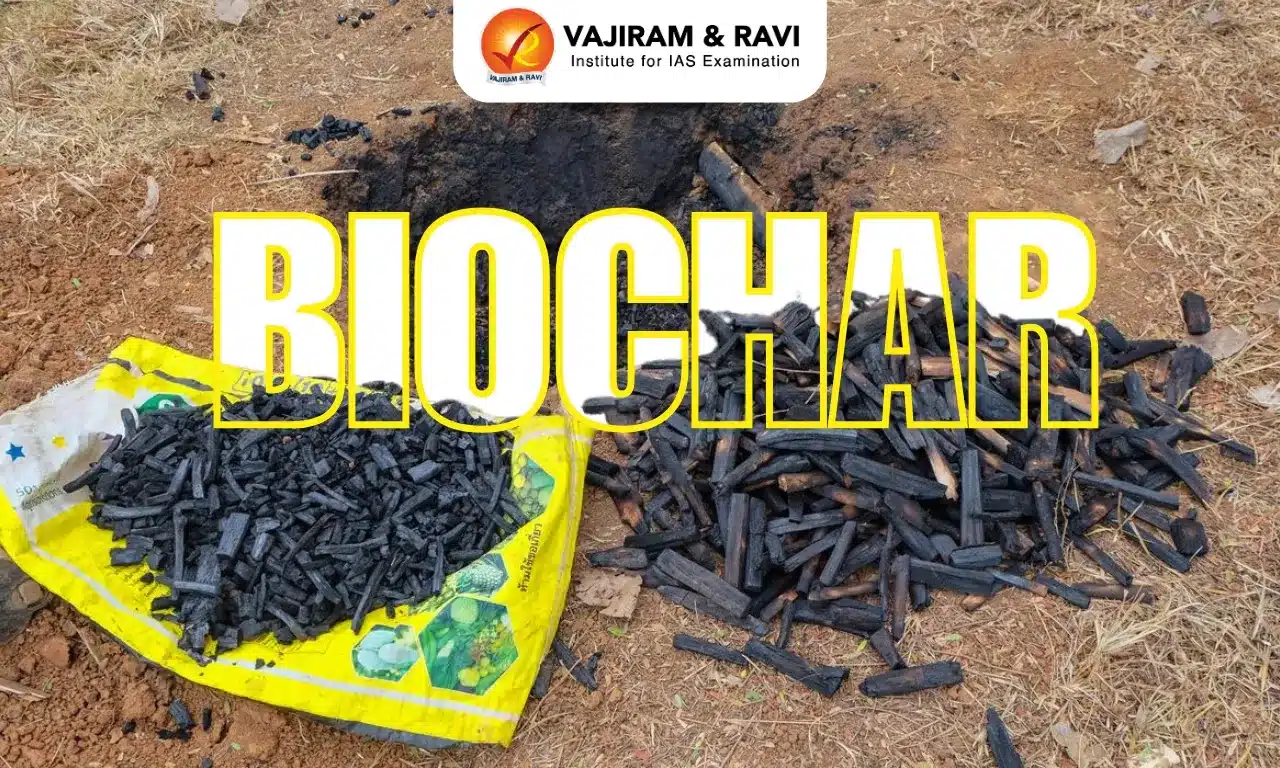
Biochar

Biochar

Biochar Latest News

Studies have indicated that Biochar can improve crop productivity by 10% to 30% and water-holding capacity by 10% to 25%, particularly in soils low in nutrients.

About Biochar

  • Biochar is made by heating agricultural waste in low-oxygen conditions.
  • It offers a sustainable alternative to manage waste and capture carbon.
  • It is granular material obtained by heating crop residue at 400°C to 600°C in a kiln-shaped structure in the absence of oxygen.
  • Advantage of Biochar: It can hold carbon in the soil for 100-1,000 years due to its strong and stable characteristics, making it an effective long-term carbon sink.

Potential Applications of Biochar

  • Agriculture: It can improve water retention, particularly in semi-dry and nutrient-depleted soils.
  • Biochar is highly porous and contributes to aggregating soil particles, holding water and creating a suitable environment for microorganisms.
  • Industries: In carbon capture applications, modified biochar can adsorb CO₂ from industrial exhaust gases. However, its carbon removal efficiency is currently lower than that of conventional methods.
  • Construction sector: Biochar can be explored as a low-carbon alternative to building materials and makes building materials a stable carbon sink.
  • Wastewater Treatment: Biochar offers a low-cost and effective option to reduce pollution.

Source: TH

Biochar FAQs

Q1: What is biochar?

Ans: Carbon-rich charcoal produced by pyrolysis of biomass in low/no oxyge

Q2: What is the main environmental benefit of biochar?

Ans: Carbon sequestration – locks carbon for 100s-1000s years; mitigates climate change

Pakistan Occupied Kashmir (PoK), History, Map, Developments

Pakistan Occupied Kashmir (PoK)

Pakistan Occupied Kashmir (PoK), referred to by Pakistan as Azad Jammu & Kashmir (AJK) and Gilgit-Baltistan (GB), lies at the heart of the Kashmir dispute between India and Pakistan. PoK is administered by Pakistan and claimed in full by India, making it one of the most contested territories in South Asia. In 2025, especially after the tragic Pahalgam terror attack in April and escalating incidents along the Line of Control (LoC), renewed attention has fallen on PoK’s role as a terror hub, its strategic geography, and India’s ongoing stance on its reclamation. In this article, we are going to cover about Pakistan Occupied Kashmir, its historical background, India’s constitutional and legal position and strategic importance.

Pakistan Occupied Kashmir 

Pakistan Occupied Kashmir is the area of the princely state of Jammu and Kashmir that came under Pakistani control following the first India-Pakistan war of 1947-48. It includes two administrative regions under Pakistan:

  • Azad Jammu & Kashmir (AJK): The southern portion, with Muzaffarabad as its capital.
  • Gilgit-Baltistan (GB): The northern region, which is geographically larger and borders China and Afghanistan.

Though Pakistan administers both, India maintains that they remain integral parts of the Indian union, and their control by Pakistan is illegal.

Pakistan Occupied Kashmir Historical Background

The dispute over Pakistan Occupied Kashmir started during the time of partition period: 

  • In 1947, the princely state of Jammu & Kashmir agreed to join India.
  • Between 1947 and 1948, India and Pakistan fought the first war over Kashmir. A UN-brokered ceasefire led to the establishment of the Line of Control (LoC), effectively splitting the formerly unified princely state.
  • The Karachi Agreement (1949) between India and Pakistan formalized the ceasefire line.
  • Subsequent wars in 1965 and 1971 did not significantly alter the Kashmir boundary.
  • The eruption of insurgency in Indian-administered Kashmir since 1989 added complexity by inflaming separatist violence and cross-border militant activity.
  • The Kargil conflict of 1999 was fought across high-altitude terrain in Jammu & Kashmir, again showing the fragility of peace along contested zones. To this day, the region known as PoK remains under Pakistani administration, though contested by India.

Pakistan Occupied Kashmir PoK Constitutional and Legal Position in India

India firmly holds that:

  • Pakistan Occupied Kashmir is an important part of India, a position enshrined in Indian political declarations and constitutional claims.
  • In 1994, the Indian Parliament passed a unanimous resolution declaring PoK as sovereign Indian territory.
  • India does not recognize any “Azad Kashmir” government, and considers elections, institutions, or laws instituted there by Pakistan to be null and void.
  • Any Pakistani actions or developments in PoK are viewed by India as encroachments on its sovereignty.

Pakistan Occupied Kashmir Strategic Importance

Pakistan Occupied Kashmir importance in the India-Pakistan equation is multifaceted:

  • Gateway to China- CPEC: The China-Pakistan Economic Corridor (CPEC), a multibillion-dollar flagship project of China’s Belt and Road Initiative, passes through Gilgit-Baltistan. India has consistently objected, arguing that any infrastructure in PoK violates its sovereignty.
  • Terror Launchpads: PoK is frequently cited as a safe zone for militant groups like Lashkar-e-Taiba (LeT), Jaish-e-Mohammed (JeM), and Hizbul Mujahideen, who are believed to run training camps in PoK’s varied terrain (e.g. Neelum Valley, Kotli, Bhimber).
  • Geopolitical Leverage: Control over PoK gives Pakistan leverage in Kashmir, and its proximity to China gives strategic depth.
  • Resource and terrain control: The region’s rivers, mountain corridors, and high-altitude terrain also hold military and hydrological advantages. 

Pakistan Occupied Kashmir Map

Check out the Pakistan Occupied Kashmir map included here for a clear visual of the region and its boundaries.

Pakistan Occupied Kashmir (PoK) Recent Developments

On 22 April 2025, terrorists struck in the Baisaran Valley, Pahalgam, killing 26 people, most of them tourists. The assailants reportedly used AK-47s and M4 carbines, infiltrating through adjacent forests. Investigations pointed to militants crossing from PoK, and Indian authorities held Pakistan responsible for providing sanctuary and infrastructure support to such groups. The Resistance Front, believed to be an offshoot of LeT, initially claimed responsibility.

In the wake of the attack, India intensified surveillance, drone operations, and counter-militant strikes near the LoC. In May 2025, India launched Operation Sindoor, targeting terror infrastructure in PoK, making airstrikes across nine locations. Indian leadership also sternly reiterated the objective of recovering PoK. 

India summoned Pakistan’s High Commissioner and demanded dismantling of terrorist infrastructure. In response, Pakistan reportedly suspended key agreements, including aspects of the Shimla Accord, raising tensions at the diplomatic level. Pakistan, however, continues to portray PoK as a self-governing entity rather than an instrument of Pakistani control. Meanwhile, allegations of human rights suppression and lack of press freedom in Gilgit-Baltistan have drawn international criticism. 

Internationally, the UN continues to classify Jammu & Kashmir as a disputed territory, calling for peaceful resolution via bilateral dialogue. Yet, no significant country recognizes PoK as an independent or sovereign Pakistani territory. China’s active presence in Gilgit-Baltistan through the CPEC further complicates the issue.

Pakistan Occupied Kashmir (PoK) FAQs

Q1: How did Pakistan occupy part of Kashmir?

Ans: Pakistan occupied part of Kashmir during the 1947–48 war following tribal invasions backed by its army after the Maharaja of Jammu and Kashmir acceded to India.

Q2: What is the difference between Pak and PoK?

Ans: Pakistan is a sovereign country, while Pakistan-Occupied Kashmir (PoK) is the region of Jammu and Kashmir illegally occupied and administered by Pakistan.

Q3: Are Azad Kashmir and Pakistan-Occupied Kashmir the same?

Ans: Yes, “Azad Jammu and Kashmir” is the term Pakistan uses for the part of Jammu and Kashmir under its occupation, commonly known in India as Pakistan-Occupied Kashmir (PoK).

Ammonia

Ammonia

Ammonia Latest News

Recently, an ammonia gas leak at a seafood processing and export unit in Tamil Nadu's Tiruvallur district impacted many people.

About Ammonia

  • It is a colorless, pungent gas composed of nitrogen and hydrogen with the formula NH3.
  • Properties: Ammonia gas can be dissolved in water. This kind of ammonia is called liquid ammonia or aqueous ammonia. Once exposed to open air, liquid ammonia quickly turns into a gas.
  • It exists naturally in humans and in the environment. 
  • In the environment, ammonia is part of the nitrogen cycle and is produced in soil from bacterial processes. 
  • Ammonia is also produced naturally from decomposition of organic matter, including plants and animals.
  • Industrial production: Manufactured mainly by the Haber–Bosch process (from nitrogen and hydrogen).
  • Uses
    • The major use of ammonia is as a fertilizer. 
    • Ammonia is a basic building block for ammonium nitrate fertilizer, which releases nitrogen, an essential nutrient for growing plants.
    • Additional uses include as a refrigerant, stabilizer, neutralizer, and purifier — particularly in food transport and water treatment applications. 
    • It can also be used in the manufacture of plastics, explosives, fabrics, dyes, and pharmaceuticals.
  • Impact on Health: Exposure to high levels of ammonia in air may be irritating to a person’s skin, eyes, throat, and lungs and cause coughing and burns.

Source: TH

Ammonia FAQs

Q1: What is the chemical formula and nature of ammonia gas?

Ans: NH₃ – Colourless, pungent gas

Q2: Which industrial process is mainly used for ammonia production?

Ans: Haber-Bosch Process

Police Begin Collecting DNA Records Under the CrPI Act

DNA Records

DNA Records Latest News

  • Police across several Indian states have begun collecting DNA records of suspects under the Criminal Procedure (Identification) Act, 2022, with over one lakh DNA profiles generated and stored in a central database operated by the National Crime Records Bureau.

About the Criminal Procedure (Identification) Act, 2022

  • The Criminal Procedure (Identification) Act, 2022 (CrPI Act) is a significant piece of legislation passed by Parliament in 2022 to modernise India's criminal investigation framework. 
  • It replaced the colonial-era Identification of Prisoners Act, 1920, which had limited provisions for collecting only fingerprints and footprints.
  • Background
    • The 1920 Act was considered outdated in the era of advanced forensic technology. The new law was enacted to:
    • Modernise identification techniques in line with global standards
    • Strengthen the criminal justice system through scientific evidence
    • Improve conviction rates by enabling accurate identification
    • Solve interstate crimes through a unified national database
  • Key Provisions
    • The CrPI Act empowers police and prison officers to collect a wide range of identification data from:
    • Convicted persons
    • Arrested persons for offences punishable with imprisonment of seven years or more
    • Persons detained under preventive detention laws

Types of Measurements Collected

  • The Act allows the collection of:
    • Fingerprints and palm prints
    • Footprints and photographs
    • Iris and retina scans
    • Physical and biological samples, including blood and saliva for DNA profiling
    • Behavioural attributes, including signatures and handwriting

Data Retention

  • Records can be retained for up to 75 years from the date of collection.
  • Data is stored in a central database maintained by the National Crime Records Bureau (NCRB).
  • Records are deleted when a person is acquitted or discharged in all proceedings.

Authorised Agencies

  • The CrPI system is accessible to:
    • State police forces across the country
    • Central agencies, including the Central Bureau of Investigation (CBI), National Investigation Agency (NIA), and Narcotics Control Bureau (NCB)
    • Prison authorities for record collection

Concerns and Criticisms

  • The Act has faced criticism on several grounds:
    • Privacy concerns regarding mass collection of biometric and biological data
    • Potential misuse by authorities
    • Vague definitions of who can be subjected to collection
    • Lack of judicial oversight for collection from arrested persons
    • Long retention period of 75 years raises proportionality questions
  • The Supreme Court's Puttaswamy judgment (2017) recognised privacy as a fundamental right, making it essential to balance security needs with individual rights.

News Summary: Implementation of the CrPI Act

  • Over the past five months, the DNA records of more than one lakh suspects have been stored in a central database operated by the National Crime Records Bureau (NCRB) under the Union Home Ministry. 
  • The contours of the CrPI system were showcased on June 19 at an NCRB event presided over by Home Minister Amit Shah.

Infrastructure for Implementation

  • The implementation has involved significant infrastructure development:
    • More than 2,600 measurement collection units have been established across the country
    • The CrPI system is now available in police districts and prisons
    • It is accessible to Central agencies, including CBI, NIA, and NCB
    • Integration with forensic laboratories for processing biological samples

Sample Collection Process

  • Samples are currently being collected by police in cases punishable by seven years or more.
  • DNA samples are primarily drawn from blood, with saliva used in some cases.
  • Samples are sent to a forensic laboratory, which generates a unique number.
  • The NCRB preserves the code in its records.
  • The sanctity of the samples depends on the police maintaining proper protocols.

National Automated Fingerprint Identification System (NAFIS)

  • To support the CrPI system, the NCRB had launched the National Automated Fingerprint Identification System (NAFIS) in 2022:
    • Fully automates the fingerprint matching process
    • Currently holds more than 1.27 crore fingerprint records
    • Has played a significant role in solving old inter-state criminal cases
    • Provides instant matching capabilities across the country

Advanced Features of the CrPI System

  • Unified national database integrating face, iris, and biological samples.
  • Searchable database enabling accurate scientific identification within moments.
  • Photo matching, a photo from a crime scene can be instantly matched with records across the country.
  • Video analytics allowing investigating officers to upload CCTV footage to identify suspicious persons.
  • Standardised storage of measurements for 75 years.
  • Disguise-resistant identification, photos are taken ensuring clarity of eyes to prevent identification being hindered by disguises.

Crime-Solving Capabilities

  • The system enables several important crime-solving functions:
    • Direct matching of biological samples recovered from crime scenes with existing records.
    • Identification of habitual offenders through scientific methods.
    • Inter-state criminal tracking with instant cross-state record matching.
    • Quick identification from CCTV footage that earlier took hours of manual investigation.
  • The NCRB stated: "What earlier took hours of manual investigation is now possible in just a few minutes."

Concerns and Way Forward

  • Privacy and Civil Liberties
    • Proportionality of data collection and retention
    • Safeguards against misuse of sensitive biological data
    • Independent oversight of database access
    • Data security to prevent breaches
    • Compliance with the Digital Personal Data Protection Act, 2023
  • Implementation Challenges
    • Standardising procedures across states
    • Training law enforcement on proper collection techniques
    • Maintaining the sanctity of samples and the chain of custody
    • Integration with state databases
  • Need for Safeguards
    • Judicial oversight for sensitive data collection
    • Clear protocols for data deletion upon acquittal
    • Regular audits of database access and use
    • Transparency in operational procedures
    • Periodic legislative review of the framework

Source: TH

DNA Records FAQs

Q1: What is the Criminal Procedure (Identification) Act, 2022?

Ans: It is a law passed in 2022 enabling police and prison officers to collect physical and biological samples including DNA from arrested and convicted persons, replacing the Identification of Prisoners Act, 1920.

Q2: How many DNA profiles have been generated under the Act?

Ans: Over one lakh DNA profiles have been generated and stored in the NCRB's central database in the past five months.

Q3: For how long can records be retained under the Act?

Ans: Records can be retained for up to 75 years from the date of collection.

Q4: What is NAFIS?

Ans: The National Automated Fingerprint Identification System, launched in 2022, holds over 1.27 crore fingerprint records and fully automates fingerprint matching.

Q5: Which agencies can access the CrPI database?

Ans: State police, prison authorities, and Central agencies including the CBI, NIA, and NCB have access to the CrPI system.

Right to Walk on Footpaths: Supreme Court Declares Right to Walk on Footpaths a Fundamental Right

Right to Walk on Footpaths

Right to Walk on Footpaths Latest News

  • The Supreme Court of India, in its judgment in Maniyar Iliyaz @ Shaik Riyaz vs. P. Ayyappan, declared the right to walk on safe, demarcated footpaths as a fundamental right — one that takes priority over the movement of motor vehicles. 
  • The immediate trigger was the death of a 5-year-old boy, struck by a tanker while walking to school with his father. But the court used the occasion to address a much larger civilisational failure.

The Crisis on the Ground: Data That Demands Attention

  • India's pedestrian death figures are alarming. 
  • Between 2015 and 2024, while total road fatalities rose by 21.24%, pedestrian deaths surged by nearly 163% — from 13,894 in 2015 to 36,526 in 2024
  • Their share in total road deaths more than doubled, from 9.5% to 20.61%. 
  • Pedestrians now account for the second-highest share of road fatalities, after two-wheeler users. 
  • Deaths rose even during the Covid-19 pandemic years — a telling sign of structural failure.
  • The cause is not just speed or recklessness. It is the systematic denial of pedestrian space
  • Footpaths across Indian cities are routinely encroached by two-wheelers, vendors, parked vehicles, and garbage. In many places, they simply do not exist.

What the Court Said: Beyond Accident Law

  • The judgment makes a sharp conceptual break. It divorces the footpath from the narrow lens of motor accident law
  • A footpath is not merely a safety buffer to prevent accidents. It has an identity and purpose of its own.
  • The court held that the right to walk is the most fundamental of human activities — predating motorised transport by millennia. 
  • Road infrastructure built overwhelmingly for vehicles has effectively pushed walkers to the margins, treating them, in the court's words, as a "nuisance for drivers."
  • This, the court said, was elitism encoded in infrastructure. Motorised vehicles were once the preserve of the rich. 
  • As they became cheaper and widespread, the entire road design paradigm shifted to serve them — at the cost of the walker.

Constitutional and Legal Foundations

  • Article 21 — Right to Life: The court grounded the right to walk in Article 21. A safe, unobstructed footpath is essential to the dignified exercise of the right to life and personal liberty.
  • Article 39(b) — Directive Principle: Footpaths are material resources of the community. Article 39(b) mandates that such resources must be distributed to serve the common good — not monopolised by the motorised class. Urban land allocated for roads must balance the needs of both pedestrians and vehicle users.
  • Tragedy of the Commons: The court invoked this concept from environmental law. Footpaths — like other shared public resources — degrade when they are encroached upon by many without accountability. Safe footpaths have become a scarce resource in Indian cities.
  • Walking and Constitutional Freedoms: The court went further, linking walking to freedom of speech, peaceful protest, and the right to form associations. From Gandhi's Dandi March to modern political rallies, walking has been a form of democratic expression in India.

The Problem with the Motor Vehicles Act, 1988

  • The Motor Vehicles Act, 1988 is the primary legislation governing roads in India. The court was scathing in its assessment: the Act treats "vehicle" as its subject and human interests as incidental. 
    • Pedestrians appear in the law only as entities that drivers must avoid hitting — nothing more.
  • The 2017 MoRTH regulations on driving do ask drivers to take precautions around vulnerable road users. 
  • But the court held that these are merely guiding principles — they do not recognise any fundamental right to walk, nor do they give pedestrians priority over vehicles. 
  • The Supreme Court noted that since 2012, it has been trying to squeeze pedestrian rights into the Motor Vehicles Act — with limited success.

Who Are the Duty-Bearers

  • The court identified the primary duty-bearers for footpath protection as urban local bodies — urban development authorities, municipal corporations, municipalities, and panchayats. 
  • Footpaths are held in trust by these bodies for public benefit. Their failure to maintain, protect, and enforce footpath space is a constitutional failure, not merely an administrative lapse.

The Court's Key Directions and Recommendations

  • Statutory Law: The court was not satisfied with just declaring a right. It recommended that Parliament and State legislatures enact a dedicated statutory law — similar to the Right to Education Act — to give this fundamental right legal teeth on the ground.
  • A Dedicated Regulator: The court called for establishing a full-time regulatory body to plan, enforce, and implement pedestrian rights. Such a body would embed expertise, ensure accountability, and provide a forum for aggrieved pedestrians — much like the National Commission for Protection of Child Rights does for children's rights.
  • On Compensation: In the original case, the Supreme Court reversed the High Court's reduction of compensation and recalculated it upward to Rs. 11.44 lakh, to be paid within two months. It held that violation of the right to walk on demarcated footpaths entitles citizens to invoke constitutional and legal remedies beyond what the Motor Vehicles Act provides.

Conclusion

  • This judgment marks a decisive reversal of the hierarchy on Indian roads. For decades, road design, urban planning, and legislation privileged the motorised user. 
  • The Supreme Court has now established that the pedestrian's right is not subordinate — it takes priority.
  • For municipal bodies and road agencies, maintaining safe, unobstructed footpaths is no longer a discretionary good practice. It is now a constitutional duty wherever a motorised road exists.

Source: TH | IE

Right to Walk on Footpaths FAQs

Q1: Why did the Supreme Court recognise the Right to Walk on Footpaths?

Ans: The Right to Walk on Footpaths was recognised to protect pedestrian safety, dignity and mobility, which are essential components of the right to life.

Q2: How is the Right to Walk on Footpaths linked to Article 21?

Ans: The Right to Walk on Footpaths derives from Article 21 because safe and unobstructed pedestrian movement is necessary for a dignified life.

Q3: What challenges affect the Right to Walk on Footpaths in India?

Ans: The Right to Walk on Footpaths is undermined by encroachments, illegal parking, street obstructions, inadequate infrastructure and poor urban planning.

Q4: Who is responsible for protecting the Right to Walk on Footpaths?

Ans: Urban local bodies, municipalities and development authorities are the primary duty-bearers responsible for safeguarding the Right to Walk on Footpaths.

Q5: What reforms did the Court recommend for the Right to Walk on Footpaths?

Ans: The Court recommended dedicated legislation, a specialised regulator and stronger accountability mechanisms to effectively enforce the Right to Walk on Footpaths.

Indian Navy Triple Commissioning: INS Dunagiri, INS Sanshodhak and INS Agray Strengthen Maritime Security

Indian Navy Triple Commissioning

Indian Navy Triple Commissioning Latest News

  • The Indian Navy commissioned three indigenously built warships—INS Dunagiri, INS Sanshodhak, and INS Agray, in Kolkata. 
  • The significance of this "tri-commissioning" lies in the fact that each ship performs a distinct strategic role, collectively enhancing India's blue-water capability, maritime domain awareness, and coastal security. 
  • More than 75% of the components are indigenous, reflecting the growing success of the Aatmanirbhar Bharat initiative in defence manufacturing.

The Three Ships at a Glance

INS Dunagiri — The Blue-Water Warrior

  • Dunagiri is a stealth guided-missile frigate under Project 17A. It is the largest of the three (149 m, 6,670 tonnes). 
    • 'Stealth' here means reduced radar and sensor visibility — not complete invisibility.
  • Key weapons and systems: BrahMos surface-to-surface missiles, Medium-Range Surface-to-Air Missile (MRSAM) system, MFSTAR radar, sonar, electronic warfare systems, and anti-submarine weapons.
  • Its role is blue-water operations — fighting far out at sea against both conventional and non-conventional threats. 
  • Sister ships in Project 17A include INS Nigiri, Himgiri, Taragiri, Udaygiri, and Vindhyagiri.

INS Sanshodhak — The Eye Beneath the Sea

  • Sanshodhak is a Survey Vessel — Large (SVL). Its job is to measure and map the sea: water depth, seabed features, navigational routes, port approach channels, and oceanographic data.
  • It is equipped with autonomous underwater vehicles (AUVs), remotely operated vehicles (ROVs), and multi-beam echo sounders.
  • It is the last ship of the Sandhayak-class SVLs (contract signed October 2018). 
    • The other three are INS Sandhayak (Feb 2024), INS Nirdeshak (Dec 2024), and INS Ikshak (Nov 2025).
  • Why it matters: Submarines and warships don't operate in empty water. Knowing the underwater terrain — depths, currents, seabed clutter — is essential for safe navigation, submarine route planning, port management, disaster relief, and coastal development.

INS Agray — The Coastal Submarine-Hunter

  • Agray is the smallest (77 m, 900 tonnes) but most specialised of the three. It is an Anti-Submarine Warfare Shallow Water Craft (ASW SWC) of the Arnala-class.
  • Its weapons: lightweight torpedoes, indigenous anti-submarine rocket launchers, and sonar systems.
  • Its role is to detect and destroy submarines in littoral waters — shallow coastal zones near ports, naval bases, and sea approaches. 
  • Coastal waters are especially tricky for sub-detection because fishing boats, merchant vessels, and seabed clutter create a noisy, cluttered acoustic environment. That is precisely where Agray operates.

Strategic Significance

  • Layered Naval Capability
    • The triple-commissioning is significant because it adds three distinct capabilities in one ceremony: blue-water strike power, maritime domain awareness, and coastal anti-submarine defence. 
    • This reflects a layered approach to naval capability-building.
  • Geopolitical Context
    • The Indian Ocean is increasingly contested. China and Pakistan are expanding their naval presence. 
    • India's maritime responsibilities now span the Arabian Sea, Bay of Bengal, island territories (Andaman & Nicobar, Lakshadweep), and the broader Indo-Pacific. 
    • The Navy is therefore developing capabilities at multiple layers:
      • Deep-sea combat platforms. 
      • Maritime surveillance assets. 
      • Coastal defence systems.
  • Atmanirbhar Bharat in Defence
    • All three ships were built domestically by GRSE, Kolkata. 
    • Three technologically distinct vessels — a stealth frigate, a survey ship, and an ASW craft — being built and commissioned together signals the maturing of India's naval shipbuilding ecosystem. 
    • The involvement of 200+ MSMEs underlines the depth of the domestic defence-industrial base.

Conclusion

  • The simultaneous induction of INS Dunagiri, INS Sanshodhak, and INS Agray marks a significant milestone in India's naval modernisation. 
  • Together, they strengthen combat capability, maritime awareness, and coastal defence while showcasing the growing maturity of India's indigenous defence manufacturing ecosystem.

Source: IE | MC

Indian Navy Triple Commissioning FAQs

Q1: Why is the Indian Navy Triple Commissioning considered significant?

Ans: The Indian Navy Triple Commissioning simultaneously adds blue-water combat capability, maritime domain awareness and coastal anti-submarine defence to India's naval architecture.

Q2: What role does INS Dunagiri play in the Indian Navy Triple Commissioning?

Ans: Under the Indian Navy Triple Commissioning, INS Dunagiri enhances long-range combat operations through stealth features, BrahMos missiles and advanced surveillance systems.

Q3: How does INS Sanshodhak contribute to the Indian Navy Triple Commissioning?

Ans: The Indian Navy Triple Commissioning includes INS Sanshodhak, which strengthens hydrographic surveys, seabed mapping and maritime domain awareness for naval operations.

Q4: What is the strategic importance of INS Agray in the Indian Navy Triple Commissioning?

Ans: The Indian Navy Triple Commissioning equips India with INS Agray, a specialised platform designed to detect and neutralise submarines in shallow coastal waters.

Q5: How does the Indian Navy Triple Commissioning support Aatmanirbhar Bharat?

Ans: The Indian Navy Triple Commissioning showcases indigenous shipbuilding capabilities, with over 75% domestic content and participation from more than 200 MSMEs.

Daily Editorial Analysis 22 June 2026

Daily-Editorial-Analysis

End The Free Rein of Junk Food Advertising in India

Context

  • The rapid growth of Ultra-Processed Foods (UPFs) and High Fat, Sugar and Sodium (HFSS) products has become a major public health concern in India.
  • Despite policy commitments to regulate unhealthy food marketing, advertisements for chips, noodles, biscuits, breakfast cereals, chocolates, and sweetened beverages remain widespread across television, social media, newspapers, and digital platforms.
  • Such advertising often portrays unhealthy products as nutritious, influencing consumer behaviour, particularly among children and adolescents.
  • Given the rising burden of obesitydiabetes, and other non-communicable diseases (NCDs), stronger regulation of food advertising is increasingly necessary.

The Problem of Misleading Food Advertising

  • Selective Disclosure of Information
    • Food companies frequently market products using terms such as baked, multigrain, and no maida while failing to disclose high levels of sugarsaltunhealthy fats, and refined carbohydrates.
    • Such selective presentation creates a false perception of healthfulness and prevents consumers from making informed choices.
  • Role of Celebrity Endorsements
    • Celebrities and influencers often promote breakfast cereals, biscuits, and snacks that are high in sugar, fat, or salt.
    • These endorsements enhance consumer trust and increase the appeal of products, especially among young audiences, despite their questionable nutritional value.

Impact of Advertising on Consumption Patterns

  • Creation of Consumer Demand
    • Advertising does not merely reflect consumer demand; it actively shapes and creates it.
    • Food corporations invest heavily in marketing because it influences purchasing decisions and consumption habits.
    • In India, over two lakh junk-food advertisements in a month were supported by expenditure of around ₹170 crore, demonstrating the enormous reach of commercial promotion.
  • Influence on Children and Adolescents
    • Children are particularly vulnerable to persuasive marketing techniques.
    • Continuous exposure to advertisements through television, social media, sports broadcasts, schools, and public spaces encourages brand loyalty and normalises unhealthy dietary habits.
    • These patterns often persist into adulthood, contributing to long-term health risks.

Health Risks Associated with Ultra-Processed Foods

  • Scientific Evidence
    • Growing scientific evidence links UPF consumption to poor diet quality and the displacement of traditional and minimally processed foods.
    • Research published in The Lancet associates UPFs with increased risks of obesityhypertensioncardiovascular diseasetype 2 diabetes, and other chronic illnesses.
  • Addictive Consumption Patterns
    • Many UPFs are engineered to be highly palatable through the use of additives, flavourings, emulsifiers, and sweeteners.
    • Such formulations encourage overconsumption and may trigger behavioural responses similar to those observed in addiction science, increasing the likelihood of excessive intake.

Policy and Legal Gaps in India

  • Existing Commitments
    • India’s National Multisectoral Action Plan (NMAP) for the Prevention and Control of Non-Communicable Diseases proposed restrictions on HFSS food advertising.
    • However, implementation has remained limited, allowing unhealthy food marketing to continue largely unchecked.
  • Emerging Policy Recognition
    • Recent developments indicate growing awareness of the issue.
    • Calls for front-of-pack warning labels, restrictions on child-targeted advertising, and stronger food regulations have gained momentum.
    • Judicial observations have also emphasised the right to health and the need to protect consumers from misleading advertisements.

The Path Forward: Need for Stronger Regulation

  • Protecting Public Health
    • When health risks are foreseeable and vulnerable populations are affected, the state has a responsibility to intervene.
    • Nutrition education alone cannot succeed in an environment saturated with aggressive marketing of unhealthy foods.
    • Effective regulation is therefore essential to create healthier food environments.
  • Learning from International Experience
    • Countries such as ChileMexico, and Brazil have implemented warning labels and restrictions on unhealthy food advertising.
    • Their experiences suggest that legally enforceable measures are often more effective than voluntary self-regulation by industry.
  • Promoting Healthier Food Systems
    • Restricting the advertising of UPFs should not be viewed as anti-industry.
    • Reduced spending on aggressive marketing could encourage companies to invest in healthier and minimally processed food products.
    • Such a shift would support more sustainable and nutrition-oriented food systems.

Conclusion

  • The widespread advertising of UPFs and HFSS foods poses significant challenges to public health in India.
  • Misleading marketing practices, extensive exposure among children, and strong scientific evidence linking these products to chronic diseases justify stronger government intervention.
  • Measures such as advertising restrictionswarning labels, and stricter regulatory frameworks can help protect consumers, promote healthier dietary habits, and uphold the constitutional right to health.
  • Creating a healthier food environment is essential for reducing the burden of non-communicable diseases and ensuring the well-being of future generations.

End The Free Rein of Junk Food Advertising in India FAQs

Q1. What are Ultra-Processed Foods (UPFs)?

Ans. Ultra-Processed Foods are industrially manufactured food products that contain additives, flavourings, sweeteners, and other processed ingredients.

Q2. Why are UPF advertisements considered misleading?

Ans. UPF advertisements often highlight positive features such as "baked" or "multigrain" while concealing high levels of sugar, salt, and unhealthy fats.

Q3. How do food advertisements affect children?

Ans. Food advertisements influence children's preferences, create brand loyalty, and encourage unhealthy eating habits from an early age.

Q4. What health risks are associated with UPF consumption?

Ans. UPF consumption is linked to obesity, hypertension, cardiovascular disease, type 2 diabetes, and other non-communicable diseases.

Q5. Why is stronger regulation of UPF advertising needed?

Ans. Stronger regulation is needed to protect public health, ensure informed consumer choices, and reduce the consumption of unhealthy food products.

Source: The Hindu


The Lack of Accountability Within the NTA 

Context

  • The cancellation of NEET-UG following a paper leak and the subsequent re-examination of more than 22 lakh candidates exposed significant weaknesses in India's medical entrance examination system.
  • While the government's response focused on criminal investigation, re-examination, and fee refunds, the incident revealed a deeper structural problem.
  • A single security breach was able to disrupt the academic future of millions of students, highlighting concerns regarding institutional accountabilitysystemic resilience, and educational equity.
  • The issue extends beyond identifying those responsible for the leak and raises questions about the design of the examination system itself.

Institutional Accountability and the NTA

  • A major concern is the limited accountability of the National Testing Agency (NTA).
  • Established as a registered society rather than through parliamentary legislation, the NTA operates without a clearly defined statutory liability framework toward candidates.
  • In cases of examination failure, its obligations are largely restricted to carrying forward registrations and refunding examination fees.
  • This creates a significant accountability gap, as the broader academic, financial, and psychological costs borne by candidates remain unrecognised.
  • Students invest years of preparation and substantial resources, yet institutional failures impose consequences primarily on aspirants rather than the examining authority.

Structural Vulnerability of NEET

  • The design of NEET itself amplifies the consequences of any security breach.
  • Conducted nationwide in a single sitting with one question paper, it functions as a highly centralised examination system.
  • Such a structure creates a single point of failure, where one compromised paper can affect the entire country.
  • The absence of alternative examination windows or distributed safeguards means that even a limited breach can lead to nationwide cancellation.
  • As a result, delays in examination schedules create uncertainty in admissions and disrupt the educational trajectory of millions of students.

Social and Economic Impact on Candidates

  • The burden of examination cancellation extends far beyond the refunded application fee.
  • With approximately 26 lakh MBBS seats available for over 22 lakh aspirants, competition is extremely intense.
  • Many candidates spend years preparing for the examination and invest heavily in coaching institutes, accommodation, study materials, and living expenses.
  • The impact is particularly severe for students from economically weaker sections.
  • Existing disparities in educational access and learning outcomes reduce their ability to absorb additional costs and uncertainty.
  • Consequently, institutional failures often reinforce existing inequalities and disproportionately affect vulnerable groups.

Limitations of the Legal Response

  • The Public Examinations (Prevention of Unfair Means) Act, 2024 strengthens penalties against organised cheating networks through stringent punishments and financial penalties.
  • While these measures enhance deterrence, they do little to protect candidates who suffer from examination cancellations.
  • The law does not provide a compensation mechanism, guarantee an automatic re-examination, or establish clear standards of institutional liability.
  • Consequently, the legal framework prioritises punishment of offenders while offering limited relief to affected students.

Why Technology Alone Is Not Enough

  • The proposed transition to Computer-Based Testing (CBT) is often viewed as a solution to examination malpractice.
  • However, technological change alone cannot address the underlying structural problem. Security breaches can occur in both paper-based and digital systems.
  • The cancellation of UGC-NET, despite being conducted through CBT, demonstrated that digitisation does not eliminate vulnerabilities when the examination remains dependent on a single high-stakes session.
  • The core issue lies in risk concentration rather than the mode of examination delivery.

Constitutional and Ethical Concerns

  • The issue also has important constitutional dimensions.
  • Article 14 guarantees equality before the law and protection against arbitrary state action, while Articles 41 and 46 of the Directive Principles of State Policy emphasise educational opportunity and protection of disadvantaged groups.
  • A system that shifts the costs of institutional failure onto students, particularly those with fewer resources, undermines these principles.
  • True equality requires not only uniform rules but also fair distribution of risks, responsibilities, and opportunities.

The Way Forward

  • Statutory Status for the NTA
    • The NTA should be granted a clear statutory basis with defined obligations toward candidates and enforceable consequences for institutional failures.
  • Candidate Compensation Mechanism
    • A dedicated compensation framework should automatically provide relief when examinations are cancelled due to administrative lapses or security breaches.
  • Multiple Examination Windows
    • Introducing multiple examination windows each year would reduce dependence on a single test and prevent one compromised session from affecting the entire candidate pool.

Conclusion

  • The NEET-UG controversy demonstrates that the central issue is not merely the existence of a paper leak but the fragility of an examination system that can be disrupted by a single breach.
  • Strengthening accountability, improving institutional responsibility, ensuring candidate welfare, and creating a more resilient examination architecture are essential for restoring public trust.
  • A fair and effective system must not only punish wrongdoing but also protect students from the consequences of institutional failure.

The Lack of Accountability Within the NTA FAQs

Q1. Why was NEET-UG re-conducted in 2026?
Ans. NEET-UG was re-conducted because a paper leak compromised the integrity of the examination.

Q2. What is the main structural weakness of NEET?
Ans. The main structural weakness is that it is conducted in a single nationwide sitting, creating a single point of failure.

Q3. How are students affected by exam cancellations?
Ans. Students face academic delays, financial losses, and increased uncertainty about their future.

Q4. Why is the Public Examinations Act considered inadequate?
Ans. The Act punishes offenders but does not provide compensation or protection for affected candidates.

Q5. What reform is suggested to reduce the impact of future disruptions?
Ans. Introducing multiple examination windows can reduce risk and prevent a single breach from affecting all candidates.

Source: The Hindu


Ease of Justice and Judicial Reforms - Building a Future-Ready Justice Ecosystem in India

Context:

  • India's justice delivery system has transformed over the past decade through legislative reforms, digital innovation, institutional strengthening, and improved access to justice.
  • These reforms are taken within the broader vision of Ease of Justice and the goal of achieving Viksit Bharat 2047.

Justice as a Pillar of Good Governance:

  • Justice forms the foundation of a civilized society by fostering trust, inclusion, and social stability.
  • A robust justice ecosystem must not only guarantee access to justice but also contribute to citizens' ease of living.
  • The government's reform agenda seeks to achieve this through a three-dimensional framework:
    • Ease of engagement for litigants
    • Ease of working for judges and advocates
    • Ease of understanding for citizens

Enhancing Access to Justice for Citizens:

  • Expanding legal aid and pre-litigation support: Several initiatives have made legal services more affordable and accessible, especially in rural and remote regions.
  • For example,
    • Tele-Law provides free pre-litigation legal consultations through digital platforms. Over 11.2 million beneficiaries have availed legal assistance under the scheme.
    • Nyaya Bandhu promotes pro bono legal services under the Designing Innovative Solutions for Holistic Access to Justice (DISHA) framework.
    • E-filing services and e-Seva Kendras have simplified interactions between litigants and courts.
  • These initiatives aim to reduce procedural barriers and democratize access to justice.

Strengthening Judicial Infrastructure:

  • Improving the working environment of courts:
    • Recognizing that subordinate courts are the first point of contact for most citizens, significant investments have been made in judicial infrastructure.
    • For example, court halls increased from 15,818 (2014) to 22,712. More than ₹9,400 crore has been released since 2014 for integrated court complexes.
  • Digital transformation through e-Courts:
    • The e-Courts Phase-III Project seeks to establish end-to-end digital courts, paperless judicial processes, and AI-enabled justice delivery systems.
    • Supporting innovations include video conferencing facilities, virtual courts, and live-streaming of court proceedings
    • These measures enhance transparency, efficiency, and public accessibility.

Making Justice Understandable and Inclusive:

  • Leveraging technology for linguistic accessibility:
    • In a multilingual country like India, ease of understanding is critical. Key initiatives include:
      • Supreme Court Vidhik Anuvaad Software (SUVAS) for translation of judgments.
      • Bhashini, an AI-powered language technology platform.
      • Translation of Supreme Court judgments into 18 Indian languages.
    • Data transparency: The National Judicial Data Grid (NJDG) provides public access to information on more than 340 million court orders, enhancing transparency and evidence-based judicial administration.

Modernisation of Criminal Justice:

  • Integration of digital criminal justice platforms:
    • The newly enacted criminal laws have been supported by technological integration among e-Courts, e-Prosecution, e-Prisons, e-Forensics, and CCTNS.
  • Nyaya Shruti platform:
    • The platform enables virtual appearances, digital recording of witness testimonies, and instant transmission of digital bail orders to prisons
    • This reduces delays in prisoner release and improves procedural efficiency.

Expanding Judicial Capacity:

  • Increase in judicial strength, to address pendency and improve case disposal.
  • For instance,
    • The High Court sanctioned strength increased from 906 to 1,122 judges.
    • Supreme Court strength rose from 31 to 34 judges in 2019, and subsequently to 38 judges.
    • During the last 12 years, 1,175 High Court judges and 77 Supreme Court judges were appointed.
  • The appointments reflect efforts to strengthen judicial capacity and representation.

Improving Business Environment and Alternative Dispute Resolution (ADR):

  • Legal simplification:
    • The government has reduced more than 40,000 compliances, and repealed 1,725 obsolete colonial-era laws.
    • These measures support the ease of doing business and reduce regulatory burdens.
  • Promoting ADR:
    • India is increasingly positioning itself as a global ADR hub through:
      • Strengthened arbitration laws.
      • Establishment of the India International Arbitration Centre (IIAC).
      • Enactment of the Mediation Act, 2023.
    • At the 2026 BRICS Justice Ministers' Meeting, India played a key role in the adoption of the Gandhinagar Declaration, which promotes cooperation in mediation and arbitration.

Conclusion:

  • A modern justice system must combine constitutional values with technological innovation, ensuring that justice remains accessible, affordable, and citizen-centric.
  • As India moves towards Viksit Bharat 2047, sustained judicial reforms will be essential for strengthening the rule of law, improving governance outcomes, and deepening public trust in democratic institutions.

Ease of Justice and Judicial Reforms FAQs

Q1. How does the concept of "Ease of Justice" contribute to good governance in India?

Ans. It improves access, affordability, transparency, and efficiency in justice delivery.

Q2. What is the significance of the e-Courts Phase-III Project in judicial reforms?

Ans. It aims to create AI-enabled, paperless, and fully digital courts, enhancing judicial efficiency, accessibility, and transparency.

Q3. How are AI-based language technologies promoting inclusive justice in India?

Ans. Platforms such as SUVAS and Bhashini translate judicial documents into multiple Indian languages.

Q4. What role does Alternative Dispute Resolution (ADR) play?

Ans. ADR mechanisms such as arbitration and mediation reduce court burdens, ensure faster dispute resolution, etc.

Q5. What are the benefits of the integration of e-Courts, e-Prisons, and CCTNS?

Ans. It enables seamless digital coordination among institutions, reducing procedural delays and improving justice delivery.

Source: IE

Daily Editorial Analysis 2026 FAQs

Q1: What is editorial analysis?

Ans: Editorial analysis is the critical examination and interpretation of newspaper editorials to extract key insights, arguments, and perspectives relevant to UPSC preparation.

Q2: What is an editorial analyst?

Ans: An editorial analyst is someone who studies and breaks down editorials to highlight their relevance, structure, and usefulness for competitive exams like the UPSC.

Q3: What is an editorial for UPSC?

Ans: For UPSC, an editorial refers to opinion-based articles in reputed newspapers that provide analysis on current affairs, governance, policy, and socio-economic issues.

Q4: What are the sources of UPSC Editorial Analysis?

Ans: Key sources include editorials from The Hindu and Indian Express.

Q5: Can Editorial Analysis help in Mains Answer Writing?

Ans: Yes, editorial analysis enhances content quality, analytical depth, and structure in Mains answer writing.

Periyar River

Periyar River

Periyar River Latest News

The Kerala High Court recently stressed the need for a unified authority to monitor the cleanliness of the Periyar River.

About Periyar River

  • It is the longest river in Kerala.
  • It is known as the “lifeline of Kerala” because it is an important source of irrigation and power generation.  
  • Course
    • It rises in the Sivagiri Hills of the Western Ghats range near the border with Tamil Nadu.
    • It flows north through Periyar National Park into Periyar Lake, an artificial reservoir created in 1895 by the construction of a dam across the river. 
    • It further flows into the Vembanad Lake before emptying into the Arabian Sea about 24 km north of Kochi.  
  • Total Length: 244 kilometers
  • It is one of the few perennial rivers of the region and is a crucial source of drinking water. 
  • About 25 percent of Kerala’s industries are located along its banks. 
  • Major Tributaries: Muthirapuzha River, Mullayar River, Cheruthoni River, Perinjankutti River and the Edamala River. 
  • It plays a major role in generating hydro electricity. 
    • The largest hydroelectric project is the Idukki Hydroelectric Project, which generates a significant portion of the electricity for Kerala state.  
    • Other dams constructed across the river are Neriyamangalam, Pallivasal, Panniyar, Kundalam, Chenkulam, and Mullaperiyar. 
  • The birthplace of Sankaracharya, the greatest Advaita philosopher, is at Kalady, which is situated on the bank of the Periyar. 

News: TP

Periyar River FAQs

Q1: Which is the longest river in Kerala?

Ans: The Periyar River is the longest river in Kerala.

Q2: Why is the Periyar River known as the "Lifeline of Kerala"?

Ans: It is known as the "Lifeline of Kerala" because it is an important source of irrigation and power generation.

Q3: Where does the Periyar River originate?

Ans: It originates in the Sivagiri Hills of the Western Ghats near the border with Tamil Nadu.

Q4: Into which lake does the Periyar River flow before entering the Arabian Sea?

Ans: It flows into the Vembanad Lake before entering the Arabian Sea.

Q5: What is the total length of the Periyar River?

Ans: The total length of the Periyar River is 244 kilometres.

Enquire Now