Chandrayaan 1 Mission, Launch Date, Timeline, Discoveries

Chandrayaan 1

Chandrayaan 1 was India’s first mission to the Moon and first deep space mission. It was launched by ISRO on October 22, 2008, using PSLV C11 from Satish Dhawan Space Centre, Sriharikota. The 1,380 kg spacecraft entered lunar orbit on November 8, 2008. The mission made a major contribution to the discovery of water on the Moon and operated until August 28, 2009.

What is Mission Chandrayaan 1?

Chandrayaan 1 was India’s first lunar space probe developed to study the Moon through remote sensing and an impact probe. It mapped the lunar surface in visible, infrared and X ray wavelengths. The key features of the Mission Chandrayaan 1 are:

Chandrayaan 1 Objectives

The Chandrayaan 1 Mission focused on detailed lunar mapping, mineral studies, water ice searches and technology development for future lunar missions.

  • Lunar Mapping: It aimed to prepare three dimensional maps of the near and far sides of the Moon with 5-10 metre spatial and altitude resolution.
  • Mineral Mapping: The mission studied the Moon’s chemical and mineral composition, including magnesium, aluminium, silicon, calcium, iron and titanium.
  • Water Ice Search: Chandrayaan 1 searched for surface and subsurface water ice, particularly in the permanently shadowed polar regions.
  • Polar Studies: It examined the north and south polar regions and studied lunar highland rocks, craters and the South Pole Aitken Region.
  • Technology Testing: The Moon Impact Probe tested systems and provided experience for future landing missions.

Chandrayaan 1 Timeline

The Chandrayaan 1 Mission progressed through planning, launch, lunar orbit insertion, scientific operations and an early communication loss.

  • Planning: The idea of an Indian lunar mission emerged in 1999. The Astronautical Society of India supported planning in 2000. Over 100 scientists endorsed the proposal in April 2003.
  • Approval: The government formally approved Chandrayaan 1 in November 2003 after ISRO’s National Lunar Mission Task Force assessed India’s capability.
  • Launch: PSLV C11 launched Chandrayaan 1 from Satish Dhawan Space Centre, Sriharikota. Its launch mass was 1,380 kg.
  • Lunar Orbit: After successive orbit raising manoeuvres, the spacecraft entered lunar orbit. It was gradually lowered to an operational altitude of 100 km.
  • Impact Probe: The 29 kg Moon Impact Probe was released from 100 km altitude. It impacted near the lunar south pole after a 25 minute descent.
  • Orbit Change: The spacecraft was moved to a 200 km lunar orbit because of abnormally high temperatures affecting operations.
  • Mission End: Radio contact with Chandrayaan 1 was lost. The mission had completed at least 95% of its objectives before ending.

Chandrayaan 1 Structure and Design

Chandrayaan 1 combined an Indian spacecraft platform with scientific instruments from several international partners.

  • Spacecraft: The cuboid spacecraft measured about 1.5 metres. It used three axis stabilisation and carried reaction wheels, sensors, gyroscopes and attitude control thrusters.
  • Power System: A solar panel generated about 750 W of peak power. A 36 Ah lithium ion battery supplied power during eclipses.
  • Propulsion: Its propulsion system used one 440 N engine and eight 22 N thrusters for lunar orbit insertion and orbital control.
  • Scientific Payload: The spacecraft carried 11 scientific instruments. Five were Indian instruments and six came from international partners.
  • Indian Instruments: Major payloads included TMC, HySI, LLRI, HEX, CIXS and MIP. TMC produced 5 metre resolution stereo images.
  • International Instruments: NASA contributed M3 and Mini SAR. ESA contributed SIR 2 and SARA. Bulgaria provided RADOM 7.

Chandrayaan 1 Findings

Chandrayaan 1 generated important evidence about lunar water, minerals, topography and the Moon’s surface environment.

  • Water on Moon: NASA’s M3 detected absorption features associated with hydroxyl and water bearing materials. The findings provided crucial evidence of water on the lunar surface.
  • Water Evidence by MIP: CHACE recorded 650 mass spectra during the Moon Impact Probe’s descent. Its observations indicated the presence of water in the lunar atmosphere.
  • Magmatic Water: Later analysis of M3 data provided evidence of water molecules locked within mineral grains, indicating water originating from the Moon’s interior.
  • Lunar Mapping: TMC produced more than 70,000 three dimensional images. TMC and HySI together covered about 70% of the lunar surface.
  • Polar Observations: Mini SAR provided coverage of both polar regions and investigated possible water ice. LLRI also studied both lunar poles.
  • Mineral Detection: C1XS detected titanium and confirmed calcium. It also obtained measurements of magnesium, aluminium and iron.
  • Lunar Caves: Chandrayaan 1 imagery identified an uncollapsed section of a lunar lava tube near the equator. The feature was about 2 km long and 360 metres wide.
  • Tectonic Activity: Mini SAR data revealed faults and fractures that indicated past tectonic activity on the lunar surface.

Chandrayaan 1 Significance

Chandrayaan 1 established India as an important participant in lunar exploration and created scientific and technological foundations for later missions.

  • Water Discovery: Its observations transformed understanding of lunar resources by providing strong evidence that water and hydroxyl exist on the Moon.
  • International Cooperation: The mission carried instruments developed by India, the United States, United Kingdom, Germany, Sweden and Bulgaria.
  • Scientific Advancement: It improved knowledge of lunar topography, mineral composition, chemical characteristics, polar regions and solar wind interactions.
  • Future Missions: The mission developed capabilities valuable for later interplanetary and lunar exploration, including landing related technology through the Moon Impact Probe.
  • Mission Success: Although planned for two years, Chandrayaan 1 ended in August 2009. ISRO stated that at least 95% of its mission objectives had been achieved.

Chandrayaan Missions

Chandrayaan 1 began India’s dedicated lunar exploration programme. Further Chandrayaan Missions  subsequently expanded its objectives.

  • Chandrayaan 1: Launched in 2008, it orbited the Moon and deployed the Moon Impact Probe. Its major achievement was evidence of water on the Moon.
  • Chandrayaan 2: Launched on July 22, 2019, using GSLV Mark III. It consisted of an orbiter, Vikram lander and Pragyan rover. Communication with Vikram was lost at about 2 km altitude before landing.
  • Chandrayaan 3: Launched as India’s first successful lunar landing mission. It achieved a soft landing in the Moon’s south polar region in 2023.
  • Chandrayaan 4: Planned for around 2027-2028, it will target the Mons Mouton region near the Moon’s south pole and return about 3 kg of lunar regolith and rock samples to Earth using five modules.
  • Chandrayaan 5 / LUPEX: A joint ISRO-JAXA mission targeted for 2028-2029, it will study south polar water ice deposits using an ISRO lander and a JAXA rover weighing about 350 kg.

Chandrayaan 1 FAQs

Q1: What is Chandrayaan 1?

Ans: Chandrayaan 1 was India’s first lunar mission and first deep space mission. It was launched by ISRO on October 22, 2008.

Q2: What was the main objective of Chandrayaan 1?

Ans: The main objective was to map the Moon and study its chemical and mineral composition, surface features, polar regions and possible water ice deposits.

Q3: What did Chandrayaan 1 discover on the Moon?

Ans: Chandrayaan 1 provided important evidence of water and hydroxyl on the lunar surface. Its observations also indicated water in the lunar atmosphere.

Q4: When did Chandrayaan 1 end?

Ans: Chandrayaan 1 ended on August 28, 2009, when communication with the spacecraft was lost. ISRO stated that at least 95% of its mission objectives had been completed.

Q5: Why is Chandrayaan 1 important for India?

Ans: Chandrayaan 1 strengthened India’s lunar exploration capabilities and generated major scientific findings that supported the development of subsequent Chandrayaan missions.

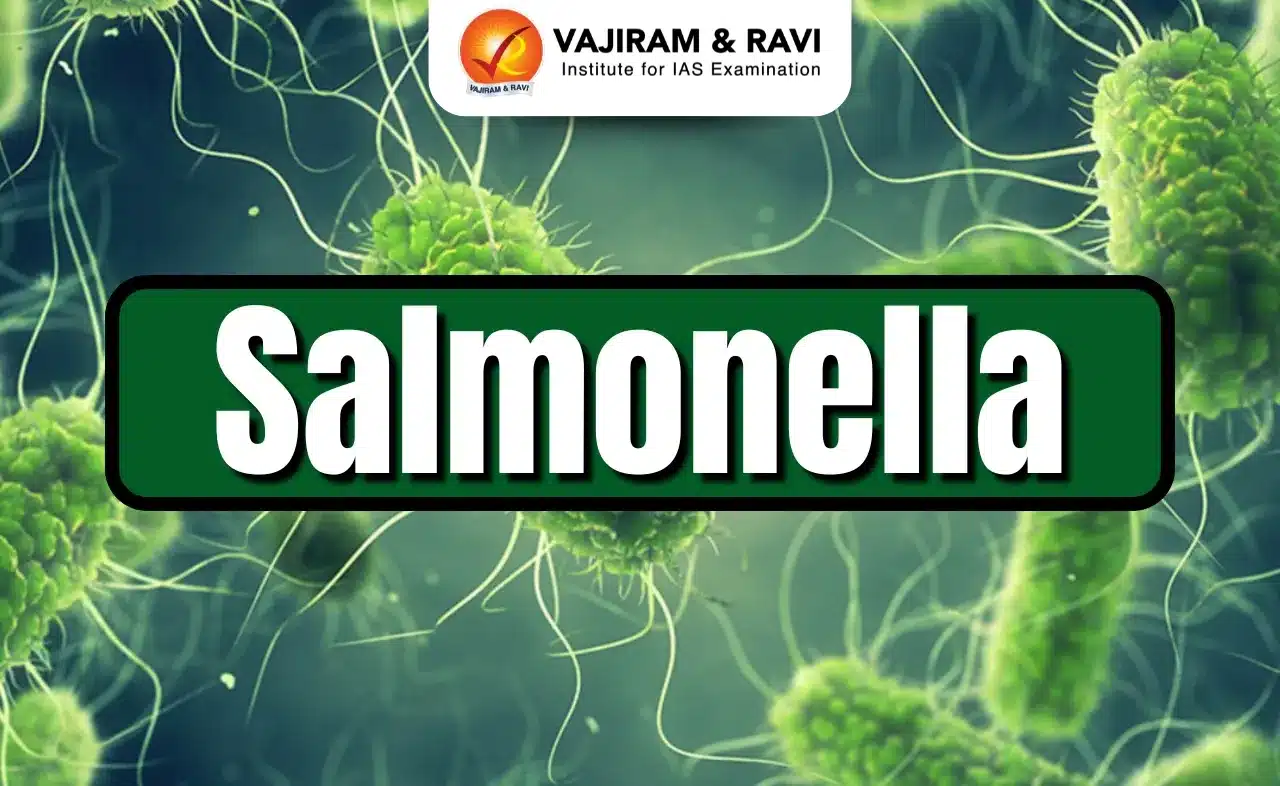
Salmonella

Salmonella

Salmonella Latest News

Experts say that Salmonella infection can range from mild gastroenteritis that gets better on its own to a serious bloodstream infection and deserves more attention than it is currently being given in India. 

About Salmonella

  • Salmonella is a group of bacteria that can cause different infections.
  • Typhoid and paratyphoid or enteric fever, are caused by Salmonella Typhi and Salmonella Paratyphi.

Sources and Transmission of Salmonella

  • Salmonella bacteria are widely distributed in domestic and wild animals. 
  • They are prevalent in food animals such as poultry, pigs, and cattle; and in pets.
  • Salmonellosis in humans is generally contracted primarily through the consumption of contaminated food of animal origin, although other foods, including green vegetables contaminated by manure, have been implicated in its transmission.
  • Person-to-person transmission can also occur through the faecal-oral route.
  • Human cases also occur where individuals have contact with infected animals.

Symptoms of Salmonella

  • Most people infected with Salmonella will begin to develop symptoms 12 to 72 hours after infection. 
  • Most people with salmonellosis develop diarrhea, fever, and abdominal cramps. 
  • More severe cases of salmonellosis may include a high fever, aches, headaches, lethargy, a rash, blood in the urine or stool.

Treatment for Salmonella

  • The illness usually lasts four to seven days, and most people recover without treatment. 
  • Treatment in severe cases is electrolyte replacement and rehydration.

Source: TH

Salmonella FAQs

Q1: What is salmonellosis?

Ans: Salmonellosis is an infection caused by the bacteria Salmonella.

Q2: How do people get salmonellosis?

Ans: Salmonella is usually transmitted to humans by eating foods contaminated with animal feces.

Lake Ontario, Rename Lake America, Location, Size, Biodiversity

Lake Ontario

Lake Ontario is the smallest by surface area and the easternmost of North America’s five Great Lakes. It lies between Ontario, Canada and New York, United States. The lake covers 7,340 square miles (19,011 square km). It forms part of the Canada-United States boundary and drains into the Atlantic Ocean through the Saint Lawrence River.

Lake Ontario Latest News

US President Donald Trump signed an executive order on August 27, 2026, renaming the US designated portion of Lake Ontario as “Lake America”. The order applies only to federal usage in the United States. Canada and international organisations are not legally required to use the new name.

Canadian Prime Minister Mark Carney rejected the change and highlighted the lake’s Indigenous origins. New York Governor Kathy Hochul also said New York would continue using the name Lake Ontario. The controversy emerged amid an escalating US-Canada trade dispute involving tariffs and retaliatory measures.

Why has Lake Ontario Renamed?

The renaming was announced during heightened trade tensions between the United States and Canada. Trump had previously criticised Canada’s trade policies and raised the renaming idea before formally signing the executive order.

  • Executive order: Trump directed that the lake be designated “Lake America” for US federal geographic usage. The order has no authority over Canadian or international naming practices.
  • Trade tensions: The decision followed the imposition of 50% US tariffs on $20 billion worth of Canadian goods. Canada responded with retaliatory tariffs covering products including steel and dairy.
  • Canadian response: Carney said Canadians would continue calling it Lake Ontario. 
  • Shared water body: Lake Ontario is jointly shared by Canada and the United States. Its water levels and cross border uses are managed through longstanding bilateral arrangements.

Lake Ontario Features

Lake Ontario is the final Great Lake in the hydrological chain and provides the connection between the Great Lakes system and the Atlantic Ocean.

  • Location: Lake Ontario lies between Ontario in Canada and New York in the United States. About 52% of its surface area is in Canada, with the remainder in New York.
  • Size: The lake has a surface area of 7,340 square miles (19,011 square km). Its drainage basin covers 24,720 square miles (64,025 square km), excluding the lake surface.
  • Dimensions: Lake Ontario extends about 193 miles (311 km) from east to west. Its greatest width is 53 miles (85 km).
  • Depth: Its mean depth is 283 feet (86 m). The deepest point reaches 802 feet (244 m) in the Rochester Basin.
  • Water volume: Lake Ontario contains about 393 cubic miles (1,640 cubic km) of water. Despite being smaller in area than Lake Erie, it has a substantially greater volume.
  • Main inlet: The Niagara River is the principal source of water entering Lake Ontario. It carries water from Lake Erie into the lake.
  • Other rivers: Major rivers include the Genesee, Oswego, Black, Trent, Don, Humber, Rouge, Credit, Cataraqui, Ganaraska, Little Salmon and Salmon rivers.
  • Outlet: The Saint Lawrence River carries Lake Ontario’s water toward the Atlantic Ocean. The lake therefore forms the final stage of the Great Lakes water system.
  • Canals: The Welland Canal connects Lake Ontario with Lake Erie. The Trent-Severn Waterway links it with Georgian Bay, while the Rideau Canal connects Kingston with Ottawa.
  • Shoreline: Including its islands, Lake Ontario has a shoreline of about 712 miles (1,146 km). Important Canadian cities include Toronto, Hamilton, Kingston and St. Catharines.
  • Islands: Wolfe Island is the largest island. Other notable islands include Amherst Island, Garden Island, Howe Island, Simcoe Island and the Toronto Islands.
  • Navigation: Major ports include Toronto, Hamilton, Kingston, Rochester and Oswego. The lake forms an important part of the Great Lakes-Saint Lawrence navigation system.

Lake Ontario Biodiversity

Lake Ontario supports diverse freshwater ecosystems, wetlands, forests, fish populations, birds, reptiles, amphibians and numerous plant species.

  • Climate: Lake Ontario usually does not completely freeze. Ice normally develops along shallow shores and sheltered bays during winter.
  • Marine sanctuary: The Lake Ontario National Marine Sanctuary was designated on September 6, 2024. It covers 1,722 square miles (4,460 square km) of US waters and protects historic shipwrecks and culturally important areas.
  • Wetlands: Sand bars, lagoons and wetlands provide important habitats for plants, aquatic species and migratory birds. Presqu'ile and other wetland areas are particularly important for biodiversity.
  • Forests: Surrounding forests mainly contain maple, oak, beech, ash and basswood. These forests form part of the broader Great Lakes ecological region.
  • Fish diversity: Lake Ontario supports an important freshwater fishery. Overfishing, pollution and invasive species have adversely affected native fish populations.

Challenges

  • Pollution: Agricultural fertilisers, municipal sewage, industrial chemicals and urban drainage have placed significant environmental pressure on the lake.
  • Algal blooms: Increased pollution during the 1960s and 1970s caused frequent summer algal blooms. These events resulted in major fish deaths and shoreline accumulation of decomposing algae.
  • Wetland threats: Stabilised water levels can reduce wetland diversity. Invasive cattails can also replace native plants and reduce habitat quality.
  • Forest loss: Extensive deforestation around the lake reduced forest habitat and affected birds, native salmon and sediment movement into the lake.

Lake Ontario FAQs

Q1: Where is Lake Ontario located?

Ans: Lake Ontario lies between Ontario, Canada and New York, United States. It forms part of the Canada-United States border.

Q2: Why was Lake Ontario renamed Lake America?

Ans: On August 27, 2026, US President Donald Trump signed an executive order using “Lake America” for US federal geographic usage. Canada continues to use Lake Ontario.

Q3: Which is the smallest among the Great Lakes?

Ans: Lake Ontario is the smallest of the five Great Lakes by surface area, covering 7,340 square miles or 19,011 square km.

Q4: What is the new name of Lake Ontario in the United States?

Ans: In August 2026, US President Donald Trump ordered the lake to be designated “Lake America” for US federal usage.

Q5: Which river flows out of Lake Ontario?

Ans: The Saint Lawrence River flows out of Lake Ontario. It carries water from the Great Lakes system toward the Atlantic Ocean.

Corbett Tiger Reserve

Corbett Tiger Reserve

Corbett Tiger Reserve Latest News

Recently, a famous tiger named Bhola which was popular among tourists at the Phato zone of the Corbett Tiger Reserve (CTR) in Uttarakhand died. 

About Corbett Tiger Reserve

  • Location: It is located on the foothills of the Himalayas in Uttarakhand.
  • It was originally established as Hailey National Park in 1936.
  • It is not only the first national park in India, but also the first to come under the Project Tiger initiative.
  • It is spread over the Bhabar and lower Shivalik regions with a deep-water table.
  • Terrain: The terrain is undulating with several valleys.
  • Rivers: The rivers Ramganga, Pallaen, and Sonanadi flow through the valleys.
  • Vegetation: North Indian tropical moist deciduous forests and tropical dry deciduous forests:
  • In general, the vegetation comprises sal and mixed forests, interspersed with grass lands and riparian vegetation.
  • The grasslands are locally known as ‘Chaur’, which are an outcome of abandoned settlements or past clearings.
  • Flora: Evergreen Sal and its combined trees, the Sheesham, and the Kanju are found extensively on the ridges.
  • Fauna: Tigers and elephants, leopards, sambar, hog deer, spotted deer etc.

Source: ETV

Corbett Tiger Reserve FAQs

Q1: Where is Corbett Tiger Reserve located?

Ans: Uttarakhand

Q2: Which rivers flow through Corbett Tiger Reserve?

Ans: Ramganga, Pallaen, and Sonanadi

INS Samarthak

INS Samarthak

INS Samarthak Latest News

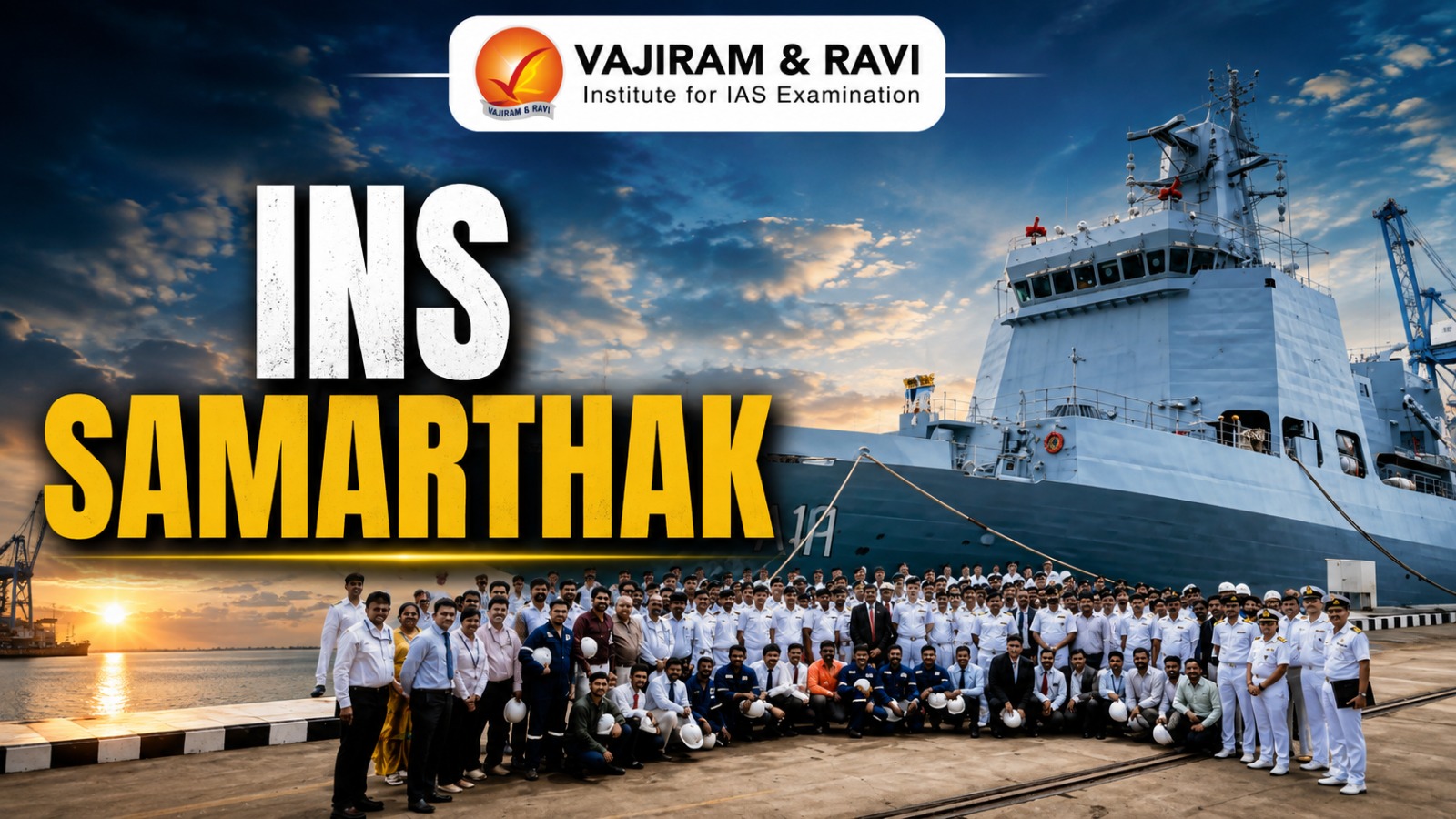
Recently, the INS Samarthak was delivered to the Indian Navy.

About INS Samarthak

  • It is the first Multi-Purpose Vessel (MPV), built by Larsen & Toubro Ltd. (L&T), Kattupalli.
  • The ship has been named ‘Samarthak’, meaning ‘The Proponent’. 
  • It is engineered to support a wide spectrum of activities.
  • The ship comprises over 75 percent indigenous content and has been conceived as a versatile trial and evaluation platform. 

Key Features of INS Samarthak

  • Speed: The vessel can achieve a maximum speed of 15 knots.
  • Displacement Capacity: It measures 107 meters in length, 18.6 meters in width, and has a displacement of over 3,750 tonnes.
  • Role: It is a highly specialised, multi-role platform designed to support the development and testing of next-generation weapons and sensors for the Indian Navy.
  • It will also perform a variety of other functions, including maritime surveillance, patrolling, launching and recovering surface and aerial targets, providing humanitarian assistance, and combating sea pollution.

Source: PIB

INS Samarthak FAQs

Q1: INS Samarthak wasa built by which organisation?

Ans: Larsen & Toubro Ltd. (L&T), Kattupalli.

Q2: What is INS Samarthak?

Ans: It is the first Multi-Purpose Vessel (MPV).

PM SVANidhi Scheme

PM SVANidhi Scheme

PM SVANidhi Scheme Latest News

According to Ministry of Housing & Urban Affairs As many as 21.86 lakh loans to the tune of Rs 6,294 crore have been disbursed to street vendors under the Prime Minister Street Vendor’s AtmaNirbhar Nidhi (PM SVANidhi) Scheme in the last 12 months. 

About PM SVANidhi Scheme

  • The Prime Minister Street Vendor’s AtmaNirbhar Nidhi (PM SVANidhi) scheme was launched in June 2020.
  • It is a Central Sector Scheme supporting street vendors through affordable working capital, financial inclusion and social protection measures.
  • Implementation: It is a joint responsibility of the Ministry of Housing and Urban Affairs (MoHUA) and the Department of Financial Services (DFS).

Key Features of PM SVANidhi Scheme

  • Working Capital Loan: Collateral-free loans of ₹15,000, ₹25,000, and ₹50,000 are provided in three progressive tranches with interest subsidy and credit guarantee support.
  • UPI-linked RuPay Credit Cards: Vendors successfully repaying the second tranche are eligible for UPI-linked RuPay Credit Cards with limits up to ₹30,000.
  • Digital Adoption: Cashback incentives of up to ₹1,600 are provided to street vendors for retail/wholesale digital transactions to encourage digital adoption and financial literacy.
  • SVANidhi se Samriddhi (SSS): Socio-economic profiling of beneficiaries and their families is undertaken to link them with eight selected Central welfare schemes and create a holistic social security net.  
  • Capacity Building & Entrepreneurship Development: Vendors are provided with training in financial literacy, digital literacy, and food safety & hygiene in collaboration with FSSAI.

Source: PIB

PM SVANidhi Scheme FAQs

Q1: What is the loan structure of PM SVANidhi Scheme?

Ans: It provide loans of ₹15,000, ₹25,000, and ₹50,000 in three progressive tranches with interest subsidy and credit guarantee support.

Canada

Key Facts about Canada

Canada Latest News

Recently, India and Canada formally launched their inaugural Economic and Financial Dialogue in Toronto. 

About Canada

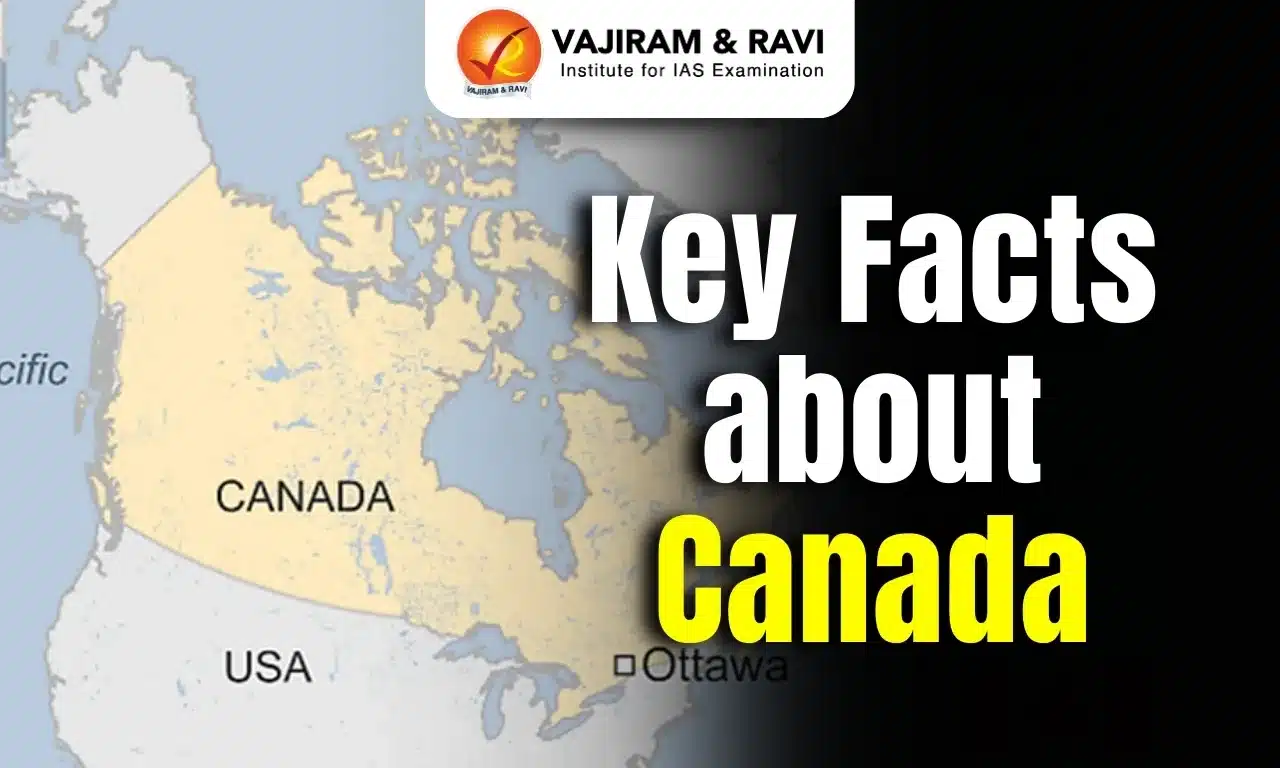
  • Location: It is located in North America.
  • It is the second largest country in the world in area (after Russia).
  • Bordered by: It shares borders with Alaska, a non-contiguous US state, to the northwest, and 12 other US states to the south.
  • The border of Canada with the US is the longest bi-national land border in the world.
  • Maritime Borders: It is bounded by the Arctic Ocean to the north, by the Atlantic Ocean to the east and the Pacific Ocean to the west.
  • Capital City: Ottawa

Geographical Features of Canada

  • Climate: It has seven climatic regions or zones: the Arctic, Subarctic, Prairie, Great Lakes, Cordilleran, plus the East and West Coasts. 
  • Major Mountains: ​Rocky Mountain, the St. Elias Mountains and the Laurentian Mountains.
  • Major Rivers:  Mackenzie River, Yukon River, Saint Lawrence River
  • Lakes: The five Great Lakes namely Superior, Michigan, Huron, Ontario, and Erie form a natural boundary between Canada and the United States. (Amongst these five, only Lake Michigan lies entirely within the US).
  • Natural Resources: It mainly consists of Bauxite, Iron ore, Nickel, Zinc, copper, gold, lead, uranium, rare earth elements, potash, diamonds etc.

Source: HT

Canada FAQs

Q1: What is the capital of Canada?

Ans: Ottawa

Q2: What political system present in Canada?

Ans: Constitutional monarchy

National Disaster Response Force

National Disaster Response Force

National Disaster Response Force Latest News

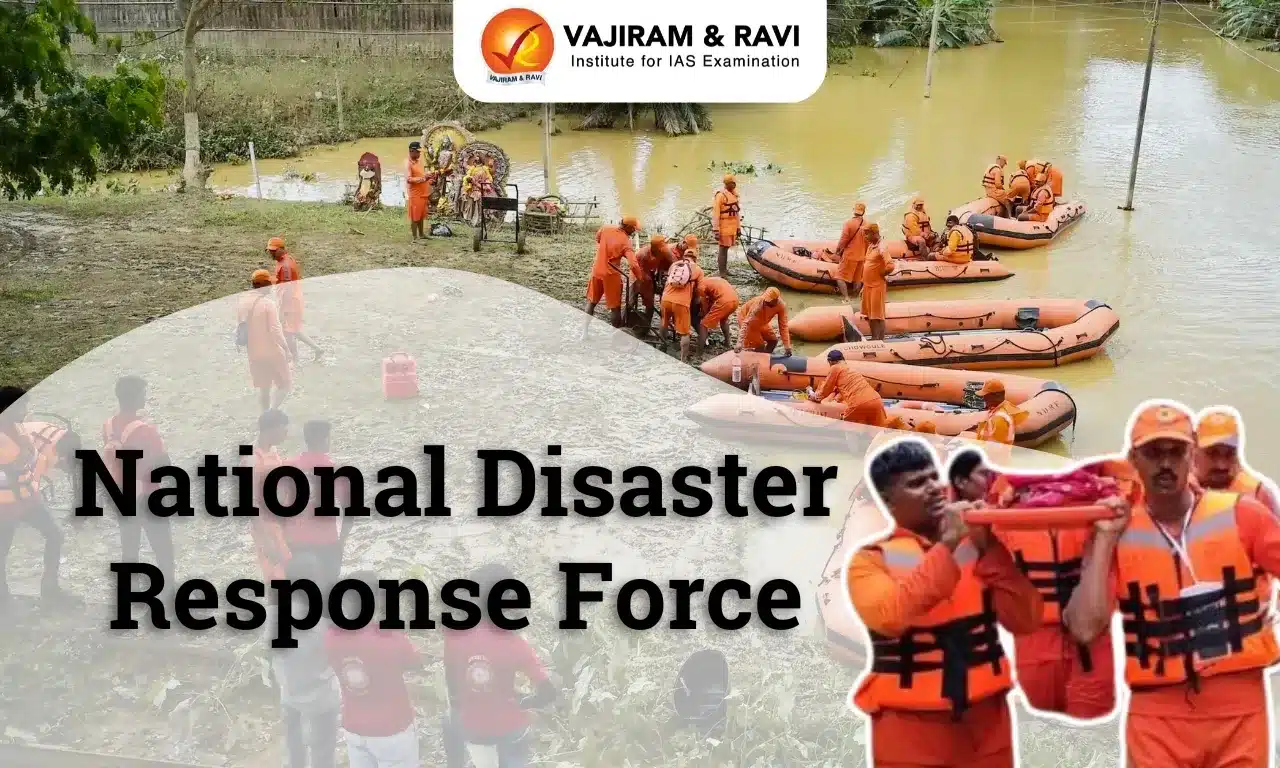
The National Disaster Response Force (NDRF) teams deployed in Bihar & Uttar Pradesh to respond to any flood like situation.

About National Disaster Response Force

  • It was established under section 44 of the Disaster Management Act, 2005.
  • Aim: It is aimed at specialized responses to natural and man-made disasters.
  • Organisation Structure
    • Initially established in 2006 with 8 Battalions, the NDRF has now expanded to 16 Battalions.
    • The NDRF functions as an independent disaster response agency but draws its personnel from various central paramilitary forces. Its organizational framework ensures coordination between central and state disaster management authorities.
    • Parent Ministry: Ministry of Home Affairs (MHA)
    • Controlling Authority: National Disaster Management Authority (NDMA)
    • Head: Director General (DG), NDRF
    • Composition: It mainly consists of personnel deputed from the CAPF, viz Border Security Force, Central Reserve Police Force, Central Industrial Security Force, Indo-Tibetan Border Police, Sashastra Seema Bal and Assam Rifles.
  • Role: It is a multi-skilled and highly specialist force capable of dealing with all types of natural and man-made disasters like Floods, Cyclone, Earthquakes, Landslides, Building-collapse, Trains and road accidents etc.
  • It has been very active in responding to natural disasters under multi-lateral and bi-lateral agreement at International level.

Source: News On Air

National Disaster Response Force FAQs

Q1: Where is the National Disaster Response Force located?

Ans: New Delhi

Q2: What is the role of NDRF?

Ans: It is aimed at specialized responses to natural and man-made disasters.

India-China Boundary Talks: Progress Made, Long Road Ahead

India-China Boundary Talks

India-China Boundary Talks Latest News

  • The 25th round of Special Representatives (SR) talks concluded in Beijing between India's NSA Ajit Doval and China's Foreign Minister Wang Yi. 
  • The two sides reached an eight-point consensus. This comes ahead of President Xi Jinping's expected visit to India for the BRICS Summit.

What Was Agreed

  • The talks focused on two core areas. 
    • First: maintaining peace and tranquillity in border areas. 
    • Second: advancing a framework for settling the boundary question, based on prior agreements.
  • Specific steps were outlined. An Expert Group and a Working Group will explore an "early harvest" of boundary delimitation in select sectors. 
  • They will also work on effective border management.
  • Last year, both sides agreed in principle to set up additional General-Level Mechanisms, or Senior Highest Military Commander (SHMC) meetings, in the Eastern and Middle sectors. 
    • This mirrors the existing mechanism at Chushul/Moldo in the Western sector.
  • This time, they went further. They agreed to implement that plan. They also agreed to establish two new hotlines — one each in the Eastern and Middle sectors. 

The Past as Prologue

  • The current mechanisms build on decades of groundwork.
  • 1992: The Joint Working Group (JWG) on the Boundary Question introduced confidence-building measures (CBMs), including Border Personnel Meetings (BPMs). This complemented progress on border trade.
  • 1993: The Border Peace and Tranquillity Agreement (BPTA) led to a JWG sub-group — the India-China Expert Group of Diplomatic and Military Officials (EG). 
    • This became a precursor to the Working Mechanism for Consultation and Coordination on India-China Border Affairs (WMCC), set up in 2012.
  • 2014: The proposal for additional BPM points was revived. Regular BPMs were established at Wacha/Kibithu, opposite Damai on the Chinese side — alongside existing venues at Bum La (Arunachal Pradesh) and Nathu La (Sikkim).
  • Together with BPMs at Daulat Beg Oldie (DBO) and Tianwendian (TWD) in the Chip Chap valley, and the Chushul-Moldo meeting point in the Spanggur Gap, these venues have helped both militaries maintain direct contact.

Why Hotlines Matter

  • Existing hotlines already link DBO and Chushul. Informal communication channels exist at Demchok in the Western Sector. Similar hotlines operate at Nathu La, Bum La, and Kibithu in the Eastern Sector.
  • The two new hotlines — for the Eastern and Middle sectors — will strengthen this network. They can help defuse tensions quickly at the local level.

The Road Ahead

  • The SR talks aim to implement the broader understanding reached between PM Modi and President Xi at Kazan (October 2024) and Tianjin (August 2025).
  • Recent positive steps support this momentum:
  • However, caution is warranted. The task of "early and substantial harvest of boundary delimitation and border management" will likely be long and difficult. It demands patient negotiation.
  • It would be premature to claim substantive boundary delimitation has begun. The Expert Group and Working Group under WMCC are still finalising their Terms of Reference. 
  • This means the framework itself is only now being built — the process is being activated step by step.
  • Another challenge remains: balancing piecemeal progress against a more holistic settlement. Differences persist in both the Sikkim sub-sector and the Middle Sector. 
  • Negotiators must be empowered and experienced enough to handle a dispute that has vexed generations before them.

Conclusion

  • The 25th SR round marks incremental but meaningful progress in India-China border diplomacy — institutionalising communication channels and laying groundwork for future delimitation talks. 
  • Yet the path to a comprehensive boundary settlement remains long, requiring sustained political will, patient negotiation, and careful sequencing. 
  • If guided effectively, this process could pave the way for lasting peace and substantive cooperation between two major Asian powers in a shifting global order.

Source: IE

India-China Boundary Talks FAQs

Q1: What are the latest developments in India-China Boundary Talks?

Ans: The India-China Boundary Talks produced an eight-point consensus covering border peace, management, communication mechanisms and an early framework for boundary delimitation.

Q2: What role will new hotlines play in India-China Boundary Talks?

Ans: New hotlines established through India-China Boundary Talks will strengthen military communication and help both sides quickly defuse tensions in the Eastern and Middle sectors.

Q3: Have India-China Boundary Talks begun substantive boundary delimitation?

Ans: India-China Boundary Talks have established a framework for future delimitation, but substantive boundary delimitation has not yet begun as working groups finalise their mandates.

Q4: What mechanisms support India-China Boundary Talks?

Ans: India-China Boundary Talks build upon Border Personnel Meetings, the WMCC, Expert Groups, Working Groups and military-level communication mechanisms developed through decades of negotiations.

Q5: Why is a comprehensive settlement difficult in India-China Boundary Talks?

Ans: India-China Boundary Talks face persistent differences in sectors including Sikkim and the Middle Sector, requiring patient negotiation, political will and careful sequencing.

Meta Child Safety Settlement: What It Means for Teens and India

Meta Child Safety Settlement

Meta Child Safety Settlement Latest News

  • Recently, Meta agreed to pay over $17 billion over the next decade to settle claims brought by 47 US states, Washington DC, and other territories, while also committing to strict new limits on how teenagers use Facebook and Instagram. 
  • The settlement ends the states' federal trial in which Meta was accused of designing its platforms to encourage compulsive use among young people, misleading the public about associated harms, and improperly collecting data from children under 13. 
  • Meta denies wrongdoing. Indian regulators are now closely studying the agreement as a potential blueprint for domestic social media regulation for minors.

What Was Meta Accused Of?

  • The case was brought by a bipartisan coalition of US state attorneys general, who alleged Meta designed Facebook and Instagram to keep young people compulsively engaged, knew about serious risks, and misled the public about them. 
  • They also accused Meta of collecting personal data from children under 13 without complying with the Children's Online Privacy Protection Act (COPPA) — a 1998 federal law enacted years before Facebook, Instagram, YouTube, or TikTok existed. 

Part of a Broader Wave of Litigation

  • The settlement sits within a much broader wave of litigation: in March 2026, a Los Angeles jury in K.G.M. v. Meta et al held Meta and Google liable for $6 million in damages after finding platform features contributed to a young user's mental-health harms. 
  • Plaintiffs across these cases have pointed to endless feeds, recommendation algorithms, notifications, and social metrics like likes as features designed to maximise engagement.
  • One lawyer compared social media platforms to dopamine-seeking "slot machines." 

What Has Meta Agreed to Change?

  • For the settlement's first five years, Meta will impose:
    • A combined two-hour daily limit on Facebook and Instagram for users under 18 (direct messaging excluded); a verified parent can adjust this limit.
    • Overnight blocking: teens blocked from most platform features between midnight and 6 am.
    • Notification restrictions: most push notifications disabled between 10 pm and 7 am, and muted between 8 am and 3 pm on school weekdays (direct messaging remains available).
    • A non-personalised feed option, likes and reactions hidden by default, restrictions on cosmetic-procedure filters, and stronger age-assurance and parental control systems.
  • Crucially, some safeguards are default settings while others remain optional — a distinction experts say will determine real-world impact. 
  • Experts noted that universal defaults like time and night-mode limits are likely to have real effect, while opt-in changes requiring parental action through settings menus will reach fewer teens.
  • They called this the first US instance where a major platform was forced to change the "architecture of its product" rather than just its policies.

Unresolved Legal Questions

  • The settlement ends the states' trial without a judgment on Meta's underlying liability, while thousands of other cases remain pending. 
  • The agreement explicitly does not establish a standard of care or serve as precedent elsewhere. 
  • It also leaves unresolved the recurring question of Section 230 of the Communications Decency Act (1996), which generally shields internet platforms from liability for user-posted content.
    • Plaintiffs have tried to bypass this by arguing their claims target platforms' own design choices, not third-party content. 

Why India Is Watching Closely

  • Indian regulators are studying the settlement closely. The Centre is weighing interventions on children's social media access. These include age-based restrictions, usage-hour limits, and stronger parental consent rules. Discussions remain at an early stage.
  • The US case offers a useful template. 
    • It shows enforceable restrictions secured through regulation and legal action, not platform goodwill alone. 
    • This could shape India's debate on responsibility. Should platforms bear the burden, or parents and children?
  • India favours a graded model over a blanket ban. Separate restrictions are proposed for three age groups: 8-12, 12-16, and 16-18. The logic is simple: a 17-year-old and an eight-year-old need different rules. 
  • Discussions have covered fixed daily usage windows, evening or night-time login curbs, and parental-consent requirements. The government says any new law will follow wider public consultation.
  • The settlement's cross-platform pressure mechanism also matters for India. Platform-wide consistency is already part of India's policy conversation. Curbs on a few platforms could simply push children toward less-regulated ones.

Source: IE | IE

Meta Child Safety Settlement FAQs

Q1: What is the Meta Child Safety Settlement?

Ans: The Meta Child Safety Settlement is an agreement involving over $17 billion in payments and new safeguards addressing teenage use of Facebook and Instagram.

Q2: What restrictions does the Meta Child Safety Settlement introduce?

Ans: The Meta Child Safety Settlement introduces daily usage limits, overnight restrictions, notification controls, stronger age assurance, parental controls and non-personalised feed options.

Q3: Why is the Meta Child Safety Settlement significant?

Ans: The Meta Child Safety Settlement is significant because it requires changes to platform design and default settings rather than relying solely on voluntary policy commitments.

Q4: Does the Meta Child Safety Settlement establish Meta's legal liability?

Ans: No, the Meta Child Safety Settlement ends the states' trial without determining underlying liability, establishing a standard of care or creating legal precedent elsewhere.

Q5: How could the Meta Child Safety Settlement affect India?

Ans: The Meta Child Safety Settlement could influence India's debate on age-based restrictions, usage limits, parental consent and platform responsibility for protecting children online.

India’s Capacity To Build a Strategic Fuel System – Explained

Strategic Fuel System

Strategic Fuel System Latest News

  • Disruptions linked to West Asia have exposed vulnerabilities in India's energy security, prompting the government to consider a decade-long strategic fuel programme to significantly expand crude, LNG and LPG storage.

The Core Vulnerability

  • India can import large quantities of crude oil, LNG and LPG. What differs sharply by fuel is its ability to store, transport and release these fuels during a prolonged disruption.
  • India already operates underground strategic crude-oil storage and two underground LPG caverns. It has no operating underground natural-gas storage facility at all.
  • Against this background, the government is considering a programme that would add roughly 28 MT of crude-oil storage, 9 MT of LNG storage and 4 MT of LPG storage over a decade
  • The reserves are intended to provide nearly two months of crude and LNG demand and about six weeks of LPG demand.

India’s Present Condition

  • Crude Oil
    • Crude is the most mature component. Phase-I of the Strategic Petroleum Reserve provides 5.33 MT of underground capacity across Visakhapatnam, Mangaluru and Padur, with actual storage of about 3.37 MT, roughly 63-64% utilisation.
    • A further 6.5 MT has been approved under Phase-II at Chandikhol and Padur.
  • LPG
    • The underground footprint here is far smaller. The Visakhapatnam and Mangaluru caverns together provide about 0.14 MT of capacity. 
    • A proposed 4 MT strategic reserve would represent roughly a 30-fold increase in underground LPG capacity.
  • Natural Gas
    • This is the largest gap. India has no operational underground gas-storage facility. Its gas-security system instead depends on domestic production, LNG imports, import terminals, commercial inventories and pipelines.

Capacity Is Not the Same as Inventory

  • An important distinction runs through this debate. A facility has a physical capacity, but the fuel it actually holds can vary. Not all inventory is immediately accessible either.
  • During a crisis, the critical measure is therefore not simply how many tonnes can be stored, but how much fuel is available and at what withdrawal rate it can reach consumers.
  • LNG is particularly prone to confusion because India already has substantial import and regasification infrastructure. 
  • A regasification terminal can receive LNG and convert it into natural gas, but its regasification capacity does not constitute strategic inventory.
  • LNG is stored as a cryogenic liquid at around -162°C, requiring specialised insulated tanks and boil-off gas management. Underground gas storage works differently: LNG is first regasified, and the resulting natural gas is injected into a depleted reservoir or cavern.

Building Underground Storage Is Not Simple

  • India could eventually combine surface LNG tanks with underground natural-gas storage.
  • A separate Petroleum Ministry proposal would require LNG import terminals to maintain storage capacity 10% above normal operating needs, with the surplus available to the government during supply or price disruptions.
  • For longer-duration needs, depleted oil and gas reservoirs, 74% of global working gas volume, could offer much larger storage. Salt caverns, by contrast, allow faster injection/withdrawal and more frequent cycling.
  • However, a depleted field isn't automatically storage-ready: reservoir characteristics, cap-rock integrity, pressure behaviour, existing wells, cushion-gas needs and pipeline connectivity must all be assessed. 
  • India's sedimentary basins (Krishna, Godavari, Cambay, Mumbai Offshore, Rajasthan) show potential, but converting geological promise into usable storage requires subsurface study, engineering, construction, testing, filling and pipeline integration.
  • Salt caverns face similar scrutiny, Rajasthan's salt formations have been studied, but suitability hinges on depth, thickness, purity, geometry, groundwater and mechanical properties.

Storage as an Infrastructure System

  • The US Strategic Petroleum Reserve shows the scale salt caverns can reach: 714 million barrels of authorised capacity across 60 caverns, functioning as an integrated network of caverns, pipelines, marine terminals and refineries.
  • Storage is thus fundamentally an infrastructure system, not just underground space.
  • LPG illustrates the scaling challenge: a proposed 4 MT reserve would need extensive new caverns plus import terminals, pipelines, pumping systems and bottling infrastructure.
  • The Mangaluru cavern highlights the complexity, geological and hydrogeological investigation, rock-mechanics analysis, and groundwater management alongside active surface facilities.

Shipping and Pipelines

  • Since energy security relies heavily on maritime logistics, including vulnerable chokepoints like the Strait of Hormuz, India is diversifying both import sources and shipping capacity.
  • State-run refiners and the Shipping Corporation of India plan to invest $1.5-2 billion in a joint venture for 59 ships, cutting reliance on foreign vessels.
  • Pipelines link storage to inland consumers. PNGRB has authorised about 1,800 km of new LPG pipelines across six states (~$0.7 billion investment), improving deliverability and cutting road dependence, but not adding strategic storage itself.
  • This principle spans fuels: underground storage only helps if it can inject/withdraw from the gas grid at the needed rate; LNG tanks need regasification and downstream pipelines; LPG caverns need bottling and distribution links.

The Financing Question

  • The reported $42 billion programme, unconfirmed by the government, combines infrastructure capex with the cost of buying and maintaining strategic inventories. Over half may go to storage infrastructure, the rest to purchasing and filling reserves. The government has denied reports of a funding cess.
  • The financial commitment continues beyond construction: billions in fuel must be purchased, financed and maintained, and crisis-released stocks would need replenishing, potentially at higher commodity and freight prices.
  • Policy must therefore define who owns and finances the inventory, minimum stock obligations, emergency-release authority, and who bears replenishment and price risk. 
  • A commercial-cum-strategic model could ease the public burden, provided commercially used capacity stays available during emergencies.

Source: TH

Strategic Fuel System FAQs

Q1: What does the proposed strategic fuel programme include?

Ans: It would add about 28 MT of crude-oil storage, 9 MT of LNG storage and 4 MT of LPG storage over a decade.

Q2: What is India's current strategic crude oil storage capacity?

Ans: Phase I provides 5.33 MT of underground capacity with actual storage of about 3.37 MT, with a further 6.5 MT approved under Phase II.

Q3: Does India have underground natural gas storage?

Ans: No. India currently has no operational underground gas-storage facility.

Q4: Why is regasification capacity not the same as strategic inventory?

Ans: A regasification terminal can receive and convert LNG into natural gas, but this processing capability does not itself mean fuel is stored for emergency use.

Q5: What is India doing to strengthen shipping capability?

Ans: State-run refiners and the Shipping Corporation of India plan to invest $1.5 to $2 billion in a joint venture to acquire 59 ships.

Daily Editorial Analysis 28 August 2026

Daily-Editorial-Analysis

Why 543 Should Remain 543 

Context

  • India’s impending delimitation exercise has revived an important constitutional debate: must delimitation necessarily lead to an expansion of the Lok Sabha?
  • While population-based representation is a fundamental democratic principle, India’s constitutional framework has historically balanced it against federalism, demographic responsibility and effective parliamentary functioning.
  • Therefore, delimitation and enlargement of the Lok Sabha need not necessarily be treated as synonymous.

Constitutional Basis of Delimitation

  • Population as the Basis of Representation

    • Article 81 broadly provides for representation in the Lok Sabha according to population, while Article 82 provides for readjustment of constituencies after each Census.
    • Thus, demographic changes naturally create a case for updating electoral boundaries.
    • However, the Constitution uses the expression so far as practicable, indicating that population is not the only consideration governing representation.
  • The 1976 Seat Freeze

    • The 42nd Constitutional Amendment of 1976 froze the inter-State allocation of Lok Sabha seats based on the 1971 Census.
    • The objective was to ensure that States implementing successful population-control and family-planning policies were not politically penalised.
    • The 84th Constitutional Amendment subsequently extended the freeze, establishing a broader constitutional principle: demographic representation must be balanced with other national objectives.

Why Numbers Alone Cannot Decide

  • The Problem with Proportional Expansion

    • A proposal to increase every State’s representation by around 50% may appear to preserve existing proportions.
    • However, proportionality does not necessarily preserve political balance.
    • For example, if Uttar Pradesh increases from 80 to 120 seats and Tamil Nadu from 39 to about 59, their relative proportions remain broadly similar, but the absolute numerical gap increases substantially.
    • Parliamentary decisions are determined by actual numbers rather than ratios.
  • Federalism as a Constitutional Value

    • The existing arrangement represents a federal compact. States that successfully stabilised their populations were assured that their parliamentary representation would not decline because of their demographic success.
    • Discarding this principle could create a perverse incentive by giving greater political weight to States where population has grown faster.

Delimitation Does Not Necessarily Mean Enlargement

  • Redrawing Boundaries Within States

    • India can redraw constituencies within individual States using updated population data without changing the number of seats allocated to each State.
    • The delimitation exercise following the 2001 Census demonstrated that constituency boundaries could be reorganised while maintaining the existing inter-State distribution.
  • International Experience

    • Global examples demonstrate that population growth does not automatically require larger national legislatures.
    • The S. House of Representatives has remained at 435 voting members for more than a century.
    • Switzerland has retained a 200-member National Council for decades.
    • Hungary and Italy have actually reduced the size of their national legislatures.
    • Therefore, there is no universal democratic principle that legislatures must expand whenever population increases.

The Case Against a Very Large Lok Sabha

  • Impact on Parliamentary Deliberation

    • A larger Lok Sabha could weaken Parliament’s deliberative capacity.
    • Even within the existing 543-member House, many MPs have limited opportunities to speak, ask questions and participate in debates.
    • Expanding the House to more than 800 members could increase numerical representation but simultaneously reduce the time available to individual representatives.
  • Constituency Accessibility

    • India does face a genuine problem of oversized constituencies.
    • MPs already represent very large populations, making direct engagement with citizens difficult.
    • However, greater accessibility does not necessarily require a larger national legislature.

Women’s Reservation and Delimitation

  • Reservation Without Expansion

    • Women’s reservation is an important democratic reform, but it does not inherently require an enlarged Lok Sabha.
    • One-third of the existing 543 seats is approximately 181 seats, meaning the constitutional objective of greater representation for women can be achieved within the existing House.
  • Avoiding a New Imbalance

    • A 50% expansion could increase the number of women MPs but simultaneously increase the numerical strength of larger States.
    • Consequently, an attempt to correct gender imbalance could unintentionally intensify federal imbalance.
    • Women’s political representation and federal fairness can therefore be achieved simultaneously without expanding the Lok Sabha.

A Balanced Reform Agenda

  • India can pursue a balanced approach through four measures:
    • Retain the Lok Sabha at 543 members.
    • Preserve the existing inter-State allocation of seats while redrawing constituencies within States according to updated demographic data.
    • Implement women’s reservation within the existing House.
    • Strengthen Vidhan Sabhas and reduce Assembly constituency sizes to improve democratic accessibility.
  • Such reforms would accommodate demographic change while protecting the interests of States that successfully pursued population stabilisation.

Conclusion

  • India must balance population-based representation with federalism, democratic accessibility, parliamentary effectiveness and demographic responsibility.
  • Redrawing constituencies within States, implementing women’s reservation within the existing House and strengthening State-level representation can address these concerns without disturbing the federal balance.
  • Ultimately, the objective should not be to make Parliament larger merely because the population has grown.

Why 543 Should Remain 543 FAQs

Q1. Why was Lok Sabha seat allocation frozen in 1976?
Ans. It was frozen to protect States that had successfully controlled population growth.

Q2. Does delimitation require increasing Lok Sabha seats?
Ans. No, constituencies can be redrawn without increasing the total number of seats.

Q3. What is a major concern with a larger Lok Sabha?
Ans. A larger House could weaken parliamentary deliberation and scrutiny.

Q4. Does women’s reservation require more Lok Sabha seats?
Ans. No, women’s reservation can be implemented within the existing 543 seats.

Q5. What is the proposed alternative to Lok Sabha expansion?
Ans. The alternative is to retain 543 seats while strengthening State Assemblies and reducing constituency sizes.

Source: The Hindu


India’s Return to Its Central Asian Neighbourhood

Context

  • Prime Minister Narendra Modi’s forthcoming visit to Uzbekistan and participation in the Shanghai Cooperation Organisation (SCO) summit in Bishkek underline the growing importance of Central Asia in India’s foreign policy.
  • The region, comprising Kazakhstan, Kyrgyzstan, Tajikistan, Turkmenistan and Uzbekistan, occupies a crucial position between Russia, China, Afghanistan, Iran and South Asia.
  • For India, Central Asia is not merely a distant neighbourhood but a space of historical, cultural, economic and strategic significance.

Central Asia: A Region in Transition

  • Central Asia emerged as a new geopolitical region following the dissolution of the Soviet Union in 1991.
  • The post-Soviet generation now constitutes a growing part of its population and is engaged in building new national identities and political equilibria.
  • Although Islam is the predominant religion, most Central Asian states have resisted turning religion into a political project.
  • At the same time, terrorism, extremism and radicalisation remain major security concerns. Afghanistan’s instability, China’s concerns about radicalisation in its western regions and terrorist attacks such as the 2024 Crocus City Hall attack highlight the region’s vulnerability.
  • The region is also marked by ethnic diversity, linguistic plurality, geographical differences and unequal resource endowments.

India’s Growing Engagement with Central Asia

  • India’s engagement represents a gradual departure from its earlier tendency to defer to Russian influence in Central Asia.
  • Modi’s 2015 visit to all five Central Asian republics marked a significant turning point.
  • India subsequently became a full member of the SCO in 2017, providing an important multilateral platform for engagement.
  • India’s decision to invite all five Central Asian leaders as chief guests for Republic Day in 2022 further demonstrated the region’s importance.
  • Although the COVID-19 pandemic prevented their physical participation, the initiative contributed to institutional mechanisms such as the India-Central Asia Dialogue.
  • These developments indicate a transition from limited diplomatic engagement to a more comprehensive regional strategy.

Beyond Geography: Civilisational Connectivity

  • India’s relationship with Central Asia extends far beyond physical geography.
  • Centuries of interaction have produced strong cultural, linguistic, religious, architectural and commercial linkages.
  • The region is part of the wider Eurasian continuum, and India’s historical connections with cities such as Samarkand and Bukhara remain deeply embedded in its civilisational memory.
  • The absence of direct overland connectivity, largely because of geopolitical constraints, should not diminish these relationships.
  • India must therefore pursue connectivity through alternative routes, particularly through Iran and potentially Afghanistan.
  • Central Asian countries are increasingly seeking partners beyond Russia and China.
  • India’s experience as a pluralistic, moderate and democratic society provides it with a distinctive source of soft power and makes it an attractive partner for regional development.

Uzbekistan: A Strategic Gateway

  • Uzbekistan occupies particular importance in India’s Central Asian strategy.
  • Relations have improved substantially under President Shavkat Mirziyoyev since 2016, as Tashkent has pursued a more diversified foreign policy.
  • Cooperation with Uzbekistan can expand across trade, defence, technology, education, healthcare, tourism and natural resources.
  • Its firm opposition to terrorism and extremism is especially relevant to India. Uzbekistan’s geographical proximity to Afghanistan and its pragmatic understanding of developments involving the Taliban make it an important security partner.
  • India and Uzbekistan should therefore revisit proposals for alternative rail and road connectivity through Iran and Afghanistan, taking into account changing regional circumstances.

India and the Shanghai Cooperation Organisation

  • The SCO has evolved from the Shanghai Five established in 1996 into a major Eurasian organisation with 10 members, 15 dialogue partners and two observers.
  • India’s participation is primarily driven by geography and strategic necessity rather than ideological convergence.
  • India faces difficult negotiations within the SCO because of the close China-Pakistan relationship. Nevertheless, disengagement would leave India with fewer opportunities to influence Eurasian affairs.
  • India has consequently advocated cooperation in security, connectivity, technology, economics and civilisational exchanges.
  • For smaller Central Asian states, particularly those heavily dependent on China, India’s presence offers an opportunity to diversify strategic and economic partnerships.

Challenges and Opportunities

  • India’s Central Asian strategy faces several obstacles, including lack of direct connectivity, Chinese economic dominance, Russian influence, instability in Afghanistan, limited trade volumes and unresolved regional disputes.
  • However, these challenges also create opportunities. India can strengthen its presence through energy partnerships, critical minerals, defence cooperation, digital technology, pharmaceuticals, education, healthcare, tourism and cultural diplomacy.
  • Connectivity initiatives through Iran can provide India with greater access to Eurasian markets.
  • A sustained and multidimensional approach can help India transform historical goodwill into tangible strategic partnerships.

Conclusion

  • Central Asia is becoming increasingly important as the geopolitical balance of Eurasia changes.
  • India cannot afford to view the region through the narrow lens of geography or traditional diplomacy.
  • Its historical connections, security interests, economic opportunities and shared concerns over terrorism provide a strong foundation for deeper engagement.
  • The renewed focus on Uzbekistan and the SCO should therefore form part of a broader strategy to establish India as an independent, reliable and constructive partner in Eurasia.
  • By combining connectivity, economic cooperation, security partnerships and civilisational diplomacy, India can consolidate its rightful place in a rapidly evolving Central Asian order.

India’s Return to Its Central Asian Neighbourhood FAQs

Q1. Why is Central Asia important for India?
Ans. Central Asia is important for India because of its strategic, economic, security and civilisational significance.

Q2. What marked a turning point in India’s Central Asian policy?
Ans. Prime Minister Modi’s 2015 visit to all five Central Asian republics marked a major turning point.

Q3. Why is Uzbekistan strategically important for India?
Ans. Uzbekistan is important because of its proximity to Afghanistan and strong opposition to terrorism and extremism.

Q4. Why does India participate in the SCO?
Ans. India participates in the SCO primarily because of geographical and strategic interests in Eurasia.

Q5. What should India do to strengthen its Central Asian presence?
Ans. India should strengthen connectivity, trade, defence, technology, education and cultural cooperation with Central Asian countries.

Source: The Hindu


BRICS+ and India - Building a Multipolar World through Cooperation

Context

  • The idea of BRIC was proposed by Goldman Sachs economist Jim O’Neill in 2001.
  • Brazil, Russia, India and China began high-level ministerial consultations in 2006 and held their first summit in 2009. South Africa joined in 2010, giving rise to BRICS.
  • Over time, BRICS has evolved from an economic grouping into a broader platform for cooperation among emerging markets and developing economies (EMDEs).
  • Its expansion reflects the growing demand for a more representative and multipolar global order.

BRICS+ - Growing Global Weight

  • BRICS+ currently comprises 11 members — Brazil, Russia, India, China, South Africa, Egypt, Ethiopia, Indonesia, Iran, UAE and Saudi Arabia — along with 10 partner countries.
  • Its growing significance stems from its demographic and economic weight -
    • BRICS and BRICS+ represent roughly 45% and 55% of the global population, respectively.
    • BRICS+ economies account for around 35–45% of global GDP in PPP terms and collectively exceed $30 trillion in nominal GDP.
    • The grouping is expected to record significantly faster growth than the G7 in the coming years.
    • Countries such as Argentina, Algeria and Türkiye have also shown interest in joining.
  • Thus, BRICS+ is increasingly becoming an important forum for South-South cooperation, economic coordination and reform of global governance.
  • Core significance: Its strength lies not merely in economic size but in its ability to provide a platform for countries seeking greater representation in institutions shaped largely by the post-World War II order.

India’s 2026 BRICS Presidency - Four Priorities

  • With the 2026 BRICS Summit scheduled in New Delhi, India has an opportunity to shape the group's future agenda.
  • India's priorities are centred on four themes -
    • Resilience: Strengthening supply chains, energy security, food security and institutional capacity against global disruptions.
    • Innovation: Promoting technological cooperation, digital transformation, emerging technologies and inclusive innovation.
    • Cooperation: Deepening coordination among developing countries on economic, financial, political and developmental challenges.
    • Sustainability: Addressing climate change, sustainable development, green transition and resource security while ensuring that development remains people-centric.
  • These priorities can be advanced through BRICS' three broad pillars - political and security cooperation, economic and financial partnership, and cultural and people-to-people exchanges
  • For India, this agenda can also reinforce its traditional emphasis on strategic autonomy, Global South leadership, reform of multilateral institutions and inclusive development.

China-India Cooperation - The Central Variable

  • The future effectiveness of BRICS will be significantly influenced by India-China relations.
  • China has expressed support for India's role in the 2026 summit, highlighting the potential for cooperation between the two largest BRICS economies.
  • India and China are among the world's largest economies in PPP terms; home to approximately 35% of humanity; and major markets and engines of global economic growth.
  • Their economic complementarities create considerable scope for cooperation.
  • The recent resumption of direct flights and increasing exchanges among universities, businesses and cities indicate efforts to rebuild people-to-people and economic
  • However, cooperation should not be equated with the absence of strategic differences.

Panchsheel and a Multipolar Order

  • The Five Principles of Peaceful Coexistence (Panchsheel), jointly articulated by India and China, as principles supporting peaceful international relations.
  • Greater India-China cooperation within BRICS could contribute to -
    • Rebalancing global governance;
    • Greater voice for the Global South;
    • Reform of institutions such as the UN, IMF and World Bank;
    • Strengthening South-South cooperation;
    • Promoting a rules-based and more inclusive international order.
  • India should ensure that BRICS complements, rather than replaces, other platforms such as the G20, SCO, Quad and Indo-Pacific mechanisms, thereby preserving its multi-alignment and strategic autonomy.

Way Forward

  • BRICS+ must avoid becoming merely an anti-Western or anti-G7 bloc. Its long-term relevance will depend on whether it can deliver practical economic and developmental outcomes.
  • India should focus on -
    • Reforming global financial and governance institutions;
    • Expanding local-currency and alternative payment mechanisms;
    • Building resilient and diversified supply chains;
    • Promoting digital public infrastructure and technological cooperation;
    • Enhancing climate and energy cooperation;
    • Strengthening developmental finance;
    • Expanding youth, educational and cultural exchanges.
  • India-China relations: As they continue to involve concerns like border disputes, strategic competition, etc., India's approach needs to combine engagement with strategic caution, rather than either confrontation or excessive dependence.

Conclusion

  • The expansion of BRICS reflects the diffusion of economic and political power away from a predominantly Western-centred order.
  • For India, the 2026 New Delhi Summit is an opportunity to shape this transition around resilience, innovation, cooperation and sustainability.
  • India-China engagement will remain crucial. While strategic differences cannot be ignored, sustained dialogue and issue-based cooperation can help ensure that BRICS+ becomes a vehicle for -
    • Inclusive growth,
    • Global South solidarity and
    • A more representative multipolar world order.

BRICS+ and India FAQs

Q1. How has the expansion of BRICS+ strengthened the voice of the Global South?

Ans. Its growing demographic and economic weight makes BRICS+ a major platform for South-South cooperation.

Q2. What are the four key priorities of India’s 2026 BRICS agenda?

Ans. India’s priorities are resilience, innovation, cooperation and sustainability.

Q3. What is the significance of India-China cooperation for the effectiveness of BRICS+?

Ans. Both can drive economic growth, regional cooperation and Global South coordination.

Q4. How can BRICS contribute to the reform of the existing global governance architecture?

Ans. BRICS can push for greater representation in the UN, IMF and World Bank, strengthen development finance, etc.

Q5. Why should India pursue cooperation rather than confrontation within BRICS while maintaining strategic autonomy?

Ans. Cooperation can advance its Global South leadership, while strategic autonomy helps India to diversify partnerships with the G20, Quad and SCO.

Source: IE

Daily Editorial Analysis 2026 FAQs

Q1: What is editorial analysis?

Ans: Editorial analysis is the critical examination and interpretation of newspaper editorials to extract key insights, arguments, and perspectives relevant to UPSC preparation.

Q2: What is an editorial analyst?

Ans: An editorial analyst is someone who studies and breaks down editorials to highlight their relevance, structure, and usefulness for competitive exams like the UPSC.

Q3: What is an editorial for UPSC?

Ans: For UPSC, an editorial refers to opinion-based articles in reputed newspapers that provide analysis on current affairs, governance, policy, and socio-economic issues.

Q4: What are the sources of UPSC Editorial Analysis?

Ans: Key sources include editorials from The Hindu and Indian Express.

Q5: Can Editorial Analysis help in Mains Answer Writing?

Ans: Yes, editorial analysis enhances content quality, analytical depth, and structure in Mains answer writing.

Enquire Now